




Abstract
Introduction
Nursing-sensitive indicators measure and evaluate nursing care quality and its contribution to patient care. The identification of indicators that demonstrate nursing care contribution and the quality of care delivered locally is of paramount importance, and national indicators that demonstrate this are essential. This paper aims to provide an evidence base of nursing-sensitive indicators that can facilitate the conceptualization of local nursing national indicators.
Method
A multifaceted and iterative approach incorporating literature review, and stakeholder engagements was utilized in evidence synthesis. A review of indicators present internationally complemented by the inclusion of context-specific local NSIs through stakeholder engagements was performed. Secondary data analysis of documents from an environmental scan was also included to highlight areas of concern for nursing-sensitive indicator prioritization from the viewpoint of nurses.
Results
A total of 64 articles were reviewed and indicators were coded according to the Nursing Care Performance Framework subsystems, dimensions, and variables. All papers reviewed had documented outcome indicators. From our secondary data analysis, nurses identified areas of concern such as nursing staff supply, staff maintenance, nursing processes and risk outcomes, and safety to be prioritized for developing quality indicators.
Conclusion
This paper provides a list of NSIs coded systematically with definitions to aid stakeholders in prioritizing indicators for national indicator development. The inclusion of areas of concern provides insight into NSIs that nurse practitioners find relevant to the local context. To our knowledge, this is the first paper that includes evidence available in the literature and incorporates stakeholders’ perspectives in synthesizing evidence needed to guide the development of national nursing indicators. This iterative approach is crucial because it enhances the likelihood of knowledge translation.
Introduction
As nations endeavor to attain universal health coverage, it is vital to incorporate quality of care into healthcare services (World Health Organization, 2023). NSIs are the central quality measures used to quantify the quality of nursing care and nursing services’ contribution to patients (Gathara et al., 2020). Monitoring NSIs not only identifies areas for enhancing care quality but also directs improvement efforts effectively (Afaneh et al., 2024). Recent systematic reviews highlight improvements in patient outcomes across various settings through focused attention on NSIs (Afaneh et al., 2024; Blume et al., 2021; Eglseer et al., 2021). The COVID-19 pandemic further underscored the critical importance of NSIs, revealing shifts in nursing resources and their impact on care quality metrics such as increased rates of nurse burnout and changes in patient outcomes (Reynolds et al., 2023; Ribeiro et al., 2022).
Despite extensive research on nursing care evaluation, the focus often remains fragmented, emphasizing specific indicators or criteria without a holistic approach (Driscoll et al., 2018; Dubois et al., 2013; Oner et al., 2021). Research indicates that hospitals with better organizational features—such as higher proportions of highly educated nurses, optimal nursing skill mixes, and lower nurse-patient ratios—yield improved nurse and patient outcomes. Additionally, the adoption of person-centered care correlates with reduced restraint use, shorter hospital stays, enhanced family involvement, and increased nurse confidence and competence (Casarez & Smith, 2024). Integrating these organizational strategies and person-centered care principles promises a comprehensive approach to evaluating and enhancing nursing care quality. In Malaysia, there has been a demand from healthcare institutions and nursing managers for an evidence base of NSIs. However, the dispersion and lack of cohesiveness in NSI information pose significant challenges for local stakeholders to systematically replicate or interpret data.
The health system's rapid growth demands policies and strategies with a strong emphasis on quality of care. The Quality Assurance Technical Committee in Malaysia, comprising key members from various healthcare disciplines, including nurses, is entrusted with monitoring the national quality assurance program through the national indicator approach (NIA). This approach serves as a monitoring and feedback system to identify quality issues (Awang et al., 2023; Mahmud et al., 2015). While the current nursing NIA, which focuses on the incidence of phlebitis among inpatients with intravenous cannulation, provides insight into the quality of care provided by the nurses, it does not fully capture the diverse responsibilities and multifaceted roles that nurses shoulder. Therefore, there is a growing need to develop an NIA that accurately reflects the contributions of nurses in all aspects of patient care.
Our research approach utilized a multipronged strategy incorporating conceptual frameworks and stakeholder engagements to synthesize evidence, a method effective in knowledge translation (Fun et al., 2019). Unlike most reviews of NSIs, which often overlook stakeholder involvement, we emphasize the importance of engaging implementers and policymakers to curate indicators that resonate with their needs. With the guidance of our stakeholders, we aim to present an initial list of NSIs and the areas of concern for NIA development for nurses in Malaysia in this review paper.
Methods
Due to the scarcity of NSI-related research or a comprehensive compendium in Malaysia, a literature review was adopted to enable a wide array of studies to be captured. The information on NSI that is available in international literature was aimed to be collated by understanding the context of each study to ensure its practical relevance in Malaysia. Additionally, due to practical limitations such as time and budget, a literature review is deemed to be the most feasible method to answer the objectives.
The methods included a review of international NSIs, supplemented by context-specific indicators relevant to the Malaysian healthcare system. Stakeholder engagements were frequently held to incorporate feedback to ensure the contextual relevance of NSIs and to identify key areas of concern for the development of relevant national-level quality indicators based on nurses’ perspectives.
Literature Review
The following methods were used in the literature search: (i) electronic database search, (ii) search of Malaysian and international professional and government websites, (iii) literature search using Google and Google Scholar, and manual search of reference lists of relevant research publications. To ensure a manageable but meaningful body of literature for the study of relevant NSIs, publications had to focus exclusively on nurses, and they were also limited to conceptually rich documents (that reviewed and collated nursing quality indicators, developed frameworks, and provided information or descriptions of the indicators). The quality of the selected documents was not assessed, consistent with the authors’ aim of collating and prioritizing a comprehensive list of indicators rather than evaluating their application or effectiveness.
Electronic Database Search
We conducted the search of electronic databases, including PubMed, CINAHL via EBSCOhost and Embase. Although the search was restricted to English-language publications and reviews, no limits were placed on the publication date. Our search strategy employed a combination of free-text terms, specifically focusing on “nurses,” “nursing-sensitive indicators,” “quality indicators,” and “review.” The full electronic search strategy employed in this study is available in Supplementary Files. The abstracts were screened by two researchers for relevance. Any disagreement was consolidated by involving a third researcher. Subsequently, a single researcher reviewed the full text of the remaining articles to determine if the article should be included or excluded. Decisions regarding the inclusion or exclusion of a reference adhered to the predetermined criteria, as described in detail in Table 1.
Inclusion and Exclusion Criteria.

Professional and Governmental Websites
The research team also searched websites of international nursing associations, and national and international medical, research, and governmental organizations that monitor health and its related quality indicators. These searches were guided by a curated list of relevant organizations identified from the initial electronic database search (see section Electronic Database Search) For each website, we used the same search terms as those applied to the published articles. In cases where a website lacked a built-in search feature, we examined all its pages and associated web links. If these websites were not in English, translations were conducted based on available tools to extract information relevant to NSIs. The list of all websites searched is available in the Supplementary Files section.
Google and Google Scholar
A search of Google was undertaken using the search terms “nursing-sensitive indicator,” “nursing quality indicator,” “clinical nursing measures,” “clinical nursing indicators” or “nursing performance indicator.” The first 100 results were reviewed for potential relevance.
Stakeholder Engagement
This study also complemented the data obtained with (i) nursing stakeholder engagement sessions and collection of hardcopy documents in the field and (ii) secondary analysis of data gathered from the document review through an environmental scan.
Stakeholder Input
This study involved a total of 57 nurses and nurse managers representing hospitals, primary care, district, state, and national levels from all states in Malaysia (excluding the Federal Territory Labuan) to develop and establish an evidence base for NSIs. The stakeholders selected for this study ranged from nursing policymakers, and nursing managers, to frontline nurses with service experience of 5–30 years. Preliminary findings from the literature review were presented to nursing policymakers and managers to gain insight into how the evidence synthesized could be further refined to resonate with local nursing practice nuances. From these engagements, the suggestion to conduct an environmental scan workshop for nurse representatives from various disciplines such as maternal and child health, intensive care, and primary care settings was proposed. Staff nurses, and nursing managers together with representatives from the Nursing Division in Malaysia gathered and provided their feedback on relevant indicators in Malaysia.
Environmental Scan
An environmental scan was conducted during a two-day workshop. The activities implemented are described in Figure 1. Additional documents such as reports containing state-specific NSI were provided by nurses from their respective facilities during this workshop. Document templates containing information on the dimension, NSI, and the justification for the choices were provided to each group to document the areas of concern for NSI prioritization. These additional documents ensured that a compilation of local NSI could be collated and the iterative discussions that were held amongst various nurses ensured areas of concern that were selected were of practical relevance.

Environmental scan of the 2-day Workshop.
Data Abstraction and Analysis
A standardized data extraction template was developed to extract data from each relevant document. Content analysis was conducted to categorize the indicators according to a coding scheme developed by the researchers. We used the Nursing Care Performance Framework (NCPF) as the conceptual framework and the coding scheme was developed from this framework. This model not only builds on the thrust of Donabedian’s Structure-Process-Outcome model but also provides an understanding of the operating mechanisms between these key components while demonstrating their interactions. The three nursing subsystems that are present within this framework are (1) acquiring, deploying, and maintaining nursing resources, (2) transforming nursing resources into nursing services, and (3) producing positive changes in a patient’s condition because of providing nursing services. This coding scheme was adopted in this study for the systematic organization of NSIs to not only assess its impact on patient care but also to demonstrate the granular interactions that are present within the components of each of these subsystems (known as dimensions) that are needed to achieve a specialized function (Dubois et al., 2013). This dual-framework approach enabled the grouping of indicators with similar definitions but different denominations under one variable within each dimension.
To identify areas of concern for NIA development, summative content analysis was performed on the documents obtained from the 2-day workshop. These documents contained feedback information from Malaysian nursing experts which led to the refinement and validation of NSIs. The engagement session which stimulated discussion among these nurses ensured the areas of concern identified were of contextual relevance. This adds rigor and validity to the data analysis as the summative context provides clear, measurable data that is interpreted meaningfully.
Results
Figure 2 presents the details of the study selection process. Overall, the database search retrieved 1602 potentially relevant records. The final number of studies included in this review was 64 documents. The main reasons for the exclusion of these papers included the focus being not on nurses alone, not reporting on nursing indicators and articles not being reviewed.

PRISMA diagram.
Study Characteristics
The articles reviewed covered a wide range of care settings, from acute and primary care to long-term care services. They examined diverse environments, including general nursing care, community health, primary care services, and more specialized care like inpatient critical care units, operating rooms in hospitals, and pediatric services. A detailed description of these documents is provided in Table 2.
Study Characteristics.

Note. Documents numbered 1 through 47 are reviews sourced from electronic databases. Documents 48 to 64 were gathered from professional and organizational websites and searches on Google and Google Scholar
Collation of Nursing-Sensitive Indicators
Table 3 presents a brief description of the gathered indicators, categorized by their respective subsystems, dimensions, and variables. A detailed summary of all indicators, including their definitions and calculation methods where applicable, is available upon request from the authors.
List of NSIs Coded into the Dimensions and Variables.

Acquiring, Deploying, and Maintaining Nursing Resources
A total of 54 studies reported indicators in this subsystem. Our analysis demonstrated that the indicators reviewed fit within the four dimensions: nursing staff supply, working conditions, nursing staff maintenance, and economic sustainability, and were classified further into 14 variables.
Nursing Staff Supply
The quantity or intensity of nursing resources refers to the availability and allocation of nursing staff in a healthcare facility which is essential for meeting the diverse needs of patients and the population and achieving optimal outcomes (Afaneh et al., 2021; Backhaus et al., 2014; Doran, 2011; Goh et al., 2020; Needleman et al., 2002; Oner et al., 2021; Pearson et al., 2006; Rapin et al., 2015; Recio-Saucedo et al., 2018). Many reviews highlighted the importance of having a skill mix in staffing levels and education in a care team (Backhaus et al., 2014; Burston et al., 2014; Clemens et al., 2021; Dubois et al., 2013; Gathara et al., 2020; National Quality Forum, 2004; Savitz et al., 2005; Siaki et al., 2023). It has also been reported that experienced nurses are often more adept at managing unexpected challenges as the number of years of experience contributes to expertise and confidence (Burston et al., 2014; Goh et al., 2020; Jones, 2016; Oner et al., 2021; Pearson et al., 2006; Siaki et al., 2023). Additionally, factors like patient and admission volatility reflect the patient volume, flow, and unit turbulence turnover which contributes to the overall understanding of patient acuity and resource allocation in healthcare settings (Jones, 2016; Oner et al., 2021; Patrician et al., 2011; Pearson et al., 2006).
Working Conditions
This dimension can be visualized from physical facilities, financial resources, availability of technology, and policies that act as precursors to ensure nursing staff can perform their roles (Adegoke et al., 2011; Fernández Fernández et al., 2022). to characteristics of employment that include a range of issues such as workload, contract staff, and nurse manager leadership (Doody et al., 2019; Doran, 2011; Egry et al., 2021; Jones, 2016; Metusela et al., 2022).
Staff Maintenance
The maintenance and support of nursing staff are crucial for the continuity of quality care. Indicators that consider the overall health of nursing professionals, burnout levels, and medication use provide information on the health and quality of life at work (Currie et al., 2005; Goh et al., 2020; Morioka et al., 2022; Oner et al., 2021; Pearson et al., 2006; Rapin et al., 2015; Siaki et al., 2023). Multiple reviews highlighted indicators that captured nurses’ satisfaction with working conditions, communication, and clinical outcomes (Currie et al., 2005; Dubois et al., 2013; Gathara et al., 2020; Middleton et al., 2007; Pearson et al., 2006; Rapin et al., 2015; Rouleau et al., 2017; Whitehead et al., 2019).
Economic Sustainability
Indicators in this dimension cover aspects such as costs, resource expenses, and indicators that measure hospital admissions and insurance program spending.(Adegoke et al., 2011; Backhaus et al., 2014; Casteli et al., 2020; Dubois et al., 2013; Gathara et al., 2020).
Transforming Nursing Resources Into Nursing Services (Process)
This subsystem broadly describes the processes that not only encompass the duties performed by nurses in guiding and empowering patients and their families but also the supportive nature of nursing managers to produce an environment that is conducive for nurses. We coded the indicators gathered from 35 articles into two dimensions and eight variables under this subsystem.
Nursing Processes
The variable assessment, planning, and evaluation cover various indicators that document nursing processes such as timely identification of needs and health summary documentation. Despite these indicators forming the basis of care, the quality of the information that is documented in these assessments provides crucial information for other healthcare professionals to deliver quality care to patients (Australian Commission on Safety and Quality in Health Care, 2012; Devane et al., 2019; Gathara et al., 2020; Jones, 2016; Koenders et al., 2019; Metusela et al., 2022).
Indicators that were captured internationally and locally in the problems and symptom management variable include the adherence to care pathways such as infection control guidelines, pain, and medication management (Devane et al., 2019; Doody et al., 2019; Gathara et al., 2020; McCance et al., 2012; Ministry of Health Malaysia, 2021; Oner et al., 2021). The many hats that nurses wear in medication management are clear through the many reviews that capture the nurse’s role in this area (Afaneh et al., 2021; Australian Institute of Health and Welfare et al., 2009; Barnsley et al., 2005; Chin et al., 2011; Devane et al., 2019; Gathara et al., 2020; Murphy et al., 2019; Siaki et al., 2023; Smeulers et al., 2015).
Additionally, nurses are advocates for health promotion activities and have shown to be actively involved in offering counseling sessions on areas like birth control, smoking cessation, and alcohol-related issues (Barnsley et al., 2005; Gathara et al., 2020; Jones, 2016; National Quality Forum, 2004; Ueda et al., 2017).
The indicators that lie within the scope of practice variable include services that nurses provide for noncommunicable diseases, mental health conditions, surgical care, and maternal and child health services. (Australian Institute of Health and Welfare et al., 2009; Barnsley et al., 2005; Gathara et al., 2020; Metusela et al., 2022).
Indicators under the hospital and community integration variable highlighted the role nurses play as care coordinators between facilities (Australian Institute of Health and Welfare et al., 2009; Dubois et al., 2013; Gathara et al., 2020; Rapin et al., 2015; Siaki et al., 2023).
Patient Centrality
Variables that lie within the dimension of patient centrality such as collaboration and communication, continuity and coordination, and patient-family involvement contain indicators that can act as precursors to identify issues that can hinder the provision of optimal services by nurses (Middleton et al., 2007; Siaki et al., 2023). Additionally, patients’ awareness of who cares for them and who oversees the ward or team is crucial in ensuring patient centrality in nursing care delivery (Doody et al., 2019; McCance et al., 2012).
Producing Changes in Patient's Conditions (Outcome)
This subsystem has indicators that were reported in all 64 of the documents reviewed, suggesting that the driving force of change in the three subsystems is more likely to be in the form of outcome indicators. Six dimensions with the largest number of variables were categorized in this subsystem.
Risk Outcomes and Safety
Variables that capture indicators here include surgical-related complications, healthcare-associated infections, medication errors, and complications arising from the urinary tract or cardiopulmonary organs. Currently, in Malaysia, indicators that fall under vascular access-related complications and infection are being monitored at a national level (Ministry of Health Malaysia, 2021). Similar NSIs that were captured locally and internationally included patient falls, pressure ulcers, and transfusion reactions (Australian Institute of Health and Welfare et al., 2009; Farquhar, 2008; Gathara et al., 2020; Metusela et al., 2022; Ministry of Health Malaysia, 2021).
Patient Comfort & Quality of Life Related to Care
Efficient control of symptoms such as pain, appropriate use of restraints to balance patient safety and comfort, and incontinence monitoring are crucial aspects of healthcare delivery related to nursing care (Burston et al., 2014; National Quality Forum, 2004; Wagg et al., 2018).
Patient Functional Status
This dimension captures the ability of individuals to perform daily physical and cognitive activities, their nutritional status, and patients’ progress in regaining their preillness or preinjury level of health (Burston et al., 2014; Casteli et al., 2020; Doran, 2011; Dubois et al., 2013; Kalánková et al., 2020).
Patient Empowerment
This dimension covers variables that contain NSIs which assess patients’ ability to achieve appropriate self-care and provide insights into their level of independence and control over their health (Gathara et al., 2020; Hall et al., 2003; Middleton et al., 2007). Additionally, nurses are known to play a pivotal role in empowering patients to adopt health-promoting behaviors (Doran, 2011; Dubois et al., 2013; Metusela et al., 2022).
Patient Satisfaction
By considering patient input, nurses can incorporate their perspectives into care delivery, promoting person-centered care. (Afaneh et al., 2021; Australian Commission on Safety and Quality in Health Care, 2012; Australian Institute of Health and Welfare et al., 2009; Jones, 2016)
Joint Contribution of Nursing and Other Systems
The joint contribution of nursing and other systems serves as an outcome indicator, highlighting the combined efforts of healthcare professionals in delivering high-quality health services to patients from the aspects of healthcare utilization and length of stay in the hospital (Agency for Healthcare Research and Quality, 2022; Doran, 2011; Jones, 2016). NSIs such as early identification of deteriorating patients, prompt escalation of care, and effective communication, are crucial in preventing failure to rescue incidences (Burston et al., 2014; Gathara et al., 2020). By closely tracking mortality rates associated with conditions like sepsis, pneumonia, acute myocardial infarction, and others, nurses can gain valuable insights into the effectiveness of their interventions and identify areas for improvement (Australian Institute of Health and Welfare et al., 2009; Farquhar, 2008; Myers et al., 2018).
Environmental Scan and Identification of Areas of Concern
Through stakeholder engagements, documents provided by nurse managers at local healthcare facilities uncovered many indicators that were predominantly structural indicators such as nursing care hours, nurse-to-patient ratio, and bed occupancy rates with process indicators covering a range of maternal and child health service indicators. Emphasis was also given to the education and professional development of nurses here locally as multiple NSIs were seen to capture this in documents provided by stakeholders.
For prioritization of areas of concern, nurses identified dimensions such as nursing staff supply, staff maintenance, nursing processes, and risk outcomes and safety as areas of concern. NSIs that need to be monitored locally by reviewing the indicators present from these areas of concern were selected by nurses upon continual dialogue sessions. The compilation of identified NSIs is visualized in the word cloud (Figure 3).
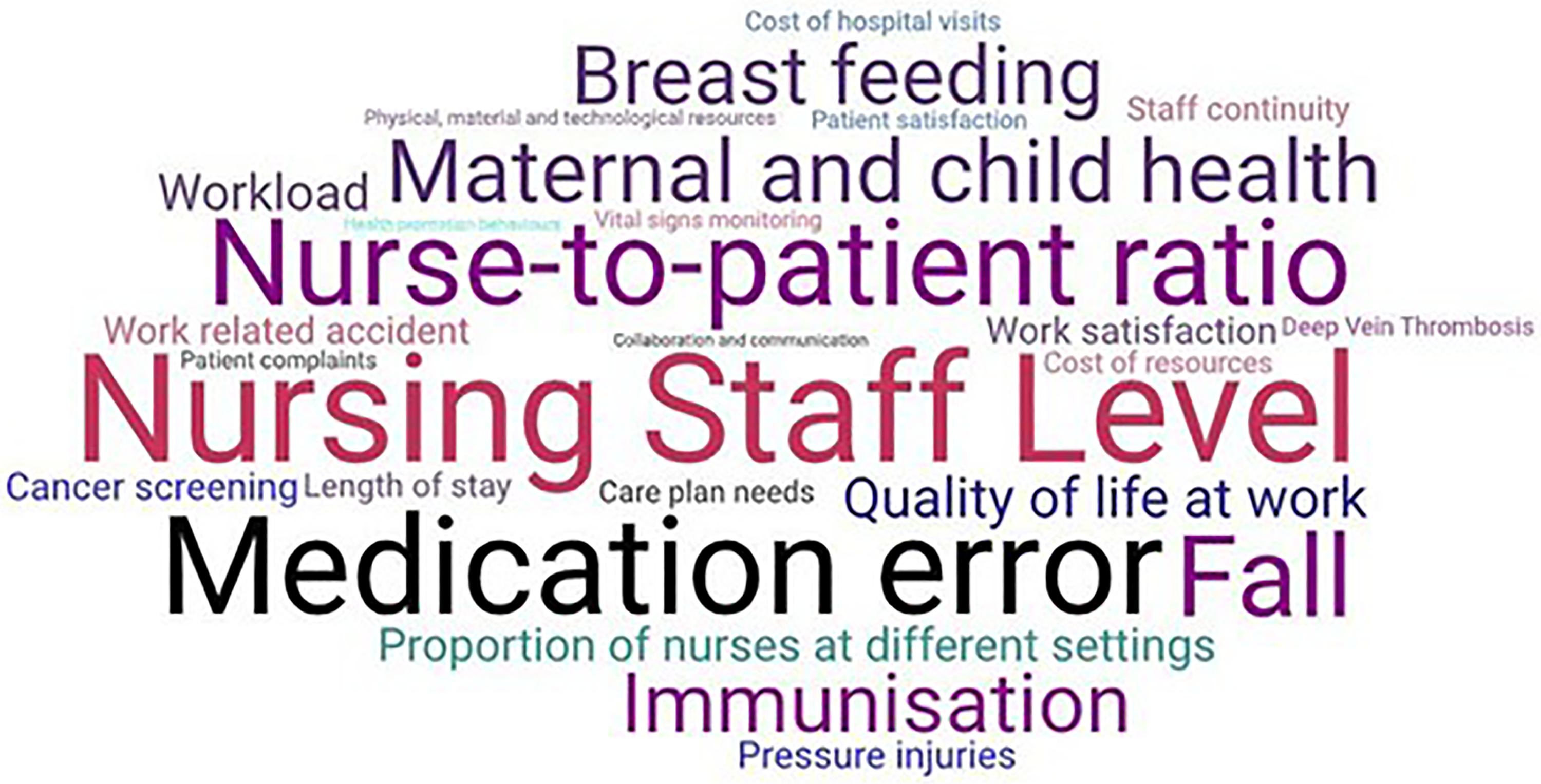
Nursing-Sensitive Indicators for NIA prioritization from nurses’ perspective. The larger the distinction in the size of the words the higher the frequency it was mentioned in the documents collated from the nurses during the workshop. The word cloud was created using https://wordart.com.
Discussion
This study used literature review and stakeholder engagement sessions to outline NSIs within a structured framework. Our findings suggest the multifaceted nature of nursing roles and the complexity of evaluating nursing care quality, emphasizing the need for a balanced skill mix, experience, and patient-centric approaches. This iterative effort provides the foundation for further dialogue and the development of national nursing indicators in the Malaysian healthcare system.
Numerous studies have examined NSIs but discrepancies in terminology and methodological differences contribute to research discordance in identifying quality indicators. These indicators, when reported in aggregate form or with overlapping definitions by different nursing studies, pose significant challenges to nurse managers who wish to select NSIs appropriate for the local ecosystem (Burston et al., 2014). An example of such inconsistency is the reporting of mortality indicators, where some studies apply a defined time frame while others provide a broad definition (Battaglia et al., 2016; Clemens et al., 2021; Middleton et al., 2007; Needleman et al., 2002; Wagg et al., 2018). This inconsistency makes it difficult to effectively compare and interpret the quality of care across healthcare settings and demographic groups in different countries. To address this challenge, this study improved the clarity for stakeholders by categorizing indicators with multiple interpretations into different codes with definitions. By clarifying the terminological inconsistencies associated with these indicators, the study contributes to harmonizing the understanding and categorization of NSIs, thereby improving the clarity and comparability of quality indicators in different settings.
The priority given to the nursing staff level indicator locally is well-supported and consistent with evidence that a strong workforce is crucial for optimal patient outcomes (Afaneh et al., 2021; Dubois et al., 2013; Goh et al., 2020; Scheel-Sailer et al., 2022). While patient characteristics influence adverse outcomes, nurses’ organizational citizenship behavior has also been shown to impact nursing care quality, patient satisfaction, and the well-being of nurses (Mazzetti et al., 2022; Mitchell et al., 2024). Research proves that the perceived differential treatment by nursing managers has an impact on this behavior more than the quality of this relationship (Mitchell et al., 2024). Leadership strategies such as just resource allocation and involvement of frontline nurses in administrative decision-making can minimize this disparity in perceived treatment differentiation and can lead to tangible improvement in care quality
The predominant focus of local indicators on outcome or structural metrics, as opposed to patient-centered metrics, is likely due to a greater emphasis on clinical outcomes and structural development. For example, NSIs such as nursing education highlight the emphasis given to empower nurses to stay clinically relevant and ensure professional development is at par with the latest practice. Additionally, by empowering nurses with the right knowledge and training, patient education can be delivered in an effective manner which indirectly influences patient outcomes and care quality. However, the lack of adherence to process indicators may obscure the true intent of promoting quality care because missed nursing care has caused substantial issues in healthcare, as demonstrated by Griffiths et al. (2018) and Whitehead et al. (2019). By organizing frequent stakeholder engagement, the importance of considering structural, process, and outcome indicators as interconnected elements in promoting quality care was conveyed. Despite the active engagement of nurses in maternal and child health activities and various other process indicators, these efforts needed to be adequately reflected as NSIs. Through our continuous advocacy, stakeholders recognized the significance of incorporating nursing care processes as NSIs and identified this area as important for prioritization during the workshop.
During the review, the authors found that all 64 studies had at least one outcome indicator captured underscoring its comprehensive nature. The relevance of this indicator in many aspects of patient care provides an overview of nursing care which makes it valuable to measure general quality improvement. A recent study conducted in Jordan highlighted that more than a third of identified NSIs for the country were outcome indicators (Afaneh et al., 2024). In Malaysia, nurses are primarily responsible for medication administration in the inpatient setting, and prioritizing medication error as an area of concern for NSIs enhances accountability within the profession which fosters improvement in care delivery. Nurses are central to the tenets of healthcare and work closely with a range of healthcare professionals. The collective effort that is developed by utilizing NSIs promotes a team-based approach to healthcare delivery as this encourages communication and cooperation among different actors in the system. This holistic approach improves patient safety and provides enhanced care quality and information to policymakers for making data-driven decisions on resource allocation. Additionally, the roles that nurses play in providing health promotion and prevention information to patients can reduce disease burden and provide empowerment to patients. By identifying the best practices and patient care standards, policies and strategies can be curated to not only impact the public health ecosystem here but also improve healthcare equity. Access to care and health disparity that often affect the vulnerable population is minimized and standardized care with resources which are allocated to areas that are in dire need ultimately improves patient engagement and satisfaction
Malaysia's diverse population provides unique cultural and socioeconomic factors that can provide a rich context for developing adaptable NSIs that could be beneficial in other multicultural settings. Whilst the limitations in resources could dampen the implementation of technological advancement in most healthcare settings in Malaysia, the growing investment and stance by the Ministry of Health in healthcare digitalization provides an opportunity for the integration of NSIs, such as nursing care plans, in the healthcare landscape. This could stimulate nursing research by utilizing health registry data that contain patient-reported outcomes from a nursing perspective to improve nursing care quality (Hakami et al., 2023). Technology presence could also be used to protect NSI by implementing strict access controls, data protection with encryption, and regular audits to ensure patient privacy and security are not breached. The strength of this study lies primarily in its involvement of stakeholders and implementers in its methodology. Information captured in local facilities that need to be documented formally might have gone unnoticed without directly engaging stakeholders. By engaging a broad range of nurses, researchers, and policymakers, the study has fostered a more informed and contextual understanding of NSIs. Secondly, data collection was conducted using the snowball approach, which was instrumental in identifying and engaging nursing personnel for on-site data collection. The integration of literature review and grey literature has enabled the development of an evidence base. This method ensured the quality and relevance of the data collected and promoted a deeper understanding of the different dynamics in nursing across various healthcare settings in Malaysia. It contributed to a more grounded analysis of priority areas of NSI development. Doody et al. (2019), Gathara et al. (2020), El-Jardali et al. (2023), and Robson et al. (2023) have highlighted how this process is critical to the development of a robust and applicable national framework for nursing indicators.
On the other hand, there are limitations in this study. First, the study focuses on providing an evidence base tailored to the public health sector in Malaysia, which may impede the general transferability of findings to other health contexts with different socio-political and economic dynamics. Search engines, especially Google Search, are known to display selective information through algorithms that have been personalized to users. This effect, commonly known as the bubble effect, could have resulted in a selection bias in articles searched through Google. While the inclusion of stakeholders in this process of identifying NIA is highlighted as the strength of the study, several biases should be acknowledged. The participant pool which included nurses from administrators to frontliners could have benefited by including nurses from all care disciplines and urban-rural settings. The presence of senior nurses who are policymakers in workshops might have also led to expert dominance which could have led to socially desirable or nonresponses amongst some participants.
Implications for Practice
Policy areas that cover patient safety, care quality, staffing levels, and resource allocation can be influenced by the findings as robust NSIs can guide daily administrative and operational decisions such as nursing staff assignments, care pathway protocols, and resource distribution. Areas of concern and the NSI list incorporated a mechanism that included systematic engagement processes such as stakeholder engagements, expert consultations, and iterative feedback loops which ensured all perspectives were considered.
Future research can incorporate a feasibility study that identifies the strengths and weaknesses of the NSIs can aid in ensuring effective implementation and encourage scalability. Resource limitations and variations in different regions, availability of technology, awareness towards NSIs, nursing education, and training are some factors that influence the rollout of NSIs and the scalability of these indicators. Addressing these factors while evaluating the benefits such as improvement in patient outcomes and enhanced healthcare quality can guide stakeholders in the decision-making process. Continuous evaluation and discussion of these NSIs in the current national quality forum amongst policymakers and nursing managers can serve as a platform to ensure the relevance of NSIs in an evolving healthcare ecosystem.
This study’s findings can inform the work of researchers, policymakers, and stakeholders to promote the stakeholder-led approach methodology to synthesize evidence that can be translated into practice. The results will be beneficial for nurse managers to design indicators and assessment tools necessary for NIA development and to select appropriate NSIs in their local settings. Future research can test and adapt this approach in different settings to strengthen evidence-based policymaking. Through this study, we emphasize the importance of frequent stakeholder engagement to increase the likelihood of knowledge translation.
Conclusion
In conclusion, this study provides an initial list of the existing research on NSIs and provides the details relevant to it. It lays the foundation for further dialogues among stakeholders, policymakers, and practitioners to collaboratively improve the quality and safety of nursing care in Malaysia. The study also highlights the iterative approach in identifying critical areas of concern emphasizing the importance of stakeholder engagement through a collaborative process. By identifying gaps and establishing an evidence base tailored to the local context through evidence synthesis, stakeholders can formulate strategies that align with the priority setting to enhance the quality of nursing care.
Supplemental Material
sj-docx-1-son-10.1177_23779608241286426 - Supplemental material for Evidence Synthesis for the Development of National Nursing-Sensitive Indicators in Malaysia: A Literature Review and Stakeholder Engagement Approach
Supplemental material, sj-docx-1-son-10.1177_23779608241286426 for Evidence Synthesis for the Development of National Nursing-Sensitive Indicators in Malaysia: A Literature Review and Stakeholder Engagement Approach by Devi Shantini Rata Mohan, Nurul Iman Jamalul-lail, Diane Woei-Quan Chong, Kalvina Chelladorai, Kartiekasari Syahidda Mohammad Zubairi, Inin Roslyza Rusli, Nur Azmiah Zainuddin, Roslina Supadi, Noor Hasidah Ab Rahman, Mariyah Mohamad, Devi K. Saravana Muthu, Gowry Narayanan and Cheah Jenny in SAGE Open Nursing
Supplemental Material
sj-docx-2-son-10.1177_23779608241286426 - Supplemental material for Evidence Synthesis for the Development of National Nursing-Sensitive Indicators in Malaysia: A Literature Review and Stakeholder Engagement Approach
Supplemental material, sj-docx-2-son-10.1177_23779608241286426 for Evidence Synthesis for the Development of National Nursing-Sensitive Indicators in Malaysia: A Literature Review and Stakeholder Engagement Approach by Devi Shantini Rata Mohan, Nurul Iman Jamalul-lail, Diane Woei-Quan Chong, Kalvina Chelladorai, Kartiekasari Syahidda Mohammad Zubairi, Inin Roslyza Rusli, Nur Azmiah Zainuddin, Roslina Supadi, Noor Hasidah Ab Rahman, Mariyah Mohamad, Devi K. Saravana Muthu, Gowry Narayanan and Cheah Jenny in SAGE Open Nursing
Footnotes
Acknowledgments
The authors would like to thank the Director-General of Health, Malaysia, for his permission to publish this article. We also extend our appreciation to our fellow research members for their valuable support in data collection and analysis, which significantly contributed to the research process.
Authors’ Contribution
The role of authors and the contribution listed here is according to the criteria set by CrediT. Devi Shantini Rata Mohan contributed to conceptualization, methodology, formal analysis, investigation, project administration, visualization, writing–original draft preparation, and writing–reviewing and editing. Nurul Iman Jamalul-lail contributed to conceptualization, methodology, formal analysis, investigation, writing–original draft preparation, and writing–reviewing and editing. Diane Woei-Quan Chong contributed to conceptualization, methodology, formal analysis, investigation, supervision, writing–original draft preparation, and writing–reviewing and editing. Kalvina Chelladorai contributed to methodology, formal analysis, investigation, and writing–reviewing and editing. Kartiekasari Syahidda Mohammad Zubairi contributed to formal analysis, investigation, and writing–reviewing and editing. Inin Roslyza Rusli contributed to formal analysis, investigation, and writing–reviewing and editing. Nur Azmiah Zainuddin contributed to formal analysis, investigation, and writing–reviewing and editing. Roslina Supadi contributed to formal analysis, investigation, and writing–reviewing and editing. Noor Hasidah Ab Rahman contributed to formal analysis, investigation, and writing–reviewing and editing. Mariyah Mohamad contributed to formal analysis, investigation, and writing–reviewing and editing. Devi K. Saravana Muthu contributed to conceptualization, methodology, resources, and writing–reviewing and editing. Gowry Narayanan contributed to conceptualization, methodology, resources, and writing–reviewing and editing. Cheah Jenny contributed to conceptualization, methodology, resources, and writing–reviewing and editing.
Availability of Data and Materials
This study was registered with the National Medical Research Register (NMRR ID-23-01449-ICT). The review protocol is available upon request from the author. Data generated or analyzed throughout this study are included in this article in a brief manner to ease comprehension. A detailed summary of all indicators, including their definitions and calculation methods where applicable, is available upon request from the authors. Stakeholder documents are available upon request from the corresponding author on reasonable request and permission from the Director-General of Health, Malaysia. A brief description of the gathered indicators is categorized by their respective subsystems, dimensions, and variables.
Declaration of Conflicting Interests
The authors declared no potential conflicts of interest with respect to the research, authorship, and/or publication of this article.
Ethics Approval
This study received an ethics exemption from the Medical Research & Ethics Committee Malaysia (Ref: 23-01449-ICT).
Funding
The authors received no financial support for the research, authorship, and/or publication of this article.

Supplemental Material
Supplemental material for this article is available online.
References
Supplementary Material
Please find the following supplemental material available below.
For Open Access articles published under a Creative Commons License, all supplemental material carries the same license as the article it is associated with.
For non-Open Access articles published, all supplemental material carries a non-exclusive license, and permission requests for re-use of supplemental material or any part of supplemental material shall be sent directly to the copyright owner as specified in the copyright notice associated with the article.
