



Abstract
Introduction
In the contemporary healthcare landscape, the paradigm of patient experience and patient-centered care has emerged as a crucial point for healthcare reform, emphasizing the patient's active role in shaping healthcare systems.
Objective
This study aimed to investigate the patient experience level of nursing care and examine associated factors among hospitalized patients in Riyadh, Saudi Arabia.
Methods
Cross-sectional secondary analysis of patient experience data included more than 8,000 patients discharged from Ministry of Health hospitals in Riyadh during 2022G. The national survey examined patient perceptions of multiple aspects of nursing care. Although most patients gave high overall scores, lower scores were observed for nurse introductions and prompt responses to call buttons. There are opportunities to improve communication and response through interventions targeting nurse staffing, training, and incentives. A checklist called Strengthening the Reporting of Observational Studies in Epidemiology (STROBE) was used to report the study.
Results
71.2% Of patients rated their nursing care experience as “very good.” No differences were seen between genders. However, Saudi patients reported higher satisfaction than non-Saudis (p = .001). The top-scored nursing aspects were friendliness/courtesy (70.2% “very good”) and nurses’ skill level (65.8% “very good”). Lower ratings occurred for nurses who introduced themselves (54.0% “very good”) and for prompt response to call buttons (58.5% “very good”). Targeted improvements in communication and responsiveness could help address these gaps in patient experience scores between nursing care domains.
Conclusions
Most of the patients indicated overall positive nursing care experiences, which include opportunities for improvement in nurse introductions and responsiveness to patient needs. Boosting communication through nurses consistently introducing themselves and managing heavy workloads to allow faster call button response times could enhance patients’ perceptions of their nursing care quality.
Introduction
In the contemporary healthcare landscape, the paradigm of patient experience and patient-centered care has emerged as a crucial point for healthcare reform, emphasizing the patient's active role in shaping healthcare systems. As a fundamental component of healthcare delivery, nursing care significantly impacts patient outcomes and satisfaction. The patient experience (PX) includes all patient encounters with the healthcare system, particularly those with nurses who spend the most direct time with patients (MOH, 2019). The emphasis is now on caring for the patient and ensuring a positive experience. Oben (2020) defined PX as the patient's experience during the health journey provided by the healthcare provider. Furthermore, PX is linked to improved overall health outcomes, enhanced patient satisfaction, and potentially decreased healthcare costs (Doyle et al., 2013). Moreover, by evaluating and improving care delivery approaches, patients’ experiences and perspectives have become more valuable as healthcare systems have modernized and informed consumers. However, hospitals are constantly challenged to offer high-quality care that fulfills their consumers’ expectations.
Patient-centered healthcare is a concept that puts the patient at the forefront of their care, emphasizing their active participation and involvement in making decisions about their health and healthcare (Fix et al., 2018; Greene et al., 2012). With changing landscapes in healthcare marked by advancements in technology, patient empowerment, and consumerism, this new healthcare paradigm has been established. Patient-centered care seeks to enhance the quality and delivery of healthcare services, enhance patients’ overall experience, and ultimately improve health outcomes (Mohammed et al., 2016). It is, again, based on the needs, preferences, and values of the patient but emphasizes the interaction and collaboration in decision-making on the part of patients and healthcare providers.
Moreover, it recognizes that each patient is unique and their journey through the healthcare system is highly personal. This strategy also considers patient empowerment to engage in their care by asking questions, making informed decisions, and managing their health conditions (Castro et al., 2016). What patient-centered healthcare ensures is that it helps harmonize patient expectations with their experiences. It believes that healthcare is more of an art of healing diseases but rather a knowledge and handling of the sick person's physical, emotional, and social needs. By encouraging a patient-centered approach to healthcare, medical professionals can enhance patient satisfaction, engagement, and compliance, ultimately leading to better health outcomes (Rathert et al., 2017; Vogus et al., 2020). Despite this, International Patient Experience Programs (IPEPs) are crucial to creating this transition (Siddiqui et al., 2023). A significant goal of IPEPs, stated by (Almohaisen et al., 2023), is to improve the patient experience in healthcare. These programs emphasize communication, understanding other cultures, providing tailored care, and using feedback to improve. However, the main goal is to ensure that patient's needs and preferences come first in the healthcare environment, which will help improve their results and make them happier.
Studies show that positive experiences with nursing care, including respect, being informed and involved in care decisions, and having questions answered by nurses, are associated with higher overall satisfaction with hospital stays (Al-Jabri et al., 2021). On the contrary, poor patient experiences related to nursing care, such as perceptions of rudeness, lack of empathy, ignoring patient concerns, and neglecting basic needs, can lead to frustration, loss of trust, and total dissatisfaction with healthcare services received (Albahrani et al., 2022; MOH, 2019). Negative experiences also reduce patient compliance with treatment plans and uptake of medical advice, leading to adverse health outcomes (Albahrani et al., 2022). Therefore, monitoring patient experience metrics specific to nurse–patient interactions and determining ways to improve them is essential for hospitals to meet patient-centered goals and quality care standards. Identifying factors influencing patient experience can help target nursing policies, communication training, and service delivery improvements.
Review of Literature
According to Ahmad et al. (2020), the Patient-centered Nursing Theory, founded by Faye Abdellah in the 1940s, is intended to direct medical care and assure excellent care, hence improving the positive patient experience in hospitals. This theory applies to this study as it involves 10 steps to identify the root of the problem and more in-depth knowledge to develop a treatment. Among the 10 steps are recognizing the patient's needs and sorting the essential and pertinent information. The following phases include drawing conclusions about similar nursing issues reported by other patients and deciding on a treatment strategy. The theory requires a healthcare giver to test generalizations and develop new ones with the patient (Ortiz, 2020). The next stage in this paradigm is to confirm the patient's outcomes of their nursing difficulties while observing and assessing the patient over time to detect any attitudes or cues that may influence their behavior.
In contemporary healthcare, the imperative to transcend conventional models has given rise to an era where patient experience serves as a critical compass in shaping the trajectory of future healthcare paradigms. Assessing patient satisfaction and experience is vital to understanding well-rendered quality care and the areas that call for improvement. It is more so in nursing care, where nurses are the primary caregivers, and as such, they spend the most direct time with patients. Exploration of the patient's satisfaction and experience in nursing care will provide insights to the healthcare service providers on some of the areas in service provisions that need improvements toward optimizing nursing practice and, in turn, better outcomes among the patients (Molina-Mula & Gallo-Estrada, 2020). The exploration and identification of the determinants of patients’ experiences with nursing care will allow providers to sensitize healthcare providers to pay closer attention to specific skills development areas, such as communication, empathy, and general nurse development. It shall enhance the patient's experience and level of satisfaction, hence an improvement in the general quality of healthcare offered within MOH Saudi Arabia's hospitals.
Riyadh is the capital and largest city of Saudi Arabia, with a population that has proliferated from 6.5 million in 2017 to projected figures that exceed 15 million by 2030 (Albahrani et al., 2022). As the capital city, Riyadh houses an extensive public health infrastructure headed by the Ministry of Health (MOH), which operates over 49 hospitals, providing over 8,707 beds in the Riyadh Region (MOH, 2019). Population expansion and high rates of chronic diseases have contributed to steadily rising healthcare demand and hospital utilization, with MOH facilities in Riyadh recording over 2.9 million inpatient admissions in 2021 alone, based on recent statistics (MOH, 2019). With high patient volumes passing through MOH hospitals in Riyadh annually, monitoring and enhancing patient experience is crucial yet challenging. Studies demonstrate that elevated hospital occupancy rates stretch resources and affect healthcare quality, lowering patient satisfaction (Albahrani et al., 2022). As the population burden expands in line with goals to transform Riyadh into a major global city, investments in MOH hospital capacity, patient experience programs, and quality benchmarks aligned with leading countries, have become urgent healthcare priorities. Improving patient experience in public hospitals will require evidence-based changes tailored to local care deficits across Riyadh's diverse and growing patient demographics.
In Saudi Arabia, most of the healthcare system is public and is headed by the Ministry of Health, which runs hospitals, various primary healthcare centers, and dispensaries in the country (Asmri et al., 2020). The facilities have provided curative and preventive healthcare services to an increased Saudi population in the near past (Albahrani et al., 2022). MOH is committed to delivering healthcare services to Saudi nationals and, in some instances, expatriate inhabitants. In Saudi Arabia, MOH-affiliated hospitals play a significant role in meeting the health demands of a rapidly expanding population and, consequently, take the lead in providing inpatient care (AlFahmi et al., 2023). Recently, there has been massive investment in MOH hospitals to enhance capacity, quality, and service delivery to give its citizens excellent healthcare. With rapid population growth, a rise in the need for medical services corresponds to this growth. The truth is that it puts so much pressure on the healthcare system. Thus, MOH hospitals can use tools to maintain the standard of services offered in monitoring and assessing patient satisfaction and experience.
The developing healthcare system in Saudi Arabia demonstrates how crucial it is to prioritize patients. Nurses need to understand what affects patient experiences in the hospital. Despite this importance, we have yet to learn much about what makes patients satisfied when they receive care from Saudi hospital nurses. This study wants to explore how patients’ experiences are connected to their gender and nationality. This study uniquely focuses on the patient's experience with nursing services, often grouped with more extensive evaluations of hospital experience. The study specifically aims to gauge the levels of experience related to nursing care using granular survey data; the Ministry of Health will identify areas for improvement in Riyadh's hospitals. By distinguishing factors influencing nursing-specific perceptions, the results can direct policies and initiatives to optimize nursing practice, improve nurse–patient communication, and increase experience scores (Al-Jabri et al., 2021). As front-line caregivers, optimizing nursing care is essential to strengthening the hospital's reputation, utilization, and impact on community health.
Research Questions
The following questions were the focus of the study:
What factors are most strongly associated with positive patient experiences in nursing care within Ministry of Health hospitals in Riyadh, Saudi Arabia, and how do these factors vary by demographic characteristics such as age and gender?
Methods
Study Design
The study design was a retrospective cross-sectional study of inpatient patient experience survey data from one region (Riyadh), conducted by Health Links/Press Ganey using the National Survey on Patient Experience (PXMP). The PXMP surveyed a probabilistic sample of (N = 181) hospitals of Saudi Arabia's Ministry of Health (MOH) located in Riyadh. Data were collected during 2022G, including patient experience in inpatient departments, nursing care factors, and demographics. Strengthening the Reporting of Observational Studies in Epidemiology (STROBE) checklist was used to report the study.
Sample and Setting
The target population of this study was patients undergoing treatment at MOH hospitals in the Riyadh region. In simple random sampling, each respondent in the PXMP survey was directly approached and provided equal opportunities to generalize findings to the targeted population. This research used data on patients’ experiences from the PXMP survey among 8,399 patients in MOH hospitals in Riyadh. Regarding Inclusion criteria, the subjects were at least 18 years old, of both genders, Saudi and non-Saudi nationalities, and residents of Riyadh city. Patients who died during their hospital stay and those admitted for less than 24 hr were excluded from this study. Such criteria were set to ensure that the data truly reflected the experiences of patients who had adequate time spent in the hospital, thus exposing them to nursing care.
The setting was MOH hospitals in Riyadh City, the capital of Saudi Arabia, with an approximate population of 7.3 million by 2021. The PXMP survey data to be analyzed were from inpatient hospital departments during 2022G. In this cross-sectional study design, the analysis had the potential to examine the PXMP survey data from a broad sample of factors related to inpatient care and nursing services in MOH hospitals within the Riyadh region. Secondary data from a standardized national survey allowed for a large-scale assessment of patient experience and satisfaction across numerous hospitals in the capital city.
Data Collection and Measurement
The data was collected using the Press Ganey survey, a standardized self-administered questionnaire used to evaluate patient experiences across MOH facilities. It contains 11 domains, including a nursing care domain with 25 questions, rated on a 5-point Likert scale. The survey was provided in both Arabic and English. The patient received a mobile message with a link to a patient experience survey after discharge from the inpatient wards. The patients rated their experiences from 1 (very poor) to 5 (very good). MOH and Press Ganey surveyed statistically significant samples of recently discharged patients who provided informed consent. The surveys were conducted online in multiple languages. The patients were contacted by telephone to encourage participation. The survey asked about 11 domains related to hospital stay, and this study focuses on the nursing care domain (nine questions).
Validity and Measurement
In the study, the researcher conducted two types of validity: content and construct. Content validity was measured using the Pearson correlation coefficient between the patient experience score and its items. A significant correlation coefficient greater than .4 reflects acceptable content validity (Dunn Galvin et al., 2008). Construct validity was measured using Explanatory Factor analysis for patient experience items. Extraction sums of squared loadings > 50% and Factor Loadings greater than 0.5 reflect acceptable construct validity (Suryani & Tentama, 2020). The KMO coefficient indicates whether the sample size is sufficient for factor analysis. A sufficient sample size is indicated by a KMO coefficient larger than 0.5 when performing factor analysis (Mohammad Beigi et al., 2015). Additionally, the researcher calculated the Cronbach's alpha coefficient to assess reliability, finding that patient experience items with a Cronbach's alpha coefficient of .929 > .7 had acceptable reliability. According to Morgan et al. (2004), Cronbach's alpha coefficients vary from 0 to 1, with values better than .7 indicating acceptable reliability.
Ethical Considerations
The Saudi Arabian Ministry of Health (MOH) approved the study ethically. Before receiving their consent from Health Links/Press Ganey, participants were given an information sheet and verbal explanations of the study's goal. The information sheet also addressed participants’ rights, confidentiality, anonymity, and the use of their data.
Data Analysis
Microsoft® Excel® (Microsoft® Office 2019, Microsoft® Corp., Redmond, WA, USA) was used to organize and update data. The Statistical Package for the Social Sciences (IBM SPSS Statistics 26, Armonk, NY, USA) was used to conduct the statistical analyses. A descriptive statistical analysis was carried out. To evaluate the degree of patient experience, score, and its items (significantly more extensive than 0.4), the Pearson correlation coefficient (r) was employed. T test was used to assess the differences in patient experience scores according to gender and nationality.
Result
Demographic Characteristics
A total of 8,399 patients who were admitted to MOH hospitals in the Riyadh region submitted a complete Press Ganey survey. Most respondents, 56.3% (N = 4,727), were female, and 86.8% (N = 7,288) were Saudi. More than 70.9% were patients themselves of the respondents were patients, and 56.9% of the respondents had entered the hospital for the first time. 78.6% Of the respondents have entered the emergency room. Analyzing these demographic factors provided insight into the characteristics of the respondent sample. The descriptive analysis identified the composition of the respondents by critical factors such as nationality, gender, admission status, and admission source to better understand variations in patient satisfaction. Participant characteristics presented in Table 1.
The Characteristics of the Participants.

Association of Patient Experience Score With Selected Demographic Variables
Independent sample t-tests were conducted to analyze differences in mean overall patient experience scores between demographic groups, as outlined in Table 2.
Patient Experience Score According to Gender and Nationality.

No significant differences were found between males (M 4.51, SD 0.90) and females (M 4.53, SD 0.91), p = .325. Saudi patients reported significantly higher mean satisfaction scores (M 4.63, SD 0.75) compared to non-Saudi patients (M 4.50, SD 0.92), p = .001.
Patient Experience With the Nurse Domain
The descriptive findings of patient experience with the nurse's domain of the Press Ganey survey are presented in Table 3. The respondents gave their opinions on aspects of nursing care, such as patient care, responsiveness, communication, and skill level. More than 80% of the respondents rated nurses as “good” or “very good” for most factors. The only exception was nurses who introduced themselves, where only 79.1% gave positive ratings. Moreover, 71.2% described their patient experience with nursing care as “very good.” Patient experience scores showed no significant variations by gender. However, there was a modest but statistically significant difference between Saudis (M 4.63) and non-Saudis (4.50), with Saudis reporting somewhat more pleasant overall experiences. The critical variables analyzed include factors of patient experience and overall patient experience, broken down by demographic factors.
Descriptive Results of Patient Satisfaction With the Nurse Domain.
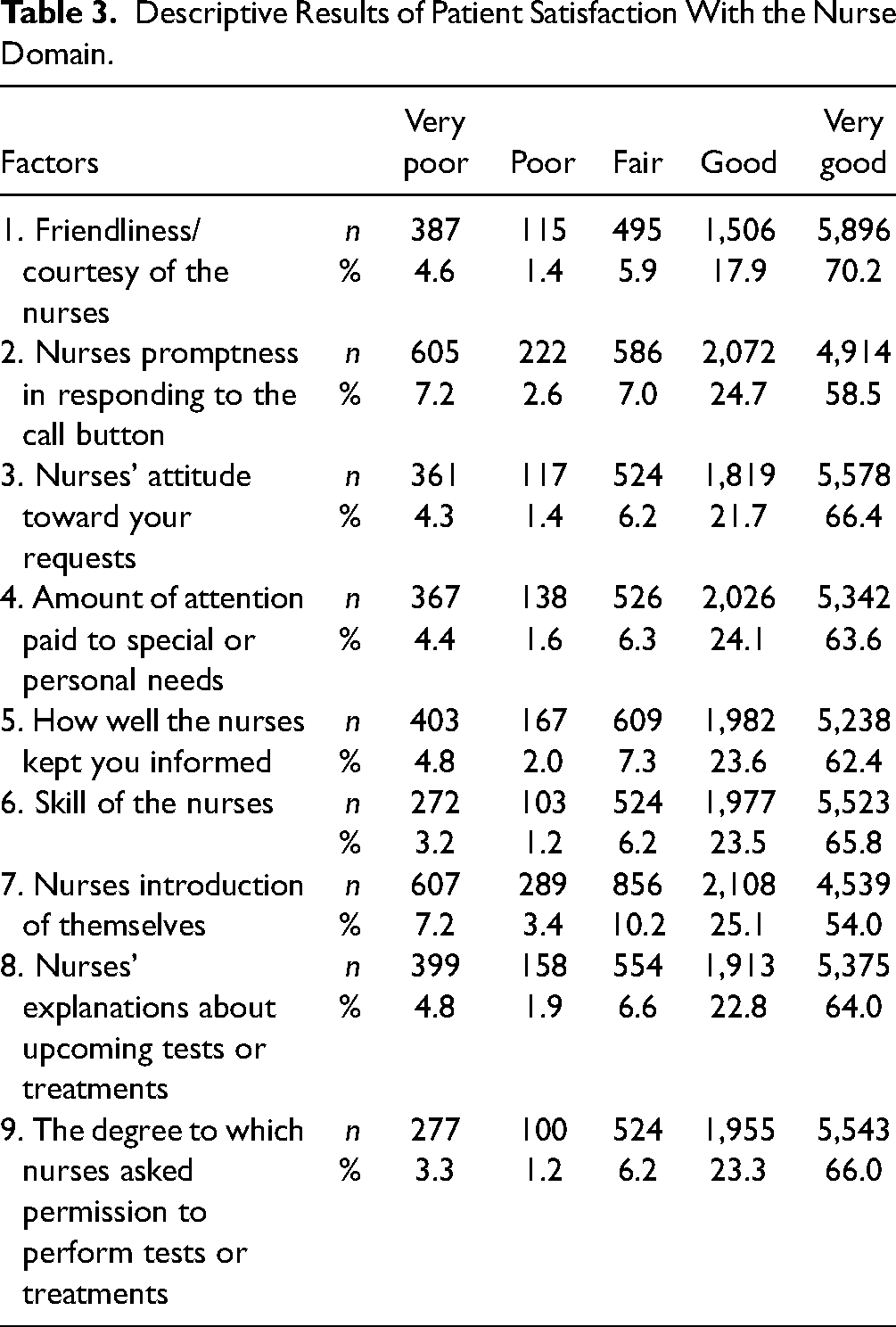
Analysis was done on the frequencies and percentages for the nine items about experiences receiving nursing care. The top three nursing care factors that received the highest percentage of “very good” responses were:
Friendliness/courtesy of nurses (70.2% very good). Nurses’ attitude toward patient requests (66.4% very good). The skill of nurses (65.8% very good). Nurses’ Introduction of themselves (54.0% very good). How well nurses kept patients informed (62.4% very good).
The two factors that received the lowest percentage of “very good” responses were:
Overall Patient Experience in Nursing Care
The general rating of the respondent's nursing care experience was analyzed using frequencies and percentages. As shown in Figure 1, most of the patients (71.2%) rated their overall experience with nursing care during their hospital stay as “very good.” On the contrary, only a small percentage of patients rated their nursing care poorly. Specifically, only 2.0% of their overall experience rated it as “very poor” and 3.1% as “poor.”

Overall Results for the Level of Patient Experience With Nursing Care.
Correlations of Overall Patient Experience With the Nurse Domain Factors
Table 4 displays the specific questions (items) from the nine Press Ganey surveys in the nursing domain, along with their connections with patient satisfaction ratings. Every item in the nurse domain showed extremely high levels of correlation (p < .001). However, nurses’ attitudes toward the item of request had the highest correlation with all items of patient satisfaction score of the nurse domain.
Correlations of Patient Satisfaction With the Nurse Domains.

Correlation is significant at the .05 level (two-tailed).
Discussion
The findings of this study provide important insights into patient experiences with nursing treatment at Ministry of Health hospitals in Riyadh. The vast majority of over 8,000 surveyed patients gave positive ratings of their nursing care. Specifically, 71.2% rated their overall experience as “very good,” indicating high satisfaction. Only 2.0% and 3.1% rated their experience as “very poor” or “poor,” respectively. This demonstrates that from the patient's perspective, nurses are providing quality care that meets expectations.
The findings of this study showed that non-Saudi patients rated their care experience higher than Saudi patients. While gender did not affect patient experience scores, nationality did have a significant influence. Non-Saudi patients reported higher satisfaction with hospital care compared to Saudi nationals. This provides valuable insights for quality improvement efforts to improve care experiences equally for all patients regardless of demographic factors.
The most vital areas of nursing care based on experience ratings were nurse friendliness, attitude, and skill level. Over 65% of patients rated nurses as “very good” regarding courtesy, attitude toward requests, and overall skill (Senitan & Gillespie, 2019). This shows that patients feel nurses treat them with kindness and respect while competently administering required care. Communication aspects revealed room for improvement, with only 54% rating nurse introductions as “very good” and 62.4% for keeping patients informed. Targeting communication training and standardizing nurse introduction protocols upon patient contact could enhance these ratings (Yalew et al., 2020).
An interesting finding was that non-Saudi patients reported significantly higher satisfaction than Saudis, conflicting with studies finding that minorities often have worse healthcare experiences (Yimer Tawiye et al., 2021). This highlights the need for quality initiatives to improve experiences equally for all patients regardless of nationality. There are limitations to note regarding the data source. As a self-reported survey, there may be response biases. Patients still hospitalized may have hesitated to give negative feedback. Those with very poor experiences affecting discharge timing and health may have been unable to complete the survey. However, the large randomized sample across numerous facilities lends reasonable generalizability.
The results of this study also demonstrated that the majority of respondents had favorable experiences with the nursing care provided in the inpatient units of Riyadh hospitals. Tailoring training and initiatives to strengthen nurse–patient communication, language/cultural competency, and service responsiveness can further optimize satisfaction. Ensuring adequate nurse staffing levels could improve promptness in answering call buttons (Han et al., 2021). Further research should evaluate the impact over time after implementing focused patient experience programs that target identified gaps. Assessing caregiver perspectives on barriers to ideal care delivery could also inform supportive quality improvement policies to aid nursing practice. Ultimately, enhancing patient–nurse interactions and care provision benefits hospital outcomes and the community's health.
Factors Affecting Patient Satisfaction With Nursing Care
Friendliness/Courtesy of the Nurses
Regarding nursing care, the response “very good” that got the highest percentages included friendliness and courtesy of the nurses at 70.2%. This aspect brings into focus the need to approach patients kindly and compassionately. A friendly and courteous nurse can make a big difference in a patient's experience and overall satisfaction with the care provided. This brightens the environment, and at the same time, there is a trust-building process from the patient to the nurse to achieve better health outcomes (Molina-Mula & Gallo-Estrada, 2020).
Nurses Promptness in Responding to the Call Button
Promptness to the call button is supreme in nursing care and determines one's perception of the quality of care. It was noted that only 58.5% of the patients rated the promptness of nurses in answering the call button as “very good.” This highlights the need for many hospitals to improve their staffing and reduce workload to do better on this measure. This can also be enabled through having communications protocols in place and, importantly, ensuring that nurses have the necessary support and training to meet patient needs without delay.
Nurses’ Attitude Toward Your Requests
A critical element of patient-centered care is acknowledging and accommodating the patient's needs and preferences. According to this study, most of the patients, 66.4%, have indicated that nurses’ attitudes toward their requests have been very good. According to the study, the nurses in Saudi Arabia are friendly with people and accommodate their requests, which are two important points for any friendly environment (Alharbi et al., 2020). However, nursing care can be improved, especially when the unique or personal needs of the patients have to be attended to.
Amount of Attention Paid to Special or Personal Needs
Although rated as “good” or “very good” by most patients, it is the item with the lowest percentage of patients’ rating in nursing care regarding the amount of attention given to their special or personal needs. This adds a solid contribution to the overall experience and satisfaction of the patient due to this perception and attention to each patient's unique needs by the nursing staff (Ferreira et al., 2023). Such strategies as personal care plans and communication by or connection with the patient help improve levels of attention to or specific and special needs of the patient.
How Well the Nurses Kept Informed
Clear and effective communication is an essential component of patient-centered care. Patients’ rating of “very good” concerning how well the nurses kept them informed ranged. Overall, this underscores the need to improve communication between the patient and the provider, emphasizing information that the patient needs to know about his or her treatment plan and upcoming tests or procedures. This becomes feasible through improving the oratory competencies of nurses or installing standard procedures to keep patients in the loop on present and upcoming care.
Skill of the Nurses
The high percentage of “very good” responses for the nurses’ skills was only 65.8%, as per the study. This, in turn, is a true reflection of the high level of competence and expertise in the country's nursing population. For that very good reason, however, there would always be room for improvement, and the current training and professional development would only further assist the nurse in pursuing actualized new evidence-based practices and better skills.
Nurses’ Introduction of Themselves
In this study, 54.0% of the patients rated “very good” on the Introduction of the nurses to the patient as part of the fundamental relationship and trust between patients and nurses. This means that this particular area of nursing care is one area in which the nurses need to be quite alert since it can primarily affect how the patient receives the care given to him or her.
Nurses’ Explanation of Upcoming Tests or Treatments
Effective communication between healthcare providers and patients is crucial in ensuring patient-centered care. The study showed that 64.0% of patients rated the explanation by the nurses on the test or treatment to be “very good.” However, this aspect of nursing care scored one of the lowest percentages in terms of “excellent” responses and, hence, called for some improvement. Clear and effective communication on testing and treatments will equally help the patient contribute to the discussion on these healthcare decisions and be satisfied with care service.
Degree to Which Nurses Asked Permission to Perform Tests or Treatments
The questionnaire in this study had a high percentage of “very good” (66.0%) for the degree response to nurses asking the patient for permission to conduct tests or treatments. This emphasizes a strong consideration of patient autonomy and his role in making decisions about received healthcare. As an essential part of patient-centered care, this ensures patients are empowered with the right kind of information to be able to make choices regarding their health.
In summary, this is quite an enlightening research study demonstrating the patient experience and satisfaction with the nursing care given in this country. The overwhelming positive ratings attest to the excellent quality and high regard in which nurses, according to patients within the country, consider care. The current study also found some areas where further improvements are necessary, like the communication and responsiveness of the staff, to elevate the status of patient-centered care further. In this context, identifying and working on such areas would only help the hospitals in Saudi Arabia continue to focus on patient-centric care and further improve patients’ experiences and outcomes.
Importance of Prioritizing Patient-Centered Healthcare in Saudi Arabia
Patient-centered care has slowly become part of the recognized and key strategic priorities of the Ministry of Health and priority areas in the healthcare system worldwide. Patient-centered care is also among the strategic priorities of Saudi Arabia's Ministry of Health, including “ensuring patient safety and satisfaction” and carrying out the statement for the said strategy, among which is. The patient-centered approach is essential, for it means putting the patient in the center of the medical system, recognizing his needs and wants, and allowing him to take part in all decisions regarding his healthcare in an informed manner (Grover et al., 2022). On the other hand, patients benefit through improved outcomes, reduced healthcare costs, and improved satisfaction and experience by the institution or provider taking a patient-centered approach (Yu et al., 2023). Patient-centered care will be better delivered and experienced in healthcare, given that the country's healthcare system is also progressively modernizing and developing. The results may serve as baseline information about factors that help the health authorities of Saudi Arabia to improve patient-centered care quality. This will be done after understanding the determinants that make patients satisfied with nursing care. The strength of this article is that it focuses on certain domains that require localized improvement in nursing care, such as communication, responsiveness, and introduction of the nurse. Attention focused on these areas will bring nursing care services in line with the values of patient-centered care in KSA, thus enhancing experienced patient and related patient satisfaction.
Limitations and Strengths
A fundamental limitation of this study is that it relies on self-reported patient experience survey data, which can be subject to response biases in that hospitalized patients may have hesitated to give overly negative feedback out of concern for their ongoing care. Additionally, those with impoverished experiences impacting discharge timing or health outcomes may have needed help to complete the survey. The study is cross-sectional, capturing patient experiences at a single point in time. This design does not allow for examining changes in patient experiences over time or the long-term effects of any interventions. Longitudinal studies would be better suited to understanding the dynamics of patient satisfaction and identifying trends or persistent issues in nursing care (Caruana et al., 2015).
Additionally, the study's cross-sectional nature means it cannot establish causality, only associations. The last aspect is that it relies on secondary data analysis, which limits the ability to control for all potential confounding variables. The original dataset may have included only some relevant variables or detailed contextual information, which could have influenced the patient experience but still need to be accounted for in the analysis. Consequently, the findings may be subject to omitted variable bias, affecting the conclusions’ validity.
Moreover, a significant strength is the randomized sample size of over 8,000 patients across numerous MOH facilities in Riyadh, allowing for reasonable generalizability of the findings to the target population. Using a standardized, validated national patient experience survey instrument also enhances the quality and reliability of the data collected. The study offers a thorough and accurate national review of patient satisfaction and experiences with nursing care in Saudi Arabia's inpatient departments. This study endeavored to analyze patient perceptions of nursing care quality and determine factors that drive positive and negative experiences in Riyadh's public hospitals. As nurses spend considerable time interacting with patients, evaluating patient perspectives can reveal specific deficiencies and improvement areas in nursing communication, responsiveness, education, emotional support, and clinical service delivery (Alhajri et al., 2023). Although studies demonstrate links between patient experience and outcomes, minimal research examines patient experience specific to nursing care (Aljarallah et al., 2023).
Implications for Practice
The research findings significantly impact Saudi Arabian hospital regulations and nursing practice. Targeted initiatives can be developed by pinpointing specific factors like nurse introductions, call button response times, and patient information sharing as areas for improvement. Nursing education and training programs should pay significant attention to communication skills, greetings, and orientation concerning the extent and timelines of responses. Additional changes in the staffing and workloads of the nurses might also be necessary to ensure that they respond to call bells faster. Other solutions that will enhance information transfer include bedroom handoffs and whiteboards. For the administrative side, this type of study data can establish benchmarks for patient experience connected to the quality of nursing on specific indices. Assistance is needed to bring together service incentives or care bundle checklists as new strategies to implement within hospitals in low-scoring areas. It is, therefore, necessary to routinely measure the experience of different patients and explore other populations left out that should be provided for under special programs.
Moreover, given the nurses’ active involvement in relevant perceptions, interventions to boost nurse–patient communication can help raise hospital experience indicators and satisfaction rates. Due to the role of Saudi Arabia, specifically the capital city of the country, Riyadh, it is crucial to efficiently and effectively manage the patient experience, particularly the limited capacity and escalating utilization that the public health system faces, especially for the significant population growth rate (Aljarallah et al., 2023). Therefore, exploring the patient experiences with nursing care in various demographics is crucial, and the findings will be an opportunity to make patient-centered recommendations in improving Riyadh's nursing policies, communication trends, and hospital general care patterns (Alhajri et al., 2023). It is also possible to improve the indicators of nursing experience to enhance public confidence in the organizational-provided public healthcare services and adherence to prescribed treatment courses, as well as to address mandates for increasing patient-centered quality in care provision as the volume of more patients increases.
Future Directions and Recommendation
The results of this study will be utilized to inform the development of nurse-focused initiatives in the future. Training in communication skills is part of this, especially regarding nurse introductions and controlling patient expectations about response times. Exploring workload impacts on responsiveness could inform better nurse staffing and capacity building. Additionally, cultural competency programming and equalizing experience across patient demographics should be addressed. Longitudinal studies assessing such initiatives’ experience metrics pre- and post-implementation can quantify impacts on reported care quality over time. Supplementing subjective survey data with more objective nurse-sensitive outcomes would also strengthen future evaluations. Ultimately, research should guide supportive policies that enable frontline nursing staff to optimize patient–provider relationships, communication effectiveness, and service delivery. Advancing nursing care experiences is critical for hospitals to improve community trust, reputation, and health outcomes.
We recommend that hospitals in Saudi Arabia prioritize patient-centered care by incorporating patient experience data into quality improvement efforts. During the survey, specific areas of concern can be taken up for focused training and processes. Efforts should also focus on equitably building these experiences among different patient demographics since the category of non-Saudi patients experienced higher levels of satisfaction. Cultural competency training and programs may be necessary to improve culturally diverse patients’ equal and proper administration.
Conclusion
Patient-centered care is considered a vital healthcare priority worldwide, and understanding and improving patient experience are essential to providing quality care. The study aimed to look into hospitalized patients’ experiences with nursing care and related aspects in Riyadh, Saudi Arabia. The study of over 8,000 patients found that while the majority rate nursing care overall, opportunities exist to optimize communication and responsiveness. It shows that patients view nurses favorably regarding friendliness, skill, and attitudes. However, lower scores on nurse introductions and call button promptness indicate potential areas for improvement. Targeted communication protocols and staffing/workload adjustments could enhance these patient experience factors. By addressing gaps revealed through granular experience data, policies and training initiatives can be implemented to improve perceptions of nursing care quality further. A fundamental limitation of this study is that it relies on self-reported patient experience survey data, which can be subject to response biases in that hospitalized patients may have hesitated to give overly negative feedback out of concern for their ongoing care. A significant strength is the randomized sample size of over 8,000 patients across numerous MOH facilities in Riyadh, allowing for reasonable generalizability of the findings to the target population. Hence, these findings provide valuable insights for developing targeted interventions to enhance nursing care. By leveraging patient experience data, healthcare providers can implement strategies to improve communication and responsiveness, ultimately leading to higher patient satisfaction and better overall healthcare outcomes in Riyadh's Ministry of Health hospitals.
Supplemental Material
sj-docx-1-son-10.1177_23779608241278531 - Supplemental material for Factors Associated With the Nursing Care Experience of Patients Admitted to Riyadh Region Hospitals
Supplemental material, sj-docx-1-son-10.1177_23779608241278531 for Factors Associated With the Nursing Care Experience of Patients Admitted to Riyadh Region Hospitals by Mona Al Sherim and Sami Abdulrahman AL Hamidi in SAGE Open Nursing
Supplemental Material
sj-doc-2-son-10.1177_23779608241278531 - Supplemental material for Factors Associated With the Nursing Care Experience of Patients Admitted to Riyadh Region Hospitals
Supplemental material, sj-doc-2-son-10.1177_23779608241278531 for Factors Associated With the Nursing Care Experience of Patients Admitted to Riyadh Region Hospitals by Mona Al Sherim and Sami Abdulrahman AL Hamidi in SAGE Open Nursing
Footnotes
Acknowledgments
The author(s) acknowledge the support provided by the Deanship of Scientific Research at King Saud University through the research center at the College of Nursing. They also extends heartfelt gratitude to College of Nursing, King Khalid University and the Ministry of Health for their invaluable support, which was instrumental in completing this study.
Author Contributions
Conceptualization, M.A. and S.A.; methodology, M.A. and S.A.; software, M.A. and S.A.; validation, M.A. and S.A.; formal analysis, M.A. and S.A.; investigation, M.A. and S.A.; resources, M.A. and S.A.; data curation, M.A. and S.A.; writing—original draft preparation, M.A. and S.A.; writing—review and editing, M.A. and S.A.; visualization, M.A. and S.A.; supervision, M.A. and S.A.; project administration, M.A. and S.A.; funding acquisition, M.A. and S.A. All authors have read and agreed to the published version of the article.
Availability of Data and Materials
The datasets generated and analyzed during this study are not publicly available due to confidentiality agreements with the participating institutions and patients. However, these data are accessible from the corresponding author upon reasonable request. To guarantee the confidentiality of patient information, any request for data will need to be approved by the proper ethical bodies and follow privacy regulations.
Consent for Publication
The author(s) of this article provide their full consent for its publication. Moreover, the patient's permission to use and publish anonymized data was also received during the informed consent phase before the trial. This step helped ensure that all the participants were very much aware of how the data they provided would be used and agreed to various measures that would help protect their identity. Again, the consent process was detailed to make the participants appreciate their roles and options concerning using their data in the research study.
Declaration of Conflicting Interests
The authors declared no potential conflicts of interest with respect to the research, authorship, and/or publication of this article.
Ethical Consideration
This study was approved by the Central Institutional Review Board at the Ministry of Health (IRB log No.: H-01-R-009) and King Saud University (No.: KSU-HE-23-591). All procedures followed ethical guidelines, ensuring the confidentiality and anonymity of patient data. Participants provided informed consent, and data was handled with strict adherence to ethical standards.
Funding
The authors received no financial support for the research, authorship, and/or publication of this article.
Non-Use of AI Software
It is important to note that this research study did not use any form of artificial intelligence software to aid its data collection, analysis, or manuscript writing. Preparations were made for the research processes, and all the processes were done manually to increase precision and credibility. Such an approach can be explained by threats identified in the attempt to maintain high scientific standards and ensure the methodological transparency of studies. The omission of AI allowed the research team to capture all the data details due to a detailed review of data characteristics and features, which influenced the conclusions’ validity.
Written Informed Consent From the Participants
The participants in the present study provided their informed consent through electronic consent before participating. The general consent procedure used in this study aimed to capture the participants’ complete comprehension of the general work objectives, techniques that will be used, and their rights as subjects. Participants also obtained consent to use their identified data for research. They agreed that their data could be used for research purposes. Furthermore, their identity would be concealed to avoid violating ethical standards to protect the participant's rights and their privacy.

Supplemental Material
Supplemental material for this article is available online.
References
Supplementary Material
Please find the following supplemental material available below.
For Open Access articles published under a Creative Commons License, all supplemental material carries the same license as the article it is associated with.
For non-Open Access articles published, all supplemental material carries a non-exclusive license, and permission requests for re-use of supplemental material or any part of supplemental material shall be sent directly to the copyright owner as specified in the copyright notice associated with the article.
