




Abstract
Introduction and objective
Mobile health applications (mHealth) can bring revolutionary changes to health care by making it more accessible, cost-effective, and efficient. The successful adoption of mHealth is largely determined by its acceptance by providers and end users. The acceptance of mHealth among nursing students, who are the future nurses, needs to be understood. This study aimed to determine the preferences, acceptability, and usage of mHealth applications among undergraduate nursing students.
Methods
A descriptive cross-sectional study was conducted in two selected universities in southern and northern India. A convenience sample of 567 undergraduate nursing students was recruited for the study. The data were collected using a structured questionnaire via Google Forms.
Results
mHealth applications were presently used by 32.9% of the students. The most common types of mHealth applications used were diet related (27.6%) and lifestyle related (23.4%). The majority of nursing students were willing to use mobile phones for consulting health professionals (78.8%) for prevention and management of health and disease. (83.1%), and for emergencies (73.3%). While more than half of the students were willing to recommend mHealth applications for patients, those students who were using two or more mHealth apps were more likely to recommend the same for the patients.
Conclusion
The results of the study highlight about the usage of mobile health applications among the nursing students. The students consider mHealth applications to be useful for delivering health-related services to end users. The study underscores the need to sensitize students about the possible usage of mHealth in healthcare delivery.
Introduction
In the past few decades, digital technology has been bringing about radical changes in the way health care is delivered and accessed globally (Meskó et al., 2017). It enables health care workers to interact with patients, provide early diagnosis, manage emergency situations, and treat acute or chronic conditions, especially in situations when face-to-face interaction is limited. Of all digital technologies, mobile health applications, commonly known as mHealth, has been gaining greater momentum in the past few decades.
Mobile health, or mHealth, is defined by the World Health Organization's Observatory for eHealth (GOe) as an effective tool for advancing integrated, person-centered healthcare services with the help of mobile devices, including personal digital assistants (PDAs), cell phones, patient monitoring devices, and other wireless gadgets (MHealth: New Horizons for Health through Mobile Technologie, n.d.). mHealth applications are found to be useful to assist health professionals, including nurses, to monitor and track the health of individuals, provide patient care consultation, and engage in promotional and preventive health care. These applications have proven to be advantageous to extend care in multiple settings, including hospitals, the community, and nurse-led clinics (Ventola, 2014). Its applicability included, but is not limited to, patient education and information provision, supporting health behavior change, outcome assessment and chronic disease management by patients in the community (Gayesa et al., 2023; Shukla et al., 2023). It has been proven to be useful for special populations including elderly care (Changizi & Kaveh, 2017) maternal and child care, (Gayesa et al., 2023), adolescent sexual and reproductive health (Johnson et al., 2022), low income and vulnerable populations (Gayesa et al., 2023), and war and disaster management (Tavakoli et al., 2015)
Review of Literature
In the global context, India is one of the countries that had a significant digital transformation in the recent past. In 2023, the nation possessed the second-largest internet user base globally, with a staggering figure of over 1.2 billion individuals (Statistisa, 2023). Out of the total number, 1.05 billion individuals utilized their mobile phones to access the internet (Statistisa, 2023). The recent pandemic has spurred the development and adoption of many innovative mHealth solutions across the nation. Gaining momentum from this, if planned and executed effectively, mHealth can be a game changer, as there could be over a billion digital health users in the Indian health care sector in the near future. Furthermore, the country requires newer and more innovative ways to provide care and compensate for the existing deficiencies, including a shortage of health workers and a lack of critical infrastructure, (Athaley, 2023; DeSouza et al., 2014). The rising burden of chronic diseases, changing demography, and the inequitable distribution of health services are other factors that force us to utilize cost-efficient ways of providing quality health care (Al Dahdah & Mishra, 2023).
The adoption and use of mHealth services by end users are critical factors for the successful implementation and dissemination of these services (Gagnon et al., 2016). The Government of India has already laid the foundation for mHealth services across the country by introducing several mHealth initiatives. But the adoption and continued use of these applications are not yet widespread. Lack of user-centered designs, lack of relevance, poor engagement, hidden costs, data safety, trust, and privacy concerns are stated to be some of the few reasons why they are not appropriately or widely understood or disseminated (Mustafa et al., 2022; Shabir et al., 2022).
Studies have shown that health care professionals do not recommend mHealth applications of patients and this result in reduced uptake and utilization among the end users (Madujibeya et al., 2020). Correspondingly, studies have also indicated that healthcare professionals are more inclined to suggest mobile health applications to individuals if they utilize them personally or have a positive attitude about them (Jabour et al., 2021). Nurses, being the largest health workforce, can have a huge impact over patient decisions in health matters. They can directly influence adoption of health-related behaviors including adoption of technology-based applications for health, more so in the coming years with advent of newer technology-based health deliveries. In India, nursing education includes computer education is a part of undergraduate nursing program which is positive and encouraging. The undergraduate nursing courses in India include exposure to informatics education in post graduate, graduate and undergraduate level courses. The utilization of online mode of learning during the pandemic period has however spurred utilization of technology in nursing education. However restricted access to practical resources to both students and teachers affect their confidence when exposed to digital practice. Hence, pragmatic implications of the same are still questionable (Baby & Ravi, 2023; Verma & Gupta, 2019)
Less is known about the current usage pattern and preferences about mobile health applications among the future nurses (i.e., the current nursing students). Exploring the acceptance and usage of mHealth applications among nursing students can help us understand their preferences and this can in turn allow extrapolation to the future patterns of usage among end-users. The findings of this study can throw light into the future and allow us to anticipate the future requirements and preferences among end users.
Hence, the present study is undertaken to explore the acceptance, preferences, and usage of mHealth applications among undergraduate nursing students in order to understand the current situation and provide a reference for the successful design, delivery, and implementation of mHealth applications.
Methods
Design and Setting
This was a quantitative, descriptive survey conducted between February 1 and March 15, 2023.
In order to have a representative sample, two nursing institutes from India were selected from northern and southern regions of the country. From the northern region of India, the institute was selected from the state of Punjab and from the southern region, the institute was selected from the state of Karnataka. Both institutes offer undergraduate and graduate nursing programs. The undergraduate and graduate nursing programs in these selected institutes offers integrated clinical and community posting.
Population and Sample
The target population included undergraduate nursing students from year one to year four enrolled in two selected nursing colleges in the northern and southern parts of India. A non-probability, convenience sampling technique was used to recruit the study participants. Thee sample size was calculated on the basis of estimates from previous studies conducted among similar population (Panagiotis, 2017). Assuming that 60% of the population have the factor of interest, the study required a sample size of 355 for estimating the expected proportion with 5% precision and 95% confidence. However, assuming a low response rate, all the undergraduate nursing students enrolled in the academic year 2022–2023, and aged above 18 years were included in the study. No specific exclusion criteria were used.
Measurement
The study instrument was developed based on the set objectives after an extensive literature review (Feinberg et al., 2017; Lee et al., 2003; Panagiotis, 2017). To ensure the content validity of the instrument, a panel of five experts checked whether the items included adequately measured the construct intended to be assessed. Agreement between experts was checked and a kappa statistic was computed as the content validity index (CVI). The content validity index for the instrument was found to be 0.8. The reliability of the instrument was evaluated for all items of the instrument by using Cronbach's alpha, which was proved to be 0.9, indicating acceptable reliability. Pretesting of the instrument was done among ten students to ensure its understanding and feasibility and to finalize the methods to be used for statistical analysis. A pilot test was conducted among 30 nursing students to ensure feasibility and finalize the sample size needed.
The final version of the study instrument consisted of three sections. The section one included details regarding the socio-demographic characteristics of the study participants including age, gender, year of study, monthly pocket money, presence of long-term illness and history of hospitalization. The second section of the tool included details about use of mobile phone and applications used on the phone. This section included questions about the type of mobile phone that the student possesses, the adequacy of access to Wifi internet and the type of applications that student uses on the phone. Further, in students who used mHealth applications, a type of mobile health applications used by the students was also examined. Multiple response questions were used to study the types of applications used by students. The third section included details about acceptability and preferences toward mHealth applications. This section had questions that explored their willingness to use mobile health applications for health consultation purposes for their personal use and use for their patients. These questions were designed to have a dichotomous response of yes or no. Other questions in this section included the preferences in language and frequency of health-related communication through mobile health applications.
Approvals, Ethical Considerations, and Data Collection
After getting administrative approval, ethical clearance was obtained from the research and the ethics committee (NIMH/CON/PB St.Pr./22-23/07, IEC/SPHE/56/2023) before the initiation of the study. Investigators at the respective university facilitated the data collection. Data were collected during their free period without causing any interruption in studies. A detailed explanation of the purpose of the study and the study instrument was given to all the potential participants. The anonymity and confidentiality of the responses were guaranteed. Participation in the survey was completely voluntary. The survey was administered in the English language, as English was the language of instruction in the selected settings where the study was conducted. The participant information sheet, consent form and the instrument were distributed using Google Forms, and the link was shared through their college and class WhatsApp groups. Only those who signed the digital informed consent were automatically redirected to complete the survey. No problems were encountered during data collection. No identifiers, including the name, email address, etc., were collected.
Statistical Analysis
Data collected in Google Forms was extracted as an Excel file. The data were checked and cleaned for accuracy and completeness before analysis. SPSS version 26 was used to analyze the data. Descriptive statistics like frequency, percentage, mean, and standard deviation were used to summarize the variables included in the study. Proportions were compared using a chi-square or Fisher exact test, wherever appropriate. Two-sided significance tests were used throughout, and the significance level was kept at p < 0.05.
Results
Characteristics of Participants
A total of 567 students participated in the study. The response rate for the survey was found to be 83.4%. Considering that the estimated sample size was 355, a response rate of 83.4% with a yielded sample size of 567 was adequate to estimate the proportion with 95% CI. The characteristics of the participants included in the study are depicted in Table 1. The age of the students ranged from 18 to 28, with a mean age of 20.7 (SD 2.0) years. Most of them (77.5%) were female. The average monthly pocket money ranged up to 20,000, with a mean of 1,925.5 (SD 2,654.2) INR.
Characteristics of the Participants.

Availability and Use of Mobile, mHealth, and Related Technology
Majority of the students were using Android based mobile phones (79.6%) and had adequate access to Internet services (78%). The access to internet services was significantly higher among first-year students (χ2 = 26.60, p = 0.00). Of all, 2.7% did not own any mobile phone, while 12.9% and 4.8% were using iPhone and non-Android phones, respectively.
The types of mobile applications used by the students are presented in Figure 1. Majority of them (80.7%) were using social networking applications on their phone while one-third of them were using applications for health (32.9%). Only 4.7% reported that they do not use any applications on mobile phones. While 95.3% had at least one application, 56.1% had at least two and 35.8% had three or more applications downloaded and used currently.
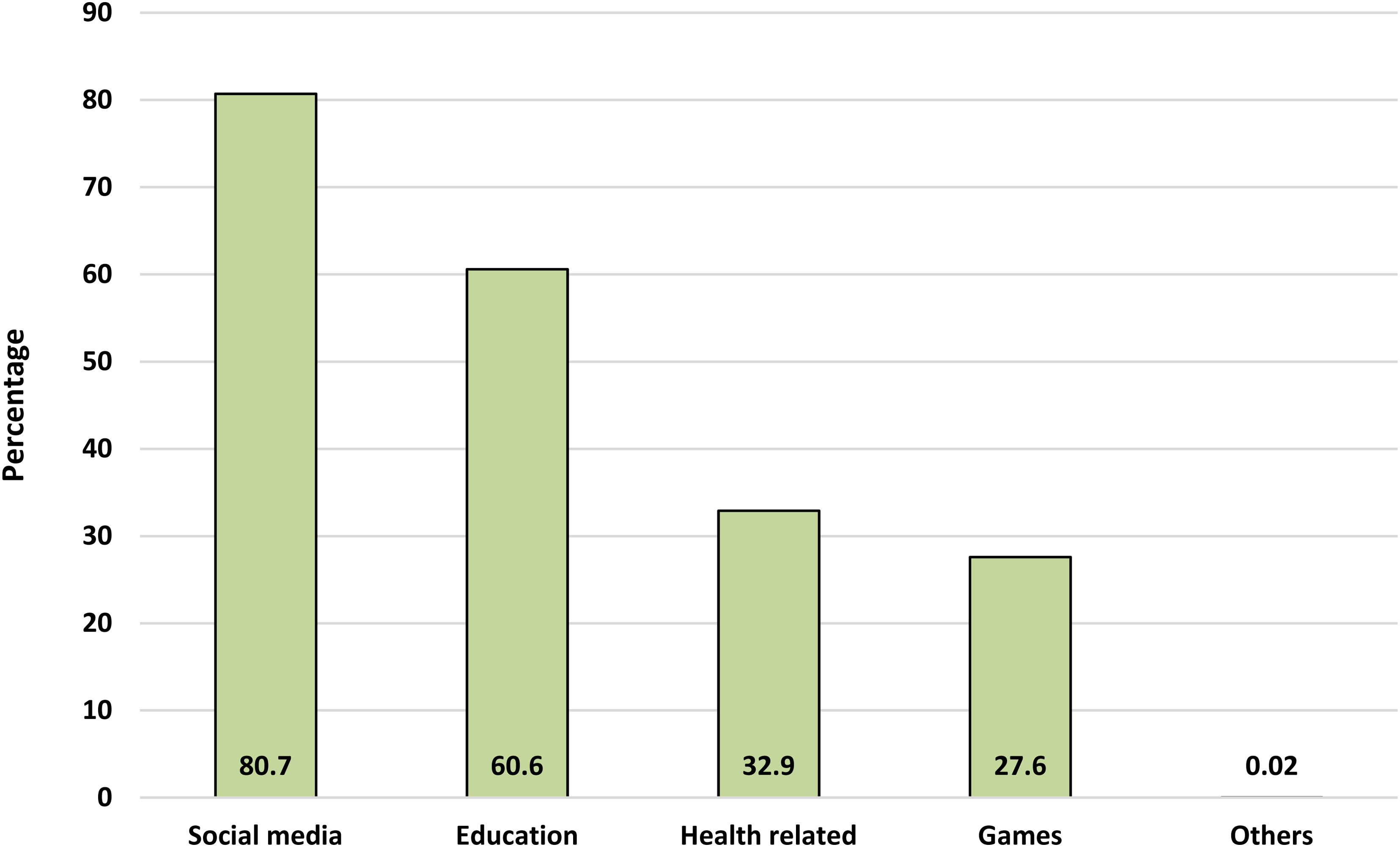
Percentage of students using various types of mobile applications.
The mobile application usage among students of different years is depicted in Table 2. Increased use of social networking applications and education related applications was found among first-year students (χ2 = 9.32, p = 0.02), (χ2 = 7.8, p = 0.05) respectively. The mobile application usage among boys and girls is compared in Table 2. The use of games-related applications (χ2 = 7.78, p = 0.005), health and fitness-related applications (χ2 = 5.053, p = .025), and education related application (χ2 = 2.96, p = .05) was found to be significantly higher among males compared to females.
Use of Mobile Application Among Students According to Their Demographic Characteristics.
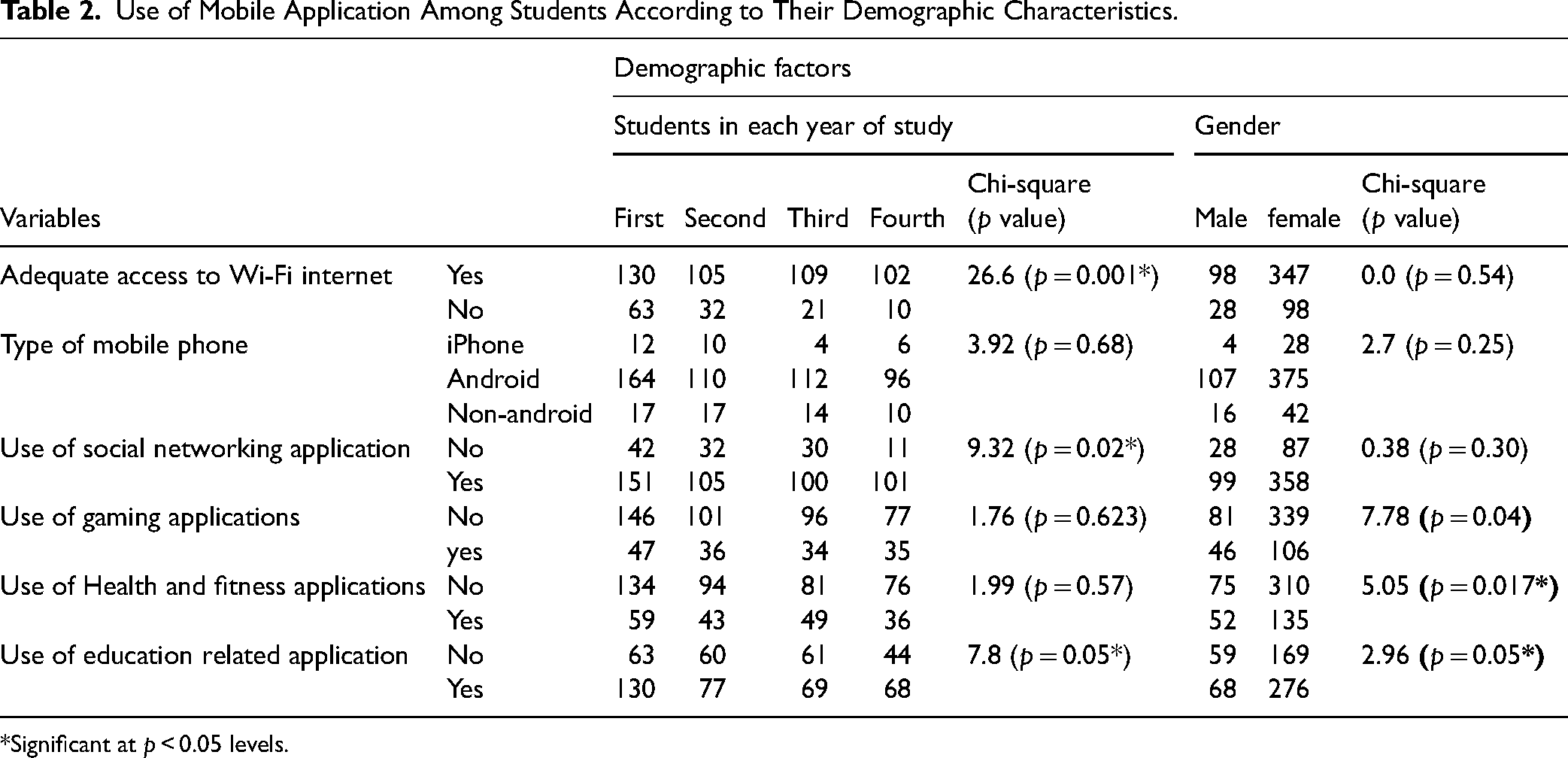
*Significant at p < 0.05 levels.
The type of mHealth applications used by the students is further depicted in Table 3. The most common type of application used was “diet and nutrition related” (27.6%) followed by “lifestyle and stress” related (23.4%). mHealth applications related to women's health and pregnancy were used by females more than males (χ2 = 4.493, p = .034).
Types of mHealth Applications Used by Participants.

Acceptability and Preferences Toward MHealth Applications
The willingness to use mHealth applications for managing one's own health and their perceived usefulness among patients and other people are depicted in Table 4. Students with history of hospitalisation in the past and first-year students were significantly more likely to consult a doctor or a nurse telephonically in case of need (χ2 = 5.04, p = 0.01) (χ2 = 16.8, p = 0.00). The perceived usefulness about mHealth applications for prevention, management, and control of health and disease was significantly more among students with history of hospitalization (χ2 = 5.23, p = 0.01) and among fourth-year students (χ2 = 12.92, p = 0.001)
Acceptability Toward mHealth Applications and Associated Factors.
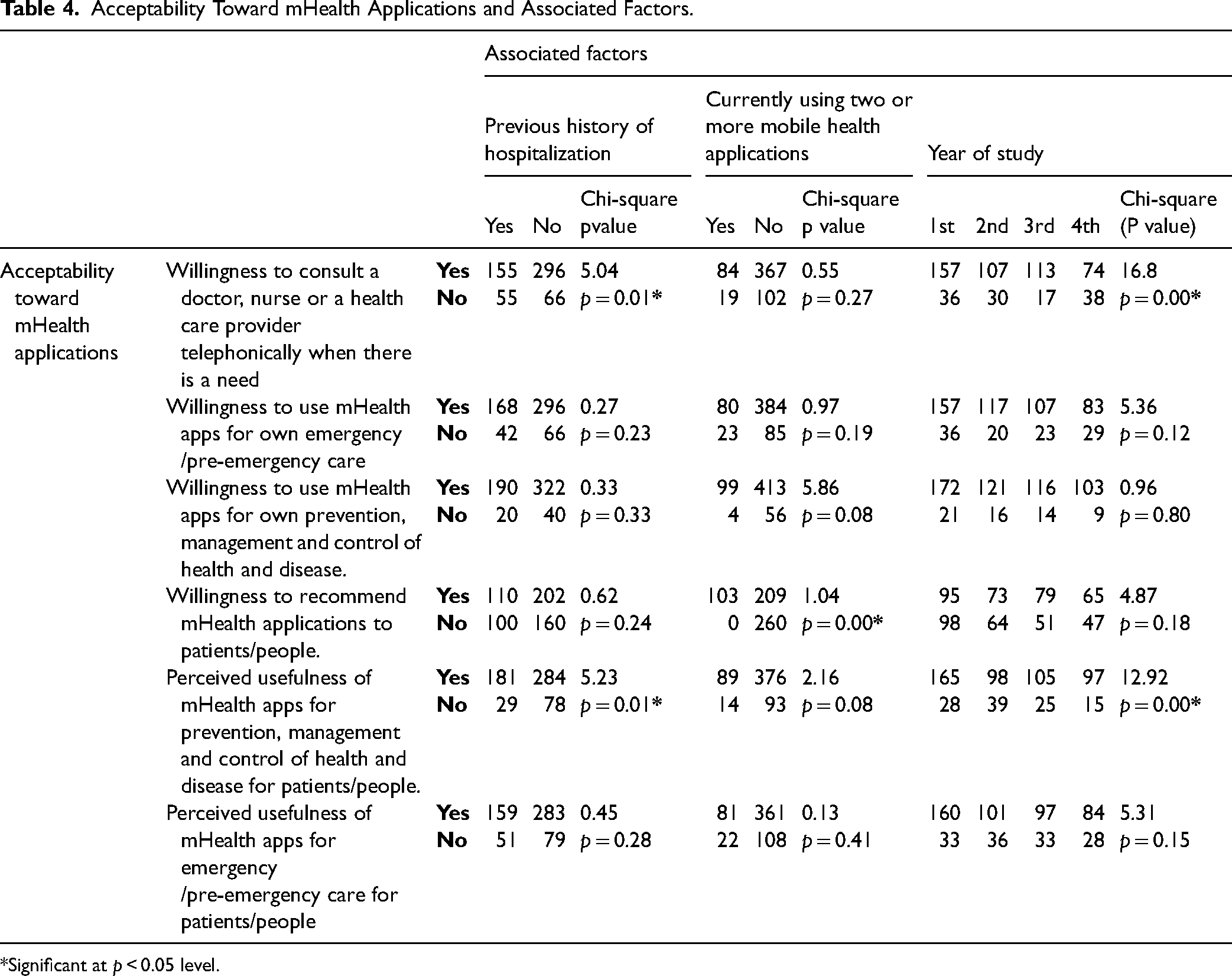
*Significant at p < 0.05 level.
Students who were currently using two or more mHealth applications were significantly more likely to recommend these applications for patients. (χ2 = 1.04, p = 0.001).
More than two-thirds of them felt that mobile mHealth applications will be useful for people and patients for the management of pre-emergency and emergency situations (77.3%), but only 66.4% felt that they will be useful for people for the prevention, management, and control of health and disease.
Students were asked to suggest useful areas for health information or services to be made available through mHealth applications. As shown in Figure 2, the most common areas of health information or services to be made available through mHealth apps were physical activity and exercise (69.8%), followed by management of chronic diseases like cardiovascular disease, diabetes, etc. (48.6%).

Areas of health information or services suggested through mHealth applications.
When the students were asked about the most preferred mode to send and receive information and services, most of them (32%) responded that text message or short message service was most preferable, followed by voice calls (24%) and video calls (9%).
There were variable preferences among participants about the frequency of health information delivery through apps. As depicted in Figure 3, delivery of mobile health information and services was preferred on a daily basis by more than a quarter (27%) of the students. Of all, 384 (67.1%) preferred the local language over English as the medium of communication or mode of delivery for sending and receiving communication in mHealth applications.
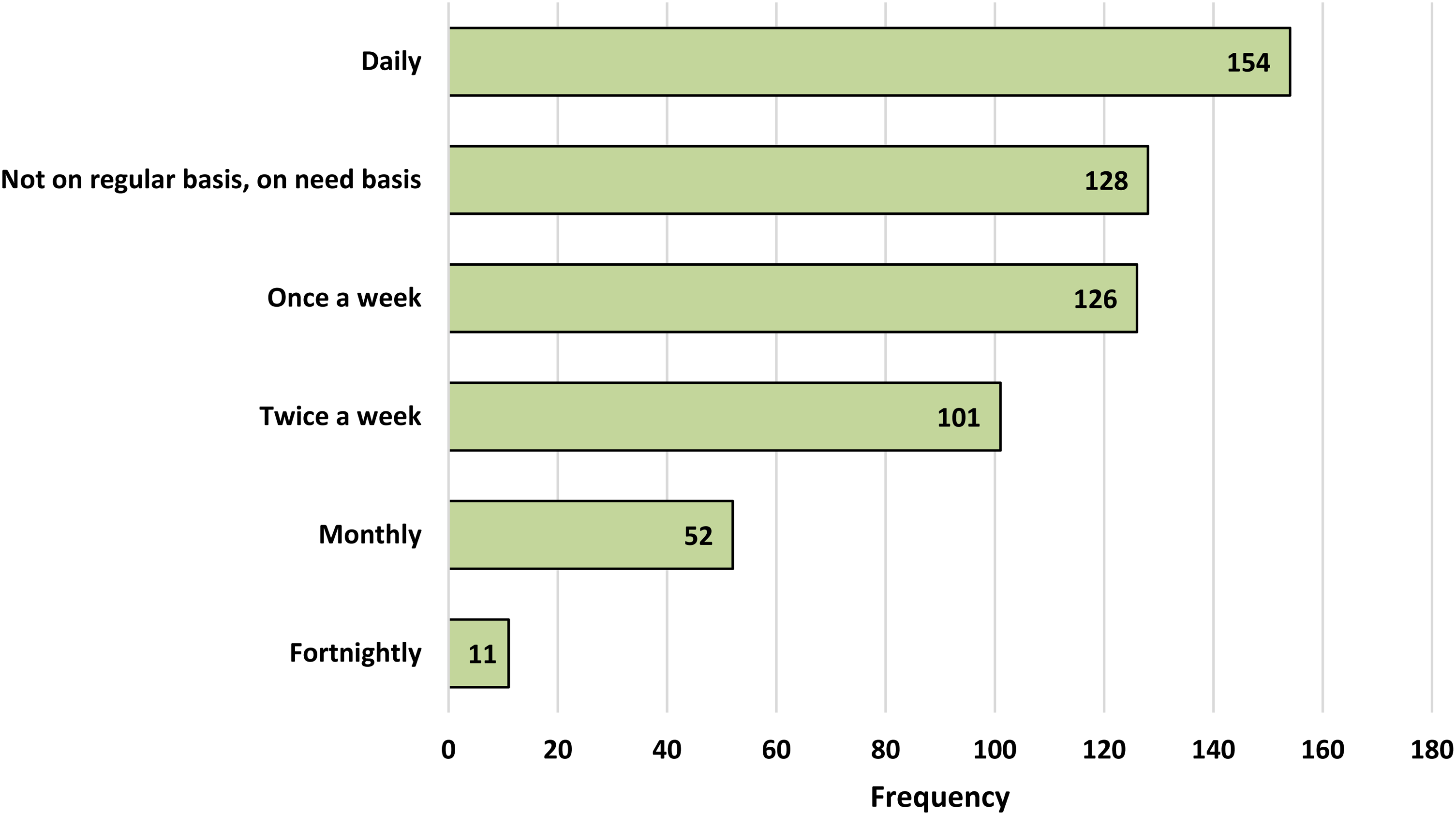
Preferred frequency of delivery of information and services through mHealth apps.
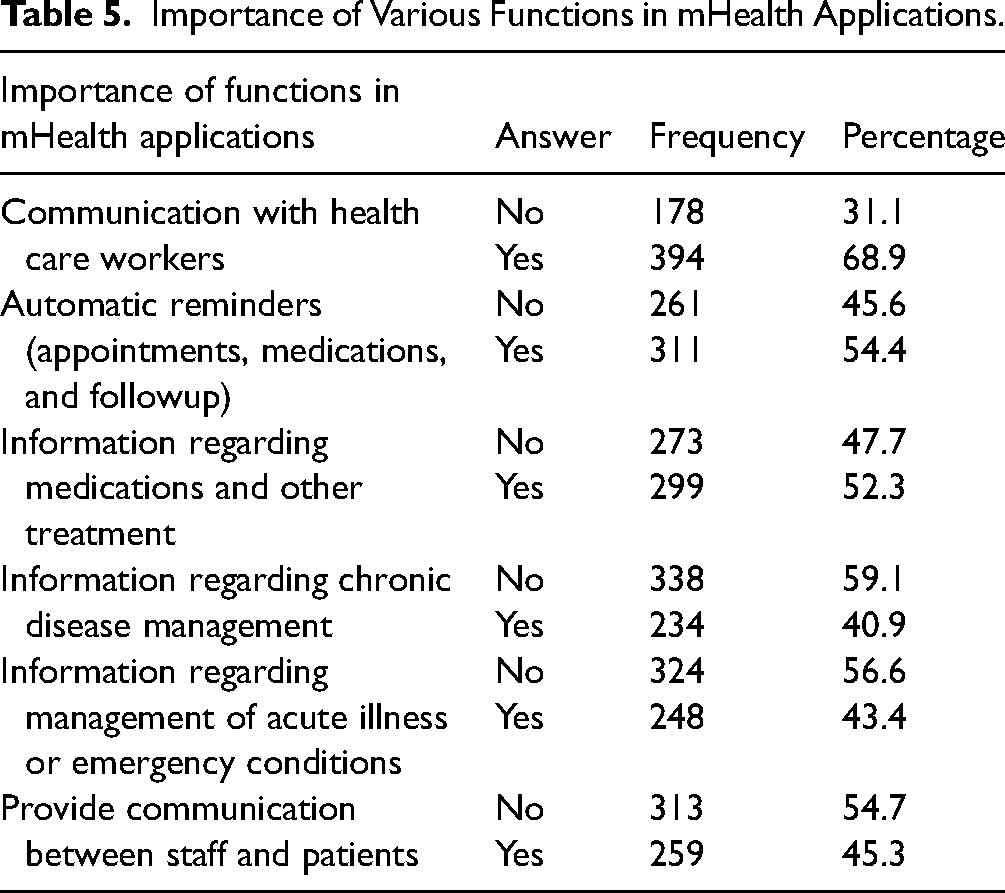
In addition, more than half of the students reported communication with health care workers (394, 68.9%), information regarding management of acute illness or emergency conditions (324, 56.6%), automatic reminders for appointments, medications, follow-up etc. (311, 54.4%), and information regarding medications and treatment (299, 52.3%) as important functions of mHealth applications (Table 5).
Importance of Various Functions in mHealth Applications.
Discussion
This study examined the preferences, acceptability usage, of mHealth applications among nursing students in India. The findings suggest that up to a third of the students who were included in the survey use mHealth applications. However, when compared to the use of social media applications, this is remarkably small. According to previous studies, the use of mHealth applications among students vary considerably across the globe, with reported rates of 58.13% in the USA, 15.4% to 38.6% in Ethiopia, and 79.8% in the UK (Hailiye Teferi et al., 2023; Montagni et al., 2018; Payne et al., 2012). Similar to reports from across the globe (Giroux & Moreau, 2022; Valdez et al., 2020), the nursing students also reported widespread access to smartphones and internet. This reinforces the current understanding about new generation embracing mobile phone technology.
Students who participated in the study demonstrated a high level of “perceived usefulness” about mHealth applications, with a large majority of them expressing their willingness to use mHealth in various health contexts. Health students of various health professions across the globe have also demonstrated similar levels of acceptance toward mHealth (Braun et al., 2013; Feinberg et al., 2017; Manyazewal et al., 2021; Payne et al., 2012; Smith et al., 2015). The acceptability of mHealth applications among students of health professions can be considered as a positive state in the healthcare landscape. Previous studies have demonstrated that one important factor influencing healthcare professionals’ endorsement of mobile health applications to patients is their perception of the apps’ usefulness (Binyamin & Zafar, 2021). Similarly, in the current study it was observed that students who used more than one mHealth application were more likely to recommend them to patients. Thus the current usage of mHealth applications among nursing students translates into a motivating factor that increases the likelihood of their patients using mHealth applications Nevertheless, in contrast to the current study findings, a web-based survey reported that even though 48.35% of the practicing nurses used mHealth applications, only 6.5% of them recommended it to their patients (Mayer et al., 2019).
The most widely used and recommended type of mHealth application by the students was lifestyle and diet-related. In previous studies, it has been seen that younger users mostly prefer to use health applications that are intended for wellness promotion (Jabour et al., 2021; Krebs & Duncan, 2015; Panagiotis, 2017). A cross-sectional survey conducted among university students in health colleges in Saudi Arabia revealed that students were using mHealth apps for tracking physical activities and counting calorie intake rather than for monitoring chronic health conditions (Jabour et al., 2021). The most requested mobile health applications among nursing students, according to a qualitative investigation of their preferences, are those that can improve their physical and emotional well-being (Sittig et al., 2022). Therefore, it can be concluded that the results of the current study are consistent with earlier research in this field. Using mHealth apps, nurses are increasingly empowering their patients to adopt good lifestyle choices and enhance their overall health (Asiri & Househ, 2017). The preferences demonstrated by the students in the current study thus indicate that nursing students are able to promote the utilization of mobile health applications to aid in preventative healthcare by increasing patient awareness and usability.
It is important to mention “women's health and pregnancy” apps in this context because it appears that a considerably smaller number of students have downloaded and used these applications. The skewed perception toward the use of mHealth applications to improve maternal and child health is supported by earlier studies (Kruse et al., 2019). Many applications designed to cater to the female gender are developed for the universal user without considering gender variations in preferences. In addition, students, being healthy and young, may not seek the use of such applications either. This could be a possible explanation for the low rate of use of women's health apps observed in the present study. However, designing women's health apps that ensure superiority in content and engagement for female end users should also be considered (Biviji et al., 2021; Saparamadu et al., 2021).
Another major finding of the study is that a vast majority of the participants considered mHealth to be a useful tool to improve communication between health care providers and patients. Digital applications are sometimes the only possible form of communication between healthcare professionals and patients (Siow et al., 2020). The present study thus reflects that nursing students recognize the value of mHealth in improving patient-provider interactions, thus making health information more accessible. The value of mHealth in improving interaction between health care workers and patients with the help of mobile technology and applications was identified in previous studies as well (Feinberg et al., 2017; Panagiotis, 2017).
Participants preferred the local language over English to receive and send health-related information. Similar findings have been reported in a population-based survey conducted to explore mobile phone usage patterns in rural Kerala, India (Feinberg et al., 2017). The participants had varying opinions about the best frequency of delivery of health-related information through mobile phones. It could be due to the difference in experience they had with different types of applications that they used, based on which they would have developed preferences.
Mobile phones have revolutionized our society positively; however, there is relatively lesser utilization of the same in health-related matters (Guo et al., 2020; LeRouge et al., 2014). The use of these technological advancements for improving health care is the need of the hour. Mobile applications can transform health care by reorienting it around end users and changing the conventional methods of health care and delivery. Nursing students are future health care workers who may motivate and advance the use of mHealth applications among end users. The adoption of mHealth among the students is helpful to understand how they perceive these applications and consider them useful.
Strengths, Limitation and Future Research Directions
This study is an overarching evaluation of the current scenario of usage of mHealth applications among nursing students in India, with an in-depth appraisal of the pattern of usage, preferences and associated factors. The current study has few limitations as well. The non-probability sampling technique used for sample allocation is a major limitation of the study. Since all of the variables in the study were measured using self-reported measures, self-reported bias cannot be completely ruled out. Future research can explore the knowledge of students about mHealth applications and their importance. Further, examining the general public's usage and acceptability toward mHealth can also be pertinent to direct services through mHealth applications
Implications for Nursing Practice
The findings of the study have a major implication for informing the policy makers and those in charge of developing nursing curricula about the necessity of introducing the concept of mobile health technology, as well as its applications and use, into nursing curricula across all nursing institutes in India to adequately prepare the workforce of the future to enable and facilitate the use of mHealth services in advancing the delivery of health care services. In addition, providing nursing students and nurse with training programs is crucial to improving their comfort level and familiarity with mobile health technologies when providing health care. Additionally, a high degree of “perceived usefulness” reported by the students regarding mHealth apps suggests the usefulness of mHealth applications in the campus for health promotion and prevention, and management of emergency cases. In light of the increasing adoption of mHealth and its many advantages, these results can contribute to the development of effective public health policies. In order to ensure successful and efficient implementation of mHealth, it is recommended to inform policymakers and decision makers be informed about the preferences expressed by students during the development and design of various mHealth apps. This will allow for the appropriate consideration of user preferences.
Conclusions
In this study, the adoption rate of health-related mobile applications and the preferences and acceptability of these applications among Indian nursing students were examined. The use of mHealth apps is less common among students in comparison to social media applications. However, they perceive the apps to be useful and recommend them to patients for use in various health contexts. As mHealth is a promising area for improving health care delivery, improved sensitization among students about the scope of mHealth is warranted.
Footnotes
Acknowledgments
We would like to thank all study participants for their support.
Data Availability
All data generated or analyzed during this study are included in this article and available on request to the corresponding and first author.
Declaration of Conflicting Interests
The authors declared no potential conflicts of interest with respect to the research, authorship, and/or publication of this article.
Funding
The authors received no financial support for the research, authorship, and/or publication of this article.
