




Abstract
Background
The COVID-19 pandemic has had a considerable influence on the medical field, especially for emergency room nurses who confront particular difficulties in responding to the crisis in Israel, including possible mental health effects. However, the exact effects of the present epidemic on the mental health of emergency room nurses in Israel remain largely unclear.
Aim
This study aimed to fill up this knowledge vacuum and advance our understanding of the pandemic’s consequences on the mental health of emergency room nurses in Israel.
Methods
This study employed the systematic review approach. Only studies published between January 2020 and the time of the search. The studies were searched from various databases such as PubMed, Scopus, CINAHL, Web of Science, and PsycINFO. A thematic analysis technique was used to find common themes among the chosen articles as the systematic review concentrates on the impact of the COVID-19 epidemic on the mental health of emergency room nurses in Israel. A total of 12 studies met the eligibility criteria.
Results
The main findings are oriented toward the effect of COVID-19 on the mental state of emergency room nurses in Israel. The 12 articles included for this study had various characteristics with majority being cross-sectional studies. Others included multicenter study, questionnaire-based study, and qualitative descriptive study. Using thematic analysis, four dominant themes, such as fear of infection and transmission, increased workload, inadequate support and resources, and coping strategies, emerged from the reviewed literature.
Conclusion
This systematic analysis emphasizes how crucial it is to consider emergency room nurses’ particular mental health demands during the COVID-19 epidemic.
Introduction
Global healthcare professionals, especially Israeli emergency room nurses, have been significantly impacted by the COVID-19 epidemic. These nurses now have a heavier task due to the pandemic’s increased patient demand, extended shifts, and substantial changes to protocols and procedures (Shreffler et al., 2020). It is well established that this type of stress can harm a healthcare professional’s mental health, including emergency room nurses, and raise their risk of developing anxiety, depression, and post-traumatic stress disorder. The probability of stress and anxiety among healthcare professionals has also increased due to the lack of proper personal protective equipment (PPE) during the pandemic. The literature has demonstrated that earlier pandemics, like SARS, have significantly impacted healthcare workers’ mental health. Healthcare personnel also faced isolation, stigmatization, burnout, and psychological suffering (An et al., 2020). Despite this body of literature, the exact effects of the present epidemic on the mental health of emergency room nurses in Israel remain largely unclear. This study aimed to fill up this knowledge vacuum and advance our understanding of the pandemic’s consequences on the mental health of emergency room nurses in Israel. The study examined how emergency room nurses experienced and perceived the epidemic and how it affected their mental health and wellbeing, coping mechanisms, and support networks.
This study’s findings can guide the creation of focused treatments, guidelines, and resources to support emergency room nurses’ mental health needs. In addition, the study can aid in fostering resilience and promoting these frontline employees’ overall wellness during and after the pandemic by offering insights into their experiences and perceptions (Shreffler et al., 2020). Furthermore, the review’s conclusions will help inform healthcare professionals, decision-makers, and researchers on the necessity of implementing successful coping mechanisms and treatments to support the mental health of emergency room nurses. Finally, by boosting the mental health of Israeli emergency room nurses, this review will raise the standard of patient care (An et al., 2020). The primary objective of this study is to ascertain how COVID-19 affects the mental state of Israeli emergency room nurses.
Background
Emergency departments led the fight against the COVID-19 epidemic. The pandemic affected healthcare workers’ physical and emotional health, especially emergency room workers. Emergency room nurses were a key frontline force, carrying the crisis’s demands. In this context, the integrative review examined how the coronavirus affects emergency room nurses’ mental health in Israel (Shreffler et al., 2020). To explain this choice, we examine the several reasons that make Israeli emergency room nurses especially vulnerable to the pandemic’s psychological toll. First, COVID-19 cases in Israel and other places overwhelmed its healthcare infrastructure. Emergency department nurses were in charge of patient care in this high-stress atmosphere, dealing with COVID-19 cases and various medical problems.
These problems may have increased Israeli emergency room nurses’ workload, distinguishing them from those in other pandemic-severe locations. The Israeli healthcare system’s unique traits made emergency room nurses vulnerable. With a smaller healthcare workforce than other affluent nations, Israeli doctors work longer hours and have more duties. Emergency room nurses risk burnout and compassion fatigue due to long hours and stressful work conditions (An et al., 2020). Israel’s geopolitical situation complicates its healthcare system’s pandemic response. The country’s history of conflict and security worries has raised citizens’ attention and uneasiness. Emergency room nurses faced physical and psychological obstacles when treating COVID-19 patients in a high-apprehension situation. Israel’s culture and society also affected emergency department nurses’ emotional toll from the outbreak. Given the possible difficulties of typical support systems in times of isolation and physical distancing, Israeli nurses may have felt an additional psychological weight in carrying the distress of patients and their families.
Therefore, the systematic review focuses on Israeli emergency room nurses due to complex circumstances making them vulnerable to the pandemic’s mental health effects. The healthcare system’s structure, geopolitical reality, and social dynamics create unique psychological issues that must be explored. The authors focused on this subset to improve understanding of the pandemic’s impact on healthcare professionals and inform targeted interventions and support mechanisms for Israeli emergency room nurses’ unique vulnerabilities.
Research Aim
The study’s aim, objectives, and research questions examine emergency department nurses’ mental health, coping mechanisms, and support systems during the pandemic. The study examined emergency room nurses’ epidemic experiences from the nursing core. The investigation painstakingly unraveled these encounters to capture their thoughts and determine how they contributed to their mental wellbeing and overall wellness. The epidemic’s external environment and internal emotions were examined to provide a complete picture. This will be attained through studying the nurses’ mental health, coping mechanisms, and support systems during the pandemic. A spotlight illuminated a different aspect of the nurses’ epidemic journey with each objective.
Research Questions
How widespread are mental health difficulties among Israeli emergency room nurses after the COVID-19 pandemic, considering fear of infection, excessive workload, and inadequate support and resources?
What variables led to mental health issues among Israeli emergency room nurses during the COVID-19 pandemic, particularly fear of infection, increasing workload, and inadequate support and resources?
Given the risk of infection, increased workload, and lack of support and resources, which coping mechanisms are best for Israeli emergency room nurses during the COVID-19 pandemic?
Methods
Study Design
This study employs the systematic review approach. The COVID-19 pandemic’s effects on the mental health of emergency department nurses in Israel are the subject of this systematic review. The study design only considered quantitative and qualitative studies that deliver original research.
Selection Criteria
Studies selected for the study are those that:
evaluate emergency room nurses as the target population, examine how the COVID-19 pandemic has affected the mental health of emergency room nurses, and have an English publication.
Only studies published between January 2020 and the time of the search were included in the search. Studies that did not fit the requirements for inclusion were not considered for the review. In addition, studies that did not distinguish between emergency room nurses and other healthcare professionals were also disregarded.
Search Strategy
The research strategy carefully sourced and extracted data using a set of criteria to ensure completeness and relevance. The search was painstakingly done from January 2020 onward, a crucial era in the COVID-19 pandemic. This timeline covers the pandemic’s origin and progression, allowing for a complete study of emergency room nurses’ mental health. Selecting papers for inclusion was carefully arranged using detailed criteria to guarantee a thorough and focused exploration. The study subject, geographical context, and mental health factors were considered in these criteria.
To traverse this complex process, a thorough search strategy was used to search PubMed, Scopus, CINAHL, Web of Science, and PsycINFO. In these online spaces, “COVID-19” or “coronavirus” blended with “emergency room nurses,” “ED nurses,” and “ER nurses.” Language expanded to include “mental health,” “psychological distress,” “burnout,” and “coping strategies.” The geographical factor was beautifully integrated with “Israel,” contextualizing the exploration. After that, the reference lists of the articles were checked to determine whether they contained any irrelevant articles. The original searching yielded 32 studies. The researcher excluding duplicates, abstracts, paid subscription, and articles that did not meet the inclusion criteria. Twelve articles were included in the systematic review. The Preferred Items for Reporting Systematic Reviews and Meta-analyses (PRISMA) was used to assess the quality of the included studies as part of the methodology in this systematic review. Figure 1 provides a full overview of the search approach and description of the included and excluded studies.
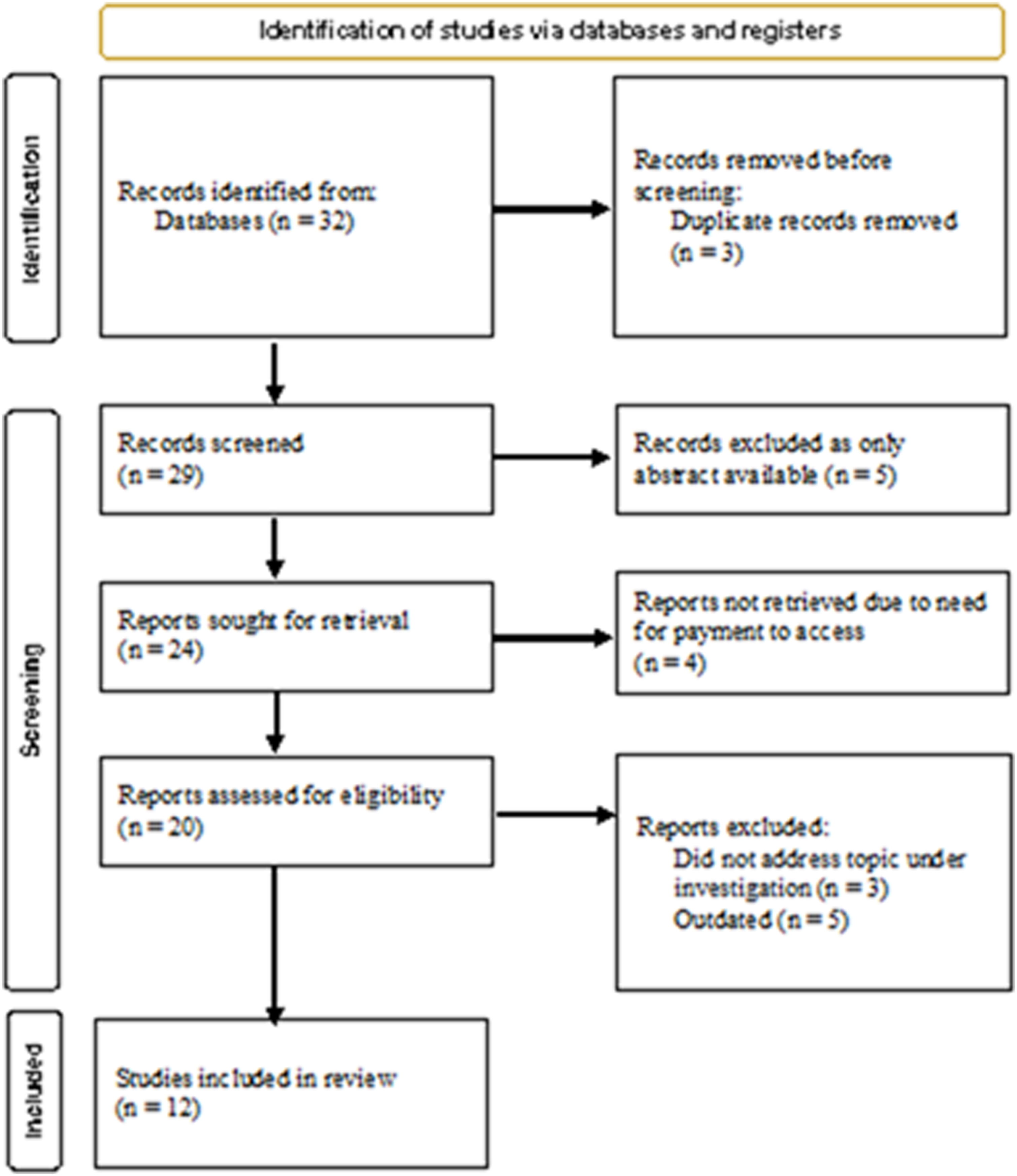
Search strategy and outcomes.
Data Extraction
Using a predesigned data extraction form, the researcher extracted data from the chosen studies, including research characteristics, demographic, methods, and findings.
Evaluation of Methodological Rigor
The research team critically appraised the methodological rigor of the included articles. This involved assessing the clarity and transparency of the research methods, data collection procedures, sample size determination, data analysis techniques, and reporting of results. The aim was to ensure that the studies followed rigorous research practices and minimized bias.
Data Analysis
A thematic analysis technique was utilized to find common themes among the chosen articles as the systematic review concentrates on the impact of the COVID-19 epidemic on the mental health of emergency room nurses in Israel (Terry et al., 2017). Finding patterns or themes within the data relevant to the research question is called thematic analysis. Data were coded, categorized, and analyzed using a methodical and iterative procedure.
Results
Twelve articles were included in the systematic review, as seen in Table 1. This systematic research reveals the complex relationship between the COVID-19 pandemic and Israeli emergency room nurses’ mental health. Thematic analysis revealed four main themes that captured the nurses’ diverse experiences during this unprecedented crisis: fear of infection and transmission, increased workload, inadequate support and resources, and various coping strategies.
A Summary of the Characteristics of the Included Articles.

Fear of Infection and Transmission
The literature extensively discusses emergency healthcare personnel’s dread of disease transmission, which causes severe mental distress. Xu et al. (2021) painstakingly evaluated triage nurses’ working conditions in the emergency department (ED) of a famous teaching hospital in Shenzhen, China. This investigation revealed the complex lives of these nurses during COVID-19. They worried about infection, transmission, workload, teamwork, and leadership dynamics. The revelation that even minor triage nurse errors could cause COVID-19 was shocking. The study stressed the importance of improving training, emergency drills, and nurses’ response to epidemics.
González-Gil et al. (2021) shed light on critical care and emergency room nurses in Madrid, Spain, during the pandemic’s acute phase. This study revealed the complicated issues of communication breakdowns, psychosocial care, emotional tiredness, and the effort to express feelings. The multidimensional pandemic situation compounded Madrid nurses’ stress. Cui et al. (2021) found many factors that affect Chinese emergency room and fever clinic nurses’ mental health in a cross-sectional study. This study illuminated the complex relationship between gender dynamics, career reflections, the fear of infecting family members, work-related characteristics, and mental health. They also had problems connecting with middle management (21.2%), giving psychosocial care to patients and their families, feeling emotionally drained (53.5%), and expressing their emotions (44.9%). The literature reveals a fear of infection and transmission. Emergency healthcare personnel in China, Spain, and other countries share the concern of getting and spreading the illness. This concern highlights the risks of their jobs and the need for tailored efforts to reduce them. The findings emphasize the importance of providing healthcare personnel with solid training, protective measures, and psychological support as they navigate the epidemic.
Increased Workload
The pandemic-induced workload rise is felt in four of the selected research. Shoja et al. (2020) used the General Health Questionnaire and NASA-Task Load Index to examine how the COVID-19 pandemic affected Iranian medical practitioners’ workload and mental health. The data showed that COVID-19 patients’ caregivers had a far heavier workload, especially nurses. González-Gil et al. (2021) studied emergency and critical care nurses in Madrid and revealed their multifaceted workload. The response rate was 557, and 37.5% said they worked while worrying about getting sick, 28.2% said they had heavy workloads, high patient-to-nurse ratios, and shifts that prevented them from unplugging or taking a break, and 23.9% said they took on more responsibilities when caring for COVID-19 patients. The investigation revealed various issues, including personal health, rising workloads, untenable patient-to-nurse ratios, and COVID-19-related tasks.
An et al. (2020) examined the complex association between depressed symptoms, quality of life (QOL), and nurses’ prolonged pandemic hours. This study revealed that emergency department nurses had a higher risk of depression, which affected patient care and job satisfaction. After controlling for covariates, depressed nurses had a lower total QOL (F(1,1103) = 423.83, p 0.001). ED nurses worked extra hours and experienced depression during the COVID-19 pandemic. Due to its negative consequences on patient care and nurses’ QOL, frontline ED nurses should be more aware of and treated for depression early. Petrino et al. (2022) examined burnout and its effects on emergency medical workers’ mental health. The data confirmed that emergency healthcare workers have high burnout rates. This syndrome, caused by understaffing and a lack of experience, affects these dedicated professionals’ emotional balance.
Thus, the pandemic-exacerbated workload theme resounds throughout the examined papers. COVID-19 patients’ nurses and doctors struggled with the crisis’s physical, mental, and emotional effects. This strain, staffing shortages, and an overload of responsibilities highlighted the need for customized interventions to assist and protect these frontline heroes’ mental health.
Inadequate Support and Resources
The study's recurring and sad theme is the mental toll of limited support and resources for emergency room nurses. A cross-sectional study in the United States by Nguyen et al. (2021) examined how the COVID-19 epidemic affected emergency department physicians’ emotions. The study revealed a sobering truth: perceived resource shortage caused healthcare staff to feel abandoned, which contributed to burnout. This apparent link between inadequate support, resource shortfalls, and wellbeing deterioration highlighted the importance of complete institutional backing.
Khanal et al. (2020) examined the risk variables facing COVID-19 responding health personnel, emphasizing this topic. The 14-item Hospital Anxiety and Depression Scale (0–21) and seven-item Insomnia Severity Index (ISI: 0–28) were used to assess anxiety and depression and insomnia, respectively. Health experts found 33.9% sleeplessness, 37.5% depression, and 41.9% anxiety. The findings highlight the complex relationship between a lack of preventive measures, resources, and support and the alarming prevalence of mental health issues among these dedicated healthcare warriors. This fragility and shortage highlighted the need for a strong support structure in hospitals and healthcare facilities.
Uphoff et al. (2021) brought richness to the tale, highlighting the multidimensional issues medical staff face in COVID-19’s harsh environment. The study delicately described pressures from the clinical aspect of the illness and the complex interaction of social and organizational elements. In these difficult circumstances, the need for robust and multipronged assistance resonated.
Coping Strategies Used by Emergency Room Nurses to Manage the Pandemic
Emergency room nurses’ indomitable spirit showed through various carefully planned coping techniques during the pandemic. Zhao et al. (2021) examined the lives of Chinese nurses and identified various coping techniques developed to manage the pandemic’s complex hurdles. The study revealed the diverse pressures that plagued different nursing cadres and how they skillfully developed resilience-building coping mechanisms to meet their obligations.
O’Connor et al. (2021) highlighted Dutch emergency departments’ agile and strategic pandemic response. Their analysis revealed the intricate details of emergency department operations and the quick and nimble adjustments made to strengthen the infrastructure. Emergency physicians were depicted as the backbone of crisis management teams, navigating unfamiliar waters with skill and resourcefulness. This story showed the importance of a flexible healthcare system and the strength of teamwork during turmoil.
Chor et al. (2021) examined the shadowlands of burnout that shroud emergency healthcare workers. Their analysis went beyond burnout prevalence to examine these professions’ complex coping mechanisms. Resilience arose from this tiredness and inner turmoil. Technology was a double-edged sword, connecting and escaping. The cocoon of family or friends brought comfort and relief. Notably, reinforcement from coworkers and bosses was an elixir, recognizing their bravery on the pandemic frontline.
Discussion
This systematic analysis examined how the new coronavirus in Israel affected emergency room nurses’ mental health. The literature shows that the epidemic significantly impacts these healthcare practitioners’ mental health. Emergency room nurses’ fear of disease transmission during the COVID-19 pandemic was a notable finding. The fear of acquiring the infection while treating patients is the leading cause of this anxiety. This data supports Rao et al. (2023), who found that emergency room nurses worry about infecting their loved ones. Literature shows that this concern is widespread and causes sadness, anxiety, and post-traumatic stress disorder among healthcare practitioners. Thus, therapies targeting this issue may help emergency room nurses cope with mental anguish.
The increased workload for emergency room nurses during the pandemic exacerbates their mental health issues. The composite analysis shows a significant increase in effort, primarily due to increasingly severe patient cases during the pandemic’s height. The complex interaction of rising service demand and a medical staff shortage caused emergency room nurses to take on more duties. According to González-Gil et al. (2021), this increased workload caused nurse burnout and discontent, highlighting the importance of work demands on psychological wellbeing. This combination of variables takes a heavy emotional toll on frontline healthcare professionals, emphasizing the need for comprehensive solutions.
Along with dread and increased workload, emergency room nurses face a consistent lack of resources and assistance during the pandemic. The lack of training, psychosocial support, and personal protection equipment exacerbates nurses’ psychological suffering. This supports Hossain and Clatty (2021), showing how a lack of assistance might worsen psychological distress in these professionals. The findings show that comprehensive resources and strong institutional support are essential to reducing the pandemic’s mental health effects on emergency room nurses. Addressing this aspect could strengthen their resistance to constant difficulties.
The investigation also examines emergency room nurses’ coping techniques for the COVID-19 pandemic. The adaptive techniques include physical activity, mindfulness, meditation, and social support (Mong & Noguchi, 2022). Emergency room nurses’ mental distress has decreased with these methods. This similarity between coping techniques and fear, stress, and support highlights the inherent alignment between their issues and resilience mechanisms. Healthcare institutions can help emergency room nurses handle pandemic challenges by encouraging and supporting specific coping methods.
This analysis emphasizes prioritizing emergency room nurses’ mental health during the COVID-19 pandemic. The combination of data emphasizes the need for personalized interventions to address disease transmission fears, workload increases, resource provision, and adaptive coping techniques. Healthcare systems can help emergency room nurses cope with the pandemic by addressing these several factors.
Conclusion
In conclusion, this systematic analysis illuminates the severe effects of the COVID-19 pandemic on Israeli emergency room nurses’ mental health. The literature shows multiple obstacles and pressures have significantly impacted these nurses’ psychological wellbeing. The biggest challenges are the fear of disease transmission, rising job demands, and a lack of support. The dread of spreading the infection to loved ones is a significant source of anxiety and emotional distress. Transmission fears in hospital settings increase anxiety, sadness, and post-traumatic stress disorder. Thus, interventions that address this aspect of nurses’ experiences may help reduce mental suffering. Emergency department nurses’ mental health is also affected by the increased strain caused by case severity and a chronic shortage of healthcare workers. Multiple studies show that this increased workload increases burnout and job dissatisfaction in emergency room nurses. Depletion of mental and emotional reserves and work–life balance issues contribute to psychological anguish. Furthermore, the examined studies consistently demonstrate the importance of supportive resources in nurses’ psychological experience during the pandemic. The lack of training, psychosocial assistance, and essential personal protective equipment exacerbates their emotional pain. Emergency department nurses’ coping mechanisms are crucial in this challenging environment. These nurses’ emotional anguish has been reduced by regular exercise, mindfulness, social support, and work purpose. This systematic study emphasizes the necessity for focused mental health interventions for emergency room nurses during the COVID-19 epidemic. The findings emphasize the need to address their mental health in many ways, from reducing transmission worries and workloads to creating a supportive workplace and encouraging adaptive coping mechanisms. Emergency department nurses’ mental health must be a priority throughout the pandemic, supported by continual measures to maintain their resilience and wellbeing.
Limitations
Various limitations must be acknowledged in this systematic analysis of emergency room nurses’ mental health issues during the COVID-19 pandemic in Israel. Although the evaluation included global studies, cultural and organizational factors may limit its applicability beyond Israel. Inclusion criteria may have excluded significant research from the review. Language and search limitations may have caused selection bias. Given various jobs and circumstances, findings may not apply to healthcare providers other than nurses. Coping strategies may also be affected by regional healthcare systems. The review’s findings should be evaluated within these limits to emphasize their context-specificity and encourage nuanced understanding across healthcare contexts.
Recommendations
These recommendations can be made in light of the systematic review’s findings:
Offering emergency room nurses in Israel could involve counseling, peer support groups, and routine psychological examinations. Healthcare management should provide sufficient resources, such as PPE, to avoid infection transmission stressors and guarantee emergency department nurses’ safety. Policymakers and organizations should provide emergency room nurses by providing proper staffing levels and training programs that assist them in managing the extra workload brought on by the pandemic. Responsible individuals should encourage emergency room nurses to adopt coping mechanisms like self-reflection, mindfulness, and social and emotional support from coworkers and friends.
Footnotes
Declaration of Conflicting Interests
The author declared no potential conflicts of interest with respect to the research, authorship, and/or publication of this article.
Funding
The author received no financial support for the research, authorship, and/or publication of this article
