




Abstract
Introduction
Facial paralysis is one of the nervous system manifestations reported about COVID-19. There has been no consensus on the treatment and nursing care of COVID-19 combined with facial paralysis. On May 2022, a COVID-19 case with facial paralysis was reported to make suggestions on nursing care and treatment based on successful experience of curing the case with traditional Chinese medicine and western medicine.
Case Presentation
A 27-year-old male, was hospitalized because of “low fever for 12 days and difficulty in left side facial muscle movement for 2 days.” The diagnosis of facial paralysis and COVID-19 infection (mild type)is definite which is based on the patient's medical history and test results afterwards.
Management and Outcomes
Medical staff made a comprehensive plan on COVID-19's basic nursing including nutritional support, vital signs monitoring and psychological evaluation, medication guidance including corticosteroids and traditional Chinese medicine, and specialized nursing procedures of facial paralysis. The symptoms of the patient were significantly improved after treatment with traditional Chinese medicine and low-dose corticosteroids. The COVID-19 nucleic acid test turned negative 12 days after admission, and the facial paralysis recovered 1 month later after discharge.
Discussion
Facial paralysis and COVID-19 can coexist. This study finds that COVID-19 (mild type) patients can be treated with traditional Chinese medicine instead of antiviral drugs. This paper puts forward reasonable suggestions that the nursing plan of patients with COVID-19 complicated with specialized diseases should be formulated together with specialist nurses. The nursing plan needs to be implemented on the “General + Specialized” mode.
Introduction
Facial paralysis, namely facial palsy, also known as Bell's palsy, was first proposed by Charles Bell in 1821, which leads to facial weakness on one side and needs to be differentiated from the central damage. After proper treatments, most patients have a good prognosis. Besides, the 2019 coronavirus disease (COVID-19) named by the World Health Organization on February 11, 2020 refers to the respiratory disease caused by the 2019 novel coronavirus (SARS-CoV-2) infection. COVID-19 pandemic has become a major health problem affecting hundreds of millions of people around the world. Although respiratory symptoms are the main clinical features, the related neurological manifestations have been paid more and more attention. Facial paralysis is one of the nervous system manifestations reported about COVID-19 (Egilmez et al., 2021). There has been no consensus on the treatment and nursing care for COVID-19 combined with facial paralysis. This paper reports a case of facial paralysis with COVID-19 infection and puts forward nursing care suggestions. The expectations for the care of the patients with these conditions are to reduce the occurrence of complications of COVID-19, and to find out how to prevent the disease from deteriorating to severe type in time, in order to actively control the symptoms of facial paralysis and to improve the patients` quality of life as well.
This case indicates that facial paralysis and COVID-19 can coexist and COVID-19 (mild type) patients can be treated with traditional Chinese medicine instead of antiviral drugs. This paper also puts forward reasonable suggestions on the nursing plan of patients with COVID-19 complicated with specialized diseases. This clinical scenario is unusual and our treatment and nursing plan is also very unique. As far as we know, no similar cases have been reported.
Case Presentation
Chief Complain
The patient, a 27-year-old male, was hospitalized because of “low fever for 12 days and difficulty in facial muscle movement for 2 days.”
Medical History
On April 27, 2022, the patient had low fever, and the axillary temperature was 37.2 degrees Celsius. On the following days, he still stayed up late at night due to the large amount of work to finish (he was the only one who was in charge of the work), and his work and rest time were irregular. About a week later, there was numbness in the left middle of the tongue, and then sore throat, accompanied by fatigue and intermittent pain in front of the left ear emerged. COVID-19 nucleic acid was detected positive on May 7, 2022, and the patient was transferred to the module hospital on the same day. The next morning, his mouth deviated to the right, the left forehead wrinkles disappeared, the left ear was still painful, he coughed yellow pus phlegm and remained fatigue. Prednisone 10 mg was taken to treat facial paralysis on the same day.
On May 9, 2022, the symptoms of facial paralysis aggravated. The deviation was more obvious, accompanied by mild auditory hypersensitivity in the left ear and incomplete closure of the left eyelid. Because of the symptoms’ worsening the patient was transferred to Huashan Hospital, Fudan university. According to the history and examination results, COVID-19 (mild) with facial paralysis was diagnosed. The drug dose was adjusted to 30 mg prednisone daily, and COVID-19 was treated with traditional Chinese medicine. This patient did not accept to use western medicine for COVID-19 treatment, just as many Chinese patients did, who were more willing to accept traditional Chinese medicine treatment.
Working overtime for free and insisting on working even when falling ill has become a common phenomenon not only in Chinese workplace but also all over the world. Just as the Chinese old proverb goes that “Not to leave the front line on account of minor wounds”. This phenomenon has been supported by many literatures around the world. For example, this is also the case in Portugal (Martinez & Ferreira, 2011) and Denmark (Hansen & Andersen, 2008). A Chinese domestic survey shows that 74% professionals have ever presented at work while sick (Sun & Zhang, 2015).
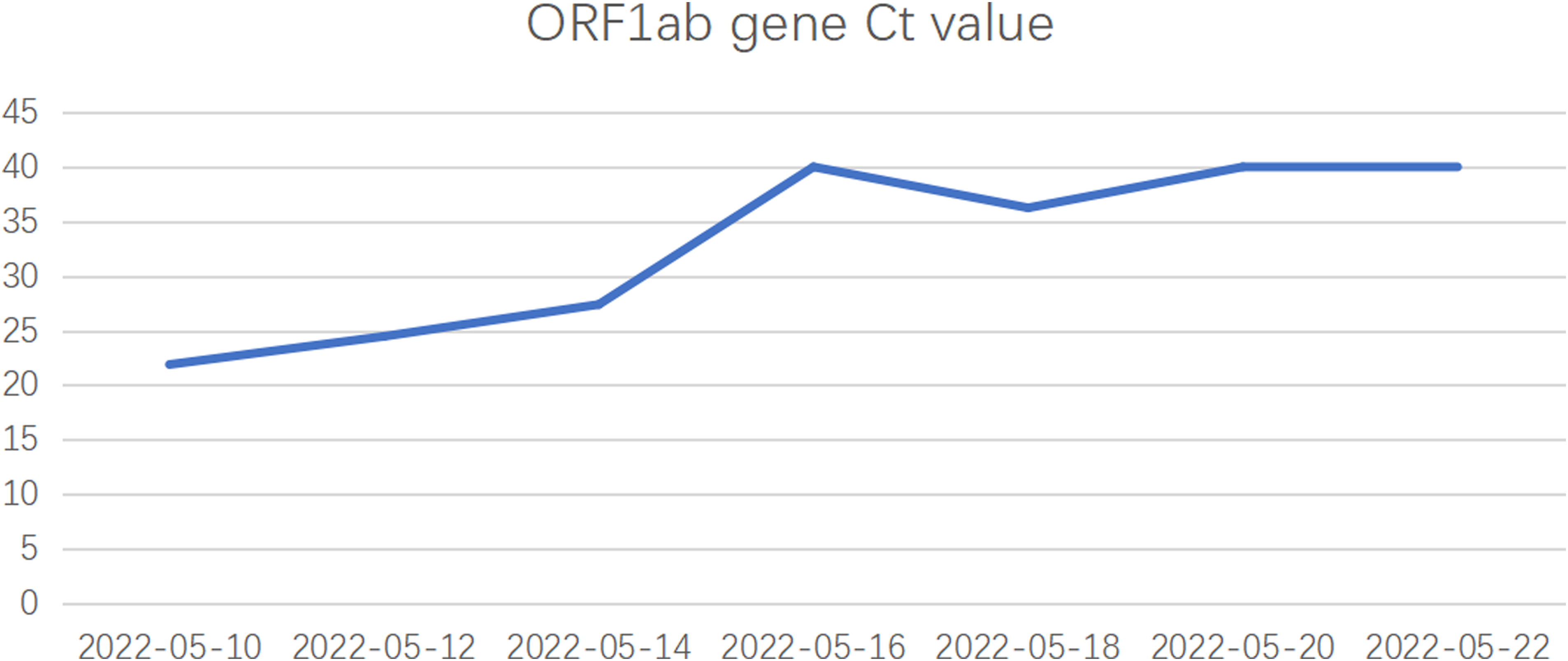
Ct Value of Nucleic Acid N Gene and orf1ab Gene of SARS-CoV-2.
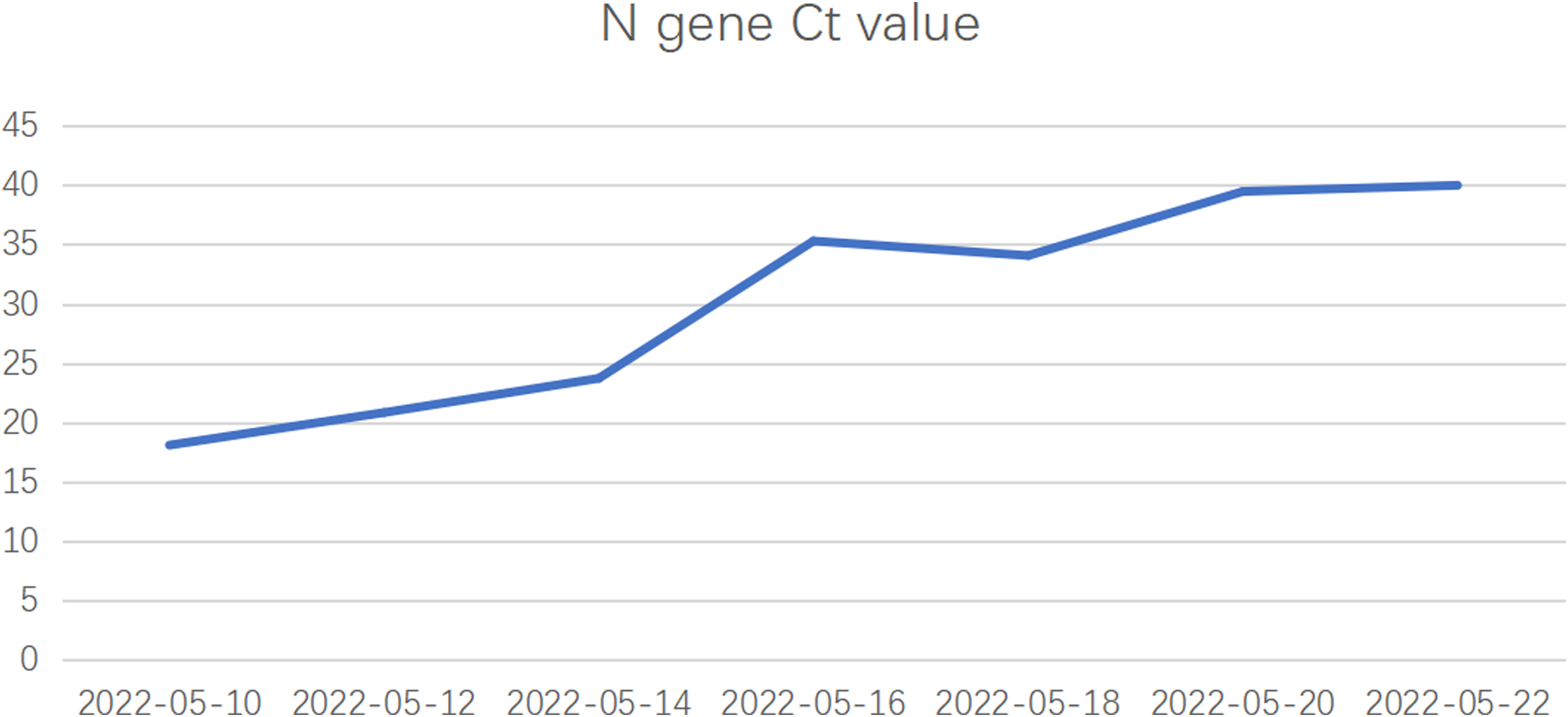
Ct value of nucleic acid N gene and orf1ab gene of SARS-CoV-2.

No Obvious Abnormality was Found on MR of Head (Showing the Section of the Seventh Cranial Nerve).
Management and Outcomes
Management of Case
Specialized Nursing Care of Facial Paralysis
In addition to the interventions mentioned above, we also have special nursing interventions for facial paralysis. Our nursing measures do not distinguish between Western medicine and traditional Chinese medicine, as they are completely integrated. Facial paralysis leads to difficulty in facial muscle movement on one side. The nursing problem is that facial paralysis is prone to cause the affected side not to close the eyelid tightly, resulting in corneal exposure. The affected side has loose mouth corner and lip, leading to limited drinking and eating that even affects saliva secretion, leading to indigestion, loss of gustatory sense on the affected side (due to limited conditions, the patient, in this case, had only the chief complaint, which had not been evaluated), and affecting appetite. Ear pain causes discomfort, which is easy to produce anxiety and sleeping disorders. Auditory hypersensitivity (due to limited conditions, the patient in this study had only the main complaint but not evaluated) causes discomfort and is prone to induce anxiety or sleeping disorders. Taking into considerations of the potential consequences mentioned above, special recommendations regarding nursing measures have to be emphasized: 1. It is recommended that patients use eye masks during sleep at night to protect corneal. The patient in this study did not have symptoms such as eye pain, so there was no special treatment during the hospitalization. Moderate patients are recommended to consider sealing their eyes with eye ointment at night and using artificial tears during the day (Billue, 1997). 2. In case of chewing difficulties, it is recommended to have easily-digestible food, and the amount of the food should not be too much at one time. When chewing, patients should use the healthy side. It is recommended to chew as many times as they can, increase the time for food to stay in the mouth, and gargle immediately after meals to keep the mouth clean; 3. When brushing teeth, the patients should use fingers to help compress the lips on the affected side and drive gargling through the healthy facial muscle, and appropriately extend the brushing time to ensure the cleanness of the teeth. It is also recommended to increase the frequency of oral cleaning; 4. It is recommended to use earplugs for handling auditory hypersensitivity, especially when resting at night. The GAD-7 scale was regularly used to evaluate, and this patient was normal. When the patients are discharged, it is recommended to follow them up in the outpatient department of Otorhinolaryngology Department or Neurology Department.
Patient Progress or Outcome
On May 22, 2022, respiratory symptoms disappeared. On the next day, his nucleic acid test turned negative and he was discharged. On May 30, 2022, the shallowness of nasolabial groove was improved and forehead stria appeared slightly. The symptoms of facial paralysis improved. One month after the onset, the mild auditory hypersensitivity in the left ear improved, but the lower eyelid beat involuntarily, and the eyes closed slowly but could be closed completely. On June 21, 2022, about 1 month after discharge, the symptoms of facial paralysis completely recovered.
Discussion
This patient is a typical patient with peripheral facial paralysis. Peripheral facial paralysis is a common disease in the field of otorhinolaryngology and neurology. According to the patient's symptoms, we can locate the lesion: the patient in this case had facial paralysis, auditory hypersensitivity, and ageustia, which was located in the facial nerve canal segment. In addition, the patient was diagnosed with COVID-19. According to the clinical manifestations related to coronavirus infection such as fever and/or respiratory symptoms, the total number of leukocytes was normal or decreased, and the lymphocyte count was normal or decreased in the early stage of the disease; COVID-19 nucleic acid test was positive, which was diagnosed.
Questions the Case Raises
Is there any relationship between facial paralysis and COVID-19?
Pathophysiologic Explanation
There was no final conclusion about the relationship between novel coronavirus infection and facial paralysis. On the one hand, there was a study showing the correlation between the two. Ibiyemi O. Oke reported facial paralysis as a neurological manifestation of COVID-19 (Oke et al., 2021). There were also arguments about the relationship between COVID-19 and facial paralysis. A prospective study involving 41 patients with facial paralysis suggested that SARS-CoV-2 IgM + IgG antibody test was positive in 24.3% of them. The results are higher than the seroprevalence studies conducted in asymptomatic individuals, Facial paralysis could be the only symptom of COVID-19 but further studies must be done (Islamoglu et al., 2021). On the contrary, there are also studies challenging the idea of the correlation between COVID-19 and facial paralysis. For example, Ahmet Mutlu et al. proposed through research that the incidence of facial paralysis during the epidemic of novel coronavirus did not seem to be higher than before, and the relationship between them was not clear (Mutlu et al., 2021). We need more work and information to make more accurate judgments.
Why Decisions Made/Interventions Were Chosen?
According to the mild clinical symptoms and the fact that there were no imaging manifestations of pneumonia of the patient, it was classified as mild type (The State Health Commission of the people's Republic of China, 2022). The patient received medical procedures including staying in bed for at least one week during treatment, which ensured adequate energy recovery and nutrition intake, keeping the stability of the internal environment, and close monitor of vital signs, especially oxygen saturation after rest and activity. Mehrdad Hasibi reported a patient with COVID-19 (common type) complicated with facial paralysis, and proposed that the treatment needed corticosteroids combined with antiviral drugs (Hasibi et al., 2021). Those previously reported cases were similar to this case, but our patient only received traditional Chinese medicine treatment and 1-week oral corticosteroid treatment, which was similar to the rehabilitation period reported in the previous studies. After 10 days, the COVID-19 nucleic acid test turned negative and the patient was discharged from the hospital (6 days in the literature, but it was not reported whether COVID-19 test turned negative). This patient recovered from facial paralysis in 1.5 months, and 3 months in the literature. From this case, we have learnt that the treatment of COVID-19 combined with facial paralysis to be treated using traditional Chinese medicine together with corticosteroid is feasible, especially for mild type patients or who do not accept antiviral drugs.
Lessons Learned or Experience Gained
This case shows us that facial paralysis and COVID-19 can coexist and COVID-19 (mild type) patients can be treated with traditional Chinese medicine instead of antiviral drugs. This paper also puts forward reasonable suggestions that the nursing plan of patients with COVID-19 is complicated with specialized diseases. The effects of traditional Chinese medicine have been reported in medical literatures but mainly for chronic stage and to prevent deterioration of lung function (Bourqui et al., 2022; Wu et al., 2020). Through this case, we also put forward the need to explore the impact and potential benefits of traditional Chinese medicine in COVID-19 and introduce our nursing protocol to medical staff in other countries.
Conclusion
Facial paralysis and COVID-19 can coexist. This case has found that COVID-19 can be treated with traditional Chinese medicine, without having to use antiviral drugs at the same time. This paper comes up with reasonable suggestions that the nursing plan for patients who are with COVID-19 and who are complicated with specialized diseases should be formulated together with specialist nurses. The nursing plan needs to adopt the “general + specialized” mode. It requires closer cooperation among medical staffs. In a word, the nursing and treatment of this patient was successful, especially the experience of traditional Chinese medicine in the treatment of COVID-19. Still, there are many challenges in the further research of traditional Chinese medicine. For example, whether some effective isolated molecules from herbs behave similarly when combined together? And how can we start to perform controlled clinical trials of agents such as traditional Chinese herbal medicines without reducing these formulas to a single molecule? Can the integrity of traditional Chinese medicine, which emphasizes the idiosyncrasy of its individual patients, be maintained in the face of rigorous randomized clinical trial design(Capodice & Chubak, 2021)? We will continue to focus on its further research and summarize nursing experience from more cases.
Footnotes
Acknowledgment
We want to deeply thank all the physicians, nurses and the patient who contributed to this article.
Author Contributions
Wang Yu: Data curation, Writing-Original draft preparation;Yu Hai: Data curation, Writing-Reviewing and Editing;Yang Xiaoli: Methodology, Supervision, Writing - Review & Editing.
Disclosure
The authors report no disclosures relevant to the manuscript.
Ethical considerations
This case report was approved by Huashan hospital Institutional Review Board (HIRB) and the patient informed consent was obtained. The HIRB agreed to the publication of the article, but also considered that the case report was not a clinical trial, so there was no ethical series number, only one approval document, and the approval document and the patient's informed consent would be uploaded as an attachment.
Funding
The authors received no financial support for the research, authorship, and/or publication of this article.
Study Declaration of Conflicting Interests
The authors declared no potential conflicts of interest with respect to the research, authorship, and/or publication of this article.
