



Abstract
Introduction
COVID-19 has not only affected the physical health of people but it has also had a major impact on their mental health.
Objective
To investigate the nursing, midwifery, and operating room students’ mental health and intention to leave during COVID-19 pandemic.
Methods
This cross-sectional study was conducted at the nursing and midwifery school of Tabriz, Iran. Over a period of three months (February–May 2021) and through random sampling, 284 students were selected. The research tool consisted of three parts including demographic information, Depression Anxiety Stress scales, and a questionnaire on intention to leave.
Results
More than 20% of the students experienced some degrees of depression, anxiety, and stress. Nearly one-third of participants mentioned a high level of intention to leave. Nursing students had a higher level of a turnover tendency than other students (p = .004). Male students and who experienced moderate to high level of depression displayed greater intention to leave (p = .005).
Conclusion
Students suffered from some degrees of stress, anxiety, and depression during the COVID-19, and it strengthened the participants’ intention to leave. Relevant authorities are recommended to improve mental health of the students by providing psychological counseling sessions, reducing their direct contact with patients, and providing personal protective equipment.
Introduction
In December 2019, the outbreak of a new viral disease was reported in Wuhan, China. Coronavirus disease (COVID-19) was caused by a genetically modified novel coronavirus called SARS-CoV-2 (Zhu et al., 2020). Unfortunately, due to its high transmissibility, COVID-19 spread very rapidly across the world and infected many people in almost all countries in less than four months (Zangrillo et al., 2020). According to official reports, by mid-January 2021, the virus had infected more than 98,821,000 people and resulted in more than 2,118,000 deaths worldwide (Lai et al., 2020). Similar to other countries, the virus has infected people in Iran, and the country’s national health system is fighting COVID-19 comprehensively despite ongoing health system and workforce challenges. According to the official report of the Iranian ministry of health and medical education, by 22 November 2021, COVID-19 infected 6,082,865 individuals, and resulted in 129,053 deaths (Iranian Ministry of Health and Medical Education website, 2021).
Studies indicate that during the outbreak of severe acute respiratory syndrome (SARS) and Ebola virus disease (EVD), many healthcare workers and students suffered from psychological disorders such as anxiety, fear, and stress, which strongly influenced the quality of their working activities and services (Li et al., 2015; Wu et al., 2009). In addition, wearing multiple pieces of personal protective equipment (PPE) and tight-fitting masks such as N95 masks made it quite difficult for healthcare workers and students to move and perform medical procedures as part of their routine health care duties. The wearing of PPE along with the risk of becoming infected and infecting others increased the risk of psychological disorders among the medical community (Liu et al., 2020).
Given the global incidence of COVID-19 and its high mortality rate, and considering the fact that healthcare workers and students are on the frontline of the fight against this disease, these health professionals are more likely to suffer from psychological disorders such as stress and anxiety than the general population (Ying et al., 2020).
Review of Literature
A cross-sectional study was carried out from 10–20 February 2020 to assess the prevalence of anxiety among 512 medical staff in China during the COVID-19 pandemic. The results showed that 164 of them (32.03%) had direct contact with infected patients. The overall prevalence of anxiety was 12.5% (mild anxiety: 10.35%; moderate anxiety: 1.36%; severe anxiety: 0.78%) (Liu et al., 2020). The findings of this study also showed that the students and the medical staff who were in direct contact with infected individuals received higher anxiety scores than those who were not in direct contact with the patients. In addition, the health professionals in cities with the highest infection rates (such as Wuhan) generally had higher anxiety scores than those in cities with lower infection rates (Liu et al., 2020).
In the study conducted by Estryn-Béhar et al. (2007) results showed that a high psychological burden increased intent to leave the profession, as an established direct predictor of actual turnover. It is anticipated that this momentum will be further accentuated, with estimates indicating the shortage of health professionals will increase in the coming years (Estryn-Béhar et al., 2007). The German federal statistical office estimates that more than 150,000 full-time health professional positions will be vacant by 2025 (Pötzsch & Rößger, 2015). Aside from the financial cost to organizations, high intention to leave (ITL) has also negatively impacted patient care (Wells-English et al., 2019).
A cross-sectional study was carried out from August to September 2020 to assess depression, anxiety, and stress among undergraduate nursing and midwifery students during the COVID-19 pandemic in Australia. The results showed that almost half of the participants reported at least moderate symptoms of depression; and more than a third reported at least moderate symptoms of anxiety or stress. Also, poor psychological well-being can impact students’ successful completion of their studies, and therefore, has implications for nursing and midwifery workforce recruitment and retention (Wynter et al., 2021). Sögüt et al. (2021) conducted a study with aim to determine the relationship between the anxiety states and knowledge levels of midwifery students about COVID-19 during the outbreak. This cross-sectional study carried out with online participation of 972 female midwifery students in Turkey. The results showed that the anxiety level of the female midwifery students were high among those visiting the hospital during the pandemic (Sögüt et al., 2021).
In another study aimed to assess the fear of COVID–19 and its influence on the students’ fear of COVID–19 and intention to leave nursing school, findings showed the first-year nursing students are found to be the most fearful among the group. The students’ fear of COVID-19 is associated with their high irritability, poor sleep quality, and desire to quit nursing school (De Los Santos et al., 2022). Considering the high transmissibility and lethality rate of COVID-19 and the possibility of exposure of students (especially nursing, midwifery, and operating room students) to infected people in hospitals during their internship, it is of great importance to study the psychological reactions of students and their possible turnover intention during the pandemic. The present study aimed to investigate the nursing, midwifery, and operating room students’ mental health status and intention to leave during Covid-19 pandemic.
Theoretical framework
To investigate the mental health status and understand the holistic relationship between students’ mental health and intention to leave, the Social Cognitive Career Theory (SCCT) has been used for the study. The SCCT was originally created by Lent’s team. The theory proposed that individuals’ career development and selection are influenced by internal and external environmental factors, educational and career achievements, and personal goals (Lent & Brown, 2013). The SCCT argued that the background factors of the individuals are social networks, school connections, peer relationships, financial backgrounds, family situations, social situations, educational backgrounds, place of origin, skin color, gender, and living communities. However, such behaviors can be changed due to internal and external elements, such as time, age, environmental factor, social situation, and even family influence (Lent & Brown, 2013). Individuals’ decisions and behaviors can be changed and developed due to various situations and personal developments. Therefore, the SCCT provides the lens and tools for researchers to explore and discover the reasons and motivations of career development of nursing and midwifery students.
In this study, the researcher utilized the SCCT framework as the lens to understand and explore how the COVID-19 pandemic influenced the mental health status, sense of belonging, and career decision-making process of nursing and midwifery students.
Methods
Design
The descriptive cross-sectional study was conducted from February to May 2021. STROBE checklist was used to determine the items that should be included in the report of this descriptive study.
Research Question(s)
How is the nursing, midwifery, and operating room students’ mental health status during the COVID-19 pandemic?
How willing are nursing, midwifery, and operating room students to leave during the COVID-19 epidemic?
Is there a relationship between students’ mental health and intention to leave during the COVID-19 epidemic?
Sample
A total of 284 undergraduate and postgraduate nursing, midwifery, and operating room students from Tabriz nursing and midwifery faculty in Iran were randomly selected. The list of all students was requested by the main researcher from the education staff of school; and participants were selected by simple random technique and invited to participate in the study. The main researcher attended students’ classes or clinical settings to brief the participants on the research method and on the purpose of the study. After obtaining informed consent, the participants were provided with the measurement tool.
Since the distribution of the study variables was not available, Krejcie & Morgan’s table for sample size was used. The total number of students in Tabriz nursing and midwifery faculty was 1096. According to Krejcie & Morgan’s table, the calculated sample size was 284. The number of participants in each discipline was determined considering the total number of students who studied in that discipline. The response rate was 100%.
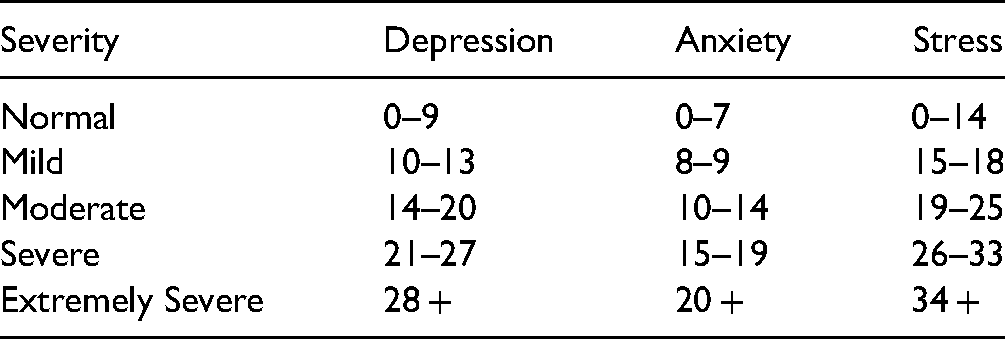
The research tool consisted of three parts including demographic information, Depression Anxiety Stress Scales (DASS-21), and a questionnaire on intention to leave the profession. Demographic information included age, gender, marital status, education level, history of COVID-19, history of chronic disease, and history of psychological disease. DASS-21 questionnaire consisted of 21 items in the three subscales of depression, anxiety, and stress (Lovibond & Lovibond, 1995). The items were scored based on a 0–3 point scale (0: did not apply to me at all, 1: applied to me to some degree, or some of the time, 2: applied to me to a considerable degree or a good part of time, 3: applied to me very much or most of the time). Each of the three DASS-21 scales contains seven items, divided into subscales with similar content. The depression scale assesses dysphoria, hopelessness, devaluation of life, self-deprecation, lack of interest/involvement, anhedonia and inertia. The anxiety scale assesses autonomic arousal, skeletal muscle effects, situational anxiety, and subjective experience of anxious affect. The stress scale is sensitive to levels of chronic nonspecific arousal and assesses difficulty relaxing, nervous arousal, and being easily upset/agitated, irritable/overreactive and impatient. Scores for depression, anxiety and stress are calculated by summing the scores for the relevant items. Recommended cutoff scores for conventional severity labels are listed in Table 1. Scores on the DASS-21 needed to be multiplied by 2 to calculate the final score. The Persian version of DASS-21 has been validated for healthcare professions; and the Cronbach’s alpha coefficient was acceptable for anxiety (0.79), stress (0.91), and depression (0.93). Test–retest reliability (0.740–0.881, p < .01) was also reported for DASS-21 and its three dimensions (Kakemam et al., 2022).
Scores on the DASS-21 Scale.
The students’ intention to leave the profession was measured using the Longo and Mura questionnaire with nine item. The items were scored based on a five-point Likert scale (1: totally disagree, 2: disagree, 3: no comment, 4: agree, and 5: totally agree). A score of 1–9 indicated a low tendency to leave the profession, a score of 10–27 indicated moderate tendency to leave, and more than 27 indicated a high tendency to leave (Longo & Mura, 2011). In the study conducted by Hemmati Nodoust Gilani et al. (2018), the rigor and validity of this scale were assessed and the Cronbach’s alpha coefficient was acceptable (0.79) (Hemmati Nodoust Gilani et al., 2018).
In the current study, the content validity of the research tool was conducted, the tool was sent to ten nursing and midwifery professors who rated the clarity and validity of the content. In addition, Cronbach’s alpha coefficient for the measurement tool was 0.925, which confirmed its reliability.
Inclusion/Exclusion Criteria
The inclusion criteria included students attending a clinical placement in an acute hospital ward during the coronavirus pandemic. There were no specific exclusion criteria other than the participants’ unwillingness to continue in the study.
Institutional Review Board Approval
Ethical approval was obtained from the ethics committee of Tabriz University of Medical Sciences. The details and the intentions of the study were fully explained to the participants and included identification of the purpose of the research, the benefits of participating, notations about any risks to the participant, and assurance that the participant could withdraw at any time. Participants were asked to sign a consent form prior to participation in the filling of the questionnaire. To ensure anonymity, the collected data do not contain any identifiable information of participants. Moreover, all data files have been stored securely in a safe and locked file cabinet; and they will be destroyed after five years from the final publication.
Statistical Analysis
Data were analyzed using the Statistical Package for Social Sciences (SPSS-21). Participants’ basic information was analyzed using frequency, percentage, mean and standard deviation. Pearson correlational coefficient and multiple regression analysis was conducted to determine variables relations. The significance level in all statistical analyses was p < .05.
Results
Sample Characteristics
A total of 284 individuals participated in the study. The sample comprised of nursing students (n = 170), midwifery students (n = 73), and operating room (OR) students (n = 41). The mean age of participants was 22.47 ± 2.84 for nursing students; 23.18 ± 5.28 for midwifery students; and 21.90 ± 2.55 for OR students. The majority of the participants were undergraduate students (90.92%) and reported no previous history of psychological disease (86.46%) (Table 2).
Participants’ Characteristics.

Research Question Results
The mean score of depression for nursing, midwifery, and OR students were 6.07 ± 5.19, 5.92 ± 4.88, and 7.26 ± 5.45, respectively. And, the mean score of anxiety for nursing, midwifery, and OR students were 4.98 ± 4.73, 3.88 ± 3.20, and 5.09 ± 4.13, respectively. However, the mean score of stress for nursing, midwifery, and OR students were 7.65 ± 5.36, 7.01 ± 5.15, and 8.82 ± 5.26, respectively.
The majority of the students had normal mental health status (nearly 80% of the participants), and more than 20% of the participants experienced some degree of depression (23.53% of nursing students, 28.70% of midwifery students, and 31.70% of OR students), anxiety (25.30% of nursing students, 17.80% of midwifery students, and 29.30% of OR students), and stress (12.36% of nursing students, 15% of midwifery students, and 17% of OR students) (Table 3).
Frequency of the Emotional States and Intention to Leave the Profession.

The results also demonstrated that the mean score of students’ intention to leave were 22.00 ± 5.47 (nursing students), 22.93 ± 6.34 (midwifery students), and 22.92 ± 7.83 (OR students). Moreover, the most of the participants (67% of nursing students, 75.34% of midwifery students, and 68.30% of OR students) had a moderate level of turnover intention; and one-third of them mentioned high levels of intention to leave (Table 3).
The value of the Pearson correlation coefficient confirmed that there was a direct, significant relationship between mental health and intention to leave in nursing students. On the other hand, no significant relationship was found between mental health and turnover intention in midwifery and operating room students. This indicated that the higher the depression, anxiety, and stress levels were among the nursing students, the stronger their turnover intention would be (Table 4). Multiple regression analysis was used to investigate the relationship among demographic characteristics, mental health, and intention to leave participants. The variables of the field of study, gender, and depression level had a significant relationship with the intention to leave. Nursing students had a higher level of turnover tendency than other students (p = .004). In addition, students who experienced moderate to high level of depression displayed greater intention to leave than others (p = .005). Moreover, male students had higher turnover tendency than female students (p = .002). Figure 1 indicates the relationship between the theoretical framework (SCCT) and the outcomes of this study.

The relationship between the theoretical framework and the outcomes.
The Relationship Between Emotional States with Intention to Leave the Profession.

The significance level was p < .05.
Discussion
The present study investigated the nursing, midwifery, and OR students’ mental health status and intention to leave the profession during Covid-19 pandemic. The results showed that some of the students experienced some degrees of depression, anxiety, and stress, respectively. In a study in China on more than 7,000 students in various fields of study during the COVID-19 pandemic, 25% experienced COVID-19-induced anxiety of whom about 9% suffered from severe anxiety symptoms and the rest from mild anxiety symptoms (Cao et al., 2020). A cross-sectional study was carried out from August to September 2020 to assess depression, anxiety, and stress among undergraduate nursing and midwifery students during the COVID-19 pandemic in Australia. The results showed that almost half of participants reported at least moderate symptoms of depression; and more than a third reported at least moderate symptoms of anxiety or stress (Wynter et al., 2021).
Chi et al. (2021) in the study exploring dental trainees’ mental health and intention to leave their programs during the COVID-19 pandemic, found that 22.2% and 16.7% of participants endorsed clinically significant anxiety or depression symptomatology, respectively; and 12.7% of trainees stated any intention to leave (Chi et al., 2021). In another study that investigated the educational and psychological effects of the COVID-19 pandemic on US medical students, students reported the pandemic had moderate effects on their stress and anxiety levels with 84.1% of respondents feeling at least somewhat anxious (Harries et al., 2021). In the study conducted by Liu et al. (2020), the prevalence and influencing factors of anxiety in medical workers exposed to COVID-19 in China were assessed. A total of 512 medical staff and 164 (32.03%) had direct contact treating infected patients. The prevalence of anxiety was 12.5%, with 53 workers suffering from mild (10.35%), seven workers suffering from moderate (1.36%) and four workers suffering from severe anxiety (0.78%) (Liu et al., 2020).
In the current study, one-third of students displayed high levels of intention to leave compared with study by Cao et al. (2020) who reported about one-third of the students displayed high levels of turnover intention whereas the majority of them had a moderate level of turnover intention (Cao et al., 2020). In the Magnavita et al. (2021) study conducted in two COVID-19 hub hospitals in central Italy with intensive care physicians, the results showed that a total of 21% of participants were dissatisfied with their job and 41.2% said they intended to quit (Magnavita et al., 2021). Yáñez et al. (2020) conducted a cross-sectional survey to assess the anxiety, distress, and turnover intention of healthcare workers in Peru during the COVID-19 pandemic. Of the 303 healthcare workers, 53 were physicians, 63 were nurses, 63 were pharmacists, 80 were technicians, 20 were volunteers, and 24 were others. Results reported that 21.7% healthcare workers in Peru experienced severe anxiety, and 26.1% of them experienced severe distress (Yáñez et al., 2020). In Sinsky et al. (2021) study, approximately one in three physicians, advanced practice providers, and nurses surveyed intend to reduce work hours. One in five physicians and two in five nurses intend to leave their practice altogether (Sinsky et al., 2021).
In the current study, a direct significant relationship was found between the nursing students’ mental health and their intention to leave in this research; however, there was no significant relationship between mental health and intention to leave in midwifery and OR students. This is probably due to the fact that during the pandemic, nursing students are more likely to have contact with COVID-19 patients than those working in midwifery units and operating rooms.
Sinsky et al. (2021) evaluated relationships between the COVID-19-related stress and work intentions in a sample of US health care workers. Among the 20,665 respondents, intention to reduce hours was highest among nurses (33.7%), physicians (31.4%), and advanced practice providers (28.9%) while lowest among clerical staff (13.6%) and administrators (6.8%). COVID-19-related anxiety/depression and workload were independently related to the intent to reduce work hours (Sinsky et al., 2021). In the Chi et al. (2021) study, dental trainees (dental students, graduate students, and postdoctoral residents) reporting anxiety, depression, or burnout were significantly more likely to report intention to leave than those not reporting mental health problems (Chi et al., 2021).
The results showed that variables such as the field of study, gender, and depression level had a significant relationship with intention to leave. Nursing students had a higher level of turnover tendency than other students. Students who experienced moderate to high levels of depression displayed a greater intention to leave than others, and male students had a higher turnover tendency than female students. In line with the study’s theoretical framework (SCCT), these outcomes (field of study, gender, and depression level) as the internal factors and COVID-19 as the external factor influenced career decision-making process of nursing, midwifery, and OR students. Moreover, in the study conducted by Al-Omoush and Shosha (2021), 57.8% of nurses had slightly positive level of intention to leave and 21.4% had a moderate positive level during Covid-19 outbreaks (Al-Omoush & Shosha, 2021). In a study by Yáñez et al. (2020), results showed that younger workers had a higher level of turnover intention than their older colleagues did. Healthcare workers in the private sector had a higher turnover intention than those in the public sector. In contrast with current study, the effects of gender, education level, and work level on turnover intention were not significant (Yáñez et al., 2020).
Lin et al. (2021) investigated the effects of leisure obstacles, job satisfaction, physical and mental health, and work intentions of medical workers exposed to COVID-19 infection risk in Taiwan. Results showed that the female medical workers felt more strongly about the issues of leisure obstacles and the intention to stay in their jobs. And while the more pronounced the leisure obstacles and physical and mental health problems, the more pronounced their intention to leave the profession (Lin et al., 2021). In contrast with the current study, the findings of a study showed that the nursing students who expressed an intention to leave the nursing profession had lower professional identity scores than those who expressed an intention to remain. Men earned a higher mean score for professional identity than women (Shengxiao et al., 2021). In another study, data analysis revealed no significant differences between male and female regarding their intention to leave scores (Al-Omoush & Shosha, 2021).
Limitations of the Study
Several limitations of the study bear mentioning. First, this study was cross-sectional in nature and assessed respondent perception at a specific time. Second, due to the small sample available (especially for the OR and midwifery students), results may not be generalizable to the population. Third, the students’ levels of intention to leave were measured using the Longo and Mura questionnaire with nine item. We could have used other alternatives such the Copenhagen Burnout Inventory (CBI) with 19-item developed by Kristensen et al. (2005) for measuring intention to leave. Last but not least, results of this study may not be completely generalizable because the sample was restricted to northwest of Iran.
Recommendations
Due to the high intention to leave in the male students, it is recommended to investigate the reasons for this through qualitative studies. Also, this study focuses on the nursing, midwifery, and OR students, and it may have been more fruitful to include other health students.
Implications for Practice
Considering the high transmissibility rate of COVID-19 and the possibility of exposure of health students to infected people, it is of great importance to provide psychological support and counseling for students to ensure they remain within the health profession. However, additional studies should be conducted to explore the long-term impact of the COVID-19 pandemic or conditions such as depression and posttraumatic stress disorder, and the possible psychosocial interventions needed to improve mental health among health students.
Conclusion
Based on the results, nursing, midwifery, and OR students suffered from some degrees of stress, anxiety, and depression during the COVID-19 pandemic. In addition, the pandemic strengthened the participants’ intention to leave. Therefore, relevant authorities are recommended to improve mental health of nursing, midwifery, and operating room students by providing them with psychological counseling sessions, reducing their direct contact with patients, and providing suitable personal protective equipment to them. The findings also revealed that more support had to be provided to nursing students, male students, and students with moderate-to-high levels of depression to reduce their levels of turnover intention.
Footnotes
Acknowledgements
The authors would like to thank the students who gave freely of their time to participate in the study.
Declaration of Conflicting Interests
The author(s) declared no potential conflicts of interest with respect to the research, authorship, and/or publication of this article.
Funding
The author(s) disclosed receipt of the following financial support for the research, authorship, and/or publication of this article: This work was supported by the Tabriz University of Medical Sciences (grant number 67432).
