




Abstract
Elementary teachers are currently facing the untenable position of needing to do more with less following the educational disruptions of the COVID-19 pandemic. The School of Health Studies (SHS) LEARN Lab is an open-access, evidence-based health resource repository designed to support teachers who are experiencing educational gaps among students in their classrooms. One strategy to increase the uptake of resources is through a health promotion social media campaign, specifically on Instagram and TikTok—two of the largest social media platforms used by teachers to seek out educational resources. As such, the purpose of this study was to develop, implement, and evaluate the effectiveness, based on key performance indicators (i.e., reach and engagement), of an 8-week health promotion social media campaign to increase engagement with the SHS LEARN Lab’s open access resource repository. Overall, the campaign was successful in increasing uptake of the LEARN Lab’s resources. Reach and engagement rates across platforms were above average, and a statistically significant difference between the reach rate across platforms was found during the campaign (t(14) = 6.189, p < .001). Further, there was a statistically significant increase in average engagement rate on Instagram from baseline to during campaign (t(7) = 6.871, p < .001). This study offers a template for future campaigns to follow when developing, implementing, and evaluating health promotion social media campaigns. Health promoters and decision-makers in the educational sector should consider social media as a cost-effective and feasible mechanism to increase teacher-specific supports.
Introduction
Elementary teachers require support following the educational disruptions of the COVID-19 pandemic. One way of providing wide-spread, cost-effective, feasible support to teachers is through a social media campaign. Minimal research has been conducted on best practices for promoting maximum uptake of campaigns in the education sector. As such, this paper offers an applicable template for future campaigns to follow when developing, implementing, and evaluating health promotion social media campaigns targeting educators.
Background
During the COVID-19 pandemic, elementary students and teachers faced ongoing educational disruptions, often necessitating prolonged periods of emergency remote learning (Cortés-Albornoz et al., 2023; Khlaif et al., 2021). Although teachers transitioned to emergency remote learning by quickly introducing novel pedagogical and instructional strategies (e.g., interactive lessons), the lack of consistent in-person education had substantial negative impacts on elementary students’ academic progression (DeCoito & Estaiteyeh, 2022; Tawfik et al., 2021). This loss of learning was experienced across all grade levels, with a particularly profound impact on younger children. For example, Tomasik et al. (2021) examined a sample of 28,685 students in elementary and secondary schools in Switzerland during the COVID-19 pandemic. These authors reported that while secondary students were largely unaffected by school closures in terms of learning gains, elementary students experienced more learning deficits and an increase in interindividual variance in learning gains.
Among younger school-aged children, there were marked differences in the transition to emergency remote learning, especially in the context of literacy (Fried et al., 2010; Tong et al., 2014): young children were still learning to read, which meant reading to learn was all but impossible (Skaraki & Kolokotronis, 2022; Yates et al., 2025). A study conducted in Ontario, Canada by Gallagher-Mackay et al. (2021) used the collective sum of Grade-1 reading data from the Toronto District School Board and found that, compared to January 2020, grade 1 students who experienced emergency remote learning during January 2021 were 9% points behind. Further, a survey of teachers (N = 17,443; 50.7% elementary teachers) conducted by the Canadian Federation of Teachers (2020) at the peak of online learning in 2020 revealed that 64% of teachers reported being in regular contact with only half of their students. A lack of regular contact between students and teachers was found to be more prevalent among students facing existing inequities (e.g., low socioeconomic status, insecure housing, technology barriers; Teghtmeyer, 2023). Consequently, many teachers in Canada are now facing student achievement gaps that span up to 1.5 grade levels, meaning that a third-grade teacher is likely to be teaching children operating at grade 1 and 2 levels within the same classroom (Gallagher-Mackay et al., 2021).
Combined with these achievement gaps is the reality that the COVID-19 pandemic created teaching environments where resources were being increasingly stretched thin, leading to negative impacts on teachers’ psychological wellbeing, emotional exhaustion, depersonalization, and burnout (Candeias et al., 2020; Padmanabhanunni & Pretorius, 2023). These stressors in the Canadian teaching environment along with the recent funding cuts in schools (Thompson, 2022), increased class sizes (Zwaagstra, 2022), and reduction in available educational assistants (Dhir, 2022), are putting teachers in the untenable position of being forced to do more with less.
Social media serves as a collaborative dissemination platform to reach and influence a target audience and deliver health-related information (Stellefson et al., 2020). Recent studies have shown that health promotion social media campaigns can contribute to increased awareness of health-related topics and can effectively promote health behavior change (Ghahramani et al., 2022; Maher et al., 2016). Health promotion awareness initiatives have shown promising results to increase the rate of reach, exposure, impression, impact, and engagement of social media users (Al-Dmour et al., 2020). Research on the effects of health promotion campaigns on popular health topics (e.g., COVID-19, smoking cessation; Al-Dmour et al., 2020; Sanders et al., 2018; Shafer et al., 2016) has been growing; however, research on health promotion initiatives at an educational level specifically has been scant. Evaluating health promotion campaigns at the educational level that target teachers, who can then deliver/promote the health-related material among students, is of particular importance in the current educational climate given the growing educational disparities existing within schools (Pérez-Jorge et al., 2021; Whitley et al., 2021).
Among teachers, social media use has become an entangled part of their professional development (Richter et al., 2022). Social media facilitates opportunities to self-direct professional development by finding and sharing educational resources (Robson, 2018; Rosenberg et al., 2020; Schroeder et al., 2019). Two platforms that are growing in popularity among teachers are Instagram and TikTok. In a study of 841 teachers in the United States, Carpenter et al. (2020) reported that Instagram was the most frequently used social media platform for educational purposes, with 71.2% of all teachers reporting they used Instagram for these purposes more than once per day. Further, an overwhelming majority reported using Instagram professionally to look at other educators’ ideas & content (87.7%) and to learn from other educators’ wisdom/experience (84.3%; Carpenter et al., 2020). Similarly, among 415 teachers in the United States, 35% report using TikTok to find ideas related to education and 26% agree that content informs their teaching (Carpenter et al., 2024). Given the widespread use of these two social media platforms among teachers, they serve as promising avenues to explore regarding supporting teachers via a social media campaign.
Despite Instagram and TikTok being in the top five most widely used social media platforms in the world (Statista, 2024), to date, both platforms have received relatively limited attention from education researchers compared to other platforms (e.g., Facebook, X; Barrot, 2021). Given the growing popularity of Instagram and TikTok among teachers, the opportunities for professional development that these platforms present, and the benefits of using social media for health promotion campaigns, investigations of social media use for these purposes across these platforms can serve to benefit the education field. As such, the primary objective of this study was to develop, implement, and evaluate the effectiveness of an 8-week health promotion social media campaign designed to support elementary educators via increase engagement with the School of Health Studies (SHS) LEARN Lab’s open access health resource repository across Instagram and TikTok.
Methods
With the goal of increasing engagement with the resource repository, an 8-week (i.e., May–June 2024) health promotion social media campaign was developed, implemented and evaluated. The 8-week timeframe was selected based on previous research indicating that social media campaigns typically run for 4 weeks to 6 months in length and that the desired outcomes of the campaign and the level of commitment being sought from the target audience must be considered (Higdon, 2023). The timeframe of the study was selected to be conducted during the latter part of the active Ontarian school year months of May and June; with an 8-week time frame, in order to allow for sufficient time for engagement on both Instagram and TikTok to be afforded.
Social Media for Implementing Evidence Framework
To guide the development of the health promotion social media campaign, the Social Media for Implementing Evidence (SMILE) Framework developed by Zhao et al. (2022) was employed. In line with the SMILE Framework, the six key constructs of (1) developers, (2) messages and delivery strategies, (3) recipients, (4) context, (5) triggers, and (6) outcomes were considered during the campaign’s development with the goal of increasing the campaign’s efficacy and effectiveness. Regarding developers, a multidisciplinary team was created such that experts in both educational and technology/social media sectors were consulted in developing this campaign. As guided by the SMILE Framework, developers must respond to recipients’ needs and their context to create messages and delivery strategies. To positively impact uptake of social media messages, the social media platforms (i.e., Instagram and TikTok), modes of delivery (e.g., text, videos, testimonials), and specific parameters around delivery (e.g., length of videos, word limits) were discussed at length amongst the research team to ensure delivery strategies promoted the campaign to the target audience. Next, the recipients of the campaign, or those who have the potential to direct, influence, or be affected by messages (i.e., educators), were determined and their common demographics were considered when developing posts (e.g., posts were not made during a teacher’s typical workday). Context considerations included those characteristics and circumstances that surrounded the campaign’s implementation and that may have influenced social media use and further message use, including virtual-technical (e.g., complexity, usefulness), individual (e.g., motivation, curiosity), organizational (e.g., hierarchical education systems), and system (e.g., social political, economic, or cultural environment) contexts. The SMILE Framework then includes the consideration triggers as those strategies adopted to activate social media message use, which includes sparks for motivation, facilitators for capability, and signals for reminding. As described below, the various daily strategies incorporated these triggers, including calls to action and reminders of resources. Finally, the SMILE Framework specifies the knowledge translation outcome as research use—including conceptual, instrumental, and persuasive use of research findings within a campaign. Evidence-based research was used in the development of the campaign and its materials, in line with the outcome construct.
Social Media Campaign Overview
One strategy aimed to support teachers in health education following the educational disruptions of the COVID-19 pandemic has been the SHS LEARN Lab at Western University, a large university in London, Ontario. This community-engaged learning innovation partnered over 400 undergraduate students in a second-year Health Sciences course with local elementary teachers to develop evidence-based, health-related resources for an open-access repository (see Maxwell et al., 2025 for more information). The goal of this repository is to provide support to elementary teachers (i.e., educators who work with students typically ranging from 5 to 14 years old) as they navigate teaching following the pandemic. Health-related resources included videos, presentations, posters, and games related to health broadly (e.g., physical, cognitive, emotional, social, environmental). The resources were created to be standalone such that elementary teachers could provide the resource to a student and have them work through the resource on their own to improve their knowledge and skills in that subject area. During the Summer of 2023, elementary teachers across Ontario requested health-related resources from the SHS LEARN Lab via the teacher request form located on the SHS LEARN Lab website for the purposes of supporting students in their classrooms. A total of eight resource requests were submitted by individual teachers across two school boards in Ontario. These resource requests, along with key health-related areas of the Ontario Elementary Curriculum, were used to develop resource topics that were subsequently assigned to students in the Health Sciences course. In the Fall of 2023, approximately 100 groups of four undergraduate students each were tasked with using knowledge gained in-class regarding child health and development to create these requested resources at the developmentally appropriate level as part of their course requirements (See Appendix 1 and 2 for a detailed overview of the resource request and creation process). Each resource was required to be evidence-based, meaning based on the best available current research, including the information being taught within the resource and choices made surrounding the structure of the resource (e.g., length of resource, learning styles being targeted, engagement strategies used). If resources were not adequately evidence-based, as determined by the teaching team, they were not published in the online repository. The online repository, launched in November 2023, is housed across the SHS LEARN Lab social media accounts (i.e., on Instagram, TikTok, YouTube, and X (formerly known as Twitter) and host website (see https://learnlab.healthsciencelabs.ca/) and includes over 200 unique, evidence-based, health-related resources created by undergraduate students for elementary students across grades Kindergarten-8 (i.e., approximately 5–14-year-old children).
The social media campaign, including timing, number, and form of posts, followed available recommendations from experts in the field. On Instagram, at least three feed posts (i.e., permanent, grid-visible content) per week with story posts (i.e., temporary, 24-hr content appearing in a separate bar at the top of the app) occurring more frequently were suggested for maximum uptake of the campaign (Mosseri, 2023). The timing of Instagram posts was scheduled to occur after the target audience had concluded their day job (i.e., early- to late-evening), increasing the likelihood that posts would be interacted with (Drucioc, 2024). On Mondays of the Instagram campaign, a “Resource of the Week” was posted, with each week highlighting a resource that focussed on a different aspect of health (e.g., physical, mental, social; See Figure 1 for Sample Post). In addition to the feed post on Mondays, if the resources were short videos suitable for a “Reel,” the resources were posted in that format as well. Tuesdays included interacting with relevant accounts (e.g., teacher “influencers,” school boards), including following, commenting, or sharing their posts; no feed posts were made on Tuesdays. Posts on Wednesday prompted users to request their own resource from the SHS LEARN Lab. Thursdays emphasized the overall purpose of the SHS LEARN Lab, including the goals of the repository and anecdotes from teachers and students who have been part of the SHS LEARN Lab to date. Finally, Fridays included “Fun Fact Friday” posts wherein evidence-based facts relating to that week’s domain of health were shared. See Figure 2 for an overview of the Instagram posts and stories.
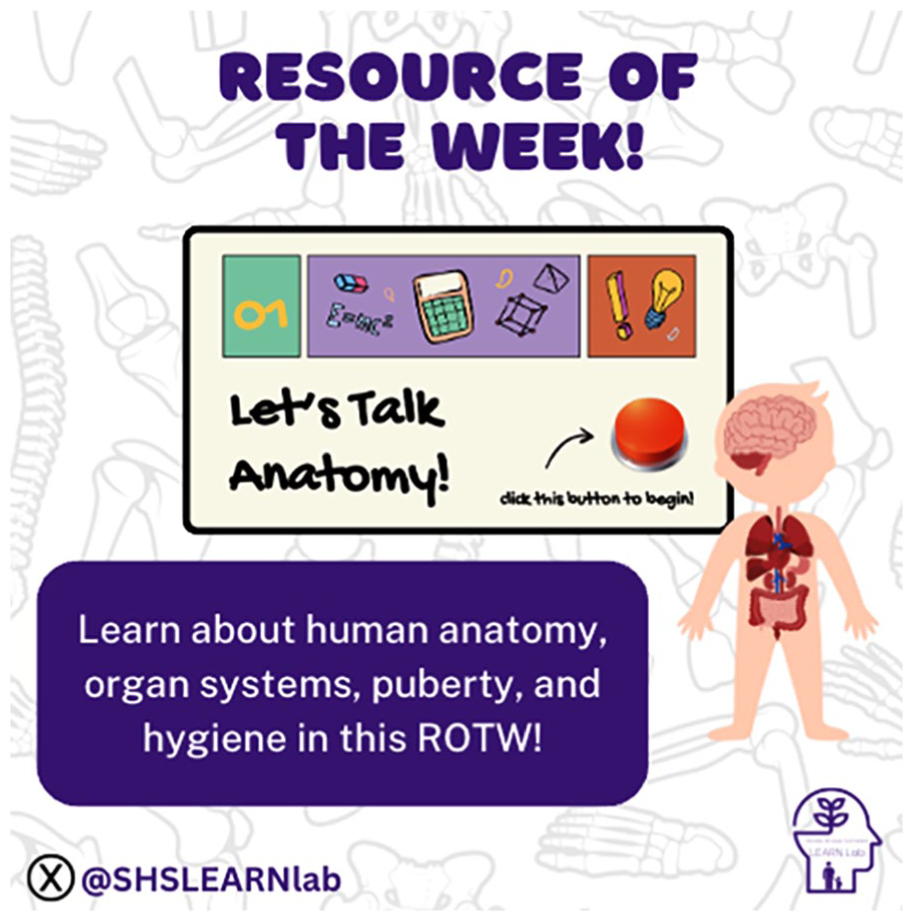
Sample post: resource of the week.
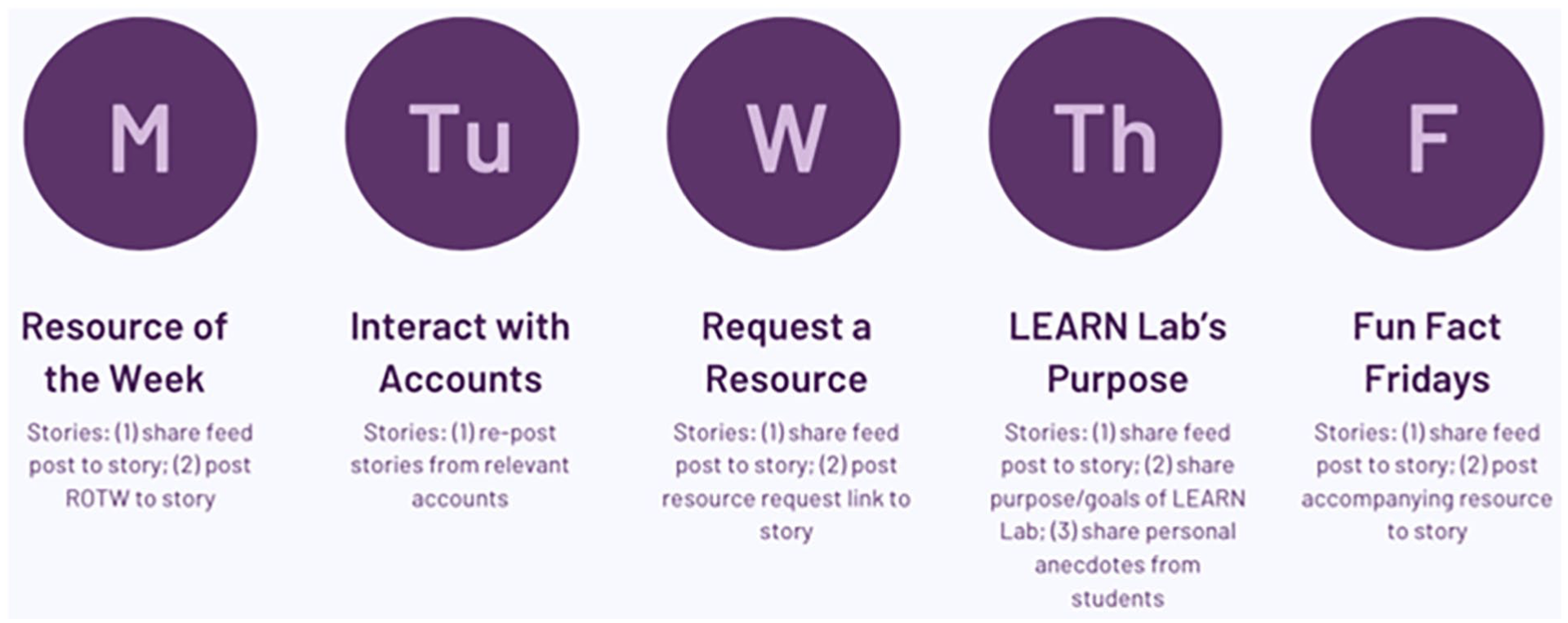
Weekly Instagram posts and stories.
On TikTok, daily posts were recommended, with the timing of posts varying throughout the day to maximize the algorithm (Collabstr, 2023). TikTok posts on Mondays included a “Resource of the Week” post that aligned with the health-related topic of the Instagram. On Tuesdays, the purpose of the SHS LEARN Lab was emphasized. Wednesdays included a “Wellness Wednesday” feature wherein a wellness-related activity that aligned with each week’s health domain (e.g., physical activity, mindfulness) was explained and users were prompted to participate in said activity. Thursdays included a “Throwback Thursday” post where a previously posted resource was re-shared. Finally, on Fridays, users were prompted to request their own health-related resource from the SHS LEARN Lab. See Figure 3 for an overview of the TikTok posts.
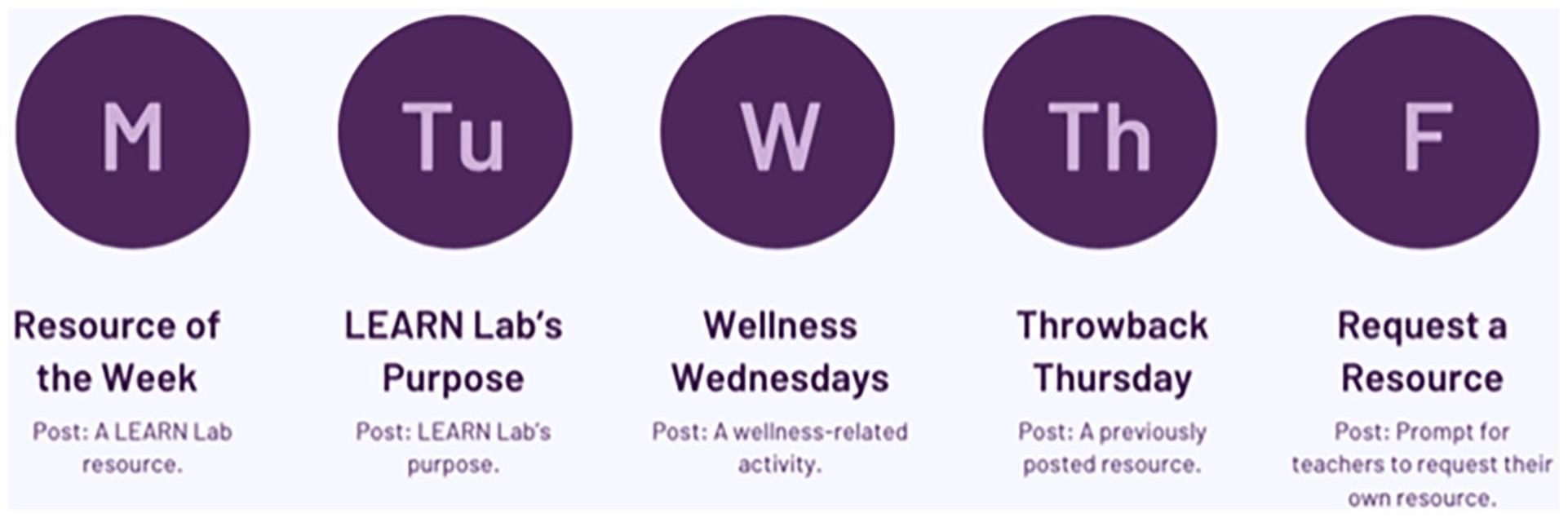
Weekly TikTok posts.
Data Collection
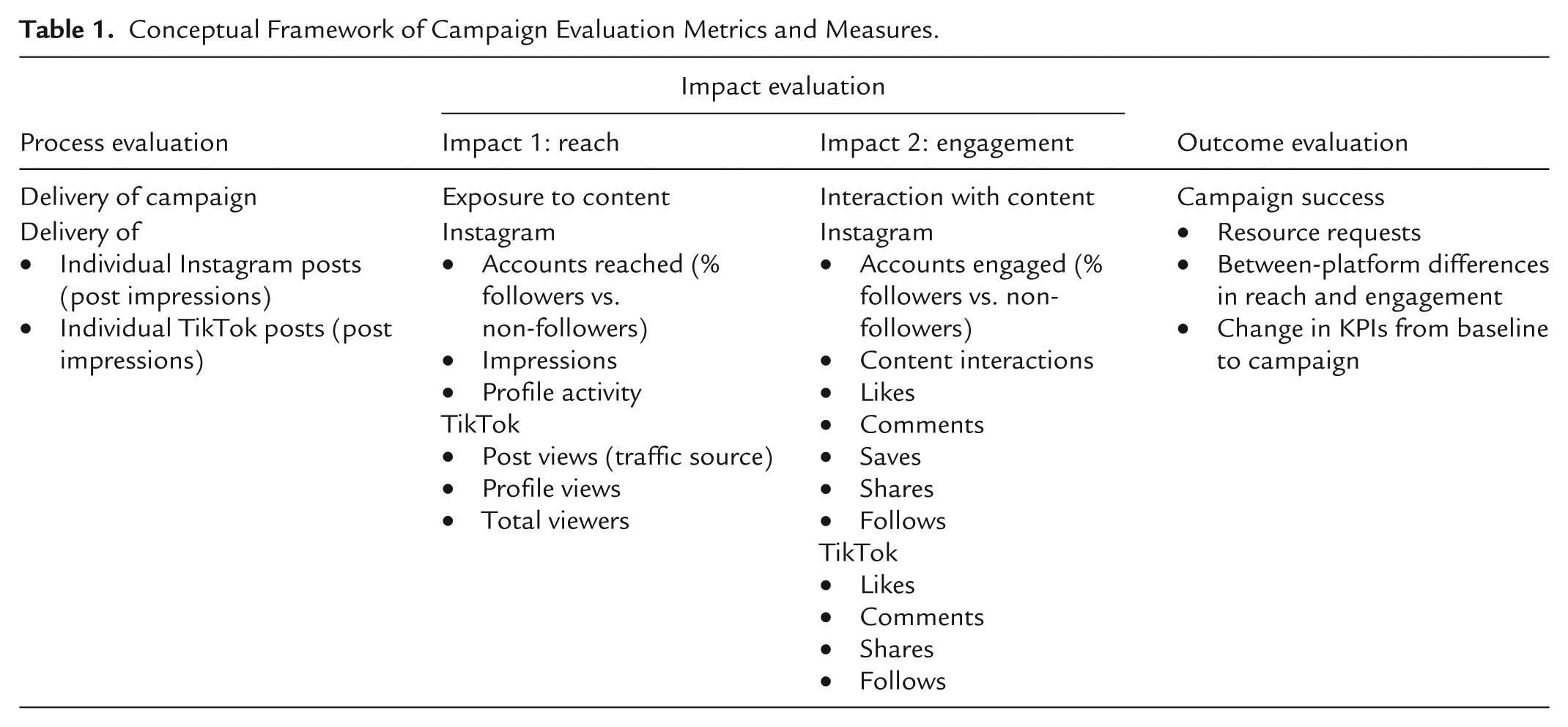
Data was collected using Instagram Insights (Meta, 2024) and TikTok Analytics Tools (TikTok for Business, 2024) on a weekly basis. Evaluation of the effectiveness of the campaign’s performance was based on pre-defined performance benchmarks in existing research (Vo, 2023). Specifically, key performance indicators (KPIs) have been highlighted as a promising tool to analyze the performance of social media platforms (Montejo, 2021). Among the various KPIs, reach and engagement rates have been identified as significant performance indicators during social media analyses within the field of health promotion (Harding et al., 2019). Reach refers to the total number of individuals who have been exposed to a piece of content from a social media account (Tunkl et al., 2023) and was measured via the number of individuals who were exposed to posted content on the SHS LEARN Lab’s accounts each week (Neiger et al., 2012). For Instagram, this included data on the accounts reached (including percentage of followers vs. non-followers), impressions, and profile activity (i.e., profile visits and external link taps). For TikTok, this included post views (including from which traffic source), profile views, total viewers, and reached audience demographics. Conversely, engagement is a measure of how often people interact with content on social media accounts (Rautio, 2022) and was measured via the number of interactions with SHS LEARN Lab content each week. For Instagram, this included the accounts engaged (including percentage of followers vs. non-followers), likes, comments, saves, shares, and follows. On TikTok, this included likes, comments, shares, and follows. See Table 1 for an overview of the campaign evaluation metrics and measures.
Conceptual Framework of Campaign Evaluation Metrics and Measures.
Data Analysis
Data analysis was organized according to three distinct evaluation types: process, impact, and outcome. The process evaluation analyzed the delivery of the campaign, including descriptive statistics on individual post impressions across both Instagram and TikTok. The impact evaluation analyzed reach and engagement. The KPIs for this campaign were calculated using available metrics and evaluated against threshold values to assess the campaign’s success. The average reach rate of each week was calculated by dividing the total reach of posts per week by the total number of followers and multiplying the result by 100 (Udescu, 2024). Based on the most recently available data, the average reach rate of Instagram is 7.60% and of TikTok is 14.49% (Cucu, 2023; Udescu, 2024). As such, reach rates below this were considered below average while those above these values were considered above average. Engagement rate was calculated as an average ratio of total engagements (i.e., follows, likes, comments, saves, and shares) to the number of total followers for each data collection interval, multiplied by 100 (Rautio, 2022). For Instagram, engagement rates below 7.58% were categorized as low, 7.58%–8.5% as acceptable, and those exceeding 8.58% as high (Arman & Pahrul Sidik, 2019). For TikTok, due to a lack of research, engagement rates between 4% and 18% were categorized as “good engagement,” with engagement rates below this range considered below average and anything exceeding considered above average (Adobe Express, 2022). To determine campaign effectiveness, we will explore whether reach and engagement rates were above average based on these pre-defined threshold values across both platforms. Finally, the outcome evaluation examined (1) resource requests made by elementary teachers (2) between-platform differences and (3) any changes in KPIs from baseline to during the campaign. An independent groups t-test was conducted to analyze KPI variance (i.e., reach and engagement rates) between Instagram and TikTok. A dependent groups t-test was conducted to analyze KPI variance from baseline (i.e., 8 weeks prior to campaign start) to during the campaign on Instagram. Data was not available for TikTok. Analyses were performed in SPSS Statistics (Version 29.0.2).
Results
During the campaign, a total of 34 Instagram feed posts and 40 TikTok feed posts were made, highlighting 30 existing SHS LEARN Lab resources.
Process Evaluation
Throughout the campaign, the highest performing individual Instagram post out of 34 encouraged teachers to request their own SHS LEARN Lab resource and garnered 421 impressions, reaching 398 accounts over a 1-week period (9.2% followers, 90.8% non-followers). In general, posts made on Wednesdays encouraging users to request their own resource performed most favorably, followed by posts highlighting the purpose of the SHS LEARN Lab on Thursdays. The highest performing video on TikTok out of 40 was a “Resource of the Week” post featuring a health promotion sing-along video for children, which received 1,837 views from 1,665 unique users (1% followers, 99% non-followers). Following this, posts on Tuesdays sharing the SHS LEARN Lab’s purpose and posts on Fridays encouraging teachers to request their own resource reached the largest audiences.
Impact Evaluation
Reach
On Instagram, there were a total of 4,835 content impressions across the 8-week campaign. Overall, 760 unique accounts were reached (9.4% followers, 90.6% non-followers). Impressions, accounts reached, and reach rate peaked during Week 8, while profile activity was highest on Week 3. On TikTok, there were 17,616 post views during the campaign. Post views, total viewers, profile views, and reach rate were all highest during Week 1. During the campaign, most of the audience on TikTok were female (73.3%) and in the 18 to 24 years age range (66.7%). The highest percentage of the audience stemmed from Canada (33.9%), specifically the Greater Toronto Area. See Table 2 for an overview of campaign reach metrics.
Campaign Reach Metrics.
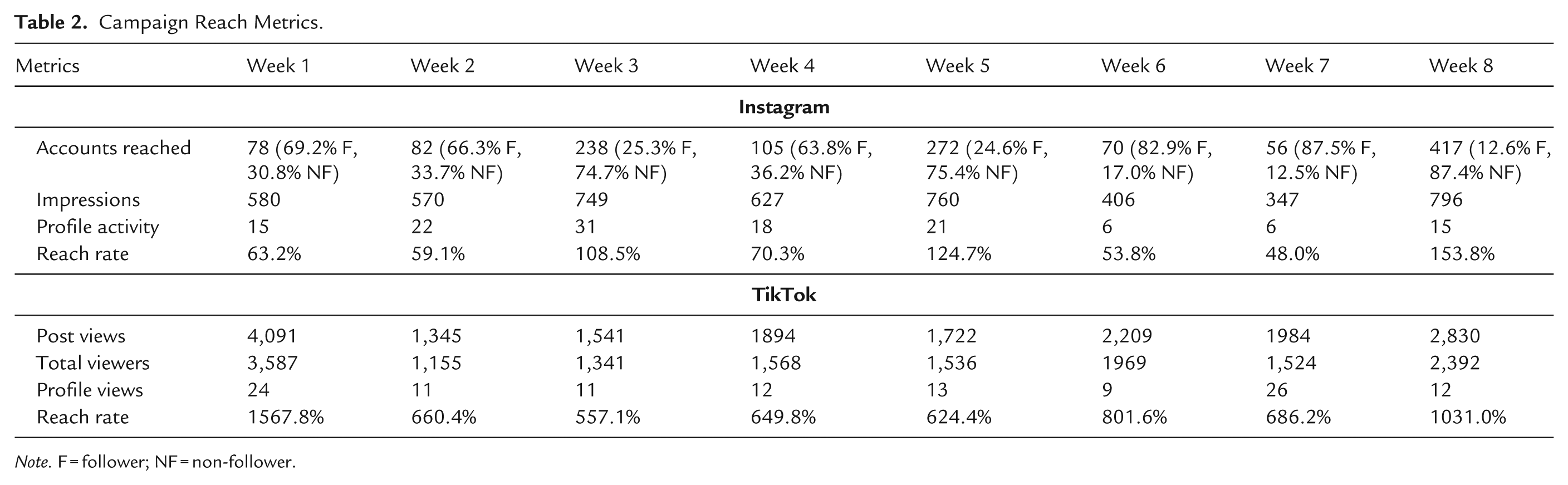
Note. F = follower; NF = non-follower.
Engagement
A total of 174 likes, 5 comments, 2 saves, 16 forwards, and 4 followers were gained on the SHS LEARN Lab’s Instagram during the campaign. The most accounts engaged (i.e., number of accounts who interacted with content) and highest engagement rates were achieved during Week 5. On TikTok, 143 likes, 11 comments, and 33 shares were received while 6 followers were gained. The highest engagement rate was achieved during Week 1. See Table 3 for an overview of campaign engagement metrics.
Campaign Engagement Metrics.
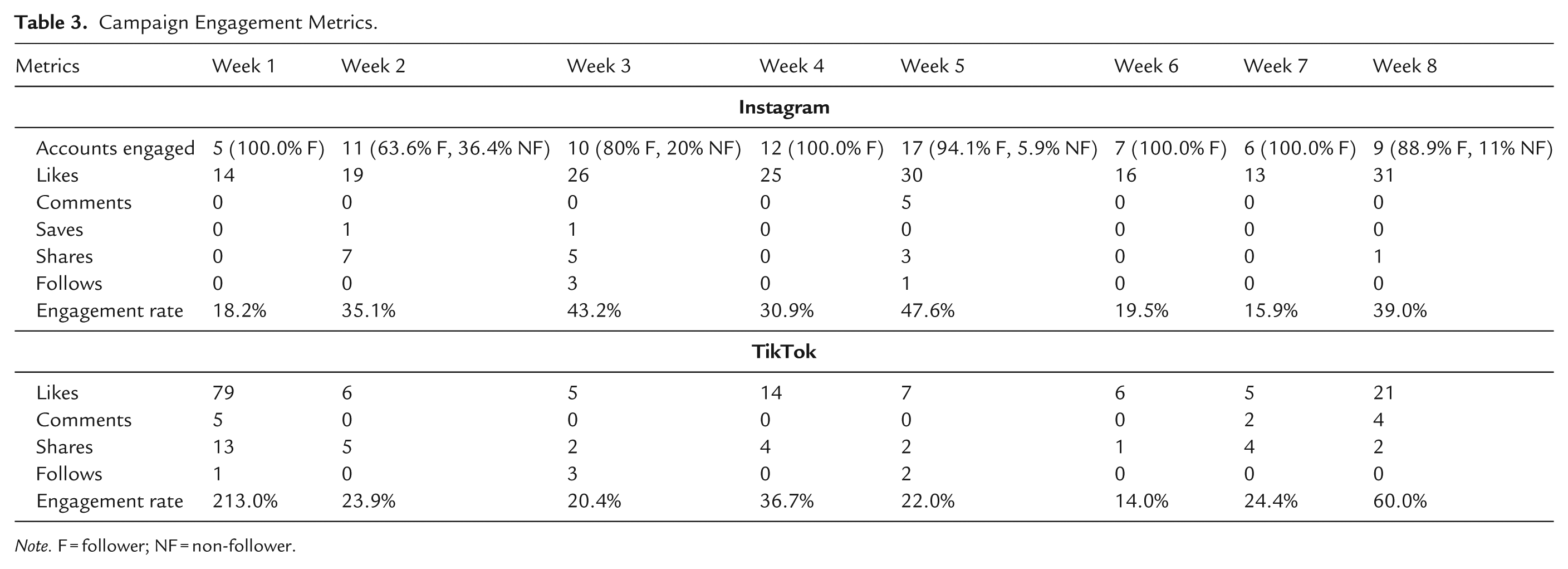
Note. F = follower; NF = non-follower.
Outcome Evaluation
During the campaign, one additional resource request was made. Results from the independent sample t-tests indicated evidence of a statistically significant difference between the reach rate across platforms during the campaign (t(14) = 6.189, p < .001). No statistically significant differences were detected between the engagement rate of platforms. Further, there was a statistically significant difference in average engagement rate on Instagram from baseline to campaign (t(7) = 6.871, p < .001). No statistically significant differences were detected among reach rates across time points.
Discussion
This study developed, implemented, and evaluated the effectiveness of an 8-week health promotion social media campaign designed to increase engagement with the SHS LEARN Lab’s open access health resource repository across Instagram and TikTok. Overall, the campaign was successful in increasing user interactions with the SHS LEARN Lab’s resources. Specifically, across the campaign, both Instagram and TikTok reach and engagement rates were consistently above average based on the pre-defined threshold values. TikTok had significantly higher reach rates than Instagram during the campaign; however, there were no significant differences between engagement rates. Further, on Instagram, there was a significant increase in average engagement rate from baseline to during the campaign, signifying engagement growth during the campaign. Finally, while new resources (i.e., those resources that were not shared during the original launch of the repository) garnered more reach and engagement metrics than re-posted resources, re-posted resources still achieved favorable metrics further signifying the efficacy of the campaign in re-igniting the use of these resources.
Using the SMILE Framework proved to be a sufficient basis to develop an effective health promotion campaign. Of particular importance to the Framework was the campaign responding to recipients’ needs which includes readability, credibility, and usability of posts (Zhao et al., 2022). Past research has highlighted concerns regarding using social media for educational purposes including the spread of misinformation (Allcott et al., 2019) and the quality of education-related information (Carpenter & Harvey, 2019; Sawyer et al., 2019). Given that the campaign messages and SHS LEARN Lab resources being shared were grade-appropriate (i.e., ensuring readability and usability) and evidence-based and promoted as such (i.e., ensuring credibility), this may have served to increase the reach and engagement of resources if educators saw the campaign posts as trustworthy and high-quality resources. Further, the timing and frequency of posts used in this campaign appear to be suitable benchmarks to follow for further campaigns, given that the reach rates across both platforms remained relatively consistent throughout the 8-weeks. Future campaigns may benefit from trying to increase the engagement of the campaign by increasing the number of posts per day.
Both reach and engagement on Instagram fluctuated throughout the campaign, however, both rates remained above average based on pre-defined thresholds (Arman & Pahrul Sidik, 2019; Udescu, 2024). Despite fluctuations, across all measures but profile activity, the reach of Instagram peaked during Week 8, indicating campaign growth. This was further evidenced by the significant increase in average engagement rates from baseline to during the campaign. This data indicates that the use of an Instagram campaign for health promotion purposes, especially when targeting educators, is a promising approach. This is important for health promoters to consider given that teachers have reported an increase in self-efficacy, content knowledge, and pedagogical knowledge when exposed to this type of information via Instagram (Carpenter et al., 2020). Moreover, since Week 8 of the campaign aligned with the end of the elementary school term, this may indicate a need for more classroom supports near the end of the school year and may serve as an ideal time for increasing the uptake of repository resources; however, the peak during week 8 could have also been due to campaign momentum. As such, further research during different periods of the school year or research exploring teachers’ choices in using the repository should be conducted to confirm these findings. Together, sharing health-related educational content via Instagram may be one strategy to supporting teachers following the educational disruptions of the COVID-19 pandemic.
Past studies have highlighted the utility of using TikTok for health promotion purposes (e.g., Indira, 2023; Zhu et al., 2019a, 2019b); however, gaps were found surrounding ideal health promotion content (e.g., types, characteristics) to increase user engagement. Based on this study’s campaign, it appears that health promotion videos featuring catchy songs may be one avenue to explore when promoting health-related content via TikTok. Further, sharing details on the health organization’s purpose and including calls to action may be additional characteristics of posts that can serve to increase the reach and engagement of posts. Based on an independent sample t-test, TikTok also had a significantly greater reach rates than Instagram, indicating that this may be the more suitable platform for health promotion campaigns and the sharing of educational resources. This finding is in line with current literature regarding TikTok’s engagement potential as an emerging video-sharing site (Vo, 2023). Of importance to note is that post views on TikTok merely indicate that a user has viewed your video for at least 1-s (i.e., users do not have to watch the whole video for a view to be gained). Further, given TikTok’s growth rate has been double that of its competitors (Stokel-Walker, 2023), and that the TikTok algorithm makes it so that every video has an equal chance of success (Narayanan, 2022), this platform merits further investigation into its efficacy for health promotion campaigns. In line with work by Narayanan (2022), even though the SHS LEARN Lab has relatively few followers, the videos reached, on average, 1,884 unique users per week, showcasing the effectiveness of the campaign in utilizing TikTok’s algorithm to the SHS LEARN Lab’s advantage. Although this campaign did not evaluate data regarding the use of particular sounds, hashtags, or video features to take advantage of the algorithm, future research should explore this avenue to increase the reach and engagement of health promotion campaigns via this platform.
While the social media campaign described here met the desired objectives, there is no way of knowing whether the audience reached and engaged were elementary educators, which is a common issue across social media campaigns. Sotrender (2022), a social media analytics company, explored this phenomenon and found that most ads created do not hit their target audiences. In fact, 50% of all ads analyzed reached less than 1% of their target audiences. While the current campaign under study faces a similar issue, one new resource request was made by an elementary teacher during the campaign. Further, anecdotal evidence from elementary teachers during the initial launch of the repository suggests that the campaign reached some elementary educators. Future research should prioritize data triangulation in the study design to ensure the target audience is being represented in the metrics collected throughout the campaign.
Implications for Practice
There are several implications of this work. First, the engagement peak in Week 8 of the campaign, coinciding with the end of the school term in Ontario, implies that campaigns targeting educators might perform best when launched close to the end of academic periods, when educational resources may be most relevant and needed. Second, health promotion content on TikTok, particularly using catchy music and explicit calls to action, could increase engagement on education-based accounts. Third, this campaign may serve as a useful template for health promoters in applying the SMILE Framework to real-world practice, inclusive of suggested timing, frequency, and messaging of posts. Fourth, this study showcases an effective social media campaign that culminated in behavior change among users. Specifically, the uptake of resources increased, and one elementary teacher submitted a resource request from the SHS LEARN Lab, signifying that the campaign reached our target audience. Anecdotes from teachers regarding the utility of resources were received during the initial repository launch, further emphasizing the reach of the SHS LEARN Lab accounts to elementary educators. In a time of financial constraint, especially in the educational sector, decision makers may also use this work as a cost-effective, feasible means to support teachers through following the educational disruptions of the COVID-19 pandemic.
Limitations
This study is not without limitations. First, the relatively short timeframe of the campaign (i.e., 8-weeks) may have impacted the effectiveness. Despite the 8-week timeframe aligning with past recommendations (Higdon, 2023), increasing the length of the campaign might have improved engagement among users. Next, since both the SHS LEARN Lab’s Instagram and TikTok accounts have a relatively small number of followers (82 and 45 followers, respectively), the reach and engagement rates may be higher than they otherwise would be if the SHS LEARN Lab had a larger following. As such, future research using this campaign’s structure on larger scale accounts should be conducted to confirm the promising reach and engagement rates found here. Finally, though reach and engagement rates were above average across the platforms compared to the most recently available average KPIs across these platforms, there is no way of confirming whether the users were educators, thus limiting the generalizability of findings.
Conclusion
The health promotion social media campaign developed, implemented, and evaluated through this study served to effectively increase the use of SHS LEARN Lab educational resources. Results from the current study shed light on the utility of both Instagram and TikTok to increase uptake in health promotion resources, with TikTok serving as a more favorable tool to increase the reach of resources, as displayed by the significantly higher reach rate across this platform and the success of both new and re-posted resources posted to this platform. Future campaigns should explore novel methods of increasing engagement among users while also prioritizing data triangulation methods to ensure the target audiences of campaigns are being reached. This study also offers an applicable template for future campaigns to follow when developing, implementing, and evaluating health promotion social media campaigns, expanding on the SMILE Framework by providing specific parameters regarding the six key constructs. Health promoters and decision-makers in the educational sector should consider social media as a cost-effective, feasible means to support teachers through.
Footnotes
Appendices
Declaration of Conflicting Interests
The authors declared no potential conflicts of interest with respect to the research, authorship, and/or publication of this article.
Funding
The authors received no financial support for the research, authorship, and/or publication of this article.
