




Abstract
The complex health demands of society emphasize the need for future health professionals to gain a deeper understanding of social determinants of health (SDOH) and provide meaningful health outcomes. Seventeen undergraduate and graduate students enrolled in a cross-listed public health elective course in Winter 2020 completed a remote application-based course project. This project was conducted to expand students’ comprehension of SDOH as underlying factors contributing to health disparities and inequities. It also sought to increase their awareness of tools and resources in the community to aid populations in overcoming determinants. Last, it aimed to provide them with experience applying population health concepts and enhancing their research skills. The course project utilized a real-world application approach as it consisted of students (1) developing a Detroit-focused community resource guide, (2) creating a related resource map, and (3) composing two manuscripts on the course project and learning experience. Students’ deliverables included a developed community resource guide and related interactive map and the construction of the manuscripts on the project and their learning experience, which was separated into two manuscripts. Students completed a journal reflection, which was used to assess their learning experience. Students’ journal reflections were examined using NVivo12 to identify the six themes in their learning experience. The project effectively met the course learning outcomes while aiding students in recognizing Detroit’s health disparities and the influence of SDOH. It also provided students with deliverables.
Keywords
Background
Although improving the health of all communities is of great significance, emphasis is placed on Detroit, as in 2021, Detroit’s heart disease crude mortality rate (359.8 per 100,000) was approximately 1.35 times Michigan as a state (267.4 per 100,000) (Division for Vital Records & Health Statistics, Michigan Department of Health & Human Services, 2021). A substantial number of these deaths are preventable through lifestyle modifications, such as routine healthcare visits (Lloyd-Jones et al., 2010; Virani et al., 2020). However, research shows that social determinants of health (SDOH) have created health inequities and disparities in food security and barriers to accessing care among Detroit residents (Mehdipanah et al., 2017, 2021).
With the increasing complexity of public health issues, future public health professionals must be knowledgeable about their community’s health and social needs. It is also essential to advance students’ skills to facilitate them in improving residents’ health outcomes and diminishing their health disparities.
Michigan’s higher education public health courses seek to increase students’ awareness of Detroit residents’ health disparities and inequities and the underlying role of SDOH. Furthermore, these courses must prepare the future public health workforce to implement innovative systems-thinking approaches, programs, and policies to address residents’ public health issues. Community-based learning, a pedagogy frequently used in public health courses, has been found advantageous in enhancing students’ comprehension and application of course concepts (Ezeonwu, 2020; Gardner et al., 2018; Joly, 2020). Moreover, it can improve students’ cultural awareness and create an opportunity for students to become familiar with the community’s resources.
There are potential benefits to blending research-based learning with community-based learning. Research-based learning is based on six steps: identifying a problem, gaining an in-depth understanding of the problem, researching solutions, devising a solution, implementing and evaluating the solution, and reflecting on outcomes and experiences (Boud & Feletti, 1998; Farkhan, 2008; Prahmana & Kusumah, 2016). This pedagogy has been used in multiple disciplines, such as mathematics (Prahmana & Kusumah, 2016), business administration (Timiyo & Sriram, 2021), and social sciences (Wessels et al., 2021). Therefore, blending research-based learning with community-based learning can develop students’ critical thinking, problem-solving, and communication skills. It can also aid them in applying evidence-based approaches in performing community-based projects.
To aid in addressing Detroit residents’ health needs and immerse students in course concepts, students enrolled in a public health course developed a community resource guide and related interactive map. Local organizations were surveyed to gain their perspective on residents’ use of services. Students later developed two manuscripts detailing the resource guide’s significance, development process, and course experience. This project aimed to expand students’ knowledge of the Detroit community’s health and social needs, increase their understanding and application of population health concepts, and enhance their research skills.
Course Overview
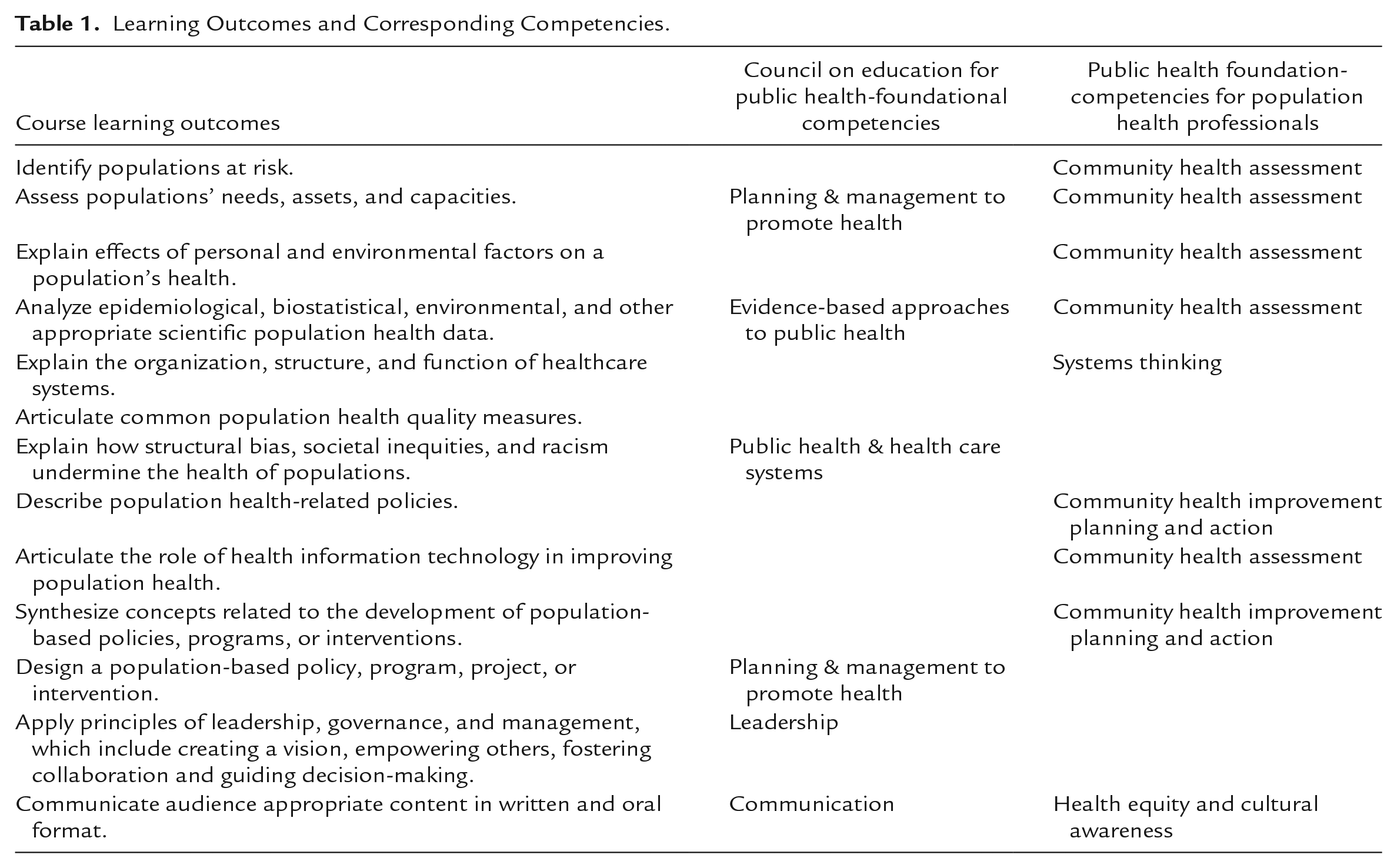
The 16-week public health course is a cross-listed elective offered to 17 graduate (Master of Public Health) and undergraduate (Health Sciences) students in Winter 2020. The course consisted of a hybrid, flipped classroom format in which students viewed course lectures online and then participated in interactive in-person class activities. The course introduced students to crucial population health concepts and skills through lectures and activities guided by the textbook, Population Health: Creating a Culture of Wellness (Nash et al., 2016). Concepts covered included but were not limited to SDOH, care coordination, behavior economics, and information technology. The course learning outcomes and the corresponding Council on Education for Public Health’s Foundational Competencies (Council on Education for Public Health, 2016) and the Public Health Foundation’s Competencies for Population Health Professionals (Public Health Foundation, 2019) covered in the course are outlined in Table 1.
Learning Outcomes and Corresponding Competencies.
Course Organization
Due to the COVID-19 pandemic, courses were transitioned to Zoom. Throughout the semester, 20-min sessions were allotted using Google Calendar appointment slots to facilitate group and individual student check-ins regarding project status. The professor utilized Google’s activity log to monitor students’ completion of the community resource guide, which was referenced during check-in meetings.
Course Project
The course project sought to foster interprofessional collaboration among students, engage them in active learning, and raise their awareness of health disparities and inequities experienced by communities. The community- and research-based learning pedagogies aimed to bridge course concepts to their real-world application. The course project was guided by the need for a local non-profit organization that provides holistic care (physical and mental health services) to Detroit residents. Their clientele was predominantly low-income, homeless, or vulnerable populations who resided in Detroit. The community partner sought to use the resource guide to connect clients to needed services. Having the guide will potentially reduce the employees’ and their clients’ time and effort in identifying community resources. It may also increase their clients’ engagement in their health. The initial plan was to have the organization attend class sessions; however, the course session occurred during the beginning of the COVID-19 pandemic, including the stay-at-home orders. Additionally, at this time, many non-profit organizations, including the partnering organization, were conducting organizational modifications to ensure their sustainability and provision of services during the pandemic. Therefore, the decision was made for the course instructor to provide routine updates on the course project to the community partner.
Students learned about Detroit residents’ health and health outcomes and related SDOH through course lectures and required readings. They worked in groups to create a list of community resources for their respective metrics. They then composed manuscripts on the developed resource guide and their learning experience.
The course project consisted of four parts: (1) develop a community resource guide, (2) create a related resource map, (3) report local organization survey results, and (4) compose two manuscripts on the project and learning experience. The project was worth 47% of their total grade for the course. Students were given the project guidelines document (Supplemental Appendix A), discussing the project goals, objectives, and overview. The guidelines also included grading rubrics for the community resource guide and the manuscript. The following describes the four components of the course project.
Resource Guide
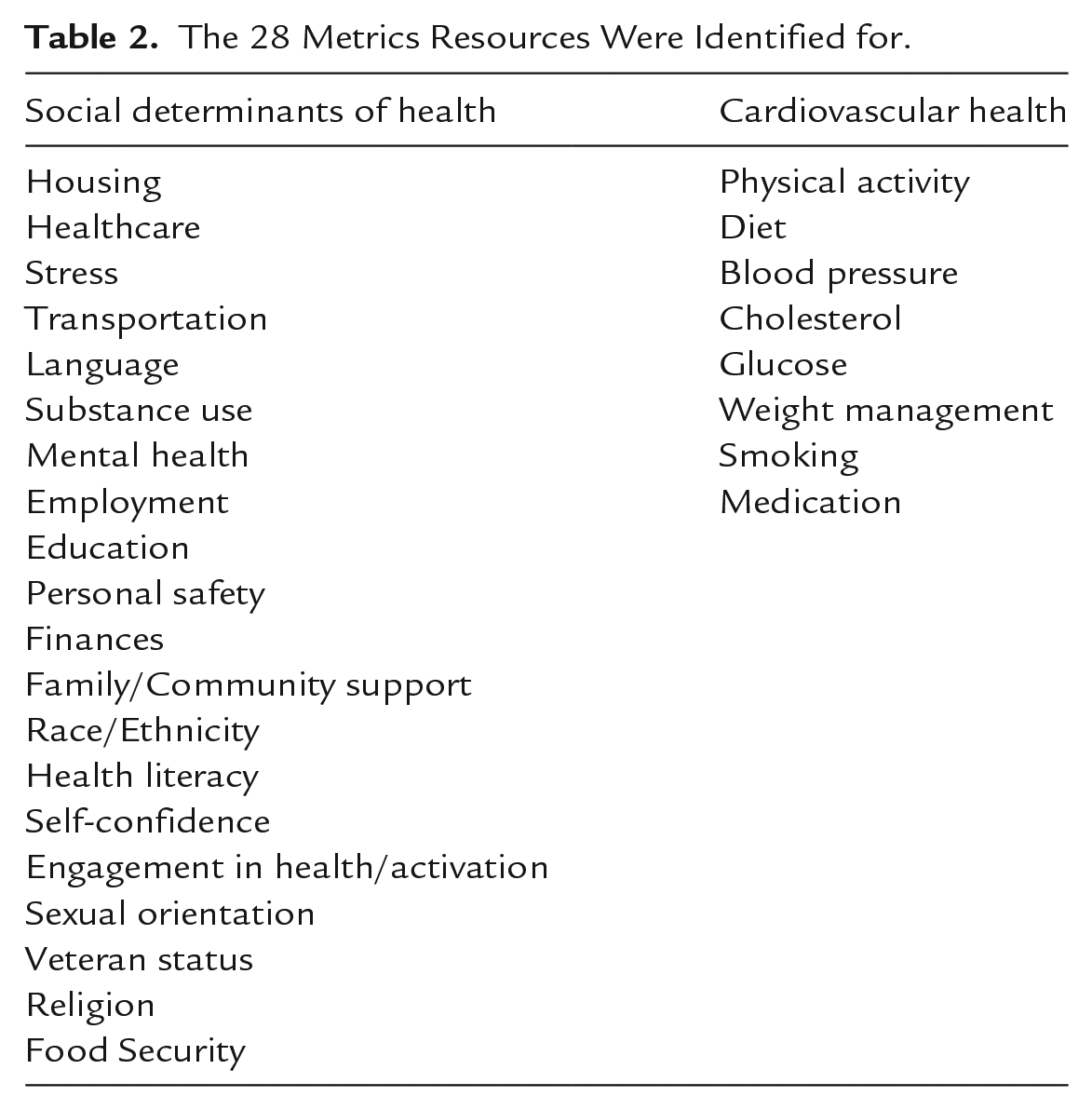
The community resource guide consisted of resources for 28 metrics related to SDOH or cardiovascular health factors (Table 2). Students self-identified two metrics (e.g., food and housing) of interest and worked in teams of two to identify related resources. Students were encouraged to choose metrics related to career interests. Using Google Excel Sheets, students compiled resources for their two metrics. Details captured on resources included name, address, contact information, link to the website, services provided, hours of operation, service costs, application requirements, languages spoken, eligibility criteria, and organization type (e.g., healthcare system). The professor conducted routine check-ins with students to address questions or challenges in identifying resources.
The 28 Metrics Resources Were Identified for.
Resource Map
The interactive map was developed to provide a visual guide in connecting residents to resources. It also examined the density of resources within Detroit neighborhoods. Students and the professor reviewed and formatted the resources, and two Master of Public Health students with experience with geographic information system mapped community resources to Detroit neighborhoods using ArcGIS Online software from Esri (Esri, n.d.). The resource map was developed following course completion.
Organization Survey
A seven-item questionnaire was developed to gain local organizations’ perception of barriers and facilitators to residents utilizing their program/services related to SDOH needs. Institutional review board approval was obtained. The survey was disseminated to organizations in Winter 2020 from May 2020 until August 2020. Due to the COVID-19 pandemic, the response rate was impacted significantly. The stay-at-home orders created challenges in reaching organizations’ employees. The final response was 25 participants, which created limitations in the results. The survey’s objective of increasing students’ experience in analyzing and interpreting results on public health issues was not met, and students did not receive a grade for completing this aspect of the project. However, students gained experience in conducting descriptive statistics on SDOH metrics identified.
Course Manuscript
The content of the course manuscripts included the process for developing the community resource guide and students’ learning experience. Students worked in teams to compose a section of the manuscripts and received a grade for completing their section of interest (e.g., introduction, results). The manuscripts were written in Google Docs so students could merge connections within the manuscripts and improve cohesiveness. It also encouraged students to collaborate with their peers and assist the professor in observing student activity. Using Google Docs and Excel allowed real-time monitoring and documentation of student activity and project status.
Examining Learning Experience
At the end of the semester, students completed a journal reflection to assess learning outcomes. The following three questions/statements were answered:
Describe two ways that you contributed to your group project.
What did you learn about yourself in working on this project?
What is one thing you learned or experienced from the project that you will carry on with you throughout your career?
Using NVivo12 (Edhlund & McDougall, 2019), students’ journal reflections were analyzed to identify themes in their learning outcomes. A group decision was made to incorporate students’ journal reflections into one of the manuscripts’ post-journal reflection completions. This timing diminishes response bias in students’ reflections.
Project Outcomes
Students developed a robust community resource guide and map on 28 SDOH and cardiovascular health factors. Health professionals can utilize the resource guide to connect patients and community members to organizations that may improve their health outcomes. Moreover, it can advance the development of collaborations among local organizations to address Detroiters’ cardiovascular health inequities.
The map depicts hotspots in the availability of resources in particular communities and under-resourced neighborhoods. The map can also be overlayered with additional city maps, such as the public health transportation map, highlighting barriers to residents’ access to these services (e.g., having to take multiple buses to reach the organization). The students presented their course project outcomes at the American Public Health Association’s Annual Meeting and as leading authors.
Learning Experience
The journal reflections indicate that the course project positively impacted student learning (Figure 1). It also aided them in discerning how to apply competencies and skills acquired once they enter the workforce.
“A few things I hope to carry on throughout my career that I have learned during this experience is to be thorough and considerate. During this project I had to be very informative and specific with my findings. As a future physician, it is important that my patients completely understand their diagnosis and treatment options. One way I can ensure that is to be extremely informative. Another thing I learned during this project was to be inclusive of the environment. Questions such as "are there more than one language spoken?" are important to ask in order to include the entire population of a community. This encompasses minority groups in a community that may have not otherwise been included. I hope that as a physician I can be as considerate and thorough with how I practice, as I was while creating this community brochure. The health care field should be an environment, which is judgment free, compassionate, and completely accepting. These were things practiced while making this brochure, and I think it is important I carry them into my future workplace.” -Undergraduate Student
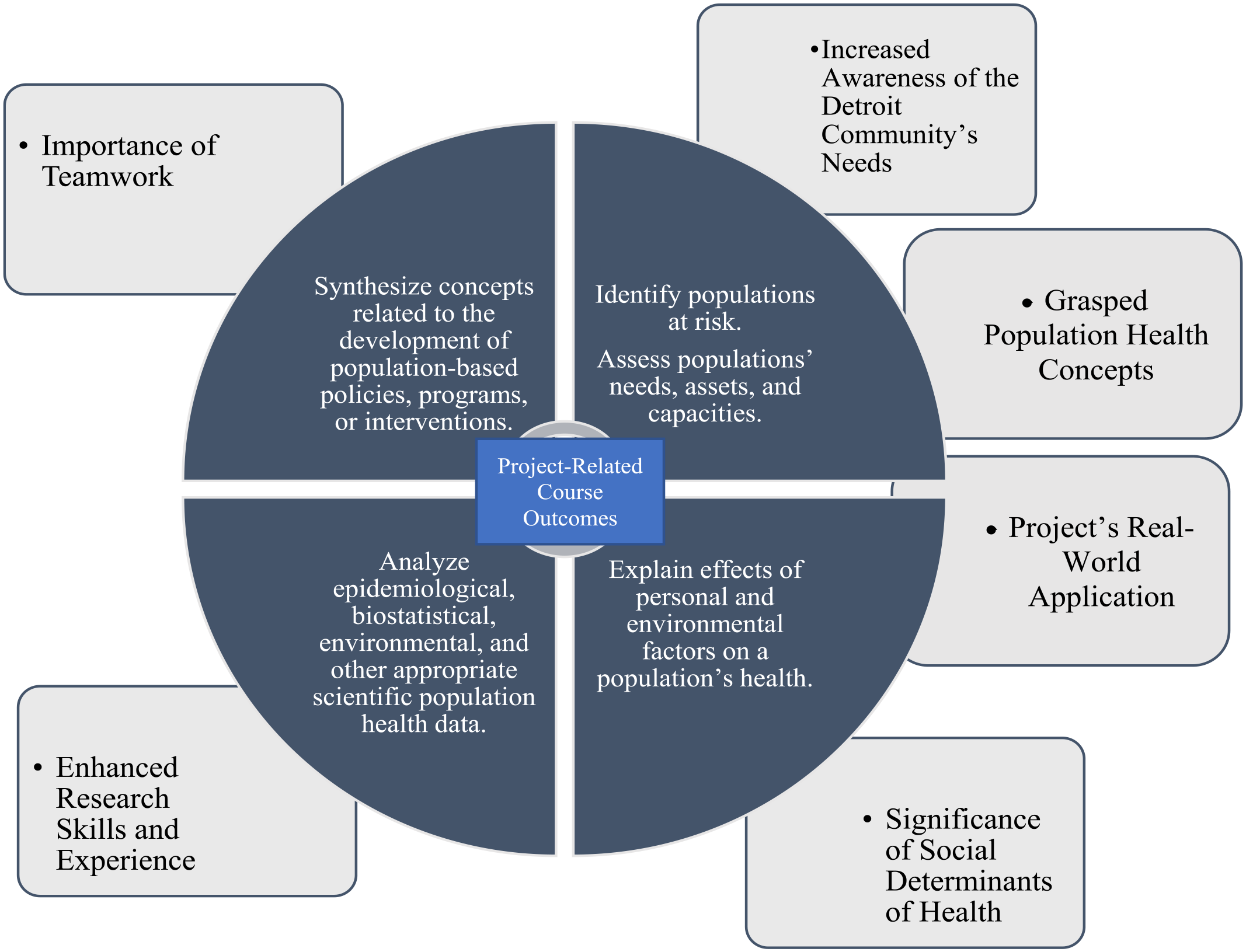
The connection between project-related learning outcomes and students’ learning experience.
The journal reflections demonstrated students’ knowledge of population health and course concepts, such as risk stratification and SDOH. Moreover, students exhibited an understanding of teamwork and the application of course material in their professional careers and volunteer opportunities. They reflected on performing similar activities in health professionals’ offices and internships.
“I learned the importance of collaborative engagement to create an intervention (in this case a resource guide). This includes different viewpoints, use of individuals' strengths and weaknesses when creating a framework (e.g., data analysis, formatting metrics, research abilities). This project has given me insight that cannot just be gained through lecture, books, and videos. These insights have better prepared me for future projects in the public health program and future professional work.” -Graduate Student
The reflections depict students’ self-examination of their approach and application of their research skills. Students communicated increased interest and confidence in conducting research. Moreover, students connected the significance of research to inform the development of evidence-based programs. Most importantly, the reflections indicated that the project increased students’ awareness of health inequities experienced by Detroit residents and the role of SDOH in creating disproportionate outcomes among this population.
“I gained practical knowledge in understanding the social determinants of health and how it hinders the community’s overall health status. In order to provide access to a healthy lifestyle to everyone, we should identify the barriers that may stop the population from living a healthy life both physically and mentally.”- Graduate Student
Lessons Learned
A real-world application-based project was incorporated into a cross-listed course of undergraduate and graduate students interested in population health-related careers. The project provided four deliverables: a conference presentation, a community resource guide, a related map, and co-authorship of journal articles. These deliverables can be used in job interviews and future academic pursuits.
With the known global social and health implications of COVID-19 (Abrams & Szefler, 2020; Burström & Tao, 2020), there may be benefits to implementing this course project in courses in other states or countries. Moreover, subpopulations, such as lower socioeconomic, rural, and older adults, may benefit from a population-specific resource guide. Aiding populations or communities in accessing community resources facilitates an equal opportunity for all to be equally healthy.
To successfully replicate the course activities, it is important to allocate sufficient time beyond course sessions to meet with the community partner and with students to submit conference abstracts and manuscripts. Incorrect time allocation may result in poor project management, diminishment of future collaborations with the community partner, or lower course evaluation scores. To prevent these occurrences, create a project timeline and share it with the community partner and students at the earliest opportunity. A flexible timeline should be developed to account for unexpected events, such as COVID-19.
In addition to the timeline, providing students with a project guidelines document will aid students in grasping the project’s purposes and processes. The guidelines for this course included project goals and objectives, an overview of all SDOHs and their examples, and grading rubrics for the community resource guide, manuscript, and presentation. The project guidelines outlined the manuscript’s section and included bullet points on information to be placed in each paragraph of the manuscript. The guidelines also included grading rubrics for the developed community resource guide, manuscript, and presentation. The rubrics contained a scale that ranged from “unacceptable” to “excellent” to aid students in grasping the project’s expectations.
To aid students in successfully completing course activities, it would be beneficial to incorporate didactic teaching that introduces and reinforces students’ knowledge and skills. For example, one of the course lectures discussed organization types (e.g., non-profit vs. private), and gave community resource guide examples. Students were also provided examples of peer-reviewed journal articles with a similar study design or project aims to guide their writing of the manuscripts.
The journal reflections indicate that the project increased students’ knowledge about the Detroit community and their cardiovascular disease burden. It also heightened their consciousness of the role of SDOH in improving health outcomes and gaps in the availability of resources. These course outcomes provide supporting evidence for implementing the project in other courses to assist communities. Knowledge of a population’s needs and influential factors is significant for developing and implementing effective population health initiatives (Caron et al., 2018) in communities across the United States.
As important, the journal responses reflected an understanding of the significance of collaborations to effectively address an urban community’s multifaceted needs while taking a holistic view when problem-solving. Increasing students’ awareness of the importance of collaboration may increase efforts to create partnerships to address health issues (Kaprielian et al., 2013). It may also lead to developing non-traditional partnerships to identify innovative solutions to health issues.
Additionally, the project successfully engaged students in course concepts beyond the classroom, as evidenced by their willingness to assist with updating resources and revising manuscripts. Specifically, students were willing to assist in updating the resource list and revising the manuscripts. Improving students’ awareness and engagement in Detroit’s environment and residents’ access to health and social services may impact their careers. Skills and knowledge acquired from the course, such as awareness of the community and environment, collaboration, and communication, align with job competencies required for population health positions (Meyer, 2017; Nash et al., 2016). It is important to note that while students’ perceived impact on their learning experience was assessed, their change in knowledge level was not evaluated.
The project was broad in context, with students choosing the metrics (e.g., housing) they researched. This approach appeals to students’ interests and aligns with previously reported lessons learned on the importance of giving students choices and its impact on their engagement (Early & Lasker, 2018). Additionally, designating class time with student team appointment slots fostered student accountability while providing support in completing project tasks. Specifically, it allowed students to share questions, address challenges in conducting activities, and ensure communication among team members.
Future modifications to the course will include submitting course projects during the semester. Although all students were encouraged to continue the project outside of course time, several students were unable to due to time constraints. Another modification will be to alter the course assessment to evaluate changes in students’ knowledge and skills.
The course project enhanced students’ grasp of a population’s health risk and influential determinants. It also provided them an opportunity to apply concepts acquired throughout the course. In doing so, it provided them with deliverables, including a national conference presentation and two manuscripts that create competitive resumes and graduate school applications. This remote application-based project met its objectives and is appropriate to implement in courses during the COVID-19 pandemic. The course project can be replicated in courses across the United States or other countries, which may be beneficial to helping communities gain access to resources that will aid in diminishing existing health disparities. Moreover, replicating this course project in different courses will aid in assessing its effectiveness.
Footnotes
Acknowledgements
We want to express our gratitude to Stephen Odett, Hailey Forbes, MPH, Kayathri Ponnusamy, Elizabeth Zaborowski, Alix Khanafer, Samantha Galloway, Haley Zak, Ashlee Smith, Ariel Cason, Lauren Joswak, Anju Thomas, Lyndsey Malkovich, and Jenny Nguyen for their contributions to this article.
Declaration of Conflicting Interests
The author(s) declared no potential conflicts of interest with respect to the research, authorship, and/or publication of this article.
Funding
The author(s) received no financial support for the research, authorship, and/or publication of this article.

References
Supplementary Material
Please find the following supplemental material available below.
For Open Access articles published under a Creative Commons License, all supplemental material carries the same license as the article it is associated with.
For non-Open Access articles published, all supplemental material carries a non-exclusive license, and permission requests for re-use of supplemental material or any part of supplemental material shall be sent directly to the copyright owner as specified in the copyright notice associated with the article.
