




Abstract
Objective
Technology is essential in the facilitation of many operations in higher educational institutions. The use of web-based platforms to deliver academic content, including practice-based training, has gained popularity. However, their use in practicum process administration is not well studied. In the 2020/2021 academic year, a graduate program in the Faculty of Health Science within a public university in Ontario incorporated the InPlace platform to streamline the administration of the practicum process, including goal setting. This study aimed to understand the user experience of the platform in facilitating competency-based learning.
Methods
Twelve students participated in two focus group sessions that lasted approximately 1.5 hr each. Two staff members participated in one-on-one semi-structured interviews. The System Usability Scale (SUS) was used as a measure of the platform’s usability. Other outcomes included staff and students’ user experience.
Result
Overall, the students and staff believe the platform is good for facilitating competency-based learning. The SUS score was 61.8 (95% confidence interval, [56.7, 66.9]). Eight students (66.7%) indicated that the platform was useful in helping them navigate their learning goals. Staff expressed appreciation of the program with respect to communication, practicum process, and overall program administration. Some suggestions for improving the platform were made.
Conclusion
The practicum placement platform has shown some initial benefits in communication and practicum process administration. In a future configuration of similar platforms, the implementation of the suggestions provided in this study may be necessary to improve usability and enhance the facilitation of competence-based learning.
Keywords
Background
Technology has become an integral part of graduate programs, with active research on the impact on staff and students. Using internet/web-based platforms for the delivery of educational content has become commonplace, especially after the coronavirus disease (COVID-19) pandemic (Cunnington et al., 2023). The implementation of course management platforms improves the delivery of professional development courses, saves space and time, and creates opportunities to absorb more students every academic year (Abel, 2005; Harley et al., 2003; Twigg, 2003). With the lessons learned throughout the COVID-19 pandemic, many higher education institutions will implement more hybrid modes of teaching whereby web-based learning complements the traditional modes of content delivery in order to reach students in different jurisdictions and provide access to the course content at any time (Bashir et al., 2021; Cameron-Standerford et al., 2020; Cunnington et al., 2023; Nguyen et al., 2021). Besides the delivery of educational content, web-based solutions have been instrumental in the smooth running of higher institutions, facilitating such activities as student registration, fee payment, and library administration (Habib et al., 2021). Though the growing use of web-based systems for higher education delivery is generally accepted now, the problems they cause or solve are still not well defined (Twigg, 2003).
Despite the benefits, the degree to which an institution incorporates technology depends on factors such as funding (Harley et al., 2003). This study was funded to pilot the use of a practicum management platform to facilitate competency-based learning. The platform was implemented in 2020 as a pilot project for use by the 2020/2021 first-year candidates. Because of the role the platform was intended to play in facilitating students’ competency-based learning, this study was designed to help understand whether the integration of the platform is beneficial to both the students and the staff.
To ensure a homogenous understanding of public health principles and practices across Canadian provinces, the Public Health Agency of Canada (PHAC), over a decade ago, developed the Core Competencies for Public Health in Canada (CCPHC)— a list of required competencies expected of any public health practitioner and also recommended that practicum placements should be an integral part of public health training (Public Health Agency of Canada, 2007a, 2007b). A recent study that examined the degree to which the Master of Public Health (MPH) programs’ course descriptions align with the CCPHC categories identified some misalignment (Apatu et al., 2020). It showed that Canadian MPH programs may be lacking in addressing core competencies relating to leadership, communication, diversity, and inclusiveness. These competence areas are better acquired by linking formal training with practical preceptorship through practicum postings.
The practicum experience also serves as a bridge to a student’s career in a governmental public health workforce (Burke & Biberman, 2017; Crowell, 2018). According to the 2014 National Centre for Universities and Business Student Employability Index, 92% of students agree that it is important to have opportunities for placements, work experiences, or internships (Porter, 2014). Exposure to real-world challenges through a practicum experience is beneficial to the students, the supervisory organizations, and the academic program (Divine et al., 2007; Gault et al., 2000; Hernandez et al., 2014; Kegler et al., 2006; Starmer, 2004; Villanueva et al., 2011; Wigington et al., 2017). For students, the practicum experience promotes career development and increases employability and job satisfaction after graduation (Gault et al., 2000; Hernandez et al., 2014). The academic program gains community network opportunities and external program assessment through the practicum supervisors and students’ feedback. The placement site gains by having highly motivated students apply their skills to complete projects within a short duration. There is also the possibility of assessing the student as a potential employee through the supervision of their career path (Divine et al., 2007; Kegler et al., 2006; Starmer, 2004).
Despite the numerous benefits of a practicum experience, the management of the process can be challenging. One of the practicum placement challenges identified in the literature is the communication between the agencies and the department (Divine et al., 2007; Kegler et al., 2006). Since there is no guarantee that an agency will always have projects available for students, the practicum placements can be difficult to arrange, and the agency-department relationship may not be sustainable. Evaluation of the practicum process has also been an issue (Greece et al., 2019; McCormick et al., 2014; Oglesby et al., 2013). The complexity and the manageability of the entire practicum process administration have not been well studied in the literature. However, the Interns and Mentors Program for ACTion (IMPACT) strategy recommends a six-step approach of managing a practicum process: (i) identifying field placement opportunities, (ii) marketing field experience opportunities to students, (iii) selecting students seeking field experience opportunities, (iv) placing students with practice partners, (v) evaluating student progress toward field experience objectives, and (vi) evaluating the program (McCormick et al., 2014). Another framework included technology as an important aspect of practice-based training (Greece et al., 2019). Canadian schools that offer MPH programs tend to follow these steps with some variations. In the USA, 85% of accredited schools offering MPH programs controlled the practicum aspect at the school level (Oglesby et al., 2013).
Prior to September 2020, the MPH program managed these steps through a dated ad-hoc paper-based, and electronic process. For better management of the practicum process and the optimization of the students’ practicum learning experience, a placement management portal that offers an integrated learning platform (InPlace) has been implemented into the MPH program. Some studies have demonstrated that the benefits of integrating electronic supports for students, improve educational and learning processes through the unification of learning tools and technology platforms (Rubin & Eichenholtz, 2014; Toktarova & Ivanova, 2015).
The objectives of this study were to understand: (1) if the integration of the platform is beneficial to students in the facilitation of competence-based learning, (2) if the integration of the platform is beneficial to administrative staff in the administration of the practicum process, and (3) the challenges of using the platform and how it can be improved.
The Practicum Track of the MPH Program
The MPH degree is a professional credential. The program attracts students from various disciplines, including healthcare professionals and learners with non-clinical backgrounds. It is generalist in nature and includes a practicum stream that allows students to participate in a 4-month experiential placement, as well as a thesis stream for students who wish to conduct research in public health in place of the practicum. Additionally, students in the practicum stream complete five electives, two of which can be replaced by an additional optional part-time practicum. Core courses in the first semester include (1) Foundations of Population and Public Health Practice, (2) Introduction to Biostatistics, and (3) Population and Public Health Epidemiology. In the second semester, Public Health Policy and Research Methods courses are taken. The last core course is an integrative capstone course, Leadership & Applied Public Health, that is taken in the second year. The cumulative contents from these core courses build the students’ public health knowledge base.
Besides the standard lecture-based courses and practicum placements, numerous competency-based workshops and seminars are also available for the students. The practicum experience enhances competency-based learning through practical application of public health knowledge within real-world settings. The practicum is completed during the summer breaks in various organizations within Canada, including institutional research groups. In the past, the practicum process was managed through an ad-hoc system that combined the use of paper-based learning tracking sheets, email, and the institution’s learning management system (LMS). The leadership of the MPH program identified that streamlining the management of the practicum placement process was necessary. Therefore, a practicum placement management portal was selected and incorporated into the MPH program. The portal was integrated into Professional Development (PD) courses offered in the first two semesters of the program. This portal was selected because it has been used by another educational program in the Faculty of Health Sciences and has undergone the necessary university security approval process.
Working with the Program Director, one program staff is responsible for the administration of the practicum process. The practicum site supervisor ensures that the students acquire the intended skills and signs off on the practicum completion form. A practicum progress form is completed by both the site supervisor and the student during the practicum placement. These forms help to identify lapses in learning objectives and skill acquisition. Where lapses are identified, remedial strategies are quickly initiated.
The Professional Development Courses
In line with the university’s problem-based education model, the public health graduate program equips students with public health skills through lectures, workshops, practicums, thesis projects, and other hands-on professional development (PD) projects. While the lectures build knowledge of the fundamental principles of public health, the practicum or thesis projects present a hands-on practical acquisition of the competencies (Crowell, 2018). A schematic representation of the link between the program facets is shown in Figure 1.
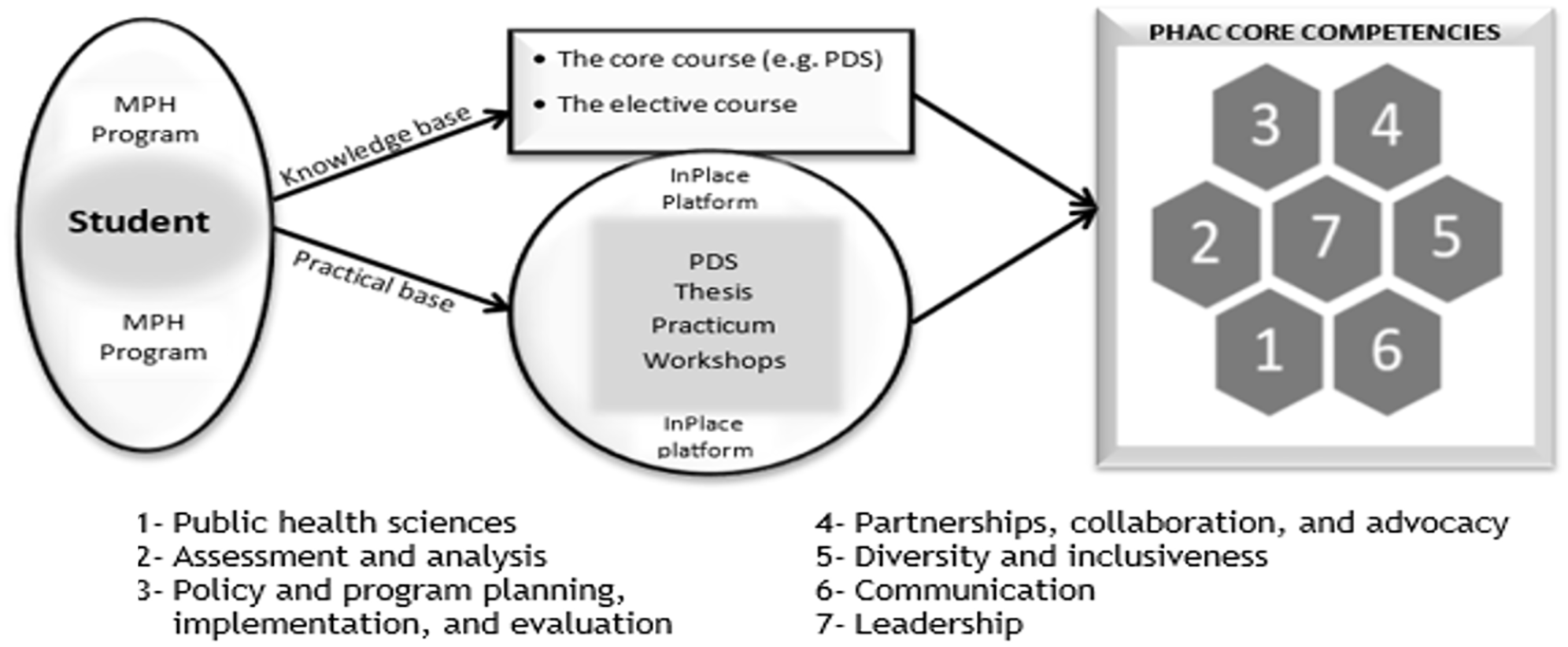
A schematic representation of the link between the core competencies, practicum, PD course, InPlace platform.
In 2020, PD courses 1 & 2 were introduced as core courses in the first-year MPH program curriculum to replace the previously offered seminar courses. The PD courses provide opportunities for the practical acquisition of the CCPHC. PD-1 is offered in the fall session, and it provides students with opportunities to explore and assess their individual academic and professional public health interests. It helps the students to enhance their skills in evidence-informed decision-making, communication, and project management (Kuganathan et al., 2022). PD-2 is offered in the winter session and presents students with several learning experiences such as guided personalized academic plans and group activities that prepare them for practicum or thesis projects, professional skill building, and a period where they can reflect upon the competencies that they would like to gain additional expertise beyond the general core courses. Some of the practical professional development opportunities offered to students through PD courses include lectures on how to develop a curriculum vitae (CV), how to update their professional profile on LinkedIn, and various workshops on topics that complement the MPH curriculum and examine the importance of ethics in public health practice. In 2020, students ranked the CCPHC domains (Public Health Sciences; Assessment and Analysis; Policy and Program Planning, Implementation and Evaluation; Partnerships, Collaboration and Advocacy; Diversity and Inclusiveness; Communication; and Leadership) based on desirability (Public Health Agency of Canada, 2007a, 2007b). For this study, desirability is an expression of the student’s eagerness to acquire the core competencies or enhance them through their electives and practicum or thesis. InPlace was implemented to facilitate and deliver some of the practical learning components of the PD courses including tracking skill acquisition.
InPlace Platform
The InPlace platform is a placement administration software that connects students with the workplace by providing a streamlined end-to-end forum that is controlled by the educational program. It is designed as a generic system that can be customized to meet the needs of any educational program. Some of the key functionalities and interactions are shown in Figure 2.
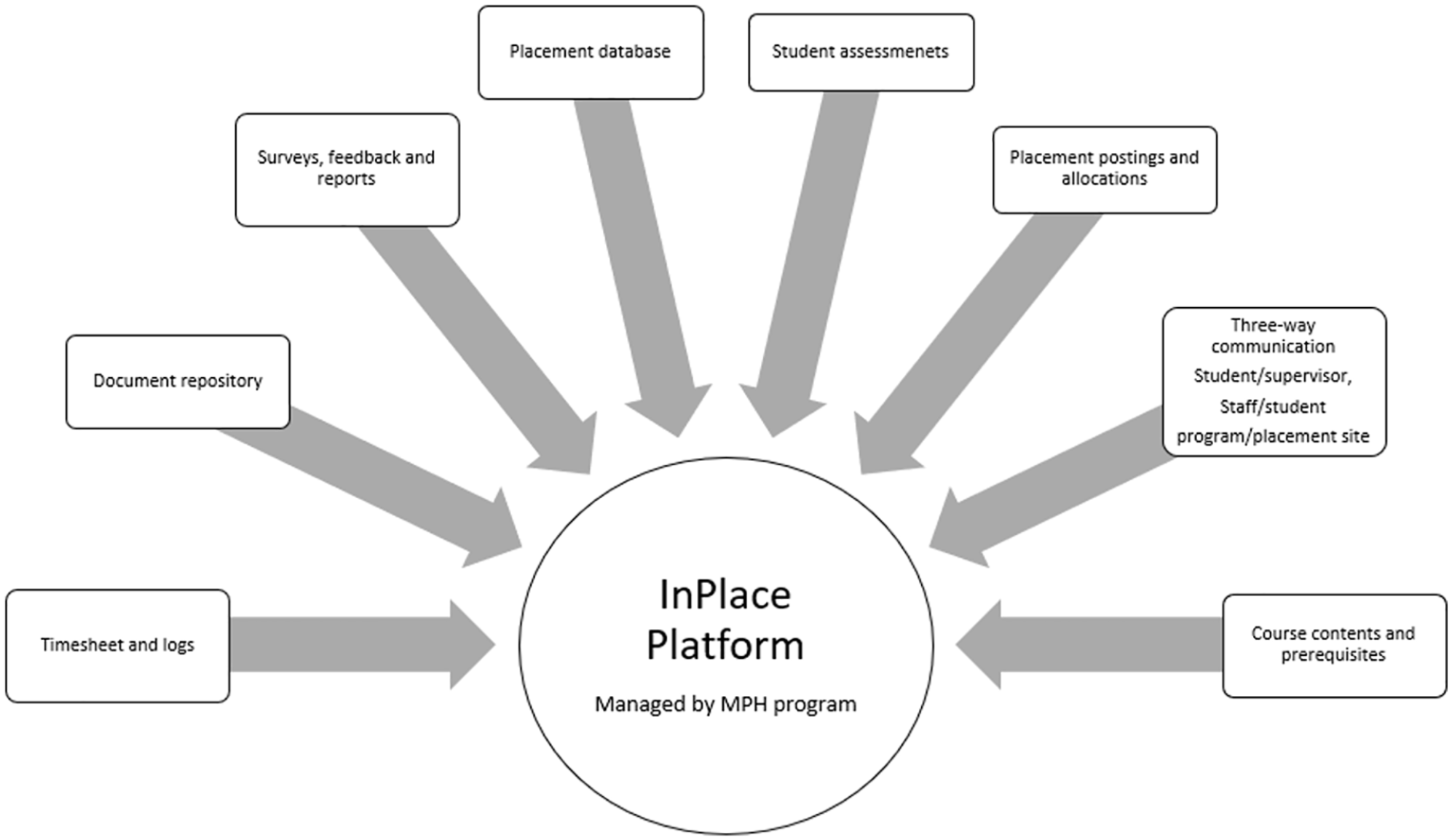
InPlace platform functionalities.
InPlace was integrated into the MPH program in September 2020 for better management of the practicum process. It was intended to facilitate students’ practicum-related learning experiences in the PD courses and the practicum implementation process. The platform was configured to allow students to rank the Core Competencies for Public Health based on their desirability, identify their learning needs, and submit applications to practicum postings that aligned with their learning objectives. The practicum opportunities were made available on the platform with a brief description of the projects and a list of the potential skills students would learn. The platform was also configured to improve the three-way communication among the students, the practicum supervisor, and the program staff. Besides facilitating skill acquisition, the platform serves as a repository for students’ CVs, practicum placement forms, assessment checklists, learning objectives, student/supervisor feedback, and pre/post-competence assessment surveys.
The platform serves as a repository for program-related documents including the practicum forms. Therefore, ease of access and completion would make the delivery of PD courses less cumbersome with respect to the number of times the administrative staff would have to go through a form. Understanding the perspectives of students and staff using the platform and assessing its usability will inform future iterations.
Methods
The study was designed to incorporate mixed methods, with focus groups with students and interviews with program staff. The system usability scale (SUS) survey administered via the Zoom polling system was used to gather data on the usability of the platform (Leavitt & Shneiderman, 2006; Lewis, 2018; Sauro, 2016). The SUS is a reliable tool that measures the usability of a platform irrespective of sample size. The usability questionnaire, focus group, and interview questions are in the Supplemental document.
Following ethics board approval, purposive sampling of students and staff of the Public Health Graduate Program was conducted. Students (n = 28) who were enrolled to take the PD courses in the 2020/2021 school year and faculty or administrative staff (n = 3) who were involved with the practicum placement process were invited to participate. Written consent to participate in an online focus group session was sent out by email to all eligible students in February 2021. A weekly reminder was sent out twice within that period. Fifteen students, representing a 55% response rate, returned the consent. One person did not give consent to participate and was not contacted any further. Two scheduling options for participation in the focus group session were sent to the remaining 14 people that gave consent. Two people did not attend any of the focus group sessions. In the end, 12 students (80% female) participated in the two focus group sessions conducted on the Zoom platform in March 2021. The male-female ratio and the age range of participants were similar to that of the students in the program. Two staff members also provided written consent and participated in the semi-structured interview.
Qualitative data on user experience was collected during the focus group session and semi-structured interviews. Polling was also used to collect data on the overall usefulness of the platform in navigating learning goals. The system usability survey was also administered at the end of the session. During the sessions, an overview of the study objectives and their role as participants were reiterated. The duration of each focus group session was approximately 1.5 hr. The system usability survey, administered during the staff interviews and students’ focus group sessions was used to measure the usability of the platform (Leavitt & Shneiderman, 2006; Lewis, 2018; Sauro, 2016). The primary outcome was software user experiences from the staff and students’ perspectives. From the student’s perspective, the focus was on the usefulness and usability of the platform in facilitating competency-based learning. The staff perspective focused on communication and administration of the practicum process. At the time of data collection, the practicum process was at its early stage and some aspects of the process were not fully initiated on the platform.
Analysis
The analysis was conducted in two phases—deductive and inductive thematic analysis. Transcripts of the audio recordings from the focus group sessions and the semi-structured interviews were coded using the NVivo software for Windows. Each of the three sessions (focus group, staff #1, and staff #2) of data collection represents a case, and the unit of analysis was the case. The semi-structured interviews were analyzed first. The deductive coding of the staff interviews was based on the framework of questions used in the semi-structured interviews. The pattern analysis was focused on generating categories from the codes. Communication, practicum process, workshop, and usability were among the categories generated from the deductive coding of the staff interviews. An in-depth examination of discussions around the categories further identified words that expressed challenges, improvement, and satisfaction with the use of the platform. Inductive coding was also used to further generate codes that expressed difficulty, delays, confusion, and usability. In the end, “User Experience” emerged as the theme, with student and staff perspectives forming the sub-themes as shown in Figure 3 and described in the result section.
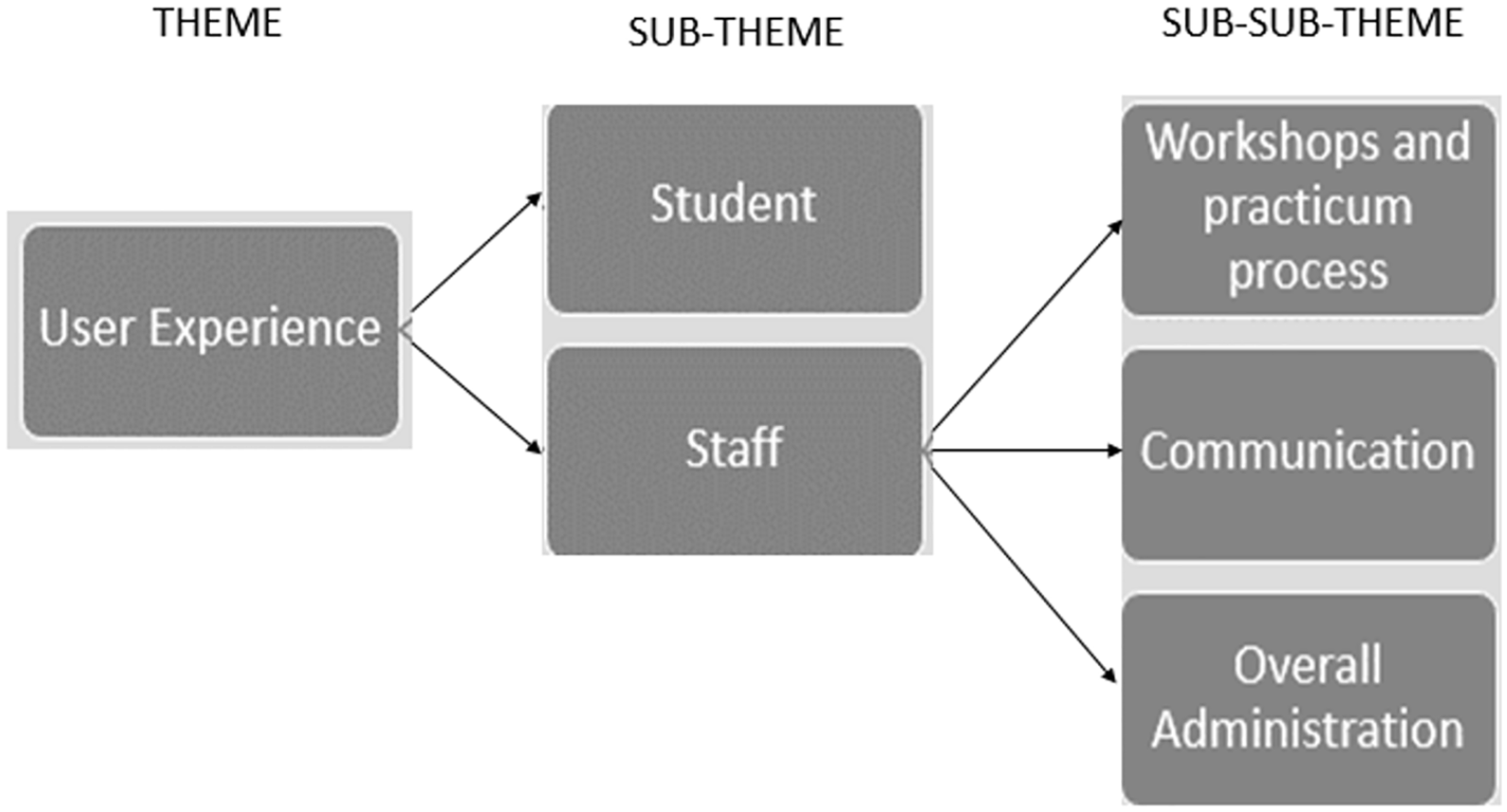
Themes and sub-themes.
The subjective assessment of the SUS was analyzed using the framework provided by the United States Department of Health and Human Services (Lewis, 2018; Sauro, 2016). The mean and confidence intervals were calculated.
Results
User Experience—Student
From the poll result for overall usefulness, eight students (66.7%) indicated that the platform was useful in helping them navigate their learning goals. Two students (16.7%) indicated that due to limited exposure, they were not able to give a definitive response, and two indicated that it was not very useful (16.7%). Although students believed the software was a useful tool, especially for the centralization of practicum and thesis components, the majority echoed that it was not user-friendly; the reasons being that they were not familiar with the system because they had not used it much. The practicum process was at its early stage and some aspects of the process were not fully implemented on the platform when the focus group was conducted. Students faced difficulties starting with finding the link to the platform. Some of the challenges that the students recounted were that the organization of the practicum listings was in no particular order, and they were not able to preview practicum posting information or view the complete listing without having to download it as a pdf file as can be seen in the following quote: I definitely think the placement software is a good tool to have for centralizing, especially practicum and thesis things. But I will say there were two things that kind of jumped out at me in terms of improvement, and that impacted my experience a little bit. The first one was just getting the link . . . the list of practicums is the one other thing that I find not very intuitive.
Despite the challenges, students appreciated having the platform as a “one-stop-shop” for everything related to practicum placements. They believe that incorporating the platform is good for the MPH program as presented in the quote: I definitely think in places a good tool to have, for centralizing, especially practicum and thesis things.
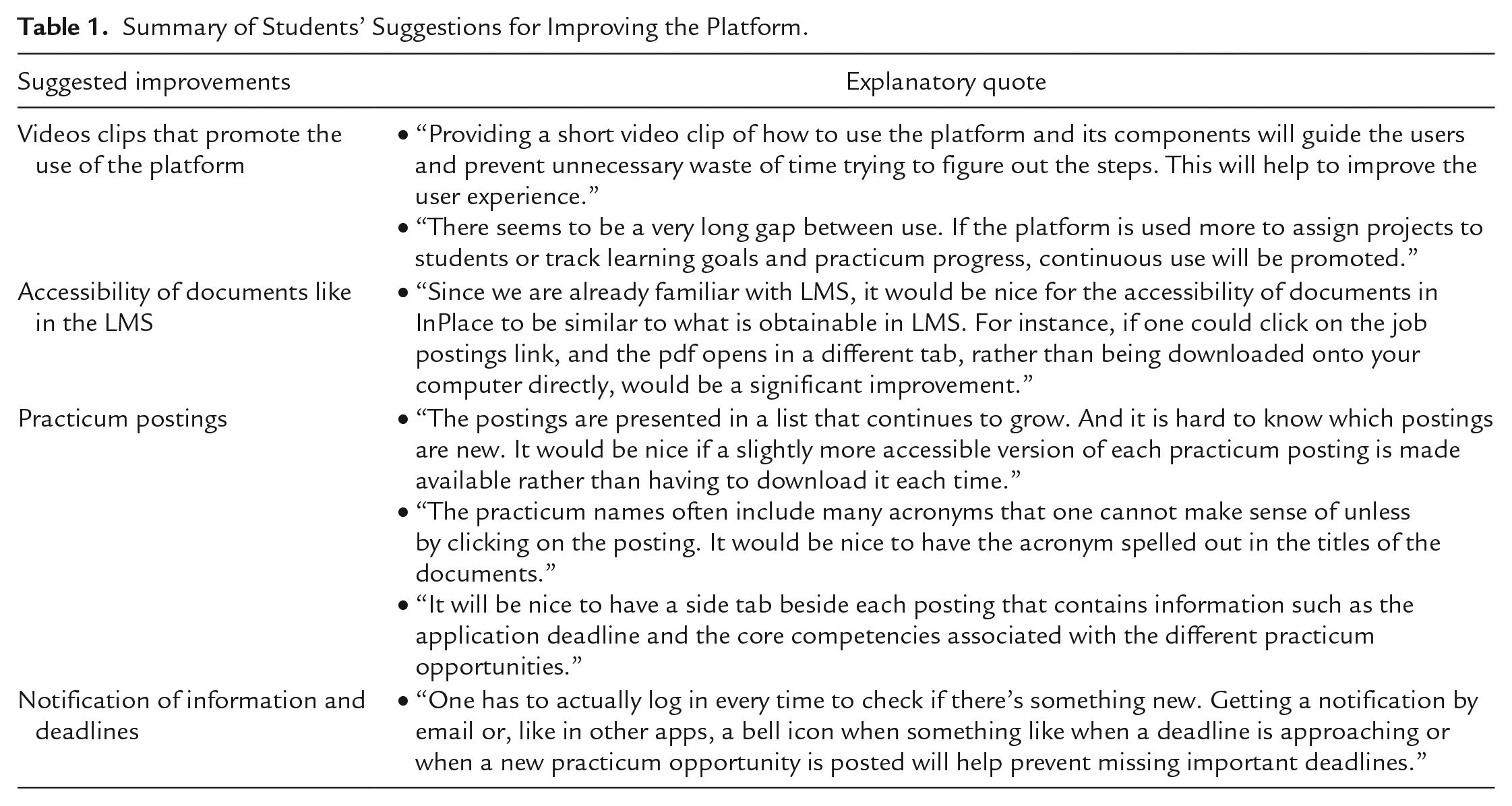
Overall, the platform has potential for improvement, with suggestions by the students for improving the user experience summarized in Table 1.
Summary of Students’ Suggestions for Improving the Platform.
User Experience—Staff
While the student’s perspective was focused on the usefulness and usability of the platform in navigating career goals, the staff’s perspective was focused on the usefulness of the platform with respect to communication, practicum process, and overall program administration. The two staff members (one supervisory and one administrative), who participated had varying opinions in some of the areas. This could be explained by how they interacted with the platform. One staff had a supervisory perspective of the system, and the other staff who coordinates the practicum process had a more practical perspective of the platform and gave more insight into the day-to-day use of the platform. Their perspectives fell within the sub-sub-themes of “workshop and practicum process,” “communication,” and overall administration.
Workshops and Practicum Process
Both participants gave an overview of the process used prior to the integration of the platform. The old practicum administration process had many repetitive steps that were not devoid of mistakes, including missing vital information such as the supervisor’s name, contact information, or location of placement. The process required the students to complete paper forms and submit them to the administrative staff, who then reviewed each field in the form to ensure that there was no missing information before submitting it to the Program Director. The Director then signed the form and returned it to the staff. The process from rectifying issues of missing information to completion and storage could take many back-and-forth email communications with repeated printing and scanning of the forms. There was a great expression of excitement in the staff’s voices when they talked about how the integration of the platform not only eliminated the problem but also was expected to prevent a recurrence. In the platform, the fields were made mandatory to ensure students provided the necessary information. The completed forms were automatically stored electronically with no paper trail and no scanning. The staff participants believed the platform added considerable value, as expressed in the following quote.
Okay! so the process is 1,000% better. And although right now we are still at that stage where we are learning how everything works, we can now understand how the pieces are coming together. It has helped because I am not getting 20 practicum learning contracts in my email. Everything is done electronically . . .
The supervisory staff acknowledged that although practicum opportunities were posted on the platform, it had not been used to connect students with their intended practicum site supervisors. However, reviewing student CVs and background information already inputted into the system before their one-on-one session was very helpful in facilitating the sessions, especially in guiding the student’s interest in practicum choices and selection of electives. A major challenge that was identified regarding the practicum process was the inability of the students to send their practicum learning contracts to their supervisors for final review before submitting them. When asked about the use of the platform for workshop purposes, both staff mentioned that the platform had not been used for that purpose.
Automation of some aspects of the practicum process was another element that generated a positive response about the platform. While acknowledging the challenges of learning a new system, the administrative staff believed that the automation of communication in the platform helped improve the overall management of the practicum process. The explanation of automation in the context of communication is seen in the following quote.
For example, the learning contract is due within the first 10 days of starting the practicum. They have to create a placement and put in all the other placement details such as the supervisor’s contact information. Once they do that, I go in and confirm their placement. Once I do that, the automated emails start to generate. and this is just starting.
Communication
Communication was considered in three ways: (1) communication between students and staff, (2) communication between the program and the practicum sites, and (3) communication between students and their practicum or thesis supervisors. The difference in the role each staff played within the MPH program was reflected in their responses to how the platform had improved communication. From the supervisory level, communication had not improved. The administrative staff identified a dramatic improvement in the process, likely due to their level of involvement with the practicum process. The improvement from the administrative perspective was due to the automation of emails to students at key communication points. Identification of the major communication points led to communications happening earlier than previously known and, in some instances, the students had initiated it, as can be seen in the following quote: I feel like it has helped in terms of communication because once the student confirms their placement, they log in and input all required information. Because the fields are made mandatory, they cannot proceed to the next step without ensuring the field requirements are met. That, to me, is amazing
From the supervisory staff’s perspective, communication is between the student and their practicum or thesis supervisor, and this level of communication had not improved at the time of data collection. While the opinion of the administrative staff was based on the usefulness of the platform in identifying the key communication points and harnessing the benefits thereof, the supervisory staff was focused on communication optimization prospects, especially with respect to reaching supervisors in other departments within the faculty and connecting them to the students within the platform. The supervisory staff’s explanation portrays the areas of communication that still need to be improved: I would say at this point in the pilot, it hasn’t improved communication. I think that is just because we’re still working through the kinks in the system, in terms of like how the back end is set up, and what that actually looks like for supervisors and students. There are a lot of generic templates on the back end, and we are trying to tailor those, but they are not at a place right now where they are fully tailored, where they can clearly communicate the various steps for students and supervisors. So, it has great potential, but it is just not there yet.
Overall Administration
Staff participants were asked to discuss the impact of the platform on the overall administration of the MPH program. They affirmed it increased their workload mainly because of its infancy, and there was a lot to learn. Navigation of the platform was a major challenge since the technical language was quite different from the functional language. And, though there is support from the programmers, the language was still a hurdle. These responses corroborated the students’ point that although the platform has great potential, it is not very intuitive at the moment. The identified key areas that need immediate attention are (1) the development of two guidance documents, one for students and one for supervisors, (2) the structuring of automated emails that are sent at each communication point, (3) the creation of a pathway for supervisors to have access to students learning contracts without having to log into the platform, and (4) having interdepartmental connectivity for easy accessibility of documents stored on the platform.
System Usability Scale (SUS)
Both staff and student participants provided a subjective usability assessment of the platform using the SUS questionnaire. The mean system usability score was 61.8 (95% confidence interval [56.7, 66.9]). which is below the cutoff score of 68 (Leavitt & Shneiderman, 2006; Lewis, 2018; Sauro, 2016). The discussions on the students and staff user experience themes also corroborated the results of the SUS.
Discussion
The results of the study indicated that the incorporation of a practicum management platform was useful in helping students navigate their learning goals. Even with potential room for improvement, using the platform improved communication between students and staff. Since the preliminary data from students and staff were corroborative, incorporating the suggestions will be helpful in improving the overall usability of the platform. Providing a complementary short video as suggested by the students, has been shown to be the most valued resource when navigating the online environment (Perez-Navarro et al., 2021). As smartphones are increasingly used to access many academic platforms, having a means of notifying students of approaching deadlines will help them reduce distractions and focus on what is important while using their smart gadgets. Laffey et al. (2009) through usability and user experience studies, demonstrated that notifications are potentially valuable in keeping users of similar educational platforms active, and motivated enhancing self-activity.
Although the InPlace platform is similar to other LMS with numerous adaptable capabilities, in this study, the platform was configured primarily for the management of the practicum process. While many LMS are course centric, the InPlace platform is student-centric, allowing students to actively track their learning goals. Other benefits include organization and management of their tasks. Regarding the management of the practicum placement process, our study showed that the status of participants in the MPH program played a big role in determining an individual level of interaction with the platform. The administrative staff had the most insightful interaction due to their day-to-day duties in the administration of the practicum process. The major challenge the staff faced was learning how the platform is configured and how to use it in two interfaces: the administrative and student interfaces. The staff who are required to use these platforms may not have the sophisticated technical expertise required to run it smoothly, especially in addition to their administrative roles (Al-Handhali et al., 2020; Kite et al., 2020). Therefore, having the technical capacity to understand the technology-heavy processes and troubleshoot minor issues in the student’s interface from the administrative interface without waiting for support from the InPlace team may be overly tasking for the staff.
Despite the challenges, the staff considered it a very useful platform, especially regarding the centralization of paperwork submission processes. And with its reporting capabilities, it could be an insightful planning and evaluation tool. In this study, it helped in identifying the gaps and improved communication to an extent, especially with mandatory fields eliminating the possibility of missing information. The staff members being the first point of contact for the platform troubleshooting was also considered an improvement in communication between students and staff. Each encounter was an opportunity to reach out to all students with a detailed explanation of the solution. This step highlights the improvement in two ways: it triggers communication points and eliminates the repetition of a problem. The benefits of repetition elimination have been demonstrated in other comparable studies on the use of similar platforms in higher education (Harley et al., 2003).
The SUS is a quick and reliable way to measure the usability of a web-based platform. One of the benefits of the assessment tool is that it produces a reliable result irrespective of sample size. In this study, the triangulation of data from the poll, focus group, and semi-structured interviews strengthened the reliability of the SUS score. Because the responses are converted to a scale of 0 to 100, our study’s SUS score of 61.8 may be misinterpreted as above average. This is not the case because a usability score less than the cutoff score of 68 is considered below average (Leavitt & Shneiderman, 2006; Lewis, 2018; Sauro, 2016). This cutoff score is the average score obtained from the analysis of over 500 SUS studies (Sauro, 2016). A below-average score typically indicates potential for improvement, and this is relevant in the interpretation of our findings because the platform is new and at the piloting stage.
The sample size was a major limitation with 44% participation of eligible students. The other limitation was the timing of the study. Insufficient exposure may have affected the subjective assessment of the platform as the participants may not have had enough opportunities to master the platform. The students had not used the platform for many practicum-related items. The configuration of the platform and troubleshooting modifications were still being made at the time of data collection.
Conclusion
The findings of this study have demonstrated that the use of a practicum administration platform can be beneficial in the facilitation of competence-based learning. Having a system that helps students track and access learning progress is essential in preparing them for the ever-evolving workforce. Automation of communication from the preparation for practicum posting to completion of the practicum is one of the benefits that eliminates many errors in the practicum administration process. Since the platform is in the early phase of operation, configuration with the suggestions provided in this study may improve its usability. However, more research is required to identify ways of incorporating an easy-to-learn system that embodies the solutions suggested in this study.
Supplemental Material
sj-docx-1-php-10.1177_23733799231191106 – Supplemental material for Facilitation of Competency-Based Learning With a Practicum Administration Software: The User Experience
Supplemental material, sj-docx-1-php-10.1177_23733799231191106 for Facilitation of Competency-Based Learning With a Practicum Administration Software: The User Experience by Chika A. Arinze, Cynthia Lokker, Mackenzie Slifierz and Emma Apatu in Pedagogy in Health Promotion
Supplemental Material
sj-docx-2-php-10.1177_23733799231191106 – Supplemental material for Facilitation of Competency-Based Learning With a Practicum Administration Software: The User Experience
Supplemental material, sj-docx-2-php-10.1177_23733799231191106 for Facilitation of Competency-Based Learning With a Practicum Administration Software: The User Experience by Chika A. Arinze, Cynthia Lokker, Mackenzie Slifierz and Emma Apatu in Pedagogy in Health Promotion
Supplemental Material
sj-docx-3-php-10.1177_23733799231191106 – Supplemental material for Facilitation of Competency-Based Learning With a Practicum Administration Software: The User Experience
Supplemental material, sj-docx-3-php-10.1177_23733799231191106 for Facilitation of Competency-Based Learning With a Practicum Administration Software: The User Experience by Chika A. Arinze, Cynthia Lokker, Mackenzie Slifierz and Emma Apatu in Pedagogy in Health Promotion
Footnotes
Declaration of Conflicting Interests
The author(s) declared no potential conflicts of interest with respect to the research, authorship, and/or publication of this article.
Funding
The author(s) disclosed receipt of the following financial support for the research, authorship, and/or publication of this article: As part of the graduate student funding, the McMaster University’s Macpherson Institute provided a stipend that was used toward this project.
Ethical Approved
The study was approved by the Hamilton Integrated Research Ethics Board (HiREB protocol ID #11174).

References
Supplementary Material
Please find the following supplemental material available below.
For Open Access articles published under a Creative Commons License, all supplemental material carries the same license as the article it is associated with.
For non-Open Access articles published, all supplemental material carries a non-exclusive license, and permission requests for re-use of supplemental material or any part of supplemental material shall be sent directly to the copyright owner as specified in the copyright notice associated with the article.
