



Abstract
This article explores the existing literature on social memory in Iran, a growing research area for studying the country’s past. The scattered and fragmented nature of the literature across disciplines makes an in-depth thematic analysis important to organize these intellectual efforts. The article is divided into two parts. The first part presents a chronological scheme that identifies and discusses three distinct phases of literature development. The second part is a theoretical review demonstrating that memory politics has been the most popular topic in Iranian memory literature. The article adopts two broad paradigms to classify the theories used in the literature: structuralism and symbolic interactionism. Structuralism is the most popular paradigm, while symbolic interactionism is a new trend. The article concludes with recommendations for future researchers working on social memory in Iran.
Keywords
Introduction
Much like in other parts of the world, memory studies in the Middle East have gained significant traction recently (Haugbolle, 2019; Neyzi, 2010; Slyomovics, 2013). There are several reasons for this surge in social memory research in academia. One reason is the growing activism of subaltern and marginalized groups in the region, eager to preserve and pass on their versions of the past, even in the face of authoritarian regimes. This has been made easier by the increased availability of media and communication tools to the public. Another factor that has played a significant role is the “cultural turn” in the humanities, social sciences, and historical research, which has fundamentally transformed how academics approach the past and cultural heritage in each country. Kansteiner (2002) sees this more as a global trend within the study of the past and notes, “The rare combination of social relevance and intellectual challenge explains the popularity of the field” (p. 180).
On par with rising social memory literature, representing the present-day interest in the routine commemorative and mnemonic issues, some meta-analysis and literature reviews have also been conducted in the region, not only aiming to create a broader and more self-critical image of the existing contributions on the subject but also to identify certain gaps and challenges within the literature to introduce certain strategies to approach them.
Of such literature, the first came out in 2010, a paper penned by a Turkish scholar, Leyla Neyzi, entitled ‘Oral History and Memory Studies in Turkey’, a review, which, as the title suggests, has been carried out on the status of social memory studies in Turkey to document the long trajectory, oral history, and memory literature have undertaken to develop as alternative records of the past and the significance they gained over time for their role in promoting politics of diversity and acknowledgment of difference within the country as against the science of history that has been long narrated and mostly associated with the republican state. In 2019, Sune Haugbolle published a review of social memory research in the Middle East titled “Memory Studies in the Middle East...”. This is a rare example in English that discusses social memory research in the region, divided into two periods, each with specific trends and patterns. The first period, before the Arab uprising in 2011, saw social memory literature characterized by increased debate in the public sphere about sovereignty over the past, which had long been under censorship and government control. The second period, after the uprising, should be seen in the context of the far-reaching effects of the global heritage industry and how it has changed Arab countries in the Middle East. It should also be seen in the light of the public reception of social media, which can potentially create a more popular image of the past within the region.
Neither of the two examples previously mentioned—one focused on Turkey nor the other on Arab-speaking countries, specifically Lebanon—provides an overview of the current status of social memory literature in Iran. Historiography in Iran has been criticized for its ideological tone, as noted by Iranian historian Abbas Amanat (1989), who argued that it has long been characterized as a “rhetorical body of knowledge” that cannot free itself from intellectual preferences or political biases. These politically charged histories are not limited to the state-sanctioned record of the past, which persists to this day, but also include other narratives of historiography that have not been subject to state censorship but are nonetheless political and elite-oriented.
In recent years, oral history and social memory literature have been given special attention as two new genres that have surpassed traditional and standardized boundaries of recording the past. Oral history seems more widely accepted and has even garnered institutionalization within Iranian academia, as seen in the Oral History Project at Harvard School for Middle Eastern Studies, initiated and developed by Habib Ladjevardi. This collection represents recorded voices of leading figures in contemporary Iran, contrasting with the official state-sanctioned narrative of the past propagated by the Islamic Republic of Iran (IRI) since the 1979 revolution. Regarding social memory literature, however, there is a notable difference in that it has not received equal attention and, until recently, has not been academically recognized or accredited as a field of research deserving scholarly attention in Iran.
Iran has a long-standing tradition of writing memoirs and autobiographies, dating back at least a century, and possibly even further, if one considers older genres such as chronicles, travelogues, and life stories (Ashraf, 2009). However, it is important to differentiate between personal memoirs and social memory literature, a newly emerging field in Iran developed through sociological research. For this matter, as also broadly discussed in the chronological section of this article, caution should be exercised when categorizing intellectual contributions within this field as ‘Iranian memory literature’ in a sense that is normally used in referring to a well-defined area of study, since they are developed within various disciplinary fields and lack a straightforward organizational structure.
A review of memory literature in Iran is timely, given the rising interest in social memory literature, and it can provide a general overview of the literature, introduce some organization, and offer suggestions for future researchers. However, such a review would be effective if it also compares the history and development of memory research in Iran with mainstream memory studies. This would benefit a review of Iranian literature on social memory and introduce the status of memory literature in an underexplored country to mainstream literature. Such regional and country-specific memory literature has always been welcomed by the mainstream literature, as seen in the value added by Polish memory literature research by Wawrzyniak and Pakier (2013) and the high value placed on literature from various disciplines and regions by contemporary memory researcher Jeffrey Olick (2009) due to their contribution to diversity and openness.
Who has the right or power to set the canon of works in the routinized phase of the field that follows its charismatic founding? How would they even begin to go about doing so? What criteria does one employ in deciding what works, methods, concepts, terms, are “canonical”? Who will be excluded, and what will be their fate? (Olick, 2009, p. 251 & 25).
The review serves two purposes: to review the current memory literature in Iran and to contribute to larger memory studies. It uses thematic analysis to examine social memory research in Iran. Thematic analysis is well-suited for examining social memory studies in Iran because there is a small body of literature on the subject. In addition, thematic analysis can uncover hidden patterns, relationships, and trends within the literature.
The argument is structured in two parts. The first part presents a chronological scheme in which Iranian social memory literature is ordered along three phases: pre-academic literature, disciplinary literature, and interdisciplinary literature. The second part is a review that identifies the most popular and contentious issues in Iranian social memory studies and the theoretical approaches to address them. The article shows that the most popular topic has been the politics of memory, and the most commonly used theoretical approach has been invented tradition. The article also highlights some research done within constructivism, which addresses the issue more sophisticatedly.
Based on the results and analysis of the review, the article argues for an interdisciplinary approach that has been missing within social memory literature in Iran. Such an approach will make it a more visible brand of knowledge for related academic inquiries at an international level. It will also improve Iranian memory literature, making it conform more to academic principles and standards and addressing its most popular topic in a more complex and multi-layered way.
Method
Thematic analysis has been used in the present research to study and review the social memory research in Iran. Thematic analysis is among the qualitative research methods often used to systematically identify, organize and interpret patterns of meaning, or themes, associated with a body of sources (see Terry & Hayfield, 2021). In the present research, the method has been applied to breaking down sources, selected earlier by purposeful sampling, into smaller segments and parts to seek their commonalities and differences better and then link them together for discernable patterns of meaning and trends in response to the research aims. Thematic analysis has shown potential for analyzing complex and large bodies of data, as is the case when the data are open responses to survey research (Braun & Clarke, 2012). However, thematic analysis in the present research is used, the way it is broadly and normally used, as a method through which a small body of texts and sources can be studied thoroughly and in-depth. As mentioned above, the social memory research in Iran is not substantial, and a proper review of the literature is conditioned to the in-depth use of the method. Thematic analysis can also be useful when a study’s patterns and trends depend more on analyzing the studied sources and materials than on pre-existing theories or approaches (Braun & Clarke, 2012).
To ensure efficient and authentic use of thematic analysis, a three-step methodology has been employed.
Resource Selection Strategies
The process of selecting resources has been done using purposeful sampling. Unlike many areas with large bodies of literature, social memory literature in Iran was relatively small, making the selection process untroubled. Since the review dealt with social memory research, all other memory literature, such as memoirs and autobiographies, where the central concern is personal recordings, were automatically excluded.
Furthermore, since the present research was the first of its kind to review social memory literature which is academically a recent area of study, there were expectedly few works available for review. Therefore, in searching the relevant sources, platforms and databases, keywords and terms have been applied in the broadest sense possible to get the largest body of research into the selection. Therefore, the following electronic platforms and databases list has been checked for sources: Google Scholar, Research Gate, Scopus, Jstore, Sage, Wiley, Springer, Taylor & Francis for English sources and literature and Noormags, Elmnet, and SID for Persian ones. The searched keywords and terms are as follows: commemoration, collective rituals, memory, remembering and forgetting, mnemonic practices and technologies, nationalism, and Iran. In most search attempts, a combination of words and terms has been searched, so only the sources get selected that used the word memory not as a general word but to use and to discuss it at the center of their discussion. To ensure more inclusivity and comprehensiveness, the resources were selected not only among sources available in English but also in Persian and not only the electronic sources but also the paper-based ones. No time limitation has been filtered for the selection, but some filters were added to limit the search within its relevance.
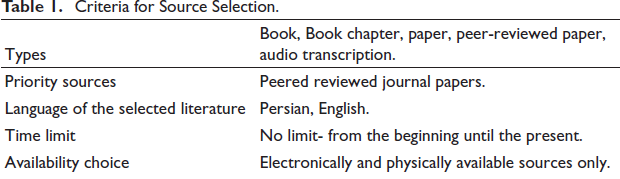
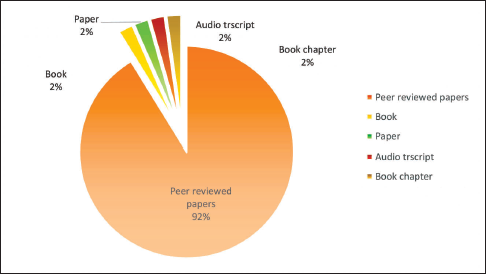
The research aimed to trace the evolution of social memory studies in Iranian academia, and thus, the selection of sources was influenced by the adaptability of available resources to academic standards. Consequently, preference was given to peer-reviewed papers. Older resources were also included in the review to provide a historical perspective on the development of literature before it became academic. Most of the selected resources were peer-reviewed papers, and 46 sources were chosen. Table 1 displays the criteria for source selection. Figure 1 presents the distribution and types of works and sources included in the final selection, consisting of 42 peer-reviewed papers, one magazine paper, one audio transcript, and one book chapter.
Criteria for Source Selection.
Distribution and the Types of Literature Picked for the Review.
Categorization, Interpretation, and Data Analysis
The thematic analysis method was used and the main steps involved cutting, codifying, categorizing, linking, and labeling the categories on a thematic map. However, one important point is that the method was used differently in each review section. The chronological review was done in parts, which allowed for a shorter and quicker analysis. On the other hand, the theoretical review took more efforts, as the selected sources had to undergo a thorough textual analysis to identify demanding patterns and trends. In the chronological review, the categories of memory functions and styles were created after a partial review of the pages where memory-related words were used or after analyzing the article’s overall structure for stylistic features. However, in the theoretical review, the textual-based analysis was done fully. The unit for analyzing and interpreting the data in the theoretical review remained paragraphs, as they were broad enough to disclose the intended meaning but narrow enough to prevent extraneous intakes for analysis.
It is also important to note that the analysis in the theoretical review is performed in two parts. Since the thematic analysis was intended only for reviewing a topic that connects empirically different research, which has been the case for the popular theoretical topic of politics of memory, in the first step, the problematization section of each research underwent a thematic analysis. Then, in the second step, the analysis was performed only on the research and work that fell into the popular topic.
During the analysis phase, the selected texts were sorted and organized to create thematic maps for further analysis. In the theoretical review, the process of categorization was aided by the researcher’s background knowledge of relevant theories. This allowed for easier interpretation and categorization of the data. Additionally, any supporting theoretical knowledge used during the analysis was explained for the readers’ benefit.
Reporting and Presenting the Results
The data reporting process was not straightforward, as inconsistencies occasionally arose. To mitigate these issues, the approach was to revert to the previous stage of summarization, interpretation, and analysis for a re-check of the data and analysis. This method improved the result’s trustworthiness, reliability, and coherency. Additionally, tables, charts, and real research cases were used to present the result more effectively. This supplementary measure made it easier for readers to understand the differences between the themes presented in each section.
Mapping a Chronological Order out of a Disarray
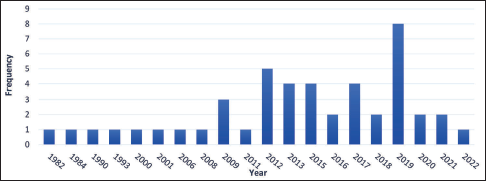
It is easy to do a chronological review of a well-established field with recognized disciplinary boundaries and a substantial amount of published literature. However, social memory studies in Iran are still a developing field. A chronological classification of the existing literature would only show a sequential trend line, potentially overlooking important chronological features such as periodic peculiarities or broader development of the literature over time. Additionally, a chronological classification based solely on publication year would not provide clear classifications like typical literature reviews. Examining the publication years of selected sources confirms this issue. Figure 2 shows the frequency of memory literature published in Iran. From 1982 to 2008, an average of one publication was released every four years. From 2008 to 2022, the frequency increased to one publication per year. While this suggests a general rise in publication frequency, a chronological review based purely on publication year would not provide a clear understanding of the literature’s nature and direction over time.
Frequency of the Memory Literature Selected for this Review Based on Their Publication Year.
Instead, a more effective strategy is to perform a thematic analysis to uncover the literature’s chronological development based on qualitative characteristics such as functions and stylistic features. This approach is used in Table 2, which summarizes the thematic analysis of selected literature based on functions and styles.
A Chronological Profile of Iranian Memory Literature.
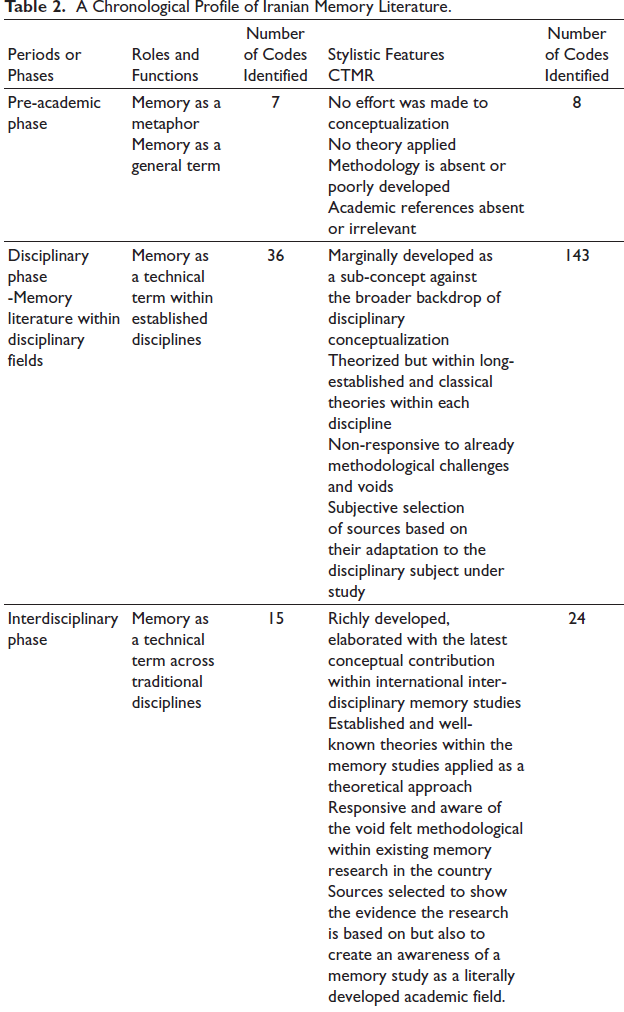
The thematic analysis revealed logical and meaningful patterns when the related codes were extracted, interpreted, and labeled based on two common pillars. The first group of social memory literature in Table 2 represents pre-academic literature based on their features in roles and styles. This group includes literature authored by Lewis (1982), Kasravi (1984), Shamlou, (1990, 1:24), and Kadkani (2011). The stylistic features or standards, which refer to the commonalities in the outline and organization of works selected for the review, distinguish this group from academic scholarships. These stylistic features include the use of memory conceptualization (C), theory (T), methodology (M), and reference styles (R) and are abbreviated as CTMR throughout the article for brevity.
There were few codes to elaborate on CTMR for this group of literature. The absence or lack of elaboration concerning the stylistic features is a major criterion distinguishing this research group from academic scholarships. Therefore, this literature can be mainly considered non-academic reflections on social memory in Iran. Only one research in this group was published in an academic journal by Lewis (1982); but even in this case, the literature did not achieve the stylistic standards usually found within academic sources.
The first group of literature also shows a commonality regarding the meaning of social memory. In this group, memory implies a role similar to memory’s meaning in public usage. It appears that memory functions as a metaphorical term to emphasize a historical weakness the Iranian nation has suffered; namely the inability to make sense of and learn from their traumatic past. This situation explains their disadvantaged status in the world order.
To illustrate the outline of pre-academic social memory literature, an example is useful. Ahmad Kasravi (1984) first introduced this type of memory usage in his Iranian Constitutional Revolution. His work was primarily non-academic and was based on his “perceptions of the events leading up to and following Iranian constitutionalism, as well as notes from newspapers and supplementary books” (Kasravi, p. 6). His use of “memory” aligns closely with the public’s understanding of the term. He wrote in the opening pages of the book, “Among Iranian miseries, one is that they soon forget their historical events [...] a measure should be taken to remind Iranians of their dark times of the past” (Kasravi, p. 5). Throughout the book, Kasravi employs “historical memory” as a hybrid term without specifying its meaning or how it may differ from traditional historical knowledge (Kasravi, p. 6).
A second type of social memory research emerged chronologically closer to the present day and comprised most Iranian memory research. This group includes the works of Abdi (2001), Chehabi and Christia (2008), Shirazi (2012), Gruber (2012), Moayeri (2015), Soroushfar (2016), Rolston (2017), Azad and Partovi (2019), Saramifar (2019), Parsapajouh (2019), Kashfi (2021), and others.
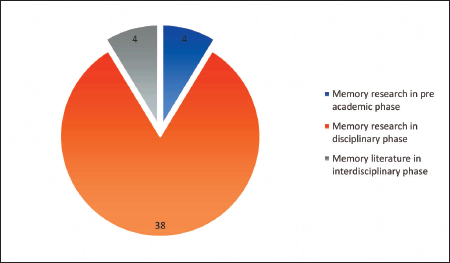
Based on Figure 2, out of the 46 sources reviewed, 38 belong to the second type of social memory research. These sources are responsible for clarifying stylistic features and adhering to academic standards. However, they use the concept of memory in a way that is not specifically designed for memory research and may be underdeveloped in terms of conceptualization. Theoretical views are presented, but the established disciplinary theory is often used. Methods are included and elaborated upon, but in a way that is typical of general disciplines rather than specific to memory research. Literature reviews and references are included, but their connection to the subject of memory in Iran is missing. Overall, memory has become a generative and fascinating term for researchers in this category, motivating them to conduct more research on an underexplored area within their field. As a result, memory has gained the status of a “technical term” in social science and humanities literature, and it is considered to have a meaningfully different connotation from its denotation in public.
Yet, a third group of research, distinguished for this chronological review, is the one which shares substantially with the last group in that they study a phenomenon or subject associated with memory from an academic viewpoint, but this group studies memory as an independent subject of its own. The codes based on which the CTMR is built reflect such stylistic features. Memory is not only elaborated conceptually, but its distinction as a particular concept is also accentuated with regard to other similar concepts related to the past. The theories chosen by the researchers are the most recognized and frequently used ones within typical memory research; the methodology applied to the research becomes more responsive both to the wider methodological gap within the memory literature in Iran, as a way forward and also to include the complexities of studying memory within Iranian society. At last, the literature review and reference style are built upon an evaluation of the previous research carried out on memory as a subject for social research beyond the disciplinary field.
Overall, CTMR represents a type of memory literature produced in a broader context of memory studies. This is also evident from the roles and functions memory is designated to play by the authors or researchers within this group. Memory is a “technical term,” but a more deliberate attempt is in play to not take it as a term in the margin but as a term in the center of the research with denotation exceeding the one limitedly used within traditional fields. Research by Soroushfar (2016), Rasouli and Nematollah (2019), Zokaei and Vaala (2019), and Shamin (2022) represents this group in the present review. These studies are published within a few years; the more Iranian memory literature gets influenced by the global interdisciplinary trend within the memory studies, the more consciously it will develop as social memory research on its own, and the more rapidly it will broaden the range of this third group. This research will get the memory research in Iran beyond the traditional and established disciplinary fields, a reason enough to chronologically group the research in this third group as memory research, carried out within the “interdisciplinary phase.” Figure 3 shows the frequency of Iranian memory research in three periods based on their chronological characteristics.
The Frequency of Iranian Memory Research Based on Their Chronological Characteristics.
Theoretical Review
Memory literature in Iran has been done within various fields and on miscellaneous topics. A solution to go beyond this diversity to evaluate the research would be to look for ways to address the subject of social memory within their research. However, one should take into account that not all literature can go under such review. Therefore, the literature chosen for this part of the review could only be from academic research, whether from those conducted within academic disciplines or those conducted using an interdisciplinary outlook. Thus, only 43 research papers merited to go under review in this section. A second consideration is that theoretical review should necessarily be limited to reviewing the research that has explicitly used or elaborated the theories they use. A thematic analysis for reviewing the Iranian literature on memory has been done because the aim has been to identify the theoretical approaches used behind each research to find the possible relationship and the common ground connecting all the research theoretically.
To begin the review process, the first step was to delve into the theoretical aspects of each research to move beyond their empirical focus and identify any common ground between them. Doing so made it possible to review studies that may have seemed empirically diverse. Figure 4 displays the proportion of debates and topics that have generated significant interest in memory research in Iran based on their core problem. According to the figure, out of the 43 research papers reviewed, four focused on the origins of specific memories or commemorative rituals in Iran; nineteen examined how memory is produced and disseminated throughout Iranian society; and eight investigated the role memory plays in different communities. Another eight analyzed how memory has transformed over generations within Iranian society; one study explored the expression of memory and remembrance of the past through literary genres, and the final group of three research papers investigated the social structuring of memory within the so-called social frameworks.
Frequency of Topics Within Memory Research in Iran Based on Their Research Problems.
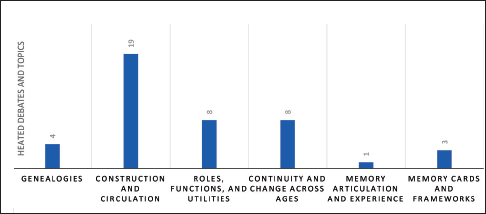
The figure also clearly shows that the research and works within the second category are proportionally the largest. Stated differently, the core problematization for the largest group of research selected for review concerned how memory is created and circulated throughout society or politics of memory.
A thematic analysis of this second group can show what theories have been applied to address the most popular and heated topic and how they meaningfully differ across the literature. However, a tripartite model has been used to do the analysis systematically and extract the related codes easily. Wulf Kansteiner (2002), who invented the model, believes one should consider three components simultaneously in studying the politics of memory. Memory entrepreneur or “memory maker” as he names them, are by definition the “agents that selectively adopts and manipulates the memory or traditions,” memory, or “cultural traditions,” which he regards as traditions that frame the “representation of the past” and the context, or the background society; or in his words, “memory consumers,” who use, ignore, and transform such artifacts according to their interests (p. 180). The model could be used as a methodological device for a researcher concerned with the politics of memory to know where exactly to “look for the rules of engagement in the arena of politics of memory” (p. 181).
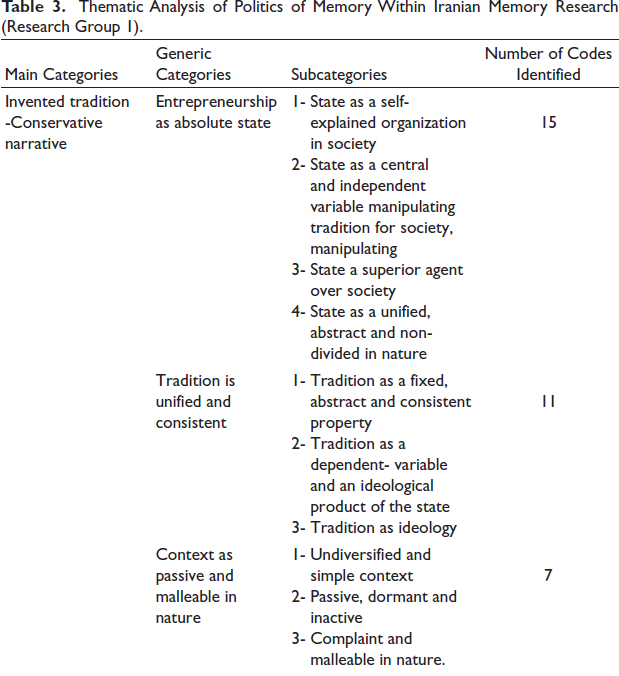
In the present review, this model facilitated and systematized the finding and interpretation of the codes up to a generic category for all research reviewed. Table 3 shows the thematic analysis representing a group of research in which a certain relationship was found regarding the above-mentioned three components. Three researchers, namely Ram (2000); Vanzan (2020) and Kashfi, and Ehsan (2021), in particular, fall within this group. Discussing the politics of memory, this research group highlights the state’s role as the sole memory entrepreneurship, above and detached from the society it rules over. The central role of the state in the discussion of politics of memory can also be inferred from the number of codes dedicated to this particular component, meaning that in all three research, the state has been the center of analysis and has been conceptualized as an agent from where the story of politics of memory begins with. Furthermore, the tradition within this research group has been defined as the state ideology, a linear master narrative the Iranian state uses for its political legitimization. Lastly, the context is also absent or has been conceptualized as a passive society only discussed in shadow.
Thematic Analysis of Politics of Memory Within Iranian Memory Research (Research Group 1).
To make the next level of interpretation, which is the main category, or the level of theory, invented tradition is chosen to represent this formulization of politics of memory across all three generic categories. Invented tradition is originally a book coedited by Eric Hobsbawm and Terrace Ranger in 1983, which consists of several case studies in history and anthropology regarding the invention of “national cultures” in Britain and colonial countries. However, the book gains its fame not as a book but as a theory within social sciences to the extent that Post (1996) notes: “the book is only cited in general or that the citations [if ever made] are only taken from Hobsbawm’s paradigmatic introduction” (p. 86). In the introduction, Hobsbawm sees invented tradition as symbolic resources in the hands of the modern nation_state, making it possible for them to restore order and legitimacy after a period of radical change. The way that nationalism and tradition were used in this book earned popularity as a theoretical denotation within the science of history and memory studies which concerns how memory is centrally shaped based on present needs. Thus, this theory sees the state as a key element through which the production and circulation of tradition, nationalism, and memory occur throughout society. Therefore, if Halbwachian sense of politics of memory is to theorize the concept as the ways past is framed within the social frameworks of memory based on the present needs, politics of memory in Habsbawmian sense views it as a centrally planned and engineered phenomenon by the state. Barbara Misztal (2003) also categorizes invented tradition as a state-centered theory in explaining the politics of memory, for the state’s key role in remembering the past through formal arms.
Nationalism or tradition is accordingly seen within the theory as a product that is either traditional or modern. Habsbawm’s distinction between “custom” or “authentic tradition,” or “old tradition” and “invented tradition”, which is frequently used in the literature associated with the tradition, also follows a de-traditionalization dichotomy, based on which the invented tradition only comes into existence once the old one disappeared. And finally, the background society within this theory is always a malleable entity easily shaped by the state’s authority.
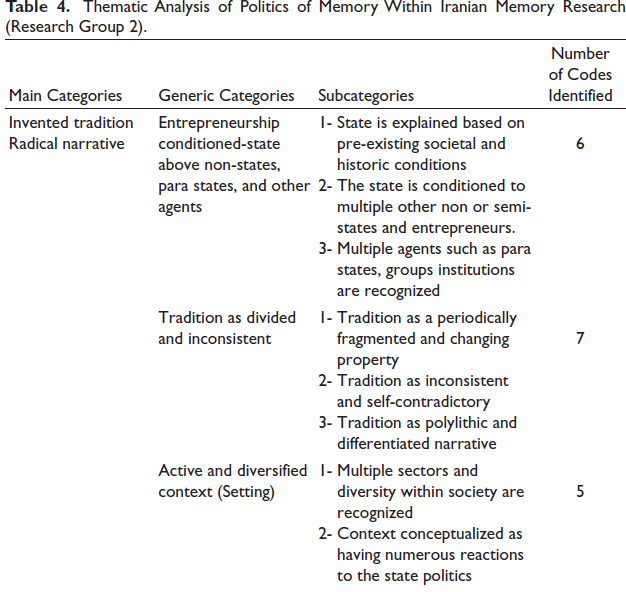
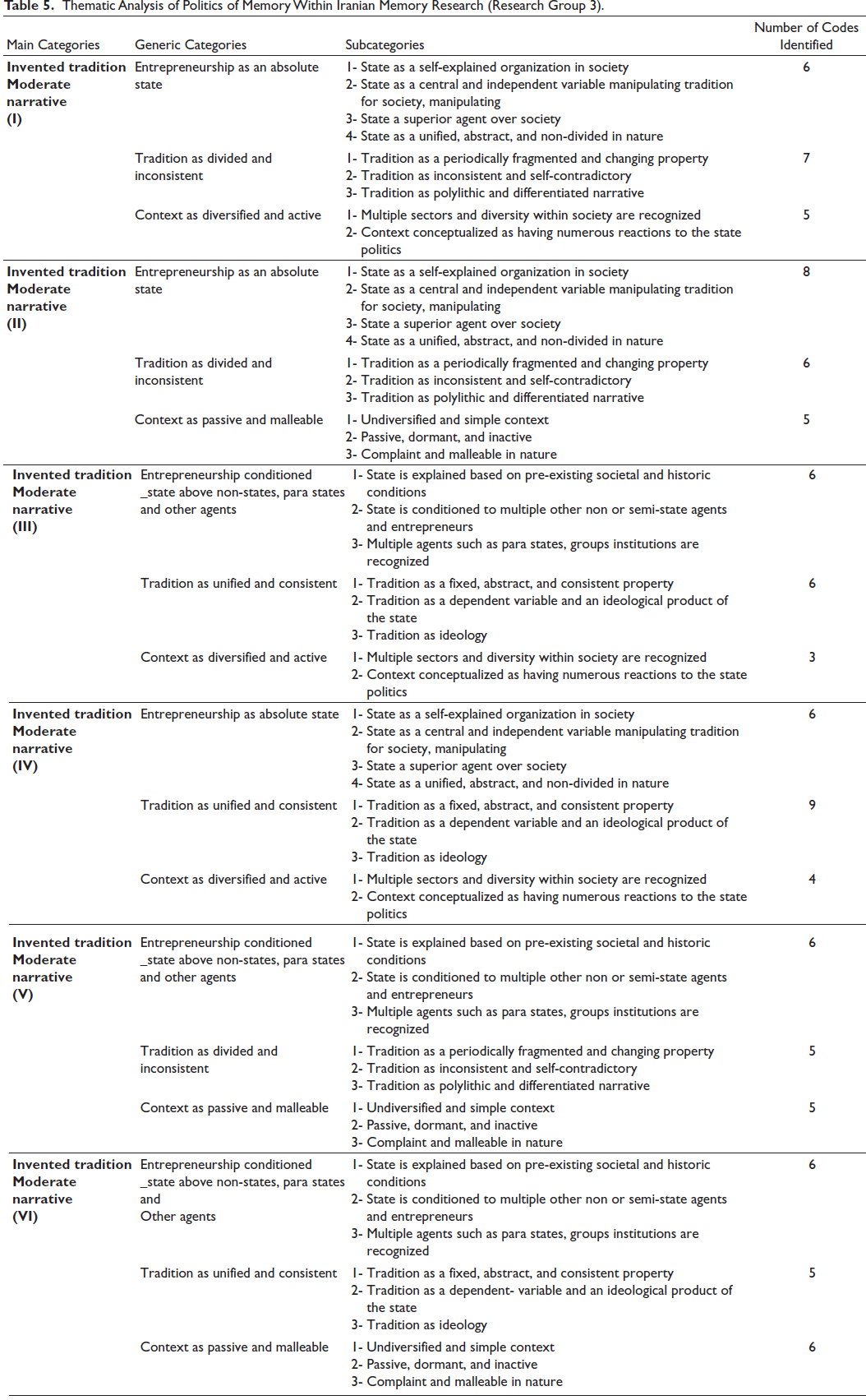
In Table 3, the above components, as interpreted under the generic categories, could theoretically be classified under one major theory within the study of the politics of memory, which is invented tradition. Since all the generic categories fully conform to the theory, the related studies have been classified in the main category as one narrative of the theory—conservative narrative—explaining politics of memory. Table 4 represents the thematic analysis of works and studies written by Rolston, Bill (2020); Abdi, Kamyar (2001). The same analytical procedure was in place for the review. A clarification seems needed, however, as to why this group of researchers is classified as invented tradition—the radical narrative. The codes related to the states still formulate the state above the society it rules over, but other political institutions are also involved in memory politics. Tradition is state ideology but one feature that makes it peculiar to this group of research—or the radical narrative one—is a tendency within the literature under study to discuss it over time and with the necessary dynamism it possesses. The social context is present in the background not as a unity but as an entity that is divided and diverse across communities within Iranian society, each with a different reaction to the state-packed memory.
Thematic Analysis of Politics of Memory Within Iranian Memory Research (Research Group 2).
Another set of research papers by Ram (1996), Chehabi and Fotini, (2008), Tabrizi and Behrooz (2009), Gruber (2012), Shirazi (2012), Moayeri (2015), Soroushfar (2016), Choobbasti (2016), Shirvani (2018), Zokaei & Vaala (2019), Parsapajouh (2019), and Saramifar (2019) apply the three fundamental rules of politics of memory at a general level. Therefore, these works can be considered the moderate narrative of invented tradition within Iranian memory research as they conceptualize the state, tradition, and context between the conservative and radical narratives.
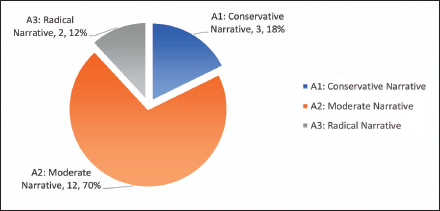
Table 5, accompanied by Figure 5, pertains to this moderate narrative research group. The figure indicates that this research group constitutes the largest (70%) among all research that has employed invented tradition as their theoretical approach in examining the politics of memory.
Thematic Analysis of Politics of Memory within Iranian Memory Research (Research Group 3).
Frequency of Various Narratives of Invented Tradition Within Iranian Memory Literature.
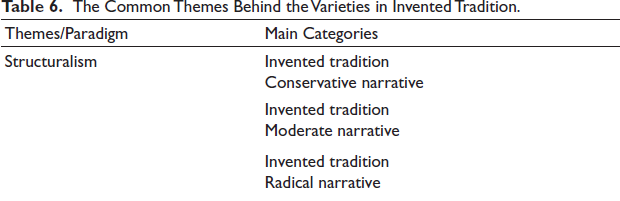
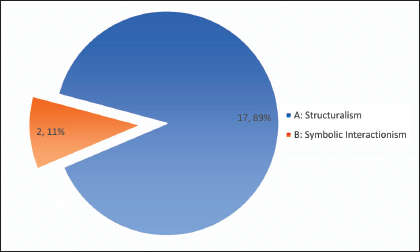
The last category in the theoretical review has been to label all varieties of invented traditions into one common theme. One common element behind the invented tradition in all its varieties has been discovered to be an underpinning shared explanatory strategy based on which not only too much obsession has been placed on the role of the state—as the memory manipulator within the Iranian society—but also too much tendency shared among the reviewed literature to follow a cause-and-effect mode in explanation. In other words, studies reviewed so far have tried to explain the politics of memory in a sequential mode. They have typically shared a tendency to theorize the politics of memory as a story that begins with the state’s role as an agent that makes memories or ideologies for political reasons and ends with the description of background society, which always appears in the shadow and is a dependent variable. Since the strategy follows a structuralist logic—in that it separates the constituting elements of reality as concrete variables and restructures them in a cause-and-effect mode of explanation—the related research that has shown following the strategy is labeled under structuralism as the final theme. Table 6 shows one final theme, or the paradigm, based on which the majority of research on the politics of memory in Iran suits.
The Common Themes Behind the Varieties in Invented Tradition.
In the review, another cluster of literature exists, although proportionally thin, completely broke up the above-mentioned thematic setup. Two papers are classified as research that could be suited to this group, namely the one written by Zohreh Soroushfar et al. (2019) and the one by Golrokh Shamin (2022). Table 7 illustrates a thematic analysis related to this group of research.
Thematic Analysis of Politics of Memory Within Iranian Memory Research (Research Group 4).
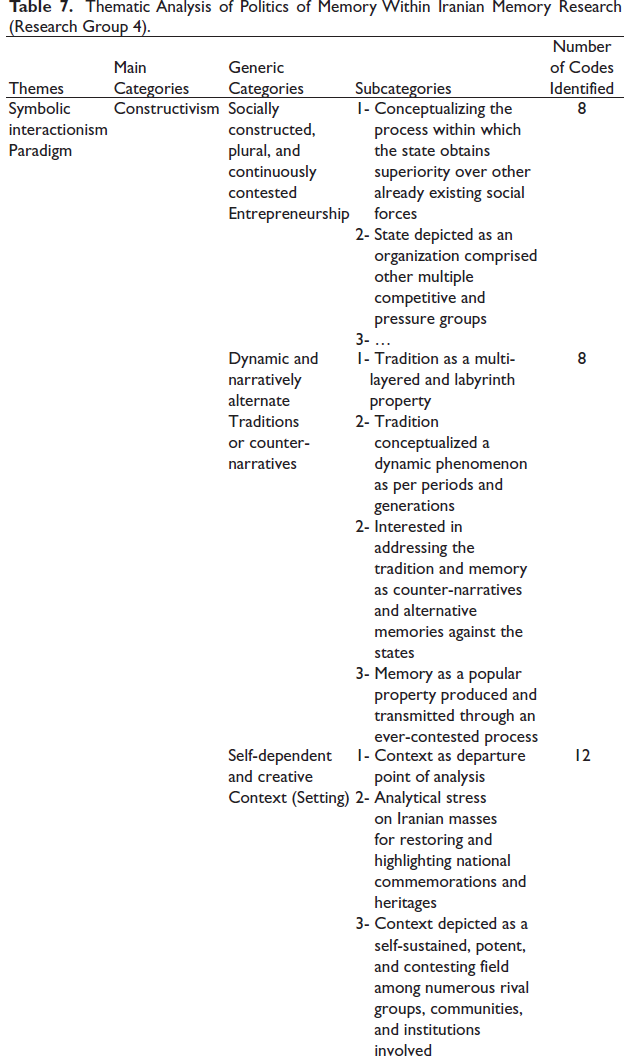
Rather than the state as the memory maker, this group of researchers sees the context as more creative and potential in the game of politics of memory. This can also be deducted from the number of individual codes related to the formulation of context, which is twelve for the context of Iranian society, compared to eight, for the state. In other words, context is at the center of discussion and analysis, and the state, or memory agent, is in the shadow. The tradition or memory accordingly is formalized as alternate memories or counter memories, constructed from the below. Yet there is another reason for such different grouping: the explanatory strategy also seems different, and is more dynamic, processual, and ever-changing. The state, memory, and the context or society are described within the research as contested and complex entities. Moreover, throughout the papers, they are analyzed as entangled together. Contrary to the research within the invented tradition, which explained the politics of memory as a result of analytically separated components in a cause-and-effect mode, researchers within this group see the politics of memory as continuously made and changed within society over time.
The three components at the generic level are no longer considered abstract entities but instead are based on the wills of individual members of Iranian society. This stabilization creates a discernable politics of memory or resistance, while changes occur as the roles and interests of individuals clash within the society. The politics of memory results from a collaborative and contested process among individual members of society who co-construct the game’s rules. Therefore, the three generic categories are summarized and labeled together as constructivism, a theory that can properly explain them all at the theoretical level. The final level of analysis for this group of research, or the one final theme, is named symbolic interactionism. Symbolic interactionism is an appropriate label because it reflects the paradigmatic feature of research that uses constructivism as its explanatory strategy to theorize the politics of memory. The question is the relationship between structure and the agent. Symbolic interactionism attempts to restore the agent’s status to social analysis, which has long been ignored within the structuralist paradigm. Therefore, symbolic interactionism is a more micro-level approach that views structures not as restraints but rather as resources that people use to organize and give meaning to their social worlds through daily face-to-face interactions. This emphasis on the role of individual agency in shaping social structures provides a more nuanced and comprehensive understanding of the politics of memory in Iran.
Rather than addressing how common social institutions define and impact individuals, symbolic interactionists shift their attention to the interpretation of subjective viewpoints and how individuals make sense of their world from their unique perspective. Symbolic interactionism are often less concerned with objective structure than with subjective meaning (Carter & Fuller, 2016, p. 2).
The concept of structures is not seen as fixed and unchanging but rather as fluid and subject to constant transformation. In contrast to a structuralist perspective, which assigns predetermined roles and functions to individuals within a given structure, symbolic interactionism emphasizes a more dynamic and interactive approach in which individuals and structures negotiate and create the social world through ongoing interactions.
While thematic analysis has been used to organize the research into different paradigms, it may not fully capture the differences in explanatory strategies between research groups within each paradigm. A more detailed comparison of two studies, each representative of one paradigm, can shed light on the differences in their theoretical approaches to the politics of memory. To ensure a clear comparison, two research papers representing the extreme ends of the paradigms have been selected. Haggay Ram’s 2000 study represents the structuralist paradigm, specifically the narrative of invented tradition, while Zohreh Soroushfar’s 2019 study represents social interactionism. By examining these studies in detail, we can better understand the differences between the two paradigms in terms of their theoretical approaches to the politics of memory.
In Ram’s paper, entitled “Immemorial Iranian Nation? School Textbooks and Historical Memory in Post-Revolutionary Iran,” the author tries to intellectually add to a line of argument typical to an invented tradition that takes the mnemonic technologies as the means controlled by the state to indoctrinate the desired political agenda into the minds of the nation. However, his discussion focuses on school textbooks as a memory technology at the disposal of the state to draft the Iranian mentality in their formative years. Thus, the story begins with the state, but the way that the state adopted various policies to do so or the change that the related policies have gone through over time, is not taken into account, even though the researcher’s study is marked by a major change in modern Iranian history, which is the 1979 revolution. Moreover, some totalizing names and pronouns have been used in the paper to refer to the state, which overlooks the nuanced differences that may exist within the state among its constituting bodies. Tradition is also reduced to a linear nationalism promoted by the states via school textbooks before and after the revolution. In the pre-revolutionary era, nationalism was depicted as Iranians being a member of a centuries-old nation who saved their art, civilization, and culture despite various threats posed by foreign enemies. Ram also believes that the revolutionary state has used nationalism in a sequential storyline to show Iranians as true believers of Shiism, who sacrificed greatly for their faith to reach the highest point in their history, where the state is run by Islamic clergies. Unsurprisingly, the research views the students as passive consumers of their schoolbooks, and their various reactions are missing throughout the paper.
Soroushfar’s research— “Memory, Politics, and Identity in Post-Revolutionary Iran: the Case of Iranian Alternative Calendars”—examined here as an example of symbolic interactionism, begins the story with Iranian citizens as members of an active society (context), which has their means, namely, the alternative calendar to remember the momentous dates and events in their history. The paper shifts the focus of analysis to counter memories. Furthermore, the author acknowledges that the state management of time has faced occasional backlashes from Iranians, as in the case of calendar change under the Pahlavi, which raised the voice of some conservative clergies. The strategy is also different because the author attaches a dynamism to remembering and forgetting within Iranian society, which is absent in the mainstream social memory research in Iran. For instance, it is stated that important dates and occasions in Iran are not the ones that are selected and celebrated by the state but are seen rather as realms subjected to ongoing contestation between Iranians and the state. Therefore, unofficial calendars are seen as sites of memory through which Iranians keep their narrative of the past protected against state control. Moreover, the author properly shows that even in the official calendar, incorporating one single momentous event or occasion has always been accompanied by highly contested debates not only between the states and interested groups but also within the state’s bodies, itself. In the article, thus, tradition or the past is not seen as a century-old state property but is rather a negotiable and subjective momentary record that changes forever.
Soroushfar’s paper is not the only research addressing the politics of memory through the lens of the recent paradigm or symbolic interactionism. Golrokh Shamim’s research (2022) is another example that falls within this study category. The two studies, categorized thematically within the paradigm of social interactionism, theorize the politics of memory constructed as individual Iranians and come together in their daily social life to give sense to what is remembered as memory and heritage of the past. In Figure 6, the frequency of this research group is illustrated and compared to all research studies selected for the theoretical review.
Frequency of Iranian Memory Research on Politics of Memory Based on the Paradigm Used.
Conclusion
The central aim of this article has been to propose a chronological and theoretical review of the Iranian social memory literature on the subject of memory. Most research has fallen into the disciplinary phase in the chronological part, but some interdisciplinary studies have also been discussed. Another review assessed the literature on memory based on their theoretical use, which memory researchers in Iran have adopted to tackle the most popular problem within Iranian memory research or politics of memory. One timely question in this closing section would be: what possibilities can these parallel reviews open for future memory researchers in Iran? How can they, seen together in the current review, be debated for a more inclusive and efficient development of memory research in Iran in the future?
A theoretical review of the selected literature shows that most of the literature applied invented tradition as their theoretical approach to the politics of memory, an approach within structuralism that highlights the social realities beyond the will of the individual. Within Iranian memory literature, the dominant approach to see the politics of memory has so far been to see how remembrance and the production and circulation of the past occur as the social structures stabilize or change within the society. Invented tradition, used in this sense, has long been criticized and challenged by various fronts. Invented tradition has been long labeled as an oversimplified strategy in explaining the politics of memory. In the present review, where most literature organized their discussion over politics of memory based on three structures, namely state, tradition or memory, and the background society, they all see these three components as social objects.
Newer and more critical approaches have been developed in separate works of literature, which attack all three theoretical pillars on which the invented traditional approach to the politics of memory has been based. For instance, regarding the states, Confino (1997) argues that the invented tradition structuralist view to see the state as an independent variable, where the whole story of politics of memory begins, is a reductionist view since it does not explain where the state, itself, originates. A second challenge relates to seeing the states as a consistent body. Molden (2016) argues that it is more realistic to see states as consisting of groups and bodies with various interests, making the state a body with countless balancing and neutralizing effects. A more complicated view has also emerged in the last decades concerning tradition. Invented tradition differentiates between old or irrational traditions that have been handed untouched from the past generations to the newer ones and the invented traditions that are new, rational, and engineered by the state to facilitate the societies’ move toward development. In the more recent approach toward tradition, such distinction is challenged, and a conceptualization of tradition is put forward that sees tradition as being rational from the earliest time in history in which people renew their commitments to the past rationally every time they attend traditional life. Severy (2002) notes “traditions, and rituals involve a degree of reflexivity to become meaningful for the participants of a ritual celebration” (p. 27). There has also been literature in which the major focus is to show the complexity of society as it is in reality. Society also takes part in the politics of memory through politics of silence, denial and refutation, resistance, disapproval, and protest.
The review identifies two works of literature that fall under symbolic interactionism and are particularly effective in addressing the intricacies of memory politics. These studies’ application of symbolic interactionism reflects the prevalence of micro-level perspectives in social research, which also extends to memory studies. The concept of invented tradition has provided a theoretical foundation for Iranian memory literature. However, this approach can be considered simplistic and reductionist when all theoretical challenges are considered. Recent research papers on the politics of memory suggest that a more nuanced and dynamic perspective is needed. Interestingly, the two most recent studies in this area have utilized symbolic interactionism and have been classified as interdisciplinary.
Therefore, it is recommended that the concept of invented tradition should not be viewed solely as a theory but rather as a “sensitizing concept” that can be used to deconstruct structuralist concepts and provide useful lenses for analysis. In other words, invented tradition can serve as a guiding framework for examining empirical instances, suggesting helpful directions for future research. As Blumer (1986) suggests, it can provide “a general sense of reference and guidance” in approaching complex issues such as memory politics. This also highlights the need for interdisciplinary literature on memory studies in Iran to create a more coherent and cumulative body of research and increase the visibility of Iranian memory research in mainstream memory studies. Memory issues and problems in less explored areas of the world have always been of interest to memory studies, and an interdisciplinary approach can offer more opportunities for researchers to examine the politics of memory using more recent and complicated theories. Overall, using invented tradition as a sensitizing concept and an interdisciplinary approach can provide a valuable framework for future research on social memory studies in Iran. It can help address the complexities and dynamism of memory politics in a more nuanced and comprehensive way, advancing our understanding of the broader field of memory studies.
Footnotes
Acknowledgments
The present article owes a great deal to the aide, guidance and support of a group of scholars and experts with all of whom I collaborated intellectually over the years, namely Ann Rigney (Utrecht University), Yra van Dijk (Leiden University), Eva-Maria Troelenberg (Utrecht University). Special thanks goes to James V. Wertsch (Wash U STL) and Henry L. Roediger for their support and for reviewing the manuscript and sharing their enlightening suggestions and ideas to improve the standard of this piece and also to the anonymous reviewers whose comments and amendments added to the value and integrity of this article.
Declaration of Conflicting Interests
The author declared no potential conflicts of interest with respect to the research, authorship and/or publication of this article.
Funding
The author received no financial support for the research, authorship and/or publication of this article.
