



Abstract
The self-employment coping literature typically treats coping strategies separately. In contrast to this approach, we introduce a control perspective to examine the effects of combining coping strategies on a highly salient well-being outcome for the self-employed: purpose in life. Drawing on the Midlife in the United States (MIDUS) dataset (N = 693), moderation analysis reveals that persistence and positive reappraisal mitigate the negative effect of lowering aspirations on purpose in life. In robustness tests, we find consistent results across similar well-being indicators. Our evidence highlights the need to study specific coping strategies in tandem and provides a more nuanced perspective on the differential effects of both primary (i.e., persistence) and secondary (i.e., positive reappraisal and lowering aspirations) coping strategies.
Keywords
Introduction
Coping . . . is characterized by change. One might at first engage in avoidant or denial-like strategies to ward off the significance of an event, then decide to deal head-on with the problem; or . . . a person might cope by avoiding contact with others but a little later seek emotional support from a friend.
Purpose in life (hereafter PIL), which refers to a “central, self-organizing life aim,” is a critical aspect of human flourishing (McKnight & Kashdan, 2009, p. 242; Ryff & Singer, 1998). As a core aim and aspiration of life, PIL gives a coherent meaning to our actions (Frankl, 1959; George & Park, 2013; Martela & Steger, 2016). For this reason, PIL is considered the “existential core of eudaimonic well-being,” with its roots deeply embedded in human qualities fundamental to existence (Ryff, 2019, p. 649).
PIL has started to receive attention as an essential well-being variable for the self-employed (e.g., Dwyer et al., 2023) because, as a self-determined career choice, self-employment is likely conducive to generating purpose and meaning (Nikolaev et al., 2022). For example, studies have found that the self-employed perceive a higher level of meaning and purpose at work than the employed (e.g., Nikolova et al., 2023; Stephan et al., 2020). Growing evidence further suggests that purpose and meaning are associated with a range of important outcomes of the self-employed or entrepreneurs in general, such as subjective vitality (Stephan et al., 2020), job satisfaction (Brieger et al., 2021), and hedonic well-being (Nikolaev et al., 2020).
Therefore, understanding how business owners may develop PIL via self-employment is of central importance to theory and practice. Yet, our understanding of the factors contributing to the cultivation of purpose and meaning in self-employment is quite limited. Clarifying the factors contributing to PIL is intellectually intriguing because self-employment presents clear pathways to PIL, even as it seemingly produces barriers to PIL. On one hand, self-employment is inherently a self-driven process that grants freedom and autonomy to pave one’s own path, which can fuel the search for meaning and purpose (Dik et al., 2015; Nikolaev et al., 2022; Stephan et al., 2020; Wrzesniewski & Dutton, 2001). On the other hand, self-employment features highly taxing circumstances full of uncertainty, ambiguity, setbacks, loneliness, and excessive workload, which might hinder the formation and development of purpose (Stephan et al., 2023). Yet empirical evidence suggests that the self-employed perceive a stronger sense of purpose and meaning than the employed despite these challenges (Stephan et al., 2020). How is it that some self-employed develop high PIL despite inherently challenging occupational contexts?
Literature on PIL suggests one answer could relate to how entrepreneurs cope with adverse circumstances. Indeed, the pursuit of purpose is a deliberate and effortful process that relies heavily on personal agency (McKnight & Kashdan, 2009). The emergence and development of PIL is not a sudden occurrence; instead, it involves a cognitive process of continuously directing and contributing physical and mental energies to a set of objectives (Warr, 2018). The search for purpose is shaped by a complex intertwining of individual’s internal psychological processing and external actions in response to environmental demands (Carver & White, 1994; Vallerand et al., 1987). Therefore, to achieve PIL in the self-employment context, individuals need to utilize diverse coping strategies to deal with the diverse set of demands they face (Lerman et al., 2021; St-Jean & Tremblay, 2023).
Psychological literature suggests that coping is a multifaceted and dynamic process where individuals frequently employ various strategies simultaneously in response to stressors (Folkman & Lazarus, 1980; Folkman & Moskowitz, 2004). However, existing literature predominantly focuses on independent effects of coping strategies (e.g., problem- vs. emotion-focused coping), which we term a coping-as-alternatives approach. Given self-employment’s highly uncertain and dynamic nature, and the importance of both internal and external coping processes for facilitating PIL, we posit that combining coping strategies is both likely and necessary while operating a business (Corner et al., 2017; Eager et al., 2019; Patzelt & Shepherd, 2011; Schmodde & Wehner, 2024; Singh et al., 2007) and for the development of PIL. Thus, we posit that utilizing a coping-in-combination approach and exploring coping tendencies in tandem, such as examining interactive effects, help develop a cohesive framework for studying PIL.
We draw on the control perspective of coping to develop our coping-in-combination approach to self-employed PIL. 1 The control perspective of coping is one of the primary theoretical formulations that describe human actions toward their environment (Skinner et al., 2003). It emphasizes utilizing personal agency to enhance the perceived controllability of the environment (Heckhausen & Schulz, 1995; Rothbaum et al., 1982). Furthermore, it argues that coping is a process consisting of both primary control, which aims at altering the environment to fit oneself (i.e., persistence in goal striving), and secondary control, which aims at adapting oneself to suit the environment (i.e., positive reappraisal, lowering aspirations) (Wrosch et al., 2000). PIL is closely associated with exerting meaningful control over our behaviors and cultivating a sense of control over the environment (McKnight & Kashdan, 2009) and likewise requires both internal and external adaptations to effectively cope (Carver & White, 1994; Vallerand et al., 1987). Therefore, the control perspective of coping provides an ideal angle to investigate the PIL of the self-employed.
Utilizing a coping-in-combination approach, we explore the interaction effects of different combinations of control-oriented coping strategies on PIL. We argue that different coping strategies will exert independent effects on PIL, some positive and others negative, yet the combined effects introduce more nuance. Specifically, we develop theoretical arguments for accentuating and mitigating effects of coping behaviors when used in combination. To test our theory, we use Wave 2 and Wave 3 data from the Midlife in the United States Study (Ryff et al., 2012).
Our study advances theory in two ways. First, we examine the psychological mechanisms that drive PIL in self-employment. We advance studies that have begun analyzing PIL as a critical variable of interest in organizational literature and entrepreneurship (Carr, 1997; Ryff, 2019; Strauser et al., 2008) by studying how the self-employed can achieve a greater PIL through coping. Second, leveraging a coping-in-combination approach, we develop theory on the interaction effects of coping strategies on PIL, pointing toward a new area of future research. Overall, our investigation helps build a more holistic view of coping and PIL for the self-employed.
Theory
Purpose in life
PIL is “a central, self-organizing life aim that organizes and stimulates goals, manages behaviors, and provides a sense of meaning” (McKnight & Kashdan, 2009, p. 242). Purpose guides our behavior just as a compass offers direction (Klinger, 1977). Centering on the predominant theme of life, PIL enables individuals to direct cognitive and behavioral resources to progress toward goals and provide coherent meaning to these actions (McKnight & Kashdan, 2009). PIL provides relatively stable life narratives that resonate across contexts and serves as a motivational driver throughout the lifespan (Reker et al., 1987).
Developments across disciplines have found PIL to be essential for individual outcomes, such as identity formation, life expectancy, work and life satisfaction, and mental and physical health (Irving et al., 2017; King & Hicks, 2021). Specifically, in relation to wellness, when perceiving a clear PIL, individuals are likely to experience better memory, cognition, mood, and mindfulness (Ryff et al., 2016; Sutin et al., 2022b; Woo et al., 2020). On the contrary, when there is a lack of PIL, individuals are inclined to experience existential frustration, which leads to pathological conditions (Frankl, 1959; Zika & Chamberlain, 1992), such as depression, boredom, loneliness, and anxiety (e.g., Bigler et al., 2001; Fahlman et al., 2009; Harlow et al., 1986; Sutin et al., 2022a). Undeniably, PIL constitutes the “existential core of eudaimonic well-being” (Ryff, 2019, p. 649). As such, PIL provides valuable insights when exploring the presence or absence of well-being vs. ill-being (Stephan et al., 2023).
Accordingly, growing evidence suggests that purpose and meaning are closely tied to psychological constructs that influence entrepreneurial behavior and drive firm performance. For instance, purpose can facilitate inspiration (Souitaris et al., 2007) and passion (Smilor, 1997). In addition, purpose and meaning are associated with various constructs related to the self, such as role identity (Cardon et al., 2009) and self-realization (Gregori et al., 2021). Purpose is also related to prosocial motivation (Kim et al., 2019) and entrepreneurial intention (Xiang & Zhang, 2022).
Despite its many benefits, PIL has received relatively little attention in the study of self-employment. Extant studies mainly consider PIL as a dimension in eudaimonic well-being (e.g., Nikolaev et al., 2022), focus on its psychological consequences (e.g., Stephan et al., 2020), or emphasize its role in entrepreneurial pursuits based on non-economic priorities (e.g., Dwyer et al., 2023; Muñoz et al., 2018). Yet, we know little about the psychological mechanisms the self-employed use to develop PIL. Without a clear understanding of its antecedents, we can not develop a holistic view of PIL in self-employment. Therefore, it is essential to investigate the psychological processes leading to PIL in the self-employment context.
Self-employment and coping: coping-as-alternatives vs coping-in-combination
The literature shows that coping is critical in managing the adversity inherent to self-employment (Hartmann et al., 2022; Stephan, 2018). Coping, defined as “thoughts and behaviors that people use to manage the internal and external demands of situations that are appraised as stressful” (Folkman & Moskowitz, 2004, p. 745), has taken on many forms and categories in the entrepreneurship literature, including problem- vs. emotion-focused coping (e.g., Drnovšek et al., 2010; Patzelt & Shepherd, 2011), active vs. avoidance coping (e.g., Uy et al., 2013), humanitarian coping (e.g., Schonfeld & Mazzola, 2015), resource-induced coping (e.g., Lanivich, 2015), restorative coping (e.g., Williams & Shepherd, 2016), future-oriented coping (e.g., Eager et al., 2019), resilience-oriented/building coping (e.g., Pérez-López et al., 2019), and effectual vs. causal coping (e.g., Liu, 2020). While there is widespread agreement on the importance of coping and burgeoning interest in this topic, there is no consensus on how to best categorize the myriad coping strategies, and the findings regarding coping effectiveness are mixed (Eager et al., 2019).
To date, most self-employment coping literature has utilized a coping-as-alternatives perspective, investigating the independent effects of coping strategies separately. In general, previous studies suggest that coping strategies directly dealing with the problem are effective in addressing stressors, such as role expectations (Örtqvist et al., 2007), work-family conflict (Jennings & McDougald, 2007), and business failure (Byrne & Shepherd, 2015; Singh et al., 2007), and thus can promote well-being and enhance venture performance (Drnovšek et al., 2010; Kleine-Stegemann et al., 2024; Örtqvist et al., 2007; Patel et al., 2019; Patzelt & Shepherd, 2011). On the contrary, findings regarding the effects of coping strategies aimed toward managing emotions are mixed. Some studies find them effective in reducing negative emotions (Byrne & Shepherd, 2015; Patzelt & Shepherd, 2011) or improving firm performance (Örtqvist et al., 2007), while others find no effect on allostatic load (Patel et al., 2019), well-being, or firm performance (Drnovšek et al., 2010).
This approach has led to a general understanding that problem-focused coping is ideal, whereas emotion-focused coping is not—however, in terms of understanding PIL, this assumption may not hold true. As a supraordinate goal manager, developing PIL via self-employment has just as much to do with coping psychologically within oneself as it has to do with hands on coping. In fact, one could argue that the greatest challenge of pursuing a business is not the external demands themselves but the entrepreneur’s ability to successfully manage their internal motivation to maintain resilience in the face of those demands and ultimately overcome them. In other words, it is the combination of managing oneself and managing external environments that ultimately allows the self-employed to cope successfully.
Therefore, we see a promising opportunity to advance the conversation on entrepreneur’s coping and on PIL by adopting a coping-in-combination approach. Indeed, several studies of the self-employed provide initial evidence of the utility of this perspective (Eager et al., 2019). For instance, in a qualitative study of entrepreneurial business failure, Singh and colleagues (2007) find that the self-employed use both problem- and emotion-focused coping in learning and recovering from failure. Similarly, Corner and colleagues (2017) find that different coping strategies can help promote emotional and psychological functioning after experiencing business failure. In addition, Shepherd and Patzelt (2011) find that self-employed use coping strategies to solve problems and adjust emotions simultaneously; both types of strategies help reduce negative emotions. These studies provide empirical evidence regarding the integration of different coping behaviors. Using a qualitative approach, Byrne and Shepherd (2015) found that the self-employed who used both problem- and emotion-focused strategies made more progress in making sense of business failure than those who used a single approach. Finally, Uy and colleagues (2013) found that avoidance coping could benefit long-term well-being if accompanied by approach-oriented coping.
Based on the theoretical importance of multiple forms of coping for developing PIL, as well as existing evidence that combining coping behaviors benefits the self-employed, we posit that a coping-in-combination approach is valuable for complementing existing coping-as-alternatives literature. As such, we now develop theorizing consistent with our theoretical model in Figure 1.
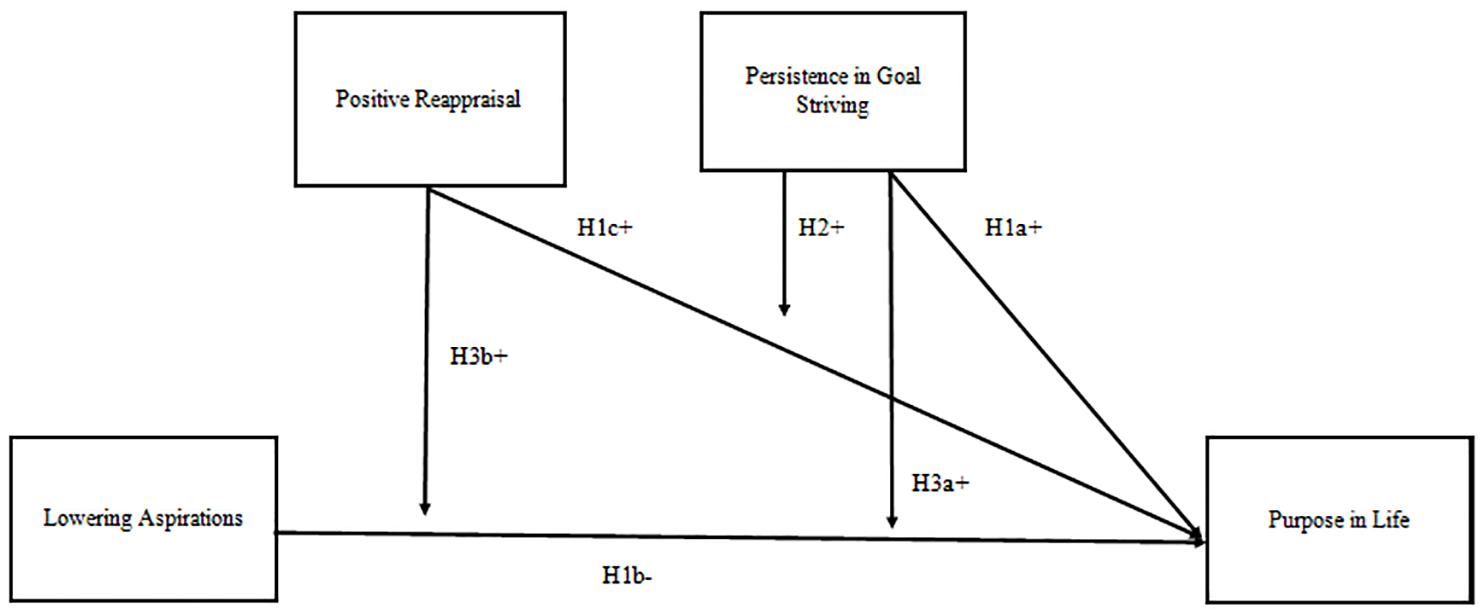
Conceptual model.
Control perspective in coping: independent effects
The control perspective of coping is an established theoretical formulation in psychological literature that emphasizes individuals’ basic motivational tendencies to exert control over the environment (Heckhausen & Schulz, 1995; Skinner et al., 2003). The control perspective of coping assumes that coping involves an interactive process consisting of primary and secondary control (Wrosch et al., 2000), which makes it an effective theoretical framework to explore a coping-in-combination approach. Primary control (e.g., persistence in goal striving) refers to the individual’s “attempts to change the world so that it fits the self’s needs,” while secondary control (e.g., positive reappraisal and lowering aspirations) refers to the individual’s “attempts to fit in with the world,” but both serve the same purpose of developing a sense of control to enhance well-being (Rothbaum et al., 1982, p. 8).
We examine one primary control strategy in this study, persistence in goal striving, which refers to active engagement and sustained efforts toward articulated goals even when encountering setbacks and stressors (Wrosch et al., 2000, p. 388). We argue that persistence in goal striving will facilitate greater PIL of the self-employed (Lewis, 2020). Kashdan and McKnight (2009) suggest that PIL may be developed from a proactive pathway, indicating a gradual formation of PIL through the continuous pursuit of goals. Accordingly, by facilitating constant engagement through persistence and ensuring consistent learning, the self-employed are more likely to maintain a sense of meaning and direction (Frankl, 1959; Ryff, 2019). Moreover, as stated by Deci and Ryan (2000), striving for and achieving goals satisfies basic psychological needs, while the experience of purpose and meaning is contingent upon fulfilling these needs (Baumeister, 1991). Making progress toward goals leads to positive experiences, which will also lead to enhanced feelings of purpose and meaning in life (King et al., 2006). For example, a restaurateur trying to expand their business to new locations might face challenges in various aspects, such as allocating funds, choosing locations, and recruiting staff. These challenges could limit the entrepreneur’s ability to pursue their purpose (e.g., sharing their culinary cultural traditions with as many people as possible). A restaurateur utilizing a persistent goal-striving strategy will take a proactive approach to tackle the problems, such as searching for viable financing options, collaborating with local businesses, and conducting rigorous research. This effortful engagement can make the restaurateur feel closer to achieving their goals and, therefore, enhance perceived PIL. For example, by persisting in overcoming challenges, the restaurateur may feel they are facilitating better opportunities to share their culinary cultural traditions. Taken together, evidence shows that persistent goal striving contributes to individuals’ sense of vision and direction (McKnight & Kashdan, 2009; Ryff, 2019). Therefore, we suggest that those who are persistent toward their goals experience a greater sense of meaning and direction in their lives.
Alternatively, we investigate the effects of two secondary control strategies—lowering aspirations and positive reappraisal—on the PIL of the self-employed. We expect a negative relationship between lowering aspirations and PIL. Lowering aspirations involves maintaining “ambitions commensurate with personal resources and situational constraints” when opportunities become infeasible by lowering the desirability of goals in the face of anticipated or experienced failure (Brandtstädter & Rothermund, 1994, p. 266; Child & Whiting, 1949). The process of re-evaluating goals can lower the well-being of the self-employed because it may be unclear what the future holds (Wrosch et al., 2000). While fulfilling goals contributes to realizing personal potential, lowering aspirations indicates a failure in fulfilling goals, thus negatively affecting PIL (Ryff, 1989, 2019; Wrosch et al., 2000). For example, a restaurateur driven by a purpose of culinary innovation may confront financial pressure due to operating in a highly competitive industry. Suppose the restaurateur lowers their aspiration, disengages from new menu development, and settles with offering typical food (i.e., engaging in less innovation, despite it being a central purpose of their entrepreneurial efforts). In that case, they might experience less financial burden but may also experience a decrease in PIL due to not accomplishing their goals.
Finally, we propose that positive reappraisal can benefit PIL. Positive reappraisal is characterized by reframing negative perceptions of stressors in a more positive light (Wrosch et al., 2000). The reappraisal of a negative situation may become an opportunity to learn and grow, developing purpose through a “reactive pathway” (Kashdan & McKnight, 2009). Therefore, the self-employed who use this strategy are arguably better able to appraise uncertainty as a challenge to be engaged with as opposed to a threat to be avoided (M. A. LePine, 2022; J. A. LePine et al., 2005; Lerman et al., 2021). In addition, positive reappraisal may allow the self-employed to find motivation even in the aspects of self-employment that many find mundane. Returning to the example of the restaurateur, consider a situation when the restaurateur experiences a sudden loss of customers following negative online reviews. The restaurateur engaging in positive reappraisal will consider the temporary loss as an opportunity for identifying existing problems and improving customer experiences for long-term gain. Positive reappraisal can allow the restaurateur to treat the failure as a learning experience and foster greater PIL (e.g., a purpose based on sharing their culinary cultural traditions with as many people as possible) despite the setback. Taken together, we propose the following hypothesis:
Coping-in-combination: accentuating effects
We expect persistence in goal striving will strengthen the positive effect of positive reappraisal on PIL. Theory suggests that “hybrid development” of purpose may occur through persistence and positive reappraisal of stressors (Kashdan & McKnight, 2009). For example, when persistence is high, individuals will persist toward their goals no matter the obstacles standing in their way. This indicates a complementary, positive mind-set to those who reappraise difficult situations. Thus, high persistence in goal striving should increase the effect of positive reappraisal on PIL because persistence intensifies the positive mentality of those who are positively reappraising their stressors. In other words, the search for good, meaning, and direction brought about by positive reappraisal is intensified by high levels of persistence, resulting in a higher level of PIL.
Coping-in-combination: mitigating effects
The goal engagement literature suggests that disengaging from a goal or lowering aspirations can be detrimental to well-being unless it is combined with another mechanism to mitigate the sense of loss and disappointment (Heckhausen et al., 2010; Wrosch et al., 2000). Scholars suggest that lowering aspirations serves a critical functional purpose; namely, the disengagement from futile goals to allow for a greater sense of control. Yet, scholars have suggested that an avenue toward overcoming the associated well-being loss following goal disengagement is the addition of other effective coping strategies, such as persistence toward new goals (Aspinwall & Richter, 1999; Duke et al., 2002; Heckhausen et al., 2010). Along these lines, lowering aspirations facilitates a shift from an unreasonable goal to a more realistic one. In turn, individuals with high persistence are effective in self-regulating their motivation to pursue a new goal (Wrosch et al., 2000). Conversely, those low in persistence may exhibit low motivation to pursue a new goal because of the demoralizing effect of lowering one’s aspirations (Brandtstädter & Rothermund, 1994; Ryff, 2019; Wrosch et al., 2000).
Finally, we expect that high levels of reappraisal can mitigate the negative relationship between lowering aspirations and PIL. Lowering aspirations typically occurs when a goal becomes infeasible for an individual (Aspinwall & Richter, 1999; Babb et al., 2010; Ebner et al., 2006; Heckhausen et al., 2010; Wrosch et al., 2000). However, individuals high on positive reappraisal effectively redefine what lowering aspirations means to them personally, to their venture, and to their goals, direction, and vision for the future. Conversely, individuals low on positive reappraisal may adopt negative mindsets around why it was necessary to lower aspirations (e.g., “I am just not good enough”; “maybe an opportunity is not there for this business”). In that sense, those who positively reappraise the personal meaning of lowering aspirations likely exhibit greater PIL than those who lower aspirations without such reappraisals.
Methods
Sample
To test our hypotheses, we gathered data from the National Study of Midlife in the United States (MIDUS), a nationally representative sample of adults (ages 25–74 years) funded by the National Institute on Aging (Brim et al., 2019; Radler & Ryff, 2010). We pool data for our Ordinary Least Squares (OLS) regression from Wave 2 (MIDUS II) and Wave 3 (MIDUS III). 2 All data were collected with a 30-minute phone interview, followed by two self-reported questionnaires. Our sample consists of 540 unique individuals who identified as self-employed and completed at least one of the surveys (N = 434 in Wave 2 and N = 259 in Wave 3). As this is a panel dataset, 153 individuals appeared in both waves, resulting in 306 observations (153 in Wave 2 and 153 in Wave 3). There were 281 unique individuals in Wave 2 and 106 unique individuals in Wave 3. In total, there were 693 observations across the two waves (281 + 106 + 306), which is reflected as a note at the bottom of each table (N = 693). The total number of observations is higher than the number of unique individuals because some individuals appear in both waves. All participants were pooled for our main analysis—combining data from all participants across both waves into a single dataset—treating each observation as an independent data point (Cameron & Trivedi, 2005). To account for this dependence, we clustered the data around individuals and further used random-effects (RE) models in our robustness tests (Cameron & Trivedi, 2005). Participants received monetary compensation ranging from $20 to $60. The average age of self-employed people in our sample was 56.15 (SD = 10.48). The typical participant reported having at least 2 years of college education, with average household income of $102,077 (SD = 81,776).
Measures
Purpose in life
PIL was assessed with a seven-item scale, which is a component of Ryff’s (1989) scale of psychological well-being. The scale consists of seven items (e.g., “I have a sense of direction and PIL.” “I enjoy making plans for the future and working to make them a reality.” “Some people wander aimlessly through life, but I am not one of them.”). Each item was assessed on a seven-point scale ranging from (1) “strongly agree” to (7) “strongly disagree.” The overall scale was created summing each set of seven items. The PIL scale has a reasonably good reliability in the overall MIDUS dataset (Wave 2 Cronbach’s alpha = .70; Wave 3 Cronbach’s alpha = .72). Scale items were reverse coded as needed, and scores were constructed by the MIDUS researchers for cases with missing items if at least four items were present using mean imputation.
Control strategies
Control strategies were assessed with a 14-item instrument using a four-point Likert-type scale ranging from 1 “not at all” to 4 “a lot” (Wrosch et al., 2000). An exploratory factor analysis revealed a theoretically driven three-factor model (Wrosch et al., 2000), with three sub-scales of control strategies measuring (1) persistence in goal striving (primary control; “when I encounter problems, I don’t give up until I solve them”), (2) positive reappraisal (secondary control; “I can find something positive, even in the worst situations”), and (3) lowering aspirations (secondary control; “To avoid disappointment, I don’t set my goals too high”). All scales were constructed by calculating the mean across the set of items. Some items were reverse coded so that higher scores reflected higher standing in the scale (e.g., greater persistence in goal striving). The three sub-scales (lowering aspirations, positive reappraisal, and persistence in goal striving) had adequate reliability in the overall MIDUS dataset (Wave 2 Cronbach’s alpha = .61, .78, and .78; Wave 3 Cronbach’s alpha = .63, .78, .78) and showed external validity (Wrosch et al., 2000). Scale items were reverse coded as needed, and scores were constructed by the MIDUS researchers for cases with missing items if at least half of the items were present using mean imputation.
Control variables
All models included control variables. Age and its quadratic (Ryff, 2017); sex (a dummy equal to 0 if the respondent was a male, and 1 if female); marital status (a dummy equal to 1 if the respondent was married); education (an ordinal variable ranging from 1 to 12, where 1 = no school/some grade school and 12 = Ph.D. or another professional degree; Nikolaev, 2016; Ryff & Lachman, 2018a, 2018b); number of children, and self-reported (pre-tax) household income (Ryff, 2017). Controls were included based on their potential to influence individual-level regulatory processes that can influence a sense of control over time. For example, older individuals tend to have more robust coping strategies by experiencing more life events, and married individuals may have greater levels of social support (Dehle et al., 2001; Wrosch et al., 2000). Finally, a wave variable 3 was included to account for variation that occurs naturally over time.
Analysis
To tests our hypotheses, we used pooled OLS. Due to the nature of our data and the overlapping participants in each wave, we clustered the data around participant identification numbers to account for the non-independence of our responses (Cameron & Trivedi, 2005). To test for moderation, we ran individual regression models (6–8 in Table 3) with interaction terms between the coping variables. As our moderating variables are continuous, we visualize these variables in Figures 2–4 by showing the relationship between the independent variable and PIL in each model at low, medium, and high levels of the moderator. These levels of the moderator are defined as one standard deviation below the mean of the variable, the mean, and one standard deviation above the mean.
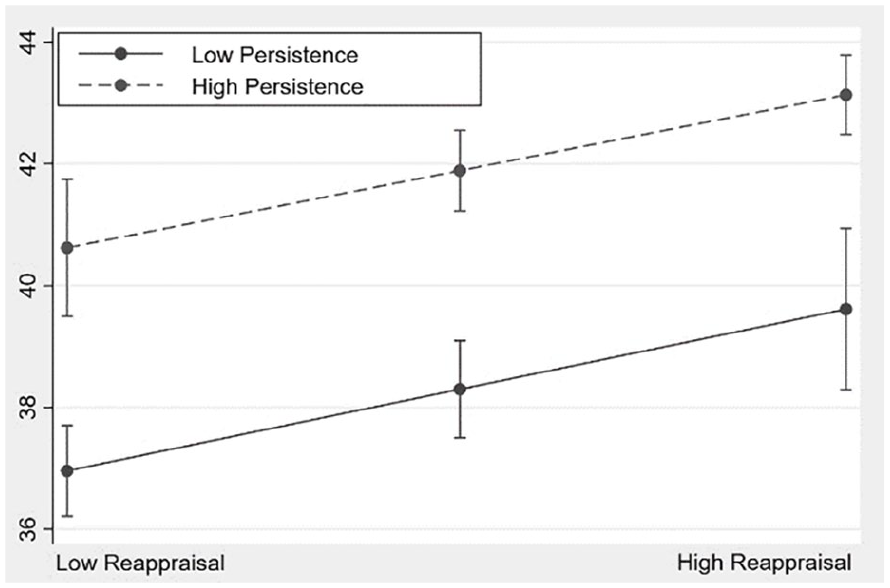
Interaction of persistence in goal striving and positive reappraisal.
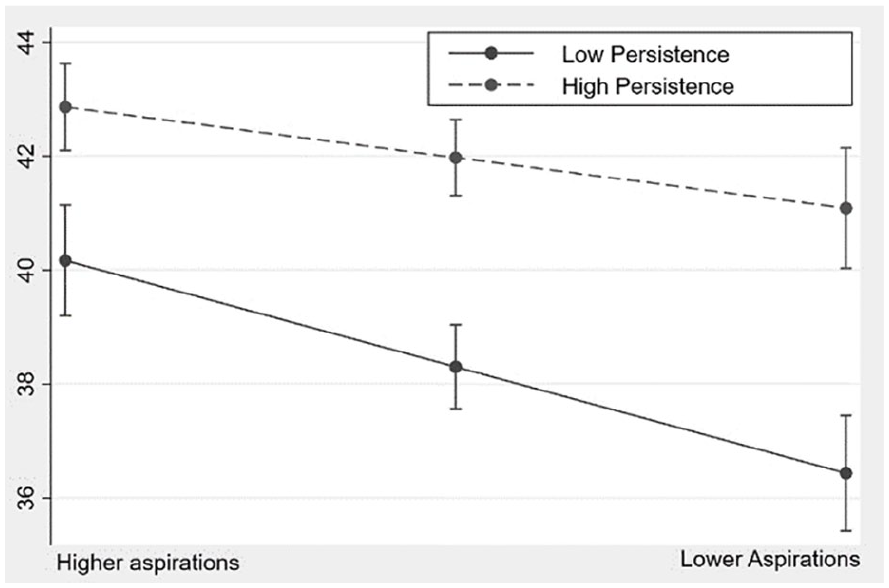
Interaction of persistence in goal striving and lowering aspirations.
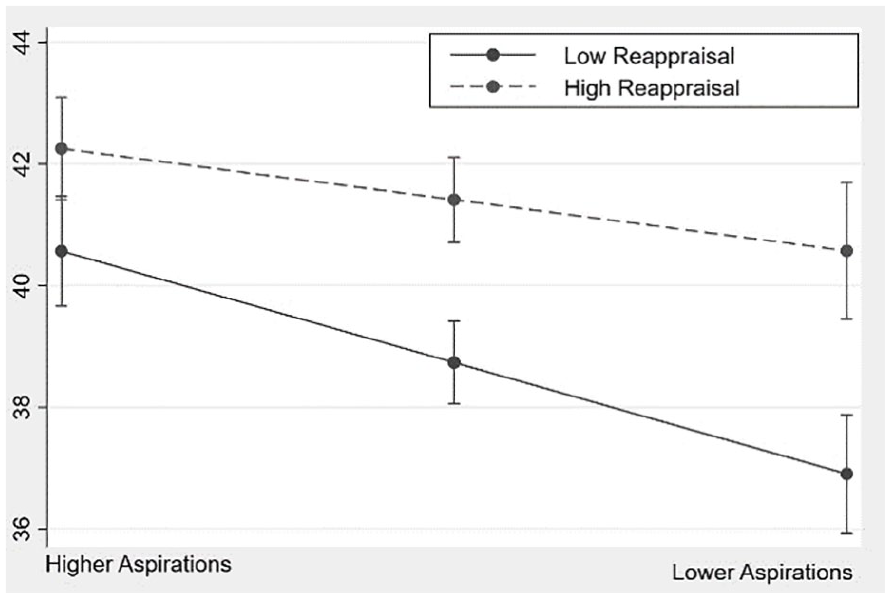
Interaction of positive reappraisal and lowering aspirations.
Results
Table 1 shows summary statistics for all variables used in the study, and Table 2 presents the correlation matrix. Table 3 presents baseline regression estimations and tests of our hypotheses. An analysis of multi-collinearity showed appropriate Variance Inflation Factor (VIF) scores for our variables in our regression models. Specifically, the highest VIF score was 1.53 for the variable goal persistence, which was well below the conservative threshold of 5 (e.g., Cameron & Trivedi, 2005). We find in Model 5 that persistence (B = 3.32, p < .01) and positive reappraisal (B = 2.11, p < .01) are both positively correlated with PIL (supported H1a and H1c) while lowering aspirations is negatively correlated with purpose (supporting H1b; B = −2.53, p < .01). The coefficients in Model 5 (Table 3), for example, indicate that a unit increase in persistence is associated with a 3.32 (p < .01) unit increase in PIL. This coefficient implies that a one standard deviation increase in goal persistence is associated with .42 standard deviation increase in PIL.
Descriptive statistics of both waves.
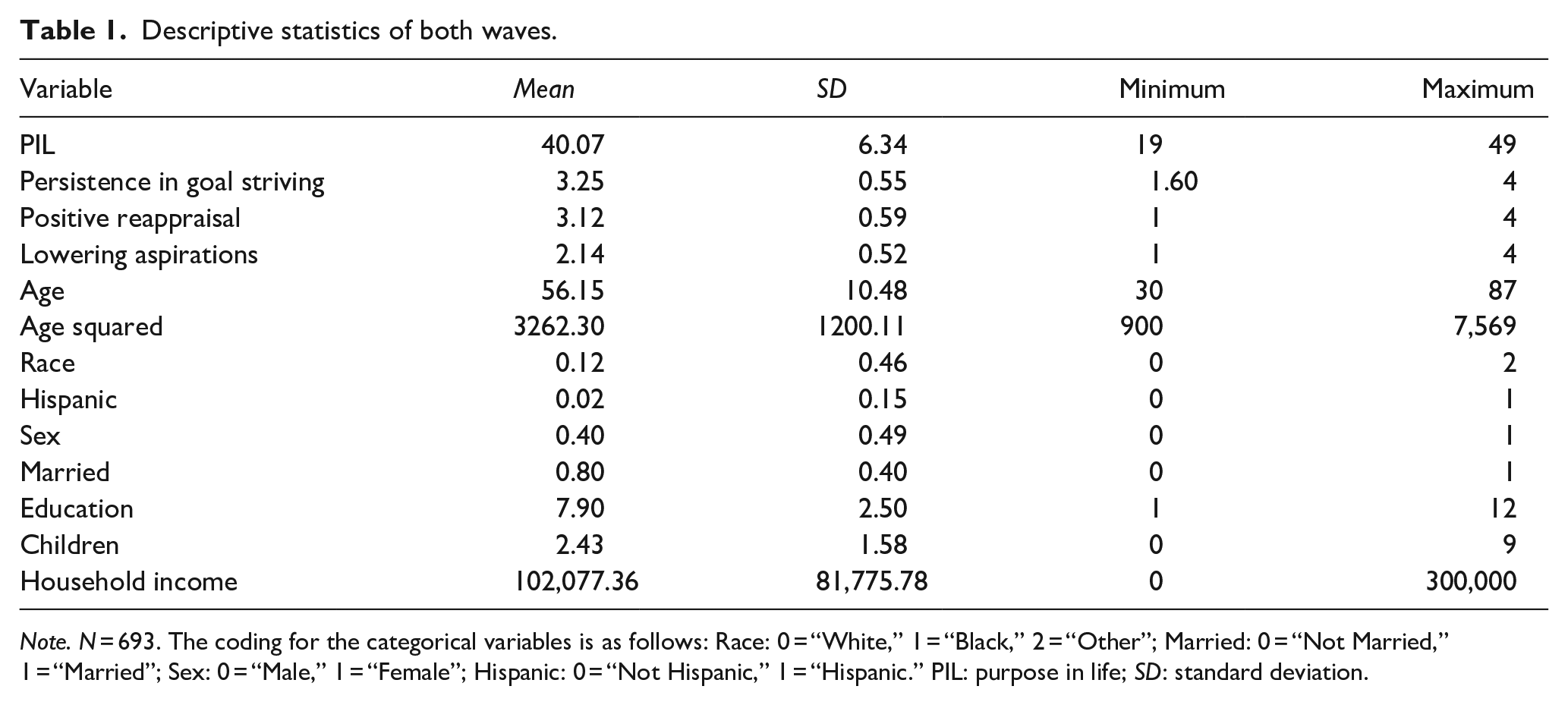
Note. N = 693. The coding for the categorical variables is as follows: Race: 0 = “White,” 1 = “Black,” 2 = “Other”; Married: 0 = “Not Married,” 1 = “Married”; Sex: 0 = “Male,” 1 = “Female”; Hispanic: 0 = “Not Hispanic,” 1 = “Hispanic.” PIL: purpose in life; SD: standard deviation.
Pairwise correlations.
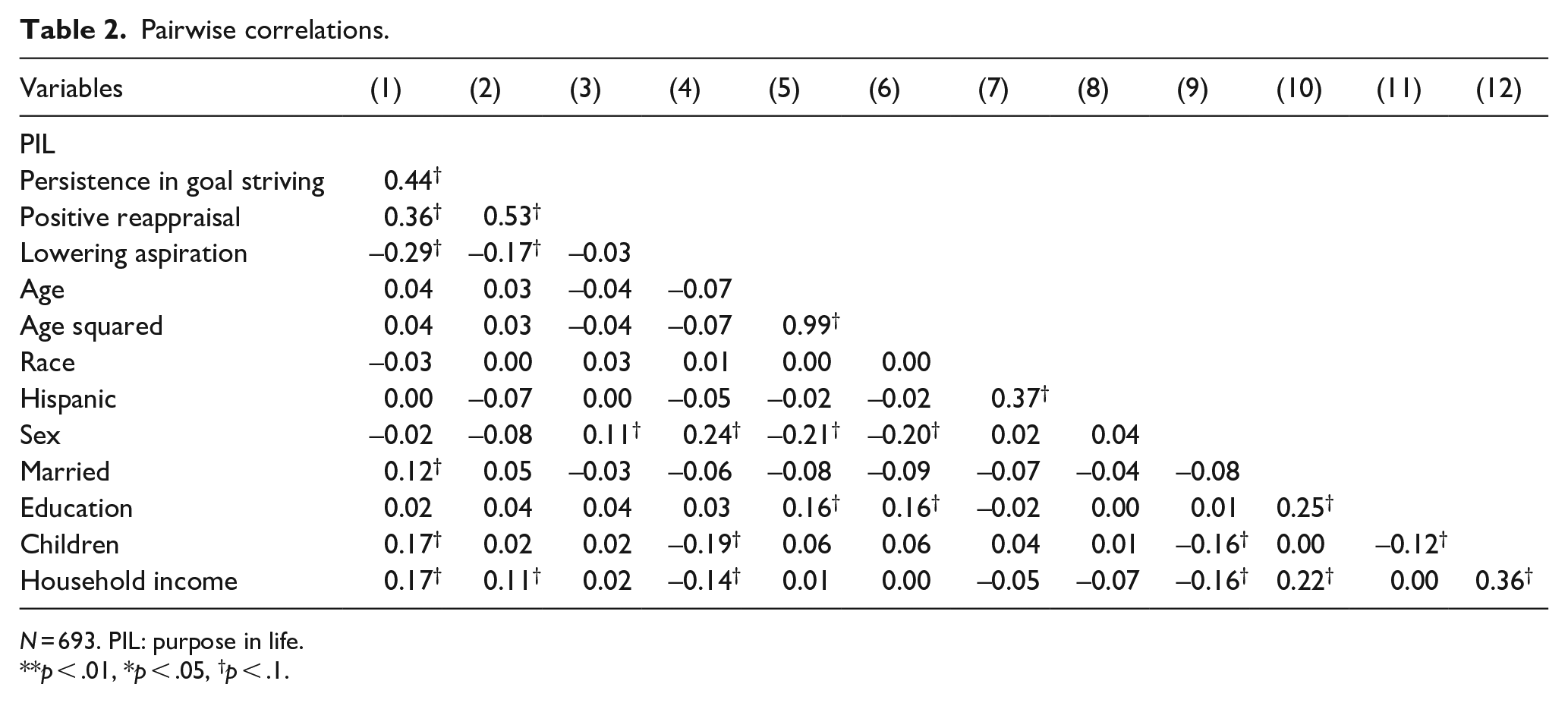
N = 693. PIL: purpose in life.
p < .01, *p < .05, †p < .1.
OLS results, control strategies, and PIL.
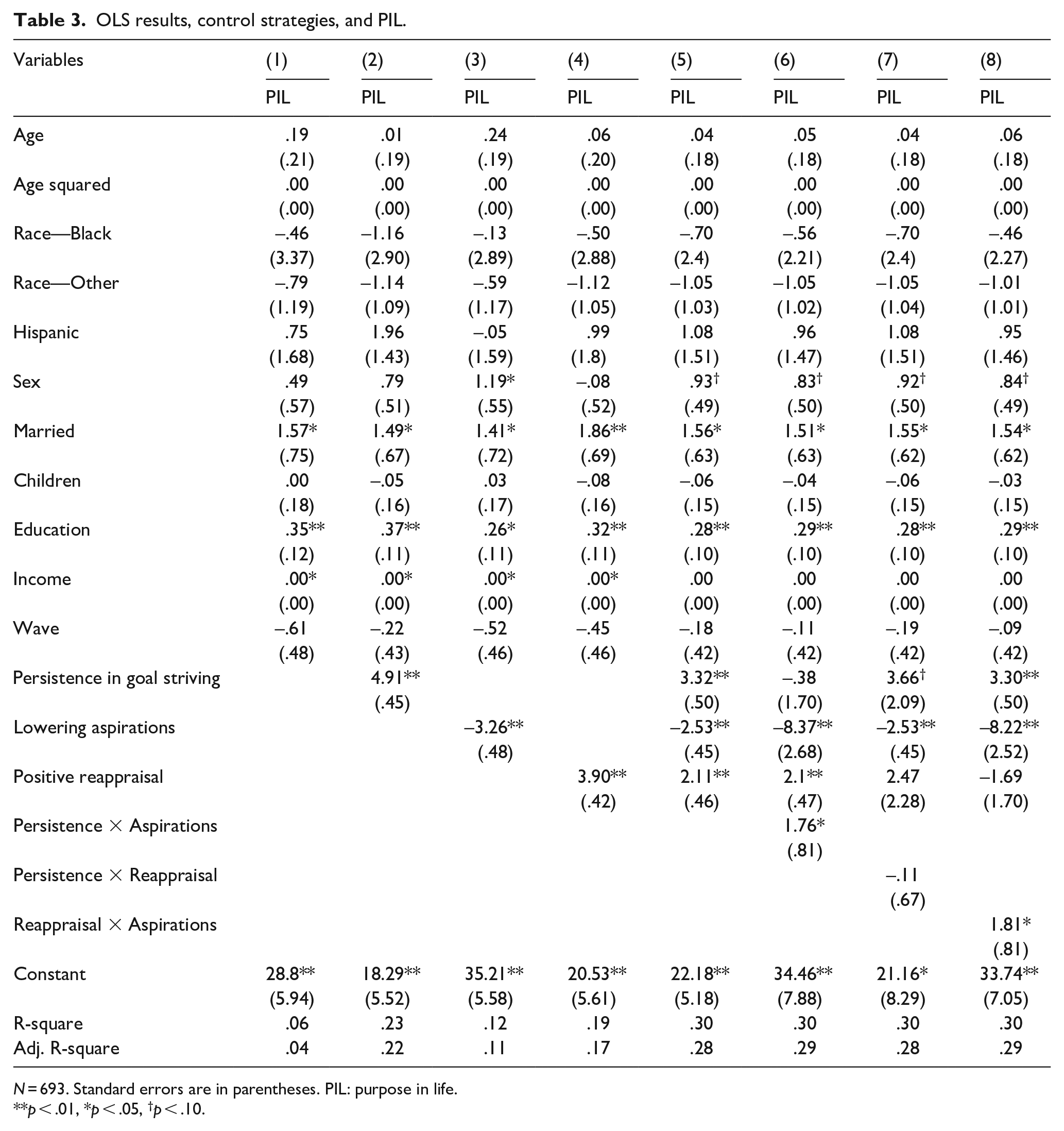
N = 693. Standard errors are in parentheses. PIL: purpose in life.
p < .01, *p < .05, †p < .10.
Table 4 shows standardized coefficients from Table 3. Standardized estimates were calculated by subtracting the mean from each observation and dividing the score by the standard deviation. Variables included in the interaction terms were standardized before being included in the regression equations so as not to confound the interpretation of the moderation effects (Hayes, 2017).
Standardized results, control strategies, and PIL.
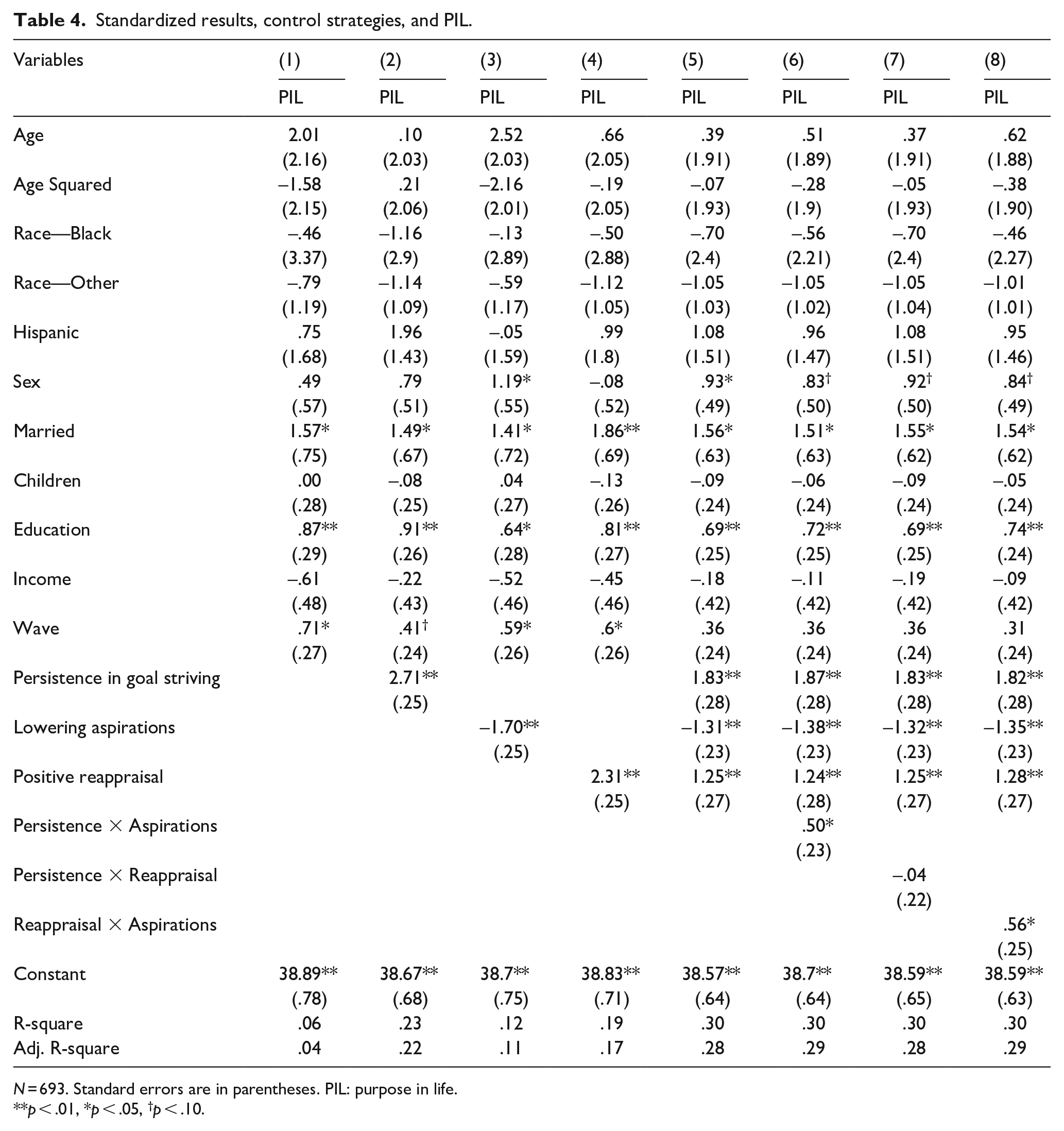
N = 693. Standard errors are in parentheses. PIL: purpose in life.
p < .01, *p < .05, †p < .10.
The joint effect of control strategies
Next, we examined the complementary effects of persistence in goal striving (primary control) on the relationship between positive reappraisal (secondary control) and PIL. Hypothesis 2 predicted that the positive relationship between positive reappraisal and PIL would be strengthened by persistence in goal striving. Surprisingly, we did not find evidence for this effect (Table 3, Model 7, B = −0.11, p > .05). These findings suggest that there is not an advantage for self-employed individuals to engage in both coping mechanisms and suggests, to a certain extent, that these specific coping mechanisms are substitutable. For ease of interpretation, these findings are depicted in Figure 2.
Hypothesis 3a suggests that the negative relationship between lowering aspirations and PIL would be moderated (weakened) by persistence in goal striving. This interaction was supported (Table 3, Model 6, B = 1.76, p < .05), suggesting that persistence in goal striving (a primary control strategy) can buffer against maladaptive tendencies self-employed individuals might have to lower their expectations and goals (Figure 3). Finally, Hypothesis 3b suggests that the negative relationship between lowering aspirations and PIL could also be moderated (weakened) by another secondary control strategy, positive reappraisal. The results indicate a significant interaction (Table 3, Model 8, B = 1.81, p < .05), supporting Hypothesis 3b (Figure 4). Figure 5 provides a visual representation of the hypothesized relationships and their outcomes based on our OLS model from Table 3.
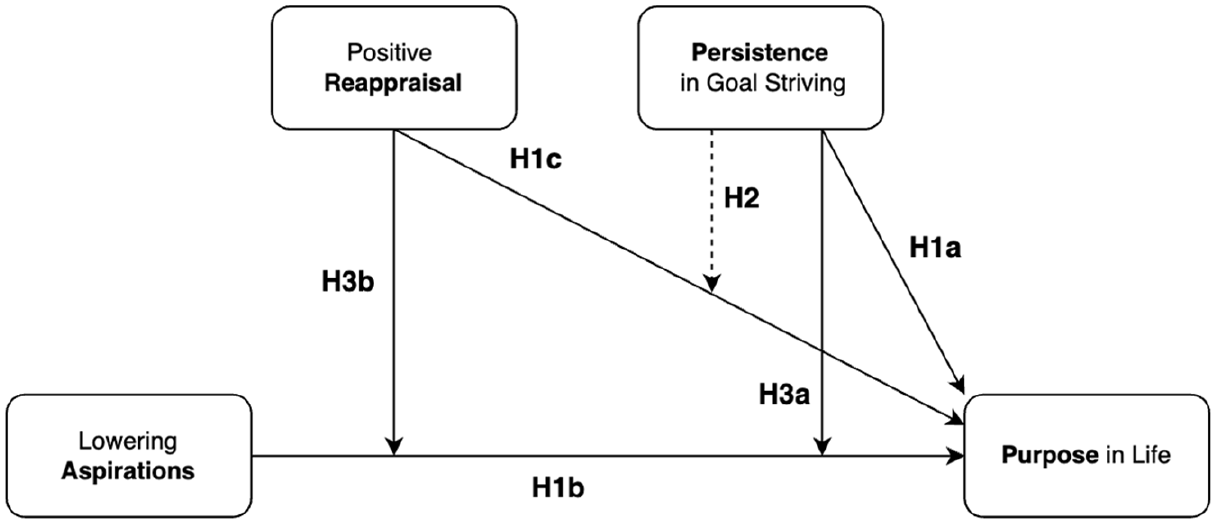
Conceptual model with hypothesis testing results.
Robustness tests
In additional robustness tests (Table 5), we find similar effects for the overall index of psychological functioning (or eudaimonic well-being). Specifically, we find that persistence in goal striving and positive reappraisal are both associated with higher levels of psychological functioning (Table 5, Model 5, B = 2.52, p < .01; B = 2.89, p < .01, respectively), whereas lowering aspirations is associated with lower levels of psychological functioning (B = −3.01, p < .01). Similar to our main analysis, we find significant interaction terms for both persistence by lowering aspirations and reappraisal by lowering aspirations (Table 5, Model 6 and 8, B = 1.32, p < .05; B = 1.67, p < .01), yet no significant interaction term between persistence and positive reappraisal.
EWB OLS results, control strategies, and PIL.
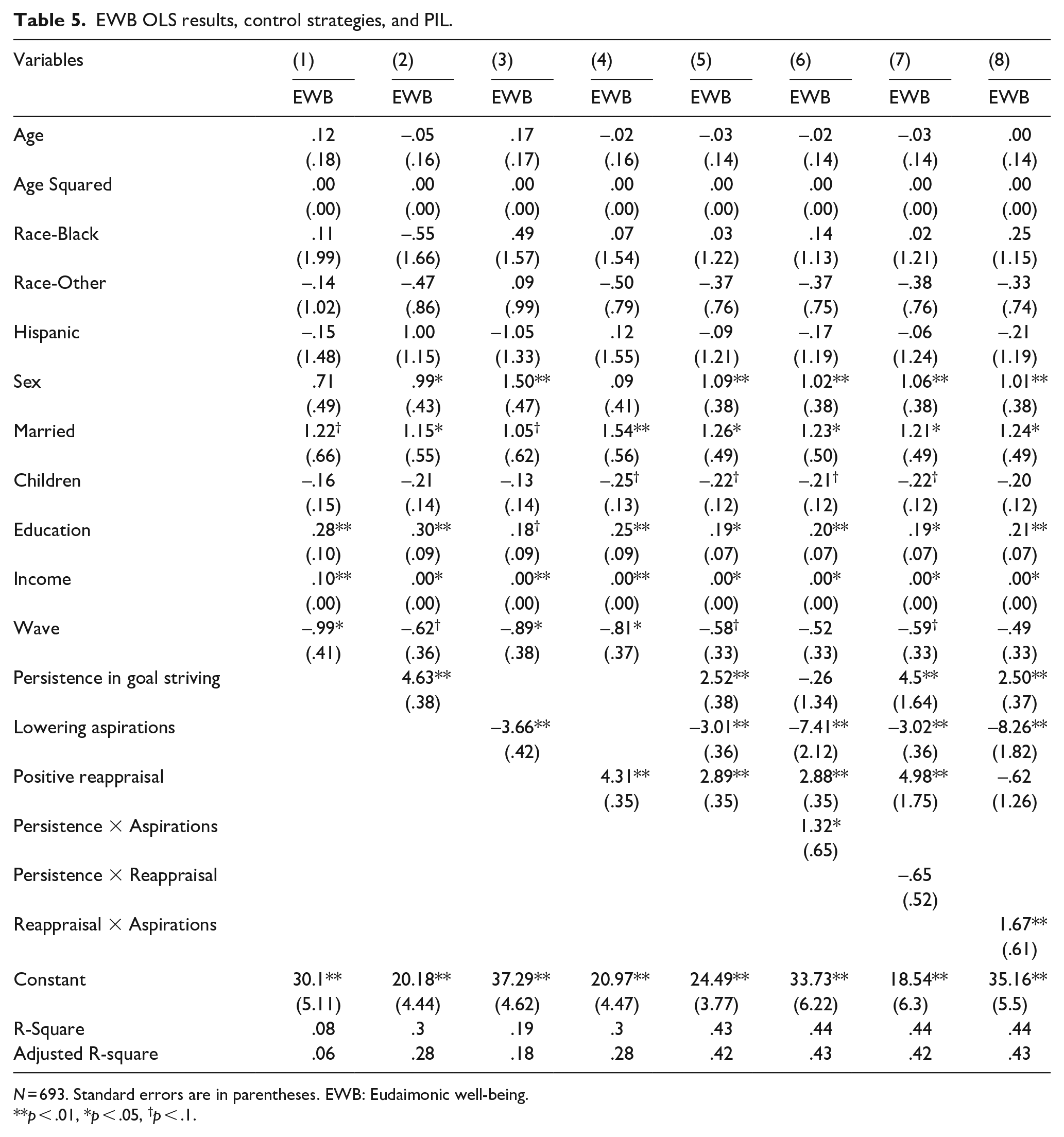
N = 693. Standard errors are in parentheses. EWB: Eudaimonic well-being.
p < .01, *p < .05, †p < .1.
To further leverage the panel structure of the MIDUS dataset, we used an RE estimator as an additional robustness check. The RE approach enables us to account for both within-individual variation in PIL over time (i.e., between Waves 2 and 3) and between-individual differences. We opted for the RE estimator due to its advantages and suitability for our research context. First, the RE approach is generally favored across various statistical disciplines (Cameron & Trivedi, 2009). Second, prior research indicates that the RE model is particularly well-suited for analyzing well-being outcomes (Van Praag & Ferrer-i-Carbonell, 2008). Specifically, the RE model captures both level and shock effects while remaining more parsimonious than alternative approaches. For instance, a fixed-effects model would necessitate the estimation of an additional parameter for each individual in the sample. In contrast, the RE model introduces an individual-specific intercept term alongside the model intercept, striking a balance between model complexity and explanatory power.
The RE model results are consistent with the patterns we report in Table 3. Persistence in goal striving and positive reappraisal both have a positive and significant relationship with PIL (Table 6, Model 5, B = 3.20, p < .01; B = 2.13, p < .01, respectively), whereas lowering aspirations has a negative and significant relationship with PIL (B = −2.38, p < .01). Similarly, we find no interaction between persistence and reappraisal, but positive and significant interactions between persistence and lowering aspirations (Table 6, Model 6, B = 1.61, p < .05) and positive reappraisal and lowering aspirations (Table 6, Model 8, B = 1.66, p < .05).
Random-effects model, control strategies, and PIL.
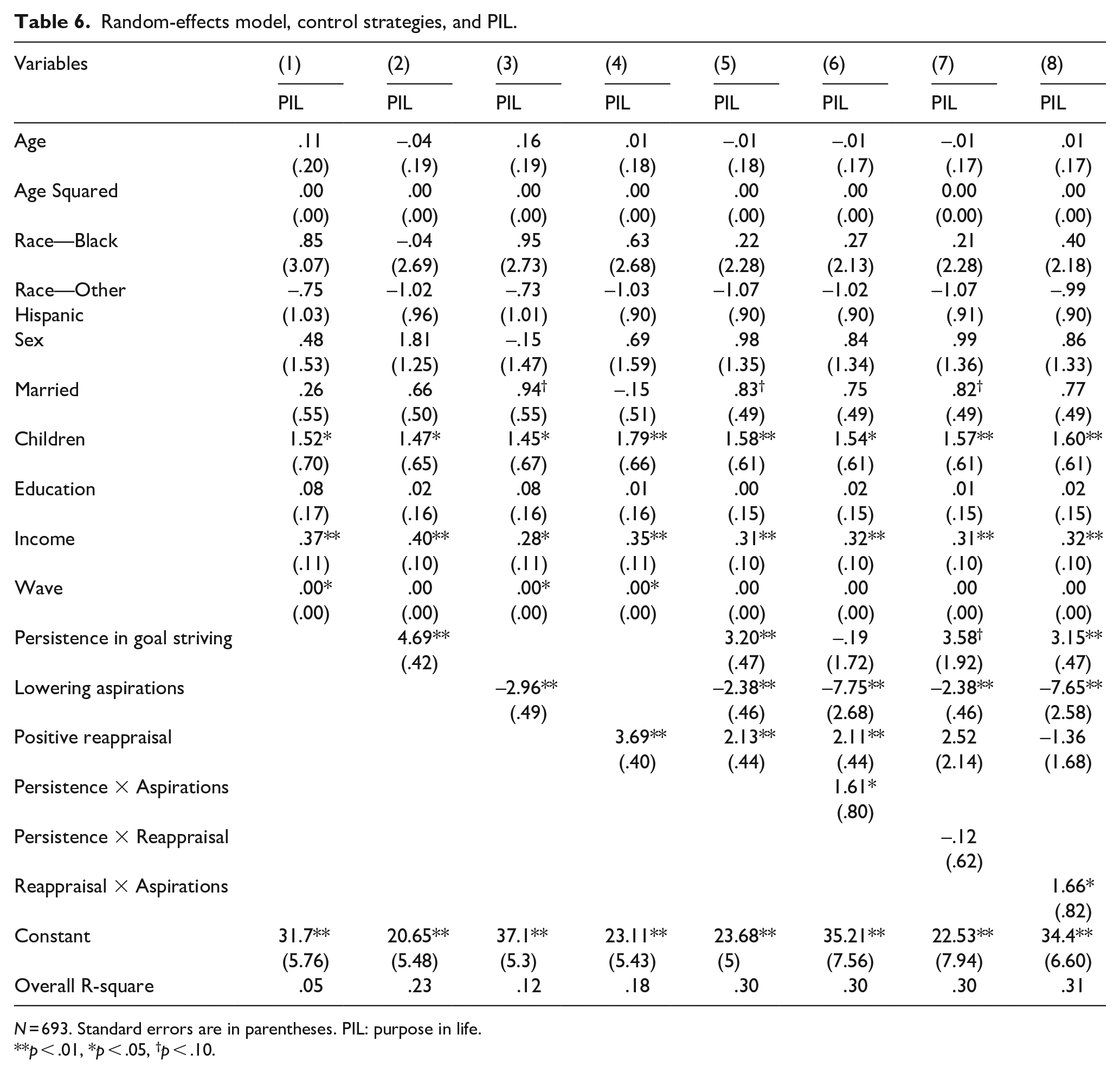
N = 693. Standard errors are in parentheses. PIL: purpose in life.
p < .01, *p < .05, †p < .10.
Discussion
Although operating a business can be deeply rewarding financially and psychologically, it also presents many challenges to overcome (e.g., Lerman et al., 2021; Leung et al., 2020; Wach et al., 2020). For example, entrepreneurs experience work-family conflict (Shelton, 2006), high job demands, and many other stressors (Lerman et al., 2021), and there is great interest in understanding how entrepreneurs overcome them (Hartmann et al., 2022). The entrepreneurship literature is clear that coping is important in managing such demands (Stephan, 2018), but there is an opportunity to extend our understanding of self-employment coping by adopting a coping-in-combination approach and focusing on well-being outcomes that are deeply intertwined to self-employment pursuits, such as PIL.
To capitalize on these opportunities, we applied the control perspective to the self-employment context and theorized that self-employed individuals who are persistent in their goals and positively reappraise their stressors also have higher levels of PIL (H2). However, this was not supported, and results suggest that these tendencies are not multiplicative, but rather may be substitutable. We also found that lowering aspirations negatively influences PIL, a finding that is consistent with prior literature on lowering aspirations and well-being (Wrosch et al., 2000). A coping-in-combination approach suggests that self-employed individuals can mitigate these effects with the deployment of either persistence in goal striving (H3a) or positive reappraisal (H3b), suggesting that these two coping mechanisms are to some extent substitutable. Together, our findings offer important implications for the antecedents of PIL and the utility of a coping-in-combination approach.
Implications and future research
Our theory and findings have two implications for entrepreneurship theory. First, we highlight the psychological mechanisms entrepreneurs can use to drive PIL. Prior studies have identified PIL as an important variable of interest for both organizational literature and entrepreneurship (Carr, 1997; Ryff, 2019; Strauser et al., 2008). Developing purpose is inextricably tied to the entrepreneurial process and development of an entrepreneur (Ryff, 2019). Self-actualization, achievement, and fulfillment motivates many individuals to enter self-employment (Dubini, 1989; Stirzaker et al., 2019), and being goal driven is beneficial for the firm (Baum et al., 1998; Tracy et al., 1999). Furthermore, a lack of purpose and direction could lead to venture failure (Ryff, 2019). Our study advances this conversation by suggesting that entrepreneurs can achieve PIL through their coping mechanisms and highlights the critical importance of combining such mechanisms.
Given the importance of PIL to entrepreneurship, we recommend that future research extend the scope of the investigation to examining coping and venture outcomes. Several studies have investigated the influence of well-being on venture outcomes such as effort, performance, and innovative behavior (e.g., Foo et al., 2009; Hatak & Zhou, 2021; Welpe et al., 2012), yet very few coping studies have examined how coping can influence venture outcomes (c.f., Drnovšek et al., 2010; Örtqvist et al., 2007; Singh et al., 2007). Future research can explore the link between coping and existing research that ties eudaimonic well-being to performance outcomes (e.g., Hahn et al., 2012) and other venture and entrepreneurial outcomes such as entrepreneurial alertness, hustle, and innovative behavior (Fisher et al., 2020; Newman et al., 2018; Tang et al., 2012).
Second, we advance a coping-in-combination approach, which shifts the conversation on coping in entrepreneurship from one that highlights distinct coping effects to recognizing that all people (the self-employed included) utilize a diverse set of coping strategies that jointly impact stress and well-being processes. Prior coping-as-alternatives research perspectives have found differential effects of coping on allostatic load (Patel et al., 2019), negative emotions (Patzelt & Shepherd, 2011), and venture performance (Drnovšek et al., 2010), generally suggesting that more “hands on” coping approaches are most effective. Yet, our findings suggest this prior research could be expanded and potentially offer new findings by examining coping tendencies in tandem. Specifically, our theory and findings suggest that the self-employed may use primary control (persistence in goal striving) or secondary control (positive reappraisal) to reach high levels of PIL, and either strategy can be useful to buffer against the maladaptive tendency to lower one’s aspirations in the face of difficulty (Brown et al., 2005).
These findings come at a critically important time, as recent meta-analytic findings reveal that the self-employed experience better performance and well-being outcomes from stressors than do the traditionally employed (Lerman et al., 2021) and better well-being outcomes generally (Stephan et al., 2023). Yet, further research is needed to understand why—what do the self-employed do that leads to well-being? We advance that one answer to this question is that they use a combination of both primary and secondary control strategies. This result complements the findings of another coping-in-combination approach by Uy et al. (2013), who find that in the long term, avoidance coping is only beneficial for psychological well-being if accompanied by active coping. We encourage future research to delve deeper and investigate diverse formulas of coping combinations from different coping categories over time.
Whereas we investigated three of the most widely recognized coping behaviors in the control perspective, there are many other coping conceptualizations (Skinner et al., 2003; Skinner & Zimmer-Gembeck, 2007). Future work is needed that includes a wider range of specific coping behaviors that are of relevance to the self-employment context, such as venting of emotions, seeking social support, or behavioral/mental disengagement (Carver et al., 1989). Future studies can also explore the dispositional variations and situational contingencies in the choices of specific coping behaviors (Skinner et al., 2003). Different types of stressors in the self-employment context (e.g., financial constraint, work-life conflict, business failure, etc.), or dispositional factors such as personality traits or self-esteem (Judge et al., 1999; Moos & Holahan, 2003), might facilitate different coping strategies.
Implications for practice
Our findings also have important implications for practice. Namely, our work encourages entrepreneurs to avoid adopting mindsets that only primary control behaviors are effective in terms of achieving their entrepreneurial goals. Rather, there can also be value in integrating secondary control behaviors that create a more holistic approach to conceptualizing how one responds to environmental demands. Likewise, this reinforces the need for professors to teach entrepreneurship students not just about engaging in entrepreneurial action but also about how to psychologically interpret entrepreneurial demands to facilitate healthier coping processes and, ultimately, greater PIL.
Limitations
Like any study, ours has a number of limitations. First, our sample relies on data from a single country—the United States. Other countries may differ in institutional support, economic development, institutional regulations, and cultural values (Pathak, 2021; Wiklund et al., 2019), and each one of these macro-level variables may influence the efficacy of coping strategies on PIL. Reviews of well-being in entrepreneurship have called for the consideration of the regulatory environment (Boyd & Gumpert, 1983; Wiklund et al., 2019). Future work will also need to assess the generalizability of our findings among other institutional contexts. Indeed, both well-being (Mitchell et al., 2013) and the motivation to engage in self-employment (Global Entrepreneurship Monitor [GEM], 2017) differ substantially across countries.
Second, reverse causality is a reasonable concern. While we argue that investing in one’s feelings of control can increase a feeling of direction and sense of PIL, it is also likely those individuals with a higher sense of PIL may lead people to persist more over time, to interpret events in a more positive way, or to have higher aspirations (Schaefer et al., 2013). For example, purpose may promote approach behaviors (McKnight & Kashdan, 2009). In addition, having a high level of purpose can buffer against the difficulties the self-employed face in their venture (Ryff, 2019). While our modeling approach is consistent with stress, coping, and well-being literature that informs our theorizing, these processes are inherently cyclical in nature, and we encourage future work to continue to explore these complex relationships.
Third, our model is cross-sectional and would benefit from a longitudinal design. Coping control mechanisms are indeed combined when dealing with a single stressor (Folkman & Lazarus, 1980; Folkman & Moskowitz, 2004), yet the literature suggests that secondary control mechanisms may be employed after primary efforts to reach a goal have failed (Wrosch et al., 2000). Processes of goal engagement and disengagement, which can involve both primary and secondary coping mechanisms (Heckhausen et al., 2010), are likely to unravel over time. We suggest the study of the temporal sequencing of coping mechanisms aimed at managing a single stressor as a fruitful avenue for future inquiry (c.f., Drnovšek et al., 2010; Uy et al., 2013).
Finally, there is substantial heterogeneity in what self-employment looks like for business owners. This variance is exhibited in motivations and aspirations to engage in self-employment (e.g., necessity vs. opportunity entrepreneurship; Mmbaga et al., 2020), focus on survival, lifestyle, managed or aggressive growth (Morris et al., 2018), identity (Fauchart & Gruber, 2011), institutional pressures (Stephan et al., 2023), and more. Future studies will need to probe heterogeneity across entrepreneurs in different contexts more deeply as called for in several works and reviews of well-being (e.g., Bort et al., 2020; Stephan, 2018; Wiklund et al., 2019).
Conclusion
The goal of our paper was to start a conversation on the possible utility of a coping-in-combination approach for understanding the PIL of the self-employed. Our findings not only support the value of such a pursuit by demonstrating the importance of theorizing and measuring the interaction between specific coping strategies to better predict PIL. We hope that our investigation will stimulate future inquiry on this important topic.
Footnotes
Declaration of conflicting interests
The author(s) declared no potential conflicts of interest with respect to the research, authorship, and/or publication of this article.
Funding
The author(s) received no financial support for the research, authorship, and/or publication of this article.
