




Abstract
Based on an institutional perspective, this study examines the influence of the social desirability of entrepreneurship on early-stage entrepreneurs’ internationalization and the moderating role of home country economic freedom. Using data from 45,454 early-stage entrepreneurs in 48 countries for the period 2005–2016, we find that the social desirability of entrepreneurship negatively affects early-stage entrepreneurs’ internationalization, and that economic freedom positively moderates this relationship. The study contributes to the literature by showing how the home country institutional context affects the level of early-stage entrepreneurs’ internationalization across countries.
Keywords
Introduction
Institutional conditions influence entrepreneurial activity (Batjargal et al., 2013; Bruton et al., 2010; Busenitz et al., 2000; Hitt et al., 2016). However, it is not entirely clear in the literature how institutional diversity influences new firms’ capabilities to pursue different types of entrepreneurial activities, including early internationalization (Aparicio et al., 2021; Dau & Cuervo-Cazurra, 2014; Jackson & Deeg, 2008; Wright & Hitt, 2017). In effect, the differing rates of (international) entrepreneurial activity across countries and regions point to the need for more research to understand better the impact of country-level factors, among which institutions are especially important (Eden, 2010; Li, 2013). Our knowledge regarding how the interaction between differing institutions encourages international entrepreneurial activities needs refinement, particularly the interplay between formal and informal factors. 1
We propose and test a model in which both formal and informal institutions influence early-stage entrepreneurs’ internationalization. More specifically, first, we examine the direct impact of the social desirability of entrepreneurship, which refers to the commonly held perceptions about the rewards that society bestows on the career choice of entrepreneurship (Busenitz et al., 2000; Koellinger, 2008), on the likelihood of early internationalization. Second, we explore the moderating role of the formal institutional environment of the home country in the form of economic freedom, which can be defined as “the degree to which a market economy is in place, where the central components are voluntary exchange, free competition, and protection of persons and property” (Gwartney et al., 2002, p. 5). For ease of exposition and alignment with institutional terminology (North, 1990), we regard the social desirability of entrepreneurship as an informal institution enforced by individuals and organizations and economic freedom as a formal rule enforced publicly by the state that can make changes easily, adapting better to the society. Thus, our work investigates how the informal institutional context of the home country, represented by the social desirability of entrepreneurship, affects early-stage entrepreneurs’ internationalization and how the formal framework in the form of economic freedom moderates this relationship.
Social desirability refers to the recognition that society accords to individuals’ actions (Koellinger, 2008). Although there are entrepreneurs in all countries, they apply their talents according to the specific context in which they operate (Baumol, 1990). As such, the social desirability of entrepreneurship relates to the domestic entrepreneurial climate (Autio et al., 2013; Buckley & Casson, 2021; Estrin et al., 2013a; Muralidharan & Pathak, 2017; North, 1990; Scott, 1995). It would be interesting to find out how early-stage entrepreneurs operate in societies in which entrepreneurship is not socially desirable. Are they forced to engage in international activities due to more potential favorable norms outside of the home country? In our model, we argue that the social desirability of entrepreneurship will negatively affect entrepreneurs’ international orientation.
Importantly, we also suggest that such a negative effect can be attenuated by the formal institutional context of the home country. We focus on economic freedom, which is a concept related to the efficiency of markets, allowing individuals and new ventures to undertake their activities more effectively (Dau & Cuervo-Cazurra, 2014; Fuentelsaz et al., 2018; McMullen et al., 2008). The international orientation of early-stage entrepreneurs may change depending on the degree of economic freedom that they encounter. Can higher levels of economic freedom help to overcome the potential adverse effect of social desirability of entrepreneurship? In our framework, we argue that it is essential to account for economic freedom in the home country in these unfavorable contexts since it relates to the quality of government (Holmes et al., 2013; Marano et al., 2016; Wan & Hoskisson, 2003).
Our study makes two main contributions to international entrepreneurship literature. First, we develop a framework to explain how social desirability of entrepreneurship affects the likelihood of engaging in international activities building on ideas of Busenitz et al. (2000) and Reynolds et al. (2004) about the influence of social desirability and the probability of setting up a business. Here, we suggest that entrepreneurs face different country environments regarding social acceptance of entrepreneurship and that these differences explain why some entrepreneurs are more likely to engage in international activities than others.
Second, we elaborate on the findings of Fuentelsaz et al. (2020) in which they suggest that formal institutions could help to overcome the deficiencies of informal institutions. In this article, we consider economic freedom as moderator of the relationship between social acceptance of entrepreneurship and early-stage internationalization. In doing so, we respond to a call by Kuckertz et al. (2016) to provide more developmental analysis in view of their non-clear-cut result in the relationship between economic freedom and entrepreneurial efforts. Here, we demonstrate that economic freedom plays a significant moderating role in the link between social desirability and early-stage internationalization. Hence, although domestic social acceptance is a factor that can impede international entrepreneurial action, this effect can be attenuated in countries with high economic freedom.
To test our hypotheses, we employ a multilevel analysis using a large data set that combines individual- and country-level observations covering 48 countries for the period 2005–2016. The sources of information are the Global Entrepreneurship Monitor, the Heritage Foundation, and the World Development Indicators (WDIs). Our study aims to shed light on the understanding of the likelihood of early internationalization and confirms empirically that individuals’ responses to institutional differences are not homogeneous across countries.
The remainder of this article is organized as follows. In the next section, we present the related theoretical literature and develop our hypotheses. Then, we describe the methods. Subsequently, we present the results of our analyses. Finally, we discuss the findings and propose potential future research lines.
Theoretical background and hypotheses development
Early-stage entrepreneurs and internationalization
In this study, we bridge the literatures on institutions and internationalization. To this end, we start this section with a conceptualization of early-stage entrepreneurs—our key unit of analysis—and their relationship with their international endeavors. With that, we seek to expand our understanding on how heterogeneous institutional configurations of home countries explain the variations of internationalization patterns across countries.
Early-stage entrepreneurs execute new commercial opportunities into the market (Estrin et al., 2016, 2020) aiming to create a viable and sustainable businesses over time (Reynolds et al., 2004) with the main objective of creating value into a particular territory via productive entrepreneurial projects (Baumol, 1990). These new opportunities do not just occur at the national level (Capelleras et al., 2019) but also are created and exploited across borders with the purpose to generate new business models and better solutions for value creation including factors that range from financial to social and environmental (Zahra et al., 2014). The context in which this (national or international) entrepreneurial activity occurs is characterized by high levels of uncertainty. This is because the entrepreneur must develop efforts toward coordinating the optimal usage of resources while making predictions about the business development not knowing much about the actual economic value of exploiting such business opportunity (Alvarez & Barney, 2005) and how the context influences the economic outcomes derived from their entrepreneurial activity (Aparicio et al., 2021; Gnyawali & Fogel, 1994).
There are two strategic boundaries that early-stage entrepreneurs will encounter from the outset: the way institutional context determines and shapes the type of activities they are planning to develop (Acs et al., 2018; Chowdhury & Audretsch, 2021; Urbano et al., 2019b) and whether they should keep their business operations within the domestic market or going international instead (Estrin et al., 2013b). First, it is widely acknowledged that entrepreneurial activity will be heterogeneous across countries (Batjargal et al., 2013; Sobel, 2008). This is because each country’s institutional configurations determine whether individuals will choose entrepreneurship over other alternative occupations and the type of activities such early-stage entrepreneurs will develop (Baumol, 1990, 1993). Furthermore, the institutional conditions including both formal and informal factors (North, 1990) represent a boundary condition in which the entrepreneurs must navigate to create new business opportunities that ultimately will affect national economic outcomes (Bjørnskov & Foss, 2016; Urbano et al., 2019a, 2019b; Zahra, 2021).
Second, the focus of this article relies on the idea that entrepreneurs will find themselves in a stronger position in terms of rapid scaling up opportunities whether they foresee the benefits of early internationalization (Schwens et al., 2018) while exploring prospective business opportunities beyond the national borders (Reuber et al., 2018). Early-stage entrepreneurs’ willingness to expand their commercial activities abroad is related to the new opportunities created and the possibility to test new business models into new international contexts (Wright et al., 2005). In addition, expanding entrepreneurial activities beyond the national borders will allow entrepreneurs to expand the uniqueness of their innovative projects which ultimately may end up emerging into new business choices (Capelleras et al., 2018) through the connection with local partners and the subsequent knowledge exchange activities (e.g., adopting new local technology) that may occur with the interaction (Mthanti & Ojah, 2017). In this study, we consider these two boundaries to develop a framework that explains how the country’s institutional framework influences the extent of internationalization by early-stage entrepreneurs.
Institutions and internationalization
The extant literature has already proved that appropriate institutional settings provide supportive conditions for entrepreneurs to identify market opportunities, introduce innovative products or services, and start new business activities (El-Namaki, 1988; Hoskisson et al., 2013; Li, 2018; Muralidharan & Pathak, 2017; Verheul et al., 2002). Entrepreneurs’ international activity is also expected to be contingent to the conditions of the home country institutional context (Eden, 2010; Li, 2013). However, prior research has tended to examine separately the effects of formal and informal institutions on international entrepreneurship. While institutional economics has been mainly used to examine formal institutions (Autio & Acs, 2010; Estrin et al., 2013a), informal institutions have been typically investigated by cultural sociology and psychology perspectives (Autio et al., 2013; Muralidharan & Pathak, 2017).
On the one hand an increasing body of literature has linked formal institutions and international expansions. Factors like the regulatory environment (Adomako et al., 2021; Chowdhury & Audretsch, 2021), economic freedom (Fuentelsaz et al., 2018; Marano et al., 2016), property rights, and financial capital (Bowen & De Clercq, 2008; Estrin et al., 2013b) are some of the key formal institutions concerning firms’ internationalization that studies have considered. Chowdhury and Audretsch (2021) demonstrated that administrative regulation significantly influences international expansion, but tax-related regulation does not. Marano et al. (2016) showed that economic freedom coexists in two conflicting perspectives on the relationship between the operation of an international business and its performance. Estrin et al. (2013a) found that weaker property rights and greater availability of financial capital help to facilitate international entrepreneurial activities.
On the other hand, there is a growing interest in the literature in examining the role of informal institutional factors. Culture is an important factor of entrepreneurship when talking about informal institutions (Autio et al., 2013; Luo & Tung, 2007; Stephan & Uhlaner, 2010). Scott (1995) first portrayed cultural–cognitive arrangements as shared beliefs and perceptions in his categories of institutions that help individuals to translate information into practice. Williamson (2000) developed the idea that informal institutions are nested in and rooted at the social level and are not easy to change and control, particularly pointing out cultural aspects. Regarding their relationship with international expansion, Autio et al. (2013) examined the effects of three dimensions of culture (i.e., institutional collectivism, uncertainty avoidance, and performance orientation) on entry and post-entry growth aspirations. In the same way, Muralidharan and Pathak (2017) studied three informal rules (i.e., social desirability, performance orientation, and self-expression) for international entrepreneurship.
Therefore, previous related literature has tended to separate formal and informal institutional effects on internationalization. Accordingly, there is still a gap concerning the effects of interdependence between the two types of institutions on early-stage entrepreneurs’ internationalization. Given that international entrepreneurship occurs at the individual level, at which entrepreneurs are grouped hierarchically by country, informal institutions result from individual-level actions (micro), and formal institutions concern the macro environment. That being said, formal institutions influence the way in which social arrangements and norms operate in practice. Hence, it is necessary to address such a gap to provide a more accurate blueprint of their relationship with internationalization. Our framework suggests that the direct impact of the dominant norms and practices that are prevalent in a given society upon early internationalizing of entrepreneurs will be moderated by the formal institutional framework of the country. The research framework is presented in Figure 1.
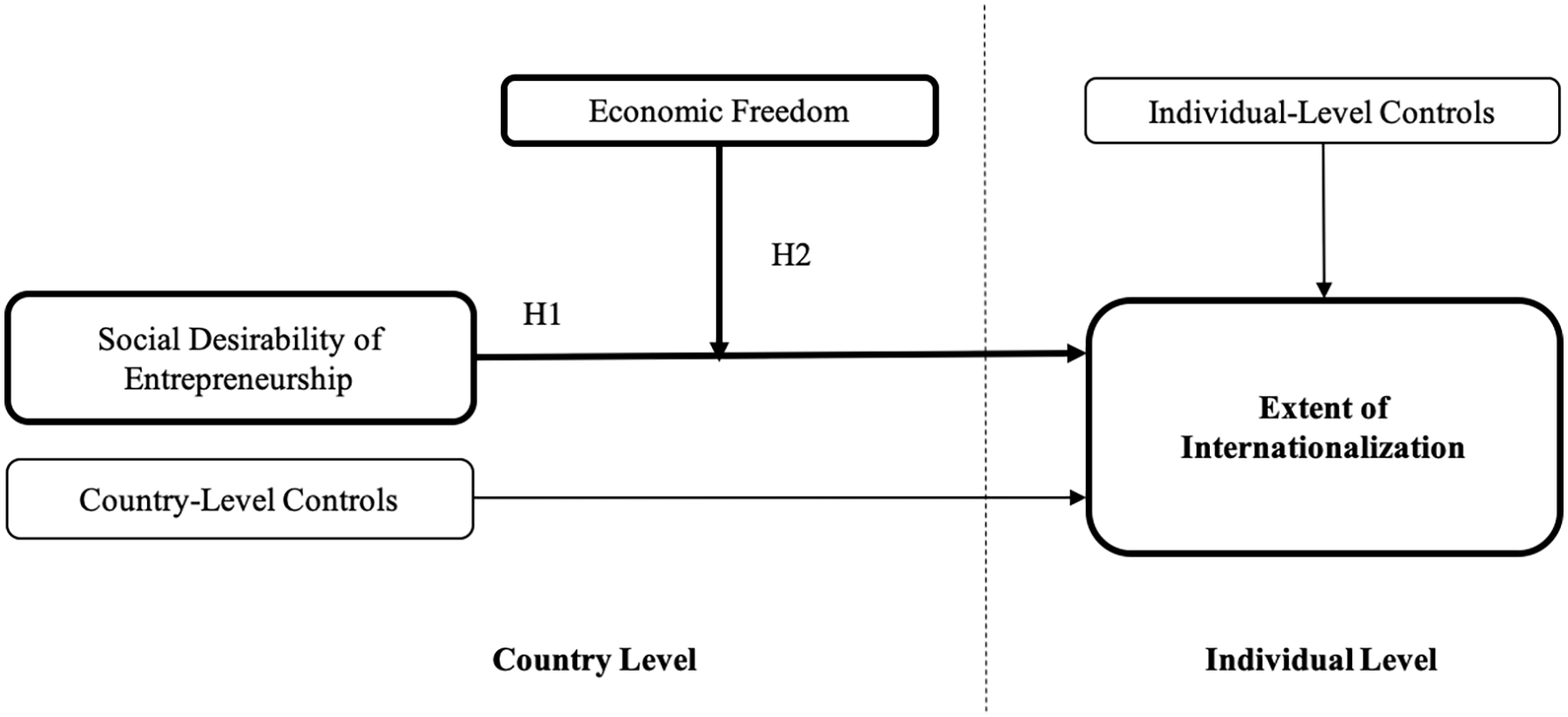
Multilevel research framework.
Social desirability of entrepreneurship
Social desirability of entrepreneurship relates to the way society values new projects of their individuals (Koellinger, 2008). Specifically, it is a subjective norm or general held perception about the rewards that societies bestow on the career alternatives of entrepreneurship in a given population (Busenitz et al., 2000; Koellinger, 2008). Furthermore, social desirability typically includes whether entrepreneurship is a desirable career choice, provides higher status and is present in the media (Muralidharan & Pathak, 2017; Stephan & Uhlaner, 2010). Thus, it encompasses societal attitudes toward entrepreneurship that are likely to exert a strong influence on the actual behavior of entrepreneurs. In fact, social desirability has been associated with the inception of new firms and the operation of start-up businesses (Busenitz et al., 2000; Chan & Pattnaik, 2021; Fuentelsaz et al., 2015; Reynolds et al., 2004). A home country society that values entrepreneurial activities as catalysts in sharing risks, increasing income, and decreasing the unemployment rate pays more attention to entrepreneurs’ role (Adler & Kwon, 2002; Fukuyama, 2001). Hence, this suggests that an environment in which entrepreneurship is socially desirable might affect the entrepreneurship that individuals pursue.
A home country context with higher social desirability of entrepreneurship encourages entrepreneurial individuals to make full use of their opportunities, enter the domestic market with creative offerings, and further satisfy their internal attribute of the need to succeed in their home country. There is no doubt that a society with high desirability of entrepreneurship encourages entrepreneurial entry (Autio et al., 2013). Moreover, authorities are more likely to expect a positive impact on the subsequent economic development in that specific context. Individuals who are more entrepreneurial start their own business in their home country with the availability of social capital through internal networking opportunities (Adler & Kwon, 2002) and fast information sharing to reduce the degree of asymmetric information (Fukuyama, 2001). Besides, entrepreneurs in such contexts are likely to be rewarded with comprehensive media coverage, leading to the high visibility of their impacts on the home economy. Additionally, such fertile ground facilitates the availability of capital from domestic financial institutions and cooperation from dispersed stakeholders. Even though higher social desirability of entrepreneurship certainly supports entrepreneurial entry by identifying domestic opportunities, such contexts might dampen the attention that early-stage entrepreneurs pay to exploiting the international markets due to the many apparent advantages and market opportunities in the domestic markets.
Alternatively, contexts with lower social desirability of entrepreneurship may constrain individuals with higher entrepreneurial intentions in the home country. Such home contexts for those types of populations seem to be an uncertain condition. Regarding the environment, such individuals might not start an in-home business because of an unfriendly entrepreneurial environment. In this regard, opportunity-driven individuals with higher entrepreneurial intentions will tend to look at external markets.
The current literature has already investigated whether an uncertain local business environment influences firms’ decision to become international (Zahra et al., 1997). Entrepreneurs who struggle from uncertain environments in their home country may seek new markets abroad to achieve their growth aspiration (Dimitratos et al., 2004). Therefore, for early-stage businesses in unfavorable contexts, internationalization may reduce the uncertainty caused by the home country environment. Hence, lower social desirability of entrepreneurship might be a negative factor for domestic start-up businesses but pushes individuals with higher entrepreneurial intentions to look for attractive prospects abroad, where the social–cultural environment may be more favorable (Eshghi, 1992). Such tendencies can partially be explained by the “push” perspective, whereby individuals with higher entrepreneurial intentions are pushed to foreign markets as an external force in a hostile internal entrepreneurial environment (Segal et al., 2005). Consistent with this, individuals with a stronger intention to engage in entrepreneurship may be pushed out to international markets when there is weak legitimacy of entrepreneurship in the home country society.
As such, the lower social desirability of entrepreneurship might be an uncertain or hostile environment for individuals with higher entrepreneurial intentions. An unfavorable domestic environment can create an impetus for internationalization that often stems from necessity such as unfavorable home country environments versus the need to create profit (Chen et al., 2018). In addition, such contexts do not provide the necessary motivational stimulants for entrepreneurial individuals to satisfy their need for achievement in the domestic markets. We hence propose that lower social desirability of entrepreneurship does not work in helping early-stage firms to expand their business within the domestic market but could push individuals to look for international markets. Accordingly, we posit the following:
Hypothesis 1 (H1). Social desirability of entrepreneurship is negatively associated with the extent of internationalization of early-stage entrepreneurs.
The moderating role of economic freedom
We discussed the relationship between social desirability of entrepreneurship and early-stage entrepreneurs’ internationalization in the previous section. However, institutions are often context dependent, and it is not appropriate to analyze them in isolation due to their stickiness (Ang et al., 2014; Boettke et al., 2008; Fuentelsaz et al., 2019). Rather than focusing solely on informal or formal rules, we integrate these institutions and underline their mutual effects on entrepreneurs’ international orientation.
Formal institutions are a multidimensional concept that consists of rules for various aspects, such as political, economic, and legislative systems (Pejovich, 1999). These dimensions are related to the availability of financial resources, the nature of the political process, and administration formalities linked with new ventures’ inception (Busenitz et al., 2000; Holmes et al., 2013). Better-developed home country formal institutions are found to have a supportive impact on the firms’ likelihood of internationalization (Chen et al., 2018). Economic freedom is one key dimension of formal institutions, which is the most relevant factor in the decision-making process (Holmes et al., 2013; Marano et al., 2016). Home country-level economic institutions such as competitive markets play an important role in promoting new business creation and long-run economic growth (Boudreaux, Nikolaev, & Klein, 2019). This is because high-quality of institutional environments (i.e., economic freedom) could reduce transaction costs and lower the regulatory burdens (Boudreaux & Nikolaev, 2019).
Economic freedom is then an essential element of any free civil society embedded in mandatory regulations, which include policies, politics, and economic relations and provide a structure and order for business transactions (Su et al., 2017; Welter, 2011; Welter & Smallbone, 2011). Commonly, it is considered as an indicator of the efficiency of business regulation and associated with the fundamental rights of individuals to manage their labor and property freely (The Heritage Foundation, 2021).
In this context, economic freedom could affect the relationship between the informal institutional framework and the early internationalization of new firms. Specifically, we suggest that greater economic freedom is likely to weaken the negative effects of the social desirability of entrepreneurship on international expansion due to a more favorable policy environment in which to start an international business and fewer administrative requirements. Greater economic freedom indicates strong regulation quality, which could form a sound business legal system, optimize administrative formalities, improve business efficiency, and attract more international business entries (Aidis et al., 2012; Dau & Cuervo-Cazurra, 2014; Fuentelsaz et al., 2018; McMullen et al., 2008). Conversely, an institutional context with low economic freedom would damage opportunity-motivated entrepreneurship in international fields (La Porta et al., 1999; Yang et al., 2020). This is because a higher level of economic freedom allows entrepreneurs to access financial capital easily and provides more room for early-stage entrepreneurs’ activities (Aidis et al., 2012; Lee, 2018; Li, 2018).
In addition, for individuals with high entrepreneurial intentions residing in a home context of high social desirability of entrepreneurship, the mentioned “pushing” power may not be strong enough. They may prefer to start a domestic business instead of an international business to avoid uncertainty and risk. However, what if the home country’s regulatory environment favors international activities? That being said, such types of individuals may encounter a home country context with greater economic freedom. Their behaviors may change due to a high degree of free asset liquidity and easy and fast access to foreign financial resources (Dau & Cuervo-Cazurra, 2014; Marano et al., 2016). International expansion will be strengthened with such a favorable regulatory environment, attenuating the negative effects of social desirability. By analogy, it would also be beneficial for such early-stage entrepreneurs in the context of lower social desirability of entrepreneurship to intensify their internationalization due to a favorable regulatory environment. Consistent with this, we hypothesize the following:
Hypothesis 2 (H2). A high degree of economic freedom positively moderates the negative relationship between social desirability of entrepreneurship and the extent of internationalization of early-stage entrepreneurs.
Method
Data and sample
To test our hypotheses, we employ a multilevel analysis in which individuals (level 1) are embedded within countries (level 2). The individual-level data were mainly collected from the Adult Population Survey conducted by the Global Entrepreneurship Monitor (GEM). The GEM data are widely used in research for assessing entrepreneurial activities, growth aspirations, and individual attitudes across countries. Furthermore, the GEM project provides adequate heterogeneity in various areas that are crucial to institutional studies since variation is an essential condition (Franke & Richey, 2010; Reynolds et al., 2004). The social desirability of entrepreneurship was thus originated there. In addition, economic freedom was obtained from the Heritage Foundation (hereafter HF). Besides, we acquired individual demographical characteristics and regional macro-economic indexes from the World Development Indicators (WDIs) (e.g., annual GDP growth and population growth) as control variables. After excluding all the missing observations and nonvalid answers, our final multilevel data set consisted of 45,454 observations over the years from 2005 to 2016 based on a pooled cross-sectional time series structure that grouped the respondents hierarchically into 48 countries. 2 In this article, our unit of analysis are early-stage entrepreneurs. According to the GEM definitions, we focus on those individuals who are running the firm between 3 and 42 months old and therefore have paid wages to employees (Muralidharan & Pathak, 2017; Reynolds et al., 2004). Notably, most companies hold less than 25% foreign customers over total customers in our study. Among them, developed countries (e.g., Singapore, Belgium, and Portugal) internationalize more than developing countries (e.g., Brazil, Indonesia, and Thailand), as shown in Table 1.
Sample description across countries.
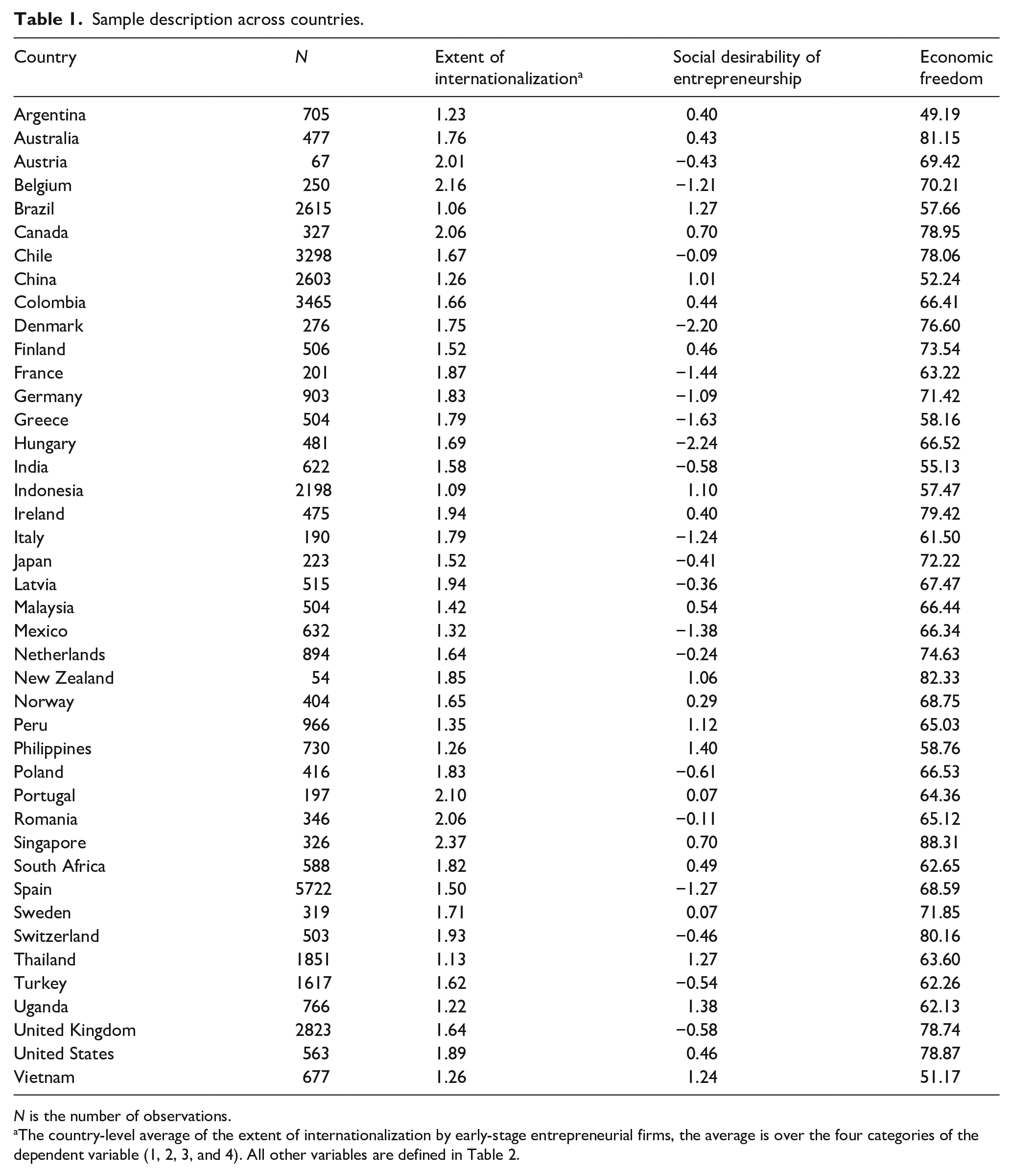
N is the number of observations.
The country-level average of the extent of internationalization by early-stage entrepreneurial firms, the average is over the four categories of the dependent variable (1, 2, 3, and 4). All other variables are defined in Table 2.
Variables and measurements
Dependent variable
A controversy exists regarding the measurement of the degree of internationalization. Ruzzier et al. (2007) strongly suggested using compound items to portray the extent of internationalization since multilevel item measures could reflect the structure, performance, and attitudinal aspects of internationalization. Conversely, Ramaswamy et al. (1996) worried that aggregating components might hide individual components’ effects. Following previous studies (Autio et al., 2013; Li, 2018; Muralidharan & Pathak, 2017), we use the variable extent of internationalization which is a single item defined as the percentage of foreign customers in the total number of customers. The survey asks all early-stage entrepreneurs the following question: What proportion of your customers normally lives outside your country? Is it more than 75%, 25%–75%, less than 25%, or none? Hence, we introduced a dependent variable with four categories: 1 = none; 2 = less than 25%; 3 = 25%–75%; and 4 = more than 75%.
Independent variable
We adopted one specific dimension based on home country culture traits and the social response to entrepreneurship (North, 1990; Scott, 1995), which was highly correlated with the entrepreneurial atmosphere. The social desirability of entrepreneurship was created as a national aggregate measure that required individuals to respond to statements from the GEM survey: (a) in your country, most people consider a new business as a desirable career choice; (b) in your country, those successful in starting a new business have a high level of status and respect; and (c) in your country, you will often see stories in the public media about successful new businesses. The GEM captured each response in three separate dummies scoring 1 for yes and 0 for no. The study conducted a categorical principal component factor (PCF) analysis of three sub-variables following Muralidharan and Pathak’s (2017) method, and, in the end, the results loaded on one single factor. Cronbach’s alpha equals 0.75, which reveals relatively high reliability. In addition, the Kaiser–Meyer–Olkin (KMO) (0.68) and Bartlett test of sphericity (p < .0) indicated that a PCF can be conducted without encountering an inter-correlation problem. Besides, the cumulative variance contribution rate of one single factor exceeds 65%. The predicted scores, which could be considered as standardized scores assuming positive and negative values, were used as an aggregate measure of the social desirability of entrepreneurship.
Moderating variable
The index of economic freedom was obtained from the Heritage Foundation; it portrayed 12 parallel sub-indexes grouped into four categories (Fuentelsaz et al., 2018; Garrido et al., 2014), each of which was allocated three indexes: (a) the rule of law (property rights, government integrity, and judicial effectiveness); (b) the government size (government spending, tax burden, and fiscal health); (c) regulatory efficiency (business freedom, labor freedom, and monetary freedom); and (d) open markets (trade freedom, investment freedom, and financial freedom). Our composite economic free index describes the extent to which individuals’ labor and property can be managed freely in a country by grading these sub-indexes on a scale from 0 to 100, with 100 equaling the freest economic environment. A country’s overall score is derived by averaging these 12 economic freedoms, with equal weight being given to each of them.
Country and individual control variables
Our article controlled nine variables divided into two groups, six at the individual level and three at the country level separately. As for the individual-level controls, we followed prior studies (Autio et al., 2013; Li, 2018; Minniti, 2008; Muralidharan & Pathak, 2017; Yang et al., 2020) and controlled the entrepreneurs’ age between 18 and 64. We also controlled education and household income since they are both associated with entrepreneurial activities (Arenius & Minniti, 2005). We introduced a 4-point scale for education (1 = some secondary; 2 = secondary degree; 3 = post-secondary; 4 = graduate experience) and a 3-point scale for the household income tier (1 = lower 33%; 2 = middle 33%; 3 = upper 33%), respectively. In addition, the links with other entrepreneurs and self-efficacy were controlled as dummies. We recoded the answers to the questions on ties with entrepreneurs (Do you know someone who has started a business in the past 2 years?) and self-efficacy (Do you have the knowledge, skill, and experience to start a new business?) as 0 for no and 1 for yes. As for the country-level controls, we controlled the macro country-level variables and retained the annual GDP growth, GDP per capita (log), and population growth (see Table 2).
Variables description and data sources.
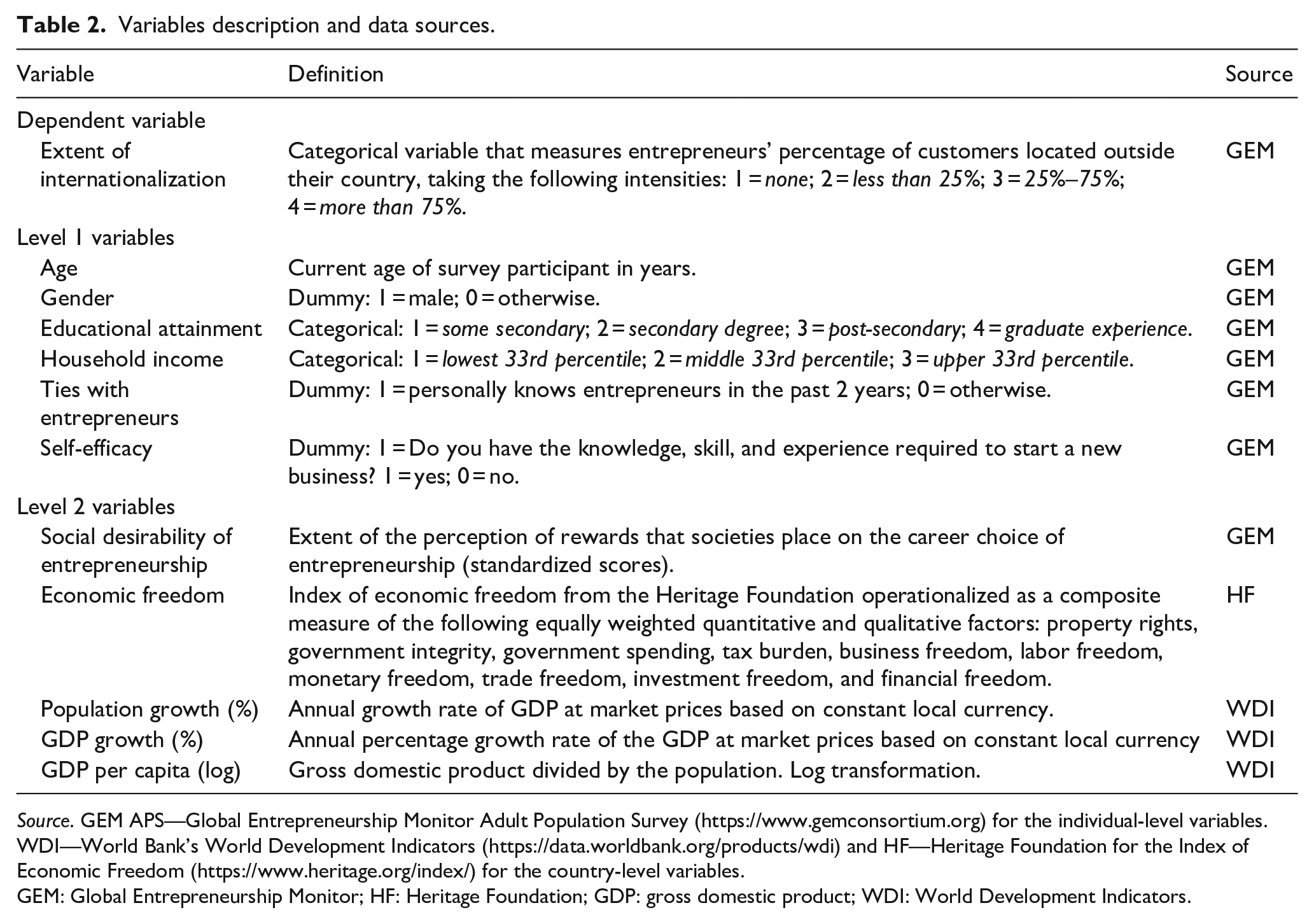
Source. GEM APS—Global Entrepreneurship Monitor Adult Population Survey (https://www.gemconsortium.org) for the individual-level variables. WDI—World Bank’s World Development Indicators (https://data.worldbank.org/products/wdi) and HF—Heritage Foundation for the Index of Economic Freedom (https://www.heritage.org/index/) for the country-level variables.
GEM: Global Entrepreneurship Monitor; HF: Heritage Foundation; GDP: gross domestic product; WDI: World Development Indicators.
Empirical strategy
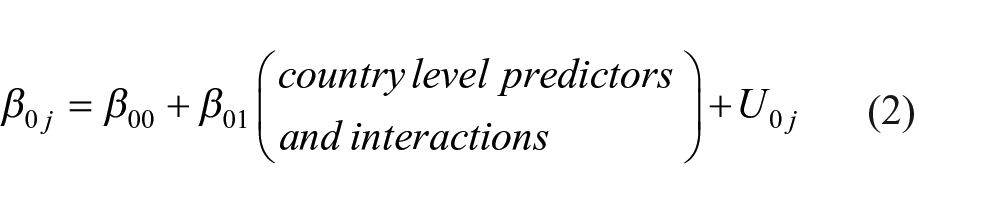
Since this research combines observations both at individual and country levels, we employ multilevel analysis to test our predictions as this technique allows intercepts to vary across countries (e.g., Amorós et al., 2019; Autio et al., 2013; Capelleras et al., 2018; Estrin et al., 2020; Estrin et al., 2013a; Schøtt & Jensen, 2016). This empirical strategy also allows us to assume independence of observations, which would not be possible in an ordinary least squares (OLS) or any other suitable multivariate method (Hofmann et al., 2000). Taking the multilevel configuration and the dependent variable categorical nature into account, we performed a multilevel random-effect ordered logistic regression to estimate how the institutional context affect the extent of internationalization. The configuration of the data set is of individuals (level 1) nested into countries (level 2) similar to recent research such as Amorós et al. (2019) and Estrin et al. (2020). Random-effect analysis allows regression coefficients to vary across countries, assuming unobserved country-specific effects to be randomly distributed with a mean of zero, to have constant variance, and to be uncorrelated with the predictor covariates (Estrin et al., 2020). The model specification is shown below

We adopted three steps to test the direct effects of informal institutions on internationalization and the interaction effect with formal institutions across all the sampled countries. First, we performed an estimation process only with controls and without any predictors and interactions as our basic model (Model 1 of Table 5). Second, we introduced the social desirability of entrepreneurship predictor into the null model to estimate the proportion of variance explained by one main predictor alone (Model 2 of Table 5) before adding interactional terms. To estimate the interaction effects, we developed the model of interaction (Model 4 of Table 5), including all the predictors, interactions, and multilevel controls. Meanwhile, Model 3 of Table 5 examines the direct effects of economic freedom. Therefore, we were able to evaluate the proportion of variance explained by interactions alone when comparing Model 3 and Model 4 in Table 5.
Results
Descriptive statistics
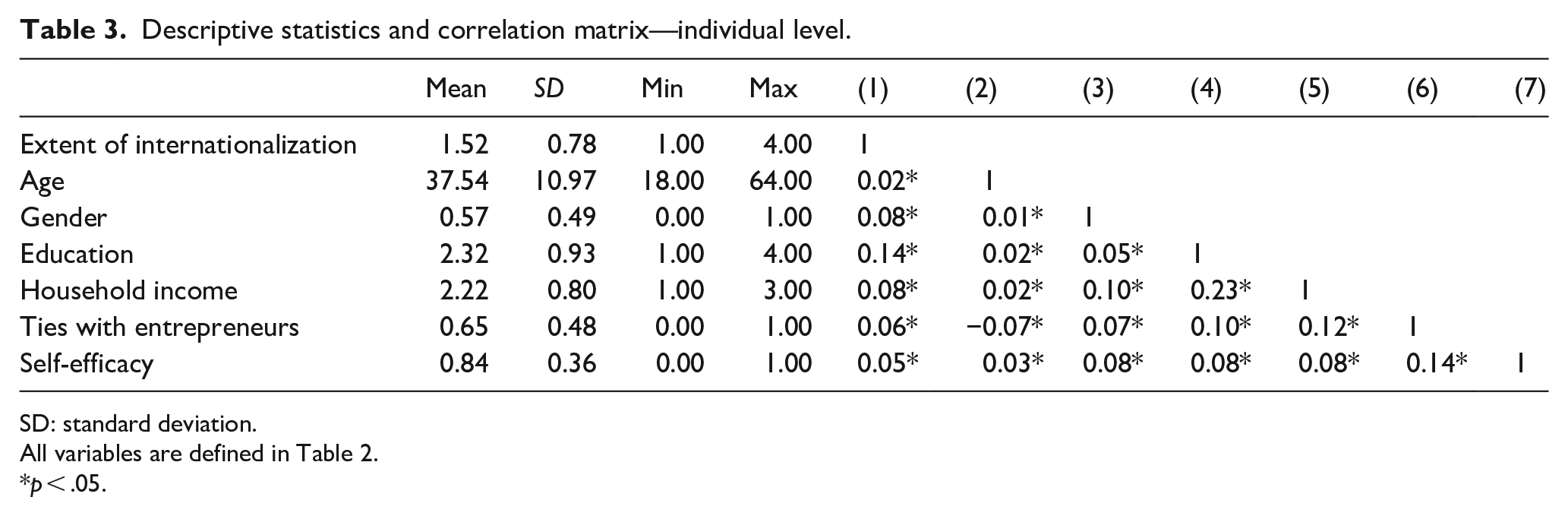
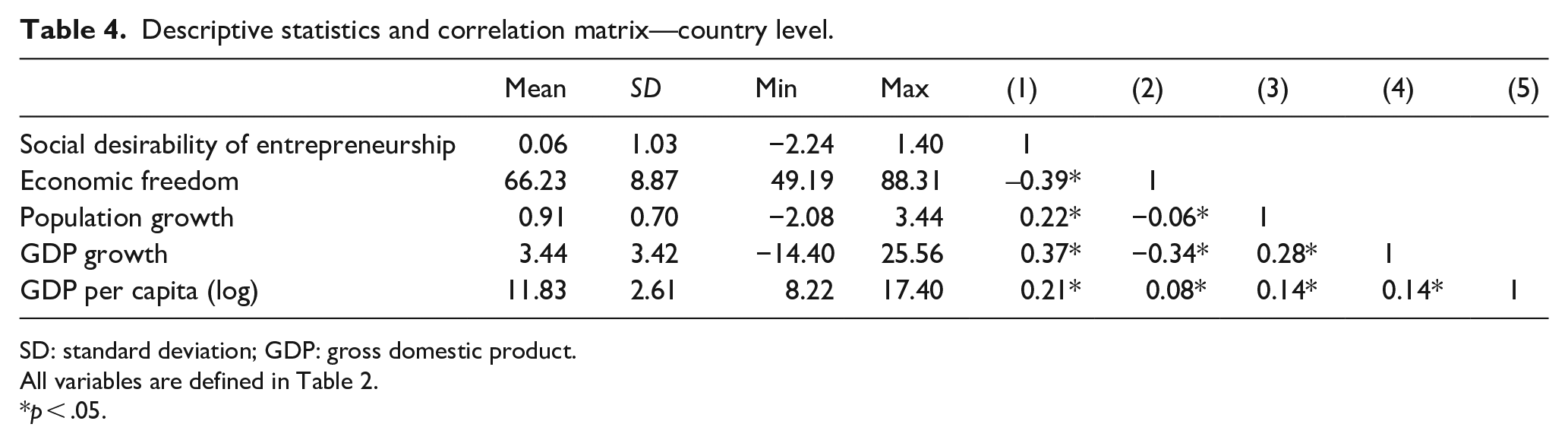
Tables 1, 3, and 4 provide the descriptive statistics. At the individual level shown in Table 3, our respondents are aged from 18 to 64 years, and 57% of them are male. Furthermore, the interviewees have secondary and above education on average and belong to the middle-income tier and above on average. A total of 65% of the respondents have had connections with other entrepreneurs in the past 12 months, and the overwhelming majority (84%) had received training before they started their business. Regarding the country level (Table 4), on average, the annual increase in the population across all the countries is 0.91%, and the GDP growth is 3.44%.
Descriptive statistics and correlation matrix—individual level.
SD: standard deviation.
All variables are defined in Table 2.
p < .05.
Descriptive statistics and correlation matrix—country level.
SD: standard deviation; GDP: gross domestic product.
All variables are defined in Table 2.
p < .05.
As depicted in Table 1 with the country-level summary information, early-stage entrepreneurs in advanced economic countries on average internationalize more than those in less-developed countries. Nevertheless, the maximum value for the extent of internationalization among these countries is lower (Singapore: 2.37; see Table 1). With regard to the other countries, this index is far lower than 25% degree of internationalization. Table 3 also shows that the average value of internationalization across all the individual respondents is 1.52, indicating no more than 25% internationalization.
Turning to the country-level predictors (see Tables 1 and 4 for details), the level of social desirability of entrepreneurship differs between countries, ranging between −2.24 and 1.4, with an average value of 0.06. The statistics software standardized the values of the social desirability of entrepreneurship with the normal distribution. Among our sampled countries, the Philippines represent the home environment with the highest social desirability of entrepreneurship (1.40), and Hungary has the lowest score (−2.24). The average value of economic freedom is 66.23, with scores ranging between 49.19 and 88.31 (see Tables 1 and 4). The standard deviation is 8.87, which also indicates that our sample countries vary in different institutional contexts. However, generally, contexts in advanced economic countries are usually freer than those in less advanced countries.
Multilevel model results
Tables 3 and 4 also display the correlation matrix, including the individual-level and country-level variables, respectively. There is no higher correlation between multilevel variables since the relationship coefficients are controlled at an acceptable level. Furthermore, significant between-country variance is a precondition for running the hierarchical model. Therefore, we conducted an analysis of variance (ANOVA) to test the significant between-group variance, using the dependent variable and country group as the predictor. The results show that 12.07% of the total variance can be explained by between-country groups.
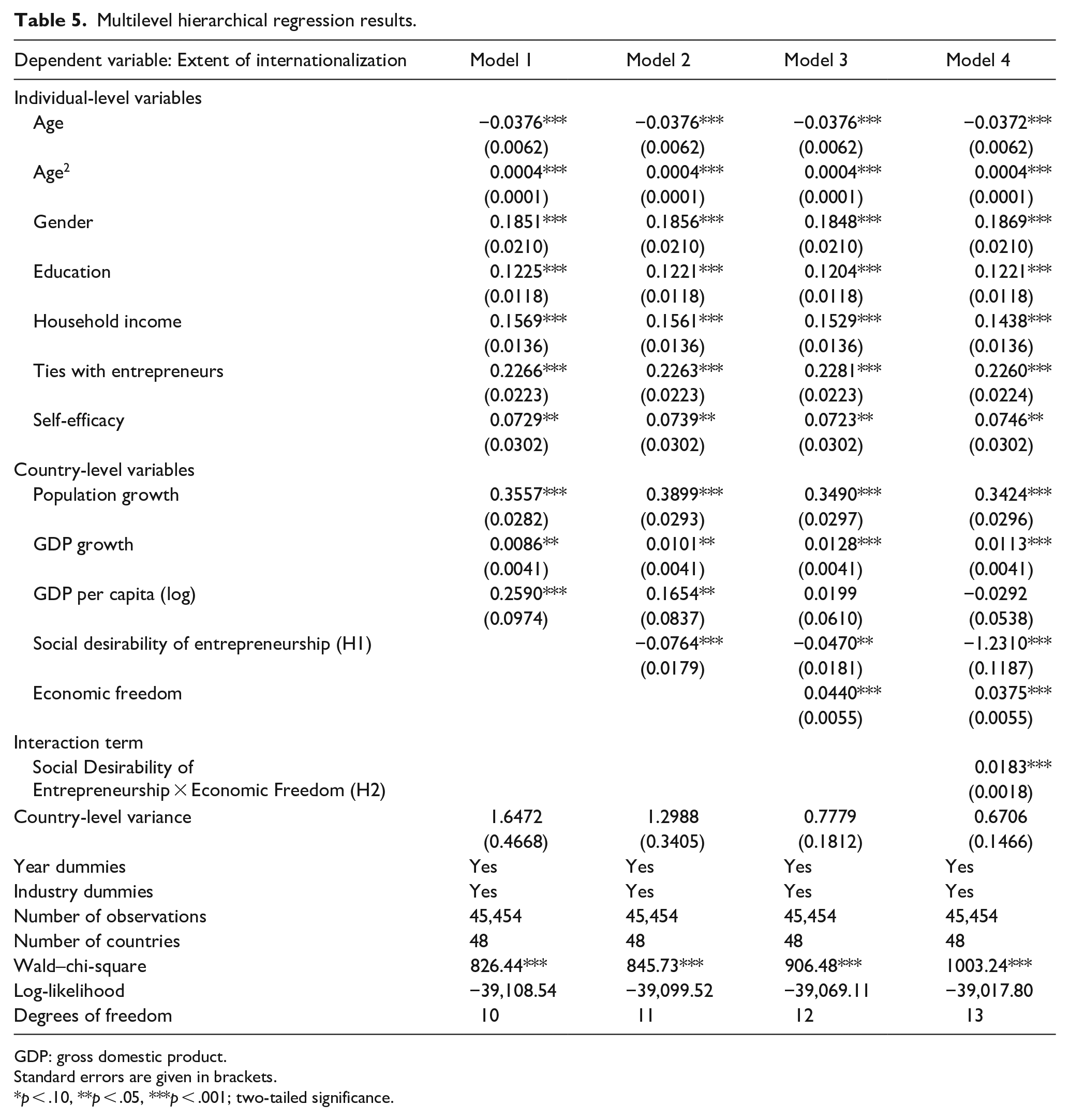
Table 5 presents the hierarchical modeling results. Before evaluating the three hypotheses, a multicollinearity test was conducted. The mean score of the variance inflation factor (VIF) test is around 2, which indicates that all our variables are appropriate for undertaking the regression test. All the detailed tables included in Table 5 report the coefficients and random-effect estimates (variance components).
Multilevel hierarchical regression results.
GDP: gross domestic product.
Standard errors are given in brackets.
p < .10, **p < .05, ***p < .001; two-tailed significance.
As for the direct effect, Hypothesis 1 is supported by Model 2 of Table 5. Specifically, the social desirability of entrepreneurship has a negative and significant
The interaction term between economic freedom and the social desirability of entrepreneurship (Model 4 of Table 5) is positive and significant
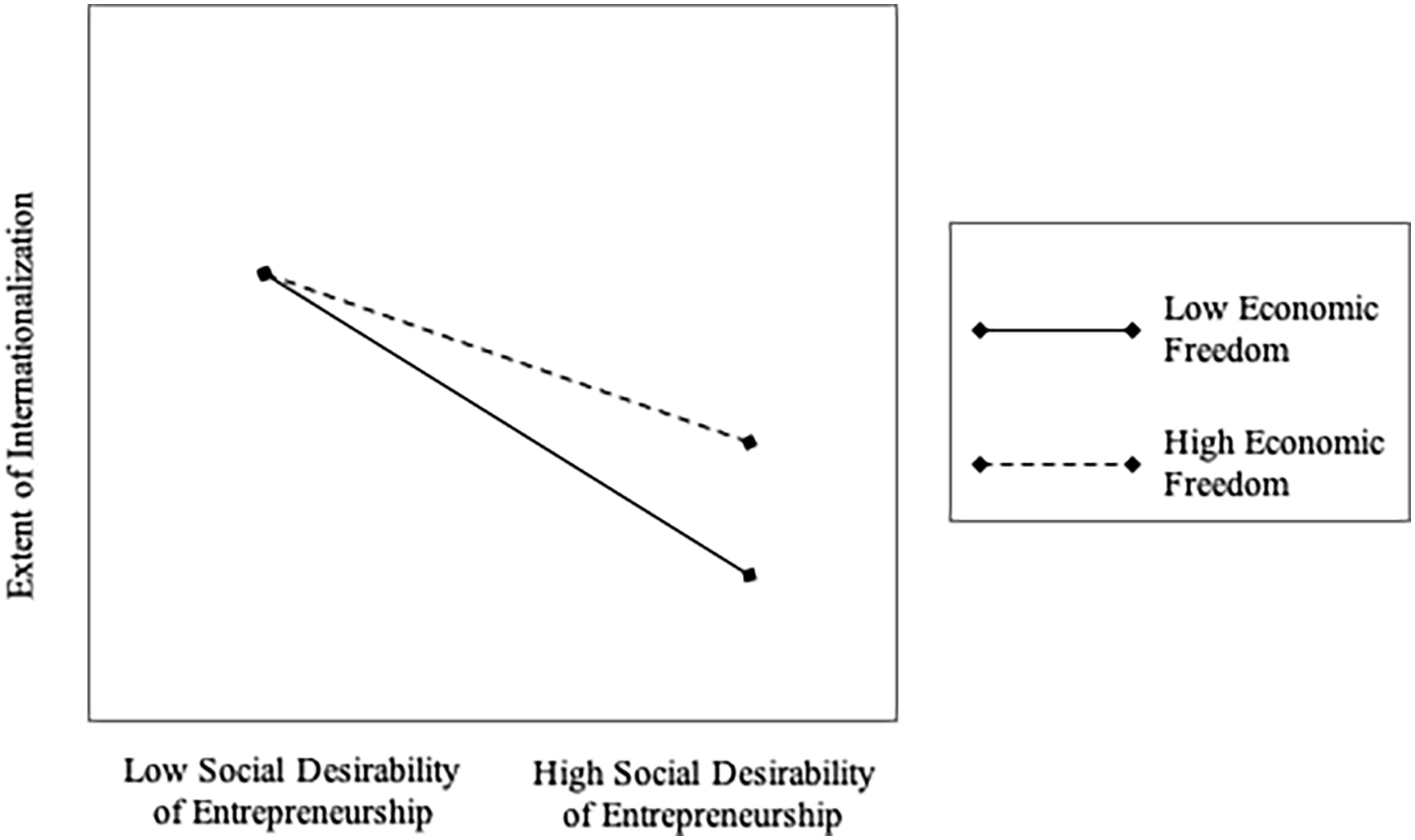
Interaction between the social desirability of entrepreneurship and economic freedom.
We find several control variables to be statistically significant. As per the country-level variables, the annual population growth and GDP growth are positive and significant across the four models (e.g., Autio et al., 2013; Fuentelsaz et al., 2019, 2020; Gimenez-Jimenez et al., 2022; Reynolds et al., 2004). However, the sign and significance of the GDP per capita vary across the models. Regarding the individual-level control variables, male entrepreneurs prefer to expand to markets outside of their home country. Experienced entrepreneurs with a higher income are likely to expand internationally, and previous experience and knowledge help to facilitate this. In addition, having ties with other entrepreneurs in the region seems to be an advantage among early-stage entrepreneurs. Finally, young early-stage entrepreneurs are more likely to start a business that is international from inception.
Robustness checks
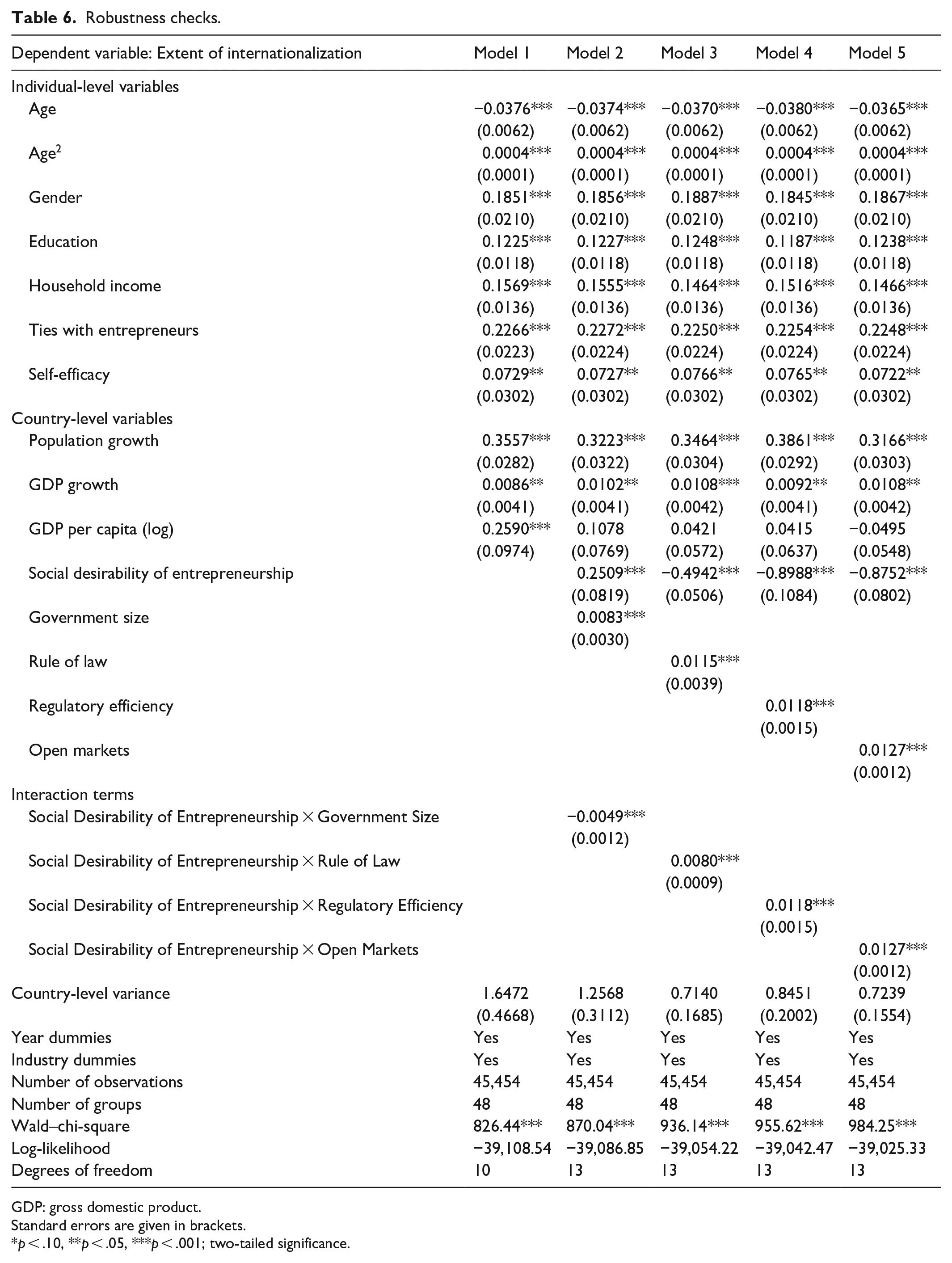
As mentioned in previous sections, economic freedom is a highly composite index consisting of four pillars—government size, the rule of law, regulatory efficiency, and open markets—with 12 sub-indexes (The Heritage Foundation, 2021). To test the reliability of our models, we investigated whether the moderating effect of each pillar is consistent with the composite index. Table 6 replicates the estimations and offers additional evidence on the moderating effects of the four pillars on economic freedom. Given that multicollinearity problems may arise when introducing new categories, we conducted a VIF test step by step, and the results are accepted to be less than 10. It is also vital to notice that the same control variables as in the previous table were introduced. The relevant controls remained statistically significant and maintained their sign. Accordingly, we focused on the moderating effect of each pillar.
Robustness checks.
GDP: gross domestic product.
Standard errors are given in brackets.
p < .10, **p < .05, ***p < .001; two-tailed significance.
Models 2 to 5 in Table 6 describe the moderating role of each category, respectively. Like our previous economic freedom results in Table 5, each category’s direct effect is positive and significant. The interactions with the rule of law (Model 3 of Table 6,
However, the interaction with government size behaves in the opposite way (Model 2 of Table 6), showing a negative and significant moderating effect
In addition to the above, one of the empirical concerns with the large cross-country data sets is that countries with more observations may dominate the results. Following the previous studies utilizing the GEM data set (e.g., Autio et al., 2013), we excluded Spanish observations, which account for more than 12% of all the samples. We re-ran all the regressions and found that there is no statistically significant difference after dropping many observations from one particular country.
Discussion
Key findings
Our study aimed to examine how the informal institutional environment influences early-stage entrepreneurs’ internationalization and how the formal institutional framework affects such relationship. Two main findings emerge. We first show that the international orientation of early-stage entrepreneurs varies significantly depending on the country’s social legitimacy of entrepreneurship, but we also demonstrate that the formal institutional setting in the form of economic freedom plays a moderating role in this link.
The first main finding concerns the direct effects of social desirability of entrepreneurship on internationalization. Generally, this factor tends to support new business creation (Busenitz et al., 2000; Fritsch & Wyrwich, 2018; Reynolds et al., 2004). However, our empirical evidence shows the opposite relationship with the extent of internationalization. We found that high social acceptance of entrepreneurship in the home country does not necessarily encourage entrepreneurs to pursue international expansion. In other words, early-stage entrepreneurs in an environment with low social desirability of entrepreneurship are more likely to facilitate internationalization.
This can be interpreted as indicating that individuals with higher entrepreneurial intentions will be pushed out to international markets in an unfavorable informal context (Muralidharan & Pathak, 2017; Segal et al., 2005). The “push power” may be strong enough to encourage such types of individuals to engage in international activities (Zahra et al., 2005). In other words, a nonfavorable informal institutional environment will prevent individuals their need for achievement. Consistent with this, opportunity-driven early-stage entrepreneurs (i.e., those individuals with higher entrepreneurial intentions) will seek further commercial opportunities beyond their national borders.
Another interpretation of this finding suggests that, in home country environments with high social desirability of entrepreneurship, individuals would opt proactively to stay in the domestic markets due to a favorable informal environment. The reason might be that the home country environment could provide easy access to various domestic resources, obtain local media coverage, and avoid foreign market uncertainty. In fact, higher levels of social legitimacy are typically associated with a less risky environment for entrepreneurship (Etzioni, 1987). In such contexts, early-stage entrepreneurs will find support from various ties and the local community (Busenitz et al., 2000; Reynolds et al., 2004). This may favor the access to resources of early-stage entrepreneurs, which would increase their confidence in navigating the challenges they expect to face in managing their new firm. This will also make it more feasible for ambitious entrepreneurs to seek to grow their firms in the local markets (Autio et al., 2013).
Therefore, this study contributes to extant knowledge by showing that contexts with strong entrepreneurial cultures do not necessarily encourage the pursuit of international growth by early-stage entrepreneurs. Specifically, we have shown that home contexts with high social desirability of entrepreneurship help to facilitate domestic entrepreneurial initiatives but may hinder their international orientation. This finding also adds to our knowledge about the domestic environment factors influencing the degree of internationalization. While prior work has indicated that the economic and political context in the home country affect firm internationalization (Marano et al., 2016), we show that domestic cultural norms might also influence the extent of internationalization.
The second key finding contributes to the knowledge about the interdependence between the two types of institutions, which remains unclear in the related literature. Past studies have shown that favorable formal institutions can positively and directly influence international entrepreneurship explicitly (Fuentelsaz et al., 2019, 2020; Marano et al., 2016; Peng et al., 2008, 2009). Our results confirm this direct positive effect. However, the novelty of this study is the examination of the moderating role of economic freedom in the relationship between the informal institutional context and the extent of internationalization of early-stage entrepreneurs. The interaction results indicate that, in countries with a freer economic context, the negative relationship between social desirability and internationalization can be attenuated. The implication here is that a high degree of economic freedom counteracts the negative effect of social desirability on internationalization. Moreover, the additional robustness tests provide more nuanced evidence that most pillars of economic freedom (i.e., the rule of law, regulatory efficiency, and open markets) produce positive moderation effects in line with our main results.
These can be interpreted as showing that favorable public policies help to promote international expansion, even if entrepreneurs reside in a hostile environment. In this sense, higher transparency, and security to operate in the markets, better access to relevant information, and the freedom to manage the business effectively, will provide resources that not only enable entrepreneurial behavior (Autio et al., 2013; Baumol, 2010; Fuentelsaz et al., 2018) but also favor the entrepreneurs’ international orientation, particularly in countries with higher desirability of entrepreneurship. Besides, economic freedom also represents reduction of regulations, especially deregulation on the international activities (Dau & Cuervo-Cazurra, 2014), which could mitigate the entry barriers to new markets and reduce the limitations of the activities that entrepreneurs can perform (Tirole, 1988). Hence, deregulation provides new opportunities for individuals with higher entrepreneurial intentions to create new business abroad while facilitating the access to additional foreign resources, even in contexts having higher levels of domestic social desirability of entrepreneurship.
Overall, starting with the view that formal institutions function as extrinsic elements to accelerate internationalization, this study attempted to establish whether a high degree of economic freedom could help to ameliorate the deficiencies of informal rules (Evald et al., 2011; Fuentelsaz et al., 2019). Our results reveal that high-level economic freedom represents more favorable factors of the home country institutional environment, helping to counteract the negative effects of informal rules.
Policy and managerial implications
Our findings offer implications for policy and practice. The results suggest that policymakers wishing to favor international activities of early-stage entrepreneurs in the long-term may need to improve attitudes toward international business in the society. The inclusion of international entrepreneurship courses at different educational levels and raising the international market awareness might constitute one possible way to develop the international entrepreneurial spirit. Besides, developing specific training programs aimed at convincing more individuals to consider international entrepreneurial careers (Muralidharan & Pathak, 2017) and presenting successful international entrepreneurs as positive role models in the media can play an important role to convey that early internationalization is a desirable option for those interested in an entrepreneurship career.
This research also indicates that policymakers could ameliorate the negative influence of informal norms in the pursuit of internationalization by fostering and improving the level of economic freedom that works on behalf of the regulation quality and administration efficiency. Consequently, increasing the level of economic freedom makes it easier for early-stage entrepreneurs to internationalize. However, although increasing the level of economic freedom, especially in countries where the rules of the game tend to be less clear, is an implication from a public policy perspective, it is also necessary to be aware of the interrelationship between formal and informal institutions. Hence, they should not be managed in isolation (Fuentelsaz et al., 2019) but instead jointly integrated within public policies.
Furthermore, our findings provide some guidance for early-stage entrepreneurs seeking to pursue international opportunities. Entrepreneurs should be aware of domestic environments that constrain their internationalization efforts. As such, entrepreneurs that seek to internationalize should appreciate what domestic institutional factors can hinder their international activities and then be able to advocate for an appropriate institutional environment in their home country that reduces the uncertainty surrounding their domestic operations and give them the opportunity to expand in foreign markets.
Relatedly, our findings suggest that early-stage entrepreneurs’ approach to international activities might need not only to develop capabilities to successfully exploit opportunities in foreign markets but also learn to navigate around home market constraints related to informal institutions (i.e., social desirability of entrepreneurship) and to take advantage of a formal institutional framework consistent with the pillars of economic freedom, mostly rule of law, regulatory efficiency, and open markets.
Limitations and future research
Our study is not free of limitations, which nonetheless open opportunities for relevant future research. One limitation is the relatively simple measure of internationalization based on the proportion of customers in foreign markets, despite most of existing studies in this area have employed this common measure to capture internationalization of early-stage entrepreneurs (Autio et al., 2013; Li, 2018; Muralidharan & Pathak, 2017). Therefore, there is a need for future research to address this issue and find a richer data to better capture internationalization.
Another limitation has to do with the cross-section nature of GEM data, which may affect the ability to address causality between institutional factors and the extent of internationalization. Future studies should use longitudinal data to deal with this issue. Repeating the analysis with an even larger number of countries would also be desirable, especially as developed economies are somewhat overrepresented in our sample. However, we have included diverse countries with differing economic and social backgrounds across all continents as well as run appropriate robustness checks.
Given the purpose of the study, the analysis is focused on home country variables to predict the likelihood of engaging in early internationalization. In fact, some studies suggest that home country institutions have traditionally been considered more important to the internationalization of early-stage entrepreneurs than host country institutions (Yang et al., 2020; Zhang et al., 2016). However, the next logical step for further research would be to examine how social acceptance of entrepreneurship and economic freedom in the host country affect international entrepreneurial activity.
Finally, the entrepreneurs’ decision to internationalize might also be based on the costs associated to the internationalization process (Chetty & Campbell-Hunt, 2004 ; Pogrebnyakov, 2017). Nevertheless, here we have focused on the export-oriented activity of early-stage entrepreneurs, which does not usually involve a substantial resource commitment to a foreign market (Lu & Beamish, 2006) and, thus, is a relatively easy and fast way to engage in international activities (Bolívar-Ramos et al., 2020; Filipescu et al., 2013). In addition, case study research could be used to investigate less explored factors at different levels of analysis that may shape early-stage entrepreneurs’ ability to engage in internationalization activities, including the role of managerial cognition (Marano et al., 2016).
Conclusion
Early-stage entrepreneurs’ internationalization is an important phenomenon that helps us understanding how business opportunities emerge across countries. Our research seeks to better understand the boundaries that the institutional context set on those seeking international efforts. The findings reveal that in a context of high social desirability of entrepreneurship entrepreneurs do not necessarily look for business opportunities abroad. Yet, it will be the level of economic freedom in their home country that will positively moderate that relationship. Thus, from a broader perspective, this article will help scholars not just to advance research on international entrepreneurship but also to develop a more nuanced understanding on how regulative institutional dimensions may compensate the impact of the heterogeneous effect of entrepreneurial culture to the extent of early-stage entrepreneur internationalization outcomes across countries.
Footnotes
Author contributions
All authors contributed equally to this work. Author names are listed alphabetically.
Declaration of conflicting interests
The author(s) declared no potential conflicts of interest with respect to the research, authorship, and/or publication of this article.
Funding
The author(s) disclosed receipt of the following financial support for the research, authorship, and/or publication of this article: The study was supported by the Secretaria d’Universitats i Recerca de la Generalitat de Catalunya and the European Social Fund (grant number: 2020FI_B 00096). The authors also acknowledge financial support from project PID2020-114460GB-G31 (Spanish Ministry of Science and Innovation).
