




Abstract
New product development (NPD) collaborations with external partners involve high coordination costs and run substantial risks. Formalization seems to be an effective mechanism to mitigate said costs and risks, although the issue of whether formalization actually proves productive or counterproductive remains an open question. This study empirically analyses the direct impact of formalization and the interaction effect between formalization and trust between partners in order to gauge their influence on NPD collaboration performance. Findings indicate that formalization directly boosts the quality and novelty of the new product developed in collaboration, but that it does not affect adherence to schedule. In addition, trust reinforces the productive effect of formalization on new product quality and novelty, and makes the impact of formalization on adherence to schedule positive. However, without trust, we find a null impact of formalization on new product quality and a counterproductive impact on adherence to schedule. These results suggest that formalization and trust may complement each other, reinforcing each other’s positive effect on new product quality and novelty and presenting a positive synergistic effect, while helping to overcome the counterproductive effect of formalization on adherence to schedule.
Keywords
Introduction
Formalization 1 of new product development (NPD) processes is broadly considered to be the best practice (Cooper et al., 2004; Kahn et al., 2006), with many studies suggesting that new product success may, at least in part, depend on the existence and efficiency of a defined, formal development process model (Koen et al., 2001; Montoya-Weiss & O’Driscoll, 2000). In this way, it is generally assumed that formalizing NPD processes improves efficiency by capturing development activities in a sequential and/or overlapping manner, by providing checkpoints for inputs and outputs, by displaying the steps as being continuous and repeating, and by generating a timetable (Holahan et al., 2014). Put differently, formalization is a means of coordinating firms’ activities by reducing variability in behavior and by ultimately predicting and controlling it (Bonner et al., 2002; Mintzberg, 1979; Tatikonda & Rosenthal, 2000).
Coordination and control prove to be even more important in the context of NPD collaborations. Interorganizational relationships entail issues of coordination, control, and legitimacy, and involve problems of understanding that may be aggravated by the relatively high levels of ambiguity and uncertainty that characterize NPD collaborations (Bstieler, 2006; Vlaar et al., 2006). However, formalization may have a positive impact on enabling innovation implementation by decreasing ambiguity (Kawakami et al., 2012). It also endows interactions and information exchanges with a degree of transparency that reduces concerns regarding possible partner opportunism (Wathne & Heide, 2000), thereby decreasing uncertainty and risk. Formalization thus reduces disorder because partners know what they are expected to do, while it also increases partner coordination and facilitates productive exchanges during NPD collaboration (Massey & Kyriazis, 2007).
Nevertheless, even though formalization provides teams with some degree of structure and order, these rules can also inhibit them and stifle new ideas and creativity (Damanpour, 1991). The development of strong interpersonal ties between partners can be inhibited when interaction focuses strictly on efficiency and procedure, since partners will lack sufficient opportunities to become attached to or enjoy the group (Brockman et al., 2010). In other words, formalization may hamper the exploration of new technological opportunities (Faems et al., 2006), since such innovations and new products require greater flexibility and less structured NPD processes (Leifer et al., 2000; Veryzer, 1998). At the same time, formalization consumes valuable time and resources and may result in procedures that are often (and inevitably) incomplete and not totally practicable (Dickson et al., 2006; S. G. Walter et al., 2015). Consequently, the question of whether formalization proves either productive or counterproductive for NPD collaboration outcomes thus remains an open one.
The fact that the debate remains unresolved might be because many existing studies are qualitative works based on case studies (Barnes et al., 2006; Brockman et al., 2010; Faems et al., 2008; Vlaar et al., 2006), which makes any comparison and extrapolation difficult. Among the quantitative studies that have explored NPD collaboration outcomes, some, such as Kawakami et al. (2012), Salomo et al. (2008), or Estrada et al. (2016), have considered NPD collaboration outcomes only partially (one or another type of outcome), while others, such as Wallenburg and Schäffler (2014), Couchman and Fulop (2009), or Massey and Kyriazis (2007), have considered them jointly (various types of outcomes all included in a single construct). Consequently, these studies have failed to consider several outcome dimensions separately and independently, meaning that they are unable to distinguish whether the effect of formalization differs depending on the outcome dimension considered. These effects are expected to differ not just in terms of their significance and/or size but even in their sign (positive or negative). Such is the case of new product novelty, as opposed to new product quality and adherence to schedule. Therefore, in this work we conceptualize new product outcomes as a multidimensional construct (Blindenbach-Driessen et al., 2010; Griffin & Page, 1996; Hoegl & Wagner, 2005; Menor et al., 2002), which reflects how the NPD project has been executed (Blindenbach-Driessen et al., 2010) and captures the extent to which practical objectives have been achieved (Hoegl & Wagner, 2005; Tatikonda & Montoya-Weiss, 2001). We focus on the practical aims, namely, those on which a direct effect of formalization is to be expected, rather than on the final objectives (such as sales and/or benefits) given that the effect of formalization on these other outcome dimensions is indirect and may be diluted in the influence of other direct antecedents. Therefore, the first objective of this research is to analyze the impact of formalization on NPD collaboration performance, measured through adherence to planned schedules as well as the quality and novelty of the new product developed in collaboration. These three operational outcome dimensions have been chosen following previous studies. Therefore, for the purpose of this research, the efficiency of product development projects refers to adherence to schedule (Blindenbach-Driessen et al., 2010; Bstieler, 2006; Hoegl & Wagner, 2005; Sarin & Mahajan, 2001), whereas effectiveness refers to the degree to which expectations regarding product quality (Blindenbach-Driessen et al., 2010; Hoegl & Wagner, 2005; Knudsen & Mortensen, 2011; Ledwith & O’Dwyer, 2009; Tatikonda & Montoya-Weiss, 2001) and product novelty (Carbonell et al., 2009; Lau et al., 2010; Tatikonda & Montoya-Weiss, 2001) are met.
In addition, we examine the interaction effects between formalization of collaboration and trust between partners. Several authors have proposed trust as a way to compensate for the dysfunctional effects of formalization on NPD outcomes (S. G. Walter et al., 2015). Formalization and trust may be complementary, and finding the right combination between them might help to cut management costs without restricting exploration (Faems et al., 2006). Nevertheless, this interaction has also been found to be counterproductive (Wallenburg & Schäffler, 2014), since positive returns in collaboration outcomes are seen to fall when formalization and trust are applied simultaneously (Bstieler & Hemmert, 2015). Another relevant question is, therefore, whether such a combined effect significantly contributes toward NPD collaboration performance. This question leads to the second goal of our research.
This investigation thus aims to fill the above gaps by developing a more nuanced comprehension of formalization by exploring what role it plays in NPD collaboration and its interaction with trust between partners, while distinguishing between several NPD collaboration outcome dimensions.
This article contributes to previous research in several ways. First, it aims to shed light on the debate concerning the beneficial or detrimental effect of formalization on NPD results by exploring the specific effect of formalization on three different dimensions of NPD collaboration outcomes. Second, with regard to the interaction of formalization and trust, we advance in the discussion surrounding their potential substitution or complementarity. By exploring all of these effects, we contribute to the debate surrounding how to manage NPD collaboration in order to achieve improved performance, given that the failure rates of NPD collaboration projects remain high (Schleimer & Faems, 2016).
Findings indicate that formalization directly boosts the quality and novelty of the new product developed in collaboration, although not adherence to schedule. In addition, trust reinforces the productive effect of formalization on new product quality and novelty, and makes the impact of formalization on adherence to schedule positive. However, when trust is absent, we find a null impact of formalization on new product quality and a counterproductive impact on adherence to schedule. These results suggest that formalization and trust may be complements, reinforcing each other’s positive effect on new product quality and novelty and evidencing a positive synergistic effect, while helping to overcome the counterproductive effect of formalization on adherence to schedule.
The following section introduces the hypotheses of the proposed model, after which the research methodology is presented. In the fourth section, the analysis and results are described and discussed. Finally, the findings and major implications are summarized.
Conceptual framework and hypotheses development
NPD collaboration processes are characterized by the need to share resources such as technical skills and R&D capabilities (Duso et al., 2010). This feature of collaboration in innovation hinders coordination among partners, since such resources are based on knowledge that proves complex to manage because it is couched in the firm’s specialized technical language (Hoetker & Mellewigt, 2009; Sampson, 2004). These collaborations, which are largely based on intangible assets, entail difficulties in terms of establishing comprehensive contracts, rules, and procedures that can cover each and every eventuality involved in the collaboration (Duso et al., 2010; Martínez-Noya & Narula, 2018). In other words, a priori, it proves difficult to determine which resources or assets must be shared and to what degree (Hoetker & Mellewigt, 2009).
As a result, the context is one in which management control proves vital, since NPD collaboration sparks major moral hazard concerns (Sampson, 2004). For instance, in the literature on NPD alliances, one aspect deemed key for management is to limit any possible opportunistic behavior that might be triggered by so-called appropriability hazards (Oxley, 1997). These hazards refer to the risk of suffering the consequences of inappropriate use of the knowledge and assets invested in the collaborations, or incorrect distribution of collaboration rents (García-Canal et al., 2008; Sampson, 2004).
One possible solution for controlling appropriability hazards involves formalization. Prior research has shown formalization to be an effective mechanism to mitigate opportunism and coordination costs in NPD collaboration contexts (Faems et al., 2006; S. G. Walter et al., 2015). However, formalization increases perceptions of social distance and signals distrust (Ghoshal & Moran, 1996), and can also create mechanistic management practices, thereby allowing little room for adaptation (Blatt, 2009; S. G. Walter et al., 2015) and creativity. Researchers adhering to “traditional” views of formalization generally strive to determine a single best control solution, polarizing costs and benefits, or functions and dysfunctions of each mechanism, in an effort to make the right choice or decision (Peng & Nisbett, 1999; Vlaar et al., 2007). However, one should recognize the tensions accruing from the simultaneous existence of formalization’s functions and dysfunctions (Vlaar et al., 2007). Therefore, the question of whether formalization may deter opportunism and may contribute to the outcomes of NPD collaborations in NPD alliances remains topical (S. G. Walter et al., 2015).
Trust also represents a mechanism that addresses issues concerning safeguarding and coordination (Faems et al., 2008). Many authors see trust as an alternative to formalization for complex relationships, since the presence of trust reduces the importance of rules and procedures (Dyer & Singh, 1998; Gulati, 1995). Indeed, there is an ongoing debate as to whether formalization and trust might complement (Faems et al., 2008; Lui & Ngo, 2004; Mellewigt et al., 2007; Poppo & Zenger, 2002; Ryall & Sampson, 2009) or impair each another (Bstieler et al., 2015; Ghoshal & Moran, 1996), a debate to which we would like to contribute. In this work, we focus on the combined effect of both, formalization and trust, on NPD collaboration outcomes.
Direct impact of formalization on NPD collaboration outcomes
Certain authors question the safeguarding efficacy of formalization (Provan & Skinner, 1989; Vlaar et al., 2007), given that it takes up valuable time and resources and may result in agreements and procedures that are often (and inevitably) incomplete and not totally practicable (Dickson et al., 2006; S. G. Walter et al., 2015). However, formalization also simplifies the application of procedures (Adler & Borys, 1996; Kawakami et al., 2012). Formalized routines may increase information flows to strategic decision makers and thus speed up strategic decisions (Baum & Wally, 2003; Kawakami et al., 2012). Formalization also helps organizations to retain their memory and skills for application in future activities (Adler & Borys, 1996) and encourages them to establish clear objectives that fit in with organizational goals (Kawakami et al., 2012; Michaels & Dubinsky, 1996; Michaels et al., 1988). Without the benefit of clearly defined objectives and a well-structured process, projects can become too wide-ranging and unwieldy, yielding results that are not what the participants either intended or expected (Barnes et al., 2002). Without formalization it would be very difficult to establish a common schedule and to stick to it. Moreover, in the absence of a well-structured process and clear goals, collaborative projects may be subject to a great deal of misinterpretation and unrealistic expectations (Barnes et al., 2002; Littler et al., 1995), distancing collaborating partners from the agreed schedule.
Based on the preceding arguments, we propose that
H1a. Formalization of NPD collaboration has a positive impact on adherence to schedule.
Since joint knowledge development and sharing are key to the collaborative development of new products (Lee, 2011) and because all knowledge involves an implicit dimension, sharing it causes a bottleneck. The movement of implicit knowledge across organizations demands “close and intense interaction between individual members of the concerned organizations” (Kale et al., 2000). Nevertheless, in an interorganizational collaboration context, the sharing and joint development of such knowledge does not occur spontaneously. Indeed, quite the opposite: it may require pre-planned contacts between partners. Formalization creates procedures, such as communication activities, which are completed at key points in the NPD process, which in turn means that valuable information which may have been overlooked in an informal, less structured process is now included (Noordhoff et al., 2011). Formalization thus means that information is more structured and refined when shared, rather than being conveyed in bits and pieces over time, which in turn affects the quality of the new product developed in collaboration. Furthermore, by prioritizing actions, formalization helps minimize insignificant and unplanned information exchanges that might also fuel a sense of redundancy (Deshpandé & Zaltman, 1982; Maltz & Kohli, 1996). Minor redundancy will very likely offer valuable information (Rindfleisch & Moorman, 2001), which ultimately also has a positive effect on new product performance and quality. Therefore, formalization appears to be a key factor in improving interfirm learning outcomes (Janowicz-Panjaitan & Noorderhaven, 2008; Thompson, 2005) and is crucial to the collaborative development of high-quality new products.
Consequently, we consider that
H1b. Formalization of NPD collaboration has a positive impact on new product quality.
Despite the previously described benefits to derive from formalization, formalizing NPD processes also entails several drawbacks that should be taken into account. Formalization is expected to inhibit the flexibility required to handle complex and uncertain tasks (Mintzberg, 1994; Nooteboom, 1999; Poskela & Martinsuo, 2009). Formalization might even have a negative impact when seeking novel information at the predevelopment stage of the NPD process (Kawakami et al., 2012). Placing the emphasis on formal roles and work conditions might also discourage personnel from thinking outside the box, thus making creativity highly unlikely (Faems et al., 2006). Several scholars point out that organizations involved in creating radical innovations prefer an informal and only mildly structured process since such innovative activity demands greater flexibility and less structuring (Leifer et al., 2000; Song & Montoya-Weiss, 1998; Veryzer, 1998). Formalization has also been argued to entail the danger of restricting performance objectives to accomplishing merely the lowest standards and thus limiting the scope for initiative beyond what is specified in agreements (Vlaar et al., 2007), which in turns seems to stifle the novelty of the newly developed product. As a result, too much red tape in innovation processes might prove dysfunctional, as it results in fossilized behavior that may ultimately lead to shying away from creative ideas (Massey & Kyriazis, 2007; Mintzberg, 1979).
Based on all of the previous statements, we therefore propose that
H1c. Formalization of NPD collaboration has a negative impact on new product novelty.
Moderation effect of trust on the relationship between formalization and NPD collaboration outcomes
Defined as a psychological state comprising the intention to accept vulnerability based on positive expectations of another’s behavior intentions (Rousseau et al., 1998), trust represents a governance mechanism that also addresses issues concerning safeguarding and coordination (Faems et al., 2008). Following authors such as S. G. Walter et al. (2015) and Faems et al. (2006), we consider that formalization and trust may complement each other and that finding the right combination between them might help to deal with opportunistic behavior and reduce management costs without restricting exploration and collaboration success. This is because trust seems to buffer the dysfunctional effects of excessive behavior formalization and monitoring (Heide et al., 2007) while reinforcing the positive effects. Consequently, we propose a series of hypotheses related to the interaction effect of formalization and trust on the different NPD collaboration outcomes considered in this article.
Many authors see trust as an alternative to formalization for complex relationships, since the presence of trust reduces the importance of rules and procedures (Dyer & Singh, 1998; Gulati, 1995). In other words, some previous studies posit trust as a substitute for formalization. However, trust is not a behavior or a choice, but an underlying psychological condition that can either trigger or result from such actions (Rousseau et al., 1998). Trust is a condition which determines how rules and procedures are applied (Faems et al., 2008). Therefore, when unexpected technological problems emerge in an NPD collaboration, the absence of trust may lead to a rigid application of the rules and procedures stated by the collaborators, since the partners may start to question each other’s good intentions, which might fuel their concerns regarding possible opportunistic behavior. Consequently, collaborating partners will not be willing to adjust milestones and target dates. This increases pressure by emphasizing existing formally agreed milestones, which in turn proves detrimental to adherence to schedules. However, when trust is present, collaborators are more willing to apply a flexible approach toward applying deadlines and rules (Faems et al., 2008), which allows for formal mechanisms, without suffering from the possible work overload that might stem from formal procedures (Moenaert et al., 1994). Trust helps top management in their trade-off problem of control versus greater adaptability (Massey & Kyriazis, 2007).
In addition, relying on trust affords the possibility of management task conflict without risking heightened relationship conflict. This becomes vital to the adaptive limits of formalization by fostering continuance and bilateralism when change and conflict arise (Faems et al., 2006), and therefore saves time and other resources in conflict resolution.
Based on the previous statements, we propose that
H2a. The higher the level of trust between partners, the stronger the positive effect of formalization on adherence to schedule.
With regard to interorganizational learning, formal routes for exchanging knowledge coexist with informal routes through which a crucial and valuable part of the information is also transferred (Schrader, 1991). Trust, the means through which informal cooperation is facilitated and social interaction is encouraged (Massey & Kyriazis, 2007), represents the informal routes that enrich the formal knowledge exchange process. In fact, mistrust among partners negatively affects the flow of information between partners, and in some cases, even detracts from the main focus of the project—the technological issues. As a result, during formal knowledge interchanges, partners who enjoy enormous trust seek to exchange further opportunities in order to know peer professional needs, and so engage in more prolific exchanges (Cabeza-Pullés et al., 2018; McAllister, 1995). Consequently, trust has been identified as a crucial issue influencing collaboration success (Barnes et al., 2002), since it ensures that the knowledge and information exchanged through the formal interorganizational learning process become even more valuable and relevant to the collaborative development of high-quality and competitive new products.
Consequently, we propose that
H2b. The higher the level of trust between partners, the stronger the positive effect of formalization on new product quality.
As previously stated, one important dysfunction of formalization concerns the fact that wide-ranging formalization may damage new product novelty because it inhibits flexibility (Poskela & Martinsuo, 2009) and discourages creativity (Faems et al., 2006). Several scholars point out that organizations involved in creating radical innovations prefer an informal and only mildly structured process, since such innovative activity demands greater flexibility and less structuring (Leifer et al., 2000; Song & Montoya-Weiss, 1998; Veryzer, 1998). Nevertheless, trust helps to go beyond formalization by building a cooperative interorganizational learning environment. Trust increases organizational citizenship behavior by offering others support that is outside the normal work role, which is not directly remunerated, but which benefits organizational functioning and creativity (Massey & Kyriazis, 2007). It also strengthens interorganizational interests by sparking mutual cooperation (Mohr & Spekman, 1994) and by signaling commitment to a lasting association (Gundlach et al., 1995). Therefore, trust creates the perfect environment in which formalization can enable collaborating parties to engage in sensemaking, helping them to create common ground and achieve mutual understanding (Blomqvist et al., 2005; Vlaar et al., 2006). That is, trust helps formalization to overcome its dysfunctions and to encourage interorganizational learning.
In addition, the literature emphasizes the positive effects of cross-functional integration on NPD performance since it enables information and resource sharing among functional departments, while stimulating creativity and the creation of valuable new knowledge derived from interacting with and confronting different perspectives (Brettel et al., 2011; De Luca & Atuahene-Gima, 2007). The logic underlying cross-functional collaboration between the different departments of a company could be extrapolated to interorganizational collaboration. In both contexts, trust becomes central since executives are boundary spanners who need to cultivate cross-cutting ties both within and between organizations (McAllister, 1995). Trust between partners can help them to build such ties by improving cross-functional and interorganizational assistance in decision-making processes, which in turn is related to the novelty of the new product developed. Trust thus helps to offset the negative counterproductive effects of formalization on new product novelty.
One other way to mitigate the increased level of risk without limiting exploration is by developing trust between partners (Faems et al., 2006). Consequently, we believe that trust can offset or make up for this counterproductive effect of formalization and we consider that
H2c. The higher the level of trust between partners, the weaker the negative effect of formalization on new product novelty (Figure 1).
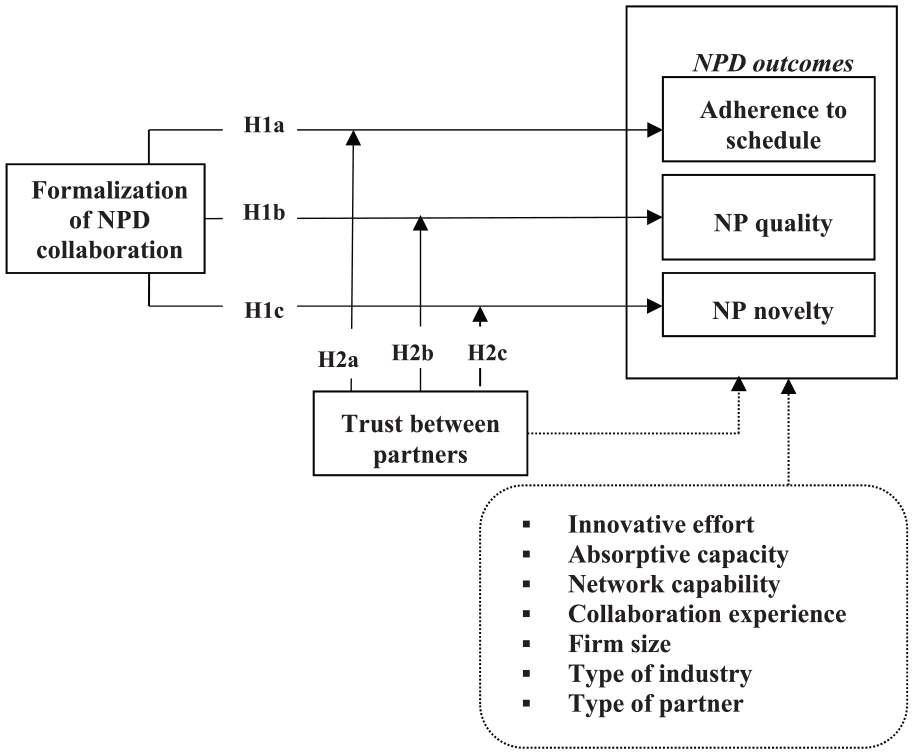
Theoretical framework.
Methodology
Sample and data collection
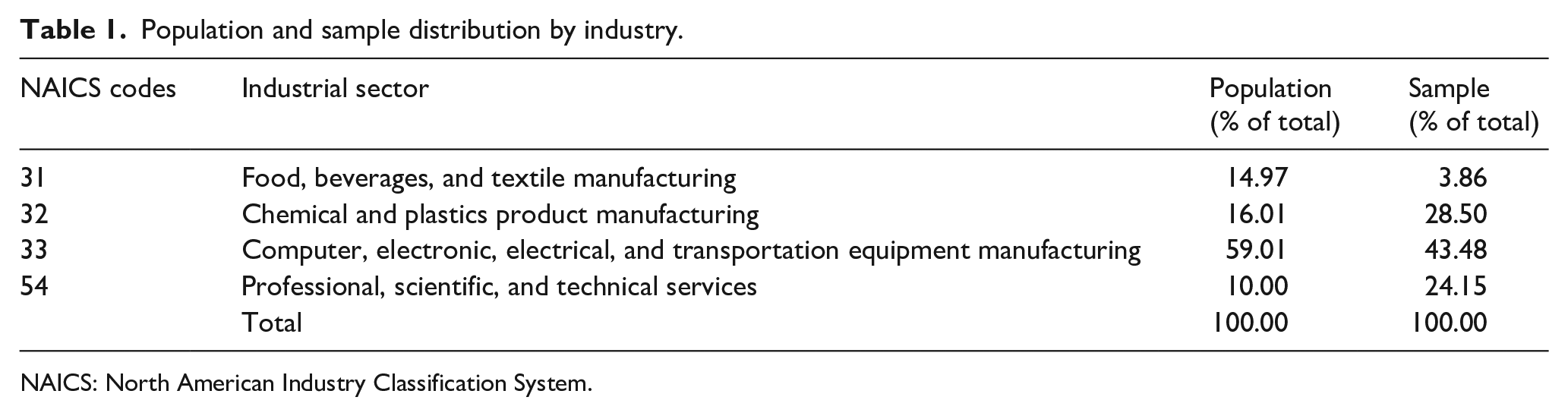
In order to test our research hypotheses, a web-based and cross-sectional survey method was used to collect data. The database included 2,679 Spanish innovative firms spanning a broad spectrum of industries (Table 1). This database was compiled with the addresses of 2,243 firms from the Kompas directory and 436 firms used in previous studies carried out by the research team. Senior executives in charge of NPD were contacted and requested by e-mail to participate in our study. Data were collected for the period November 2010 to January 2011.
Population and sample distribution by industry.
NAICS: North American Industry Classification System.
After the first mailing, and two subsequent waves of reminders, 207 complete questionnaires were returned. The response rate was therefore 7.72%. Although one may assume that all the firms in the initial sample population are involved in innovation, this does not mean they collaborate with another firm. 2 Therefore, the response rate is, most certainly, underestimated. It is worth highlighting, however, that the sample size is notably high in statistical terms.
The sectorial distribution of the sample is shown in Table 1. The significant differences between the sectorial distribution of the population and the final sample should be noted. In particular, sample percentages are smaller than population percentages for NAICS 31 and 33 and are larger than the population for NAICS 32 and 54. This might be due to the different NPD collaboration rate of the sectors. In this way, the NPD collaboration rate of the NAICS 54 sector (44%) is much larger than the rest (between 23% and 24%), which in turn leads to oversizing it. NAICS 32 includes chemical and pharmaceutical companies that often stand out due to their high NPD rate. Companies involved in NPD collaboration from this sector are therefore more likely to be found.
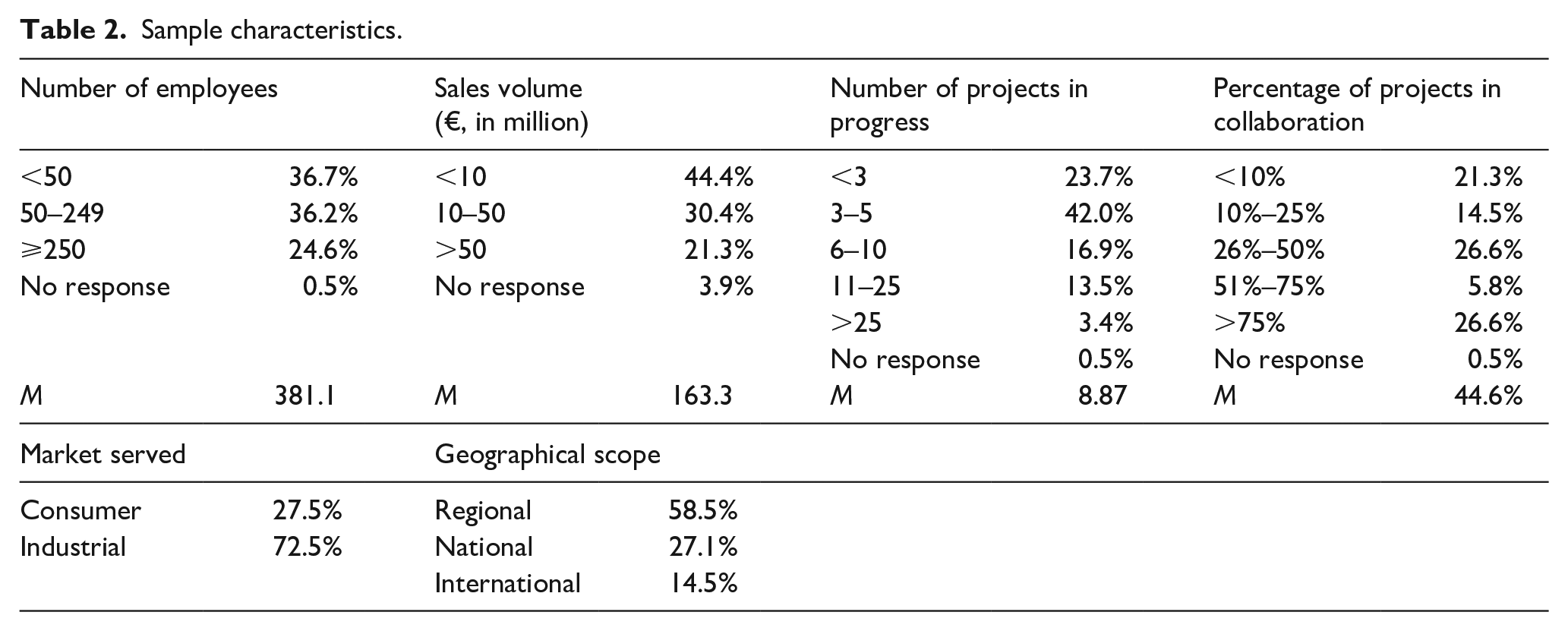
The unit of analysis was the collaborative NPD project. In the letter presenting the study to the firms, we defined collaboration for NPD as a close interorganizational exchange relationship between two or more parties involved in conceiving, testing, producing, or marketing a new product (Bstieler, 2006; Bstieler & Hemmert, 2015). Recipients of the questionnaire were asked to select a new product created jointly with another organization in the last 3 years and in the development of which they had been involved in terms of effort, time, and resources invested. On a 7-point scale, the mean level of involvement was stated as being 5.61. In the questionnaire, recipients were also given guidance regarding which partner in the collaboration they should consider when answering: the one who had also been most involved in terms of effort, time, and resources. In the available sample of projects, the partners with whom they cooperated were distributed as follows: 20.8% with suppliers, 21.3% with customers, 43% with research institutions (universities and technological centers), and 15% with other partners. The mean respondent firm had 381.1 employees, €163.6-million annual revenue, and 8.87 innovation projects in progress, 44.6% of which were carried out in collaboration with other companies (Table 2). This implies that the sample firms are indeed likely to develop new products in collaboration with other companies and institutions and gives an idea of sample strength vis-à-vis explaining the relationships posited in this research. Additional information about the sample characteristics can be found in Table 2.
Sample characteristics.
Armstrong and Overton’s (1977) procedure was used to examine nonresponse bias. No significant differences were observed between early and late respondents in the constructs of this research. Moreover, since the sample included different industries, tests for inter- and between-group differences in the main constructs of the research were carried out. Analysis of variance (ANOVA) and post hoc Tukey multi-comparison tests revealed no significant differences for the constructs. Similarly, differences were tested for type of market served by the new products (i.e., consumer vs. industrial) variable. Nonsignificant differences were found.
The measurement items of our variables are based on previous literature. Nevertheless, they were refined after a pretest with several managers. Formalization was measured with five items adapted from Joshi (2009), and trust with five items based on Bstieler (2006). Adherence to schedule was operationalized by a three-item scale, new product novelty with a three-item scale, and new product quality with a four-item scale adapted from Tatikonda and Montoya-Weiss (2001), Blindenbach-Driessen et al. (2010), Lau et al. (2010), and Ledwith and O’Dwyer (2009).
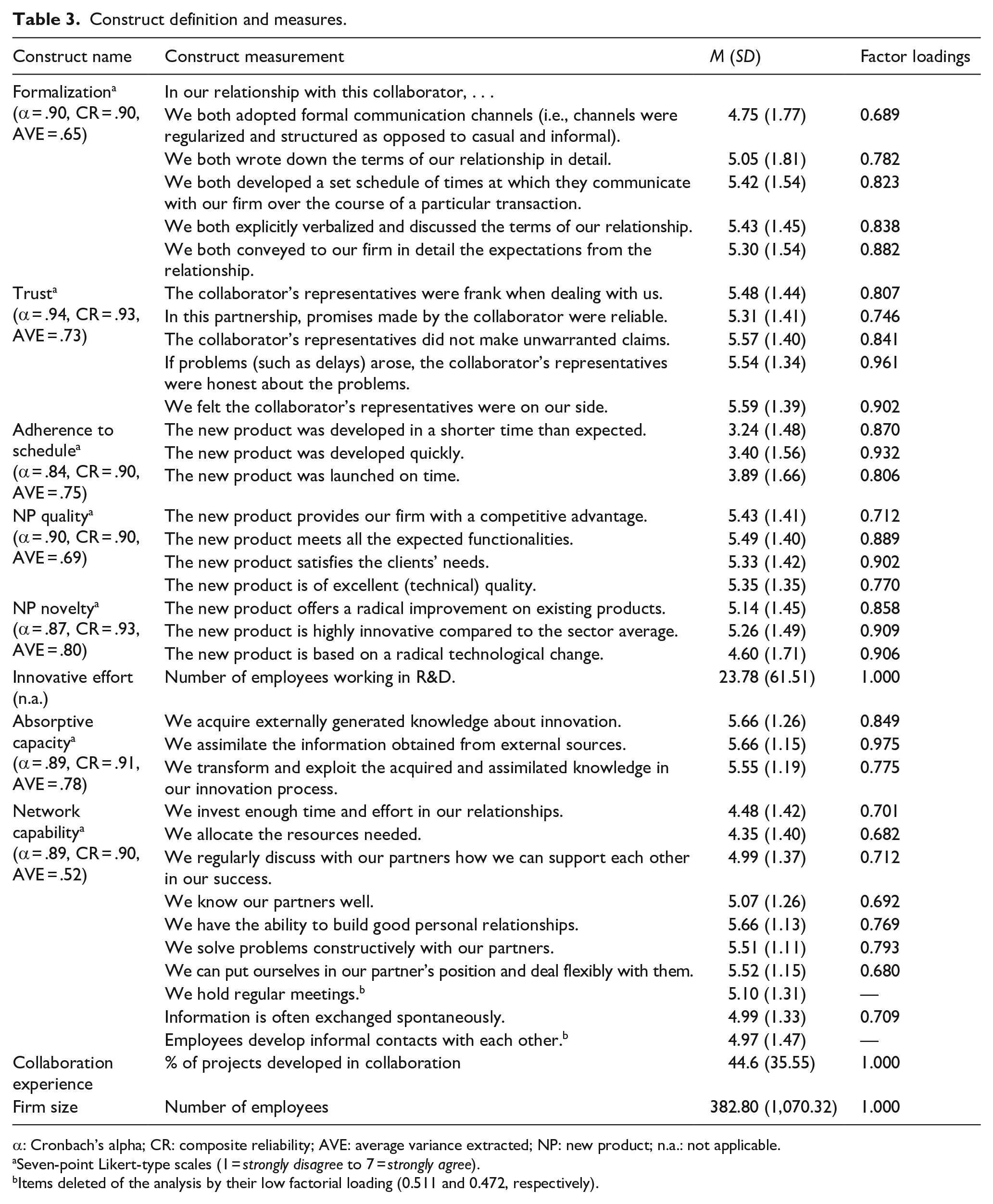
In the study, we controlled for the possible effect of several variables which the literature feels might affect the dependent variables included in the model. First, we consider that innovative effort, in other words the quantity of resources a firm dedicates to R&D over a given period of time (M. Nieto & Quevedo, 2005), might influence new product performance. As the second variable, we include a company’s absorptive capacity, defined as the ability to recognize the value of, assimilate, and apply information from external sources for business purposes (W. M. Cohen & Levinthal, 1990). This variable is linked to different exploration and exploitation innovations (Bierly et al., 2009) and may be closely related to operational outcomes such as adherence to schedule, new product novelty, and quality. Third, the networking capability variable is included, since firms need to develop and utilize their interorganizational relationships (Tortoriello & Krackhardt, 2010; A. Walter et al., 2006) in order to take advantage of partnership knowledge. Fourth, collaboration experience is also taken into account, since it proves fertile ground for collaborations and allows a firm to move quickly in identifying new projects and in funneling them inside the organization (Powell et al., 1996). Firms with greater collaboration experience have more ties, and the ties they have provide more central connectedness, which in turn helps them to better locate themselves in information-rich positions (Powell et al., 1996). Innovative effort was measured by the number of employees working in R&D (M. Nieto & Quevedo, 2005). The absorptive capacity measure included the components proposed by Zahra and George (2002), and network capability was adapted from A. Walter et al. (2006). Collaboration experience was measured through the percentage of NPD projects developed in collaboration. Table 3 offers the specific item measurement and the main descriptive statistics.
Construct definition and measures.
α: Cronbach’s alpha; CR: composite reliability; AVE: average variance extracted; NP: new product; n.a.: not applicable.
Seven-point Likert-type scales (1 = strongly disagree to 7 = strongly agree).
Items deleted of the analysis by their low factorial loading (0.511 and 0.472, respectively).
In addition, in the model we included variables such as firm size, type of partner, and type of industry in order to control sample heterogeneity. In particular, we added three dummy variables related to the industrial sector (“food, beverage, and textile”; “chemical and plastic”; and “professional service”) as well as a further three dummy variables related to the partners with whom the firm had developed the product (“customers,” “suppliers,” and “other firms”). Projects in the computer, electronic, and transportation equipment manufacturing industry and which had been developed with a research institution as a partner served as our reference groups for the estimation.
Unidimensionality, reliability, and validity
Scale validation was carried out using widely employed techniques (Bagozzi & Yi, 1988). Composite reliability (CR) and average variance extracted (AVE) statistics were used to determine the reliability and convergent validity of the variables. The CR of our measures was over .70. After deleting two items of the network capabilities scale because of their low factor loadings (<0.600), all AVE was near to or above the recommended .50 level (Bagozzi et al., 1991). Standardized item loadings and alpha coefficients also exceeded the recommended level. Overall, these statistics evidence the sound psychometric properties of our measurement scales (see Table 3).
Finally, discriminant validity was evaluated by using Fornell and Larcker’s (1981) procedure. This procedure is satisfied when the square of the AVE for each construct is greater than the correlation between the constructs. The square of the AVE ranged from .71 to .91, while the correlation between variables reached a maximum of .58 (see Table 4).
Zero-order correlations and discriminant validity.
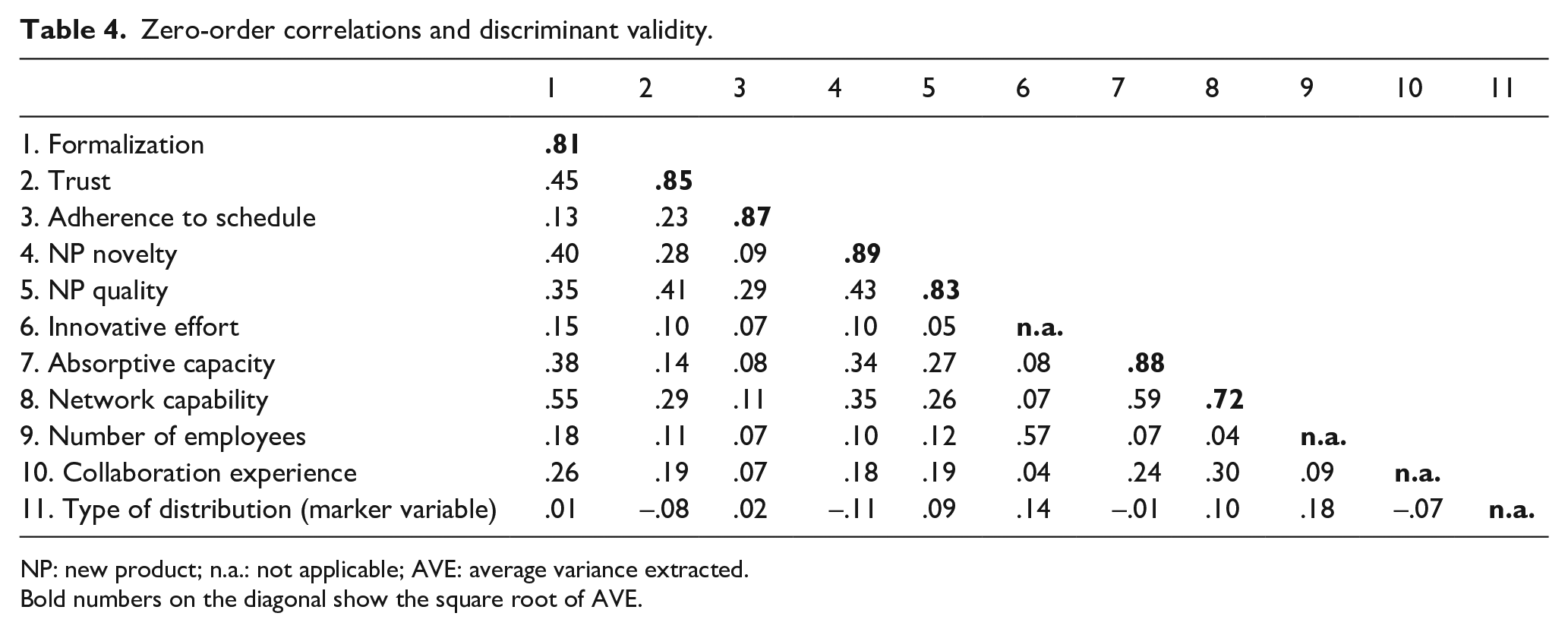
NP: new product; n.a.: not applicable; AVE: average variance extracted.
Bold numbers on the diagonal show the square root of AVE.
Common method bias
Common method variance, or variance attributable to systematic measurement error rather than research constructs, may emerge in studies based on a single informant. The bias caused by common method variance is referred to as common method bias (CMB). In order to ascertain whether this bias is a critical problem in our data, several a priori approaches were used. For example, we allow anonymous answers to the questionnaire and we distance the measurement of the dependent from the independent variables (Podsakoff et al., 2003). In addition, we applied two post hoc techniques to determine the importance of CMB: a Lindell and Whitney (2001) marker variable and the full collinearity test proposed by Kock (2015). Following Lindell and Whitney’s (2001) recommendation regarding selecting a theoretically unrelated variable with the variables of the research, the extent to which product distribution was either direct or indirect was chosen as the marker variable. Bivariate correlations among the marker and the other variables, as well as the adjusted correlations using the lowest positive correlation (r = .01) as a proxy of method variance, indicate there are no significant CMB problems. In addition, the marker variable was included in the estimation, and the results of the hypotheses testing do not change. Second, we applied the full collinearity assessment approach (Kock, 2015) to evaluate CMB when PLS-SEM (partial least squares structural equation modeling) is used. Through this procedure, variance inflation factors (VIFs) are generated for all the latent variables in a model. A VIF of over 3.3 is proposed as an indication that a model may be contaminated by CMB. If all VIFs resulting from a full collinearity test are equal to or below 3.3, the model can be considered free from CMB. The highest VIF in our model is 1.478: that is, our model does not include a latent variable with any VIF above 3.3. An overall review of our findings indicates that CMV is not a serious concern in our study.
Analysis and results
The research model was empirically analyzed using the PLS approach to SEM. PLS offers an alternative to covariance-based SEM and is particularly well suited for circumstances where data are not normally distributed, since it provides extremely robust model estimations (Reinartz et al., 2009; Ringle et al., 2012). A bootstrap test (1,000 subsamples) was used to generate the standard error and t values of the parameters. In order to compare our research model, we introduced sequentially different variables. First, we included the block of the control variables and the main effects of formalization and trust (Model 1). We then included the interaction terms between formalization and trust in adherence to schedule (Model 2), NP quality (Model 3), and NP novelty (Model 4). We chose to incorporate the moderating effects into separate models so as to control for the increase in Type I error that occurs when correlated moderator effects are investigated (J. Cohen et al., 2013; Frazier et al., 2004).
The standardized parameter estimates and the R2 of the dependent variables obtained in our analysis are shown in Table 5. According to Model 1, the impact of formalization on adherence to schedule is not significant; that is, H1a is rejected. The standardized parameters of formalization on new product quality and on new product novelty are both positive and significant (β = .15, p < .05, and β = .22, p < .01, respectively), thus confirming H1b. As regard H1c, the sign is the opposite to the one hypothesized. Models 2, 3, and 4 show that H2a, H2b, and H2c are confirmed, respectively. In other words, trust positively moderates the relationship between formalization and adherence to schedule (β = .13, p < .05), formalization and new product quality (β = .12, p < .05), as well as formalization and new product novelty (β = .12, p < .05).
Standardized parameter estimates.
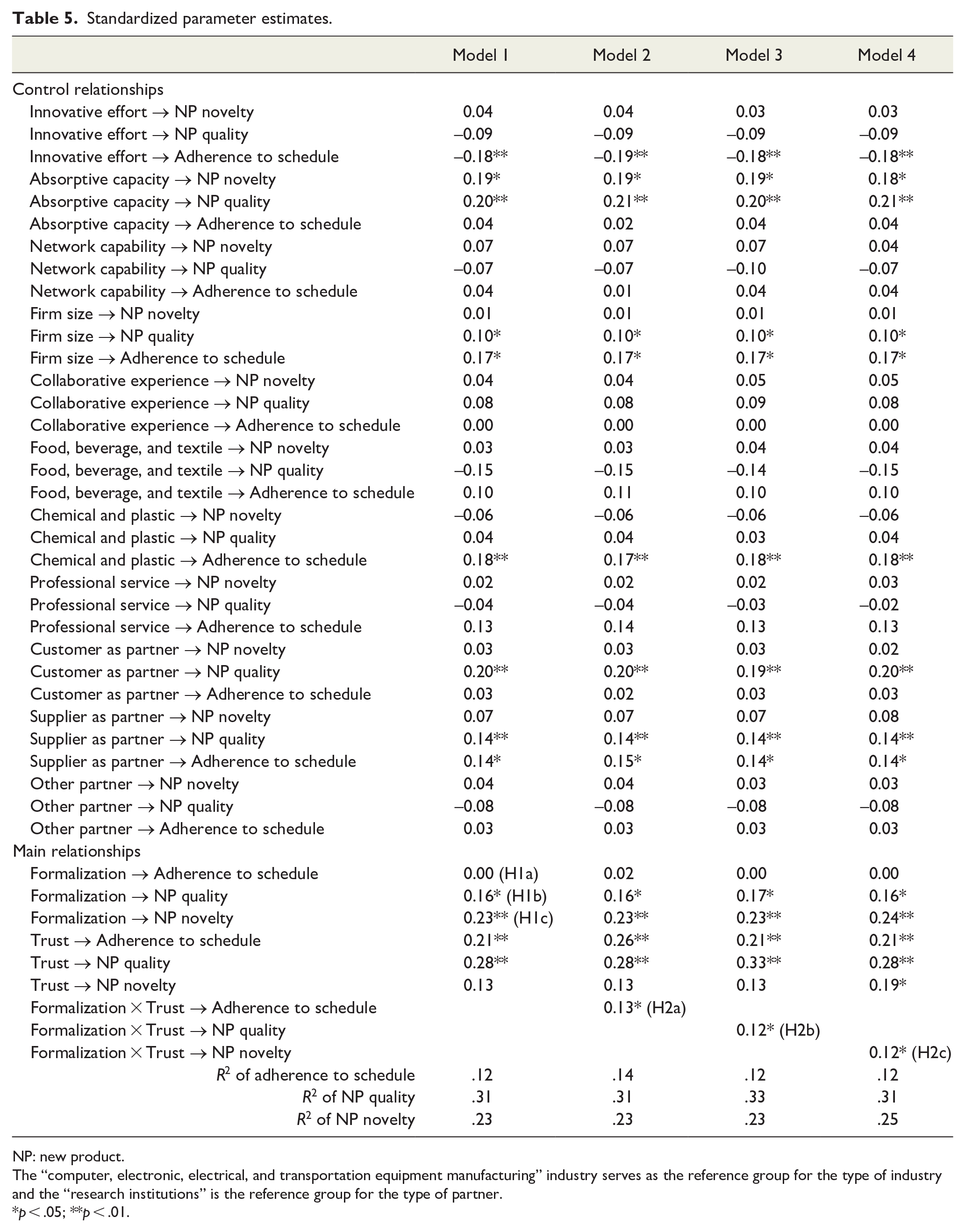
NP: new product.
The “computer, electronic, electrical, and transportation equipment manufacturing” industry serves as the reference group for the type of industry and the “research institutions” is the reference group for the type of partner.
p < .05; **p < .01.
In order to help interpret the interactions, we calculated the relationship between formalization and the three dimensions of the product outcomes at one standard deviation below and one standard deviation above trust. As a rule of thumb and by way of an approximation (Hair et al., 2017), the slope of the high level of trust is the simple effect (i.e., 0.02 for adherence to schedule) plus the interaction effect (0.13), that is 0.15, while the slope of the low level of trust is the simple effect (0.02) minus the interaction effects (–0.13), that is −0.11. Similar approximations are performed for the other moderated effects (Figure 2).
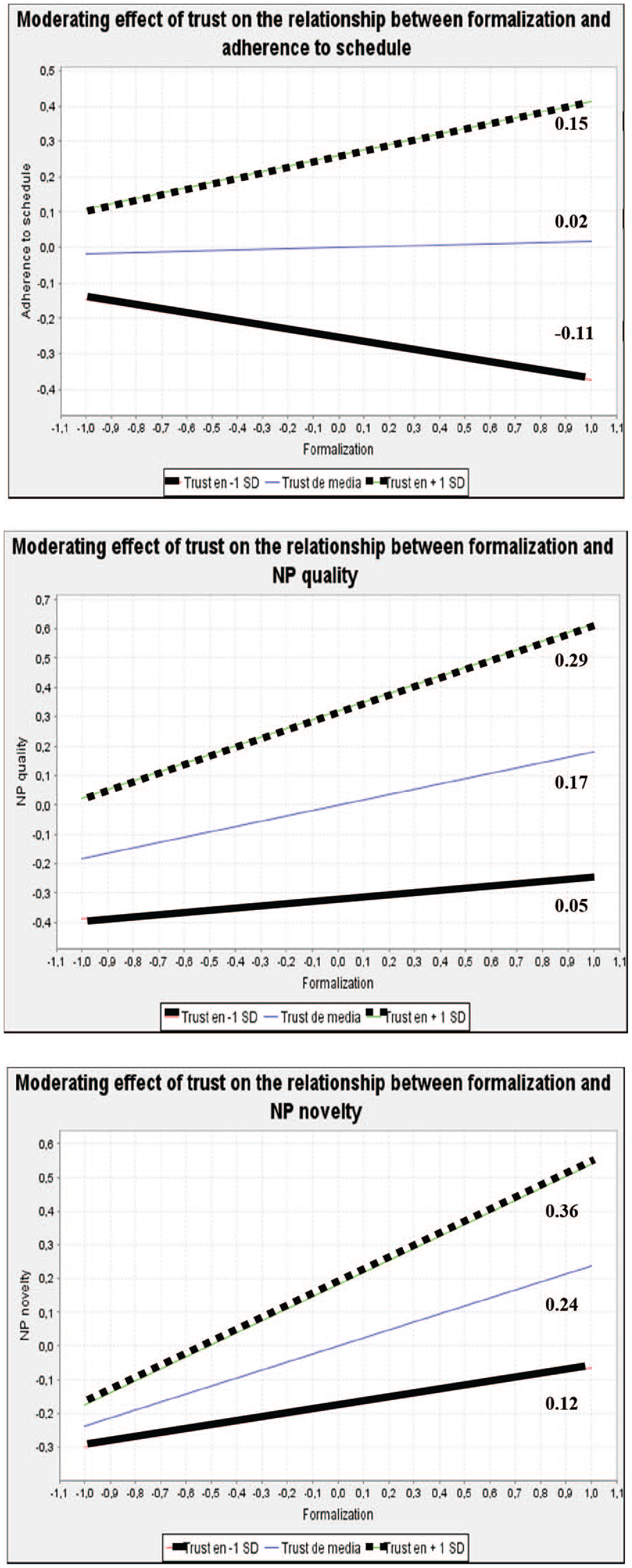
Graphical representation of moderating effects.
Discussion
This study provides deeper insights into what role formalization plays in NPD collaborations. To answer the question of whether formalization may encourage or impede NPD collaboration outcomes, we first studied the direct impact of formalization on new product performance in terms of adherence to schedules as well as the quality and novelty of the new product developed in collaboration. Second, we looked at the interaction effects between formalization and trust in order to empirically contribute to the long-running debate on whether formalization and trust complement each other (Faems et al., 2008), replace each other (Dyer & Singh, 1998; Granovetter, 1985; Gulati, 1995; Carson et al., 2006), or impair each other (Bstieler et al., 2015; Ghoshal & Moran, 1996).
With regard to the direct impact of formalization on NPD collaboration outcomes, our results confirm that extensive formalization improves the quality of the new product developed in collaboration. This supports our arguments that formalization helps parties to achieve mutual understanding (Blomqvist et al., 2005; Vlaar et al., 2006), bringing a level of transparency to interactions and information exchanges (Wathne & Heide, 2000) that increases coordination and facilitates cooperation and productive exchanges during NPD collaboration (Massey & Kyriazis, 2007; Sivadas & Dwyer, 2000). Furthermore, formalization encourages interorganizational learning and the transfer of tacit knowledge (Janowicz-Panjaitan & Noorderhaven, 2008; Poskela & Martinsuo, 2009), which is the foundation for developing new high-quality products.
However, formalization is seen to have no significant direct impact on adherence to schedule. Even though having a well-structured process and clearly defined objectives should make partners more focused on the project and on successfully completing it, this expected positive influence on adherence to schedule seems to be counteracted by the substantial resources and time that extensive formalization demands (Dickson et al., 2006; S. G. Walter et al., 2015).
Contrary to what we expected according to previous authors who have stated the negative impact of formalization on the degree of new product novelty because of its negative influence on creativity and flexibility (Leifer et al., 2000; Mintzberg, 1994; Nooteboom, 1999; Poskela & Martinsuo, 2009; Veryzer, 1998), we empirically find a positive and significant impact. These surprising results are in line with the findings of Holahan et al. (2014) who maintain that radical projects are often the result of more formal development processes. These authors considered that handling complex and uncertain NPD projects in a more structured and less flexible manner might be a means of mitigating the project’s increased level of risk (Holahan et al., 2014). Another possible explanation could be related to the fact that formalization limits the level of redundant information (Deshpandé & Zaltman, 1982), and thus encourages collaborators to put more valuable and novel information into the NPD (Noordhoff et al., 2011). In any case, it is important to note that, unlike other dimensions of NPD collaboration outcomes—new product quality and adherence to schedule—and apart from the interaction effect, the direct impact of formalization on novelty is more powerful than that of trust.
As regard the interaction of formalization and trust, Figure 2 offers a closer analysis. It shows us that formalization by itself is not sufficient—except for new product novelty—but that it requires a medium or high level of trust in order to remain productive in terms of new product quality, and a high level of trust to improve adherence to schedule. In contrast, when the new product is developed in a situation of little trust, the effect of formalization on adherence to schedule becomes negative. Trust seems to buffer the dysfunctional effects of excessive formalization and monitoring (Heide et al., 2007). Trust covers the “blind spots” of formalization when unexpected situations and challenges arise that might not have been specified ex ante in the NPD collaboration (Wallenburg & Schäffler, 2014). In low-trust relationships, executives might act cautiously in order to guard themselves against the behavior of untrustworthy peers (Massey & Kyriazis, 2007). This may involve seeking assistance well before it is actually required; drawing on multiple, redundant sources of assistance; and making requests more formally than they would normally do (Massey & Kyriazis, 2007; McAllister, 1995). This means that the lack of trust reduces the positive effects of formalization, since without a certain amount of trust, formalization leads to regulations and procedural overloads. However, trust between partners allows them to respond to the need for formalization without creating the burden that arises from procedural overload (Moenaert et al., 1994). In addition, trust ensures that the knowledge and information exchanged through interorganizational learning in the collaboration is both valuable and relevant to the collaborative development of new high-quality products. We thus conclude that formalization and trust may complement each other and that finding the right combination between the two might help to deal with the dysfunctions of formalization and to improve all the dimensions of NPD collaboration performance.
These conclusions offer valuable managerial insights. Managers involved in NPD collaboration should try to routinize, plan, and structure the contacts between collaborators in order to improve new product quality and novelty. Contrary to the widespread belief that radical products require more flexible development processes, the greater the degree of novelty in the new product developed in collaboration, the more that managers should stress the need to follow rules and procedures. Moreover, in order to fully profit from the benefits of formalization, managers should be aware of the importance of trusting their collaborators, since without trust the dysfunctions of formalization might cancel out its contribution to collaboration outcomes or, as happens with adherence to schedule, even turn negative. Therefore, it may be generally assumed that some threshold amount of trust is needed for collaboration to succeed (Blomqvist et al., 2005).
Limitations and future research
This research has several limitations, which also point the way toward future areas of inquiry. First, information is taken from only one partner; in other words, we do not take into account how the other partner involved in the collaboration evaluates the variables that are subject to analysis. This way of gathering information might trigger the so-called common method variance bias. What is more, this proves to be a particularly limiting aspect in this study, not only because a single informant is evaluating a dyadic relationship retrospectively, but also because the information requested relates to concepts, such as trust, which are by no means easy to measure objectively. When the requested information admits a response that involves a certain degree of subjectivity, the likelihood of there being an informant’s own systematic response tendencies may increase (Malhotra et al., 2006). We have sought to dispel the presence of such biases by restricting the choice of collaboration project to the last 3 years and by ensuring that informants are familiar with the topic they are answering questions about. In addition, we tested for the importance of CMB by applying several procedures (Kock, 2015; Lindell & Whitney, 2001; Podsakoff et al., 2003). Whatever the case, given that these controls are only suited to ruling out the existence of serious biases stemming from the use of a single informant, future research should seek to garner the viewpoints of the different partners involved in the collaboration.
Second, the sample includes projects developed in collaboration with different types of partners (e.g., suppliers, customers, universities, or research centers). In line with work suggesting that the chosen partner depends on the objective pursued by both parties and that said choice influences collaboration (Fritsch & Lukas, 2001; Miotti & Sachwald, 2003; Pittaway et al., 2004), it would be interesting for future research to explore whether there are significant differences in our model depending on the type of partner selected. In this sense, and in order to propose a more parsimonious model, collaborations could be grouped into two types: vertical (suppliers and clients) and horizontal (research centers and universities), following the example of previous work (Mesquita & Lazzarini, 2008; M. J. Nieto & Santamaría, 2010).
Third, in our search for a parsimonious model, we focus exclusively on three operational dimensions of NPD collaboration outcomes. However, there seems to be at least one other valuable category of criteria involved when evaluating collaborative NPD efforts that might help us gain deeper insights into the long-standing debate concerning whether formalization and trust complement, substitute, or impair each other: relational outcomes (i.e., relationship satisfaction) (Bstieler, 2006). Relational outcomes, such as relationship satisfaction, have been widely studied in relationship marketing literature. For example, in research on distribution, channel member satisfaction reflects their assessment of all the outcomes of the working relationship with another organization, including economic and social outcomes (Geyskens & Steenkamp, 2000). Seeking parallelism with NPD collaboration, satisfaction would be an organization’s assessment of all the outcomes of its relationship with another innovative partner, a situation in which satisfaction is a much-appreciated result. Moreover, when the firm seeks a long-term relationship with the partner, satisfaction proves a vital factor in achieving such outcomes. Future studies might therefore consider this level of NPD performance.
Fourth, the R2 for adherence to schedule is low for a study that is based on perceptional data. This points to the existence of relevant variables that could help us better explain this NPD performance dimension and which have been overlooked in this work, since the focus here lay on the productive or counterproductive effects of formalization on NPD collaboration. However, future studies might approach this dimension of NPD collaboration performance in an effort to research its antecedents and their interaction with the formalization of NPD collaboration.
Finally, authors such as Poskela and Martinsuo (2009) report that the nature of the front end of NPD, which concerns the actions that occur prior to the formal NPD project, differs from development activities in terms of task characteristics and people involved (Koen et al., 2001). These differences make the inclusion of distinguishing between the different phases of NPD very important in order not to generate conflicting research results and so not cause difficulties in their interpretation. Petersen et al. (2005) go even further by distinguishing five different stages at which partners can commence their NPD collaboration. The authors then introduce these different stages as moderators in their model. Future studies should thus consider exploring the links between formalization and the different NPD phases in which partners collaborate in an effort to determine whether the role played by formalization in NPD collaboration varies across stages.
Footnotes
Author contributions
M.P. contributed to conceptualization, methodology, investigation, data curation, and writing–original draft preparation. A.I.R.-E. contributed to methodology, software, validation, formal analysis, writing–review and editing, and funding acquisition.
Declaration of conflicting interests
The author(s) declared no potential conflicts of interest with respect to the research, authorship, and/or publication of this article.
Funding
The author(s) disclosed receipt of the following financial support for the research, authorship, and/or publication of this article: The authors are grateful for the financial support of the Ministerio de Economía, Industria y Competitividad, Plan Estatal de Investigación Científica y Técnica y de Innovación 2013–2016, project reference ECO2017-86628-P.