




Abstract
Crop waste burning in open fields is a matter of concern in relation to health-related complications in humans of all age groups, especially children. An epidemiological study was been done on school children to estimate the decline in their physiological parameters due to crop residue burning activity. A total of 150 children were inspected for 3 years (2013-2016) at 3 different sites in India. During sampling periods, spirometric tests, ambient particulate matter having size ≥10 µg−3 and ≥2.5 µg−3, and other covariates were measured twice in a fortnight. After adjustment of data in multivariate mixed-effect model, prediction and statistical analyses were done. From results obtained, it has been observed that season wise, the level of fine particulate matter (PM10 and PM2.5) was higher in rice crop residue burning seasons than in wheat crop residue burning seasons by 87% to 123% than permitted monthly limits. As per dose-response relationship, maximum degradation was observed in forced vital capacity (−7.62%) and peak expiratory flow (−6.23%) parameters from their baseline values due to burning activities. Prediction equations have been purposed to observe the future trends in physiological parameters of children. Based on Tiffeneau index, an unrecoverable effect was seen in lung parameters. Trends were alarming and may cause serious complications in early age of humans.
Introduction
As per reports, raised levels of suspended particulate matters (SPMs having size PM10 and PM2.5) in ambient environment is the prime source to trigger various cardiopulmonary diseases such as asthma, shortness of breath, and lung function disorders in humans.1-5 The burden of particulate matter (PM) affects the respiration rate and damages the lung organs by oxidative stress.6-8 Among the sources, agriculture crop residue burning (ACRB) is a major source of ambient PMs as biowaste burning and forest fires.9-12 As per the World Health Organization reports, ACRB is an intentional practice by inhabitants that contributes approximately 29% of total PM pollution on a global scale.13,14
This study was conducted in the northwest part of Asia. The maximum area in this part is used for agriculture practice. 15 Satellite-based studies reported the formation of dense clouds of smoke during and after ACRB periods and the smoke stays in ambient air for a long period of time through thousands of kilometers in this area.16,17 Many studies proposed statistically significant prediction models to evaluate human health parameters by exposure to SPM pollutants caused by industries, vehicles, construction sites, and indoor pollutants.18-20 These sources are constant emitting sources. 14 ACRB practice is an episodic practice that releases a huge amount of PM pollution (20-40 times more than National Ambient Air Quality Standards) in ambient environment. 19 By critically reviewing the existing statistical models, it has been observed that the assessment models of exposures to pollutants are lacking in various aspects like design of study, sampling procedure, instrumentation, exposure estimation procedure, and statistical treatment of collected data.5-7 The existing prediction models are adjusted to limited number of covariates and have estimated prediction accuracy of 80% to 85% between measured and predicted values. 21 There are still a number of lurking parameters that have to be identified and need to be adjusted in models.2,5 In the present study, the effect of PM on respiration-related parameters is quantified with adjustment of covariates. The prediction equations were proposed to forecast the trends in physiological parameters due to identified effect modifiers in areas affected by ACRB.
Methodology and Instrumentation
Study Design
The study was carried from September 2013 to August 2016. The study period covers 3 seasons of rice and 3 seasons of wheat crops residue burning. Ground-based aspects for selection of study areas, subjects, instruments, and sampling frequency were studied before the actual collection of data. 13
Selection of Sites and Subjects
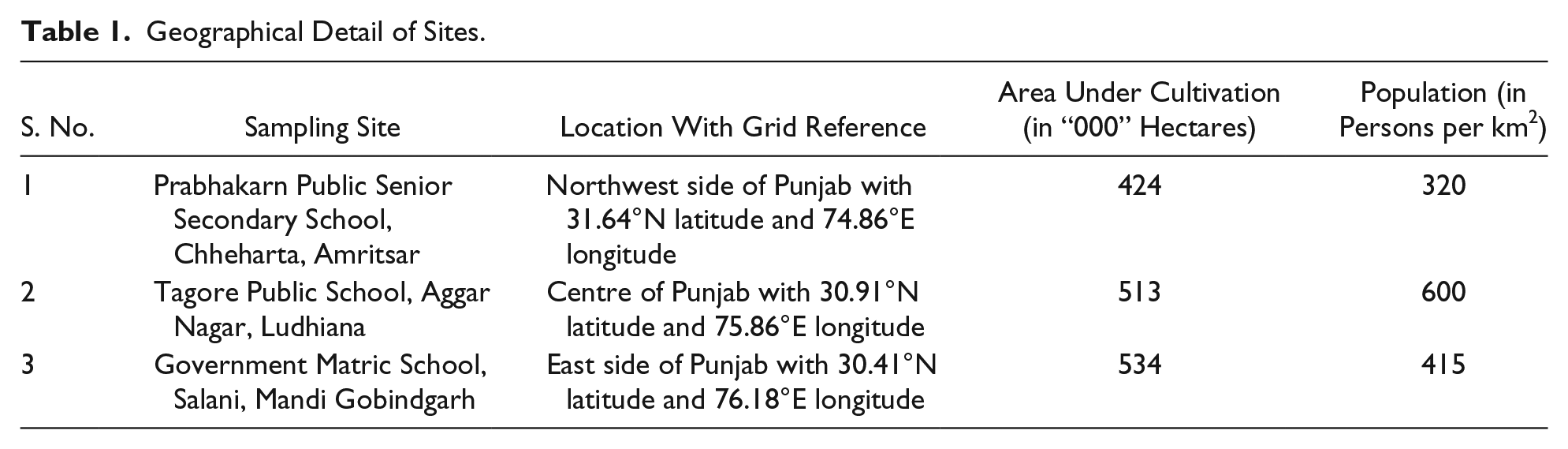
Punjab (India) state was selected for the exposure assessment of ACRB practice on humans. Rice and wheat are the main cereal crops of this area due to their favorable geographical conditions. Every year, this state produces approximately 91.2 metric tons/year agriculture waste. 19 Three schools were selected for sampling and data collection at 3 different sites of the region (one at each site). The details of sites are given in Table 1. The subjects were asked the American Thoracic Society (ATS) questionnaire for their background and health status. Spirometric tests were performed on each subject to check the Tiffeneau index (ratio of forced expiratory volume in 1 second [FEV1])/(forced vital capacity [FVC]). The subjects having ratio less than 80% were considered as unhealthy; hence, they are not included. 16 As per the ATS questionnaire and index ratio more than 80%, a total of 150 students (50 from each school) living within 1 km from schools were selected and recruited. The anthropometric details of subjects are given in Table 2. The details regarding previous medical history, passive smoking, or asthma symptoms are obtained by consent forms given to each family members of the selected candidates.
Geographical Detail of Sites.
Site-Wise Anthropometric Details of Subjects.
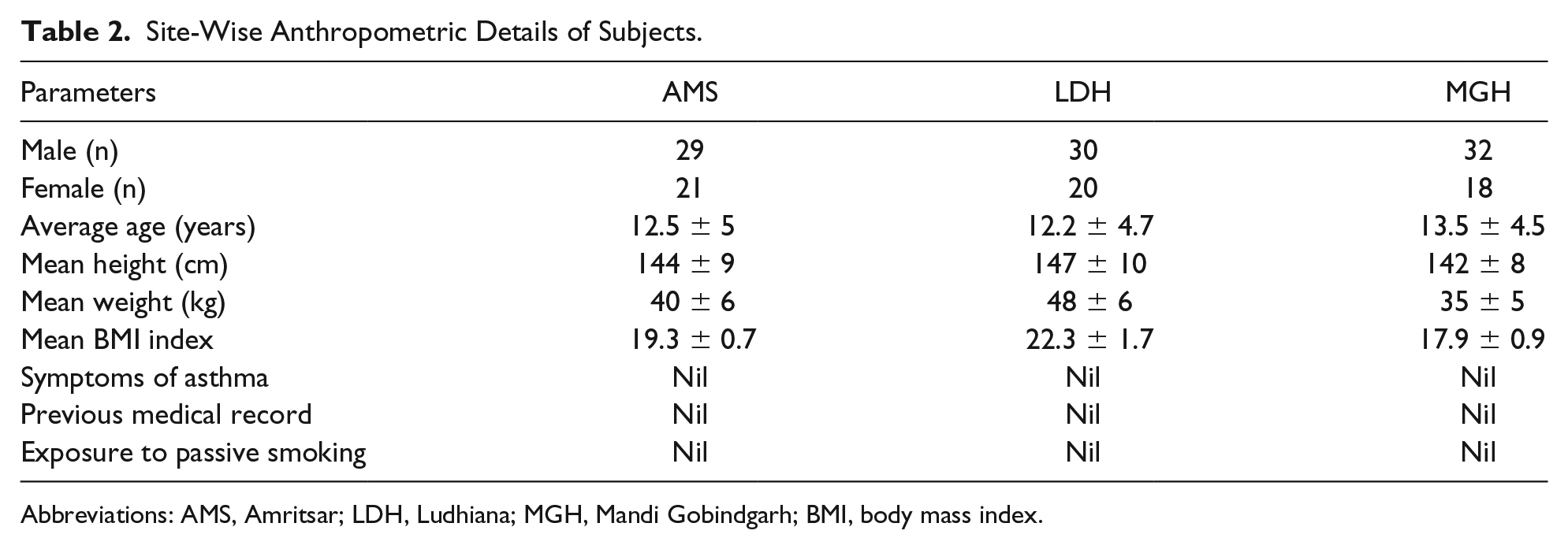
Abbreviations: AMS, Amritsar; LDH, Ludhiana; MGH, Mandi Gobindgarh; BMI, body mass index.
Instrumentation
PM Measurement
The PM concentration levels were measured using Real-Time Optical Light Scattering Aerosol Monitor (RTOLSAM, Grimm Technology, Model 1.108, Germany) that is portable, light weight, and easy to operate.13,14 The test device consists of 4 modes of operation: occupational health, environment, particle count, and mass concentration. The data were measured using mass concentration mode (15 channels, 0.23 µm to 20 µm). PM10 and PM2.5 were computed from mass concentration mode using Grimm Technology equations. 11 As per this mode, the PM10 and PM2.5 concentrations are calculated using Equation (1):

where Mi indicates channel-wise mass concentration and Fi is the weighting factor of the ith cannel of the test device. 12
Physiological Parameters Measurement
Physiological parameters such as FVC, FEV1, peak expiratory flow (PEF), and forced expiratory flow 25% to 75% (FEF25-75%) of all the selected subjects were measured by SPIRODOC (Medical International Research, Italy). For spirometer measurements, the device is automatically adjusted for BTPS (body temperature, ambient pressure) conversions. The device is compliant with ATS/ERS (European Respiratory Society) protocols.1,20 Individually, spirometer parameters were recorded by instructors (with initial guidance to each candidate) after entering anthropometric data of subjects such as ethnicity, age, height (centimeter), weight (kilogram), and gender 5 times with interval of 10 minutes. The average of best 3 maneuvers were considered for analysis. For meaningful interpretation of spirometer parameters, the device compared the values with predicted values as per ERS equations and calculated percent predicted values.2,4 After computations, the data were stored in inbuilt memory and were retrieved later. 17
Statistical Analysis
Multivariate mixed-effect model has been adopted for prediction of trends with lag adjustment.7,9,14 The lag period signifies the sensitivity of dependent variables with regard to various time slots. The lower value of lag parameter indicates high sensitivity in the measured parameters due to the role of independent variables. This model has flexibility to adjust both fixed and random variables with their normal and nonnormal distribution over time.8-10 In contrast to prediction models, this model also accounts any missing data, heterogeneity between groups, repeated correlations, and variance-covariance relations of individual parameters for accuracy in estimation of sampled group. 9 During the longitudinal period of study, both dependent variables (physiological parameters—FVC, FEV1, PEF, and FEF25-75%) and independent variables (SPM, covariates like anthropometric parameters of selected subjects, and meteorological parameters) were repeatedly measured. 3 The Akaike criteria and likelihood tests were simultaneously performed to examine the nested and nonnested clusters accounting for covariates correlation coefficients.9,13
Ethical Approval and Informed Consent
The ethical standards of the Indian Council of Medical Research committee with Reference No. 5/8/4-03-Env-1/0-NCD-I were followed to perform these studies, and involvement of human participants was in accordance with the 1964 Helsinki declaration and its later amendments or comparable ethical standards. Written informed consent forms were collected from selected children (duly signed by school authorities and their parents) prior to involvement in the study.
Results
Particulate Matters Concentration Level
The study period covers 3 rice and 3 wheat crop residue burning seasons. The rice season was from July to December, and the wheat season was from January to June. The season-wise meteorological conditions are given in Table 3.
Meteorological Parameters’ Variations in Rice and Wheat Crop Seasons.

These crops are cyclic by nature and are very sensitive to any kind of delay in their sowing process. In rice season, crop was ready to harvest in the middle of October. In November, crop remains were disposed of by burning in open fields. This practice increased the SPM level in the ambient air 20 to 70 times as per the National Ambient Air Quality Standards limits. 4 Due to meteorological constraints (low temperature, less precipitation, less wind speed, and high humidity), the rate of dispersion of PM concentration got reduced and hence the raised level of PM may be stable in the areas for next 1 to 2 months.5,15 During and after the burning periods, visibility was reduced due to thick layers of smoke in the surrounding environment. The satellite studies clearly present the trends in rice season. 16 Similarly, in the wheat season, the crop was ready to harvest in the middle of March. In April, the deposition of crop waste was done by burning practice in the fields. Again, the concentration level of SPM crossed standard levels by 10 to 40 times and violates the pollution control agencies’ guidelines. During wheat seasons, weather was favorable in dispersion of pollutants. Hence, in wheat season, PM levels took less time than rice season to settle in the ambient air.5,22 The levels of PM10 and PM2.5 are presented in Table 4.
Season-Wise SPM Level.
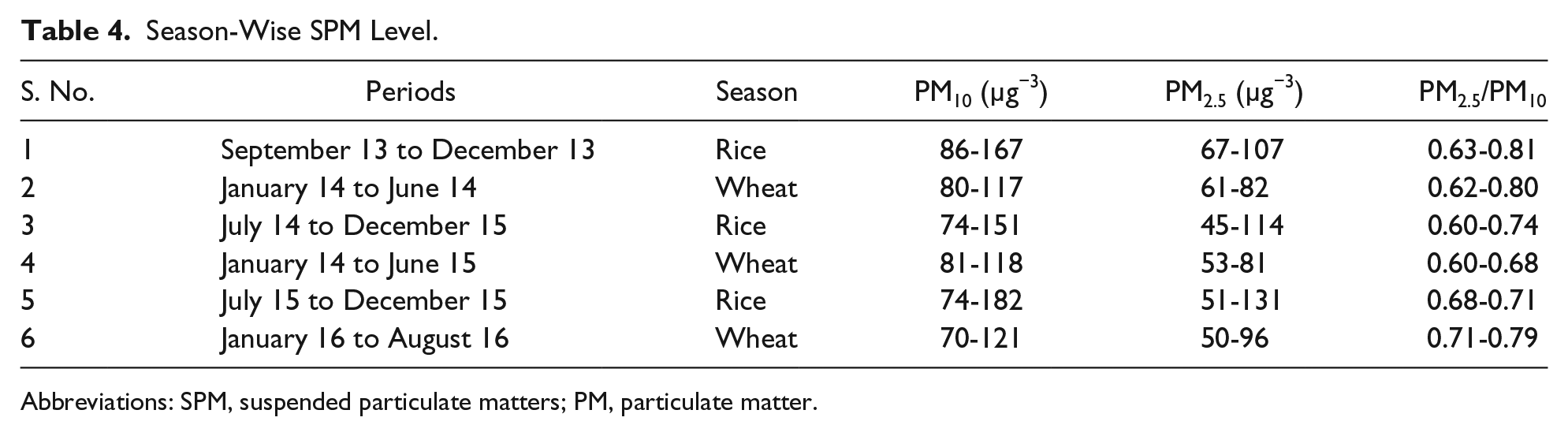
Abbreviations: SPM, suspended particulate matters; PM, particulate matter.
It has been observed that the concentration levels of SPM were high in both seasons and violates safely limits. The levels were very high in rice season than wheat season due to the following reasons:
During wheat seasons, the dispersion coefficient is very favorable in settlement of SPM in the environment due to high temperature and moderate wind speed of selected sites. In rice season, the dispersion coefficient is low due to unfavorable meteorological conditions.19-21
In wheat crop season, 20% to 40% of wheat crop waste was stored as fodder by the local inhabitants. But rice waste is not stored due to silica content, which is considered as unhealthy for domestic animals. 6
These are the major reasons for such differences in PM levels in both seasons. The PM2.5/PM10 ratio is also a key factor related to SPM pollution. 7 The ratio inferences the content of fine PM in accumulative concentration level. In both seasons, the ratio varied from 0.60 to 0.81, which reveals that PM2.5 had a major portion in cumulative PM10 concentration. Again, compared with wheat season, the ratio was more in rice season (Table 4). The PM having smaller size is more dangerous to human health because of their deep impact on alveolar sacs of lungs and reduces its capacity.2-5 Hence, it has been hypothesized that the raised level of SPM concentration may affect the working capacity of various respiration-related physiological parameters of humans.
Assessment of Physiological Parameters
Season-wise, percent changes in physiological parameters due to raised level of SPM in the affected area are shown in Table 5.
Percent Changes in Physiological Parameters Due to Cause of Crop Residue Burning in the Rice and Wheat Seasons (P < .05).
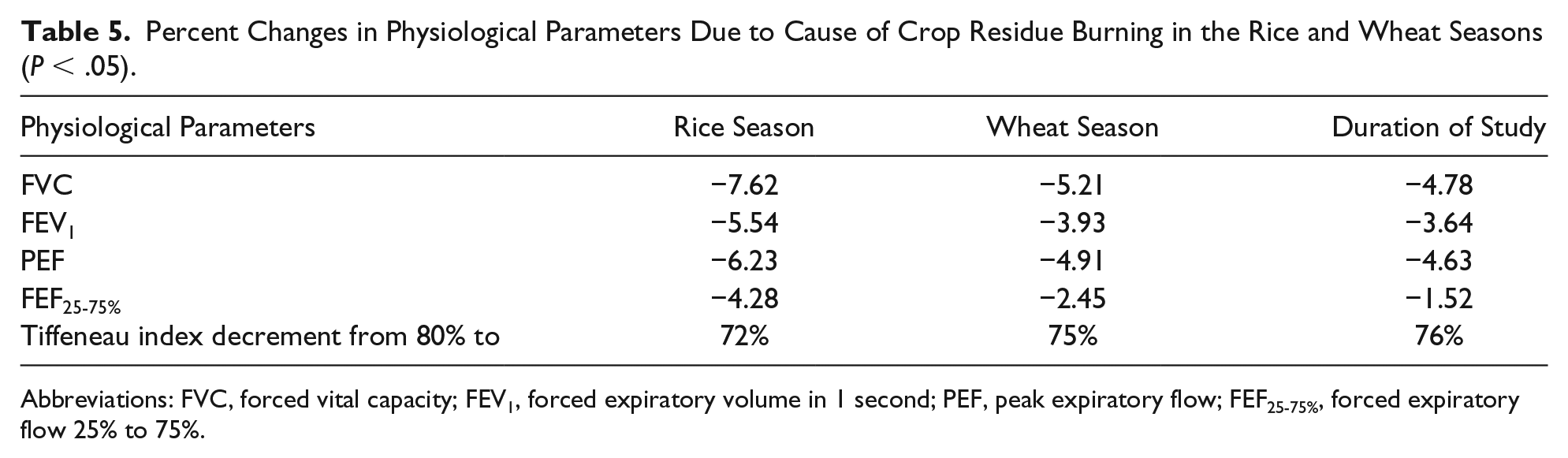
Abbreviations: FVC, forced vital capacity; FEV1, forced expiratory volume in 1 second; PEF, peak expiratory flow; FEF25-75%, forced expiratory flow 25% to 75%.
In rice seasons, maximum fall was estimated in FVC (−7.62) and PEF (−6.23) than other parameters. Similarly, in wheat seasons, maximum decline was observed in FVC (−5.21) and PEF (−4.91) than the remaining parameters. For the total study period, FVC (−4.78) and PEF (−4.63) had the same trends as rice and wheat crop waste burning seasons. It is very clear from the results of Table 5 that the degradation in physiological parameters was due to raised level of SPM in ACRB episodes. The physiological parameters are very sensitive to raised levels of SPM in ambient environment. Overall, the degradation in FVC and PEF were more than FEV1 (−3.64) and FEF25-75% (−1.52). As per the dose-response relationship, the physiological parameters of selected subjects lost the capacity (% predicted of FVC = −1.67, FEV1 = −1.23, PEF = −1.46 and FEF25-75% = −0.74). The Tiffeneau index was also reduced to 75%, which may indicate a permanent degradation in physiological parameters of selected subjects from baseline values. The respiration system also tries to recover the effects, but the effect was so intense that the mechanism is unable to recover. Prediction equations have been proposed to predict the trends while considering every relevant parameter.
For exhaust analysis, correlation coefficients between dependent variables and independent variables were measured. Based on the statistically significant correlation coefficients (having P value <.01) between the variables, PM10 (−0.86), PM2.5 (−0.91), ambient temperature (−0.76), and body mass index (BMI) of subjects (−0.73) were observed to be the most significant effect modifiers. Statistical iterations were performed for each physiological parameter using a mixed-effect model with accumulation of variance-covariance relations of parameters to estimate the coefficients. Iterations were fitted with measured data, and their closeness to predict values were evaluated using concordance correlation coefficient. Coefficient for different effect modifiers are shown in Table 6.
Estimated Multiplying Coefficients for Individual Effect Modifiers.
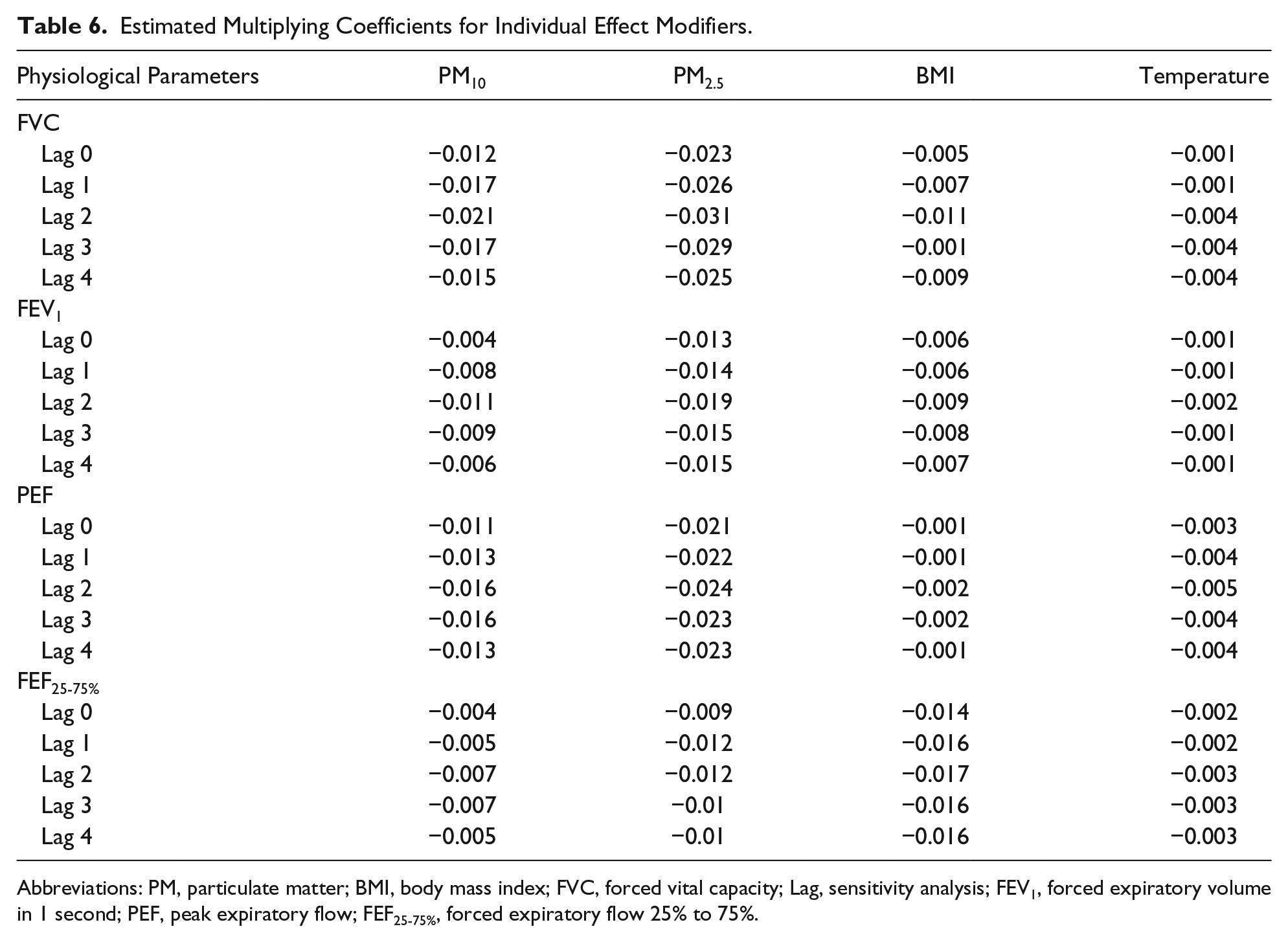
Abbreviations: PM, particulate matter; BMI, body mass index; FVC, forced vital capacity; Lag, sensitivity analysis; FEV1, forced expiratory volume in 1 second; PEF, peak expiratory flow; FEF25-75%, forced expiratory flow 25% to 75%.
During different lag periods, lag 2 had strongest associations for different effect modifiers on measured physiological parameters. The statistically significant prediction equations for FVC, FEV1, PEF, and FEF25-75% are given as follows:
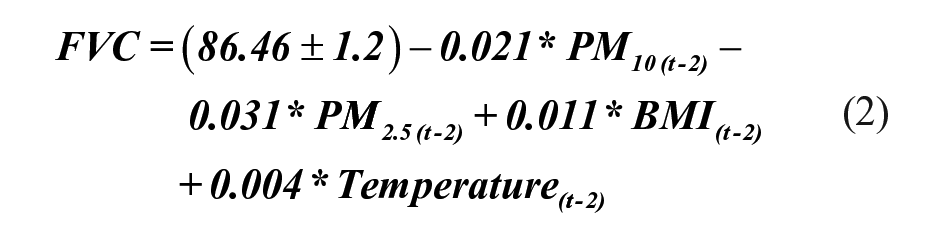
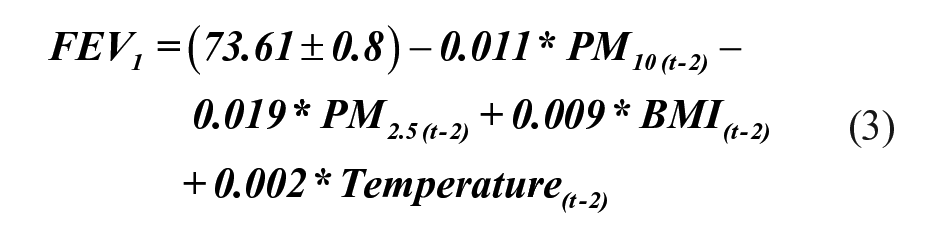

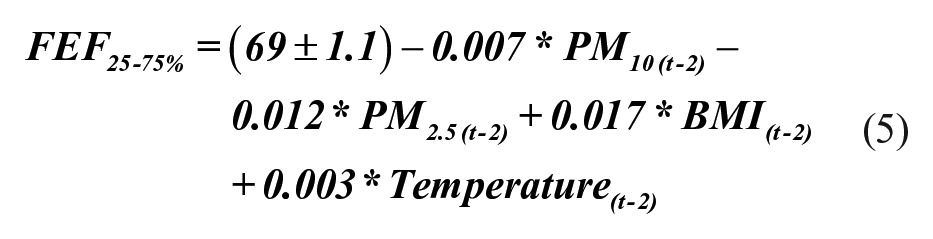
The validation of time-lagged prediction equations were tested by concordance correlation coefficient for physiological parameters. The agreement between actual and predicted FVC (R2 = 0.96), FEV1 (R2 = 0.93), PEF (R2 = 0.97), and FEF25-75% (R2 = 0.98) are shown in Figure 1.
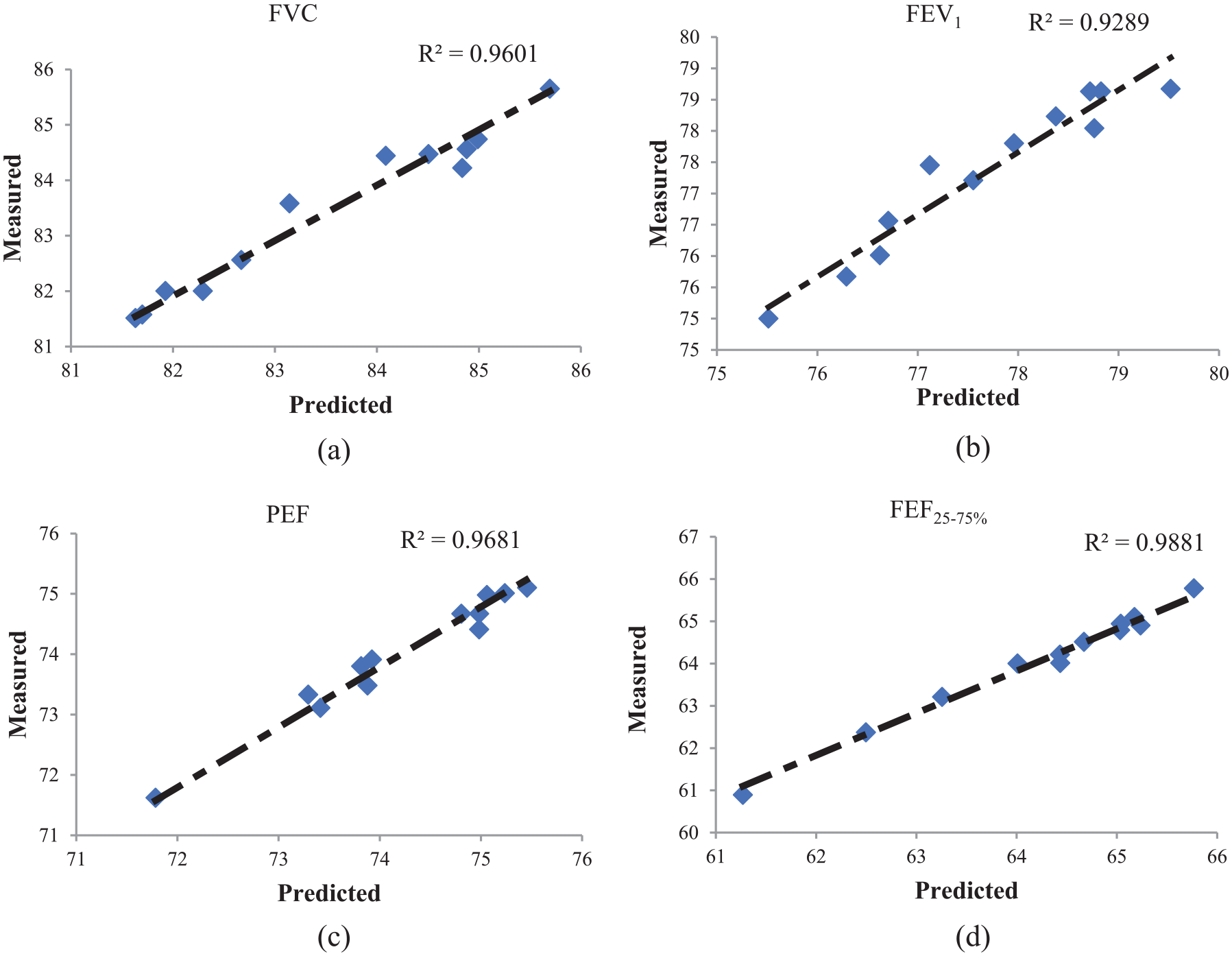
Estimation of accuracy between measured and predicted values using concordance correlation coefficient for mixed-effect model–based prediction equations.
It has observed from the agreement that the prediction equations involve the potential effect modifiers with statistical significance. In coming periods, trends shall be observed for individual physiological parameters with variations in independent parameters.
Discussion
Agriculture waste burning in open fields releases a huge amount of PM pollutants in the ambient environment that may cause serious and cognitive impairments in various body functions such as lungs and cardiovascular veins. As per latest MODIS (Moderate Resolution Imaging Spectroradiometer) and satellite-based evidences, the dense plums have been identified in the areas and their transport to long distance areas via meteorological influences. In various studies, it has been found that the health of children is more vulnerable to raised levels of PM pollutants than other human subjects. The physiological parameters of children such as FVC and PEF are the prime targets of PM. In this study, Table 5 reported that the maximum fall in physiological parameters was observed in rice season than wheat season due to more quantum number of SPM than wheat waste burning season. The meteorological parameters have a very important role in dispersion coefficient of pollutants in the sampled area and are well documented in previous studies18,19,21 Among physiological parameters, FVC and PEF had more degradation than other parameters from baseline values due to ACRB activity in the affected area. FVC and PEF are the key biomarkers of respiration-related parameters. 20 They had been identified as the prime indicators for chronic pulmonary implications. The results are well supported with the existing studies that found vulnerability of volume and flow of lungs for short-term rise in SPM in ambient air by different sources.
The Tiffeneau index is also a very important aspect to consider the health of lungs. As per pulmonology, it is a sign of obstruction in lungs mechanism. 19 In this study, Tiffeneau index was also reduced from its base value (≥80%) to 72% in rice season and 75% in wheat season. In various studies, the ratio was just varying in a small fraction, but in this study, the decline in ratio is alarming with regard to children (age 8 to 16 years) and observed as a key element of restriction in lungs architecture.4,7 It has been mentioned in studies that the reduction in Tiffeneau index is an indication of various chronic diseases like asthma, chronic obstructive pulmonary disease, and reduction in capacity of alveolar sacs of lungs. Fortunately, no candidate was found with any kind of pulmonary disease at the end of study. But permanent changes were observed in physiological parameters and Tiffeneau index. As per studies of respiratory system, the lung mechanism tries to recover their working capacity, but due to burden of pollutants, they are unable to retrieve their natural order. 11 The results are very similar to studies that were conducted in different countries to evaluate the effect of ambient PM on Tiffeneau index of children.10,12,19 But the results in this study summarized the trends in different physiological parameters of children due to ambient PM in areas affected by ACRB. Few studies proposed the prediction models for future trends in affected parameters due to exposure of pollutants. Those models were still lacking in adjustment of important parameters like BMI and temperature as independent parameters in prediction procedure.11,18,22 As per recent findings, the BMI of selected subjects and seasonal meteorological parameters have a key role in estimating the trends. The statistically significant results from Australian children were associating the role of temperature in winter seasonal PM with physiological parameters. 21 The results of our previous findings also presented the role of BMI. 2 Persons having low and high BMI are more vulnerable to ambient pollutants than persons with normal BMI. The previous studies adjusted the anthropometric parameters (BMI) and meteorological parameters (temperature) like covariates as deviation in intercept of dependent parameters in the prediction model due to which their estimation accuracy was varied from 75% to 85%. 11 In this study, BMI and temperature were adjusted as fixed-effect modifiers with SPM having size PM10 and PM2.5 to estimate the trends. With adjustment of these parameters, the estimation accuracy was observed from 93% to 98%. Till now, there was no study on prediction model that proposed such accuracy. This study generalized the results to the whole population, but there is need to discriminate the results on gender basis for community-wise estimation.10,11,19 There is a scarcity in the study to associate the level of indoor pollution with physiological parameters, and the cognitive level of subjects need to be considered in statistical modelling.23-25 But, proposed estimations in physiological parameters are well supported to analyze the episodic trends due to ACRB practice and may contribute a significant role in designing control policies by national and international communities.
Conclusions
Significant fall was observed in FVC, PEF, and Tiffeneau index, which are the key markers related to respiration system. The dose-response relationships were significantly indicating the role of effect modifiers in degradation of lungs capacity per year. The statistically significant prediction equations were developed to predict the trends in upcoming seasons of ACRB episodes. It has been concluded that the short-term rise in SPM due to ACRB practice causes a significant degradation in the health of inhabitants. Even such pollution levels may trigger other disorders like cognitive impairments and neurological complexity in children. The prediction equations shall be helpful for policy makers to design some strategic and legal regulations to control this practice, otherwise this practice may cause some serious health-related issues in human like asthma and pulmonary disorders. The agriculture crop waste is a laborious yet a good source of fertilizer for fields, so farmers on their own have to understand this issue and stop this activity for the welfare of society and earth.
Footnotes
Acknowledgements
The author is very thankful to Dr Susheel Mittal and Dr Ravinder Agarwal, Thapar University, Patiala, India, for their research guidance. The author is also thankful to Dr Lovi Raj Gupta and Dr Geetha, LPU, Phagwara, India, for their constant faith and trust in me.
Declaration of Conflicting Interests
The author declared no potential conflicts of interest with respect to the research, authorship, and/or publication of this article.
Funding
The author received no financial support for the research, authorship, and/or publication of this article.
