



Abstract
Qualitative research, in the methods employed and topics explored, is emotionally demanding. While it is common for ethics protocols to protect research participants from emotional distress, the personal impact of emotional work on the researcher can often go unaddressed. Qualitative researchers, in particular graduate student researchers studying sensitive topics, are at risk of psychological effects. It is unclear, however, how this impact on the researcher is discussed in graduate student work and/or the steps taken to address this risk. To provide an overview of how impact on the researcher is considered in Canadian graduate student research, a comprehensive scoping review of dissertations was conducted. Less than 5% (n = 11) of dissertations reviewed included a plan to mitigate psychological risk to the researcher—suggesting a need for further guidance on minimizing risk of emotional distress. The application of trauma and violence-informed principles to graduate supervision policy and practice is discussed as a promising harm mitigation strategy.
Keywords
Introduction
The conduct of qualitative research to explore individuals’ experiences of sensitive topics (i.e., violence, trauma, and death and dying) may be emotionally demanding for both research participants and research team members; in particular for team members involved with data generation activities such as interviewers or transcriptionists. While it is common for ethical protocols established at the outset of a research program to include strategies to minimize research participants’ experiences of emotional distress, the personal impact of emotional or distressing work on the researcher can often go unaddressed. Qualitative researchers, and in particular graduate student researchers, studying sensitive topics are at risk for secondary distress resulting from engagement in this type of work (Johnson & Clarke, 2003). It is unclear; however, how graduate students discuss the emotional impacts of leading these types of research projects in their work and the steps taken to address this risk.
Background
Secondary Distress
Secondary distress refers to psychological, cognitive, or physical distress experienced by helping professionals (e.g., counsellors, nurses, social works, humanitarian aid workers) who engage in work with survivors of trauma and are therefore indirectly exposed to the individual’s traumatic experience (e.g., death or violence) (Grundlingh et al., 2017; Williamson et al., 2020). As an umbrella term, secondary distress often includes similar concepts such as emotional distress, vicarious trauma and secondary traumatic stress (Grundlingh et al., 2017). Secondary distress is differentiated from burnout, or the build-up of physical, emotional and/or mental exhaustion that comes from exposure to job stress, in that burnout is not directly linked to the exposure to traumatic events but more a function of general work related stress including caseloads, long hours, and institutional factors (Williamson et al., 2020).
Included in the Diagnostic and Statistical Manual of Mental Disorders (DSM-5) diagnostic criteria for posttraumatic stress is the experience of repeated or extreme exposure to aversive details of traumatic event(s); the document gives first responders witnessing repeated traumatic events as an example (American Psychiatric Association, 2013). While the example of a first responder is an intuitive one, the breadth of this criteria has led to a more comprehensive understanding of this “at risk” category for secondary distress. With this criteria, Williamson et al. (2020) cite a noticeable shift in the secondary trauma or distress literature from the primary focus on these more conventional professions (e.g., first responders, military personnel, and counsellors/therapists) to the inclusion of a wide range of helping professions (e.g., suicide helpline workers, justice system professionals and faith leaders) as well as researchers. While representing a fundamentally different role when compared to helping professionals, researchers may have secondary exposure to the trauma experienced by their participants in the conduct of qualitative research within sensitive subject areas in the same way some professionals experience this indirect exposure through client narratives or records.
Qualitative Research and Sensitive Topics
Nurse-researchers—as well as others within applied health and social science disciplines—are often looking to expand their understanding of the issues that affect the health and well-being of individuals and communities. This understanding often necessitates research within topic areas considered sensitive and utilizes qualitative research methods. In their seminal work defining sensitive topics, Lee and Renzetti (1990) describe the sensitive nature of a particular topic as emergent, or more related to the research context than the topic itself. Continuing this discussion, Fahie (2014) notes that any subject matter can be considered sensitive for the researcher or participant, but identifies topics related to human suffering, trauma and/or traumatic loss as particularly sensitive. The issue of secondary distress among researchers in a number of these sensitive topic fields has been raised in recent years, for example, gender based violence (Williamson et al., 2020), death and dying (Woodby et al., 2011), child abuse (Coles & Mudaly, 2010), homicide and rape (Sollund, 2008), mental health (Mitchell & Irvine, 2008), and terminal illness (Benoot & Bilsen, 2016) or life limiting disease (Benoot & Bilsen, 2016; Stevens et al., 2010); and it has been argued that qualitative research methods could be unintentionally amplifying secondary distress for researchers (Coles & Mudaly, 2010; Williamson et al., 2020).
Qualitative research methods often include in-depth, face-to-face interviews as data generation strategies and continued engagement with the data long after the interview concludes (i.e., transcription, coding, analysis, and then writing and re-writing the findings). This depth of detail regarding a participant’s trauma experience coupled with the active role of the researcher could lead to the entirety of the traumatic event being indirectly experienced by the researcher many times over (Dickson-Swift et al., 2009; Williamson et al., 2020). The relationship between researcher and participant necessary for many qualitative research methods could also intensify the risk of researcher emotional distress. Intimacy, empathy, rapport, reciprocity, respect and trust are characteristics of the qualitative research relationship; these features promote emotional connection between the researcher and research participant but also expose the researcher to distress when compared to the detached and objective researcher often associated with quantitative research methods (Beale et al., 2004; Coles & Mudaly, 2010).
It is possible that the more traditional, or positivist, view of the researcher as objective or neutral within the research process is the reason that researchers within the qualitative research paradigm—despite their rejection of this objective stance—are left out of the “at risk” group for secondary distress; however, this issue is starting to gain traction within the qualitative applied health and social science disciplinary literature (Williamson et al., 2020). For example, Woodby et al. (2011) reflected on an “unanticipated layer of emotional complexity” related to the coding process within a qualitative study using face-to-face interviews with loved ones of deceased veterans; and highlighted the need to recognize the act of coding as a potential hidden source of emotional distress within qualitative research (p. 843). Whitt-Woosley and Sprang (2018) explored secondary trauma in a sample of social science researchers studying traumatized populations; among their findings was an increased risk of secondary traumatic distress in qualitative researchers, thus highlighting the need to recognize qualitative methods as posing a heightened risk to researcher secondary distress. Benoot and Bilsen (2016) describe the experience of emotional distress while conducting a qualitative research project exploring the experiences of living alone while having cancer. The first author describes “serious emotional distress that kept [them] from [their] work for almost 6 months” (p. 482) and emphasizes particular aspects of “being new to the field” that can contribute to risk for secondary distress.
Ethical Reporting of Impact on the Researcher
A declaration of ethics committee approval is a content requirement for publications reporting the results of empirical studies; including a transparent description of strategies for recruitment, data collection and analysis (Wu et al., 2019). In the reporting of qualitative research, additional description of the researcher’s personal characteristics, position relative to the topic, worldview and actions taken to enhance trustworthiness and credibility of the findings is generally also reported (Peditto, 2018; Wu et al., 2019). Internationally, research with human participants requires ethical approval of a protocol to mitigate the risk for harm (e.g., physical, re-traumatization, stigmatization) and a plan to treat harm related to the participation in research (Council for International Organizations of Medical Sciences (CIOMS), 2016; Mezinska et al., 2016). Strategies to mitigate risk for harm to research participants include, establishing a committee for monitoring safety and adverse events, instituting clear criteria for stopping a study and installing safeguards to protect confidential personal data (CIOMS, 2016). A trauma-informed approach to research is also recommended to avoid re-traumatizing research participants and includes strategies such as, training the researcher to assess and respond to emotional distress, providing participants with accessible mental health services and conducting follow-up to monitor participants’ mental health status (Campbell et al., 2019). To a lesser extent, international guidelines recommend assessing risk and planning strategies to reduce and respond to potential psychological harm experienced by researchers (CIOMS, 2016).
Despite detailed ethical and reporting standards, it remains largely unclear whether strategies to limit and respond to researchers’ risk for harm (i.e., emotional impact/secondary distress) are being planned, implemented or reported (Stahlke, 2018; Wu et al., 2019). This is concerning due to: (1) the immersive nature of qualitative research and incorporation of the “researcher as instrument”; (2) the frequent exploration of sensitive topics; and (3) the existing evidence for emotional impact and secondary distress experienced by researchers and members of the research team (Clark et al., 2017; Kiyimba & O’Reilly, 2016; Stahlke, 2018). The vulnerability of student researchers, early career researchers and other less experienced researchers to the emotional challenges of sensitive-topic research has been cited in the literature (Bloor et al., 2008; Coles & Mudaly, 2010; Dickson-Swift et al., 2009; Johnson & Clarke, 2003; Whitt-Woosley & Sprang, 2018; Woodby et al., 2011). Therefore, ethical approval and reporting standards should include a description of protocols and strategies to protect researchers (especially those with higher vulnerability) from harm. Consequently, the purpose of this comprehensive scoping review is to examine how (and if) strategies to reduce the risk for emotional impact or secondary distress are being reported or addressed in Canadian graduate dissertations on sensitive topics.
Methods
Design
Given the limited understanding of secondary distress among graduate student researchers and the need to guide future research in the field as well as the development of academic policies to protect the emotional wellbeing of graduate students, this comprehensive scoping review aims to provide an overview of how researcher emotional impact or secondary distress is reported in Canadian graduate student’s qualitative research projects, specifically in the form of plans or protocols to mitigate this impact.
This scoping review applied the 6-stage method outlined in Arksey & O’Malley’s (2005) scoping review framework as well as the further enhancements explicated by Levac et al. (2010).
Identifying the research question
The research questions for this scoping review were: (1) how do graduate students at Canadian universities address the personal emotional impact of qualitative research on sensitive topics in their dissertations and (2) is there a protocol or plan including specific strategies to reduce the risk of emotional impact or secondary distress reported?
Identifying relevant studies and study selection
The aim of a scoping review is to be as comprehensive as possible in identifying literature suitable for answering the central research question (Arksey & O’Malley, 2005). A comprehensive search strategy was developed for this review with guidance from a health sciences librarian. This strategy included a search of the ProQuest Dissertations & Theses Database as well as a hand-search of the top-10 Canadian university dissertation repositories. The database search allowed for all Canadian universities to be included in the review, however, because universities share their repositories with the database at different time frames some of the most recent dissertations for some universities were not included in the database necessitating the hand-search.
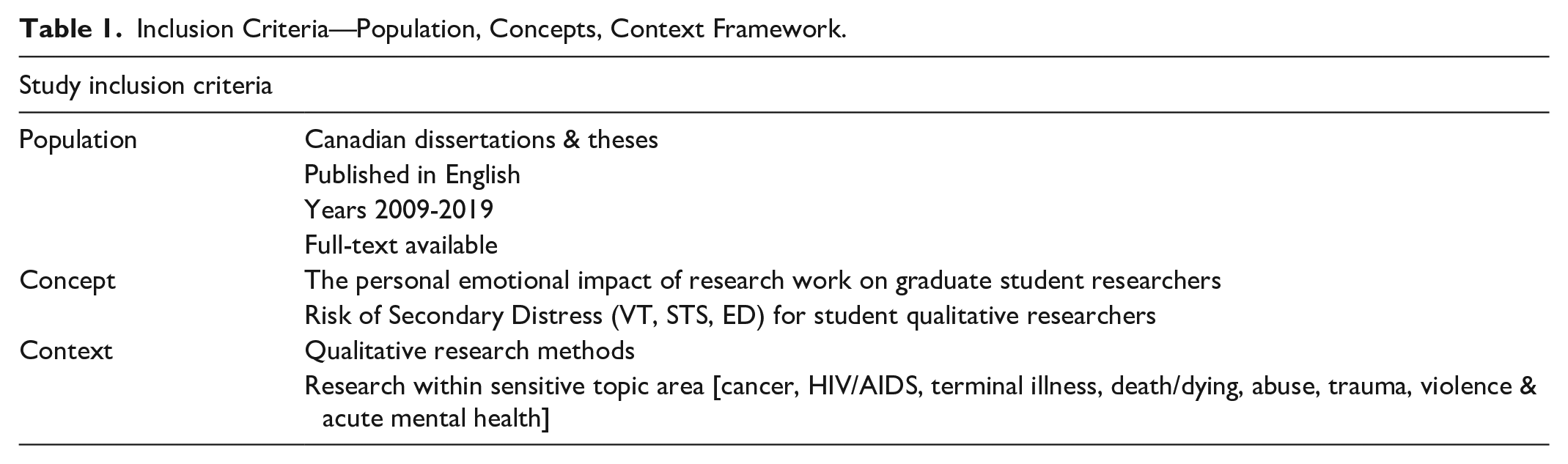
The Population-Concept-Context (PCC) framework proposed by the Joanna Briggs Institute’s (JBI) methodology for scoping reviews (Peters, Godfrey, McInerney, et al., 2015) served as an overarching framework for the identification of relevant studies for this review (see Table 1—PCC inclusion criteria framework). Dissertations and theses from Canadian universities, published in English from 2009 to May 2019 and with full-text available were included in this review. The concept of the personal emotional impact of research work was central to the identification of relevant studies, therefore, dissertations were excluded if they did not use qualitative methods, were not primary studies and if the research topic was not within a pre-defined sensitive topic area. An iterative process was used for developing and refining the study selection criteria; this involved the members of the search team (EO, PD & VJ) meeting frequently to discuss findings of the search and how to best refine inclusion parameters and definitions. For example, given the breadth of mental illness as a topic and the volume of dissertations addressing some aspect of mental illness/wellness it was decided to only include dissertations focused on acute mental illness (e.g., suicide) given the potentially increased risk for researcher emotional impact compared to more general mental illness or mental health topics.
Inclusion Criteria—Population, Concepts, Context Framework.
Study selection proceeded in two stages: (1) titles and abstracts were reviewed to determine eligibility for full-text screening based on the pre-established PCC eligibility criteria and (2) full-text documents of all potentially relevant articles were retrieved and further screened for eligibility. The search team (EO, PD & VJ) independently extracted data from a sample of three included dissertations and demonstrated adequate inter-rater reliability (Kappa = 0.84, 95% CI 0.83,0.84) using SPSS statistical software (Streiner et al., 2015). Authors then continued to individually extract data for analysis. This process was documented in a modified PRISMA flow diagram including reason for exclusion (Figure 1).

Modified PRISMA diagram documenting study selection.
Charting the data
In a scoping review, charting the data is akin to the data extraction phase of a systematic review and leads to a logical and descriptive summary of the results in alignment with the review purpose (Arksey & O’Malley, 2005; Peters, Godfrey, Khalil, et al., 2015). Both study characteristics and concept data were charted for this review. Study characteristics included the university the dissertation or thesis was from, the university department, publication year and a degree of study. These data helped with understanding our sample population of dissertations and theses and by proxy what graduate students are represented in the data. Concept data included the sensitive topic studied, qualitative methods used, the potential for emotional impact on the researcher. To answer the research questions the authors charted and extracted data describing: (1) the use of a protocol (i.e., an official procedure or systematic strategies developed in advance of beginning the study) with specific strategies to reduce risk, monitor or respond to researcher emotional impact; (2) the incorporation of general strategies throughout the research process for an alternative purpose (e.g., trustworthiness of the findings, credibility) that may also address emotional impact; or (3) no mention of a protocol or general strategies that address researcher emotional impact (Berger, 2020; Taylor et al., 2016.
Reports of strategies including monitoring or responding to researcher emotional impact including: mentoring, supervision (trauma-informed or unspecified), debriefing opportunities, self-care (e.g., meditation, exercise), secondary distress self-assessment questionnaires and seeking informal (e.g., friends, peers) and formal (e.g., professional therapy or counselling services) support (Bloor et al., 2008; Coles et al., 2014; Dickson-Swift et al., 2009; Taylor et al., 2016) were extracted from the dissertations. It was outside the scope of this review to systematically chart the frequency or magnitude of emotional impact or secondary distress on researchers. However, when located, overt descriptions or reflections of researchers’ personal emotions, experienced in response to the study process or phenomena being explored, were extracted and documented.
Data synthesis
Charted data were collated, summarized and synthesized in both tabular forms, providing a numerical summary of the data, and in a descriptive format to address the objectives and scope of the review.
Consultation
Consultation is seen as a strategy to enhance the overall rigor of a scoping review as well as an important knowledge transfer mechanism (Arksey & O’Malley, 2005). In addition to frequent meetings amongst the research team, the preliminary results of this scoping review were presented at the International Institute for Qualitative Methodology (IIQM) Qualitative Health Research Conference (Orr et al., 2020) thus allowing for input from graduate student and qualitative researcher stakeholders into the definitions guiding the review, the use of review findings as well future study directions.
Results
Search Highlights
Over 50,000 titles were reviewed for inclusion in this scoping review. The sensitivity of the initial search varied across each of the university repositories due to limited advanced search options (e.g., functions were often restricted to a simple keyword search without Boolean operators or search limits) thus leading to a large number of titles to screen. Dissertation methods were also particularly difficult to determine from titles and abstracts alone, requiring over 700 full-text articles to be reviewed. The majority of dissertations were excluded based on the topic addressed; excluding those that were not focusing on a sensitive topic.
Study Characteristics
Following full-text review, 230 dissertations were selected for data charting and synthesis, including 135 prepared for a master’s degree (59%) and 95 at the doctoral level (41%). More than half of the dissertations (57%) were prepared for psychology, psychiatry and counselling (n = 46), nursing (n = 43) and social work (n = 42) departments, faculties or schools. The remaining 43% of dissertations were prepared for a broad range of over 30 different departments, faculties or schools. All sensitive topics outlined in the contextual inclusion criteria were represented in the final sample with Abuse (n = 53, 23%), Death/Dying (n = 47, 20.4%), and Trauma (n = 40, 17.4%) comprising the most frequent sensitive topics addressed. Qualitative research methods employed across the sample for data generation were interview based [individual (n = 211, 91.7%), focus group (n = 6, 2.6%) and a combination of the two (n = 13, 5.7%)].
Overview of the Findings
Of the 230 dissertations analyzed in this scoping review, 83% (n = 190) do not report a protocol or general strategies that may limit or address the emotional impact of the research on the student researcher. Less than 5% (n = 11) discuss a protocol, a-priori plan or a systematic procedure of strategies to mitigate and respond to emotional impact on the researcher. An additional 13% (n = 29) report the use of general strategies to enhance the trustworthiness or credibility of the findings (e.g., reflexive journaling) that may indirectly address emotional impact. See Table 2 for a description of the sample.
Sample Characteristics and Findings (n = 230).

Protocols or systematic strategies
Less than 5% (n = 11) of dissertations reviewed describe having a protocol that incorporates systematic strategies in acknowledgement and anticipation of potential psychological risk or emotional impact to the researcher related to exploring sensitive topics. Protocols and strategies implemented to reduce, mitigate or respond to researchers’ emotional impact are predominantly from the master’s level (n = 7) as opposed to the doctoral level (n = 5), are from social work (n = 3) or psychology, counselling or psychiatry (n = 4) departments. In these 11 dissertations, the two most common sensitive topics under study were trauma (n = 6) and abuse (n = 3). This pattern of reporting suggests there may be increased concern for the emotional impact of research in master’s level students exploring trauma or abuse in social work and psychology, counselling and psychiatry disciplines (see Table 3).
Dissertations Including a Protocol/Systematic Strategy to Address Researcher Emotional Impact (n = 11).

The protocols and systematic strategies reported are not elaborate but are described as being explicitly designed to minimize emotional impact on the student researcher. For example, Pucci (2016) writes: In order to protect my emotional well-being, after the completion of each interview I created a systemic plan to debrief. First, after every interview I wrote out my notes and transcribed the interview recordings immediately. This allowed me to process all of the information transferred during the interview and prevented the possibility of horrific stories from lingering. Once I had written out my notes from the interview I engaged in an activity that I enjoyed which allowed me to shift my focus on to something else. For example, after every interview I went on a run through my neighbourhood. Lastly, I ensured that all interviews were scheduled at least 2-3 days apart in order to prevent the possibility of having to deal with the discussion of such a sensitive topic in a short period of time (p. 36).
Strategies planned and implemented in order to reduce the risk for emotional impact in these dissertations arranged in order of frequency included: (1) journaling, audit trail or reflexivity (n = 10) (Cooper, 2013; Dayal, 2018, Gagnier, 2014; Ion, 2010; Krahn, 2011; Lee, 2015; Martinek, 2015; Pucci, 2016; Puurveen, 2016); (2) supervisor/mentor support (n = 7) (Bailey, 2013; Dayal, 2018; Gagnier, 2014; Ion, 2010; Lee, 2015; Puurveen, 2016; Vu, 2017); (3) self-care practices (n = 5) such as meditation, running, study rest periods (Bailey, 2013; Ion, 2010; Martinek, 2015; Pucci, 2016; Puurveen, 2016); (4) debriefing (n = 5) (Gagnier, 2014; Ion, 2010; Krahn, 2011; Lee, 2015; Pucci, 2016; Puurveen, 2016); (5) peer support (n = 4) (Bailey, 2013; Ion, 2010; Puurveen, 2016; Vu, 2017); (6) training in counselling/coping (n = 3) (Gagnier, 2014; Lee, 2015; Vu, 2017) and (7) professional support/counselling (n = 1) (Bailey, 2013). Assessment strategies or tools to recognize and monitor levels of emotional impact or secondary distress were not reported within the included dissertations.
General strategies associated with qualitative research methods
An additional 13% (n = 29) of dissertations included in the sample reported the implementation of strategies to enhance the trustworthiness or rigour of the findings, such as peer-debriefing or reflexive journaling, that may also mitigate secondary distress or emotional impact. For example, Reeves (2013) wrote about peer debriefing, Credibility was also maintained by engaging in peer review and peer debriefing. This was an external check where a reviewer, in this case the research supervisor, as well as another PhD student in the research group, reviewed the data analysis to ensure that the methods of analysis were sound (p. 89).
The use of reflexive journaling to make the researchers’ views and emotional reactions to data collection transparent or the maintenance of an audit trail journal to document decisions-made during sampling, data collection and analysis are also described. Some authors reported that journals initiated for the purpose of recording general thoughts and the standards research process transitioned into outlets for the release of “intense emotions” (O’Mahony, 2011, p. 61). Authors also reported that journaling triggered them to recognize the intensity of their emotions and to seek additional coping strategies (e.g., taking a break from the research) to respond to their emotional or mental health concerns (Fisher, 2016; Bianchi, 2016). The incorporation of general strategies associated with qualitative research methodology may therefore mitigate some risk of secondary distress among graduate student researchers, but this connection was not explicit in the majority of dissertations reviewed.
Strategies related to emotional impact not discussed
Over 80% (n = 190) of the reviewed dissertations did not report a protocol or plan to limit the risk of emotional impact or secondary distress. While this finding may represent a limitation of the data source (i.e., dissertations) and the standards of ethical reporting related to minimizing researcher harm; it could also reflect a concerning omission in the promotion of student researcher wellbeing. The dissertations that did not discuss strategies related to emotional impact also show some departmental or disciplinary variation. For example, dissertations from the nursing field accounted for almost 20% (n = 46) of those included in this review; however, none (n = 0) had a protocol or plan reported to address secondary distress and only four dissertations (or 9.3%) discussed general strategies that could mitigate risk. Psychology and social work, each with similar numbers of dissertations included in the review (n = 46 and n = 42 respectively), had higher numbers of both protocols and general strategies reported when compared to nursing.
Evidence of researcher emotional impact in dissertation
In reading the dissertations during the data charting phase it was impossible to ignore the evidence of emotional impact within the text. For example, Alghamdi (2018, p. 37) wrote “being here in Canada and listening to what Canadian immigrant women had to endure was emotionally challenging for me” and Jackson (2009, p. 111) wrote “I wonder if it is only me that is crying inside for this family.” Statements reflecting emotional responses were recorded across the sample of dissertations including those with plans to address its impact and concerningly those without. In some cases, it was very clear that the emotional reactions experienced were completely unanticipated; as one author discloses, “I had not fully anticipated the emotional ramifications of this research” (McDonald-Harker, 2011, p. 78). The student-researchers’ personal proximity to the experiences explored in the dissertation or past experiences often elicited these emotions, as a student-researcher and trauma survivor describes: Their stories are my story, their experiences have been my experience, and their tears have been the same ones that I have shed silently and alone. My story, like some of the mothers who participated in this research, includes service-related trauma (Yeboah-Ampadu, 2017, p. 135).
Where the above example highlights how shared experience can heighten the emotional response of the researcher, other examples described the intimate nature of the qualitative interview as emotionally taxing, as in the following example: Putting faces and names to the abuse victims in this project was difficult. As a former police officer, I was used to investigating child sexual exploitation cases; however, the victims generally remained anonymous to me (Palfy, 2016, p. 156).
While it is impossible to objectively conclude that harm was caused from merely reading the emotional accounts of these student researchers, one particularly poignant example underscores the risk for secondary distress and the need for strategies to ameliorate this risk: I often had nightmares at night. I would dream about the experiences of abuse that the women had gone through with exact and vivid details, but in my dream I was the one being abused, and not the woman who had recounted the story to me (McDonald-Harker, 2011, p. 77).
Discussion
To our knowledge, this is the first scoping review to explore how Canadian graduate students address the personal emotional impact of qualitative research on sensitive topics in their dissertations and examine the reporting of protocols or plans to reduce the risk of secondary distress. The number of dissertations included in this review (n = 230) indicate that sensitive topics and the use of qualitative methods are a major focus of research for Canadian graduate students especially within health and social science disciplines. Hence, the lack of protocols to limit the risk of emotional impact noted in a number these dissertations is concerning. Over 80% of the reviewed dissertations did not report a protocol or plan to limit the risk of emotional impact and secondary distress in graduate students. While some more general strategies to mitigate secondary distress in students were described in 15% of the dissertations (e.g., journaling, debriefing), protocols addressing the potential for emotional impact were reported in less than 5% of studies. Variation across disciplines and fields of research also point to a lack of standard guidance and/or support for students at the organizational level.
Velardo and Elliott (2018) and Tolich et al. (2020), argue that concern for the well-being of doctoral student researchers is consistently ignored and addressed only by ad-hoc strategies throughout the research process. This sentiment is further supported by the voices of qualitative researchers, who have been calling for improved guidelines to help reduce the risk of researcher harm (emotional and physical) for the past twenty years (Bloor et al., 2008; Dickson-Swift et al., 2005a, 2005b; McGarrol, 2017; Paterson et al., 1999; Williamson et al., 2020). While graduate students are not explicitly mentioned, international ethical guidelines briefly reference the risk of researcher harm, stating: In addition to participants, investigators themselves can be exposed to risks that result from research activities. . .Sponsors should carefully assess and minimize risks to researchers; specify and explain the risks of undertaking the research to investigators and other research staff; and provide adequate compensation in case any members of the research team incur harm as a result of the research (CIOMS, 2016, p. 10)
Based on this guidance, the graduate student supervisor, supervisory committee and academic institution (the sponsors) are responsible for assessing risk, offering guidance on risk and providing strategies to minimize risk of research-related harm to the graduate student (the researcher). While risks to the researcher and the need for researcher support are acknowledged, the guidelines are vague, and their relative importance is subject to interpretation by ethics review committees and graduate supervisors/organizations. Additional efforts have been made to develop practical guidelines for researchers studying gender-based violence (Sikweyiya & Jewkes, 2011; World Health Organization, 2001), child abuse (Coles & Mudaly, 2010) and disaster settings (Mezinska et al., 2016); however based the findings of this review implementation of such guidelines are not reported and it is therefore difficult to determine whether the emotional impact of sensitive research on graduate students is being addressed.
While it was not the intent of this review to measure the impact of conducting sensitive research on graduate student researchers, there were instances of strong, negative emotions, pointing to a risk of emotional impact, recorded in these dissertations. However, without a standard of reporting for strategies to mitigate the impact of research work on the researcher it would be impossible to know if such strategies (a) do not exist or only exist as tacit knowledge among certain disciplines or research groups or (b) exist and are not applied or the proposed strategies fail to meet the students’ actual needs as the research progresses. In either case, the protection of graduate student researchers appears less than ideal. Where protocols do not exist to protect against the potential risk of harm, they should be developed; and where already developed, the focus should be on consistently applying these protocols across all departments and institutions sponsoring student research including a consistent approach to reporting. It is possible that changes to the supervision, oversight and training of graduate students are required to minimize the risk of emotional impact from engaging in sensitive research. Introducing and implementing a trauma-and-violence-informed care (TVIC) approach to graduate supervision would draw much-needed attention to the potential emotional impact of research on students and provide positive supports for all students—whether they experience harm or not.
Recommendations for Trauma and Violence-Informed Graduate Student Supervision
A “trauma-informed” approach refers to the delivery of social, mental and behavioral services, or in this case graduate supervision, that accounts for possible experiences of trauma (Harris & Fallot, 2001; Knight, 2019). Expanding on this concept, the adoption of a TVIC approach to supervision purposefully draws attention to very specific forms of interpersonal and structural forms of violence that individuals may experience (Public Health Agency of Canada, 2018). Drawing from the health and social care literature, there are four, inter-related principles of a TVIC approach which could be adapted and applied within academic graduate programs where students commonly conduct qualitative research (Table 4 for recommendations organized by trauma and violence-informed principles).
Recommendations for Trauma and Violence-Informed Graduate Student Supervision.

Application of a TVIC approach to supervision would first require academic institutions, departments and supervisors to understand how experiences of trauma and violence may impact a graduate student’s life, health and behaviors. Additionally, academic intuitions need to understand the risk of research related harm (physical and psychological) and its impacts on student’s lives and behavior. Practical strategies to integrate trauma and violence-informed principles into the supervision of social work students for example, have shown positive results in mitigating the emotional impact of sensitive work (Knight, 2019). At the organizational level, this would require developing policies, processes and academic cultures based on the understanding of trauma and violence (Public Health Agency of Canada, 2018).
Next, institutions, departments and supervisors would need to commit to the creation of emotionally and physically safe environments for students (Public Health Agency of Canada, 2018). Pre-existing graduate student mental health concerns, and the potential for intersection with research-related emotional distress is an important factor to consider when creating safe environments for students. With graduate students more than six times as likely to experience depression and anxiety compared to the general population (Evans et al., 2018) graduate-student supervisors need to have the knowledge and skills to identify when graduate students are experiencing mental health concerns and have the ability to refer students to appropriate supports and services. At the organizational level, creating environments that are physically and emotionally safe for students requires supporting the supervisors in their important role, developing guidelines for graduate student research protocols aimed at minimizing risk and ensuring appropriate and barrier-free mental health services are available to students.
The third TVIC principle to apply to graduate supervision is fostering opportunities for choice, collaboration and connection (Public Health Agency of Canada, 2018). To be trauma and violence-informed, supervisors and academic institutions need students to provide input into the ways that they are served. At the supervisor level this involves adopting an egalitarian approach to the supervisor/student relationship; this approach balances the role of expert with that of a consultant thus fostering autonomy, independence and empowerment and leading to decreased power differentials and promoting trust (Knight, 2019). At both the individual and institutional level, this principle is reinforced by recognizing that students are experts in their own lives and should be offered choice especially when deciding upon methods and modes of intervention for emotional distress (Public Health Agency of Canada, 2018). Academic institutions should also actively involve students in service planning and policy development to ensure the voices of students are heard and needs met.
Finally, the emotional and psychological well-being of students can be protected using a strengths-based and capacity building approach to support student coping and resilience. By promoting and modeling self-care activities, supervisors and academic institutions are conveying to students that the emotional impact of research work is an organizational responsibility as much as an individual one (Bober & Rehehr, 2006; Knight, 2019). Trauma and violence-informed supervisors can teach and model self-care activities as well as assist students in recognizing their own strengths in coping and resilience. Academic intuitions can provide training for all students in self-care, regardless of their trauma history or research field, to facilitate effective coping and enhance psychological safety. Institutions should also replace punitive policies that perpetuate emotional distress and replace them with approaches that support student coping and resilience.
A trauma and violence-informed approach to graduate supervision, including the development and reporting of researcher harm-reduction protocols that incorporate TVIC, could significantly reduce harm among students conducting qualitative research on sensitive topics. Additionally, adopting TVIC principles at the institutional level would make the organization more responsive to all individuals involved. However, implementation requires a true culture shift beyond any set of actions or recommendations, therefore this review serves as a starting point in an intentional and ongoing process of integrating TVIC principles into the fabric of the postsecondary education system.
Limitations
This review is not without limitations. Concise definitions of sensitive topics were used to limit the sample to dissertations where emotional impact was likely. Also, the use of multiple search engines specific to universities throughout Canada, the lack of a single database including all dissertations, and variations in categories of studies and key words used by universities may have limited our search findings. Therefore, it is possible that dissertations missed (or excluded) in this review included protocols to address the emotional impact of sensitive research.
The use of dissertations as a single-primary source of data is also a limitation if this review despite the comprehensive search for dissertations. Additional sources of data such as academic supervision policies, guidelines for the ethical approval of research studies, and student protocols/research proposals themselves should be explored in the future to confirm the prevalence of strategies being implemented to minimize risk to graduate student researchers. The findings may therefore underestimate the prevalence of protocols/plans and strategies currently being implemented to reduce researcher risk. However, student proposals and protocols are infrequently published (especially at the master’s level) and a comprehensive search of internal academic or ethics board guidelines was outside the scope of this review. This limitation emphasizes the need for standardized reporting of specific plans/protocols addressing ethical concerns (i.e., researcher safety) within dissertations and publications, in order to increase transparency in the research process and make strategies accessible to other researchers.
Conclusion
Overall, the findings of this review indicate an urgent need for increased attention and guidelines for the well-being of graduate students engaging in sensitive research. Clear and concerning evidence of negative emotional impact and secondary distress in the dissertations reviewed emphasizes the importance of advancing research in this area. Future research should include a mixed methods study to explore the prevalence of secondary distress in students with/without protocols for mitigating emotional impact. In addition, a comprehensive review and grading of interventions effective at reducing risk for emotional impact/secondary distress is needed to support the development of evidence-based guidelines minimizing researcher risk for harm.
Footnotes
Declaration of Conflicting Interests
The authors declared no potential conflicts of interest with respect to the research, authorship, and/or publication of this article.
Funding
The authors received no financial support for the research, authorship, and/or publication of this article.
