




Abstract
Background
Vaccines are an effective and ideal solution that can reduce the burden of disease worldwide. Although vaccines are the most effective way to prevent infectious diseases. Anti-vaccine conspiracy theories impair vaccination acceptance intentions. Several studies were conducted in East Africa. However, these studies had reported inconsistent findings. Therefore, this systematic review aimed to pool the prevalence of COVID-19 vaccine acceptance and identify its determinants.
Methods
PubMed, Google Scholar, and GLOBAL HEALTH databases were used to retrieve previously published studies. All papers published in the English language up to February 28, 2022 were included. The result was written and reported according to the PRISMA updated guideline. A random-effect model was used to estimate the pooled prevalence and effect sizes. Heterogeneity was assessed using I2 test statistics. Publication bias was assessed using funnel plot and egger’s test statistics. Statistical tests result at P-value<0.05 were declared as having significance.
Result: A total of 25 Cross-sectional studies with a total sample size of 33,044 were included in this study. The pooled prevalence of Covid-19 vaccine acceptance was 60.2%, (95%CI: 52.8- 67.3). Egger’s test statistics (P = 0.003) showed there is a significant publication bias. Attending above secondary school (AOR: 2.1, 95%CI: 1.37, 2.96), having good knowledge about the vaccine (AOR: 2.1, 95%CI: 1.6, 2.8), having a positive attitude towards vaccine (AOR: 3.8, 95%CI: 2.3, 6.2), history of COVID-19 infection (AOR: 2.7, 95%CI: 1.6, 4.7) and being male (AOR: 1.8, 95%CI: 1.2, 2.7) were found to have a significant association with COVID-19 vaccine acceptance.
Conclusion
The COVID-19 vaccination acceptance rate was good, but it could be improved. The findings could help governments to figure out the best way to carry out COVID-19 mass vaccination campaigns. There is a lack of data in most countries. Therefore, we suggest more studies be conducted in the future.
Introduction
Severe acute respiratory syndrome coronavirus 2 (SARS-CoV-2) has caused a pandemic that destabilized the health, economy, and movement of individuals worldwide. 1 The first COVID-19 cases were detected in Wuhan, China and the World Health Organization (WHO) declared the disease as a pandemic and public health emergency. 2 Since its emergence, COVID-19 infected millions of people and has claimed millions of lives worldwide. In Africa, there have been more than 5 million confirmed cases, and more than 100 thousand deaths. In Ethiopia, there have been more than 300 thousand confirmed cases with 4711 deaths.3,4
Nations across the world have launched various COVID-19 preventive measures, including restricted movement, quarantine, and nationwide lockdown.5,6 Despite the widespread use of COVID-19 prevention measures, the pandemic's impact has not been considerably decreased. The only way out of this epidemic appears to be a large-scale COVID-19 immunization program over the world. Vaccines are an effective and excellent solution for reducing the high burden of disease around the world, including disease prevention, disease severity and death reduction, and the effects of a pandemic on a country's health system and economy.7,8
Although vaccines are the most effective way to prevent infectious diseases and its consequence, but their safety and efficacy have long been the subject of conspiracy theories, and this Anti-vaccine conspiracy beliefs impair vaccination acceptance intentions. Vaccine anxiety might be exacerbated by rumors and conspiracy theories.9–11 Negative claims about vaccine effectiveness historically influenced vaccine uptake. Immunization efforts have been rumored to be utilized for political goals, and such suspicions have harmed vaccination initiatives in various nations. 12 The most frequently repeated rumor is that the COVID-19 vaccination may cause cancer and infertility by altering people's Deoxyribonucleic acid (DNA), some sources, the COVID-19 vaccination was designed to reduce the global population. 13 This could have an impact on vaccine policy implementation. 12
Several studies have been conducted in East Africa to identify the level and determinants for acceptance of covid −19 vaccinations however, these studies had reported inconsistent findings, regarding the level of COVID-19 acceptance rate and determinants. Some of these studies revealed an acceptance rate of greater than 50%,14–30 while others reported less than 50%.31–37
In addition, some of these studies had also shown that being male,17,20,22,26,33,34,36 and increasing in age,14,19–21,26,38 were found to have an association with COVID-19 vaccine acceptance. On the other hand, other studies have reported being female,14,15,19,32 and decreasing in age,14,15,19,20,32,38 were found to have an association with COVID-19 vaccine acceptance.
Moreover, different studies conducted in East Africa had found that attending above secondary school,14,15,20,22,25,26,29,32,34,36,38 having knowledge about COVID-19 vaccine,14,16,17,22,25,29,36,38 having a positive attitude towards COVID-19 vaccine,14,17,25,31,37 previously infected with COVID-19,14,17,21,31,34 and living in urban areas,20,25,29,32,38 were found to have different levels of association, such as having strong, weak, significant and non-significant associations.
These studies have shown inconsistent findings, which did not show the overall level of COVID-19 vaccine acceptance rate and the factors that were significantly associated with it. These were not convenient for policymakers, programmers, decision-makers, planners, and other stakeholders to recognize current vaccination status and design appropriate intervention strategies to improve COVID-19 vaccine acceptance. As to our knowledge, there is no prior systematic review and meta-analysis which shows the pooled prevalence and effect sizes related to level and determinants of COVID-19 vaccine acceptance in East Africa. Therefore, this review aimed to report the estimated pooled prevalence of acceptance rate of COVID- 19 vaccine and identification of characteristics associated with COVID-19 vaccine acceptance in East Africa.
Methods
Research Questions
What is the level of COVID-19 vaccine acceptance in East Africa?
What are the determinants of COVID-19 vaccine acceptance in East Africa?
Protocol Approval and Registration
This review has been registered with the International Prospective Register of Systematic Reviews https://www.crd.york.ac.uk/prospero/display_record.php?ID=CRD42021288804; registration number CRD42021288804).
Study Setting
This systematic review and meta-analysis included only studies conducted in East Africa.
Data Source and Search Strategy
PubMed, Global Health, and Google Scholar were used to retrieve articles. The searching of the published articles was done by using keywords such as; “willingness,” “acceptance,” “hesitancy,” “Intention,” “COVID-19,” “SARS-CoV-2,” “vaccine,” and “Africa.” To combine these keywords; Boolean operators “AND” and “OR” were used. (Supplementary file Table 1).
Eligibility Criteria
The CoCoPop (condition, context, and population) and the PEO (population, exposure of interest, and outcome or response approach),39,40 respectively, were used to determine studies to be included. All papers that do not full fill these approaches were classified as irrelevant. All included studies were used a cross-sectional study design and have reported the acceptance of the COVID-19 vaccine and its determinants in the general population. All papers published in the English language up to February 28, 2022 were included in this systematic review and meta-analysis. The quality of the article was assessed by using of JBI critical appraisal tool, and all articles were passed the quality assessment (Supplementary file Table 2).
Outcome Measurement
In this systematic review and meta-analysis, the COVID-19 vaccine acceptance rate was measured as the primary outcome. A dichotomized "Yes" and "No" question was used to determine the prevalence of COVID-19 vaccination acceptance. The effect size (odds ratio) from the included study was used to analyze the factors of COVID-19 vaccination acceptance.
Data Extraction
All studies obtained from searching results of all databases were exported to Endnote version 20.2 software and transported into Covidence systematic review manager online web-based software. Then duplicates were removed. Finally, all articles were evaluated to see if they satisfied the inclusion criteria using title and abstract, as well as a full-text review. Then, those studies that met the inclusion criteria were exported to a Microsoft Excel spreadsheet for data extraction.
Structured data abstraction sheet was constructed and pre-tested. For each study that met our eligibility criteria, two authors (AA and AD) independently extract the title, name of authors, year of publication, country, study design, study population, sample size, mean age, the proportion of Vaccine acceptance, and effect sizes with 95% confidence intervals.
Quality Assessment
In this systematic review and metanalysis, all included articles were cross-sectional studies. The risk of bias (quality of research) was assessed by the same authors (AA and AD) independently using the JBI (Joanna Briggs Institute) critical assessment checklist for cross-sectional studies. This review comprised high-quality papers with a quality score of 75% or higher, and disagreements were handled by consensus. 41
Data Synthesis and Reporting
The overall, process and result of this systematic review and meta-analysis were written and reported according to the PRISMA flowchart diagram and Preferred Reporting Items for Systematic Review and Meta-Analysis (PRISMA) updated guideline, 42 respectively. The PRISMA checklist has been completed (Supplementary file Table 3).
Statistical Analysis
STATA version 17 software was used for analysis. The proportion of COVID-19 vaccine acceptance, odd ratio, and confidence interval (CI) of determinants was pooled using a random-effect model and weighting method using a forest plot. Heterogeneity was assessed or determined by using I2 statistics.43–45 The funnel plot was visually inspected for publication bias and Egger's test statistics with a p-value <0.05 are considered as significant evidence of publication bias. 46 Trim-and-fill analysis was used to identify the risk of bias due to missing studies in the results. In order to find a possible source of heterogeneity, subgroup analysis, and sensitivity analyses were used.
Result
A comprehensive search strategy on different databases, including PubMed, Global Health, and Google Scholar, were used to retrieve the published articles. A total of 3206 articles were identified. From these, 36 articles were excluded because of duplication. From 3170 articles left, 1311 articles were excluded by the titles and abstracts due to their irrelevancy. After a full-text review of 54 articles, 29 of them were excluded with reason. Finally, the eligibility of 25 publications was reviewed, and they were all included in this review (Figure 1).
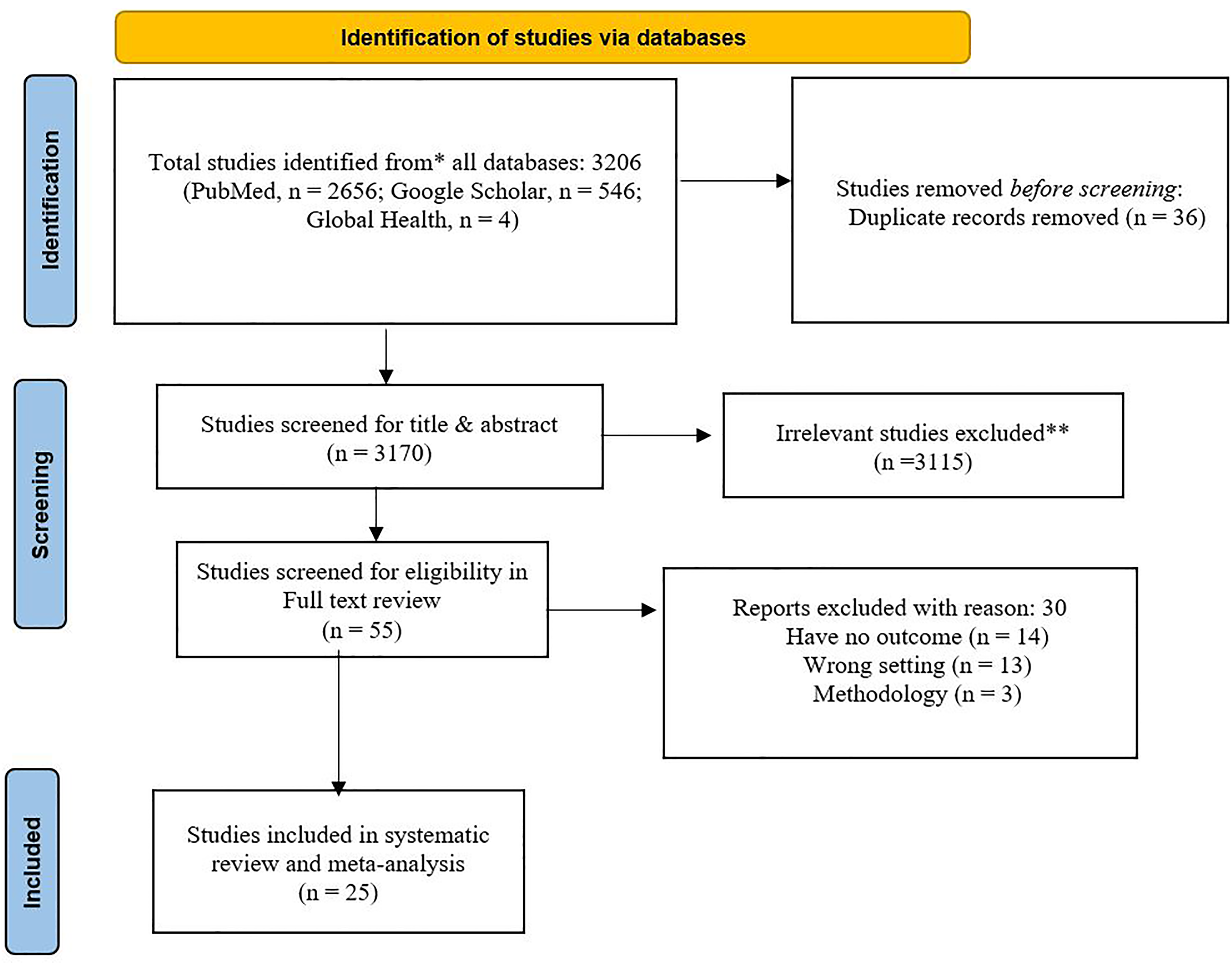
Prisma flow chart shows study selection for systematic review and meta-analysis of COVID-19 Vaccine acceptance and determinants among general population in East Africa, 2022.
Characteristics of the Included Studies
A total of 25 published cross-sectional studies were included in this systematic review and meta-analysis with a total sample size of 33,044. Of these, the largest sample size was 17, 212 from Kenya, while the smallest sample size was 1667 from Uganda. The highest and lowest prevalence of COVID-19 vaccine acceptance rates were 76.8% from Somalia and 47.7% from Uganda, respectively (Table 1).
Descriptive Summary of 25 Studies Included in the Systematic Review and Meta-Analysis of COVID-19 Vaccine Acceptance Rate and Associated Factors in Ethiopia 2022.

Prevalence of COVID-19 Vaccine Acceptance Rate in East Africa
Overall, a meta-analysis of the random effect model estimated that the pooled prevalence of the Covid-19 vaccine acceptance rate in east Africa was 60.2%, (95%CI: 52.8- 67.3) and the level of heterogeneity was (I2 = 99.4%, P = 0.00) (Figure 2).
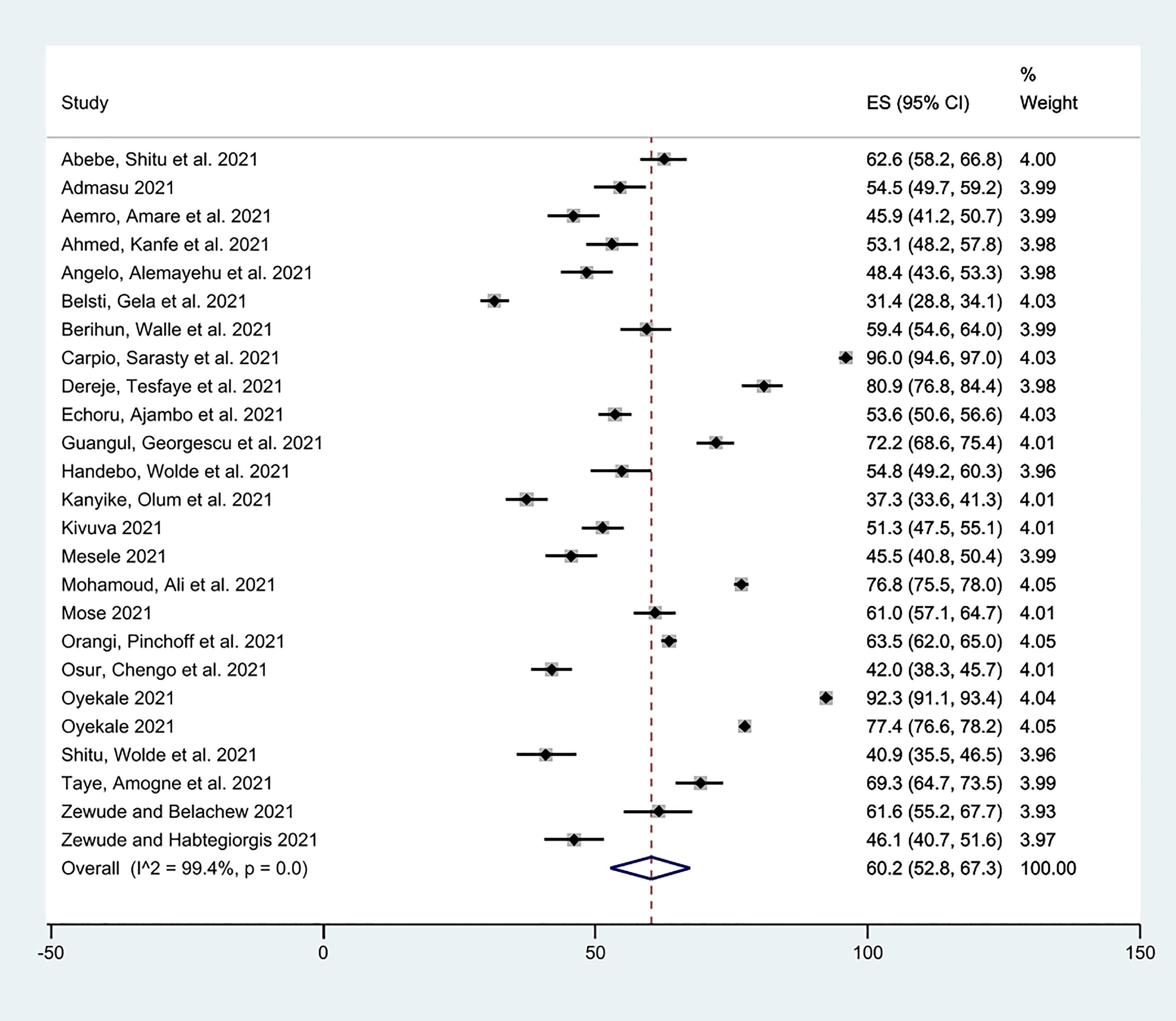
Forest plot of pooled prevalence of COVID-19 vaccine acceptance among general population in East Africa, 2022.
Subgroup analysis
Subgroup analysis by country showed, the pooled prevalence of COVID-19 vaccine acceptance in Kenya was 68.5% (95% CI: 53.3-81.8; I 2 = 99.7%, P = 0.0), in Ethiopia were 58.3% (95% CI: 46.7- 69.5, I2 = 99.2%, P = 0.0) and in Uganda were 47.7% (95% CI: 45.3-50.1; I2 = 0.0%, P = .000) (Figure 3). Similarly, subgroup analysis was done using study participants, the pooled prevalence of COVID-19 vaccine acceptance among population (community) was 64.6% (95%CI:54.9-73.7, I2 = 99.6%, p = 0.0), among patients were 56.9% (95%CI: 53.6-60.3; I2 = 0.0%, p = 0.0), among Health worker were 56.4% (95%CI: 45.4-67.1; I2 = 96.2%, p = 0.0), among teacher were 47.8% (95%CI: 43.8-51.8; I2 = 0.0%, p = 0.0), and 50.7% among students (95%CI:47.6-53.7; I2 = 0.0%, p = 0.0) (Figure 4).

Forest plot shows subgroup analysis of pooled prevalence of COVID-19 vaccine acceptance among general population in East Africa by country, 2022.

Forest plot shows subgroup analysis of pooled prevalence of COVID-19 vaccine acceptance among general population in East Africa by study participants, 2022.
Heterogeneity test
In this meta-analysis the test statistics of heterogeneity test of I2 indicated that there is significant high heterogeneity, so we used a random-effects model to adjust for the observed variability and subgroup analysis was used to examine the occurrence and the likely source of heterogeneity. However, the level of heterogeneity was high after subgroup analysis (Figure 3, Figure 4). In addition, we have used a meta-regression model for further investigation of sources of heterogeneity by using sample size as a covariate. Meta-regression has many aspects or qualities and better method than subgroup analysis for investigating heterogeneity. 47 The result of the meta-regression analysis showed that the covariate or the variability in a sample size of the primary studies were statistically significant for the presence of heterogeneity (Figure 5, Supplementary file: Table 4).

Bubble plot show the association of a sample size of the study and COVID-19 vaccine acceptance based on meta-regression.
Publication bias
The publication bias was assessed by using a visual impression of the funnel plot and Egger’s test statistics. Egger’s test statistics (P = 0.003) showed there were statistically significant small-study effects, this suggests that there was publication bias. Also, the unequal distribution of the included articles in the funnel plot shows that this meta-analysis has signs of publication bias for this meta-analysis of pooled prevalence of COVID-19 vaccine acceptance (Figure 6, Supplementary file: Table 5).
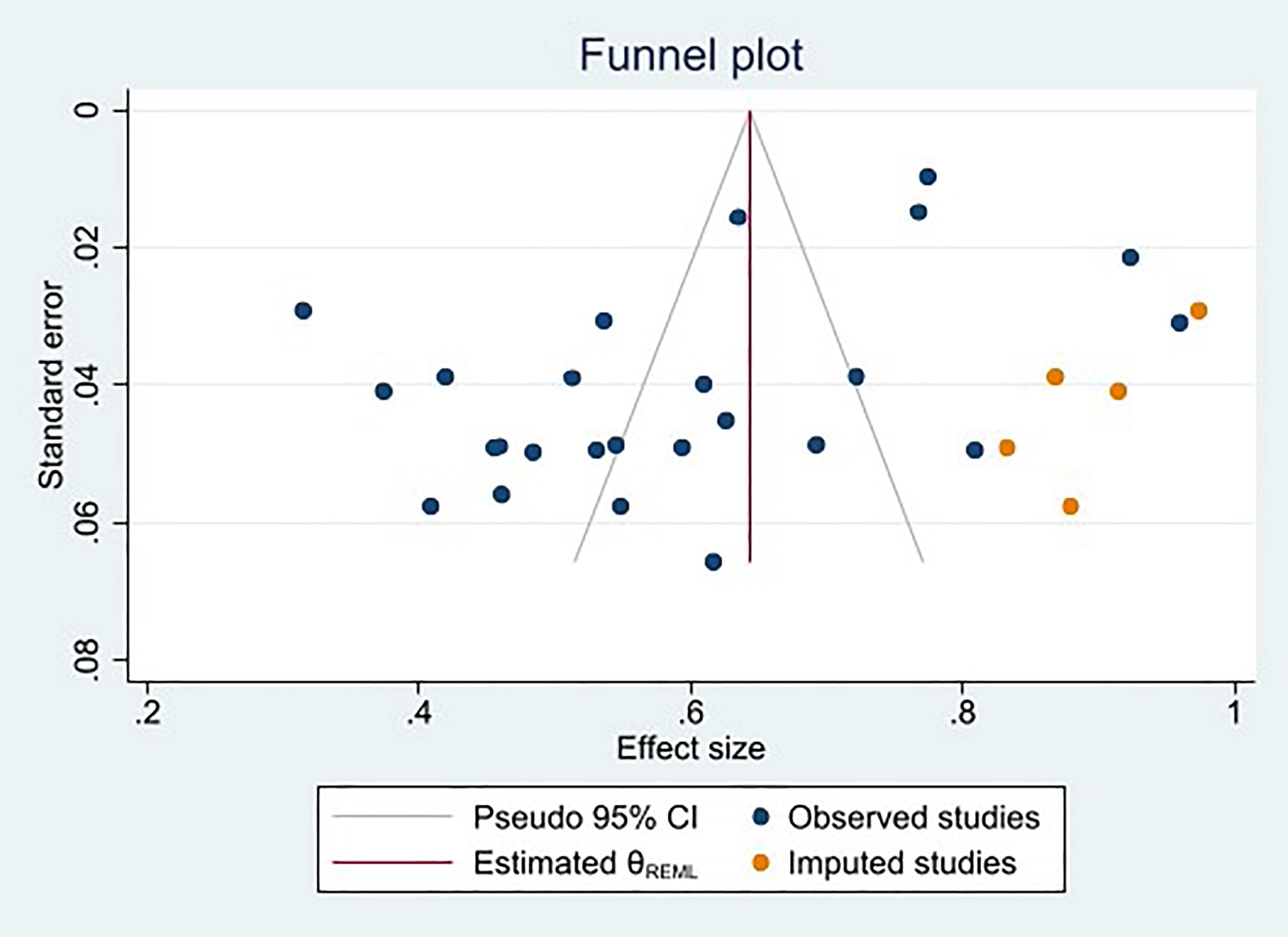
Funnel plot shows publication bias with imputation of missing studies of pooled prevalence of COVID-19 vaccine acceptance among general population in east Africa, 2022.
Sensitivity analysis
The sensitivity analysis indicated that there was no single study that influenced the overall COVID-19 vaccine acceptance among the general population in East Africa (Figure 7).

The sensitivity analysis result of 25 included studies conducted on COVID-19 vaccine acceptance among general population in East Africa, 2022.
Determinant of COVID-19 Vaccine Acceptance in East Africa
In this meta-analysis, the determinant factors of COVID-19 vaccine acceptance were reported using pooled effect sizes with 95%CI. Eighteen researchs reported the determinants of COVID-19 vaccine acceptability. The determinants reported by these studies include, attending above secondary school,14,15,20,22,25,26,29,32,34,36,38 having good knowledge about COVID-19 Vaccine,14,16,17,22,25,29,36,38 having positive attitude toward COVID-19 vaccine,14,17,25,31,37 previously infected by COVID-19,14,17,21,31,34 and being male17,20,22,26,33,34,36 were found to have significant association with COVID-19 vaccine acceptance (Table 2).
Determinant Factors Associated with COVID-19 Vaccine Acceptance among General Population in East Africa 2022.

Abbreviation: CI, confidence interval; OR, odds ratio; POR, Pooled odds ratio; Bold, p-value < 0.05; I2 > 50%, heterogeneity.
Discussion
This is the first systematic review and meta-analysis that tried to investigate the level and determinants of COVID-19 vaccine acceptance among the general population in East Africa. Researchers, health care policymakers and implementers, government, communities, and healthcare professionals will all benefit from this knowledge.
The estimated pooled prevalence of COVID-19 vaccination acceptance rate among the general population in East Africa was 60.2%, according to this systematic review and meta-analysis of 25 articles. In addition, several determinant factors were significantly associated with the level of COVID-19 vaccine acceptance. Among these, attending the above secondary school, having a positive attitude toward the COVID-19 vaccine, and people previously infected by COVID-19 were found to have a strong association with COVID-19 vaccine acceptance.
This finding was consistent with the study conducted in South Carolina (60.6%), 48 China (60.4%), 49 Sixty-three percent (63%) in China, 50 United States (63.7%), 51 Saudi Arabia (64.72%), 52 Japan (65.7%), 53 United States (66.0%). 54 However, this result was higher than previous research conducted in Jordan (36.8%), 55 Jordan (37.4%), 56 Kuwait (53.1%), 57 Palestine (40%), 58 Malaysia (48.2%), 59 England (55.8%), 60 Greece (57.7%), 61 and Saudi Arabia (48%). 62 But it was lower than studies conducted in Turkey (84.6%), 63 Australia (80%), 64 UK (86%), 65 Israel (85%), 66 Bangladesh (74.6%), 67 Iran (64.2%), 68 Italy (86.1%), 69 France (77.6%), 70 Vietnam (76.10%), 71 Pakistan (70.25%), 72 and eighty percent (80%) in the Caribbean and South America. 73 The observed discrepancy could be explained by changes in the study population's sociodemographic parameters as well as the study participants’ level of awareness about the COVID-19 vaccine.
In this meta-analysis, having a positive attitude toward COVID-19 Vaccine was significantly associated with COVID-19 vaccine acceptance, this is similar to studies conducted in Asia had shown that a positive attitude toward vaccination is associated with vaccine acceptance.74–76
Attending above second school was significantly associated with COVID-19 vaccine acceptance. This finding was in line with a recent study that found that persons with more education receive the COVID-19 vaccine.55,77 Individuals with a higher levels of education recorded as having a substantially higher level of knowledge about COVID-19 vaccine acceptance. Furthermore, as a result of enhanced access to more media sources and a growing interest in life activities that may influence them, more informed people are likely to be more aware of and concerned about their health and well-being.
In this review, Being Male was significantly associated with COVID-19 vaccine acceptance, this was consistent with previous studies, that had shown, men are more likely to accept the COVID-19 vaccine.78–80
Previously infected by COVID-19, having good knowledge about COVID-19 Vaccines, were significantly associated with COVID-19 vaccine acceptance in east Africa. This is most likely owing to improved access to high-quality information, such as through the media, and/or the fact that these people tend to live in areas where the virus is more widespread.
Strength and Limitation of the Study
The overall review process was conducted using the Covidence review manager web-based software. The bias may be present because the search and inclusion criteria of the study were those studies conducted just in the English language. There is significant publication bias. In addition, there is a lack of data in most countries may make it a problem to generalize the findings. Therefore, in those countries with a lack of data, we suggest more studies be conducted in the future.
Conclusion
Overall, the COVID-19 vaccination acceptance rate was a little better than average, but it could be improved. The findings of this study revealed that having a positive attitude toward the COVID-19 Vaccine has the largest odd ratio, followed by having been previously infected with COVID-19, having good information about the COVID-19 Vaccine, attending above secondary school, and being male. The findings of this study could help the government figure out the best way to carry out COVID-19 mass vaccination campaigns. In addition, the government's, healthcare professionals, and stakeholders’ commitment to COVID-19 preventive activities could have a significant impact on the vaccine's acceptability.
Supplemental Material
sj-docx-1-hme-10.1177_23333928221106269 - Supplemental material for Covid-19 Vaccine Acceptance and Determinant Factors among General Public in East Africa: A Systematic Review and Meta-Analysis
Supplemental material, sj-docx-1-hme-10.1177_23333928221106269 for Covid-19 Vaccine Acceptance and Determinant Factors among General Public in East Africa: A Systematic Review and Meta-Analysis by Astawus Alemayehu, Abebaw Demissie, Mohammed Yusuf, Abebe Gemechu Lencha, and Lemessa Oljira in Health Services Research and Managerial Epidemiology
Supplemental Material
sj-docx-2-hme-10.1177_23333928221106269 - Supplemental material for Covid-19 Vaccine Acceptance and Determinant Factors among General Public in East Africa: A Systematic Review and Meta-Analysis
Supplemental material, sj-docx-2-hme-10.1177_23333928221106269 for Covid-19 Vaccine Acceptance and Determinant Factors among General Public in East Africa: A Systematic Review and Meta-Analysis by Astawus Alemayehu, Abebaw Demissie, Mohammed Yusuf, Abebe Gemechu Lencha, and Lemessa Oljira in Health Services Research and Managerial Epidemiology
Supplemental Material
sj-docx-3-hme-10.1177_23333928221106269 - Supplemental material for Covid-19 Vaccine Acceptance and Determinant Factors among General Public in East Africa: A Systematic Review and Meta-Analysis
Supplemental material, sj-docx-3-hme-10.1177_23333928221106269 for Covid-19 Vaccine Acceptance and Determinant Factors among General Public in East Africa: A Systematic Review and Meta-Analysis by Astawus Alemayehu, Abebaw Demissie, Mohammed Yusuf, Abebe Gemechu Lencha, and Lemessa Oljira in Health Services Research and Managerial Epidemiology
Supplemental Material
sj-docx-4-hme-10.1177_23333928221106269 - Supplemental material for Covid-19 Vaccine Acceptance and Determinant Factors among General Public in East Africa: A Systematic Review and Meta-Analysis
Supplemental material, sj-docx-4-hme-10.1177_23333928221106269 for Covid-19 Vaccine Acceptance and Determinant Factors among General Public in East Africa: A Systematic Review and Meta-Analysis by Astawus Alemayehu, Abebaw Demissie, Mohammed Yusuf, Abebe Gemechu Lencha, and Lemessa Oljira in Health Services Research and Managerial Epidemiology
Supplemental Material
sj-docx-5-hme-10.1177_23333928221106269 - Supplemental material for Covid-19 Vaccine Acceptance and Determinant Factors among General Public in East Africa: A Systematic Review and Meta-Analysis
Supplemental material, sj-docx-5-hme-10.1177_23333928221106269 for Covid-19 Vaccine Acceptance and Determinant Factors among General Public in East Africa: A Systematic Review and Meta-Analysis by Astawus Alemayehu, Abebaw Demissie, Mohammed Yusuf, Abebe Gemechu Lencha, and Lemessa Oljira in Health Services Research and Managerial Epidemiology
Footnotes
Acknowledgment
First of all, we would like to express our thanks to the almighty God. We would also like to extend our gratitude to Harar Health Science College for providing funds to conduct this study. Finally, we thank Mr Merga Hirko, Dr Abebe Desalegn, and Mrs. Ikram Mohammed for editing the language and grammatical flow.
Author Contribution
All authors contributed significant work to this review.
Data Availability
At any time, the corresponding author provides an additional resource on request.
Declaration of Conflicting Interests
The author(s) declared no potential conflicts of interest with respect to the research, authorship, and/or publication of this article.
Funding
The author(s) disclosed receipt of the following financial support for the research, authorship, and/or publication of this article: This work was supported by the Harar Health Science College,

Supplemental material
Supplemental material for this article is available online.
References
Supplementary Material
Please find the following supplemental material available below.
For Open Access articles published under a Creative Commons License, all supplemental material carries the same license as the article it is associated with.
For non-Open Access articles published, all supplemental material carries a non-exclusive license, and permission requests for re-use of supplemental material or any part of supplemental material shall be sent directly to the copyright owner as specified in the copyright notice associated with the article.
