




Abstract
This study examines the impact of a nationally scaled whole-school inclusion initiative—the Special Olympics Unified Champion Schools (UCS) program—on student academic and behavioral outcomes. Using 11 years of student-level administrative data from North Carolina and a difference-in-differences design, we analyze how exposure to UCS relates to standardized test scores, grade point average, graduation rates, absenteeism, and disciplinary incidents. Results show that longer participation in UCS is associated with improved academic performance and reductions in absenteeism and suspensions, particularly for students with intellectual disabilities. Subgroup analyses suggest larger effects for students from low-income backgrounds. As the first student-level evaluation of UCS using a rigorous empirical design, this study provides new evidence on the academic and behavioral benefits of whole-school inclusion programs. Findings highlight the potential of sustained, schoolwide approaches to support positive outcomes for students with and without disabilities and inform future efforts to strengthen inclusive practices in educational settings.
Keywords
Introduction
Efforts to ensure access to high-quality education for all students continue to shape national discussions about public education. Over recent decades, special education policy in the United States has evolved from a focus on access to general education settings to an emphasis on accountability and inclusive instructional practices (Hardman & Nagle, 2004). Public schools are now expected to provide rigorous, standards-aligned instruction to all students, regardless of individual learning needs or demographic characteristics. Despite these policy advances, academic and behavioral disparities between students with and without disabilities remain substantial. For example, in 2019–2020, the average on-time graduation rate for students with disabilities was 70.6%, compared to 86.5% for all students (National Center for Education Statistics [NCES], 2021). Students with disabilities are also more likely to be chronically absent and disproportionately subject to exclusionary disciplinary practices. In 2013–2014, although students with disabilities represented 12% of the K–12 population, they accounted for 25% of law enforcement referrals, school-based arrests, and suspensions (Government Accountability Office [GAO], 2018). These challenges are often interconnected, as lower academic performance frequently co-occurs with chronic absenteeism and behavioral issues (K. P. Anderson, 2021; Gershenson et al., 2017).
Academic and social development are closely linked (Juvonen & Wentzel, 1996). Inclusive environments that cultivate social-emotional skills—such as empathy, collaboration, and problem-solving—can enhance academic engagement and reduce behavioral issues (Borghans et al., 2008; Deming, 2017; Heckman & Rubinstein, 2001). Research has shown that socially inclusive schools can foster self-awareness, positive peer relationships, and reduced fear of human differences, all of which contribute to stronger school attachment and improved student behavior (Hawkins et al., 1999; Linares et al., 2005; Martin & Dowson, 2009; Wilson et al., 2001; Zins et al., 2004).
The 1997 amendment to the Individuals with Disabilities Education Act (IDEA) affirmed the right of students with disabilities to a free appropriate public education and access to general education settings. Yet, full integration remains elusive, particularly for students with intellectual disabilities (ID), who are among the least likely to participate in general education classrooms or extracurricular activities. In 2022, only 21% of students with ID spent at least 80% of the school day in general education settings, compared to 67% of all students with disabilities (NCES, 2024). Limited classroom and extracurricular engagement can reduce opportunities for meaningful peer interactions and may contribute to negative attitudes, social isolation, and increased vulnerability to bullying (Fisher, 1999; Pijl & Frostad, 2010; Solish et al., 2010; Symes & Humphrey, 2010).
Many school-based initiatives seek to improve relationships between students with and without ID and to enhance social-emotional development. However, existing programs often emphasize awareness or peer pairing, rather than promoting sustained and reciprocal engagement. Such approaches may not lead to meaningful inclusion and, in some cases, can reinforce stigma or lead to disengagement (Carter et al., 2010; Hughes et al., 2012; Siperstein et al., 2007). These limitations underscore the need for comprehensive models that address inclusion at the schoolwide level. Recent studies suggest that broader approaches to social inclusion are linked to fewer behavioral issues and improved student attendance (K. P. Anderson, 2021). Moreover, schools that invest in students’ social and emotional development may see stronger long-term outcomes—including fewer arrests and higher rates of high school completion—compared to schools that focus solely on academic achievement (Jackson et al., 2020).
This study examines the effects of the Special Olympics Unified Champion Schools® (UCS) program, a whole-school social inclusion initiative, on student academic and behavioral outcomes. UCS is composed of three interrelated components: Unified Sports®, which brings together students with and without ID in inclusive athletic activities; inclusive youth leadership (IYL), which engages students in collaborative planning and advocacy; and whole-school engagement activities designed to create a culture of inclusion. Since its launch in 2008, UCS has expanded to more than 7,800 schools across 49 states, the District of Columbia, and Puerto Rico, reaching over 3.6 million students (Special Olympics, 2020). While previous research has documented improvements in school climate and perceptions of inclusion (Jacobs et al., 2018; Siperstein et al., 2019), rigorous evaluations using student-level outcome data remain limited.
Using student-level administrative data from North Carolina and a difference-in-differences research design, we investigate how UCS participation relates to academic outcomes (standardized test scores, grade point average [GPA], and graduation), as well as behavioral measures (absenteeism and disciplinary incidents). We find that longer exposure to UCS is associated with improved academic performance and reductions in absenteeism and disciplinary actions, especially for students with ID. Our findings align with existing literature on the role of inclusive environments in supporting student success and suggest that whole-school programs like UCS may have broad benefits for both students with and without disabilities.
UCS Program and Literature Review
UCS is a whole-school model designed to foster the social inclusion of students with intellectual disabilities (ID) by promoting meaningful interactions among all students. UCS incorporates three core components: Unified Sports®, inclusive youth leadership (IYL), and whole-school engagement. Together, these components aim to build a school culture that supports participation, belonging, and positive peer relationships across student groups (Jacobs et al., 2018).
Unified Sports brings students with and without ID together to participate in competitive and recreational sports, presenting an opportunity for participants to build connections while improving their sports skills and fitness levels. IYL creates opportunities for students of all abilities to take on leadership roles in promoting UCS or other events and activities, and to become “change agents” in their school. 1 Finally, the whole-school engagement component of the UCS program engages the whole school community in building awareness and energizing social inclusion efforts promoted by Unified Sports and IYL. 2
Schools interested in implementing the UCS program first apply to the state Special Olympics office. Schools must identify a core leadership team that may include a primary school liaison with the state office and the proposed student leaders (typically one general education student and one special education student). Schools that apply to join will receive technical assistance and financial support from the state Special Olympics office, usually for a fixed period (e.g., around 3 years), beyond which schools are expected to sustain program implementation with relatively limited support from Special Olympics.
Studies have shown that participation in the UCS program has contributed to improved perceptions of and attitudes toward school social inclusion among students with and without ID through increased visibility and social interactions between students with ID and their peers without disability (Jacobs et al., 2018). Further, UCS school liaisons—staff responsible for supporting UCS implementation in schools—have repeatedly reported that participating in UCS contributes to positive school connectedness and peer relations by promoting social cohesion, creating opportunities for students to work together, raising awareness about special needs students, and increasing their participation in school activities (Jacobs et al., 2018). In addition to the social benefits of the UCS program, Yin et al. (2022) found that UCS implementation led to a 1.1% increase in the high school graduation rate for all students, and a 1.4% increase for students with disabilities using school-level data. This finding is consistent with previous studies showing that whole-school approaches to inclusion lead to improved academic outcomes (Choi et al., 2017).
Despite the suggestive evidence for positive UCS impact on school climate and high school completion, no prior studies with rigorous designs have examined whether there is a spillover effect of the program on student academic achievement through improved school connectedness and peer relationships. School connectedness is a broad concept defined as the students’ belief that adults and peers in the school care about their learning as well as about them as individuals, and is closely related to—or perhaps even incorporates—social inclusion (Centers for Disease Control and Prevention [CDC], 2009). The relationship between school connectedness (e.g., the closeness and quality of the relationship between students, peers, and teachers; attendance; staying in school) and academic achievement has been well-documented in academic literature (A. R. Anderson et al., 2004; Barber & Olsen, 1997; Klem & Connell, 2004; McNeely, 2003; Rosenfeld et al., 1998). Further, peer acceptance and the quality of peer relationships have specifically been found to promote academic achievement and educational attainment (Farrington et al., 2012; Flook et al., 2005). Literature also shows that school engagement indicators (e.g., behavior, tardiness, attendance, and extracurricular activities) in students with learning disabilities are significant predictors of dropout and grade completion (Reschly & Christenson, 2006). Considering the above, there are several possible mechanisms at play. First, poor relationships with peers may influence students’ self-concept and the view of their abilities. Second, students who lack acceptance from peers may also be excluded from group activities, all of which lead students to form a negative academic self-concept and further disengage from school.
Therefore, this study hypothesizes that the UCS program may lead to improvements in school connectedness and student engagement, and, in turn, student academic and other behavioral outcomes. Using detailed student-level administrative data from North Carolina, we explore the relationship between exposure to the UCS program and a broad set of student outcomes, such as academic performance (standardized test scores and high school GPA), student engagement (rate of absence), and student disciplinary outcomes (suspensions/expulsions and disciplinary incidents).
Theoretical Framework
The UCS program is rooted in ecological systems theory (Simplican et al., 2015), and it is designed to foster social inclusion by operating at various levels involving multiple stakeholders (e.g., students, teachers, administrators) within multiple school contexts (Siperstein et al., 2019). The whole-school approach of UCS is intended to foster meaningful relationships among students with and without disabilities beyond physical inclusion or the classroom setting (Yin et al., 2022). The program aligns with Social Connectedness Theory (R. M. Lee & Robbins, 1995), which posits that a sense of belonging, and interpersonal closeness, is essential for positive social and academic outcomes. Similarly, the concept of School Cohesion underscores the importance of shared norms, trust, and supportive peer relationships in fostering inclusive environments (Goodenow, 1993; Libbey, 2004). By promoting inclusive sports and leadership opportunities, UCS aims to strengthen these mechanisms, ultimately enhancing the school climate and inclusion for students with disabilities.
We expect that the three UCS components—whole-school engagement, inclusive sports, and youth leadership—create structured opportunities for interaction between students with and without disabilities. These opportunities foster positive peer attitudes and relationships, which in turn increase social connectedness and school cohesion. A more inclusive school climate is expected to enhance students’ sense of belonging, which in turn supports improved academic engagement, reduced behavioral issues, and overall well-being. We summarize these relationships in Figure 1.

Mechanism chain diagram.
The literature suggests several potential mechanisms for these channels of impact:
i. School connectedness: The term school connectedness refers to the perception of students that their peers and educators in the educational institution have a genuine interest in their personal development and academic progress (CDC, 2009). While closely related to concepts such as emotional school engagement (sense of belonging, motivation, and emotional safety) and perceived school support (sense of available resources and opportunities), school connectedness can be viewed as a more holistic feeling of being cared for by the school community. To that extent, prior research conceptualizes connectedness as multidimensional, encompassing relationships with peers, teachers, and the broader school community (Goodenow, 1993; Libbey, 2004). Evidence consistently shows that higher school connectedness predicts improved academic engagement, higher grades, and reduced dropout risk (Klem & Connell, 2004). Mechanistically, connectedness fosters motivation and persistence, which translate into better attendance and classroom participation—key precursors to academic achievement.
ii. School inclusion: Inclusiveness of students’ educational settings can be an important determinant of behavior and attendance, particularly for students with disabilities who are more likely to be chronically absent and receive exclusionary discipline (K. P. Anderson, 2021). For students with disabilities, social inclusion implies building peer or mentor relationships and increasing social interactions beyond the regular classroom time (Hughes et al., 2012; Simplican et al., 2015). Increased perceived support from teachers and peers is associated with improvements in attendance, high school completion, and stronger academic performance (A. R. Anderson et al., 2004; Barber & Olsen, 1997; Klem & Connell, 2004; Theobald et al., 2019). Moreover, an increased sense of community might reduce the prevalence of bullying, teasing, or the use of offensive language against SWD. Inclusive environments also mitigate bullying and social isolation—factors associated with lower academic achievement and engagement (Ladd et al., 2017). Specifically in relation to UCS, Yin et al. (2022) found an increase of perceptions about a more socially inclusive environment with the implementation of UCS.
iii. Socio-emotional learning: Inclusive settings that encourage peer interaction provide natural opportunities for developing socio-emotional skills such as empathy, cooperation, and conflict resolution. These competencies are linked to improved classroom behavior, reduced disciplinary incidents, and enhanced academic performance (Durlak et al., 2011). Socio-emotional learning also acts as a reinforcing mechanism: as students build stronger social-emotional skills, they engage more positively with peers and teachers, further strengthening connectedness and inclusion. Existing research on Special Olympics UCS shows that students in UCS programs report high levels of empathy, relationship skills, and responsible decision-making, as well as improved perceptions of school climate and belonging (Center for Social Development and Education, 2022).
Data and Sample Construction
This study employs data from three sources for school years 2007–2008 to 2017–2018: (1) student administrative data from the North Carolina Education Research Data Center (NCERDC) on student characteristics, school identifiers, and outcome measures, including end-of-grade (EOG) test scores for junior grade (Grades 3–8) students and GPA for high school students, attendance rate, and disciplinary outcomes; (2) school-level data from the Department of Education’s (ED) Common Core of Data-Public School Universe (CCD-PSU) on school-level characteristics; and (3) school-level UCS implementation data from Special Olympics.
Student-Level Data From NCERDC
Student-level data from NCERDC provide student demographic measures including race, ethnicity, gender, free or reduced-price lunch eligibility status, eligibility for other assistance programs, limited English proficiency status, and Section 504 status. In addition, crucial to our study, we observe the student disability status as well as disability type (through student exceptionality codes) for all students. We divide students into three groups based on the exceptionality status variable: students with ID, students with other disabilities (other 12 federally classified disability categories), and students without disabilities. 3 We separately analyze each of these three groups in all analyses.
We examine three main sets of outcomes: (1) Academic achievement outcomes, available from NCERDC, are different for Grades 3–8 students and high school (Grades 9–12) students. For Grades 3–8, we observe students’ annual EOG math and reading scores. For high school students, we observe their cumulative high school GPA. Because of the difference in academic achievement outcomes, we separately analyze Grades 3–8 and high school outcomes in this study. We should note that the EOG test scores analyzed in this study came from three types of tests: the Extend 1 test designed for students with significant intellectual disabilities, the Extend 2 test intended for students with an IEP, and a standard EOG test for students without disabilities. We standardized all EOG test scores by year, grade, and test type, and pooled the standardized test scores together as our outcome variables for the Grades 3–8 sample. 4 (2) Annual absence rate is calculated as the ratio of days absent to days enrolled in a school year for each student every year. (3) Disciplinary outcomes, derived from data on more than 70 different incident types in the NCERDC dataset, include an indicator of experiencing any disciplinary incident in a school year, an indicator of having any violent incident, and an indicator of receiving a suspension or expulsion in a school year. 5
School-Level Data From CCD-PSU
The NCES reports public elementary/secondary school universe survey data in its Common Core of Data (CCD). The CCD provides essential information on all public elementary and secondary schools in the country and their students and teachers (aggregated to the school/grade-school level). Using data for school years 2007–2008 through 2017–2018, we created a panel of school-level variables on school geography, charter school status, Title I school status, student enrollment by grade, the demographic composition of students by grade, and full-time teacher equivalent (FTE) from 2,874 schools. We next merged school panel data with the student-level data from NCERDC using the NCES school and LEA codes.
Special Olympics UCS Implementation Data
Linking UCS program inception year collected by Special Olympics with CCD-NCERDC using school NCES IDs, we identified 314 middle and high schools in North Carolina that implemented the program between 2011 and 2019. We classified the remaining 2,560 schools as non-UCS schools. Program inception years vary over time and are shown in Figure 2.
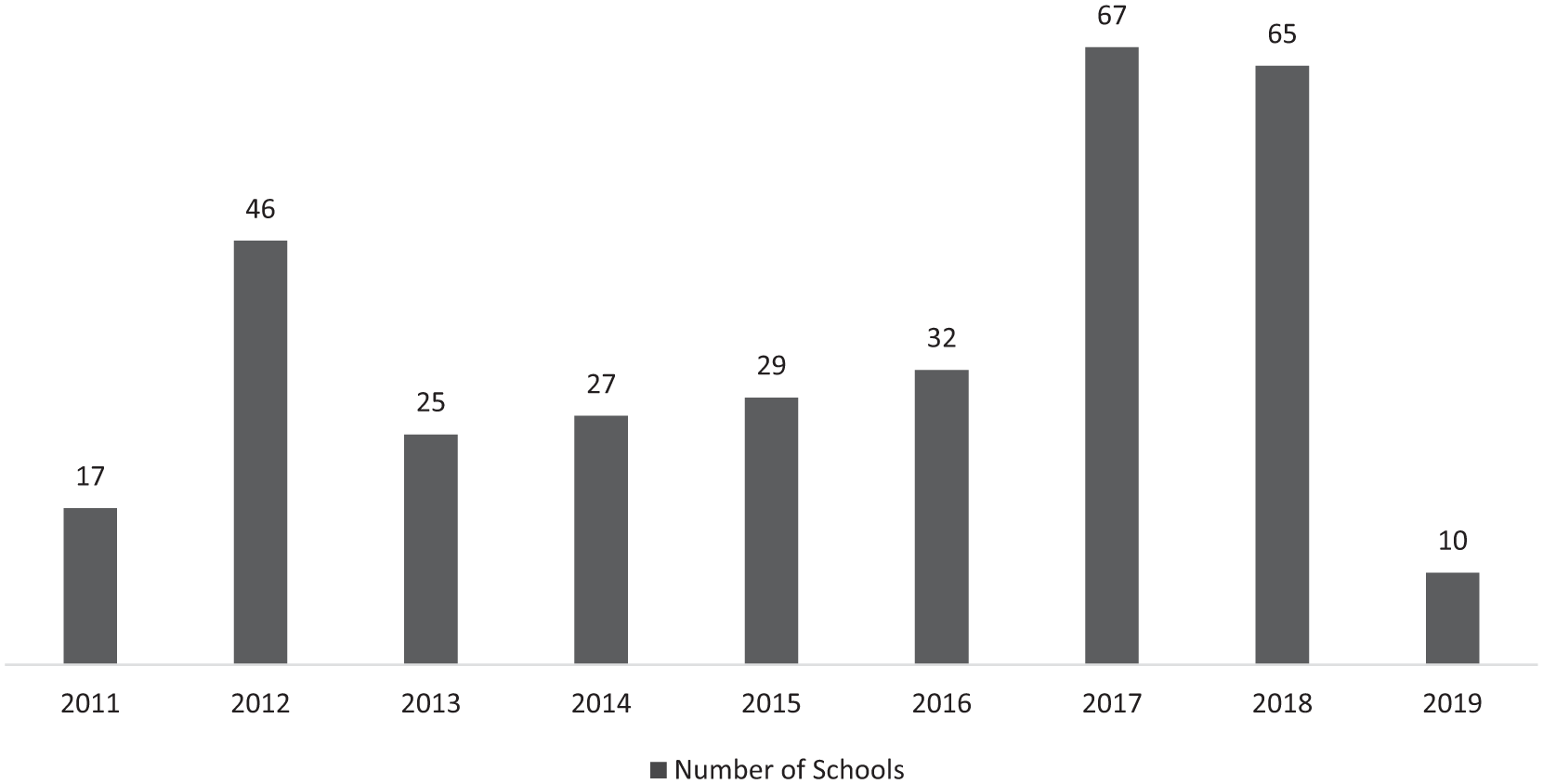
Distribution of UCS schools by inception year (total = 318 UCS schools).
Final Study Samples and Summary Statistics
We created two student-year panel datasets—one for Grades 3–8 and the second for the high school samples, with each observation unique at the student-school-year level. We then dropped students who retrogressed or had crucial outcome variables missing (mostly academic achievement outcomes). Our final sample includes 1,042,074 students in Grades 3–8 and 435,301 high school students. Table 1 shows sample sizes for the three subgroups: students with ID, students with other disabilities, and students without disabilities.
Sample Size by Level and Disability Status
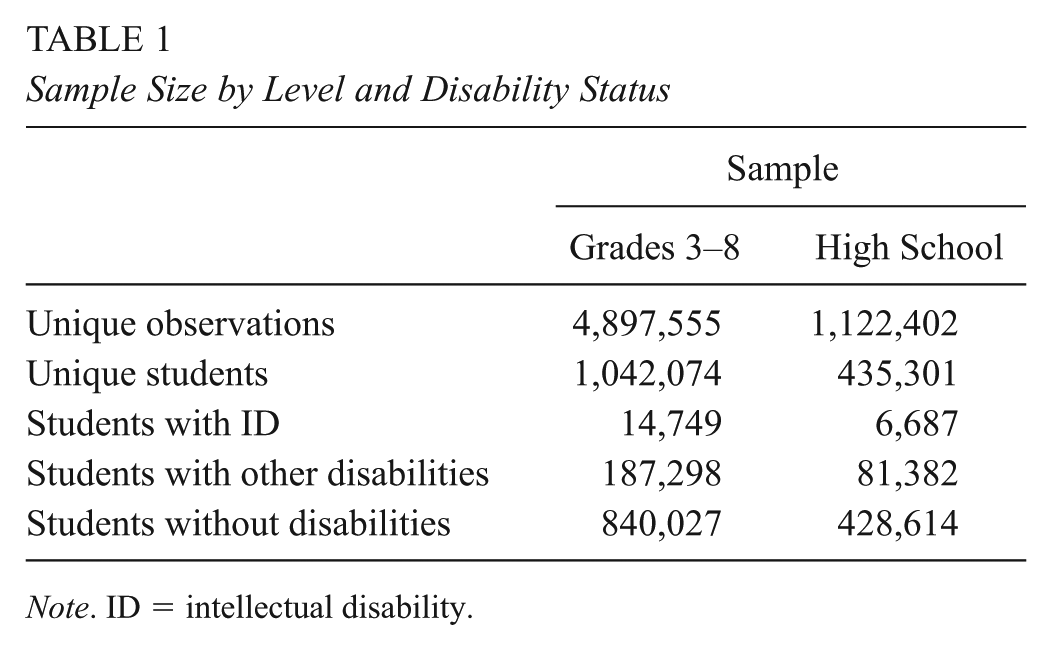
Note. ID = intellectual disability.
Table 2 presents summary statistics for both samples by UCS implementation status (schools that had implemented UCS by 2019 and others). For Grades 3–8, we focus on EOG test scores in math and reading, standardized within reporting year, grade, subject, and type of test. Average test scores were higher among students in UCS schools than those from non-UCS schools. In contrast, the high school sample’s non-achievement academic outcomes (GPA and graduation status) were similar by UCS implementation status. In both samples, the percentage of students with a disciplinary incident, suspension/expulsion rate, and absence rate were somewhat smaller in UCS schools than non-UCS schools. The proportion of students with ID and students with other types of disabilities were similar in UCS and non-UCS schools in both samples. We also observe differences in the student demographics between UCS and non-UCS schools in terms of racial composition and proportion of students eligible for free or reduced-price lunch, with a greater proportion of racial minorities and free or reduced-price lunch eligible students in the non-UCS schools than in the UCS schools.
Summary Statistics
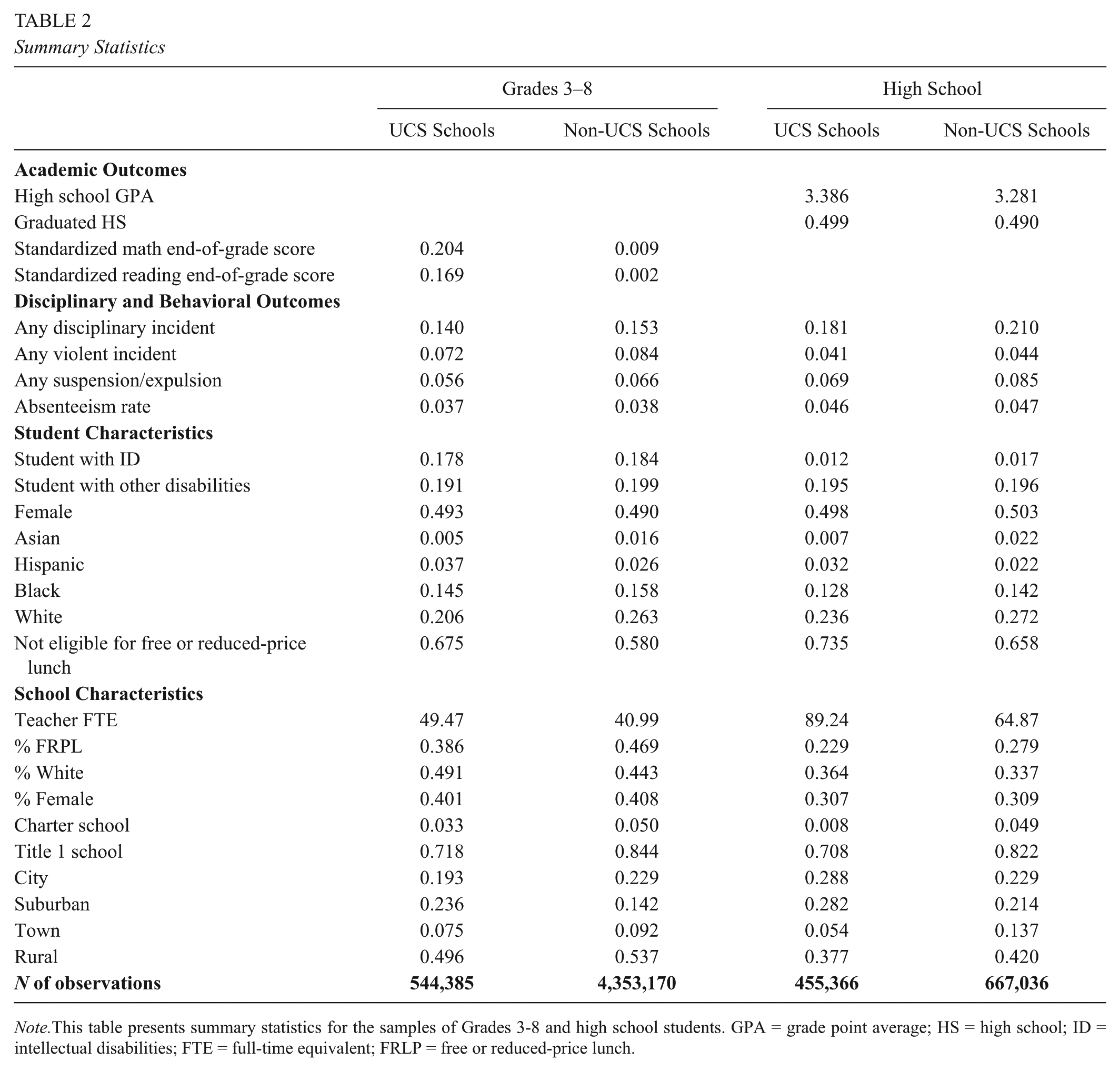
Note.This table presents summary statistics for the samples of Grades 3-8 and high school students. GPA = grade point average; HS = high school; ID = intellectual disabilities; FTE = full-time equivalent; FRLP = free or reduced-price lunch.
Methods
To study the relationship between UCS implementation and student outcomes, we adopt event study and difference-in-differences models at the school and year levels. As previously described, schools choose whether and when to implement UCS. Therefore, there are two levels of school selection into the UCS program: (1) Among 2,874 total schools in our sample, 11% (or 314) implemented UCS between 2011 and 2019 and (2) Among these 314 UCS schools, there is significant variation in the timing of UCS implementation, as shown in Figure 2. The decision to adopt the program as well as the timing of implementation may depend on both observed and unobserved factors. For example, our data show that large and urban schools are more likely to adopt UCS. It is also likely that schools differ in their practices for students with disabilities, affecting their decisions to adopt the UCS program. If the decision to implement the UCS model is correlated with external school-level factors that also affect student outcomes of interest, simply regressing student outcomes on UCS exposure would generate biased estimates in that those school-level confounders are unaccounted. Adding school-level fixed effects allows us to control for both observed and unobserved time-invariant school differences (e.g., UCS schools may be more responsive to the needs of students receiving special education services). In addition, the second set of fixed effects considers common time shocks to all schools regardless of UCS adoption. The key assumption behind this empirical design is that, had treated schools not adopted UCS, outcomes would have moved in parallel for UCS and non-UCS schools.
Within UCS schools, however, the timing of UCS adoption may further depend on time-varying factors. For example, schools may decide to adopt UCS after observing relatively poor outcomes for students with disabilities or the entry of a new principal or special education staff. We test whether UCS and non-UCS schools follow similar trends before the adoption of the program by using an event study approach that incorporates period-specific indicators and interacts them with an indicator for being an UCS school.
We examine three sets of outcomes: academic achievement (including standardized math and reading EOG scores by grade for students in Grades 3–8, and GPA and graduation status for high school students), disciplinary outcomes (including any disciplinary incidence, violent incidence, and suspension or expulsion by grade), and annual absence rates (days absent/days enrolled). For each outcome, we perform our analysis for three subsamples—students with ID, students with other types of disabilities, and those without disabilities. The long panels of annual student-level outcomes allowed us to construct two measures to study the impact of the UCS model: (1) a binary variable to indicate whether a student ever enrolled in a UCS school and (2) the total number of years of exposure to the program. To estimate the relationship between exposure to the UCS program and student outcomes, we first employ the following event study specification:

where i,s,g and t index the student, school, grade, and year, respectively. yisgt denotes the student-level grade-specific annual outcomes. l(UCSst = k) are indicators equal to one if school s had implemented the program in period k. Given the number of years available in our data, we consider periods
The coefficients of interest in Equation 1 are βk, which capture the relationship between the timing of UCS implementation and student outcomes at the end of the school year. Since this specification includes school and year fixed effects, the coefficients βk identify the differences in outcomes between students enrolled in UCS schools before and after the program implementation compared to students who were enrolled in schools which did not adopt the program. The event study specification flexibly allows to assess whether the trajectories of UCS and non-UCS schools diverged prior to the implementation of the program. To the extent that there are no differences in outcomes during the pre-treatment periods (i.e., βk = 0, k < 0), this would be suggestive that the set of controls and fixed effects capture the unobserved determinants of selection into the UCS program.
We summarize the relationship between any UCS exposure and student outcomes using the following difference-in-differences specification:

where UCSExposurest is a dummy variable indicating whether school s implemented the UCS program in year t. The variable of interest is β1, which captures the relationship between UCS implementation and student outcomes at the end of the school year. In this specification, β1 identifies the average difference in outcomes between students who were enrolled in a school that adopted UCS by the time they were enrolled compared to students who were not. It is important to highlight two features of the data we employ in this study. First, we can observe which schools participated in the UCS but, unfortunately, we cannot distinguish which students effectively enrolled in the program or the exact nature of their participation. In this sense, the event study and difference-in-differences specifications identify the average effect of exposure to UCS on each of the outcomes we study. Although we cannot explore heterogeneous effects by type of participation, we estimate differential effects by disability status. Second, since high school GPA and graduation outcomes are only observed once per student, the effective specification for the high school sample becomes a repeated cross-sectional model instead of a longitudinal model. 6
In addition, we estimate the non-linear effects of UCS participation based on the number of years since its implementation using the following specification:

In this specification, the variable of interest is TotalExposureit, which denotes the total number of years between Grade 3 and Grade g that student i is exposed to UCS treatment by year t. Unlike Equation 2, which captures the average change of exposure to UCS, Equation 3 allows us to estimate the marginal effect of an additional year of exposure. When analyzing the degree of exposure, we focus on a panel of students who had a complete schooling history available from Grade 3 to their current grade. That is, we drop students who dropped out of the sample at any point. Although the sample size decreased significantly, this approach allows us to calculate the total years of UCS exposure over the same number of years for all students in a given grade. Figures 3 and 4 present the conditional distribution of the years of exposure for Grades 3–8 and high school students, respectively. Finally, in all of our analyses, we cluster standard errors at the school level to allow for arbitrary dependence of the error term ∊isgt within schools across years.

Distribution of years of exposure (Grades 3–8).

Distribution of years of exposure (high school).
Results
Unified Champion Schools Exposure and Academic Outcomes
Figure 5 presents our estimates from the event study specifications described in Equation 1, using all students in the sample and key outcomes observed in our Grades 3–8 and high school samples. These plots show no evidence of differential trends in EOG test scores, high school GPA, or the likelihood of graduation between UCS and non-UCS schools prior to the implementation of the program. We test these differences formally using an F-test of joint significance of all pre-treatment estimates and we report the p-values in each plot. 7 In all cases, we cannot reject that all pre-treatment estimates are jointly equal to zero, which assuages concerns related to the existence of unobserved determinants of selection into the UCS program that could bias our estimates. For Grades 3–8 outcomes, we observe an increase in average test scores for schools that implemented UCS of approximately 0.5 SD after 4 years from the start of the program. For high school outcomes we do not find, on average, statistically significant differences between UCS and non-UCS schools. Table A1 in the Appendix reports all estimates for these regressions.
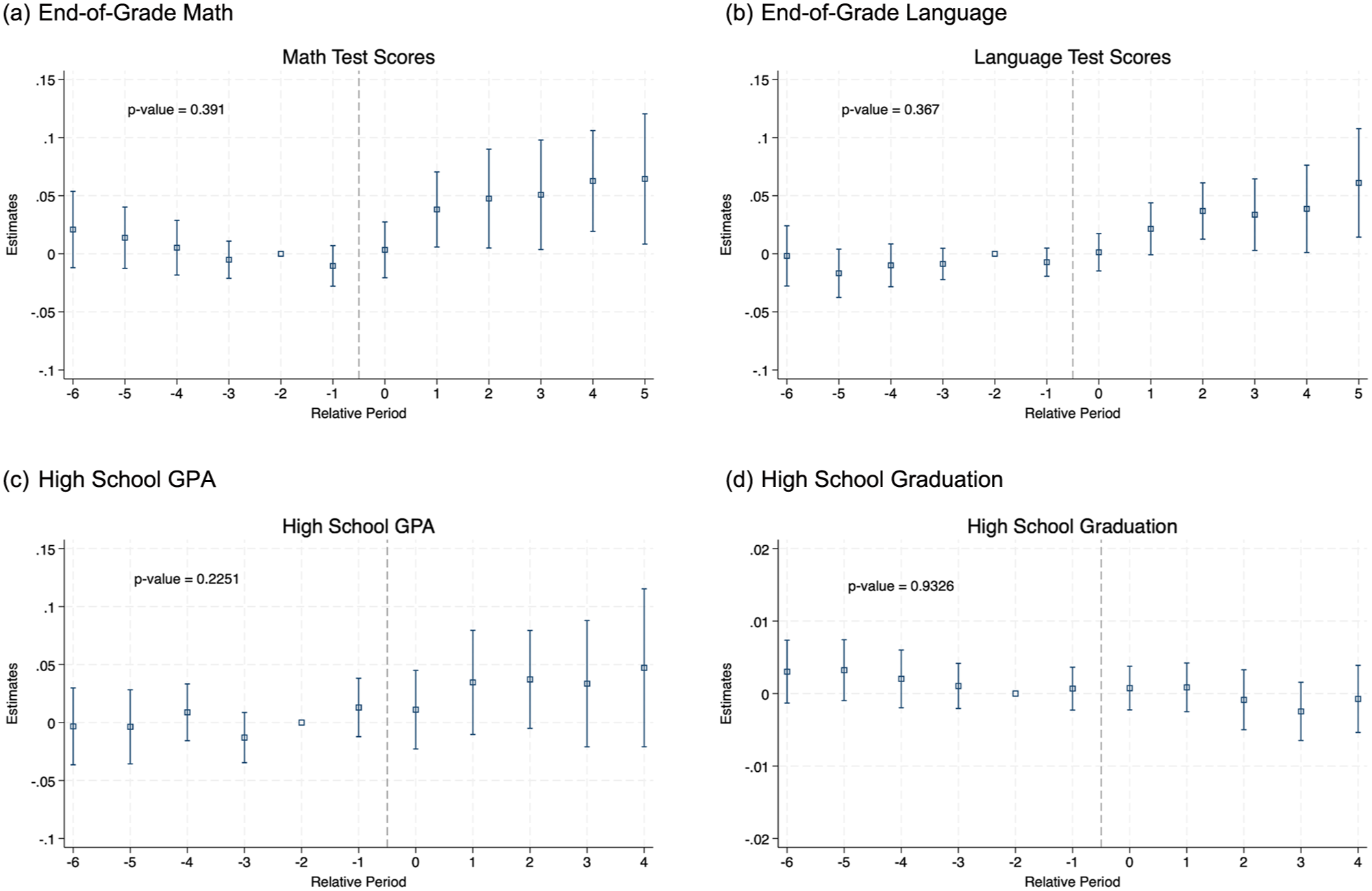
Event study specifications for academic outcomes (Grades 3–8 and high school samples): (a) End-of-Grade Math, (b) End-of-Grade Language, (c) High School GPA, and (d) High School Graduation.
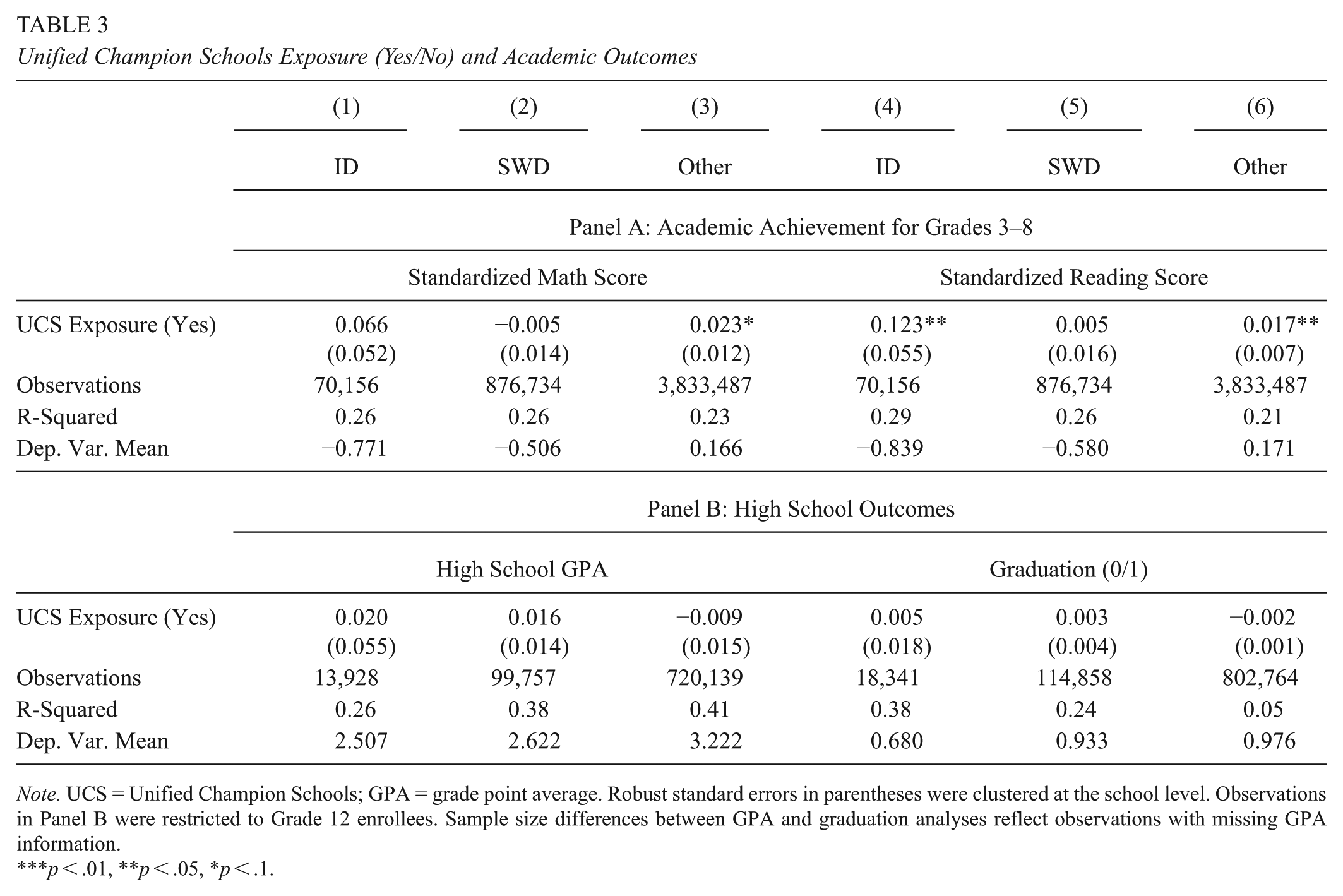
Table 3, Panel A presents the regression estimates from our difference-in-differences specification in Equation 2 for the relationship between UCS implementation and standardized math and reading EOG scores for Grades 3–8. Results suggest mixed but promising evidence on the relationship between UCS implementation and student EOG scores. Specifically, UCS implementation was associated with a 0.02 standard deviation increase in math score for students without disabilities (p < .1), but there was no statistically significant increase in math scores associated with UCS exposure for students with ID or other disabilities. In terms of reading scores, UCS implementation was associated with an increase of 0.12 (p < .05) and 0.02 (p < 0.05) standard deviations for students with ID and those without disabilities, respectively.
Unified Champion Schools Exposure (Yes/No) and Academic Outcomes
Note. UCS = Unified Champion Schools; GPA = grade point average. Robust standard errors in parentheses were clustered at the school level. Observations in Panel B were restricted to Grade 12 enrollees. Sample size differences between GPA and graduation analyses reflect observations with missing GPA information.
p < .01, **p < .05, *p < .1.
Panel B presents the relationship between UCS exposure and high school GPA and graduation outcomes. We do not see a significant relationship between UCS implementation in high school and high school GPA or graduation outcomes for students with and without disabilities. There are two caveats to note here. First, the UCS implementation variable is a binary variable for whether the student was enrolled in the high school after that high school implemented UCS. Therefore, it does not capture any effects of the student’s previous exposure to UCS during middle school. Second, we estimate the association between UCS implementation and the graduation outcome restricting the sample to students enrolled in Grade 9, reflecting the graduation likelihood conditional on an earlier period, rather than at the end of high school. We choose this more restrictive approach to assuage concerns related to differential attrition or likelihood of dropping out between students exposed and not exposed to the program. However, it should be noted that it is likely that these estimates underestimate the true relationship between UCS and high school graduation.
We investigate in more detail the relationship between the number of years of exposure to UCS and student outcomes using our specification outlined in Equation 3. This approach identifies not only the effect of exposure to UCS at the time the student is enrolled in a UCS school, but also the potentially non-linear effect of the UCS program. We first estimate a simplified version of Equation 3, where the regressor of interest is the total number of years exposed to UCS, so that our estimates indicate the association between an additional year of exposure and changes in student outcomes. As shown in Table 4, Panel A, more prolonged UCS exposure was positively correlated with standardized math and reading scores of students with ID. An additional year of UCS exposure was associated with a 0.037 standard deviation increase in math score (p < .1) and a 0.044 standard deviation increase in reading score (p < .1) for students with ID. We obtain mixed findings for students with other disabilities and those without disabilities. We find that an additional year of UCS exposure has a statistically significant effect of 0.015 (p < .01) and 0.007 (p < .05) standard deviations on math and reading test scores, respectively. At the same time, we do not find statistically significant associations for students with other disabilities.
Unified Champion Schools Exposure (Number of Years) and Academic Outcomes

Note. UCS = Unified Champion Schools; ID = students with intellectual disabilities; SWD = students with other disabilities; GPA = grade point average. Robust standard errors in parentheses were clustered at the school level. Observations in Panel B were restricted to students with complete enrollment history from Grade 3 through Grade 12. Sample size differences between GPA and graduation analyses reflect observations with missing GPA information.
p < .01, **p < .05, *p < .1.
For high school students, we find that an additional year of UCS exposure was associated with significant increases in GPA for all students (Table 4, Panel B). For students with ID, each additional year of UCS exposure increased GPA by 0.138 points (p < 0.01). For students with other disabilities and without disabilities our estimates show increases of approximately 0.05 GPA points, both statistically significant at the 1% level. We do not find a strong relationship between program exposure in Grade 9 and high school graduation 4 years after for any of the three subgroups. All of our estimates are small or not statistically significant.
As a robustness check, we also consider a more flexible specification that allows for school-specific linear time trends. This additional set of controls helps to account for time-varying differences in determinants of the outcomes between UCS and non-UCS schools which are not necessarily captured by the school controls Sst. We present our results in Appendix Table A3. Overall, our estimates change slightly but the conclusion remain largely consistent with our preferred specification displayed in Table 4.
Figures 6 and 7 present estimates from Equation 3 where we allow the treatment parameter to vary as a function of the number of years of exposure to UCS, allowing to test for the presence of non-linearities in the relationship between exposure to UCS and academic outcomes. Figure 6 presents estimates of the effect on standardized test scores for Grade 3–8 students who were exposed to UCS for 1, 2, and more than 2 years, compared to students enrolled in non-UCS schools. We observe that the rise in test scores is larger for students who were exposed to UCS for more than 2 years. In math, our estimates show that more than 2 years of exposure associate with an increase of 0.102 (p < .1) and 0.051 (p < .05) standard deviations for students with ID and those without disabilities. For language test scores, the estimates are similar although in this case we also find a statistically significant estimate of 0.03 (p < .1) for students with other disabilities.

UCS exposure (number of years) and academic outcomes for Grade 3–8 students: (a) End-of-Grade Math, and (b) End-of-Grade Reading.

UCS exposure (number of years) and academic outcomes for high school students: (a) High School GPA, and (b) High School Graduation.
Similarly, Figure 7 presents estimates for high school students. In this case, our estimates for GPA suggest a non-linear positive relationship between this variable and years of exposure for SWD and students without a disability. While we find no differences in GPA between treated and non-treated students with up to 3 years of exposure, we find a positive difference of approximately 0.2 points for students exposed to UCS for 4 years or more. Interestingly, for students with ID we find a more linear relationship. On average students with ID exposed for at least 4 years to the program experience increases of around 0.5 GPA points compared to similar students enrolled in non-UCS schools. In terms of graduation rates, we do not find evidence of non-linearities for SWD and students without a disability. There is some evidence of improvements in graduation rates for students with ID exposed for 3 or more years to the program. However, this estimate is not statistically significant at conventional levels. As discussed above, in this case we are estimating the effects of exposure on an outcome observed 4 years later. Consequently, our estimates do not capture the additional effect of exposure during high school.
Since GPA grades can vary across schools due to factors such as teacher behavior, curriculum, or grading leniency, we consider two additional outcomes for our sample of high school students, conditional on enrolling in ninth grade: grade repetition and on-time graduation. Table A2 in the Appendix shows that an additional year of exposure to UCS associates with a reduction of 1.8 percentage points in the likelihood of repeating any grade (p < .05) for students with ID and reductions of approximately 0.6 percentage points for the other two groups. At the same time, we find an increase of 0.9 percentage points in the likelihood of graduating on time for students with ID, but the estimate is not statistically significant at the 10% level. These additional results suggest that the UCS program associates with improvements in academic outcomes in high school, beyond mere GPA inflation.
To contextualize the practical significance of these findings, our effect sizes can be interpreted using contemporary educational benchmarks. According to Kraft (2020), educational intervention effects smaller than 0.05 standard deviations are considered small, while effects between 0.10 and 0.15 are substantial in educational contexts. Our findings show effect sizes that are educationally meaningful: for students with ID, the 0.037 and 0.044 standard deviation increases per year of exposure in math and reading respectively represent approximately 1.5 to 1.8 months of typical learning gains (Hill et al., 2008). The 0.138 GPA point increase per year for students with ID is particularly notable, as research indicates that each 0.1 GPA point increase is associated with meaningful improvements in graduation rates and post-secondary outcomes (Allensworth & Easton, 2007).
UCS Exposure and Disciplinary Outcomes
Results from the previous section suggest that exposure to UCS is positively correlated with academic achievement. Next, we investigate whether exposure to UCS also correlates with improved student behavior, measured by disciplinary outcomes and absence rates. The UCS program may affect student behavior through increased school engagement and overall positive experiences. In other words, students who participated in UCS activities may be less likely to engage in disciplinary infractions or be suspended and have better attendance. At the same time, as our mechanism chain in Figure 1 suggests, improvements in student behavior might also improve academic outcomes, potentially mediating the overall effect we present in Tables 3 and 4. However, fully disentangling the different channels that mediate these effects is beyond the scope of this work. We created four measures to test this hypothesis: dummy variables for whether the student had (1) any disciplinary incident; (2) any violent incident; (3) any suspension or expulsion, and (4) their annual absence rate.
Consistent with previous findings, the results presented in Table 5 suggest a mixed but potentially positive impact of UCS on students’ behavioral outcomes. For students in Grades 3–8, an additional year of UCS exposure was associated with a decrease in the likelihood of observing any disciplinary incident of 1.8 percentage points (p < .01), a violent incident by 2 percentage points (p < .01), and any suspension/expulsion by 0.8 percentage points (p < .05) for students with ID. For students with disabilities other than ID and without a disability we do not find any statistically significant associations. Columns 10 to 12 in Table 5 present estimates of the association between absence rates and years of exposure to UCS. Similar to the previous behavioral outcomes, we find a negative and statistically significant association of 0.3 percentage points (p < .05) for students with ID and no association for the other groups. For the high school sample (Panel B in Table 5), the results suggest that each additional year of UCS exposure is correlated only with a significant decline of 0.01 percentage points (p < .01) in the absence rates of students with other disabilities and without a disability. We do not find statistically significant estimates for students with ID. Table A4 in the Appendix presents estimates of our more flexible specification allowing for the effect of exposure to vary by the number of years. Similarly to academic outcomes, we find that the improvements on behavioral outcomes concentrate on students who were exposed to UCS for a longer number of years.
Unified Champion Schools Exposure (Number of Years) and Disciplinary Outcomes

Note. UCS = Unified Champion Schools; ID = students with intellectual disabilities; SWD = students with other disabilities. Robust standard errors in parentheses were clustered at the school level. Observations in Panel B were restricted to students with complete enrollment history from Grade 3 through Grade 12. Sample sizes are relatively smaller than academic outcomes due to missing attendance information.
p < .01, **p < .05, *p < .1.
Sensitivity Tests
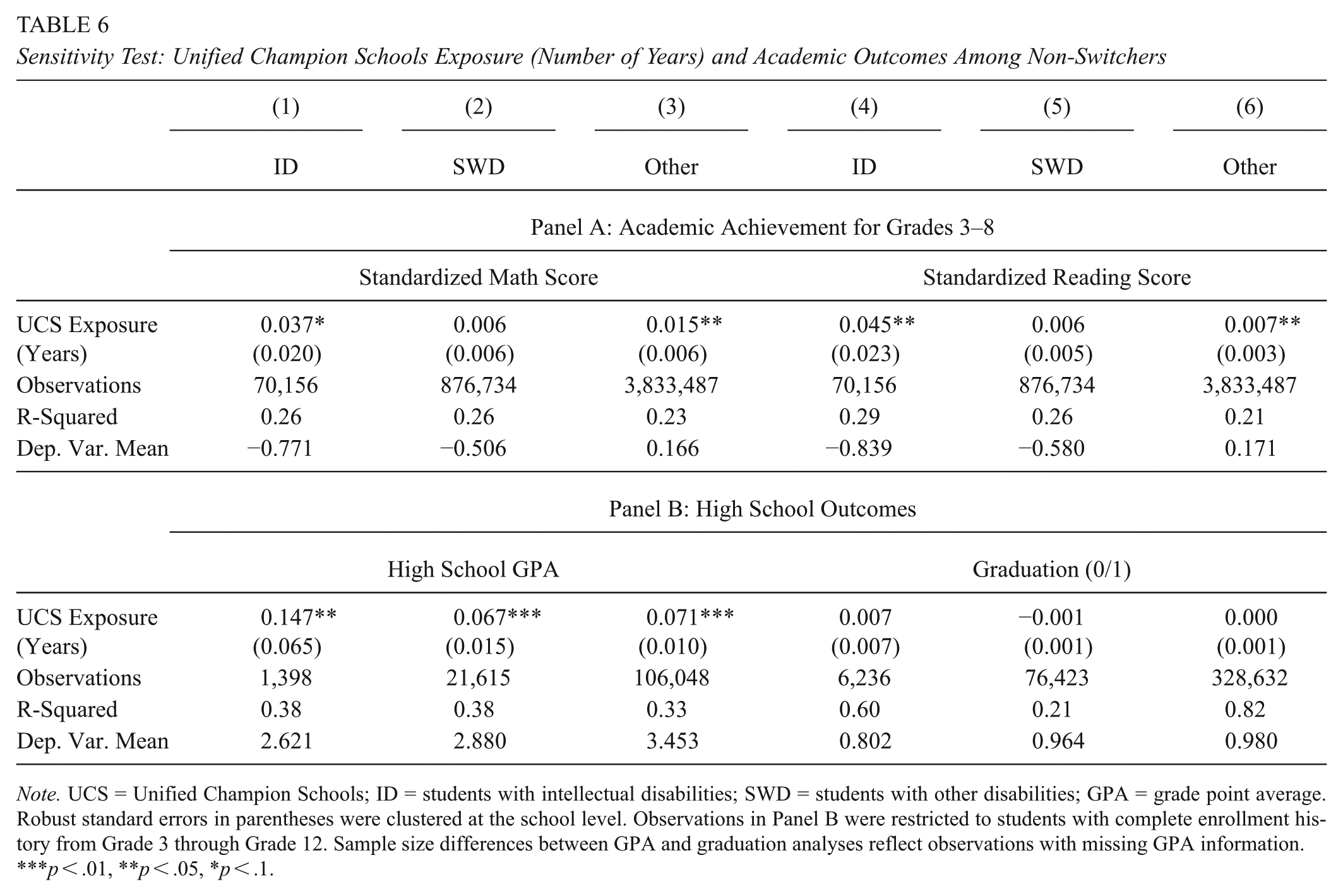
Given that our data span multiple years for each student, it is important to note that a significant portion of students in our sample switched schools or transitioned from elementary to middle schools at some point in the panel. In our sample of students in Grades 3–8, 25% changed or switched schools at some point, with most changing from elementary to middle school after Grade 5. Switching schools is less prevalent—around 4%—in our high school sample because we restricted the sample to students enrolled in Grade 12 only. In our main analysis, we only take into account the total number of years a student was exposed to the program without considering whether a student switched from or to a UCS school and how that might have affected their outcomes. Yet, changing or switching schools may cause ambiguity in the interpretation of our estimates. For example, 1-year exposure to the UCS program might mean a student attended 1 year of UCS elementary school and transitioned into non-UCS middle schools, or a student attended 1 year of UCS middle school. Not taking into account the time since students’ last exposure might lead to biased estimates, especially if there are strong short-term contemporaneous effects of the program. To test this, we performed a robustness check in which we add indicators of school switches between UCS and non-UCS schools. Therefore, we compare student outcomes also controlling for the timing of school changes, Results in Table 6 show that our main findings are mostly robust to adding additional controls for school switchers. An additional year of UCS exposure led to significant increases in math and reading scores for students with ID and significant increases in high school GPA for all students.
Sensitivity Test: Unified Champion Schools Exposure (Number of Years) and Academic Outcomes Among Non-Switchers
Note. UCS = Unified Champion Schools; ID = students with intellectual disabilities; SWD = students with other disabilities; GPA = grade point average. Robust standard errors in parentheses were clustered at the school level. Observations in Panel B were restricted to students with complete enrollment history from Grade 3 through Grade 12. Sample size differences between GPA and graduation analyses reflect observations with missing GPA information.
p < .01, **p < .05, *p < .1.
Heterogeneous Effects
We also explored the impacts of UCS on student academic outcomes by socioeconomic status (SES) as students from economically disadvantaged backgrounds may face greater isolation, lower social engagement, and more susceptibility to bullying (Tippett & Wolke, 2014). Considering the average effects across groups presented in Table 4, we focus on the differences for students with intellectual disabilities by free or reduced-price lunch eligibility, which we employ as a proxy of socioeconomic status. Table 7 shows our main findings for these two subsamples.
Unified Champion Schools Exposure (Number of Years) and Academic Outcomes by Free or Reduced-Price Lunch Eligibility Status for Students With Intellectual Disability

Note.UCS = Unified Champion Schools; FRL = students receiving free or subsidized price lunch; GPA = grade point average. Robust standard errors in parentheses were clustered at the school level.
p < .01, ** p < .05, * p < .1.
For students in Grades 3 through 8, we find significant effects on reading and mathematics scores for students with ID who were eligible for free or reduced-price lunch, while no statistically significant effect was identified for those who were not eligible. Each additional year of UCS exposure increased test scores by 0.05 standard deviations in math (p < .01) and 0.06 standard deviations in reading (p < .05) for students with ID from families of low SES. Panel B presents differences by SES for the high school sample. We find that students with ID who were ineligible for free or reduced-price lunch have higher improvements in their GPA scores relative to their FRL-eligible counterparts. For graduation, we find a positive effect only for students with ID who were eligible for subsidized lunch. We present differences by socioeconomic status for the other two groups in Tables A5 and A6 in the Appendix. Overall, we do not see meaningful differences by SES for students with other disabilities and without any disability.
Conclusion
Limited opportunities for social participation and peer interaction are well-documented predictors of student disengagement in K–12 education. This challenge is particularly pronounced for students with disabilities, for whom a lack of social integration is linked to diminished social-emotional development, lower academic achievement, and increased risk of school dropout. Prior research has established that school connectedness and peer relationships are strongly associated with academic and behavioral engagement (Wang & Holcombe, 2010). Against this backdrop, programs that aim to improve students’ sense of belonging and participation may have broader effects on educational outcomes.
This study provides the first rigorous student-level evaluation of the Special Olympics Unified Champion Schools program using administrative data from North Carolina and a difference-in-differences design spanning 11 years. Our findings contribute to several important literature streams while revealing both consistencies and departures from prior research.
Our results align with recent meta-analytic evidence on inclusive education. Krämer et al., (2021) found a significant positive effect of 0.35 standard deviations for cognitive outcomes among students with general learning difficulties in inclusive versus segregated settings. Our findings for students with ID show cumulative effects of similar magnitude through sustained exposure: each additional year of UCS exposure was associated with increases of 0.037 and 0.044 standard deviations in mathematics and reading test scores, respectively. Unlike the Dalgaard et al., (2022) Campbell Collaboration review that found minimal effects (SD 0.04–0.05) for traditional inclusion approaches, our whole-school intervention demonstrates that comprehensive ecological approaches may achieve meaningful impacts through sustained implementation.
To contextualize the practical significance of our findings, these effect sizes represent educationally meaningful improvements. According to contemporary educational benchmarks (Kraft, 2020), our effect sizes fall within the range of successful educational interventions, representing approximately 1.5 to 1.8 months of learning gains per year of exposure for students with ID. The 0.138 GPA point increase per year for high school students with ID is particularly notable, as research indicates that each 0.1 GPA point increase is associated with meaningful improvements in graduation rates and post-secondary outcomes.
Our findings demonstrate educationally significant improvements that compare favorably to other whole-school interventions. Meta-analyses of inclusion programs typically show effect sizes ranging from 0.04 to 0.35 standard deviations (Dalgaard et al., 2022; Krämer et al., 2021), positioning UCS effects within the upper range of successful inclusion interventions. Unlike single-year interventions, UCS effects are sustained and cumulative, with each additional year of exposure producing incremental gains that compound over time.
Our findings can be contextualized within the broader landscape of educational interventions targeting students with disabilities and inclusive practices. School-wide social-emotional learning programs typically produce effect sizes of 0.22 to 0.27 standard deviations (Durlak et al., 2011; Taylor et al., 2017), while UCS effects, though smaller per year, are sustained over multiple years and target specific populations showing greatest need. Professional development for inclusive teaching produces large effects on teacher knowledge, but limited academic outcomes for students (Göllner et al., 2023), suggesting that systematic whole-school approaches like UCS may translate teacher development into measurable student gains more effectively.
The practical implications suggest several feasible implementation strategies. For students with intellectual disabilities: prioritize sustained, multi-year UCS participation to maximize cumulative benefits; focus on early implementation in elementary and middle school years when effects appear strongest; and target students from low-income backgrounds who show the largest effect sizes. For school districts: implement UCS as part of comprehensive inclusion strategy rather than standalone intervention; provide adequate funding for 3+ year implementation periods to achieve maximum impact; and consider UCS expansion in high-poverty schools where effects are most pronounced.
We explored two mechanisms through which UCS may improve academic outcomes: student behavior and attendance. For student behavior, we find that each additional year of UCS exposure lowered the likelihood of suspensions or expulsions for students with ID by 0.8 percentage points in Grades 3–8. For students with other disabilities, UCS exposure reduced the likelihood of any disciplinary incident, violent incident, and suspension or expulsion. Additionally, UCS exposure lowered absence rates for students with ID, suggesting improved school engagement and connectedness. Future research could benefit from understanding the specific channels that mediate the effects we document, particularly for Grade 3–8 students.
The benefits of the UCS model extend beyond students with disabilities. Students without disabilities also demonstrated gains in academic and behavioral measures, supporting the theoretical prediction that whole-school inclusion initiatives create positive spillover effects. This addresses ongoing concerns that inclusion may detract from the learning experiences of students without disabilities (Francisco et al., 2020). Our findings instead suggest that well-structured, school-wide inclusion models strengthen the broader school climate and benefit all students.
The UCS program demonstrates the potential of sports-based interventions in promoting social cohesion. Consistent with prior research showing that sports foster interpersonal trust and relationship-building (Grandisson et al., 2019; Morgan & Parker, 2017), UCS leverages inclusive athletic activities as a vehicle for broader school culture change. These considerations are particularly timely given the COVID-19 pandemic’s disruption to students’ social development opportunities (Colao et al., 2020), especially for students with disabilities who experienced disproportionate academic regression and mental health challenges (Asbury et al., 2021; Elharake et al., 2023; J. Lee, 2020).
Our study has several important limitations. First, the UCS program is implemented as a whole-school intervention, meaning that students may not be exposed homogeneously or at the same intensity. Second, disciplinary events are rare, making it difficult to detect changes in low-frequency outcomes. Third, our high school analyses consider outcomes observed only once, significantly limiting the panel size for graduation analyses.
While our findings provide robust evidence for UCS effects within North Carolina, several factors may limit generalizability to other states and contexts. North Carolina’s education system has distinctive features that may influence UCS effectiveness. The state ranks 44th in school finance nationally and has experienced significant education policy instability over the past decade (North Carolina Justice Center, 2018), potentially creating conditions where whole-school social inclusion programs fill critical gaps in student support.
However, several factors support broader generalizability. North Carolina’s student demographics and urbanicity patterns are relatively representative of national averages, with similar proportions of students with disabilities (15% vs. 15% nationally) and comparable racial/ethnic diversity. UCS has been implemented across 49 states with similar programmatic components, suggesting that core intervention elements are adaptable to diverse contexts. Our effects align with international evidence from UCS implementations showing similar improvements in social inclusion and peer relationships (Yin & Jodl, 2021).
The most significant limitation for generalizability may be our study’s focus on sustained implementation over multiple years. States with higher teacher turnover, more limited special education resources, or different accountability pressures may experience different implementation fidelity and corresponding effects. Future research should examine UCS effectiveness across diverse state policy contexts to establish the boundary conditions for these positive effects.
Future studies may extend knowledge of whole-school programs by examining longer-term effects, such as postsecondary enrollment or workforce participation; exploring the interaction of the program with parental engagement and expectations; and expanding the set of behaviors studied to out-of-school contexts such as involvement with the justice system. These investigations can help identify the most effective implementation strategies to ensure sustained program impact across diverse school contexts.
As schools and districts consider rebuilding supportive learning environments in the post-pandemic era, our findings highlight the value of schoolwide inclusion efforts like UCS in strengthening both academic and social outcomes. As of 2024, UCS programs have been implemented in over 10,000 schools across the United States and internationally, demonstrating the scalability and adaptability of this whole-school inclusion model. The consistent positive effects across diverse implementation contexts suggest that comprehensive approaches to social inclusion can produce meaningful educational benefits for students with and without disabilities alike.
Footnotes
Appendix
Unified Champion Schools Exposure (Number of Years) and Academic Outcomes by Free or Reduced-Price Lunch Eligibility Status for Students Without a Disability

| (1) | (2) | (3) | (4) | |
|---|---|---|---|---|
| FRL | No FRL | FRL | No FRL | |
| Panel A: Grades 3–8 | ||||
| Math Score | Reading Score | |||
| UCS Exposure | 0.017** | 0.009 | 0.011** | 0.002 |
| (Years) | (0.007) | (0.006) | (0.005) | (0.003) |
| Observations | 1,495,379 | 2,338,048 | 1,495,379 | 2,338,048 |
| R-Squared | 0.11 | 0.20 | 0.10 | 0.16 |
| Panel B: High School | ||||
| High School GPA | Graduation (0/1) | |||
| UCS Exposure | 0.056*** | 0.049*** | 0.001 | 0.000 |
| (Years) | (0.015) | (0.009) | (0.001) | (0.001) |
| Observations | 27,833 | 82,990 | 108,252 | 231,497 |
| R-Squared | 0.20 | 0.30 | 0.74 | 0.84 |
Note.UCS = Unified Champion Schools; FRL = students receiving free or reduced-price lunch; GPA = grade point average. Robust standard errors in parentheses were clustered at the school level.
p < .01, ** p < .05, * p < .1.
Acknowledgements
The authors are grateful to Ashlyn Smith and Andrea Cahn at Special Olympics for their helpful comments, three referees for their insightful comments, and Aditi Pathak and Dajun Lin for their excellent assistance with data cleaning and analysis. Views expressed in this study are solely those of the authors.
Declaration of Conflicting Interests
The authors declared no potential conflicts of interest with respect to the research, authorship, and/or publication of this article.
Funding
The authors disclosed receipt of the following financial support for the research, authorship, and/or publication of this article: This study was supported by funding from the Special Olympics International.

Notes
Authors
MICHELLE YIN, PhD, is an associate professor at the School of Education and Social Policy at Northwestern University, 633 Clark Street, Evanston, IL 60208;
GARIMA SIWACH, PhD, is a principal economist at the American Institutes for Research, 1400 Crystal Dr, Arlington, VA 22202;
ALEXIS ORELLANA, PhD, is an assistant professor at the Institute for Economic Policies at Universidad Andrés Bello, Fernández Concha 700, Las Condes, Santiago, Chile;