




Abstract
Early care and education (ECE) experiences shape children’s developmental trajectories, particularly for children who have or may have disabilities. However, caregivers of children with disabilities have faced considerable challenges finding care for their children, which have increased during the COVID-19 pandemic. Using survey data from nearly 3,000 caregivers of preschool-age children in Virginia collected in December 2020 and January 2021, we find that caregivers of children with disabilities were less likely to find ECE programs that met their needs, more likely to experience high levels of stress, and more likely to be concerned about their children’s development than were caregivers of children without disabilities. Concerns about child development were particularly pronounced among caregivers of children with disabilities in remote instructional settings. Our findings suggest a disproportionate impact of ECE disruption on caregivers of children with disabilities and the need for targeted supports for these caregivers moving forward.
Early care and education (ECE) experiences shape children’s developmental trajectories (Cascio, 2021; Yoshikawa et al., 2013) and are especially important for children who have or may have disabilities (Guralnick, 2019). For children receiving special education services in prekindergarten, attending high-quality early education programs can increase their kindergarten readiness skills (Weiland, 2016). ECE programs also play an important role in early identification and early service provision for children with disabilities. For instance, children who attend ECE programs are more likely to receive special education services in the early grades but less likely to receive special education services by third grade (Muschkin et al., 2015; Shapiro & Weiland, 2019), suggesting that ECE programs may mitigate long-term need for special services.
COVID profoundly disrupted early learning opportunities—and likely early diagnosis and intervention. The pandemic moved many public-school prekindergarten programs online and destabilized an already fragile childcare system, causing closures, loss of employees, and enrollment waitlists (Bassok, Smith, et al., 2021a, 2021b). Caregivers, particularly those whose children have a diagnosed disability or who were worried about their children’s development, may have struggled to find programs that met their needs. However, little is known about how caregivers of children with disabilities navigated learning opportunities for their young children during the pandemic.
Relatedly, early educators reported having to make changes to classroom practices (e.g., fewer opportunities for hands-on interactions) that have made it difficult to teach young children in typical ways (Bassok, Weisner, et al., 2021; Weiland et al., 2021). This was especially true for early educators trying to teach young children remotely. Despite the well-documented negative impacts of COVID on school-age children (K–12) and their families, there is surprisingly little evidence on the pandemic’s impact on young children’s development (Weiland et al., 2021). In particular, there is little research about the impact of the pandemic on the learning experiences of young children with disabilities, in general and for those experiencing remote schooling. This oversight is not surprising, unfortunately: Children with disabilities, which include developmental delays, behavioral differences, physical impairments, and learning disabilities, are often excluded from broader studies of education programs and policies in early childhood and K–12, a trend that has continued in pandemic-era research (Morando-Rhim & Ekin, 2021). The limited evidence that does exist focuses on the challenges of loss of in-person services for children formally diagnosed and/or receiving special education services (Barnett & Jung, 2020; Steed et al., 2021; Warner-Richter & Lloyd, 2020). Even less is known about how loss of in-person instruction affected children who may need evaluation but have not yet been diagnosed with a disability.
As the pandemic continues to disrupt ECE programs, more information is needed to understand how the pandemic has affected caregivers of young children with disabilities. Approximately 815,000 children ages 3–5 received special education services in 2018 (6.75% of all children ages 3–5), an estimate that likely undercounts the total number of children who may qualify for special education services if referred and evaluated (Office of Special Education Programs, 2020). The pandemic may have particularly affected the caregivers of this large population of young children, many of whom were already struggling to find affordable, high-quality ECE that meets their child’s needs (Booth-LaForce & Kelly, 2004; Sullivan et al., 2018) and were more likely to experience stress, depression, and anxiety than were caregivers of young children without diagnosed disabilities (Blanchard et al., 2006).
The rates of virtual or hybrid instruction for children with disabilities in early childhood programs are not well documented. However, children with disabilities in K–12 were more likely than those without to experience virtual or hybrid instruction during the pandemic (Sparks, 2021). If very young children with disabilities were also more likely to experience remote instruction, the impact of pandemic-induced changes to early learning environments may have been particularly detrimental for these children. Representative surveys of early childhood educators show that remote instruction was especially challenging to implement for children receiving specialized instruction and related services (Barnett & Jung, 2020).
This study begins to address the lack of research on the pandemic experiences of young children with disabilities, using nearly 3,000 responses to a survey given to caregivers of children ages 3–5 in Virginia in December 2020 and January 2021. We examine whether access to ECE, caregiver stress, and concerns about children’s development differed across three groups of caregivers: those whose children have an Individualized Education Plan (IEP), those who believe that their children may need evaluation for special education services, and those whose children have not been identified as having a disability or a need for evaluation. We also explore whether, among those caregivers whose children have an IEP or who may need evaluation, there were differences in these measures between those whose children were receiving remote/hybrid instruction and those whose children were attending school in person. Our findings illustrate the immense challenges imposed by the pandemic on these caregivers and highlight the importance of incorporating targeted ECE support to families of children with disabilities moving forward.
Literature
Prior to the pandemic, caregivers of young children with disabilities faced unique and often considerable challenges compared with caregivers of young children without disabilities. For instance, caregivers of young children with disabilities faced greater difficulties finding high-quality ECE that meets their children’s unique needs, higher costs of care, and increased administrative burden to coordinate care across service providers (Booth-LaForce & Kelly, 2004; Glenn-Applegate et al., 2011). They also experienced higher levels of stress and anxiety (Blanchard et al., 2006; L.-C. Lee et al., 2008).
Changes to ECE brought on by the pandemic may have exacerbated these challenges in several ways: increasing caregivers’ difficulties finding ECE for their children, increasing their stress, and heightening their concerns about their children’s learning development. Below, we summarize the evidence on the challenges caregivers of young children with disabilities faced prior to the pandemic and discuss ways in which changes to ECE brought on by the pandemic may have exacerbated these difficulties. Given the limited evidence on the experiences of caregivers of children ages 0–5 with disabilities during the pandemic, we also review evidence from caregivers of older children where applicable.
Pre-Pandemic Challenges for Caregivers of Children With Disabilities
Access to Care
Inadequate access to affordable, high-quality ECE preceded the onset of the pandemic and has been well-documented. In 2018, approximately half of the country lived in a neighborhood with fewer licensed childcare seats than age-eligible children (Malik, Hamm, Schochet, et al., 2018). These access issues were even more acute for caregivers of children with disabilities. Caregivers of children with disabilities have a harder time finding adequate ECE due to the additional burden of finding programs that suit their children’s unique developmental needs. Under federal disability law, young children with disabilities have the right to additional services to support their development and are entitled to equal access to the learning environments accessed by children without disabilities. In practice, however, caregivers face barriers to finding high-quality ECE for their children. In a recent analysis of the Early Childhood Participation Survey, a nationally representative sample of more than 115,000 caregivers with children ages 0–6, more than one-third of caregivers of children with disabilities reported at least some difficulty finding childcare, a figure that is 9 percentage points higher than that for caregivers of children who do not have a disability (Novoa, 2020).
In a study of 89 caregivers of children diagnosed with a disability between 0–12 months, caregivers reported having trouble finding good quality care for their children at 15, 30, and 45 months; having challenges integrating childcare with special education services; and experiencing high costs of care (Booth-LaForce & Kelly, 2004). A larger-scale study of caregivers of children participating in the Early Head Start Research and Evaluation Project found that caregivers of children with disabilities were less likely to be very satisfied with their children’s safety, the attention their children receive in their care arrangement, how “good” their child’s teacher is with children, and how much their children are learning (Wall et al., 2006). These challenges are aligned with the aspects of care that caregivers of children with disabilities are most likely to prioritize when looking for childcare, including finding care that fits their children’s unique needs and care where their children feel accepted (Glenn-Applegate et al., 2011).
In addition to difficulties finding programs that meet their needs, caregivers of children with disabilities face higher costs of ECE and considerably more administrative burden to manage their children’s care than do caregivers of children without disabilities. In Virginia, the context for the current study, the annual price of childcare was 14% of a family’s median income prior to the pandemic (Child Care Aware, 2020), double what the federal government considers an affordable share of household income (Department of Health and Human Services, 2016). For caregivers of children with disabilities, these already high costs of childcare were layered upon expenditures on health care and special services.
In a national survey of parents in the United States, 21% of parents whose children have a disability said that their children’s “conditions cause financial problems for their families.” Parents also face indirect costs, such as reducing work hours to help support their children. For instance, 17% of parents with children ages 0–17 “cut back or stop working in the previous year because of the child’s health” (e.g., in 2016–2019; National Survey of Children’s Health, 2020). Finally, these financial costs have been coupled with high administrative costs because parents must navigate bureaucratic structures to get access to their children’s specialized care, which can be time-consuming and stressful (Stabile & Allin, 2012). Particularly when children with disabilities are enrolled in ECE settings outside schools, coordination between their care provider and service providers can be challenging on both sides (Sheppard & Moran, 2021).
Caregivers whose children have not yet been diagnosed with a disability but who are concerned their children may need to be evaluated likely face similar challenges when searching for ECE programs. However, to date, little research has focused on this group’s experiences finding ECE. Drawing from the broad literature on caregiver experiences when seeking medical diagnoses, in addition to the stressors facing all families when searching for ECE programs, we might expect that these caregivers experience stress related to their emerging concerns about their children’s well-being and to the anxiety caused by a wait for medical diagnosis or educational evaluation for their children (Watson et al., 2011).
Caregiver Stress and Well-Being
Prior to the pandemic, caregivers of children ages 0–18 with disabilities had higher rates of depression and other mental health challenges than did caregivers of children without disabilities. An analysis of the National Survey of Children’s Health found that caregivers of children with disabilities were more likely to report parenting challenges (less likely to report feeling very capable of managing the day-to-day challenges of parenthood and more likely to feel that they give up more of their life to meet their children’s needs than expected) than were caregivers of children without disabilities (Blanchard et al., 2006). Similarly, in qualitative studies of caregivers in Florida, Utah, and the United Kingdom, caregivers reported experiencing high levels of physical and mental stress, social isolation, and anxiety (Caicedo, 2014; Hastings et al., 2005; Murphy et al.,2006). Finally, nearly 20% of parents of children with disabilities responding to the National Survey of Children’s Health reported that they “usually or always (i) felt angry with their child, (ii) were bothered a lot by their child’s behavior, or (iii) felt their child was much harder to care for than other children” (Blanchard et al., 2006). These challenges are related not necessarily to feelings of emotional distress related to the children but rather to the social and cultural barriers these parents face when trying to care for their children (Green, 2007).
Caregiver stress can also affect children’s development. In one study of 610 families with and without children with disabilities, researchers found that higher levels of parenting stress were correlated with lower levels of social competence, achievement, and affective competence on the Coping Competence Scale. These reductions in child competency were, in turn, correlated with higher levels of parenting stress in the future, indicating a feedback loop between parental stress and child development (Cappa et al., 2011). For children with disabilities, parental stress may also reduce the efficacy of the interventions and services they receive for their disabilities. For example, several studies of interventions to support children with Autism Spectrum Disorder have found a negative relationship between parental stress and the efficacy of interventions targeting child behavioral outcomes (Osbourne et al., 2008; Shine & Perry, 2010; Strauss et al., 2012). Thus, addressing sources of stress and poor mental health among caregivers is important for the adults experiencing these challenges and for their children.
Caregiver Concerns About Their Children’s Learning and Development
Prior to the pandemic, not only were caregivers of children with disabilities more likely to experience stress, anxiety, and poor mental health than were caregivers of children without disabilities; they were also more likely to express concerns about their children’s learning and development. For example, caregivers of preschoolers with disabilities are more likely to feel worried about their children’s transition to kindergarten and overall school readiness than are caregivers of children without disabilities (McIntyre et al., 2010; Welchons & McIntyre, 2014). Caregivers of older children with disabilities are also more likely to be concerned about their children’s self-esteem and their children experiencing depression or anxiety (Blanchard et al., 2006; Lee et al., 2008).
The Impact of the COVID Pandemic on Caregivers of Children With Disabilities
There are several reasons why the pandemic may have exacerbated the challenges faced by caregivers of children with disabilities and created challenges that were more pronounced than those faced by other caregivers of young children. First, childcare closures throughout the pandemic may have further reduced access to ECE. One study estimated that 66% of center-based care closed temporarily at the onset of the pandemic, and by April 2021, an estimated 33% were still closed (Lee & Parolin, 2021), deepening already established childcare-access issues in many parts of the country (Malik et al., 2020). In Virginia, closure rates as of December 2020 were lower—closer to 10%—but still reflected a significant drop in available care (Child Care Aware, 2021). For caregivers of children with disabilities, who were already more likely to struggle to find ECE that met their children’s unique needs, these system-wide disruptions may have been even more burdensome (Henly & Adams, 2018).
Second, recent surveys of caregivers of children with disabilities have found that they reported high levels of stress and social isolation during the pandemic. A national survey of caregivers of children ages 0–5 from April 2020 through November 2020 found that those whose children have disabilities reported having greater challenges than did other caregivers, including higher costs of healthcare for their children, more difficulty taking time off work, and less access to childcare (Rapid, E.-C., 2020). Similarly, in a survey of more than 400 caregivers of school-age children, those whose children have disabilities were more likely to report high levels of caregiver burden, depression, stress, and anxiety and to report a significantly greater impact on resources to assist with childcare and increased financial strain (Chafouleas & Iovino, 2021).
Third, caregivers of children with disabilities have reported increased concerns about available educational supports for their children’s specialized educational goals (Chafouleas & Iovino, 2021). A survey conducted in the first months of the pandemic found that only 37% of caregivers with children with disabilities ages 3–5 reported that their children were receiving full support for their IEPs, 39% reported receiving only partial support, and 23% reported receiving no support if their preschools closed (Barnett et al., 2020). The full impact of pandemic restrictions on children’s receipt of special education services is not yet known, but these early findings coupled with anecdotal evidence (Levine, 2020; Natanson, et al., 2021; Turner, 2021) suggest substantial reductions to the quantity and quality of services available to children during this period (Mongeau, 2021).
Finally, preschool-age children and their caregivers struggled with remote instruction during the pandemic and reported lower quality experiences than for in-person instruction during the same period (Weiland et al., 2021). Remote instruction for children in this age group was particularly challenging for children with disabilities and their caregivers, who rely on services that do not transfer well to remote environments (Steed et al., 2021). For example, a study conducted by the United States Government Accountability Office (USGAO) found that district officials identified the remote provision of special education services as one of their biggest challenges during the pandemic. Efforts to shift hands-on services, such as physical therapy and occupational therapy, to remote environments were seen as generally unsuccessful, reducing the quality and efficacy of these services (USGAO, 2020).
Although there has been little research into the experiences of caregivers with concerns about their children’s development who did not have a formal diagnosis, the four challenges described above were likely also salient for this group. Additionally, recent data reported by the federal government indicate that referrals to special education dropped during the pandemic and have not recovered to pre-pandemic levels (United States Department of Education, 2021). Reductions in the number of referrals may signal that children who need evaluation for special education services are missing out on the opportunity for earlier placement and intervention. Understanding the experiences of the caregivers of children who need to be evaluated for special education services is critical for evaluating the impact that the pandemic has had on those who may have fallen through the cracks.
Current Study
Prior to the pandemic, caregivers of young children with disabilities were more likely to struggle to find ECE programs for their children, more likely to experience stress, and more likely to worry about their children’s development than were caregivers of children without disabilities. The COVID pandemic likely made these preexisting challenges worse. However, relatively little is known about the specific challenges the pandemic created for the caregivers of young children with disabilities. There has also been very little research about the caregivers of children who may need to be evaluated for services but have not been diagnosed. The present study fills these gaps, using findings from a survey of caregivers taken in Virginia in the winter of 2020–2021 to answer the following questions:
1) To what extent did caregivers of children with disabilities and those whose children may need evaluation experience greater challenges finding care that met their needs during the pandemic relative to caregivers whose children do not have disabilities?
2) To what extent did caregivers of children with disabilities and those whose children may need evaluation experience greater stress and worry—both about themselves and their children—during the pandemic?
3) Did these stressors differ for caregivers, depending on the children’s instructional mode (remote/hybrid vs. in person)?
Methods
We invited caregivers of children ages birth to kindergarten in Virginia to participate in the Families With Young Children Survey from December 2020 through January 2021. The purpose of this survey was to gather information from families in Virginia about their experiences finding ECE programs for their young children, their experiences with the care their child was receiving, and the specific challenges the COVID pandemic presented in their care experiences. The survey was provided in English and Spanish, and responses were anonymous. Childcare centers, schools, and organizations that serve Virginia families used social media, email listservs, and other forms of communication to disseminate the survey. From these networks, more than 6,000 caregivers from 130 of the 133 cities and counties in the state responded to the survey. We then restricted our sample to the 2,857 caregivers with preschool-age children (3–5, not in kindergarten) who reported that their children were enrolled in a formal care arrangement (public or private school, center, or family day home).
We excluded infants and toddlers from the study because we did not have a large enough sample of children in that age range with identified disabilities in our sample to analyze their responses separately. We did not want to combine the responses of infant and toddler caregivers and preschool-age caregivers, given the differences in services for infants and toddlers and those for preschool-age children. We also excluded caregivers whose children were enrolled in informal care arrangements (e.g., parental or relative care) because relatively few children with disabilities and those who may need evaluation were enrolled in a formal care setting (10%). Further, given that the survey was disseminated largely through childcare programs and schools, those in informal care who replied to the survey were likely to be a highly selected sample of all caregivers using informal care.
Of the 2,857 caregivers with preschool-age children in our sample, 459 (16%) reported that “Yes, my child was professionally evaluated and has special needs and/or an IFSP or IEP,” and an additional 144 (5%) reported that their children “may need to be professionally evaluated.” The remaining 2,216 (76%) caregivers reported that their children did not have a disability. For the remainder of the paper, we refer to these groups as “has disability,” “may need evaluation,” and “does not have disability,” respectively. We compare these three groups to describe how caregivers of children with disabilities or who may need evaluation differed in their experiences with ECE programs during the period of COVID restrictions compared with caregivers of children without disabilities. We use multivariate regression to jointly estimate the differences between the mean responses to our survey questions across the three groups (equation 1). To account for observed demographic differences between our three groups of interest (described below) and the potential correlation between these characteristics and our outcomes of interest, we control for race and income in all models:

Sample
Our sample generally mirrors the demographic characteristics of children ages 0–5 in Virginia, although White, non-Hispanic children are somewhat overrepresented. As shown in Table 1, Column 1, our sample is 63% White, non-Hispanic, compared with 53% of children statewide; 16% Black, compared with 20% of children statewide; and 10% Hispanic, compared with 14% of children statewide. Our sample is similar to Virginia as a whole with respect to household income (American Community Survey, 2019).
Characteristics of children and their caregivers, by disability status

Note. Sample is 2,857 caregivers with preschool-age children (3–5, not in kindergarten). Disability categories are caregiver-reported.
Approximately 6% of children ages 3–5 in Virginia receive special education services under IDEA (Office of Special Education Programs, 2020; KidsCount, 2021), a considerably lower percentage than the 16% of caregivers who indicated that their child has an Individualized Family Service Plan (IFSP) or IEP in our sample. Therefore, caregivers of children with disabilities may be overrepresented in our sample, although these statistics aren’t directly comparable in the absence of comprehensive data on children with special needs who do not have IEP/IFSPs across the state.
In our sample, caregivers of children with disabilities differed from caregivers of children who may need evaluation and those of children without disabilities with respect to several demographic characteristics. They were more likely to answer the survey about a male child (70%) than were caregivers of children without disabilities (48%). This gender imbalance mirrors Virginia’s statewide figures, with male children comprising 70% of children receiving early childhood special education services in the 2019–2020 school year (Virginia Department of Education, 2021a). The three groups considered were similar in terms of race, home language, and age of children, although children with disabilities and those who need evaluation were somewhat less likely to be Black and more likely to be Hispanic than children without disabilities. Caregivers who reported that their children may need evaluation were more likely to report lower incomes (33% under 150% of the federal poverty level) than were caregivers of children with and without disabilities (~16% under 150% of the federal poverty level for both groups).
Caregivers of children with disabilities differed from those whose children did not have disabilities and who may need evaluation in the types of ECE programs in which they were enrolled and their primary instructional mode in these settings. Caregivers of children with disabilities were far more likely to report that their children were enrolled in school-based settings. In our sample, most children with disabilities were enrolled in a public school (86%). In contrast, children without disabilities and those who may need evaluation were more evenly distributed across ECE settings. Given the high concentration of children with disabilities enrolled in public schools and the fact that most Virginia schools were offering remote or hybrid instruction, caregivers of children with disabilities were much more likely to report that their children was receiving remote or hybrid instruction (77%, compared with 45%–55% of the other two groups).
Outcome Measures
We used several measures from the Families With Young Children Survey to measure caregivers’ difficulty finding care, concerns about their own stress, and concerns about their children. For difficulty finding care, we used two sets of questions. First, we compared caregivers’ reported primary instructional mode (i.e., remote/hybrid or in person) with the instructional mode that caregivers reported that they would have preferred. Second, we focused on four measures of difficulty finding ECE programs that may be particularly salient for caregivers of children with disabilities: a program that met their children’s needs, a program offering in-person instruction, a program that felt safe during COVID, and a program that felt welcoming. Response options included four options: did not look for this, had little difficulty, moderate difficulty, or high level of difficulty.
For caregiver stress, we used a measure of worry on three dimensions: juggling caretaking and work responsibilities, being stressed, and keeping their children occupied. To capture respondents’ concerns about their children’s development, we asked caregivers how concerned they were about their children’s academic skills, social skills, behavior, and mental health. These two sets of questions had four response options that ranged from low to high difficulty/concern, with the lower two options representing no or little concern and the upper two options representing moderate to high levels of concern.
As shown in Table 2, we had variability in response categories on all outcome measures, with respondents well distributed across the four response options. Given this distribution of response options and the conceptual similarity between the two low-range response options and the two high-range response options for each question, for ease of interpretation, we generated binary indicators set to 1 if the respondent chose an answer choice corresponding to moderate or strong agreement and 0 if the respondent chose the answer corresponding to no or mild agreement. Our findings are robust to estimating differences across groups, using ordinal logit models that do not dichotomize response options (results available upon request).
Descriptive statistics for all response categories across full sample of respondents

Note. N of respondents in each response category is in parentheses.
Findings
ECE Preferences and Access
As discussed above, caregivers of children with disabilities were much more likely to report that their children were in remote or hybrid learning environments. The survey also asked caregivers about which instructional mode they would prefer for their children. About two-thirds of caregivers in all three groups reported that they would prefer an in-person option. However, as shown in Table 3, caregivers of children with disabilities were far less likely to report using an in-person option, conditional on wanting one. In other words, the high levels of remote or hybrid learning reported among caregivers of children with disabilities do not reflect differences across groups in preferences. Conditional on race and income, only 35% of the caregivers of children with disabilities who preferred in-person instruction used it, compared with 66% of those whose children may need evaluation and 74% of those whose children do not have disabilities. In contrast, the vast majority of caregivers who preferred remote or hybrid instruction (86%–92%) reported using a remote or hybrid option. Overall, 53% of children with disabilities and 70% of children who may need evaluation were enrolled in their preferred instructional mode, compared to 77% of children without disabilities (p < 0.05).
Percentage of caregivers in each instruction type that reported preferring that instruction type, by disability group

Note. Model includes binary indicators for race (White, Black, Hispanic) and for family income (less than 150% of poverty level, 150%–300% of federal poverty level) (N = 2,716). Alpha levels * < 0.10, ** < 0.05, *** < 0.001; standard errors are in parentheses. Caregivers were asked two questions related to their current care arrangement and their preferred care arrangement. The first question asked, “During COVID, some programs have had to shift to be virtual or remote. Think about the program your youngest child used most in the past month. In the past month, which best describes how your child attended this program?” with the options Virtual/remote only, In-person only, Both virtual/remote and in-person. Caregivers were also asked, “During COVID, some families prefer in-person education programs for their children while others prefer virtual/remote, or both. Currently, how would you prefer for your child be taught?” with the same options. If caregivers chose the same response option for both questions, they were considered as preference-matched.
The survey also asked caregivers to indicate to what extent it was difficult to find care that met their needs. On all four dimensions, caregivers of children with disabilities and caregivers of children who may need evaluation reported more difficulties than did caregivers of children without disabilities. Figure 1 shows that, conditional on race and income, caregivers of children with disabilities and those who may need evaluation were also more than 10 percentage points more likely to report it being very difficult to find in-person options (50% for both, compared with 39% of caregivers of children without disabilities; p < 0.001). About half of caregivers (51%) of children with disabilities and 44% of caregivers of children who may need evaluation reported that it was hard to find a program that met their children’s needs, rating three to four times as many as for caregivers of children without disabilities (13%; p < 0.001). Caregivers of children who may need evaluation were the most likely to report that it was hard to find a program that felt safe during the pandemic (60%, compared with 47%–50% of other caregivers; p < 0.001). These caregivers were also most likely report that it was hard to find a welcoming program (40%), compared with caregivers of children with disabilities (25%) and children without disabilities (18%).
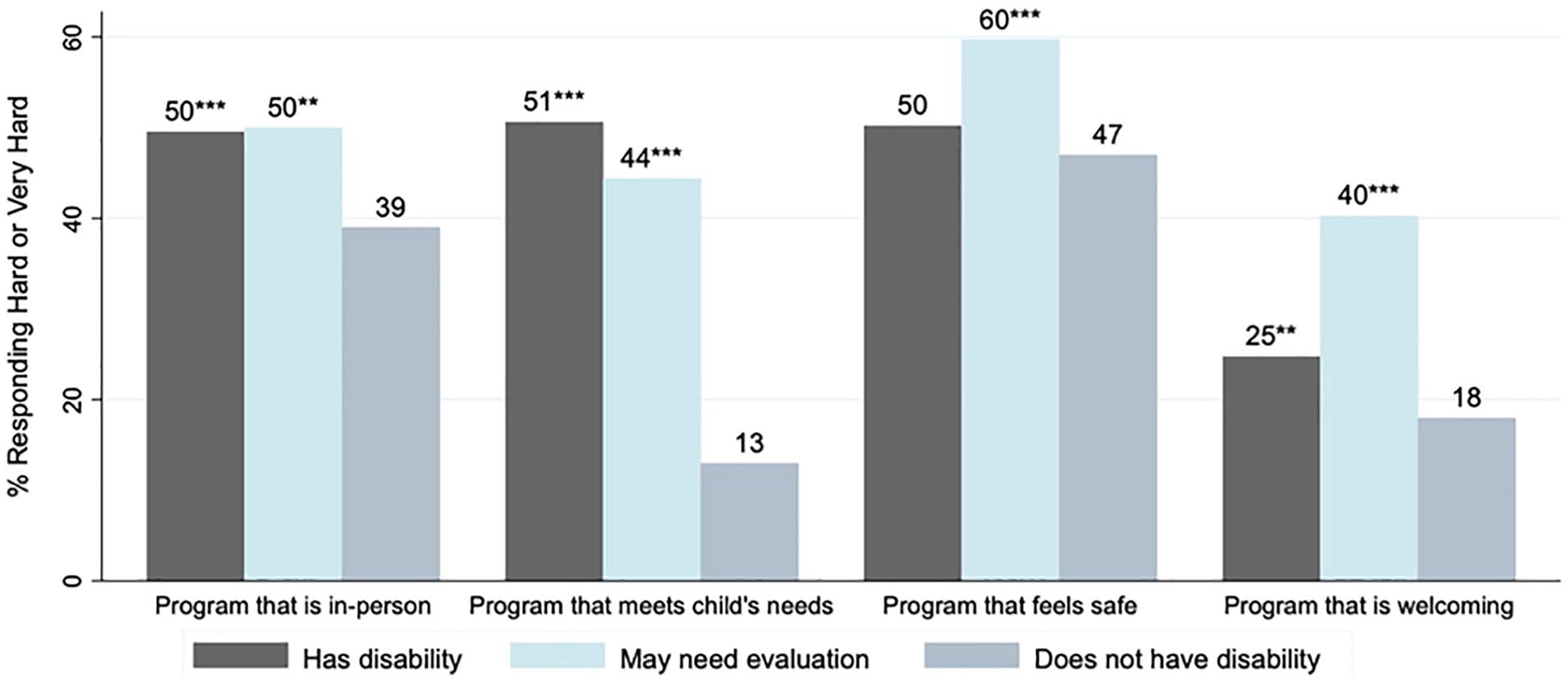
Percentage of caregivers reporting it has been hard or very hard to find an ECE that . . ..
Caregiver’s Stress About Themselves and Their Children
A substantial share of all caregivers in our sample reported being worried about juggling caretaking and work responsibilities, being stressed, and keeping their children occupied. Across the board, our measures of stress were lowest for caregivers who indicated that their children did not have disabilities. As shown in Figure 2, caregivers of children with disabilities and children who may need evaluation were more likely to report feeling very worried about juggling their caretaking and work responsibilities (47%, compared with 34% of caregivers of children without disabilities). Caregivers of children who may need evaluation were most likely to report feeling very worried about keeping their children occupied (42%) and their own stress (49%; p < 0.001).

Percentage of caregivers reporting feeling worried about keeping their children occupied, their own stress, and juggling their caretaking and work responsibilities, by children’s disability status.
Differences in concerns were particularly pronounced in items related to young children’s development. As shown in Figure 3, caregivers of children with disabilities were three to four times as likely to report feeling concerned about their children’s social and academic skills, mental health, and behavior than were caregivers of children without disabilities. On all four dimensions, caregivers of children who may need evaluation were consistently less likely to report feeling very concerned than were caregivers of children with disabilities but more likely than were caregivers of children without disabilities. High levels of concern were particularly pronounced regarding academic and social skills compared with mental health and behavior for all groups.

Percentage of caregivers reporting feeling very worried about their children’s social skills, academic skills, mental health, and behavior, by children’s disability status.
Differences in Caregivers’ Responses, by Instructional Mode
Our results show that caregivers of children with disabilities were much more likely to be in remote/hybrid ECE even when they preferred in person, and that they reported considerably more stress themselves and about their children. In our final analyses, we disaggregate findings to examine whether concerns were most pronounced for caregivers of children in remote or hybrid instruction compared with caregivers of children experiencing in-person instruction. Due to small sample sizes once we disaggregate by instructional mode, in this analysis, we combined the caregivers of children who are diagnosed and children who may need evaluation. We chose to include caregivers of children who may need evaluation with those with a disability because of the similar findings for the two groups in our first two analyses. However, children who may need evaluation were more likely to be receiving in-person instruction and more likely to be in an instructional setting that matched their preference than were children with disabilities. Results are robust to excluding children who may need evaluation from the analyses.
As shown in Figure 4, among caregivers whose children either have diagnosed disabilities or may need evaluation, those whose children were in remote/hybrid settings were 4–7 percentage points more likely to be very concerned about juggling caretaking and work responsibilities, their own stress, and keeping their children occupied than were those whose children had in-person care. However, these differences were not statistically significant. Although differences across modes with respect to parental stress were relatively modest, Figure 5 highlights far more pronounced differences when we turned to concerns about children. Caregivers of children with disabilities or needing evaluation were 1.5–1.8 times more likely to be concerned about their children’s social and academic skills, mental health, and behaviors if their children were in a remote/hybrid setting than were those caregivers of students with disabilities receiving in-person instruction. Caregivers of children without disabilities were also more likely to be concerned about their children’s development when they were in remote/hybrid instructional settings, although their average levels of stress and their differences across modes were less pronounced.

Percentage of caregivers of children with disabilities or who may need evaluation who reported feeling very worried about keeping their children occupied, their own stress, and juggling their caretaking and work responsibilities, by instructional mode.
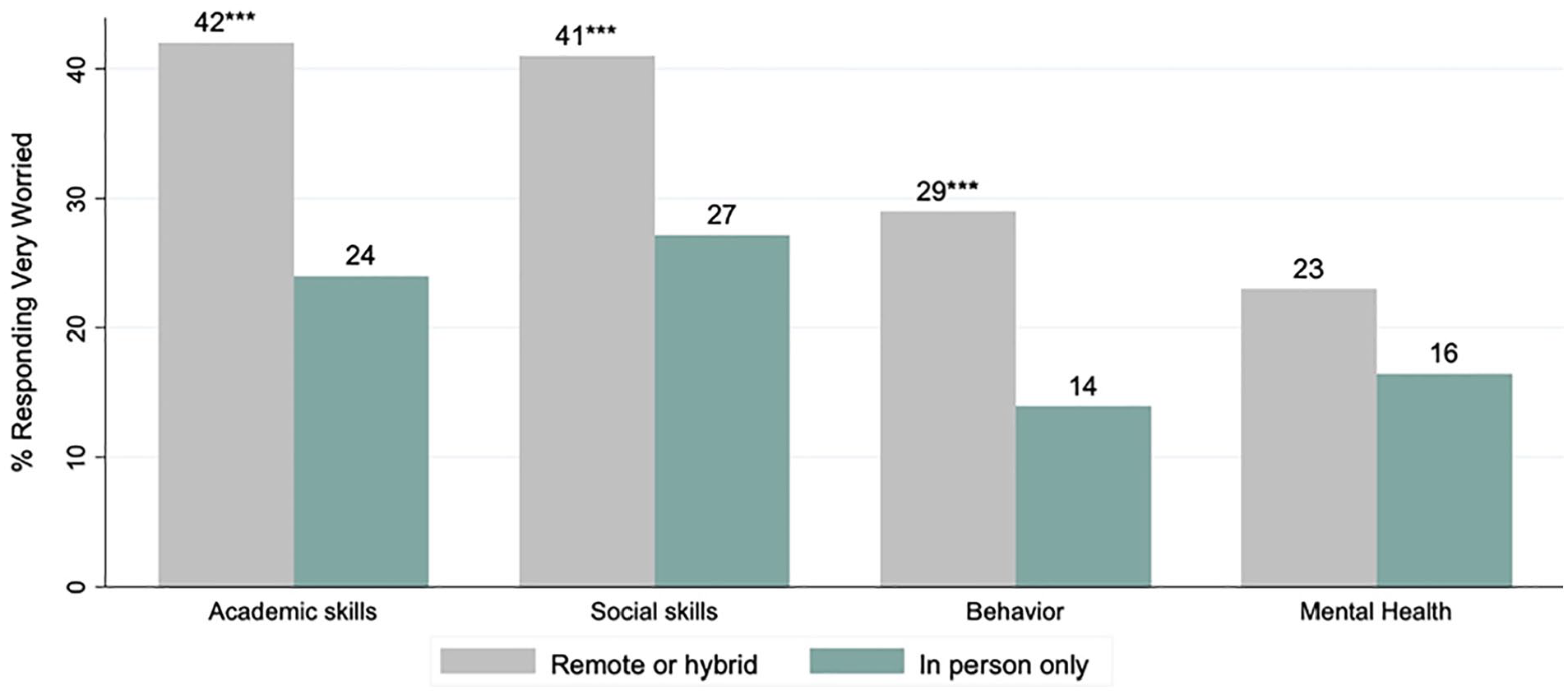
Percentage of caregivers of children with disabilities or who may need evaluation who reported feeling very worried about their children’s social skills, academic skills, mental health, and behavior, by instructional mode.
Discussion
Caregivers of young children with disabilities have long faced challenges finding accessible ECE for their children. They have also faced higher levels of stress and mental health concerns than have caregivers of children without disabilities. To date, however, there has been little research about the experiences of these families during the pandemic. Using survey data collected in December 2020 and January 2021 from nearly 3,000 caregivers of children ages 3–5 in Virginia, we find that during the pandemic, caregivers of children with disabilities and those who may need evaluation were more likely to struggle to find ECE programs for their children, more likely to struggle with their own stress and well-being, and more likely to report concerns about their children’s development than were caregivers of children without disabilities. Less than one-third (30%) of caregivers of children with disabilities who indicated that they preferred an in-person option for their children were able to find one. In contrast, 74% of caregivers of children without disabilities who preferred an in-person option ultimately found one. This inability to access in-person care for children with disabilities likely had serious consequences for children’s development. Among caregivers of children with disabilities, those whose children were enrolled in remote or hybrid instruction reported concerns about children’s development at much higher rates compared with those experiencing in-person instruction.
Although there is little evidence to date of the impact of virtual instruction for children with disabilities on developmental outcomes, the high level of concerns among caregivers who answered suggests that this format was particularly daunting for children with disabilities and their families. Our survey included several open-ended questions about families’ experiences. Although we did not conduct a formal qualitative analysis of these items, caregivers’ responses provided insight into the immense challenges they faced with virtual services. One caregiver of a 3-year-old with special needs wrote, “He is struggling with behavioral issues, language/speech difficulties, and lack of socialization. If it wasn’t for [COVID,] I feel that his needs would be well met by the Head Start program. . . . Without other people/children to interact with[,] he is going to continue to lag behind in his language, behavior, and socialization issues.” These concerns were echoed by caregivers of children with autism, identifying the challenges of receiving Autism Spectrum Disorder services remotely and expressing concern about the impact that not receiving these services in the typical fashion will have on their children’s social development. One wrote, “My youngest son is autistic. . . . Being virtual has definitely hindered how the [autism] program is supposed to function for him. . . . His behavioral milestones cannot be met via virtual learning.” Another said, “My child is autistic and virtual learning does absolutely nothing for him. The constant closure of schools and reduced hours means he’s barely developing at all. . . . Early intervention can’t be done later.”
Other caregivers wrote that changes to schooling because of COVID had hindered their ability to receive services at all. One wrote, “He has been in [Speech Language Pathology/Occupational Therapy/Physical Therapy] since he [was] 18 months old[,] and we were finally seeing gains and improvement[, but] all of that is gone. 3 years of growth just gone[,] and now he is even further behind than when he started. This is devastating.”
In addition to the challenges COVID created for children with known disabilities, our findings also suggest that caregivers of children not yet diagnosed with disabilities but who may need evaluation have struggled to find supports for their children. This may be due to reduced access to referrals and evaluations through early care and learning programs during the pandemic. For example, referrals to early intervention services for infants and toddlers was ~35% lower than pre-pandemic levels in the summer of 2020 in New York City (Advocates for Children of New York, 2021). Nationally, referrals to special education for individuals ages 3–2 have also dropped, suggesting that children who may otherwise have been referred for evaluation have slipped through the cracks during the pandemic (United States Department of Education, 2021).
Although we didn’t specifically ask caregivers about their concerns related to referrals and evaluations, many offered their thoughts on this topic through free response options on the survey. One caregiver wrote, “We are waiting on an [Autism Spectrum Disorder] diagnosis, and we’re told it’s a 6–12 months wait.” Another caregiver wrote, “My son needs speech therapy, recommended by pediatrician, and I’ve been given the run[-]around since school started. Speech development [a]ffects all aspects of learning, and the fact they aren’t taking my concerns seriously can and most likely will negatively impact my child.” The experiences of these caregivers who are worried about development but do not have formal access to services have been largely overlooked to date, but our findings suggest that they may have been particularly vulnerable to the changes to ECE caused by the pandemic.
Limitations
Our findings are limited in several ways. First, our survey was not fielded with a random sample of families in Virginia. Our sampling approach limited the representativeness of our sample, as respondents may have been more likely to answer the survey if they were particularly pleased or displeased with their ECE experiences. Further, the sample size for caregivers of children who may need evaluation, a population of interest for the current study, was relatively small compared to the other two groups. Given that issues of response bias in a self-selected survey response sample may be even more salient for smaller groups, we cannot assess the extent to which the responses of caregivers may be generalizable to the broader population of caregivers seeking special education evaluations.
Second, our survey focused on the experiences and worries of caregivers but did not include standardized measures of parental stress or child outcomes. In light of our findings, more research on the mental health of caregivers of young children and the cognitive, socioemotional, and physical development of children who have experienced the pandemic is needed to measure the effects of ECE disruption on adults and children. We were also limited in our ability to include additional covariates, such as length of enrollment in current setting or type of special education placement for children with IEPs.
Third, our survey was conducted in December 2020 and January 2021, during the second large national wave of COVID cases. As the pandemic continues and conditions evolve, caregiver experiences are likely to change as well. Finally, our sample was restricted to children ages 3–5 in formal care arrangements, and our findings likely are not representative of the experiences of younger children (0–2) and children in informal care arrangements.
Conclusion
As the pandemic continues to disrupt the lives of families and children, policies and programs targeted specifically toward children at risk for or diagnosed with disabilities are needed. First, agencies should invest in high-quality compensatory services to support the development of children with disabilities who experienced remote or hybrid service provision. For example, Virginia’s Department of Education released guidance on providing COVID recovery services for children with disabilities that includes amending IEPs to account for pandemic impacts on learning and development (Virginia Department of Education, 2021b). Our findings demonstrate the importance of including young children in early care environments to these K–12 investments, despite concerns about high costs of compensatory measures (Mitchell, 2020).
Second, standardized measures of children’s cognitive, socioemotional, and physical health are needed to assess the impact that ECE disruptions have had on children’s development for children with disabilities, without disabilities, and who may have needed evaluation for disabilities during the period. Understanding how caregivers have perceived the impact of the pandemic on their children and how the pandemic has affected child outcome measures is critical for developing targeted interventions to help those children be successful in the future.
Third, our findings highlight the challenges faced by caregivers whose children may have needed evaluation for services but have not been diagnosed. Increased funding to support the universal developmental screenings recommended by the Centers for Disease Control and Prevention could increase access to early intervention services for children not yet identified as having developmental differences (Centers for Disease Control and Prevention, 2021). These screenings should be conducted through coordination with health care and early care providers (Lipkin et al., 2020). Finally, our findings show the negative impact that the pandemic has had on caregivers’ own well-being. Resources to support caregivers’ mental health should be considered as part of pandemic responses to the ECE crisis.
Research shows that caregivers have long struggled to find supportive care for their children, and our findings indicate that the pandemic exacerbated these preexisting challenges. Future investments in early childcare and education should include specific provisions to support access to high-quality ECE for caregivers of children with disabilities. Identifying the ways in which families of children with disabilities or who may need evaluation for disabilities have been disproportionately affected by changes to ECE during the pandemic will inform how to make strategic and meaningful improvements to the system moving forward.
Footnotes
Authors’ note
The research-policy partnership was supported through a federal Preschool Development Birth-Five grant awarded to the Virginia Department of Education (#90TP0039.01.00). The authors wish to acknowledge the Virginia Department of Education and the Virginia Early Childhood Foundation for their partnership.

Authors
ANNA SHAPIRO is a research scientist at the University of Virginia. She studies early childhood and special education policy.
DAPHNA BASSOK is an associate professor of education and public policy at the University of Virginia. She studies early childhood education policy.