




Abstract
The current pandemic closed schools worldwide, tasking teachers to engage learners remotely without time to prepare. This study focuses on a professional development webinar series for English language teachers worldwide. Access to geographically dispersed English language teachers created an opportunity to gain international perspectives on teachers’ challenges, perceptions, and needs related to transitioning to remote, online teaching. We found webinars were an effective way to provide just-in-time professional development for teachers globally, particularly about engaging students, providing feedback, developing online presence, and creating activities specific for online learning environments. The main challenges teachers reported facing were keeping their students engaged and progressing in the learning activities; unequal student access to technology and the internet; and learning and troubleshooting technology. At the same time, learning new technology and online resources was also what teachers most frequently reported enjoying about remote teaching.
Keywords
Introduction
The spread of COVID-19 closed school buildings worldwide, which tasked teachers to instruct students at a distance. This is especially challenging because online remote teaching requires different skills than in-person teaching (Barbour, 2012; Pulham et al., 2018)—skills that teacher preparation programs have largely ignored for the past 20 years, despite calls for teachers to be prepared for online teaching environments (Archambault et al., 2016; Kennedy & Archambault, 2013). Without adequate time to prepare and develop new skills, many teachers were left trying to replicate in-person learning experiences in synchronous video learning environments using webinar tools such as Zoom (Barbour et al., 2020). While some activities can transfer well from in-person to online, many do not and teachers reported a drop in learner engagement and uncertainty with how to keep students engaged when the same Internet that enables student learning is also the source of countless distractions (Dhawan, 2020; Hazelrigg, 2019). This left both teachers and students feeling frustrated, complaining of “Zoom fatigue” (Bailenson, 2021). As teachers became more comfortable, some began strategically combining synchronous and asynchronous learning activities, what Martin et al. (2020) termed bichronous learning.
During this time of uncertainty and rapid change, there was a clear need for “just-in-time professional development” (Neumann & Smith, 2020, p. 527). In the United States, school- and district-provided professional development took many different forms from on-demand playlists, resources, and model lessons (Darbee Muelthaler, 2020; Neumann & Smith, 2020) to layered multilevel approaches that combined synchronous and asynchronous learning opportunities (Ko et al., 2020). Many teachers also turned to social media platforms such as Twitter and Facebook as a way to ask questions and exchange ideas (Kimmons et al., 2020; Semingson & Kerns, 2020; Williams, 2020).
This study focuses on professional development for a unique segment of teachers around the world: English language teachers. With few studies examining the types of just-in-time professional development reaching a broad international audience, our access to globally dispersed English language teachers created an opportunity to understand how teachers were handling the challenges of transitioning to remote learning worldwide. This segment of educators was particularly advantageous for gaining a global understanding of the effects of a pandemic of teachers because of the shared language for communication and survey research across countries—English. In the early stages of the pandemic, we provided webinars to quickly reach English teachers globally, particularly since webinars are affordable and easily accessible by geographically dispersed participants (Zoumenou et al., 2015). The same technology that allowed courses to continue remotely also allowed us as teacher educators and experts in online learning to expand our reach to support teachers regardless of their geographic location. However, it is still unknown how teachers perceive these types of webinars or how they believe they will impact their teaching.
Recognizing the dearth of research on teachers’ perceived challenges and professional development needs internationally, we conducted in-webinar polls and a post-webinar survey to better understand teachers’ challenges, perceptions, and needs related to transitioning to remote, online teaching. The polls and survey responses were designed to answer the following questions:
1) What are English language teachers’ perceived challenges and successes related to teaching remotely during COVID-19 school closures?
2) What are English language teachers’ perceived impact of the professional development webinars on their emergency remote, online teaching?
Literature Review
Need for Professional Development in Online Teaching
The use of online tools to provide distance education at the K–12 level began in most jurisdictions in the early to mid-1990s (Barbour, 2018a) and grew out of the lessons and practices of earlier modalities (e.g., correspondence education, educational radio, instructional television, audiographics/telematics). Prior to the pandemic, it was estimated that more than 2 million students were engaged in supplemental K–12 online learning and approximately 400,000 students were engaged in full-time K–12 online learning in the United States (Digital Learning Collaborative, 2020). This represents just under 5% of all K–12 students in the United States, which is also consistent with the Canadian context where approximately 6% of all students are engaged in some form of K–12 distance or online learning (Barbour et al., 2020). In fact, there are several international jurisdictions—such as Singapore, South Korea, and several other Asian nations—where the proportion of K–12 students engaged in distance and online learning are much higher (Barbour, 2018a, 2018b).
As was mentioned in the previous section, the ability to teach in a distance environment using online tools requires different skills than those needed when teaching in an in-person setting. In some respects, teaching is simply teaching, and some of the skills necessary to be a good teacher in the classroom are the same as those needed to be a good teacher at a distance (Davis et al., 2005). However, there are also skills related to online teaching that are unique to that context, often completely new to teachers (Davis et al., 2007; Pulham et al., 2018). One example of these differences is that online teachers need to utilize asynchronous communication skills extensively (Friend & Johnston, 2005) and be able to strategically combine synchronous and asynchronous communication and learning activities (Martin et al., 2020). Teachers must create an environment where meaningful interactions can occur through discussion boards, webinars, and group assignments. Online teachers also need to address the potential isolation that students may feel (Barbour et al., 2013; De la Varre et al., 2010). These are new situations to novice online teachers because teacher preparation programs typically fail to include any content related to distance and online learning.
Prior to the 2019–2020 school year few teachers had direct experience with teaching online, and even fewer had been provided with pedagogical knowledge related to online teaching as a part of their teacher preparation. For example, a study in the United States from almost a decade ago found that only 1.3% of U.S. teacher education programs were preparing pre-service teachers for distance and online learning by providing field experiences in virtual schools, cyber schools, or other online programs (Kennedy & Archambault, 2012). A follow-up of this study 5 years later reported the proportion of teacher education programs preparing pre-service teachers for distance and online learning had increased to 4.1% (Archambault et al., 2016). A similar study in Canada found that approximately one third (i.e., 32%) of Canadian teacher education programs offered field experiences in K–12 online program settings to pre-service and/or in-service teachers (Archibald et al., 2020). The lack of focus given by K–12 teacher education programs to online learning is often compounded by the fact that many K–12 online learning programs themselves often exclude online teacher pedagogical training. While somewhat dated, Going Virtual! The Status of Professional Development, Unique Needs, and Challenges of K–12 Online Teachers remains the only national study of professional development for K–12 online teachers (Dawley et al., 2010; Rice & Dawley, 2007; Rice et al., 2008). Over the course of this project, the authors indicated that less than 40% of all K–12 online teachers reported receiving professional development prior to beginning to teach online, and those who did receive professional development found that the topics generally focused on how to use the learning management system and other tools utilized by the individual K–12 online learning program.
Emergency Transition to Online Learning
This continued lack of teacher preparation for K–12 online learning was quite apparent when on March 11, 2020, the World Health Organization declared COVID-19 a global pandemic (World Health Organization, 2020). Almost immediately, school systems around the world began to shut down. Over the coming days and weeks many reopened for instruction using some model of what most experts have described as emergency remote teaching, a term coined originally by Hodges et al. (2020) and further delineated for a K–12 context by Barbour et al. (2020): Emergency remote teaching is a temporary shift of instructional delivery to an alternate delivery mode due to crisis circumstances. It involves the use of fully remote teaching solutions for instruction or education that would otherwise be delivered primarily face-to-face and that will return to that format once the crisis or emergency has abated. The primary objective in these circumstances is not to re-create a robust educational ecosystem but rather to provide temporary access to instruction and instructional supports in a manner that is quick to set up and is reliably available during an emergency or crisis. (Hodges et al., 2020, para. 13)
Barbour and his colleagues (2020) described this shift as “making an all hands on deck movement to remote delivery, often relying on synchronous video, with massive changes in just . . . weeks. Educators do whatever they can to have some educational presence for all classes online” (p. 3). Emergency remote teaching was everyone scrambling to use whatever they had available—and personally knew how to use—to provide some modicum of continuity of learning for students.
The transition from emergency remote teaching to simply remote teaching, and eventually online learning, can be described in four phases (see Figure 1). Barbour et al. (2020, pp. 3–4) described these phases as:
Given that teachers—and entire school systems—were unprepared to deliver instruction at a distance, many schools and individual educators simply never moved beyond the actions described in Phase One or Phase Two. In fact, many scholars have argued that few schools made the successful transition to Phase Three (Barbour et al., 2020; Molnar et al., 2021).
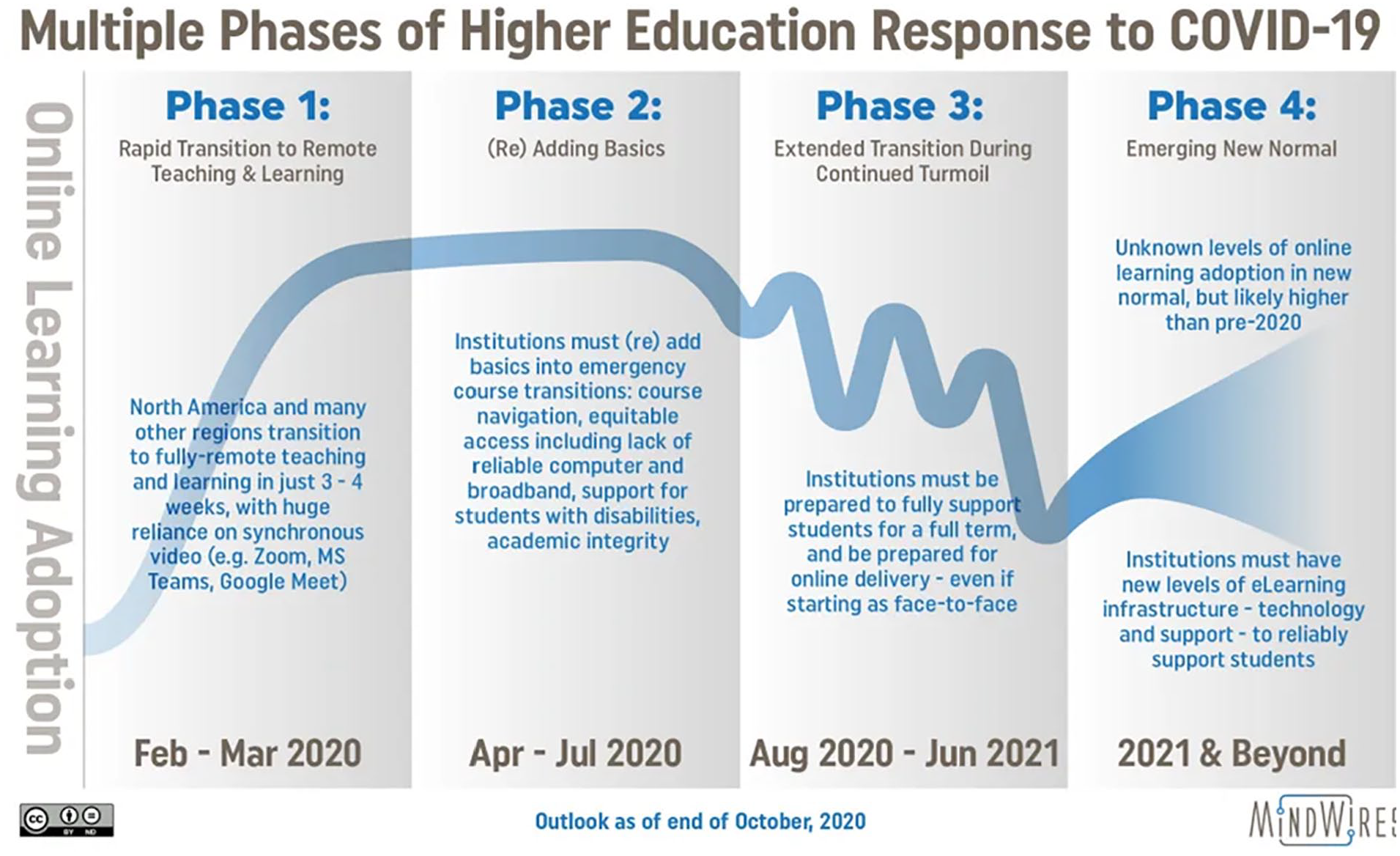
Four phases of educational response to COVID-19.
Framing Professional Development on Online Teaching
When designing professional development, particularly short-term programs with limited time with teachers, teacher educators should ground their programs using frameworks that focus on the methods that are most likely to improve practice and learning outcomes. Graham et al. (2014) proposed the following categories to frame professional development for online teaching: explore, explain, and design frameworks. The following provides explanation of each framework with examples.
Explore frameworks categorize and define what exists. The goal of explore frameworks is not to identify and define everything that exists but to focus on the most important factors (Ferdig et al., 2009). What should be included in explore frameworks is also context dependent. For instance, Moore (1989) identified the following three types of interactions common in higher education distance education: learner–content, learner–instructor, and learner–learner interactions. However, this framework ignores learner–parent and instructor–parent interactions that are especially important with younger learners (Hasler-Waters et al., 2018). Others have also built on this framework to examine different dimensions of interactions including fidelity and time (Graham, 2006). Online learning interactions are commonly text and lack the fidelity of in-person interactions. As technologies and Internet speeds improve, students and teachers are more frequently communicating with higher fidelity via video. These interactions can also occur synchronously or asynchronously, both with different constraints and affordances. These interaction possibilities can be difficult to navigate and teachers require professional development to understand how to strategically use both synchronous and asynchronous text and video communication (Martin et al., 2020).
Explain frameworks go beyond identifying, defining, and categorizing what exists to describing how the variables impact each other. For instance, the Community of Inquiry (CoI) framework is the most used and cited online learning framework. Specifically, the CoI framework, identifies the following three presences:
Cognitive presence: “the extent to which the participants in any particular configuration of a community of inquiry are able to construct meaning through sustained communication” (Garrison et al., 2000, p. 89).
Social presence: “the ability of participants in the Community of Inquiry to project their personal characteristics into the community, thereby presenting themselves to the other participants as ‘real people’” (Garrison et al., 2000, p. 89).
Teaching presence: “the design, facilitation, and direction of cognitive and social processes for the purpose of realizing personally meaningful and educationally worthwhile learning outcomes” (Anderson et al., 2001, p. 5).
These presences were not new to the CoI framework but the framework’s primary contribution was to describe how they were interrelated (Garrison et al., 2010). The authors explained that social presence was a prerequisite to cognitive presence because some level of social presence was necessary to support the discourse required for cognitive presence. Furthermore, Garrison and Anderson (2003) explained that “too much social presence may inhibit disagreement and encourage surface comments and social banter” (p. 53). One of the primary purposes of teaching presence is to help establish and balance the other presences. Specifically, teaching presence helps to set the climate that fosters social presence. Teaching presence also supports cognitive presence by selecting the content, providing direct instruction, and managing learner–learner interactions and collaborations. Garrison et al. (2000) argued that “appropriate cognitive and social presence, and ultimately, the establishment of a critical community of inquiry, is dependent upon the presence of a teacher” (p. 96). Establishing teaching presence also requires skills and strategies not used in an in-person environment, requiring professional development to help teachers successfully establish their presence online.
Design frameworks focus on how to design and develop learning activities and environments that increase the likelihood that the desired outcomes will occur. For instance, teaching and course design standards can serve as important guides when designing online courses. The first K–12 online learning standards were developed by some of the larger online schools that were operating in the late 1990s and early 2000s (Adelstein & Barbour, 2016a, 2016b, 2017). While most of these early efforts were not based on research, the teaching and course design standards developed by the Virtual High School were developed through multiple cycles of programmatic evaluation (Kozma et al., 1998; Espinoza et al., 1999; Yamashiro, et al., 1999; Zucker & Kozma, 2003). Similarly, while the Quality Matters standards were originally developed for higher education, through a partnership with the Florida Virtual School a K–12 version of their course design standards were created (Barbour et al., 2014; Legon, 2006). During the late 2000s and early 2010s, the Southern Regional Education Board (SREB)—and later the International Association for K–12 Online Learning (iNACOL)—developed their own sets of standards for teaching course design, and program administration. However, those standards have not been research-based (Adelstein & Barbour, 2018). More recently, the Virtual Learning Leadership Alliance and the Digital Learning Collaborative have partnered with Quality Matters to update the SREB/iNACOL standards. As a part of that process, the organizations have attempted to have the standards reviewed by experts and supported by the literature (see https://www.nsqol.org/). Although seeking support for something that may have been flawed to begin with can be problematic, at present these types of standards represent the best available design framework option.
Webinars for Online Teacher Professional Development
Researchers have found that the methods used to deliver and facilitate teacher professional development are just as meaningful as the material being covered (Norton & Hathaway, 2015). When facilitators model the methods that they wish teachers to adopt, it allows teachers to experience them as a student and increases the likelihood that the methods will be adopted. As a result, during the first phases of emergency remote teaching during the COVID-19 pandemic, not only were professional development webinars practical and necessary to comply with social distancing requirements, they allowed teachers to experience remote teaching and learning as a student. Trust and Whalen (2020) surveyed 325 in the early phases of the pandemic and confirmed that nearly 40% of the teachers attended webinars to prepare for remote teaching.
Research on quality professional development webinars for teachers is lacking (Toquero & Talidong, 2020), but the research that does exist indicates that teachers generally hold positive perceptions of their experience and learning in webinars. For instance, Khanna and Thakarar’s (2021) survey results regarding their perceived effectiveness of webinars attended by 44 English Language teachers in western India suggested that the webinars had a positive impact on the teachers learning new subject knowledge, skills for designing courses and delivering sessions, and understanding of key issues in planning and delivering lessons. However, the perceived effectiveness of webinars can be dependent on participants’ background. Emre (2019) surveyed 78, mostly female, English as a foreign language (EFL) instructors in Turkey regarding their experience participating in professional development webinars and found that previous webinar experience, teaching experience, and English language ability positively impacted their experience. Kouteh’s (2021) use of an adapted version of Emre’s survey with 60 EFL teachers (44 from Jordan and 16 from other countries) and showed that respondents who have experienced various types of professional development—both male and female—found webinars to be a useful tool for professional development for teaching English. Jordanian EFL teachers revealed moderate attitudes compared to EFL teachers from other countries. Chen et al. (2009) added that participants’ self-regulation ability impacted their ability to benefit from synchronous webinars.
Methods
Context
Efforts to contain the COVID-19 pandemic required English language teachers worldwide to teach their students online. This created an urgent global need for immediate, practical professional development. As university faculty, the first two authors had expertise in English language teaching and online teaching and partnered with a global publisher of English language materials to provide free professional development to teachers worldwide: a three-webinar series. The global publisher had approached these university faculty knowing their previous work in online professional development for English language teachers in order to respond quickly to the immediate needs of teachers globally. Each webinar was offered first for China and then twice for teachers globally to accommodate different time zones, with webinar recordings also made freely available. The webinars focused on the design and facilitation of synchronous and asynchronous remote instruction guided by explore, design, and explain frameworks based on the following:
research on discussion facilitation (Hara et al., 2000; Shin, 2016), video feedback (West et al., 2017; Henderson & Phillips, 2015), video content creation and curation (Guo et al., 2014), social presence (Borup et al., 2014; Lowenthal & Dunlap, 2018; Rourke et al., 2001), and blended learning strategies (Graham et al., 2019);
frameworks such as Community of Inquiry (Garrison et al., 2000) and PICRAT (Kimmons et al., 2020); and
National Standards for Quality Online Teaching and Courses (Quality Matters & Virtual Learning Leadership Alliance, 2019a, 2019b).
Specifically, 13 practical tips were developed using the resources above and grouped into one of the three 1-hour webinars (see Figure 2):
Engaging Students in Meaningful Learning Activities (Tips #1–6)
Making Your Screen Come Alive (Tips #7–9)
Building a Supportive Learning Environment (Tips #10–13)
The delivery of these webinars was interactive, using polls and interactions with the audience through the chat box—both asking the audience to answer questions related to the presentation and allowing the audience to ask the presenters questions. In addition, the presenters provided teacher examples and demonstrated practical English language activities related to each topic and introduced new technology tools through these examples. For example, showing a typical in-person English language learning activity and demonstrating how to achieve the same English language objectives by utilizing digital tools in an online learning environment.

Webinar series infographic with topics.
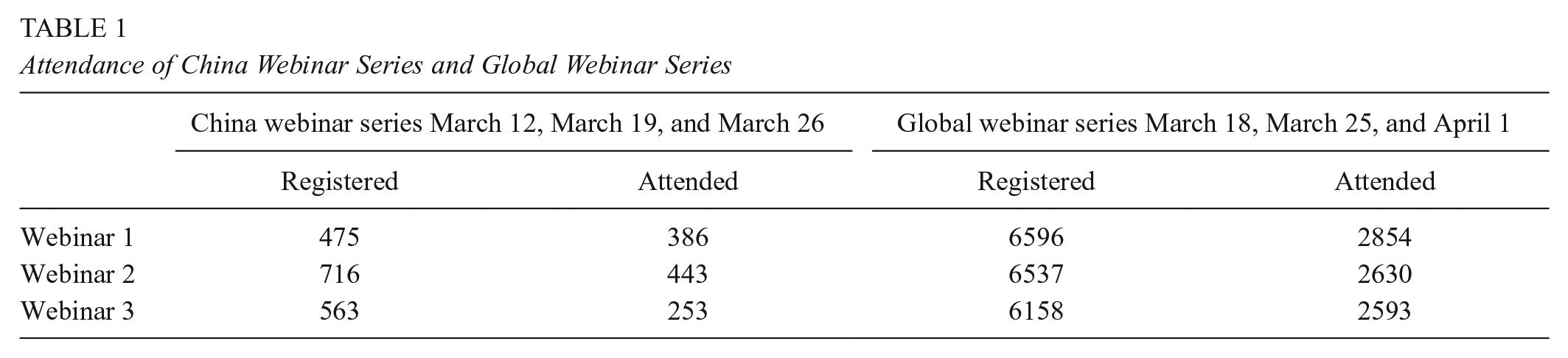
The webinars were highly attended which highlighted the need for professional development during this time (see Table 1). Each of the three webinars was attended by an average of 3,053 teachers (SD = 197.76) across the three offerings of each webinar. The webinar participants were from 108 countries with the largest number of webinar participants coming from Ukraine (528), Romania (436), United States (398), Mexico (350), Peru (212), and Brazil (209; see Figure 3). Participants responded to several in-webinar polls. Based on 1,081 responses to a poll we learned that most (52%) were teaching courses that were mostly synchronous, 29% were teaching courses that were mostly asynchronous, and 19% were teaching courses that were an even blend of both synchronous and asynchronous.
Attendance of China Webinar Series and Global Webinar Series

World map showing webinar participant countries in blue.
Data Collection and Analysis
The data collection for this research consisted of a post-webinar survey which included selected-response and open-ended questions. Knowing many of the survey respondents around the world would have varying levels of English language proficiency, prior to administering the survey we conducted think alouds with two teachers whose first language was not English and who had taught in global contexts. Both quantitative and qualitative responses from the survey were analyzed to further understand teachers’ beliefs and experiences teaching online amidst the current global crisis. Descriptive statistics were used to analyze the selected-response item data from the post-webinar survey. Qualitative analysis of open-ended survey responses was guided by constant comparison coding methods (Glaser, 1965). Specifically, one of the researchers coded the responses into as many different codes as possible while comparing each statement with those that were previously coded—what Glaser (1965) called the “defining rule for the constant comparative method” (p. 439). The coding researcher also met regularly with another member of the team to review the statements coded and the coding categories. They also discussed how the coding categories could be combined and organized into larger themes. The full research team then reviewed and discussed the themes. Any disagreements were discussed until resolved.
Results
A total of 832 people took the survey but 231 survey responses were excluded from our analysis because they were not teaching online due to COVID-19 or were already online teachers prior to the pandemic. The remaining 601 participants represented 59 countries and had all previously transitioned from an in-person course to the online environment due to COVID-19. The countries most represented were Ukraine (108), Romania (65), Mexico (61), Peru (36), Colombia (28), United States (27), and Ecuador (25), similar to the most represented countries of those teachers who attended the webinars. While participants had different levels of online teaching experience, the large majority (88%) had been teaching online for a month or less when they took the survey. Participants also taught students in elementary schools (n = 250), middle schools (n = 261), high schools (n = 239), higher education (n = 114), and other contexts (n = 141).
Of the survey responses, 388 attended the first webinar, 430 attended the second webinar, and 421 attended the third webinar. Additionally, 245 survey respondents attended all three of the webinars, 148 attended two of the webinars, and 208 only attended a single webinar.
Perceived Challenges to Teaching Online
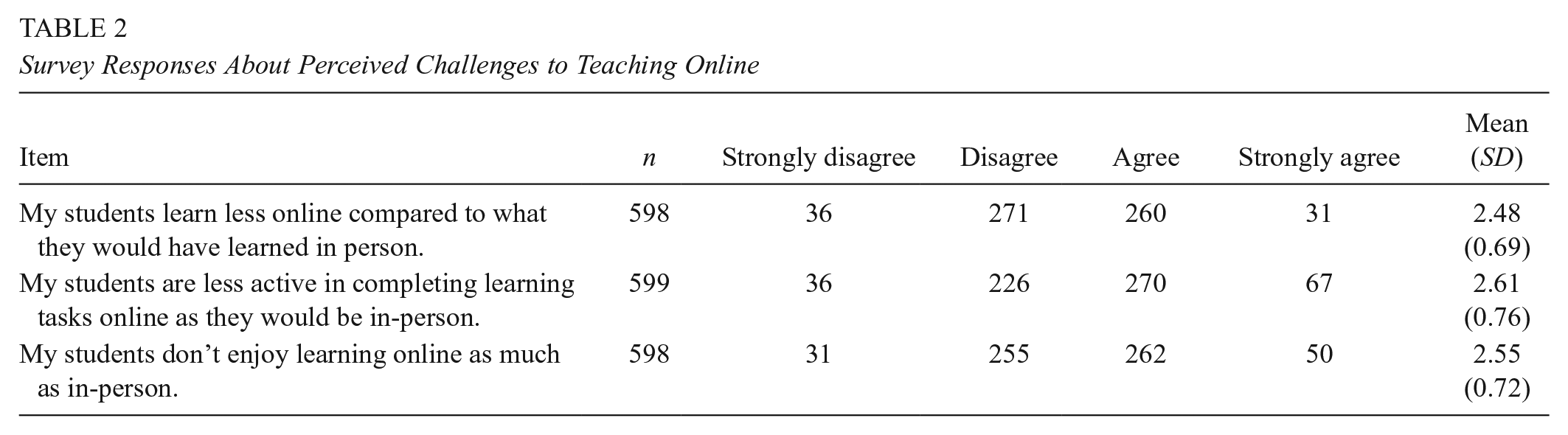
Teachers were asked to use a Likert-scale to respond to three statements that highlighted potential drawbacks to learning online compared to in-person learning, specifically regarding student learning, activity, and enjoyment (see Table 2). The teacher respondents were largely split in their perceptions with most of the responses being either “disagree” or “agree.” However, the mean rating scores ranged from 2.48 to 2.61 indicating more teachers agreed with the disadvantages than disagreed with them.
Survey Responses About Perceived Challenges to Teaching Online
Greater insight was provided in teachers’ open-ended responses. Five-hundred and sixty survey respondents answered the open-ended question, “What are your main challenges to teaching online?” The most frequent response given by participants stated that their main challenge to teaching online was keeping their students engaged and progressing in learning activities. Some participants worried their students were not able to concentrate and participate in a virtual setting. For instance, one teacher shared her biggest challenge: “Trying to keep children engaged. They are easily distracted being at home.” In addition, many teachers thought giving clear instructions was an obstacle to engaging learners, some citing that students’ English language proficiency levels created an additional challenge, specifically when “giving instructions and explanations in English to low level students.” Another commonly reported challenge to teaching online was connectivity and other issues with the internet. While some teachers reported having internet connectivity issues themselves, these concerns focused largely on students’ inability to connect to the internet or having unreliable internet access during live video webinars. One teacher shared “Not all students have access to the internet, or a computer to work on. It’s very difficult because the internet connection is constantly very poor.” In addition to internet connectivity, teachers reported that both they and their students experienced technological challenges that needed troubleshooting. One teacher shared, “Sometimes technology does not cooperate. I see how online learning is not for everyone.”
Another reported challenge was the time teachers spent planning virtual lessons. A teacher shared the following: Having enough time to research online tools to use and effectively implement them into the class. It is hard to try out new things with a live class when you aren’t confident that they are going to work. I would love to have some more hands-on instruction, walking me through online tools/platforms that are great to use.
Some teachers were overwhelmed with the amount of new resources and teaching strategies. This seemed to add considerably to their planning time as one teacher summarized, “It also takes time to discover everything that online platforms have to offer.”
Perceived Successes and Benefits of Teaching Online
Using a Likert scale, 597 teacher respondents also tended to agree with the statement, “I believe experience teaching online improves teaching traditional in-person courses” with a mean score of 3.03 (SD = 0.66). While this theme was not explicitly reflected in their open-ended responses, participants’ responses to the question “What do you enjoy about teaching online?” highlighted benefits that could be applied to the in-person environment. The most frequent response given by participants stated that they enjoyed using technology, tools, and resources. For instance, one teacher shared that she enjoyed, “The ability to create online resources that I can share with my students.”
Another frequent participant response focused on the ability to teach and maintain contact with students despite their physical separation. One participant shared “I can be in touch with my students even if we are not attending school and I can help them to forget about this pandemic at least for a while with my class.” Participants also commonly highlighted how this distance had the added benefit of being able to teach from the comfort of their home, saving them “time from commuting to work.” The personal convenience that comes with teaching online is to be expected but it is important to note that teachers focused more on aspects directly related to their teaching.
Finally, it is important to note that 49 teachers stated that they did not enjoy anything about their experience teaching online. However, one of those teachers elaborated, “I enjoy facing the challenge but not really teaching online.”
Perceived Impact of the Professional Development Webinars
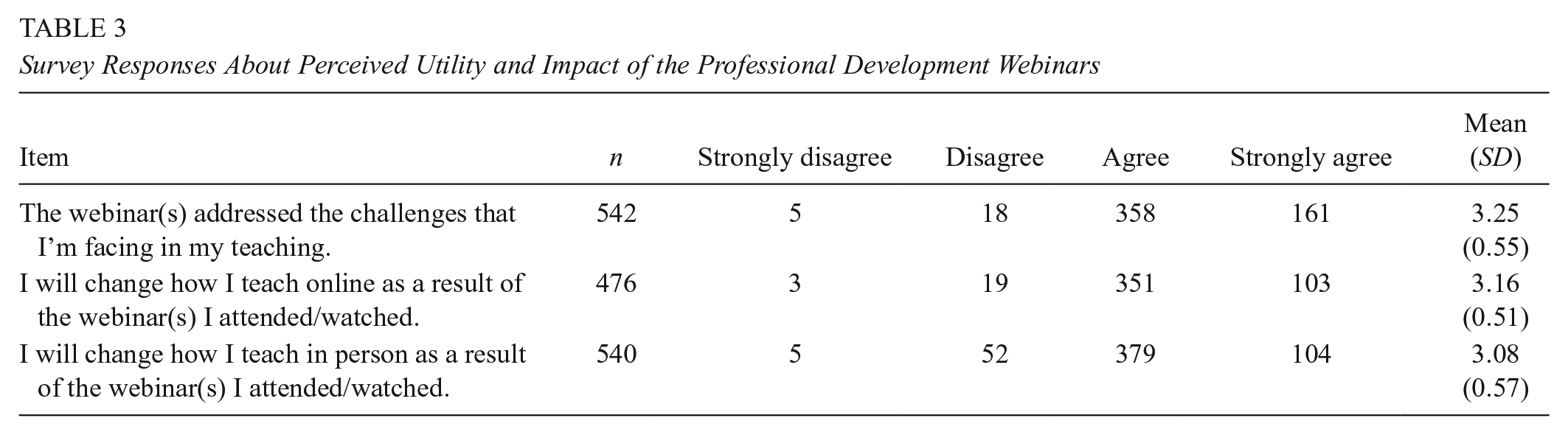
Teachers were asked both Likert-scale and open-ended items regarding their perceived value and impact of the professional development webinars they attended. Specifically, participants were asked to respond to items stating the webinar(s) they attended addressed the challenges they were facing in their teaching, would change how they taught online, and would change how they teach in person. The large majority of teachers agreed or strongly agreed with all three statements (see Table 3).
Survey Responses About Perceived Utility and Impact of the Professional Development Webinars
We then asked them to select up to three of the tips addressed in the webinar(s) that they found to be the most helpful. Using survey display logic, we only showed them the tips that were included in the webinars they indicated attending. The tips found to be the most helpful were Tip #2 Engage students in multiple ways; Tip #1 Teach differently; and Tip #7 Be human (see Table 4). Participants also responded to the open-ended question, “Please explain how your teaching online will change as a result of the webinar(s). (Or why you don’t think it will change.)” The most common response focused on the need to teach differently online (Tip #1). Participants shared they want to have more productive and interactive lessons by using the resources shared in the webinar. One teacher shared the following, “It’s going to change because I get to learn and explore different ways to have productive lessons.” Teachers also shared that the webinars were going to improve the support and feedback they were going to provide to students (Tips #4 and #10), “I will improve in my way that I can give feedback.” Teachers also frequently shared that they planned on better establishing their social presence in the course by feeling more comfortable being on the screen (Tip #7). As one teacher explained, “I don’t have to be afraid to be myself.”
Webinar Tips Participants Found to Be the Most Helpful

Teachers also shared that they believed their future in-person teaching would be impacted by what they learned in the webinars, “Please explain how your teaching in person may change as a result of the webinar(s). (Or why you don’t think it will change.)” Their responses were largely aligned with the changes they had highlighted for their online teaching (e.g., more interactive lessons, better feedback). One participant shared, “I will utilize some of the great interactive apps used in the webinars.” Another added, “My comments and feedback will be better structured and more motivating.”
Discussion
Teachers who participated in our survey were largely split in their perceptions regarding their students’ learning, activity, and enjoyment of remote learning. This may be a reflection of students’ varied levels of preparedness to learn online. While some students likely fared better than others in the online environment, teachers found that many students required support that was difficult for teachers to provide at a distance. When asked about the main challenges they encountered when teaching online, teachers most commonly shared challenges related to keeping their students engaged and progressing in the learning activities. This challenge seemed to provide international support to the existing literature from the United States and Canada, which has reported teachers lacked previous preparation on the skills specific to teaching in a distance medium (Archambault et al., 2016; Archibald et al., 2020; Kennedy & Archambault, 2012; Rice & Dawley, 2007). In recent history there have been several nations that have learned continuity of learning lessons from previous pandemics. For example, Alpert (2011) described how the 2003 SARS outbreak prompted Hong Kong to prepare for the use of online learning during extended school closures, which was in place and used during the H1N1 outbreak in 2008 (Latchem & Jung, 2009). Similarly, Barbour and his colleagues outlined how schools in Bolivia and Singapore took similar steps to those utilized in Hong Kong following that 2008–2009 H1N1 outbreak (Barbour, 2010; Barbour et al., 2011). The fact that such a high proportion of teachers reported these online communication challenges speaks to the need for more work in this area. Additional research is needed to learn all that we can from the COVID-19 pandemic so that teachers are better able to provide continuity of learning in the future.
For English language teachers whose students may be at varying levels of English language proficiency, keeping students engaged and progressing in learning activities may be affected by students’ language levels. For instance, one reason teachers in this research found it difficult to engage students could be that students did not understand instructions or what they had to do. Studies in emergency remote teaching for English language teachers showed that students with lower levels of English literacy faced added difficulty understanding instruction online which affected their engagement in learning activities (Allo, 2020; Atmojo & Nugroho, 2020). Furthermore, understanding written feedback from the teacher can also be a challenge for English learners who had lower levels of proficiency (Naqvi & Zehra, 2021).
Teachers also commonly expressed challenges regarding learning and troubleshooting technology. This challenge is especially important to overcome because teachers and students can not engage with each other or learning activities if they are unable to also interact with the technology (Hillman et al., 1994). While technology was the source of challenges, technology and online resources were also the most common things that teachers indicated enjoying about remote teaching. For instance, one teacher shared that her biggest challenge with teaching remotely was “to investigate how to use the new technological tools.” When asked what she enjoyed most about teaching online, that same teacher said, “I enjoyed using new technological tools.” Teachers need support in not only using and troubleshooting the technology, but, just as importantly, learning best practices for using the technology to impact student learning. Dalby and Swan (2018) explained that “the greatest challenge for teachers in using technology in the classroom is not the technology but an understanding of the process by which it can enhance student learning” (p. 843).
The rapid move to online learning not only highlighted inequalities in students’ and teachers’ preparation but also in their access to devices and the high-speed internet necessary to participate in video webinars and other learning activities. Globally, many students access their online courses using smartphones and mobile devices, so cellular coverage, inability to afford internet data, and lack of access to smartphones are common issues for remote learning (Atmojo & Nugroho, 2020). These inequalities will continue in some form as the new normal emerges. Interestingly, Rush et al. (2016) outlined connectivity, device distribution, teacher preparation, instructional modalities, and content creation/curation as issues that schools needed to plan for should they find themselves having to sustain “school operations when a disaster makes school buildings inaccessible or inoperable for an extended period of time” (p. 188). Schools not only need to plan for these issues, but also create an online learning infrastructure to ensure students have adequate access to the Internet when not on campus. However, Rush and his colleagues also noted that “the current literature on emergency online schools suggests that fully functioning emergency online schools are possible only through thoughtful planning and development before a disaster strikes” (p. 188). Teachers and instructional designers should carefully consider the infrastructure in which they work and students learn when designing and facilitating learning activities.
The large majority of teachers either agreed or strongly agreed that the professional development webinars addressed their needs and would change both how they taught online and in-person. In terms of the webinar content, the teachers indicated the topics were useful and relevant to their teaching, particularly engaging students in multiple ways, providing students with feedback, developing a sense of online presence, and creating learning activities specific for the online learning environment. In addition, the delivery of the webinars aligned with effective webinar practices based on Zoumenou et al. (2015), such as engaging the audience with playful delivery and interaction, using tools like polls, checking in with the audience through the chat feature, and engaging with the audience by answering their questions. The presenters demonstrated online activities and technology tools teachers could use in their own classrooms and provided opportunities for teachers to reflect on their own teaching and share their ideas. The webinar format was interactive and created a sense of community among some participants as well. As one participant wrote: “I absolutely love the webinars. They have helped me improve my teaching practice and reflect on it as well. I have not only learned from the presenters such as [name of presenter] but also from the comments made by other teachers.”
Webinar participation was also bound by the same challenges of technology and internet access that teachers had described as student issues, with some participants unable to watch the videos when accessing the webinar on their smartphone or the connection going out before the webinar was finished. While survey participants’ perceptions of the webinars were positive, the audience size during the webinars prevented more small-group and collaborative learning opportunities. This research has found that whereas large global webinars can have a positive effect on professional development opportunities, webinars should not be used to replace smaller, more personalized professional learning opportunities. More research is needed that identifies models showing how webinars can be best leveraged in larger professional development ecosystems.
Conclusion and Implications
This study showed that webinars were perceived as an effective way to provide just-in-time professional development for English teachers globally during a time of crisis. They were also an opportunity to understand teachers’ perceived challenges and benefits regarding teaching remotely due to COVID-19 around the world. It was notable that survey responses from teachers did not express their challenges focused specifically on teaching English language. They expressed their challenges more generally on the shift from teaching in-person to teaching remotely online. This is not surprising given that this professional development took place toward the beginning of the pandemic when English language teachers, like all teachers, were grappling with the rapid transition to emergency remote teaching. However, as teachers around the world continue to pivot to and from remote teaching and learning, we may have future opportunities for research on unique aspects of remote English language teaching.
The main challenges teachers expressed were keeping their students engaged and progressing in learning activities. Based on participants’ feedback on the webinars, the topics they found most useful aligned with the following challenges: engaging students in multiple ways, providing students with feedback, developing a sense of online presence, and creating learning activities specific for the online learning environment. Other main challenges were needing more time to explore new tools and having more hands-on instruction. Although the webinars addressed these issues through both content and delivery, the three 1-hour professional development events were limited by time and scope. However, these webinar events brought thousands of English language teachers together at a point in time when so many of us, globally, needed some inspiration. This sentiment encapsulates the impact of these webinars on teachers around the world, Before I took my first webinar with you, I felt completely lost. Technology is not exactly my best friend. But after I finished the first one, I felt better about myself because the doubts I had simply vanished. Now I feel more confident in the tasks I will do with my courses.
What is next for remote and online learning? Previous research has found that experience teaching online impacts teachers’ in-person instruction (Andrews Graham, 2019; Garrett Dikkers, 2015; Kearns & Mancilla, 2017; Roblyer et al., 2009; Scagnoli et al., 2009). More research is needed to examine how remote teaching and professional development during the pandemic will impact teaching and learning once social distancing measures are no longer needed. Our study was conducted toward the beginning of the pandemic and, at the time of this article, schools and educational institutions are still pivoting back and forth from in-person classes to remote online learning. Future research is needed on the emergence of more blended and bichronous teaching models as a result of the worldwide emergency remote teaching phenomenon.
Furthermore, more research is needed that identifies best practices for offering online professional development to teachers. Webinars were a quick way to reach teachers who are geographically dispersed for just-in-time professional development. More research into the utilization of webinars for professional development is needed, with a focus on both short-term and long-term programs; as stand-alone events or integrated with other types of delivery, such as bichronous, that is, in combination with asynchronous delivery; and to engage teachers both locally and globally.
Another area for further exploration is related to the specific audience for these webinars—English language teachers. Within the context of emergency remote teaching and professional development, this study showed that English language teachers’ responses focused on their immediate need for conceptualizing online teaching and the integration of new technologies. However, future studies for this audience can focus on online teaching and learning challenges specific to English language teaching and learning.
In these webinars, which engaged thousands of teachers in over 100 countries, we have seen reminders through a pandemic that educators are facing together a global challenge to provide high quality education to all students, regardless of location or modality. As a commentary on our last webinar topic, Don’t Do It Alone, one participant expressed it best: Because of the situation of the COVID-19, I experienced that we teachers had to help each other. I’m really glad and proud of being a teacher when I saw many of us sharing experiences, resources all over the world. It’s not China, Italy, or Argentina. We are all in this together.
Just as teachers should work to support each other, collaborations with and among researchers, teachers, and other practitioners are important to learn from this pandemic and improve teaching and learning moving forward. While these types of collaborations can prove challenging, they will likely prove critical in our ability to better navigate the “new normal.”
Footnotes

Authors
JOAN KANG SHIN is an associate professor in the College of Education and Human Development at George Mason University. Dr. Shin specializes in teaching English as an additional language to young learners and teenagers in global contexts and conducts research in online TESOL education and professional development.
JERED BORUP is an associate professor in the Division of Learning Technologies at George Mason University. His current research interests include developing online learning communities and support systems that adolescent learners require to be successful in online environments.
MICHAEL K. BARBOUR is associate professor of instructional design for the College of Education and Health Sciences at Touro University California who has been involved with K–12 distance, online, and blended learning in several countries for over 2 decades. His research focuses on the effective design, delivery, and support of K–12 distance, online, and blended learning, and how regulation, governance, and policy can impact effective distance, online, and blended learning environments.
ROCIO V. QUIROGA VELASQUEZ is a doctoral student in the College of Education and Human Development at George Mason University. Rocio is interested in critical studies in science education and multicultural education.