




Abstract
This descriptive quantitative survey study explored the perspectives of 221 secondary school teachers from 19 Egyptian governorates on the ICT (information and communications technology) component of the 2017 education reform. Data were collected during the novel context and mandates dictated by the widespread COVID-19. The main indicators of teachers’ perspectives were adopted from Rogers’s diffusion of innovation theory, while their digital competencies were aligned with the levels of the UNESCO ICT Competency Framework. The study found that the majority of participants hold positive perspectives on the relative advantage of ICT integration, average perspectives on its complexity, and negative perspectives on its compatibility with Egypt’s education needs and main priorities. Findings further highlight the presence of multiple challenges that may affect teachers’ decision to adopt/reject the ICT reform, including the human and technological infrastructures as well as communication. The insights gained from this study may assist in understanding teachers’ level of persuasion, possible sources of social resistance, and need for effective capacity building.
With the changing necessities of the 21st -century, many countries and organizations have initiated programs and frameworks to describe the essential skills and competencies that the 21st-century learners need, including a big focus on ICT (information and communications technology) skills and information literacy (Law et al., 2008). The focus was also advocated through the declaration of the United Nations 2030 Agenda for Sustainable Development Goals in 2015 and the 2015 Incheon World Education Forum. In both contexts, ICT was seen not only as a technical tool but also as a means to “strengthen education systems, knowledge dissemination, information access, quality and effective learning, and more effective service provision” (UNESCO, 2015, p. 58; UNESCO, 2018, p. 13).
Several studies posited that ICT makes valuable contributions to education, primarily in terms of access, as it allows learning to occur anytime and anywhere (e.g., Mukhari, 2014; Tedla, 2012). However, other studies suggested that ICT integration in education does not always create straightforward outcomes. They indicated that increasing access to technology at schools has inconsistent results, does not directly cause radical changes in established teaching practices and/or students’ outcomes (Cuban et al., 2001; Mora et al., 2018; Yanguas, 2020), and can also exacerbate existing inequalities (Ai-Chi Loh & Chib, 2018). Sometimes the adoption of new technologies needs to be gradual to bring better results in the longer term, especially that some traditional school structures can inherently cause resistance (Cuban et al., 2001). Another challenge is that sometimes the integration of digital technology devices is seen as the goal instead of being “the medium” for achieving the desired effects in education systems (Cuban, 2006). Hence, providing technological tools is one basic step but not sufficient to guarantee an improved learning process.
Weston and Bain (2010) argued that effective “technology enabled transactions” occur in any field when a technological device is used as a “cognitive tool” that “enables, empowers, and accelerates” (p. 10) the desired changes as part of the professional practice. Accordingly, practitioners end up not thinking about the technology itself but rather “about her or his professional transaction” (p. 10), hence “the distinctions between computers and professional practice evaporate” (p. 10). However, what frequently happens in the education field is a simple replacement of traditional tools with other technological tools (boards with smartboards, or books with websites) without changing the core practices of teaching and learning. In line with that, some scholars suggested that pedagogical practices utilizing ICT should not be viewed as separate from the big umbrella of the underlying pedagogical constructs of the teachers, schools, and systems (Law et al., 2008). Although there is a similar view that the technical and pedagogical aspects of ICT integration should work in a complementary manner, some studies suggested that planning and evaluating both aspects should happen in a way that places separate emphasis on the process and outcomes of each (Pouezevara et al., 2014). This means that successful pedagogical implementation also needs to be based on successful planning and support of the ICT infrastructure, “including the people, process, and technology” (Pouezevara et al, 2014, p. 120).
Egypt’s ICT Reform
The Ministry of Education and Technical Education (MOETE) has been advocating technology use since 1990 to address several challenges leading to deterioration in teaching and learning quality (Ibrahim, 2010; Pouezevara et al., 2014). These challenges include the reinforcement of rote learning, traditional educational practices, and outdated resources and curriculum content that are mostly used for the sole purpose of passing exams (Loveluck, 2012; OECD, 2015; Zaalouk, 2013).
In 2017, MOETE introduced technology as part of a wider education reform project, funded by the World Bank (WB), with two tracks working in parallel: Education 1.0 1 and Education 2.0 2 (WB, 2017). This reform was put in action in the academic year 2018–2019 (WB, 2019) and targeted five components:(1) early childhood, (2) building teachers and leaders’ capacity, (3) changing assessment and examination systems, (4) service delivery through connected systems, and (5) management, communication, and monitoring and evaluation (Saavedra, 2019; WB, 2018).
Component 4 is considered as “an ICT revolution” and is regarded as an overarching component that cross-cuts the other four with the aim of connecting and learning (WB, 2018, p. 9). To reach the long-term project’s impact of “increased learning outcomes,” Component 4 initial results can be categorized as an ICT reform that includes the subcomponents of “creating an educational technology platform,” “establishing the education decision support dashboard,” “digital learning resources,” as well as “establishing of a computer-based assessment management and delivery platform” (WB, 2018, p. 11–12).
To this end, the MOETE capitalized on the preexistence of the Egyptian Knowledge Bank (EKB), which was established in 2014 (EKB, n.d.), under which international publishers got involved in aligning the EKB content to the national curricula (WB, 2018). Digital learning resources 3 were made available for students’ and educators’ independent access through the EKB. Despite the several challenges that were met during the implementation stage, the MOETE announced achieving some of the above project milestones (UNICEF, 2019), which might initially appear as a good infrastructure to support teaching and learning during COVID-19 school closure.
COVID-19 and the Sudden Transition to Remote Learning
In March 2020, with the global spread of COVID-19, the World Health Organization (WHO) declared it a pandemic and called upon governments to take extreme actions to control its spread. The outbreak disrupted schooling globally, led to mass school closures, and obliged virtual learning to master the scene while having a more severe effect in countries experiencing challenges in technological infrastructure (Iqbal & Campbell, 2021). In Egypt, the pandemic led to a likewise sudden decision to suspend all schools with an immediate shift to remote learning, putting the spotlight on the preestablished online learning platforms.
Although the emergent shift to remote learning added pressure on Egypt’s education system, it provided an opportunity to reflect on the transformation to digital resources that occurred with the launch of the education reform project. The reform claimed to have created a good ICT infrastructure and made the system ready for the current emergency (Shawki, 2020). With the reform still in the early stages of implementation, COVID-19 has put the reform under a serious tryout while it was laying its foundations. Teachers and students were locked down with their devices and became obliged to explore new tools that were not used daily. Yet it is still not clear whether this obligatory functioning supports or hinders the effective utilization of technology to serve the teaching and learning needs.
The Study Overview
This quantitative survey study aimed to identify the perspectives of secondary school teachers toward the ICT reform in Egypt using Rogers’s (2003) diffusion of innovation characteristics. It further aimed to describe whether teachers’ perspectives of the reform were continued or discontinued amid the COVID-19 situation and to identify the teachers’ level of ICT application (after 2 years of the reform initiation). The proposed research questions are as follows:
By investigating how secondary school teachers perceive the ICT reform and the obligatory emergent context, we aimed to provide a source of feedback on the current cycle of the reform implementation. It is worth investigating whether teachers believe that this new policy will truly eradicate the fundamental problems of education and whether they see this as relevant or not. The study of teachers’ perspectives is essential because how they perceive the new tools decides their decisions to adopt or reject them, and accordingly, affects their instructional choices. The outcome can provide direct feedback on how the reform/policy actually functions on the ground and can provide an opportunity for a constructive evaluation and/or adaptation (Moynihan & Soss, 2014).
Analytical Frameworks
Our investigation model includes a selective adoption of two frameworks. The main framework is Rogers’s diffusion of innovation theory, which directly addresses the first two questions of the study. The second framework, the UNESCO ICT competency framework for teachers (ICT-CFT), complements answering the third question (see Figure 1), while the fourth question is addressed to better understand the context for the first three.

An adapted model of the diffusion of innovation theory with an integration of UNESCO Information and Communications Technology–Competency Framework for Teachers (ICT-CFT).
The Diffusion of Innovation Theory
Our first framework explores teachers’ perspectives through the lens of characteristics of adoption explained by Rogers’s innovation diffusion theory. The theory has been utilized in exploring the diffusion and adoption of technology across different fields (Rogers, 1983) and is very appropriate for educational contexts (Parisot, 1997). Additionally, Rogers uses the terms technology and innovation interchangeably (Sahin, 2006), making the ICT reform (i.e., Component 4) perfectly fitting as an innovation. Rogers categorizes technology into the two aspects of software and hardware 4 that can be exemplified in building technological infrastructure and developing online learning platforms aimed by the reform. Beside these two aspects, a new reform in education generally entails changes in pedagogical practice to parallel the desired function of the new technology. 5
Four Elements of the Theory
Rogers (2003) defines diffusion as “the process by which an innovation is communicated through certain [communication] channels, over time among members of a social system” (p. 110). Innovation is “an idea, practice, or project that is perceived as new by an individual” (Rogers, 2003, p. 12), which again, in our case, can be equated with the ICT reform because it is a novice system for the education stakeholders. Communication in the diffusion of innovation entails not only the process of sharing information but also the process of creating the innovation. Time is linked to the “adopters categorization” and the changes of the “rate of adoption” over time. The social system’s structure and arrangement have been viewed by the theory to have a considerable influence on the diffusion of innovation.
The Innovation–Decision Process
Rogers (2003) described the innovation–decision process as “an information-seeking and information-processing activity, where an individual is motivated to reduce uncertainty about the advantages and disadvantages of an innovation” (p. 36). The decision to adopt the innovation occurs in five progressive stages. Beginning with initial (1) knowledge and awareness, individuals must first understand the innovation and know its elements and significance. This is followed by (2) persuasion of the value of the new practice, influenced by the perceived characteristics of the innovation (i.e., relative advantage, compatibility, complexity, trialability, and observability), which can affect individuals’ (3) decision to adopt or reject the innovation. Individuals then (4) implement the innovation, including possible customization, to meet the specific needs, and then (5) confirm their decision. When the innovation allows individuals to reinvent or customize, the likelihood of sustained use of the innovation strengthens. In the adoption process, disseminating information about the innovation is viewed as a social and dynamic process. Accordingly, sharing a common objective and utilizing different communication methods at different times effectively encourage adopters to embrace the innovation.
This study focused on only three of the five perceived characteristics of the theory: relative advantage, compatibility and complexity. 6 According to the theory, a relative advantage is the degree to which individuals perceive the benefits of adopting the new innovation over the existing ones. Compatibility is the degree to which the innovation can be integrated into the existing structure of the social system meeting the adopter’s values, experiences, and needs. In addition, complexity highlights the degree to which the innovation is seen as difficult or easy to be understood, implemented, or used. In fact, Individuals are more likely to adopt an innovation that is (1) perceived as having some relative advantage over their traditional methods, (2) compatible with existing values and needs, and (3) not too complex. For our study, we particularly used the innovation diffusion theory to examine these three characteristics as the main indicators for teachers’ perspectives of the ICT elements of the reform. For the implementation stage of Rogers’s theory, we included the different levels of adoption based on the UNESCO ICT-CFT (i.e., the second framework of this study).
UNESCO ICT Competency Framework for Teachers (ICT-CFT)
The ICT-CFT was designed to help identify the needed skills to harness technology in education (UNESCO, 2018). The framework was created by crossing three levels to ICT adoption or integration in education: knowledge acquisition, knowledge deepening, and knowledge creation, with six different aspects. One of these aspects is the “digital skills application” that we selected for being a more relevant indicator of the ICT reform practices. Although this aspect is divided into three levels of competency: application, infusion and transformation, we added a zero level. In the original framework, both basic technical skills and classroom basic application belong to the same “application” competency of the knowledge acquisition level. We choose to look at them separately because we assume that the ability to use technology does not necessarily mean utilizing it for instructional purposes (see Figure 2).
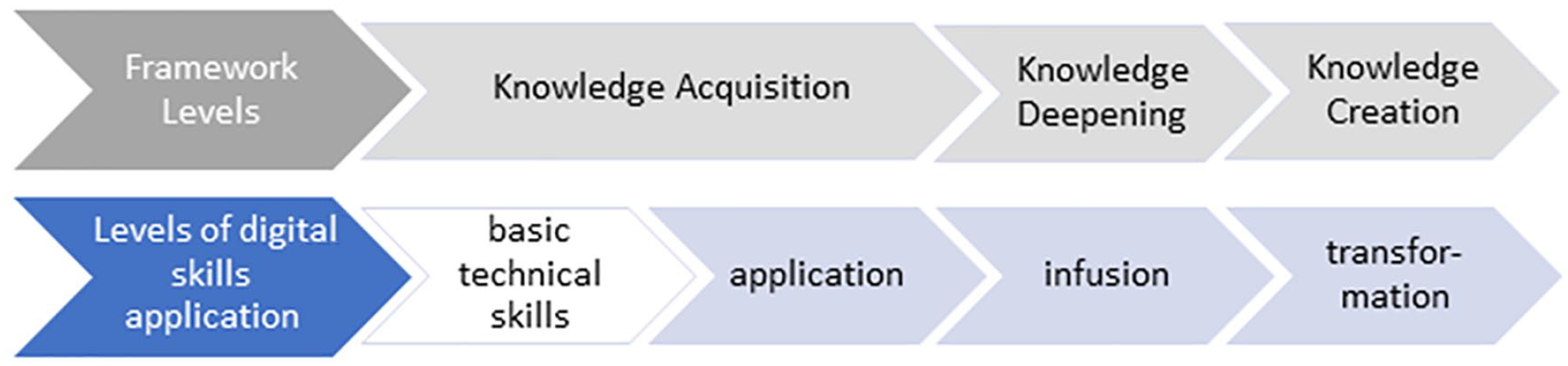
The application of digital skills.
The first level of knowledge acquisition includes both acquiring the basic technical skills (Level 0) together with extending these skills to the pedagogical application (Level 1). This demands that teachers be initially aware of the relevant national policies and potential benefits of using technology in the classroom. Teachers who master this level can competently use word processors, emails, presentations, and social networks. Basic technical skills can be taken further into application when a teacher starts to use technology for pedagogical classroom purposes. This includes “safe use” of technology while “knowing where and when (as well as when not) to use technology for classroom activities and presentations” among other usages (UNESCO, 2018, p. 22). The ICT application at this level, as we understand, may serve the needs of the traditional purposes of knowledge transmission in the classroom.
The second level aligning with knowledge deepening is infusion (Level 2). Infusion includes integrating multiple ICT tools to support and improve teaching and learning in ways that extend beyond knowledge transmission toward project-based, problem-solving, higher order thinking and real-world aligned pedagogies. Teachers at this level can integrate multiple digital tools and resources that enable them to facilitate learning environments that are student centered, collaborative, and cooperative in nature. Teachers can also link policy directives with real action in planning and assessing the ICT needs of their schools and classroom.
The third level under the knowledge creation umbrella is transformation (Level 3). In addition to a continuation of the skills addressed in the previous levels, transformation includes using digital tools in supporting knowledge creation and continuous social learning. Teachers at this level acquire competencies that encourage them to model good practice and set up learning environments that encourage students to create the kind of new knowledge required for more harmonious, fulfilling, and prosperous societies.
Although using ICT on the three previous levels can be considered a type of adoption with regard to Rogers’s theory, we believe that Level 3 (transformation level) is the optimum goal/requirement of the new reform.
Method
The current study used a descriptive survey designed to quantitatively examine secondary school teachers’ perspectives of the ICT reform while exploring their level of ICT adoption. Teachers were selected as participants because they are the primary actors through which educational transformation can occur.
Instrument
Development of the Instrument
Influenced by the analytical frameworks, we first created a question pool, which we then filtered in alignment with the selected factors, including relative advantage, compatibility, complexity, technological skills, and adoption.
Then, we developed the survey through three sequential steps. In September 2020, we first shared a word document version with 15 public school teachers, from diverse educational and specialization backgrounds, to get initial feedback on the items’ clarity. This was followed by a small-sized pilot in October 2020 after receiving the institutional review board approval. The pilot received responses from 11 secondary school teachers, of whom 91% were public school teachers from four different governorates. Respondents represented both genders and showed a good variation in their area of specializations and academic degrees/backgrounds. We further shared the same version with 10 other educators with advanced postgraduate degrees. The purpose of this step was to ensure that the questions are (1) clear enough, (2) aligning with the desired results, (3) placed in the best order, and (4) adequate and not redundant. In mid-October 2020, we circulated the survey, and we received the final responses on January 9, 2021. It was left open until January 24, 2021 to validate receiving no more responses.
Description of the Instrument
We instrumented this study through a closed-ended web-based survey to suit the conditions dictated by the COVID-19 outspread. The survey began with a filtration question that automatically ended the survey if the participants identified themselves as nonsecondary school teachers. Another filtration question was used as a consent to confirm participant’s acceptance to participate in the study (Table 1).
Components of the Instrument

Note. ICT = information and communications technology; RQ = research question; doi = diffusion of innovation.
The total number of core questions following the consent was 75 questions divided into five sections. Section one included 10 demographic radio-button questions that attempted to identify characteristics and attributes, such as gender, age, teaching experiences, and ICT access, such as computer ownership and/or access to ensure variance sampling while granting full anonymity. The second section included 12 questions that sought to capture primary reactions, sources of knowledge, and training related to the new reform. The third section consisted of 25 questions, addressing teachers’ degree of agreement and knowledge of the ICT reform, in alignment with the characteristics of the diffusion of innovation theory. The fourth section included 25 behavioral questions related to the teachers’ degree of competence using ICT in their classrooms, in line with the UNESCO ICT-CFT levels. Most of the items in the second, third, and fourth sections had closed-ended Likert-type scale responses represented by a 5-point scale. These questions were used to measure the continuous variables of teachers’ satisfaction, knowledge, and competence as the primary variables of measurement. The fifth section included one final core question asking teachers to identify the top sources of challenges to ICT integration in Egypt’s education. Finally, the survey included two optional open-ended questions, asking participants about the priority needed to develop the education sector and if they wish to add more information. Data from the two open-ended questions were rich and detailed that we considered analyzing thoroughly in another research paper.
Sample
For feasibility and access constraints, and due to the geographical distribution of the population, the study used nonprobabilistic voluntary, convenient, and snowballing sampling methods. The target population was secondary school teachers from the free public 7 and the national paid private schools, 8 the schools being expected to abide by the national system and are targeted by the ICT reform. First, we adopted convenient sampling, as the primary criterion relates to the ease of obtaining a sample (Bryman, 2012). We initially shared the online survey with secondary school teachers within our connections. Adopting the responsive-driven snowballing sampling, we asked conveniently accessible subjects to share the survey link with other targeted participants and reach out to individuals with active networks of secondary school teachers. Both groups helped out by posting the survey link on their various social media platforms, similar to what we also did, giving an additional voluntary response nature to our sample. This offered the advantage of speed and facilitated the spread of the survey and sampled hard-to-reach population (Bryman, 2012). However, a web-based survey means an undesired automatic filtration of teachers who are not competent in using the internet and/or with limited internet access.
Determination of Sample Size
Despite using nonprobability sampling, we tried to understand the minimum required sample size that could give indications about the population. The total number of secondary school teachers following the national system is 106,427. The majority of them work at public schools (90%, n = 95,945), while 10,482 teachers work at private schools (Ministry of Education, 2019). We calculated the minimum sample size at a 90% confidence level with a statistical parameter of 1.645 (Zα/2), meaning that the margin of error (e) is 0.1, and population proportion 50%, resulting in 68 teachers. By oversampling, the sample size increased to 106. Nevertheless, we worked on exceeding this number, trying to include each element in the population to avoid bias. We believed that how large a sample should be is a function of the variation in the population parameters understudy and our estimation of precision.
Participants
As shown in Table 2, the survey received 221 valid responses from 20 out of 27 Egyptian governorates. For this analysis, participants locations are organized into three groups: Greater Cairo governorates (i.e., Cairo, Giza, and Qalyubia), Lower Egypt governorates (i.e., Alexandria, Behira, Menufeya, Sharkeya, Gharbeya, Dakahlia, Damietta, Kafr El Sheikh, Ismailia, and North Sinai), and Upper Egypt (i.e., Fayoum, Beni Sweif, Minya, Assiut, Sohag, Qena, and the Red Sea). 9
Participants’ Governorates
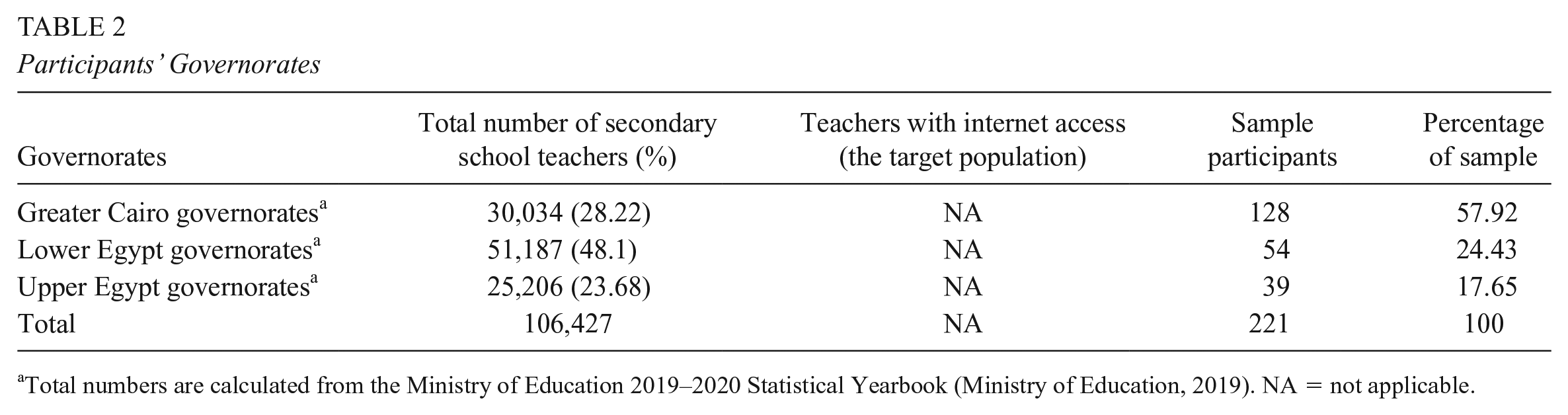
Total numbers are calculated from the Ministry of Education 2019–2020 Statistical Yearbook (Ministry of Education, 2019). NA = not applicable.
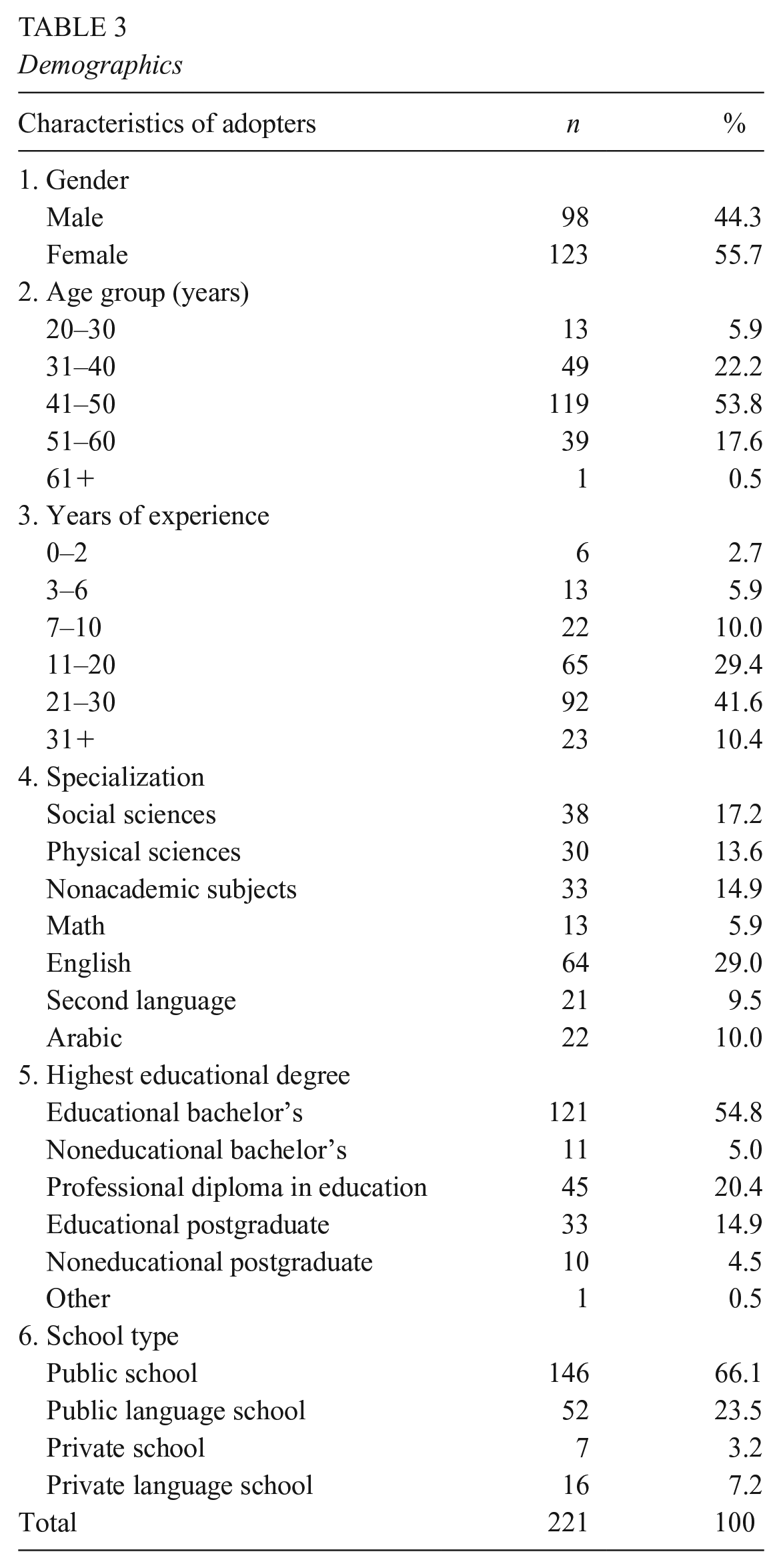
Table 3 shows the detailed demographics of the survey participants, and Figure 3 shows percentages of personal technology access of participants.
Demographics

Personal technology access.
Analysis
After preparing and cleaning the survey data, we analyzed the valid responses using simple descriptive statistics. This included calculating frequencies, percentages, measures of central tendency (i.e., mean and mode), measures of variability (i.e., standard deviation and skewness) of the survey items. The findings were then presented in descriptive formats depending on tables, graphs, and narrations.
Results
Research Question 1: Perspectives of the ICT Reform
Following the demographics, participants were asked to respond to 12 statements with 5-point Likert-type scale about their perspectives on the ICT reform. Data showed that more than half of the participants (56.11%) agreed or strongly agreed that they clearly understand the reform’s aim. Similar statistics were reported about whether they understand how to apply the reform in their schools, with only 15.4% who disagreed or strongly disagreed. In addition, around two thirds of the participants (68.38%) agreed or strongly agreed that they can describe the positive and negative aspects of the reform policy, while only 9.50% disagreed or strongly disagreed. Concerning participants who are motivated to integrate technology into their lessons, 78.28% agreed or strongly agreed, compared with only 4.98% who disagreed or strongly disagreed. In addition, more than half of the teachers (52.94%) claimed that they officially contributed to the reform’s development, and 27.15% disagreed or strongly disagreed with the statement. The overall results show that more than half of the participants agreed or strongly agreed with the positive statements about understanding and applying the reform.
Subquestion 1A: The Formation of Perspectives
Data from the survey indicated variations of perspectives on the different sources that helped teachers develop knowledge about the reform. The survey results show that teachers exchanging discussions with others in the school or through social media appeared to be the top source of knowledge, with teachers agreeing or strongly agreeing with the statement at 66.06% compared with 18.1% who either disagreed or strongly disagreed. This was followed by online training sessions, with almost half of the participants (49.32%) agreeing or strongly agreeing, while 27.6% either disagreed or strongly disagreed, which remains questionable regarding the results of other survey items asking teachers to evaluate the effectiveness of online training sessions. Less than half the participants (40.27%) either agreed or strongly agreed that school administration provided help understand the reform, while a total of 34.39% disagreed or strongly disagreed with the statement, showing a considerable variation in participants’ views on the help offered by the school administration to form a perception about the reform.
As for MoE’s official media sources, 30.32% of the participants neither agree nor disagree that this source helped them understand or form a perception about it. Besides, 37.56% stated that they disagreed or strongly disagreed with the same statement. Participants who positively confirmed that media coverage helped them perceive the reform were only 32.13%, making it the least source of knowledge for the participants (Table 4).
The Formation of Perspectives

Teachers who reported receiving training before or during COVID-19 were asked to evaluate the training’s efficiency in six specific areas related to the ICT reform: preparing lessons, assessments, online libraries, using Edmodo, smartboards, and tablets. Data from the survey indicated that most teachers found training in these areas to be of very low or low efficiency (see Figure 4). The results slightly conflict with the previously stated opinions about online training sessions as a factor to perceive the reform. Some participants selected that they received no training in areas like accessing online libraries and platforms (17.65%) and using Edmodo (22.17%) that are immensely tied to the emergent remote learning due to COVID-19.

Perceptions of teachers on training efficiency.
Subquestions 1B to 1D: Perceived Views on Relative Advantage, Compatibility, and Complexity
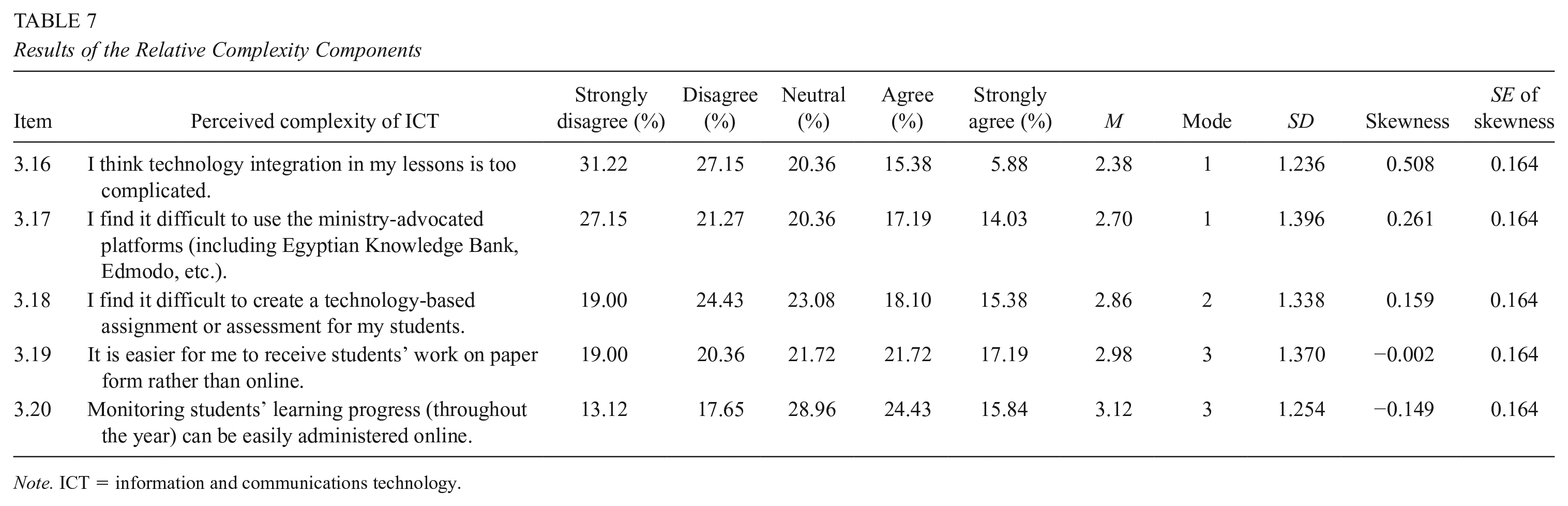
Participants were asked to respond to Likert-type scale statements, examining their perspectives toward ICT education. Tables 5, 6, and 7 illustrate the frequency of participants’ responses into 25 items aligned to the characteristics of the diffusion of innovation theory. The items were designed to measure teachers’ perceived advantages of ICT (Items 3.1–3.10), reform compatibility (Items 3.11–3.15), and complexity of ICT integration (Items 3.16–3.20).
Results of the Relative Advantage Components

Note. ICT = information and communications technology.
Results of the Compatibility Components

Note. ICT = information and communications technology.
Results of the Relative Complexity Components
Note. ICT = information and communications technology.
Perceived Relative Advantages
Table 5 shows that respondents had both positive and negative perspectives of the relative advantages of different elements of ICT integration. The positive tendency appeared as a bigger proportion of the respondents where using technology can support peer collaboration (69.23%), advance teachers’ pedagogical practices (65.16%), and provide good resources for students learning (62.44%). Then, the majority of respondents further perceived its ability to provide individualized assessments as a midway between positive (42.3%) and neutral (34.7%). However, the perspectives were negative on some other aspects. Around two thirds of the teachers agreed or strongly agreed with the negatively stated items referring to the inability of measuring some learning outcomes using ICT (72.40%) and the possibility of exaggerating social inequality through its use (58.82%). Additionally, teachers disagreed or strongly disagreed that ICT can replace some of the teachers’ roles (61.99%), and only 26.70% agreed or strongly agreed that digital learning materials are better than printed learning materials. Besides this, responses on the perceived workload related to ICT integration and online assessment credibility were mostly in the midway between neutral and negative perspectives. Almost half of the respondents saw that ICT increases teachers’ workload (43.53%) and is less credible (44.80%).
Perceived Compatibility
Participants’ responses showed some clear elements of the reform incompatibility, despite the absence of a vivid tendency in some questions. The vast majority of respondents agreed or strongly agreed that ICT reform requires teachers to change their teaching methods (87.33%), and 78.73% agreed or strongly disagreed that major changes in the education system were needed first before adopting this new reform. However, some responses indicated no clear tendency with close percentages on both sides. Only a 7.27% difference appeared between the positive (39.82%) and the negative (32.58%) responses to the statement considering the expansion of ICT integration as suitable for the system needs in Egypt. Similarly, the percentages of teachers who viewed or did not view students as already competent with the necessary online learning skills were 34.84% and 37.56%, respectively. As for the final compatibility item, although 46.15% of the respondents disagreed or strongly disagreed that schools have technology infrastructure and facilities, 30.77% claimed the opposite, showing how schools might have an unequal distribution of resources (Table 6).
Perceived Complexity
The mean score in four out of five of the complexity subscale items was close to 3 (neutral), indicating no particular tendency in the complexity perspective. Around half of the respondents disagreed or strongly disagreed with the negatively stated Items 3.16 and 3.17, suggesting that it is easy to integrate technology into lessons (58.37%) and use the MOETE official online platforms like EKB and Edmodo (48.42%). Around 43.44% disagreed or strongly disagreed with the negatively stated Item 3.18, indicating that it is easy to create online assessments and assignments, while 40.27% agreed or strongly agreed that it is easy to monitor students’ academic development online. However, their responses did not represent any tendency to Item 3.19. As noticed, 38.91% of the participants agreed or strongly agreed that it is easier to receive hard copies of students’ assignments, while 39.37% mentioned the opposite (Table 7).
Based on item analysis, there was a noticeable divergence among the mean and the mode that examined teachers’ perspectives. It was also noted that there were relatively large means compared with the standard deviation values, which are indicative of nonnormal distribution (Myers et al., 2010). Examination of the numbers suggested computing the skewness to test the distribution of the data. As noticed, the ratio of skewness to its standard error for most of the items, being greater than 2, suggested the data were asymmetrical and therefore not normally distributed. Primarily, three items out of 25 were highly left skewed, confirming the disadvantage of utilizing online assessment and the incompatibility of the current system and teachers’ pedagogical practices. Four items were moderately left skewed, suggesting the advantages of having online resources, peer collaboration, utilizing advanced pedagogical strategies, and confirming the negative impact on widening the social gap. Two items were moderately right skewed, indicating somehow the simplicity of ICT integration and the impossibility of replacing teachers. The rest of the items were approximately symmetric, showing no tendency.
Research Question 2: Continuity or Discontinuity of Perspectives During COVID-19
Faced with the exceptional circumstances caused by the pandemic, leading schools to their closure and shifting to remote learning, participants were asked to consider this context while responding to five survey items. Results showed that two thirds (68.33%) of the participants agreed and strongly agreed that they became more ready to learn the use of technology in their learning environment, indicating a potential for late adoption (see Figure 5, Item 3.21). In line with that, 63.80% of teachers agreed or strongly agreed that they remained convinced, before and during COVID-19, of the usefulness of ICT integration (Item 3.23), which may show a likely continuity of adoption. Complementing the former percentage, around one third (33.94%) agreed or strongly agreed that they started to see potential in ICT integration as a result of COVID-19 though not being initially convinced (Item 3.22). In contrast, more than half of the participants (51.58%) disagreed or strongly disagreed. This percentage included participants who did not disconfirm their adoption decision due to COVID-19; some of them could be ones who either rejected ICT integration or were originally convinced.
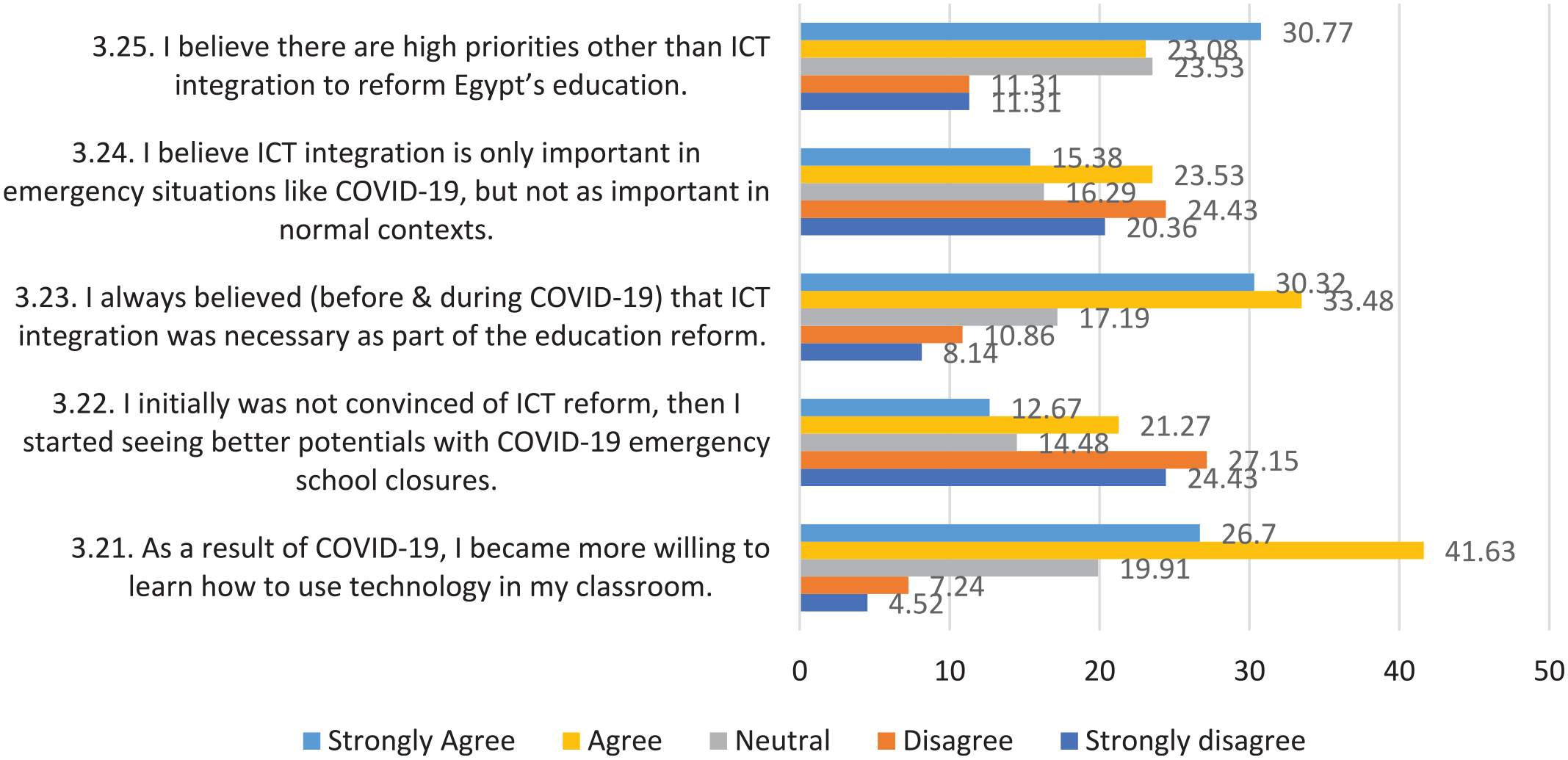
Perspectives of information and communications technology (ICT) integration before and during COVID-19.
However, despite being amid the lockdown, there was no significant tendency in believing that technology is essential for use during emergencies like COVID-19, with data distributed closely at both ends of the Likert-type scale, with only a 5.89% difference (Item 2.24). An unexpected finding showed that despite experiencing the online modality of teaching due to COVID-19, the percentage of participants who agreed or strongly agreed that there are more important priorities for Egypt’s education than ICT integration was double the opposing counterpart (53.85% vs. 22.62%; Item 3.25).
Based on the survey responses, it can be fair to conclude that COVID-19 has affected the participants’ decision to (personally) adopt and use technology. However, it has a somewhat limited influence on their original perspectives of ICT integration (whether positive or negative). It was also not advocated in the participants’ views as a priority for Egypt’s education system. This can also be considered in light of the participants’ responses to Item 3.12, indicating the need for considerable changes in the education system before implementing the ICT reform.
Research Question 3: Teachers’ ICT Level
We examined teachers’ perceived ICT competencies using subscales that included competencies on knowledge acquisition (Levels 0 and 1), deepening (Level 2), and creation levels (Level 3). The participants rated their agreement with statements using a 5-point Likert-type scale. The survey dissemination nature makes it self-selecting only to participants with internet access and who already have basic technological skills. Therefore, it should be noted that results cannot be accounted for as an indicator of Egypt’s wider teachers’ population.
Knowledge Acquisition
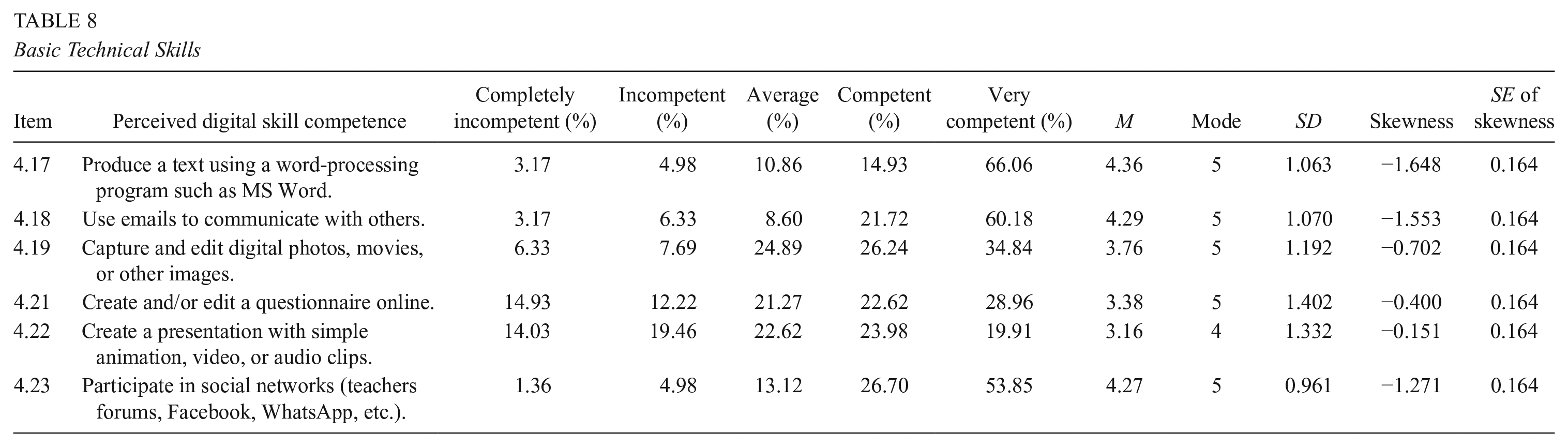
The findings showed that most teachers perceived themselves as competent in most digital skills indicators (Level 0) and the application skills in the classroom (Level 1). As shown in Table 8, a significant majority of teachers perceived themselves as competent or very competent, in using electronic mails (81.90%), word processors (81.00%), as well as participating in social networks (80.54%). The percentages decreased when seeing themselves as competent or very competent in capturing and editing photos and videos (61.09%), creating and/or editing online questionnaires (51.58%), and creating multimedia presentations (43.89%).
Basic Technical Skills
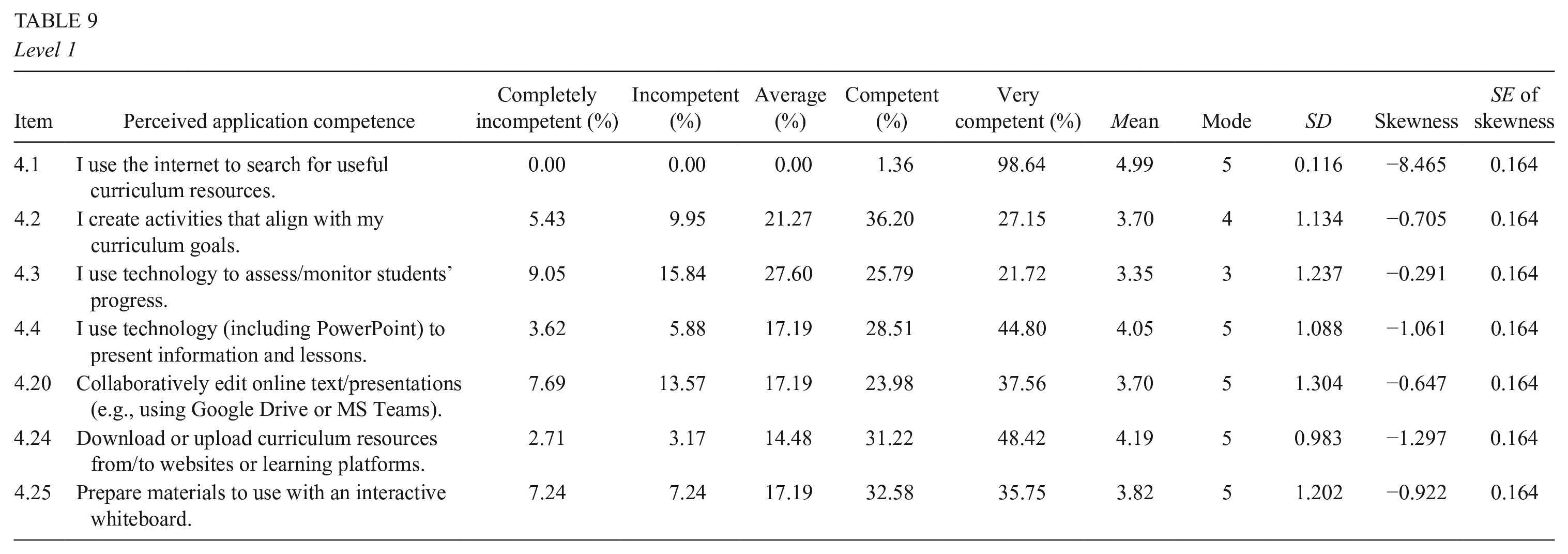
Moving to ICT applications (Table 9), participating teachers indicated being competent or very competent in finding online resources relevant to the curriculum (85.07%), downloading or uploading curriculum resources from/to learning platforms (79.64%), and using technology in presenting their lessons (73.30%). A large proportion perceived themselves as competent or very competent when preparing materials for interactive boards (68.33%), creating online activities aligning to the curriculum goals (63.35%), and collaboratively editing online texts/presentations (using google applications and/or MS teams; 61.54%). Roughly half of those surveyed reported being competent or very competent in using ICT to assess and monitor students’ performance (47.51%).
Level 1
Knowledge Deepening Level
The majority of the participants perceived their infusion skills as midway between competent and average, with means below those at the knowledge acquisition level. Around two thirds of participants (68.33%) see themselves as competent or very competent in using ICT when connecting curriculum content to real-world problems (Table 10). Around half of them consider themselves competent or very competent when evaluating digital learning resources (50.23%), involving students in collaborative and inquiry activities (49.77%), and addressing students’ individual differences (47.97%). This was followed by teachers feeling competent or very competent when adapting EKB resources to better achieve the curriculum goals (47.97%) and helping students set and assess their learning goals (42.53%).
Level 2

Knowledge Creation Level
At this level, the percentages of participants who perceived themselves as incompetent or strongly incompetent increased to around double those for the previous levels. Just over half of the participants perceived their transformation as midway between competent and average. A percentage of 40.27% felt competent or strongly competent in using technology for supporting peer collaboration (Table 11). Concerning students, teachers encourage them to evaluate the credibility of resources (45.70%), to create their digital content (45.70%), and publish their productions online (40.27%). Around a quarter of the participants were average regarding the previously mentioned items. However, more than half of them felt competent or very competent in creating their own digital learning resources (52.94%) and assessing students’ higher order thinking skills (55.20%).
Level 3

Closer inspection of the tables shows that only six items out of 25 were highly left skewed, demonstrating the high technical competence of most teachers. These items were mainly related to the acquisition level (beginner level), including searching online, interacting through social networks, using PowerPoint for presentations, using MS Word and emails, and downloading/uploading curriculum resources, where online searching for curriculum resources by far exceeds. However, around half of the indicators were approximately symmetric, showing no clear tendency (no evidence of existing competence), in which the uncertainty increases markedly to include all items when reaching the diffusion level (advanced level).
Research Question 4: Challenges and Resources
There were two aspects of this question that needed to be addressed. First, we asked the participants to identify all the resources available at their school sites as part of the demographics section (Figure 6). Based on the data available, the majority of them (72.40%, n = 160 out of 221) reported having smart or interactive boards available in all the classrooms, while 38 participants, accounting to 17.19%, communicated that they had shared boards. As for the computer labs, almost a quarter of the participants (24.43%) responded that their schools have computers available for usage at any time, while 19.46% declared that they had shared computers that have limited availability. Both percentages indicate that most of the surveyed teachers do not have consistent access to computers at their schools. In addition, less than half of the participants (43.89%) reported having consistent internet access at their schools. With similar numbers, only 39.37% confirmed that their schools have a school-level policy that supports ICT innovations, and 40.72% reported having a person or department to support ICT instructional use.

School technology access.
Regarding barriers to ICT implementation, we separately asked each participant to choose three factors out of 10 radio-button-listed statements. The analysis of their choices could be categorized into three levels: top, middle, and low. At the top level, findings revealed that one factor out of 10 has the supreme majority for limiting the use of ICT in teaching and the learning process in secondary schools. The majority of the participants (82.81%) responded that insufficient internet speed is the most challenging ICT-integration factor. This was found to be somehow in contrast to having near half of them acknowledging having constant internet access. It could indicate a real gap between having internet access and having weak signals or varying speeds that could undermine teachers’ ability to smoothly integrate technology.
As for the midlevel problems, respondents identified three factors. A total of 50.23% of the participants ranked teachers’ lack of adequate technological skills as one of the three top challenges, with 34.39% of them listing the absence of technical support and 30.32% of them listing teachers’ reluctance or lack of confidence to use new technology.
At the lower level, participants indicated six factors. They mainly viewed the insufficiency of the number of the interactive whiteboards as the least challenging factor (7.69%, n = 17), which is found to be consistent with what the majority have reported concerning the availability of the interactive boards. Roughly increasing, 11.76% viewed the lack of pedagogical support, 18.55% the difficulty to integrate ICT into the curriculum, and 18.55% the pressure of preparing students for exams and tests as the most pressing challenges. At a slightly higher percentage, teachers reported that schools have outdated computers (24.89%) or have insufficient numbers of computers (24.89%). This was found to be in line with the percentage of teachers who affirmed having shared computers at their schools (19.46%; see Figure 7).

Challenges of information and communications technology (ICT) integration.
Discussion
The current study examined teachers’ perspectives of the ICT reform administered by the Egyptian government beginning 2017. It also explored teachers’ ICT level of adoption and the challenges they perceive to be affecting the reform implementation. Understanding teachers’ perspectives is particularly essential as teachers are the most significant factor in deciding the success level for technology integration in education (Buabeng-Andoh, 2012; Zhao et al., 2002). As Fullan (2007) puts it, “Educational change depends on what teachers do and think: it’s as simple and as complex as that” (p. 129).
Characteristics of the Innovation
Participating teachers are found to have a good level of awareness of the reform. They hold a positive perspective about the relative advantages of using technology, and they profoundly understand its benefits as a viable educational tool for having better resources and pedagogical practices. This positive perspective is helpful as an element of “persuasion”; it can play a positive role in ameliorating resistance to the reform and affecting the adoption rates, as also found by Buabeng-Andoh (2012). However, participants tend to have a clear negative perspective about the compatibility of the ICT reform with the current status of Egypt’s educational needs. Surprisingly, their perspectives on the reform incompatibility remained mostly unchanged during the critical time of COVID-19, compared with their reflected willingness to improve their “personal” technical skills after the spread of the pandemic. In other words, despite seeing the potential benefits of technology, teachers continued to regard ICT reform as not the top priority for advancing Egypt’s education system. Besides, they have a moderate perspective about the complexity of using technology. Such perspectives puts forth some risks for the reform implementation because teachers tend to better adopt an innovation that is more compatible with their pedagogical beliefs, awareness of the social context, and technology proficiency, which together play complementary roles in the success of the innovation (Gode, 2013; Zhao et al., 2002).
The innovators’ perspectives are shaped by the context in which the innovation occurs, where the technological, individual, organizational, and institutional factors should be considered when examining ICT adoption and integration (Rogers, 2003; Sherry & Gibson, 2002). This means that introducing ICT innovations into education requires the prior introduction of procedures that include promoting structural, pedagogical, and curricular approaches. The issue here was that the reform was hastily presented as a revolutionary act, contradicting what literature suggests as the proper way of presenting ICT integration—in a more evolutionary and gradual manner (Gillies, 2010; Weston & Bain, 2010; Zhao et al., 2002) while considering all underlying factors (Sherry & Gibson, 2002). Reforms that seek transformation should involve a process of “reculturing” (Fullan, 2000), “second-order change” (Cuban, 1988), and “systemic change” (Schlechty, 2009) to the education system, rather than achieving restructured reform without changing the attitudes, value system, and social structure, which arguably cause much of the existing problems for Egypt’s education system.
ICT Infrastructures, Access, and Ease of Access
Our study indicates a clear issue with both the technological and the human infrastructure facing the current ICT reform. Concerning technological infrastructure, although results indicated a high percentage of interactive boards available in schools, most of the participants reported that their schools do not have sufficient internet speed, computers, and technical support. This finding is contrary to the MOETE announcement ensuring that schools are well equipped for the ICT reform (Shawki, 2021). This foregrounds some issues concerning access and, most important, ease of access to technology. As mentioned in prior studies, the existence or absence of ICT infrastructure and services is a crucial factor in teachers’ decision to use, or continue to use, ICT in teaching (e.g., Buabeng-Andoh, 2012; Muyaka, 2012). Therefore, having limited internet access and technological facilities can impede ICT integration (Omariba et al., 2016) or affect its continuation (Kafyulilo et al., 2016).
Additionally, personal access to the internet is not a supplementary factor for this challenge, especially since a good proportion of the participants (39.67%) reported not owning personal computer devices. On the contrary, most participants have personal internet access, 10 mainly through mobile phones, limiting the range of functions they can perform. Participants also reported a shortage of publicly available computers in their schools. Those challenges are consistent with that of Zaalouk et al. (2020), reflecting on the lack of internet connectivity and limited availability of computers, which seem to hinder teachers from integrating technology. Even if enough technology access is claimed to be present (Shawki, 2021), issues with ease of access might exacerbate the rejection of the reform or achievement of its vision. Thus, technology could become thrust on top of a struggling system rather than an opportunity to help transform it.
Regarding the human infrastructure, teachers listed “lack of adequate teachers with ICT skills” as the second most persistent challenge to the reform, followed by the absence of sufficient technical support for teachers. Many teachers also disclosed not receiving adequate professional training needed to develop their ICT skills since the outbreak of the pandemic. Even before COVID-19, most participants perceived the ICT-related training sessions to be of little or very little effectiveness. In other words, findings reveal that the type of knowledge needed to conduct online learning, such as preparing online lessons, and creating and conducting online assessments, have not been adequately acquired by training, making it questionable whether teachers are well equipped with the needed tools for this transition. According to Omariba et al. (2016) and Sukantet (2015), efficient ICT implementation requires extra spending on training and addressing the needs of the in-service teachers. Lack of training also entails the risk of having inadequate and unequal opportunities for teachers who did not previously have sufficient ICT skills. This view is supported by Sukantet, who found that lack of training could widen the knowledge gap and deepen the inequalities between those who have access to and control technology and those who do not.
As an outcome, when evaluating teachers’ ICT level of adoption, it was found that there was a negative association between the increase of the ICT level and teachers’ competencies. When the ICT level increases and the tasks become more challenging, teachers’ competencies steadily decrease. This shows that many teachers might not be fully prepared with the needed ICT skills for technology integration, as required by the reform.
Knowledge Communication
Issues with knowledge communication might also present an obstacle to the adoption and decision making. A large percentage of teachers reported that they were introduced to the new reform over time, mostly from discussing with peers or social media, which helped them see many facets of the innovation and build their understanding of the characteristics of the innovation. However, a small percentage confirmed that they gained knowledge about the reform through official resources—that is, the MOE and school administration—meaning that the information sources were mostly un-unified. This result highlights the need for better knowledge communication and dissemination between educational policymakers, schools, and teachers. In fact, knowledge plays an important role as it represents the key stage in the innovation decision period, during which teachers should know where to get help, the actions required, and how to interact to gradually decrease uncertainty about the innovation. This aspect was not met with satisfaction and could have a negative effect on the adoption/rejection direction of the decision (Rogers, 2003).
Conclusion and Recommendations
The study highlighted the perspectives of secondary school teachers on Egypt’s ongoing ICT reform that became more vital during COVID-19. It identified potential risks originating in teachers’ views on the compatibility of the reform to the social context at their schools and nationwide, the inadequacy of the human and technological infrastructure, as well as issues with the “ease of use” of technology. Teachers’ dissatisfaction with training can also highlight another potential risk in teacher’s understanding and their level of accomplishment regarding high levels of pedagogical ICT integration. This study has shown that teachers provide a perspective that is mainly more negative than positive, on the diffusion of ICT in secondary teaching. It is desirable for policy decisions targeting schools to better prepare for and address the challenges confronting ICT integration. This includes considering the broad range of educational policies, programs, and structures that might need to be changed if the introduction of the ICT reform is to contribute to the social and economic development of the nation. Policy directions need to revisit the strategies for enhancing teachers’ human capacity and continuing professional development. It also needs to capitalize on staffing school computer labs with pedagogic technology coordinators, maintaining the good conditions of those labs, as well as improving the quality and stability of their internet access.
All in all, the study provides insights for educational policymakers and researchers as it provides possible feedback about the levels of willingness, needed capacity building, and sources of social resistance. It has significant implications for understanding how the attributes, related to teachers’ perspectives, can affect the reform, which could be of interest to education developers. Therefore, these findings can advance a better understanding of the adoption and diffusion process to mitigate resistance and sources of conflict. However, we acknowledge the need for other measurement tools to complement the self-reported data of the behavior questions in particular. Although we see a limitation in using nonprobability sampling in conducting the study, we believe that the results can be an indicator for teachers with similar demographic characteristics. This is because the population could have an even distribution of characteristics (Bryman, 2012). Furthermore, due to the incremental nature of transformation and education change (Gillies, 2010), we should recognize that the current reform is still at a somewhat early stage of implementation and that, based on the diffusion of innovation theory, the adoption rate requires “time.” However, the findings reported here shed new light on the conditions and factors that could affect teachers’ persuasion and adoption at the present implementation phase, which needs to be taken further for future research.
Footnotes
Acknowledgements
We want to thank professors and colleagues at the Department of International and Comparative Education at the American University in Cairo for their help in supporting and providing advice for this study. We also want to thank other educator colleagues for their help in reviewing and circulating the survey. We finally want to thank secondary school teachers for completing and sharing the survey with their networks.
Authors’ Note
Alaa Badran and Lamiaa Eid contributed equally to this work.
Notes
Authors
ALAA BADRAN is an educationist who is interested in areas where educational research and practice intersect. Her interests also include education development and policy, education reform, and continuing professional teacher development.
LAMIAA EID is a researcher at the Middle East Institute for Higher Education at the American University in Cairo. She is also an educationist. Her research interests are in the areas of teacher education and practices, professional development, education reform, educational policy, human rights, and human development.
HANAN ABOZAIED is an English instructor in the Department of English Language Instruction at the American University in Cairo. She is also a researcher. Her research interests are in the areas of education for sustainable development, environmental education, pedagogy, higher education, and teacher training.
NOHA NAGY is a school director and a researcher. Her interests are in the areas of educational leadership, school culture, organizational behavior, professional development, active learning pedagogies, and teaching and learning methods.