




Abstract
The present study uses elements of the social stress and intersectionality theories to examine associations between forms of criminal justice contact and mental health among African American and Afro-Caribbean women. While mass incarceration disproportionately targets, detains, and affects Black populations, the experiences and consequences of criminal justice contact for Black women remain understudied. Utilizing the National Survey of American Life (n = 3,011), this study examined ethnic-stratified associations between criminal justice contact and three mental health indicators among Black women—psychological distress, self-rated mental health, and post-traumatic stress disorder (PTSD). We assessed justice contact based on any contact (i.e., direct contact and/or family member incarceration), and then disaggregated contact into direct (i.e., personally experienced negative police interactions, arrests, and incarceration) and familial incarceration. Findings showed that any contact as well as direct forms of contact were associated with higher psychological distress for African American women and odds of PTSD for both groups. Furthermore, negative police interactions and family member incarceration were associated with psychological distress for African American women, while only familial incarceration worsened self-rated mental health for Afro-Caribbean women. This study yields important insights for research at the intersection of gender-ethnic status, spillover outcomes of formal social control, and mental health stratification.
Keywords
Scholars of crime and deviance have long examined ways societies formally control the behaviors of its members. By formal control, we refer to tools such as the adoption of legislation, the actions by professionals (e.g., police, prosecutors, and judges), and the functioning of systems (e.g., courts, prison, and parole) that attempt to minimize harm and maximize the operating of society. Punishment resulting from formal social control is unequally distributed in the United States due in part to the differential formation and enforcement of law (Calavita 2016; Du Bois 1901). Research documents the overrepresentation of Black people among justice-involved populations (Hinton and Cook 2021; Patterson and Dagadu 2016). Black Americans are more likely to be pulled over, arrested, and imprisoned to such an extent that scholars regard incarceration as commonplace in the lives of Black men lacking a high school degree (Pettit and Western 2004). Contact with the justice system is associated with myriad negative effects including poorer health, reduced social mobility, and decreased social contacts (Patterson and Wildeman 2015; Sirois 2020; Sundaresh et al. 2021). Yet, research has overwhelmingly focused on effects of justice contact for Black men, neglecting that the associated consequences may vary across gender, ethnicity, and type of justice contact.
Guided by tenets of social stress and intersectionality theories, this study analyzes associations between contact with the criminal justice system and mental health among African American and Afro-Caribbean women. Social stress theory identifies the importance of social positionality for exposure to harmful events, circumstances, and conditions, and underscores justice contact as a stressor with mental health implications (Erving, Patterson, and Boone 2021; Erving and Smith 2022; Pearlin 2010). Moreover, intersectionality highlights gendered and racialized systems of oppression that overlap to uniquely structure Black women’s lives, mental health profiles, and contact with and navigation of the legal system (Collins and Bilge 2020; Crenshaw 1991; Lindsey 2022). Among U.S. female populations, Black women disproportionately experience contact with the justice system. Prior to adulthood, one in four Black women experience arrest (Lee et al. 2015), and data indicate that Black women incur incarceration at a rate almost twice that of White women (Carson 2020). Furthermore, Black women experience a double disadvantage of personally mediated contact with the criminal justice system as well as vicarious exposure resulting from network members’ involvement (Sewell et al. 2021). Black women are more likely than women of other ethnoracial backgrounds to experience the incarceration of partners, friends, and family members. Over 60 percent of Black women report having at least one immediate family member incarcerated (Wildeman and Lee 2021). A growing literature extending from these patterns identifies how unrelenting social control deleteriously influences the lives of Black women (Bruns and Lee 2020; Jäggi et al. 2016; Lee and Wildeman 2021; Patterson, Talbert, and Brown 2021; Wildeman and Lee 2021).
The present study builds on prior research to offer three important contributions to the research literature. First, we disentangle forms of criminal justice contact. We define direct contact as negative police interactions, arrests, and incarceration, while family member incarceration means that a person reported at least one immediate family member in jail or prison. Any justice contact indicates experiencing at least one form of direct contact or familial incarceration. Research shows that contact with the justice system is associated with poorer mental health (Patterson et al. 2021; Schnittker, Massoglia, and Uggen 2012; Sugie and Turney 2017; Turney 2021b; Turney, Wildeman, and Schnittker 2012; Wildeman and Lee 2021). Studies simultaneously examining familial incarceration and direct contact are rarer, however (see exceptions, e.g., Boen 2020; Brown, Bell, and Patterson 2016). We contribute to the literature by identifying the patterning and implications of multiple types of criminal justice involvement.
Second, this study relies on insights of intersectionality to examine ethnic variation in associations with justice contact among Black women. Scholarship focused on justice involvement generally neglects heterogeneity among Black populations. Little is known about intragroup variation among Black people as it relates to criminal justice contact. Inadequately interrogating socially defined groups potentially conceals crucial differences and leads to incomplete depictions of justice-involved populations (Patterson and Dagadu 2016). Furthermore, neglecting potential gender-ethnic differences in criminal justice contact limits knowledge creation and assumes homogeneity among a diverse and hypercriminalized population (Erving and Smith 2022; Patterson and Wildeman 2015; Sugie and Turney 2017). There is ample reason to focus on Black women given their disproportionate contact with the justice system, and because justice contact, with some exceptions, is more harmful of women’s health than men’s (Roettger and Boardman 2012; Sewell et al. 2021; Talbert 2022).
Third, this study identifies whether associations between justice contact and mental health depend on the measure of psychological adjustment. We analyze three outcomes commonly used in the literature—psychological distress, self-reported mental health, and lifetime post-traumatic stress disorder (PTSD). In doing so, we seek to identify whether contact is associated with Black women’s generalized distress levels, perceived mental health status, and diagnosis of a prevalent clinical disorder among Black women (Ahmad et al. 2014; Furukawa et al. 2003; Kessler et al. 2002). We utilize these three measures because we anticipate poor mental health may manifest differently for the two ethnic groups under consideration due to divergent immigration histories, racialization processes, and criminalization experiences in the United States (Erving and Smith 2022; Hamilton 2020; Waters 1999). Thus, our analyses seek to extend a growing body of research that identifies spillover mental health consequences of the criminal justice system by examining associations with multiple mental health measures (Boen 2020; Brown et al. 2016; Patterson et al. 2021; Sewell, Jefferson, and Lee 2016; Turney 2021b).
Background and Theory
Social Stress Theory, Intersectionality, and Criminal Justice Contact
This study integrates insights from social stress and intersectionality frameworks to highlight the significance of social positionality—race/ethnicity and gender—for exposure to stress and its mental health implications (Erving et al. 2021; Erving and Smith 2022; Pearlin 2010). Stress represents experiences or conditions that exceed a person’s ability to adapt adequately. Stress theory is often used in the literature to explain why contact with the criminal justice system typically worsens health (Boen 2020; Patterson et al. 2021; Sugie and Turney 2017; Turney 2021b). We conceive of criminal justice contact as a stressor disproportionately experienced by Black women with harmful implications for mental health. First, contact with agents of social control requires abrupt adaptation to the circumstances at hand which increases physiological arousal (e.g., police stops and arrests). Persistently high levels of physiological arousal overtax one’s adaptive capacity and worsen psychological functioning. Second, contact with the criminal justice system is oftentimes accompanied by stigma, making it more difficult to navigate social institutions (e.g., labor, housing, and credit markets) and disrupting access to typical resource outlets used to manage stress (e.g., family, friends, and peers). Third, justice contact usually places emotional, social, and economic strain on people and their families (e.g., paying bills, affording housing, and balancing time demands), which undermines one’s ability to flourish.
We rely on intersectionality’s emphasis on differences in power, exposure to risk, and access to resources across race, ethnicity, and gender that lead to Black women’s disparate contact with the justice system and its mental health ramifications. Black women and girls have had to navigate the violence of chattel slavery, Jim Crow politics of exclusion, contemporary anti-Black politics of disposability, and the denigrating ideas, views, and stereotypes of Blackness and womanhood shaped historically and enshrined into law (Lindsey 2022). Ultimately, interlocking systems of racism, sexism, and misogynoir, left Black women unprotected by the law, hypercriminalized for having the audacity to survive, and with few avenues of legal recourse (Gross 2015; Lindsey 2022). Thus, this study relies on intersectionality to highlight the significant historical context of ethnoracial and gender inequities built into and extending from the U.S. system of laws and punishments. These insights inform our study’s motivation, theoretical framework, and analytic design.
Intersectionality also informs our intragroup focus whereby we examine how multiple forms of legal contact impact the mental health of two ethnic groups of Black women. Research that identifies disproportionate impacts of the justice system often homogenizes Black populations with little consideration of potential gender-ethnic differences. In line with tenets of intersectionality, although there are commonalities across the Black Diaspora (e.g., history of enslavement, resilience, and navigation of anti-Black racism), there is considerable variation among populations racialized as Black. For instance, ethnic groups comprised people who generally share language, social status, and traditions (Griffith et al. 2011; Hamilton 2020; Waters 1999). Consistent with the literature, for this study, Afro-Caribbean women self-identify as Black and have personal or ancestral ties to Caribbean nations including, for example, Jamaica, Haiti, and Trinidad and Tobago. African American women identify as Black and have generational ties to the U.S. institution of slavery (Erving and Smith 2022; Patterson and Dagadu 2016). A better understanding of ethnic heterogeneity among Black women will illuminate how social and cultural differences might manifest in the spillover mental health impacts associated with exposure to the U.S. criminal justice system.
This study examines three key indicators of mental health status—psychological distress, self-reported mental health, and lifetime PTSD—because poor psychological adjustment has been shown to manifest differently across gender-ethnic groups (Christie-Mizell et al. 2019; Erving and Smith 2022; Talbert, Aboumahboob, and Hauver 2023). There is reason to anticipate that adverse mental health associated with criminal justice contact may present differently for Afro-Caribbean and African American women. First, research has identified culturally nuanced manifestations of distress such that Afro-Caribbean women sometimes describe their mental health differently from African American women (Erving and Smith 2022; Nicolas et al. 2007). Second, many Afro-Caribbean adults in the United States were born in Black-majority Caribbean countries, and populations born outside the United States generally have a health advantage compared to their U.S. born counterparts (Erving and Smith 2022; Hamilton 2020). Third, Afro-Caribbean women tend to have higher levels of educational attainment, occupational prestige, and household incomes than African Americans (Griffith et al. 2011; D. R. Williams et al. 2007). Thus, we anticipate that Afro-Caribbean women have better precontact mental health, experience criminal justice contact less often than African American women and have more socioeconomic resources to manage the potential economic, social, and emotional strain resulting from such contact.
Criminal Justice Contact and Mental Health
This study is situated within literature that identifies spillover consequences of the justice system. We focus on exposures to any justice contact (i.e., experiencing at least one form of direct contact or familial incarceration), and then we examine whether patterns differ by direct contact or family member incarceration. We further disaggregate types of direct contact—police stops, arrests, and incarceration. Although extant literature provides insights into the mental health consequences of incarceration, fewer studies differentiate justice contact types or examine how incarceration impacts the family members of those imprisoned beyond partners, co-parents, and children (Bruns and Lee 2020; Wakefield and Wildeman 2011).
Direct contact
This study focuses on the mental health associations of three forms of direct contact with the justice system including negative police interactions, arrests, and incarceration. Much research examines the role that incarceration plays in shaping health patterns (Brown et al. 2016; Talbert and Macy 2022; Wildeman and Wang 2017). Incarceration, while important, is only one form of criminal justice contact with potential deleterious health consequences. We extend the focus of justice contact to negative police encounters and arrests. The mental health consequences of negative police interactions are reflective of systemic oppression that has origins in the enslavement of African Americans (Reichel 1988). Historical evidence indicates that slave patrols protected and served the interests of White elites by surveilling, criminalizing, and punishing enslaved people. Moreover, policing of enslaved Black women and girls by slave patrols undergirded the development of racial capitalism in the United States. Even after formal slavery’s abolition, policing continued to serve the interests of White business people and landowners through intimidation, violence, and threats of imprisonment of self, family, and kin, leaving Black women dehumanized, vulnerable, and with little legal reprieve from White terrorism (Ritchie 2017).
In line with the rise of U.S. incarceration rates, policing practices shifted to more proactive methods that increased police-civilian interaction and the criminalization of Black people (Baumgartner, Epp, and Shoub 2018; Epp, Maynard-Moody, and Haider-Markel 2014; Hinton and Cook 2021). Police are more likely to stop and speak with disrespect to Black people compared to others (Epp et al. 2014; Jones-Brown, Gill, and Trone 2010; Turney and Wakefield 2019; Voigt et al. 2017). However, the literature more often examines how police interactions harm men’s health (Geller et al. 2014; McFarland, Geller, and McFarland 2019; McFarland et al. 2018). We know less about whether these patterns extend to Black women. Police stops are the most common type of criminal justice contact, and women’s mental health is typically poorer in areas with high stop rates (Sewell et al. 2016). Police contact typically increases depressive symptoms sharply for young Black women (Turney 2021a). Moreover, as women experience more police stops, the likelihood of developing mental health problems increases, but associations are sometimes explained by factors such as education, age, and employment (Hirschtick et al. 2020). By contrast, some research contends that the health significance of policing is amplified when police actions are perceived as unjust (Geller et al. 2014; McFarland et al. 2018, 2019; Talbert 2022). In this study, police interactions perceived as unjust negative include being unfairly stopped, searched, or abused by police officers.
Our work contributes a comparative view of formal social control by examining associations between experiences of arrest and imprisonment, and mental health. Research shows that arrest typically worsens mental health regardless of conviction or confinement status (Sugie and Turney 2017). Arrests can harm mental health via the threatening interaction with the social control agent that arrested the person; the stress associated with navigating the ascription of stigma; and the time, emotional toll, and worry devoted to proceeding through the justice system (Christie-Mizell et al. 2022; Sugie and Turney 2017). Each of these pathways can lead to interruptions in work, family life, and other obligations, which can worsen mental health (Christie-Mizell et al. 2019; Patterson et al. 2021).
Incarceration often harms mental health for people awaiting trial, which highlights jail confinement as a major form of contact (Sugie and Turney 2017). In 2019, 10.3 million people passed through a jail (Zeng and Minton 2021). Moreover, approximately one in 13 U.S. prisoners are women, and Black women are imprisoned at a higher rate than White women (Carson 2020). Incarceration typically increases women’s risk of poor mental health to a greater degree than men’s risk (James and Glaze 2006). This study includes being jailed, imprisoned, or detained in a juvenile detention center, state or federal prison, or city or county jail. Although notable differences exist between these settings, there are similarities across these experiences for postrelease mental health such that facilities house populations with a heavy burden of disease. Scholarship shows that people who have experienced incarceration have higher prevalence of psychiatric morbidity, anxiety, and depression (Schnittker et al. 2012; Turney et al. 2012). Furthermore, obstacles to receiving care after release are pronounced because formerly incarcerated people are at disproportionate risk of mental health problems that can inhibit treatment plans (Wildeman and Wang 2017).
Familial incarceration
Incarceration is notable, in part, because its long reach extends beyond the confined individual to affect people throughout one’s social network. Familial incarceration is especially high among Black women due to almost half of Black men being arrested by the age of 23 (Brame et al. 2014). This study focuses on family member incarceration as one critical form of indirect criminal justice contact. Much of the research investigating the harms of familial incarceration focuses on co-parents and children of incarcerated men. While Black women are inequitably exposed to familial incarceration, little research examines potential ethnic heterogeneity in this experience (Comfort 2008; Lee et al. 2015; Wildeman and Lee 2021). We build upon foregoing work by assessing associations between familial incarceration and mental health using a measure that encompasses the incarceration of any immediate family member. Black women, on average, are deeply invested in familial and friendship networks (Keith and Brown 2017; Taylor et al. 2017), and while these strong social ties are typically protective of health, unfortunately, these ties also disproportionately expose Black women to stress when network members are incarcerated (Patterson et al. 2021).
The removal of family members is significant for mental health because of the strain placed on socioeconomic resources, the immediate change to social role responsibilities, and the stress of navigating time and labor demands within and outside the home. Prior research finds that having an incarcerated family member is associated with poorer mental and physical health (Brown et al. 2016; Bruns and Lee 2020; Patterson et al. 2021). The formal social control and surveillance of incarcerated populations also makes it such that visiting imprisoned loved ones and sending correspondence can be dehumanizing. Megan Comfort (2008) calls the penal regulation of family members’ comportment, language, and schedule “secondary prisonization.” These experiences can dissuade people from visiting those who are imprisoned, which could weaken social ties, and consequently harm mental health through the undermining of social and familial connection.
The Current Study
Guided by insights from social stress and intersectionality theories, the present study examines associations between criminal justice contact and mental health among African American and Afro-Caribbean women. Based on background research and our theoretical framework, we expect that criminal justice contact is a stressor that will be associated with poorer mental health. Furthermore, we anticipate adverse mental health will manifest differently for African American and Afro-Caribbean women based on divergent socialization, criminalization, and racialization experiences. We extend the literature by disaggregating legal contact, examining three measures of psychological adjustment, and comparing associations across two ethnic groups of Black women.
Data and Methods
Data
Data for this study are extracted from the National Survey of American Life (NSAL), a nationally representative, household probability survey collected between 2001 and 2003. The NSAL included 3,570 non-Hispanic Blacks, 1,438 non-Hispanic Caribbean Blacks, 891 non-Hispanic Whites, and 183 Hispanics. Full details about the sample and survey are available elsewhere (Heeringa et al. 2004; Jackson et al. 2004). Most interviews were conducted face-to-face in English. Despite being collected between 2001 and 2003, the NSAL is well suited for the purposes of our study. First, the NSAL includes a representative sample of U.S. Blacks. The representative sample allows for meaningfully examining ethnic variation among Black women. Second, the data include multiple survey items ascertaining contact with the criminal justice system (e.g., police interactions, arrests, and incarceration), a key focus of this study. Third, the data continue to represent the most comprehensive assessment of the mental health of U.S.-residing people of African descent ever conducted (Jackson et al. 2004). The final unweighted sample size was 2,173 African Americans and 838 Afro-Caribbeans.
Potential alternative data sources to the NSAL offer some advantages in the form of (1) longitudinal design (i.e., National Longitudinal Survey of Youth 1979 [NLSY79], National Longitudinal Survey of Youth 1997 [NLSY97], and National Longitudinal Study of Adolescent to Adult Health [Add Health]), (2) multiple measures of justice contact (i.e., Family History of Incarceration Study, Fragile Families and Child Wellbeing Study, NLSY97, and Add Health), and (3) several health evaluations (i.e., NLSY79, NLSY97, and Add Health). However, to our knowledge, none of the available alternatives compare to the NSAL’s inclusion of (1) a sufficient and nationally representative sample of African American and Afro-Caribbean women, (2) multiple items assessing psychological adjustment, and (3) survey items identifying negative police encounters, arrests, incarceration, and familial imprisonment. Because these three elements constitute the present study’s primary contributions to the literature, the NSAL fits the purposes of this study well.
Dependent Variables
Psychological distress
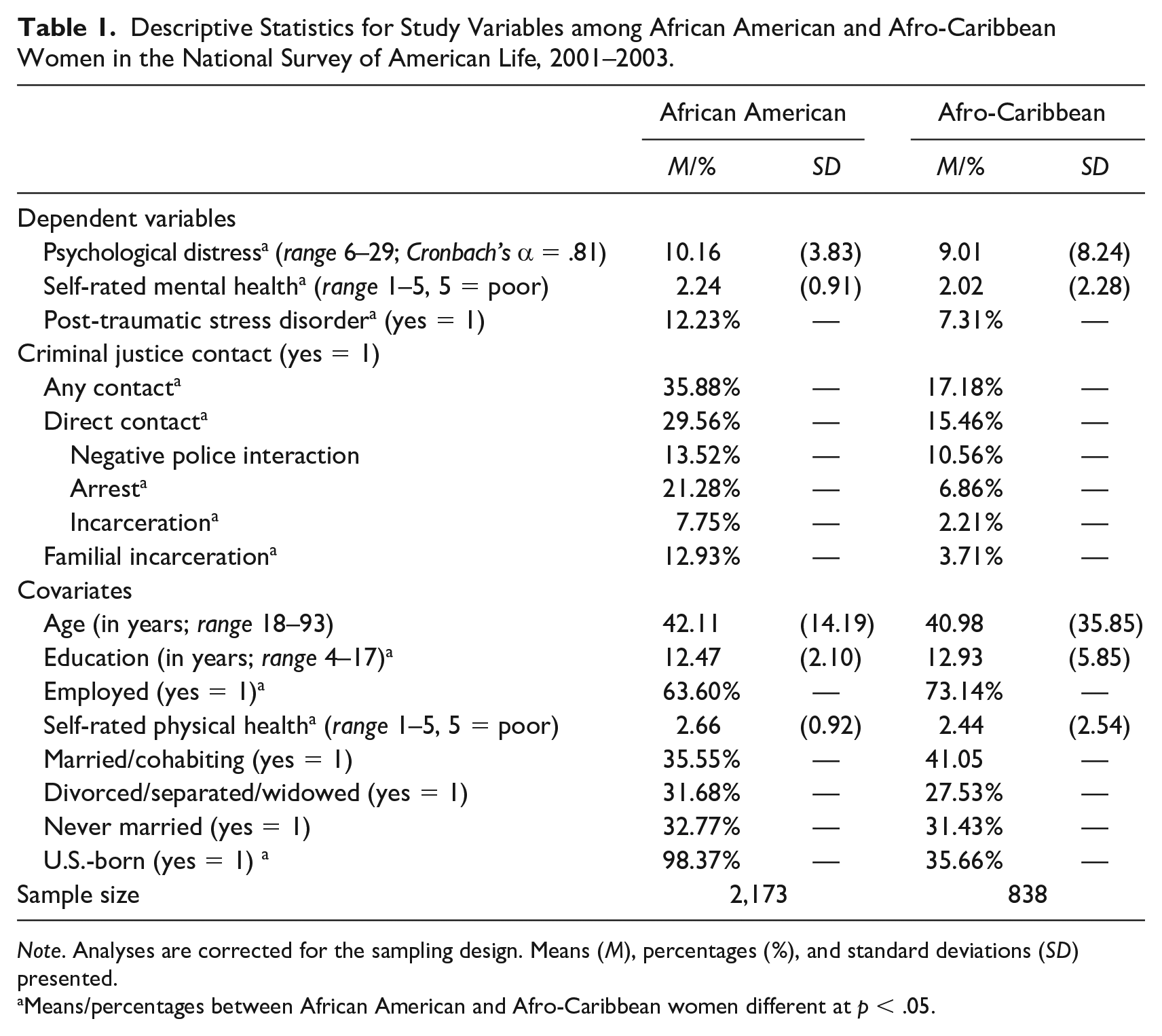
The first dependent variable, psychological distress, is measured using the six-item Kessler scale (Kessler et al. 2002), which is a reliable measure of nonspecific distress (Brown et al. 2016; Furukawa et al. 2003; Patterson et al. 2021). The six questions we summed ask: “In the past 30 days, about how often did you feel”: (1) so sad nothing could cheer you up, (2) nervous, (3) restless or fidgety, (4) hopeless, (5) that everything was an effort, or (6) worthless? Answers ranged from never (=1) to always (=5). Higher values indicate greater psychological distress (range 6–29; Cronbach’s α = .81). Table 1 reports descriptive statistics for study variables. Distress averaged 10.16 for African Americans (standard deviation [SD]=3.83; α=.81), which was significantly higher than Afro-Caribbeans’ average of 9.01 (SD=8.24; α = .79; p < .05).
Descriptive Statistics for Study Variables among African American and Afro-Caribbean Women in the National Survey of American Life, 2001–2003.
Note. Analyses are corrected for the sampling design. Means (M), percentages (%), and standard deviations (SD) presented.
Means/percentages between African American and Afro-Caribbean women different at p < .05.
Self-rated mental health
Self-rated mental health is a commonly used subjective assessment of mental health status (Ahmad et al. 2014; Erving and Smith 2022). The measure derives from answers to: “How would you rate your overall mental health at the present time?” Answers were coded into five categories such as poor = 5, fair = 4, good = 3, very good = 2, and excellent = 1. Self-rated mental health was treated as ordinal. African American women rated their mental health as poorer on average (M = 2.24, SD = .91) than Afro-Caribbean women (M = 2.02, SD = 2.28; p < .05).
PTSD
Lifetime diagnosis of PTSD is measured based on DSM-IV criteria (American Psychiatric Association 1994). We focus on PTSD rather than other DSM-IV disorders because prior research has identified its greater prevalence among Black women (Erving and Smith 2022; Erving, Thomas, and Frazier 2019). A significantly higher percentage of African American women had a PTSD diagnosis (12 percent) compared to Afro-Caribbean women (7 percent; p < .05).
Criminal Justice Contact
Any contact
Any contact indicates that respondents have experienced at least one form of direct justice contact or family member incarceration (yes = 1). Thirty-six percent of African American women experienced any contact compared to 17 percent of Afro-Caribbean women (p < .05).
Direct contact
Direct contact evaluates whether a person has experienced at least one of the following: negative police interaction, arrest, or incarceration (yes = 1). African American women (30 percent) were more likely to experience direct contact than Afro-Caribbeans (15 percent; p < .05).
Negative police interaction
Negative police interactions are encounters where a person reported “being unfairly stopped, searched, questioned, physically threatened or abused by the police” (yes = 1). Fourteen percent of African American women and 11 percent of Afro-Caribbean women reported a negative police interaction.
Arrest
Arrest measures whether a person reported being arrested (yes = 1). African American women were more likely to experience arrest (21 percent) than Afro-Caribbean women (7 percent; p < .05).
Incarceration
Incarceration identifies whether a person has been detained in a reform school, juvenile detention center, jail, or prison (yes = 1). Two percent of Afro-Caribbean women had an incarceration history compared to 8 percent of African American women (p < .05).
Familial incarceration
Familial incarceration indicates whether respondents have a spouse, child, mother, father, brother, or sister who are away in jail or prison (yes = 1). Table 1 shows that 13 percent of African American women experienced familial incarceration, which was significantly higher than Afro-Caribbean women (4 percent; p < .05).
Covariates
We include age, education, employment, marital status, and self-reported physical health as covariates given that prior research identifies their importance to justice contact and mental health patterns (Hirschtick et al. 2020; Sewell et al. 2016; Turney 2021a). Age measures years since birth (African American, M = 42.11, SD = 14.19; Afro-Caribbean, M = 40.98, SD = 35.85; p < .05). On average, Afro-Caribbean women completed more years of schooling (M = 12.93, SD = 5.85) than African American women (M = 12.47, SD = 2.10; p < .05). Employment measures whether people are currently working (yes = 1; 64 percent of African Americans; 73 percent of Afro-Caribbeans; p < .05). Self-reported physical health is ordinal such that poor = 5 to excellent = 1 (African American, M = 2.66, SD = .92; Afro-Caribbean, M = 2.44, SD = 2.54; p < .05). We created three marital status categories: married/cohabiting, formerly married, and never married. Married/cohabiting served as the reference group. We also include nativity status; Afro-Caribbean women were less likely to be born in the United States (36 percent vs. 98 percent; p < .05).
Methods
This study utilized three modeling strategies to examine the three dependent variables. Negative binomial models were used to examine psychological distress due to the nonnormal distribution of the measure, consistent with research using these data (Taylor et al. 2018). Ordered logistic regressions were used for self-rated mental health given its Likert scale construction (Long and Freese 2014; R. Williams 2012). We tested whether all of our ordered models met the parallel regression assumption, and results from Brant tests indicated that key criminal justice measures were all related to self-rated mental health in an ordered nature (i.e., no violation of the parallel regression assumption). We also ran sensitivity analyses of self-rated mental health using partial proportional odds models and multinomial logistic models, and regardless of modeling strategy, our results were substantively similar to those presented (R. Williams 2010). For PTSD, we utilized binary logistic regressions (Long and Freese 2014). All analyses were corrected for the complex sampling design.
We estimated ethnic-stratified models because we were interested in heterogeneity among the two groups and in comparison with each other. We began our ethnic-stratified analyses of psychological distress, self-rated mental health, and PTSD based on any contact with the criminal justice system. Subsequent models estimated mental health measures after separating any contact into direct contact and family member incarceration. The final six stratified models estimated mental health outcomes based on disaggregated forms of justice contact including negative police interactions, arrests, incarceration, and familial incarceration. We present exponentiated coefficients for ease of interpretation and graphically illustrate marginal effects for key findings (Jann 2014; Mize 2019; R. Williams 2012). Marginal effects clarify findings because they calculate predictions of mental health for people who have and have not experienced a type of justice contact.
Results
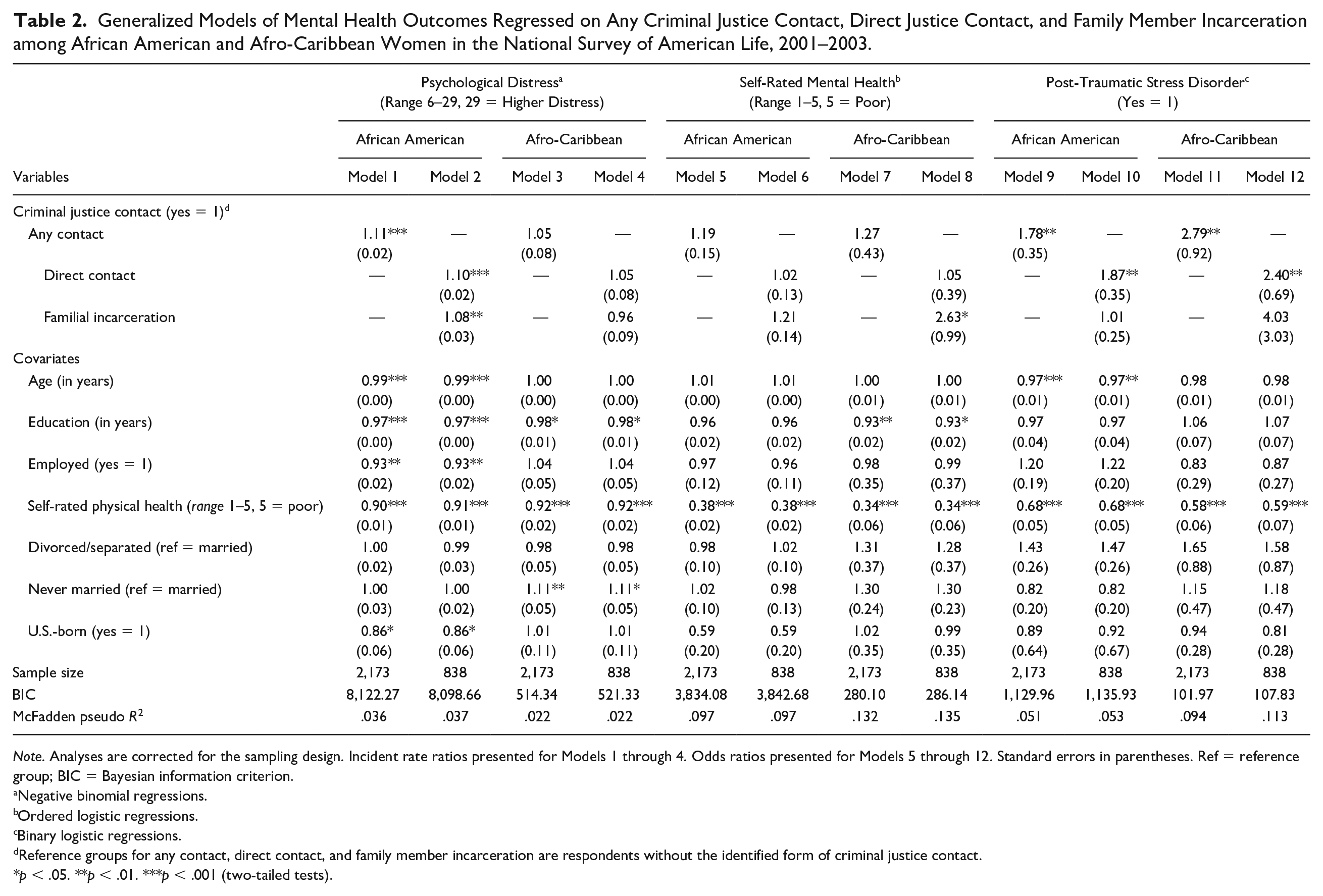
Table 2 reports results from models estimating mental health outcomes by justice contact and covariates. Models 1 through 4 estimated psychological distress. We focus results on our key variables for concision. Consistent with expectations, Model 1 showed that African American women who experienced justice contact had higher psychological distress than those without contact (incident rate ratio [IRR] = 1.11, standard error [SE] = .02; p < .001). Model 2 revealed that African American women with direct contact ([IRR = 1.10, SE = .02; p<.001) and familial incarceration had higher levels of psychological distress (IRR = 1.08, SE = .03; p<.01). Justice contact coefficients in Models 3 and 4 operated in expected directions for Afro-Caribbeans but were not significantly associated with psychological distress.
Generalized Models of Mental Health Outcomes Regressed on Any Criminal Justice Contact, Direct Justice Contact, and Family Member Incarceration among African American and Afro-Caribbean Women in the National Survey of American Life, 2001–2003.
Note. Analyses are corrected for the sampling design. Incident rate ratios presented for Models 1 through 4. Odds ratios presented for Models 5 through 12. Standard errors in parentheses. Ref = reference group; BIC = Bayesian information criterion.
Negative binomial regressions.
Ordered logistic regressions.
Binary logistic regressions.
Reference groups for any contact, direct contact, and family member incarceration are respondents without the identified form of criminal justice contact.
p < .05. **p < .01. ***p < .001 (two-tailed tests).
Figure 1 extends from Models 2 and 4 in Table 2 to illustrate marginal effects of justice contact on psychological distress. Figure 1 indicates that African American women who experienced direct contact (marginal effect [me] = 10.82) and familial incarceration (me = 10.88) had higher psychological distress than African American women without these forms of contact. Figure 1 also reveals that direct contact tended to increase distress for African American women (me = 10.85) to a greater degree than for Afro-Caribbean women (me = 9.90; difference = 1.24, SE = .61; p < .05). Similarly, familial incarceration heightened distress for African American women (me = 10.91) more than for Afro-Caribbean women (me = 8.97; difference = 2.40, SE = .79; p < .01).
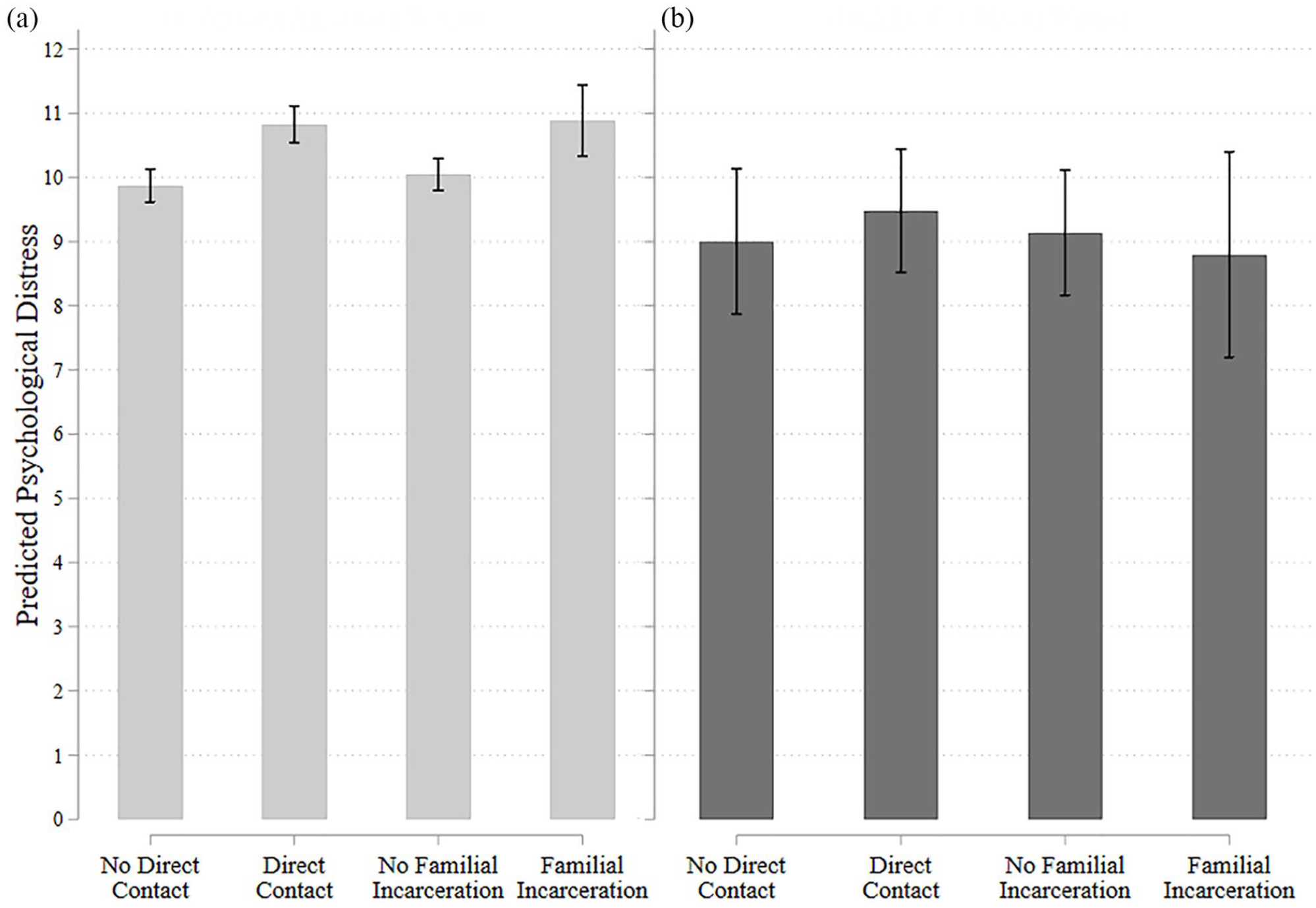
Marginal effects of legal contact on psychological distress among (a) African American women and (b) Afro-Caribbean women in the National Survey of American Life, 2001–2003.
Models 5 through 8 estimated self-rated mental health. Models 5 and 6 showed no significant associations for justice contact for African Americans. For Afro-Caribbean women, Model 8 identified that familial incarceration was associated with poorer perceived mental health (odds ratio [OR] = 2.63, SE = .99; p < .05). The OR was large, positive, and significant; put another way, familial incarceration was associated with poorer mental health by half of a standard deviation compared to those without an incarcerated family member. Figure 2 graphs average marginal effects of familial incarceration. Estimates above zero indicate that a category of perceived mental health is more likely for people with an incarcerated family member (e.g., poor). Figure 2b identifies Afro-Caribbean women with familial incarceration as significantly less likely to rate their mental health as “excellent” and more likely to report it as “good” or “fair.” More specifically, familial incarceration decreased the probability of excellent mental health by 15 percent and increased the probability of fair mental health by 7 percent (Figure 2b). In other words, familial incarceration worsened self-reported mental health among Afro-Caribbean women.
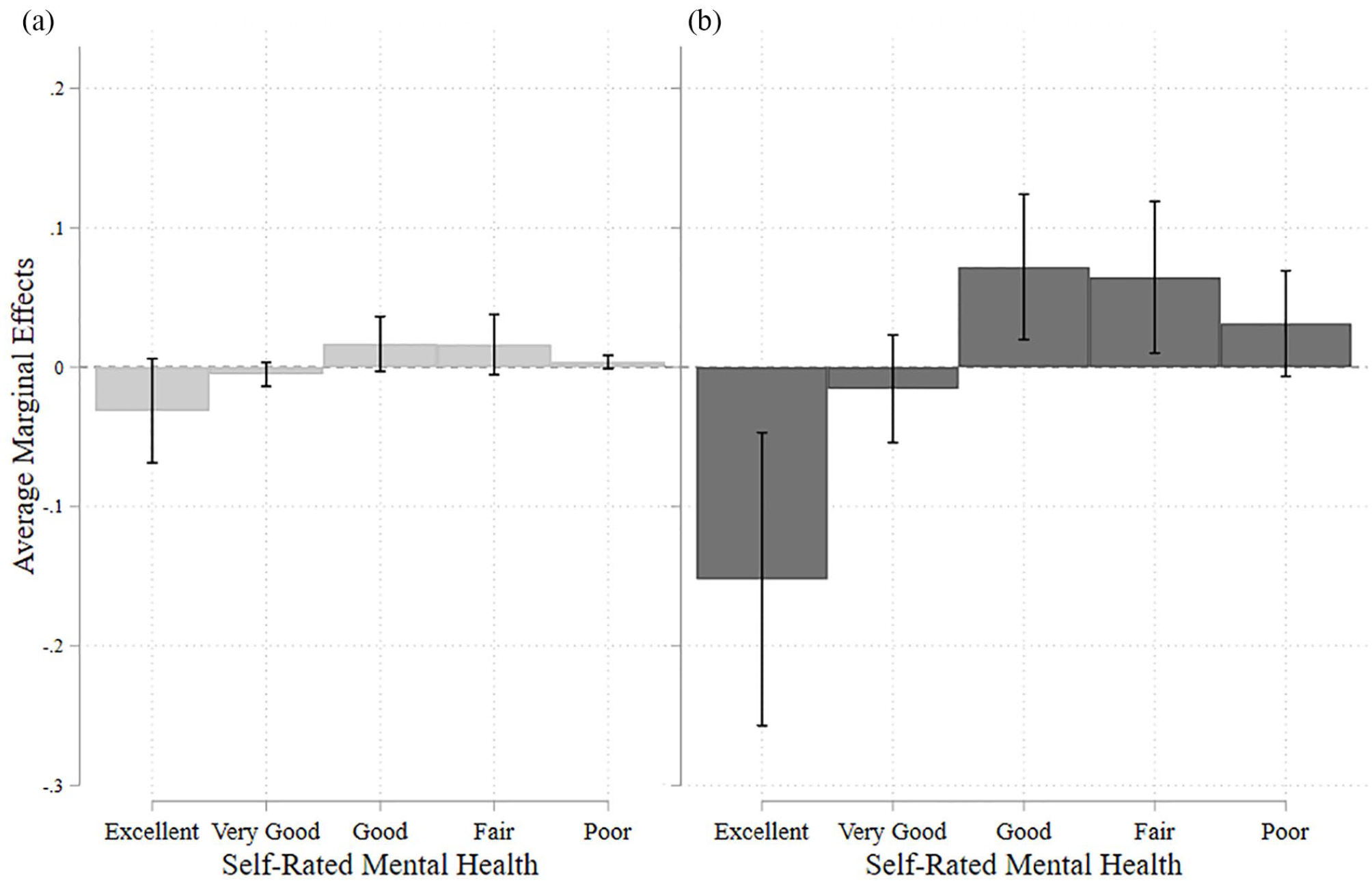
Average marginal effects of familial incarceration on self-rated mental health among (a) African American women and (b) Afro-Caribbean women in the National Survey of American Life, 2001–2003.
Model 9 identifies a positive and significant association between any contact and PTSD (OR = 1.78, SE = .35; p < .01). Model 10 clarifies Model 9 such that direct contact significantly increases the odds of PTSD (OR = 1.87, SE = .35; p<.01) but familial incarceration does not. Patterns of PTSD for African American women were substantively similar for Afro-Caribbean women such that any contact was associated with greater odds of PTSD in Model 11 (OR = 2.79, SE = .92; p < .01), and direct contact increased the odds of PTSD in Model 12 (OR = 2.40, SE = .69; p < .01). In other words, PTSD was associated with any contact and direct contact for both groups.
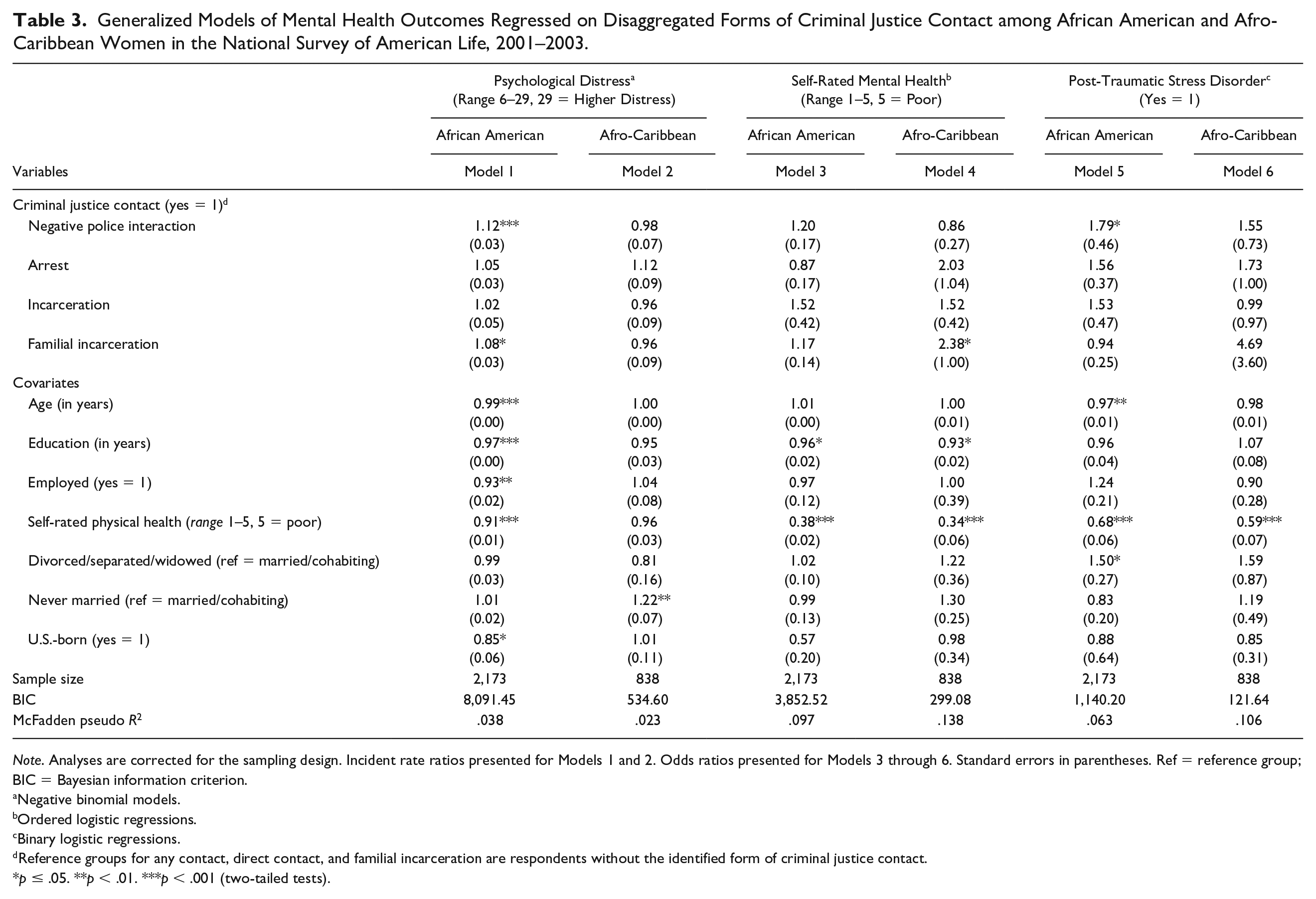
Table 3 disaggregates forms of contact to identify their independent associations with outcomes. Model 1 shows that negative police interactions (IRR = 1.12, SE = .03; p < .001) and family member incarceration (IRR = 1.08, SE = .03; p < .05) were associated with higher psychological distress for African American women. In other words, negative police encounters and familial incarceration were associated with experiencing greater sadness, restlessness, and hopelessness. Figure 3 is calculated based on Models 1 and 2 in Table 3 and illustrates marginal effects of disaggregated forms of contact. African American women who experienced negative police interactions had higher predicted psychological distress (me = 11.18) than those without such interactions (me = 9.98; difference = 1.18, SE = .27; p<.001). Stated differently, even after accounting for all covariates, negative police interactions increased psychological distress about one point higher relative to those without interactions. To put this impact into perspective, African American women who went to college for at least a year but experienced a negative police interaction had comparable mental health to African American women who did not finish eighth grade. Moreover, the impact of negative police interactions was significantly greater for African American women (me = 11.18) than Afro-Caribbeans (me = 9.01; difference = 2.02, SE = .64; p < .01). In fact, predicted distress for African American women who experienced negative police interactions was comparable only to Afro-Caribbean women with an arrest history. To underscore, psychological distress for formerly incarcerated Afro-Caribbean women was significantly lower than African American women who experienced a negative police interaction.
Generalized Models of Mental Health Outcomes Regressed on Disaggregated Forms of Criminal Justice Contact among African American and Afro-Caribbean Women in the National Survey of American Life, 2001–2003.
Note. Analyses are corrected for the sampling design. Incident rate ratios presented for Models 1 and 2. Odds ratios presented for Models 3 through 6. Standard errors in parentheses. Ref = reference group; BIC = Bayesian information criterion.
Negative binomial models.
Ordered logistic regressions.
Binary logistic regressions.
Reference groups for any contact, direct contact, and familial incarceration are respondents without the identified form of criminal justice contact.
p ≤ .05. **p < .01. ***p < .001 (two-tailed tests).
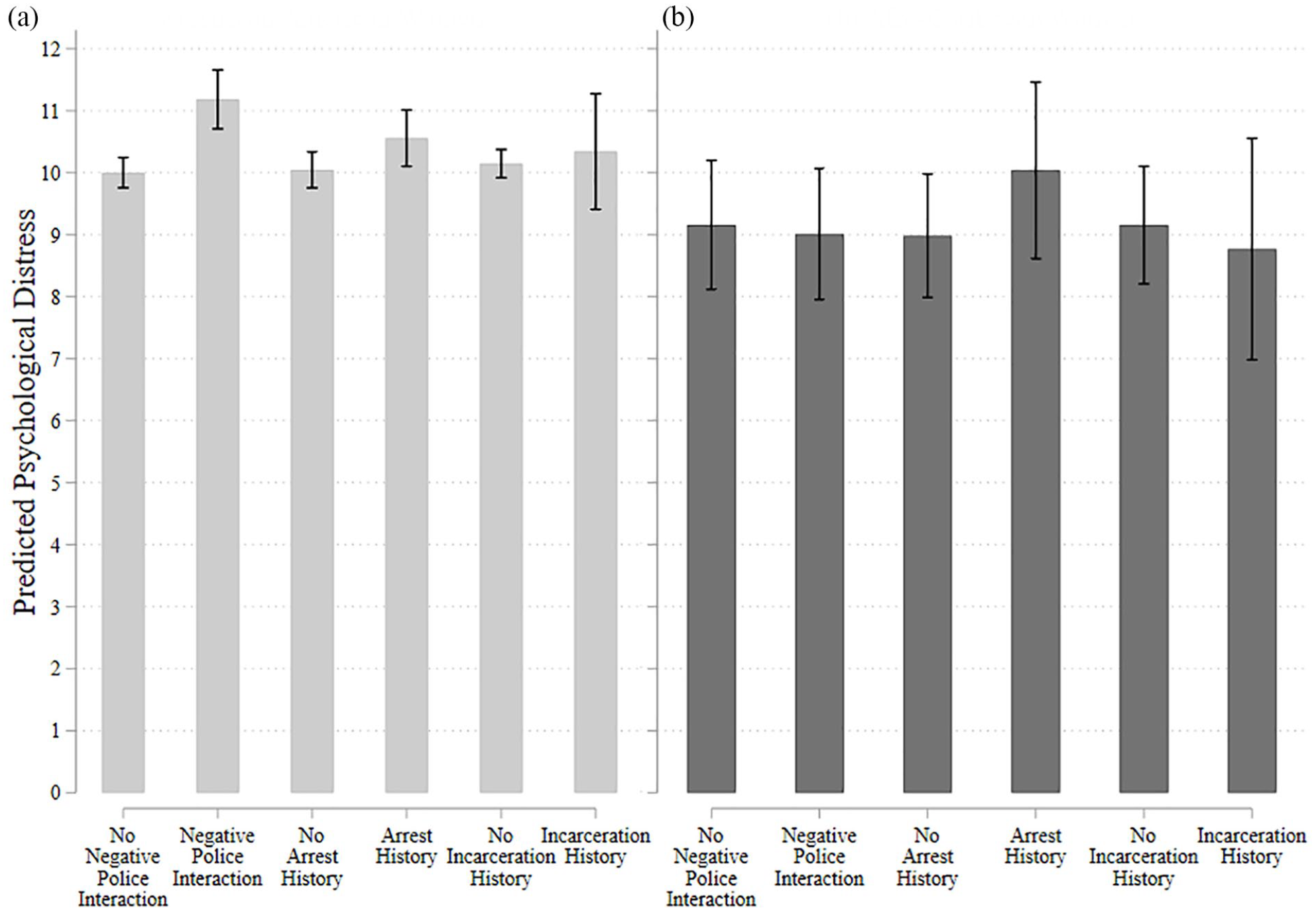
Marginal effects of disaggregated types of legal contact on psychological distress among (a) African American women and (b) Afro—Caribbean women in the National Survey of American Life, 2001–2003.
Table 3 reveals that Afro-Caribbean women who experienced familial incarceration had higher odds of poor self-rated mental health (OR = 2.38, SE = 1.00, p < .05), but no such associations appeared with psychological distress in Model 2. Said differently, women who experienced familial incarceration identified their own mental health as poorer relative to those who did not experience familial incarceration, but the experience was not significantly associated with a generalized measure of psychological distress. Furthermore, Model 5 reaffirms Model 1 such that negative police interactions were associated with greater odds of PTSD for African American women (OR = 1.79, SE = .46, p < .05). Finally, while direct contact typically increased odds of PTSD among Afro-Caribbean women (Table 2, Model 12), Model 6 indicates that no particular type of direct contact increased these odds.
Discussion
Using social stress and intersectionality frameworks, this study examined associations between criminal justice contact and mental health among African American and Afro-Caribbean women. We identified justice contact as a stressor that is associated with poorer mental health. We anticipated adverse mental health would manifest differently for African American and Afro-Caribbean women based on variation in socialization, criminalization, and racialization experiences. Overall, results supported these expectations and showed that justice contact tends to harm Black women’s mental health, but the impacts depend on ethnic identification (i.e., African American or Afro-Caribbean), how mental health is assessed (i.e., psychological distress, perceived mental health, or PTSD), and the type of contact under consideration (i.e., police interactions, arrests, familial incarceration). To summarize, we found that African American women experienced higher psychological distress and odds of PTSD when facing any contact with the justice system, direct contact, and negative police encounters, whereas Afro-Caribbean women’s odds of PTSD were worsened based on direct contact.
Results showed that familial incarceration typically worsened mental health for African American and Afro-Caribbean women. These findings are consistent with existing studies (Patterson et al. 2021; Schnittker et al. 2012; Sugie and Turney 2017; Turney 2021b; Turney et al. 2012; Wildeman and Lee 2021). The stress associated with family member incarceration harms mental health for several reasons. First, familial incarceration may tax a person’s socioeconomic resources such as income and employment, thereby increasing financial strain since the person removed from the family can no longer meaningfully contribute economically to the household. Furthermore, the financial costs of maintaining contact with incarcerated family members can be prohibitive (Comfort 2008; Miller 2021). Maintaining connections with incarcerated loved ones requires time off from work, payment for collect calls, and expenses for mailing correspondence. Second, familial incarceration can harm mental health through the ascription of stigma to people connected to the incarcerated person. Thus, typical outlets of protective resources such as social support can be undermined. Moreover, the family member may be discriminated against (e.g., labor market, credit market, and real estate), which could threaten psychological adjustment. Third, familial incarceration can increase chronic concerns for the person’s safety, health, and well-being. Over time, worrying about an incarcerated family member’s well-being can strain one’s adaptive capacity and mental health.
For African American women, higher psychological distress and odds of PTSD were associated with any criminal justice contact, direct contact, and most specifically, negative police interactions. Research offers insight into this finding. A quarter of the United States experiences police stops each year (Turney and Wakefield 2019). However, police are more likely to search, use force, and speak with disrespect to Black people compared to others (Epp et al. 2014; Jones-Brown et al. 2010; Voigt et al. 2017). Resulting negative police interactions can be traumatizing and increase hypervigilance and perception of systemic unfairness (Geller et al. 2014; Kalinowski et al. 2022; McFarland et al. 2019; Sewell et al. 2016). Hypervigilance takes a toll on psychosocial resources typically deployed to manage stressful encounters and can ultimately worsen mental health. Recall, results presented in Table 1 showed that African American women were more likely to experience arrest than Afro-Caribbean women. Given the greater likelihood of arrest, perception of police interactions as negative may increase for African American women and worsen mental health. The process of proceeding from police stop to arrest may also involve police profiling Black women differently by ethnicity. During a police stop, officers may make assumptions about a person based on the area where a stop occurs (e.g., neighborhood ethnoracial composition), a person’s communication patterns (e.g., linguistic capital), and a person’s presentation of self (e.g., attire), which may factor into the mental health significance of a stop.
The stress associated with exposure to the criminal justice system explains why forms of contact can worsen psychological distress, self-rated mental health, and PTSD, but it does not explain why patterns differ by how mental health is assessed. Any type of contact, direct contact, and most specifically, negative police interactions, worsened psychological distress for African American women, but none of these measures were associated with worse self-rated mental health for the group. Furthermore, familial incarceration harmed self-rated mental health for Afro-Caribbean women but did not increase psychological distress or odds of PTSD. These findings extend understanding of ways in which criminal justice contact is harmful to psychological functioning (Boen 2020; Brown et al. 2016; Kalinowski et al. 2022; Patterson et al. 2021; Sewell et al. 2021; Turney 2021b). Familial incarceration may also ascribe people with a form of stigma that makes it more difficult to navigate social settings and access resources typically used to manage stress (Lerman and Weaver 2014; Sugie and Turney 2017). While Afro-Caribbean women are less likely to experience familial incarceration than African American women, they likely understand the nature of the justice system as it relates to their male network members even if they more successfully navigate their own criminalization.
The literature offers further insights into differences across mental health measures. First, mental health inventories may be unevenly applicable across gender-ethnic groups. Socialization experiences make it such that self-reported measures may not holistically reflect mental health status similarly for African Americans and Afro-Caribbeans. For example, research has identified that Afro-Caribbeans describe their mental health differently from African Americans (Erving and Smith 2022; Nicolas et al. 2007). Differences in how groups describe their own mental health may lead to incongruence between generalized, clinical, and self-reported measures. Second, Afro-Caribbean women tend to have higher levels of education, employment, and incomes than African Americans (Griffith et al. 2011; D. R. Williams et al. 2007). Consequently, compared with African American women, Afro-Caribbean women may have a different perception of mental health, express it differently, or identify a different comparison group to assess their own health status (Erving and Smith 2022). Some research indicates that Afro-Caribbean women tend to distance themselves from African Americans (Hamilton 2020; Waters 1999) and may avoid using African Americans as a referent group to assess mental health status. Thus, when experiencing familial incarceration, Afro-Caribbean women may rate their mental health as poorer than similarly positioned African American women.
Limitations and Extensions
Despite offering contributions to the literature, the present study has limitations. First, scholars have argued that the incarceration of such a significant number of people from the general population may factor into the validity of social surveys. Our focus on noninstitutionalized Black people may underestimate true associations between justice contact and mental health. We anticipate, however, that since incarcerated populations are often at greater risk for mental health burdens, the findings presented here are likely underestimating what would be identified in surveys inclusive of incarcerated people. Moreover, recent work establishes that familial incarceration negatively impacts families beyond preexisting disadvantages (Lee and Wildeman 2021). Second, data used in this study generally do not allow us to ascertain the duration of each type of justice involvement. Still, research shows that any justice contact is often more important to health than the amount of time experiencing contact (Schnittker and John 2007). Third, the data do not allow us to discern which family member is incarcerated. Recent research highlights the importance of the social roles of the removed family member as key to spillover mental health outcomes (Turney 2021b). Nevertheless, the data permit a contribution above what most alternative sources allow. Notably, the analyses included multiple types of family members who are incarcerated (e.g., siblings, parents, and children), which are typically excluded from research (Bruns and Lee 2020; Wakefield and Wildeman 2011).
Fourth, the datedness of the NSAL may lead to questions about whether the findings are relevant for today. We unfortunately have little reason to believe that associations between justice contact and mental health among Black women have improved in the two decades since the NSAL’s collection. Importantly, we believe that sustained collective action (e.g., the Summer of 2020), policy changes (e.g., ending stop and frisk), and the growing public awareness of legal violence (e.g., public views of anti-Black police violence) are meritorious and constitute meaningful steps forward. However, we argue that the structure of U.S. society continues to target, control, and punish Black Americans in ways that spillover to harm the mental health of those directly and indirectly involved (Hinton and Cook 2021). With few exceptions, the preponderance of evidence indicates that justice contact continues to exert a negative influence on people’s mental health (Bruns and Lee 2020; Jäggi et al. 2016; Lee and Wildeman 2021; Patterson et al. 2021; Wildeman and Lee 2021). Moreover, Black women continue to bear an unequal burden of personal and vicarious contact with the justice system. To this end, the NSAL was collected during the continued rise of mass incarceration in the United States that has inequitably targeted and affected Black Americans (Hinton and Cook 2021). Despite decreases in the incarceration rate circa 2007, about 63 percent of Black Americans have experienced familial incarceration (Enns et al. 2019), and 1,234 out of every 100,000 Black adults in 2021 remain incarcerated (Carson 2022). Consequently, the unrelenting pervasiveness of the criminal justice system lead us to view our results as relevant to the present (Hinton and Cook 2021).
Conclusion
Black women disproportionately experience contact with the criminal justice system, but the potential spillover consequences of this disparate exposure remain underexplored (Carson 2020; Wildeman and Lee 2021). This study contributed to the literature by carefully disentangling forms of criminal justice contact, by identifying ethnic differences in justice contact among Black women, and by analyzing whether associations with mental health depend on measures of psychological adjustment. Results call into question how social institutions affect populations across race, gender, and ethnicity, and in particular, singular ways of assessing mental health and criminal justice contact (Erving et al. 2021; Erving and Smith 2022; Talbert et al. 2023). Using multiple indices of mental health is important to capture the collateral consequences of the justice system across social groups. Research should continue to interrogate critically how social institutions shape health differently for socially defined populations. Moreover, this study underscores how social institutions like the U.S. justice system not only shape health patterns but also people’s ability, desire, or willingness to seek assistance from institutions that may reject or punish them for mere interaction (e.g., police interactions). Since the 1960s, law enforcement has served as a major vehicle for domestic social policy, and overwhelmingly, to the detriment of Black Americans (Hinton and Cook 2021). Disinvesting from punitive criminal justice policy is imperative to improve population mental health and to prioritize health equity.
Footnotes
Authors’ Note
An earlier version of the project was presented at the 2022 annual meeting of the Southern Sociological Society.
