



Abstract
Executive Summary
Mexico is increasingly important as a country of transit migration between the Global South and the Global North. Migration dynamics from Central America to and through Mexico are mainly considered as economic or mixed migration of people looking for work and a better life in the USA. Nevertheless, since the 2010s the number of asylum applications in Mexico has sky rocketed. Based on a survey of Central American migrants in Mexico we demonstrate that some kind of (organized) violence was a crucial driver for leaving and a constant companion during their journey. After contextualizing the migration route from the Northern Triangle (El Salvador, Guatemala, and Honduras) toward Mexico, we present the design of the study, describe sociodemographic and general contexts of the 350 interviewees, and present the migration trajectories as long-lasting sequences of events and stays, where violence in quite different forms always is at play.
Keywords
Forced Migration on the Rise 1
The number of people of concern to UNHCR (2023) approached 110 million by the end of 2022, the highest number since these figures have been formally reported. These figures do not include the impact of the Russian war against Ukraine, which by March 2023 had resulted in 5.3 million internally displaced persons, 8.1 million externally displaced persons, and 17.6 million people in need of humanitarian assistance (EUAA 2022, 2; UNHCR 2023a, 2023b). Between 2010 and 2020, the volume of forced migration more than doubled (to 90 million in 2020), growing faster than the overall world population (7.8 billion in 2020) and the volume of international migration in general (281 million in 2020). Figure 1 shows the growth of the world population (according to the United Nations Fund for Population Activities (UNFPA)), the stock of international migrants (according to United Nations Department of Economic and Social Affairs (UNDESA)), and of the number of persons of concern (according to UNHCR, including refugees, asylum seekers, returnees, displaced persons, and stateless persons). 2 It shows that while the world population grew almost linearly, the stock of migrants and, in particular, the number of persons of concern (as a proxy for forced migration) grew exponentially. Including the families of the persons of concern, forced migration in its various forms negatively affects hundreds of millions of people. Countries of origin do not want to be blamed for violence, lack of security, or weak public administration. Destination countries often close their borders, and shift responsibility for refugee protection to transit and other countries.
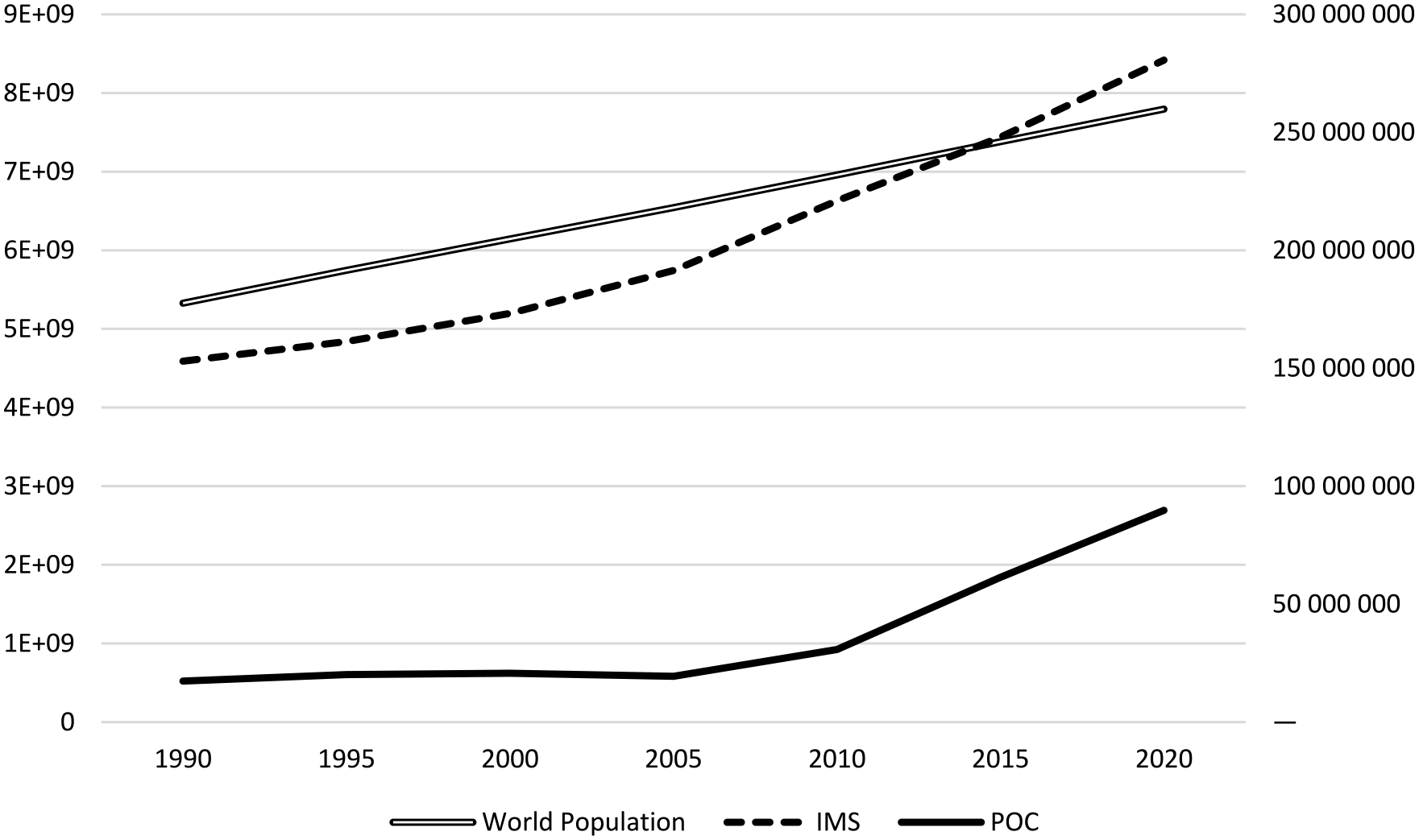
Development of World Population and (Forced) Migrants 1990–2020.
Central and North America are no different, with people from Central America, and from Venezuela, Cuba, Haiti, and African countries attempting to cross Mexico and to enter the United States (Bojorquez et al. 2020; Drotbohm and Winters 2021; REDODEM 2022). Much of the migration from Mexico’s southern border is considered economic or mixed migration. As a result, the United States is pressuring the Mexican government to tighten access to its southern and northern borders in order to prevent access to US territory. Given the pressure on Mexico to harden its borders, researchers began to describe Mexico as a vertical border (“frontera vertical,” Torre-Cantalapiedra and Yee Quintero 2018), and as plug country (“país tapón,” Varela 2019).
Consequently, in 2011 the Mexican government enacted a new law regulating migration, asylum, and refugee protection (Law on Refugees, Complementary Protection and Political Asylum). Despite several amendments in its legal provisions, Mexico still lacks adequate instruments and stable policies to manage refugee protection in the face of “a stratospheric rise in migrants seeking asylum within its refugee protection system” (Meyer and Isacson 2019, 33). 3 Like the Barack Obama administration, the government of Andrés Manuel López Obrador in Mexico is characterized by “a discourse relatively less against migrants that contrasts with a record number of deportations” (Torre-Cantalapiedra 2020, 139). Moreover, “bilateral securitization agreements with the United States related to the 2014 surge of unaccompanied Central American children and the 2018 migrant caravans have pressured Mexico into implementing migration governance schemes grounded in border enforcement, deterrence, and removal, significantly affecting the process for seeking refuge in Mexico (Chavez and Voisine 2021, 286).
Despite the violent communities they flee, Central Americans are often seen as purely economic migrants or migrants with mixed motives (Bojorquez et al. 2020; Gómez Johnson and Espinosa Moreno 2020). The report of the Network of Documentation of the Organizations Defending Migrants (REDODEM in Spanish) criticizes the use of the concept of mixed migration: Although the concept of mixed flows is frequently used, it tends to be a more abstract notion that can sometimes depersonalize and make invisible the particularities of populations in mobility. This concept emphasizes the differences between populations requiring international protection and so-called economic migrants. However, this line drawn to distinguish between the two is sometimes problematic in the case of populations in mobility in the region (REDODEM 2022, 164).
Though the governments of El Salvador, Honduras, and Guatemala have, at different times, made efforts to reduce violence and criminal gangs, the high levels of organized violence distinguish them from the countries of origin of forced migrants in Turkey (Figure 2). As Figure 2 shows, the homicide rates for all three countries have been significantly higher in recent years than the world average and in the Americas in general. Mexico also has a high level of intentional homicide, reaching 30 homicides per 100,000 inhabitants in recent years. Our study examines how this pervasive violence manifests itself in the experience of migrants in Mexico. It asks whether the concept of mixed migration adequately describes their experiences, or whether the term forced migration better characterizes the dynamics of migration in Mexico.
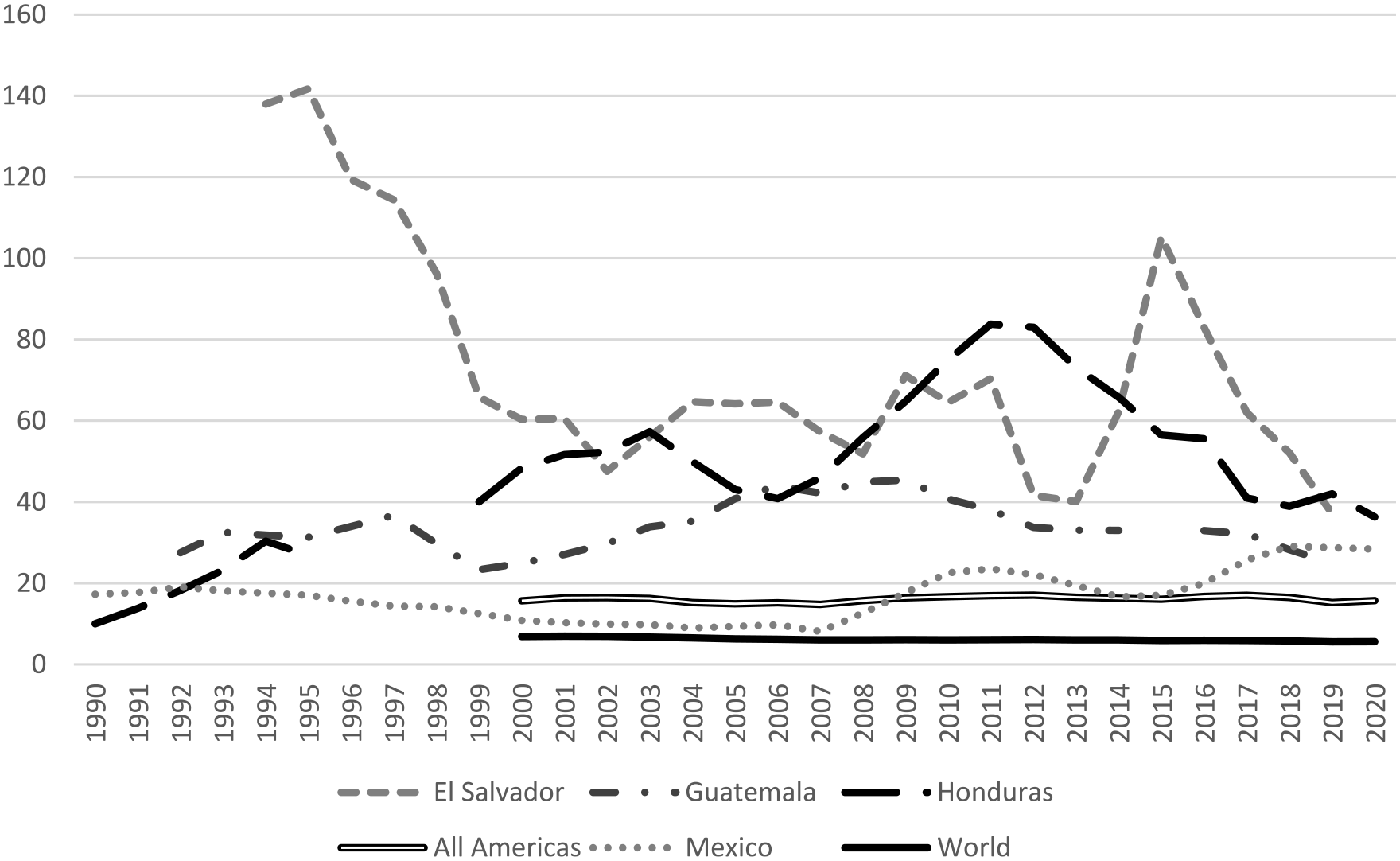
Intentional Homicides per 100,000 Inhabitants: 1990–2020.
Conceptualizing Violence in the Social Practice of Forced Migration
The use of the term “mixed migration” aims to address the increasingly blurred boundaries between migrants seeking asylum as refugees, migrants who feel threatened by high levels of armed conflict and violence in their daily lives, migrants fleeing intolerable conditions due to disasters, catastrophes, and other conditions caused by climate change, and migrants seeking better jobs and higher incomes. 4 For migrants from the Northern Triangle, violence is present in all of these migration scenarios. We believe that the term mixed migration obscures crucial aspects of the migration experience, that are better reflected in the concept of forced migration. The mixed migration perspective is biased toward a general narrative that a substantial part of this migration is “voluntary,” and migrants are attracted by expectations of better living and working conditions in the United States and Canada. We find that violence, especially organized violence, is part of the everyday life of people migrating from the Northern Triangle. Violence is a taken-for-granted and an integral part of their experience — before, during, and after migration — although it is often not emphasized in the migrants’ own narratives.
These considerations lead to an understanding of forced migration as an ongoing social practice and agency in existentially threatening contexts. In such a broader, but specific sociological perspective, we can understand forced migration as a change in residence that is driven by a considerable degree of coercion and life-threatening circumstances. This coercion is due to a great extent to perceived persecution on racial, religious, ethnic, political, national, or gender grounds or due to life-threatening disasters or catastrophes. A common condition is organized violence as a collective action that causes physical and/or psychological harm to individuals or groups.
In the Central American context, the role of violence is crucial and often underestimated. Climate change-related events such as hurricanes, droughts, and floods are examples of the second context of forced migration. In both cases, forced migration should be approached from a dual perspective: (1) as an objective social situation that has “a life of its own” and threatens the lives of individuals or groups according to humanitarian standards, and (2) as a matter of subjective perception and interpretation of social situations for the migrants themselves as well as for wider communities and societies in countries of origin, transit, and arrival. 5 In short, it can be difficult to draw a clear line between voluntary and involuntary migration: for the affected people themselves and the broader societal context, the perception and definition of the degree of coercion, and life-threatening conditions must be jointly managed and negotiated for the migrants themselves and for the wider social context. Bartram (2015) highlights the subjective and interpretive context of forced migration: “dignity will surely play a key role in further efforts to determine when it is reasonable for individuals to reject certain alternatives to migration” (p. 20).
Qualitative research on the migration corridor from Central America through Mexico to the United States and Canada underlines the importance of violence and insecurity for migrants within Mexico, particularly in relation to the drug wars and human trafficking activities of drug cartels (Rios Contreras 2014), as well as political violence in driving internal migration (París Pombo 2014). Other studies have found that drug cartels use Central American migrants passing through Mexico as targets of kidnapping and for drug smuggling (Izcara Palacios 2015). Vogt (2013) showed how different articulations of criminal, political, and structural violence transform the bodies of migrants in transit into commodities for criminal business. The violent trafficking of migrant bodies across borders has also received some scholarly attention, particularly in relation the US-Mexican border (García et al. 2007), where a media driven “culture of fear” has provoked violent politics (Correa-Cabrera 2013). Recent ethnographic studies of transit migration in Mexico have also explored gendered violence (Mancillas López 2015), and distrust, violence, and insecurity on the migrant trail (Díaz de León 2021, 2023). Escamilla García (2021) visited 21 migrant shelters and interviewed 86 young Central Americans (between 11 and 21 years). He found that they primarily try to relocate within the borders of their country of origin before attempting the dangerous journey to the United States. The reason for attempting to migrate to the United States is a mixture of fear of gangs, lack of educational and employment opportunities, and pervasive poverty.
While anthropological micro-studies focus on specific groups, places, or events, there is little analysis based on mass data or broader surveys. Research based on data generated by governments (such as that of the National Migration Institute (INM)), usually considers Central American migrants through Mexico as economic or labor migrants. Based on a secondary analysis of mass data (from the Mexican Commission for Aid to Refugees (COMAR)) and available research reports, as well as 30 semi-structured interviews, Gómez Johnson and Espinosa Moreno (2020) highlight the pervasiveness of violence and conclude: “For now, the increase in violence both in the country of origin and in transit through Mexico has been a fundamental trigger for the emergence of the ‘migrant caravans’. [. . .] It is a strategy of visibility and protection in the face of risk situations” (p. 14).
There are also studies based on official government registers. The Mexican Ministry of the Interior (SEGOB 2022) estimates the number of transit migrants from the Northern Triangle based on the number of deportations of migrants published by US authorities. About 75,000 deportations were reported for 2010, about 114,000 for 2014, and around 108,000 for 2019. Transit migration through Mexico could also be estimated based on apprehension data (from the INM) for those persons found in an irregular migration situation in Mexico. This number was about 182,000 in 2019, fell to 82,000 in 2020 as a result of COVID-19, and rose again in 2021 to 185,000, reaching around 250,000 in 2022 — showing undiminished momentum. 6 Finally, the dimension of forced migration in Mexico could be suggested by the number of applicants for recognition of refugee status registered with the Mexican Commission for Aid to Refugees. Approximately 30,000 applicants were reported for 2018, rising to 70,000 in 2019, falling (due to COVID-19) to 40,000 in 2020, and increasing to some 131,000 in 2021 (COMAR 2022; REDODEM 2022, 20). In addition, the non-governmental network REDODEM reported serving approximately 15,000 migrants in 2020 with some 63 percent from Honduras, 15 percent from Venezuela, 6 percent from Guatemala, 4 percent from El Salvador, 4 percent from Mexico, and about 8 percent from 47 other countries (REDODEM 2022, 39).
These studies provide valuable insights into the amount of migration that passes through Mexico and highlight the increase in violence that occurs along the migration route. We used a mixed-methods, life-course-oriented approach of doing biographical interviews, and an extensive survey of 360 interviews. In both the qualitative life-history narratives and the survey of migration trajectories, we focused on the contexts before leaving home and during the migration journey, especially on the experiences of violence. Our aim was to give voice to the forced migrants themselves and to identify options for creating safer and more secure environments for them. Our mixed-methods approach is innovative, as most studies focus either on case-oriented qualitative methods or on quantitative analysis of few mass data.
Study Design and General Survey Data
Experiences of violence and migration are typically not one-off events but components of ongoing social practice. Thus, a concept of life courses seems most adequate for analyzing the relation of (organized) violence and forced migration. In a life-course approach, we understand forced migration as a long term, iterative, and collective process of social practice with explicit decisions and everyday actions; during this process, there are constant changes in time horizons, target countries, reasons, goals, and networks. We combine trajectories as sequences of social positions and events in time, with biographies as subjectively experienced and remembered flow of social practice and incidents. Herein, a general focus is on (1) the period in the life course before moving, (2) the period of migration itself as often a long-lasting part of the life course, and (3) the phase of the life course after (preliminary) arrival. Refugees’ arrival at certain places, their integration and participation in social life and possible moving further is strongly influenced by their biographical projects (as subjective integration of their social relations), their processed experiences, their socialized norms and values, their preferences, their expectations, and their resources at hand. Capturing and comparing individual life-courses permits researchers to develop typologies and to reconstruct general structural and institutional factors of forced migration.
We conducted a survey with 360 interviewees capturing sociodemographic and family data as well as the complete trajectories of spatial mobility during the life-course. 7 As the overall population of foreign migrants in Mexico is highly dynamic and to a great extent informal and undocumented, there are no reliable representative data of forced migrants. For this reason, analyzing individual life-courses permits us to identify the role of (organized) violence in each of the stages of migration, and also allows us to reconstruct the factors: (1) inducing migration (like economic crisis, organized violence, and the effects of climate change); (2) structuring it (like border regimes and externalization strategies); and (3) assisting migrants (like NGOs and networks of civil society). Concentrating on (organized) violence, we will first describe different forms of violence that were reported at the beginning of and causing forced migration and during the migration process until the stay in Mexico (at the time of the survey). As our questionnaire was quite complex for an online survey and we needed to establish a level of trust with the interviewees, we organized an onsite paper-pencil survey along the main routes and means of transportation.
The survey was conducted from September to December 2020 in various locations in Mexico along the usual migratory routes with 360 people in an irregular migratory situation. Although the respondents’ migratory experiences show a series of similarities, the contextual conditions during the fieldwork were variable and changing, since COVID-19 modified the situation of transit for migrants and led to a slight decrease in the migratory flow. In addition, there were sanitary restrictions in shelters and canteens, and the health of the interviewers and interviewees during this time also had to be considered. The interviews were conducted in five different zones: Puebla-Tlaxcala, Valley of Mexico, North-western, North-eastern, and Southern Border, these zones were both, urban and rural, the northern zones were predominantly urban, the southern zones rural, and the center of the country, where the Puebla-Tlaxcala zone and the Valley of Mexico are located, were a mixture of both (see Figure 3).
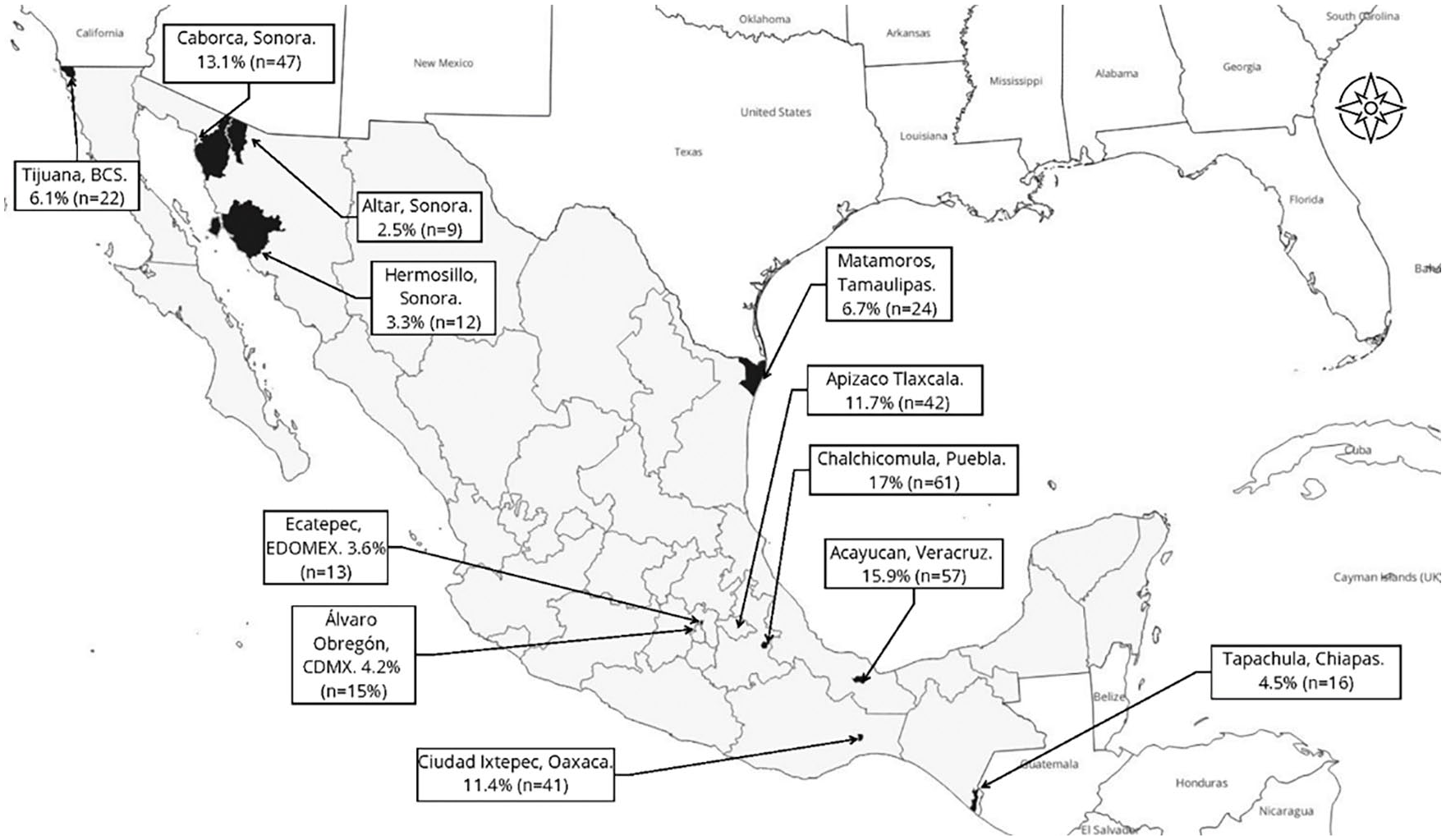
Places and Numbers of Survey in Mexico.
We chose these locations considering the common routes followed by migrants to the United States. Although there are several routes, the most common ones follow the railroads that connect it. The researchers identified the (fewer) places (such as Nazareth, Chalchicomula de Sesma in Puebla) that, due to the disruption of the pandemic, the predominantly Central American migrants were forced to use. 8 The knowledge of the different zones allowed access to key informants that facilitated the gathering of information and provided access to interviewees under conditions of mutual trust. In all places, we asked migrants randomly if they were willing to participate in an interview.
We aimed at gathering information of a high diversity of cases varying by gender, age, place of origin, and sexual orientation. However, the vast majority were men of Honduran origin. Although official national and international data refer to the increasing presence of both women and children (accompanied or unaccompanied), the conditions generated by COVID-19 influenced the selection of surveyed persons. Migrants were reluctant to answer the survey because, on the one hand, it was extensive and, on the other, experience had taught them to answer as little as possible for fear of being detained or extorted. As mentioned above, the appearance of key informants allowed access to a larger number of migrants by helping to overcome this barrier of distrust. Also, as far as possible, we offered food and bottled water, which helped to build relationships between the survey team and the migrants. This was part of creating an atmosphere of trust and empathy, but without conditioning our food assistance on participation in the survey. In the first few days, the average duration of the survey was approximately 45 minutes. Although the questionnaire was assessed before and there was a daily session to interchange experiences, the application was not always easy. With increasing experiences of the interviewers and depending on the specificities of the place, interview time reduced to 30 minutes in favorable conditions (particularly in shelters) and to 15–25 minutes when conditions demanded it, as in the case of Nazareth in Puebla, where surveys were done alongside a train track.
In the southern border area, specifically Tapachula/Chiapas, data gathering took place, first, nearby the “Siglo XXI” Migratory Station with migrants recently released from the station and interviewed in the street, and second, in a public square in the same city. In the city of Ixtepec/Oaxaca, the survey was administered to migrants in their workspace, which was part of a federal program to “return to the community.” In the same city, we went to the “Hermanos en el Camino” shelter, where survey conditions were more favorable. Most of interviews in the central zone took place outdoors, particularly in Nazareth on the side of the train tracks. In both, the Southern border and the Nazareth trackside, a constant factor was the presence of police agents, both local and federal. This made it harder to approach the migrants; although the police allowed the interviews, results were better once they withdrew. In the Northern areas of the country, interviews took place mostly in different migrant shelters along the border. Here the presence of organized crime is felt more strongly than in the center or south of the country. Migrants, in turn, often fear falling into an organized crime network. Especially in Caborca, a small city nearby Altar in the state of Sonora, organized criminal groups (of drug cartels or smugglers) decide who leaves the region. The latent insecurity for interviewers and interviewees was slightly compensated thanks to the invitation of a priest.
Regarding basic socio-demographic information, interviewees were distributed almost equally among the age groups as indicated in Table 1. Nevertheless, differentiating for countries of citizenship, Hondurans and Guatemalans vary especially in the group 18–21 years of age, also as demonstrated in Table 1, high numbers of interviews were done in the two zones of central Mexico (Puebla/Tlaxcala and Valley of Mexico) and in the Northwest of the country. The interviews were conducted primarily with Hondurans, and with men. Our sampling applied random walking methods according to the specific places and migrant populations therein, which means that we did not follow certain demographic quotas sampling.
Age at Date and Place of Interview by Citizenship.
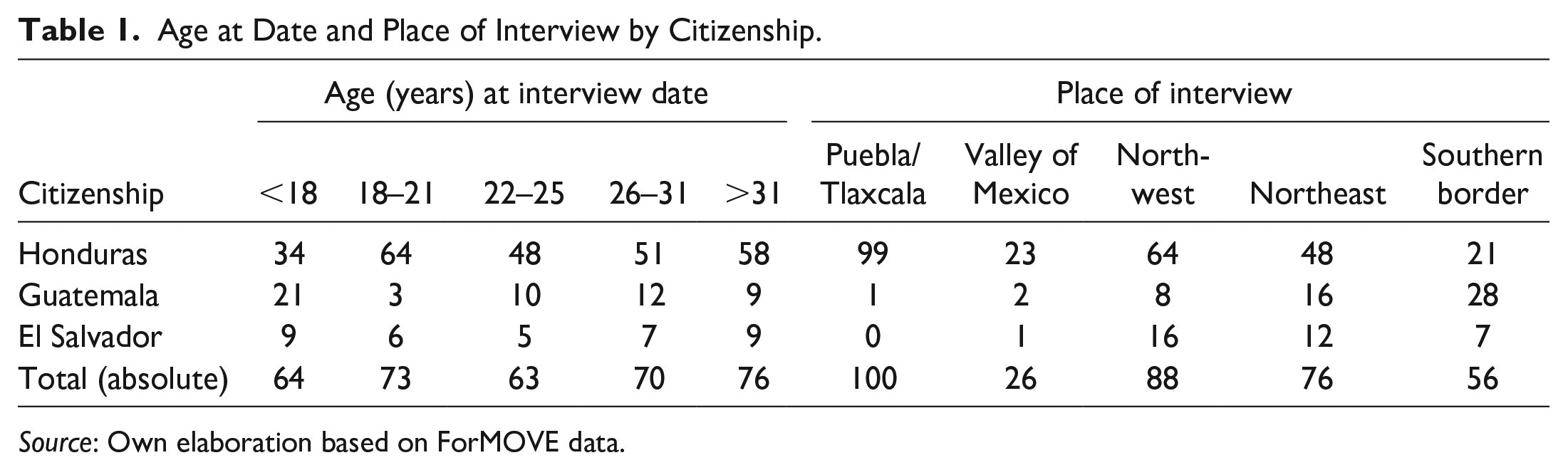
Source: Own elaboration based on ForMOVE data.
Migration Trajectories as Intricate Sequences of Stay
Before the 2010s, once migrants entered Mexican territory in an unregistered manner, their quest was to reach the Northern border and enter the United States as soon as possible (Meyer and Isacson 2019, 19). In general, their stay in various parts of the country was counted in days rather than weeks. However, over the last decade, although the primary intention for most migrants remains to reach the United States, more migrants see Mexico as a place to earn money for onward migration or to improve their economic conditions by staying for longer periods. We noted these migrant strategies during the survey, particularly in the case of those who were interviewed in the central zone or on the southern border, and especially when it was the first migration event.
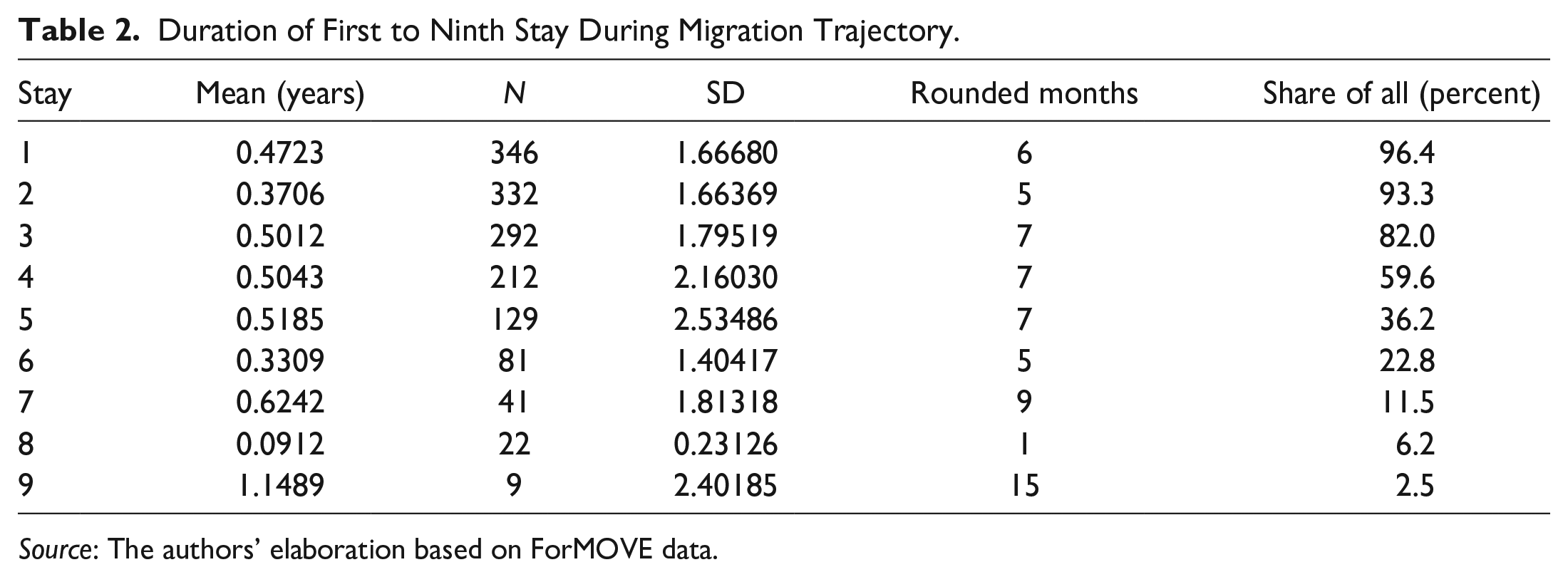
Due to the conditions of both the migrants and the different localities, in our survey the length of stay in any single location is measured in months and rarely surpasses more than six or seven months. Table 2 includes all periods, where the interviewees stayed for a minimum of one month after having left their place of normal residence. These could be events in Mexico or in other transit countries before arriving in Mexico. Almost all interviewed migrants (96.4 percent or 346 out of 359) indicated a first stay of more than a month of duration. Its average is about half a year (0.47 of a year or six months rounding up). The standard deviation of the first (and for the then following stays) is quite high (more than a year, some 1.67). As Table 2 reveals, even some 93 percent (332 out of 356) of the interviewed persons indicated a second longer stay during their journey and the same share a third. From the fourth stay onwards, the share of interviewees decreases continuously, and only 2.5 percent reported minimum nine stays on their journey. According to the survey, even for those who wish to remain in Mexico, the hope is to remain on the road to Nuevo Leon or Baja California because of the opportunities offered by the different industrial sectors found there.
Duration of First to Ninth Stay During Migration Trajectory.
Source: The authors’ elaboration based on ForMOVE data.
Moreover, migrants’ routes are quite complex and extending over several periods of stays in various places, just as the migrant population crossing the country is heterogeneous, so are their periods of staying in various places. However, once they are in Mexican territory, specifically when unregistered, they experience a general vulnerability. Given their protracted stay in Mexico, the organizing element of a migrant’s challenges is usually economic. According to what migrants shared with the survey team, most end up resorting to a lesser or greater extent on the altruism of the people they meet along the way. The latter is particularly true of those migrants whose primary intention is to reach the United States, since the bulk of their economic resources is reserved for that purpose. According to anecdotal evidence, people with a longer period between migratory events within Mexico stayed for an extended period because somewhere along the way they found paid employment and, once their work ended, they continued to try to reach the northern border. According to the regional distribution of the data presented in Table 2, the first and the second stays tend to be more extended for persons surveyed in the southern border area, indicating that once people have entered the country, they must reorganize themselves before continuing on their way. However, it is in the southeast and central zone that most tend to spend more time.
A significant literature has documented the protracted displacement of roughly three-quarters of the world’s refugees and internally displaced persons (Ferris and Kerwin 2023), including populations in protracted displacement in Mexico (Gil-Everaert, Masferrer, and Chávez 2023). This study complements that literature by pointing to the typically protracted journeys of forced migrants from Central America, which of course had not come to an end at the time of the survey.
Figure 4 demonstrates, how complex the spatial movement of the interviewees is according to their routes. It displays the distribution of the stays, with emphasis on those who are originally from El Salvador, Guatemala, and Honduras (Figure 4 does not track the 15 cases of persons, who started their journey in the United States — as returned people — or in other countries than the Northern Triangle). Out of the total of 359 migrants, 56 originated their journey from Guatemala (grey background), 36 from El Salvador (white background), the majority of 254 from Honduras (black background), and 13 started from other countries. Starting from the place of origin, the graph traces the trajectories of the biggest groups of Guatemala and Honduras, each for the first two stays. For instance, from the 56 interviewed migrants, who started originally from Guatemala, 24 made their first stay in Chiapas, Tabasco, or Quintana Roo (out of the total of 91 persons, who indicated this region as their first stage). More than half of the Guatemalans (n = 27) made their first stay of a minimum of a month in Guatemala. Out of the total of 254 Hondurans, the biggest group (n = 99) made it to Guatemala, meanwhile the second biggest group (n = 60) moved inside Honduras. The rest of Hondurans and Guatemalans migrated to the other indicated regions. These patterns reflect the often precarious and spontaneous context of many of the interviewed migrants: they had to leave their places of origin but lacked the necessary resources for advancing directly and expeditiously to Mexico and on to their final destination or they lost or were robbed of resources during their protracted journeys. The bolded numbers in each of the first six stays indicate the region, where most of all migrants remained. We see that for the first stage Guatemala hosted the majority (n = 146), followed by Chiapas, Tabasco, or Quintana Roo (n = 91) and Honduras (n = 62). Only few migrants (n = 10 + 6 + 7 + 10 = 33) made it directly up to the Southeast, Center, Northwest, or Northeast.
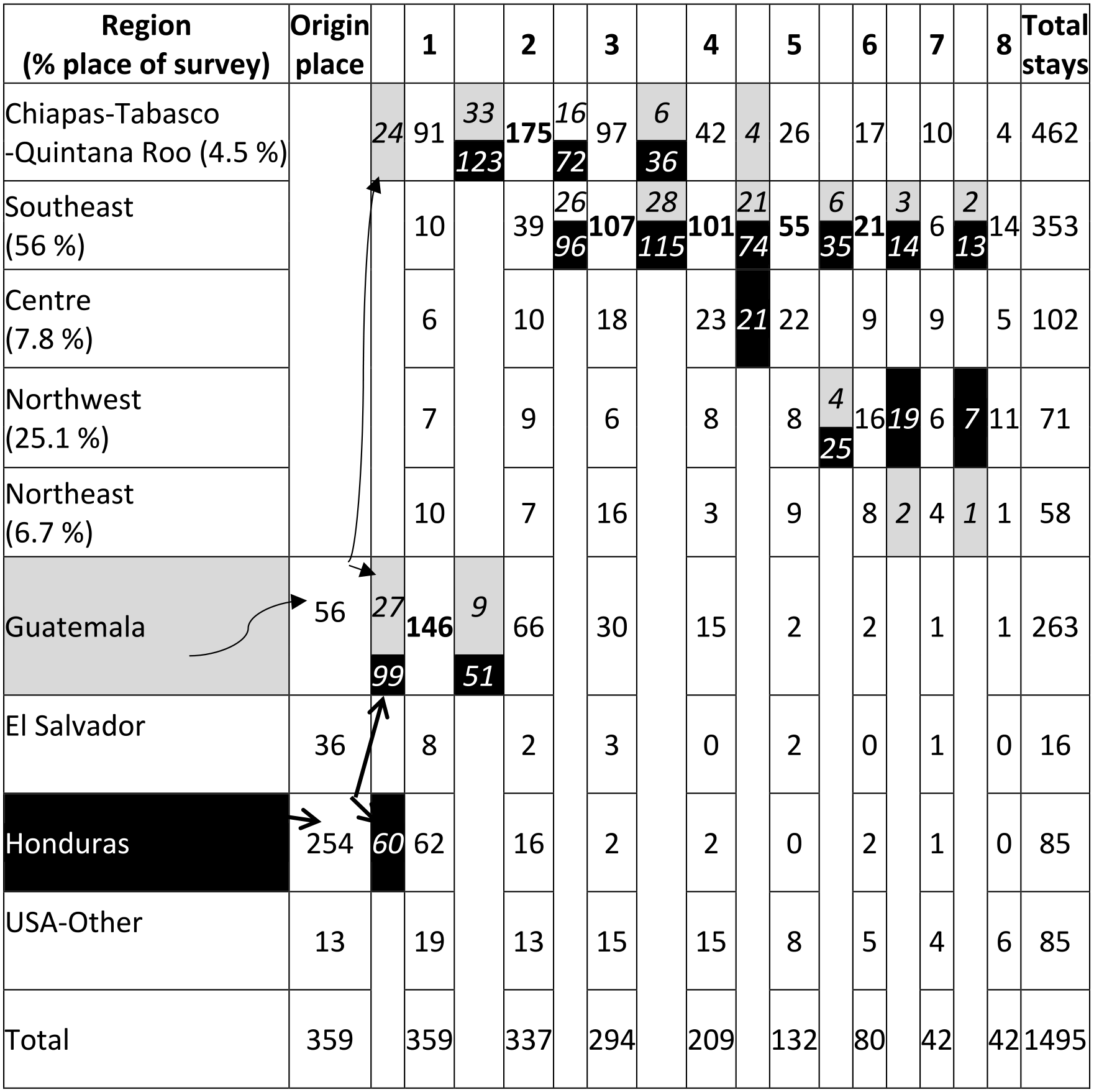
Trajectories of Migrants by Country of Origin and Region in Mexico.
Furthermore, the most frequently indicated region of the second stage is Chiapas, Tabasco, or Quintana Roo (n = 175). Here 33 of the Guatemalans, who already had one stay in Guatemala, arrived, together with 123 migrants from Honduras, who already had one stay in Guatemala. The rest of migrants that indicated Chiapas, Tabasco, or Quintana Roo as their second station (n = 29 = 175 − 146) spent their former stay in another region of the Northern Triangle, in another place of Chiapas, Tabasco, or Quintana Roo or in any of the other regions, for example, in case of having been returned to the Southern border of Mexico. For the subsequent third, fourth, fifth and sixth stages, it is highly significant that the Southeast of Mexico always is the region covering the majority for each of these stays. As the survey data and our qualitative interviews demonstrate, this is not where people wanted to arrive and settle, but the migrants were unable to move forward immediately, for example, due to strong control and surveillance of routes, climate conditions, or the need to earn additional money. After these stays, we see a preference from Honduras to migrate to the Mexican north-western border region, while Guatemalans tended to migrate to the north-eastern region.
Lastly, Figure 4 indicates that more than half of all interviewees, a total of 58 percent (n = 209) had up to four stays of a minimum of one month in their path toward the Northern Border. Even in the seventh and eighth stay each we find 42 surveyed persons, meaning that they were on their journey for minimum eight months. Considering the average time spent in each stage according to Table 2, those migrants indicating a sequence of minimum eight stays had been on the move for an average of almost four years. Out of the total of interviewed migrants, only 30 percent (n = 109) had applied formally for asylum in Mexico. Given the unregistered status of the more than two-thirds of all interviewees (n = 246), we can conclude that all these migrants lived in a highly precarious situation. Those who registered for asylum were restricted in their mobility, and could not count on substantial social assistance. Those with an unregistered status in Mexico had difficulties finding jobs, much less decent work; and criminal enterprises target them for extortion, kidnapping, rape and violent assault. But what exactly were the reported experiences of violence of these migrants?
Violence as an Everyday Part of Migrants’ Trajectory
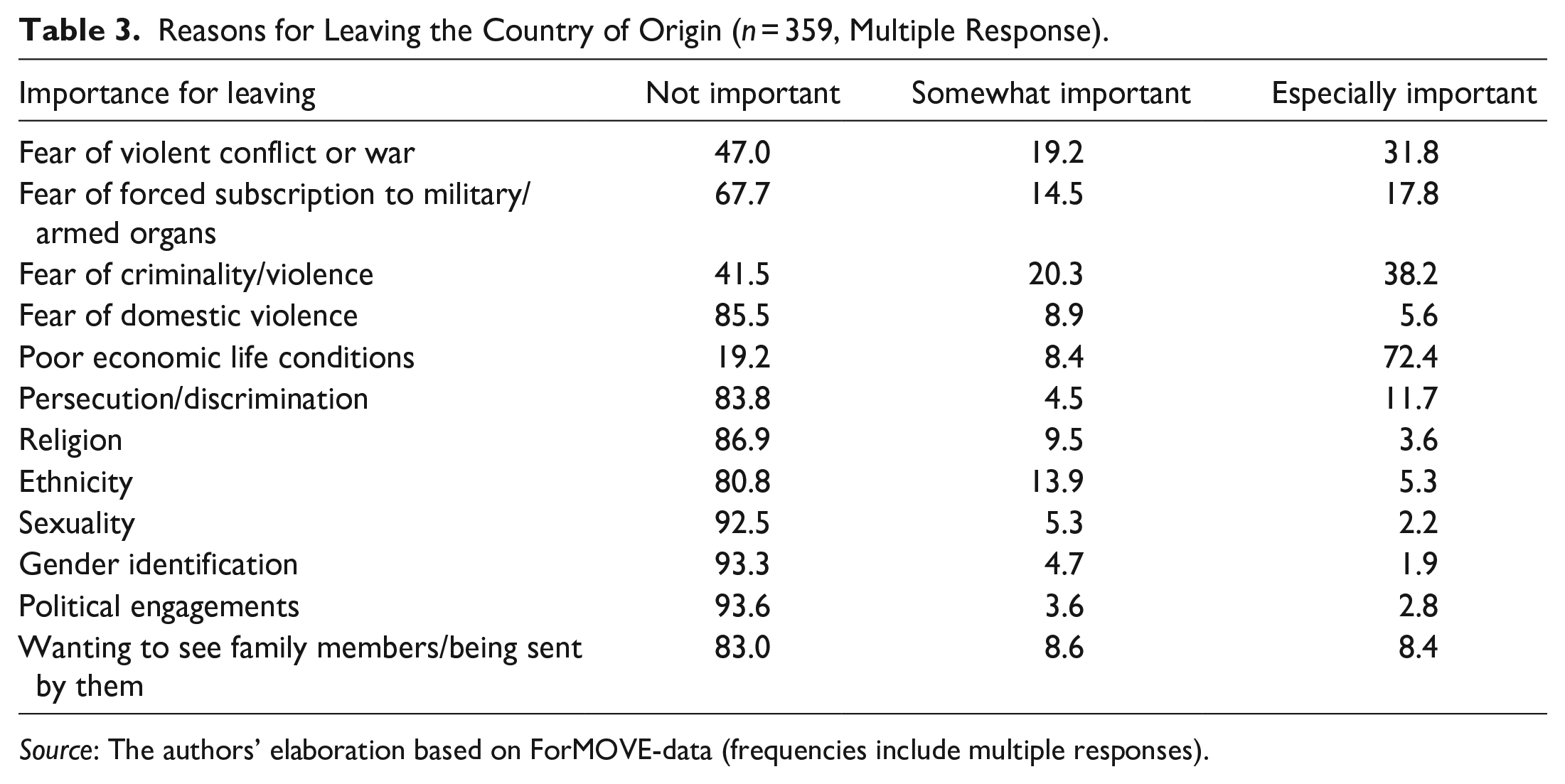
The role of violence in migrants’ trajectories seems to be a constant throughout the journey. As demonstrated in Figure 2the rate of intentional homicides is extremely high in the Northern Triangle and, since 2008, also in Mexico. These trends are additionally reflected in the individual experiences of interviewees. In the survey we asked about the importance of a broad range of reasons for leaving the place of residence in the country of origin. Table 3 shows the answers to these multiple response questions withthree options each (“not important,” “somewhat important,” and “very important”). More than half of all respondents (51 percent) indicated “fear of violent conflict or war” was a somewhat or especially important reason for leaving their country of origin. The reason “fear of forced subscription to military/armed organizations” indicated by almost one-third of all interviewees; this response reflects fear of the official armies in the corresponding countries, but also fear of being recruited to one of the multiple gangs and groups of organized violence in the Northern Triangle like Mara Salvatrucha (Meyer and Isacson 2019). “Fear of criminality/violence” was indicated as somewhat or especially important reason by 58.8 percent of all migrants — reflecting the generalized climate of violence in the countries of origin. In other possible reasons, there are substantial ingredients of violence (domestic violence, persecution/discrimination, religion, ethnicity, sexuality, gender identification, and political engagements). But somewhat at odds with qualitative literature (Medrano 2013), sexuality or gender identification were mentioned by less than 10 percent of respondents as important, whereas religion and ethnicity were mentioned to a greater degree.
Reasons for Leaving the Country of Origin (n = 359, Multiple Response).
Source: The authors’ elaboration based on ForMOVE-data (frequencies include multiple responses).
The reason most frequently identified for leaving their country of origin was “poor economic life conditions.” This could be an argument to strengthen the “mixed migration” view of Central American migration. But a deeper data analysis demonstrates that out of all 290 respondents who indicated economic reasons as important for beginning their journey, more than one-half also mentioned violence-related reasons as somewhat or especially important: 51.4 percent of this subgroup specified “fear of violent conflict or war,” and 59 percent indicated “fear of criminality/violence.” These data indicate that mixed migration flows do not mean that some migrants move only for economic reasons and others only for other reasons; rather, for these migrants there might be economic concerns, but violence is also a concern.
Therefore, the term forced migration seems much more adequate for the total population under consideration than that of mixed migration. This argument can be strengthened by a closer look at the reasons for leaving each of the sequential stays (Figure 5). For each station of the migration trajectory, we asked for the main reason for leaving from there. In Figure 3 we grouped the answers into five categories. The most frequently mentioned reason was “other,” meaning to continue the journey. Looking for work or suffering bad working conditions was the second most mentioned reason. Then, with shares from 10 to 26 percent follows the experience or fear of violence as the third most common motive for leaving. This underlines the relevance of violence in its different forms as a crucial cause and companion of migrants’ movement into and through Mexico.
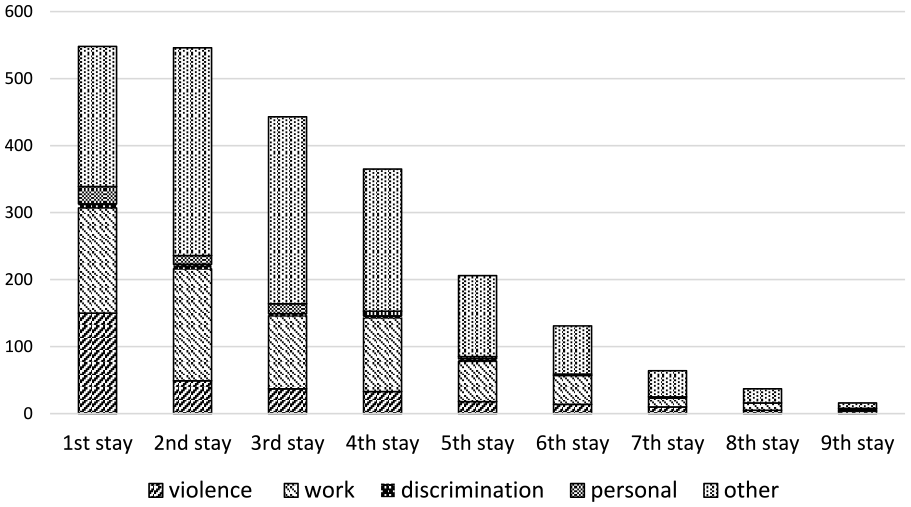
Reasons for Leaving Consecutive Stays.
Toward an Integrative Approach of Violence in Migration Studies
This paper offers a closer look at the trajectories of forced migrants from Central America who reach Mexico on their way to the United States or Canada, with a special focus on organized violence. It concludes that fear of violence is relevant at almost each stage of the migration journey, a fact not commonly acknowledged in scientific publications and public discourse. Although the migration in question is often characterized as “mixed migration,” our results suggest that this should not be interpreted as “some migrants are economic or labor migrants, and others migrate for other reasons.” First, in many of the cases experiences of household violence and of organized violence are a central driver for leaving home. At the same time, even when violence was not at play when starting, it became a crucial component of migrants’ experiences and motives for moving on in the journeys. Also considering our biographical interviews and qualitative field observations, violence is often understated because it is experienced by many as a “natural part of everyday life” or sociologically speaking as part of the everyday life in the social practice of forced migration.
As results of our empirical outcomes, we underline the understanding of forced migration as ongoing social practice and agency in situations of existentially threatening limitations. Violence and organized violence are regularly narrated and reported as “natural parts” of their taken-for-granted everyday life, they are part of their routinized social practice. Enforcement, coercion, and life threatening experiences do not lead migrants automatically to apply for asylum or to ask for other kinds of protection. Often unaware of their fundamental human rights, but aware of the everyday social practices of state authorities, most of the interviewed migrants preferred to enter other countries like Guatemala or Mexico on their way north without formal registration. These results put into question security responses to forced migration. Migrants in general search for living conditions that offer at least a minimum level of dignity. The data indicate how they manage and make their way in social and geographic spaces under restrictive conditions and limitations, including organized violence.
In conclusion our findings underline the need to integrate a view on the “objective” social situation in each of the relevant stays as events, with an analysis of the “subjective” experiences of social situations. Specific incidents and perceptions at one stay in the migration course might change motives, preferences and even frame of interpretation. Further analysis of our combined qualitative and quantitative data will shed light on this interplay, based on six different dimensions as part of this social practice in migration: (1) the specific social entanglements and relations in countries of origin, transit and arrival, (2) the processed and constantly reconstructed experiences during the migration course, (3) the socialized norms and values of migrants that also might change based on substantial new occurrences, (4) their long-term preferences, (5) the expectations of future life, and (6) the cultural, social and economic resources at hand. 9 Eventually integrating such an approach with longitudinal analysis of migrants’ trajectories and biographies might improve our understanding of migration.
The paper suggests the need to reconsider the term mixed migration. For migration from Central America to and through Mexico, there may be different reasons and motives for leaving, but violence is always involved. This forced migration could be considered mixed forced migration in the sense that the forms and levels of violence vary at different stages of the migration process. This migration is often characterized as unconstrained labor migration, not pushed by violence, but pulled by the promise of a better life in the United States. Our data suggest that forms of violence are relevant before and during the movement through Mexico. National authorities in Mexico (like the COMAR) and the United States (like the U.S. Citizenship and Immigration Services (USCIS) and Resettlement Support Centers (RSCs)), as well as international organizations such as IOM and UNHCR, should be wary of characterizing this type of migration as mixed (in the sense that many people move voluntarily and some involuntarily) when it is in fact forced migration.
Central American migrants see violence as part of their everyday lives and not always as a catalyst for irregular international movement. Thus, it becomes imperative to reassess the way we define “forced” and to analyze the migration phenomena accordingly. For situations of forced mixed migration, we propose replacing the simple push-pull-model with a more complex approach of the six dimensions (entanglements, experiences, socialization, preferences, expectations, and resources). This seems necessary to develop adequate criteria for ascribing migrant statuses and suitable action programs. Violence and public security require more attention in developmental and state policies — without adopting undemocratic practices of authoritarian militarization of societies. UNHCR, together with state agencies and NGOs, should intensify information campaigns in countries of origin and transit on the challenges during possible journeys and strengthen the network of shelters on the main routes.
Footnotes
Data Availability Statement
Research data available in 2024.
Declaration of Conflicting Interests
The author(s) declared no potential conflicts of interest with respect to the research, authorship, and/or publication of this article.
Funding
The author(s) disclosed receipt of the following financial support for the research, authorship, and/or publication of this article: Deutsche Forschungsgemeinschaft, grant PR-637_14-1
1
We very much appreciate the comments and suggestions of Donald Kerwin and the anonymous reviewers.
2
Not all these categories were included in UNHCR counting until 2000, therefore, the considerable increase in POC in Figure 1 includes both actual growth in social reality and actual increase in sensible perception according to the Thomas-Theorem “If men define situations as real, they are real in their consequences.” (Thomas and Thomas 1928, 572); see  .
.
3
For world population see UNFPA (https://www.unfpa.org/world-population-trends), for international migration stock see UNDESA (https://www.un.org/development/desa/pd/content/international-migrant-stock) and for people of concern see UNHCR ().
4
For legal provisions and the practice of the law see, for example, https://cis.org/Luna/Mexicos-Refugee-Law; .
5
The international regime of refugee protection established after the more than 60 million military and civilian deaths and tens of millions of displaced and expelled persons of World War II in the Geneva Convention of 1951 and the subsequent Protocols of 1967 and 1977 (Elie 2014, 28f). As a crucial achievement of the international governance structure, it should be defended and extended; nevertheless, it covers an ever-decreasing part of people forced to leave their residence, for example, Goodwin-Gill 2013; for climate change and forced migration see, for example, .
6
This relates to the Thomas-Theorem already mentioned in footnote two.
8
9
For an overview of routes see, for example, REDODEM 2022, 184, , 3 and 21ff.