




Abstract
This article examines how Aristotelian rhetorical principles—ethos, pathos, and logos—can help manage social media outrage in complaint handling by translating them into defensive and accommodative response strategies commonly used in service recovery. Two online experiments evaluated four strategies for their effects on complainants’ moods: (a) blame-shifting; (b) promising action; (c) apologizing; and (d) a combination of empathy, apology, and promise. The results showed that accommodative strategies were more effective than defensive ones, with the combination of empathy, apology, and promise as the most effective. The findings suggest incorporating rhetorical training in business communication to enhance response efficacy.
Introduction
Social media communication has changed how organizations interact with their publics. They enable organizations to engage in symmetric dialogic communication with individuals (Capriotti et al., 2020). Particularly in the case of handling customer complaints, also known as webcare, scholars emphasize the importance of the conversational human voice (Liebrecht et al., 2021). Corporate social media refers to a company’s use of social platforms for branding, marketing, and communication, and corporate social media research typically stresses an “interactive attitude,” “responsiveness,” and “conversation” that a firm should display, but it seldom explains how these concepts should be used in practice (Vernuccio, 2014). Puschmann and Hagelmoser (2015) state that social media challenge the stakeholders involved in their use and force them to develop new communicative approaches. Companies are under pressure to reconcile new ways of sharing and socializing with their established communication strategies (see also Einwiller & Weitzl, 2023).
In this article, we will focus on how companies respond to customers’ outrage vented on social media. Complainants’ outrage may exacerbate and result in a corporate crisis, and therefore, it is important to respond in an adequate, deescalating way (Marcus & Goodman, 1991). According to Coombs (2006, 2007), two main response strategies exist: a company may accept responsibility, or take remedial action, or both; this is called an accommodative strategy. Alternatively, the company may use a defensive strategy, claiming there is no problem or denying responsibility (Marcus & Goodman, 1991). This dichotomy between defensive and accommodative strategies has been extensively researched in the complaint handling literature. Recently, Lopes et al. (2023) provided an overview of corpus-based, experimental, and survey-based studies that aim to identify the most effective communication strategies for handling dissatisfied customers expressing their outrage on social media. However, the findings present a mixed picture, possibly because operationalizations of this dichotomy rarely focus on the generalizable linguistic aspects of defensive or accommodative strategies, and even fewer studies examine the effect of combining multiple strategies. In most cases, such studies focus solely on speech acts like apologies or denials, rarely addressing the underlying rhetorical principles that inform these strategies. For business apprentices, this makes it challenging to generalize from specific complaint scenarios and apply the tactics effectively in other contexts.
This article is significant for two reasons. First, it highlights the lack of focus on rhetorical aspects in service recovery literature (Anwar & Ozuem, 2022; Gyung Kim et al., 2010; Krishna et al., 2011; Van Vaerenbergh & Orsingher, 2016), which has predominantly emphasized informational strategies. The relatively new research avenue of “conversational human voice” in complaint handling demonstrated that tone, style, and expressions of feelings matter in relationship management. However, integrating defensive versus accommodative dichotomy with principles from classical rhetoric has not been explored. Second, no previous study has investigated the effectiveness of combining multiple accommodative strategies in improving the customer’s mood and perception. Previous research has only examined single strategies or combinations of accommodative and defensive strategies.
This study takes a different approach by positioning Aristotelian rhetoric within the framework of crisis communication. It builds upon and translates scholarship from the field of classical rhetoric by applying its foundational principles—ethos, pathos, and logos—to the specific context of corporate communication, particularly in customer complaints management. We propose a model that tests how specific response strategies affect customers’ perceptions of their mood, mind, and purchase intentions, considering the company’s blame and the perception of failure.
A key characteristic of social media platforms is the large number of “lurkers”—users who rarely participate in interactions but whose opinions can still be influenced by the company’s responses. Is it more effective to tailor the company’s response to the expectations of these bystanders rather than focusing solely on the actual complainant? This aspect will be addressed in the second part of the article.
The aims of our study are (a) to test the effects of self-oriented, defensive strategies versus other-oriented, accommodative strategies on the customer’s mood and mindset; (b) to examine the impact of using multiple other-oriented, accommodative responses on the customer’s mood and mindset; (c) to determine whether these strategies have the same effect on bystanders as they do on complainants; and (d) to demonstrate how Aristotelian theory can inform business communication pedagogy.
The article is structured as follows: the first section reviews literature on experimental deescalation techniques in complaint handling. The first study examines the effect of rhetorical strategy on changing attitudes related to indignation and accountability. The second study investigates the effect of rhetorical strategy on the appropriateness of responses and purchase intention, considering perception of failure as a moderator. Additionally, it examines how a customer’s perspective differs from a bystander’s perspective. Finally, the article concludes with recommendations for teaching deescalation strategies in service management and other areas of company-customer relationships.
Study 1: Theoretical Background and Hypotheses
Online discontent is a major issue for many Internet-based companies. Negative experiences shared on social media can severely damage a company’s reputation. Therefore, many companies professionalize their service recovery communication to address client feedback online. Webcare communication is crucial as it allows for timely, public, and personalized interactions with consumers, enhancing transparency and humanizing the webcare provider (van Noort et al., 2015). It is less formal than traditional channels, enabling companies to be more customer-friendly.
There is a substantial body of literature on handling online complaints, significantly influenced by the conversational human voice (CHV) approach, which describes the preferred tone of voice in complaint handling: conversational (i.e., not formal) and human (i.e., not mechanical) (Depraetere et al., 2021; Javornik et al., 2020; Trosborg & Shaw, 1998; Van Noort et al., 2015; You et al., 2020; Zhang & Vásquez, 2014). Several meta-analyses have reviewed speech acts and other linguistic features such as apologies or understaters that were used to implement CHV (Cenni & Goethals, 2020; Liebrecht et al., 2021; Page, 2014; Van Herck et al., 2020). However, none of these studies refer to classical rhetoric to inform their classifications or recommendations. Operationalizing CHV can benefit from classical rhetoric, where ethos and pathos guide webcare employees in choosing stylistic options. (Corbett et al., 1998; Heinrichs, 2017; Koszowy et al., 2022). In Aristotelian rhetoric, pathos refers to the emotional appeal of messages, while ethos represents the character and virtue of the sender—in this case, the company. Since humans are often driven more by emotions than by logic, it is crucial in company-customer relationships to focus on the relational aspect of interactions rather than just on the informational dimension. The same applies to a company’s brand reputation, which is where ethos plays a key role. In the long term, investing in the company’s credibility is essential.
If business communication experts understand how appeals to logos, pathos, and ethos can enhance the quality of professional interactions—precisely because they provide an interpretive framework that can be applied across various domains—there’s no need to memorize specific expressions or formulations. Instead, interactions can be varied and diversified by aligning them with these appeals. Therefore, teaching the principles of classical rhetoric to business communication students can significantly enhance their ability to effectively deescalate extreme or negative feedback on social media.
Managing emotions and protecting brand reputation is crucial when handling complaints. Calming the emotional outrage of customers who vent their discontent online is one of the first steps. When examining the deescalation potential of complaint handling strategies in online interactions, we focus on whether rhetorical strategies succeed in reducing customer indignation.
Most experimental studies on response strategies to online complaints focus on behavioral measures, such as response versus no response (Is there a response or is it lacking?), timely versus late response (Does the response follow right after the complaint, or is there a time lapse?) or managerial versus consumer response (Who responds?) (see Lopes et al. [2023] for an overview). Given the primarily verbal nature of social media, this predominantly behavioral advice seems somewhat odd. Of the 77 studies reviewed in Lopes et al. (2023), only 10 operationalize what can be seen as a rhetorical dimension of complaint handling: the distinction between defensive and accommodative strategies, which are based on Coombs (2006, 2007) and Marcus and Goodman (1991). Defensive strategies involve dismissing, denying, or shifting blame, whereas accommodative strategies involve acknowledging, explaining, apologizing, compensating, suggesting corrective actions, or showing attentiveness (Sparks & Bradley, 2017). Defensive strategies are self-oriented, whereas accommodative strategies are customer-oriented. In classical rhetoric, ethos suggests that demonstrating disinterest in oneself and showing competence, concern, and commitment (phronesis, eunoia, and arete) enhances one’s virtue and reputation (see Corbett et al., 1998, pp. 93–99; Heinrichs, 2017, p. 264).
Studies typically compare one defensive strategy to one accommodative strategy, yielding mixed results. Some find accommodative strategies more effective (Casado-Díaz et al., 2020; W. Weitzl & Hutzinger, 2017; W. Weitzl et al., 2018), whereas others report mixed results or find defensive strategies effective (Li et al., 2018; S. Liu et al., 2021). Johnen and Schnittka (2019) even found that defensive strategies sometimes worked best. It may be that these studies did not consider the emotional or reputational dimensions (i.e., the appeals to pathos and ethos), which may explain their mixed findings. We propose to test the effectiveness of defensive strategies as self-oriented tactics versus several accommodative, other-oriented tactics. Therefore, we expect to find that:
Hypothesis 2: Self-oriented, defensive strategies result in more indignation from the complainant compared to other-oriented accommodative strategies.
Lopes et al. (2023) identify “combining strategies” as an underresearched topic. To our knowledge, Dens et al. (2015), Van Hooijdonk and Liebrecht (2021), and Lee and Cranage (2014) are the only studies testing combinations of strategies. Dens and colleagues found that an assemblage of strategies worked best in the case of preceding negative word-of-mouth messages (Dens et al. (2015). Van Hooijdonk and Liebrecht (2021) discovered that an apology was most effective when combined with both accommodative and defensive strategies. Lee and Cranage (2014) expected more attitude change from combining an apology with defensive and accommodative moves than from no message at all, but this expectation was not met. Notably, these studies combined a defensive and an accommodative move but did not accumulate several accommodative strategies. Classical rhetoric shows that using multiple arguments leads to persuasive success (Corbett et al., 1998; Heinrichs, 2017).
Hypothesis 2: An assemblage of other-oriented accommodative strategies results in less indignation regarding the initial post compared to single other-oriented accommodative strategies.
One possible explanation for the mixed findings on defensive versus accommodative strategies may be attributed to the company’s accountability for the failure. Greater company fault may increase the need for accommodative strategies (see also Bhandari & Rodgers, 2019; Kniesel et al. 2016). Therefore, we expect attributed blame to moderate the effect of stylistic variation on the complainant’s indignation.
Hypothesis 3: The effect of response strategies on attitude change with the complainant is moderated by attributed blame.
No studies have asked customers what they believe are the best response strategies. Given the prevalence of online complaints, social media users are knowledgeable about effective company responses. Thus, our research question is:
Research Question 1: What response strategies are suggested by social media users?
Study 1: Method
To test the hypotheses, an online experiment was conducted.
Participants
Participants were recruited through the university’s research participation system (SONA) and received 0.25 laboratory credits for their participation (n = 116). Additionally, the survey was launched on Facebook, and participants were invited via snowball sampling (n = 36). Those who wished to win a 25-euro scratch card could do so by ticking a box and providing their email address. A total of 152 participants took part in the study, with 78.9% identifying as women and 1% self-describing their identity. Participants’ birth years ranged from 2003 (18 years old) to 1976 (45 years old). Education levels varied from secondary education (HAVO/VWO in Dutch) to higher vocational education (HBO in Dutch). One participant declined to disclose their highest level of education, and another indicated pursuing a master’s degree. The largest subgroup reported making online purchases once a month (71.1%). Overall, 14.5% had experience posting a negative comment about a company on social media. These and the sociodemographic variables did not influence the outcome of Study 1.
Material: vignettes
Participants evaluated three scenarios:
Scenario 1: They imagined ordering a new refrigerator, removing the old one, and expecting the new one to arrive as promised, which did not happen.
Scenario 2: They imagined purchasing an expensive laptop, which was left outdoors in the rain by the delivery service, causing it to malfunction.
Scenario 3: They imagined informing a webcare employee that a TV set could be purchased 150 euros cheaper elsewhere, receiving a dismissive response: “If you see it cheaper elsewhere, then buy it there, you stinker.”
Each scenario was followed by a question assessing the extent to which participants blamed the company: “In this case, I blame Company X because they are (partly) responsible for this.” Responses were recorded on a 7-point Likert scale ranging from strongly disagree to strongly agree.
Next, participants were asked to evaluate four potential responses to an imaginary social media post expressing their outrage. Each response contained a baseline message, based on Einwiller and Steilen (2015), who identified inquiring for further information as the most commonly used strategy in practice (essentially an appeal to logos). They categorized apologies and corrective actions as typical accommodative responses, and indeed, both can be considered other-oriented strategies (Van Mulken, 2024). Both an apology and a promise of corrective action are appeals to ethos (commitment); the intensifications in the responses are expressions of emotions, especially the expression of empathy in Assemblage (appeals to pathos). The assemblage of other-oriented, accommodative strategies included an apology, an invitation for further contact, acknowledgment of the issue, and a commitment to take action.
Response_shift blame: “@customerX It is perhaps not very smart to discard your refrigerator before receiving the new one? Please send us a DM with your order number, we can help you further.“
Response_apology: “@customerX We are very sorry that you are now in this situation. If you send us a DM with your order number, we can help you further.“
Response_take_action: “@customer If you send us a DM with your order number, we will take immediate action to ensure your package is delivered tomorrow.“
Response_assemblage: “@customerX We are very sorry that you are now in this situation. I apologize for the delay in your refrigerator delivery. If you send us a DM with your order number, we will take action to ensure your order is delivered tomorrow.“
After each response, participants were asked to rate their feelings using three 7-point Likert scale statements: “If this were Company X’s response, I would feel less upset/dissatisfied/annoyed . . . more upset/dissatisfied/annoyed.” Internal consistency was high (reliability score >.85), and a new variable, Indignation, was created.
Participants were also invited to respond to an open-ended question suggesting the best possible approach for handling complaints on the Internet. Responses were analyzed by two raters and categorized as “take corrective action,” “offer apologies,” “show empathy,” and “other” (Cohen’s kappa > 0.8).
Procedure
The survey was developed using Qualtrics (Qualtrics, Provo, UT). Before answering the questions, participants were informed about the experiment’s purpose and were asked to sign a consent form in accordance with the university’s ethical procedures, which were approved by the university’s ethics committee.
Manipulation Check: Attributed Blame
We checked whether the three vignettes differed in terms of attributed blame. This variable was measured using a 7-point Likert scale: “If this happens (delivery is too late), I blame Company X because they are (partly) responsible for this,” with responses ranging from 1 (I do not agree at all) to 7 (I very much agree), based on W. Weitzl et al. (2018). The three scenarios indeed differed significantly from each other. Results showed that the extent to which subjects attributed blame to the company varied significantly between cases, F(2, 1821) = 202.02, p < .001. The post hoc Bonferroni test indicated that participants scored Company Blame significantly lower in Case 2 (package delivered to the wrong address) (M = 4.43, SD = 1.98) compared to Case 1 (delivery too late) (M = 5.21, SD = 1.28) (p < .001), and significantly lower than in Case 3 (customer scolded) (M = 6.24, SD = 1.37) (p < .001). Additionally, the company’s accountability score was significantly higher in Case 3 than in Case 2 (p < .001).
Data Analysis
Data were analyzed using linear mixed effects regression with respondents and stimuli as random effects, and Experienced Deescalation as the dependent variable. The predictor variable was Response Strategy (Shift Blame, Corrective Action, Apologize, and Assemblage of strategies) and Company Blame (low, intermediate, and high). The analysis was conducted using RStudio, an interface for R (RStudio Team, 2020). The open-ended question was coded for four answering categories (see below). Interrater agreement was almost perfect (McHugh, 2012) (Cohen’s kappa .83, disagreement was resolved after discussion).
Study 1: Results
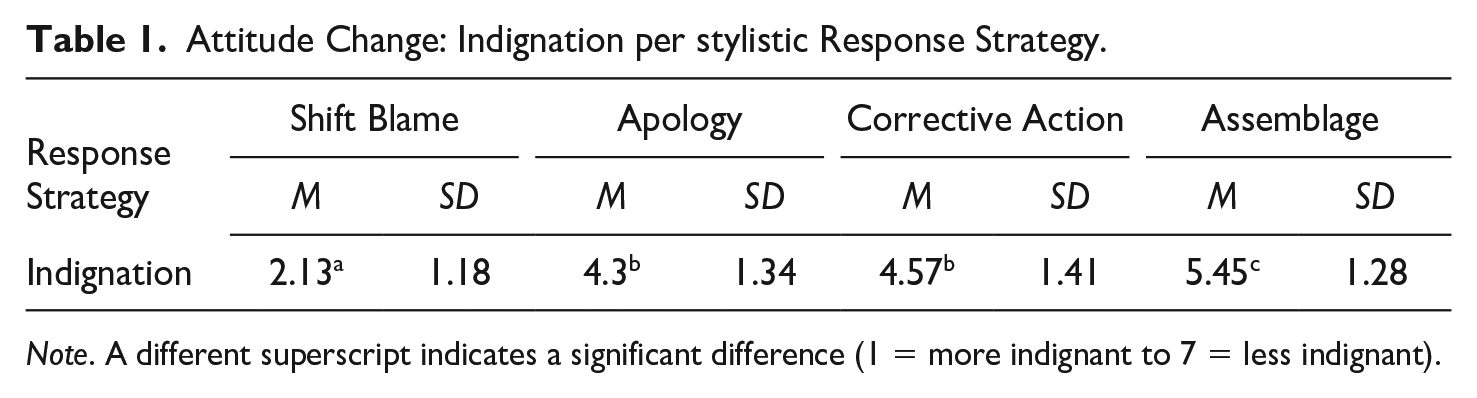
Table 1 presents the means and standard deviations of the variable Indignation for each Response Strategy.
Attitude Change: Indignation per stylistic Response Strategy.
Note. A different superscript indicates a significant difference (1 = more indignant to 7 = less indignant).
The analysis showed an interaction effect of Response Strategy and Attributed Blame, F(3, 1669.4) = 9.71, p < .001. Post hoc analyses (Bonferroni) showed that when Attributed Blame was high, this led in the case of Shift Blame to more indignation than when an Apology, Corrective Action, or an Assemblage was used.
There also was a main effect for Response Strategy, F(3, 1669.4) = 33.57, p < .001. When an Assemblage was used, Indignation was lowest, followed by Apology and Corrective Action, and then by Shift Blame. The response strategies differed significantly from each other except Corrective Action and Apology.
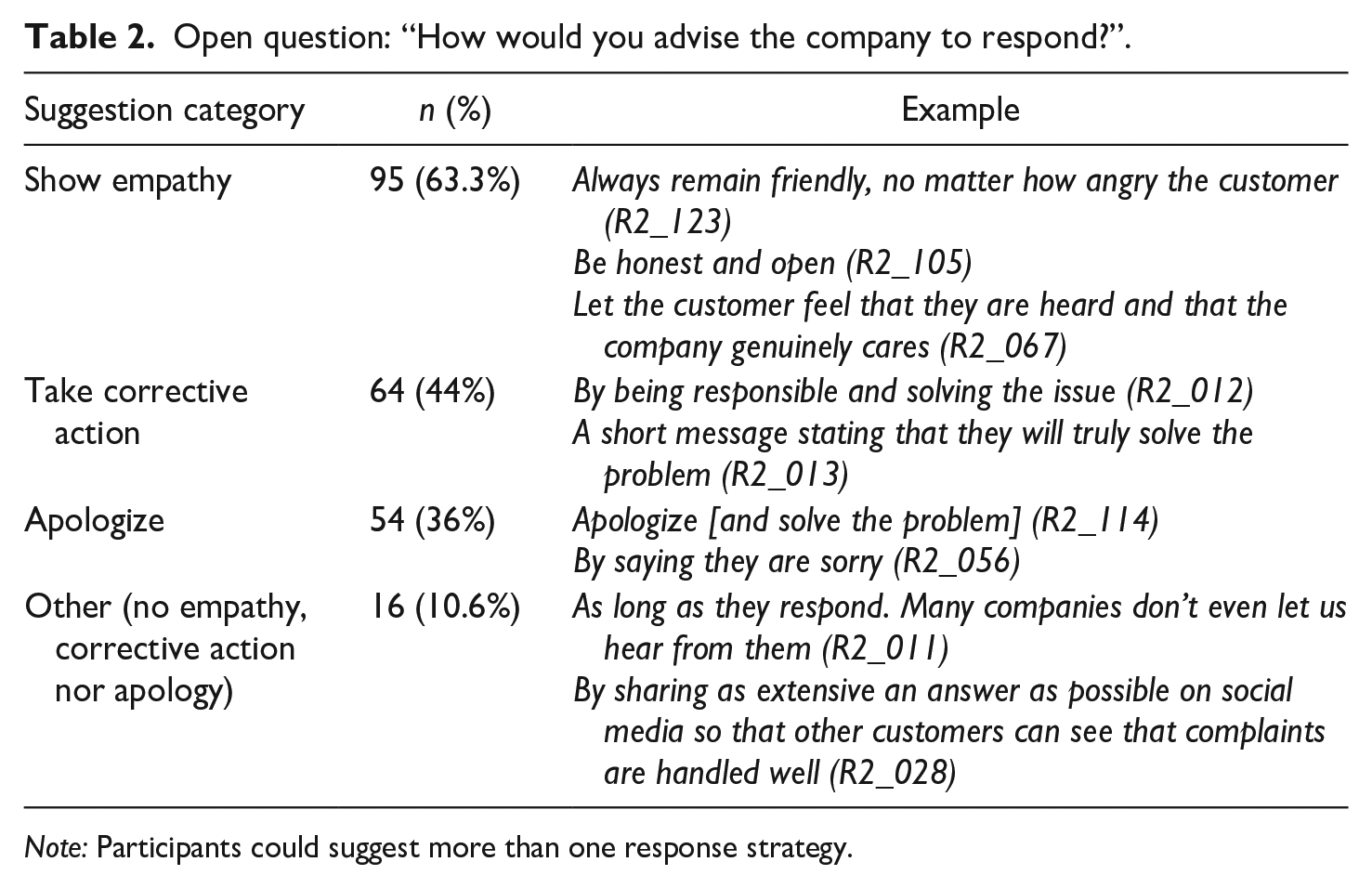
In an open question, participants were also asked how they would advise companies to respond to complaints. We acknowledge that participants may not always have been self-aware enough to react reasonably to a company’s response, but the inventory of suggested reactions is still noteworthy. Table 2 presents examples of customer responses. The majority of respondents recommended that companies take immediate action. In 63.3% of cases, respondents suggested resolving the issue, adopting a cooperative stance, and showing helpfulness toward customers (95 instances). Only 36% of respondents suggested offering an apology (54 instances), whereas 44% strongly recommended showing empathy toward the customer (66 instances). Interestingly, empathy is not mentioned in the accommodative or defensive strategies identified by Coombs and Holladay (2008), Einwiller and Steilen (2015), and Marcus and Goodman (1991). Among the suggestions categorized as “other” were recommendations for timeliness and openly acknowledging the issue.
Open question: “How would you advise the company to respond?”.
Note: Participants could suggest more than one response strategy.
Study 1: Conclusion and Discussion
The first experiment showed that a self-oriented defensive strategy impacts the customer’s indignation. If a company tries to shift the blame to someone else, to an intermediate party, or to the complainant themselves, it backfires, increasing indignation instead of appeasing it. The experiment also demonstrated differences in the effectiveness of other-oriented, accommodative strategies. Single accommodative strategies are less effective than an assemblage of accommodative strategies. We also found that attributed blame moderates the effect of a strategy on customer indignation. Therefore, Hypotheses 1, 2, and 3 can be accepted.
The preference for accommodative strategies over defensive strategies has been found in previous studies (Casado-Díaz et al., 2020; W. Weitzl & Hutzinger, 2017; W. Weitzl et al., 2018). We did not observe a deescalation effect for shifting blame, which was our operationalization of a defensive strategy. The more the company is to be held responsible, the more intense the respondent’s outrage.
The promise to take corrective action and the incentive to offer apologies were also the two most often mentioned suggestions by our participants. In addition, they very often suggested showing empathy toward the complainants—and this can be qualified as typical of appeals to pathos. This particular strategy is surprisingly not mentioned in the accommodative/defensive literature (see Javornik et al., 2020; Min et al., 2015; but see Van Herck et al., 2021; Van Mulken, 2024).
We also found that using a single accommodative strategy had less of a deescalating effect than the assemblage of accommodative strategies. We found that combining single accommodative strategies with an expression of empathy worked best as a deescalation strategy: customers were less indignant when an assemblage was used. In their review study, Lopes et al. (2023) highlighted that the effectiveness of combining strategies is an under-researched area. In this study, we hope to have addressed this research gap.
Study 2: Theoretical Background and Hypotheses
In Study 2, we hope to replicate the findings for the emotional and ethical appeals (pathos and ethos) in complaint handling, by complementing them with appeals to logos, such as estimated appropriateness and purchase intention.
In Study 1, we did not find any evidence for the superiority of a self-oriented, defensive strategy, as was found in Johnen and Schnittka (2019). In their study, however, participants were required to take the perspective of observers or bystanders. It can be expected that bystanders are more open to putting themselves in the position of the complainee than the initial complainant, as they are likely less indignant than the customers who actually experienced the mischief. Bystanders may also be more sensitive to mitigating circumstances, and if a complaint is perceived as unjustified in their eyes, they might understand the company’s viewpoint and view defensive strategies as more suitable and appropriate (Hennig, 2016; Koszowy et al., 2022). This aligns with another as yet underresearched question raised by Lopes et al. (2023): does it matter whether participants are asked to imagine themselves in the role of a dissatisfied customer or as a bystander, someone who is not directly involved?
In the literature on deescalation, scholars distinguish the position of the victim/complainant from that of the bystander (Chang et al., 2015; Coyne et al., 2019; García-Ramírez, 2016; Kim et al., 2016; Markey, 2000; W. Weitzl & Hutzinger, 2017): if one is not the person on whom a mischief is inflicted, the impact of the complaint is smaller, and the need for compensatory action is reduced. In matters of online service management, the presence of onlookers and their evaluation of public responses to complaints are crucial for the future choices of the company in question, and reputation management may benefit from adequate responses to complaints (Kim et al., 2016; Sparks et al., 2016). W. Weitzl and Hutzinger (2017) show that credible, defensive responses might even strengthen bystander-brand relationships. Therefore, we were interested in determining whether there is a difference in the assessment of complaint handling by complainants (or individuals asked to imagine themselves in the position of a complainant) and bystanders (or individuals asked to imagine themselves in the position of a bystander to a complaint handling). Bystanders are better positioned to weigh the severity of the complaint and the appropriateness of the company’s response than the complainant, because they are a neutral party. They can also relativize the outrage of the initial complainant.
Hypothesis 4: Indignation will be lower when respondents are requested to imagine themselves in the position of a bystander than in the position of a complainant.
In Study 1, respondents were asked to what extent their indignation would change after reading the company’s response strategy, using three Likert scales: “annoyed,” “upset,” and “(un)satisfied.” In Study 2, we aimed to replicate the findings of Study 1 concerning bystanders (i.e., a replication of Hypotheses 1 and 2). Now we investigate the effect of responses to more rational appeals, specifically appeals to logos. Study 2 tests the extent to which bystanders consider the company’s response appropriate. The adequacy of the response (Jacobs & Liebrecht, 2022; van Noort et al., 2015) and experienced appropriateness (Gretry et al., 2017; W. J. Weitzl, 2019) are dimensions that have been shown to affect the rational appeal of the response. Along the lines of study 1, we expect that
Hypothesis 5: Self-oriented, defensive strategies are evaluated as less appropriate than other-oriented accommodative strategies
Hypothesis 6: An assemblage of other-oriented accommodative strategies is evaluated as more appropriate than single other-oriented accommodative strategies.
Purchase intention is another variable that is often researched in the context of service management. Johnen and Schnittka (2019), Li et al. (2018), and Tathagata and Amar (2018), for instance, have found that if companies fail to respond to a complaint, customers and bystanders are less willing to buy. It has not yet been investigated to what extent the stylistic form of the response affects the purchase intention.
Hypothesis 7: Self-oriented, defensive strategies lead to a lower purchase intention than other-oriented, accommodative strategies
Hypothesis 8: An assemblage of other-oriented accommodative strategies lead to a higher purchase intention than single other-oriented, accommodative strategies.
In Study 1, it was found that if participants felt that the company was to blame for the complaint, this impacted the effect of the response strategies, but attributed blame was not a moderator. However, it may not be so much the responsibility for the inconvenience but the magnitude of what happened that influences how complainants and bystanders shape their attitudes. In Study 2, we decided to investigate the impact of the severity of the failure, following Chang et al. (2015), Dunning et al. (2004), H. Liu et al. (2019), and Tathagata and Amar (2018). Tathagata and Amar (2018) signal that researchers have not paid sufficient attention to examining whether, and to what extent, perception of failure affects consumer perceptions in the domain of webcare. They showed that perception of failure is an important determinant of outcome variables such as trust, commitment, and negative word-of-mouth. Here, we want to assess the impact of perception of failure on attitude change of the bystander, purchase intention, and the estimated appropriateness of the response.
Hypothesis 9: Severity of failure moderates the effect of response strategies on indignation, estimated appropriateness, and purchase intention with the complainant.
Study 2: Method
Again, an online experiment was used to test the hypotheses.
Material: vignettes
The same vignettes were used as in Study 1, except participants were asked to imagine that the three situations occurred to one of their friends. The operationalization of attitude change was similar to the one in Study 1: “If this had happened to a friend of mine, and this was the company response, I would feel less upset/dissatisfied/annoyed . . . more upset/dissatisfied/annoyed” on 7-point scales. Internal consistency was high (Cronbach’s alpha > .88), allowing for the creation of a new variable. Three additive questions were asked to measure Appropriateness. Participants were asked to what extent they thought the company’s intervention was adequate, helpful, or fitting on three 7-point Likert scales. Internal consistency was excellent (Cronbach’s alpha > .92), resulting in a new variable, Appropriateness. Purchase Intention was measured by the question: “Based on this response from the webcare employee, I would be willing to make a purchase from company X” on a 7-point Likert scale. Additionally, participants were required to assess the severity of the failure on a 7-point Likert scale: “I think company X is responsible for a serious service failure.”
Participants
Participants were recruited via Prolific, an online research platform that recruits respondents through the Internet. Respondents were paid the equivalent of £1.08.
Of the 150 participants, 78 (52%) identified as male, 68 (45.3%) as female, and 4 (2.7%) listed their identity in their own words. The year of birth ranged from 2003 (21 years old) to 1982 (42 years old). The level of education ranged from secondary education (HAVO/VWO in Dutch) to higher vocational education (polytechnic) (HBO in Dutch). Following W. Weitzl et al. (2018), participants were asked to indicate whether they often ordered packages via the Internet, whether they had contacted a company via DM, or whether they had ever complained about service on the Internet (7-point Likert scales). Only 2 participants (1.3%) indicated that they had never ordered via the Internet. Of the 150 participants, 47 (31.3%) indicated they had ever sent a Direct Message (DM) to a company, and 40 (26.7%) had experience posting a negative comment about a company on social media. These outcomes nor the sociodemographic variables did influence the findings in Study 2.
Procedure and Data Analysis
The procedure and the data analysis were the same as in Study 1.
Study 2: Results
Attitude Change in Indignation: Experiment 1 Versus Experiment 2
We expected to find a difference between the scores for Attitude Change in Indignation in Experiment 1 and Experiment 2. In Experiment 1, participants were asked to imagine themselves in the situation of the complainant, whereas in Experiment 2, participants were asked to put themselves in the position of a bystander, someone who knows or has a friend to whom the situation described in the vignette occurred. There was no effect of Experiment (F < 1, p > .05), and therefore Hypothesis 4 is refuted. To compare both groups of participants, a TOST paired sample two one-sided test procedure was conducted. The results reject the null equivalence hypothesis, t(3522) = 8.2, p < .001 (Lakens, 2013).
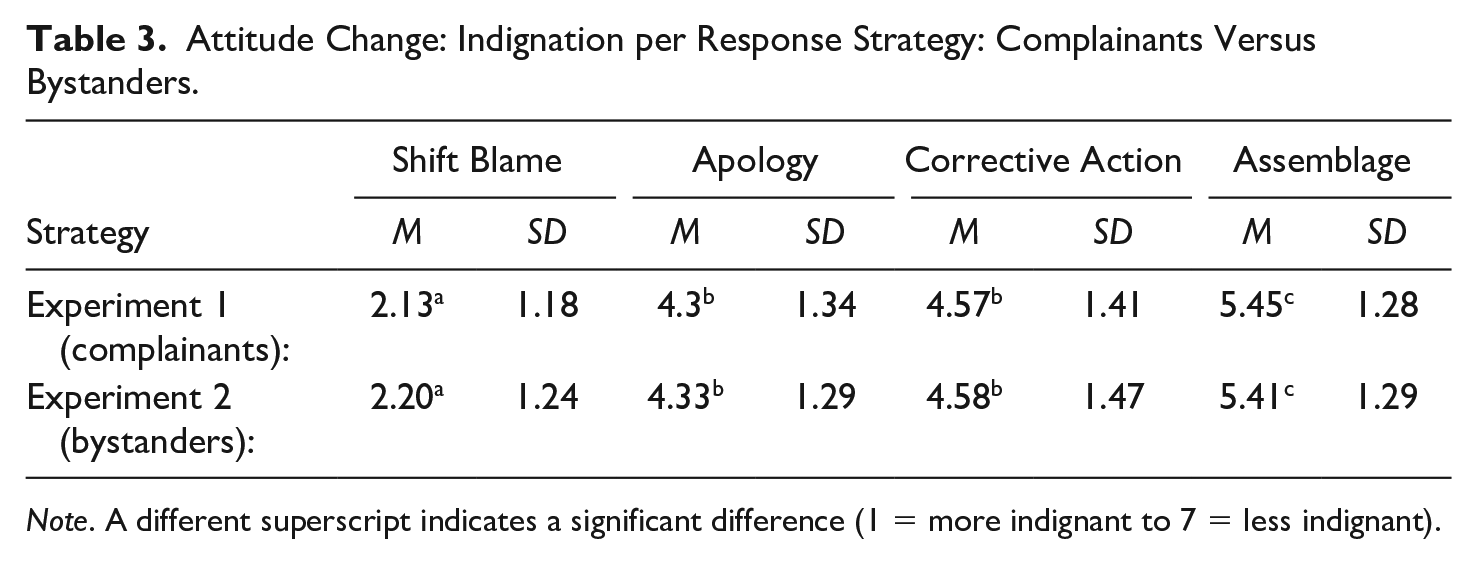
We found no interaction effect for Perception of failure and Indignation. As in Experiment 1, there was a main effect of Response Strategy, F(3, 1647.73) = 85.47, p ≤ .001, and the attitude change for the different types of Strategy differed significantly (see Table 3), similar to what we found in Experiment 1.
Attitude Change: Indignation per Response Strategy: Complainants Versus Bystanders.
Note. A different superscript indicates a significant difference (1 = more indignant to 7 = less indignant).
Pairwise comparisons (Bonferroni) showed that when the Shift Blame strategy was used, participants were significantly more indignant than when an Apology, Corrective Action, or an Assemblage was used. Apology did not differ significantly from Corrective Action. When an Assemblage was used, participants were less indignant than when a Shift Blame, an Apology, or a Corrective Action was used.
There was also a main effect of Perception of failure, F(1, 825.71) = 32.64, p ≤ .001. So when Perception of failure was considered low, Indignation was estimated to be less intense compared with when Perception of failure was considered high.
Appropriateness
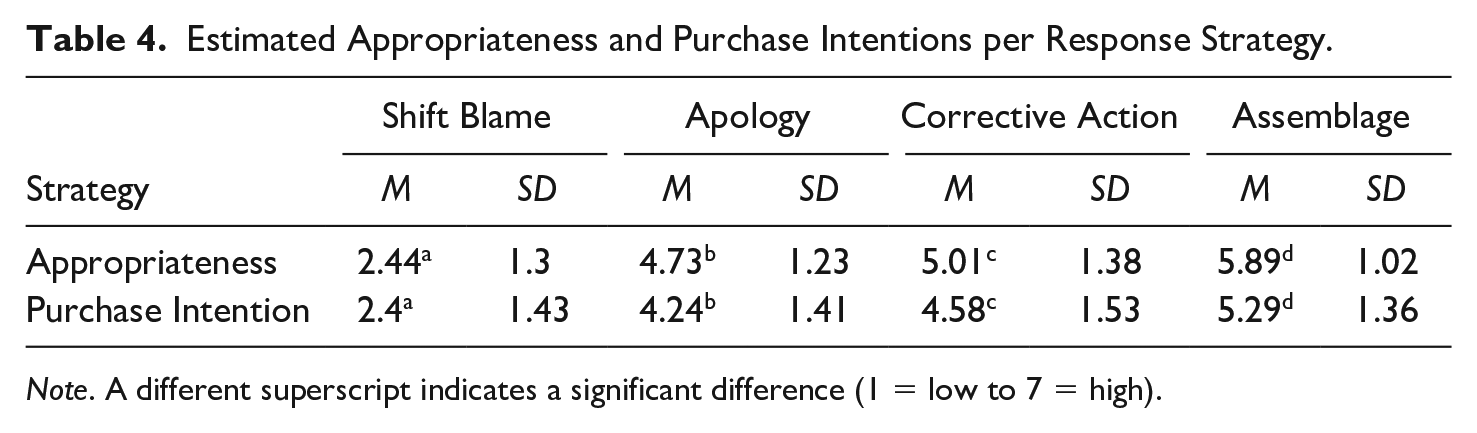
Table 4 presents the means and standard deviations for Appropriateness and Purchase Intention per Response Strategy.
Estimated Appropriateness and Purchase Intentions per Response Strategy.
Note. A different superscript indicates a significant difference (1 = low to 7 = high).
With regard to estimated Appropriateness of the responses, we did not only find main effects but also an interaction. Perception of failure interacted significantly with the Response Strategy, F(3, 1647.74) = 4.82, p = .002, and there were main effects for Response Strategy, F(3, 1647.68) = 273.87, p ≤ .001, and for Perception of failure, F(1, 914.88) = 24.62, p ≤ .001.
We see then that in case of a Shift Blame when Perception of failure is lower, the estimated Appropriateness increases. There was a small interaction with Corrective Action: when the Perception of failure increases, the Appropriateness of Corrective Action is felt as more justified. However, when an Assemblage is used, this phenomenon is even larger: when the Perception of failure increases, the Appropriateness of an Assemblage is felt as even more to the point.
Pairwise comparisons (Bonferroni) showed that Shift Blame scored significantly lower than Apology, Corrective Action, and Assemblage. Apology scored significantly lower than Corrective Action and Assemblage. Corrective Action, finally, scored significantly lower than Assemblage.
Purchase Intention
There was a small interaction between Response Strategy and Perception of failure, F(3, 1646.61) = 2.80, p = .04, and there were main effects for Response Strategy, F(3, 1646.61) = 66.65, p ≤ .001, and Perception of failure, F(1, 1079.75) = 40.90, p ≤ .001.
Only one Response Strategy was affected by the interaction: for Corrective Action, Purchase Intention decreases when Perception of failure is high. For all other types of strategies, the interaction was not significant.
Pairwise comparisons (Bonferroni) showed that Shift Blame resulted in significantly lower Purchase Intention scores compared to Apology, Corrective Action, and Assemblage. Apology scored significantly lower than Corrective Action and Assemblage and Corrective Action differed significantly from Assemblage.
Study 2: Conclusion and Discussion
In the second experiment, we aimed to differentiate between customers and bystanders. However, we did not find a difference, and thus Hypothesis 4 has been rejected. Because our study used a questionnaire, the subtle difference between imagining oneself as a complainant versus a bystander might not have been apparent to our participants. In both cases, participants had to imagine their perspective, which may have overshadowed the distinction between being directly involved and merely observing. Future research might benefit from employing a within-subject design to better elucidate these distinctions.
Hypotheses 1 and 2 from the first experiment were confirmed, as self-oriented, defensive strategies were found to elicit more indignation compared with other-oriented, accommodative strategies, while an assemblage of accommodative strategies lead to less outrage than single accommodative or defensive strategies.
Additionally, Hypotheses 6 and 8 were supported, with participants rating an assemblage of other-oriented, accommodative response strategies as more appropriate and more willing to consider purchasing from companies employing such strategies compared to single accommodative or defensive strategies. Conversely, Hypotheses 5 and 7 were confirmed in that respondents considered self-oriented defensive strategies less appropriate and were less inclined to consider making a purchase from companies using such strategies compared to other response types.
Hypothesis 9 was partially confirmed: while there was no direct impact of perception of failure on respondent indignation, severity did influence the perceived appropriateness of response strategies and purchase intention. Specifically, when perception of failure was perceived as relatively low, defensive strategies such as shifting blame were considered more appropriate compared to when severity was higher. This finding suggests that bystanders may find a decrease in company responsibility more acceptable when the severity of the failure is less severe. Respondents also felt that in cases of high perception of failure, companies should demonstrate stronger corrective actions, which aligns logically with the expectation that greater perceived harm warrants more decisive company responses. Therefore, severity of failure can be seen as a moderator of response strategy effects, aligning with previous research on the impact of perception of failure on consumer perceptions and purchase intentions (Chang et al., 2015; Sreejesh & Anusree, 2016).
We see then that the findings of Study 1 are largely replicated by Study 2. Defensive, self-oriented strategies lead to more indignation, they are also seen as less appropriate, and they lead to a lower purchase intention. An assemblage of accommodative, other-directed strategies evokes less indignation, is perceived as more appropriate, and leads to a higher purchase intention. We can also conclude that both Studies 1 and 2 have shown that there are mitigating factors, such as company’s blame, and to a lesser extent, the severity of the failure.
General Conclusion
This study contributes to the literature on defensive and accommodative strategies in complaint handling by incorporating a rhetorical perspective, demonstrating how verbal realizations of ethos and pathos can enhance the framework. While previous research primarily offered behavioral advice, our study delves into linguistic expressions of deescalation drawn from the service recovery literature. Specifically, we innovatively tested changes in the attitudes of the initial complainants and the effectiveness of employing multiple other-oriented accommodative strategies, presenting novel approaches in this domain. Our findings delineate when and why this assemblage tactic proves more effective than self-oriented, defensive, or single accommodative strategies in enhancing consumer satisfaction.
Furthermore, our research addresses underexplored questions highlighted by Lopes et al. (2023), such as the role of bystanders and the impact of combining response strategies. We observed that one form of defensive response—shifting blame—did not outperform accommodative strategies across various levels of perception of failure or corporate accountability. Instead, we found that stacking multiple positively connoted accommodative strategies yielded the best results compared to single accommodative strategies.
A caveat is that we only operationalized one defensive strategy, namely, shifting blame, across three different scenarios with varying degrees of company accountability. It remains possible that other defensive strategies, such as refutations or denials, might be perceived differently in similar or distinct situations (W. Weitzl & Hutzinger, 2017). This needs to be further investigated.
In our studies, we asked participants to imagine themselves in various scenarios. However, we cannot be certain that their responses accurately reflect how they would truly react or feel in such situations. This limitation is common in survey research, which is most effective when combined with qualitative methods. In future research, we aim to explore the reactions of real online complainants in collaboration with a retail company based in the Netherlands.
Studies 1 and 2 reinforce the notion that offering apologies alone is insufficient when addressing complaints. Building on insights by You et al. (2020) who argue that mere apologies (“saying sorry”) are inadequate, our study supports the view that alternative verbalizations of accommodative strategies beyond apologies enhance consumer satisfaction (also see Koehn, 2013; Lutzky, 2021; van Hooijdonk & Liebrecht, 2021).
Our research highlights the versatility of both defensive and accommodative strategies through various linguistic maneuvers and adaptations—a rhetorical shift in online complaint handling that was started with the CHV-tradition, but that we propose to complement with expressions of pathos and ethos, an approach that is advocated by Decock (2022), Liebrecht et al. (2021), and Zhang and Vásquez (2014). We thus suggest to verbalize deescalation strategies (defensive or accommodative) by applying the principles of classical rhetoric, in order to have a more complete range of the communicative options. Furthermore, we believe this approach should not be limited to the service recovery domain but should also inform other business contexts, such as corporate blogging (Puschmann & Hagelmoser, 2015), commercial advertising (Morrell, 2020), or business negotiation (Peleckis & Peleckiene, 2015). By doing so, professionals are equipped with tools that extend beyond complaint handling into various other areas. Similarly, our findings can inform business communication pedagogy, as the integration of classical rhetoric principles may enhance the business communication curriculum. This would enable students to apply tools learned in complaint handling to other business contexts.
The novelty of our approach is that we operationalize the stances of emotion and character (pathos and ethos) in a complaint response setting where the focus usually is on the content of the message (logos) and propose to incorporate these stances of pathos and ethos in the service recovery framework. To our knowledge, the connection between Aristotelian rhetoric and corporate social media communication or service recovery has rarely been made (although it has been made in a study of Van Herck et al. [2020] on organizational legitimacy). Our article is the first to explore this link experimentally. Emphasis has generally been on the managerial aspects of the service recovery policy, rather than on the underlying rhetorical principles of the messages themselves (Lopes et al., 2023). We argue that appeals to pathos, the emotional state of the receiver, and to ethos, the moral character displayed by a company, are pivotal in complaint handling and deescalation and may complement the CHV approach (Van Noort et al., 2015). This rhetorical appeal to shared emotions and virtues helps appease complainants and persuade bystanders. To sway both from negative opinions, it is prudent to seek their sympathy—an advice rooted in classical rhetoric (Corbett et al., 1998; Heinrichs, 2017; Koszowy et al., 2022). Convincing the audience that you understand the right actions to take (corrective action) and align with their feelings (demonstrating empathy) are the most frequently mentioned strategies by our participants. Note that empathy is generally not mentioned by the CHV approach. Participants also mentioned offering excuses, but apologies as a single other-oriented accommodative strategy performed least well among the range of accommodative strategies. An apology often falls short (Haugh & Melody Chang, 2019; Koehn, 2013; Lutzky, 2021; van Hooijdonk & Liebrecht, 2021): When complainants feel a lack of genuine effort from the company, a poor response can escalate their frustration. Apologies often seem insincere and dwell on past mistakes, whereas audiences expect forward-looking reassurances on future actions (Author, 2024). Therefore, it is best to combine apologies with other strategies.
Emotional and ethical appeals emphasize the readiness to share the feelings of the complainant and they highlight likability and goodwill of the respondent. Empathy extends beyond sympathy: it entails active listening, authenticity, sincere acknowledgment, and adaptive responses to the customer’s situation (Van Mulken, 2024). Both emotional and ethical appeals are essentially other-oriented strategies; we therefore recommend that they be integrated into the accommodative strategy repertoire.
As previously mentioned, we believe that teaching the professional use of Aristotelian rhetoric can help future business communication experts optimize their responses to complaints. Moreover, artificial intelligence tools could benefit from applying classical rhetoric, as chatbots can assist customer service employees in navigating pathos, logos, and ethos adequately.
We have demonstrated that online deescalation techniques that incorporate appeals to logos, pathos, and ethos are effective in webcare communication. We have also argued that these appeals can easily be integrated in the defensive/accommodative framework. In future research, we aim to show that these techniques, which are successful in complaint handling, are also effective in other domains, such as deescalating outrage on online sports fan sites.
Footnotes
Declaration of Conflicting Interests
The author(s) declared no potential conflicts of interest with respect to the research, authorship, and/or publication of this article.
Funding
The author(s) received no financial support for the research, authorship, and/or publication of this article.
