




Abstract
Vocational education (VE) has been a priority for employability globally. There is, however, limited research on what employers want from secondary school VE graduates regarding their communication skills. This study examined business English needs in Greek businesses and the English language skills taught in Greek vocational secondary schools. We surveyed 136 and interviewed 8 employers to identify the English language skills required in these businesses. The content of one prescribed VE English textbook was analyzed and eight teachers were interviewed about it. We found that employers emphasized oral business communication, which the textbook lacked, and we make suggestions for improvement.
Keywords
The workplace today is changing rapidly because of advances in technology and economic changes that bring about new challenges to the workplace, thus, corresponding to a high demand for specialized skills placed on prospective employees. The task of their appropriate training, in order to cope with professional skills needed in the workplace, may be that of educational institutions. To this end, the design of vocational education (VE) curricula, teaching materials (textbooks, audio/visual material/educational software), and appropriate teaching and learning guidelines is educational institutions’ responsibility. Therefore, it is essential that employability skills are addressed in the VE curricula. This study aims to examine the link between these two, which is sparsely researched.
In this article, we examine the link between business English needs in Greek businesses employing VE graduates and the secondary vocational English language textbook prescribed for VE schools. English as a Lingua Franca (ELF), the English language used as a medium of communication by speakers from different linguistic and cultural backgrounds (Marlina & Xu, 2018, p. 3), is considered an important asset for the global marketplace where skills such as communication (written and verbal), teamwork, and reading prevail (Sarfraz et al., 2018). Because of the importance of ELF, the English language has been made a core subject in Greek secondary vocational education (SVE). Therefore, vocational secondary schools provide English for Specific Purposes (ESP) courses to prepare learners for their future workplace in Greece. The SVE ESP courses include subjects such as English for Mechanics, English for Refrigerants, English for Tourism, and English for Economics and Administration. ESP is defined as language programs that address learners’ English language needs in their study or (prospective) workplace (Basturkmen, 2010). SVE ESP courses are meant to prepare SVE graduates for their respective workplaces. We use the term business English to refer to these courses as they relate to various business sectors. Business English can be defined as either “a subfield that focuses on the development of communicative competence for business settings” or “in terms of the learners’ needs, especially as determined by their relationship to the business world” (Boyd, 2002, p. 42).
Internationally, SVE is a type of education that is considered important for preparing learners in a variety of specialties in the workplace (Cedefop, 2017). Nonetheless, despite the social and economic value attributed to VE (Cedefop, 2017), it has not always been given special attention by governments, educators, parents, and students. For instance, in countries like the United States or China, VE is considered of a low status or inferior to other types of education (Zirkle & Martin, 2012; Shi, 2012). In Japan or India, the availability of labor is inconsistent with the needs of the workplace because of the low status it implies, causing minimum attendance by learners (Agrawal, 2012), and thus, “lacking a bridge of transition to working life” (Terada, 2012, p. 101). In other parts of the world, such as Canada, Australia, and Europe, governments are attempting to shift their interest toward VE because of the emergence of problems in the market world caused by workers’ lack of skills and, therefore, aim at further development of VE by emphasizing a more appealing type of VE schools for candidate learners (Cedefop, 2017; Lehmann, 2012; National Skills Standards Council, 2013).
Despite the importance given to the link between VE and workplace to address the emergence of higher skills demand that increases day by day (United Nations Educational Scientific and Cultural Organization [UNESCO), 2012], according to research, the gap between VE and workplace needs appears to be growing. This seems to be the case with ESP materials and textbooks in general, which, all too often, do not comply with the expected ESP demands of the workplace (Carbajosa Palmero, 2003; Harwood, 2005) as they do not provide learners with the necessary language and communication skills. This gap is quite evident in the Greek context, and the existing research mainly refers to the tertiary level (Hatzitheodorou & Mattheoudakis, 2009) rather than the secondary level.
In order to address this gap between workplace communication needs and the English language course taught in the Greek SVE level, this study investigated the link between the English language skills needed in the workplace and the SVE business English course in the Greek context. We selected secondary VE level as the focus of this article because VE is a type of education that the Greek government depends on significantly for the future workforce employees to draw from (Cedefop, 2017) and, therefore, studying it seems essential. Importantly, research conducted in Greece found 71% of businesses consider the English language as a basic qualification for employees (Logaras, 2017) and therefore a very important tool for global and local market communication.
Literature Review
The Link Between VE and Workplace
The connection between VE and the labor market has been explored by a number of researchers demonstrating a gap between the two. For example, research in Australia drew on secondary data to look into the connection between VE and the labor market suggested the establishment of Vocational Education of even higher status to address the gap between them (Agbola & Lambert, 2010). In another study in Namibia, the VE system was found to be “running in isolation from industry,” as companies did not think highly of VE, thus causing a rise in unemployment to 43% of VE graduates (Namibian College of Open Learning, 2011). Another study (Rufai et al., 2013) attempted to find ways to bridge the gap between the job market and VE institutions in Nigeria. Suggestions to address the issue included better funding for both parties, collaboration between industries and VE, seminars, and field trips.
Furthermore, the Industry Workforce Needs Council in the US consisting of American business leaders, whose role is to improve VE, explored the link between VE and the employment market. The findings revealed that “businesses feel the pain of the skills gap” pointing out the need for appropriate measures to “align VE to business needs.” This suggestion was thought important in order to equip VE with the necessary skills to be competent and effective in the world market (Industry Workforce Needs Council [IWNC], 2013, p. 8). Likewise, the skills gap was investigated in small, medium, and large firms in Australia and their implications for VE. A variety of skills gaps were found due to employees’ stress regarding company strategic changes and candidates’ minimum qualifications (Lindorff, 2011). A gap between SVE and market demands was also found in Saudi Arabia because of factors such as a lack of specialized knowledge and generic skills. According to the findings, the gap referred to a lack of technical skills and labor market literacy (Baqadir et al., 2011).
In the Greek context, Greek education in general has always been characterized by a great demand for general education courses and/or university studies rather than vocational education and training (Zacheilas, 2012, p. 113). Therefore, VE has had little appeal to young people, and up to the present, the situation has barely changed as VE is still regarded as a low status and/or a last resort by young people. Moreover, VE in Greece has been devalued for several decades now, despite the fact that the demand for skilled employees has always been high (Ioannidou & Stavrou, 2013).
The link between VE in general and the labor market has scarcely been examined in Greece. The information regarding the connection between VE and workplace is almost nonexistent. The few existing studies that have attempted to investigate the relation between VE and the labor market refer to the tertiary level and none to the secondary VE. In one of these studies, for example, it was found that VE graduates display the highest unemployment rates (Kanellopoulos et al., 2003). In another study, the prospects of VE reform in Greece were found to be challenging because of the indifference of educational policies toward VE and the scarce scientific support for effective VE design (Ioannidou & Stavrou, 2013).
Student Needs Analysis
All ESP courses should, ideally, aim to meet student needs in their target study or workplace. Needs analysis is widely researched in ESP (Bhatia & Bremner, 2012; Flowerdew, 2013). In the SVE ESP context, it means analyzing English language communication needs in the business sectors employing SVE graduates. A needs analysis entails identifying the what (i.e., target English language communication skills required in a business sector) and the how (i.e., pedagogical approach) of a course design. Previous research shows that although needs analysis began with teacher intuition, recent research strongly recommends examining multiple sources such as workplace discourse, employer perceptions and students’ needs for ESP courses to be authentic and responsive to student needs (Bhatia & Bremner, 2012; Hellekjær & Fairway, 2015).
Most ESP needs analysis studies report genre (text type) analysis as a key needs analysis approach influenced by the works of Swales (1990) and Bhatia (1993). Genre is seen as a socially situated action with a shared communicative purpose. Various key text types from academic and professional contexts are analyzed for their rhetorical moves (discourse structure) and lexicogrammar, which writers use to achieve the social purpose of a text. These features are made visible and taught in ESP courses.
In most recent research on ESP students’ needs, two additional aspects have been identified as essential for a Business English course. They are oral business communication and intercultural or cross-cultural communication. A number of studies emphasize that a Business English course should include oral business communication beyond the oral presentation (e.g., small talk, daily routines) to enhance students’ employability (Cavanagh et al., 2019; Clokie & Fourie, 2016). Likewise, some studies strongly suggest the need for teaching Business English students cross-cultural communication that involves learning ways of communicating with people from different cultural and ethnic backgrounds (Angouri, 2018; Smallwood, 2020) which is prized in global business communication. In the Greek SVE context, there is no published record of any needs analysis conducted for the SVE ESP course. This suggests the use of traditional teacher’s or textbook writer’s intuition rather than real student needs analysis. This article aims to fill this lacuna in the Greek SVE context.
ESP Materials and Their Link to VE
The selection of right materials, especially in ESP courses, is regarded as highly important because it is all about “choosing, from the available resources, those materials considered to be the best, most appropriate and/or most suitable for the particular learning activity, and rejecting what is inferior, inappropriate, unsuitable or unacceptable” (The State of South Australia, Department of Education and Children’s Services, 2004, p. 7). A right textbook can influence learners’ behavior or learning attitude and thus, constituting one of the most significant and effective motives to learning. Furthermore, materials evaluation may reveal important educative drawbacks or deficiencies that may impede learning (Wing Lawrence, 2011).
ESP materials should be closely linked to learners’ needs and the purpose of their ESP course (Danaye Tous and Haghighi, 2014). Therefore, it is suggested that they are linked with real life communicative situations (Netikšienė, 2006, p. 80) so as to enhance the “entrepreneurial attitude and self-efficacy” (Pihie & Bagheri, 2010). Moreover, ESP materials are considered effective when they include elements such as information and communication technology (ICT) tasks, games, role-plays and/or simulations of working life situations so as to arouse learners’ interest, motivation, and active participation in the lesson and bring the real business world into the classroom (Daragmeh, 2011; Vahabi & Sadeh, 2011).
Research has shown that ESP courses and materials should “concentrate on things that are likely to help students become good business communicators” (Jendrych, 2011, p. 665). In order to fulfill this goal, attempts have been made to use authentic ESP supplementary materials, business terminology, and tasks to improve both oral and written communication (Jiajing, 2007). The need to look into the link between ESP and business has led to various research efforts. For instance, research has revealed the importance of appropriate email frameworks regarding style and grammar for business purposes and their implications for teaching (Evans, 2012). Likewise, research has investigated the way business English students’ writing level was received by business practitioners demonstrating the emphasis that professionals place on both linguistic and transactional aspects of writing in business environments (Zhang, 2013).
However, regardless of the importance of appropriate ESP materials and ESP course elements for learners’ effective preparation for the workplace, research demonstrates a gap between the two. For instance, in order to study turn taking and overlapping talk in business English textbooks, data drawn from sample meetings in companies were analyzed revealing a discrepancy between the language used in the textbooks and the language used in business meetings (Angouri, 2010). Angouri (2010) suggested that the language classroom should create opportunities to discuss real workplace data to narrow the gap (p. 373). Similarly, another study revealed that textbooks do not always have the “potential” needed, and it was suggested that teachers should adapt the material according to their learners’ ESP needs (Wiśniewska, 2012). Likewise, an extensive literature review regarding the issue of authenticity in ESP textbooks revealed that these can be efficient only if they are based “on the correspondence between students’ learning and target needs” (Pérez Cañado & Almagro Esteban, 2005). Other findings suggest that ESP materials will only be suitable if they consider issues such as authenticity, interdisciplinary features, flexibility, and ESP context relevance (Carbajosa Palmero, 2003).
Similarly, other studies indicate a lack of connection between ESP textbooks and workplace English language communication needs. For example, a study revealed that the textbook material did not correspond to workplace communication demands and suggestions were made for modifications and/or additional activities (Baleghizadeh & Rahimi, 2011). Another study investigating the link between the ESP hospitality industry textbook and the workplace demonstrated that the textbook was not communicative enough and it was suggested to be supplemented with extra material to address the course needs (Bouzidi, 2009).
Summing up, the literature review points to a gap between prospective business employee needs and VE English language courses. This gap is also evident in the Greek context mainly in the tertiary level whereas in the secondary level of VE there is no research regarding the issue. Driven by the lack of this information, this research attempted to look into the connection between the workplace English language needs and the VE Business English language material of the state-prescribed textbook titled English for Economics and Administration (Vassalou, 1996) taught in the SVE sector in Greece.
Materials and Methods
Research Purpose and Research Questions
The purpose of the research was to examine the link between the English language skills needed in the employment market and the VE textbook English language skills provision. The research questions were the following: (1) What are the English language needs perceived by the SVE graduate employers in Greece? (2) What are the English language skills foci of the Economics and Administration textbook (Vassalou, 1996)? (3) To which extent is there a link between the English language skills demanded by the workplace and the SVE Business English textbook skills provision?
For the purposes of this research, we employed a mixed methods approach (Creswell & Plano Clark, 2007) using a combination of quantitative and qualitative research methods. As a quantitative method, in order to understand workplace English language needs, we surveyed 136 business owners or human resources (HR) officers in Thessaly, Greece, by administering a relevant questionnaire. Additionally, we conducted semistructured interviews with eight survey respondents and eight SVE English teachers to gain a more in-depth insight into English language needs required of SVE graduates. Then, we analyzed the target textbook (mentioned above) to find out to what extent it addressed English language needs as demanded of SVE graduates in their workplaces.
The Sample
For the businesses survey, the participants were 136 business owners/HR officers from Thessaly, Central Greece. A convenience sampling strategy was adopted to gather the information we wanted. In particular, the location was purposeful, as it was the area within the convenient reach of the first author, but the businesses were randomly selected by the telephone directory. The businesses included small, medium, and large companies with different types of businesses (industrial/craft businesses, trading business, tourism and catering, and services). The selection of such types of businesses was based on the fact that they employ SVE graduates, who attend relevant courses within their VE studies. These are shown in Figures 1 and 2.
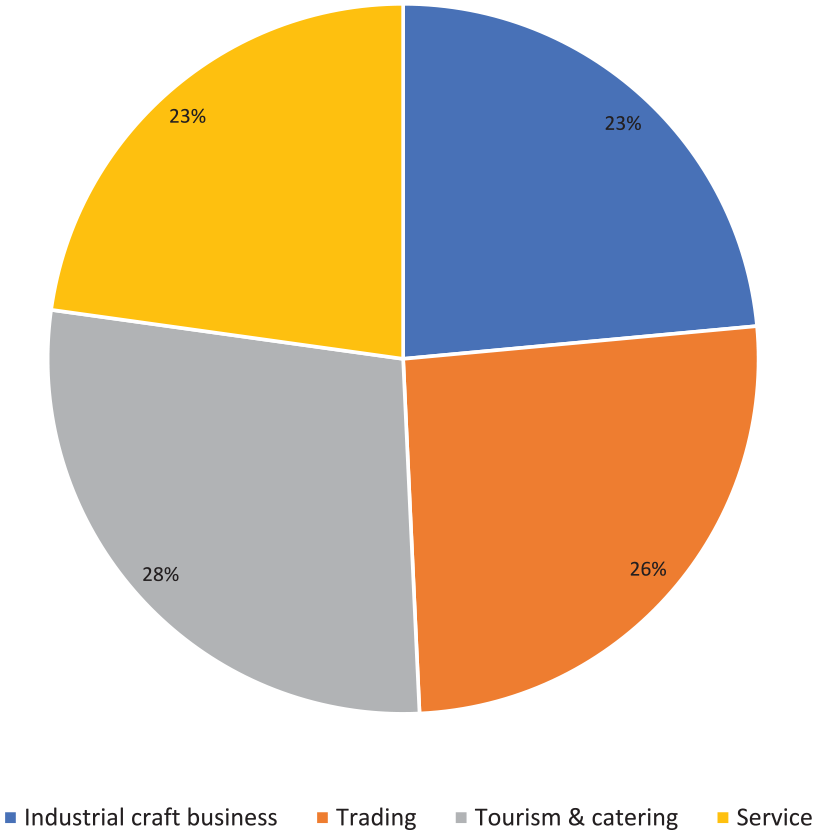
Participants per business activity.
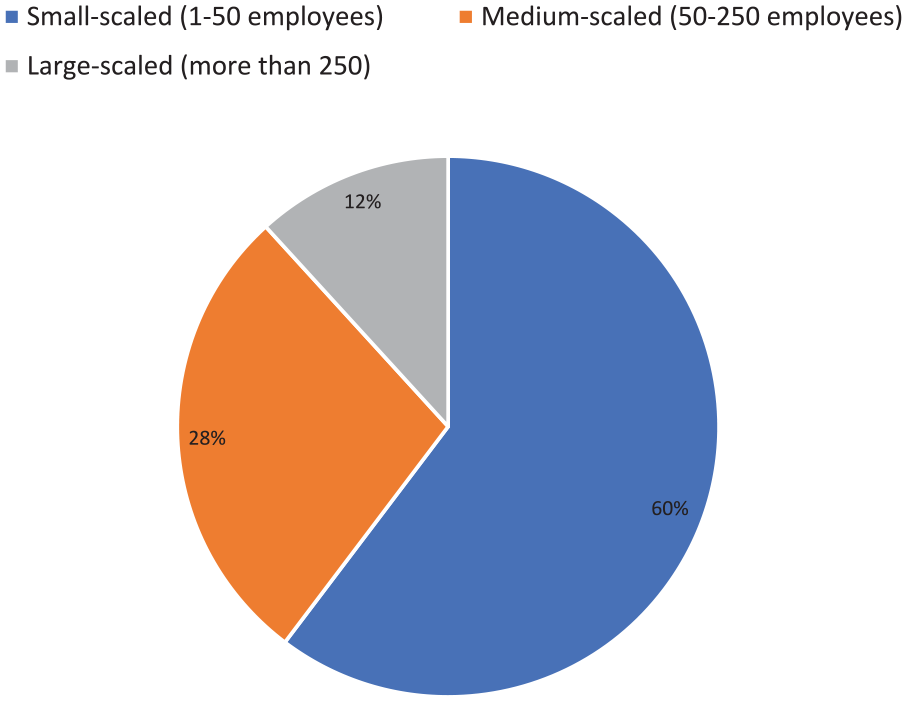
Participants per size of business.
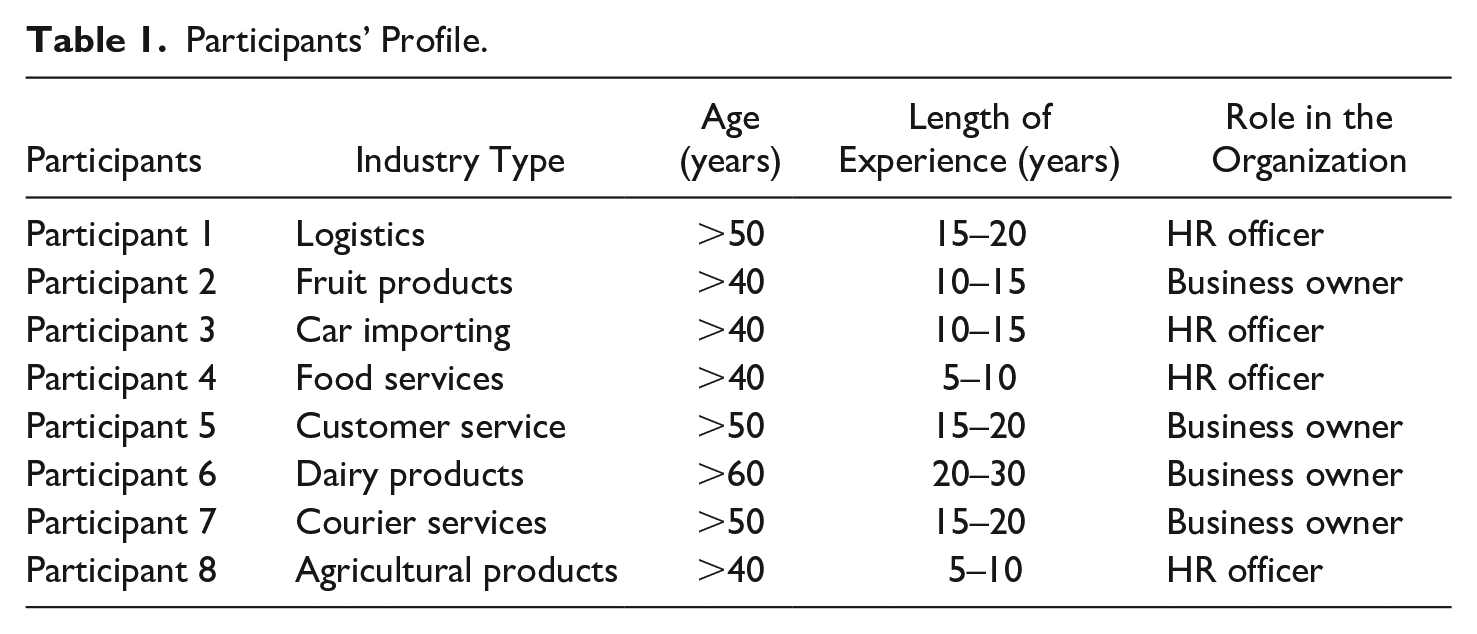
For this study, employer interviews were conducted with randomly selected eight business owners to gain more insights into business English language needs in their organizations and supplement the survey data. Four participants were business owners and the other four were HR officers. All the participants were men and owned or worked in companies with food services, logistics, courier services, fruit products, agricultural products, customer service, dairy products, and car importing. The following table displays the participants’ profile (Table 1).
Participants’ Profile.
Following the British Educational Research Association (BERA) ethical guidelines (2011), all participants (survey and interviews) were informed of the research aim and that the information gathered from them would be anonymized and remain confidential. Written consent from all participants was sought and obtained before the data collection.
The Research Tools
For this research, we employed a number of research tools in order to help us find possible answers to our research questions. The tools used in relation to each research question are described below.
Research Question 1: What are the English language needs perceived by the SVE graduate employers in Greece? In order to address it, an employer survey and interviews with selected employers were conducted.
Research Question 2: What are the English language skills foci of the “Economics and Administration” textbook? Textbook evaluation and SVE teacher interviews were carried out to address this question.
Research Question 3: To which extent is there a link between the English language skills demanded by the workplace and the SVE Business English textbook skills provision? To answer this question, the findings from the above was synthesized and compared.
Employer Survey Questionnaires
We designed a preliminary survey informed by the existing literature, and visited 12 randomly selected companies in Thessaly, Greece, in order to have a picture of the research context (e.g., how businesses work, their activities, their size, the use of English, and so on). Discussions were held with them to collect factual information (size, activities, number of employees, English tasks) for the formation of our questionnaire. The data we collected were used to design the first questionnaire draft, which had 11 questions grouped into three basic sections. The first section aimed at the company information and contained three questions, which were the independent variables. Apart from collecting the factual information, the purpose of the questions was to gather data to examine if and/or how the independent variables affect the dependent variable of English language skills. More specifically, the aim was to examine how the company activities, their size, and the number of employees affect the English language skills that businesses require of their employees. The second section explored the English language skills needed in businesses and comprised five questions. The first four are the dependent variables of the research; they are closed questions and measure the use of the English language skills of reading, writing, speaking, and listening. Also added within parentheses were subskills derived from the preliminary survey that helped us form an idea of the kind of English the businesses used. This first questionnaire draft that resulted from the preliminary survey was then piloted with 15 randomly selected businesses. The survey was written in Greek, which was the respondents’ preferred language and the first author’s native language. When comments were received, mainly regarding the use of the language, the final version was redesigned and was administered to 136 companies for the main survey. The survey responses from 136 companies were statistically analyzed using SPSS, version 21.0. Kruskal-Wallis criterion was used in the research as the appropriate for this research, in which it is possible to compare the differences among more than two groups and in which there is a research design of independent samples (Roussos & Tsaousis, 2011). Kruskal Wallis is generally used as a rank-based nonparametric test that is used to determine whether there are statistically significant differences between two or more groups of an independent variable (in our research, these are business activity, business size, and number of employees) on a dependent one (i.e., the English language skills).
Interviews With Employers
Semistructured interviews were conducted with eight business owners including HR officers. The semistructured questions were divided in three parts: demographic information; business English language needs; and VE graduate employees’ English language skills status and needs. As with the survey, the interviews were conducted in Greek by the first author and were audio-recorded. Due to this, for the credibility of the data, the interviews’ content went through a forward translation from Greek to English and a back translation from English to Greek by two colleagues who had not seen the original transcribed Greek interviews. The differences in syntax and tenses that were traced between the two versions were addressed and the English translation was finalized. A qualitative content analysis of the interview data was conducted focusing on interview questions and key words such as important, not important, needed, not needed, skilled, low-skilled, satisfied, not satisfied, improvement. These data were categorized as tasks, transactions, skills (writing, speaking, reading, listening), graduates, employees, and training needs.
Textbook Evaluation
In order to understand if the needs of SVE graduates perceived by the employers are addressed, it is essential to examine the SVE Business English textbook (English for Economics and Administration; Vassalou, 1996) prescribed for SVE in Greece. The book is taught in the final grade of vocational secondary school for 17–18-year-old learners and the level of the book is at least C1 according to the European Framework of References for Languages (CEFR) (Council of Europe, 2001). For the evaluation, we employed McDonough and Shaw’s (2003) in-depth evaluation model because it allowed us to look into all aspects of the book, regardless of the fact that our emphasis was on skills. These refer to internal and external features regarding the learning/teaching content (such as level, size, layout, visual and audio material, cultural aspects, grammar, and lexis) as well as skills provision (see Figure 3).
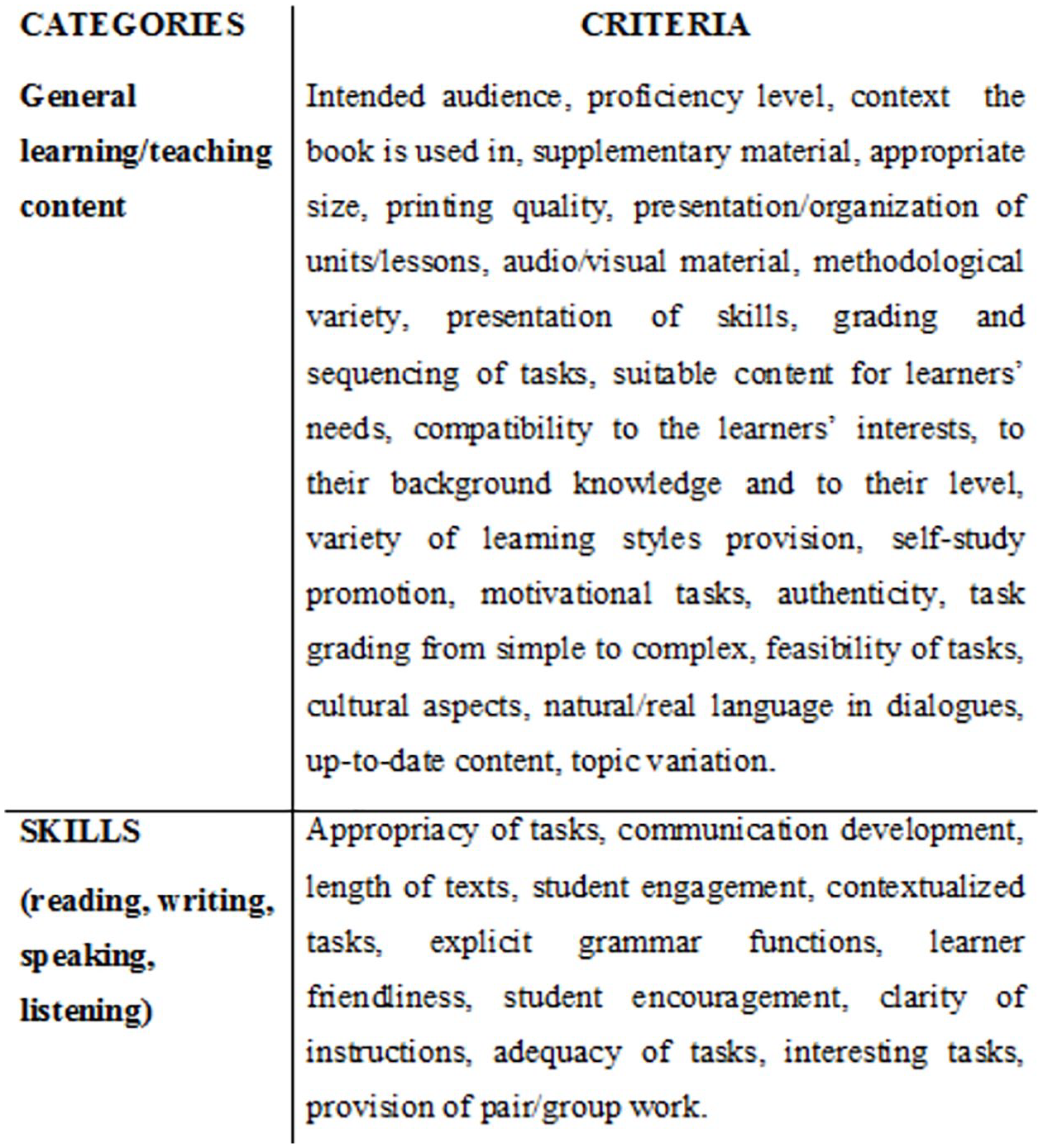
Example of textbook evaluation criteria (McDonough & Shaw, 2003, p. 275).
Two representative units of the textbook English for Economics and Administration (Vassalou, 1996) were chosen for textbook evaluation. The two units were evaluated in terms of two criteria of McDonough and Shaw (2003). In terms of the first criterion, general learning/teaching content, we examined intended audience, appropriate size, printing quality, visual/audio material, methodology used, skills, sequencing of tasks, suitable content, compatibility to learners’ needs, authenticity of tasks/texts, and up-to-date material. In terms of the second criterion, skills provision, we examined speaking, listening, reading, and writing skills (see Figure 3).
Teacher Interviews
In order to understand the English language skills foci of the SVE Business English textbook, we conducted interviews with eight SVE English language teachers that teach the target textbook and volunteered for this study. The aim was to have a detailed analysis of their views about the textbook content and skills. All the teachers had an experience of 10–30 years of teaching ESP and 2–15 years of teaching the target textbook. Semistructured interviews took place with questions relevant to their knowledge of the content and skills focus of the textbook.
Results
Employer Survey
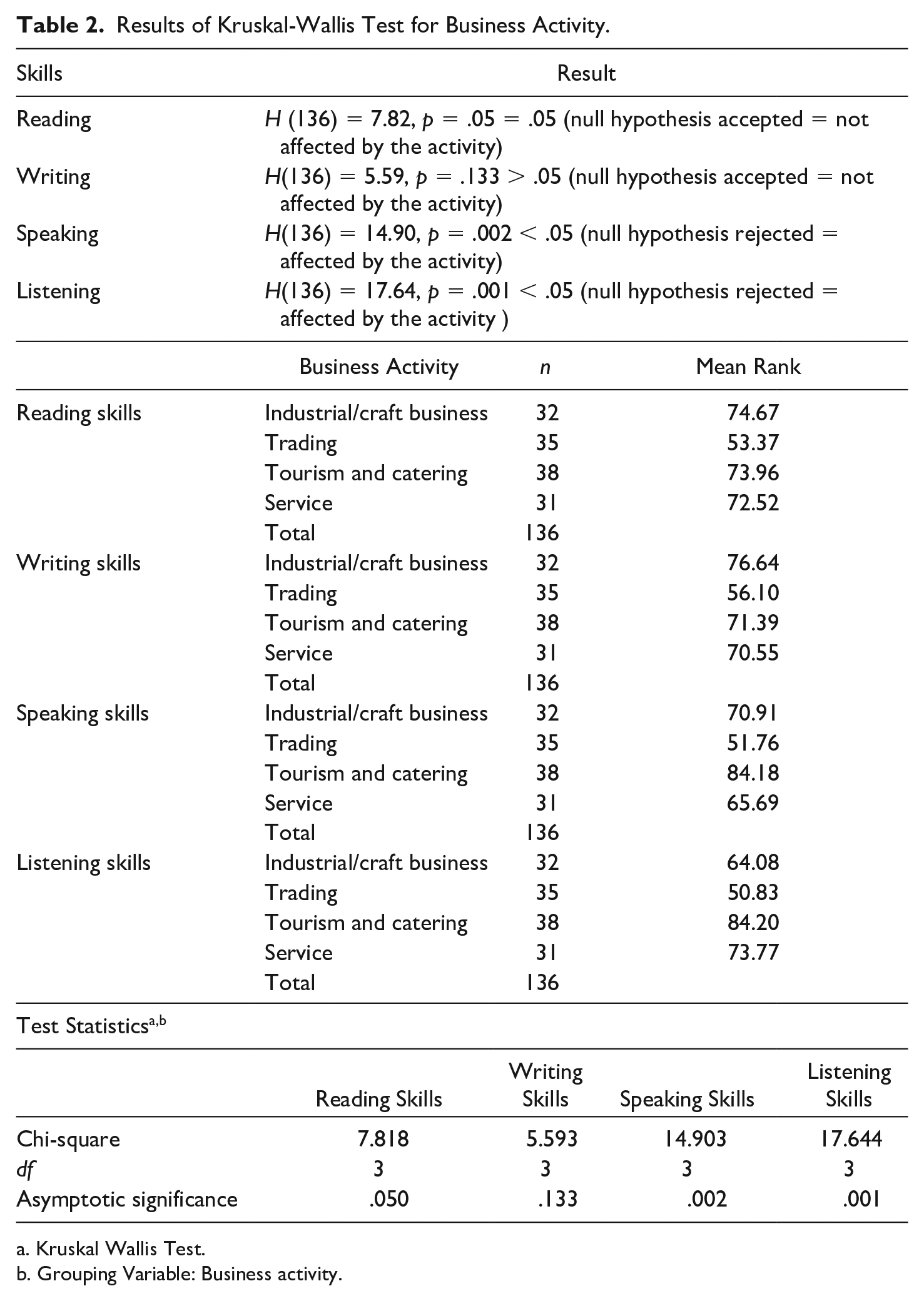
The analysis of the employer survey data (n=136), collected through a questionnaire, revealed a number of findings (Tables 2–4) in response to the first research question. The results have shown that the type of business activity in the employment market influences the use of speaking and listening skills that seem to be more needed than writing and reading for the purposes of business transactions. For both skills, p values of are lower than the critical value set at .05, except for reading, which is equal to .05, as shown in Table 2.
Results of Kruskal-Wallis Test for Business Activity.
Kruskal Wallis Test.
Grouping Variable: Business activity.
Results of Kruskal-Wallis Test for Business Size.
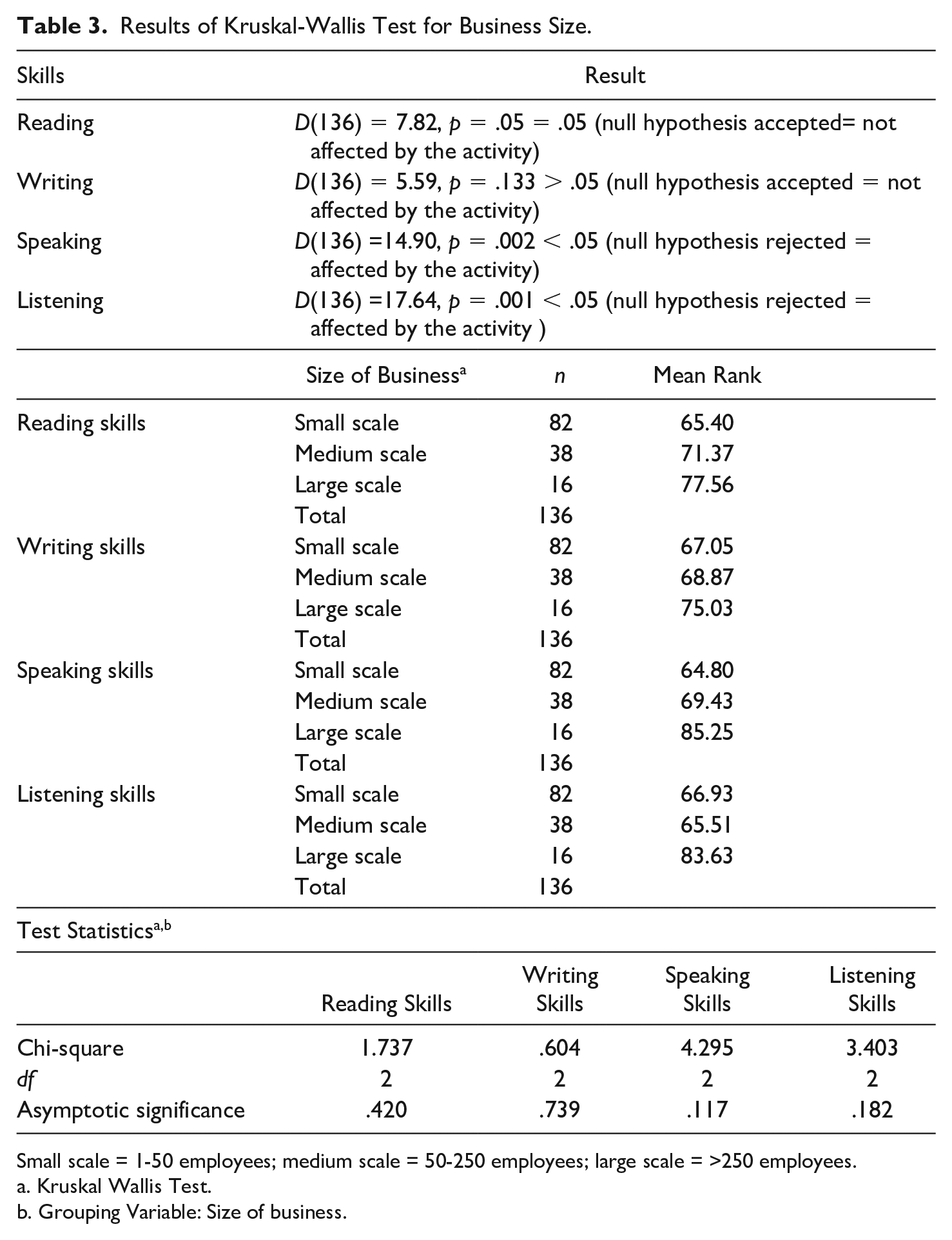
Small scale = 1-50 employees; medium scale = 50-250 employees; large scale = >250 employees.
Kruskal Wallis Test.
Grouping Variable: Size of business.
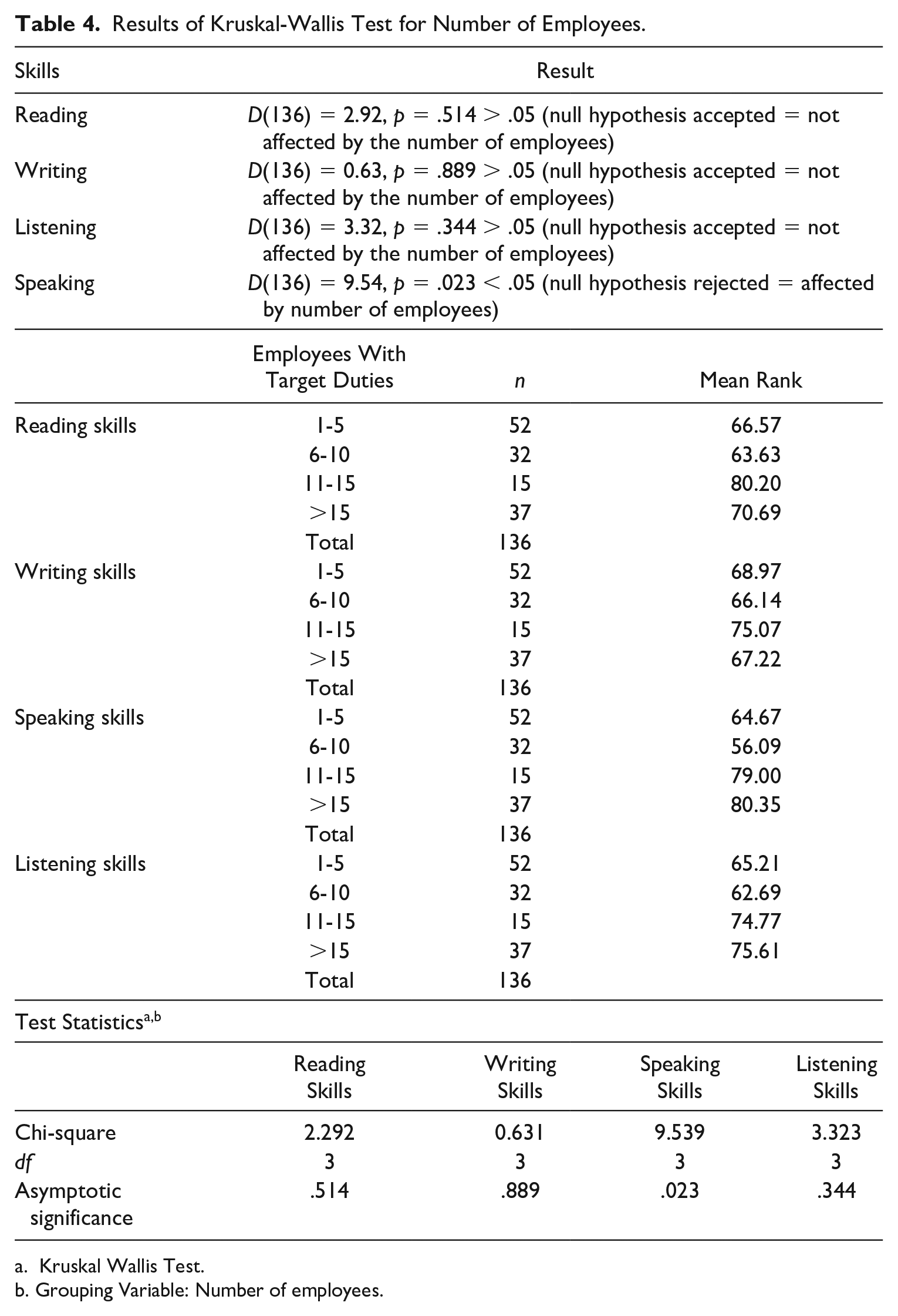
Results of Kruskal-Wallis Test for Number of Employees.
Kruskal Wallis Test.
Grouping Variable: Number of employees.
On the contrary, neither reading nor writing skills are affected by the activity of a business (p values are equal to .5 for reading and higher than .05 for writing; see Table 3). Further to these results, from the comparison of the mean ranks (MRs) shown in Table 2, speaking skills are most needed in companies with tourism and catering activities, as this group displays the highest MR (84.18), while the lowest MR (51.76) appears in trading businesses. Similarly, the skill of listening appears to be most needed in companies with tourism and catering activities, as this group displays the highest MR (84.20), as well as in companies with service activities (MR value = 73.77), while the lowest MR (50.83) appears in trading firms, regarding the above skill (see Table 2).
Furthermore, the analysis has revealed that the business size does not affect the use of any of the English language skills (see Table 3), which implies that all four skills are needed in the workplace regardless of the size of the companies.
Similarly, the number of employees working in a firm is a variable that does not influence the use of reading, writing, and listening (the p values are higher than the significance value set at .05), whereas the skill of speaking is affected by the number of people who work in a firm (for speaking, the p value is lower than .05, as shown in Table 4).
The questionnaire also intended to investigate the extent to which there were additional requirements for the use of English in businesses. According to the results, 15.4% of the enterprises reported the need for Business English terminology, whereas 84.6% did not require anything further to the need for English language skills competence in general. As regards the status of the vocational education graduates’ employment, 58.1% of the surveyed respondents replied that they employ vocational graduates whereas 41.9% of them reported that they do not hire VE graduates in their businesses. Concerning the extent to which employers are satisfied with the English language skills of their employees, the data revealed that only 15.2% of the employers were satisfied while 84.8% of them indicated that the employees needed to improve their skills in English. Finally, as regards the English language skills that VE graduate employees need to improve, the results have shown that for all skills the p values are higher than the critical value .05. This means that all VE employees’ four English language skills may need improvement, regardless of activity, size or number of employees in businesses implying that their English language level may be low and, therefore, there may be a need to upgrade it.
Employer Interviews
The employer interview results provide further empirical evidence regarding the first research question. According to the participants, English is needed in their businesses for various tasks, such as writing emails, faxes, memos, reports, giving speeches, making phone calls, organizing trips, visiting companies abroad, participating in teleconferences, making deals with other businesses in Greece and abroad, and exchanging products and ideas were considered the most important ones. This result shows the importance of task/genre-based approaches to English language and possibly a pragmatic approach that businesses may take. When asked about the importance of each of the skills, they replied that writing, speaking, and listening were considered the most important (i.e., highly ranked), whereas reading was described as quite important. When asked whether they employ SVE graduates, they all replied positively but their satisfaction regarding their competence was varied: five answered “not much,” one said “yes, more or less,” one said “not at all,” and one replied positively. When asked why, their answers were mixed, placing the blame mainly on educational authorities for failing to emphasize the role VE schools play in the society and the needs of the workplace.
According to the participants, one of those reasons seems to be learners’ lack of initiative taking training. For example, Participant 5 stated: “Students are simply taught to ‘follow orders,’ simply follow the book, any book. . . . They don’t take initiatives. . . . They (teachers) do not teach them how to do this. So, I guess students don’t want to learn.” The lack of job-oriented education was mentioned by Participant 7:
Education today is based on the “educational industry.” . . . They say let’s teach them what is convenient for us. . . . But education should be based on cooperation. . . . People should exchange ideas and look ahead. It is not what suits them but what suits the society.
The participants attribute the low-skilled SVE graduates’ situation to schools’ insufficient practices, which center their interest in teacher-centered approaches rather than group work. As they argued, failing to involve learners and considering their ideas leads to their indifference and inefficient preparation:
Students are not taught in groups. It is not good to have teacher–student lessons where the teacher orders what to be learned from the book and the student obeys. The students should have a saying in this. They know enough today already and we must not treat them like they don’t exist. I know this because my sons tell me this is what happens in their school and this is what happened to me too when I was a student. (Participant 2)
Furthermore, they consider school and instruction methods and material quite anachronistic, arguing that education in Greece still places emphasis on memorization instead of active knowledge and techniques:
Our educational system is ancient. It is based on memorization mainly and demotivating books and methods. This (memorization) is like struggling their (students’) memory. I believe instead they (teachers) should allow them to search for their own knowledge. . . . Students can become a little like . . . “Sherlock Holmes”! I have boys [i.e., young employees] who finished their studies in school but they know only what I know too, what I learned when I was in school. (Participant 1)
The participants also claimed that the English language learning in VE schools is mainly language and grammar based rather than skills based for working purposes. For instance, Participant 7 reported:
They [students] do not learn because I believe English in school is not enough. English is really learned here at work—“on the job training”—Diplomas are good but they serve nothing if they can’t use it [English] to do the job. Instead of giving them a diploma they should worry if the diploma they get is any good for the job market. . . . If what they learned helps them, if it helps us. . . . We can’t afford low quality . . . there’s lots of competition out there. . . . Books must contain the current business language . . . no, they don’t need vocabulary this much . . . but tasks, how to do things at work . . . this is what books should contain . . . business tasks.
Others blamed the lack of continuity and connection between the levels of education the ultimate purpose of which should be to prepare learners for their English language that their future professions need from earlier stages rather than allowing the accumulation of theoretical knowledge:
Learning should be a whole process. The chain [education] should not have gaps. Otherwise students tend to forget what they learned at school. . . I want to say that learning should be a continuous process. Students should focus on work language from the first grade and not only in the third year. Each class [means first-, second-, and third-year learners] should be taught the kind of English that will serve students’ future working needs. [Participant 6]
In our question, we asked whether the employers do anything to help employees improve their English language skills. Only one participant of a large company said his company organizes in-service training seminars for newcomers. Their views regarding this question revealed some interesting facts. According to their views, one solution is for SVE schools to organize learners’ efficient English language training long before they reach the stage of graduating looking for a job and earlier than their final year of SVE studies. Participant 8 commented:
In Greece we are used to saying if and when we face this problem in the future, then, we’ll decide what to do. However, it is wise to program our actions beforehand to be prepared for what comes along. This is what we do in business. VE schools should have the philosophy of business. They should prepare learners before they reach the market . . . with the right material. Because now, we have the phenomena of having workers that we need to teach them the English tasks they should already be prepared for.
Educational authorities’ decisions play an important role in learners’ successful preparation as, according to the participants, they should collaborate with the employment market:
Education should take place where the needs are. . . What I mean is that schools and businesses should closely work together. As I see it, students should have some of their lessons in businesses and when they finish school they will know exactly what to do. If you ask me, I doubt that English teachers know what we need from employees in our firm. I know they teach them vocabulary and grammar more or less. . . . It’s been like that for years now. (Participant 5)
They explained that this collaboration would help them realize that practice is more important than theory when it comes to SVE learners:
I will tell you something. What do doctors do? They learn their theory and then they practice, in models, corpses, etc. They [medical students] see what they have read and they practice. This is what SVE students should do too. Learn and do. It should be school and workplace. Otherwise, they have no idea what the businesses are like, how we work and what we need. It’s as simple as this. (Participant 1)
Importantly, the interviewees stated that the most important thing that vocational education policy makers need to consider is to base their educational plans on workplace needs or else this will have negative impacts on business transactions, the economy, and the society, as in this quote:
The biggest problem is that nobody has ever wondered what we do, what we need, how we go along with our business. They [the government] need to leave their chairs, come here, talk to us and together decide what those kids need to learn. The sooner they realize they need us, the better it is for us and for the government, and for the families too . . . less unemployment . . . they won’t avoid it if they go on like this. (Participant 2)
Textbook Evaluation
To address the second research question (English language skills foci of Business English textbook), we present the results from the textbook analysis of English for Economics and Administration (Vassalou, 1996). In terms of the first criterion, general learning/teaching content, we examined intended audience, appropriate size, printing quality, visual/audio material, methodology used, skills, sequencing of tasks, suitable content, compatibility to learners’ needs, authenticity of tasks/texts, and up-to-date material. We found that the textbook is the only material that the learners are given; teachers are provided with the teacher’s version but no other supplementary audio or visual material, or a companion book. The evaluation of the Economics and Administration textbook material revealed that it is a lengthy book with demanding linguistic level (grammar/vocabulary), making it difficult for learners to use English for communication. This difficulty of language input is depicted by the load of grammar tasks and decontextualized vocabulary that learners are asked to memorize or implement compared to their capabilities: Their expected level is B1, according to the CEFR (Council of Europe, 2001), whereas the level of the book is B2 to C1. The book is structured around grammar or vocabulary tasks rather than allowing or offering tasks for practicing the use of the language. The book is not motivational, because of the linearity and difficulty of content and the lack of task variety. Its demotivating features are also due to the low-quality layout and design and the lack of contemporary audio, visual, and authentic material (i.e., contemporary working and office environments). Therefore, this is not an appealing book for teenage learners, failing on the one hand to draw their attention and enhance their participation in the lesson and on the other to prepare them appropriately for future English language skills needed in the workplace. This gap between the past and the present business reality is exacerbated by the absence of text and task authenticity in the book. The texts lack up-to-date topics, whereas the tasks that follow serve as a medium to grammar or lexis acquisition rather than as a vehicle of communication. To this end, the textbook fails to introduce learners to the world of current business offices’ reality, as reflected by interviews, their duties, and obligations in order to train them for skills they need to acquire in a working environment today.
As regards McDonough and Shaw’s second criterion, skills provision in the book, reading and writing skills outbalance speaking and listening, with the latter being almost nonexistent in the book. Reading is practiced through long and difficult texts for low-level learners and it lacks the feature of communication gap because the answers are obvious. Thus, the learner-reader has no real purpose for reading. Dialogues, however, constitute an exception and are easier than the rest of the texts. Writing is taught mainly through gap-filling exercises or answering questions. The book provides some letters of complaint or request and CVs as models for letter writing, but these are not necessarily key genres or text types that an employee of a business organization that employs SVE graduates has to produce. Again, writing does not present authenticity of purpose and it is not linked to real business situations. Learners are simply given the instructions with no further comments, guided steps, or explanation to facilitate task implementation. Furthermore, there are no opportunities for creative writing based on the integration of learners’ background knowledge in the tasks. Instead, the majority of the tasks that ask learners to write something are parts of grammar exercises.
As opposed to the need for listening and speaking skills that the employers perceive, the book does not seem to provide adequate listening material or speaking tasks for learners to practice. In particular, there is no audio material to accompany the very few listening tasks included in the book. Additionally, there are no transcripts for teachers to use, either. Therefore, listening is not practiced through the book. Similarly, speaking practice is almost nonexistent, practiced only through answering comprehension questions if the teacher chooses to use them for speaking practice. However, in such cases, there would be an absence of authentic tasks that could resemble real-life interactions.
VE Teachers’ Opinion on the Target Textbook
Addressing the second research question, the teacher interview data suggested that the Business English textbook focuses on structures and grammar rather than communication. The textbook does not fully take into account the features of ESP material for the business purposes of the Economics and Administration sector as required by the Greek vocational education lyceum (EPAL) curriculum adopted in 2006 (EPAL, 2006). This is so because, unlike the focus of ESP materials on the genres and context of the language use, as argued by Kitkauskienė (2006), the target textbook emphasizes grammar and structure. Specifically and according to Teacher 1, “It [the textbook] focuses on grammar and vocabulary. But it is not communicative (and) there are no oral tasks, . . . listening needs to be added.” Therefore, it depicts a textbook that mainly addresses EGP rather than ESP needs, as opposed to the EVP or EOP purposes that Johns and Dudley-Evans (1991) mentions for the specific aims of the specialisms for which it was designed according to the EPAL curriculum (2006). Similarly, the linguistic content of the textbook mainly addresses the needs of those students who continue their studies in a technical college (grammar, structure, general English for academic purposes), and these are 27% of the sector population (Pedagogical Institute, 2008) rather than the needs of those who seek employment immediately upon graduation (skills, specific types of genres, ESP for working purposes) and who are the majority of the sector graduates (66% according to Pedagogical Institute, 2008). As teachers themselves stated,
They [texts] are not authentic . . . especially for learners who are supposed to be working in offices, how are they to understand? How are they to communicate? It will be impossible. (Teacher 3) It [the textbook] needs to be contemporary. It needs refreshing, to adapt to more modern terms. (Teacher 8)
Other teachers further emphasized the lack of business and student needs addressed in the textbook:
These learners need to practice in order to become future clerks and business office employees. They need to be trained how to listen or speak, to understand various accents . . . this course book does not offer this to them . . . and they will need it for sure. (Teacher 2) There are three important issues we need to consider. First, it is knowledge, the knowledge of the language in all levels, then, it is the use of the language for communication purposes and third it is the future, work. This means we apply all this to our professional environment. I think there is no link between these three. (Teacher 5)
Discussion
This article aimed to examine the link between business English needs as perceived by Greek SVE graduate employers and the English language skills provision in the existing SVE Business English textbook in light of the three research questions. We discuss each question below in light of the results.
Business English Language Needs Perceived by SVE Graduate Employers
In response to the first research question, the findings revealed that English is considered equally important for all businesses regardless of their type of activity. Nevertheless, speaking and listening skills hold a more significant role for business transactions and are mostly needed in companies with tourism and catering activities. For countries like Greece, whose main income source is tourism, these findings imply that English language communication as a lingua franca is considered a significant qualification (Danchev & Paratsiokas, 2012), and therefore, listening and speaking are the main skills to achieve it. Whatever the motive, however, the competitive pressure of the world market and the globalization of tasks and resources make communication an inevitable tool for business transactions (Neely, 2012).
Additionally, speaking skills are particularly needed in businesses with many employees and less with smaller firms. In an effort to shed more light into this result (the reason(s) small firms place less emphasis on speaking skills), the majority of the participants from small firms were asked about this. Those that responded to our question (23 of 86) revealed two main reasons: One, that this is perhaps the result of insufficient knowledge to establish business practices that could improve transactions; for example, they avoid business spoken interactions in English out of fear of misunderstandings and rely mainly on written communication, which is considered easier to correct or cheaper to use (i.e., emails). Two, for reasons of localism; this means they are not in favor of doing business with foreign companies or hiring non-Greek personnel and therefore they do not need to use spoken English. However, they use the written form mostly, especially when they wish to order equipment from abroad or read instructions about its use.
Furthermore, 58.1% of the participating businesses admitted they employed vocational school graduates but only 15.2% were satisfied with their employees’ English language level and skills, with 84.8% of them being dissatisfied, wishing their employees to improve all four skills (reading, writing, speaking, and listening) in English. These findings concur with the findings of a survey conducted by McKinsey (2012-2013, cited in CEPIS, 2015), explaining that among other skills and qualifications, the use of English presents the highest score of variation between what the employers need and the employees are qualified for, thus leaving a large gap between them. This study also supports previous findings that showed the low value of vocational qualifications by employers and labor market even though the major part of these qualifications forms part of what 16- to 18-year-old people have to offer (Wolf, 2011, p. 71).
The follow-up discussions in the interviews revealed that even though the majority of the participants considered communication in English a very significant qualification as in previous research (e.g., Hellekjær & Fairway, 2015), their employees’ communicative performance was not analogous and they blamed school education for this phenomenon. The employees’ lack of communicative ability forces many of them to organize in-service seminars in order to train them accordingly for the purposes of their company’s effective business transactions despite the fact that they are quite costly and time consuming. They admitted, however, that, especially because of the economic crisis in Greece at the time, they will gradually have to stop implementing them and insisted that educational authorities should undertake their responsibility toward learners’ appropriate English language skills training.
The findings regarding the high demand of businesses for communication skills acquisition of the employees concur with the findings of other researchers from other countries (Bouzidi, 2009; Kaur & Clarke, 2009). However, those studies referred to the Vocational tertiary level and not to SVE linked to Business English. Additionally, none of the studies investigated the link between the English language skills that the workplace needs and the English offered in SVE nor did they address all VE stakeholders (employment market, teachers, and learners) or VE educational material. Our research, thus, tried to fill this gap by investigating the secondary level of VE looking into the skill of English language linked to the workplace needs currently.
English Language Skills Provision in Existing SVE Textbook
Regarding the second research question, the evaluation of the Economics and Administration textbook (Vassalou, 1996) and the teacher interview data revealed that the textbook presents extensive and difficult vocabulary and very demanding grammar input, which does not usually correspond to learners’ knowledge at this level. It is printed on old and faded paper, making it unattractive for learners and not motivating enough so as to lead to learners’ active participation with the purpose of generating communicative language use. It lacks variety of tasks and genres to prepare learners for all four skills and different learning styles and ICT-based tasks for office workplace communication, which is a prerequisite in business environments today (Pedagogical Institute, 2006) as highlighted by the employer interview data. Additionally, its extensive content does not make it learner-friendly and therefore it is not easy to learn. The textbook mainly focuses on predominantly decontextualized reading and writing skills, and thus does not fully prepare the learners for the workplace English language communication needs, as shown by the employer survey. For example, even though writing dominates the course, key written genres such as emails and reports (e.g., see Chan, 2019; Evans, 2010) are not taught as used in businesses. It does not present any communicative features as it is a grammar-centered and vocabulary-based book with an excessive amount of decontextualized lexis, thus offering minimum opportunities for oral language practice. The reading comprehension texts are not authentic and lack contemporary content of modern working topics and environments. Furthermore, listening is not practiced because of the lack of audio material (i.e., CDs, cassettes) while speaking activities are almost nonexistent. The findings support those of Maleki et al. (2014) about a gap between learners’ level and textbook’s, those of Philip et al. (2012) about books being unattractive and demotivational and the findings of Zhihong et al. (2010) regarding the importance of integrated ICT tasks in textbooks.
Finally, regarding the third research question, and based on the aforementioned results, it can be argued that there seems to be a clear gap between the English language communicative competence demand placed by the businesses on their SVE employees and the English language communication skills Greek SVE graduates are trained for, particularly through the textbook Economics and Administration (Vassalou, 1996). The results strongly suggest that there is a clear need for conducting a systematic needs analysis for the SVE Business English course by involving key stakeholders such as employers and students.
Limitations and Further Research
The study has some limitations. First, even though we considered the number of 136 businesses adequate for the purposes of our study, we would have liked to have more participants from other regions of Greece. Furthermore, the interviews were limited to eight participants, although we would have liked to have more to allow us to have a wider range of views by businesses about their needs. We suspect that some employers we surveyed might have employed the SVE graduates who did not study the particular textbook we evaluated. Additionally, even though triangulation was used for the data collection, we would have liked to have the employees’ views; we aim to do this in a future study with a bigger sample. Because of the unique Greek context, the findings of this study may not be fully generalizable, although the needs analysis adopted here may be applicable to other VE contexts.
Implications and Conclusion
The study has implications for educational researchers, policy makers, textbook designers, and practitioner-teachers. In order to address the discrepancies between VE and the workplace, there is a need for further research. This need is evident especially in the secondary level because of limited research in this field. Many of the researchers identified for the purposes of this study based their findings on other people’s findings. Additionally, in order to link VE with the workplace, as demonstrated by this study, there is a need for a number of interventions by policy makers: workplace needs analysis, curricula and syllabi flexibility, materials improvement, and participation and cooperation from all VE stakeholders (workplace, teachers, learners). The workplace needs should be analyzed by policy makers as frequently as possible to update the needs and integrate them in the syllabi design. Where needs analyses are difficult to implement frequently enough, curricula or syllabi should offer flexibility for changes or additions in their content (Finney, 2002, p. 77) on a frequent basis. Materials should link to the employment market needs; the issue of needs analysis is crucial for this to be realized, as evidenced by previous studies such as Jiajing (2007) and Zhang (2013) and the present study. Policy makers should not forget the most affected stakeholders in VE—the learners—as their appropriate preparation is crucial for their integration in the business community. However, as shown by this study, low-skilled SVE graduates are not favored by the workplace as their training is quite costly and time-consuming. This implies two things: one, higher unemployment for this group of people; two, businesses turning to other potential employee groups (i.e., of tertiary level) for a job that could be accomplished by SVE graduates, resulting in this group being underpaid in comparison to their higher qualifications.
Additionally, the results of this study have clear implications for practitioners in vocational education. This, in particular, applies to vocational ESP teachers. As shown by the survey results, the role of the schoolteachers and their practices (material, methodologies) are considered crucial and, therefore, they should cooperate in educational decisions (Li, 2014). Especially for vocational education, these decisions should be based on the needs analysis of all parties involved (teachers, students, workplace) (Masoumpanah & Tahririan, 2013; Saragih, 2014). These points raise some issues that need consideration: practitioners are responsible for students’ education, they spend a great amount of teaching hours with their students, and they know better than anyone else what students need, what to learn, and which skills to emphasize. This means that their needs should be analyzed and their opinions should be taken into account in materials design. Teachers have immediate access to and frequent interaction with their learners; they are closest to students and provide them with the necessary tools to be effective as future employees. Consequently, teachers help students contribute to the economic and social status of their immediate professional and broader environments.
The findings of this research imply the need for including authentic communication skills in courses to meet the needs of potential employees in the Greek employment market. In the context of this research, the skills are mainly related to business English because of the kind of interactions, specific genres, and style in business settings learners need to deal with, not just everyday situations or small talk. The textbook designers should seriously consider this aspect while designing Business English courses for SVE learners by working collaboratively with researchers, employers, and practitioners. The researchers are aiming to continue this research with a much bigger sample and the involvement of more stakeholders to expand the study.
Supplemental Material
sj-doc-1-bcq-10.1177_23294906221109190 – Supplemental material for Business English Needs and Secondary Vocational Business English: The Case of Greek Workplaces
Supplemental material, sj-doc-1-bcq-10.1177_23294906221109190 for Business English Needs and Secondary Vocational Business English: The Case of Greek Workplaces by Marianthi Batsila and Prithvi N. Shrestha in Business and Professional Communication Quarterly
Footnotes
Appendix
Acknowledgements
We would like to express our special thanks to all those who voluntarily but with great enthusiasm contributed to this research. These are employers or human resource managers of the participant firms. Without their help, this research could not have been possible. We are also indebted to two anonymous reviewers whose comments greatly enhanced the quality of this article.
Author Note
This study was approved by the Human Research Ethics Committee, The Open University, UK (Approval No. HREC/2016/2307/Batsila/1).
Declaration of Conflicting Interests
The author(s) declared no potential conflicts of interest with respect to the research, authorship, and/or publication of this article.
Funding
The author(s) received no financial support for the research, authorship, and/or publication of this article.

Supplemental Material
Supplemental material for this article is available online.
Author Biographies
References
Supplementary Material
Please find the following supplemental material available below.
For Open Access articles published under a Creative Commons License, all supplemental material carries the same license as the article it is associated with.
For non-Open Access articles published, all supplemental material carries a non-exclusive license, and permission requests for re-use of supplemental material or any part of supplemental material shall be sent directly to the copyright owner as specified in the copyright notice associated with the article.
