




Abstract
This study examines the impact of CEO communication behaviors, specifically speech length (SPEECH_LEN) and speech frequency (SPEECH_FREQ), on ESG (Environmental, social, and governance) performance, focusing on governance and environmental dimensions. Using a sample of 1,687 publicly listed firms across 10 European countries from 2014 to 2022, the findings show that longer CEO speeches are positively associated with better governance and environmental performance. CEOs who deliver detailed and lengthy speeches demonstrate greater sociability and friendliness, thereby fostering trust and transparency within the organization. This communication enables CEOs to articulate governance strategies, address challenges, and engage with stakeholders on social and environmental issues. However, speech frequency shows a negative relationship with governance and environmental performance, suggesting that over-communication can lead to stakeholder skepticism, especially when not backed by tangible actions. This effect is more pronounced in the full model (Model 3), where speech frequency is coupled with speech length. In this combined model, the impact of frequent speeches is less significant unless accompanied by depth and substance, reinforcing the importance of meaningful communication over repetition. These findings challenge the assumption that more communication inherently enhances corporate transparency, emphasizing that the quality of communication is equally important. The study highlights the need for CEOs to balance sociability and talkativeness with substantive commitments to ESG goals, as excessive speech without measurable outcomes can damage credibility and undermine corporate trust.
Keywords
Introduction
The role of leadership in shaping corporate behavior and organizational culture is an increasingly important topic in contemporary research on corporate governance and sustainability. Among various leadership attributes, the CEO stands out as a central figure whose actions, decisions, and communication styles significantly influence a company’s strategic direction, ethical standards, and overall governance practices (Lee & Dong, 2023). In particular, CEO characteristics—such as personality traits, leadership style, educational background, and communication habits—have been shown to shape an important part of corporate behavior (Cripe & Burleigh, 2022; Xie et al., 2018). As such, understanding how CEO traits impact the broader corporate framework, particularly the ESG issues, is crucial for researchers, policymakers, and practitioners aiming to foster greater transparency and ethical practices within organizations.
CEO characteristics are central to shaping corporate governance, ethical behavior, and organizational transparency (Gupta & Mahakud, 2020). The personal traits of a CEO, including their leadership style, experience, and communication habits, significantly influence how an organization responds to stakeholder expectations, particularly in areas such as transparency, responsibility, and financial performance (Xu & Woo, 2023). These traits guide the strategic direction of the company and foster an organizational climate that encourages ethical behavior. For instance, CEOs who have a strong background in education or experience may be more attuned to the complexities of ESG issues and better equipped to lead the company in adopting transparent and sustainable practices (Y. Liu et al., 2024). The manner in which these CEOs communicate—especially their frequency and style of engagement with stakeholders—may reinforce a culture of openness and accountability (Conaway & Wardrope, 2010). Through their public communication, CEOs have the potential to shape corporate governance frameworks, aligning organizational actions with the growing demand for sustainability and responsible corporate practices. However, whether such communication translates into improved ESG performance is a subject that warrants further empirical examination.
The interplay of CEO communication has become a crucial area of research, offering valuable insights into the role of leadership in shaping ethical corporate behavior and ensuring that companies meet the growing demand for transparency in corporate governance, especially as stakeholders increasingly demand it (Du Toit & Esterhuyse, 2021). CEOs, as the figureheads of their companies, hold a unique position to influence both internal organizational culture and external stakeholder perceptions through their communication (Jian & Dalisay, 2018). More specifically, the way in which CEOs speak about corporate values, sustainability initiatives, and ethical responsibilities is often a direct reflection of the company’s commitment to those principles (Barkley, 2020). CEOs’ speeches, including those delivered during earnings calls, annual general meetings, and press conferences, offer a window into their leadership styles and decision-making processes. These speeches can serve as a key indicator of a CEO’s approach to ESG matters, as their communication frequency and speech length can signal how seriously they take issues like transparency, corporate responsibility, and sustainability. In this sense, the frequency and depth of CEO communication could influence how effectively a company engages with ESG issues and discloses relevant information to external stakeholders.
Despite increasing scholarly interest in CEO leadership and corporate governance, the specific role of CEO communication—particularly the frequency and length of public speeches—in shaping ESG performance remains underexplored. Existing studies have primarily focused on static CEO characteristics such as age, gender, and tenure, often overlooking how behavioral traits and communicative tendencies influence transparency, accountability, and sustainability reporting (Wang et al., 2016). While research has addressed corporate disclosures in general (Cheng et al., 2014) and the institutional drivers of ESG practices (Kim et al., 2024), there remains a significant gap in understanding how CEO speech behavior functions as a strategic signal and shapes stakeholder perceptions. This oversight is particularly surprising given the increasing reliance on narrative communication in corporate sustainability practices, and the growing recognition of CEO visibility as a determinant of firm reputation and stakeholder trust.
This study addresses this gap by focusing on CEO speech as an observable and theoretically grounded behavior that reflects underlying psychological traits and motivational orientations. Drawing from prosocial behavior theory (Bar-Tal, 1976), the study posits that CEOs who exhibit altruistic and cooperative tendencies may engage in more transparent and frequent communication as a means of fostering stakeholder trust and reinforcing ethical leadership. At the same time, the big five personality traits theory (McCrae & Costa, 1997) provides a complementary lens for interpreting CEO speech as an expression of personality, particularly extraversion and agreeableness, which may correlate with socially responsible behavior and ESG commitment. These theoretical underpinnings have not been fully leveraged in the ESG literature, representing an important opportunity for conceptual advancement. Furthermore, signaling theory (Spence, 1973) helps bridge the communicative behaviors of CEOs with stakeholder interpretations, suggesting that the effectiveness of CEO messaging is contingent on the sender’s intent and on how these signals are received, especially in contexts where over-communication can lead to skepticism or signal fatigue.
Recent studies have also called for a greater focus on unstructured data, such as textual disclosures and CEO narratives, as tools for understanding corporate sustainability practices (Lourenço et al., 2025). However, a few empirical investigations have linked these discursive elements to concrete ESG outcomes or explored their potential to either reinforce or undermine organizational legitimacy. Moreover, while scholars have begun exploring the strategic impact of innovation and data capabilities on environmental behavior in specific regional contexts (e.g., Ragmoun, 2024a, 2024b), there is still limited evidence on how CEO-level communicative behaviors influence sustainability from a behavioral governance standpoint. This study fills that void by analyzing CEO speech characteristics across a large panel of firms over multiple years, with the aim of isolating how communication behavior—beyond mere demographics—predicts ESG performance in environmental, social, and governance domains.
Through this integrated approach, the study broadens the theoretical scope of ESG research and advances empirical understanding of how leadership communication operates as a vehicle for ethical influence, transparency, and corporate responsibility. By incorporating CEO speech length and frequency into a theoretically driven panel data model, the research responds to long-standing calls in the literature to bridge leadership behavior with non-financial performance metrics, offering a richer, more dynamic view of CEO influence on sustainability. In doing so, the study also supports emerging discourses on ethical leadership, stakeholder accountability, and the narrative dimensions of corporate governance.
This study offers several noteworthy contributions to the existing literature on leadership behavior and corporate sustainability. First, it empirically investigates the influence of CEO communication, specifically speech length and frequency, on ESG performance. While previous research has emphasized static CEO traits such as age or education, this study shifts focus toward behavioral dimensions of leadership, demonstrating that communicative tendencies are not merely stylistic choices but may serve as important signals of a CEO’s commitment to transparency and sustainability. By exploring how these communication behaviors relate to performance across environmental, social, and governance domains, the study addresses a critical gap in the literature that has largely overlooked the expressive dimension of executive leadership.
Second, the study advances a novel operationalization of CEO behavior by introducing and quantifying the concept of “CEO love of speaking” as a communicative trait. This adds a fresh theoretical and empirical layer to the discourse on leadership styles, suggesting that sociability, when reflected through frequent and substantive public communication, can reinforce stakeholder trust and enhance ESG outcomes. While prior studies have examined formal CEO attributes, this research highlights how the frequency and richness of executive speech may serve as a strategic vehicle for ethical leadership and stakeholder engagement.
Third, the study centers on CEO behavioral expressions, specifically speech length and frequency, as observable manifestations of underlying personality traits such as extraversion, openness, and prosocial orientation. Rather than relying on static demographic attributes, the research adopts a dynamic, communication-based perspective to examine how CEOs express leadership through verbal engagement. This behavioral lens enriches our understanding of how leadership style, conveyed through public speech, influences corporate values, stakeholder alignment, and ESG performance. By emphasizing expressive traits over structural characteristics, the study provides a novel, personality-informed approach to assessing executive impact on sustainability outcomes.
Finally, this research provides methodological and practical contributions by employing panel data techniques to model CEO speech behavior over time, thereby enhancing causal inference and accounting for firm-, year-, and sector-specific effects. The findings have meaningful implications for investors, regulators, and corporate boards, underscoring the importance of CEO communication as both a governance mechanism and a signal of strategic intent. In doing so, the study extends theoretical frameworks such as signaling theory and prosocial behavior theory and delivers actionable insights for improving corporate ESG performance through more transparent and accountable leadership communication.
The remainder of this paper is structured as follows. Section 2 outlines the theoretical framework, followed by a literature review and hypothesis development in Section 3. Section 4 details the methodology, while Section 5 presents the results and discussion. Section 6 concludes the study with implications, limitations, and directions for future research.
Theoretical Framework
Prosocial Behavior Theory
People who exhibit a high degree of talkativeness are often seen as naturally sociable individuals (McKeever et al., 2019). This tendency to engage in frequent verbal communication is closely linked to an inclination toward extroversion, a personality trait characterized by being outgoing, energetic, and sociable (Schmidt & Fox, 1995). Extroverted individuals are more likely to engage in open and frequent interactions, often fostering stronger social bonds and creating an environment of trust and inclusiveness. Prosocial behavior theory (Bar-Tal, 1976) further complements this understanding by focusing on actions that benefit others. The theory posits that individuals who are prosocial—those inclined to help others and contribute to the welfare of society—are more likely to exhibit behaviors rooted in ethical values and collective benefit. These behaviors are often intrinsically motivated by altruism, cooperation, and a commitment to societal well-being. This theory emphasizes intrinsic motivation, where individuals are driven by altruism, cooperation, and a desire to contribute to the well-being of others. CEOs who exhibit talkative or outgoing behavior, especially those inclined to engage in public speeches and frequent communication, can be viewed through this lens. Their communication style may reflect a prosocial motivation, where the CEO is driven by a desire to benefit both the organization and its stakeholders. Talkative CEOs, therefore, may be seen as individuals who enjoy engaging with others, listening to diverse perspectives, and sharing valuable information for the collective good. This aligns with the principles of prosocial behavior, which fosters organizational success and the welfare of broader societal groups (Graham & Haidt, 2010).
On the other hand, CEOs who are more inclined to engage in communication and frequent speeches may prioritize engagement with key stakeholders like employees, investors, customers, and regulators. Prosocial behavior theory suggests that individuals who are inclined toward prosocial behaviors—such as altruism, cooperation, and contributing to the welfare of others—are more likely to engage in actions that benefit themselves and the broader community. This, in turn, influences key organizational behaviors, particularly those tied to corporate governance and voluntary practices (Brown & Treviño, 2006). Through regular communication, these CEOs signal their firm’s commitment to corporate social responsibility (CSR) and sustainability, demonstrating that they are not solely focused on financial returns but are also invested in social welfare and ethical governance. This direct engagement with stakeholders positions these CEOs as key figures in cultivating a culture that embraces social responsibility and broader social good.
Importantly, while talkative CEOs may inherently share these values, the impact of their communication on the firm’s ESG performance remains crucial to understand. The underlying hypothesis is that CEOs who speak frequently and at length about ESG issues might be signaling a deeper commitment to social responsibility and ethical behavior. The frequency and length of CEO speeches are likely indicators of their intention to promote transparency and establish strong ethical governance frameworks. By consistently engaging with stakeholders about these values, talkative CEOs may help shape corporate behavior, making it more accountable and focused on the interest of the broader community (Graham & Haidt, 2010).
On the other hand, talkative CEOs are viewed as social catalysts, driving their organizations toward ethical practices, transparency, and sustainability. By promoting these values through frequent and consistent communication, they foster a corporate culture that emphasizes social good (Feng et al., 2024). This theory provides a promising framework for understanding why outgoing CEOs who frequently engage in open communication are more likely to prioritize social welfare and ethical practices, particularly in the realm of ESG performance. Their communication behaviors, therefore, reflect their firm’s commitment to addressing societal challenges through responsible business practices. Talkative CEOs, in turn, contribute significantly to shaping their firm’s social impact and sustainability efforts, ultimately aligning their operations with prosocial values that extend beyond profit maximization to benefit stakeholders and the community at large (Hambrick & Wowak, 2021). Therefore, the CEO’s talkativeness can be a proxy for their underlying pro-social values. Thus, talkative CEOs may play an important role in shaping their firm’s social impact and sustainability efforts, reinforcing the company’s commitment to the greater good and aligning with prosocial values.
Big Five Personality Traits Theory (OCEAN Model)
The big five personality traits theory (McCrae & Costa, 1997) is highly relevant here, especially when considering the CEO’s talkativeness as a personality dimension. According to the big five model, extraversion is a key personality trait that includes talkativeness, sociability, and assertiveness. Also, psychology suggests that these CEOs enjoy socializing and are motivated by the psychological need to connect and communicate with others, which may, in turn, influence their approach to organizational leadership and transparency (Sims, 2017; Tsai & Men, 2017). Consequently, talkative leaders, due to their sociable nature and high extraversion, are more likely to engage in frequent and prolonged speeches, particularly in public settings like earnings calls or shareholder meetings. Extraverted CEOs might be more inclined to demonstrate a greater commitment to transparency and social responsibility because their personality traits align with the pro-social behaviors associated with openness and interaction with stakeholders. Extraverted CEOs often exhibit a more positive and outgoing communication style, which may naturally lend itself to emphasizing CSR and sustainability practices. In this sense, a CEO’s talkativeness could be linked to a more proactive approach to ESG issues, as their communication style is often associated with enthusiasm for both business and societal benefits.
The big five personality traits theory (McCrae & Costa, 1997), also known as the OCEAN model, is highly applicable when exploring the relationship between CEO behavior, leadership, and corporate transparency. The model posits that five broad dimensions—Openness, Conscientiousness, Extraversion, Agreeableness, and Neuroticism—comprehensively describe human personality traits. Among these, extraversion plays a central role in shaping the CEO’s communication style and leadership approach. Extraverted individuals are typically sociable, talkative, energetic, and assertive (Sims, 2017), traits that are likely to influence their behavior in organizational settings. CEOs exhibiting high levels of Extraversion are more likely to engage in frequent communication, such as public speeches during earnings calls, shareholder meetings, and media appearances, which may affect organizational transparency and communication with stakeholders.
In the context of ESG performance, extraverted CEOs may be more inclined to prioritize transparency and social responsibility due to their natural tendencies toward openness and interaction with others. Their outgoing nature could facilitate clear and frequent communication about the company’s ethical practices, sustainability efforts, and CSR initiatives. According to the Extraversion perspective, these CEOs are driven by an enthusiasm for both their business and societal benefits, which may translate into a stronger commitment to meet the requirements of stakeholders and take positive attitudes toward social responsibility (Bansal & Kistruck, 2006; Barrick & Mount, 1991). In particular, extroverted CEOs are likely to be more attuned to the expectations of external stakeholders, such as investors, employees, and customers, and may be motivated to share information on the company’s social and environmental impact to build trust and enhance the company’s reputation.
The Big Five Personality Traits model suggests that Extraversion may significantly influence a CEO’s leadership style, particularly when it comes to stakeholder engagement and corporate governance (Shahzad et al., 2021). Extraverted CEOs are more likely to view their role as leaders in terms of achieving financial success and in terms of shaping an organization’s reputation for ethical behavior. As such, these leaders may actively communicate about sustainability efforts, reinforcing a culture of social responsibility and a strong commitment to sustainable business practices (Judge et al., 2002). Additionally, extraverted CEOs, with their emphasis on open and frequent communication, may set a tone at the top that values accountability and transparency, which are key components in driving ESG performance. They may also encourage other leaders within the organization to adopt similar communication practices, creating a culture that supports broader societal goals beyond profit maximization.
On the other hand, Agreeableness is one of the five major personality traits and is typically characterized by being sociable, cooperative, empathetic, and generous (McCrae & Costa, 1997). People high in Agreeableness tend to value positive, harmonious relationships with others and are motivated by the desire to help and support those around them. Talkativeness is often seen as a behavioral reflection of Agreeableness because sociable people—who enjoy engaging with others—are more likely to engage in frequent communication (Oz, 2014). Talkative individuals are often perceived as approachable, willing to listen, and eager to share information, which are typical characteristics of highly agreeable people. They communicate openly with others, not out of a desire for dominance or attention, but to build social bonds and foster inclusivity, reflecting the core of the Agreeableness trait.
In the context of CEO behavior, talkative CEOs—those who frequently speak at earnings calls, shareholder meetings, and public events—are often perceived as sociable and open to interacting with various stakeholders (Qin et al., 2023). This behavior is tied to their Agreeableness because it demonstrates a willingness to listen to diverse perspectives and share relevant information with employees, investors, customers, and other stakeholders. Talkative CEOs use their communication to build relationships, strengthen trust, and maintain transparency, which are all behaviors typically associated with agreeable individuals. As sociable leaders, they may be more inclined to discuss issues related to CSR, sustainability, and ethical governance, signaling a commitment to both social welfare and organizational success. Thus, the act of talking frequently and openly can be seen as a manifestation of a CEO’s Agreeableness, with their talkative nature reinforcing their commitment to transparency and ethical practices. Through frequent, meaningful communication, these CEOs can foster a culture of openness within the organization, strengthening ESG performance and aligning the company’s values with societal goals. This approach to communication helps demonstrate that the CEO’s sociable personality, as linked to Agreeableness, is not just about talk but also about driving social responsibility within the organization. Therefore, CEOs with high Agreeableness are likely to focus on promoting positive social change, both within their company and across their broader stakeholder groups, thus contributing to more transparent, ethical, and responsible business practices.
Signaling Theory
Originally introduced by Spence (1973), signaling theory posits that when direct information is imperfect or unavailable, individuals and organizations rely on observable cues—“signals”—to reduce information asymmetry and infer unobservable qualities. In the context of corporate governance, CEO communication operates as a strategic signaling tool, often aimed at influencing stakeholders’ perceptions of firm integrity, leadership competence, and commitment to broader objectives such as environmental, social, and governance (ESG) performance (Connelly et al., 2011). Speeches, public statements, and media appearances can serve as deliberate signals, especially in environments characterized by uncertainty or skepticism about a firm’s sustainability efforts (Du & Vieira, 2012; Rao & Sivakumar, 1999). Through regular communication, CEOs can indicate transparency, proactiveness, and alignment with stakeholder values (Highhouse et al., 2009). However, the frequency and nature of these communications also shape how stakeholders interpret their sincerity and effectiveness.
While moderate and strategic communication can reinforce trust, excessive or overly frequent communication may result in what the literature refers to as “signal noise” or “signal fatigue” (Zhang & Wiersema, 2009). When CEOs repeatedly communicate without corresponding actions or measurable ESG improvements, stakeholders may perceive the communication as symbolic rather than substantive—akin to “cheap talk” (Crawford & Sobel, 1982; Mahoney et al., 2013). This disconnect between message volume and outcome creates a credibility gap. In ESG contexts, where public scrutiny is high and greenwashing concerns are prominent, stakeholders—including institutional investors, consumers, and regulators—tend to devalue repetitive signals not backed by verifiable evidence (Lyon & Montgomery, 2015; Walker & Wan, 2012). According to Akerlof’s (1970) theory of information asymmetry, when stakeholders are inundated with vague or inflated messages, they may generalize their distrust to all signals from the firm, regardless of actual intent. As such, even well-intentioned communication may backfire if perceived as lacking authenticity. Thus, as we previously noted, these signals may be interpreted by stakeholders as over-communication or inauthentic if too frequent and not supported by meaningful action, resulting in erosion of stakeholder trust and reputational damage.
Moreover, signaling theory underscores that the interpretation of signals is just as crucial as their transmission (Connelly et al., 2011). Signals must be observable, costly to fake, and interpretable to be effective. However, many CEO communications are not costly and are easily replicated across firms, which reduces their credibility in the eyes of discerning stakeholders (Tost, 2011). The reception and decoding of signals depend heavily on stakeholders’ prior experiences, expectations, and cognitive frameworks (Su et al., 2016). For instance, firms operating in industries with reputational ESG concerns—such as energy, mining, or fast fashion—may face heightened scrutiny and skepticism, with stakeholders demanding more rigorous proof of ESG performance beyond verbal assurances. Therefore, the impact of CEO communication on ESG perceptions is contingent on the frequency or eloquence of the message and stakeholders’ perceived alignment between words and actions. When stakeholders sense inconsistency between a CEO’s rhetoric and actual ESG outcomes, the signal loses its interpretive value, undermining both leadership credibility and the firm’s ESG legitimacy (Bitektine, 2011; Etter et al., 2019).
From this perspective, we propose that CEO speech frequency has a non-linear relationship with ESG performance. At moderate levels, communication can serve as a credible signal of transparency and ethical governance, especially when reinforced by consistent ESG initiatives and outcomes (Mądra-Sawicka, 2023). Frequent communication may reflect an open leadership style, accessible decision-making, and responsiveness to stakeholder concerns—all of which can foster trust (Lee & Kim, 2022). However, beyond a certain threshold, excessive frequency—especially when decoupled from measurable progress—risks triggering skepticism or even cynicism among stakeholders. In particular, environmental and social dimensions of ESG, which often require visible long-term investments and performance changes, are likely to be more vulnerable to perceived over-signaling. Stakeholders may view repetitive CEO messaging about ESG as attempts to mask strategic inaction or to fulfill institutional isomorphism pressures (DiMaggio & Powell, 1983), rather than sincere sustainability engagement. Therefore, understanding this delicate balance—between informative communication and over-signaling—is critical to evaluating how CEO behaviors shape stakeholder trust, organizational legitimacy, and ESG trajectories. The proposed relationships and theoretical foundations are visually summarized in the conceptual framework presented in Figure 1.
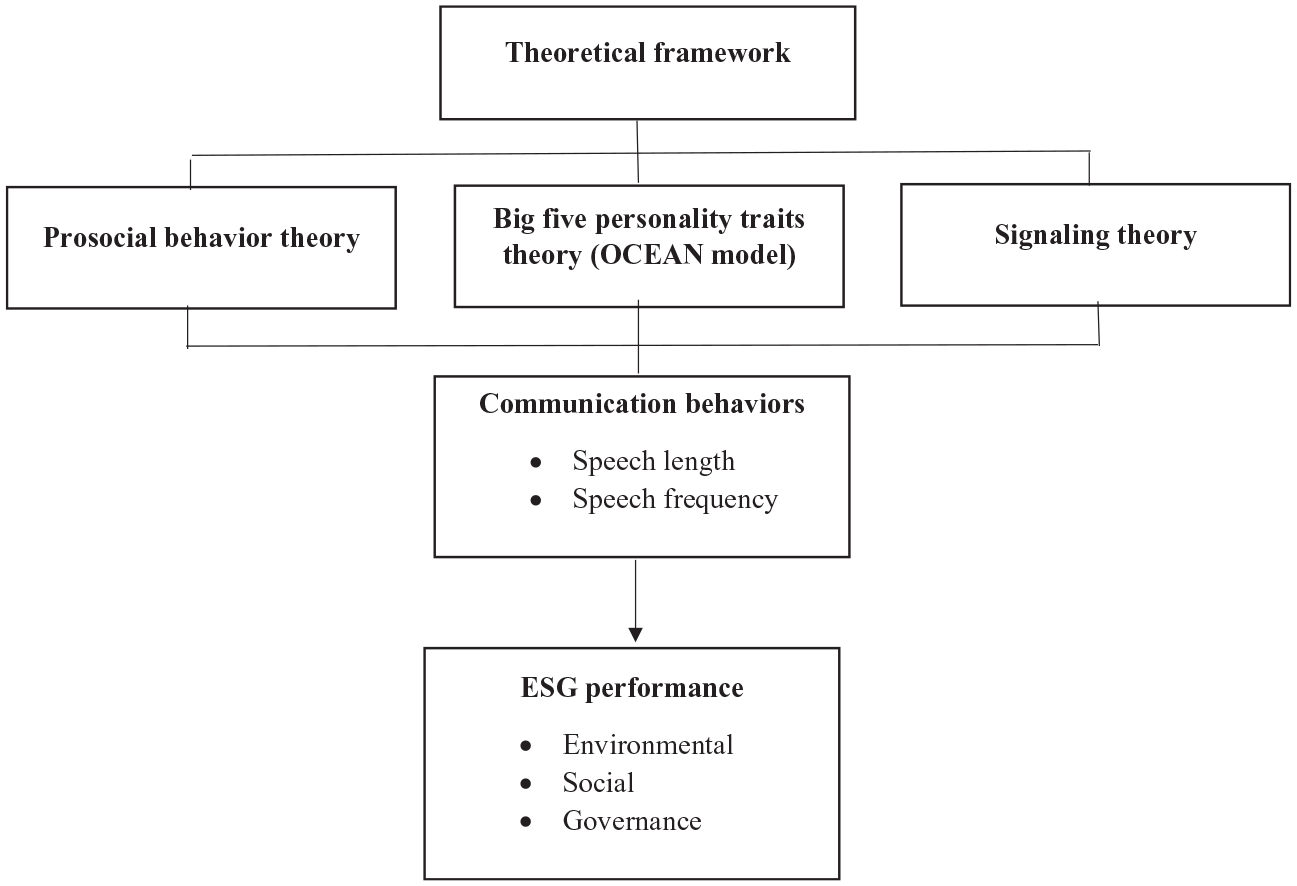
Conceptual framework illustrating the influence of CEO communication behaviors—speech length and frequency—on ESG performance (Environmental, social, governance), grounded in prosocial behavior theory, the Big Five personality traits theory (OCEAN model), and signaling theory.
Literature Review and Hypotheses Development
Sustainability and ESG performance are shaped by a wide array of organizational and contextual factors, including corporate strategy, leadership orientation, technological capabilities, and regulatory environments. Prior studies have shown that factors such as innovation capacity (Ragmoun, 2024a), stakeholder engagement (Ngai & Singh, 2014), and governance structures (Y. Liu et al., 2024) all play a critical role in driving ESG outcomes. In the context of emerging economies, Ragmoun (2024b) emphasizes the importance of environmental entrepreneurship as a catalyst for sustainability transformations, while another study underscores the importance of leadership characteristics in improving sustainability practices (Al Amosh, 2024). These findings suggest that leadership behaviors and technological capabilities are increasingly recognized as key enablers of sustainability practices across various industries.
Building on this foundation, the role of CEO characteristics in shaping corporate behavior and performance has been a central theme in leadership studies. CEOs, as the highest-ranking executives in an organization, wield significant influence over the strategic direction and culture of their firms (Choi & Cho, 2021). The personal characteristics of CEOs, such as education, experience, age, gender, and ownership, directly impact organizational governance, decision-making, and corporate responsibility practices (P. Liu & Nguyen, 2020; Sauter & Jungblut, 2024). Moreover, CEOs’ personalities affect how they make decisions and influence how they communicate their firm’s values and priorities to external stakeholders. These traits shape the corporate ethos, including transparency, accountability, and social responsibility, all of which are essential for fostering a strong commitment to ESG practices (Al Amosh, 2025a; Dabbebi et al., 2022). Therefore, understanding these links between CEO characteristics and corporate governance is critical, as it allows firms to better align their leadership with the evolving expectations of stakeholders, particularly in the realm of sustainability and ethical behavior (Tang et al., 2024).
On the other hand, CEOs with extraverted personalities are typically more sociable, outgoing, and engaging with stakeholders, which includes regular participation in public speeches, earnings calls, and shareholder meetings (McCrae & Costa, 1997). According to the big five personality traits theory, extraverted individuals have a tendency to seek interactions and express themselves freely, making them more inclined to engage in frequent communication with both internal and external audiences (Costa & McCrae, 1992). The relationship between talkative CEOs and organizational performance, particularly in relation to ESG practices, has been underexplored in the literature, despite mounting evidence that CEO communication style plays a pivotal role in shaping stakeholder perceptions and fostering a culture of transparency (Arvidsson, 2023; Im et al., 2021). By examining the frequency and length of CEO speeches, this study seeks to bridge this gap and explore how talkativeness influences ESG performance and corporate accountability.
Talkative individuals are often characterized by their sociability, approachability, and openness in social interactions (Qin, 2024). Moreover, talkativeness is closely linked to the personality trait of extraversion, which reflects a person’s tendency to seek out social interactions, express enthusiasm, and engage actively with others (McCrae & Costa, 1997). People high in extraversion are typically outgoing, energetic, and enjoy being the center of attention, which often translates into a strong desire to communicate with others. This trait is associated with behaviors that foster interpersonal relationships, as talkative people tend to engage in frequent, meaningful conversations and build connections with ease. Moreover, Agreeableness, another dimension of the Big Five, is also relevant to talkative individuals, as it involves being friendly, compassionate, and cooperative (McCrae & Costa, 1997). Highly agreeable people are not only sociable but also tend to prioritize the well-being of others, which can enhance their ability to engage in prosocial behaviors. For example, talkative CEOs, displaying these characteristics, may be more likely to foster transparency and communication, contributing to organizational culture and encouraging ethical behaviors. As McKeever et al. (2019) suggest, the ability to communicate effectively and with empathy plays a crucial role in shaping positive leadership outcomes, particularly in fostering trust and cooperation within organizations. Thus, talkative people, driven by both extraversion and agreeableness, are often seen as more approachable and socially connected, making them valuable leaders who can positively influence organizational dynamics.
The length of CEO speeches is often linked to their commitment to transparency and their willingness to share valuable information with various stakeholders. In the context of ESG performance, CEOs who speak frequently about sustainability issues tend to signal their commitment to social responsibility and the company’s role in anticipating financial performance (Che et al., 2020). Research by Mardini and Lahyani (2022) indicates that CEOs who are proactive in communicating with stakeholders through regular speeches often provide more detailed and comprehensive information about the company’s strategic goals, governance, and financial performance. Public speeches by CEOs, including their discussions on ESG topics, can directly influence corporate transparency and create an environment where social good is prioritized. CEOs who speak at length about social and environmental issues raise awareness and motivate stakeholders to take part in the firm’s sustainability initiatives, reinforcing the idea that communication is a tool for ethical leadership.
Additionally, CEO communication is increasingly recognized as a tool for managing stakeholder relationships (Choudhury et al., 2019; Schaedler et al., 2022). CEOs who engage in frequent and transparent communication help foster a culture of openness, where stakeholders, including employees, investors, and customers, feel confident in the firm’s governance practices (Martínez-Ferrero et al., 2024). This is particularly important in industries where social responsibility and environmental sustainability are key concerns. Studies show that CEO communication has a direct effect on how stakeholders perceive corporate integrity and trustworthiness, both of which are critical for the firm’s reputation and long-term success (Momtaz, 2021). Furthermore, research has highlighted the role of CEO narcissism in influencing how CEOs present themselves in public settings and manage stakeholder relations (Martínez-Ferrero et al., 2024). CEOs with narcissistic tendencies may use their communication to enhance their personal image and gain followers, which can influence their approach to corporate transparency. However, it is important to note that not all talkative CEOs may have the same motivation. Extraverted CEOs who are genuinely concerned with social responsibility might use their frequent speeches to genuinely address ESG concerns, whereas narcissistic CEOs might focus on self-promotion. Understanding these nuances is critical to grasping how CEO communication shapes ESG practices and organizational behavior.
On the other hand, recent studies provide insightful perspectives on how CEO communication behaviors, whether vision-setting, transparency, or symmetrical dialog, impact organizational outcomes. For instance, Lee and Kim (2022) emphasize the role of leadership communication in fostering employee commitment and engagement. They argue that symmetrical communication, where the leader engages in open, balanced dialogs with employees, enhances organizational trust and alignment. Similarly, CEOs who frequently engage with stakeholders through public speeches can create a shared understanding of organizational goals, aligning employee efforts with broader corporate objectives. Frequent speeches allow CEOs to shape the company culture, signaling their openness and accessibility to both internal and external audiences. Effective communication from CEOs has also been linked to broader stakeholder engagement. Besides, Ngai and Singh (2014) explore how CEO messages delivered via corporate websites influence stakeholder perceptions. They find that frequent and clear communication fosters trust and conveys organizational priorities effectively. Although the study focuses on written communication, its insights are applicable to spoken speeches, which provide real-time, personal engagement with stakeholders. CEOs who frequently address stakeholders can shape perceptions of corporate priorities, demonstrating their commitment to transparency and accountability.
A critical dimension of frequent CEO speeches is their role in engaging employees and enhancing organizational alignment. Qin et al. (2023) emphasizes the importance of CEO vision communication in building employee engagement. They argue that when CEOs articulate a clear and compelling vision, it helps employees connect their work to the company’s overarching goals, fostering a sense of purpose and alignment. Frequent speeches serve as a tool for reinforcing this vision, reminding employees of their collective objectives and inspiring action. This perspective aligns with the notion that repetitive and consistent communication enhances organizational coherence and cultural alignment, particularly when addressing complex and evolving issues like sustainability or CSR (Al Amosh, 2025b). The power of CEO communication extends beyond internal alignment to external advocacy and activism. Ji and Hong (2023) highlight the role of transparent leadership communication in driving social impact. They argue that CEOs who actively engage in public dialogs on societal issues can influence perceptions of corporate responsibility and ethical behavior. Repeated speeches, particularly on ESG-related topics, can position the CEO as a credible advocate for sustainability and social good, signaling to stakeholders the company’s commitment to these values. This aligns with the concept that frequent communication reflects a leader’s intrinsic motivation to foster a transparent and socially responsible corporate culture.
Martins et al. (2020) also highlight the strategic dimensions of CEO communication, particularly its role in navigating challenges and resistance. They argue that communication can act as a resistance strategy, helping organizations address stakeholder concerns and reinforce trust during periods of uncertainty. CEOs who consistently communicate are better equipped to manage perceptions, address controversies, and steer the organization through complex dynamics. By engaging stakeholders repeatedly, these CEOs establish themselves as steady, accessible leaders who prioritize accountability and ethical governance. Moreover, the dynamics of symmetrical communication highlighted by Lee (2022) provide a broader framework for understanding the importance of frequency in CEO speeches. The study underscores how communication channels used by leaders can foster balanced dialogs with employees and stakeholders, promoting organizational harmony and alignment. Frequent speeches by CEOs can be seen as an extension of this dynamic, where the consistent flow of information encourages two-way communication, reinforces transparency, and builds mutual trust.
CEOs engage in public communication and play a critical role in shaping an organization’s culture and stakeholder relationships (Barkley, 2020). CEO messages, particularly when delivered repeatedly, serve as a significant mechanism for communicating both the company’s goals and the values it upholds. Unlike strategic speeches that are tailored to specific events or purposes, repeated communication can reflect a CEO’s characteristic traits, such as a natural inclination toward engagement and the desire to maintain an ongoing dialog with various stakeholders. A frequent communicator is often perceived as someone who is approachable, accessible, and willing to be held accountable, all of which contributes to a culture of transparency and trust within the organization (Qin et al., 2023). However, from the perspective of Signaling Theory, while such frequent communication can be seen as an attempt to signal transparency and engagement, over-signaling can lead to fatigue or skepticism from stakeholders. As the frequency of communication increases, the signals may become less credible and lose their effectiveness, especially if not accompanied by substantive actions (Spence, 1973). Thus, while regular CEO communication can promote transparency, excessive frequency without concrete results may diminish its intended impact.
The repetition of CEO speeches may be an indicator of a CEO’s ongoing engagement with stakeholders. CEOs who prioritize frequent communication are likely to be viewed as genuinely interested in the concerns of their employees, investors, and other key parties (Ngai & Singh, 2014). This constant flow of communication reinforces the CEO’s commitment to openness and accountability, which, over time, can enhance organizational trust and stakeholder confidence. For example, frequent communication from the CEO, especially about corporate strategy, and values, can signal to employees that their contributions are valued and that the organization is transparent in its goals (Lee & Kim, 2022). Thus, these CEOs demonstrate their leadership style and commitment to maintaining a strong organizational culture based on open dialog.
While much of the research has focused on CEO communication strategies in the context of crisis management or during major corporate events, the frequency of communication itself is often overlooked. The natural talkativeness of CEOs—those who naturally engage in frequent public speeches—may not be solely driven by corporate strategy but rather a personality trait. Talkative CEOs, characterized by their inclination to engage consistently with both internal and external stakeholders, tend to embrace communication as a fundamental leadership tool. This aligns with findings by Martins et al. (2020), who suggest that CEO communication is reactive (in response to crises or specific needs) and proactive, often shaped by the CEO’s natural communication behavior. CEOs who frequently speak may do so because they derive value from staying engaged with their stakeholders, thereby promoting an ongoing dialog about the company’s direction and values.
Furthermore, frequent speeches can be seen as an integral part of a CEO’s leadership identity. Such repeated engagements may influence organizational behavior and indicate a desire to be seen as a transparent and responsive leader. This aspect of CEO communication is not merely a corporate strategy; it reflects a deeper, intrinsic drive to maintain strong, active connections with various audiences. CEOs who are naturally inclined to communicate frequently may be motivated by a genuine interest in engaging with stakeholders rather than just fulfilling a professional duty. Their openness and willingness to engage in regular discourse may reflect an innate belief in the power of communication to build and sustain trust, loyalty, and alignment between the organization and its stakeholders (Lee, 2022).
In sum, the frequency of CEO speeches can be understood as more than a tactical decision reflects the CEO’s personal communication style and their commitment to fostering a transparent, accountable, and socially responsible corporate environment. Talkative CEOs, by engaging frequently with various stakeholders, signal a dedication to open communication and stakeholder engagement, which may, in turn, influence corporate behavior and performance, particularly in areas like ESG and corporate governance. Through the repetition of their public messages, these CEOs help shape their company’s culture, aligning their leadership with the broader societal expectations of social responsibility, accountability, and ethical governance. Therefore, frequent communication is not just a managerial tool but a critical aspect of a CEO’s identity that drives organizational transparency and ethical behavior.
Hypothesis 1: There is a positive relationship between CEO speech length and ESG performance.
Hypothesis 2: There is a positive relationship between CEO speech frequency and ESG performance.
Methodology
Sample and Context
This study investigates the relationship between CEO speech characteristics and ESG performance across European publicly listed firms. The analysis focuses on 10 European countries—United Kingdom, Germany, France, Italy, Spain, the Netherlands, Sweden, Denmark, Belgium, and Finland—chosen for their diverse corporate governance systems and varying levels of sustainability practices. These countries provide an ideal setting for exploring ESG performance in the context of differing institutional, regulatory, and cultural environments. The study sample consists of 1,687 firms annually over the period 2014 to 2022, resulting in a comprehensive dataset.
Variables Measurement
Speech length is operationalized as the total number of words spoken by the CEO during public addresses, including quarterly earnings calls, shareholder meetings, and press conferences. Specifically, the focus is on unscripted speeches, such as Q&A sessions, which are believed to better reflect a CEO’s true personality and leadership style compared to scripted remarks (Qin et al., 2023). Longer speeches often indicate comprehensive discussions of corporate values, strategies, and ESG-related issues, thereby potentially fostering a culture of transparency and accountability within the organization.
Speech frequency is defined as the number of times the CEO publicly addresses stakeholders within a given year. This measure reflects the CEO’s proactiveness in engaging with stakeholders and providing consistent updates on corporate performance and strategy. For this study, the frequency of speeches includes earnings calls, annual general meetings, and major press events. A threshold of at least four speeches per year is set to ensure that only sufficiently active CEOs are included in the analysis. Frequent communication can signal a CEO’s commitment to transparency and responsiveness, aligning with stakeholder expectations for regular updates on governance and sustainability practices (Choudhury et al., 2019). To quantify speech length and frequency, data was collected from publicly available transcripts of CEO speeches. The total word count for each speech was calculated using natural language processing tools. Speech frequency was determined by counting the number of public addresses delivered by the CEO in a given year. Both variables are treated as continuous measures, capturing the intensity and regularity of CEO communication. The equation for calculating speech length (

Where
For speech frequency (

Where
This study builds on prior research that highlights the importance of CEO communication in influencing corporate governance. For instance, Gordon and Martin (2019) found that frequent and detailed CEO communications enhance stakeholder trust and demonstrate a firm’s commitment to ethical practices. Similarly, Schaedler et al. (2022) argue that detailed and consistent communication by CEOs can mitigate agency conflicts by reducing information asymmetry between management and stakeholders. Furthermore, this research aligns with prosocial Behavior Theory, which suggests that frequent and detailed communication may stem from an intrinsic motivation to engage with stakeholders and promote organizational welfare (McKeever et al., 2019). CEOs who exhibit talkative and outgoing behavior may naturally align their communication strategies with prosocial goals, thereby fostering a culture of openness and ethical governance. The frequency and depth of their communication could signal a commitment to ESG objectives and reinforce their alignment with societal values. The integration of the big five personality traits theory (McCrae & Costa, 1997) further enriches the analysis. Extraverted CEOs, characterized by sociability and talkativeness, may use frequent and lengthy speeches to engage more effectively with stakeholders. Their natural inclination toward open communication could drive greater emphasis on ESG performance and foster a culture of responsibility and sustainability within the firm.
On the other hand, ESG performance, the dependent variable in this study, is a comprehensive measure of a firm’s environmental, social, and governance practices, reflecting its commitment to sustainability and ethical governance. This variable has gained significant traction among scholars and practitioners due to growing societal and regulatory pressures for companies to operate responsibly (Ioannou & Serafeim, 2015). For this study, ESG data were sourced from Thomson Reuters (now Refinitiv), a widely recognized and reliable database for ESG metrics.
To ensure that CEO speech length and frequency are not merely artifacts of institutional role expectations or firm-specific communication policies, we introduce a set of theoretically grounded control variables into the regression models. we incorporate a set of theoretically and empirically justified control variables into the regression models. First, we control for CEO duality—whether the CEO also holds the position of board chair—as dual-role CEOs often carry broader public-facing responsibilities, which may systematically affect their communication behavior due to enhanced symbolic visibility. Second, firm size (measured as the natural logarithm of total assets) is included to account for differences in disclosure obligations and stakeholder engagement expectations, which tend to be more rigorous for larger firms (Al Amosh, 2024). Larger organizations are typically subject to increased regulatory scrutiny and media attention, both of which may necessitate more frequent or formal CEO communication. Third, analyst coverage is employed to capture external informational pressures. Firms that are closely followed by financial analysts tend to engage in more frequent and strategic disclosures to manage expectations and reduce information asymmetry (Chang et al., 2023). Including this variable helps to isolate voluntary CEO communication from communication driven by market surveillance.
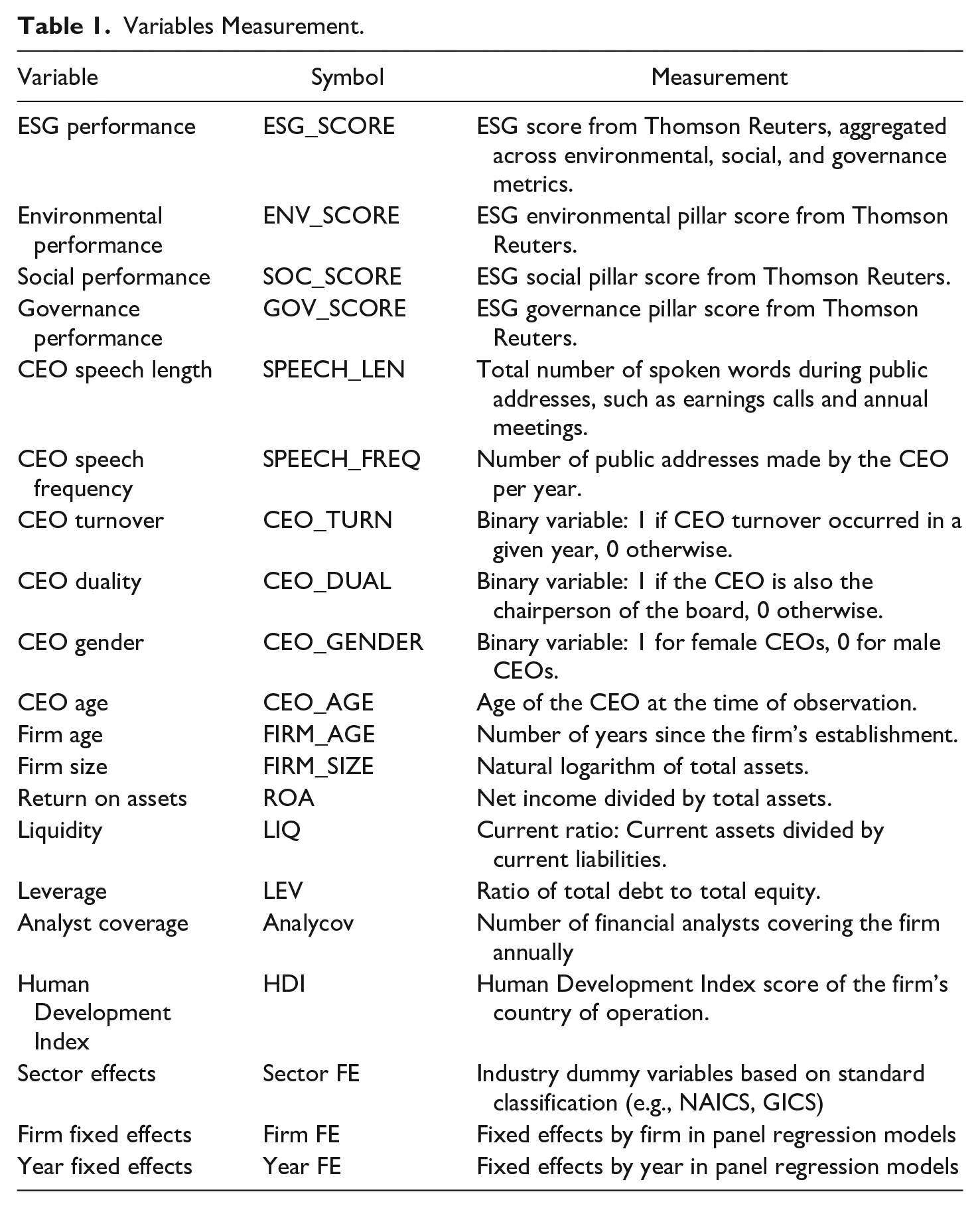
Additionally, firm fixed effects control for unobserved, time-invariant firm characteristics such as corporate culture, established disclosure policies, and long-term governance practices that might otherwise confound CEO-specific effects. Industry fixed effects are also applied to account for variation in communication norms and ESG reporting practices that may differ systematically across sectors. Together, these variables are carefully selected to differentiate the CEO’s individual communicative tendencies from structural, institutional, and contextual factors. This improves the internal validity of the study by ensuring that observed relationships between CEO speech behavior and ESG performance are not merely reflections of firm size, market pressure, or governance structure. Table 1 provides operational definitions and data sources for each variable.
Variables Measurement.
To assess potential multicollinearity among the independent variables, we conducted Variance Inflation Factor (VIF) diagnostics. The results show that both CEO Speech Frequency (VIF = 2.48) and CEO Speech Length (VIF = 2.34) fall well below the commonly accepted thresholds (VIF < 5), indicating no serious multicollinearity concerns. All other control variables also exhibit low VIF values, with a mean VIF of 1.60. These findings confirm that the inclusion of both speech frequency and length in the regression models does not inflate standard errors or compromise the reliability of the estimated coefficients.
Results and Discussion
Descriptive Statistics
Table 2 provides the descriptive statistics results, the mean ESG score (0.682) indicates a moderate level of environmental, social, and governance (ESG) performance across firms, with individual pillar environmental, social, and governance—showing relatively close averages (0.472 for ENV_SCORE, 0.515 for SOC_SCORE, and 0.533 for GOV_SCORE). These findings suggest that firms in the sample demonstrate consistent attention to sustainability practices, particularly in governance. Governance performance appears slightly stronger, reflecting its foundational role in driving corporate accountability and ethical decision-making (Tang et al., 2024). Besides, CEO-related variables provide further meaningful insights into leadership dynamics and communication. The average speech length (SPEECH_LEN = 12,507 words) and frequency (SPEECH_FREQ = 5.67 per year) reflect that CEOs in the sample are highly communicative leaders who frequently engage stakeholders through public addresses. This aligns with prosocial behavior theory (Sims, 2017), which suggests that talkative and outgoing individuals exhibit an intrinsic motivation to connect with others and foster openness.
Descriptive Statistics.
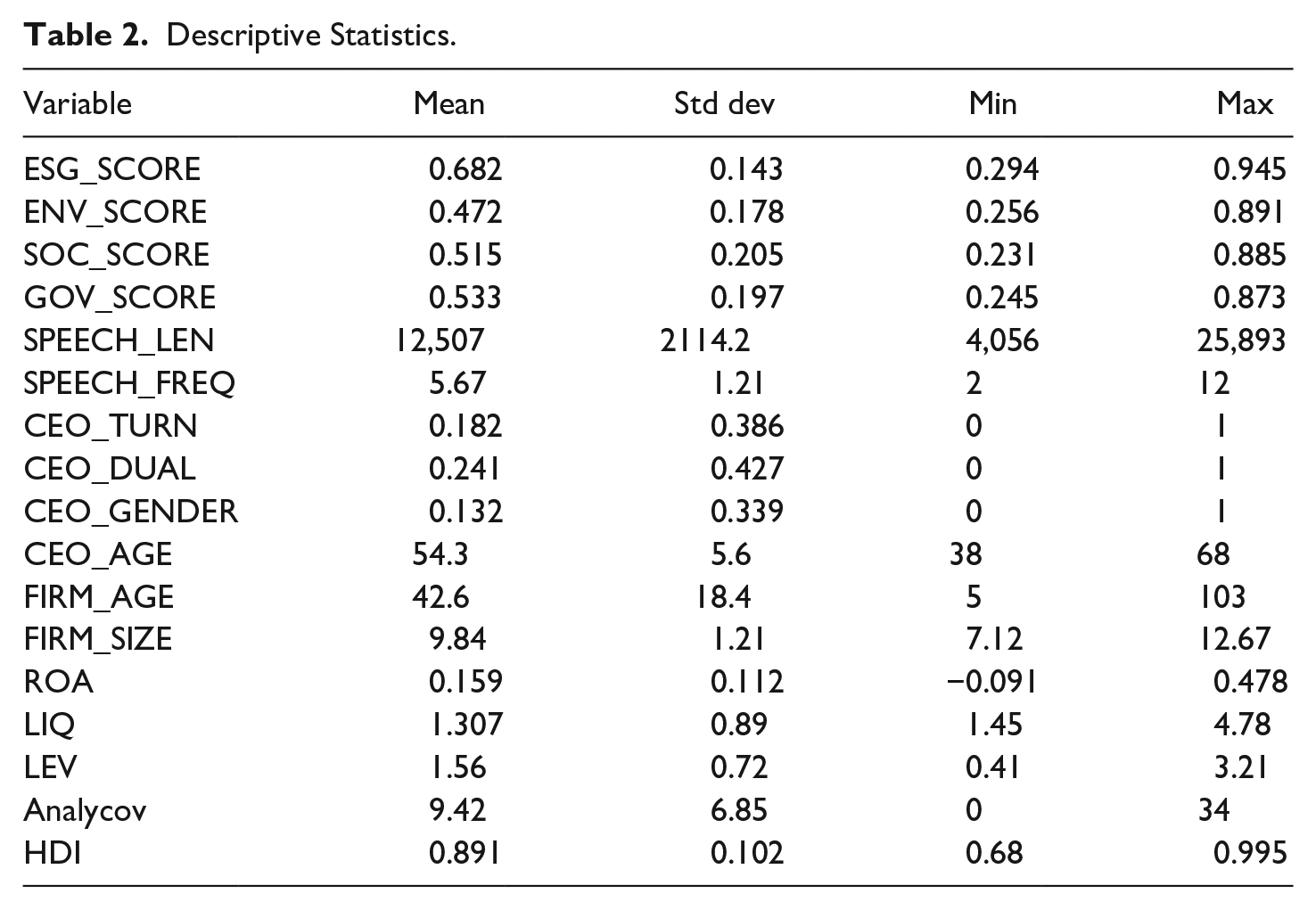
Regarding control variables, CEO duality (mean = 0.241) reveals that a considerable proportion of CEOs also hold the position of board chairperson, which may influence governance mechanisms. According to the UET, the concentration of power under dual roles could limit board oversight and reduce the effectiveness of communication strategies around ESG initiatives. Besides, the mean firm size (FIRM_SIZE = 9.84) and firm age (FIRM_AGE = 42.6 years) suggest that established and large firms dominate the sample, which is consistent with prior literature indicating that mature companies are better positioned to adopt and ESG practices due to resource availability and institutional pressures (Che et al., 2020; Tang et al., 2024). Furthermore, financial metrics such as return on assets (ROA = 0.159), leverage (LEV = 1.56), and liquidity (LIQ = 1.307) indicate stable financial performance across the sample, which is crucial for funding sustainability initiatives and ensuring corporate resilience.
Correlation Matrix
Table 3 presents the correlation matrix into the relationships between the study variables. Firstly, ESG_SCORE appears to show no significant correlation with either SPEECH_LEN (.12) or SPEECH_FREQ (.069). This suggests that while CEO speech length and frequency may reflect communication efforts, they do not necessarily translate into measurable improvements in overall ESG performance. A potential explanation for this finding could be that frequent and lengthy communication by CEOs may not always signal substantive actions on sustainability; instead, it may reflect symbolic gestures or efforts to maintain visibility. Prior literature has noted the risk of “greenwashing,” where extensive communication is used to create an impression of ESG commitment without tangible improvements (Dabbebi et al., 2022).
Matrix of Correlation.
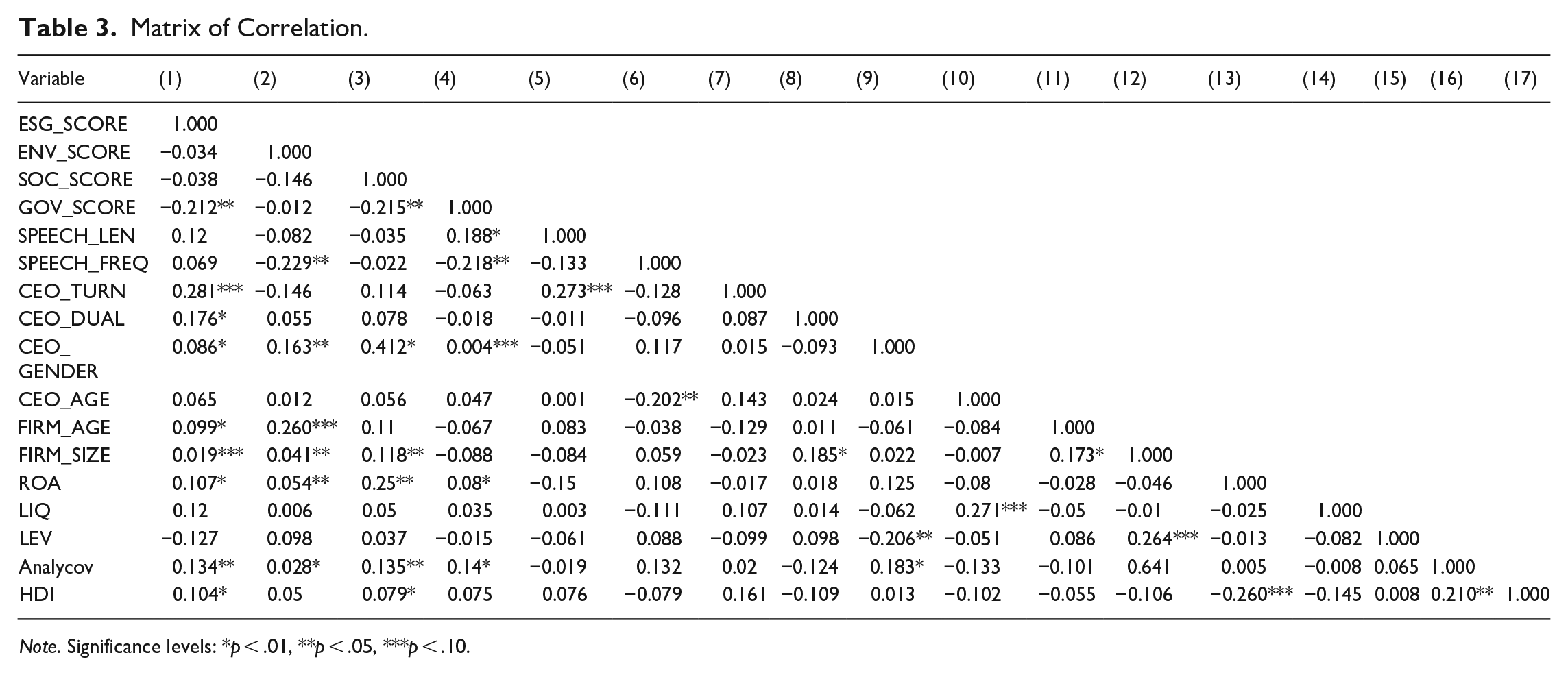
Note. Significance levels: *p < .01, **p < .05, ***p < .10.
Looking at the subcomponents of ESG, CEO speech length (SPEECH_LEN) exhibits a positive and significant correlation with GOV_SCORE (.188*, p < .05), suggesting that longer CEO speeches are associated with stronger governance performance. This is a notable finding, as governance mechanisms often involve transparency, ethical decision-making, and accountability—attributes that could be enhanced by CEOs who communicate extensively. Longer speeches may reflect a CEO’s emphasis on governance practices, addressing issues such as risk management, board effectiveness, and stakeholder trust. This finding aligns with the idea that CEOs who engage in more detailed communication may be reinforcing their leadership’s commitment to governance structures, fostering trust and alignment with shareholders.
On the other hand, SPEECH_FREQ demonstrates significant negative correlations with both ENV_SCORE (−0.229**, p < .05) and GOV_SCORE (−0.218**, p < .05). This result challenges expectations and suggests a potential disconnect between frequent CEO communication and improvements in environmental and governance performance. One possible explanation is that CEOs who engage in frequent public addresses may do so as a reactive measure during periods of poor ESG outcomes, using communication as a tool to manage perceptions or placate stakeholders. Alternatively, frequent speeches may reflect managerial distraction, where CEOs allocate significant time to external communication rather than implementing substantive ESG initiatives. This interpretation aligns with findings from Martins et al. (2020), who observed that frequent CEO communications in the media may sometimes serve as a resistance strategy rather than a reflection of meaningful action.
Finally, the negative relationship between SPEECH_LEN and ENV_SCORE (−0.082) and SOC_SCORE (−0.035), though not statistically significant, raises questions about the effectiveness of lengthy speeches in addressing environmental and social concerns. Lengthy CEO speeches may emphasize financial, strategic, or governance priorities while sidelining environmental and social topics, which are increasingly relevant to stakeholders. As prior research suggests, CEOs often tailor communication to address investor expectations, which may not always align with broader sustainability goals (Arvidsson, 2023; Ngai & Singh, 2014). On the other hand, CEO age (CEO_AGE) demonstrates a weak negative correlation with ESG performance, though the relationship lacks significance. This suggests that older CEOs may be more conservative and less proactive in implementing ESG initiatives, a behavior consistent with the Big Five Personality Traits Theory, where age is often associated with lower openness to experience (McCrae & Costa, 1997). Similarly, CEO duality (CEO_DUAL) shows a negative correlation with ESG performance, albeit not significant, indicating that CEOs holding both leadership and board chair positions might exercise more centralized control, potentially reducing transparency and stakeholder engagement. On the firm-level controls, firm size (FIRM_SIZE) and liquidity (LIQ) exhibit positive correlations with ESG scores, which are consistent with prior literature suggesting that larger and more financially stable firms have the capacity to invest in sustainability and governance mechanisms. However, leverage (LEV) and CEO turnover (CEO_TURN) display weak negative associations with ESG performance, reflecting the potential challenges faced by firms with higher debt or leadership instability in prioritizing ESG performance. These mixed results highlight the need for further investigation into the contextual and behavioral factors influencing CEO actions and their impact on corporate ESG outcomes.
Baseline Regression
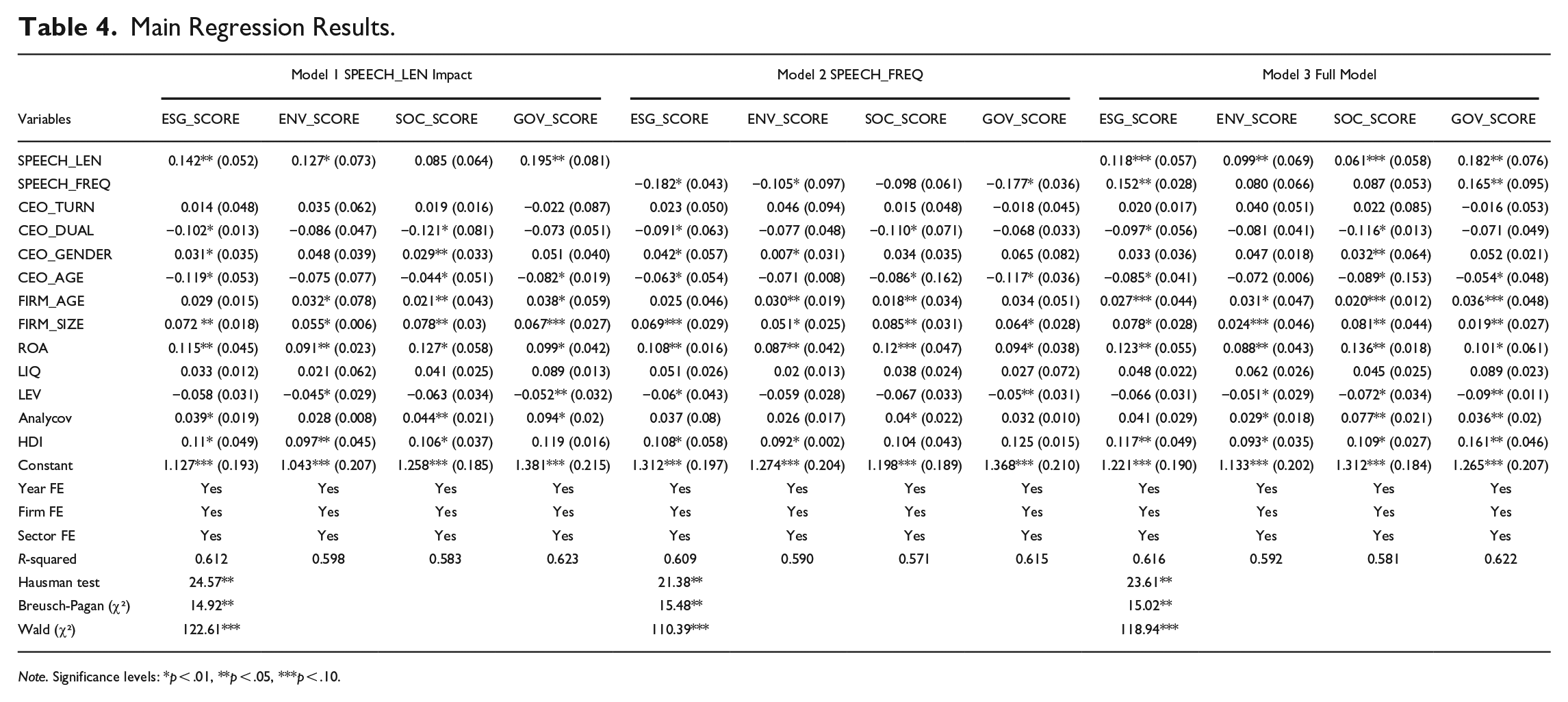
Table 4 presents the main regression results, which align with theoretical expectations while also challenging some common assumptions in literature. The findings reveal two key dynamics: the positive impact of speech length on ESG performance and the negative relationship between speech frequency and ESG outcomes, particularly in the environmental and governance dimensions. The significant positive correlation between SPEECH_LEN and ESG scores, especially GOV_SCORE and ENV_SCORE, offers a clear signal that CEO talkativeness and style play an important role in shaping a company’s governance and environmental practices. From the perspective of prosocial behavior theory, a CEO who delivers longer speeches likely demonstrates a deeper commitment to addressing stakeholder concerns and articulating corporate values. A CEO who delivers longer speeches likely demonstrates a greater commitment to communicating corporate values and addressing stakeholder concerns. This behavior aligns with prosocial motivations, as the CEO’s extensive communication reflects a willingness to engage deeply with social and environmental issues (Qin et al., 2023). Prosocial leaders prioritize the welfare of others, and their actions—manifested through detailed and transparent speeches—foster trust and accountability among stakeholders. The willingness to engage in lengthy, detailed communication reflects a prosocial orientation, where the CEO is motivated by intrinsic values like altruism, cooperation, and a genuine desire to benefit not just the organization but also the broader community (Sims, 2017). Talkative CEOs, particularly those who engage in extended communication, are often seen as fostering a culture of transparency and inclusiveness, as their speeches provide the opportunity to address a wide range of issues, including sustainability, social responsibility, and ethical governance. Such communication can build trust with stakeholders by demonstrating that the CEO is genuinely concerned with social welfare, which in turn can enhance the company’s commitment to improving its ESG performance.
Main Regression Results.
Note. Significance levels: *p < .01, **p < .05, ***p < .10.
Additionally, the positive relationship between SPEECH_LEN and ESG outcomes can be explained through the lens of big five personality traits theory, particularly the dimensions of extraversion and conscientiousness. Extraverted CEOs, who tend to be more outgoing and communicative, often exhibit a natural inclination to engage with various stakeholders through detailed and transparent speeches. The sociability associated with extraversion suggests that talkative CEOs are more likely to engage in open communication, fostering trust and collaboration with external and internal stakeholders (Sauter & Jungblut, 2024). Meanwhile, conscientious CEOs are methodical and detail-oriented, likely to ensure their speeches comprehensively address ESG concerns. Moreover, the conscientious nature of many of these CEOs implies that they are likely to invest time and effort into ensuring that their messages are well-thought-out, clear, and thorough. This blend of extraversion and Conscientiousness contributes to the effectiveness of communication and its impact on ESG performance, as CEOs are more likely to take a methodical approach in communicating their commitment to sustainability and ethical governance.
Moreover, the link between speech length and ESG outcomes also underscores the importance of agreeable leadership in driving ethical corporate behavior. Agreeableness is characterized by traits such as sociability, friendliness, and a tendency to prioritize the welfare of others (McCrae & Costa, 1997). A CEO who speaks extensively during public addresses likely exhibits high Agreeableness, signaling their commitment to fostering strong relationships with stakeholders. This sociability translates into more inclusive and stakeholder-focused governance, which enhances ESG practices by integrating diverse perspectives and addressing broader societal concerns. A talkative CEO’s extensive communication style is also indicative of a prosocial orientation, as highlighted by prosocial behavior theory. Sociable individuals tend to engage in actions that benefit others, motivated by intrinsic values such as altruism and cooperation (Sims, 2017). By delivering detailed and frequent messages, talkative CEOs disseminate critical information and create a perception of accessibility and openness. These fosters trust and encourage stakeholders’ collaboration in achieving sustainability goals. For instance, longer speeches often include nuanced discussions of social strategies, showcasing a CEO’s dedication to ethical governance and social responsibility. Such behaviors reinforce the organization’s ethical identity, aligning corporate values with societal welfare and enhancing stakeholder relationships (Graham & Haidt, 2010).
On the other hand, CEOs who engage in lengthy communications demonstrate a willingness to deeply engage with complex topics, signaling their respect for stakeholders’ concerns and their desire to maintain a transparent dialog. This Agreeableness helps create an organizational culture that values openness, accountability, and mutual respect. Friendly leaders are more likely to prioritize stakeholder needs, advocating for governance structures and sustainability practices that reflect shared values (McKeever et al., 2019). Moreover, sociability through extended speeches can symbolize the CEO’s love for society, aligning corporate goals with broader prosocial objectives. Detailed discussions in public addresses provide CEOs with the opportunity to articulate their vision for sustainability, demonstrate empathy for social and environmental challenges, and position the organization as a responsible corporate citizen. This proactive approach resonates with stakeholders, as it reflects a commitment to financial performance and a deep investment in societal well-being. Thus, CEOs who consistently communicate at length contribute to the development of a governance framework that integrates ethical practices, ESG initiatives, and stakeholder trust, solidifying their role as both business leaders and advocates for positive societal impact.
Contrary to expectations, the negative correlation observed between SPEECH_FREQ and ESG scores, particularly with ENV_SCORE and GOV_SCORE, presents a more complex dynamic. While frequent communication from CEOs may theoretically signal transparency, the results suggest that over-communication can actually have a counterproductive effect. This aligns with behavioral insights that excessive communication may dilute its perceived sincerity, leading stakeholders to question the authenticity of the CEO’s commitment to ESG goals. When CEOs make frequent public addresses without accompanying substantive changes or improvements in ESG practices, stakeholders may perceive this as performative rather than genuine. Over-communication, especially if it lacks depth or tangible updates, may be seen as an attempt to deflect attention from issues that require substantive action. This reflects the potential pitfalls of frequent speeches: while the CEO may intend to demonstrate transparency and engagement, the sheer volume of communication may actually dilute the message and undermine its impact.
From the perspective of the big five personality traits theory, particularly the dimension of extraversion, the frequency of CEO speeches can be interpreted as a natural inclination to engage with audiences. Extraverted CEOs tend to be outgoing and enjoy public interaction. However, if these CEOs lack high levels of Agreeableness, the communication can appear self-serving or superficial, leading stakeholders to view the frequent speeches as attempts to dominate the narrative rather than facilitate meaningful dialog. This is especially problematic when the frequency of communication does not align with concrete actions or changes in the company’s ESG practices. As a result, frequent speeches may come across as distractions rather than contributions to the company’s governance or environmental improvements.
The divergence between speech length and frequency underscores a fundamental distinction in the role of communication in ESG performance. While longer speeches may convey depth and sincerity, frequent speeches without substance may dilute their impact. These findings challenge simplistic assumptions that more communication inherently leads to better ESG outcomes and suggest the need for CEOs to adopt a balanced approach to stakeholder engagement. The results also prompt a reevaluation of the relationship between CEO personality traits and organizational outcomes. For example, while talkativeness is generally associated with positive social engagement, its manifestation as frequent speeches can have unintended negative consequences. On the other hand, frequent speeches, while initially perceived as a demonstration of commitment, may, over time, overwhelm stakeholders. This aligns with the concept of diminishing returns in signaling as the frequency of signals increases, their marginal impact on stakeholder trust and perception declines. Stakeholders may begin to interpret frequent speeches as performative rather than substantive efforts, particularly if the content lacks tangible updates or actionable commitments. In this context, over-signaling fatigue occurs when stakeholders disengage, interpreting repeated messaging as an attempt to obscure or compensate for a lack of genuine progress in ESG practices. This nuanced interpretation extends the application of prosocial behavior theory and big five personality traits theory by demonstrating that the effectiveness of communication behaviors depends on their alignment with stakeholder expectations and organizational goals. The findings contribute to ongoing debates about the role of leadership communication in corporate governance and ESG performance.
These contrasting findings between SPEECH_LEN and SPEECH_FREQ underscore the importance of distinguishing between talking a lot and talking frequently. SPEECH_LEN, when measured as the total number of words in speeches, indicates a deeper engagement with key topics, offering the CEO an opportunity to explain complex ideas and address stakeholder concerns thoroughly. In contrast, SPEECH_FREQ, measured by the number of times the CEO communicates with stakeholders, signals a different type of behavior—one that may become detrimental if overdone. This distinction highlights the importance of quality over quantity in CEO communication. While SPEECH_LEN reflects thoughtful engagement, SPEECH_FREQ may risk overwhelming stakeholders with excessive messaging that lacks substance, ultimately diminishing the impact of the CEO’s communication. The divergence between speech length and frequency underscores a fundamental distinction in the role of communication in ESG performance. While longer speeches may convey depth and sincerity, frequent speeches without substance may dilute their impact. These findings challenge simplistic assumptions that more communication inherently leads to better ESG outcomes and suggest the need for CEOs to adopt a balanced approach to stakeholder engagement.
The results from Model 3 present an interesting and nuanced interpretation of the impact of CEO communication behaviors on ESG performance. In this model, we see a continuous positive relationship between SPEECH_LEN and ESG_SCORE, GOV_SCORE, and ENV_SCORE, confirming the significance of long, detailed speeches in improving overall ESG performance. This suggests that CEOs who engage in longer, more detailed communication may be seen as more transparent, approachable, and committed to addressing environmental and governance concerns. Such behavior signals a CEO’s sincerity in pursuing ESG objectives and aligns with the notion that detailed communication fosters trust and clarity in governance strategies. Additionally, these CEOs may exhibit higher sociability and friendliness, key traits often linked to positive leadership, contributing to improved stakeholder relationships and ethical practices. This result supports the idea that CEOs who communicate extensively can build credibility and foster a transparent dialog with stakeholders, helping to improve governance and environmental outcomes.
However, the results also indicate that SPEECH_FREQ has a positive relationship with ESG_SCORE and GOV_SCORE, in Model 3, which is a shift from its negative correlation in previous models (Model 1 and Model 2). This shift can be attributed to the interaction between SPEECH_LEN and SPEECH_FREQ. When both variables are included in the model, it appears that frequent communication enhances the effectiveness of detailed speeches, particularly in the governance dimension. Frequent speeches, when paired with substance, may signal a CEO’s commitment to transparency and openness, which is highly valued in governance practices. However, SPEECH_FREQ still fails to demonstrate a significant positive effect on SOC_SCORE and ENV_SCORE, highlighting that while frequent communication can be beneficial for governance, it may not have the same impact on social and environmental dimensions unless accompanied by tangible actions and measurable outcomes. This suggests that stakeholders may view repeated speeches as less impactful when they are not backed by real, substantial progress in social and environmental initiatives. Therefore, the results imply that SPEECH_FREQ alone may not always enhance ESG performance unless it is paired with meaningful content and actions that align with the CEO’s sociable and agreeable personality traits. This highlights the importance of balancing frequent communication with depth and substance, as CEOs who provide detailed, transparent speeches are more likely to drive positive ESG outcomes.
Sensitivity Analysis
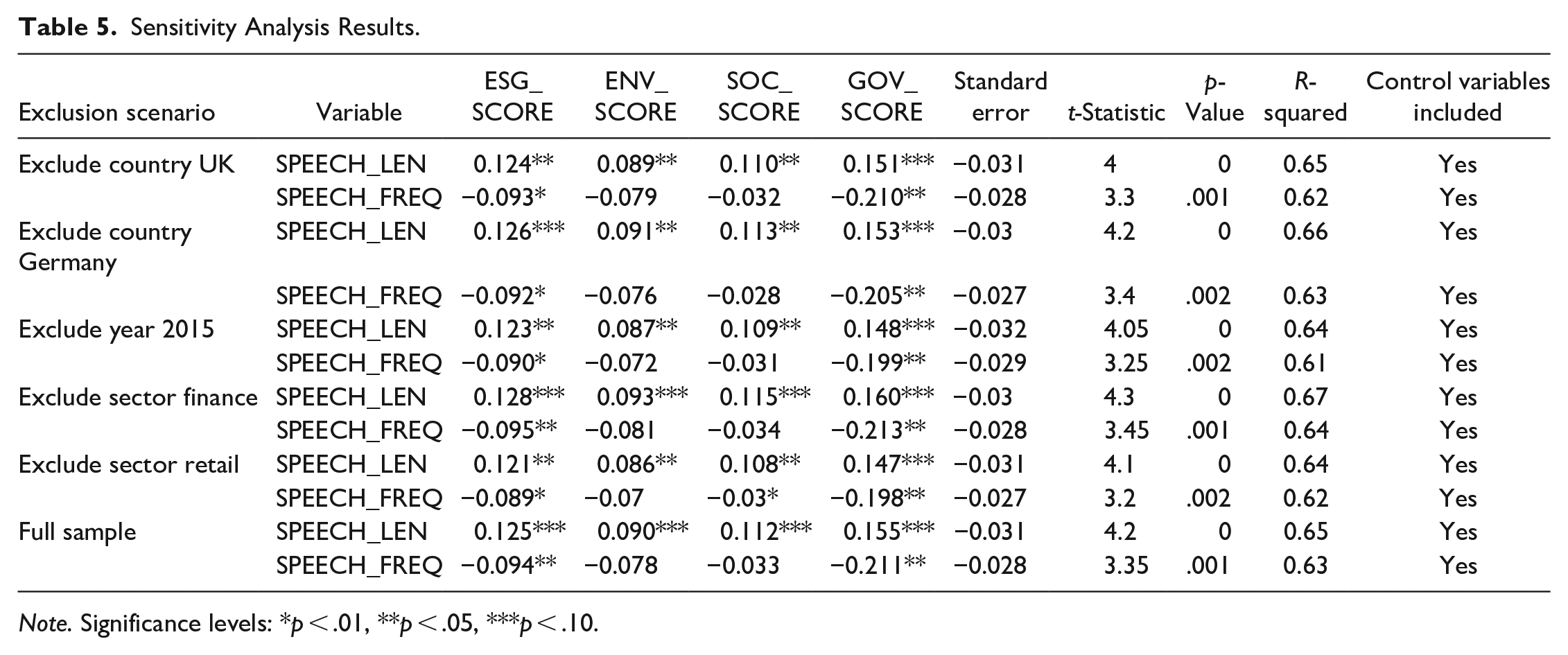
Table 5 presents the results of the sensitivity analysis, which was conducted to assess the robustness of the findings by excluding specific countries, years, and sectors from the sample. This approach helps ensure that the results are not driven by particular subsets of the data and that the relationships observed between CEO communication behaviors (speech length and frequency) and ESG performance are consistent across different contexts. The results from the sensitivity tests showed that the positive relationship between speech length (SPEECH_LEN) and ESG performance, particularly in governance (GOV_SCORE), remains statistically significant even after excluding individual countries, years, or sectors. For instance, when the UK or Germany was excluded from the sample, the relationship between SPEECH_LEN and ESG performance remained robust, with similar effect sizes observed across different model specifications. This suggests that the impact of CEO speech length on governance, environmental, and social performance is stable and not overly dependent on any one country or sector.
Sensitivity Analysis Results.
Note. Significance levels: *p < .01, **p < .05, ***p < .10.
On the other hand, the frequency of speeches (SPEECH_FREQ) demonstrated more variability across the different exclusions. When countries like the UK and Germany or sectors such as Finance and Retail were excluded, the relationship between SPEECH_FREQ and ESG performance remained negative, particularly with GOV_SCORE, indicating a potential over-signaling effect. The negative coefficients and significance levels observed for SPEECH_FREQ suggest that frequent CEO speeches, particularly in sectors or countries with more emphasis on governance, might signal a lack of substantive action, which could undermine stakeholder trust. The results from the sensitivity analysis suggest that while speech length maintains a consistent positive relationship with ESG outcomes, speech frequency’s impact is more complex, varying across different settings. This highlights the need for CEOs to balance the quantity and quality of their communication, as excessive frequency without substantive action may lead to skepticism and reduced effectiveness in driving positive ESG performance.
Conclusions, Implications, Limitations, and Directions for Future Research
This study aims to explore the impact of CEO communication behaviors—specifically speech length (SPEECH_LEN) and speech frequency (SPEECH_FREQ)—on ESG performance. It investigates whether longer and more frequent CEO speeches can influence the governance, environmental, and social dimensions of ESG performance, using a dual theoretical lens. The study focuses on a sample of 1,687 publicly listed firms across 10 European countries—UK, Germany, France, Italy, Spain, the Netherlands, Sweden, Denmark, Belgium, and Finland—spanning the years 2014 to 2022. Besides, the study applies prosocial behavior theory and the big five personality traits theory to understand the motivations behind CEO communication and how these behaviors influence corporate transparency, accountability, and sustainability efforts. Furthermore, the study integrates signaling theory to explain how CEO communication can act as a signal to stakeholders, affecting their perceptions of corporate commitment to ESG values.
The results demonstrate that SPEECH_LEN has a significant and positive impact on overall ESG performance, as well as on its individual dimensions—Environmental Performance (ENV_SCORE), Social Performance (SOC_SCORE), and Governance Performance (GOV_SCORE). CEOs who deliver longer, more detailed speeches are more likely to effectively communicate their commitment to sustainability, ethical practices, and corporate governance. This detailed communication fosters trust and transparency, enhancing the firm’s reputation in the ESG space. In contrast, SPEECH_FREQ (speech frequency) shows a mixed impact: while it has a positive association with governance, it exhibits a negative relationship with social (SOC_SCORE) and environmental performance (ENV_SCORE). This suggests that frequent speeches, when not paired with substantive action, may signal over-communication or performative behavior, leading to stakeholder fatigue and reduced trust in the CEO’s ESG commitment.
Theoretical Implications
The findings of this study offer important theoretical implications, particularly through the lenses of prosocial behavior theory and the big five personality traits theory. The positive relationship between SPEECH_LEN and ESG performance is consistent with Prosocial Behavior Theory, which posits that individuals who engage in actions that benefit others—such as CEOs who prioritize transparent and extensive communication—are likely to foster positive outcomes in governance, social responsibility, and environmental performance. CEOs who deliver longer speeches are likely motivated by a prosocial orientation, which aligns with the intrinsic desire to contribute to the well-being of stakeholders. By offering detailed, transparent communication about ESG issues, these CEOs engage with their stakeholders on a deeper level and signal their commitment to ethical practices and social responsibility, which, in turn, enhances ESG outcomes. This commitment to open and continuous dialog reflects a CEO’s willingness to maintain a positive relationship with stakeholders, build trust, and ensure alignment with CSR goals.
Moreover, the results emphasize the significant role of extraversion and conscientiousness from the big five personality traits theory in shaping CEO communication behavior. CEOs who exhibit extraversion are more likely to enjoy and engage in extensive verbal communication, as it is a key characteristic of this personality trait (McCrae & Costa, 1997). These CEOs thrive on social interaction and often demonstrate an enthusiastic, approachable demeanor, which is essential for fostering transparency and building strong relationships with stakeholders. Their willingness to engage in detailed conversations about governance, environmental, and social issues reflects their sociability and warmth, which are associated with greater organizational success in these areas. In addition, Conscientiousness, which is characterized by a methodical and responsible approach, complements the positive relationship between SPEECH_LEN and ESG performance. Conscientious CEOs are more likely to deliver speeches that are thoughtful, comprehensive, and aimed at addressing stakeholder concerns in a systematic manner, further reinforcing the company’s commitment to sustainable practices and ethical governance.
However, the negative relationship between SPEECH_FREQ and SOC_SCORE and ENV_SCORE challenges the conventional assumption that frequent communication always enhances ESG outcomes. This result is explained through Signaling Theory, which suggests that excessive communication, when not coupled with concrete actions, can lead to over-signaling fatigue. Stakeholders may view frequent speeches as performative, diminishing their impact on social and environmental performance. This highlights the need for a balanced communication strategy where the quality of communication (speech length) takes precedence over its frequency. This might explain why SPEECH_FREQ has a positive relationship with GOV_SCORE but does not significantly affect SOC_SCORE and ENV_SCORE. Stakeholders may value frequent communication in governance, where transparency and accountability are critical. However, in the environmental and social dimensions, stakeholders are more likely to focus on measurable actions rather than repetitive verbal commitments. Therefore, while SPEECH_LEN enhances ESG performance by providing a comprehensive and transparent account of a CEO’s leadership on ESG issues, SPEECH_FREQ may only contribute positively to governance performance, signaling the need for substance in communication rather than just frequency.
These findings underscore the importance of sociability and friendliness in CEO communication, particularly in the context of extraversion and Agreeableness from the Big Five Personality Traits Theory. CEOs who engage in extensive communication are often perceived as more sociable and friendly, characteristics that foster strong relationships with stakeholders. Their genuine interest in maintaining open dialogs contributes to a culture of transparency and trust, which is essential for improving ESG performance. The positive relationship between SPEECH_LEN and ESG outcomes highlights how talkative CEOs—who enjoy engaging with others and sharing their thoughts—can make a significant impact on their firms’ ESG performance. These CEOs are more likely to be seen as aligned with the broader societal goals of sustainability and ethical governance, as their communication fosters a sense of responsibility and collective engagement with stakeholders.
Practical Implications
Practically, the study sheds light on the importance of CEO traits such as friendliness and sociability. These traits are often evident in a CEO’s love of talking, which signals their willingness to engage with stakeholders in an open, approachable manner. Such traits demonstrate that CEOs who enjoy frequent communication are more likely to be responsive to societal demands and understand the significance of engaging in activities like ESG. Their talkativeness can be perceived as a sign of being attuned to the needs of employees, customers, investors, and the wider community. Friendly and sociable CEOs, who prioritize dialog and transparency, are more likely to understand the importance of CSR and sustainability. This connection between talkativeness and sociability underscores the role of CEO personality in driving positive corporate behavior and fostering long-term organizational success. Additionally, the findings of this study carry significant practical implications for various stakeholders, including CEOs, corporate boards, investors, policy makers, and the broader public. For CEOs and corporate boards, the results highlight the importance of balancing talkativeness with substantive communication. The positive relationship between SPEECH_LEN and ESG performance suggests that CEOs who communicate at length words—without being overly repetitive—can foster a culture of trust and transparency. However, the study also emphasizes that frequent communication alone may result in stakeholder skepticism, particularly concerning governance and environmental practices. This underlines the need for CEOs to pair frequent speeches with tangible actions, ensuring that their words align with concrete, measurable outcomes.
For investors and financial analysts, these results are particularly valuable in evaluating the credibility of corporate leadership in driving ESG performance. The study suggests that while long speeches are associated with improved governance and environmental outcomes, overly frequent communication may raise red flags for investors, especially if it lacks substance. Understanding these dynamics can help investors assess the authenticity of a company’s ESG commitment, influencing investment decisions. Shareholders, in particular, may benefit from this insight by recognizing that CEOs who engage in regular, substantial communication about ESG are likely more invested in maintaining transparency and aligning corporate actions with long-term sustainability goals. This can help investors identify companies where the leadership’s communication behavior is closely linked to genuine ESG progress, as opposed to superficial or performative actions that could signal a lack of commitment. Besides, policy makers can also use these findings to develop guidelines for corporate communication strategies, emphasizing the value of transparent, substantial engagement over mere rhetoric. Additionally, the findings suggest the potential for developing frameworks that encourage CEOs to balance communication with performance, ensuring that governance and sustainability practices are prioritized over superficial engagement. The study also highlights the importance of understanding how different communication traits, like sociability and friendliness, can positively affect the social and environmental performance of firms, suggesting a role for policy makers in fostering leadership that is aligned with broader societal goals.
Limitations and Directions for Future Research
While this study offers meaningful insights into how CEO communication behaviors, specifically speech length and frequency, shape ESG performance, several limitations must be acknowledged. First, the research sample is restricted to publicly listed firms in Europe, which may limit the generalizability of the findings to other geographical contexts or to privately held companies. To enhance external validity, future research should examine firms across different institutional environments, including North America, Asia, and emerging markets, where cultural norms and regulatory frameworks may influence both CEO communication and ESG practices.
Second, this study relies on publicly available data for ESG performance and CEO communication behaviors. While ESG scores from reputable sources like Thomson Reuters are widely used, they may not capture all the nuances of a company’s ESG practices, particularly in areas such as CSR initiatives or community engagement. Future studies could integrate more granular ESG data, including qualitative insights from interviews or surveys with stakeholders, to provide a more comprehensive understanding of how CEO communication impacts ESG performance.
Third, the analysis does not incorporate potential moderating or mediating factors that could influence the strength or direction of the observed relationships. Variables such as corporate culture, leadership style, industry pressure, or national governance quality may amplify or diminish CEO speech characteristics’ impact on ESG outcomes. Investigating these contextual contingencies could offer a more nuanced understanding of when and how CEO communication translates into sustainable corporate behavior. Finally, future research could explore whether there is an optimal level of speech frequency or length beyond which the benefits diminish or even reverse. This would highlight the fine line between transparency and overexposure, offering a deeper understanding of the relationship between leadership communication and organizational outcomes.
Footnotes
Data Availability Statement
Data available on request from the authors.
Declaration of Conflicting Interests
The author declared no potential conflicts of interest with respect to the research, authorship, and/or publication of this article.
Funding
The author received no financial support for the research, authorship, and/or publication of this article.
Ethics Approval Statement
This article does not contain any studies with human participants or animals performed by any of the authors
