




Abstract
Enterprise social networks (ESNs) are a communication standard within virtual teams. Among other affordances, ESNs enable colleagues to provide each other with social support. In this paper, we analyzed the message logs of virtual teams in a large open-source software project to determine how virtual teams use ESNs to provide particular forms of social support to each other and, secondly, to determine how the visibility of these interaction patterns influences team functioning. Our findings reveal distinct ESN use patterns in relation to four types of social support, each described using a metaphor: a dynamic notice board for information sharing, a community of practice for teaching and knowledge sharing, a team huddle for emotional support, and a job board for instrumental support. The findings provide structure to the diverse set of social support actions in this context and identify the higher-order functions that the visibility of social support produces.
Keywords
Distributed work practices in which colleagues complete tasks at separate, geographically distributed locations have become increasingly widespread (Henry et al., 2021). A growing number of organizations now embrace these practices, with employees working remotely as part of virtual teams—geographically distributed teams that rely on information and communications technologies to communicate and coordinate (Hertel et al., 2005). Despite broad adoption of the practice, concerns have been raised about the lack of face-to-face interaction among co-workers and how this could impact team functioning (e.g., Bentley et al., 2016; van Zoonen & Banghart, 2018). A particularly important concern relates to the notion of social support which, in work contexts, broadly refers to the interpersonal provision of psychological or material resources to, for example, positively influence work tasks or mitigate workplace stress/strain (Jolly et al., 2021). Studies across both traditional and distributed work contexts have highlighted the critical role that social support plays in team functioning (Henry et al., 2023; Chiaburu & Harrison, 2008; French et al., 2018; Oksa et al., 2021; Van Zoonen & Sivunen, 2022).
To counter the challenges associated with distributed work practices, virtual teams typically adopt enterprise social networks 1 (ESNs) like “Slack” or “Microsoft Teams” (Caya & Mosconi, 2023; Henry et al., 2023; Klingelhoefer & Meier, 2023). Incorporating an evolving set of features (e.g., direct messages, group channels, file storage, voice/video calls, public/private forums, emoji reactions, threads, and automatic integrations), these platforms enable virtual teams to communicate and coordinate their activities (Leonardi et al., 2013; Rice et al., 2017). Though few studies have investigated the use of ESNs for social support purposes, there is initial evidence that this is a common and potentially important form of ESN-based interaction among team members (Henry et al., 2023; Oksa et al., 2021). Specifically, research has shown that ESNs often function as a “social lubricant,” facilitating and/or easing social support actions like knowledge sharing (Leonardi et al., 2013; Leonardi & Meyer, 2015). In the present study, we aim to extend this line of enquiry by investigating a particular affordance of ESN use—behavioral visibility—in relation to social support practices in distributed work contexts.
Behavioral Visibility
Leonardi and Treem (2020) argue that co-workers’ behaviors are rarely observed directly but become observable when they involve the enactment of socio-material practices that produce representations. ESNs collect and broadcast various data points whenever someone performs an action (e.g., posts a message, shares a file, and goes offline), making the action visible to a potentially large collection of observers. This produces an ever-growing volume of data about organizational work processes from which observers continuously draw (and update) inferences about others’ routines or work patterns, motives, and communication styles (Kim, 2018; Leonardi, 2014, 2015).
The benefits of behavioral visibility have primarily been considered in relation to knowledge sharing and reuse. van Zoonen et al. (2022), for example, argue that “visibility may allow employees to avoid delays in work processes or prevent inaccurate decisions due to access to and reuse of existing knowledge, including knowledge generated in other contexts” (p. 216). Studies have also shown how visible knowledge sharing advances interpersonal trust among distributed workers (Cramton et al., 2007), as well as employees’ ability to learn from others’ successes and failures (Kc et al., 2013).
Extending this line of investigation, Leonardi (2015) investigated the important role that visible knowledge sharing plays in the development of “metaknowledge” among observing team members. Metaknowledge refers to individuals’ understandings of “who knows what” and “who knows whom” in their work contexts. These understandings play a critical role in individuals’ ability to navigate the knowledge landscape at work and gain access to particular forms of knowledge (Leonardi & Meyer, 2015, p. 29). Kim (2018), accordingly, observes that the inferences individuals draw based on observations of knowledge sharing interactions play an important role in determining their future knowledge seeking behaviors.
Visible Social Support Among Virtual Teams
While acknowledging the primacy of knowledge sharing as a form of informational social support in virtual work contexts, it is important to recognize that the notion of social support captures a much broader range of support interactions among co-workers (Jolly et al., 2021). These may include, for example, emotional support (i.e., the provision of psychosocial support like empathy), instrumental support (i.e., the provision of resources to directly address a tangible work-related need), and appraisal support (i.e., the provision of information that enables self/situation-evaluation) (House, 1981).
In the same way that ESNs make instances of knowledge sharing visible to third-party observers (i.e., not only the target individual or group), it makes other forms of social support provision visible when the associated interactions occur in public or open ESN locations like team or project channels. This has the potential to impact team functioning in important ways when team members, based on their observations of these interactions, make inferences about the social support culture, values, and norms within a particular organization or team. For example, by observing instances of social support interaction among other team members, individuals gain insight into others’ willingness and ability to provide particular forms of support. These insights can play an important role in determining factors like social cohesion (van Zoonen et al., 2023) and inter-personal trust in a team (Liang et al., 2020; Masood et al., 2023). Moreover, they serve to establish norms around social support interactions by signaling where (within the ESN) and how (through which of its features) support can be sought and provided.
van Zoonen et al. (2023) observe this dynamic in relation to remote worker’s perceptions of the proximity of their team members. They define perceived proximity as “the perception of how close or far other organizational members seem” and argue that it has a cognitive (“a mental assessment of how distant someone else seems”) and affective (“subject to emotions and feelings”) component (p. 1270). In a field study the authors find, firstly, that ESN use is positively related to perceived proximity and, secondly, that individuals that feel socially closer to their colleagues are more likely to communicate in a visible manner.
A similar pattern is observable in the findings of Masood et al. (2023) who, based on the theoretical premises of communication visibility, observe that more frequent ESN use is associated with higher interpersonal trust among co-workers and that this, in turn, promotes knowledge sharing activities. Liang et al. (2020) extend this line of investigation to general helping behaviors among co-workers, defined as the voluntary assistance of others in achieving their goals or preventing the occurrence of problems (Podsakoff et al., 2000). They find, firstly, a positive relationship between visible ESN communication and helping behaviors and, secondly, that this relationship is mediated by trust among co-workers.
Beyond these survey-based studies, there have not been, to our knowledge, any qualitative investigations of the content and patterns of visible social support interactions among virtual teams. Given the limited but significant evidence of the important role that communication visibility plays in team functioning, coupled with the central role of social support, we argue that this represents an important gap in the present literature on distributed work practices.
The Present Study
In the present study, we aim to address this gap in the literature by analyzing the message logs of virtual teams working in a Free and Open Source Software (FOSS) context. To this end, we structure the investigation around three primary research objectives:
RQ1: Firsty, we aim to identify and classify visible (ESN-based) social support interactions among virtual teams.
RQ2: Second, we aim to identify regularities or patterns in team members’ use of the various ESN features when engaging in different forms of visible social support interaction.
RQ3: Finally, we aim to explicate the potential implications of the visibility of the observed social support interaction patterns for team functioning, performance, and culture.
Method
To address our study aim we conducted a single case study of ESN use for social support in the context of a large open-source software project. In the sections which follow we describe the case context, followed by an outline of our data collection and analysis processes.
Case Context
To identify visible expressions of social support within a virtual team’s ESN, we analyzed public ESN communication logs available for the WordPress open-source project. Contemporary commercial software products are often too complex to be developed by a single programmer. Instead, software development is a socio-technical activity in which projects are partitioned into related but independent components, with separate teams collaborating to develop each constituent part of the larger whole in parallel (Sawyer, 2004). This work practice is particularly prevalent in the context of Free and Open-Source Software (FOSS) development in which there is a high-level of task-interdependence among virtual team members (Crowston et al., 2012; Jarczyk et al., 2014). In some FOSS projects a focal organization (e.g., Red Hat and Automattic) may coordinate virtual teams within the community, while in others, teams may be self-organizing. As a result of the distributed, virtual, and organizationally dynamic character of FOSS development, coupled with the parallel nature of team-based software development in which work is carried out simultaneously, communication and coordination within and between virtual teams are critical challenges (Crowston et al., 2012; Stray & Moe, 2020).
WordPress uses an ESN for collaboration among contributors to the open-source project. Access to the ESN is open to the public and all project channels are publicly visible, but participation is limited to those involved in the project—as noted in the #5-9-release-leads channel description, “It’s public viewing for transparency, but [it] is a workspace so posting is limited to squad members.” At the time of data collection the community used Slack version 4.26 and participant identities were publicly displayed. The community used over 100 separate channels, with several major categories: announcement channels for upcoming releases, project channels for specific projects and releases, and team channels for discussion and socialization among team members working in a given area (e.g., documentation). All these channels were visible to all ESN users, meaning that other members of the organization could join the channel and that message data (content and source) was visible in organization-wide searches. The content within the channels was primarily work-related and the data collected did not include direct messages (messages between two individuals), nor private channels within the ESN. To collect data, we targeted three project channels (i.e., channels that exist to coordinate work for a particular project with limited duration) and selected the three most-recent releases of the WordPress software at the time of data collection in mid-2022: #5-8-release-leads, #5-9-release-leads, and #6-0-release-leads. Additionally, to provide a more robust perspective on the case we also included data from two team channels (i.e., channels which exist for ongoing communication within a team with a particular objective). These two channels were used over a longer term by teams involved in two specific aspects of the project: documentation (#docs) and accessibility improvements (#accessibility). For our analysis, the supervisor role and team membership were determined using project websites that announced each release and provided role details. 2
Data Collection
A retrospective sample of approximately 10,000 messages was collected from the five channels. All these messages were visible to all users of the ESN. Specific message date ranges varied based on the dates in which the channel was active (e.g., October 2021–April 2022 for the #docs channel, but May to November 2021 for #5-8-release-leads, as that is when the 5.8 release occurred). Data collected included all information (content, source, date, and time) relating to messages, threads, replies, and emoji reactions.
Prior to collecting the data, clearance was received from the Research Ethics Committee (REC:SBER, project #24534) at the relevant institution. To ensure anonymity and reduce informational and privacy risks we report all results using anonymized identities.
Analysis Procedures
To analyze the data and identify visible social support actions we followed the six-step reflective thematic analysis process recommended by Braun and Clarke (2021), which has been used in previous analyzes of message logs (e.g., Meade et al., 2018; Xiong et al., 2019). The analysis was done in ATLAS.ti by a team of three researchers working collaboratively.
To identify social support instances in the ESN messages we used a taxonomy of work-related social support. Although Jolly et al. (2021) catalogued various types of work-related social support at a high-level, we required a more fine-grained delineation of the specific psychological or material resources provided through social support actions (Liu et al., 2018; Meng et al., 2016). Taking House’s (1981) four high-level categories of social support as an initial basis, previous research investigating social support communication in online contexts (e.g., Coursaris & Liu, 2009; Ko et al., 2013; Yan & Tan, 2014; Yao et al., 2015) used the typology of social support developed by Cutrona and Suhr (1992) which denotes 23 “support intended communication behaviors” in five categories: informational support, tangible aid, emotional support, network support, and esteem support. Although this typology was developed for a specific context (i.e., stressful events) and an in-person setting, its prior use in general online communicative contexts (Coursaris & Liu, 2009; Ko et al., 2013; Yan & Tan, 2014; Yao et al., 2015) suggests that it can be useful for identifying mediated social support communication more generally.
To produce our taxonomy, we mapped Cutrona and Suhr’s (1992) typology of social support, along with Bambina’s (2007) revisions, to the high-level types of social support specified by House (1981), using the comparisons provided by Lin et al. (2015) as a guide. We removed sub-types of social support not applicable to the online context (e.g., physical affection), those not directly observable in text-based message content (e.g., listening), and those only applicable to private contexts (e.g., confidentiality), and, where required, adapted the definitions to fit the context of distributed work. The taxonomy is depicted in Table 1.
A Taxonomy of Social Support Types and Subtypes for Message-Based Virtual Communication.
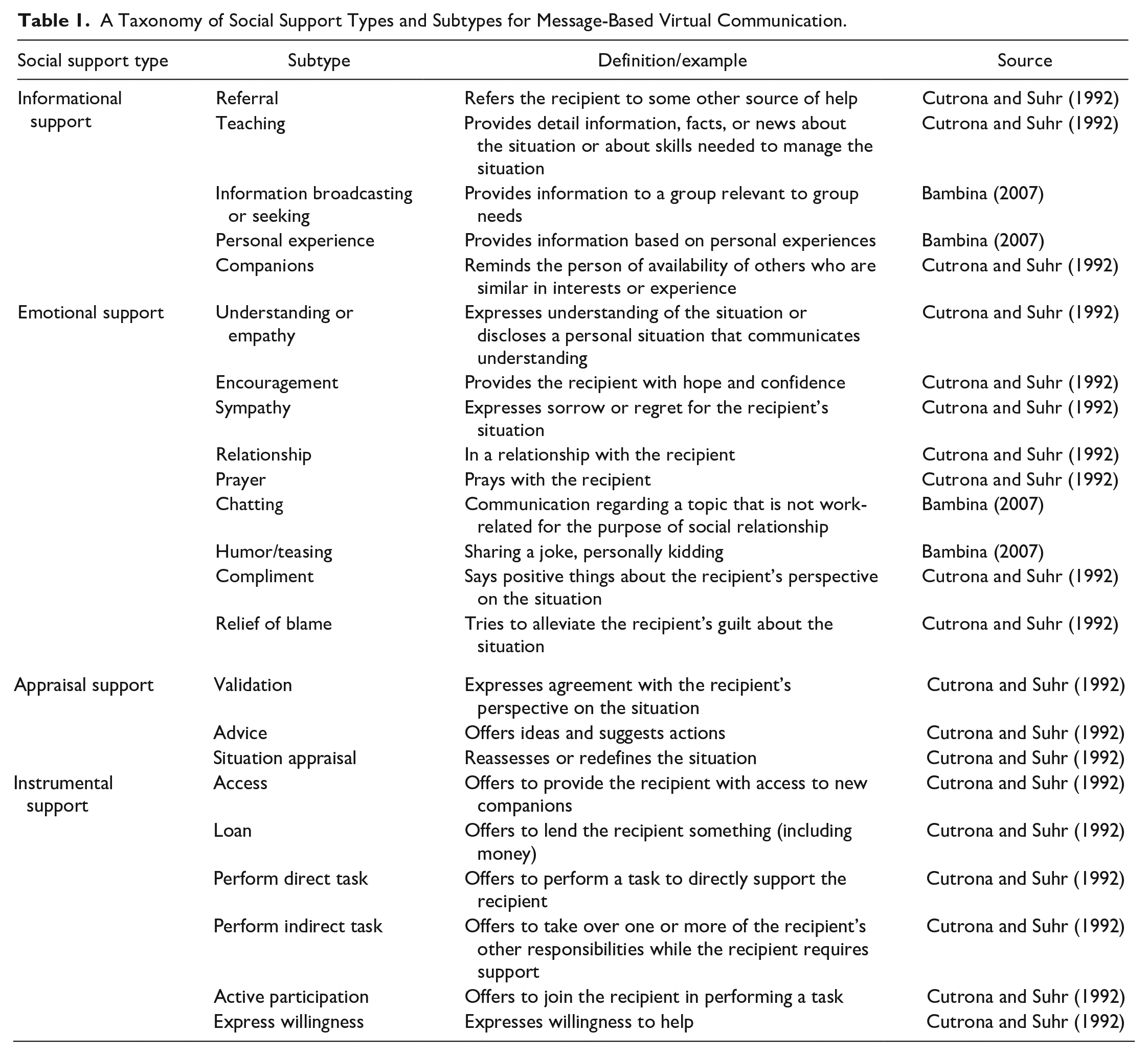
Following data familiarization, coding proceeded in a sequential manner with two rounds of coding (a complete list of codes is available in the online supplementary materials: https://osf.io/pmaz5/?view_only=bfd9531fc3624986a813bf817c7b67e3). During the first round, ESN messages were labeled with codes denoting types of social support from the taxonomy, working backwards from the most recent messages. Coding stopped at the point of data saturation, which occurred after approximately 40% of messages were coded (4,000 of the 10,000 messages). At this point, new data (in this case messages) repeated what was already expressed in previous data (Saunders et al., 2018, p. 1897) leading to the repetition of codes.
The second round of coding followed an inductive approach with codes developed during the coding process until no new codes or themes emerged (i.e., thematic saturation, Saunders et al., 2018). The second set of codes enabled the identification and categorization of instances of social support that were not readily captured by our prior taxonomy.
As recommended by Ando et al. (2014), once preliminary coding was complete, the remaining messages were used in a confirmatory step to ensure adequate a posteriori code development and saturation of all codes. For the confirmatory coding, ten percent of the remaining messages were randomly selected for analysis. These were collected in groups of 50 messages to enable consideration of context in the coding process.
After completion of these coding procedures, initial candidate themes were generated with the support of the code co-occurrence explorer feature in ATLAS.ti. Using these candidate themes, after a thorough reading of the relevant text to identify shared core concepts, a set of initial themes was produced by merging related themes and discarding those that were irrelevant in the current context. These initial themes were revised and further developed to produce a final set of four themes.
Findings
We present the results of our analysis by describing four themes, each relating to a pattern of ESN use characterized by the visible provision of a particular type of social support. To position these findings in relation to earlier work on communicative affordances in organizations (Rice et al., 2017), we follow a similar approach to Kim and Pilny (2023) and Leonardi et al. (2013) and turn to metaphor as a theoretical tool for the description of our themes. We propose four metaphors that each capture a socio-material pattern which emerges when a particular type of social support is enacted by virtual teams in a visible manner using the ESN. As is the case in any application of metaphor as a linguistic and conceptual tool, the aim is to highlight particular aspects of the target domain (visible social support patterns among virtual teams) by mapping it to similarities in a source domain, acknowledging that such mappings are always partial in nature (Shen, 1999). Throughout the metaphor descriptions we provide examples from our data in the form of images (screen shots) of ESN messages.
Visible Broadcasting Produces a Multi-Dimensional, Searchable, and Persistent Notice Board
Our first theme describes the use of the ESN for visible information broadcasting by adopting the metaphor of a notice board. The metaphor draws attention to the way virtual team members use the ESN to continuously and visibly broadcast information to each other as a form of social support. For example, team members constantly use the ESN to make announcements or provide updates about a diverse range of topics like upcoming events and project or task statuses (see, e.g., Figure 1A and B). These messages often include hyperlinks to resources or further information and are generally not targeted at any particular person but are posted for the benefit of the team in general.
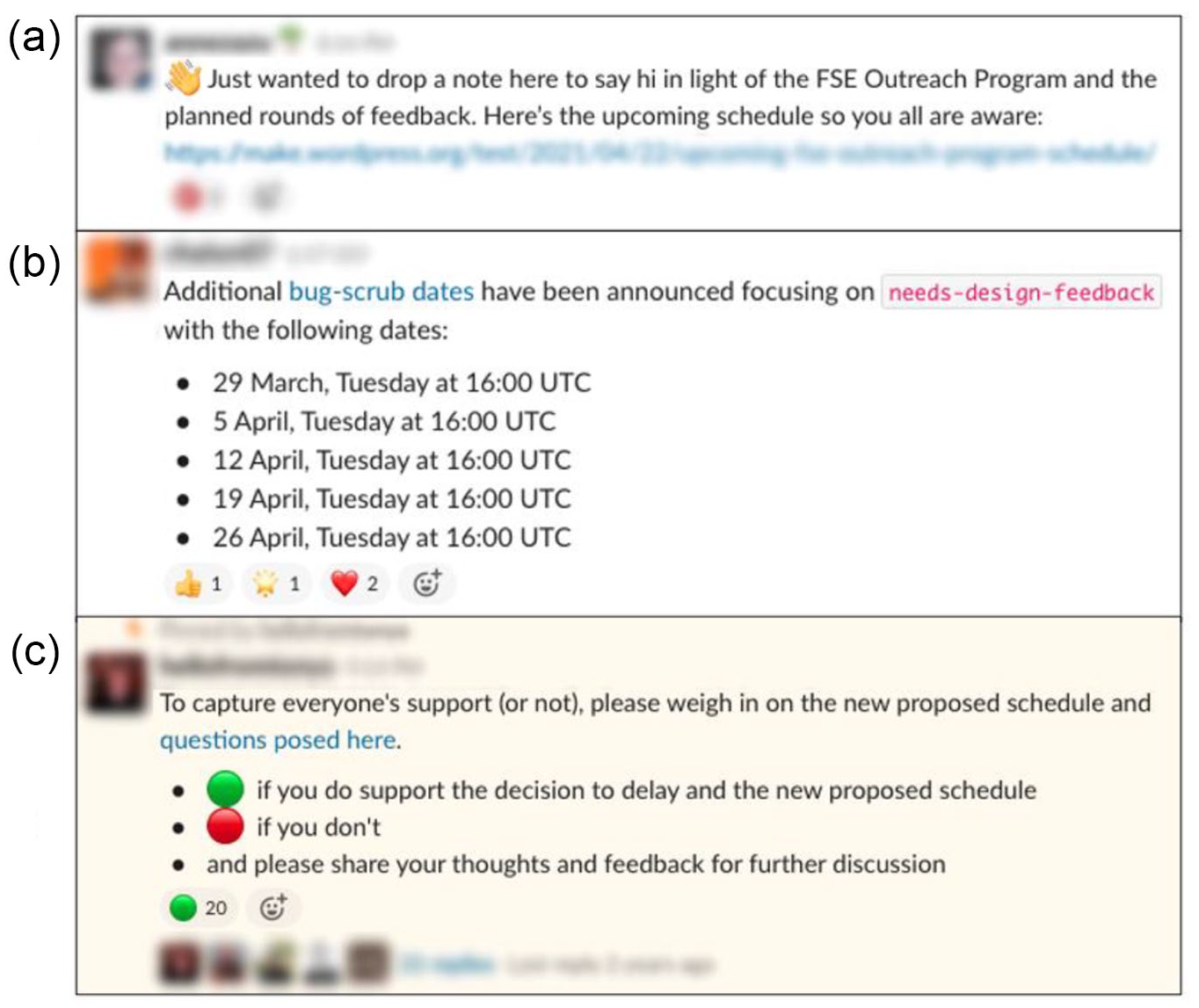
Examples of information broadcasting. (A) #5-8-release-leads channel, team member. (B) #6-0-release-leads channel, team member. (C) #5-9-release-leads channel, with the message posted by the supervisor.
ESN platforms simplify or “lubricate” (Leonardi et al., 2013) this type of information broadcasting through features that minimize the effort associated with creating or loading information and, when needed, selecting appropriate groups as broadcast targets. This practice promotes team coordination by ensuring that team members are frequently updated with important developments that may influence their tasks, schedules, or decisions.
While physical notice boards are located in a fixed position and based on their dimensions, only provide space for a limited number of postings, an ESN as a digital notice board enables unlimited postings to be made in parallel by large numbers of users. The resulting volumes information broadcasting may distract members from ongoing tasks or disrupt their work processes. This challenge is amplified when individuals feel obliged to stay up to date with broadcasts and interrupt their work to attend to new posts. There is ample evidence that such multitasking practices and the cognitive switches they entail can harm productivity (Leroy, 2009).
Our data suggest that teams adopt three strategies to counter broadcast overload. First, information broadcasting was primarily done by supervisors who determined the broadcast worthiness of information. Second, teams utilized threads to respond to broadcasts if necessary. This implied that, while still visible to everyone, responses were not displayed in the main channel feed, and post notifications were only received by those participating in the thread. Threads, in this way, provide a second dimension of visibility to the ESN as a dynamic notice board. Third, to provide quick responses to broadcasts, emoji reactions were utilized as a mechanism to signify different things (e.g., support, gratitude, confusion, and disagreement). In some instances, teams utilized this feature to simulate a poll where particular emoji could be used to signal particular responses. This enabled team leaders to, for example, gauge the team’s collective sentiment on a matter, or their progress on tasks (see Figure 1C).
The spatial limitations of physical notice boards imply that older messages must be removed to make space for new posts. However, given the persistence of ESN messages, a pattern of constant broadcasting produces, over time, a complete record of a team’s actions and communications. Team members can, through the ESN’s search features, interrogate this record retrospectively to find information they may have forgotten or reaffirm decisions made in the past.
Visible Knowledge Sharing Produces a Public Community of Practice
Our second metaphor concerns knowledge sharing or teaching through the ESN as a form of social support, and we utilize the metaphor of a community of practice to describe it. Communities of practice are “groups of people who share a concern or a passion for something they do and learn how to do it better as they interact regularly” (Wenger, 2011 p. 1). When virtual teams utilize the ESN to share knowledge about particular topics or problems, they enact the ESN as a community of practice, actualizing its affordances to continuously transfer knowledge among each other. Our data indicate that team members frequently used the ESN for this practice. While we surmise that instances of ESN-based knowledge sharing often occur in non-visible ESN contexts like private chats, we also found ample evidence of visible knowledge sharing in public channels.
In many instances knowledge sharing involved short messages conveying particular facts, pointers or advice as shown in Figure 2A. In other instances, for example Figure 2B, individuals share their understandings of more complicated matters and may provide their views on the potential implications of certain events or changes. Often, these posts are not made in response to particular requests, nor are they targeted at particular individuals or groups. In other instances, however, knowledge is shared in response to a request or question. ESN features simplify the creation of such requests and allow team members to direct their questions to particular colleagues through tagging them as shown in Figure 2C.
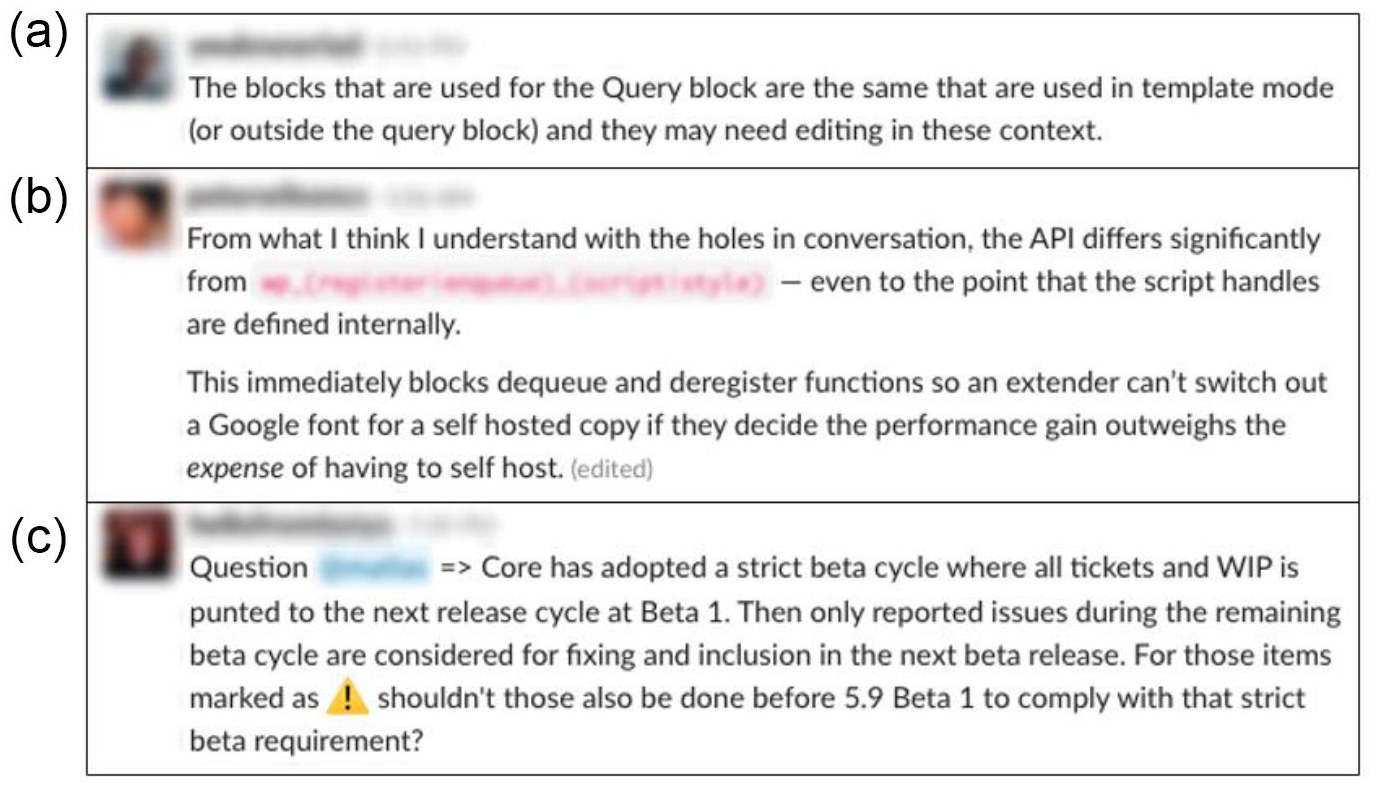
Examples of teaching in public channels. (A) #5-8-release-leads, team member. (B) #6-0-release-leads, team member. (C) #5-9-release-leads, team member.
An important advantage of enacting this form of social support in a publicly visible manner is that it is not only the intended target that benefits from the interaction. Instances of visible knowledge sharing also serve as occasions for learning by other observers. The ESN, in this way, can be framed as a perpetual community of practice in which knowledge exchanges are actively encouraged and enabled by various features (e.g., tagging, hyperlinking, document sharing, and threading). Moreover, given the persistence of ESN messages, instances of visible knowledge sharing remain accessible and searchable in future and, over time, produce a valuable knowledge base.
In addition to advancing knowledge sharing, this pattern of ESN use potentially impacts virtual teams in three other ways. First, it advances meta-knowledge development in a team by providing observers with insight into “who knows what,” particularly when individuals are tagged in and respond to explicit knowledge requests. Second, it provides individuals with opportunities to enhance their status in a team by publicly displaying their expertise and, in doing so, navigate the team’s status hierarchy. Finally, frequent instances of requesting and providing visible teaching support have the potential to establish a team culture which promotes organizational learning. If third-party observers see that it is acceptable, even encouraged, to request this form of support, and that such requests elicit reliable responses, knowledge sharing interactions are likely to increase.
Visible Emotional Support Creates a Team Huddle
Our third metaphor describes ESN use for visible emotional support by likening it to a sports team huddle. Before, during, or after competition, sports teams frequently form huddles in which they come together for encouragement, celebration, or strategizing. When virtual teams use the ESN for visible emotional support, they emulate this sense of togetherness and camaraderie by sharing positive or uplifting messages and signals.
In more traditional work settings in which communication primarily takes place in-person or via less transparent media like email, instances of emotional support would generally be invisible to third-party observers. While this may still be the case in an ESN context when emotional support is conveyed in private direct messages between colleagues, our data indicate that various forms of emotional support were also conveyed in public channels, with encouragement and humor being most prevalent. This includes targeted encouragement to specific individuals as well as instances in which a supervisor expressed emotional support, as empathy, or encouragement, to the broader team (see Figure 3A and B).
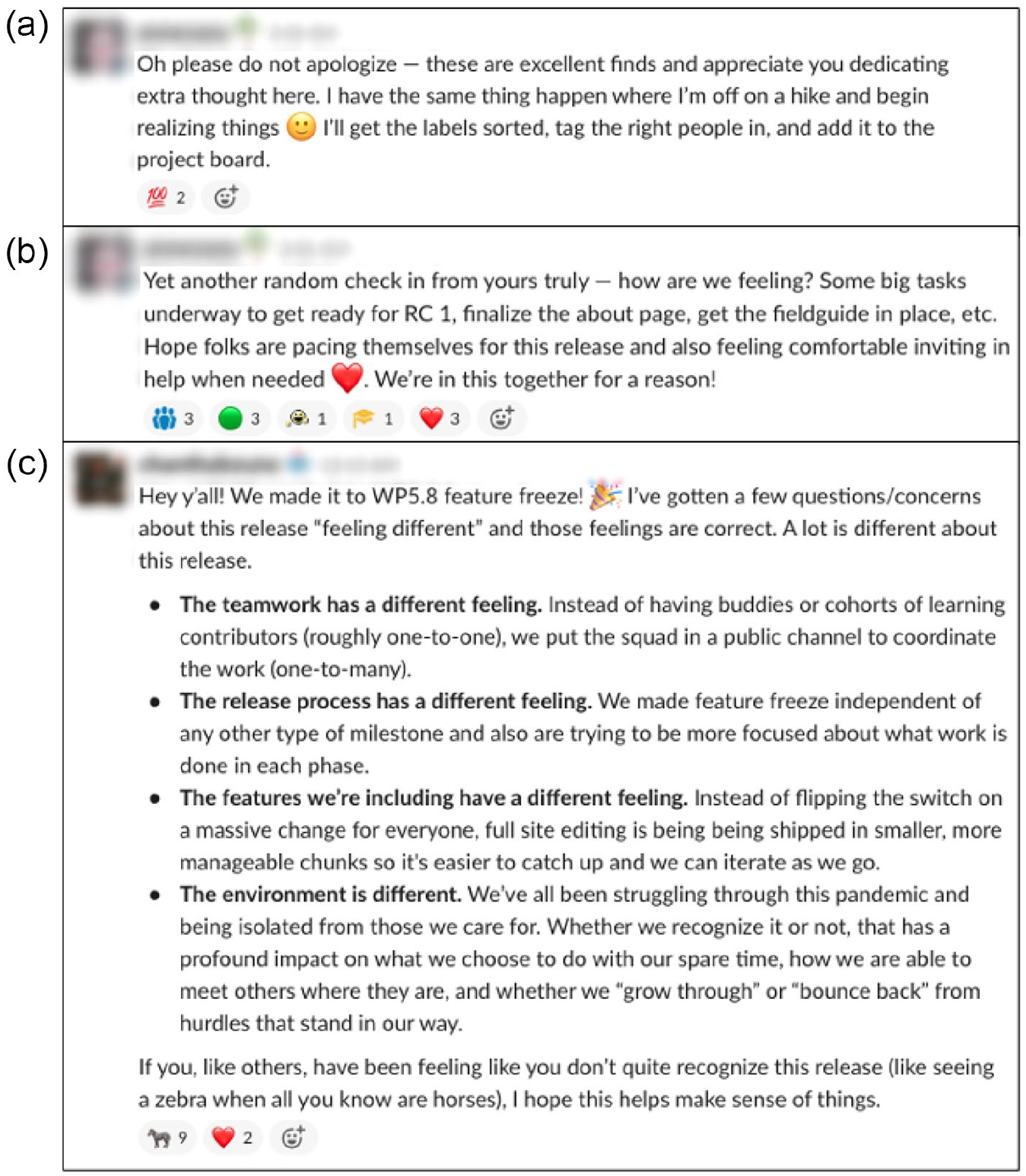
Examples of emotional social support. (A) #6-0-release-leads, supervisor. (B) #6-0-release-leads, supervisor. (C) #5-8-release-leads, supervisor.
In response to such messages, colleagues would frequently echo similar sentiments, providing further support (understanding and encouragement) through messages and emoji reactions. Emotional support messages targeted at all team members tended to convey empathy and encouragement but, alongside this, were also used to instil a sense of “who we are”—a common shared identity—during challenging times, as is evident in the example provided in Figure 3C.
Alongside text-messages, emoji reactions were frequently used as a form of emotional support. For example, when a supervisor or team member would post a message providing encouragement, empathy, or understanding, other team members would react with emoji that indicated agreement or support of the sentiment. The ESN, in this way, “lubricates” (Leonardi et al., 2013) emotional support processes by reducing the effort associated with interaction. This pattern was observable in our data in the form of many messages without any replies, but with many emoji reactions.
Figure 4 provides three examples of emoji reactions for emotional support (encouragement and empathy). In Figure 4A and B the use of both standard and custom emoji with shared team-specific meanings are evident. For example, the “teddy-bear” emoji was used to symbolize a “bear-hug” or the emoji of three silhouettes was used to symbolize togetherness—“we’re all in this together.” Figure 4C simultaneously depicts a humorous message shared to “break the tension” within a team in relation to a shared understanding of their situation (a tight deadline), as well as the use of emoji reactions in response to this humorous message. The visibility of humorous responses or messages like these extends the support beyond the directly targeted recipient(s) and further helps to instil a culture of public support and camaraderie within the larger team.
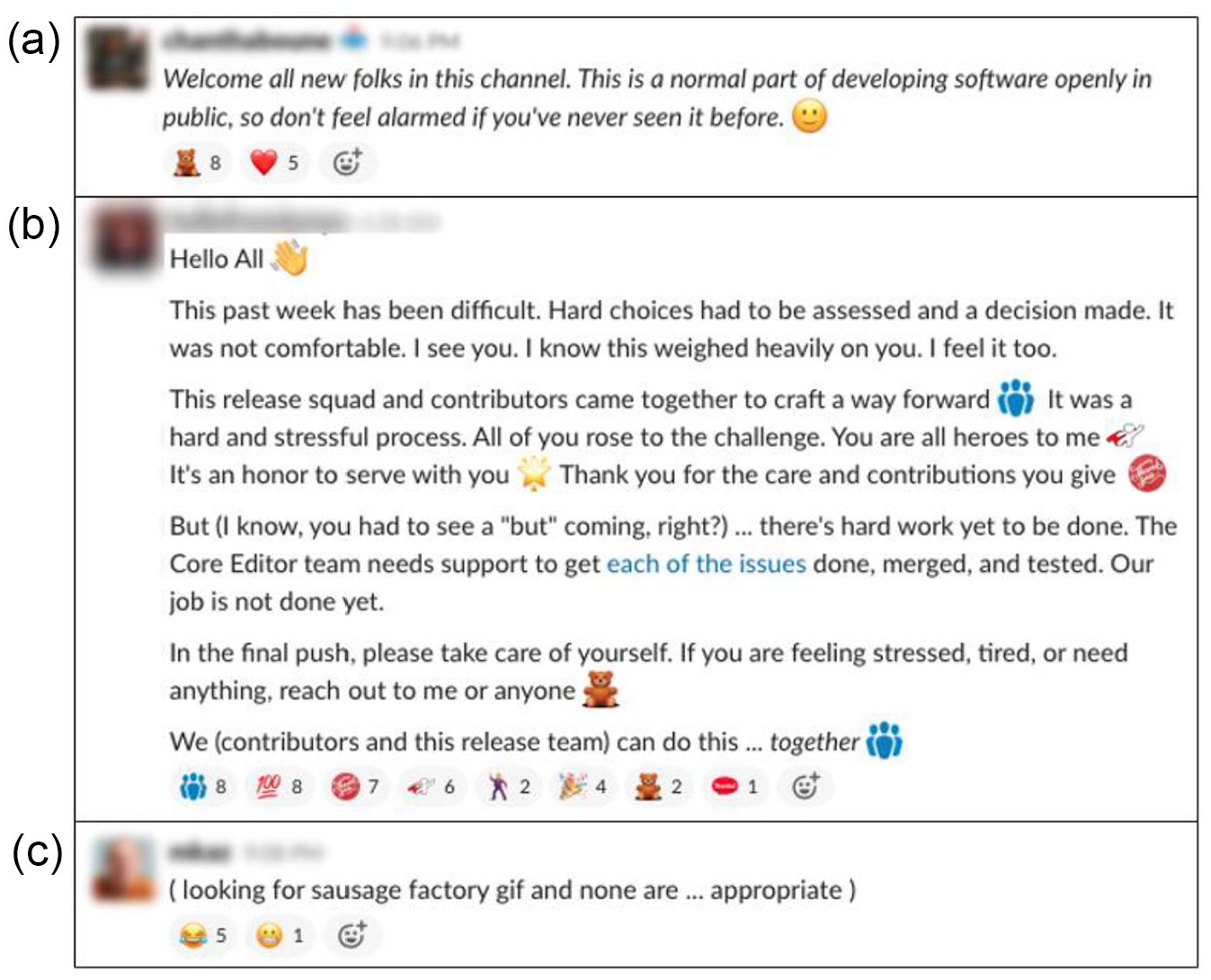
Emotional social support using emoji reactions. (A and B) #5-9-release-leads channel, messages posted by supervisor and reactions by team members and non-team members. (C) #5-8-release-leads channel, team member.
It is also evident that, when providing emotional support to colleagues in public channels, members tended to combine aspects of emotional support (i.e., empathy and encouragement) with the provision of other forms of social support (like informational or instrumental support). For example, in Figure 5A, a supervisor in the #accessibility channel appraises the situation, provides advice to the recipient, and relieves the recipient’s concern that they may be saddled with additional work because of their role.
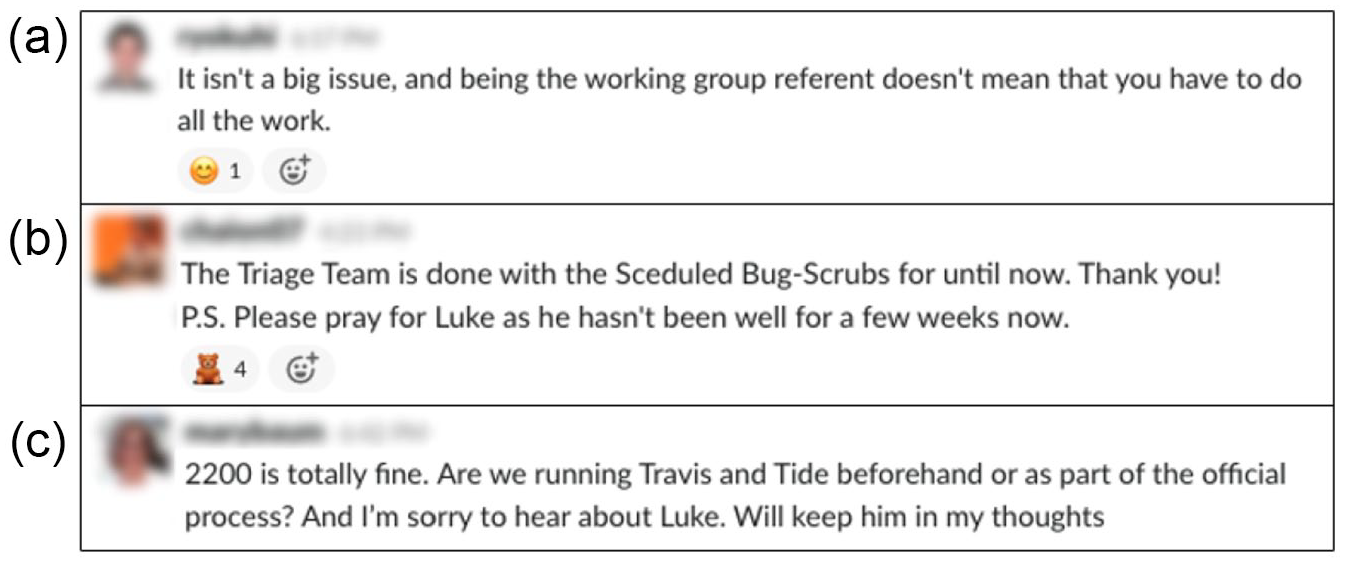
More examples of emotional social support messages. (A) #accessibility, supervisor. (B) #5-8-release-leads, team member. (C) #5-8-release-leads, team member.
Because the channels represented a continuous stream of communication among colleagues, it was common to see more general work-related messages intermingled with requests for, and provision of, emotional support. For example, Figure 5B and C show how one team member asked for their co-workers to pray for someone as part of an ongoing conversation to schedule a meeting.
Much like sports teams use huddles as means to build team camaraderie and cohesion, a culture of visible emotional support on an ESN platform has the potential to positively impact a virtual team’s functioning in diverse ways. Most importantly, it is likely to enhance team members’ perception of the general availability of emotional support from co-workers which, in turn, may increase their willingness to provide such support to others. Additionally, it may serve to counter negativity or animosity among team members when individuals underperform or produce low-quality work.
Visible Instrumental Social Support Produces an Interactive and Dynamic Job Board
Our final metaphor adopts the notion of a job board to describe the way virtual teams use the ESN to request and provide instrumental social support. Like a physical job board located in a public space and upon which individuals can post notices of job opportunities, virtual teams use the ESN to signal their needs for instrumental support. Such signaling, together with the responses it generates, is visible to other members, informing their understanding of their colleagues’ workloads, as well as their willingness and ability to provide instrumental support to others. Given the nature of the case it should not be surprising that instances of instrumental social support (i.e., the provision of resources to directly address a tangible work-related need) were plentiful in the data. Among these, we identified two primary patterns of instrumental social support provision.
In the first pattern individuals would use the project or team channel to request support from their teammates. In most cases, these requests were not targeted at a particular person, but rather at the team as a whole. Because the case involved many teams working simultaneously on different parts of the software, many instrumental support requests manifested as one team member asking the rest of the team to share requests for assistance in the ESN channels of other teams/projects or outside the organization to target volunteers. Figure 6A provides an example of these types of requests. Requests sometimes concerned specific work tasks that related directly to the development of particular modules or plugins for the current release. While individuals generally had particular roles within a team or project, these requests tended to be directed at the channel broadly, asking for anyone to provide assistance, as is illustrated in Figure 6B.
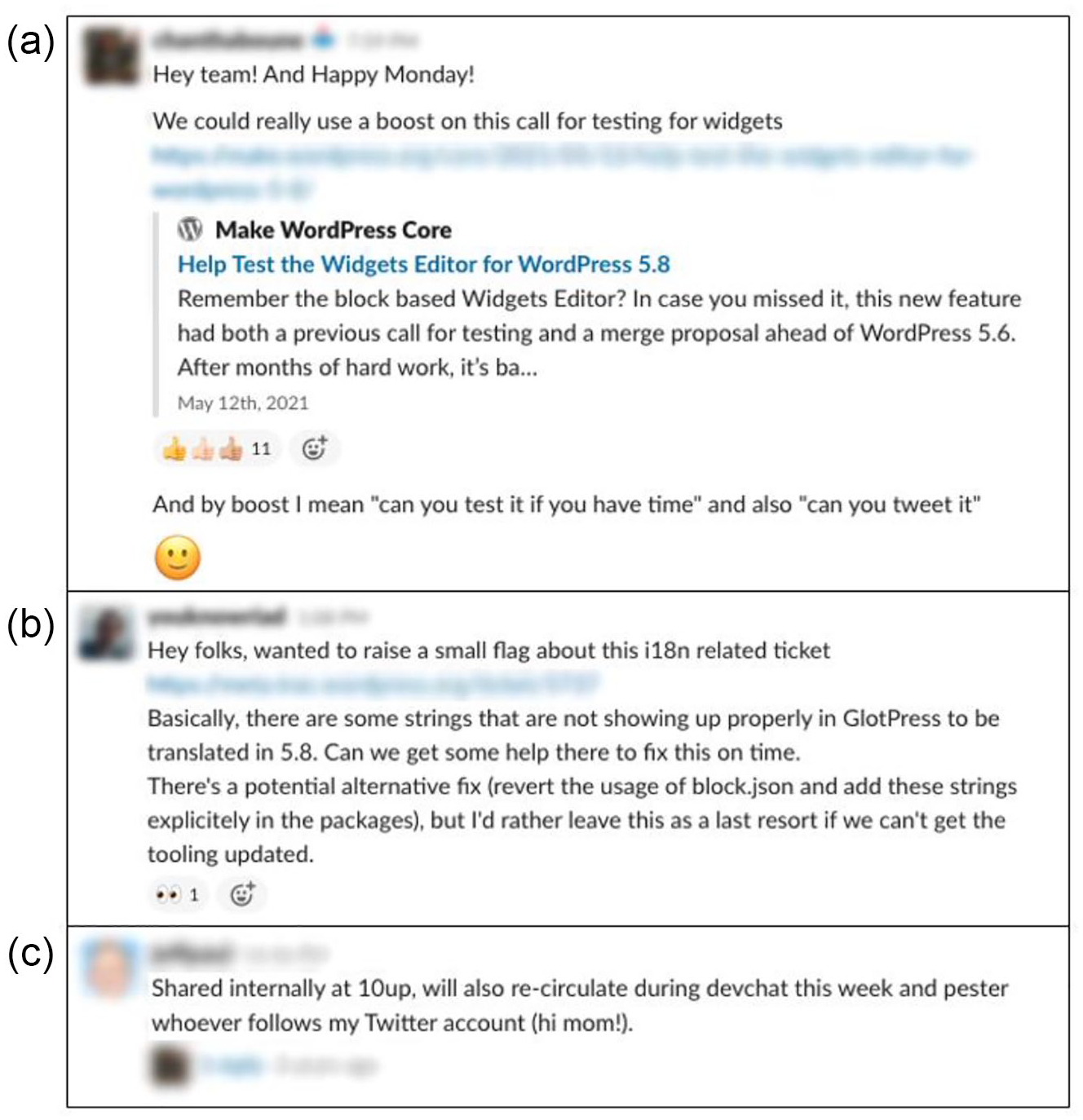
Examples of instrumental social support. (A) #5-8-release, team member. (B) #5-8-release-leads, team member. (C) #5-8-release-leads, team member.
In the second pattern, team and project channels were used to volunteer to perform tasks for individuals or for the team. In some cases, as the message depicted in Figure 6C illustrates, these offers of instrumental support were provided in response to requests.
In other instances, team members volunteered particular forms of instrumental support unprompted by a request (see, e.g., Figure 7A and B). Additionally, as shown in Figure 7C and D, team members sometimes offered general material help, without reference to a specific request or task. Finally, as shown in Figure 7E, offers of social support were sometimes accompanied by messages encouraging team members to publicly request instrumental support when needed.
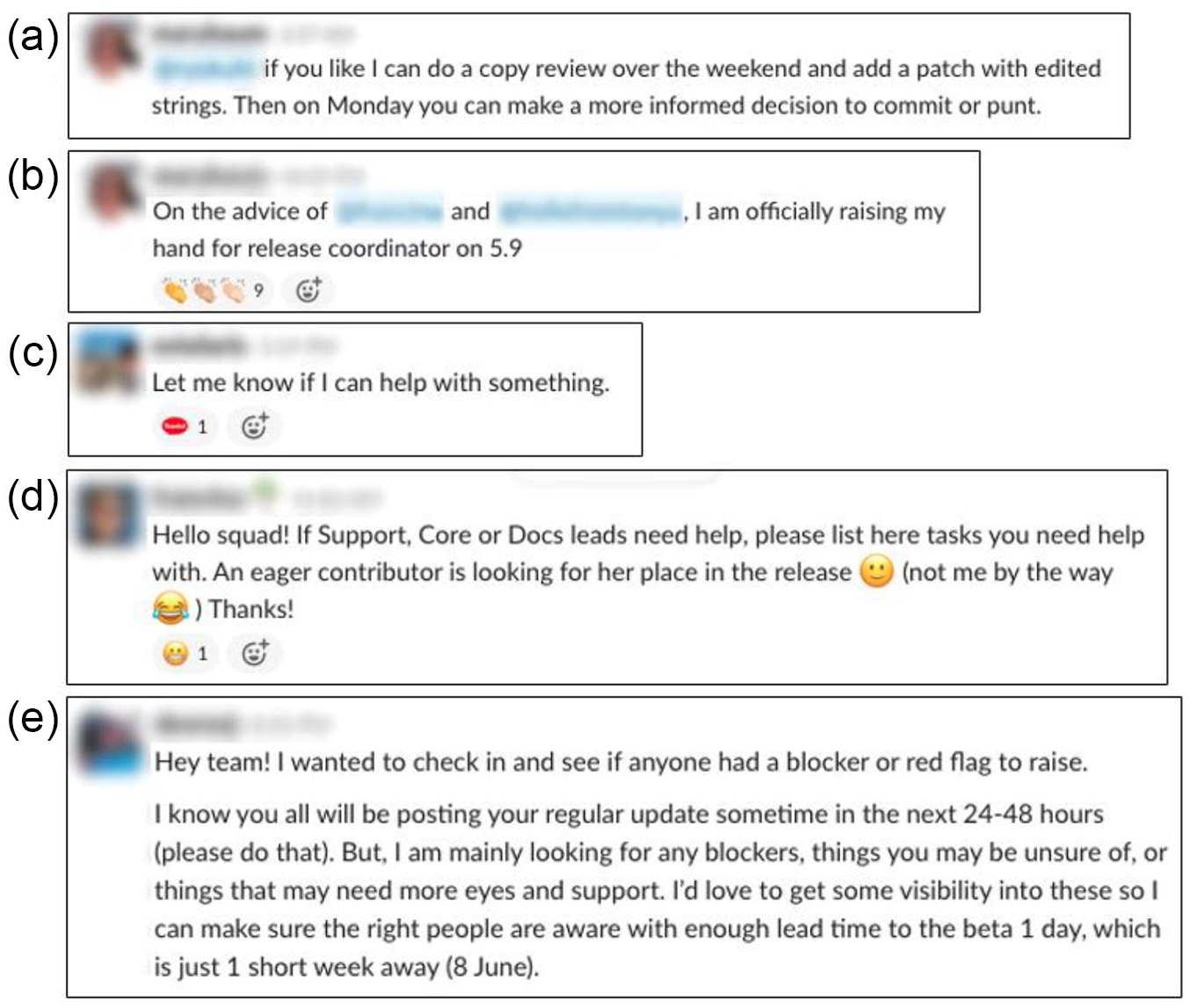
More examples of instrumental social support. (A) #Accessibility, non-team member. (B) #5-9-release-leads, team member. (C) #5-9-release-leads, team member. (D) #5-8-release-leads, team member. (E) #5-9-release-leads, supervisor.
When the ESN is used as a dynamic job board, it enhances team performance by enabling the distribution of workload and countering the formation of bottlenecks in particular points in work processes. Additionally, the open, transparent, and dynamic nature of the practice has the potential to foster a culture in which individuals feel comfortable to request instrumental support when they need it and, at the same time, do not perceive offers of such support as accusations of underperformance or incompetence.
Discussion
In the present study we analyzed the ESN message logs of a large open-source software project to investigate patterns of visible social support interaction within virtual teams. Our analysis suggests, firstly, that ESNs are regularly used for both the requesting and provision of various types of social support and, secondly, that this is frequently done in a public manner that is visible to observers. We argue, in accordance with Leonardi and Treem (2020), that by making behaviors like social support visible, the use of ESNs represents an important shift in the study of organizational communication and behavior.
Theoretical Implications
In accordance with earlier studies (e.g., Leonardi et al., 2013; Leonardi & Meyer, 2015; van Zoonen et al., 2022), our data indicate that knowledge sharing is an important and prevalent form of visible social support interaction among virtual teams on ESNs. Our findings align with those of Leonardi and Meyer (2015), emphasizing the important role of visible knowledge sharing in virtual team functioning and performance. Moreover, it substantiates the argument that an ESN “lubricates” knowledge sharing interactions by making information about the knowledge involved in work projects and the expertise of project participants visible to each other (Leonardi & Meyer, 2015). Extending this metaphor, however, the qualitative nature of our data provides a novel and textured view of the way virtual teams utilize ESN features in a variety of creative ways when they request or share knowledge. Specifically, these features (e.g., tagging, document sharing, and linking to external resources) make basic knowledge sharing interactions easy and quick to perform, removing the friction and effort traditionally associated with knowledge transfer (Szulanski, 1996).
Extending from earlier studies (Kim, 2018; Leonardi, 2014, 2015), our findings highlight the ways in which visible knowledge sharing enables team members and observers to develop metaknowledge about their organization. Additionally, we propose that an important dimension of these metaknowledge processes concerns individuals’ understanding of optimal ways to interrogate knowledge resources using ESN capabilities—that is, how to request or share knowledge in an efficient and effective manner in an ESN context. This ability to harness metaknowledge to achieve particular goals requires an understanding of team norms as it relates to ESN use practices which can be gained through observation of others’ knowledge sharing interactions.
While acknowledging the important role of informational social support (e.g., knowledge sharing) in virtual team functioning, the present study extends the body or knowledge on distributed work by also investigating the prevalence of other forms of visible social support interaction among virtual teams using ESNs. Specifically, it provides empirical evidence that the provision of two forms of social support—emotional and instrumental—frequently occur in publicly visible ESN locations. As is the case for knowledge sharing, our data indicate that ESN features play an important role in determining the structure of these interactions by providing the features that scaffold them. Teams, in a variety of ways, creatively enact these features to achieve their social support goals. The emerging socio-technical communication system represents an imbrication (Leonardi, 2011) of the technical structures of ESN platforms and the evolving social support goals and norms of virtual teams.
Importantly, our findings further augment existing knowledge about the notion of communication visibility by applying it to instances of emotional and instrumental social support interaction. We propose that the visibility of these interactions enables individuals to make inferences about various aspects of their teams. Specifically, we propose that it serves to enhance perceptions of proximity among team members. These perceptions, as shown by van Zoonen et al. (2023), have the potential to promote future visible interactions and team cohesion. Moreover, much like visible knowledge sharing promotes metaknowledge and, on that basis, successful knowledge seeking behaviors (Kim, 2018; Masood et al., 2023), we propose that visible emotional support will influence individuals’ understanding of each other’s capacity to provide emotional support. These understandings are likely to play an important role in determining how and from whom individuals seek emotional support in future, and how successful these attempts are. Ultimately, such lubrication of emotional support processes in a team is likely to enhance interpersonal trust among team members (Masood et al., 2023).
Given the findings of Liang et al. (2020), the same mechanism arguably applies in the case of visible instrumental support interactions. The visibility of instrumental support interactions (i.e., helping behavior; Podsakoff et al., 2000) promotes interpersonal trust which, in turn, promotes future instrumental support behaviors.
Practical Implications
Given the rapidly expanding technical and policy contexts in which many organizations are situated, a key question that organizations face is how to foster and support the sharing and transfer of knowledge among employees. In this regard, it is our view that the use of ESNs for social support, coupled with policies encouraging transparent and public communication, provides a range of potential benefits to virtual teams. These include effortless information broadcasting to ensure that team members stay updated on important events, effective visible knowledge sharing, metaknowledge development through increased awareness of team members’ skills and expertise, and the enhancement of team cohesion and interpersonal trust through emotional support provision. Accordingly, we propose that these practices should be encouraged where feasible and practical. Team leaders can play a pivotal role in this regard by, for example, using public ESN channels to provide general emotional social support to their teams (e.g., motivational messages or encouragement) or publicly requesting instrumental support when they need it.
Managers should be mindful however, that these use patterns may create large volumes of messages that can overwhelm and distract certain individuals (Chen & Wei, 2019). Usage norms that counter unnecessary posting should be adopted, and individual team members should not be expected to constantly monitor ESN channels (Henry et al., 2023). This could be achieved using clear guidelines and policies to shape the formation of these norms. Here, leaders should be sure to explain the reasoning for plans to increase transparency and communication visibility and, in this way, get “buy-in” from team members when developing and implementing transparency-promoting communication norms (Laitinen & Sivunen, 2020). Such policies will need to be tailored to the organizational context and it is likely that the extent to which team communication can be made public and visible to the rest of an organization will differ substantially between industries (Ellison et al., 2015).
Limitations and Future Research
As with all studies, the theoretical and practical implications of this study are limited by the research design and the scope of our data collection. First, the study relied on data collected from only a single case organization and, given the unique circumstances of this open-source software development project, the degree to which our findings would transfer more broadly to other virtual team contexts requires further investigation. It is particularly important to consider how social support is enacted in ESNs in organizations that do not explicitly mandate communication visibility. Second, given that we only analyzed message logs in this study, we are not able to make claims about the potential effects of team characteristics or individual dynamics on the use of the ESN for social support. Moreover, a consequence of only analyzing message logs is that we are unable to gain insight into, firstly, team member’s perceptions of particular social support behaviors and the effects that these visible behaviors may have on metaknowledge and, secondly, third-party observers’ inferences drawn based on social support messages. To address these limitations, future research should consider using interviews or surveys of virtual team members either in isolation or in mixed methods designs to augment ESN message log data.
Notwithstanding these limitations, the findings of the present study advance our understanding of visible social support provision within virtual teams and the potential impacts thereof for collaboration, knowledge sharing, and the establishment of metaknowledge. While many have called for the analysis of ESN usage logs to investigate communication visibility (e.g., Leonardi & Treem, 2020; van Zoonen et al., 2022, 2023), and a small number of studies have used ESN logs to conduct network analyzes and investigate collaboration networks (e.g., Riemer et al., 2015; Tomlinson et al., 2023; Yang et al., 2022), the analysis of content shared in internal ESN contexts is particularly rare (Cetto et al., 2018; Van Osch et al., 2023; Van Osch & Steinfield, 2018). Our use of a relatively novel form of data in this domain has enabled us to generate insights into ESN usage behavior not possible through more traditional methods like interviews and surveys. However, to augment our results, we recommend that two parallel approaches be considered. First, to enable our analysis to scale to larger datasets, we encourage researchers to develop quantitative techniques to process and identify text that denotes the requesting or provision of social support (see Van Osch & Steinfield, 2018 for an example of such methods considering a different aspect of ESN use). Second, to investigate the extent to which the visible provision of social support actually produces metaknowledge, researchers should adopt mixed methods approaches and augment log-data with qualitative data from employee-interviews.
Footnotes
Author Note
This manuscript is original and is not under consideration or publication elsewhere.
Author Contributions
We present author contributions according to the CRediT taxonomy. MSH: Conceptualization, methodology, investigation, formal analysis, writing—original draft, writing—review & editing. DAP: conceptualization, methodology, formal analysis, writing—original draft, writing—review & editing, supervision. DBlR: conceptualization, methodology, formal analysis, writing—original draft, writing—review & editing, supervision.
Declaration of Conflicting Interests
The author(s) declared no potential conflicts of interest with respect to the research, authorship, and/or publication of this article.
Funding
The author(s) received no financial support for the research, authorship, and/or publication of this article.
