




Abstract
This research explores the potential of non-negative consumer messages to counteract negativity in social media firestorms through emotional contagion. 1,186 tweets were examined in response to a McDonald’s Japan service issue, revealing that non-negative messages tend to align emotionally with preceding messages. This suggests a temporary mitigation of negativity. Investigating emotional contagion within social media firestorms challenged the prevailing notion of negativity bias, indicating a focus on maintaining a positive affective state. Practical implications suggest organizations should monitor and acknowledge non-negative messages during crises to identify advocates and gain insights into subnetwork impact. Incorporating elements from contagious non-negative posts in responses can help mitigate reputational damage. This research contributes to a deeper understanding of emotional contagion dynamics in social media firestorms, aiding organizations in managing their online reputation during crises.
Introduction
On 1 October 2012, McDonald’s Japan decided to remove the familiar menus beside cash registers, forcing customers who wanted to view their dinner options to look up at the board on the wall. Although this was already the case in practically every other country where McDonald’s is active, McDonald’s Japan was heavily criticized by consumers for removing the menus. Many Japanese consumers saw this change as a tactic to make customers spend more money per visit, as the cheapest items on the menu would typically not be displayed on the overhead boards. The management of McDonald’s refused to comment on the issue until the CEO was explicitly asked about the problem by a journalist during a quarterly results briefing on 1 November 2012. In his reaction, the CEO stressed that the decision to remove the menus from the counters was mainly driven by efficiency concerns, as it would reduce the waiting time for customers standing in line. Furthermore, he reiterated the fact that the new procedure was already standard practice in other countries, and that Japan was the only country in which counter menus had persisted for 41 years (Sinclair et al., 2017).
Later that day, an article about the CEO’s reaction to the menu removal crisis was posted on the Japanese media sharing site Nicovideo.jp, accompanied by a so-called integrated tweet box (Twitter, 2014). In a matter of days, hundreds of website visitors used the integrated tweet box to vent their (mostly negative) feelings concerning the menu removal in general and the CEO’s comments in particular, creating a phenomenon that is referred to as “online firestorm” by some authors (e.g., Johnen et al., 2018; Pfeffer et al., 2014) and “social media firestorm” by others (e.g., Hansen et al., 2018; Matook et al., 2022).
Firestorms that occur on social media have several characteristics which make them potentially harmful for the targeted individuals or organizations. First of all, social media users contributing to a firestorm are not complaining to the organization itself, but are sharing their negative feelings with fellow consumers, thereby effectively excluding the organization from the conversation (Grégoire et al., 2015). Moreover, social media facilitate the sharing of information much more than traditional media, as messages can be instantly distributed to the complainer’s entire social network and can even spread beyond that network if someone decides to share the original post or reply to it (cf. Ott & Theunissen, 2015). The upshot of the ease with which information can be shared on social media is that, as Berthon et al. (2012) put it, “local events seldom remain local.” Finally, the relatively anonymous social media environment seems to encourage some users to express their dissatisfaction in a tone of voice that can be classified as outright aggressive or hostile (Delgado et al., 2020; Sinclair et al., 2017).
Therefore, it should come as no surprise that in the last two decades, numerous organizations have been confronted with the damaging effects of being targeted in a social media firestorm. These effects, which depend on characteristics of the event that triggered the firestorm as well as the duration and strength of the storm itself (Hansen et al., 2018), range from a decrease in brand perceptions (Hansen et al., 2018) to a multi-million dollar loss in revenue (cf. Legocki et al., 2022) or stock market value (cf. Matook et al., 2022; Stäbler & Fischer, 2020). For organizations who wish to avoid such damaging consequences, it is pivotal to gain insight into the dynamics that cause firestorms to emerge, propagate, and, ultimately, peter out (Grégoire et al., 2015; Legocki et al., 2022).
One psychological process that has been hypothesized to act as a driving force behind social media firestorms is emotional contagion (Berger, 2013; Ott & Theunissen, 2015). In this context, emotional contagion would entail that social media users who are confronted with a message in which a fellow consumer expresses a negative sentiment about an organization, will adopt the negative emotion expressed in that message and, depending on the circumstances, may decide to share the original message or a newly created one expressing the same sentiment with their respective networks. This allows the negative emotion to “go viral” and affect more and more users as it spreads across different subnetworks on social media (Berger & Milkman, 2012).
Although this explanation is intuitively plausible, surprisingly little research has been conducted into the occurrence of emotional contagion during social media firestorms. The most prominent studies documenting emotional contagion on social media focused on situations in which users were exposed to a mixture of positive and negative messages on their timeline in either Facebook (Kramer et al., 2014) or Twitter (Ferrara & Yang, 2015). Such a situation differs from a typical firestorm, which is characterized by a high volume of messages expressing a negative sentiment about a particular person or organization (Pfeffer et al., 2014). Furthermore, these studies could not address some of the methodological challenges associated with demonstrating emotional contagion on social media (Goldenberg & Gross, 2020). More specifically, Ferrara and Yang (2015) were not able to determine with certainty which messages users had actually read prior to posting their own message, while neither Kramer et al. (2014) nor Ferrara and Yang (2015) could rule out the possibility that the similarity in the sentiment expressed by two users was caused not by emotional contagion, but by the fact that the users belonged to the same social network and were therefore a priori more likely to respond in a similar way to the same situation.
Another factor that has been largely overlooked in discussions on social media firestorms is the role of messages that go against the grain of the dominant negative sentiment. Matook et al.’s (2022) content analysis of 2,700 comments posted on Facebook during nine different firestorms showed that comments that were neutral or even supportive toward the targeted person or organization were actually quite common; In some firestorms, such non-negative messages accounted for more than half of the comments that Facebook classified as “most relevant.” At the same time, several studies investigating emotional contagion on social media have found that messages with a positive valence were more likely to elicit emotional contagion than messages with a negative valence (e.g., Coviello et al., 2014; Ferrara & Yang, 2015), although it should be noted that this pattern was not observed in all studies on this topic (cf. Barsade et al., 2018; Goldenberg & Gross, 2020).
Given the reputational and financial threats associated with the spreading of negative emotions on social media, it is understandable that previous research has mostly focused on the contents and virality of messages expressing a negative sentiment about organizations. As a result, little is known about the impact of neutral or supportive messages posted during a social media firestorm. In this study, we want to put the spotlight on these non-negative messages, as prior research suggests that they are not only quite common, but potentially also quite contagious. This suggests that investigating their effects is not only theoretically interesting, but also practically relevant: If non-negative messages posted during a social media firestorm can indeed elicit emotional contagion, they also have the potential of (temporarily) dispelling the negativity, thereby reducing the reputational threat to the organization (Hansen et al., 2018).
This is why our study aims to answer the following research question: Can fellow consumers’ non-negative messages (temporarily) dispel negativity in a social media firestorm through a process of emotional contagion? To answer this question, we focus on the McDonald’s case described in the first two paragraphs of this section. More specifically, we analyze a sequence of 1186 Twitter messages concerning the McDonalds’ menu removal crisis that were created using an integrated tweet box on the media sharing site Nicovideo.jp. Within this sequence, we search for signs of emotional contagion elicited by non-negative messages. Investigating messages that were created via an integrated tweet box adds value to the current study since it tackles one of the limitations identified in previous studies: Since tweets can be posted anywhere, at any time, it is virtually impossible to determine which tweet(s) a person has actually seen prior to posting their own message (Ferrara & Yang, 2015). However, since an integrated tweet box shows the user a predetermined number of preceding tweets, it is possible to pinpoint exactly which tweets a user has been exposed to before making their own contribution to the conversation. This characteristic of our dataset also enabled us to develop and apply a number of innovative analytical procedures (clustering and congruence values) which may be useful for future studies investigating emotional contagion in a social media context.
To summarize, the current study contributes to the existing literature in three ways: (1) it adds to our limited knowledge concerning the effects of non-negative messages in social media firestorms; (2) it addresses an important methodological shortcoming of earlier studies into emotional contagion on social media; and (3) it describes two innovative analytical procedures that can be used to demonstrate the occurrence of emotional contagion in contexts similar to the one we investigated.
The literature review below will start with an introductory section on the empowering role of social media for consumers. Subsequently, we will delve deeper into the causes and consequences of social media firestorms, followed by a discussion of the role of emotional contagion and the methodological challenges associated with demonstrating its occurrence on social media. Finally, a section is devoted to the theoretical and managerial relevance of non-negative messages posted during social media firestorms. Finally, we will present the main hypothesis that is tested in the current study.
Literature Review
How Social Media Has Empowered Consumers
Sweetser and Larisey (2008) define social media as being “centered around the concept of a read-write Web, where the online audience moves beyond passive viewing of Web content to actually contributing to the content” (p. 179). This definition suggests that social media provide consumers with the opportunity to create their own message and share it, giving them a voice in the digital world (Gensler et al., 2013; Kaplan & Haenlein, 2010). Although this offers potential benefits for organizations, such as the possibility to gain a better understanding of consumers’ interests and concerns (Berthon et al., 2012; Li & Bernoff, 2011), there are also disadvantages.
Consumers who are unsatisfied with the service, products or behavior of an organization, feel empowered by the presence of social media to speak up (Grégoire et al., 2015; Xu et al., 2007). In fact, social media facilitate complaining like few other media can. Complaining via social media is considered cheaper, easier and more effective than traditional ways of filing a complaint (Eyrich et al., 2008; Grégoire et al., 2015). The fact that social media also facilitate sharing makes complaining through social media more dangerous and potentially damaging to the reputation of an organization than complaining through more traditional media, such as telephone or email (Berthon et al., 2012; Xu et al., 2007). A post on social media can be instantly distributed to the complainer’s network and can even spread beyond that network if someone decides to share the original post or reply to it. In fact, one of the five social media axioms that were created by Berthon et al. (2012) is that “in the age of social media, local events seldom remain local.” In their study, they provide numerous examples that show how consumers from all over the world engage in complaining about the local wrongdoings of an organization, forcing the organization to take action.
Social Media Firestorms: Triggers and Consequences
When large numbers of consumers decide to vent their feelings toward an organization by posting and sharing negative messages on social media, this can lead to the emergence of a social media firestorm. Social media firestorms are defined by Pfeffer et al. (2014) as a “sudden discharge of large quantities of messages containing negative word-of-mouth and complaint behavior against a person, company, or group in social media networks.” They can be triggered by different kinds of perceived failures on behalf of the person or organization. Hansen et al. (2018) distinguish between performance-related firestorms, which are triggered by product or service failures, and value-driven firestorms, with are triggered by accusations of social wrongdoing or dissatisfaction with the organization’s communication. They also argue that since product or service failures are more personally relevant for consumers, performance-related firestorms tend to have stronger negative effects on brand perceptions and consumer memories.
Being targeted in a social media firestorm can have various short-term and long-term consequences for an organization. Extreme examples include the $1 billion loss in stock market value that United Airlines suffered in 2017 when a video in which a passenger was forcibly removed from an airplane went viral on the internet (BBC, 2017), or the $12 million that it cost Starbucks to close 800 stores for an afternoon so that staff members could follow racial-bias education in response to outrage about the arrest of two African American men in one of their stores (Legocki et al., 2022). A less tangible, but still highly undesirable consequence is damage to the organization’s reputation (Ott & Theunissen, 2015). This risk is exacerbated by the fact that consumers participating in a social media firestorm are generally not complaining to the organization, but about the organization (Grégoire et al., 2015), thereby deliberately sidelining the organization itself. If communication about an organization is predominantly negative and unanswered, the perspective that consumers provide—essentially an unfavorable, subjective truth—is more likely to turn into a “collective truth” that can damage the reputation of an organization (Aula, 2010; Doh & Hwang, 2009).
The reputational threat associated with negative messages posted on social media is one of the reasons why many organizations now employ webcare agents. Webcare refers to “the act of engaging in online interactions with (complaining) consumers” (Van Noort & Willemsen, 2012, p. 138). The main job of webcare agents is to regulate the emotions of complaining consumers by providing appropriate responses. Whether webcare responses are effective depends on different factors, such as the type of response offered (defensive vs. accommodative) and the number of prior disappointing brand experiences that the consumer has had (Van Noort & Willemsen, 2012; Weitzl et al., 2018). The comments posted by other consumers concerning the service failure also play an important role in this process (Weitzl et al., 2018). This is not surprising, as fellow consumers are generally perceived to be a more credible source of information than the organization itself (Berger, 2013; Tuten & Solomon, 2013). Moreover, the emotional valence of the messages posted by fellow consumers can also exert a considerable influence, as will be explained in the next section.
Emotions and Emotional Contagion
Emotions are feelings of high intensity and short duration (Barry, 1999; Oatley et al., 2006) that convey information about how someone feels and what that person’s social intentions are (Ekman, 1993; Van Kleef et al., 2004). In a consumer context, emotions have been shown to influence satisfaction as they can lead to more favorable or unfavorable evaluations of people, objects, events, or ideas (Yoo et al., 1998). For example, the experience of negative emotions as a result of a service failure has a negative effect on satisfaction, as it leads to an unfavorable evaluation of that service.
Another important characteristic of emotions is that they can be transferred rapidly from one person to another (Cappella, 1993; Van Kleef et al., 2004), most notably through a process called emotional contagion (Barsade, 2002; Hine et al., 2010). Emotional contagion (EC) is commonly defined as “a process in which a person or group influences the emotions or behavior of another person or group through the conscious or unconscious induction of emotion states and behavioral attitudes” (Schoenewolf, 1990, p. 50 as cited by Barsade, 2002). Prior literature suggests that emotional contagion can be classified into three main types: negative EC, which is induced by the exposure to another person’s negative emotions; positive EC, which can be triggered by another person’s positive emotions; and neutral EC, which is associated with suppressing and concealing emotions (Kopelman et al., 2006).
Although emotional contagion was originally believed to be caused by facial mimicry (Cappella, 1993; Hatfield et al., 1994), several studies have since then shown that exposure to the other person’s facial expression is not a necessary precondition for contagion to occur (Coviello et al., 2014; Sheehan & Young, 2013). EC can also be evoked by stimuli associated with digital media, such as written messages, emoticons, and avatars (Gerbaudo, 2016; Tsai et al., 2012). Moreover, several studies have found evidence for the occurrence of emotional contagion on social networking sites such as Facebook and Twitter. For example, Kramer et al. (2014) manipulated the proportion of positive and negative expressions on the timeline of Facebook users and found that users who saw fewer positive expressions also produced fewer positive posts and more negative posts themselves. Conversely, when the number of negative expressions on the timeline was reduced, users produced more positive and fewer negative posts.
Since its publication, Kramer et al.’s study has been criticized for not asking explicit consent from participants to manipulate the contents of their timelines and disregarding the potential consequences that this manipulation may have had for participants’ emotional states and mental health. That is why other studies decided not to manipulate the contents of timelines, but instead focused on the correlation between the emotional valence of the messages that users were naturally exposed to and the valence of the messages they subsequently posted themselves. In a large-scale observational study that took place in September 2014, Ferrara and Yang (2015) found a linear relationship between the average emotional valence of the stimuli that Twitter users were exposed to and the valence of the messages they produced. A similar approach was used by Coviello et al. (2014), who demonstrated that emotional expressions on Facebook that were evoked by the weather situation in one particular city influenced the valence of messages produced by friends of the original posters living in other cities. Other studies, such as De Vries et al. (2018), used more traditional experimental designs to investigate the effects of being exposed to emotional expressions in other people’s social media posts. To the best of our knowledge, however, there are no previous studies that have investigated the occurrence of emotional contagion in the context of a social media firestorm.
Demonstrating Emotional Contagion on Social Media
From a methodological point of view, demonstrating the occurrence of emotional contagion on social media comes with a number of challenges (Ferrara & Yang, 2015; Goldenberg & Gross, 2020). In observational studies, for example, it is often hard—if not impossible—to determine which expressions a user has actually been exposed to prior to posting their own message. Therefore, some researchers choose to look instead at all the content that users could have been exposed to during a certain time frame before they post their own message. This strategy, which Goldenberg and Gross (2020) refer to as the “window of interest” approach, was used by Ferrara and Yang (2015), who also recognized its shortcomings: “[It] relies on an idealized world in which each user reads all contents (stimuli tweets) he/she is exposed to during one hour prior to the production of one of his/her own tweets” (p. 11).
For the current study, the uncertainty about the contents that users were exposed to prior to posting was not an issue, since our dataset consisted of messages that were created using an integrated tweet box which always showed the preceding three tweets. As a consequence, we could be sure that all users, except the first, had been confronted with the messages of at least three others. Furthermore, we could code the emotional valence of these messages and determine for each tweet in the sequence to which extent its valence was similar to the valence of the three preceding tweets. How we did this exactly, is explained in the Methodology chapter.
A second challenge for researchers aiming to demonstrate the occurrence of emotional contagion on social media is the difficulty of ruling out alternative explanations (Goldenberg & Gross, 2020). Similarity in the emotional valence expressed in messages posted by different social media users can be caused by multiple factors. For example, it could be due to characteristics of the trigger event that the users are responding to, or a situational change that is affecting all users simultaneously. Furthermore, it is hard to distinguish emotional contagion from similarity-based responses, in which “two or more users respond to a situation in a similar way not because they are influencing each other but merely because they are similar to each other” (Goldenberg & Gross, 2020, p. 323). In fact, some authors have argued that in observational studies, contagion effects cannot be reliably differentiated from the effects of homophily, which refers to the tendency of individuals to select friends who resemble them (Shalizi & Thomas, 2011). Ferrara and Yang (2015) also acknowledge that if observational studies are conducted within existing social networks, it makes sense to assume a mixture of contagion and homophily dynamics to explain the observed similarities in emotional expressions.
Since the messages investigated in the current study were created via an integrated tweet box linked to a media website, the users who contributed to the firestorm were not necessarily part of the same social network. This suggests that if similarity was to be observed in the valence of their emotional expressions, homophily would not be the most obvious explanation for this observation. On the other hand, this possibility cannot be excluded entirely, as the choice to use a particular medium (in this case Nicovideo.jp, which posted the news item about the crisis) can also be influenced by the user’s demographics or personality characteristics (Hall, 2005).
The Role of Non-Negative Messages in Social Media Firestorms
In this study, we focus on the influence that non-negative messages posted during a social media firestorm can exert on the emotions of fellow consumers joining the online conversation later. That social media firestorms do not only consist of negative messages has been demonstrated before (Matook et al., 2022), but the extent to which messages that go against the grain of the dominant negative emotion can trigger emotional contagion has not been studied before. This is interesting from a theoretical point of view, as previous research has not been able to provide a clear answer to the question whether negative emotions are more contagious than positive emotions or vice versa (Barsade et al., 2018; Goldenberg & Gross, 2020). Some studies found stronger evidence for positive emotional contagion than for negative emotional contagion (e.g. Coviello et al., 2014; Ferrara & Yang, 2015), while other studies found no difference in contagiousness (e.g. Kramer et al., 2014) or even stronger effects for negative emotions than for positive ones (e.g. Fan et al., 2016). This suggests that the context in which emotional expressions are posted may determine the extent to which messages with a specific emotional valence (negative, neutral, or positive) can trigger emotional contagion (Goldenberg & Gross, 2020).
In a context characterized by an abundance of negative messages, such as a social media firestorm, non-negative messages may stand out more, exerting a stronger influence on fellow social media users. Moreover, such messages may respond to people’s need to remain in a positive affective state (Clark & Isen, 1982). In theory, the presence of messages that go against the dominant negative sentiment may even lead to a “battle of emotional contagion” (Barsade et al., 2018, p. 146), where at some point a tipping point occurs that causes the storm of negativity to calm down.
Gaining more insight into the effects of messages that go against the dominant negative emotion is also useful for social media managers. Previous studies aimed at helping managers control or contain firestorms have mainly looked at the virality of different types of negative messages (e.g. Legocki et al., 2022). However, monitoring non-negative messages can also provide managers with leverage points to influence the course of the storm, especially if these messages turn out to be contagious. By paying extra attention to non-negative messages, organizations can identify potential brand advocates (Bernoff & Li, 2008) and discover subnetworks in which consumers seem to be receptive to messages that paint a more nuanced picture of the situation. They may even be able to incorporate elements from contagious non-negative posts into the messages they create themselves in response to the firestorm.
Main Hypothesis
Given the evidence provided in earlier studies for the occurrence of positive and neutral emotional contagion on social media, as well as the premise that the nature of our dataset addresses a number of methodological shortcomings identified in previous research, we expect to observe evidence for emotional contagion triggered by non-negative messages posted during a social media firestorm. More specifically, we expect to find that non-negative messages are more likely to preceded by other non-negative messages than could be expected on the basis of prior probabilities. This is formalized in the following hypothesis:
H1 Non-negative messages display a higher degree of similarity to the valence of the preceding messages their author was exposed to than could be expected on the basis of prior probabilities.
In the next section, we describe the method that we used to test this hypothesis.
Method
The Data
We collected all 1,186 tweets that were posted in response to the news item about the McDonald’s menu removal crisis on the Japanese media sharing site Nicovideo.jp. On this site, consumers could post their tweet via an integrated tweet box (Twitter, 2014), which allowed visitors to post about the issue while showing the three preceding tweets that were posted in the same box. These tweets were produced between 1 November at 8.00 PM and 5 November 1.21 PM 2012.
Coding Procedure
Two Japanese natives and one proficient translator in Japanese, who had received no information about the purpose of this study, were presented with a list of all the tweets and were instructed to code each tweet as being either negative (N) or non-negative (O) in emotional valence. The coders were provided with the following classification criteria:
Assign the negative code (N) when the tweeter expresses that the company and/or the CEO and/or the decision (to remove the menu) is not to his/her liking or pleasing.
Assign the non-negative code (O) when the tweeter expresses that the company and/or the CEO and/or the decision (to remove the menu) is to his/her liking or pleasing or when the tweeter does not express whether or not the company and/or the CEO and/or the decision (to remove the menu) is to his/her liking or pleasing.
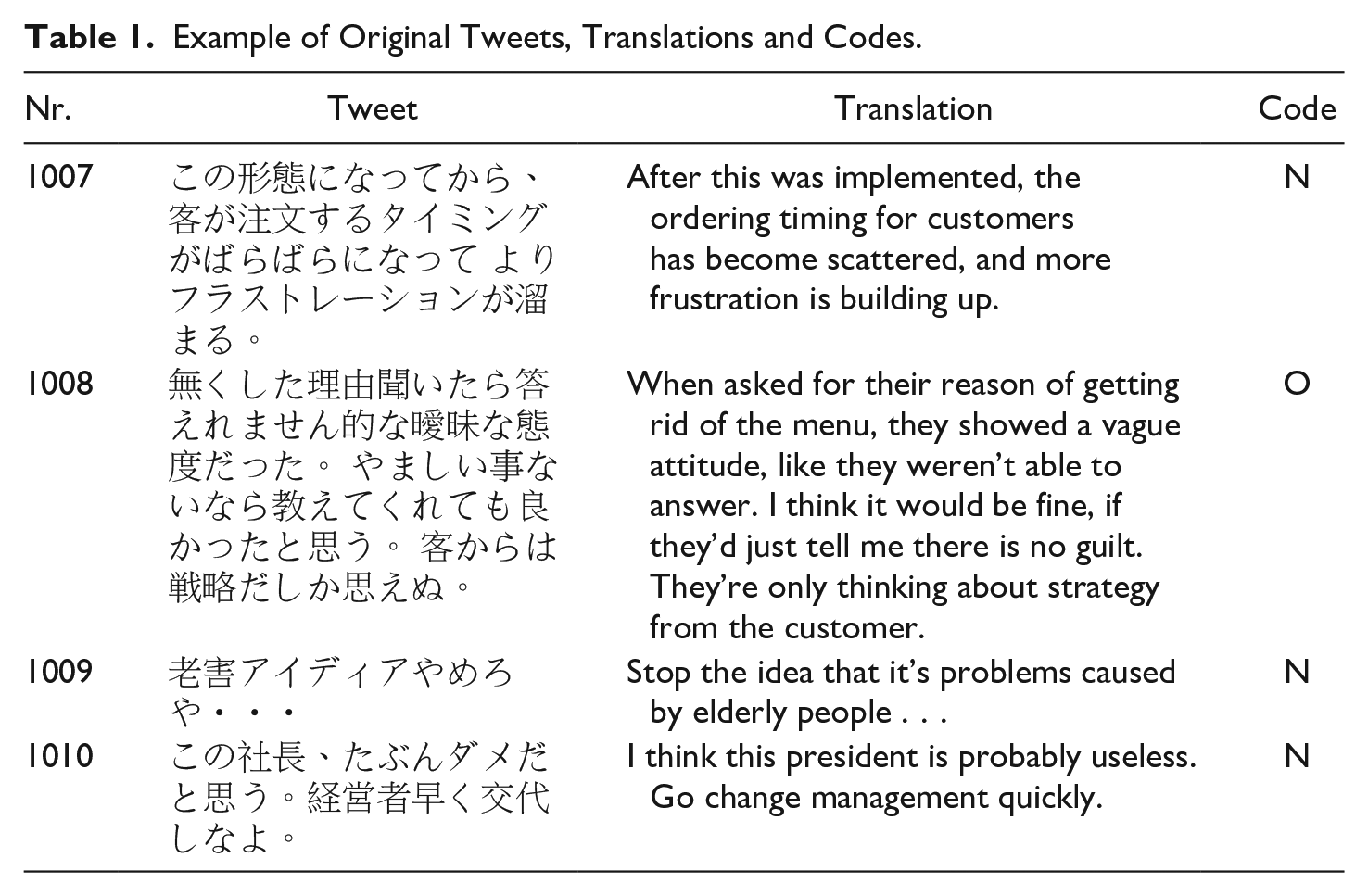
The inter-rater reliability was checked by calculating Fleiss’ Kappa and the average pairwise Cohen’s Kappa. Both Kappa’s were .46, indicating moderate agreement between coders. The definitive code that was assigned to each tweet was based on the majority verdict. 847 tweets were coded as negative (N) and 339 tweets were coded as non-negative (O). To illustrate, Table 1 shows four consecutive tweets (nr. 1007 to nr. 1010), with their translations and the code that was assigned to each tweet, based on majority verdict.
Example of Original Tweets, Translations and Codes.
Sliding Frames and Monte Carlo Simulation
The dataset contained all tweets posted via the integrated tweet box in a chronological order. This means that for every consumer adding a non-negative tweet to the conversation, we could consider the valence of the three preceding tweets (i.e., the tweets the consumer had been exposed to prior to posting) to determine whether or not emotional contagion might have taken place. That is why our analysis zoomed in on “sliding frames” of four consecutive tweets, as shown in Figure 1.
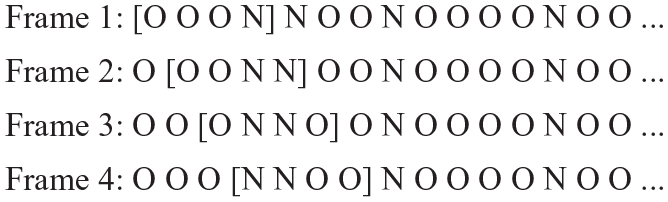
Consecutive frames.
Although this approach best reflects the way the tweet box worked, the downside is that the observations are not independent because every individual tweet (except the first one) is part of multiple frames. For instance, consider tweet number 3 as depicted in Figure 1. Figure 1 shows us that the third tweet has been coded as “non-negative” (O). The third tweet is considered to be of potential influence on the valence of the fourth tweet (Figure 1, frame 1), the valence of the fifth tweet (Figure 1, frame 2) and the valence of the sixth tweet (Figure 1, frame 3). Thus, whereas tweet 3 constitutes only a single tweet, its occurrence is hypothesized to affect the valence of subsequent tweets in three separate frames. Given this violation of independence, we could not use common statistical tests (Field, 2009). Instead, we performed a Monte Carlo simulation (Raychaudhuri, 2008; Zio, 2013) using R software (R Development Core Team, 2008), in order to compare the observed sequence of tweets (i.e., the original dataset of 1186 tweets) to a large number of potential sequences of tweets.
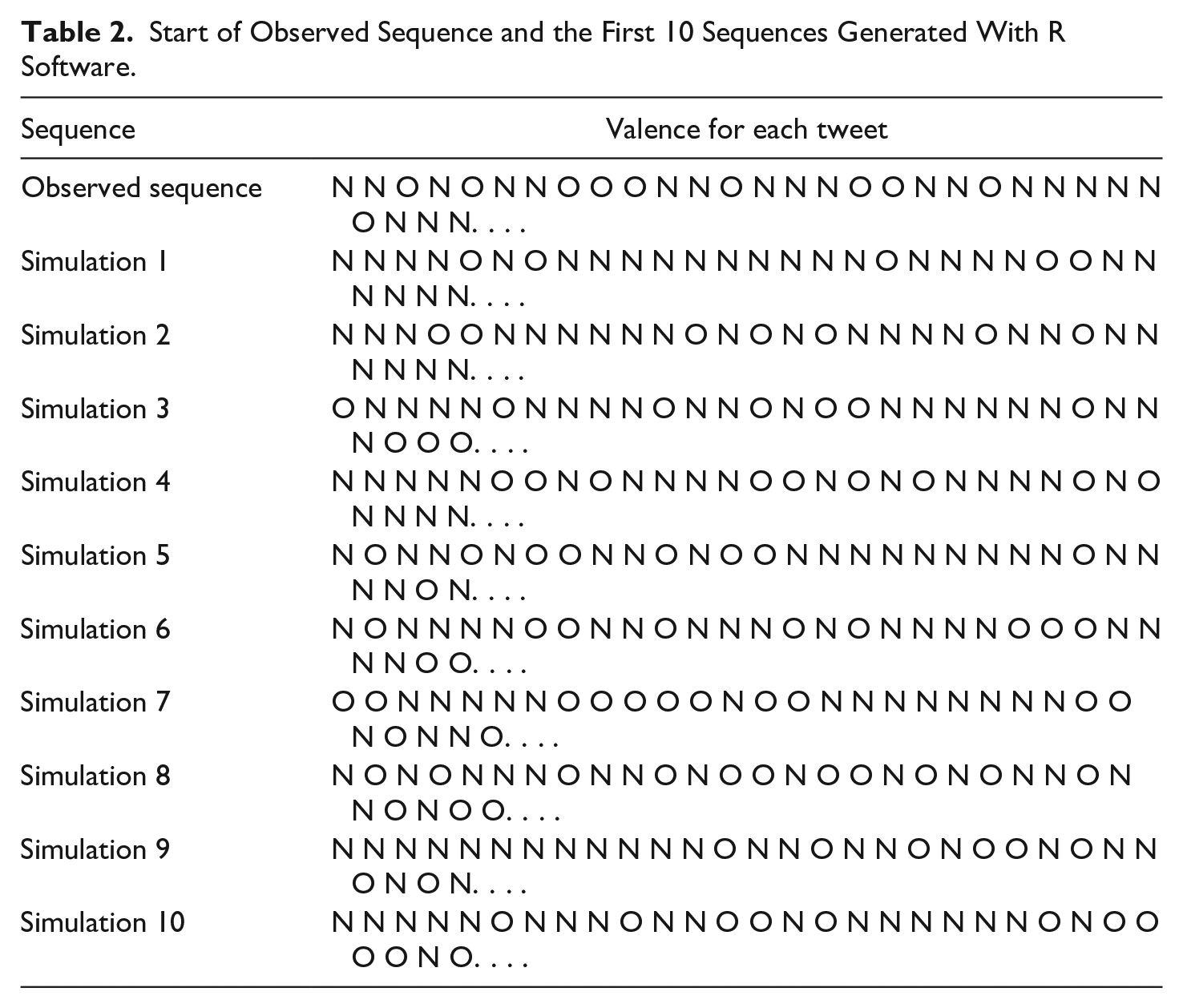
To allow for a fair comparison, it was important to take into account the observed likelihood for a negative or non-negative tweet. Since the observed sequence of 1,186 tweets consisted of 847 negative tweets (71% of all tweets) and 339 non-negative tweets (29% of all tweets), the Monte Carlo simulation took these percentages as the likelihood for a new tweet to be negative (0.71) or non-negative (0.29). Based on these chances, the R software produced 10,000 random sequences of 1186 tweets. For the creation of every single tweet the software program had to choose between a negative tweet (N) and a non-negative tweet (O), taking into consideration that the a priori likelihood for a tweet to be negative was 71%, compared to 29% for a tweet to be non-negative. Table 2 shows the first 30 tweets for the first 10 sequences that were generated by the R software. The distributional characteristics of 10,000 sequences were used as a baseline to compare our observed data to.
Start of Observed Sequence and the First 10 Sequences Generated With R Software.
Data Analysis: Clustering and Congruence Values
In order to test the hypothesis we formulated in the literature review, we performed two analytical procedures:
Clustering
If non-negative tweets indeed elicit emotional contagion, we would expect users who are confronted with one or more non-negative tweets to be more likely to adopt the emotion and produce a tweet with the same valence themselves. Given the small number of preceding tweets visible in the integrated tweet box, this would imply that non-negative tweets should not be scattered randomly over the data set, but occur in clusters instead. We counted clusters of two (doublets), three (triplets), and four (quartets) non-negative tweets in our observed sequence and compared their frequencies to the frequencies found in the Monte Carlo sequences. If emotional contagion occurred, the observed sequence should contain significantly more non-negative tweet clusters than the sequences generated by the Monte Carlo simulation. To determine significance, we used a p-value threshold of .05, which is common in social sciences. A p-value ≤ .05 suggests that the probability of observing at least the same number of doublets, triplets or quartets in the Monte Carlo sequences, as we found in the observed sequence, should be no more than 5%. This validates that the number of doublets, triplets and quartets in the observed sequence is rather uncommon (occurring in no more than 500 sequences out of 10,000).
Congruence Values
A disadvantage of comparing the number of clusters is that it focuses on instances in which tweets have the same valence as the directly preceding tweet or tweets (i.e., clusters of OO, OOO or OOOO). However, emotional contagion can also occur if the preceding tweet has a different valence than the other tweets in the frame (e.g., OONO). Therefore, we also calculated congruence values (CVs) by counting how many of the three tweets preceding a tweet (the target tweet) displayed the same emotional valence as the target tweet. The main advantage of this analysis is that it takes all three preceding tweets into account and considers each of them of equal influence. The minimum CV was 1 (only the target tweet had that specific valence; each of the three preceding tweets expressed a different valence) and the maximum was 4 (there was a cluster of four tweets, including the target tweet, expressing the same valence). Figure 2 shows some examples of frames and the corresponding congruence values for the final tweet in the frame.
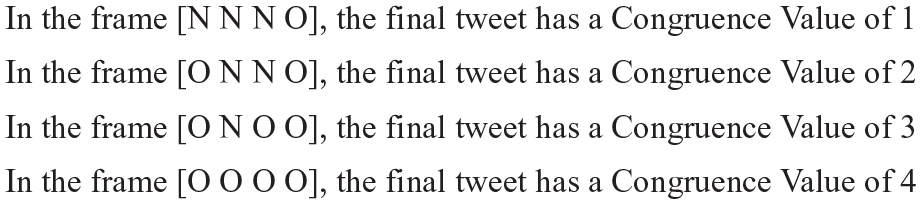
Examples of congruence values.
If emotional contagion did occur, we would expect to observe more high CVs (three or four) for non-negative tweets in the observed sequence than in the simulated sequences generated by the Monte Carlo algorithm. Since CVs are discrete, categorical data, a Goodness of fit χ2 test was used to determine the degree to which the distribution of the observed CVs differed from the distribution of the expected CVs.
Results
Clustering
The number of non-negative doublets (O-doublets) in the observed sequence was 112. In the simulation, it became evident that in 976 out of 10,000 simulated sequences, an equal or higher number of O-doublets was found (see Table 3). This corresponds to 9.76% of all simulated sequences and a p-value of .098, which means there was no significant difference between the observed and expected number of O-doublets. However, the number of O-triplets and O-quartets in the observed sequence did differ significantly from the number that could be expected based on prior probabilities (as determined by means of the Monte Carlo simulation). The number of non-negative triplets (O-triplets) in the observed sequence was 40. In the simulation, we found an equal or higher number of O-triplets in 471 out of 10,000 sequences. This corresponds to 4.71% of all sequences and a p-value of .047 (see Table 3). Similarly, Table 3 shows that 18 O-quartets were found in the observed sequence. Only in 151 out of 10,000 simulated sequences did we find an equal or higher number of O-quartets. This corresponds to 1.51% of all sequences and a p-value of .0151.
Monte Carlo Results: Observed and Expected Occurrence of Non-Negative Doublets, Triplets, and Quartets.
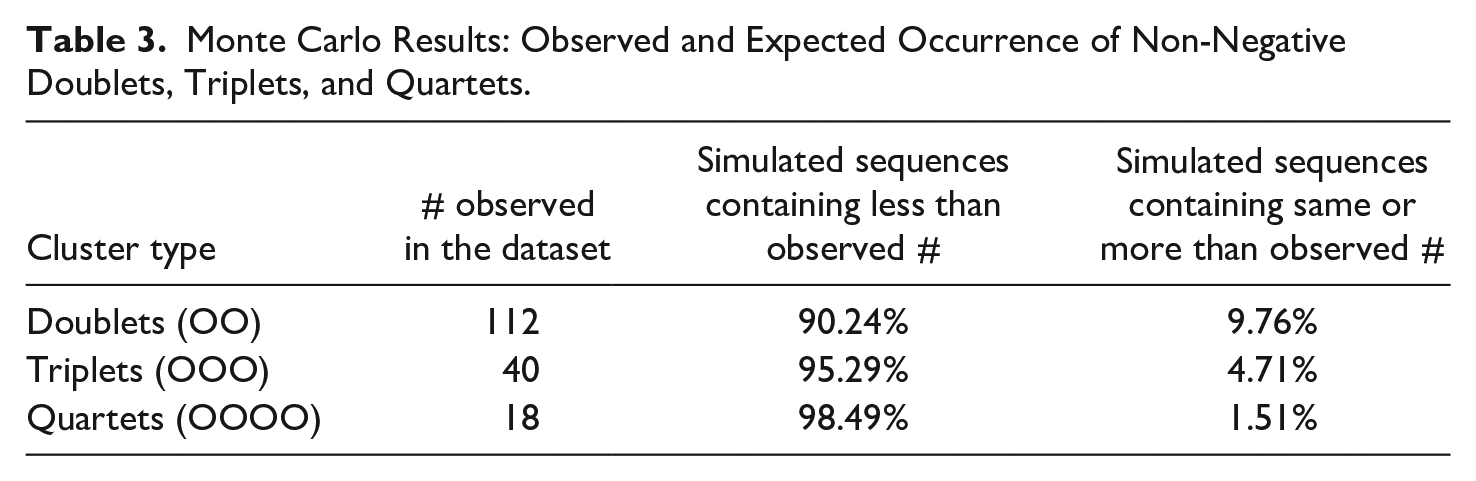
To summarize, the results from the clustering analysis point to the occurrence of non-negative emotional contagion. The dataset contained significantly more triplets and quartets of non-negative tweets (OOO and OOOO) than could be expected based on prior probabilities.
Congruence Values
Table 4 shows the results for our Goodness of fit χ2 analysis. At the right end of the bottom row, the Goodness of fit χ2 is reported, which can be interpreted as a measure of the overall difference between observed CVs and expected CVs. This statistic shows that overall, the observed number of CVs differed significantly from the expected number of CVs (operationalized as the average over 10,000 simulated sequences); χ2(3, N = 383) = 14.02, p = .003. Further inspection of the differences (see Table 4) revealed that the difference between the observed and expected number of tweets with a Congruence Value of 1, 2, or 3 was relatively small, whereas the difference between the observed and expected number of tweets with a Congruence Value of 4 was large (8 tweets expected vs.18 tweets observed). Therefore, it is likely that this difference was the main driver of the significant χ2.
Results for Congruence Values.
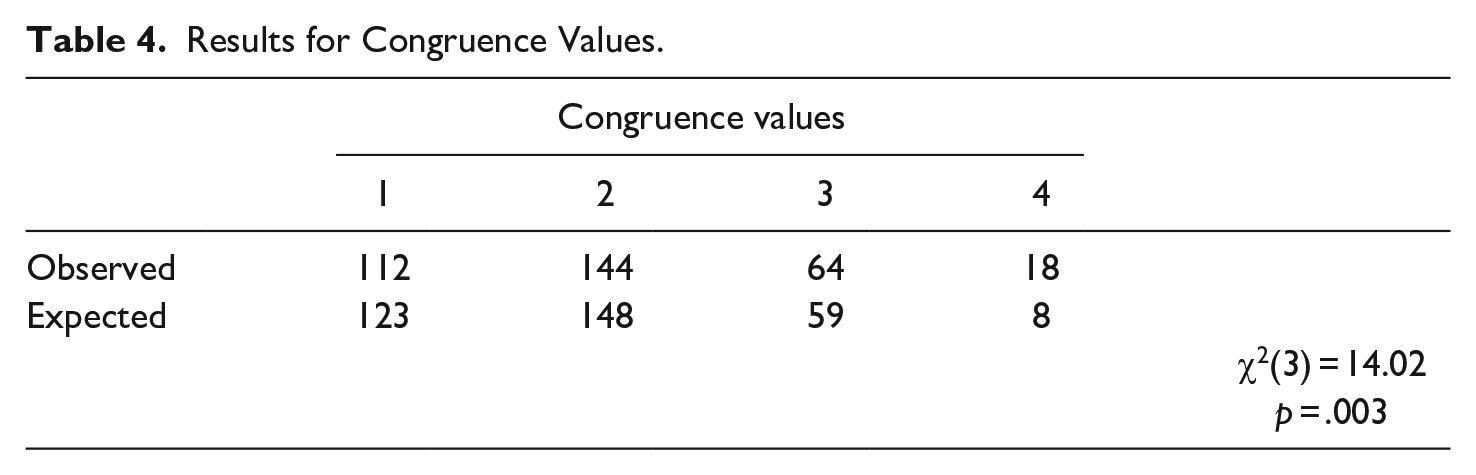
Thus, the results from this analysis, which, unlike the previous analysis, took all three preceding tweets into account and considered each of them of equal influence, again pointed to the occurrence of emotional contagion elicited by non-negative messages in our dataset.
Discussion
In this study, we sought to answer the following research question: Can fellow consumers’ non-negative messages (temporarily) dispel negativity in a social media firestorm through a process of emotional contagion? To do so, we applied two analytical procedures to a real-life dataset comprised of 1,186 tweets that had been created using an integrated tweet box in response to a service failure on behalf of McDonald’s Japan. The outcomes of both analytical procedures support our hypothesis that non-negative messages display a higher degree of similarity to the valence of the preceding messages their author was exposed to than could be expected on the basis of prior probabilities. The most important implication of this finding is that in a social media firestorm, non-negative messages posted by fellow consumers can elicit emotional contagion and thereby dispel negativity, at least temporarily.
Our study differs from earlier observational studies demonstrating emotional contagion on social media (e.g. Coviello et al., 2014; Ferrara & Yang, 2015; Gruzd et al., 2011) in several ways. First of all, the nature of our dataset allowed us to address the challenge of pinpointing which emotional expressions a user had been exposed to prior to posting their own message (Ferrara & Yang, 2015; Goldenberg & Gross, 2020). Because the messages investigated in this case study were created using an integrated tweet box, we knew exactly which messages users could have seen prior to posting and which emotional valence these messages expressed. This unique feature of our dataset ensured a more controlled environment to test the occurrence of emotional contagion. Moreover, it allowed us to develop two innovative analytical procedures (clustering and congruence values) that can be used by fellow researchers who wish to demonstrate the occurrence of emotional contagion in similar circumstances.
Secondly, we investigated the occurrence of emotional contagion in the context of a social media firestorm, focusing on messages expressing an emotional valence which differed from the dominant negative sentiment. Our finding that these non-negative messages can also trigger emotional contagion suggests that in order to understand the psychological dynamics underlying social media firestorms, scholars should look beyond the high-arousal, negative emotions (e.g., anger) that were identified as potential driving forces in earlier research (e.g. Berger & Milkman, 2012). Furthermore, the results of our study support the idea that in some circumstances, negativity bias (i.e., the propensity of people to pay more attention to negative stimuli) does not tell the complete story (cf. Goldenberg & Gross, 2020).
In fact, our finding that non-negative emotional contagion occurred following a service failure that aroused widespread anger among fellow consumers suggests that there are other mechanisms at play. One possible explanation is that the non-negative posts automatically attracted more attention because their valence differed from that of the majority of messages (Sokolov, 1963). An alternative explanation is offered by motivated cognitive processing theory (Clark & Isen, 1982), which posits that because “people may be motivated to stay in a positive affective state, there may be situations in which [they] instinctively focus more on positive emotions and avoid negative emotions” (Barsade et al., 2018, p. 145). It is not inconceivable that consumers who are unexpectedly confronted with a social media firestorm want to avoid being dragged down by the outburst of negative sentiment, particularly if the event that triggered the storm has little personal relevance for them (Hansen et al., 2018). This resonates with the idea that emotional contagion is not always an automatic process, but can also be the result of a deliberate decision to adopt the emotion expressed by another person because that seems the appropriate thing to do (Barsade, 2002; Barsade et al., 2018).
From a practical perspective, our findings suggest that organizations should pay more attention to non-negative messages that are posted during a social media firestorm (cf. Matook et al., 2022). By monitoring these messages and the effects that they seem to have on others, organizations cannot only identify potential brand advocates (Bernoff & Li, 2008), but also make a more realistic assessment of the reputational threat posed by the firestorm in certain subnetworks (Hansen et al., 2018; Legocki et al., 2022). Finally, they may consider incorporating elements from contagious non-negative posts into the messages they create themselves in response to the firestorm, or drawing attention to these non-negative posts in another way. Such actions can prevent the development of a one-sided negative collective truth and protect the organization from disproportional reputational damage (Aula, 2010; Doh & Hwang, 2009; Laczniak et al., 2001; Ott & Theunissen, 2015).
Limitations and Future Research
The case study we presented had a unique feature, in that all messages in the dataset were created using an integrated tweet box. Although the use of the tweet box ensured that every user had been exposed to at least three tweets of fellow consumers, it was still impossible to determine how much attention was devoted to each of these tweets. As a consequence, it was impossible to assess whether non-negative tweets indeed attracted more attention than negative tweets, as we suggested in the Discussion section. Future research could address this limitation by using an experimental approach and appropriate technology, such as eye-tracking.
A second limitation of this study is related to the coding of tweets. The observed Fleiss’ Kappa and Cohen’s Kappa of .46 indicates only moderate agreement between coders. It should be noted, however, that these messages were created at a time when Twitter still had a 140-character limit. The small number of characters that users had at their disposal to express their sometimes complex emotions may have enhanced the ambiguity of the messages they produced (Ferrara & Yang, 2015). Moreover, many tweets contained colloquialisms, abbreviations and expressions of sarcasm (Sinclair et al., 2017), which are also known to be susceptible to subjective interpretation. That is why we decided to involve three coders in the process and rely on classifications that were independently confirmed by at least two of them. In future studies, however, it may be advisable to create a more elaborate coding scheme which takes the inherently ambiguous nature of the messages into account.
A third limitation of this study also relates to the length of the messages collected. Since the tweets were generally very short, we restricted ourselves to the classification of their emotional valence, as a more detailed linguistic analysis of the expression of emotions was deemed unlikely to yield meaningful insights. Now that Twitter has increased the maximum length of tweets to 280 characters, it could be interesting to perform a more in-depth analysis of the linguistic content of tweets produced during a social media firestorm, for example by paying attention to variables such as purpose, tone, and the realization of different complaint components (e.g., Matook et al., 2022; Ruytenbeek et al., 2023).
Finally, we wish to acknowledge that our dataset was produced in a particular context. The social media firestorm targeted at McDonald’s Japan was a response to a perceived service failure as well as a communication failure on behalf of the company’s CEO (Sinclair et al., 2017). The nature of these two triggers may well have impacted the way in which the firestorm evolved (Hansen et al., 2018). Furthermore, the cultural context is also likely to play a role, as cultures differ in the degree to which overt emotional expression is considered appropriate (Safdar et al., 2009). Therefore, it would be very interesting to investigate whether similar contagion effects can also be observed in social media firestorms triggered by different failures in different cultural contexts.
Footnotes
Declaration of Conflicting Interests
The author(s) declared no potential conflicts of interest with respect to the research, authorship, and/or publication of this article.
Funding
The author(s) received no financial support for the research, authorship, and/or publication of this article.