




Abstract
Introduction
Intimate partner violence (IPV) can be defined as any behavior or action within a present or former intimate relationship that leads to physical, sexual, or psychological harm. 1 It has been recognized worldwide that IPV is a global health issue with immense clinical and societal implications. 2 A study on the Universal Burden of Disease graded IPV as 5th in years of life lost due to disability in women. 1 It was also shown that it harms physical, mental, reproductive, and sexual health, with consequences such as unwanted pregnancy, physical injuries, depression, post-traumatic stress disorder, substance abuse, gynecological disorders, suicide attempts, and increased HIV/AIDS risk.3,4 There is a strong link between IPV and HIV/AIDS.5,6 It has been documented that women are at risk of experiencing violence upon disclosure of their HIV status to their husbands/partners. 7 Also, the pattern/sequence of violence against HIV-positive women can interfere with their health care, including their adherence to their HIV treatment which may predispose them to treatment failure as well as opportunistic infections. 8
Nigeria's National HIV prevalence is 1.4% among adults aged 15-49 years; women aged 15-49 years are more than twice more likely to be living with HIV than men (1.9% vs 0.9%). The fertility rate in Nigeria for the year 2020 is 5.25 children per woman. 7 In Nigeria, it is estimated that a woman's lifetime exposure to IPV from her current partner or husband is 5% for sexual IPV, 14% for physical, and 19% for emotional IPV 9 . Also, a regional estimate of IPV in Nigeria shows the prevalence of IPV ranging from 29% in the South West to 41% in the South-South, 42% in the North, and 78.8% in the South East in that order. 9
In a study done on HIV-related IPV among pregnant women in Nigeria, it was discovered that financial support deprivation, denial of communication, as well as the threat of being hurt were the commonest forms of IPV among HIV-positive pregnant women and these also statistically occurred significantly more among HIV positive respondents than HIV negative respondents. 10
Despite the growing recognition of IPV as a public health and human right problem, and the impediment it poses to development, this type of violence continues to have an unjustifiably low priority on both the national and international development agenda.11,12 It is known that women in the reproductive age group (15-49 years old) are one of the highest risk groups for IPV because they stand the chance of being in a married union. 13 Therefore, analyzing the evidence from studies on this vulnerable population is critical for interventions targeted toward the elimination of this menace. Also, pregnancy provides a unique opportunity to screen for IPV because women tend to trust and confide in health workers for a such personal challenges. That was one of the reasons why pregnant women were chosen for this study.
Hence, this study described and compared the prevalence, pattern, and determinants of IPV among pregnant women living with HIV and HIV-negative women attending antenatal clinics in Oyo state, Nigeria.
Methodology
Study Area
The study was conducted in Oyo state, which is one of the 36 states in Nigeria. Oyo state has 3 senatorial districts namely: Oyo North, Oyo South, and Oyo Central comprising 13, 12 9, 8 and 11 10 local governments respectively making a total of 33 local governments areas in all.
There are 28 General Hospitals and 547 Primary Health Centre (PHC) facilities in Oyo state. Interventions on Prevention of Mother to Child Transmission (PMTCT) are offered in Oyo state through the AIDS Prevention Initiative in Nigeria (APIN) project funded by President's Emergency Plan for AIDS Relief. However, there are 5 sentinel sites for HIV in Oyo state fully supported by APIN. The bulk of anti-retroviral supplies and drugs goes to the sentinel sites before they are redistributed to some PHCs. The sentinel sites are Adeoyo Hospital (Ibadan), General Hospital Sunsun (Ogbomoso), Bowen Teaching Hospital (Ogbomoso), General Hospital, Oyo (Oyo town), and University College Hospital (Ibadan). Most of the HIV patients discovered during pregnancy are often referred to those sites for adequate PMTCT. Out of these sites, samples were taken from Adeoyo hospital, General Hospital Sunsun, Ogbomoso, and General Hospital Oyo. These 3 sentinel sites are all government-owned hospitals and they all offer both PMTCT and ANC services. For the PMTCT services, APIN supplies commodities while other expenses not related to HIV status are borne out of pocket through National Health Insurance Scheme (NHIS). ANC services are taken care of out of pocket or through NHIS.
Study Design
This study design was a cross-sectional study in which the data was collected at a given point in time across a sample population of patients attending PMTCT and Antenatal clinics. A comparison was done to know whether there was a difference between the prevalence, pattern, and determinants of IPV among pregnant women living with HIV and pregnant women without HIV.
Study Population
It was carried out among HIV-positive and negative pregnant women aged 15 to 49 years, who was attending antenatal and PMTCT clinics.
Sample Size Calculation
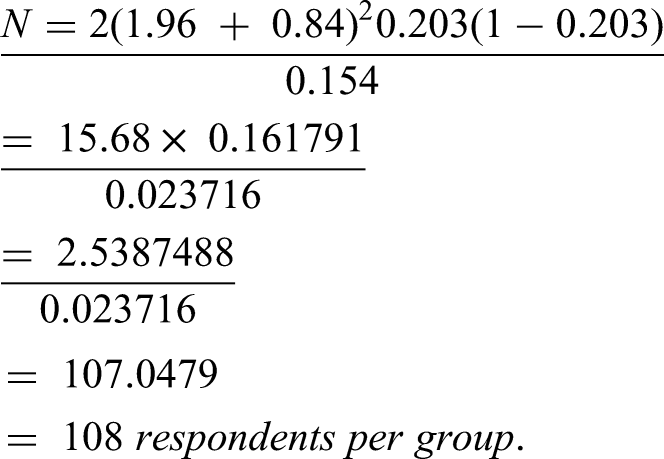
The sample size was calculated using the formula for comparing 2 groups:
14
N = minimum sample size Zα = critical ratio at a significance level of 5% Zβ = lower β percent point of normal distribution at 80% P0 = means of the 2 prevalence in the 2 comparison groups, that is, (P1 + P2)/2 P1 = prevalence of IPV among HIV-positive pregnant women P2 = prevalence of IPV among HIV-negative pregnant women

Taking the prevalence in the 2 groups (P1 and P2) is 12.6% and 28% from previous similar studies15,16, prevalence P0 = 0.126 + 0.280 = 0.406

Sampling Technique
Multistage sampling technique was used.
The calculated number of HIV-pregnant-positive women was the number of HIV-negative pregnant women selected from the same center. Fifty-eight, forty-two, and twenty respondents were chosen each from Adeoyo Maternity Center (Ibadan), General Hospital, Sunsun Ogbomoso, and General Hospital, Oyo town, respectively. All the eligible respondents (HIV negative and positive) women were given serial numbers as they come for their ante-natal clinics/PMTCT. All respondents with even serial numbers were consecutively recruited into the study until the required sample size was met.
Instrument
The instrument was a semi-structured interviewer (face-to-face) administered questionnaire with both structured and open-ended questions. Pattern and prevalence of IPV were measured using the Composite Abuse Scale (CAS) which is a 30-item validated interviewer-administered research instrument. 17 The scale measures 4 dimensions of abuse, 1 physical abuse, 2 emotional abuse, 18 severe combined abuse, and 3 sexual harassment. A preliminary cut-off score of 7 divides respondents into the presence or absence of IPV. 19 It has high internal consistency (Cronbach's alpha) of at least 0.90 for each subscale and an all-item total score correlation of 0.6.14,17 It has been validated with a large sample of patients in the primary care practice setting. The CAS has been used in Nigeria and showed face validity and good internal consistency with a Cronbach's alpha of 0.82. 17 A cut-off score of 7 was adapted for this study by the findings of Hegarty et al in Melbourne, Australia. 14
Research assistants who were HIV volunteers in the facilities were employed in the 3 sites used. They were trained for 2 weeks, and each question was explained simply to avoid ambiguity in responses. The researcher was around to explain any difficult occurrences at various stages of data collection since the data collection was not at the same time in the 3 sites.
Data Analysis
Scoring and Grading of Responses
Presentation and Test Statistics
The questionnaires were manually sorted out and entered into a computer and the obtained data were analyzed using Statistical Package for Social Sciences version 21. 20 Chi-square test was used to test for an association between IPV and socio-demographic characteristics as well as the presence of HIV and the dimensions of IPV. Fischer's exact test was used when cells had expected values of less than 5 and the T-test was also used to compare the means of the continuous variables such as the age of the respondents and their partners. The level of significance was set at a P-value less than or equal to .05. All variables were tested and the data were normally distributed, thus the data met parametric test assumptions.
Ethical Approval and Informed Consent
This study was approved by the Ethical Review Committee of Ladoke Akintola University of Technology (LAUTECH) Teaching Hospital, Ogbomoso (approval no. LTH/OGB/EC/2015/098). All participants provided written informed consent before enrolment in the study. Written informed consent was also obtained from the patients for the publication of the study.
Results
Sociodemographic Characteristics
Table 1 shows the socio-demographic characteristics of the respondents. The mean age of the respondents in the study group was 30.7 ± 5.5 years. A larger percentage of HIV-negative respondents were Christians (77, 64.2%) and out of the 98 (40.8%) who were Muslims, 55 (45.8%) were HIV positive. Most respondents were from the Yoruba ethnic group (221, 92.1%), married (209, 87.1%), and from monogamous family settings (186, 77.5%). An almost equal percentage of respondents had secondary (95, 39.6%) and tertiary (90, 37.5%) education. A greater percentage of the HIV-positive respondents however had no formal education (13, 10.8%) when compared with their HIV-negative counterparts 2 (1.7%).
Sociodemographic Characteristics of Respondents.

Fisher's exact.
Statistically significant.
Table 2 shows that 141 (58.8%) respondents disclosed their HIV status to their husbands. A higher proportion of the HIV-negative respondents 84 (70.0%) disclosed their HIV status to their husbands when compared with their HIV-positive counterparts, 57 (47.5%), and the difference was statistically significant with a P-value of <.001. Of those who had disclosed their HIV status to their husbands, 87 (60.8%) did so within a week of knowing the result with a slightly higher proportion from the HIV-negative group, 45 (53.6%). Also, 35 (24.5%) disclosed within a month, with a higher percentage from the HIV-negative respondents 25, 71.4%. That was however not statistically significant (P-value 0.117).
HIV Status Disclosure to Partners by Respondents.

Fisher's exact.
Statistically significant.
Table 3 shows the pattern of IPV among respondents. A total of 110 respondents (75.1%) suffered severe combined abuse in pregnancy with a slightly higher proportion of 67 (78.8%) from the HIV-positive respondents while 63 (71.6%) were from the HIV-negative group. In addition, 38 (44.7%) and 32 (36.0%) of the HIV-positive and HIV-negative respondents were emotionally abused by their partners.
Summarized Pattern of Intimate Partner Violence in Pregnancy Using the Composite Abuse Scale.

Statistically significant.
Table 4 showed that the prevalence of IPV during pregnancy in this study is 45.8%. The prevalence of IPV among the HIV-positive and HIV-negative respondents were 47.5% and 44.2%, respectively, which was not statistically significant (P-value of 0.459).
Prevalence of IPV in Pregnancy Among HIV Positive and HIV Negative Pregnant Women.

Table 5 shows that out of the 62 (51.7%) HIV-positive respondents that were Christians, 28 (53.1%) were being abused during pregnancy while 34 (53.1%) were not abused. Out of the 106 (88.3%) who were Yoruba by tribe, 48 (85.7%) and 58 (90.6%) were abused and not abused, respectively. The abuse occurred more among the couples cohabiting; 6 (10.7) were abused while only 1(1.6%) was not abused. IPV occurred more among respondents who had a primary level of education; more respondents had IPV compared with 10 (15.6%) who did not. Among the respondents with tertiary education, however, 11 (19.6%) were abused by their partners while 20 (31.2%) were not abused. Among respondents who were married for more than 5 years, abuse was present in 33 (15.6%) and absent in 25 (44.6%).
Association Between Socio-Demographic Characteristics With Abuse in Pregnancy Among HIV Positive Respondents.

Fisher's exact.
Statistically significant.
Table 6 shows that 37 (64.9%) of the Christians among the HIV-negative respondents were being abused while 40 (63.6%) were not abused. On the other hand, 23 (36.5%) of Muslims were being abused by their partner while 20 (35.1%) were not abused. Also, among the HIV-negative respondents, 52 (91.2%) of the married group suffered from IPV while 60 (59.2%) of them did not. Furthermore, for those in a polygamous relationship, all the respondents that were first wives of their husbands did not experience IPV. For those who were second wives, 5 (71.4%) experienced IPV while 2 (71.4%) did not. That was statistically significant with a P-value of 0.015. Also, among HIV-negative respondents who were skilled, IPV was present in 13 (22.8%) but absent in 21 (33.3%).
Association Between Socio-Demographic Characteristics With Abuse in Pregnancy Among HIV-Negative Respondents.

Fisher's exact.
Statistically significant.
Table 7 shows the logistic regression to determine the factors responsible for IPV among HIV-positive and negative pregnant women. For the HIV-positive pregnant women, the duration of marriage was statistically significant with a P-value of 0.038 while respondents’ drinking habits, partners’ use of cigarettes, as well as ever had a physical fight with anyone were not statistically significant.
Logistic Regression of Determinants of IPV Among HIV Positive and Negative Pregnant Respondents.

Statistically significant.
Discussion
In this study, IPV was experienced more among pregnant women living with HIV compared with those without HIV. HIV has also been found to be a stressor to IPV in other similar studies.21,22 HIV, therefore, contributed immensely to the experience of IPV among pregnant women in this study. This is similar to another study done in a tertiary hospital in South East Nigeria where HIV-positive respondents experienced physical violence during their index pregnancy 6 times more than the control. 10 The reason for this may be because of the social rejection and discrimination suffered as a result of HIV infection. Furthermore, such victims remained in the relationship where they were abused mainly because of the reduced ego HIV infection had on them.
A study done by Kelsey revealed that Severe Combined Abuse (SCA) was the commonest among the respondents. 23 This is very similar to this present study where more than two-third of respondents experienced SCA with a slight preponderance among pregnant women living with HIV. More than half of the respondents who suffered physical abuse were also HIV positive. The presence of the stigmatizing infection may be the major cause of the physical assault suffered by HIV seronegative mothers.
The majority of the respondents fell under the married group. It was also found that more of the HIV-negative respondents were in the married group compared with their HIV-positive counterparts and more of the singles and cohabiting partners were HIV-positive. This similar trend was also found in another study done on marital status and HIV prevalence among women in Nigeria. 24 HIV status can be a reason why most women may want to remain single or prefer living with a man just to bear his name. That was quite significant because more singles were HIV positive. Disclosure of HIV positivity can lead to divorce between couples, leaving women in that category as single mothers or parents.
People living with HIV may have a higher risk of physical violence when they first disclose their status to their partner. 6 In a study, although, not statistically significant, IPV was present more among HIV-positive respondents compared with their counterparts. Other studies have established violence and HIV.15,22,23 In this current study, a large proportion of respondents who suffered physical abuse were HIV positive which was statistically significant. This was similar to another study done among HIV persons attending an urban clinic where physical abuse was more common among HIV-positive patients. 25 This is slightly different from a study done on HIV-related IPV among pregnant women in Nigeria where sexual violence in form of denial of sex was more rampant among HIV-positive pregnant women10,26 compared with their HIV-negative counterparts.
Among the HIV respondents, abuse was significantly present among the unskilled respondents compared with those without abuse. The number of years of marriage was also significantly different as respondents who have been married for more than 5 years were more abused than those married for less than 5 years. This was quite different among the HIV-negative respondents; fewer respondents were abused among those who have been married for more than 5 years and it was statistically significant. The likely reason for this may be that the more marriage is sustained, the more likely the exposure to abuse especially in HIV-positive respondents.
Duration of marriage was also found to be statistically significant with IPV among HIV-positive respondents. This aligned with another study done on IPV and associated factors in an obstetric population in North Central, Nigeria where the duration of marriage was statistically significant. 16 IPV was more pronounced among couples who are less than 5 years into marriage compared to those who have spent more than 5 years. This can be explained by the early years of marriage, which might have been filled with both turbulent and fun-filled times. A lot of couples might have survived these turbulent times. But newly married couples are just in their formative years, and coping with individual differences may still be difficult and far-fetched. Also, trust might not have been strongly built among couples who are just married for a few years compared with couples who have spent a long time together. It was found that pregnant women living with HIV whose marriage was less than 2 years experienced IPV compared to HIV-negative women whose marriages were more than 5 years. This is expected as women living with AIDS have been documented to stay less in a stable marriage than HIV-negative women. This aligns with another study done in Malawi where HIV-positive individuals face greater risks of union dissolution than HIV-negative women. 27
Conclusion
The prevalence of IPV among HIV-positive and negative pregnant women is quite high in this study, with the former having a slightly higher proportion compared with the latter. The pattern of IPV among HIV-positive pregnant women in decreasing order includes severe combined abuse, physical abuse, emotional abuse, and harassment, while among the HIV-negative pregnant women the sequence in descending order was severe combined abuse, emotional, harassment, and physical abuse. Duration of marriage was statistically significant to IPV among women living with HIV and HIV-negative women, with a higher proportion among those with marriages less than 2 years.
Recommendations
Recommendations for future research might include longitudinal designs investigating the experience of IPV among postnatal women; to know if there are differences in the prevalence of IPV before and after birth.
It is also recommended that IPV should be screened routinely during antenatal services. This will accord health workers the unique opportunity of identifying women experiencing various cases of abuse within the existing PMTCT of the HIV program as well as the routine ANC services.
In Nigeria, on the 25th of May 2015, the violence against women (Prohibition bill), which was later changed to the violence against the person (Prohibition) Act, was eventually signed into law. 25 There is a need to activate this law to serve as a deterrent and also to bring perpetrators of this act to book. This will further improve the overall well-being as well as the quality of life of women.
Limitations of the Study
The issue of HIV and IPV could be very sensitive and confidential, and due to socio-cultural factors, some of the respondents were ashamed to participate in the study while others were inhibited in their responses. Participants were, however, assured of confidentiality and thus encouraged to answer questions truthfully. Also, the inability to establish a temporal relationship based on the cross-sectional nature of the research is another limitation of the study.
Footnotes
Declaration of Conflicting Interests
The author(s) declared no potential conflicts of interest with respect to the research, authorship, and/or publication of this article.
Funding
The author(s) disclosed receipt of the following financial support for the research, authorship, and/or publication of this article: This manuscript is funded by the Department of Quantitative Health Science, Cleveland Clinic, USA.
