




Abstract
Aim:
Bleaching is reported to have a deleterious effect on the physical properties of composite material. There is a lack of studies evaluating the effect of bleaching on ACTIVA BioACTIVE – RESTORATIVE. The aim of this study was to evaluate the effects of bleaching on the microhardness and modulus of elasticity of ACTIVA BioACTIVE – RESTORATIVE.
Materials and methods:
In this in vitro study, the effect of bleaching on two restorative materials was tested. The two restorative materials ACTIVA BioACTIVE – RESTORATIVE and 3M Filtek Z350 Xt were subjected to bleaching with two concentrations of carbamide peroxide (15% and 35%). Measurements of Microhardness and Modulus of elasticity were recorded before and after the bleaching procedure. Data were checked for normality using the Shapiro–Wilk test. Unpaired t test was applied to compare mean of different variables across groups (p < .0001).
Results:
The microhardness and modulus of elasticity was higher among the 3M Filtek Z350 Xt group when compared to ACTIVA BioACTIVE – RESTORATIVE. Approximately 35% carbamide peroxide showed the least values when compared to 15% carbamide peroxide.
Conclusion:
Within the limitation of this study it can be concluded that 15% and 35% carbamide peroxide significantly decreased the Microhardness and Modulus of Elasticity of ACTIVA BioACTIVE – RESTORATIVE and 3M Filtek Z350 Xt. The deleterious effect was concentration dependent as more effect was noted with 35% Carbamide Peroxide. Therefore, patients have to be advised that the existing composite restoration might become softer after bleaching.
List of Abbreviations
CDC: Centre for Disease Control and Prevention.
GIC: Glass Ionomer cement.
OSHA: Occupational Safety and Health Administration.
VHN: Vickers microhardness.
Introduction
In previous decades, dentistry has seen a tremendous increase in demand for cosmetic procedures to improve the smile. These cosmetic procedures range from treating stained composite restorations to replacing an outdated, mismatched crown to reconstructing an entire arch.
Studies conducted in the United States and the United Kingdom show that between 20 and 35% of people are aware of their teeth’s staining and are unhappy with the colour they exhibit.1,2 As a result, more people, particularly the younger cohort, are looking for treatments for teeth whitening. 3 Bleaching is a minimally invasive, safe, economical, and predictable way to achieve the best aesthetic effect on teeth. Depending on their application bleaching techniques are classified as vital or nonvital bleaching, in-office or at-home bleaching, or both. 4
The majority of routinely used bleaching products contain hydrogen peroxide, either directly or as carbamide peroxide, which decomposes into hydrogen peroxide. In most cases, these products operate so quickly that noticeable benefits can be seen even after just one visit. However, little research has been done on the effects of such chemicals on the surface characteristics of restorative materials. 5
There is continuous research going on in the field of composites in response to changing clinical requirements, one such newer advancements is the bioactive restorative material, which is known to have superior properties than those of other conventional restorative materials. These substances can activate dental tissue repair systems and elicit a favorable reaction from the dental tissue, which is why they are referred to as ‘bioactive’ compounds.
ACTIVA BioACTIVE Restorative by (Pulpdent Corporation, Watertown, MA) is a combination of a bioactive glass ionomer with patented bioactive ionic resin and rubberized resin. The glass ionomer provides physical and chemical properties similar to that of a tooth while rubberized resin provided toughness and durability. These components along with bioactive resins displayed a high release and recharge rate of calcium (Ca2+), phosphate (PO43−), and fluoride (F−) ions, giving this material the strength and aesthetics of composites with all the benefits of glass ionomers. 6
Apart from its bioactive properties, ACTIVA BioACTIVE composite is reported to have low polymerization shrinkage (1.7%), a high depth of light cure (4 mm), and significant flexural strength, wear, and Fracture toughness compared to other resin composites and compomers. This material has many indications including restoration of class I and class II caries in primary molars and in cases where the isolation is compromised or impossible and in patients with high caries index due to its fluoride-releasing properties.6–11
Surface microhardness is defined as the resistance of a material to indentation or penetration. Surface microhardness of restorative can directly influence resistance to surface wear and scratching and in turn the clinical success of a restoration.
Hence, it has attracted a lot of attention in the literature as one of the most important physical characteristics of dental materials. However, the studies evaluating the impact of bleaching on the surface microhardness of restorative materials have contradictory results.7,12–17
The amount of stress a material experiences for a given amount of elastic strain is known as its modulus of elasticity. The composite material is more resistant to deformation within the elastic range when the elastic modulus is high. Flexural strength, which refers to the strength of the composite when flexed between two sites, is especially significant in long-span restorations. Mai et al reported that Bleaching the composite fibers increases both the elastic modulus and flexural strength. 18 The modulus of elasticity was reported to be dependent on the concentration or pH of the whitening products and decreased significantly after at home or supervised home bleaching.19,20
However, there was a lack of literature assessing the effect of bleaching using 15% and 35% Carbamide Peroxide on microhardness and modulus of elasticity of ACTIVA BioACTIVE – RESTORATIVE. This study aimed to evaluate the effect of bleaching on the Microhardness and Modulus of Elasticity of commercially available bioactive material ACTIVA BioACTIVE – RESTORATIVE.
Materials and Methods
This in-vitro study evaluated and compared the effect of bleaching on the Microhardness and Modulus of Elasticity of ACTIVA BioACTIVE – RESTORATIVE and Nano Hybrid Composite. Institutional ethical clearance was obtained for the study (Ref No- EC-2021/PG/065) and it was approved that patient consent was not required as it was an in vitro study.
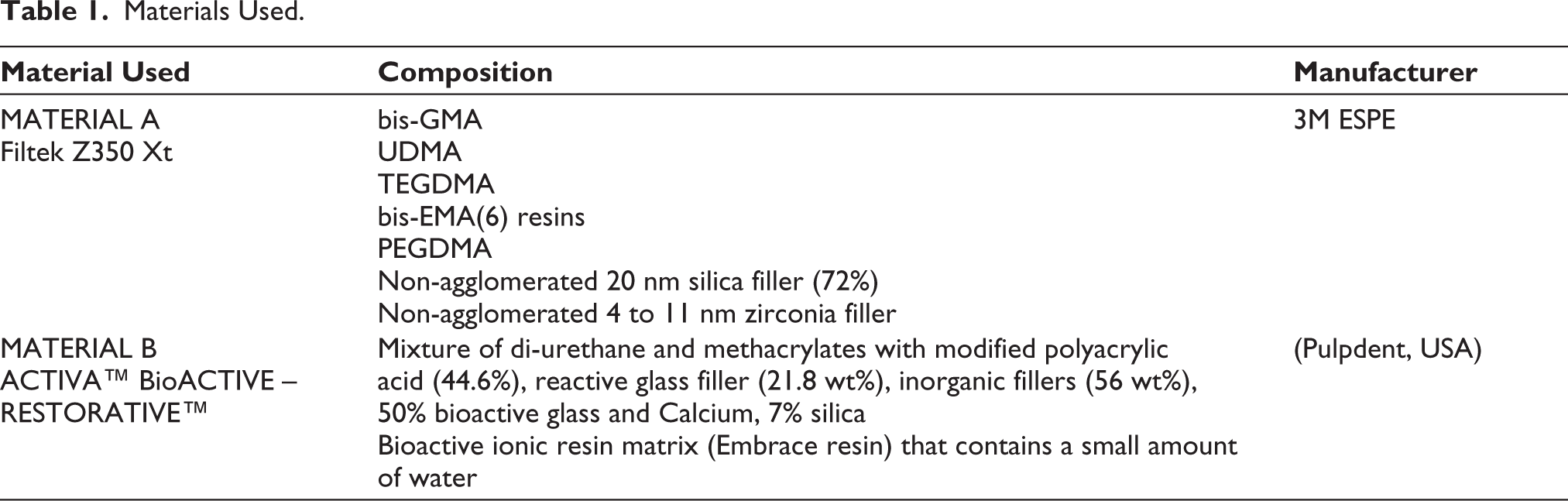
Fifty-two (n = 52) 10 mm diameter and 2mm thickness composite resin samples (Material A – 3M Filtek Z350 Xt, Material B – ACTIVA BioACTIVE – RESTORATIVE) were fabricated (Table 1).
Materials Used.
The total samples were divided into two groups; Group 1 (n = 26) and Group 2 (n = 26). Then each group was further divided into three subgroups. Subgroup a, control group (n = 6), subgroup b 15% CP (n = 10), and subgroup c 35% CP (n = 10).
In Group 1c and Group 2c, Material A and Material B samples were subjected to bleaching, 35% Carbamide peroxide was applied over the prepared samples for 30 minutes per day for 1 week.
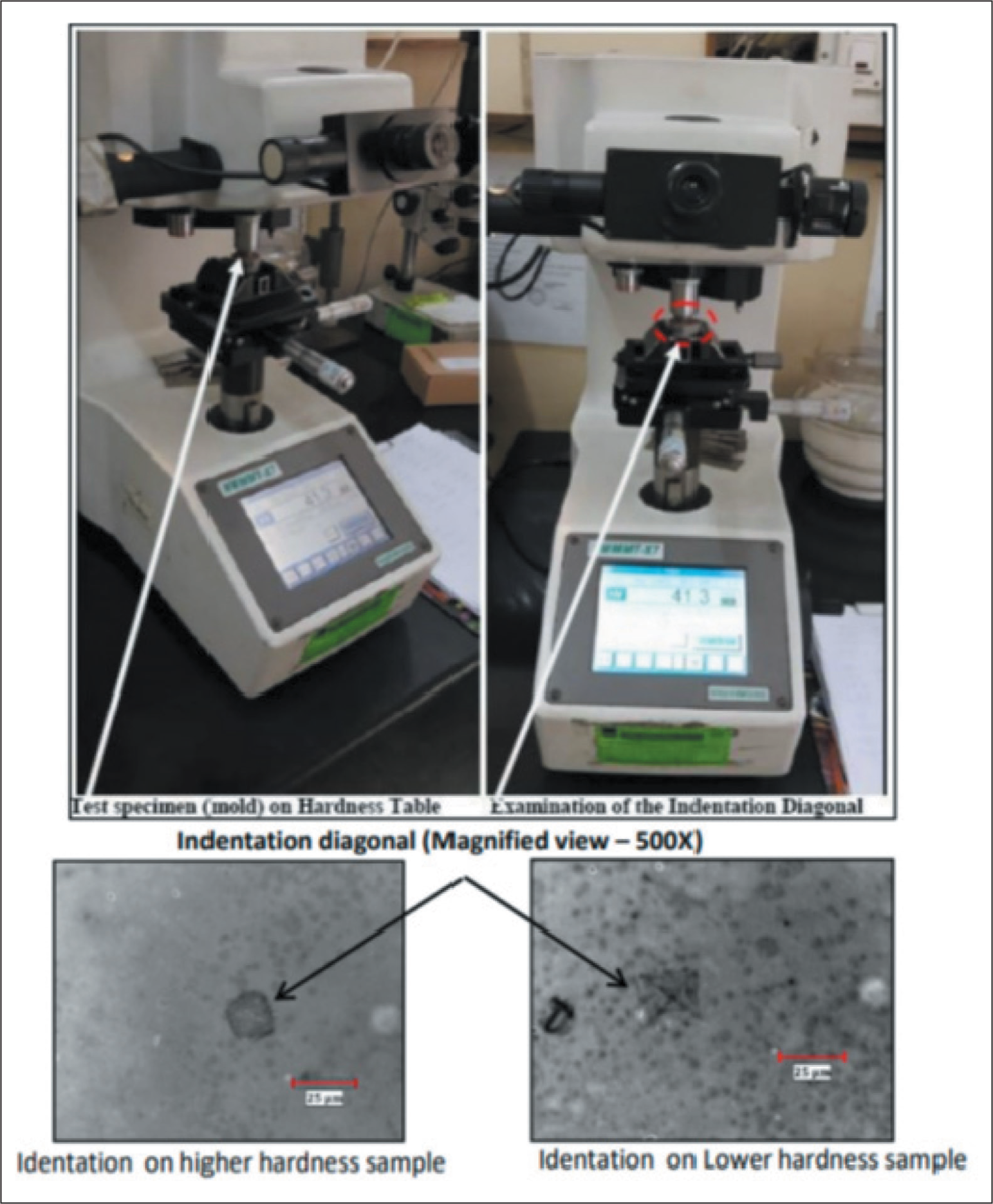
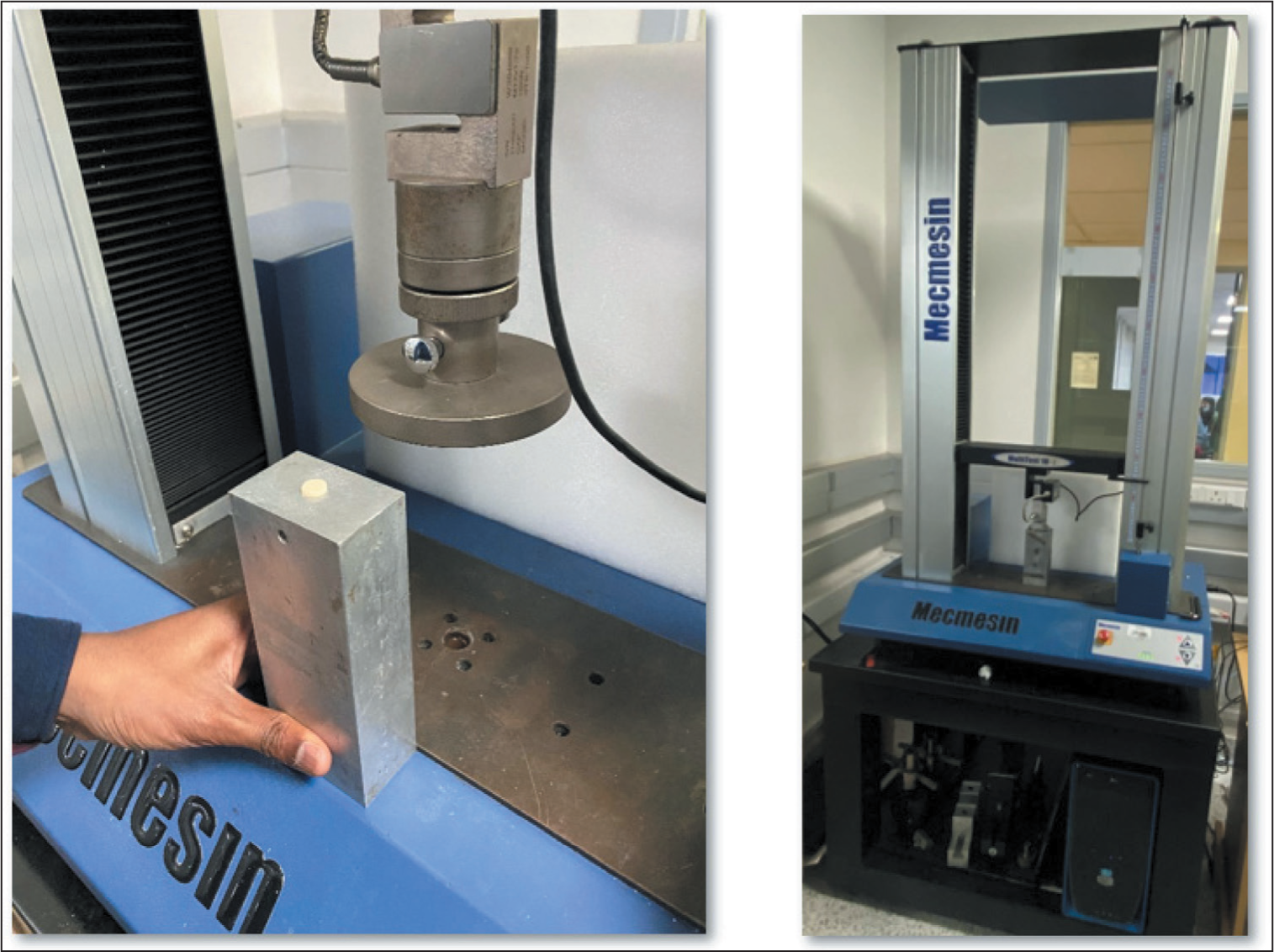
The samples of each group were rinsed under running water and dried. They were tested for Microhardness using Vickers microhardness tester, Highwood, Japan depicted in Figure 1, and Modulus of Elasticity using a Universal Testing Machine, Mecmesin, United Kingdom, depicted in Figure 2.
Vickers Microhardness Tester for Evaluation of Microhardness Modulus of Elasticity Measurement.
Universal Testing Machine for testing Modulus of Elasticity.
Collection, storage, sterilization and handling of prepared samples were carried out according to the Occupational Safety and Health Administration (OSHA) and Centre for Disease Control and Prevention (CDC) recommendations and guidelines.
Storage of Samples
Molds were stored in 100% relative humidity at room temperature. It was then removed from the mold and stored in distilled water at 37 ± 2°C, to simulate clinical environment till measurement. Modulus of elasticity and Microhardness were measured.
Comparison of Parameters Between 3M Filtek Z350 Xt and ACTIVA BioACTIVE – RESTORATIVE Without Bleaching.

Comparison of Parameters Between 3M Filtek Z350 Xt and ACTIVA BioACTIVE – RESTORATIVE After Bleaching With 15% Carbamide Peroxide.

Comparison of Parameters Between 3M Filtek Z350 Xt and ACTIVA BioACTIVE – RESTORATIVE After Bleaching With 35% Carbamide Peroxide.

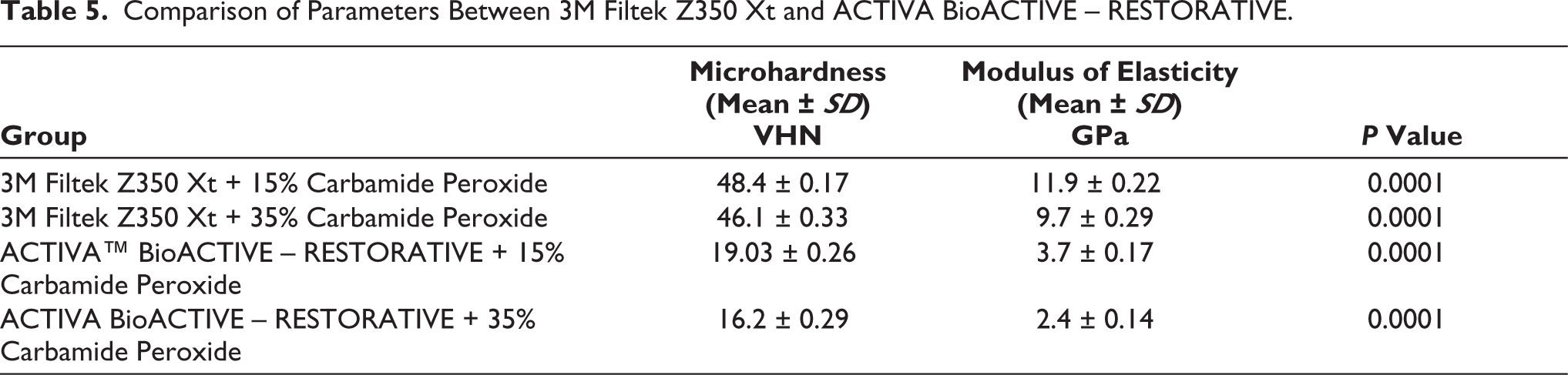
Comparison of Parameters Between 3M Filtek Z350 Xt and ACTIVA BioACTIVE – RESTORATIVE.
Vickers Hardness Measurement
For (n = 26 molds) (diameter = 10 mm and thickness = 2 mm), microhardness was measured using Vickers Microhardness Tester (Highwood, Japan). A diamond indenter with a 50g load for a period of 10 seconds was used. Vickers microhardness (VHN) was calculated using the following formula:

where L is applied load (kg) and d is mean indentation diagonal length (mm).
All molds (n = 26) (diameter = 10 mm and thickness = 2 mm) were measured using Mecmesin Universal Testing Machine (United Kingdom) with a crosshead speed of 1 mm/min and loaded between two pistons at 1 mm/min with a gradual load up to 10,000 N. The maximum loads were obtained by a slope of the stress/strain curve and the modulus of elasticity (GPa) was determined as follows:
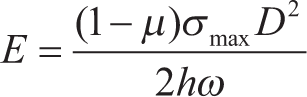
where E is the elastic modulus, µ is the Poisson’s ratio, D is the diameter of the punch and the bearing, h is the thickness of the disk, ω is deflection, and Sigma max is the maximum failure stress.
Statistical Analysis
The Statistical software SPSS 19.0 was used for the analysis of the data and was checked for Normality using Shapiro–Wilk test. Results on continuous measurements were presented in mean and standard deviation. Unpaired t test was applied to compare mean of different variables across groups (p < .0001).
Results
Microhardness
The microhardness was found to be higher among the Nanofilled Composite group- 3M Filtek Z350 Xt (53 ± 0.48) compared to the ACTIVA BioACTIVE – RESTORATIVE™ (21.1 + 0.41 VHN), and the difference was statistically significant (p = .0001). The microhardness of Nanofilled Composite group- 3M Filtek Z350 Xt was higher among the 15% Carbamide peroxide group (48.4 VHN) when compared to 35% Carbamide peroxide group (46.1 VHN) and the difference was statistically significant (p = .001) The microhardness of ACTIVA BioACTIVE – RESTORATIVE group was also higher among the 15% Carbamide peroxide group (19.3 VHN) when compared to 35% Carbamide peroxide group (16.2 VHN) and the difference was statistically significant (p = .001).
Modulus of Elasticity
The Elastic Modulus was found to be higher in the Nanofilled Composite group- 3M Filtek Z350 Xt (15.1 ± 0.31 GPa) compared to the ACTIVA BioACTIVE – RESTORATIVE (5.5 ± 0.35 GPa), and the difference was statistically significant (p = .0001). The Elastic Modulus of Nanofilled Composite group- 3M Filtek Z350 Xt was higher among the 15% Carbamide peroxide group (11.9 GPa) when compared to 35% Carbamide peroxide group (9.8 GPa) and the difference was statistically significant (p = .001) The Elastic Modulus of ACTIVA BioACTIVE – RESTORATIVE group was also higher among the 15% Carbamide peroxide group (3.7 GPa) when compared to 35% Carbamide peroxide group (2.47 GPa) and the difference was statistically significant (p = .001). Tables 2–5 depicts the results from comparing different parameters between 3M Filtek Z350 Xt and ACTIVA BioACTIVE–RESTORATIVE.
Discussion
The focus of dental care has completely evolved from simply replacing decayed teeth to treating good teeth and achieving an aesthetically pleasing smile. Although modern composites provide excellent aesthetics they tend to get stained extrinsically and deteriorate intrinsically over time.
Bleaching a commonly opted treatment modality for maintaining the aesthetics of the teeth can cause chemical, superficial, and physical alterations that may affect the clinical appearance and durability of the restoration. 21 A systematic review by Attin et al. reported that bleaching may exert a negative influence on restorations and restorative materials. 22 Clinicians frequently struggle with choosing the appropriate materials to achieve the greatest results as a result of the emergence of newer materials available on the market. Identification and anticipation of clinical efficacy and long-term success depend on the mechanical qualities of composite restorative materials. These characteristics are changed when bleaching treatments are used, according to studies. 23
The effect of bleaching agents on 3M Filtek Z350 Xt has often been studied. However, there is no evidence of the effect of bleaching on ACTIVA. Hence, the study design included the two materials. In the current study, the effect of 15% and 35% of carbamide peroxide on the Microhardness and Modulus of Elasticity of Nanofilled 3M Filtek Z350 Xt Composite and ACTIVA BioACTIVE – RESTORATIVE were assessed. 3M Filtek Z350 Xt had higher microhardness when compared to ACTIVA™ BioACTIVE – RESTORATIVE in this study. However, the microhardness values decreased when subjected to both concentrations of carbamide peroxide.
This outcome is consistent with a prior work by Lima et al. (2008), which found that 16% carbamide peroxide reduced a hybrid composite’s microhardness. 24 Several other studies have reported the same results with different concentrations of bleaching agents.12,14,20,25–27 However, contradictory results were observed by Polydorou et al., 2007 where at home and in office bleaching techniques on different composite resins resulted in no reduction in microhardness or need for replacement of the restoration. 5 Several other studies also revealed that 15% carbamide peroxide had no significant effect on the microhardness of Z350.17,21,28
Sharafeddin reported the surface hardness of GICs to be negatively impacted by the bleaching in implicit percentages. 29 However, Turker et al. reported an increase in the microhardness of GIC after bleaching. 9 These contradictory results could be attributed to differences in the bleaching process, including the timing of application and treatment, bleaching agents, and restorative materials employed. One of the reasons for the loss of microhardness could be attributed to the peroxide-induced oxidative cleavage of polymer chains. After bleaching, a significant decrease in microhardness can be anticipated because ACTIVA has a high concentration of resin matrix that can be oxidized by carbamide peroxide.
It is well recognized that the inorganic filler type has a significant impact on the composites’ microhardness. 30 Consequently, the loss of inorganic filler from restoration surfaces could be another factor causing a decrease in the surface microhardness of the restorations used in the study.
The ACTIVATM Bio ACTIVE – RESTORATIVETM’s increased molecular weight, which is known to cause less shrinkage and less ageing, may also have contributed to a somewhat softer resin matrix. A change in microhardness was also attributed to the type of bleaching chemical used and its concentration.8,31,32
In the current investigation, the microhardness of 3M Filtek Z350 Xt and ACTIVATM BioACTIVE – RESTORATIVE that were bleached with 15%, 35%, and 35% carbamide peroxide each differed significantly, with 35% carbamide peroxide having a greater detrimental impact on the composite material. The longer duration and concentration of the bleaching agent required to penetrate the tightly cross-linked polymers may explain why the two concentrations of carbamide peroxide in the restorative materials utilized had different microhardness values. This was in agreement with studies that reported bleaching to have a material-dependent impact on the microhardness of restorative materials. 33
The link between the volume fraction of inorganic filler and the modulus of elasticity, a mechanical characteristic that represents the relative stiffness or rigidity of a material, is well recognised. 34 Given that the modulus of elasticity and polymerization shrinkage are correlated, composites with low polymerization shrinkage will typically display rigid contraction, leading to large strains at the bonded interface. In addition, composites with high modulus and high shrinkage can result in even higher shrinkage stresses, endangering the integrity of the bonding interface.
In the present study, 3M Filtek Z350 Xt had higher Elastic Modulus when compared to ACTIVA BioACTIVE – RESTORATIVE. According to Zimmerman et al., the degradation of the distinctive qualities of the structure present inside the composite material is what caused the modulus of elasticity values to decrease following bleaching. The stiffness of the composite was reported to decrease with increasing bleaching agent concentration. 35
According to a study by Rodrigues Junior et al., filler content considerably affected the composites’ flexural strength and elastic modulus. 36 Sahoo et al also reported that the filler content of ACTIVA is around 52% whereas 3M Filtek Z350Xt has a filler content about 72%. 37 These study findings justify our study results.
In the current investigation, 15% and 35% carbamide peroxide exposure resulted in a decrease in the elastic modulus values of both restorative materials. This agreed with Carvalho et al study where a lower elastic modulus of the restorative material was reported after bleaching.19,20,28 However, some studies did not agree with our results. 27
Limitations and Future Prospectives
The control group was treated with distilled water. Since peroxide levels are reduced when used in the mouth and mixed with saliva and gingival fluid, this could not stimulate the precise clinical conditions in tooth whitening. It should also be taken into consideration that only static forces were applied in this study and the application of dynamic forces, as seen in the oral cavity could vary the results. Further, the smoothness and thickness of the material have a significant impact on its mechanical properties which was not measured in the study. Hence, further studies under different oral environments and confounding factors are required to determine the effect of bleaching on the physical properties of ACTIVA BioACTIVE – RESTORATIVE.
Conclusion
There was a significant decrease in Microhardness and Modulus of Elasticity of ACTIVA BioACTIVE – RESTORATIVE and 3M Filtek Z350 Xt when bleached with 15% and 35% carbamide peroxide. An increase in the deleterious effect on both of the used composite materials was correlated with an increase in the bleaching agent’s concentration. However, 3M Filtek Z350 Xt displayed superior characteristics than ACTIVA BioACTIVE – RESTORATIVE. Therefore, patients need to be advised that the existing composite restoration might become softer and less stiff after the bleaching procedure.
Footnotes
Acknowledgements
We would like to thank Pulpdent for providing the restorative materials required for the study.
Author Contributions
SS and SH contributed to the concept and design of study. SS and NJ contributed to the acquisition of data. SS and SH contributed to the analysis and interpretation of data. SH, SS, NJ, IHN, CM, and NKS contributed to the drafting of the article and revising it critically for important intellectual content.
Data Availability Statement
Data supporting this study are included within the article.
Declaration of Conflicting Interests
The authors declared no potential conflicts of interest with respect to the research, authorship, and/or publication of this article.
Ethical Approval
Institutional ethical clearance was obtained for the study (Ref. No. EC-2021/PG/065).
Funding
ACTIVA BioACTIVE – RESTORATIVE material for study was provided by Pulpdent. No other financial support was taken from any individual, organization or institution for the study.
Informed Consent
Not applicable.