




Abstract
Background:
Proper knowledge and awareness regarding electric toothbrushes may decrease the incidence of caries and indirectly reduce the burden of oral disease on the developing economy by preventing plaque-related disease on a population level.
Aims and objectives:
The aim of this study was to assess the knowledge and attitude toward electric toothbrush use among dentist in Saudi Arabia.
Materials and methods:
An analytical cross-sectional study was conducted among 417 dentists in Saudi Arabia. For this study, an interview-type questionnaire comprising 14 questions was designed. These questions were asked from different dentists randomly through a telephonic survey. The first part of the questionnaire was related to the basic demographic details of the dentists, that is, gender, age, type of practice, dental education, specialty, and experience, whereas the second part of the questionnaire was designed to extract the experience, attitude, and opinion of the dentists regarding electric toothbrushes. The data were compiled and analyzed using Statistical Product and Service Solutions, version 20 (SPSS Inc., Chicago, IL, USA). Descriptive statistics were employed to calculate means and percentages for demographic data.
Results:
Among the dental participants, 171 (41.0%) were general practitioners, 163 (39.0%) were specialist, 23 (5.6%) were postgraduate students, and 60 (14.4%) were graduate dentists. A total of 271 (65%) respondents believed better patient compliance to be the main benefit of the electric toothbrush, whereas 325 (77.9%) respondents believed that poor patient compliance was the reason for patient’s poor plaque control. Similarly, 319 (76.5%) dentists endorsed patients with manual dexterity issues. Those dentists primarily recommended electric toothbrushes to patients with medical problems.
Conclusions:
Knowledge of dentists in Saudi Arabia is adequate regarding electric toothbrushes; efforts should be made to improve knowledge and awareness on the use of powered toothbrushes at the patients’ level.
Introduction
Gingivitis and dental caries share a common risk factor, that is, plaque. 1 Professional plaque removal at proper intervals along with the recurrent reinforcement and suitable combination of oral hygiene instructions and guidance can help to achieve good plaque control.2,3 Commonly used oral hygiene measure to remove plaque is tooth brushing. 4 Removal of plaque mechanically by self-care is the most efficient method for plaque control. 5 It is perceived that the mechanical removal of plaque through the manual brushing technique incompletely removes plaque and is less effective in interproximal areas. 6 By contrast, electric toothbrushes are effective and reliable in plaque removal compared with manual toothbrushes from supragingival and interproximal areas. 7 Multiple comparative studies among manual and electric toothbrushes clearly signify the efficacy of electric toothbrushes, showing it to be effective and convenient in comparison with manual toothbrushes.8-10 However, personal patient motivation plays a vital role in these mechanical plaque removal aids to work efficiently and successfully. 11
In addition to being effective and efficient, electric powered toothbrushes have shown to be compliant and patient-friendly. 12 A recent study by Hellstadius et al, 13 has shown that switching from manual to electric toothbrushes in patients with periodontitis reduced plaque levels, showed better compliance, and expressed positive attitude followed over a period of 12 to 36 months. Furthermore, a questionnaire-based survey among German dentists has shown that opting for electric toothbrushes over manual brushes improved the oral health of patient by lowering plaque scores. 14
A variety of electric toothbrushes are available commercially, claiming to be effective in improving plaque control and oral health. 4 Numerous studies have shown electric toothbrushes to be better than manual toothbrushes in removing plaque and maintaining good oral hygiene.7,15,16 It will not be incorrect to say that electric toothbrushes have clinically 2 important benefits over manual toothbrushes, that is, effectiveness and better compliance. 16 Despite these clinically proven benefits, fewer dental practitioners recommend the powered brushing technique over manual brushing technique to their patients and general population. Limited recommendation of electric toothbrushes by dentists may raise concerns regarding their knowledge and attitude toward scientific data on electric toothbrushes and their advantage over the manual technique.17,18
To our knowledge, regarding the knowledge and attitude of dental practitioners toward electric toothbrushes, the indexed literature data are scarce and questionable.14,15,19 In addition, no evidence exists among the practitioners of Saudi Arabia regarding experience and attitude concerning electric toothbrushes. These data obtained from the dentists can be made useful in shaping policies at the national level, thereby reducing the level of caries and gingival disease, which is a burden on the healthcare of the country, in the Saudi population. 20 Furthermore, it can be a source to implement strategies to improve community health.
The objective of this study was to assess the knowledge and attitude toward electric toothbrush use among dentists in Saudi Arabia.
Materials and Methods
This study was permitted by the Ethics Committee of King Saud University, Riyadh, Saudi Arabia (Approval No. E-17-2745) and is in accordance with the comparable ethical standards. The study was done from the start of June 2018 to the end of July 2018, that is, within a period of 1 month. Contact details of registered clinicians were taken from the office of Saudi Dental Society. Although a sample size of 400 was sufficient since dropouts and nonresponse of the participants were anticipated, a sample of 417 dentists were enrolled. The sample was selected by the stratified sampling method. Graduates, postgraduates, general dentists, and specialists were considered as 4 distinct strata. An interview-type questionnaire was designed for this study, which was composed of 14 questions. Those questions were asked from different dentists randomly through a telephonic survey by the prime investigator.
The first part of the questionnaire was related to the basic demographics of the dentists, that is, gender, age, type of practice, dental education, specialty, and experience, whereas the second part of the questionnaire was designed to extract the experience, understanding, and opinion of the dentists regarding electric toothbrushes. In particular, the questions were associated with reasons for poor plaque control in patients. How often electric toothbrushes are recommended by the dentist to patients? Which patients are frequently recommended electric toothbrushes? What are the main advantages and disadvantages of electric toothbrushes? How easily are they available in the local market? Do these electric toothbrushes require special instructions (refer to the appendix)? A single investigator analyzed all the responses.
Statistical Analysis
The data were compiled and analyzed using the Statistical Product and Service Solutions, Version 20 (SPSS Inc., Chicago, IL, USA). Descriptive statistics was employed to calculate the means and percentages for demographic data. For the attitude and experience of dentists regarding electric toothbrushes, a graphical representation of the responses was made in the form of a bar graph.
Results
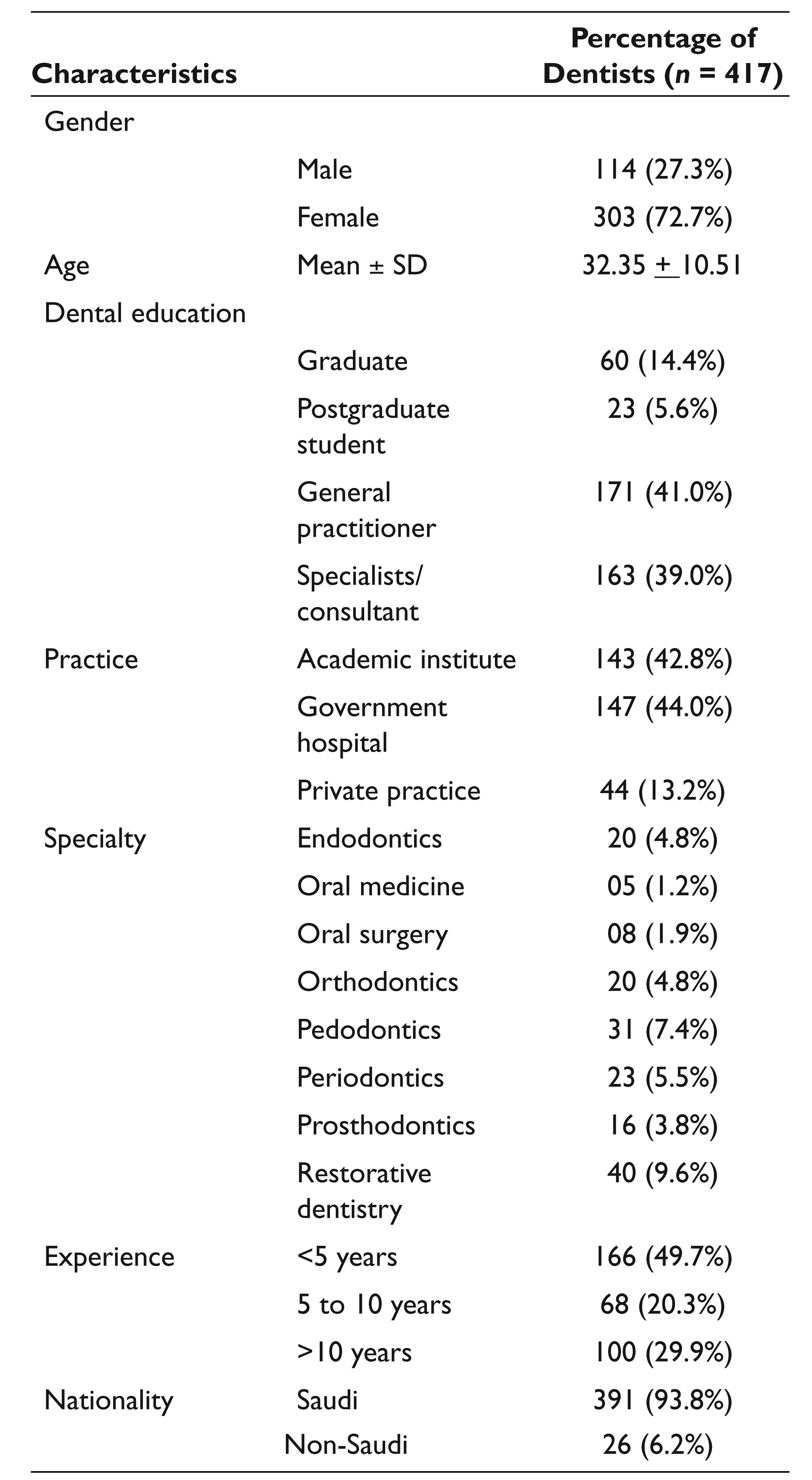
A total of 417 respondents were included in the study. Among them, 114 (27.3%) were male and 303 (72.7%) were female. The mean age of the participants (years) was 32.35 ± 10.51. Among the dental participants, 171 (41%) were general practitioner, 163 (39%) were specialist, 23 (5.6%) were postgraduate students, and 60 (14.4%) were graduate dentists. Specialists belonged to restorative dentistry [40 (9.6%)], oral medicine [5 (1.2%)], orthodontics [20 (4.8%)], pedodontics [31 (7.4%)], and periodontics [23 (5.5%)]. Most of the specialists were found to be working in a government setup 76 (46.6%). Nearly 334 (49.7%) practicing dentists, that is (specialist and general dentists), had more than 5 years of experience and 100 (29.9%) had more than 10 years of experience (Table.1).
Demographic Characteristics
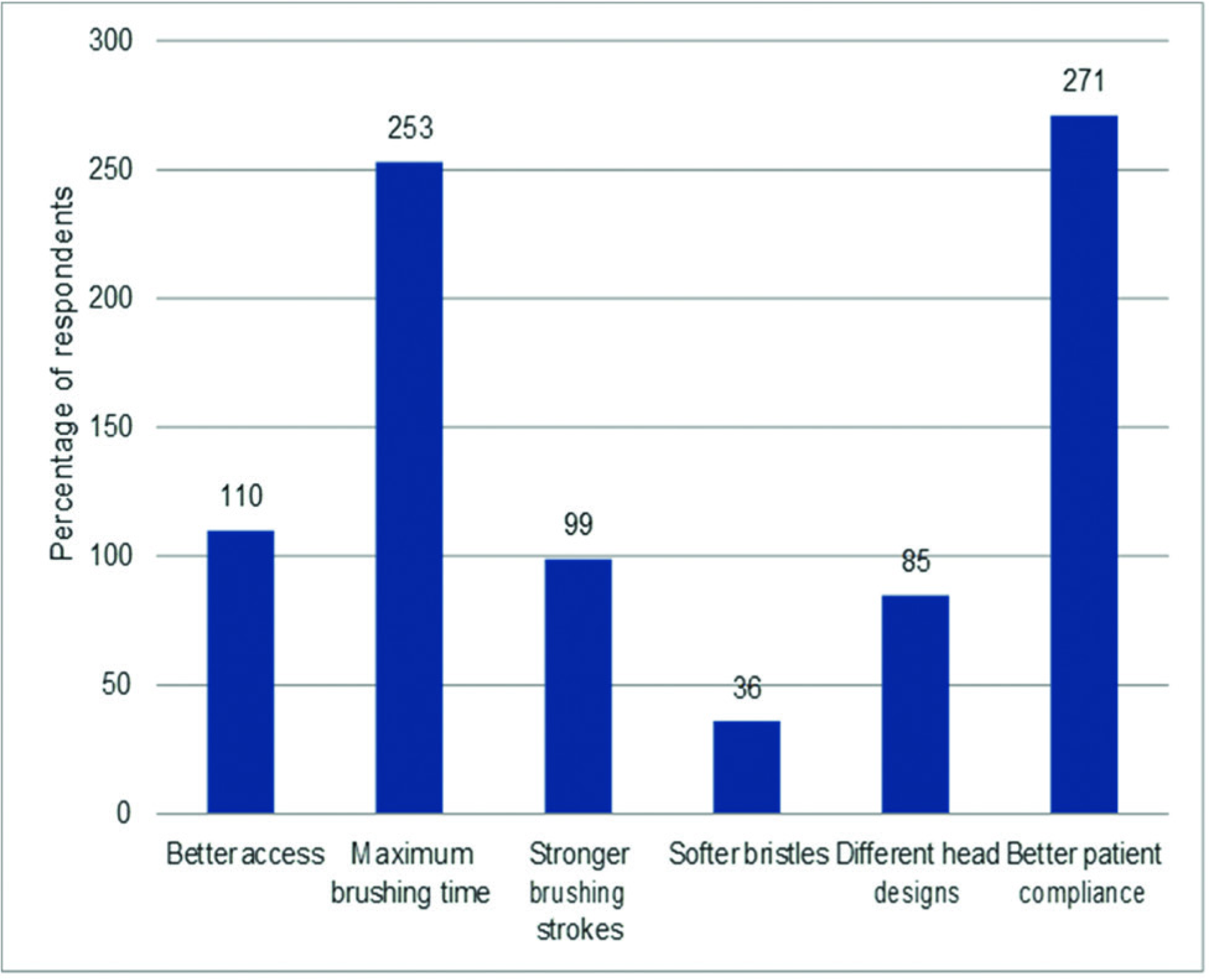
When enquired into the participants about the main benefits of using electric toothbrushes, 271 (65%) respondents believed better patient compliance, 110 (26.4%) said better access to interproximal areas, whereas 99 (23.7%) had the view that electric toothbrushes had stronger brushing strokes (Figure 1).
Advantage(s) of Using the Electric Toothbrushes
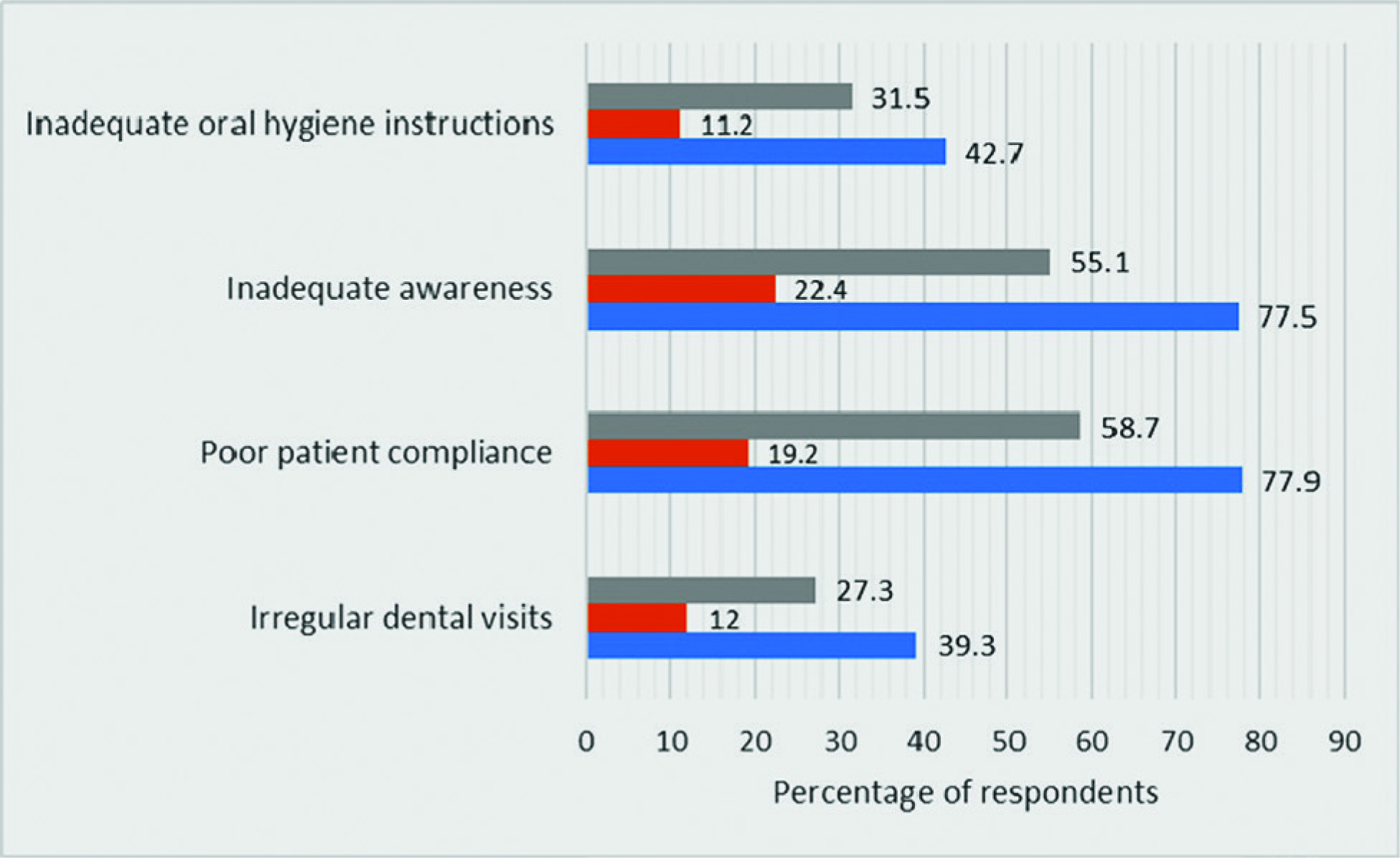
Regarding plaque control, 77.9% of respondents believed that the reason(s) for patient’s poor plaque control was poor patient compliance, whereas 42.7% of respondents implicated scanty oral hygiene instructions given to the patients in the dental clinic as the primary reason. Furthermore, 55.1% of female and 22.4% of male dentists cited an inadequate awareness level as one of the contributing factors for poor plaque control (Figure 2).
Reason(s) for Patients’ Poor Plaque Control (Note: More than 1 Response Was Accepted)
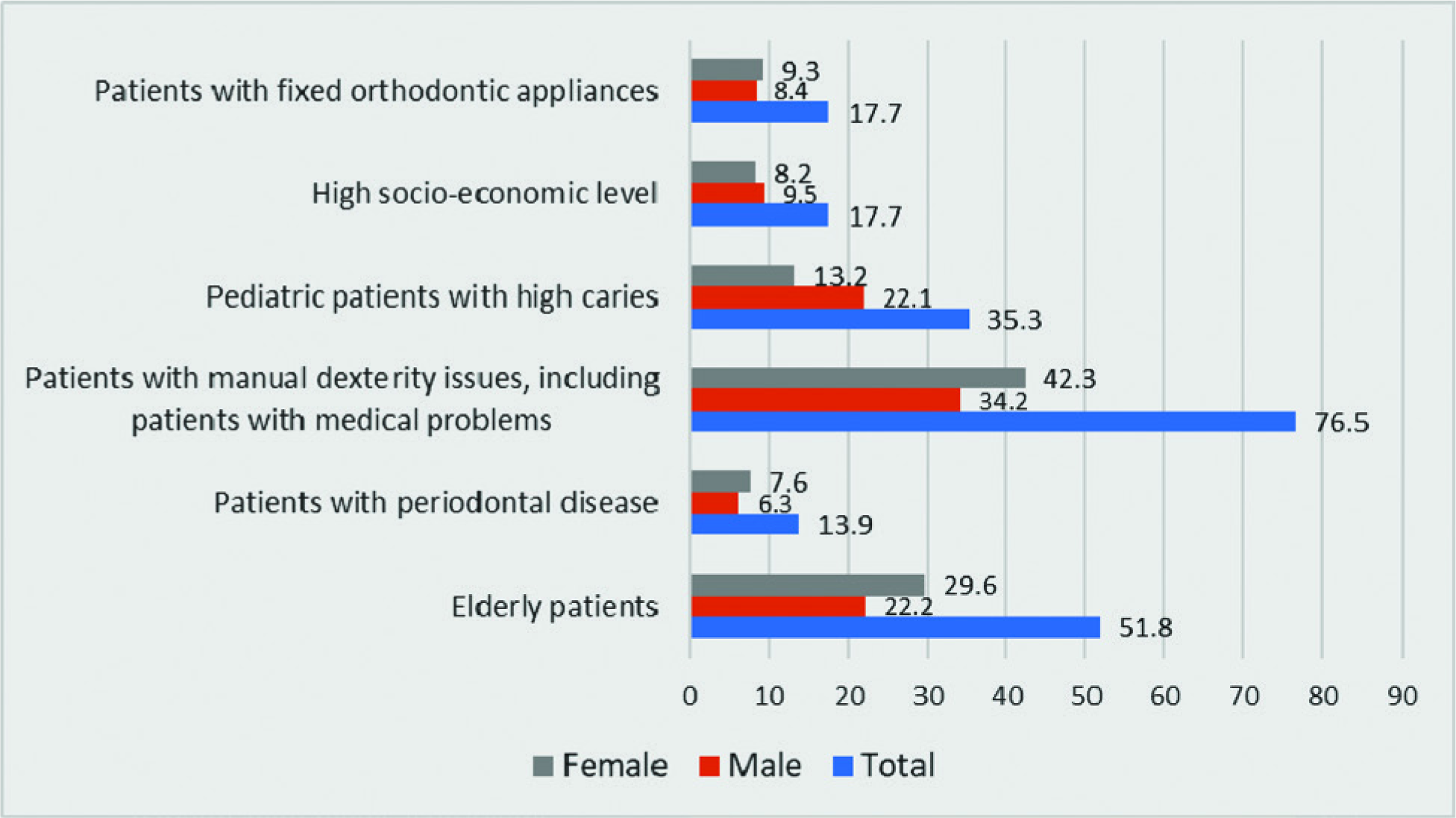
Similarly, the present study also assessed the type of patients most likely to be recommended for electric toothbrushes by dentists. A total of 76.5% of dentists contributing to 42.3% females and 34.2% males endorsed patients with manual dexterity issues and medical problems who were primarily recommended electric tooth brushing. In addition, 51.8% of the dentists suggested elderly patients to use electric toothbrushes (Figure 3).
Patients Likely to Recommend Electric Toothbrush
Regarding the self-use of the electric toothbrush brand, 9.1% (2.6% females and 6.5% males) preferred Brown Oral-B, whereas only 1.2% recommended the use of the Philips product. Nearly 88.5% (368) of respondents did not specify the brand name of electric toothbrushes they were using.
Discussion
The present study gives a unique assessment of the experience and attitude of electric toothbrush use among dentists in Saudi Arabia. Among the respondents, 72.7% were females and 27.3% were males. The overall response rate in the study was 100% as all the dentists shared their knowledge and experience regarding powered toothbrushes through a randomized telephonic survey. This type of survey was not experienced before in Saudi Arabia, and it is a first practice-based study regarding electric toothbrushes.
The survey showed that 253 respondents believed that the main advantage of electric toothbrushes over manual toothbrushes is increased brushing time. Brushing time is the most easily controlled factor of effective everyday brushing. 21 Studies by Weijden et al, 22 Mc Cracken et al, 23 and Van der Weijden 7 have demonstrated that brushing time has a significant effect on plaque removal. The general agreement among dental care professionals is that indi-viduals should spend at least 2 minutes for brushing their teeth with an effective technique at least twice a day with fluoridated toothpaste. 21 In addition, evidence suggests the electric toothbrushes improve the brushing time and technique for effective plaque control. 11 In addition, the advantage of powered toothbrush, as agreed upon by the maximum number of respondents, was better patient compliance. These results were found to be in agreement with a study done by Stalnacke et al 24 who recommended that compliance among patients regarding the use of powered electric toothbrushes was more compared with that of manual toothbrushes, and also compliance was unrelated to the socioeconomic factors. Furthermore, Hellstadius et al, 13 concluded that compliance among the patients with periodontal conditions was better, and it was found that the electric toothbrush was easy to use and was easily comprehended by patient having periodontal conditions.
In the present study, inadequate awareness and poor patient compliance were the common causes of poor plaque control among patients. A total of 77.9% of the respondents (58.7% females and 19.2% males) felt that poor patient compliance is the prime cause of poor plaque control. Motivation, inspiration, and manual dexterity is of paramount importance to good oral hygiene. 25 Patient encouragement and repeated and tailor-made instructions play a vital role for mechanical plaque removal aids to work efficiently and successfully. 26 A study by Lazarescu et al, 16 concluded that patient instructions, knowledge, and motivation along with electric toothbrush improve oral and gingival health. These findings are in concurrence with the outcome of the present study, indicating that better patient compliance and improved awareness levels decrease the plaque score.
The present survey showed that many dentists in Saudi Arabia consider elderly patients or patients with compromised dexterity to be most likely recommended for electric toothbrushes. In older individuals, it is more common to find compromised general conditions (such as altered mental status; oral side effects of medications; and deficits in mobility, dexterity, and coordination) that may negatively affect their ability to maintain a standard of self-performed plaque control above the individual threshold level of disease. 27 A study by Verma et al, 28 concluded that electric toothbrushes showed better plaque control, improved compliance, effectiveness, and efficacy in patients with compromised manual dexterity and increased age. These findings agree with the outcomes of the present study as most of the dentists in Saudi Arabia believed to endorse electric toothbrushes to patients with compromised dexterity.
When enquired from participants about the brand name of preferred electric toothbrushes, more than three-fourth of dentists were reluctant to disclose the brand type, whereas 9.1% of the dentists informed that they preferred Brown Oral-B as the electric toothbrush of choice for daily use. These findings are encouraging as studies have shown improvement in oral hygiene and bleeding scores among patients who were recommended the Brown Oral-B electric toothbrush.14,15
Evidence from previous clinical and practice-based studies14,15,19 concluded that electric toothbrushes are effective and efficient than manual toothbrushes. Furthe-rmore, the studies by Warren et al 15 and Lazarescu et al 16 suggest that educating and giving knowledge to dentists regarding electric toothbrushes improve their perception and the effect on patients’ oral hygiene care.
Within the limitations of the present study, an interventional study design with an increased sample size is suggested. Second, a qualitative analysis on electric toothbrush users at the patient level would give a better insight into and understanding on what motivated patients to shift from manual to electric toothbrushes.
Conclusion
The present study inferred that though knowledge of dentists in Saudi Arabia is adequate regarding electric toothbrushes, dentists should make efforts to improve knowledge and awareness on the use of powered tooth-brushes at the patient level to optimize plaque control and oral health. This will surely reduce the burden of oral disease on the developing economy by preventing plaque-related disease on the population.
Footnotes
Electric Toothbrush Use: Attitudes and Experience Among Dental Practitioners in Saudi Arabia
1) Age:
⍽ 20-30 years
⍽ 31-40 years
⍽ 41-50 years
⍽ >50 years
2) Gender:
⍽ Male
⍽ Female
3) Dental Education:
1. Undergraduate dental student:
⍽ 3rd year
⍽ 4th year
⍽ 5th year
2. Postgraduate student:
Please state the place and your area of specialty training: ……………………………….
3. Dental intern
4. General practitioner:
⍽ Academic Institute
⍽ Governmental Hospital
⍽ Private Practice
5. Specialist:
⍽ Academic Staff
⍽Governmental Clinical Staff
⍽Private Clinical Staff
Please state the area of your specialty: …………………
4) Years of experience:
⍽ Less than 5 years
⍽5-10 years
⍽>10 years (Skip this question if you are a student or intern)
5) Nationality:
⍽ Saudi
⍽ Non-Saudi
6) What do you think the main reason(s) for patients’ poor plaque control? (You can choose more than 1 answer):
1. Irregular dental visits
2. Poor patient compliance with the use of the toothbrush and/or interdental aids
3. Inadequate awareness of the importance of oral hygiene
4. Inadequate oral hygiene instructions given to the patients in the dental clinic
7) How often do you recommend an electric toothbrush to your dental patients?
⍽ Always
⍽ Sometimes (for only specific patients)
⍽Never
8) Which patients are you likely to recommend an electric toothbrush to? (You can choose more than 1 answer):
1. Elderly patients
2. Patients with periodontal disease
3. Patients with manual dexterity issues, including patients with medical problems
4. Pediatric patients, especially those with high caries activity
5. Patients with high socio-economic level
6. Patients with fixed orthodontic and/or prosthetic appliances
9) According to the available evidence in the literature, are the electric toothbrushes superior to manual toothbrushes in plaque removal efficiency?
⍽ Yes
⍽ No
⍽ I do not know
10) Are the electric toothbrushes currently available in the local market?
⍽ Yes
⍽ No
⍽ I am not sure
If your answer is yes, please state the brand: ………………………..
11) Does the use of the electric toothbrush require special instructions on the brushing technique?
⍽ Yes
⍽ No
⍽ I am not sure
12) In your opinion, what is the main advantage(s) of using the electric toothbrushes? (You can choose more than 1 answer):
1. Better access to interproximal areas
2. Maximum brushing time achieved (due to the presence of a timer)
3. Stronger brushing strokes
4. Softer bristles
5. Different head designs
6. Better patient compliance
7. Other: ………………………………………………
13) In your opinion, what is the main disadvantage(s) of using the electric toothbrushes? (You can choose more than 1 answer):
1. High cost
2. Unavailability in the market
3. Increased risk of producing gingival recessions
4. Increased risk of bacteremia
5. Absence of sufficient evidence that would support their use
6. Other: …………………………………………………
14) Are you an electric toothbrush user?
⍽ Yes
⍽ No
If yes, please state the brand/model: ……………………………..
Declaration of Conflicting Interests
The authors declared no potential conflicts of interest with respect to the research, authorship, and/or publication of this article.
Funding
The authors received no financial support for the research, authorship, and/or publication of this article.