



Abstract
This theory-based review explores the application of the social practice theory in household food waste behaviour research using a combination of PRISMA, POWER and TCCM frameworks. Drawing on 40 high-quality peer-reviewed articles, the review offers a new classification of household food waste practices based on their nature, interrelatedness as well as how past research uncovered key elements of household food waste as social practices. This is the first article to conceptualize the continuum of interrelatedness (bundle, compound and complex of practices) and advocates for a shift from individualistic behavioural models to more complex perspectives to reflect shared household practices. The article proposes future research to focus on underexplored areas in theoretical frameworks, elements and contexts of social practice theory, contexts and methodologies.
Keywords
Introduction
According to the United Nations (UN), approximately 19% of the total global food production is wasted across households, food service and retail. The UN has called for global efforts to reduce food loss and waste to meet climate goals and advance the 2030 Agenda for Sustainable Development. The United Nations Environment Programme (UNEP, 2024) reports that household food waste (HHFW) accounted for over 60% of the total food waste, exceeding 630 million tons (Ndoudi, 2024). While addressing food waste across the supply chain is critical, demand-side factors have also gained research attention (Visschers et al., 2016).
Research on HHFW behaviour from the social lens has grown significantly in recent years, signifying the need for a review of its theoretical foundations. Porpino (2016) highlighted the importance of the social practice theory (SPT) in this domain, with past scholars advocating for its further development in sustainability and ethical consumption studies (Kropfeld, 2023; McLean et al., 2023; Schanes et al., 2018). Under the practice theory perspective, consumption studies move from symbolic or lifestyle-based choices towards everyday routine performance of socially shared practices rather than individual decisions (Heidenstrøm & Hebrok, 2021). Thus, SPT is appropriate for HHFW research, as it focuses on the shared interactions and coordinated practices through which household members manage and generate food waste.
Since 2016, several review studies have covered HHFW research. Srivastava et al. (2023) focused on studies applying the theory of planned behaviour (TPB), while other reviews emphasized on economic incentives and policy-driven explanations (Kaur et al., 2021; Muniandy & Thurasamy, 2024; Principato et al., 2021). While valuable, these reviews mostly categorize theories and their relational assumptions. There has been a lack of studies that examine the foundations of SPT within this domain. Thus, reviewing SPT is theoretically important for HHFW research, as it offers a lens to understand how food is routinely managed, consumed and discarded through everyday household practices.
This review examines SPT applications to understand its role in studying HHFW behaviour and to identify future research avenues. The research questions are: (a) How has SPT been applied in HHFW behaviour research? (b) What future directions exist for applying SPT in HHFW research?
The research provided a comprehensive classification of food waste practices in terms of nature, interrelatedness and integration. It suggested that future academics understand the nature of chosen food waste practices to establish their relationships before further investigation. The findings indicate that prior studies have predominantly focused on the material aspects of social practice, suggesting opportunities to explore other elements and dimensions, such as social meaning, capabilities, time, space and community.
This article addresses a critical gap in the literature by offering a holistic review of SPT in HHFW research. While SPT is central to sustainable consumption studies, its role in HHFW research needs deeper exploration (Cappellini, 2009; Cappellini & Parsons, 2012; Evans, 2011, 2012; Ganglbauer et al., 2013; Lazell, 2016; Leray et al., 2016; Meah, 2014; Watson & Meah, 2012). The article is the first to consolidate current applications of SPT in HHFW structurally using the TCCM framework and sets the stage for future theoretical and empirical advancements in the field.
Literature Review
Household Food Waste Behaviour
HHFW behaviour can be categorized based on various contributing factors as identified in past literature (Pilone et al., 2023; Stancu et al., 2016). It refers to food items purchased for consumption but eventually discarded by households is divided into three types: avoidable waste (edible but discarded food), possibly avoidable waste (food some consume but others discard) and unavoidable waste (e.g., egg shells and banana peels) (Pilone et al., 2023; Stancu et al., 2016). Food-related household practices are categorized by Schanes et al. (2018) into food-related routines (planning, shopping, storing, cooking, eating, managing leftovers); food waste practices (recycling, energy recovery, disposal); and food surplus management (food redistribution and food sharing).
Most past research focused on factors that can influence the generation of food waste at the household level such as socio-economic status, household size, food purchasing and consumption habits, and individual awareness and attitudes (Pilone et al., 2023; Stancu et al., 2016). The main reasons include poor planning, lack of awareness about the environmental impacts of food waste or culturally ingrained behaviours (González-Santana et al., 2022; Pilone et al., 2023; Stancu et al., 2016). Strategies to reduce HHFW consist of educational campaigns, improving food storage and preparation practices, and policy interventions promoting sustainable consumption (González-Santana et al., 2022; Pilone et al., 2023; Schanes et al., 2018; Stancu et al., 2016; Zhang et al., 2018). These approaches focus on improving consumer awareness, optimizing food purchase and usage, and fostering societal values that discourage wasteful behaviours (Schanes et al., 2018; Zhang et al., 2018).
Social Practice Theory
Practice theories are a range of theories that have been applied across various domains, including social theory, cultural theory, discourse theory and theory of science (Corsini et al., 2019). They offer alternate perspectives on the sociocultural dynamics of human activities, how people behave and interact in society, focusing on the bigger picture rather than just individual actions. SPT emphasizes that routine and interconnected nature of practices that combine physical activities, mental processes, materials and tools, and shared understandings shape behaviour, moving away from individualistic and mentalistic interpretations (Reckwitz, 2002).
Having emerged from the research of theorists such as Giddens (1984) and Bourdieu (1977, 1990), and further improved by scholars including Reckwitz (2002), Schatzki (1996), Schatzki (2002), Warde (2005) and Shove (2010), SPT emphasizes the way practices are embedded in and arise from the routine dimensions of life (Giddens, 1984; Shove, 2004). The theory shifts focus from individual decision-making to the performance of social practices, portraying individuals as ‘carriers’ of these practices instead of primary agents (Reckwitz, 2002). This shift suggests that changes in consumption patterns, especially sustainable ones, arise from improving the practices themselves rather than individual choices (Southerton et al., 2004; Warde, 2005). For this reason, SPT has become popular in sustainable consumption studies.
In HHFW research, Porpino (2016) highlighted SPT’s value in addressing gaps left by traditional behavioural theories like the TPB. SPT challenges these mainstream individual consumer-based models by positioning individuals as practice-carriers rather than decisions-makers (Evans, 2012). This perspective is helpful when researching multi-member households. Moreover, SPT’s potential for understanding change (Shove, 2010) is useful in food waste intervention research. Since Porpino’s (2016) call for further exploration of the theory, studies employing practice theories have significantly increased, proving their relevance in HHFW behaviour research.
Despite the growing uptake of SPT-focused research following Porpino’s (2016) call, HHFW research has reached a point of theoretical saturation, marked by the reliance on dominant behavioural and policy-oriented frameworks. The slowed advancement signals the need for theoretical review, consolidation and redirection. Perkins et al. (2007) show that theory-driven approaches are critical for examining why current models underperform and for identifying the direction of change. Similarly, Cash (2018) demonstrates that theory-driven reviews are essential for restoring the field by strengthening theory relevance, impact and possible future pathways. This review, therefore, adopts a theory-driven approach not only to categorize existing studies but also to critically examine how theories shape HHFW research; expose blind spots in theories, characteristics, context and methodology; and advance underutilized areas to inform both future research and intervention design.
Past Reviews on Household Food Waste Behaviour
Since 2016, seven review papers have examined sustainable consumption and HHFW research (Table 1). Most studies covered various theories used to explain food waste practices. For example, Srivastava et al. (2023) analysed 26 articles (2013–2021) applying the TPB. Similarly, the reviews by Kaur et al. (2021), Principato et al. (2021) and Muniandy and Thurasamy (2024) focused on economic incentives and policy-driven approaches.
Past Review Papers on HHFW Behaviour.
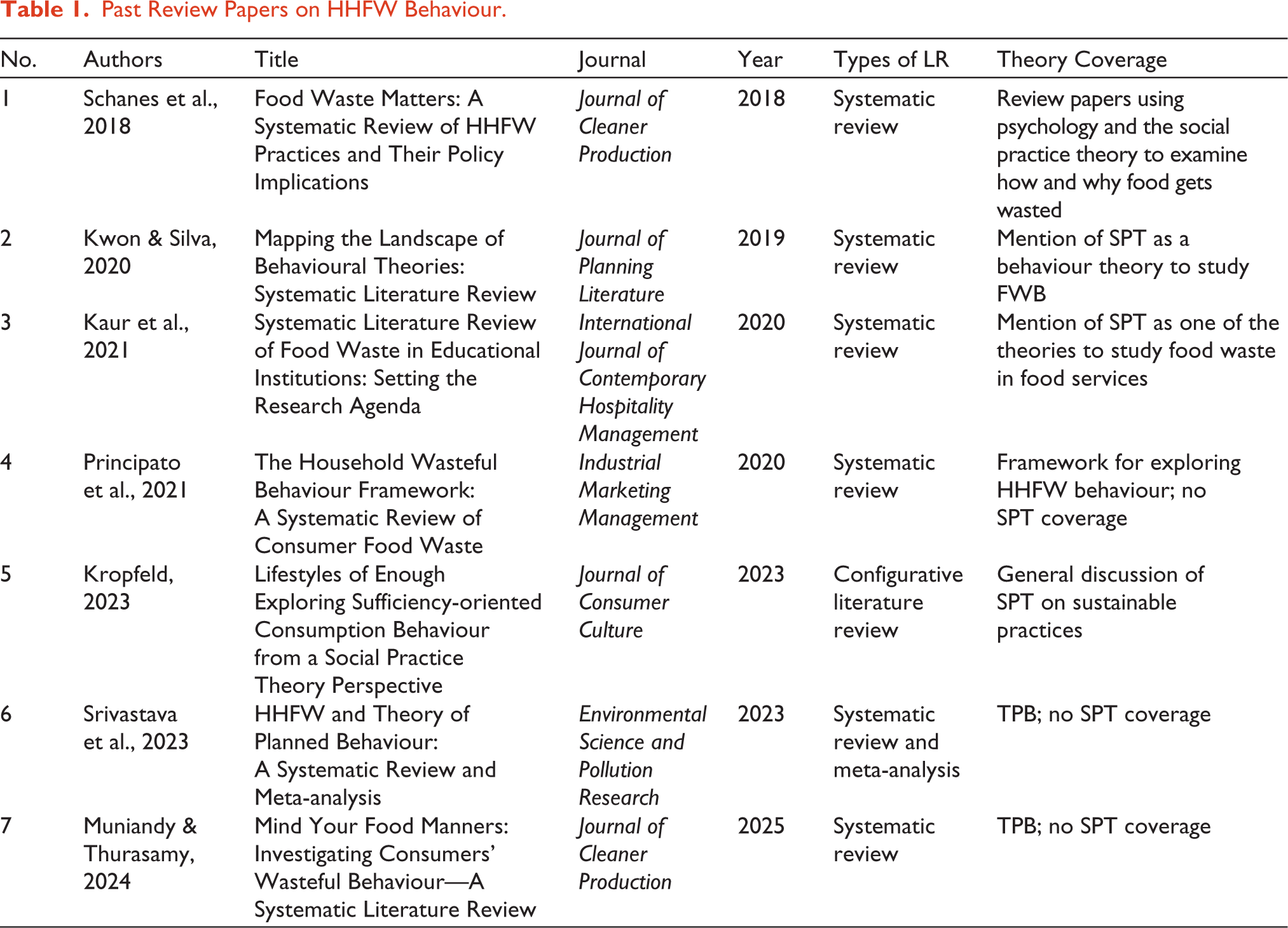
The SPT along with other theoretical frameworks was reviewed in three papers. Schanes et al. (2018) systematically review 60 papers utilizing the TPB and SPT to synthesize the factors that influence HHFW behaviour. Kropfeld (2023) examined eight studies on sustainable consumption; detailed the materials, competencies and meanings of SPT; and introduced ‘rules’—a critical but often overlooked dimension. Kwon and Silva (2020) conducted a systematic literature review on 467 articles, covering 62 behavioural theories and categorized them into four groups: factors, strategies, learning and conditioning, and modelling. SPT was allocated in the ‘strategies’ category. These reviews emphasize the need for further exploration into the application of SPT (Kropfeld, 2023; Principato et al., 2021; Schanes et al., 2018).
Muniandy and Thurasamy (2024, p. 4) noted a sharp growth of studies on consumer food waste behaviour in 2021, a 180% increase compared to 2020. However, research declined in 2022, for which no explicit reason is given. This decrease might indicate a stabilization of research efforts or a shift in focus within the academic community. This trend underlines the need for sustained theoretical engagement and development, particularly in the application of SPT and other frameworks to better understand food waste behaviours within broader sustainability challenges (Muniandy & Thurasamy, 2024; Principato et al., 2021).
Methodology
Different types of systematic reviews exist and can be broadly categorized as domain-based, theory-based, method-based and meta-analytical reviews (Hulland & Houston, 2020; Paul & Criado, 2020). This research applied a theory-based review approach with SPT. Unlike traditional systematic reviews, theory-based reviews aim to examine how a theory has been developed in existing studies and the theory’s contributions to the domain and to understand how the theory has been applied across past studies (Snyder, 2019). For data collection, the review follows the PRISMA framework with four stages: identification, screening, eligibility and inclusion (Figure 1). The authors then employed the extended POWER framework developed by Rana et al. (2023) to support quality assurance through a structured assessment of relevant quality parameters across the review process.
Data Collection and Data Screening Flow.
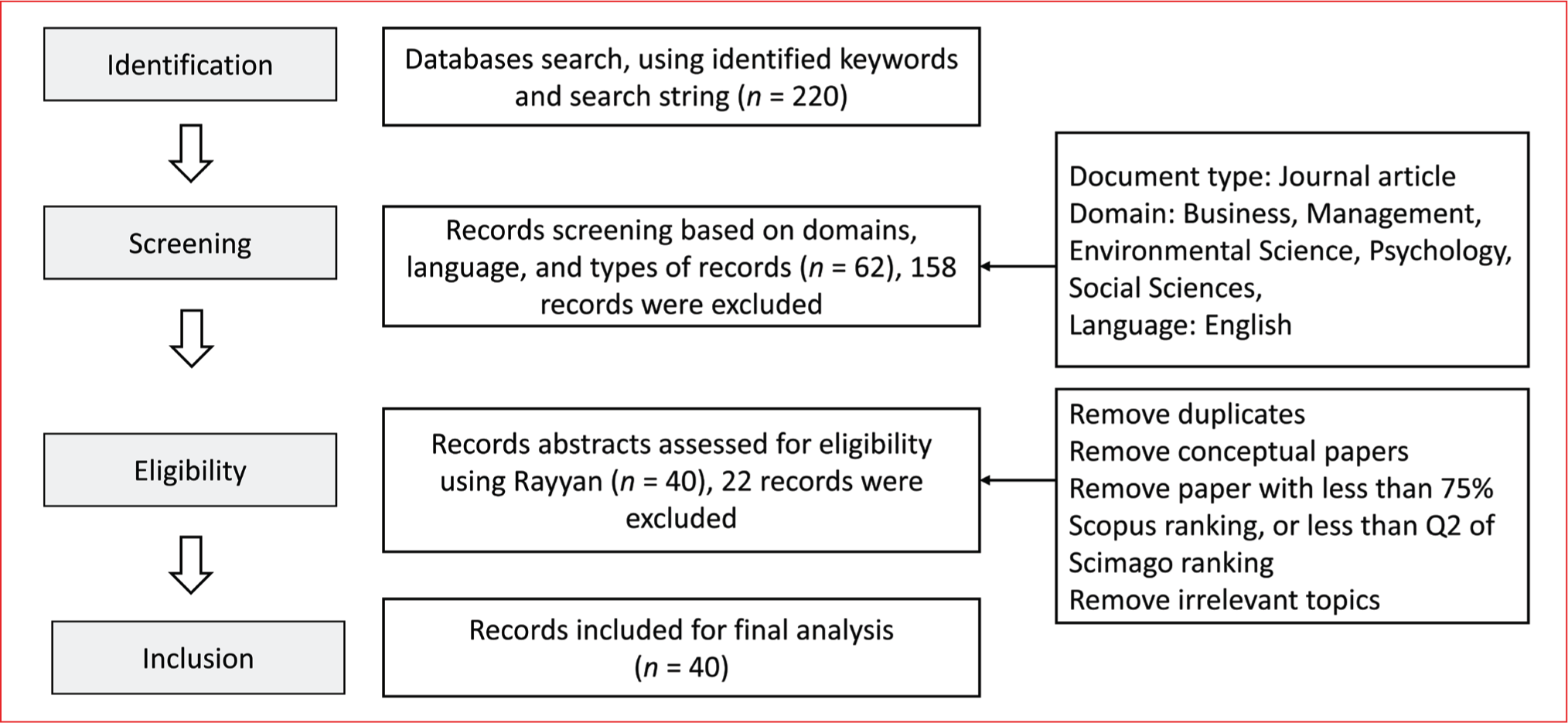
Data Collection using PRISMA framework
Identification
To identify relevant records, two databases were used, which are Scopus and Web of Science. They were selected for their broad disciplinary coverage and higher citation representation compared to other databases (Mongeon & Paul-Hus, 2016). The search string consists of ‘food waste’ AND (‘household*’ OR ‘famil*’ OR ‘home*’ OR ‘household’) AND (‘practice theory’ OR ‘practice theories’), including their plural forms, delimiters and suffixes. The search range includes title, abstract and full text of the articles. No time limitation was set. There are 220 papers in total being found.
Screening
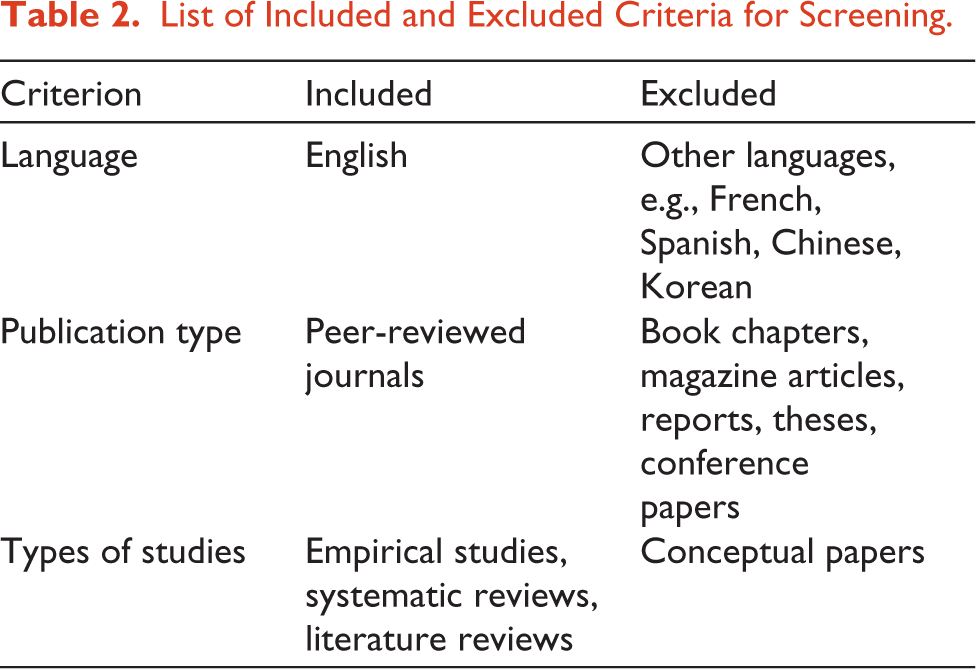
A list of included and excluded criteria was used to help narrow the search (Table 2). Only peer-reviewed journals in English are included. In terms of subject areas, the researchers limit the search to environmental science, social sciences, business, management, accounting, economics, econometrics, finance, psychology and decision sciences journals. After screening, 158 records were excluded, leaving 62 records for the next step to check eligibility.
List of Included and Excluded Criteria for Screening.
Eligibility
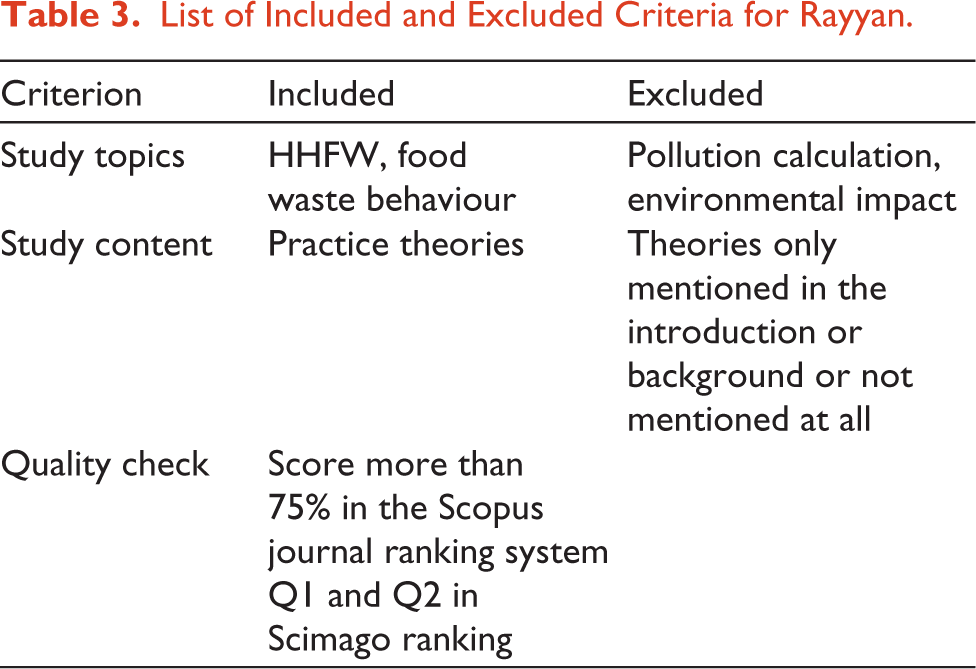
The records were then downloaded and uploaded to Rayyan (
List of Included and Excluded Criteria for Rayyan.
POWER Framework for Quality Assurance
The authors then applied the POWER framework to carefully examine the decisions related to planning (P), operationalization (O), writing (W), embedding/evaluating (E) and reflection (R). The POWER framework was chosen as it offers an inclusive and scientific procedure with five quality parameters for reviews, which can minimize the researchers’ subjectivity during the review process (Rana et al., 2023).
Planning
The authors first assess the importance of the topics, team ability and the review’s scope in terms of time and quantity. Reviewing the SPT evolution in HHFW is vital due to its growing societal and policy relevance, but the domain has entered a stagnant stage, which calls for a deeper theoretical exploration. The review team comprises researchers with prior experience in different types of reviews. No temporal restriction was applied in order to capture the full evolution of relevant theoretical contributions. Although some guidelines recommend a minimum of 50 studies, the final sample of 40 papers was considered feasible and sufficient, as all met strict inclusion and quality criteria and provided an adequate theoretical depth to address the review objectives and identify future research directions.
Operationalization
The operationalization of this structured review was carefully designed to ensure methodological rigour and transparency. A qualitative review approach was adopted to enable in-depth theoretical synthesis, supported by a systematic identification, screening and eligibility process. Scopus and Web of Science were selected as the primary databases due to their broad disciplinary coverage and recognition as high-quality indexing platforms, ensuring the reliability of the retrieved literature. A clearly defined search string, comprehensive screening criteria, and strict inclusion and exclusion rules were applied to refine the initial pool of records. To enhance objectivity, all eligible studies were independently screened by two reviewers using Rayyan in the blind mode, followed by cross-checking and duplication removal. Journal quality was further assured through Scopus journal rankings and Scimago Q1 and Q2 classifications.
Writing
The authors then used a framework-based approach to present findings in a systematic way. The TCCM framework was chosen as it provides a comprehensive and structured picture to connect past studies to identify gaps for future research (Paul & Criado, 2020).
Embedding/Evaluating and Reflecting
This review focuses on interpretive synthesis rather than descriptive summary. Findings are organized using the TCCM framework to identify gaps in the literature. These gaps and limitations are directly linked to the proposed future research avenues, ensuring alignment between results and forward-looking insights and highlighting the review’s contribution beyond the existing summaries. The reflection stage highlights the unique contributions of the review, organizes future research directions into four areas relevant to both scholars and practitioners, and acknowledges excluded themes and methodological boundaries, thereby reinforcing the review’s relevance, rigour and authenticity.
Findings
In this section, we assessed the articles under review using the TCCM framework devised by Paul et al. (2017). The framework consists of four main sections: theories, characteristics, contexts and methodology.
Theories
In this section, the research examines how SPT was used as ‘a distinct analytical approach for empirical analysis’ (Halkier, 2009, p. 4). The authors first look at the theoretical evolution of SPT in HHFW behaviour research, then how SPT is used together with other theories in the domain. Finally, the authors categorized the research questions and research inquiries that these theories explained.
Theoretical Evolution of the Social Practice Theory in Household Food Waste Research
Across the 40 studies reviewed, SPT is the main theoretical foundation used to explain how food waste is shaped by everyday routines. The central belief is presented by Reckwitz (2002), who described practices as routinized behaviours. According to the literature, food waste arises from the everyday routines of shopping, storing, cooking and disposing, rather than from individual mistakes or attitudes (Dyen et al., 2018; Evans, 2011; Watson & Meah, 2012). These routines are not only repeated actions but are also organized around temporal sequences, such as daily meal schedules, weekly shopping cycles and the limited lifespans of stored food. Lee (2018), for example, explained grocery shopping as a repeated, recognizable routine shaped by retail environments and transport options. Whereas Lehtokunnas et al. (2022) described food waste reduction as part of people’s daily consumption routines and ethical self-care.
At the earlier stage, authors such as Shove et al. (2012) explained these routine practices in terms of materials, skills and competences, and social meanings. Heidenstrøm and Hebrok (2021) explored how changes in materials (e.g., new digital shopping tools or packaging), skills (e.g., assessing edibility) and meanings (e.g., freshness expectations) influence whether food is used or wasted. These elements are enacted over time, as food moves through households from acquisition to storage, preparation, consumption and disposal. Moving beyond this element-focused view, a third current emphasizes the material and temporal arrangements in which practices unfold, drawing on the studies of Schatzki (1996, 2002). From this perspective, practices are always situated within specific time–space arrangements that organize when, where and for how long food-related activities take place. More recent research highlights the material and temporal arrangements in which practices unfold. Mattila et al. (2018) examined foodwaste temporality, showing how scheduling, pausing and other time-related routines shape whether food is consumed, reused or discarded.
Social Practice Theory and Supporting Theories
Although SPT remains a core theoretical foundation, past researchers have been drawing on additional theoretical perspectives to address dimensions of HHFW that are difficult to explain through practice theory alone. Table 4 shows research studies that theorize food waste as a social practice and supporting lenses to extend practice-based explanations of HHFW. These supporting lenses are used to further illustrate different dimensions of practices such as materiality, temporality and social meaning.
Research with Supporting Lenses to Extend SPT Dimensions.
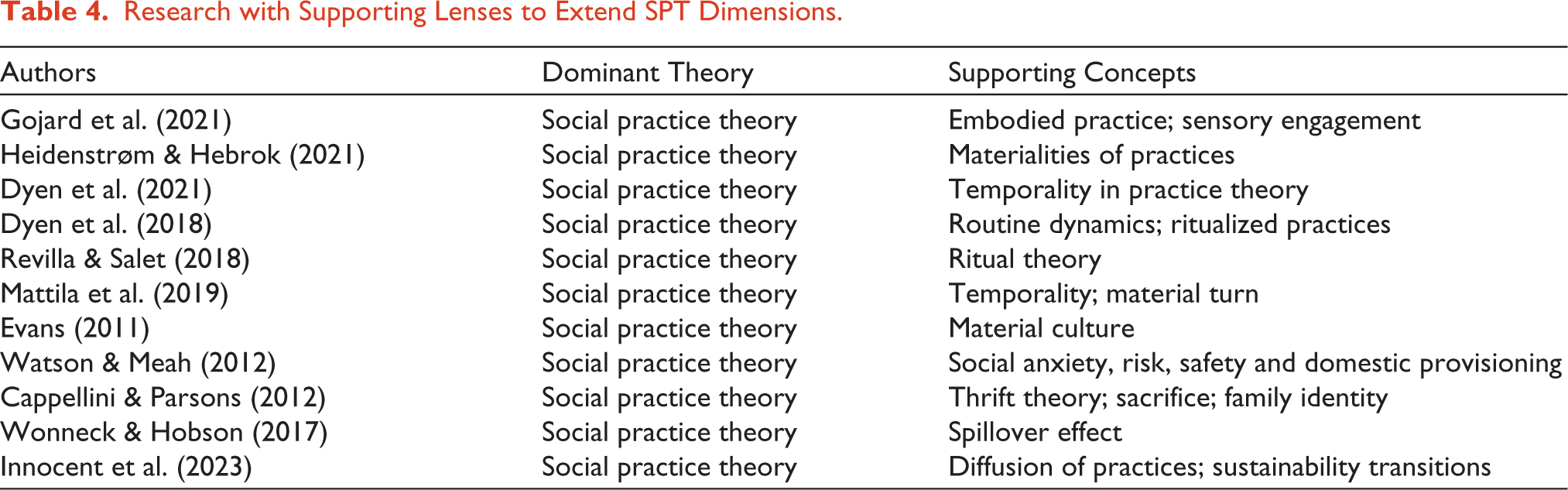
Materiality-focused lenses such as Evans (2011) and Heidenstrøm and Hebrok (2021) emphasize how domestic objects, infrastructures and technologies actively shape food storage, assessment and disposal practices. Temporality-related concepts from research such as Dyen et al. (2018, 2021) and Mattila et al. (2018) highlight how food waste emerges from the timing, sequencing and rhythms of routines rather than isolated decisions. Meaning-oriented and ritual perspectives such as Revilla and Salet (2018), Dyen et al. (2018) and Cappellini and Parsons (2012) enrich SPT by explaining how cultural norms, family roles and symbolic values stabilize food-related practices over time. Finally, embodied and sensory approaches such as Gojard et al. (2021) examine how bodily experiences (smell, taste, appearance and bodily responses) influence perceptions of edibility and waste. These supporting theories do not challenge the dominant SPT; rather, they served as amplifiers that allow scholars to examine specific practice characteristics in greater depth.
In the meantime, there are papers that adopted practiced-informed approach where SPT are utilized alongside behavioural, governance or policy-oriented frameworks (Table 5). Some examples are behavioural and motivational theories, particularly the motivation–opportunity–ability (MOA) framework, the TPB and the Norm Activation Model (NAM). In these works, food waste is conceptualized as an outcome of individual motivations, capabilities and constraints. SPT introduces these behavioural drivers within broader social routines and everyday contexts.
Research with Behavioural, Governance or Policy-oriented Frameworks.

Other studies adopt policy and systems-based frameworks as their dominant analytical foundation. Ekici et al. (2025), for example, rely on fuzzy cognitive mapping to evaluate food waste interventions and policy scenarios, while Marouli (2024) examines governance, institutional barriers and intervention design. In these cases, SPT operates as a conceptual reference, offering insights into how policies interact with everyday practices.
Another group of studies position SPT as the dominant theoretical framework while drawing on a range of supporting concepts, domains and frameworks (Table 6). For example, some papers draw on systems-oriented theories, including systems of provision and circular economy frameworks, to connect household routines to retail infrastructures, packaging systems, policy arrangements and waste management regimes (Borrello et al., 2020a; Lee, 2018; O’Neill et al., 2022). These perspectives show how food waste is shaped by structural conditions and intervention contexts, not just domestic action.
SPT Research Supported by Frameworks and System-oriented Theories.

Past studies also applied ritual theory, moral economy, and Foucauldian notions of ethical self-practice. These papers conceptualize food waste reduction as a form of everyday moral practices, where care, thrift, obligation and respect for food are actively negotiated within families and communities (Cappellini & Parsons, 2012; Lehtokunnas et al., 2022; Revilla & Salet, 2018). Future research could deepen this line of inquiry by examining how moral food practices evolve across different cultural, generational and socio-economic contexts and how such ethical negotiations interact with broader policy, market and sustainability discourses.
Theoretical Limitations of the Social Practice Theory in Household Food Waste Research
A key limitation of SPT in HHFW research concerns the challenge of defining and delineating the boundaries of a ‘practice’. Practices are inherently interconnected, making it difficult to isolate a single practice of interest. While SPT’s strength lies in its commitment to capturing the complexity of everyday social life, this same characteristic has been criticized for limiting its direct translation into concrete policy interventions aimed at reducing food waste (Watson et al., 2012).
To address this limitation, existing HHFW studies have adopted pragmatic strategies. One common approach involves deconstructing HHFW into more specific, food-related sub-practices or applying a flexible definition of practice. HHFW is widely understood as the outcome of multiple interconnected practices, ranging from shopping and planning to food handling, cooking, eating, storage, sorting and disposal (Evans, 2014). A frequently cited framework decomposes HHFW into six functional stages: provisioning or acquisition, preparation and cooking, storage and management, assessment, eating or consumption, and disposal or sorting (Setti et al., 2016; Southerton, 2006).
Across the 40 reviewed studies that applied SPT to HHFW, focal practices vary in scope and specificity. Many studies focus on narrowly defined practices associated with specific material elements, such as food storage in refrigerators (Heidenstrøm & Hebrok, 2021), which is treated as part of broader food-handling practices, or food waste recycling (Wonneck & Hobson, 2017a). Other studies adopt broader conceptualizations, such as thrift practices related to food reuse (Cappellini & Parsons, 2012) or sustainable food practices (Innocent et al., 2023). Notably, Innocent et al. (2023) further operationalize this broader framing by identifying and quantifying specific sustainable food practices based on their frequency within households, thereby enhancing analytical clarity while remaining consistent with a practice-theoretical perspective.
Despite these pragmatic strategies, the reviewed studies reveal an ongoing need for clearer conceptualization of how food-related practices are interrelated within households. While practices are frequently described as bundled, compound or complex, these terms are often used interchangeably without systematic clarification, limiting analytical precision and comparability across studies. Conceptual differentiation is needed to identify when practices operate as loosely connected bundles, tightly integrated compound practices or dynamically interacting complexes, and how these configurations shape the generation and prevention of HHFW. Advancing this clarification would strengthen the explanatory power of SPT and support more coherent empirical designs and policy-relevant insights in future HHFW research.
Characteristics: Social Practice Theory’s Three Elements and Two Contextual Settings
Shove et al. (2012) confirmed the three defining elements of a practice as material, competence and social meaning. These three defining elements are simplified from longer definitions as offered earlier by Reckwitz (2002). Understanding the elements of a practice and the connection among these elements is essential, as a practice can exist only if these components are linked. Conversely, when these connections are disrupted, the practice ceases to exist (Revilla & Salet, 2018). The emergence of a new practice often involves the introduction of new materiality (Shove & Walker, 2007). Past research has adopted various approaches to study HHFW behaviours. Some authors focused on one or two elements; others took a more holistic perspective by examining all three elements.
Materials
Among the three elements, materiality has received considerable attention with eight papers (34.7%). Four papers, among them, focused solely on materiality. Hebrok and Heidenstrøm (2019) and Gojard et al. (2021) use fridge studies to study food sorting and handling, and food disposal behaviours, whereas Williams et al. (2020) studied the role of food packaging in food waste across different product categories. Overall, the most popular types of materiality were food packaging (William et al., 2020) and fridge-food storing technology (Hebrok & Heidenstrøm, 2019; Heidenstrøm & Hebrok, 2021; Ozanne et al., 2022). Mobile and online platforms for e-commerce and meal box ordering have also been examined as a material element of food-related practices (Sirola et al., 2019).
Social Meaning
Compared to materiality, the social meaning element rarely got examined in isolation. Cappellini and Parsons (2012) explored the family’s relationship with mealtime leftovers and how family members developed the skills to transform leftovers. Revilla and Salet (2018) studied the relationship between the ritualization of food practices and the meaning households give to food, thus determining the impact on HHFW. In fact, Revilla and Salet (2018) was the only research that ‘investigated the notion of social meaning’ in HHFW and classified the food rituals into religious and secular ones for understanding better possible entry ways into food-related practices for food waste reduction.
Social meaning should be examined with the context of the broader society or the community in which the household or the family is situated. However, there are still almost no research studies using SPT to look at the multiple layers of societal impact on the food waste practices within a household.
Knowledge and Competence
The third item, knowledge and skills, was recently explored solely in a paper by Heidig et al. (2024). The authors employed SPT together with other behaviour theories to study how motivation, opportunity and ability drive self-reported food waste behaviour. Aside from that, the element was also examined alongside materiality (Gojard et al., 2021) or both materiality and social meaning (Kongnso et al., 2024; O’Neill et al., 2022).
As generalized into one of the three emerging types of practice, the embodied practice is those that embodied a skill that has a significant role in deciding whether the food would go to waste or not. While all practices would embody a certain skill, it is important to assess the level of skills in HHFW practices given the fact it is an element that could be impacted upon by using interventions such as education.
The Linkage Between All Three Elements of Practice
O’Neill et al. (2022) and Kongnso et al. (2024) studied all three elements. O’Neill et al. (2022) explored the meanings, competencies and the role of new material infrastructures in relation to the consumption of local and seasonal food. Kongnso et al. (2024) examine the opportunities and obstacles for waste sorting at source by analyzing current practices in relation with infrastructural relations, existing skills and social norms.
There are a limited number of articles that identified the link of meaning to material such as in the finding that consumers ‘used leftover (food-material) to deal with the hurriedness of life (social meaning)’ (Mattila et al., 2018). Given the fact that strengths of relations between practices and strengths of relations among three elements within one practice could determine how persistent the practices are and how effectively interventions could disable or enable them (Mylan, 2015), it is important for future research to study further the relatedness of these elements (internal dynamics of the practice).
Context
Geographical Context
Of the 40 papers reviewed, approximately 70%–75% of studies on HHFW are situated in Western, high-income contexts, particularly in Europe and North America. Within the full sample, France and the Nordic countries together account for nearly 40% of all empirical studies, indicating a strong geographical concentration. Research conducted in these contexts (Dyen et al., 2021; Gojard et al., 2021; Hebrok & Heidenstrøm, 2019; Heidenstrøm & Hebrok, 2021) focuses on common domestic routines in ordinary households, where the internal composition of households is often inferred rather than explicitly stated. Likewise, studies from the United Kingdom (Cappellini & Parsons, 2012; Evans, 2011; Watson & Meah, 2012) and the Netherlands (Revilla & Salet, 2018) examine routine behaviours found within familiar socio-material situations.
In contrast, non-Western perspectives represent less than 20% of the total sample, with significant exceptions in South Korea (Lee, 2018), Mauritius (Nunkoo et al., 2021) and a cross-national comparison that includes South Africa (Heidig et al., 2024). Even when non-Western contexts are included, cultural elements tend to remain embedded within descriptions of everyday practices rather than being explicitly analysed, which limits the understanding of how different cultural logics shape food waste practices.
A small number of EU-wide policy-oriented studies (Ekici et al., 2025; Marouli, 2024) hint at greater regional diversity but still depend on data from households in high-income nations. Consequently, while the literature offers rich insights into Western HHFW practices, the contextual evidence base remains geographically skewed and the cultural variation beyond these settings is underdeveloped.
Environmental and Technological Context
The environmental and technological aspects of HHFW are more effectively understood through material infrastructures and routine patterns, rather than through advanced digital technologies. More than half of the reviewed empirical studies (approximately 55%–60%) highlight the ordinary materiality of kitchens, refrigerators and storage arrangements as key determinants shaping the use or wastage of food (Dyen et al., 2021; Gojard et al., 2021; Hebrok & Heidenstrøm, 2019; Williams et al., 2020). These studies demonstrate how space and routine engagements within households influence the practical logic surrounding leftovers, storage and meal planning.
Other studies draw attention to the role of broader infrastructural and regulatory environments in shaping household practices, for example, through waste management systems implemented by policymakers (Wonneck & Hobson, 2017) or pricing regulations operating in urban contexts (Lee, 2018).
Only a small subset of studies explicitly engages with digital or socio-technical elements, and even in these cases, such elements are framed primarily as intervention mechanisms rather than as routine household technologies, including online grocery shopping and app-based platforms (Heidenstrøm & Hebrok, 2022; O’Neill et al., 2022) or the future potential of smart packaging (Ekici et al., 2025). This pattern indicates that technological narratives in the literature are largely motivated or policy-driven, rather than reflective of everyday domestic practices.
Overall, the evidence suggests that material environments and infrastructures play a more immediate role than digital technologies in shaping daily patterns of food consumption and disposal, reinforcing the importance of context-sensitive approaches to understanding HHFW behaviour.
The Theory’s Contextual Setting: Time and Space
Besides serving as the foundation for studying the three defining elements of HHFW practices, SPT also serves as the theoretical foundation for research on how HHFW practices are performed in two other settings: time (temporal) and space (spatial) (Ozanne et al., 2022). Researchers such as Dyen et al. (2018, 2021) investigated the temporal aspect of HHFW practices and found that the three elements of practices (skills, norms or social meaning, and material/infrastructure) underpin the structure of time and identify three levels of systemization of food practices routines. Mattila et al. (2018) considered time as a social practice by itself. The research also raised the question whether time could be considered as material, as it examined the temporal relations of human and non-human objects (Dyen et al., 2018, 2021) based on Southerton’s (2006) findings on five dimensions of time—duration, tempo, sequence, synchronization and periodicity—to explore further this temporal aspect of food practices. Time has been found to be integrated into the other elements of practice. Past authors found that when the ‘pleasure value’ is associated with a practice, the time spent on it increases, and so does the embodied skills (Dyen et al., 2021).
There are six papers that did not directly use SPT for defining elements or contextual settings. These papers used either SPT for a thematic analysis after exploratory research or SPT in connection with other theories. For example, Lehtokunnas et al. (2022) used SPT and Foucault theory to examine the ethical subjectivity in food waste practices. Nunkoo et al. (2021) studied the attitudes, motivations and barriers to food waste reduction. While the paper did not focus on any element of practice, its findings lead to the second contextual setting, the spatial aspect, which was a major barrier to food recycling.
Only a small number of studies consider the role of space in household food practices. One notable example proposes organizing fridge space by placing foods with a higher risk of spoilage in more visible or accessible locations (Heidenstrøm & Hebrok, 2021). Another study offers a limited indication of how spatial arrangements and knowledge interact, referring to the ‘spatial knowledge’ involved in managing leftovers and moving food to avoid waste within practices of thrift (Cappellini & Parsons, 2012).
Overall, the literature places much greater emphasis on time, leading to extensive discussion of ‘routinized practices’, while the role of space in shaping food waste practices remains relatively underexplored.
Methodology
Across the 40 studies, research on HHFW is clearly dominated by qualitative methodologies. Approximately 65%–70% of the studies (about 15–16 papers) rely primarily on qualitative designs such as ethnography, in-depth interviews, household observations, food diaries and experimental or participatory approaches (e.g., fridge studies, ritual analysis, HomeLabs). These methods are particularly well suited to SPT and are widely used to capture the routinized, embodied and material nature of everyday food practices (Dyen et al., 2021; Evans, 2011; Hebrok & Heidenstrøm, 2019; Séverine Gojard et al., 2021; Watson & Meah, 2012).
A smaller group of studies, accounting for roughly 20%–25% of the sample (5–6 papers), adopts quantitative or mixed-method approaches, including surveys, choice experiments and statistical analysis, often to examine intervention outcomes, behavioural conditions or the diffusion of food-related practices (Borrello et al., 2020a; Heidig et al., 2024a; Innocent et al., 2024; Lee, 2018). By contrast, formal systems-oriented modelling is extremely rare: only one study applies a computational modelling approach, using fuzzy cognitive mapping to explore how interventions and policies may interact across interconnected food practices (Ekici et al., 2025).
Future Research Avenues
Theories
Proposal of Household Food Waste Interrelated Practices
Previous studies in HHFW behaviour categorized the behaviour into a series of practices and routines such as food planning, shopping, storing, cooking, eating, sharing, managing leftovers, recycling, energy recovery and disposal (Schanes et al., 2018). Most past researchers studied a combination of practices from planning to shopping, cooking to eating, sorting, storing, and disposal and recycling. Some researchers covered the entire cycle such as Ozanne et al. (2022), Borrello et al. (2020), or Heidenstrøm and Hebrok (2022). The authors explored the relationships between these practices, emphasizing their ‘integration’, ‘interrelatedness’ and ‘spillover effects’. They have different perspectives on the integration and interrelatedness of these activities that form food waste behaviour; however, the distinction is blurry.
Regarding interrelatedness, Shove (2016) and Shove et al. (2012) proposed three concepts: bundles, compounds and complexes of practices (Figure 2). In HHFW research, most studies implicitly treat food-related activities as bundles of loosely connected practices, while few studies distinguish between more integrated compound or complex arrangements. As a result, although interrelatedness is frequently acknowledged, the conceptual boundaries between these forms remain unclear, limiting analytical precision and comparability across studies.
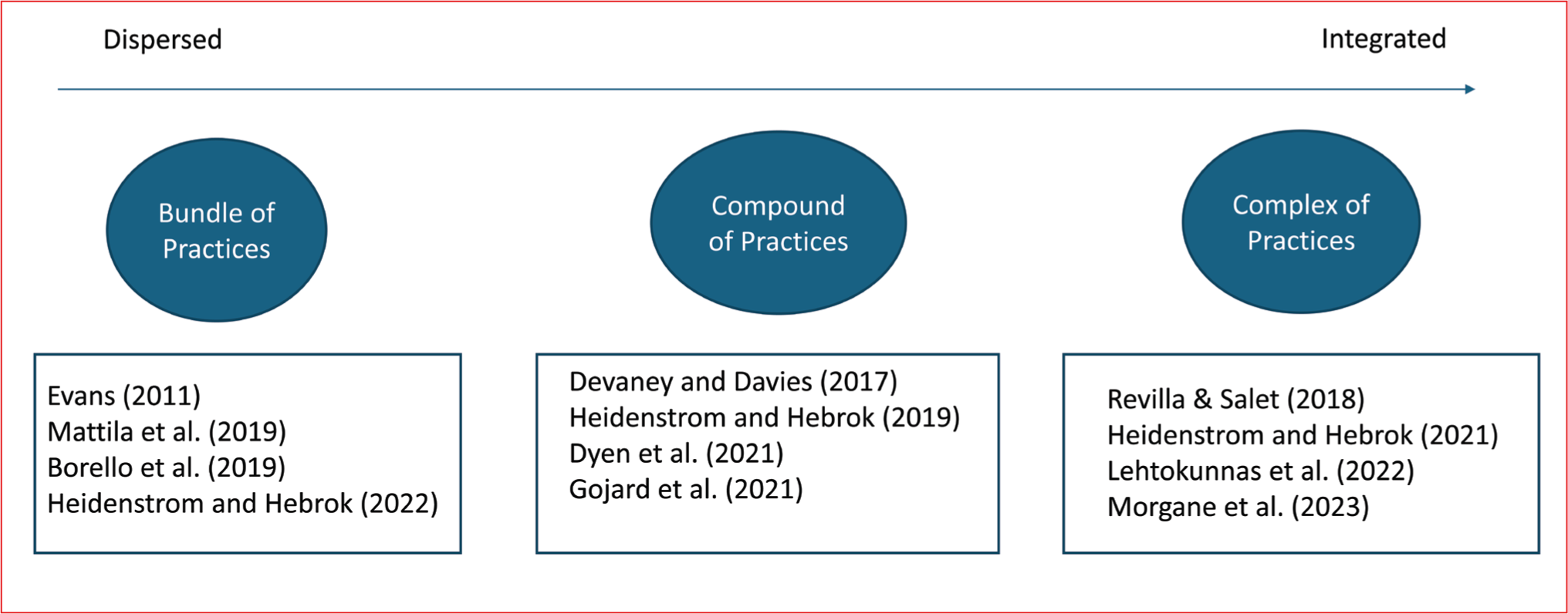
Compound and complex practices represent higher levels of interrelatedness among food-related activities. In HHFW research, compound practices are illustrated by studies such as Gojard et al. (2021), who conceptualize food sorting as situated at the intersection of provisioning, cooking, meal planning and sensory judgement. At a more integrated level, Revilla and Salet (2018) and Heidenstrøm and Hebrok (2021) conceptualize HHFW as a complex of practices embedded within broader food-handling routines, where practices are mutually dependent and difficult to separate analytically.
Another dimension of interrelatedness discussed in the literature is the spillover effect, which refers to how engagement in one practice may influence other related practices. Within HHFW research, Wonneck and Hobson (2017) demonstrate both positive and negative practice-based spillover effects in response to food waste interventions, while Marwood et al. (2023) show how broader pro-environmental practices interact with food waste reduction. However, these effects are rarely examined systematically in relation to different configurations of practice interrelatedness, highlighting the need for clearer conceptual frameworks linking spillover dynamics to bundles, compounds and complexes of practices.
Even though there are promising steps in work on temporal ‘bundles’ and practice-based spillover (Dyen et al., 2021; Mattila et al., 2018; Wonneck & Hobson, 2017), the literature lacks a shared framework for a more systematic analysis of how interventions in one practice may reshape others. Past authors such as Dyen et al. (2021) also acknowledge this well-known problem of behaviour research applying SPT, especially in food waste behaviour research. This review offers clear models of how these practices form bundles, compounds or complexes and change together over time.
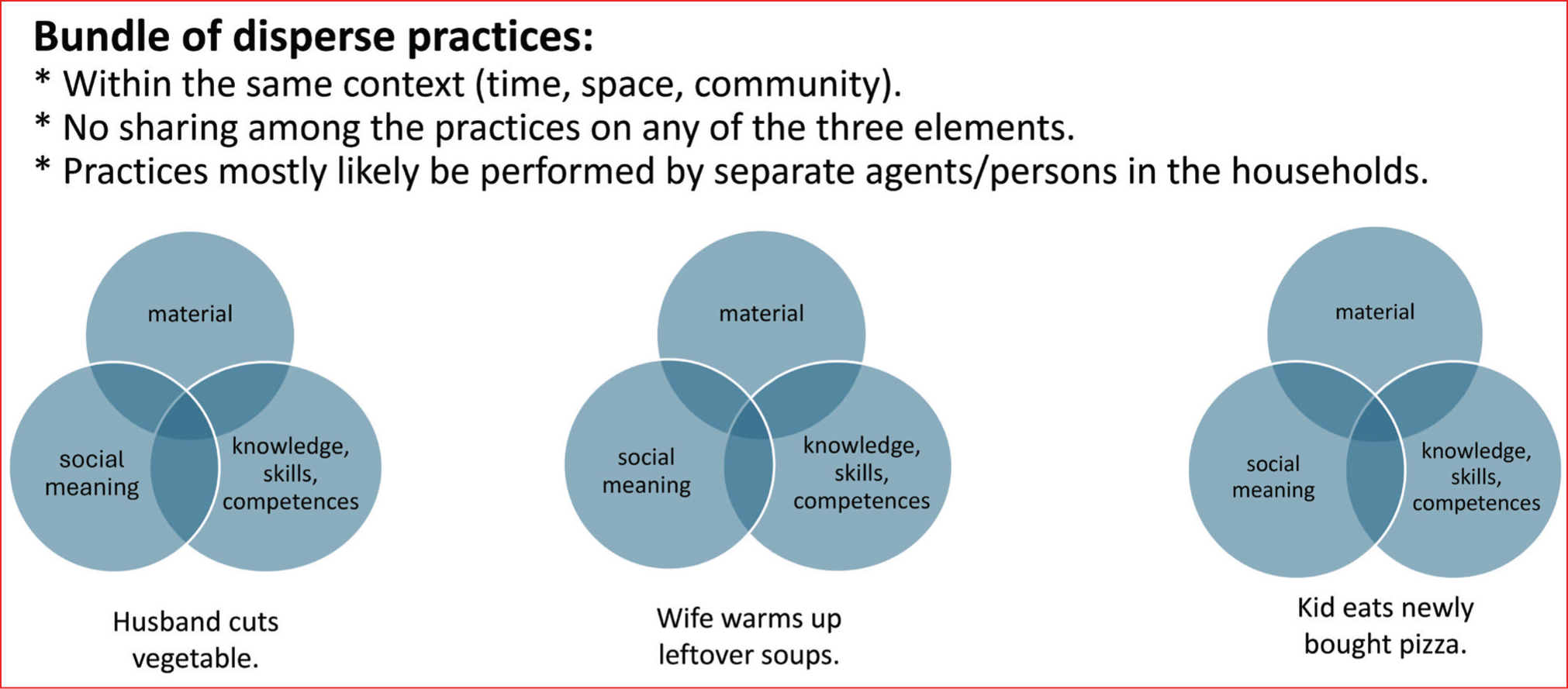
The three concepts are classified according to the levels of interdependence, coordination and regulatory influence to provide a more coherent understanding of practice interrelatedness. Practices are considered a bundle when they coexist within the same context but do not rely on each other or interact directly (Figure 3).
A Bundle of Practice Explanation.
Compound practices are moderately integrated with some degree of interdependence between practices by sharing one of three elements with each other. However, each practice has its own standards (Figure 4).
Compound of Practices Explanation.
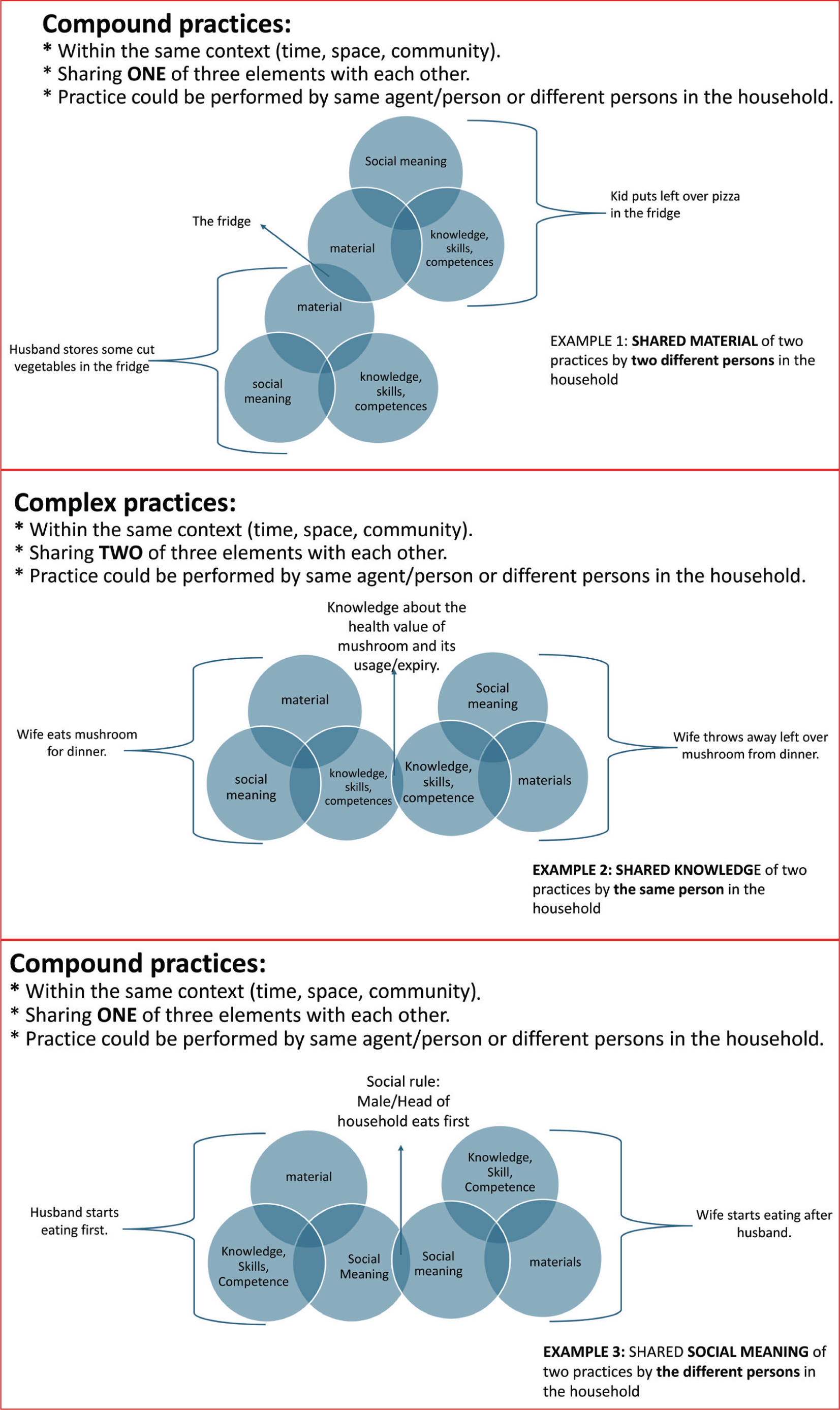
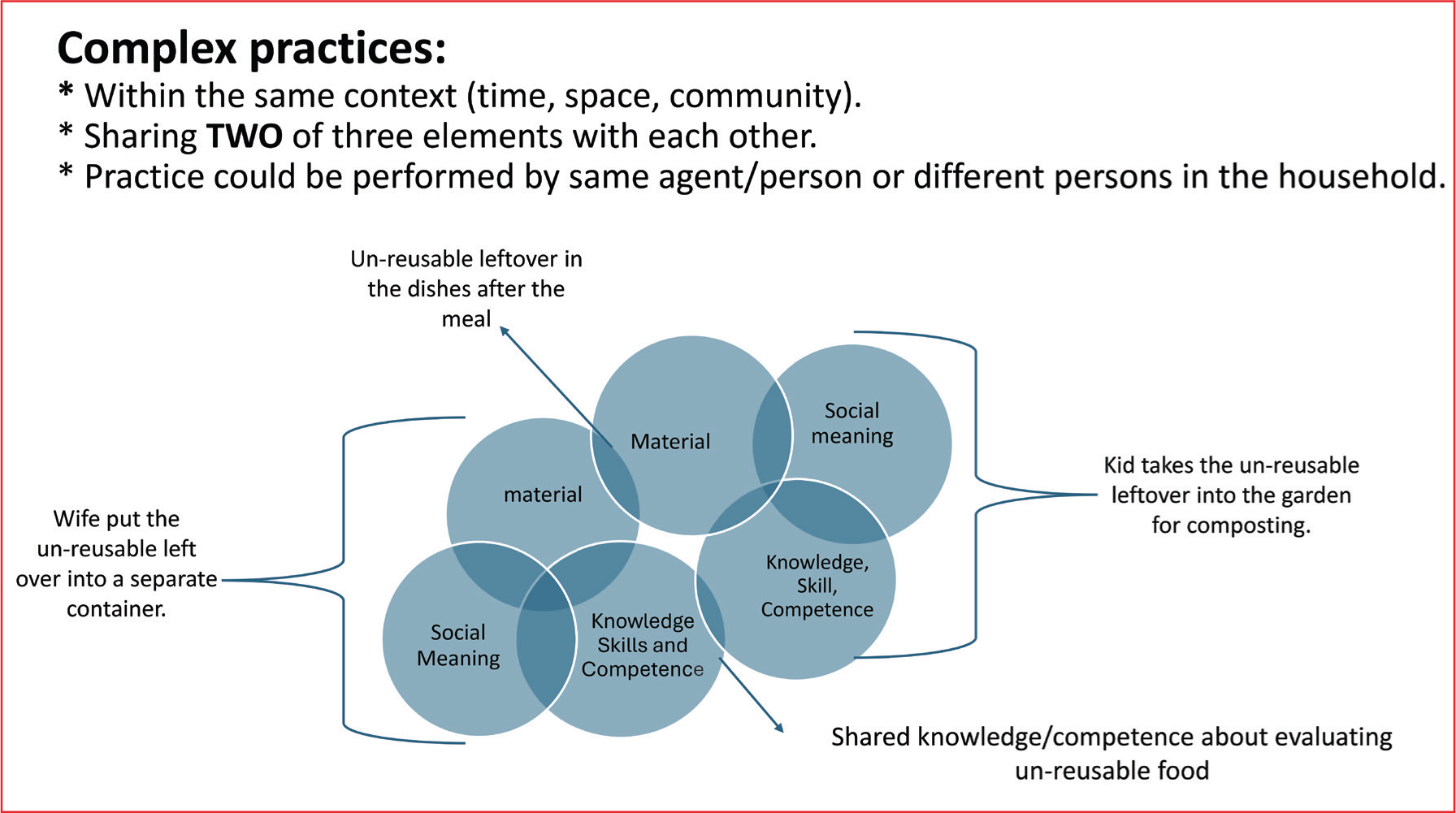
Complex of practices refers to highly integrated practices that are dependent on each other. Within the same context (time, space, community), the practices can share two or three elements with each other (Figure 5).
Complex of Practices Explanation.
This research extends existing conceptualizations by clarifying differences in integration and interrelatedness across bundles, compounds and complexes of practices (Shove et al., 2012; Shove & Spurling, 2013) (Table 7). These configurations vary in their levels of interdependence, coordination and susceptibility to change, with important implications for how HHFW practices are analysed and intervened upon.
Comparisons Between Bundle, Compound and Complex Practices.
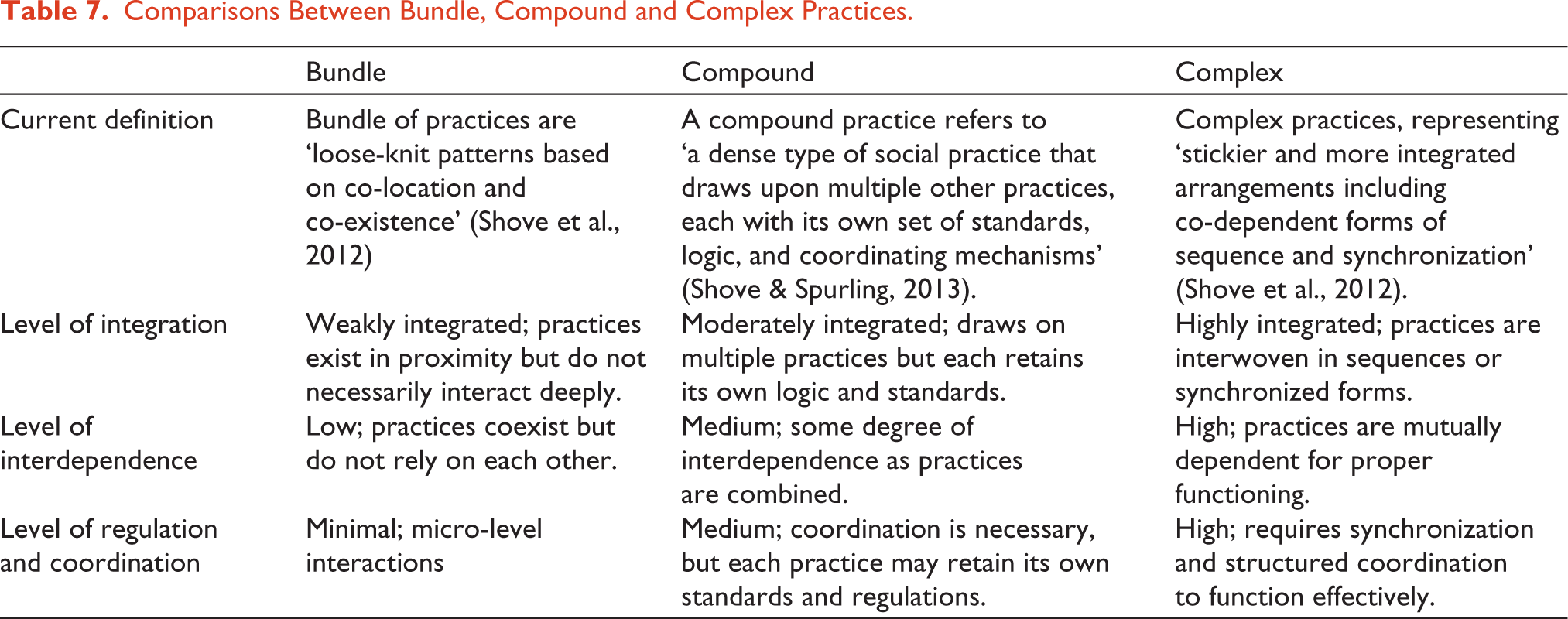
Practices organized as bundles are weakly integrated and more amenable to change through shifts in individual elements or external conditions (Klitkou et al., 2022; Narasimhan et al., 2017), whereas compound practices involve partial interdependence and are influenced by policies, technologies, or norms that affect multiple practices simultaneously (Shove & Spurling, 2013). In contrast, complexes of practices are highly integrated and shaped by multiple dynamic forces, requiring holistic analysis that accounts for coordination, sequencing, and path dependence (Shove et al., 2012; Warde, 2013). Recognizing these differences is essential for future research seeking to understand how interventions targeting one practice may reshape others within broader configurations of HHFW practices.
Future research should distinguish the nature of relationships between food waste practices before examining their dynamic interactions within broader social and cultural contexts. Bundles of practices, for example, are more susceptible to incremental change, new beginnings or sudden dissolution and transformation (Schatzki, 2014). An additional avenue for future research is to examine how norms emerge from bundles of practices and how such norms subsequently influence the performance of practices within the bundle (Narasimhan et al., 2017).
Greater attention should also be directed towards HHFW practices understood as complexes of practices. This involves, first, examining how such complexes are formed and evolve over time and, second, analysing how practices within a complex interact, compete or reinforce one another. A clearer understanding of these complex interrelations can support the design of more innovative and effective interventions. For instance, when policymakers identify elements that are shared across practices within a complex, interventions targeting these shared elements are likely to have a greater impact than measures addressing isolated or non-shared elements.
Supporting Theories for Ethical and Moral Aspects of Food Waste Practices
Some past studies go further and extend SPT conceptually by developing new ideas or analytical frameworks within a practice perspective. These include showing how time and scheduling shape potential food waste (Dyen et al., 2018; Mattila et al., 2018), treating food waste reduction as ethical self-work or ritualized care (Cappellini & Parsons, 2012; Lehtokunnas et al., 2022; Revilla & Salet, 2018) or linking SPT to alternative food networks, circular business models and the diffusion of sustainable practices (Borrello et al., 2020a; Innocent et al., 2024; O’Neill et al., 2022). Overall, this pattern suggests that while SPT is widely adopted, its full conceptual and methodological potential remains unevenly realized across the literature.
Meanings such as freshness, proper meals, hygiene, responsibility and thrift are widely mentioned, but only a few studies examine how these meanings are shaped by deeper moral expectations, cultural norms or emotional experiences (Cappellini & Parsons, 2012; Lehtokunnas et al., 2022; O’Neill et al., 2022; Revilla & Salet, 2018). Future research can utilize supporting theories to conceptualize moral orders, value systems or feeling rules that guide judgement and action. This gap could move beyond identifying meanings to theorizing how they are socially produced, contested and sustained within households and communities and how they shape decisions about edibility, risk, care and waste.
Characteristics
Social Practice Theory Elements
Few studies have given significant attention to the role of skills and competence. There are three studies that addressed all three relevant aspects, including skills and competence, but none explored skills and competence in depth. Therefore, it is recommended that future research further investigate the skills and competence of household members. A range of skills is required for food-related activities, such as portioning, cooking and understanding different ingredients. This presents a valuable opportunity for research, particularly in the context of designing training or educational interventions. Karunasena et al. (2021) highlighted that a major reason younger individuals tend to waste more food is limited skills in food management, including shopping, storing food and dealing with leftovers. As modern technologies become more integrated into household food practices, skills in technology use and planning will become increasingly important for effective food waste management.
In terms of the material context, further research is needed to examine the role of digital platforms as effective and influential components, as demonstrated in the study by Heidenstrøm & Hebrok (2022). With the rapid growth of the digital economy, particularly following the COVID-19 pandemic, shared digital tools, such as social media platforms for food sharing, applications that monitor food waste and smart technologies like connected fridges or smart bins, have shown potential as practical and preventative solutions. Kör et al. (2022) identified several emerging technologies, including blockchain and the Internet of Things (IoT), that could support HHFW reduction in the Indian context. These innovations warrant deeper investigation, especially in relation to how they interact with other elements and contexts within food waste practices.
Future research should adopt a more holistic and complex perspective by examining the dynamic interactions between all elements of practice. Importantly, this includes exploring the interplay between human and non-human factors, as emphasized by Mattila et al. (2018).
Contextual Settings
Regarding the spatial context, none of the reviews explicitly investigated this aspect. This review suggests that the absence of research on spatial dimensions may be due to significant challenges in collecting and comparing data across different locations, as well as in identifying the underlying reasons for variations in practices. However, this gap presents valuable opportunities for future research to conduct comparative studies that explore how and why food-related practices vary geographically. Such studies could also examine how the spatial context interacts with other contextual factors influencing HHFW. Another open area of research regarding spatial context could be about the distances between different infrastructure, such as distance to retailers, or distance to neighbours, or distances to trash bin/trash collector systems and other relevant materials inherent in food waste management/food-handling practices.
An important yet underexplored topic in the current literature is the role of communities of practice in shaping HHFW behaviours (Figure 6). Within this context, ‘community’ can be understood as groups of households that engage in similar practices, as conceptualized by Lave and Wenger (1991). A household surrounded within such a community is likely to be influenced by shared norms, values and external factors. Despite its relevance, the concept of practice community has received little to no attention in the HHFW literature informed by SPT. While SPT does not traditionally recognize community as a contextual element, we propose that it be considered as an additional dimension influencing social practices.
Three Contextual Dimensions/Settings of a Practice.
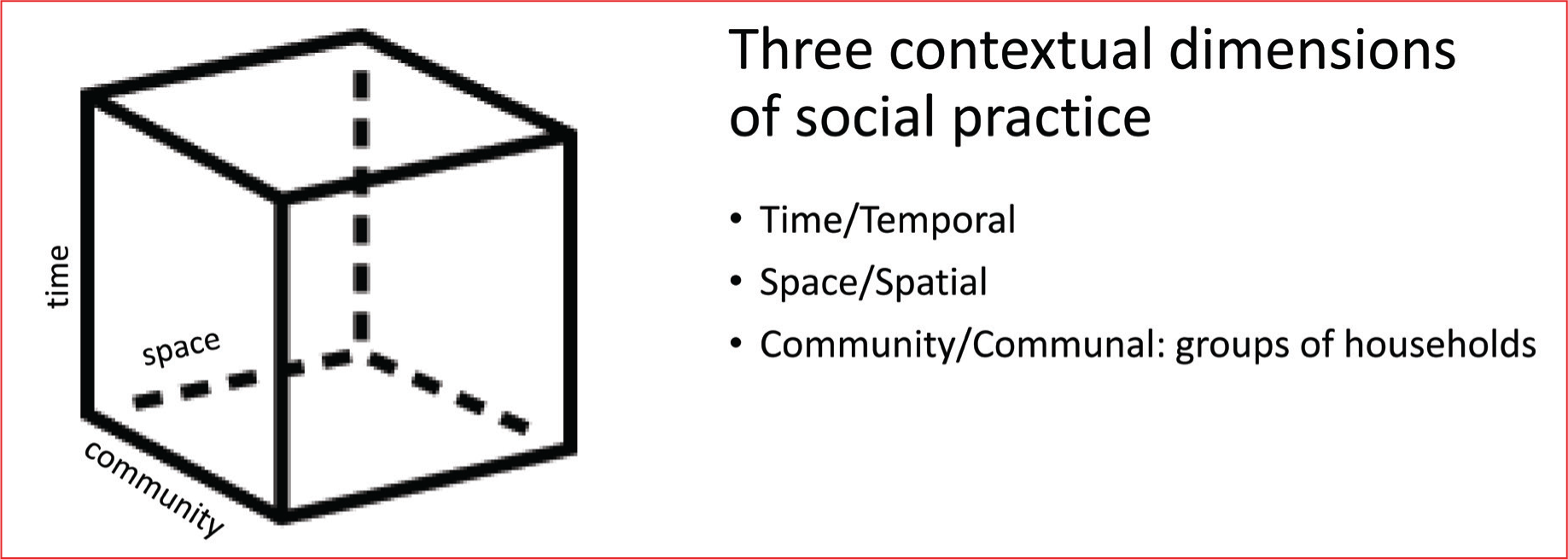
This research recommends integrating the theory of learning through communities of practice with SPT to enhance the understanding of how practices are adopted, sustained and shared. Social meaning, a core element of SPT, is often shaped by the community in which the practice occurs. Likewise, the development of skills and competencies, another fundamental element of a practice, can be fostered within the communal setting. Hitchings (2013) highlighted that research on practice communities could help fill a significant gap in policy, which focuses too much on individual actions without sufficient attention to how a sustainable practice, such as food waste reduction, can recruit more agents/carriers.
Context
To date, only a limited body of research has explicitly examined digital and socio-technical elements within HHFW practices. Where such elements are considered, they are predominantly framed as intervention tools or policy instruments, rather than as routine household technologies embedded in everyday practices, such as online grocery shopping platforms, app-mediated food management or emerging forms of smart packaging (Ekici et al., 2025; Heidenstrøm & Hebrok, 2022; O’Neill et al., 2022). Future research would benefit from examining digital technologies as components of household socio-material arrangements, investigating how they are integrated, adapted or resisted within daily food practices.
Methodology
Gap in the Methodology and Methods
Although the literature shows considerable methodological diversity, several repeating limitations become visible when the studies are analysed together. First, the substantial dependence on small-scale qualitative research means that over two thirds of the studies examine HHFW over relatively short periods and within a limited number of households, which constrains insights into long-term change, sustained intervention effects and cumulative dynamics (Dyen et al., 2021; Evans, 2011).
Second, while nearly all studies (over 80%) recognize that food waste emerges from interrelated practices (planning, shopping, storing, cooking, eating and discarding), fewer than one-quarter provide analytical tools or methods for mapping how these practices form bundles or evolve together over time (Mattila et al., 2018; Wonneck & Hobson, 2017). Third, although quantitative studies offer a broader coverage, they represent less than one third of the sample (Heidig et al., 2024a; Lee, 2018). In addition, the empirical focus remains largely confined to the household, with over 70% of studies paying limited attention to community settings, retail environments or policy contexts, despite clear evidence that these wider systems strongly condition what households can do (Borrello et al., 2020a; Marouli, 2024; O’Neill et al., 2022). Together, these patterns point to the need for more longitudinal, mixed-method and multi-level research designs to better capture practice dynamics and intervention effects across the food system.
Sampling Method and Unit of Analysis
Further examination of how research methods have addressed or failed to address the theoretical challenges associated with the application of SPT reveals a recurring methodological limitation. Although the household is widely recognized as the unit of analysis, most empirical studies do not include all household members in their samples. Instead, they typically select a single ‘representative’ participant, usually the individual primarily responsible for the practices under investigation (Cappellini & Parsons, 2012; Dyen et al., 2018; Gojard et al., 2021; O’Neill et al., 2022; Williams et al., 2020). Only a small number of studies deviate from this approach, such as cases in which both partners were interviewed (Revilla & Salet, 2018) or where another household member was briefly involved in the research process (Heidenstrøm & Hebrok, 2022).
Furthermore, as most current studies focus on the household as the primary unit of analysis, community settings, local networks, retailers and policy actors remain in the background, even when they clearly shape what practices are possible (Borrello et al., 2020a; Lee, 2018; Marouli, 2024; O’Neill et al., 2022; Wonneck & Hobson, 2017). This household-centred focus limits the ability of SPT-based research to fully engage with questions of governance, infrastructure design and collective action. These gaps suggest that future work could use SPT not only to describe what happens domestically but also to theorize more explicitly how meanings, practice complexes, designed material systems and community- and policy-level arrangements interact to produce or prevent HHFW.
Given that one of the recognized theoretical limitations of SPT lies in its relatively limited engagement with individual agency and psychological dimensions, future research would benefit from adopting sampling strategies that encompass a broader range of household members. Including multiple perspectives within the same household, particularly in non-single households, would allow for a more nuanced understanding of how food-related practices are negotiated, contested and reproduced. Such an approach would also strengthen the analyses of the social meanings embedded in food practices, as these meanings are collectively constructed and may be differently interpreted by household members occupying distinct roles and positions.
Data Analysis
A further theoretical limitation of SPT concerns its limited capacity to testify causal relationships (Bohman, 1997). Some past studies have employed quantitative methods to address this challenge, with factor analysis being the most frequently used analytical technique (Borrello et al., 2020; Heidig et al., 2024; Innocent et al., 2024; Revilla & Salet, 2018). However, in these studies, factor analysis is not exactly used to test causal relationships; rather, it serves as a tool for operationalizing the concept of practice. This reflects another theoretical challenge of SPT.
For future research using SPT in HHFW, it is recommended that factor analysis would continue to be used as this method would help in addressing the definition/scoping challenge. It is recommended that factor analysis for concept operationalization such as ‘environmentally sustainable food practices’ (Innocent et al., 2024) should be advanced to a point of operationalizing the three elements of a practice (meaning, competence and material), for which a specific notion should emerge from further grounded theory research. More specifically, grounded theory research could identify specific skills and knowledge needed for food relation practices that would help reduce food waste further than just sensory assessment skills (Gojard et al., 2021) or general planning skills, as mentioned by 7 out of 40 articles.
It is also recommended that the method of fuzzy cognitive mapping (FCM) (Ekici et al., 2025) is further utilized in HHFW research. This method offers a non-traditional means of representing and exploring causal relationships among practices and practice elements. Unlike traditional quantitative models, FCM enables the examination of interdependencies and feedback loops without requiring strict assumptions of linear causality. Where quantitative methods are employed to test causal effects, they should be complemented by appropriate theoretical models capable of linking practice elements to food waste outcomes in a coherent manner.
Conclusion
The review is the first to propose a continuum of interrelatedness of practices from the loosely related bundle of practices to the compound and complex practices. This research recognizes food waste as result of interrelated practices rather than a standalone activity and, most importantly, highlights the importance of determining the relationship system before further investigation into the practice complex (Dyen et al., 2021).
The research offers a structured approach to classify these three levels of interrelatedness. This contributes to a more holistic approach to identify impact factors that can change or transform practices, based on the overlapping of defining elements among related practices. Clarifying the distinctions between bundles, compounds and complexes of practices is important to guide how researchers conceptualize and analyse interrelated practices. Future studies may frame food waste as a bundle, compound or complex of practices; however, this choice carries analytical consequences. Without explicitly examining how practices are connected, coordinated and mutually shaping, HHFW risks being treated as an isolated outcome rather than an emergent effect of practice relations. Attending to the strength and nature of these interrelationships enables a more comprehensive understanding of how food waste is produced and how changes in one practice may affect others. As a result, to reduce food waste, innovative interventions can also be applied to related activities which will in turn affect food disposal behaviour. It is a cycle of practices leading to food waste rather than just a linear path of acquisition, usage and disposal (Hebrok & Heidenstrøm, 2019).
The research also calls for further research in terms of ethical and moral perspectives of HHFW behaviour. In terms of characteristics, the review found extensive coverage of past research on the material element of SPT and calls for further social meaning and skills and capabilities. The research also proposes a new context of studies for HHFW, which is community of practice. Community or the social system in which the households operate could be considered as the third contextual dimension of HHFW. Besides space and time organization, multiple layers of the social system were considered as barriers to intervention to reducing HHFW, including the economy, public administration, politics and policies, and cultures (Marouli, 2024).
In terms of context, the review highlights that digital and socio-technical elements remain underexplored in HHFW research using SPT. Future research could explore how emerging technologies are integrated, adapted or resisted within daily household routines. Future research would benefit from treating digital technologies as integral elements of practice and examining their interactions with meanings, competences and materials across household, community and policy contexts.
Methodologically, the literature is characterized by a strong reliance on qualitative studies and a predominantly household-centred focus, which constrains insights into long-term practice dynamics, interrelated practice bundles and broader food system influences. Limited inclusion of multiple household members further restricts analyses of how practices are negotiated and socially reproduced. Addressing these gaps requires more longitudinal, mixed-method and multi-level research designs, alongside improved analytical tools for mapping interdependencies among practices. Advancing the use of methods such as factor analysis for operationalizing practice elements and fuzzy cognitive mapping for exploring causal relationships can strengthen the explanatory capacity of SPT-based HHFW research.
Although this review was conducted with rigorous procedures using PRISMA and POWER, it is not without limitations. The reliance on selected search terms and on Scopus and Web of Science means that the study does not claim exhaustive coverage of the HHFW literature, and relevant articles indexed elsewhere may have been omitted. Furthermore, while strict quality control and subject-area criteria were necessary, these decisions may have resulted in the exclusion of some potentially relevant studies during the selection process.
Footnotes
Declaration of Conflicting Interests
The authors declared no potential conflicts of interest with respect to the research, authorship and/or publication of this article.
Funding
The authors received no financial support for the research, authorship and/or publication of this article.
Appendix
40 Papers Used for the Review.
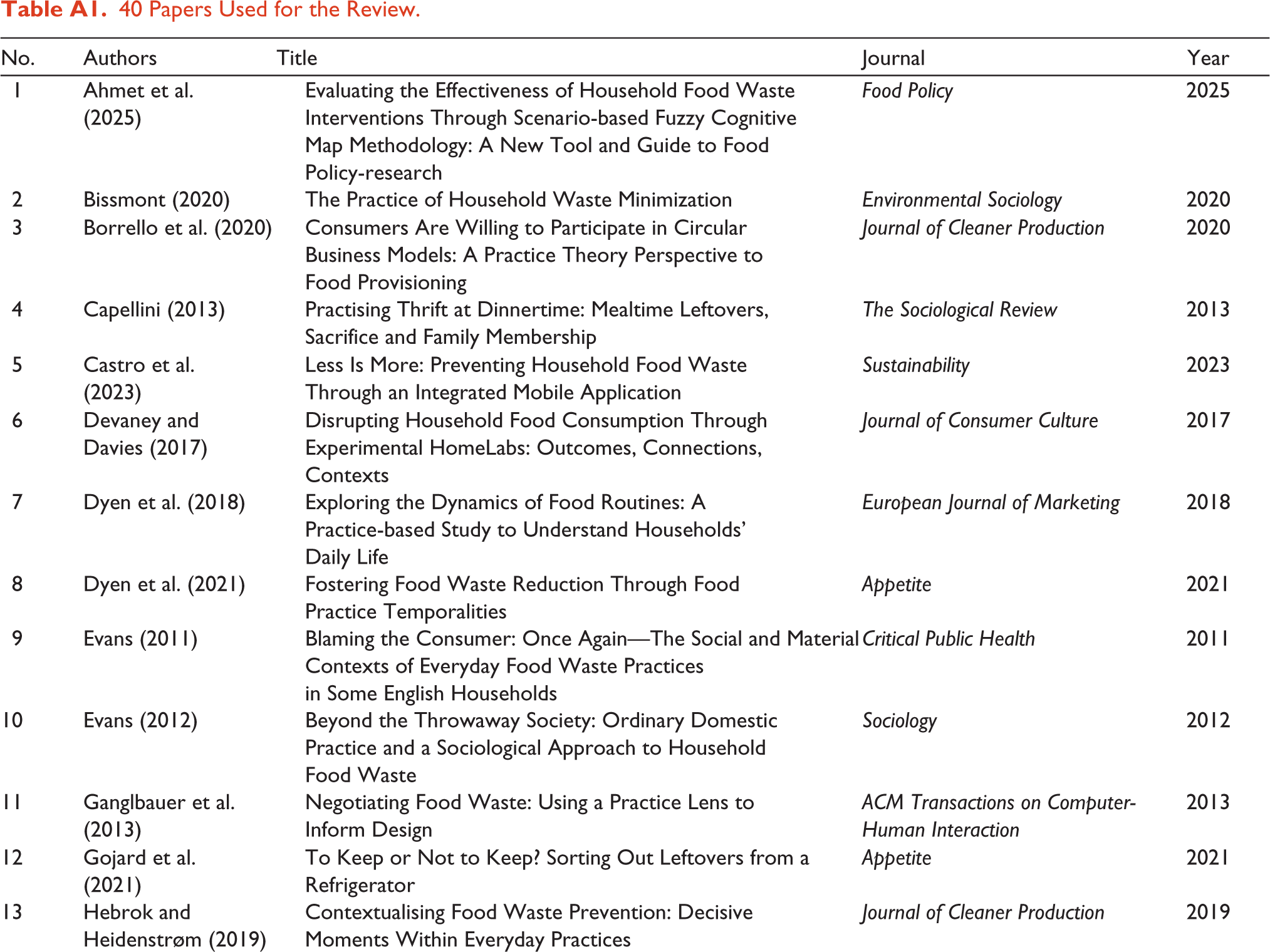
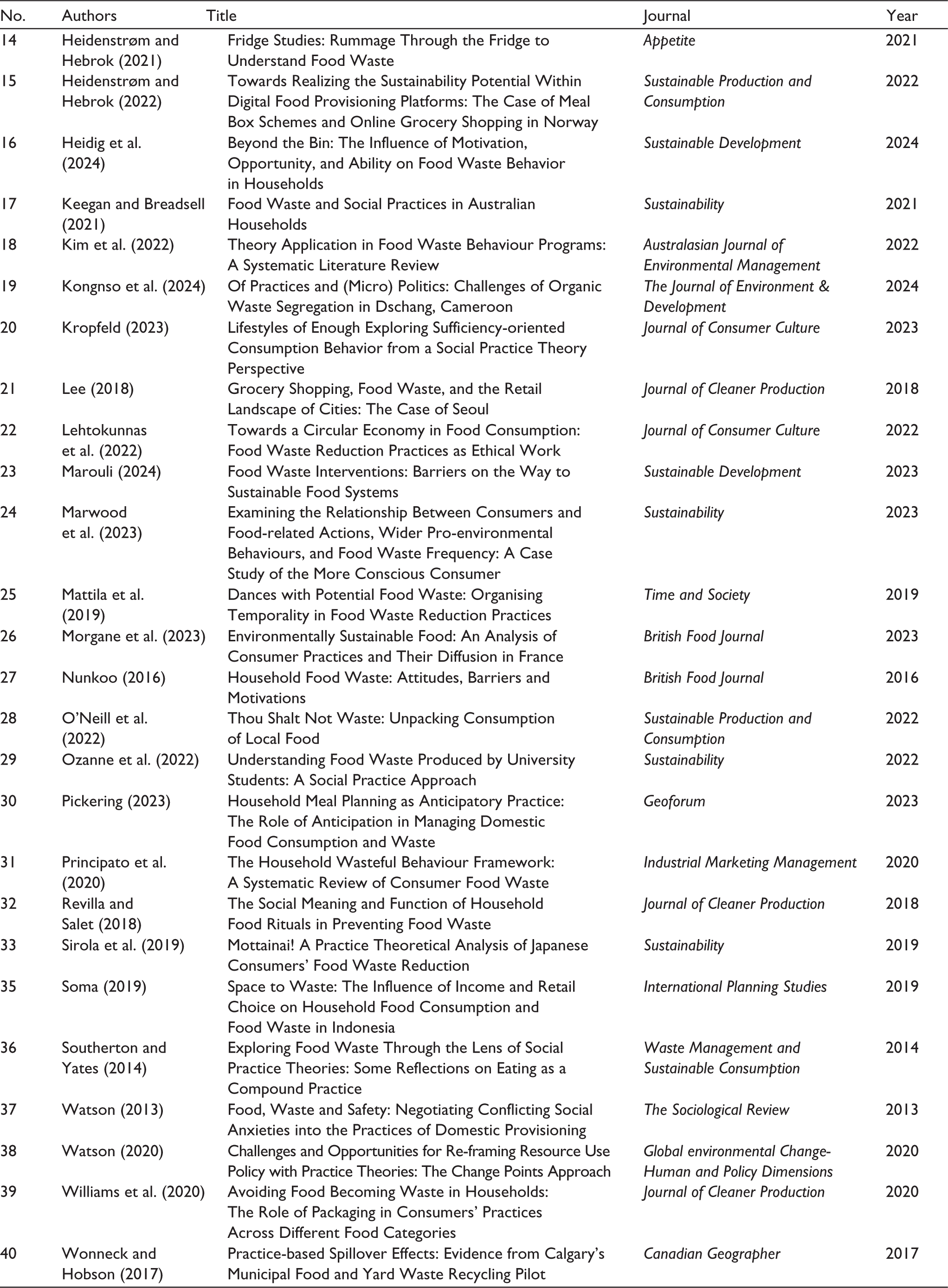
| No. | Authors | Title | Journal | Year |
| 1 | Ahmet et al. (2025) | Evaluating the Effectiveness of Household Food Waste Interventions Through Scenario-based Fuzzy Cognitive Map Methodology: A New Tool and Guide to Food Policy-research | Food Policy | 2025 |
| 2 | Bissmont (2020) | The Practice of Household Waste Minimization | Environmental Sociology | 2020 |
| 3 | Borrello et al. (2020) | Consumers Are Willing to Participate in Circular Business Models: A Practice Theory Perspective to Food Provisioning | Journal of Cleaner Production | 2020 |
| 4 | Capellini (2013) | Practising Thrift at Dinnertime: Mealtime Leftovers, Sacrifice and Family Membership | The Sociological Review | 2013 |
| 5 | Castro et al. (2023) | Less Is More: Preventing Household Food Waste Through an Integrated Mobile Application | Sustainability | 2023 |
| 6 | Devaney and Davies (2017) | Disrupting Household Food Consumption Through Experimental HomeLabs: Outcomes, Connections, Contexts | Journal of Consumer Culture | 2017 |
| 7 | Dyen et al. (2018) | Exploring the Dynamics of Food Routines: A Practice-based Study to Understand Households’ Daily Life | European Journal of Marketing | 2018 |
| 8 | Dyen et al. (2021) | Fostering Food Waste Reduction Through Food Practice Temporalities | Appetite | 2021 |
| 9 | Evans (2011) | Blaming the Consumer: Once Again—The Social and Material Contexts of Everyday Food Waste Practices in Some English Households | Critical Public Health | 2011 |
| 10 | Evans (2012) | Beyond the Throwaway Society: Ordinary Domestic Practice and a Sociological Approach to Household Food Waste | Sociology | 2012 |
| 11 | Ganglbauer et al. (2013) | Negotiating Food Waste: Using a Practice Lens to Inform Design | ACM Transactions on Computer-Human Interaction | 2013 |
| 12 | Gojard et al. (2021) | To Keep or Not to Keep? Sorting Out Leftovers from a Refrigerator | Appetite | 2021 |
| 13 | Hebrok and Heidenstrøm (2019) | Contextualising Food Waste Prevention: Decisive Moments Within Everyday Practices | Journal of Cleaner Production | 2019 |
| 14 | Heidenstrøm and Hebrok (2021) | Fridge Studies: Rummage Through the Fridge to Understand Food Waste | Appetite | 2021 |
| 15 | Heidenstrøm and Hebrok (2022) | Towards Realizing the Sustainability Potential Within Digital Food Provisioning Platforms: The Case of Meal Box Schemes and Online Grocery Shopping in Norway | Sustainable Production and Consumption | 2022 |
| 16 | Heidig et al. (2024) | Beyond the Bin: The Influence of Motivation, Opportunity, and Ability on Food Waste Behavior in Households | Sustainable Development | 2024 |
| 17 | Keegan and Breadsell (2021) | Food Waste and Social Practices in Australian Households | Sustainability | 2021 |
| 18 | Kim et al. (2022) | Theory Application in Food Waste Behaviour Programs: A Systematic Literature Review | Australasian Journal of Environmental Management | 2022 |
| 19 | Kongnso et al. (2024) | Of Practices and (Micro) Politics: Challenges of Organic Waste Segregation in Dschang, Cameroon | The Journal of Environment & Development | 2024 |
| 20 | Kropfeld (2023) | Lifestyles of Enough Exploring Sufficiency-oriented Consumption Behavior from a Social Practice Theory Perspective | Journal of Consumer Culture | 2023 |
| 21 | Lee (2018) | Grocery Shopping, Food Waste, and the Retail Landscape of Cities: The Case of Seoul | Journal of Cleaner Production | 2018 |
| 22 | Lehtokunnas et al. (2022) | Towards a Circular Economy in Food Consumption: Food Waste Reduction Practices as Ethical Work | Journal of Consumer Culture | 2022 |
| 23 | Marouli (2024) | Food Waste Interventions: Barriers on the Way to Sustainable Food Systems | Sustainable Development | 2023 |
| 24 | Marwood et al. (2023) | Examining the Relationship Between Consumers and Food-related Actions, Wider Pro-environmental Behaviours, and Food Waste Frequency: A Case Study of the More Conscious Consumer | Sustainability | 2023 |
| 25 | Mattila et al. (2019) | Dances with Potential Food Waste: Organising Temporality in Food Waste Reduction Practices | Time and Society | 2019 |
| 26 | Morgane et al. (2023) | Environmentally Sustainable Food: An Analysis of Consumer Practices and Their Diffusion in France | British Food Journal | 2023 |
| 27 | Nunkoo (2016) | Household Food Waste: Attitudes, Barriers and Motivations | British Food Journal | 2016 |
| 28 | O’Neill et al. (2022) | Thou Shalt Not Waste: Unpacking Consumption of Local Food | Sustainable Production and Consumption | 2022 |
| 29 | Ozanne et al. (2022) | Understanding Food Waste Produced by University Students: A Social Practice Approach | Sustainability | 2022 |
| 30 | Pickering (2023) | Household Meal Planning as Anticipatory Practice: The Role of Anticipation in Managing Domestic Food Consumption and Waste | Geoforum | 2023 |
| 31 | Principato et al. (2020) | The Household Wasteful Behaviour Framework: A Systematic Review of Consumer Food Waste | Industrial Marketing Management | 2020 |
| 32 | Revilla and Salet (2018) | The Social Meaning and Function of Household Food Rituals in Preventing Food Waste | Journal of Cleaner Production | 2018 |
| 33 | Sirola et al. (2019) | Mottainai! A Practice Theoretical Analysis of Japanese Consumers’ Food Waste Reduction | Sustainability | 2019 |
| 35 | Soma (2019) | Space to Waste: The Influence of Income and Retail Choice on Household Food Consumption and Food Waste in Indonesia | International Planning Studies | 2019 |
| 36 | Southerton and Yates (2014) | Exploring Food Waste Through the Lens of Social Practice Theories: Some Reflections on Eating as a Compound Practice | Waste Management and Sustainable Consumption | 2014 |
| 37 | Watson (2013) | Food, Waste and Safety: Negotiating Conflicting Social Anxieties into the Practices of Domestic Provisioning | The Sociological Review | 2013 |
| 38 | Watson (2020) | Challenges and Opportunities for Re-framing Resource Use Policy with Practice Theories: The Change Points Approach | Global environmental Change-Human and Policy Dimensions | 2020 |
| 39 | Williams et al. (2020) | Avoiding Food Becoming Waste in Households: The Role of Packaging in Consumers’ Practices Across Different Food Categories | Journal of Cleaner Production | 2020 |
| 40 | Wonneck and Hobson (2017) | Practice-based Spillover Effects: Evidence from Calgary’s Municipal Food and Yard Waste Recycling Pilot | Canadian Geographer | 2017 |