




Abstract
Entrepreneurial intent has transformed over the last few decades to respond to current environmental, societal and economic challenges. An essential role in this transformation has been bequeathed to Generation Z. This study aims to evaluate the influence of Generation Z personality traits measured by internal locus control, perceived creativity (PC), proactive personality (PP) and sustainable perceived behavioural control (SPBC) on sustainable entrepreneurial intention (SEI) when mediated by Generation Z’s perception of risk. The sample for this study was collected through a data collection instrument in which 505 young people from Portuguese Generation Z participated. A quantitative methodology was applied through the Partial Least Square method. The results show that the personality traits, PC, PP and sustainable perceived control behaviour of Generation Z positively influence their risk perception (RP) and SEI. In turn, RP positively influences the SEI of these young people. No statistically significant relationship was found between the internal locus control of Generation Z youth and RP or SEI. This study is key to expanding identity theory to the context of sustainable entrepreneurship among Generation Z youth, highlighting how RP shapes their entrepreneurial practices. By contributing to the still scarce literature on generational cohorts in the field of entrepreneurial activity, the study offers a valuable empirical analysis of the relationship between personality traits and entrepreneurial intention. In addition, it deepens understanding of the emerging concept of sustainable entrepreneurship, providing important insights for promoting environmentally responsible business practices among younger generations.
Keywords
Introduction
Entrepreneurship has been considered one of the transformation agents in the world in response to the economic, social and environmental challenges imposed by the Sustainable Development Goals (SDGs) (Apostolopoulos et al., 2018; Soriano & Huarng, 2013). Currently, the importance of creating new businesses is broader than job creation, poverty reduction and its contribution to the economic growth of countries (Liguori & Bendickson, 2020). New companies must assume the role of ‘good corporate citizen’ (Pomare, 2018) as responsible for ensuring the sustainability of future generations and holistically caring for the well-being of society.
In general, entrepreneurial activity does not come out of nowhere (Zamrudi & Yulianti, 2020), despite the consensus that individuals with strong entrepreneurial intentions have more potential to promote entrepreneurship (Amofah & Saladrigues, 2022). However, this entrepreneurial intention involves personality traits, cognitive activities and behaviours of individuals that are influenced by their economic, social, cultural and political context (Hossain et al., 2023). These contexts have undergone drastic changes in the last decade, altering the traditional notion of entrepreneurship and the profile of entrepreneurs. A new generation of entrepreneurs is born, with a leading role on the world stage: Generation Z.
Generation Z, made up of young people born between 1997 and 2012 (Gomes et al., 2023) with unique characteristics, new mindsets and digital skills, is starting a new stage in the business world (Dragolea et al., 2023). Generation Z already represents, in 2023, more than a quarter of the world’s population, that is, about 2 billion people, being the most prominent living cohort, and it is estimated that, in 2025, they will represent 27% of the world’s workforce (Mccrindle, 2023). According to a study by Microsoft (Bennet, 2022), 62% of young people from Generation Z indicated that they intend to start their businesses, changing the path of previous generations who preferred to have a stable job for life. Considered to be the digitally native generation, with a greater sense of justice and equality, they are passionate about a better world, open-minded, more concerned with the environment and aware of their actions in terms of sustainability. However, they also seek professional success more quickly and give more value to money (Chillakuri & Mahanandia, 2018; Gomes et al., 2023). Their concern for the environment is reflected in their behaviour. A total of 73% of Generation Z are willing to pay more for eco-friendly products, six out of 10 prefer to buy eco-friendly brands and 96% of Generation Z youth read reviews and recommendations for their products (First Insight, 2020).
The mapping of Generation Z entrepreneurship has been explored in recent years by several studies that demonstrate a greater entrepreneurial intention compared to other generations, such as Generation Y (Dreyer & Stojanová, 2023; Hamdi et al., 2023; Hossain et al., 2023). However, as far as we know, no empirical studies address the sustainable entrepreneurial intention (SEI) of Generation Z. Furthermore, the role of risk perception (RP) in mediating the relationship between Generation Z’s personality traits and their sustainable entrepreneurial activities is a complex and nuanced area of study. Research indicates that personality traits significantly influence risk tolerance, which in turn affects entrepreneurial intentions (Panda & Arumugam, 2023). For Generation Z, whose traits include a high degree of creativity and flexibility, their approach to risk is likely to be distinctively different from that of other generations. This unique RP could either propel them towards taking bold steps in launching sustainable ventures or make them cautious of potential failures. Understanding how these traits translate into RP and, subsequently, into entrepreneurial activity is critical. It is hypothesized that Generation Z’s innovative nature and commitment to sustainability could make them more inclined to perceive the risks associated with sustainable entrepreneurship as manageable or even desirable challenges rather than deterrents.
Despite the growing interest in sustainable entrepreneurship among Generation Z, there remains a notable gap in the literature regarding their direct involvement in this field and the specific role of RP. While studies have begun to explore the sustainable behaviour of Generation Z and their attitudes towards sustainability-oriented products (Dragolea et al., 2023; Nikolić et al., 2022), there is a lack of comprehensive research focusing on how their personality traits impact their sustainable entrepreneurial activities. Furthermore, the existing literature seldom addresses how Generation Z’s unique RP mediates this relationship (Panda & Arumugam, 2023). This gap indicates an urgent need for further empirical research to understand better the dynamics at play. By delving deeper into these aspects, researchers and policymakers can develop targeted strategies to support Generation Z entrepreneurs, potentially leading to a surge in innovative and sustainable business ventures that could address critical environmental challenges. Thus, the present study starts with the following research questions: (a) How do the personality traits of Generation Z influence their cognitive activity measured by the perception of risk? (b) What is the role of the personality traits of Generation Z in promoting SEI when mediated by the perception of risk?
For this study, we considered the internal locus of control (ILC), perceived creativity (PC), proactive personality (PP) and perceived sustainable control behaviour as personality traits and RP as a cognitive activity. Understanding how ILC influences entrepreneurial motivation and decision-making is pivotal in the context of sustainable entrepreneurship. Studies have shown that individuals with a high ILC believe they have control over their life events and outcomes, rather than perceiving them as a result of luck or fate (Hamzah & Othman, 2022; Kilmann et al., 1978). This belief system plays a critical role in entrepreneurship as it correlates with higher motivation and the capacity to make decisive, strategic decisions in the unpredictable terrain of starting and managing a business (Hamzah & Othman, 2022). The importance of ILC becomes even more pronounced in sustainable entrepreneurship, where entrepreneurs are often required to navigate complex environmental and social challenges. They need to believe in their ability to effect change and achieve sustainability goals through innovative business solutions. Consequently, this psychological trait is not only a predictor of entrepreneurial competency but also a driver of the determination needed to pursue and achieve sustainable business objectives.
The impact of PC on innovative business solutions for sustainability cannot be overstated. Creativity is the cornerstone of innovation, especially in the realm of sustainable entrepreneurship, where finding novel solutions to environmental and social issues is paramount (Azmat, 2013; Hu et al., 2018). This PC, or the belief in one’s creative capabilities, encourages entrepreneurs to think outside the box and come up with innovative business models that can drive sustainability. Research suggests that individuals who perceive themselves as creative are more likely to identify unique opportunities for sustainable ventures and are better equipped to overcome the barriers to sustainable innovation (Hu et al., 2018). By fostering a creative mindset, entrepreneurs can develop business solutions that not only meet market needs but also address critical sustainability challenges. Therefore, PC is a crucial variable in understanding the entrepreneurial intention of young people, particularly those from Generation Z who are known for their innovative approach and commitment to sustainability.
The significance of a PP in navigating the challenges of sustainable entrepreneurship is increasingly recognized in current research. A PP is characterized by a tendency to take initiative and effect change in the environment, which is essential in the context of sustainable entrepreneurship where proactive approaches to problem-solving and opportunity identification are needed (Hu et al., 2018). Individuals with a PP are more likely to engage in behaviours that lead to the creation of innovative and sustainable business practices, as they are not deterred by the complexities and uncertainties inherent in integrating sustainability into business models (Maheshwari et al., 2023). Furthermore, the proactive disposition enables entrepreneurs to anticipate future trends and challenges in sustainability, allowing them to prepare and adapt their business strategies accordingly. This trait is particularly relevant for Generation Z entrepreneurs, who are entering a business world that demands not only innovative thinking but also a strong commitment to sustainable development.
The concept of sustainable perceived control behaviour emerges as a significant personality trait, especially when examining the motivations and intentions behind sustainable entrepreneurship among young individuals. This trait encapsulates the degree to which individuals feel capable of performing sustainable actions and making decisions that align with long-term sustainable and social goals (Hossain et al., 2023). The significance of sustainable perceived control behaviour lies not just in its ability to predict entrepreneurial intentions but also in its potential to foster a mindset geared towards sustainability. This is crucial in today’s context, where the need for innovative solutions to environmental challenges is more pressing than ever. Understanding this personality trait can provide insights into how young entrepreneurs are motivated to pursue ventures that contribute positively to society and the environment. Generation Z’s are known for their digital nativity, social awareness and strong inclination towards ethical consumption members of Generation Z display a distinct set of values and behaviours that set them apart from previous generations (Dragolea et al., 2023). Their strong desire for social inclusion influences their entrepreneurial intentions, with many seeking to launch ventures that address social and environmental issues. This generational cohort is more likely to pursue entrepreneurship as a means of achieving social integration and making a positive impact on the world (Burlea-Schiopoiu & Popovici, 2024). Therefore, exploring the concept of sustainable perceived control behaviour within this demographic can offer valuable insights into how young entrepreneurs are shaping the future of business with sustainability at its core.
Analyzing how RP affects the willingness to engage in sustainable ventures reveals a nuanced interplay between individual personality traits and environmental considerations. Studies have shown that RP plays a pivotal role in shaping the entrepreneurial intentions of individuals, especially when it comes to sustainable entrepreneurship (Middermann et al., 2020; Yang et al., 2022). For Generation Z, this relationship is even more critical as their unique generational characteristics, such as a strong desire for social inclusion (Burlea-Schiopoiu & Popovici, 2024), influence their perception of risk and, consequently, their entrepreneurial intentions. The willingness to engage in sustainable ventures is not merely a question of recognizing the potential financial rewards but also involves understanding the broader impact of these ventures on society and the environment. This generation’s heightened awareness and value-driven perspective make them more likely to assess risks in the context of sustainability, thereby affecting their willingness to pursue such ventures.
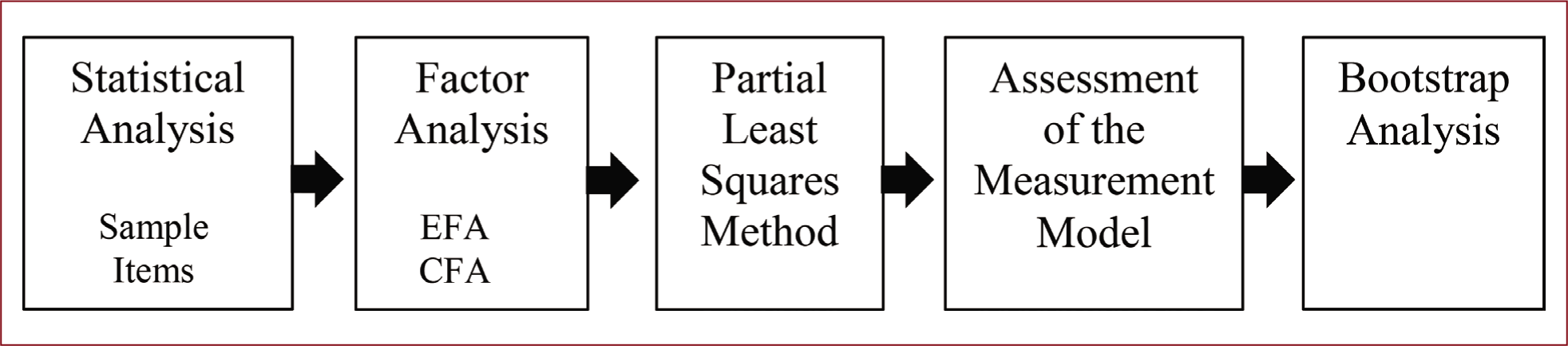
Based on identity theory, which focuses on the ‘identity relevance’ of entrepreneur behaviour, this study aims to evaluate the influence of personality traits of Generation Z measured by internal locus control, PC, PP and sustainable perceived control behaviour on their cognitive activity measured by RP. In addition, it explores the role of personality traits and RP in the SEI of young people from Generation Z. To this end, a sample was considered, collected by questionnaire, composed of 505 young people from Portuguese Generation Z, having been applied a quantitative methodology. The data analysis comprised five stages: (a) statistical analysis of the items that measure the constructs; (b) factor analysis, with exploratory factor analysis (EFA) and confirmatory factor analysis (CFA) being implemented; (c) application of the Partial Least Square (PLS) method to the formulated research model; (c) assessment of the measurement model and (d) bootstrap analysis to estimate the relationships between the constructs contained in the research model.
The results show that the PC, PP and sustainable perceived control behaviour of Generation Z young people positively influence their RP. In turn, RP positively influences the SEI of these young people. Furthermore, these same personality traits positively affect the SEI of young people from Generation Z when mediated by their RP. No statistically significant relationship was found between the internal locus control of Generation Z youth and RP or SEI.
This study makes four significant contributions that underscore its novelty and importance. First, it expands the application of identity theory to the domain of sustainable entrepreneurship among Generation Z youth. By doing so, it sheds light on how identity theory shapes RP in the context of sustainable entrepreneurship. While existing research predominantly relies on frameworks such as the theory of planned behaviour, sustainability theory and entrepreneurship theory (Terán-Yépez et al., 2020), this study pioneers the integration of identity theory into this crucial area. Second, it enriches the literature on generational cohorts by examining entrepreneurial activity through the lens of Generation Z. Despite the growing interest in generational cohorts, scant attention has been paid to exploring entrepreneurial endeavours specifically within Generation Z. This study aims to fill this gap by delving into the entrepreneurial potential of this promising cohort. Third, it empirically investigates the relationship between entrepreneurial behaviour, as measured by personality traits, and entrepreneurial intention—an area that remains underexplored (Abbasianchavari & Moritz, 2021). By empirically examining this link, the study offers valuable insights into the factors driving entrepreneurial aspirations among individuals. Fourth, it advances understanding of sustainable entrepreneurship—a concept still in its infancy—by providing a theoretical framework and empirical evidence to support its study. While previous research has identified sustainable entrepreneurship as a topic of interest, it has often lacked a cohesive theoretical foundation and empirical backing (Terán-Yépez et al., 2020). This study addresses this gap by offering a more holistic perspective on sustainable entrepreneurship, thereby contributing to its broader comprehension. Overall, this study not only breaks new ground by integrating identity theory into the study of sustainable entrepreneurship but also offers fresh insights into the entrepreneurial activities of Generation Z, sheds light on the relationship between personality traits and entrepreneurial intention and advances the understanding of sustainable entrepreneurship through a rigorous theoretical and empirical examination.
After this introduction, we will develop the literature review and formulate the hypotheses and research model. We will then present the methodology, detailing the entire process. Then we will draw up the results, checking which hypotheses are accepted and which are rejected. After the results, we discuss the findings of our study, comparing them with the literature. We also present the theoretical and practical implications of the study. Finally, we draw a conclusion.
Literature Review
Identity Theory
Identity theory is a psychological analysis tool that focuses on how individuals distinguish and view themselves in relation to the various roles they may play in social groups (Stets & Burke, 2000; Stryker & Burke, 2000). Identity theory suggests that people develop an understanding of themselves based on the role they have, such as being an entrepreneur or a member of a community (Shepherd & Patzelt, 2018). Sustainable entrepreneurship is about creating businesses that have a positive effect on society and the environment, which can be shaped by the essence of the entrepreneur and how they perceive risk (Bell et al., 2019).
Factors such as gender, ethnicity and work experience can influence the community’s understanding of an entrepreneur, which in turn plays a crucial role in the creation and management of sustainable businesses. To ensure long-term sustainability, entrepreneurs must effectively manage and evaluate the risks associated with their businesses. This has been demonstrated by Musona et al. (2021) through their research. Regarding environmental sustainability and prioritizing sustainable methods in their business, individuals with a strong social and environmental identity may have a greater sense of RP. These factors can then shape entrepreneurs’ decision-making processes.
Identity theory plays a significant role in the perception of risk in the context of sustainable entrepreneurship. According to this theory, people evaluate their own actions in comparison with those of other individuals who share the same identities (Cesinger et al., 2022). In the context of sustainable entrepreneurship, entrepreneurs often compare themselves with other sustainable entrepreneurs, evaluating both their perception of risk and their commitment to sustainable practices (Cesinger et al., 2022). This self-assessment process can significantly influence their attitude towards risk and their abilities to develop sustainable strategies in their companies (Liu et al., 2022). By understanding the role of identity theory in RP, entrepreneurs can better align their personal values and identities with their business decisions. This critical self-assessment not only enhances entrepreneurs’ ability to face risks but also strengthens their commitment to sustainable entrepreneurship. Therefore, by integrating identity theory into their practices, entrepreneurs can contribute more effectively to the growth of sustainable entrepreneurship by promoting greater harmonization between their personal convictions and their business initiatives.
Sustainable Entrepreneurship in Generation Z
Sustainable entrepreneurship, a concept that marries the pursuit of economic objectives with the commitment to SDGs, is gaining traction in today’s global landscape. This form of entrepreneurship emphasizes the importance of creating businesses that not only seek profit but also address environmental, social and governance (ESG) criteria, embodying a balance between economic growth and the preservation of natural resources for future generations (Rosário et al., 2022). The significance of sustainable entrepreneurship stems from its potential to drive innovation in products, services and business models that contribute to a more sustainable and equitable world (Ali, 2021). It represents a paradigm shift in how businesses operate, prioritizing long-term ecological balance and social equity over short-term gains.
Generation Z exhibits a strong alignment with the values underpinning sustainable entrepreneurship. This alignment is rooted in their heightened awareness of environmental issues, social justice and the desire for economic models that do not exacerbate these challenges (Papp-Váry et al., 2023). Known for their digital savviness and access to information, Generation Z is more likely than previous generations to prioritize sustainability and ethical considerations in their purchasing decisions and career choices (Starczewski et al., 2023). Their entrepreneurial endeavours are often characterized by: (a) a preference for business practices that are environmentally sustainable and socially responsible; (b) an innovative approach to solving complex global challenges through entrepreneurship; and (c) a commitment to integrating ESG principles into the core of their business models (Roshchupkina et al., 2023). This generational shift towards sustainability and ethical business practices is reshaping the landscape of entrepreneurship, making Generation Z a driving force in the transition towards a more sustainable future.
Despite their inclination towards sustainable entrepreneurship, Generation Z entrepreneurs face a unique set of challenges and opportunities in implementing sustainable practices. On the one hand, the challenges include limited access to capital for green investments, navigating the complexities of sustainable certifications and balancing the cost implications of sustainable materials and processes with the need to remain competitive (Papp-Váry et al., 2023). On the other hand, these young entrepreneurs also encounter unprecedented opportunities: (a) access to digital platforms and technologies that facilitate sustainable business models and practices (Baran & Berkowicz, 2021); (b) growing consumer demand for sustainable products and services, opening new markets and niches (Jayaratne et al., 2019); (c) supportive ecosystems, including accelerators and incubators focused on sustainability, providing mentorship and networking opportunities (Grifantini, 2015; Lamperti et al., 2023). The landscape for Generation Z entrepreneurs is thus marked by a dynamic interplay of obstacles and avenues for innovation, with the potential to influence the trajectory of sustainable development significantly.
Risk Perception in Sustainable Entrepreneurship in Generation Z
RP plays an important role in creating people’s attitudes and behaviours, specifically within the circle of sustainable entrepreneurship as per Generation Z. RP is a cognitive and perceptual characteristic of an individual (Weber & Hsee, 1998), varying from person to person (Zhao et al., 2021). An entrepreneur’s RP is important because it affects decision-making and entrepreneurial behaviour (Robinson & Marino, 2015; Simon et al., 2000; Zhao et al., 2021). In other words, RP is the subjective analysis of the potential danger and uncertainties associated with a particular action or decision (Li & Huang, 2023). Several variables affect RP, including perceived benefit, knowledge, innovation, trust and social influence (Li & Li, 2023). Understanding these elements is key to understanding RP within the context of sustainable entrepreneurship. Furthermore, Alraja (2022) has shown that RP is influenced by demographic variables such as gender and generation. Generation Z is known for its entrepreneurial mindset (Dobrowolski et al., 2022), making it important to understand how their RP influences their willingness to undertake environmentally sustainable entrepreneurship.
The effect of RP on Generation Z’s sustainable business creation is notable. Dobrowolski et al. (2022) recommend that Generation Z’s RP has a positive effect on their willingness to undertake sustainably. This means that individuals who understand the risks associated with sustainable entrepreneurship as manageable are more likely to have a strong intention to engage in sustainable entrepreneurial activities. The relationship between RP and sustainable entrepreneurship is complex and has multiple dimensions, being affected by different components (e.g., skills, ethics and the role of risk management) (Dobrowolski et al., 2022; Hoogendoorn et al., 2019; Lopes et al., 2023b).
The link between RP and sustainable entrepreneurship in Generation Z has important implications for the diffusion of sustainable development. Generation Z’s behaviour and attitudes towards sustainability are important for achieving SDGs (Dobrowolski et al., 2022; Yamane & Kaneko, 2021). Environmental RP, coupled with environmental education, social pressure and health awareness, influences individuals’ attitudes towards practicing sustainable behaviours (Ghaffar & Islam, 2023; Saari et al., 2021). Therefore, understanding how RP influences Generation Z’s willingness to carry out environmentally sustainable projects can play a key role in promoting sustainable entrepreneurship. This not only facilitates the implementation of more responsible business practices but also contributes to a more environmentally sustainable future. Recognizing this potential impact underscores the importance of integrating identity theory into the analysis of sustainable entrepreneurial behaviour, especially considering this theory’s ability to explain how self-evaluation and comparison with peers influence entrepreneurial decisions. Furthermore, by deepening our understanding of how personality traits and RP intertwine in the formation of sustainable entrepreneurial attitudes, we can develop educational and policy strategies that better prepare Generation Z to face environmental challenges. Environmental education, for example, can be adjusted to directly address perceived risk concerns, enhancing young entrepreneurs’ ability to innovate sustainably. Thus, this study not only extends identity theory to the context of sustainable entrepreneurship, but also provides a solid basis for initiatives aimed at aligning the personal values of young entrepreneurs with their business practices. This is essential for promoting a culture of sustainability that can have lasting effects on the fulfilment of the SDGs, ensuring a more balanced and sustainable future (Dobrowolski et al., 2022; Yamane & Kaneko, 2021).
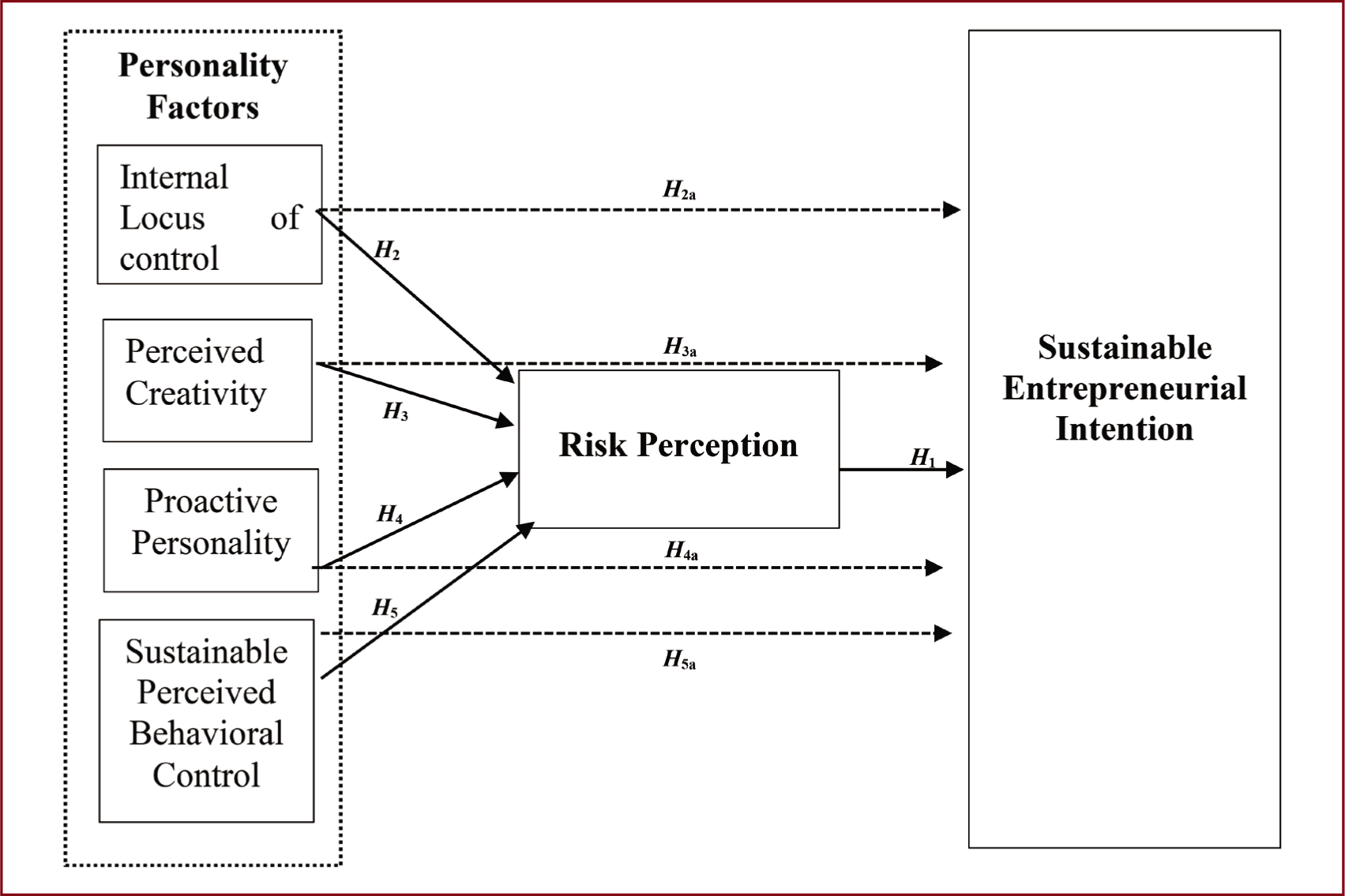
H1: Generation Z’s risk perception positively affects their sustainable entrepreneurial intention.
Personality Factors in Generation Z
RP and sustainable entrepreneurship have become topics of increasing relevance in contemporary society. The ability to identify opportunities and face challenges with an entrepreneurial vision has become essential for socio-economic development, while the search for sustainable practices gains prominence in the preservation of the environment (Lopes et al., 2023b; Neumann, 2021). In this context, personality factors (internal locus of control [ILC], PC, PP and perceived control behaviour) can influence both RP and engagement in sustainable entrepreneurship.
ILC in Generation Z
The term ILC refers to the notion that a person has control over their own life and the consequences of their actions. On the one hand, individuals with a high ILC believe that their own efforts and decisions influence the outcomes they achieve (Gu et al., 2023). On the other hand, individuals with a low ILC tend to think that their own luck and external factors influence the outcomes they achieve (Gu et al., 2023). Research on sustainable entrepreneurship neglects the ILC and its impact on RP and the desire for success in Generation Z (Mueller & Thomas, 2001).
Hossain et al. (2023) discovered that Generation Z’s RP and entrepreneurial intentions are greatly influenced by their ILC. This group, also known as the social media generation and post-millennials, has a natural inclination for taking risks and possesses a stronger sense of internal control (Hossain et al., 2023). Research has shown that individuals with a high ILC view the risks associated with entrepreneurship in a more positive light (Hossain et al., 2023; Mahmood et al., 2019). Generation Z perceives risks as opportunities for personal growth and success by relying on their own abilities and problem-solving skills (Hamzah & Othman, 2023). This positive perception of risk can drive additional stimulation and a sense of security in creating possible sustainable businesses (Hamzah & Othman, 2023). Furthermore, Siraj et al. (2022) revealed that ILC tends to have a positive influence on people’s desire to have an entrepreneurial career. By understanding and taking advantage of this characteristic, it is possible to develop educational programmes and public policies that further strengthen this trend, encouraging young entrepreneurs to seek innovative solutions to environmental challenges. Therefore, the real contribution of this study lies in demonstrating how the combination of a high ILC and a positive perception of risk can boost sustainable entrepreneurship among Generation Z youth. By aligning their personal values and skills with sustainable business practices, these young people can play a crucial role in promoting a sustainable future. This research provides a solid basis for implementing strategies that aim not only to raise awareness about sustainability but also to empower the next generation of entrepreneurs to create a lasting positive impact (Hamzah & Othman, 2023; Hossain et al., 2023; Siraj et al., 2022).
H2: The internal locus of control of Generation Z positively influences their risk perception.
H2a: The internal locus of control of Generation Z positively affects their sustainable entrepreneurial intention when mediated by risk perception.
Perceived Creativity in Generation Z
The concept of PC in RP plays a crucial role in understanding the relationship between creativity and entrepreneurial intention, particularly in Generation Z. PC refers to an individual’s belief in their own creative abilities and their tendency to think outside the box (Anjum et al., 2021). Therefore, the individual believes that is a creative person who can generate original and innovative ideas (Lua et al., 2023; Zampetakis et al., 2010).
In the pursuit of understanding the connection between entrepreneurial intention and PC, several studies (Khan et al., 2022; Liñán & Chen, 2009; Maheshwari et al., 2022) have been conducted. These studies have found a positive correlation between creativity and the willingness to undertake entrepreneurial endeavours (Khan et al., 2022; Liñán & Chen, 2009; Maheshwari et al., 2022). Furthermore, the role of PC in the development of SEI has been established (Liao et al., 2022). Anjum et al. (2021) propose that individuals with higher levels of creativity are more inclined to partake in entrepreneurial activities.
In this context, when examining how RP affects SEI in Generation Z, it is observed that PC has a positive impact on RP (Lopes et al., 2023b). This means that those who see themselves as creative are more prone to taking risks and viewing them as opportunities for growth and innovation. In the realm of SEI, this connection becomes significant since individuals running sustainable businesses often have to make calculated decisions to implement environmentally conscious practices (Peng & Walid, 2022; Srivastava et al., 2024). Consequently, those with a high sense of creativity have a greater likelihood of nurturing SEI, as they possess a natural inclination towards creative thinking and seeking innovative resolutions for sustainability issues (Liao et al., 2022). By understanding how creativity influences RP and SEI, we can identify and support individuals with the potential to lead innovative and sustainable initiatives. This not only strengthens Generation Z’s ability to tackle environmental challenges but also drives the creation of companies that prioritize sustainability at their core. In this way, this research not only expands our knowledge of the factors that drive sustainable entrepreneurship but also provides valuable insights for promoting a more innovative and responsible business culture.
H3: The perceived creativity of Generation Z positively influences their risk perception.
H3a: The perceived creativity of Generation Z positively affects their sustainable entrepreneurial intention when mediated by risk perception.
PP in Generation Z
The proactiveness of one’s personality is embodied by those who are self-motivated, take initiative and hold themselves accountable for their own actions and outcomes. These individuals possess traits such as a proactive mindset when seeking opportunities, unwavering determination in achieving goals and the ability to adapt and be flexible when faced with challenges (Zhuang et al., 2022). Being driven by their own motivation, proactive individuals actively engage in actions that contribute to their personal and professional growth (Arru, 2020). Martínez-González et al. (2019) discovered that this particular characteristic is associated with various goals, one of which includes the ambition of becoming a business owner.
In the context of sustainable entrepreneurship, analyzing the interrelationship between PP and RP in the sphere of willingness to undertake sustainable entrepreneurship in Generation Z is fundamental to understanding how these variables interact. Zhuang et al. (2022) suggest that a PP positively influences RP. Thus, individuals with a PP generally see risk as an opportunity, as opposed to a threat (Jiang, 2017). On the one hand, this positive RP may help foster their willingness to undertake sustainable ventures, as they are more likely to take calculated risks and seek business opportunities that align with their personal principles and goals. On the other hand, Vega-Gómez et al. (2020) found that proactive individuals are more likely to perceive risks as manageable and are more willing to engage in entrepreneurial activities. PP and RP are significant predictors of entrepreneurial intention (Brás et al., 2023; Kumar & Shukla, 2022; Naz et al., 2020). These findings suggest that individuals with a PP are more likely to perceive risks in a positive way, as well as being more willing to seek environmentally sustainable forms of business. The aim of this study is to contribute to deepening the contribution of proactive individuals, promoting a more sustainable business environment, as well as supporting innovation and responsible leadership. Environmental sustainability is one of the greatest challenges of our time, and proactivity in personality is one of the keys to unlocking the potential of sustainable and responsible business. Recognizing and valuing this connection is a fundamental step towards a greener and more prosperous future.
H4: The proactive personality of Generation Z positively influences their risk perception.
H4a: The proactive personality of Generation Z positively affects their sustainable entrepreneurial intention when mediated by risk perception.
Sustainable Perceived Behaviour Control in Generation Z
Perceived behavioural control refers to an individual’s belief in their ability to exercise control over their choices and actions (Lopes et al., 2023a). In the context of sustainability, sustainable perceived behavioural control (SPBC) encompasses the notion of having control over one’s behaviour in order to promote sustainable actions, reducing negative effects on the environment and thus aligning one’s behaviours with the principles of sustainability (Yasir et al., 2022).
The relationship between SPBC, RP and SEI in Generation Z is an emerging and important area of study. Lopes et al. (2023b) have shown that SPBC tends to have a positive effect on RP. This means that people who believe that they are able to make sustainable choices and have control over their actions are more likely to identify the dangers of unsustainable practices and are therefore more likely to engage in sustainable entrepreneurial activities. The perception of risks can be used as a motivation for Generation Z (Li & Huang, 2023) to seek to undertake sustainable business.
Within this context, understanding the role of perceived sustainable control behaviour and RP on SEI is crucial for promoting sustainable practices in Generation Z (Dobrowolski et al., 2022; Dragolea et al., 2023). Dragolea et al. (2023) demonstrated that there is a cause-and-effect relationship between the understanding of environmental problems and the sustainable behaviour of Generation Z individuals. Furthermore, the belief in the ability to control one’s behaviour as well as make sustainable choices tends to positively influence the sustainability-oriented entrepreneurial intention of a given individual (Johnson & Hörisch, 2022; Thelken & de Jong, 2020). In order to foster a sense of control and empower Generation Z to make sustainable choices, they can be encouraged to become agents of change in creating a more sustainable future (Dragolea et al., 2023; Nikolić et al., 2022). By providing them with the tools, resources and knowledge they need to act sustainably, we can inspire and empower young entrepreneurs to lead innovative initiatives that not only drive economic growth but also promote social equity and environmental protection. Thus, this research not only broadens our understanding of the factors that drive sustainable entrepreneurship but also offers practical insights for developing strategies that empower the next generation of business leaders committed to a fairer and more sustainable future.
H5: The sustainable perceived control behaviour of Generation Z positively influences their risk perception.
H5a: The sustainable perceived control behaviour of Generation Z positively affects their sustainable entrepreneurial intention when mediated by risk perception.
In Figure 1, we can see the research model of the present study.
Material and Methods
Sample Procedures
The data for this study were collected through an online questionnaire, whose access link was disclosed on social networks (Facebook and LinkedIn) and with the authors’ contacts between September and December 2022. Thus, it is a sample of non-probabilistic convenience.
Young people who are classified as Generation Z were born between 1997 and 2012 (Gomes et al., 2023). This implies that on the sample collection date (2022), they are between 10 and 25 years old. Given the study’s objective on entrepreneurial behaviour, we considered in the sample only young people from Generation Z between 18 and 25 years old. Therefore, the first question of the questionnaire was: ‘Is your age in the range of 18-25 years?’ If yes, participants continued the study. If not, your participation ended.
A total of 535 responses were obtained, of which 505 were considered valid. If we consider that, in Portugal, in 2022, there were around 1087 thousand young people between the ages of 15 and 24 (Pordata, 2023), and a margin of error of 3%, we would need to collect 1067 responses. As the sample collected is smaller, we can consider that the sample is not representative of the Portuguese Generation Z. Responses to the questionnaire are anonymous and informed consent was obtained. A pre-test was carried out with 15 participants with different sociodemographic characteristics to assess the participant’s understanding of the questions and the response times.
Scales
The questions in the questionnaire (accessed in Appendix) were adapted from the study by Zampetakis et al. (2011), Farrukh et al. (2018), Vuorio et al. (2018), Vodă and Florea (2019) and Fatoki (2020). The questionnaire consists of four sections: (a) sociodemographic data of the participants; (b) circular entrepreneurial intention with three items; (c) personality factors composed by the perceived circular behaviour control with three items, the internal crazy control with six items, the PP with six items and the PC with three items; (d) cognitive activity measured by RP with six items. All items in sections 2–4 were measured on a 5-point Likert scale, from 1 = strongly disagree to 5 = strongly agree.
Data Analysis
Data from this study were analyzed using five procedures (Figure 2). First, a statistical description of the participants’ sociodemographic characteristics and the constructs contained in the research model, as well as the items that measure them, was carried out using the SPSS (V. 25) software. Then, a factor analysis consisting of two procedures was implemented: (a) EFA to divide the items by factors and (b) CFA to assess the reflective nature of the model and the confirmatory factor loads. The third procedure consisted of applying the PLS method to the research model, using Smart PLS 3.0 (Hair et al., 2016). This method combines factorial analysis with the estimation of simple linear regressions by applying the ordinary least squares method. Furthermore, it allows for optimizing the relationships between constructs and the items that measure them. It does not require data normality, which is a very common situation in data collected by questionnaires. We confirmed by calculating the kurtosis and skewness statistics that our sample data do not have a normal distribution. In the fourth procedure, the model obtained after applying the PLS method was evaluated in terms of convergence and reliability, using three measures suggested by Hair et al. (2019): (a) Cronbach’s alpha (Ca > 0.70); (b) composite reliability (CR > 0.70) and (c) average variance extracted (AVE > 0.50). To assess the discriminant validity of the model obtained, the Fornell–Larcker criterion and the Heterotrait-Monotrait ratio of correlations (HTMT) criterion were used. Finally, in the fifth procedure, a bootstrap analysis was carried out in Smart PLS (3.0) to test the relationships and hypotheses contained in the research model.
Data Analysis Flowchart.
Results
Sociodemographic Characterization of Sample Participants
The sample consists of 505 participants, of which 52.7% are women and 47.3% are men. The average age of participants is 22.3 years, with a minimum age of 18 and a maximum of 25 years, as defined in the condition of participation in this questionnaire. In this way, most participants are students (92%), essentially undergraduates (82.8%) and the rest are masters.
Statistical Analysis
Table 1 shows the mean and deviation of the constructs in the research model and the items that measure them.
Statistical Description of Constructs and Items that Measure them.
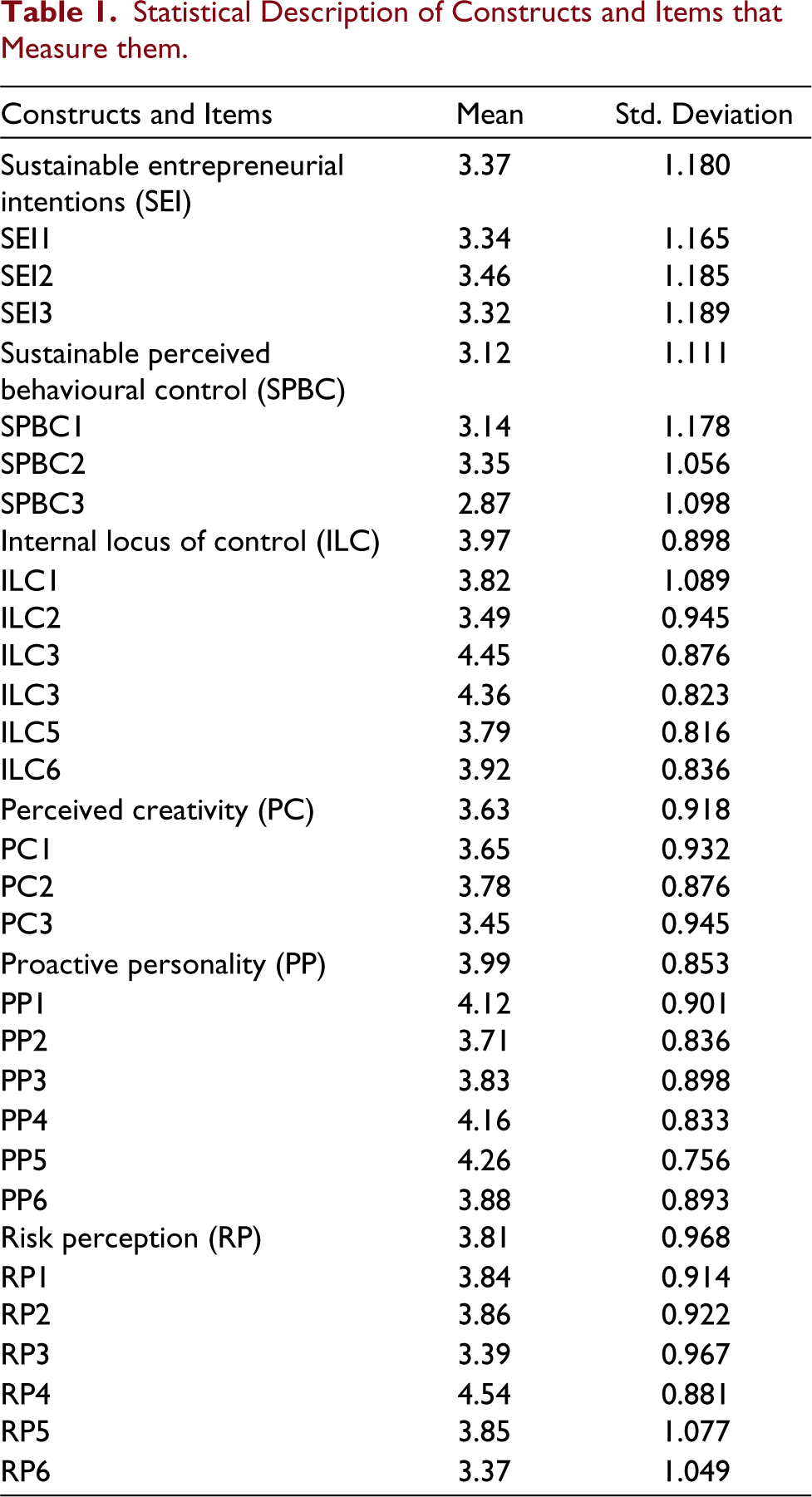
The results show that Generation Z youngsters report having, on average, SEI (M = 3.37). In terms of personality factors, those that generated the highest agreement in average terms were the PP (M = 3.99) and the ILC (M = 3.97). In addition, on average, participants agreed with the perception of risk (RA) (M = 3.81).
Factor Analysis
Table A1 includes the results of the implementation of the EFA and the CFA. The EFA implementation divides items into six factors, referring to each construct that appears in the research model. No items have been deleted. The cumulative variance of the factors is 62.5%, with none of the factors individually explaining more than 50% of the variance. In this way, the results of the common method bias demonstrate that there is no inconsistency or bias in the collected responses. The CFA results show that all items have a high confirmatory factor load (>0.70) and confirm the reflective nature of the model.
Assessment of the Measurement Models
The model obtained after applying the PLS method was evaluated according to the measures proposed by Hair et al. (2020). The results are shown in Table 2. The model is convergent and reliable (Ca > 0.70 and CR > 0.70; AVE > 0.50). Furthermore, according to the results of the Fornell–Larcker criterion and the HTMT criterion, the model has discriminant validity. The results of the Fornell–Larcker criterion demonstrate that the square root of the AVE by each construct is greater than the correlation between the construct and any other construct, existing as such discriminant validity between constructs. The HTMT criterion measures discriminant validity by distinguishing between constructs assessed by the HTMT ratio correlations (Henseler et al., 2015). As the HTMT values are less than 0.90, there is discriminant validity between the two reflexive constructs.
Convergence, Reliability and Discriminant Validity.
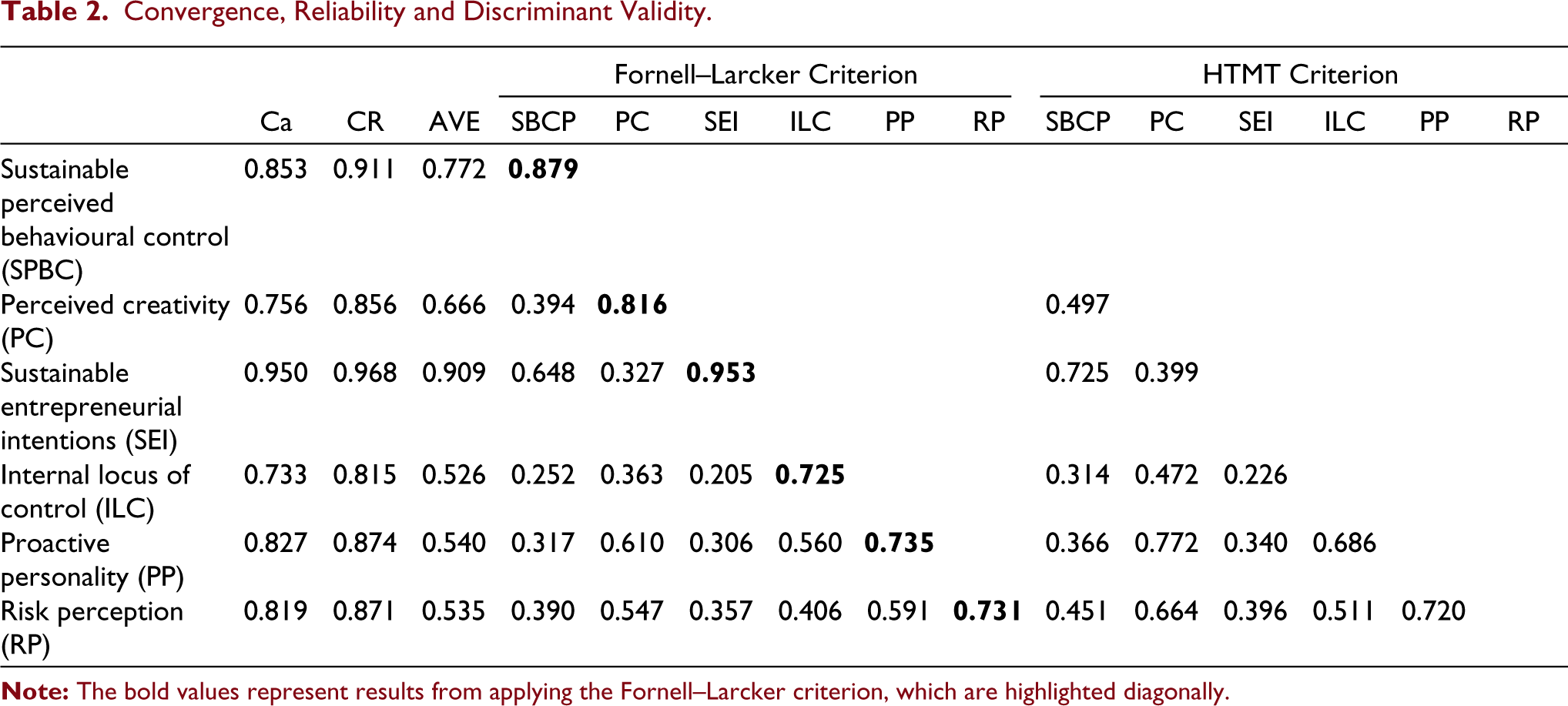
The model presents a good fit: (a) the goodness-of-fit index (GFI) (0.976; reference value > 0.90); (b) normative fit index (NFI) (0.954; reference value > 0.90) and (c) the root mean square approximation error (SRMR) (0.072; reference value < 0.08). In addition, the coefficient of determination (R2) and the predictive relevance of the model were evaluated using the Stone–Geisser coefficient (Q2). The dependent variable RP has a ‘substantial effect’ (R2 = 0.434) and the variable SEI has a ‘moderate effect’ (R2 = 0.127) according to Cohen’s criteria (1988). The results of the Q2 coefficient reveal that the model has predictive capacity since the value of these coefficients presented by the dependent variables is greater than zero (Q2 RP = 0.225; Q2 SEI = 0.111).
Research Model Estimation
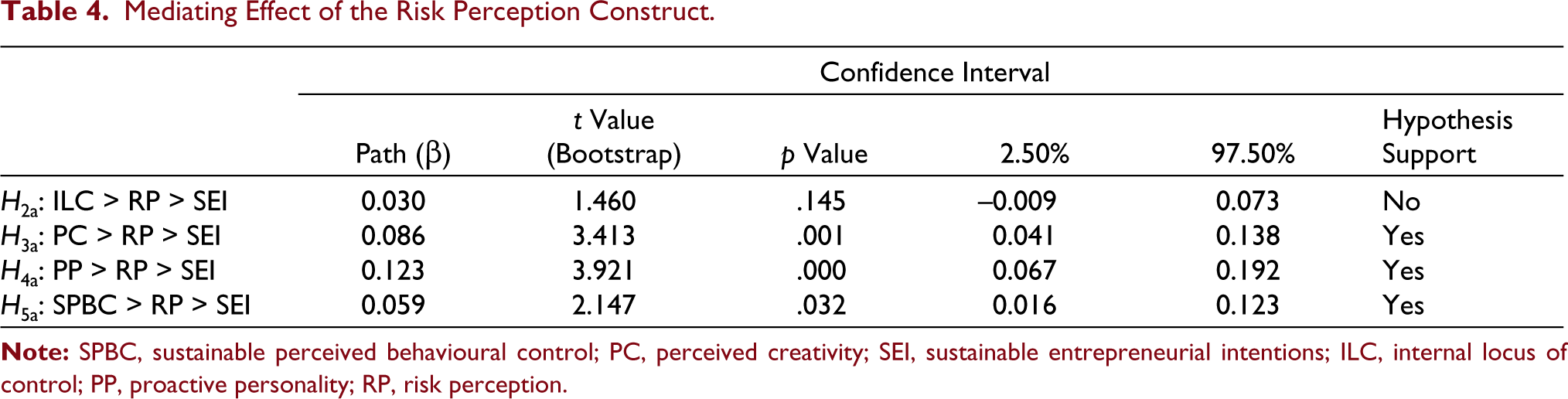
Table 3 shows the results of the bootstrapping analysis carried out in Smart PLS 3.0. This analysis estimated the direct relationships between the constructs and the mediating effects of the RP construct.
Estimation of Direct Effects Between Constructs.
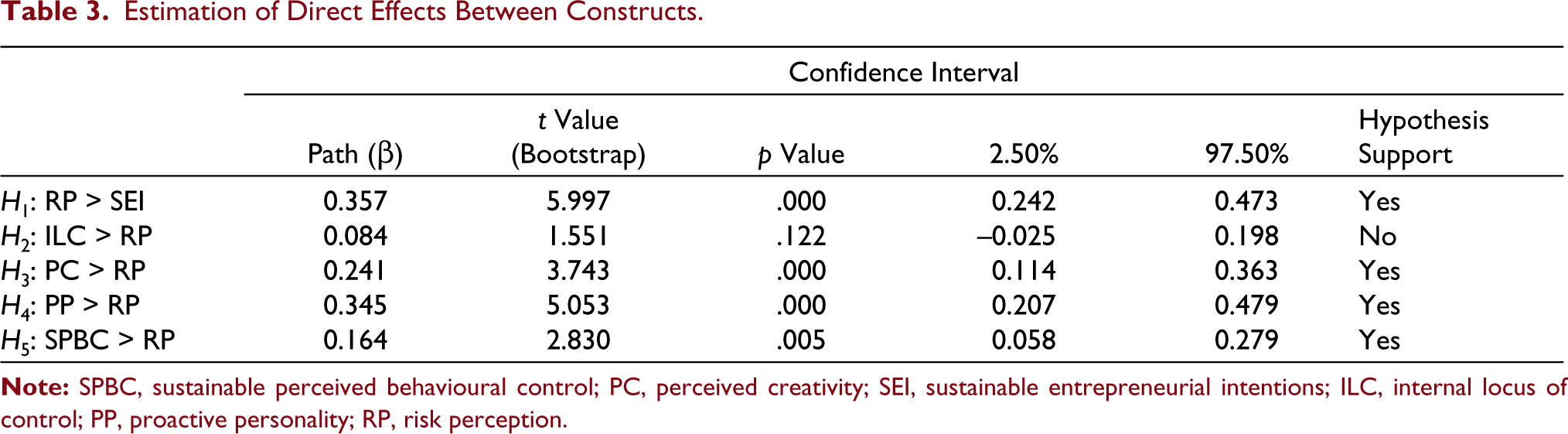
The results reveal that the RP of young people from Generation Z positively influences their SEI (β = 0.357), confirming hypothesis H1. Concerning personality factors, only the internal locus control of young people from Generation Z is not statistically significant to explain their RP, thus rejecting hypothesis H2. However, the influence of personality factors on RP is not equal. PP is the personality factor that most influence the RP of young people from Generation Z (β = 0.345), followed by PC (β = 0.241) and SPBC (β = 0.164), confirming hypotheses H3, H4 and H5.
Table 4 shows the mediating effect of RP on the relationship between personality factors and SEI. The internal locus control of young Generation Z is not statistically significant to influence SEI when mediated by RP, rejecting hypothesis H2a. The remaining personality factors of Generation Z youth positively influence SEI when mediated by RP, confirming hypotheses H3a, H4a and H5a. Thus, the PP of young people from Generation Z is the personality factor that most positively influences SEI (β = 0.123), when mediated by RP, followed by PC (β = 0.086) and SPBC (β = 0.059).
Mediating Effect of the Risk Perception Construct.
Discussion and Implications
Discussion of Results
Our findings on the direct effect of RP on SEI align with and reinforce previous research highlighting the key role RP plays in shaping entrepreneurial aspirations, reverberating highly with the insights from Peng and Walid (2022), Khan et al. (2022) and Lua et al. (2023). This points to an overarching pattern: Across different contexts and samples, RP emerges as a key cognitive driver influencing the pursuit of entrepreneurial activities, including those oriented towards sustainability. Interestingly, our results indicate that for Generation Z, perceiving risks as manageable challenges rather than insurmountable barriers opens the way for heightened SEI. This unique view of risk points to the generation’s unique mindset—one that embraces uncertainty as a catalyst for innovation and positive change.
The evaluation of PC in our research study displays a picture that straddles both direct and indirect impacts on SEI. Looking into the direct effects, we ascertain that PC considerably forms Generation Z’s RP. This finding resonates with Anjum et al. (2021) study involving Pakistani university students. Their exploration highlighted creativity as an essential characteristic within entrepreneurial contexts, emphasizing the need for supporting creativity within entrepreneurial education programmes. Such programmes, through improving RP, can further encourage entrepreneurial risk-taking. PC, when mediated by RP, substantially impacts SEI. This finding converges with the insights derived from Khan et al. (2022) work. Their study unveiled the potential of social media learning as a tool to boost entrepreneurial creativity and aspirations, thereby indirectly influencing entrepreneurial intentions. The striking aspect of this pattern is the consistently substantial role of PC in shaping Generation Z’s entrepreneurial inclinations, demonstrated across both direct and indirect effects. This not only accentuates the value of developing creativity in entrepreneurial education but also highlights its potential in strengthening SEI.
Similarly, our findings demonstrate the direct and indirect effects of PP on RP and SEI. The influence of a PP is evident in our findings, aligning with the work of Kumar and Shukla (2022), who recognize the role of proactivity in shaping entrepreneurial mindset and behaviour. Our study extends this understanding by highlighting the mediating role of RP in the relationship between PP and SEI. This suggests that individuals with a PP are more likely to perceive risks positively, which in turn leads to a greater likelihood of pursuing sustainable entrepreneurial ventures. This complex effect draws parallels with the insights from Lua et al. (2023), where individual creativity, comparable to PP in our research study, left an imprint on numerous outcomes within organizational contexts.
However, our study also reveals an interesting contrast to previous research regarding the role of ILC. The non-significant direct and indirect effects of ILC on RP and SEI diverge from the findings of Zhuang et al. (2022), who found a significant influence of ILC on entrepreneurial intentions in the context of Hong Kong. This discrepancy highlights the need for further research to explore the role of sociocultural factors in shaping the impact of ILC on entrepreneurial intentions across different contexts. One possible explanation for this divergence is the different cultural values and norms that exist in various societies. In collectivistic cultures, such as those found in many Asian countries, the emphasis on group harmony and conformity may attenuate the influence of ILC on individual decision-making (Triandis, 2001). In contrast, individualistic cultures, such as those found in many Western countries, may place greater value on personal agency and self-determination, thereby amplifying the effect of ILC on entrepreneurial intentions. This cultural perspective on the role of ILC in shaping entrepreneurial intentions highlights the importance of considering contextual factors when examining the determinants of sustainable entrepreneurship. It suggests that interventions and support systems aimed at fostering sustainable entrepreneurship among Generation Z should be tailored to the specific sociocultural context in which they are implemented.
In our evaluation of direct effects, we recognize a pattern that extensively lines up with the existing literature. These observations emphasize the demand to take into consideration cultural variants and generational characteristics in further research on entrepreneurial tendencies. A uniform approach may reveal itself inadequate; rather, a more context-sensitive approach is advised for disseminating entrepreneurship. Likewise, our research on indirect effects discloses just how personality traits, apart from the ILC, influence SEI, with RP acting as a mediator. This complexity emphasizes the need for a comprehensive strategy for promoting a sustainable entrepreneurial ecosystem.
Theoretical Implications
The mediating role of RP can be understood through the lens of social cognitive theory (Bandura, 1986), which posits that individuals’ beliefs and perceptions shape their behaviour. In the context of our study, this suggests that individuals with higher levels of PC, PP and SPBC are more likely to view risks positively, which in turn leads to a greater likelihood of pursuing sustainable entrepreneurial ventures. Moreover, our study introduces the concept of SPBC and demonstrates its direct and indirect effects on RP and SEI. This finding expands the existing understanding of the factors influencing entrepreneurial intentions by incorporating a sustainability dimension. It suggests that individuals who believe in their ability to engage in sustainable behaviours are more likely to perceive risks positively and pursue sustainable entrepreneurial ventures. This is in line with the theory of planned behaviour (Ajzen, 1991), which posits that perceived behavioural control is a key determinant of intention and behaviour. The inclusion of SPBC in our study bridges the gap between traditional entrepreneurship research and the growing field of sustainable entrepreneurship. By demonstrating the relevance of sustainability-related self-efficacy in shaping entrepreneurial intentions, our findings highlight the need for educational programmes and support systems that foster a sense of empowerment and agency among Generation Z individuals in relation to sustainable practices.
Practical Implications
Educators, policymakers, businesses and students all have a role to play in fostering the development of sustainable entrepreneurial aspirations among Generation Z, as our research findings have shown. We argue that the journey towards this goal begins within educational institutions, where entrepreneurship education can go beyond traditional academic teachings by adding a focus on nurturing personality traits, RP skills and sustainable practices. In this sense, educators may hold the key to unlocking the entrepreneurial potential of Generation Z by incorporating creativity exercises and proactive problem-solving tasks into their curriculums. These activities encourage PC and a PP, two traits that our study has identified as influencers of SEI. Moreover, sustainability-centred educational modules can empower students with the belief that they can enact behaviours leading to sustainable outcomes, echoing the importance of SPBC that our study highlights. For students, it is important to embrace risk as a part of the entrepreneurial journey. They can develop an understanding of risk by accessing educational programmes and studying real-life entrepreneurial cases that present risks as opportunities for innovation. Our study highlights this perception of risk as a factor in developing SEI.
Policymakers, on the other hand, can ensure that their initiatives account for the unique sociocultural contexts influencing the effects of personality traits on RP and SEI, as our study’s findings on the ILC suggest. By implementing policies that incentivize sustainable practices and education, policymakers can stimulate SEI among Generation Z, paving the way for a more sustainable future. At the same time, businesses, especially those focused on sustainability, have the opportunity to collaborate with universities and provide valuable hands-on experience to students. By showcasing the real-world application of sustainable practices, they can inspire students to start their own sustainable ventures, echoing our study’s findings on the significance of PC and PP.
In sum, developing SEI among Generation Z calls for a collective effort, involving educators, policymakers, businesses and students themselves. Our study’s findings join existing literature in the process of pinpointing practical applications that may help to develop the next generation of sustainable entrepreneurs.
Conclusion
Our inquiry into the interaction of personality traits, RP and SEI within Portugal’s Generation Z has generated a number of significant insights, supplementing the ongoing discourse on this contemporary field of research. The findings reveal that SEI among Generation Z are shaped in significant ways by RP, PC, PP and SPBC. One striking observation from our study is the transformational potential of perceived risk. When viewed as opportunities rather than hurdles, risks can serve as a powerful catalyst for developing entrepreneurial ambitions. Additionally, the role of creativity and PP stand out as influential factors that enhance RP and stimulate entrepreneurial intentions. We also highlight SPBC as a key element that positively influences RP and entrepreneurial intentions, underscoring the importance of self-efficacy in the cultivation of a sustainable entrepreneurial mindset. The insights garnered from our research not only deepen our understanding of Generation Z’s entrepreneurial landscape but also present recommendations for developing sustainable entrepreneurship within this demographic. We consider these implications to hold considerate significance for policymakers, educators and stakeholders, offering valuable guidance in designing strategies and programmes to develop sustainable entrepreneurial aspirations. Building upon our study’s empirical constraints, we also offer a springboard for future research to further explore and expand upon by suggesting new directions of investigation within varying cultural, geographic and demographic contexts.
In society’s quest for a more sustainable future, the importance of developing a new generation of sustainable entrepreneurs cannot be overstated. A deeper understanding of the factors that inspire their entrepreneurial intentions, including how they personally perceive, evaluate and interact with risk, equips society to better prepare them to lead tomorrow’s sustainable businesses and drive innovation, economic growth and sustainability in tandem.
In offering valuable insights into the SEI of Generation Z within the context of Portugal, our study does adhere to certain boundaries. Its scope, concentrated geographically, may limit the universal applicability of our findings. Furthermore, the sample was obtained for convenience and is not representative of the Portuguese Generation Z. The pre-test was carried out with only 15 participants and may have failed to identify common problems. According to Perneger et al. (2015), 30 participants should have been used. This restriction provides an impetus for future research to broaden its horizons, embracing diverse cultural and geographical settings to lend a more global perspective to this study. Our focus was specifically aimed at Generation Z, with other generational cohorts not being considered. Including other generational cohorts in future comparative studies may lead to a more comprehensive understanding of SEI across society’s strata. Furthermore, the cross-sectional design of our study only presents a static picture at a particular point in time, potentially overlooking the dynamism of personality traits, RP and SEI. To capture these evolving dynamics, we note that a longitudinal approach presents itself as a logical next step for future research.
We also note that, although our study has dissected several key personality traits and their influence on RP and SEI, numerous influential factors remain unexplored. This presents an opportunity for future studies to delve into these factors, building a more extensive model of SEI. Intersecting our insights with concurrent lines of research, future studies could venture into a comparative analysis involving conventional, sustainable and circular entrepreneurial intentions. An example of an interesting line of inquiry could be to evaluate the impact of daily circular habits on the inclination to initiate a sustainable business.
Footnotes
Declaration of Conflicting Interests
The authors declared no potential conflicts of interest with respect to the research, authorship and/or publication of this article.
Funding
The authors disclosed the following financial support for the research, authorship and/or publication of this article: NECE-UBI, Research Centre for Business Sciences, Research Centre and this work are funded by FCT—Fundação para a Ciência e a Tecnologia, IP, project UIDB/04630/2020 and DOI identifier 10.54499/UIDB/04630/2020.
Appendix
Questionnaire available at