



Abstract
This research examines how similarities in educational and ethnic backgrounds (status homophily), between word of mouth (WOM) participants, influences the effectiveness of received offline WOM on the recipient’s behavioural intentions. The educational similarity between individuals is conceptualized as acquired homophily, whereas ethnic similarity is defined as ascribed homophily. This study employs scenario-based experiments, and the results suggest that positive and negative WOM received from homophilous sources is more effective in influencing the recipient’s purchase and WOM re-transmission intentions than recommendations received from heterophilous sources. This research expands the literature about offline WOM and the multidimensional status-homophily construct by providing insights on the differential influence of positive and negative recommendations received from WOM sources similar or dissimilar to the WOM recipients in terms of their educational and ethnic backgrounds. This is important from both the theoretical and practitioner perspective as the recent focus of scholarly research is on understanding the relationship between online homophily and e-WOM at the expense of offline WOM-homophily relationship.
Introduction
Word of mouth (WOM) or informal social talk amongst non-commercial communicators is widely acknowledged as an influential phenomenon affecting an individual’s purchase behaviour and thus boosting (in case of positive WOM [PWOM]) or dampening (in case of negative WOM [NWOM]) product sales (Berger, 2014; Bhaiswar et al., 2021; Eisingerich et al., 2014; Harrison-Walker, 2001; Iyer & Griffin, 2021; Luo, 2007, 2009). In addition to its acknowledged influence, WOM is widespread. For instance, an average American consumer engages in 73 brand-related conversations weekly (Engagement Labs, 2021). In this study, the focus is on offline face-to-face WOM because they constitute the bulk of social conversations (Keller & Libai, 2009). In addition, this research follows best practice in WOM research by investigating both dimensions of WOM valence; positive and negative face-to-face WOM (East et al., 2011).
Face-to-face WOM conversations do not occur in social isolation but typically include a WOM dyad comprising a sender and a receiver who may share social relations amongst themselves such as tie-strength or degree of homophily between individuals which can potentially influence the effectiveness of WOM given or received (Bansal & Voyer, 2000; Brown & Reingen, 1987; Mazzarol et al., 2007; Sweeney et al., 2008; Trivedi & Teichert, 2021). This research is located within a strand of WOM literature, which seeks to identify the factors that may influence the effectiveness of offline WOM given or received within a WOM dyad. These factors have been collectively labelled as characteristics of WOM (East et al., 2007) and can be classified into the following four broad categories: (a) interpersonal factors (e.g., tie-strength, homophily and WOM actively sought or WOM volunteered); (b) personal factors (e.g., WOM participants expertise and experience); (c) message characteristics (e.g., WOM content and strength of WOM delivery) and (d) situational factors (e.g., perceived risk and audience size) (Sweeney et al., 2008). This study investigates if status homophily or similarity between individuals on sociodemographic attributes (Brown & Reingen, 1987) in a WOM dyad can influence the effectiveness of offline WOM on the recipient’s purchase intentions and their intentions to re-transmit WOM received within their social networks.
This research is important from a theoretical perspective. For instance, the bulk of offline WOM research has focused its research attention on understanding the influence of tie-strength between the WOM participants on the effectiveness of articulated WOM on either the sender (Chawdhary & Dall’Olmo Riley, 2015) or the receiver (Bansal & Voyer, 2000; Brown & Reingen, 1987; Hoye & Lievens, 2007; Mladenović et al., 2021; Nitzan & Libai, 2011) at the expense of understanding the influence of homophily. Furthermore, much of the recent research on WOM-homophily relationship is within the online context (Ladhari et al., 2020; Lin & Xu, 2017) neglecting to understand this vital relationship in the offline context. It is important to note that online homophily is conceptually distinct from homophily in the offline context (Brown et al., 2007) and thus it may be erroneous to generalize the results secured in the online environment to the offline context. This study addresses this current imbalance in the extant WOM literature by investigating the influence of the under-researched multidimensional status homophily construct on the effectiveness of received offline WOM. Primarily our contribution to the WOM literature is twofold: First, the current research investigates a richer conceptualisation of the status homophily construct highlighting the different aspects of the construct wherein status homophily is a multidimensional variable with twin dimensions; acquired and ascribed homophily. Investigating the multidimensional perspective overcomes the limitation of the existing marketing literature which has primarily understood the influence of status homophily as a unidimensional construct. This study defines ascribed homophily as ethnic similarity between a pair of individuals whilst acquired homophily is similarity between individuals in terms of their education (McPherson et al., 2001). Ethnicity and education are two of the biggest strata of any society and thus appropriate attributes to conceptualize the twin dimensions of status homophily (McPherson et al., 2001).
Second, this study addresses the limitations of prior WOM studies, which examined offline WOM-homophily relationship but neglected to understand the differential influence of WOM valence. The current research investigates the influence of homophily on the effectiveness of both PWOM and NWOM. Importantly, understanding the influence of the multidimensional status homophily construct on the effectiveness of received face-to-face PWOM and NWOM might potentially explain the equivocal results about offline WOM-status homophily relationship in the existing marketing literature (Brown & Reingen, 1987; Nitzan & Libai, 2011).
The remainder of this article is structured as follows: first, the extant literature examining the relationship between WOM and homophily in both the offline and online environment is critically evaluated and discussed, second, the research methodology adopted in this study is described, third the results are reported followed by a discussion of findings and theoretical contributions and last, this research elaborates on the managerial implications, limitations and directions for future research.
Background and Hypotheses Development
Homophily and Online Homophily
Rooted in the sociology literature, the underpinning logic of homophily or love of the same is to surround oneself with people who are alike or similar on some attributes (Hanks et al., 2017; Lazarsfeld & Merton, 1954), or those who are reflective of one’s self-image and have similar life experiences and events (Hanks et al., 2017; McPherson et al., 2001; Nambisan, 2011). The perceived similarity between individuals or homophily as opposed to dissimilar individuals or heterophily (van Esch et al., 2018) does result in greater levels of social affiliation (Ruef et al., 2003). Accordingly, scholars have found that students who received lower SAT and GPA scores were more likely to choose fellow underperforming students as study partners or friends compared to students with higher SAT and GPA scores (Carrell et al., 2013).
One of the earliest conceptualizations of homophily was proposed by McCroskey et al. (1975), who viewed homophily as a four-dimensional construct comprising of attitude, background, morality and appearance similarity between a pair of individuals (Ladhari et al., 2020). In the marketing literature, homophily in the offline context is typically defined as follows: (a) similarity between individuals on sociodemographic attributes also referred as status homophily (Brown & Reingen, 1987; Lo & Lin, 2017; Rogers & Bhowmik, 1970) and (b) similarity between individuals on values also known as perceptual homophily (Gilly et al., 1998; Lo & Lin, 2017; Wangenheim & Bayon, 2004). Few scholars have treated homophily as a conceptually similar construct to tie-strength (Gatignon & Robertson, 1985; Sweeney et al., 2014). However, this study conceptualizes homophily as a distinct construct from tie-strength (Brown & Reingen, 1987) wherein tie-strength is a ‘relational property that manifests itself in different types of social relations varying in strength’ (Brown & Reingen, 1987, p. 354) and homophily refers to the ‘degree to which pairs of individuals are similar in terms of certain attributes such as age, sex, education and social status’ (Brown & Reingen, 1987, p. 354). Alternatively stated, an individual’s relation with their father will constitute a strong tie, but the same individual can have a very low degree of homophily with their father on education.
Advent of internet resulted in conceptualization of online homophily, which is distinct from the homophily construct in the offline environment (Brown et al., 2007). The assessment of homophily in the offline environment is based on cues such as gender, age, social and professional status and ethnicity, but in an online environment, these cues may be filtered out by the WOM participants and the demographic information might be either missing, camouflaged or even intentionally falsified (Brown et al., 2007). For example, in a cross-cultural study, Leonhardt et al. (2020) found that consumers in collectivist cultures discount differences (e.g., differences in lifestyle or personality) between themselves and other social media users, which fosters a sense of similarity with others (i.e., perceived homophily). In fact, in an online environment, homophily is mostly about similarity between (a) pair of individuals in terms of their shared group interests and group mindset and (b) between an individual and the website typically not associated with offline homophily (Brown et al., 2007). Although in an online environment individuals do not have face-to-face interactions, they can still make inferences about similarity with review providers. For example, by appraising the review content and checking profile information (Filieri et al., 2018; Ismagilova et al., 2020).
Irrespective of context, multiple theories have supported the influence of homophily in the extant marketing literature notably; social identity theory (Muda & Hamzah, 2021); social comparison theory (Zhang et al., 2021); dual process theory (Filieri et al., 2018) and source attractiveness theory (Kelman, 1961). The principal premise of these theories is that recipients of information can better identify with sources or senders of information who are similar to themselves thus augmenting the influence of information transmitted to the receiver. For instance, recipients of the information are more likely to be persuaded by a message or information originating from in-group or ‘like-me’ members that are similar on demographics or values rather than information emanating from out-group or ‘unlike-me’ members who may be heterophilous or dissimilar (Brock, 1965; McGarty et al., 1994).
In addition to information from similar sources being more persuasive, Nambisan (2011) argues that individuals are more likely to process information received from similar sources more effectively than information received from dissimilar sources.
Given that WOM is an exchange of social information between individuals (Berger, 2014), scholars have identified, homophily between individuals as one of the interpersonal factors that can influence the effectiveness of conversations or social information exchanged between individuals (Sweeney et al., 2008). Accordingly, marketing scholars have investigated the influence of homophily in both the online and offline environment on the effectiveness of e-WOM and traditional face-to-face WOM and on the subsequent firm-related outcomes such as purchase behaviour and brand attitudes (Lin & Xu, 2017; Nitzan & Libai, 2011; Steffes & Burgee, 2009).
Online Homophily and e-WOM
There is evidence that e-WOM received from sources with similar demographics such as age are more likely to influence the purchase decisions of the recipient than e-WOM received from sources with dissimilar demographics (Steffes & Burgee, 2009). Furthermore, findings show that online homophily significantly influences perceived e-WOM usefulness and credibility, intention to purchase and e-WOM adoption (Fu et al., 2018; Ismagilova et al., 2020; Zhang et al., 2021). The extant literature also acknowledges contrarian results related to the influence of online homophily wherein e-WOM received from ethnically similar senders was not found to be more effective in positively influencing the recipients brand attitudes and purchase intentions as compared to e-WOM received from ethically distinct e-WOM sources (Lin & Xu, 2017). Recent e-WOM studies found that, recommendations received from friends similar on values stimulates recipient’s intention to spread brand-related information and engage in future e-WOM. However, it is unclear if this effect on the recipient’s behavioural intentions is due to friendship (i.e., strong ties) or value homophily (Lo & Lin, 2017). Additionally, Lo and Lin (2017) report that homophily driven customer-to-customer websites which represent values similar to the individual act as proxies for a friend and thus the content available on these websites positively influence the recipients’ behavioural intentions. Subsequently, Kim et al. (2018) found that higher levels of homophily between the consumer and the website led to a more positive attitude towards the website and e-WOM information available on the website.
Offline Homophily and Offline WOM
There is extensive research in the marketing literature that investigates the role of perceptual homophily in influencing the effectiveness of offline WOM. Gilly et al. (1998) found that perceptual homophily between the WOM participants positively influences the recipient’s decision. Subsequently, in two separate studies, Wangenheim and Bayon (2004, 2007) found that perceptual homophily between the WOM participants would strengthen the influence of PWOM on the recipient’s behaviour. However, Wangenheim and Bayon (2004, 2007) did not examine their research model under the NWOM condition. This limitation was addressed by Sweeney et al. (2014) who found that perceptual homophily had a significant impact on perceived influence of both PWOM and NWOM messages on the receiver and this effect was stronger for NWOM. In addition, de Bruyn and Lilien (2008) also found that recommendations from WOM sources who are similar to the receiver on values are more effective in influencing the receiver’s decision-making process then recommendations from dissimilar WOM sources. Consistent with prior literature, Asada and Ko (2016) found that perceptual homophily moderated the impact of source expertise on WOM influence. Review of the extant marketing literature on offline WOM-perceptual homophily relationship reveals an unequivocal agreement amongst scholars that WOM received from individuals similar on values is more effective than WOM received from individuals who are dissimilar on values on the recipient’s behaviour (Asada & Ko, 2016; de Bruyn & Lilien, 2008; Gilly et al., 1998; Sweeney et al., 2014; Wangenheim & Bayon, 2004, 2007).
However, scholars have found mixed results pertaining to the influence of status homophily on the effectiveness of offline WOM. These conflicting results in the existing offline WOM-status homophily literature can potentially be due to (a) failure to acknowledge the multidimensional nature of the status homophily construct and (b) overlook the influence of WOM valence. Therefore, the focus of this research is to understand the influence of the multidimensional status homophily construct on the effectiveness of both offline PWOM and NWOM on the WOM recipients purchase intentions and WOM re-transmission intentions. Review of offline WOM-status homophily relationship is discussed next.
Feldman and Spencer (1965) conducted one of the earliest studies, investigating the influence of status homophily between the WOM participants on the effectiveness of recommendations received. They found that couples with children (as opposed to no children) were more likely to be influenced by recommendations given by couples with similar demographics potentially influencing their behavioural intentions than recommendations given by WOM sources with dissimilar demographics. However, de Bruyn and Lilien (2008) in their research found that status homophily between individuals is less effective in influencing recipients’ decision-making process then demographic dissimilarity. de Bruyn and Lilien (2008) contended that when the information required is objective and factual and the product category is for non-personal use (e.g., cat food), then individuals may favour the recommendations of people who are ‘unlike-me’ compared to ‘like-me’ to tap into a broader range of information and experience available within the social networks thus highlighting the importance of source expertise over source homophily in augmenting the persuasiveness of WOM.
Furthermore, findings related to the influence of status homophily on the recipients purchase decisions are equivocal. Brown and Reingen (1987) and Gilly et al. (1998) found no influence of status homophily on the effectiveness of received WOM and subsequently on the recipient’s purchase decision, whilst Nitzan and Libai (2011) found that greater the similarity between individuals on status homophily, the more likely it will influence the purchase decisions and intention formation of the WOM recipient. These contrarian results in the existing marketing literature can be due to the unidimensional conceptualization of the status homophily construct. The current study conceptualizes status homophily as a multidimensional construct acknowledging both its acquired and ascribed dimensions. Understanding the differential influence of acquired and ascribed dimensions of status homophily is important because there is evidence in the sociological literature that acquired and ascribed homophily have a differential effect on the recipient (Alstott et al., 2014) but the marketing literature is largely silent on the differential influence of acquired and ascribed homophily.
Moreover, both Brown and Reingen (1987) & Nitzan and Libai (2011) did not examine the role of WOM valence when investigating the influence of status homophily on the effectiveness of WOM received. More recently Mladenović et al. (2021) found a negative relationship between status homophily and engagement in WOM but did not investigate the differential influence of PWOM and NWOM. Therefore, it is unclear if a similar pattern of results will emerge under PWOM and NWOM conditions.
This study addresses this oversight in the marketing literature by investigating the influence of the multidimensional status homophily construct on the effectiveness of both PWOM and NWOM.
The next discussion focuses on hypotheses development.
Hypotheses Development
Underpinned by source-attractiveness theory (Kelman, 1961) and reviewed literature which suggests that perceived similarity between individuals augment the persuasiveness of the information received compared to information received from dissimilar sources (Brock, 1965; Nitzan & Libai, 2011), this research posits that WOM received by the recipient from homophilous sources on both ascribed and acquired traits will be more effective in influencing the receiver’s purchase intentions and WOM re-transmission intentions than recommendations received from heterophilous sources.
Purchase Intentions
Purchase intentions is one of the most widely investigated firm-related outcome in the literature that investigates offline WOM-homophily relationship (Brown & Reingen, 1987; de Bruyn & Lilien, 2008; Gilly et al., 1998; Nitzan & Libai, 2011; Sweeney et al., 2014; Wangenheim & Bayon, 2004, 2007). However, much of the research either overlooked the importance of acknowledging the differential influence of PWOM and NWOM and/or neglected to understand the multidimensional nature of status-homophily. This study investigates the influence of both acquired and ascribed homophily on the effectiveness of both PWOM and NWOM on the recipients’ purchase intentions. Thus, this study postulates the following:
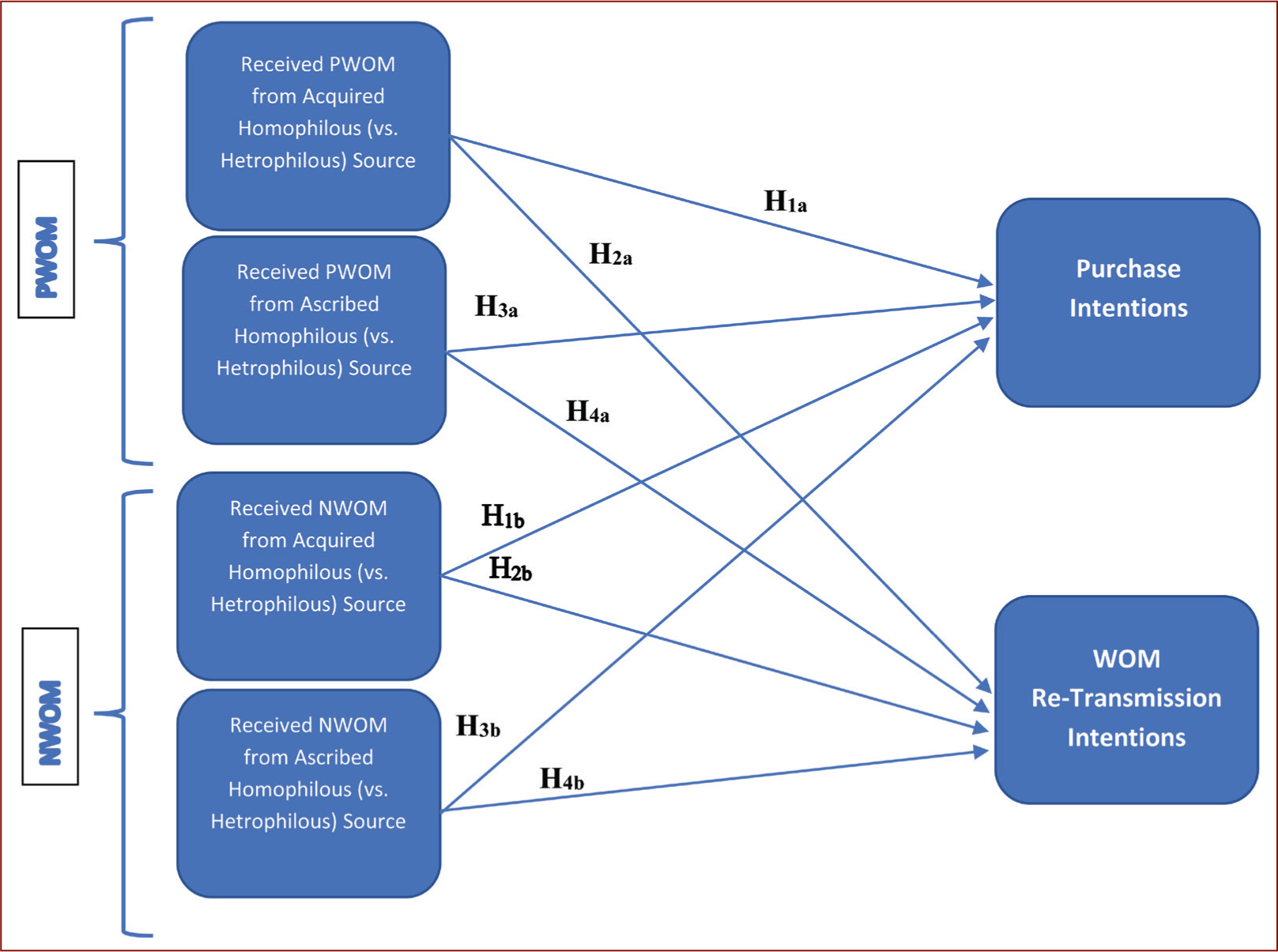
H1(a): Effect of received PWOM from sources who are homophilous (vs. heterophilous) on acquired attributes will have a greater (vs. smaller) effect on recipients purchase intentions. H1(b): Effect of received NWOM from sources who are homophilous (vs. heterophilous) on acquired attributes will have a greater (vs. smaller) effect on recipients purchase intentions. H3(a): Effect of received PWOM from sources who are homophilous (vs. heterophilous) on ascribed attributes will have a greater (vs. smaller) effect on recipients purchase intentions. H3(b): Effect of received NWOM from sources who are homophilous (vs. heterophilous) on ascribed attributes will have a greater (vs. smaller) effect on recipients purchase intentions.
WOM Re-Transmission Intentions
Scholars have investigated offline WOM re-transmission intentions of both the sender (Chawdhary & Dall’Olmo Riley, 2015) and of the recipient (Radighieri & Mulder, 2014). However, the aforementioned studies investigated the influence of tie-strength between the WOM participants and source expertise on the effectiveness of offline WOM overlooking the influence of homophily. Much of the recent research has focused on re-transmission of e-WOM (Liu et al., 2021; Lo & Lin, 2017) at the expense of understanding re-transmission of offline WOM. Understanding the influence of homophily on re-transmission of offline WOM is important from the firm’s perspective as the findings will provide insights to the firm as to what enables diffusion of offline WOM within social networks which will have implications for brand awareness and potential sales. This study investigates the influence of both acquired and ascribed homophily on the effectiveness of both PWOM and NWOM on the recipients’ WOM-retransmission intentions.
Therefore, this study hypothesizes the following:
H2(a): Effect of received PWOM from sources who are homophilous (vs. heterophilous) on acquired attributes will have a greater (vs. smaller) effect on recipients WOM re-transmission intentions. H2(b): Effect of received NWOM from sources who are homophilous (vs. heterophilous) on acquired attributes will have a greater (vs. smaller) effect on recipients WOM re-transmission intentions. H4(a): Effect of received PWOM from sources who are homophilous (vs. heterophilous) on ascribed attributes will have a greater (vs. smaller) effect on recipients WOM re-transmission intentions. H4(b): Effect of received NWOM from sources who are homophilous (vs. heterophilous) on ascribed attributes will have a greater (vs. smaller) effect on recipients WOM re-transmission intentions.
Methodology
Based on literature review and hypotheses development the research framework is presented in Figure 1.
This research adopted the scenario-based experimental research design, as this research design is widely employed when investigating face-to-face WOM due to difficulty in observing offline WOM as it occurs (Chawdhary & Dall’Olmo Riley, 2015; East et al., 2001; Garnefeld et al., 2011; Sukhu & Bilgihan, 2021). In contrast to retrospective surveys, experimental research designs reduce biases stemming from memory lapses and have stronger internal validity (Wien & Olsen, 2014).
Mobile phone services (MPS) are the research context in this study as it is a highly familiar and widely used services category within the United Kingdom; the principal geographic context of this research, with nearly 96 per cent adults owning a mobile device (MobileUK, 2020). The familiarity of the research context amongst participants enhances the realism of the scenarios employed in this research, which can also alleviate concerns about low external and ecological validity associated with scenario-based experiments (Chawdhary & Dall’Olmo Riley, 2015; Gelbrich, 2011). Furthermore, MPS is a widely used research context in WOM research (Chawdhary & Dall’Olmo Riley, 2015; Garnefeld et al., 2011, 2013).
Scenario Development
A total of nine scenarios were developed for the current research, which included one introductory scenario and eight main scenarios (Appendix). Main scenarios were developed to describe a PWOM or an NWOM episode emanating from either a WOM source similar to the WOM recipient on acquired/ ascribed attributes or a heterophilous WOM source. Scenarios illustrate a situation whereby a WOM sender who is defined as an existing customer of an MPS provider gives either a positive or a negative recommendation to a WOM recipient who is a prospective customer. Employed main scenarios are almost identical in length in terms of word count, with the difference in the word count between scenarios less than 10 per cent. Identical word count in experimental scenarios is important as past research shows that longer arguments presented in scenarios are perceived as more persuasive by the respondents than shorter ones (Hamilton et al., 2014). In addition, scenarios are gender neutral (Bendapudi & Leone, 2003). To avoid bias stemming from respondent’s own past experiences with the real brands, this research used fictitious MPS brands called ‘MobiCOM and Tele Smart’ (Harris et al., 2006; Saenger & Thomas, 2021).
Constant Variables
Guided by extant WOM literature, this study identified key variables that can potentially confound the experimental results and therefore held these variables constant at a single level in the scenarios (Aronson et al., 1990). Two key interpersonal factors: (a) tie-strength and (b) direction of WOM initiative (e.g., WOM sought/WOM Volunteered) and one situational factor; (c) audience size (narrowcasting/broadcasting) are held constant as they can influence the dependent variables (Bansal & Voyer, 2000; Barasch & Berger, 2014; Sweeney et al., 2014). Tie-strength between the WOM participants in the scenarios reflects only weak ties, whereas the direction of the WOM initiation is WOM volunteered by the sender. In addition, audience size in the scenarios is narrowcasting wherein a WOM sender communicates with only one person as opposed to multiple people, that is, broadcasting (Barasch & Berger, 2014). Furthermore, the nature of WOM given in all the scenarios is explicit and not implied (Mazzarol et al., 2007).
Results
Pretests
Pretests were conducted to test the realism and effectiveness of the scenarios employed in the present study. Student participants primarily based in the United Kingdom were recruited for pretests. Prior WOM studies have recruited student sample for pretests (Saenger & Thomas, 2021). PWOM and NWOM are discrete variables and therefore were not subjected to any manipulation checks (Garnefeld et al., 2013). Scenarios about homophily (acquired and ascribed) and heterophily were assessed as distinct by the respondents (n = 13). Following Liao (2007), scenarios were assessed via a seven-point semantic differential scale for experimental and mundane realism. Overall, the participants (n = 10) found the scenarios to be realistic.
Main Study
Two studies were conducted to test the research framework. Study 1 examines the relative effectiveness of received PWOM from similar and dissimilar WOM sources on the recipient’s purchase intentions and intentions to re-transmit received PWOM to others. Study 2 investigates the hypotheses under the NWOM condition. To avoid contamination of the main results, respondents of the pretests were excluded from participating in the main study (Feldman & Lynch, 1988).
Measures and Validity of Scales
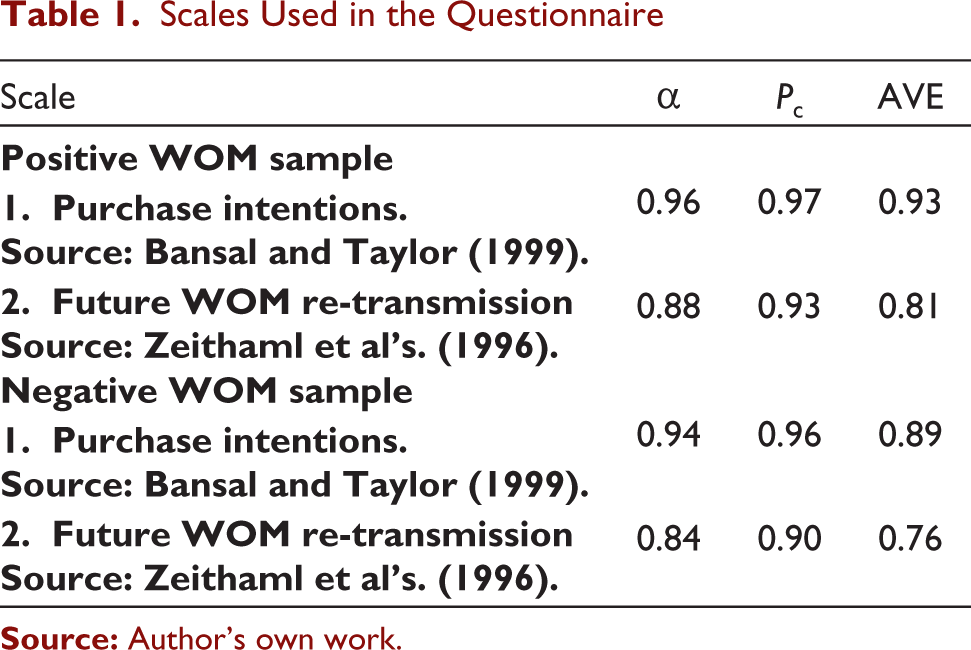
Current research employed adapted version of Bansal and Taylor’s (1999) seven-point, three-item semantic differential scale to measure purchase intentions. In addition, Zeithaml et al. (1996), seven-point, three-item likelihood scale is adapted to measure the willingness of the recipient to re-transmit received WOM to others.
Cronbach’s alpha for both the scales satisfied the benchmark of 0.70 under both PWOM and NWOM conditions (Nunnally & Bernstein, 1994).
Furthermore, composite reliability and AVE scores of both the scales satisfied the benchmark of 0.70 and 0.50, respectively (Fornell & Larcker, 1981; Nunnally & Bernstein, 1994). Discriminant validity is assessed via Fornell and Larcker (1981) criteria and is satisfactory. Overall, the scales are valid and reliable (Table 1).
Scales Used in the Questionnaire
Study 1
Design and Sample Profile
The total sample size for the PWOM study is n = 137. The sample size for the acquired dimension is n = 71, wherein the sub-sample for acquired homophily is n = 38 and acquired heterophily is n = 33. Furthermore, the sample size for the ascribed dimension is n = 66, wherein the sub-sample for ascribed homophily is n = 30 and ascribed heterophily is n = 36. A convenience sample was recruited following the procedure adopted by Cheng and Cho (2021) via social media platforms such as Facebook, Instagram, Snapchat, LinkedIn tapping into researcher(s) personal networks and contacting the respondents directly via e-mails and text messages. In total, 63 per cent of the respondents are females in the PWOM sample.
Age of respondents range from 18 to 65 and above. In total, 45 per cent of the respondents are in the age group of 18–24. Respondents were randomly allocated to one of the treatment scenarios and after reading the introduction and the main scenario were requested to answer questions about the dependent variables. Data are analysed using an independent sample t-test. An independent t-test is appropriate as data was collected from independent samples via different conditions of the scenario-based experiments to compare means (Field, 2018). All the formulated hypotheses are directional and therefore results reported are based on a one-tail t-test (Singh, 2000).
Results of the Hypotheses Testing
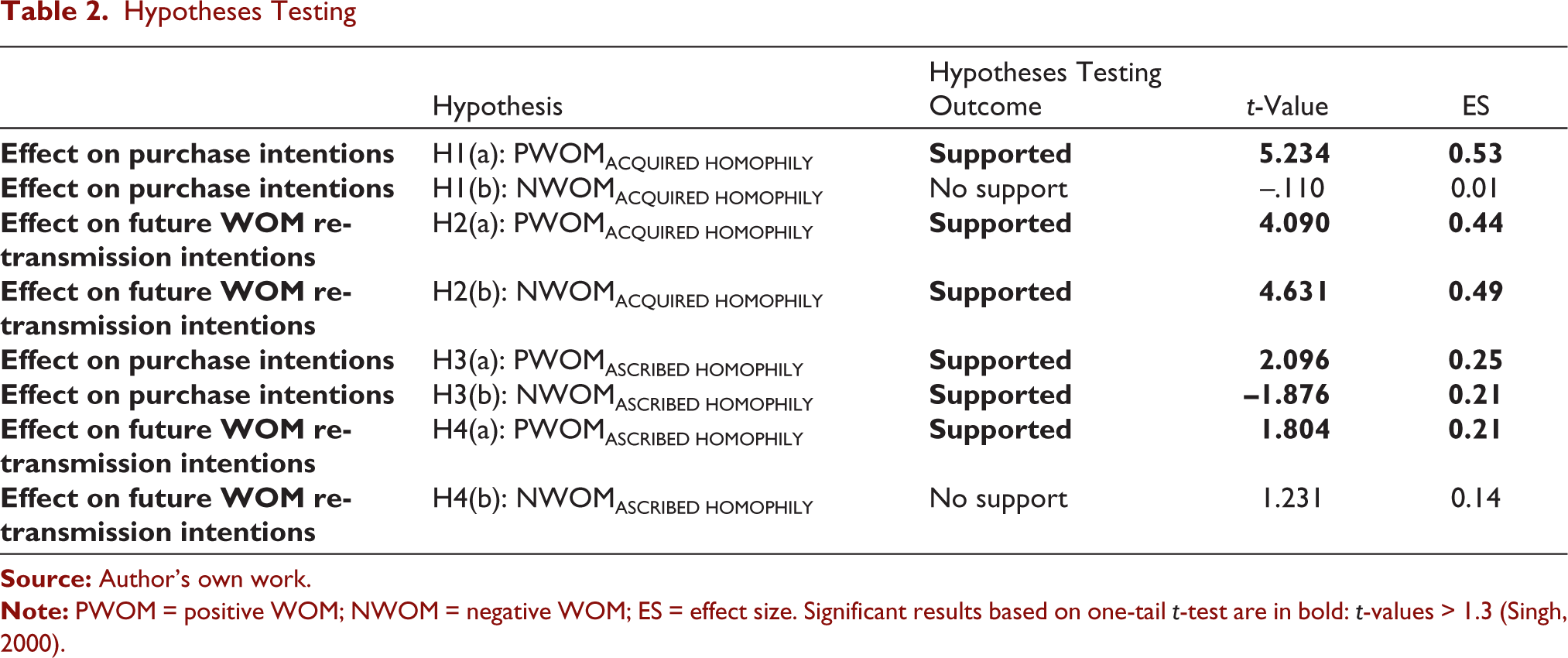
Purchase IntentionsAcquired Homophily. Results suggest that PWOM received from homophilous sources on acquired attributes will hold a greater effect on purchase intentions of the recipient then PWOM received from heterophilous sources with MAcquired Homophily = 5.35 and MAcquired Heterophily = 3.82. This difference between the two groups is also significant with t(69) = 5.234, p < .05. Thus, H1a is supported. This represents a large effect size, r = 0.53.
Purchase IntentionsAscribed Homophily. Findings indicate that PWOM received from homophilous sources on ascribed attributes will hold a greater effect on purchase intentions of the recipient then PWOM received from heterophilous sources with MAscribed Homophily = 6.00 and MAscribed Heterophily = 5.45. This difference between the two groups is also significant with t(64) = 2.096, p < .05. Thus, H3a is supported. This represents a small effect size, r = 0.25.
Retransmission of WOMAcquired Homophily. PWOM received from homophilous sources on acquired attributes is more likely to increase the WOM re-transmission intentions of the recipient compared to when PWOM is received via heterophilous sources with MAcquired Homophily = 5.09 and MAcquired Heterophily = 3.98. This difference between the two groups is also significant with t(69)= 4.090, p < .05. Thus, H2a is supported. This represents a medium effect size, r = 0.44.
Retransmission of WOMAscribed Homophily. Results suggest that PWOM received from homophilous sources on ascribed attributes is more likely to increase the WOM re-transmission intentions of the recipient compared to when PWOM is received via heterophilous source with MAscribed Homophily = 5.46 and MAscribed Heterophily = 4.96. This difference between the two groups is also significant with t(64) = 1.804, p < .05. Thus, H4a is supported. This represents a small effect size, r = 0.21.
Study 2
Design and Sample Profile
In study 2, the research framework was tested under the NWOM condition. The total sample size for the NWOM study is n = 142. The sample size for the acquired dimension is n = 67, wherein the sub-sample for acquired homophily is n = 33 and acquired heterophily is n = 34.
Furthermore, the sample size for the ascribed dimension is n = 75, wherein the sub-sample for ascribed homophily is n = 38 and ascribed heterophily is n = 37. Similar to study 1, a convenience sample is recruited. In total, 50 per cent of the respondents in the NWOM sample are females.
Age of respondents in the NWOM sample range from 18 to 65 and above. In total, 37 per cent of the respondents are in the age group of 25–34. All the participants were randomly assigned to one of the four scenarios, after which they read the introductory and the main scenarios and completed a small questionnaire. Data are analysed using an independent sample t-test. All the formulated hypotheses are directional and therefore results reported are based on a one-tail t-test (Singh, 2000).
Results of the Hypotheses Testing
Purchase IntentionsAcquired Homophily. Results suggest that NWOM received from homophilous sources on acquired attributes will not hold a greater dampening effect on purchase intentions of the recipient compared to NWOM received from heterophilous sources with MAcquired Homophily = 2.28 and MAcquired Heterophily = 2.31. This difference between the two groups is non-significant with t(65) = –.110, p > .05. Thus, H1b is not supported, even though the results are in the intended direction. This represents a small effect size, r = 0.01.
Purchase IntentionsAscribed Homophily. Findings reveal that NWOM received from homophilous sources on ascribed attributes will hold a greater dampening effect on purchase intentions of the recipient compared to NWOM received from heterophilous sources with MAscribed Homophily = 2.04 and MAscribed Heterophily = 2.58. This difference between the two groups is also significant with t(73) = –1.876, p < .05. Thus, H3b is supported. This represents a small effect size, r = 0.21.
Retransmission of WOMAcquired Homophily. NWOM received from homophilous sources on acquired attributes is more likely to increase the WOM re-transmission intentions of the recipient compared to when NWOM is received via heterophilous source with MAcquired Homophily = 4.87 and MAcquired Heterophily = 3.57. This difference between the two groups is also significant with t(65) = 4.631, p < .05. Thus, H2b is supported. This represents a medium effect size, r = 0.49.
Retransmission of WOMAscribed Homophily. Results suggest that NWOM received from homophilous sources on ascribed attributes is unlikely to increase the WOM re-transmission intentions of the recipient compared to when NWOM is received from heterophilous sources with MAscribed Homophily = 4.72 and MAscribed Heterophily = 4.44. This difference between the two groups is non-significant with t(73) = 1.231, p > .05. Thus, H4b is not supported even though the results are in the intended direction. This represents a small effect size, r = 0.14.
The results of hypotheses testing are presented in Table 2.
Hypotheses Testing
Discussion and Theoretical Contributions
The findings of this study primarily contribute to a subset of WOM literature, which identifies the factors that may potentially influence the effectiveness of WOM given or received (East et al., 2007; Sweeney et al., 2008). The current research presents novel evidence about the differential influence of the multidimensional status homophily construct on the effectiveness of received PWOM and NWOM.
These findings are important from the theoretical perspective as prior research on offline WOM-status homophily relationship has overlooked the importance of understanding WOM valence and neglected the multidimensional nature of the status homophily variable. These oversights may potentially explain the equivocal results about offline WOM-status homophily relationship in the existing marketing literature. Furthermore, this research focuses on the offline context addressing the imbalance in the current literature investigating WOM-homophily relationship, which is primarily located within the online environment. Findings of the current research suggests a differential influence of status homophily under PWOM and NWOM conditions. For instance, PWOM received from sources similar on both acquired and ascribed attributes are assessed as more effective in influencing the receiver’s purchase intentions and PWOM re-transmission intentions than PWOM received from dissimilar sources. However, results under the NWOM conditions are mixed, whereby NWOM received from ethnically similar sources are more effective in influencing the recipient’s purchase intentions but not their intentions to re-transmit NWOM to others. On the other hand, NWOM received from WOM sources having a similar educational background as the receiver was found to be more effective in influencing the receiver to engage in re-transmission of NWOM to others but not their purchase intentions. Results of this study are discussed below.
Effect on Recipient Purchase Intentions
As hypothesized, findings of this study indicate that PWOM received from similar WOM sources on either acquired or ascribed attributes will be more effective in influencing the WOM recipient’s purchase intentions than PWOM received from demographically dissimilar WOM sources. Alternatively stated, WOM recipients are more likely to purchase a product or service if they receive a positive recommendation from homophilous sources. Results pertaining to ascribed homophily (ethnic similarity) are particularly significant as past research in the online homophily and e-WOM context found no differential influence of ethnic homophily (vs. ethnic heterophily) on the recipients purchase intentions (Lin & Xu, 2017). This result also highlights the need to conduct more research in the offline environment and to avoid generalizing results of online homophily to homophily in the offline context as they are conceptually distinct constructs (Brown et al., 2007).
Results under the NWOM condition are mixed. NWOM received from ethnically similar WOM sources are more effective in dampening the purchase intentions of the WOM receiver then NWOM received from dissimilar WOM sources. However, NWOM received from WOM sources with similar educational backgrounds as the receiver does not hold a greater impact on the recipient’s purchase intentions than NWOM received from dissimilar WOM sources. This differential pattern of results under PWOM and NWOM conditions highlights the importance of understanding WOM valence when examining the influence of interpersonal moderators such as homophily which past research (Brown & Reingen, 1987; Nitzan & Libai, 2011) has overlooked. Thus, these results expand the literature by presenting evidence related to the differential influence of the multidimensional status homophily construct on the effectiveness of WOM valence (PWOM and NWOM) on recipients purchase intentions potentially explaining the equivocal results in the existing literature.
Effect on Recipient WOM Re-Transmission Intentions
WOM re-transmission intentions has received scant research attention in the WOM literature, despite the fact it is important to understand the enablers of diffusion of WOM within a social network. Prior WOM research has examined if personal factors such as expertise of a WOM sender (Radighieri & Mulder, 2014) and interpersonal factors such as tie-strength between WOM participants (Chawdhary & Dall’Olmo Riley, 2015) can stimulate re-transmission of both PWOM and NWOM within social networks of both the recipient and the sender respectively.
Findings of this research suggests that WOM recipients are more likely to re-transmit the PWOM message received from homophilous sources on both acquired and ascribed attributes to others in their social networks compared to the PWOM message received from heterophilous sources. Thus, under PWOM condition, WOM recipients distinguish between WOM senders based on their similarity or dissimilarity with them in terms of their education and ethnicity when deciding to re-transmit and amplify the positive advice given within their social networks. However, findings under the NWOM condition reveal that WOM recipients are more likely to re-transmit the negative message to others if received from a WOM source with similar educational background compared to a heterophilous source but are unlikely to make any distinction between ethnically similar or dissimilar WOM sources when re-transmitting negative messages to others.
These results highlight the importance of understanding both PWOM and NWOM when conducting WOM research due to the differential nature of both types of WOM (East et al., 2011). Findings related to the NWOM also contributes to the domain of WOM literature, which identifies the conditions that enable individuals to share negative experiences with others. Past WOM research suggests that individuals are more likely to share negative experiences of others to satisfy their self-enhancement needs (De Angelis et al., 2012). Current research found that individuals are more likely to share negative experiences of others if they are similar to them on acquired attributes such as educational background.
Managerial Implications
The findings of this research have implications for marketing scholarship as it captures the influence of the multidimensional status homophily construct on the effectiveness of received offline WOM and subsequently on the recipients purchase intentions and WOM re-transmission intentions. Both these firm-related outcomes (purchase and WOM re-transmission intentions) are important from an organization’s perspective. Purchase intentions of an individual can potentially influence the future revenue stream for a firm, whereas re-transmission intentions will help the firms understand the factors that can enable diffusion of WOM within social networks enabling brand awareness. Overall, the results indicate that recommendations received from homophilous sources are more likely to be effective than advice received from hetereophilous sources. Therefore, managers when framing customer referral programs or advertising campaigns for their firms must focus on encouraging customers to give PWOM to those who are ‘like them’ on both acquired and ascribed attributes to augment the influence of received PWOM on purchase intentions and hasten the diffusion of PWOM within recipients’ social networks. On the other hand, managers must be mindful of the fact that NWOM received from ethnically similar people can dampen the purchase intentions of the recipient. Worryingly for managers, recipients of NWOM communications are more likely to spread the negative messages about the firm or the brand within their social networks if it is received from WOM sources with similar educational background.
Limitations and Future Research
Limitations of this study should be taken into consideration when evaluating the findings. These limitations can be a guide for future research.
External Validity
Whilst recruitment of a convenience sample is acceptable in WOM research (Sweeney et al., 2014), it might limit the representativeness of the findings that need to be corroborated in future studies by conducting replication studies. Replications for this study can be done with different samples or research contexts (East & Uncles, 2008; Kirk, 2013) for theory development and refinement (Easley et al., 2000). In addition, experimental research designs suffer from low external and ecological validity, which to some extent has been alleviated in this study by undertaking realism tests and conducting research within a familiar research context (Chawdhary & Dall’Olmo Riley, 2015).
Other Limitations
Current research investigates only one attribute each for both acquired and ascribed dimensions of status homophily and thus future studies can investigate other acquired (e.g., occupation) and ascribed dimensions (e.g., gender). Furthermore, future studies can investigate the potential interaction between acquired and ascribed dimensions in influencing the effectiveness of received WOM. In addition, future research can also investigate if recommendations from dissimilar individuals can result in recipients’ repulsion from the brand recommended (Rosenbaum, 1986). Finally, this study does not consider the varying degrees of homophily between WOM participants, which can be low, moderate and high (Nejad et al., 2015) and can be investigated in future studies.
Footnotes
Declaration of Conflicting Interests
The authors declared no potential conflicts of interest with respect to the research, authorship and/or publication of this article.
Funding
The authors received no financial support for the research, authorship and/or publication of this article.