



Abstract
Cultural intelligence and its associations with leadership (Earley & Ang, 2003, Cultural Intelligence: Individual Interactions Across Cultures, Stanford University Press, pp. 1–4) have been learned in developed countries. The occurrence, though, has not been widely learned in Indian organisations functioning in the worldwide setting. There is a shortage of analyses on cultural and communication challenges faced by Indian managers working in a multicultural setting. This reading examines the four major constructs: cultural intelligence, communication effectiveness, global leadership readiness and organisational effectiveness. The interface of the three constructs have also been discussed along with the frameworks. Studies published between 2010 and 2021 were identified from a systematic search of the PubMed, ResearchGate, ScienceDirect, Semantic Scholar, Scopus and Web of Science databases using the keywords ‘cultural intelligence’, ‘global leadership’, ‘business communication’ and ‘organisational effectiveness’. A total of 13 eligible studies were identified from 332 potentially relevant articles. The findings of the study were organised under four construct areas as mentioned in the objective. More research is needed in this area to gain knowledge so that global managers can work efficiently to achieve organisational effectiveness.
Keywords
Introduction
Cultural variety is one of the foremost concerns the contemporary associations are confronting (Velten & Lashley, 2018). Tactlessly, maximum establishments manage to overlook cultural alterations as an operative foundation of reasonable benefit, evading philosophy about cultural changes and the mandatory aids to achieve it. Beneath such environments, most specialists consider that having such dexterous leaders allows associations to outshine in the struggle in global marketplaces (Wu & Lee, 2007). The associations are mandatory gears to progress the excellence and use of these resources. One of these gears is leadership in cultural intelligence. The associations need leaders who have fixed spontaneous and purposeful abilities to positively lead the association in a self-motivated and comprehensive atmosphere (Harvey et al., 2002; Nosratabadi et al., 2020) because such leaders can antedate speedy commercial and cultural variances concurrently with the speedy development of global commerce (Alon & Higgins, 2005). The research demonstrates that the modest improvement of an association is associated with the attainment, preservation and use of planned resources (both palpable and impalpable resources), which in chance indicates a sturdy commercial presentation. Besides, associations are fruitful in the knowledge-based economy that participate in openings occasioned by impalpable resources.
Also, leadership studies are more focused on how the values, predispositions, qualities, and abilities of top officers inspire strategic decision collections and following presentation of companies (Finkelstein & Hambrick, 1996). However, the gap here is that a major part of the study is required for describing the principles or abilities required to be real as universal leaders of various businesses.
Also, there is a shortage of readings on the cultural intelligence of Indian corporate managers. While some leadership potentials may be worldwide, others may be ethos detailed. A sum of scholars (Earley & Ang, 2003; Earley & Mosakowski, 2004; Peterson, 2004; Thomas & Inkson, 2004; Triandis, 2006) have recognised that cultural intelligence can aid managers positively contract with diverse nationwide administrative and specialised cultures. This reading examines the role of cultural intelligence among Indian administrators in team leadership roles in a multicultural atmosphere.
The purpose of this study is to comprehend the significance of cultural intelligence and communication effectiveness for leadership readiness in a culturally diverse environment,11 to explore the possibilities which give a pathway to understand and evaluate the significance of cultural intelligence and the role of communication in it and to analyse the level of the cultural intelligence and communication effectiveness among Indian managers to become global leaders so that a proper framework can be formulated to establish the interface of the four constructs, that is, cultural intelligence, communication effectiveness, global leadership and organisational effectiveness.
Research Methodology
A PRISMA model-driven systematic literature review (SLR) was undertaken to assess how cultural intelligence is interconnected with communication effectiveness, global leadership and ultimately the organisational effectiveness. The PRISMA framework of the existing literature includes preliminary decisions made by authors, data collection, and data analysis.
Preliminary Decisions Made by Authors
An extensive literature review was conducted, according to the guidelines proposed in the PRISMA model. It consists of a checklist and a flow diagram for transparent reporting of systematic reviews and meta-analyses (Moher et al., 2009). Each paper was read and re-read several times by the researcher. Papers were then compared and grouped and finally, they were synthesised and translated into themes to determine the relationships between the four constructs as mentioned in the research methodology. The preliminary decisions made by the authors are inclusion and exclusion criteria.
Inclusion Criteria
The following inclusion criteria were assessed:
Language of the literature to include be written in English and published in a peer-reviewed journal. Topic in the title or abstract to include at least one word related to culture (e.g., race, ethnicity, immigrant, cross-cultural), communication affecting cultural intelligence and leadership in an organisation for its effectiveness. Subject field to be included: Based on the expertise and specialisation of the authors of the current study, it was decided to consider studies only in the fields of business management and communication. Age group of the studies: adults (18 years and above). Time frame to be included: The studies done during 2000–2021. Countries to be included: It is important to understand cultural intelligence, which is interconnected with communication effectiveness, global leadership and ultimately organisational effectiveness on a global level. Hence, no geographical limitation in the inclusion of studies was applied.
Exclusion Criteria
The exclusion criteria were:
Discussion articles and editorials, conference papers and papers under press. studies with children (aged under 18).
Table 1 gives an overview of the above decisions taken by the authors.
Overview.

Data Collection
The databases of PubMed, ScienceDirect, Semantic Scholar, Scopus, Web of Science and ResearchGate were searched for articles published in peer reviewed journals since 2000, with the last search run in December 2021 and in the English language. The keyword search included a combination of the following terms: cultural intelligence, cultural diversity, organisational development, organisational communication, effective communication, global leadership, cross-cultural workplace, cross-cultural management and leadership effectiveness. The author made independent judgements as to whether the article met inclusion/exclusion criteria, with a particular focus on cultural intelligence.
Data Analysis
Thematic synthesis was adopted to analyse the results in order to identify important and similar data patterns. A thematic synthesis of the studies was conducted to identify recurring topics and to develop themes. For the data synthesis, the major findings were detailed in the form of tables for frameworks. Codes were allocated and the interpretation of findings were summarised by the author. The author prepared a summary of each article which included the coded findings which were then collated into themes. The themes were compared and discussed.
Results
This section represents the results of the analysis of the data collected by the authors. Table 2 represents the total 332 articles’ bifurcation of the journal sources.
Journal’s Bifurcation.
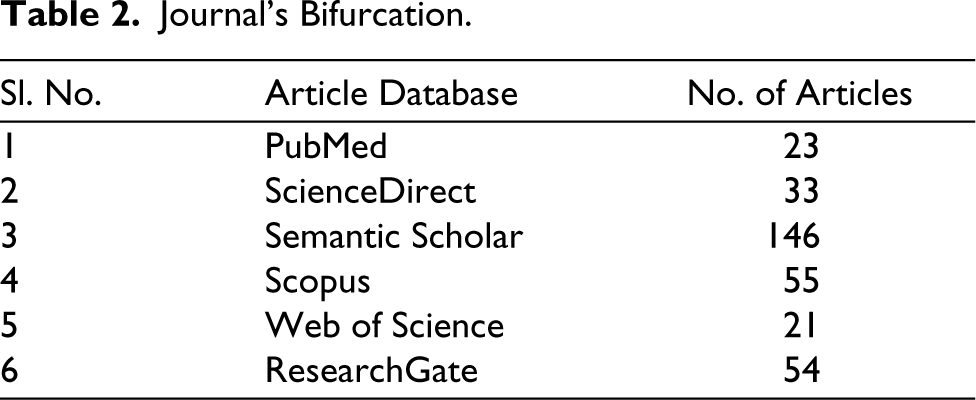
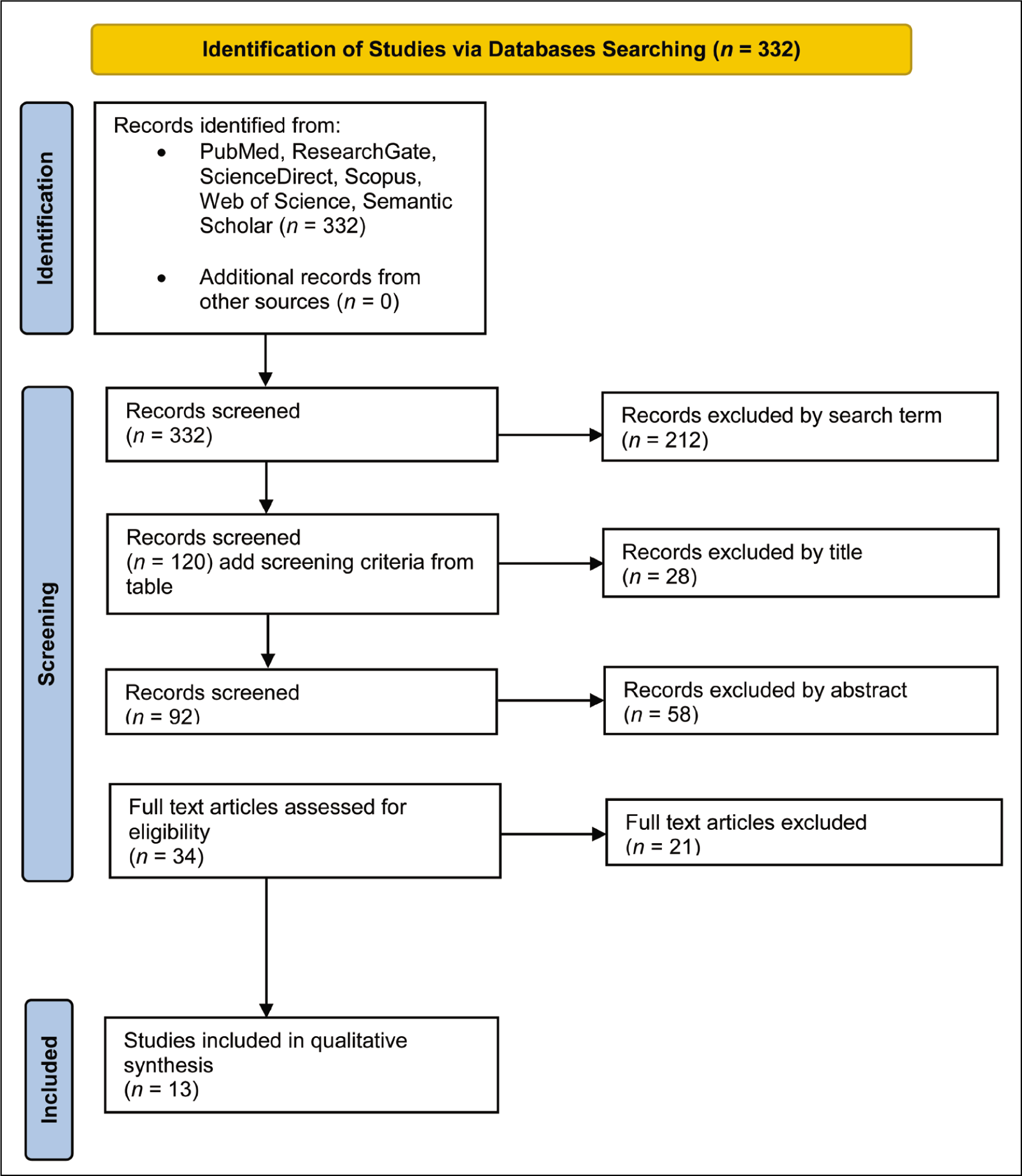
The articles from the database search were subject to four levels of inclusion based on predetermined criteria. Level 1 search sought out the search terms identified above in the full text of articles and yielded 120 hits. Level 2 search examined the article titles and 92 hits. In the level 3 search procedure (out of 92 article hits), each abstract was examined for words or phrases that signalled inclusion or exclusion in the sample and yielded 34 articles. In the Level 4 search, 34 full-length articles were screened. Of the 34 articles from the Level 4 search, 13 met all inclusion criteria. Table 3 represents the citations of the final selected 13 papers.
Citation Table.
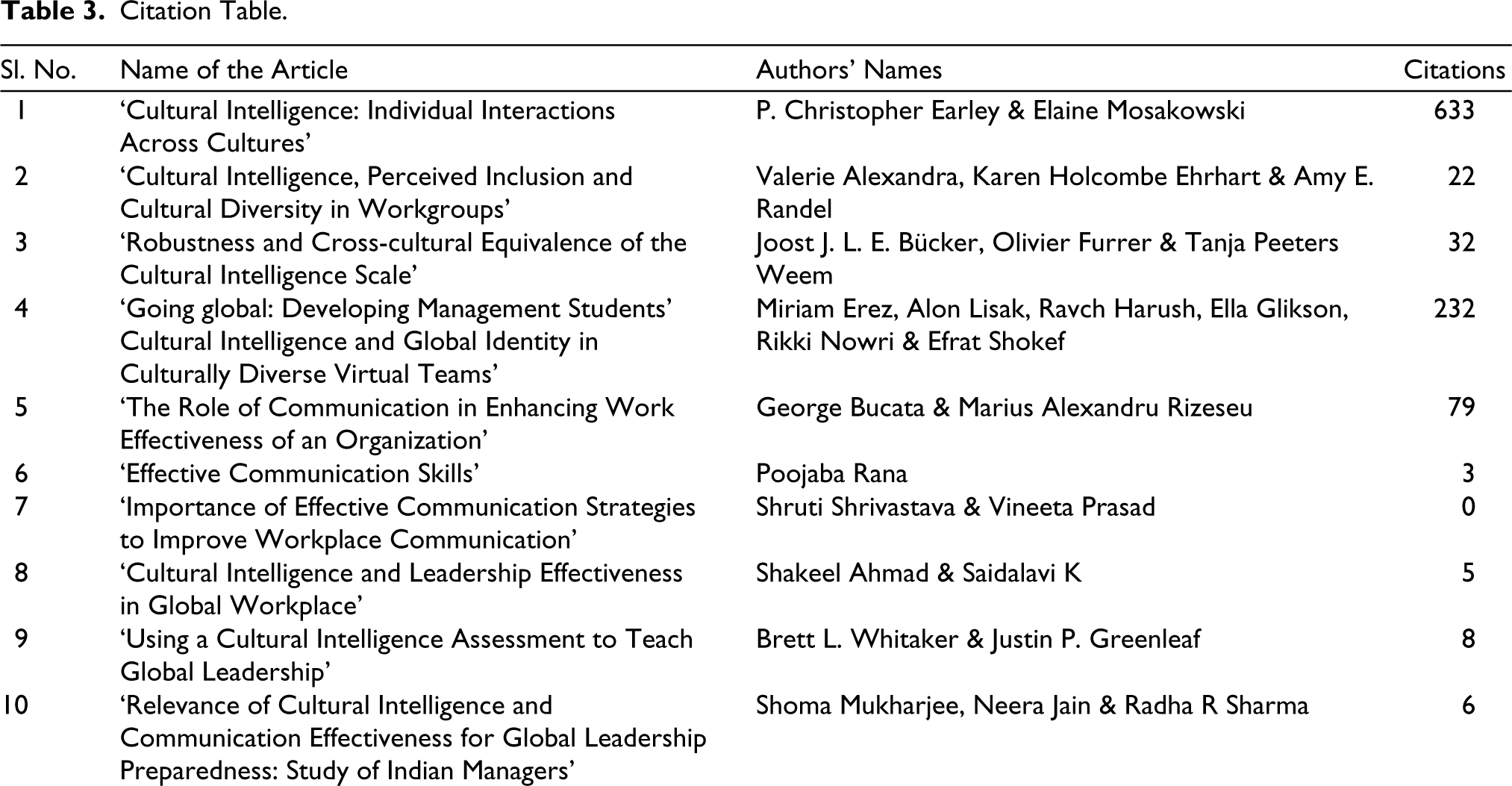
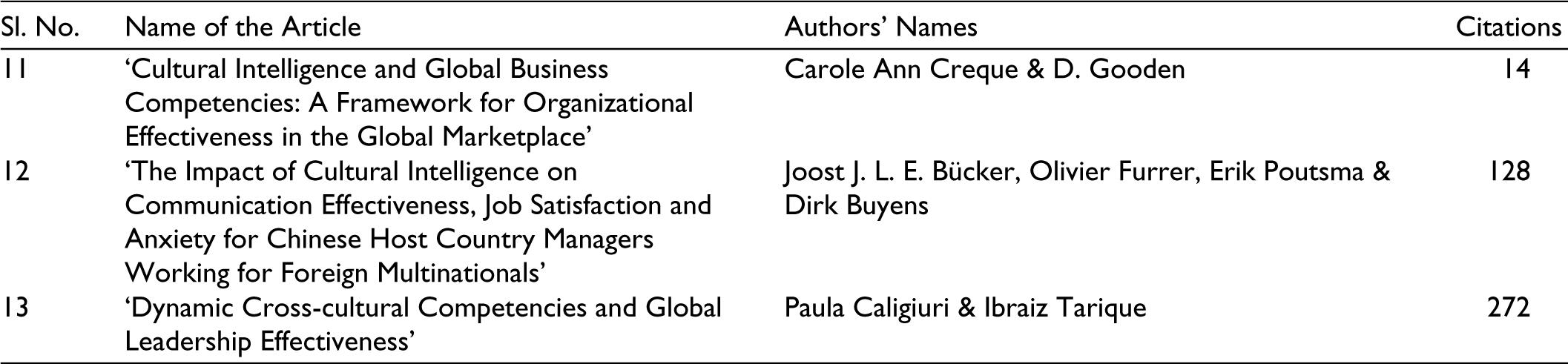
The research question was: How are all the four constructs interrelated and how will the framework be formulated to establish a connection among them.
Study Characteristics
A total of thirteen articles met the eligibility criteria, as illustrated in the PRISMA flow diagram (Figure 1). These included Alexandra et al. (2021), Bücker et al. (2014), Bucata and Rizeseu (2017), Bücker et al. (2016), Caligiuri and Tarique (2012), Creque and Gooden (2011), Earley and Mosakowski (2004), Erez et al. (2013), Mukharjee et al. (2016), Rana (2015), Shrivastava and Prasad (2019) and Whitaker and Greenleaf (2017).
PRISMA Flow Diagram for Systematic Reviews Which Included Searches of Databases.
Main Outcomes
The data from the studies are summarised and described below. All studies published between 2004–2021 that met the inclusion criteria were retrieved electronically (No article met the inclusion criteria published after 2021). The most common finding was that all the four constructs, cultural Intelligence, communication Effectiveness global leadership readiness and organisational effectiveness are interrelated and sometimes dependent on each other.
Earley and Mosakowski (2004) talked about how global managers are dealing with other co-workers and peers of foreign cultures. They have shown how their gestures and habits impact their decision making. The authors have proposed three components of cultural intelligence as: the cognitive, the physical and the emotional/motivational. They have presented many examples via a survey of 2,000 managers in 60 countries. Through this study, they have found that most of the managers are not competent enough in all three areas of cultural intelligence. The authors have also proposed a few self-assessment tools to determine levels of cultural intelligence. They have also shown steps to follow in the process of improving cultural intelligence.
Alexandra et al. (2021) showed that the cultural intelligence of the individuals predicts their perceived inclusion in the workgroups. According to them, cultural intelligence is positively linked to performance, interaction quality, interpersonal trust, work engagement and innovation. However, when it comes to inclusion, they feel that they belonged to a workgroup and were valued; their understanding of the relationship between cultural intelligence and perceived inclusion is still limited. So, they conducted a survey with a sample of 925 individual working in culturally diverse groups. The study showed how the perceived inclusion positively has a greater impact on the development of individuals in relation to cultural intelligence when it comes to culturally diverse workgroups involved.
Bücker et al. (2016) proposed to assess the cross-cultural equivalence of cultural intelligence. To show this, they conducted a survey among 607 Chinese or Dutch students to measure their cross-cultural equivalence on cultural intelligence scale (CQS). Accordingly, Dyne et al. (2007) proposed a CQS to measure people’s cross-cultural competencies and conducted tests among managers of MNCs. However, since they have neglected some important aspects of invariance so Bücker et al. (2016) proposed and found empirical support for a two-dimensional model of cultural intelligence. Furthermore, they found in the study that comparing cultural intelligence scores across cultures is only meaningful with the use of the adjusted, two-dimensional scale. Conclusively, this study shows how more empirical research is needed about cultural intelligence because of a lack of clarity in cross-cultural equivalence.
Erez et al. (2013) proposed to show the development of cultural intelligence and global identity in culturally diverse virtual teams of management students. The method was a sample survey of 1,221 management graduate students assigned to 312 virtual teams and an online four week virtual multicultural team project to develop cultural intelligence, global identity and local identity of those management graduates. The project was conducted from 2008 to 2011. the method was web-based questionnaire. They found in the studies that trust has been built among them and impacted positively on cultural intelligence and global identity.
Bucata and Rizeseu (2017) have explained the internal corporate communication process, communication process management, organisational culture and communication and how they have been built and run based on communication effectiveness. They have also explained the role of communication in building relationships among people which ultimately establishes the work culture for a specific organisation and it would benefit the internal development of an organisation. The managers somehow must be aware of how to improve the levels of communication inside their organisation by using questionnaires for the employees too this would further help them in decision making too and ultimately it will be helpful to achieve the objective of the company.
Rana (2015) proposed that effective communication is a learned skill. The communication process is a distinctive seven step method by which professionals and global managers can enhance their work culture. In this article, the author has suggested several ways to improve and develop communication skills on a personal level. With such efforts, people can connect with others and improve teamwork, decision making and problem solving. After suggesting 14 ways to develop effective communication, the author explained some communication strategies to follow. The author not only suggested ways to improve communication in corporate terms but in social situations also. It prepares people to become better which will eventually help them become better global leaders.
Shrivastava and Prasad (2019) presented an experimental study to map the pre- and post-test improvement among young management graduates for their communication skills. They have taken a sample of 102 professional business undergraduates and used a pre- and post-test method to study the evident gaps in their communication skills. They have then devised some communication strategies and introduced them to 51 out of 102 graduates. Furthermore, the result showed there were significant changes in their communication patterns after implementing these communication strategies. First, they find out the issues affecting communication among them. then with the help of the questionnaire method, they conducted a pre-test and then a post test. As a result, they have pointed out the requirement of proper training for the management graduates to improve their communication style.
Ahmad and Saidalavi (2019) have explained different leadership approaches, global leadership and challenges, suggesting that the cross-cultural workplace is significantly more composite and demanding than the domestic workplace. Then the authors suggested a four-dimensional conceptual framework that has motivational, cognitive, meta-cognitive and behavioural cultural intelligence and how it has a significant positive impact on global leadership preparedness. This study also assured the positive relationship between cultural intelligence and transformational leadership styles. This study also suggests the need for proper training methods to improve cross-cultural communication in a variety of cross-cultural workplaces.
Whitaker and Greenleaf (2017) have presented how some students of an undergraduate global leadership course are taking a cultural intelligence assessment where they develop insights across various dimensions of cultural intelligence and review their scores from their peers and global averages. This information resulted in the development of an assessment where the students can develop and understand their own capacities in those behavioural dimensions. The methodology used was assessment and a sample lesson plan was suggested. A comparative data showing their scores relative to their peers and worldwide averages interprets the results and helps students think about the areas in which they may be able to improve.
Mukharjee et al. (2016) prepared this study to understand the relevance of cultural intelligence and communication effectiveness for preparing global managers and leaders in a multicultural set up. These two constructs have been observed in the context of anxiety and uncertainty management. The methodology used was to survey sample data from 550 managers of 8 companies. The data were analysed based on a four-dimensional cultural intelligence model: metacognition, cognition, motivation and behaviour. Analysis of the data shows that there is a strong positive relationship between cultural intelligence and communication effectiveness on global leadership preparedness. As the sample was from Indian IT sector companies, the revanche of cultural intelligence and CE strongly impacted on Indian managers. As a researcher, the next step could be to take sample data from heterogeneous sector companies.
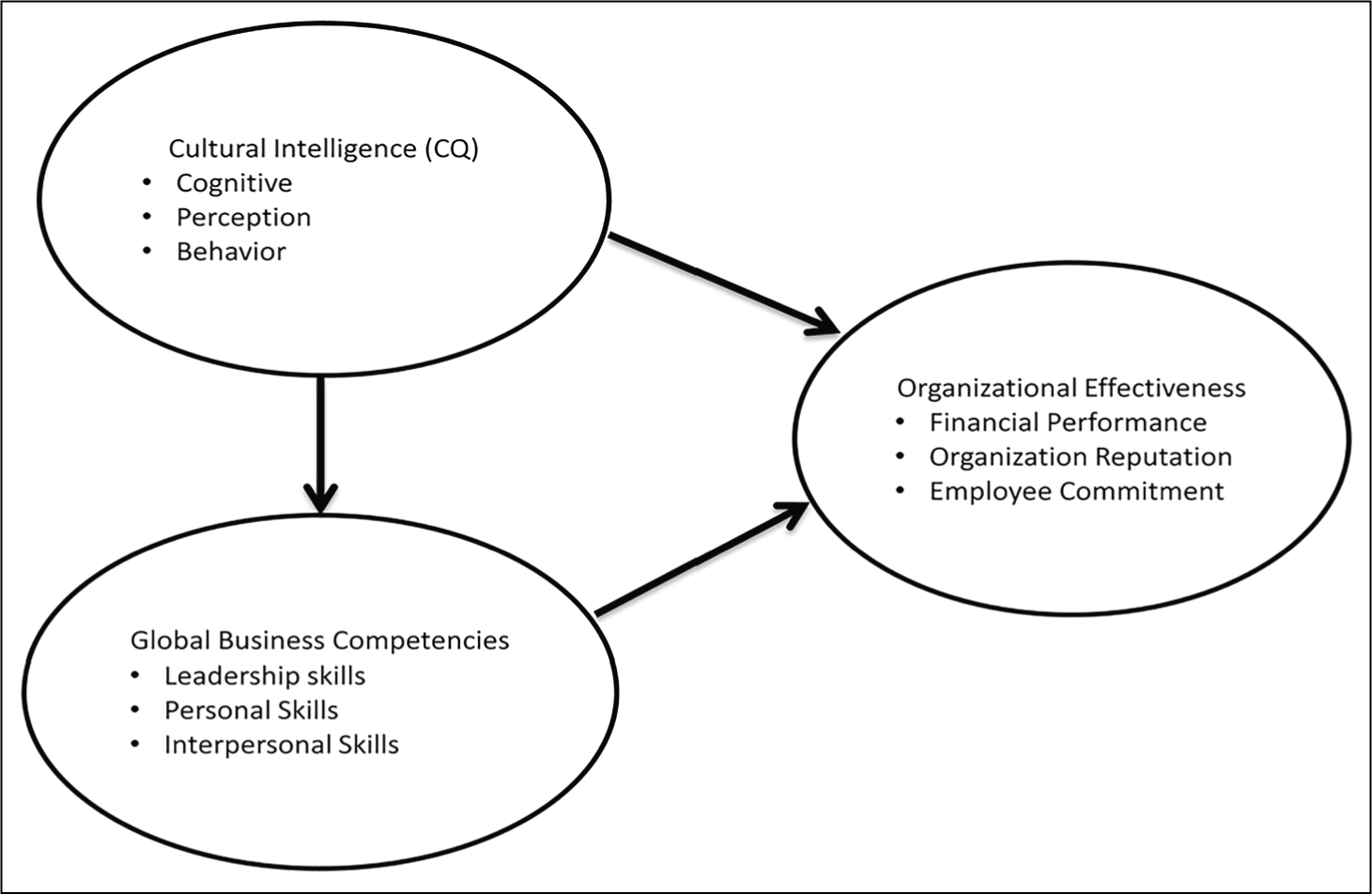
Creque and Gooden (2011) proposed a framework and explained the importance of cultural intelligence and global business competencies.
In Figure 2, they have shown that cultural intelligence is inclusive of a person’s cognitive approach, his perception of a different culture or state, and the behaviour which comes with that. Cognition in general is important as it shows a person’s knowledge and belief about a particular language or culture, which is crucial for him to sustain in a cross-cultural environment.
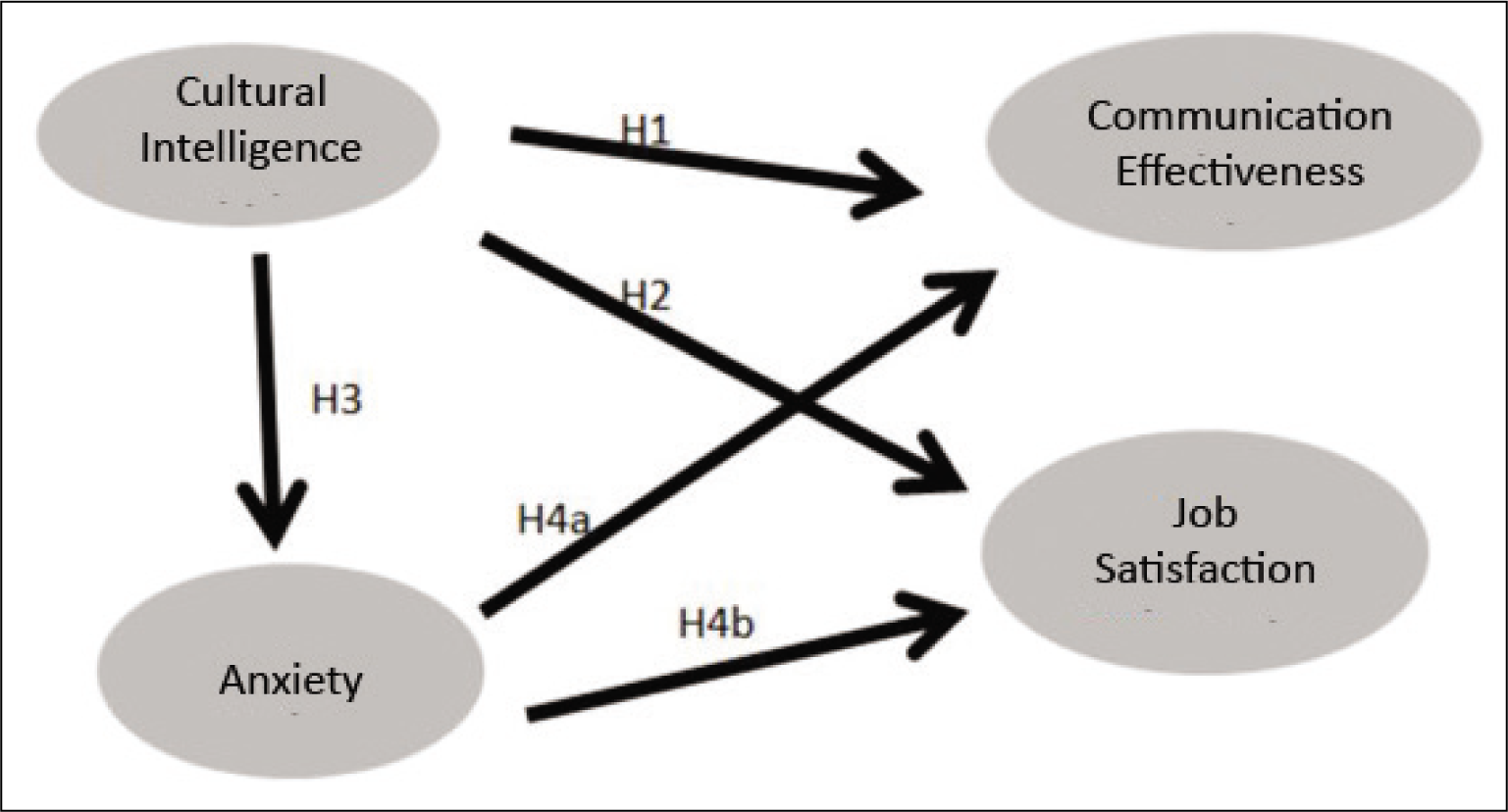
Bücker et al. (2014) proposed a study of the relationship between cultural intelligence, communication effectiveness and job satisfaction measured in a sample of 225 Chinese managers working for foreign multinational enterprises in China.
In Figure 3, they have shown a conceptual model and the hypotheses. The model shows cultural intelligence directly influences two employee outcome variables, communication effectiveness and job satisfaction. Next, a mediated relationship is shown between cultural intelligence and its outcomes, through anxiety.
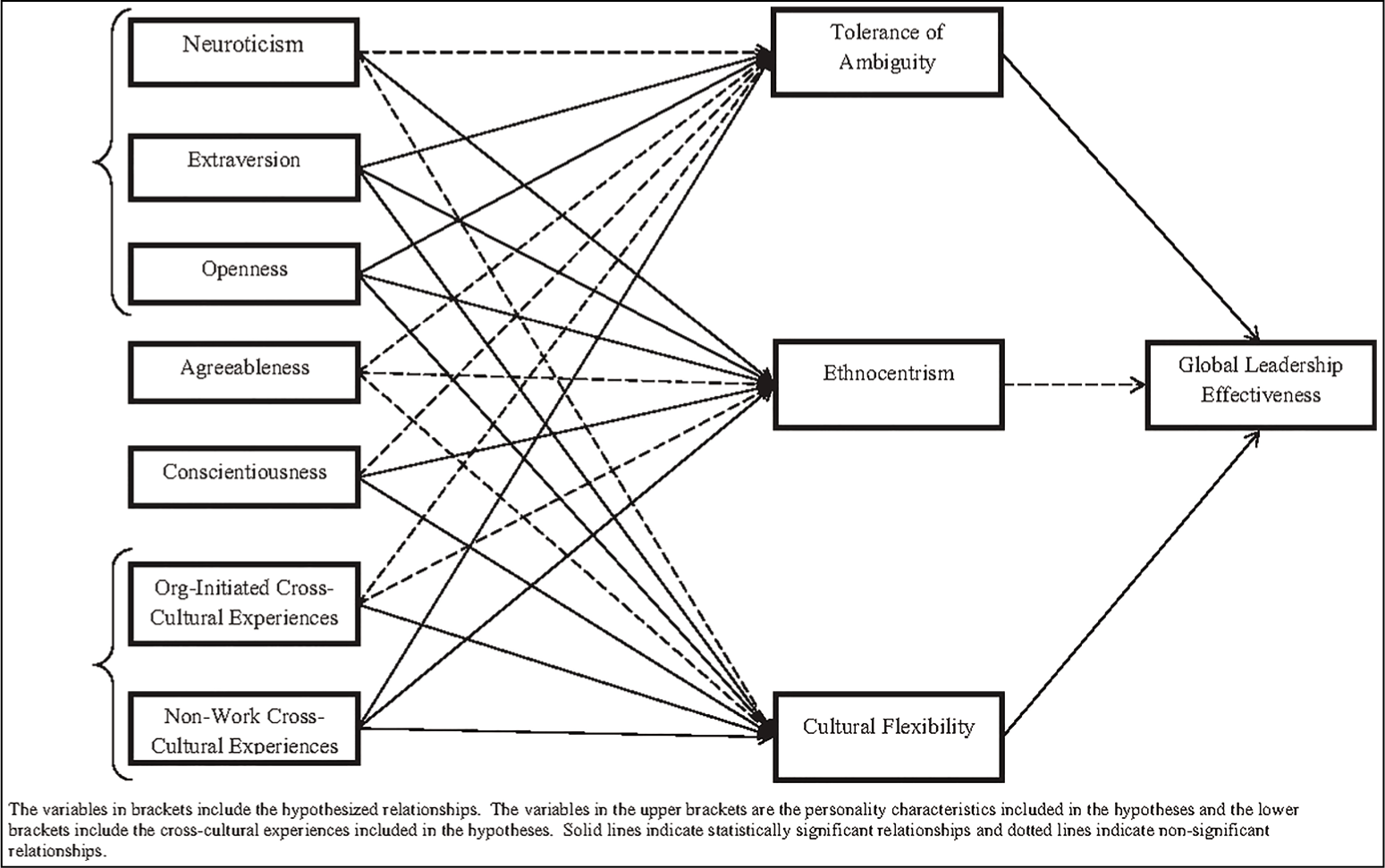
While Caligiuri and Tarique (2012) examined in this study how dynamic cross-cultural competencies are created or shaped. They also examine the roles of experiential opportunities, organisation-initiated cross-cultural experiences (i.e., those found in leadership development programmes) and non-work cross-cultural experiences. In addition, this study will also examine whether leaders’ relatively immutable personality characteristics affect global leadership competencies.
In Figure 4, this mediated model proposed by them predicts supervisor ratings of global leadership performance. The variables in the brackets include the hypothesised relationships. The variables in the upper brackets are the personality characteristics included in the hypothesis and the lower brackets include the cross-cultural experiences included in the hypothesise. Solid lines indicate statistically significant relationships and dotted lines indicate non-significant relationships.
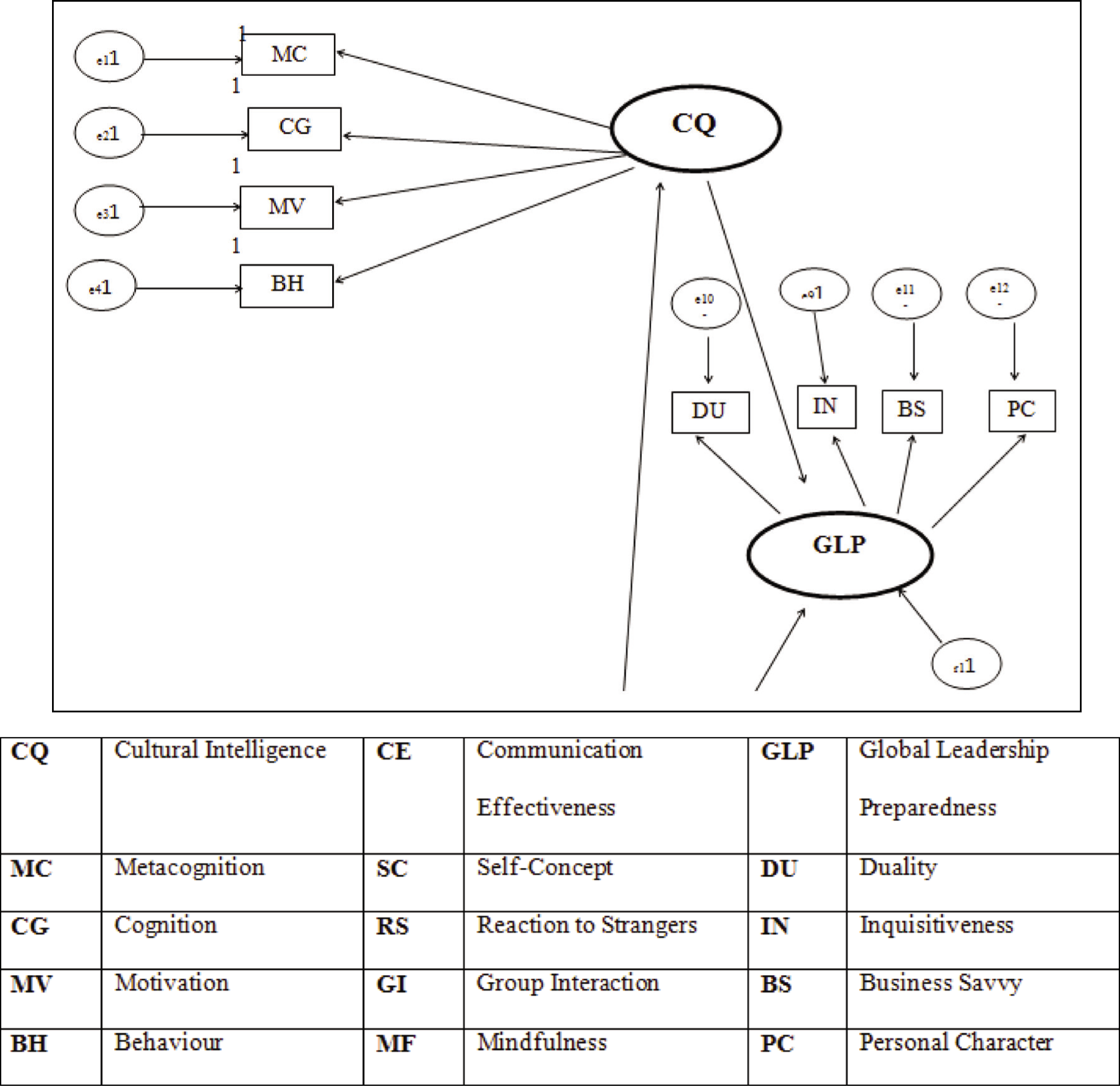
Mukharjee et al. (2016) proposed a three-factor model to show the interface of the three constructs: cultural intelligence, global leadership and communication effectiveness. They have shown a strong and positive relationship among all three.
The study provides empirical evidence of the relationship between anxiety and uncertainty in developing global managers. However, still, there is a need for extensive research in the Indian context.
Discussion
This study was undertaken with the aim of reporting a positive relationship between all four constructs: cultural intelligence, communication effectiveness, global leadership and organisational effectiveness. The discussion that follows is thus a detailed analysis of all four constructs and an interface of the findings described above.
Cultural Intelligence
The impression of cultural intelligence (CQ) was originally presented by Earley and Ang (2003). Culture represents a collective arrangement of knowledgeable opinions and manners combined by groups that include judgements, varieties of interaction, methods of cooperating, visions on positions and associations, standards, exercises and duties. Researchers have already explained the concepts of social intelligence (Goleman & Boyzatis, 2008; Thorndike & Stein, 1937) emotional intelligence (Goleman, 2006; Mayer & Salovey, 1995) and practical intelligence (Sternberg, 2000). The research-based, interdisciplinary meta-model of cultural intelligence (Dyne et al., 2012; Earley & Ang, 2003; Peterson, 2004; Thomas & Inkson, 2004) enables us to know how some of the managers adjust effortlessly when positioned in diverse cultures, however, others fight. Cultural proportions recognised by Hofstede (2011), Trompenaars and Hampden (1998, pp. 5–9) and House et al. (2004) suggest how to improvise cultural intelligence as a construct.
According to Earley (2002) and Earley and Ang (2003), ‘Cultural intelligence is a person’s capability to adapt effectively to new cultural contexts’. Whereas, according to Thomas and Inkson (2003), ‘Cultural intelligence involves understanding the fundamentals of intercultural interaction, developing a mindful approach to intercultural interactions and finally building adaptive skills and a repertoire of behaviour so that one is effective in different intercultural situations’. However, according to Earley and Mosakowski (2004), ‘Cultural intelligence is an outsider’s seemingly natural ability to interpret someone’s unfamiliar and ambiguous gestures the way that person’s compatriots would’. Further, ‘cultural intelligence reflects a person’s capability to gather, interpret and act upon these radically different cues to function effectively across cultural settings or in a multicultural situation’. According to Earley et al. (2006), ‘Cultural intelligence is a person’s capability for successful adaptation to new cultural settings, that is for unfamiliar settings attributable to cultural context’. According to Thomas (2006), cultural intelligence is the ability to interact effectively with people who are culturally different. While according to Earley et al. (2007), it is an individual’s capability to function and manage effectively in culturally diverse settings.
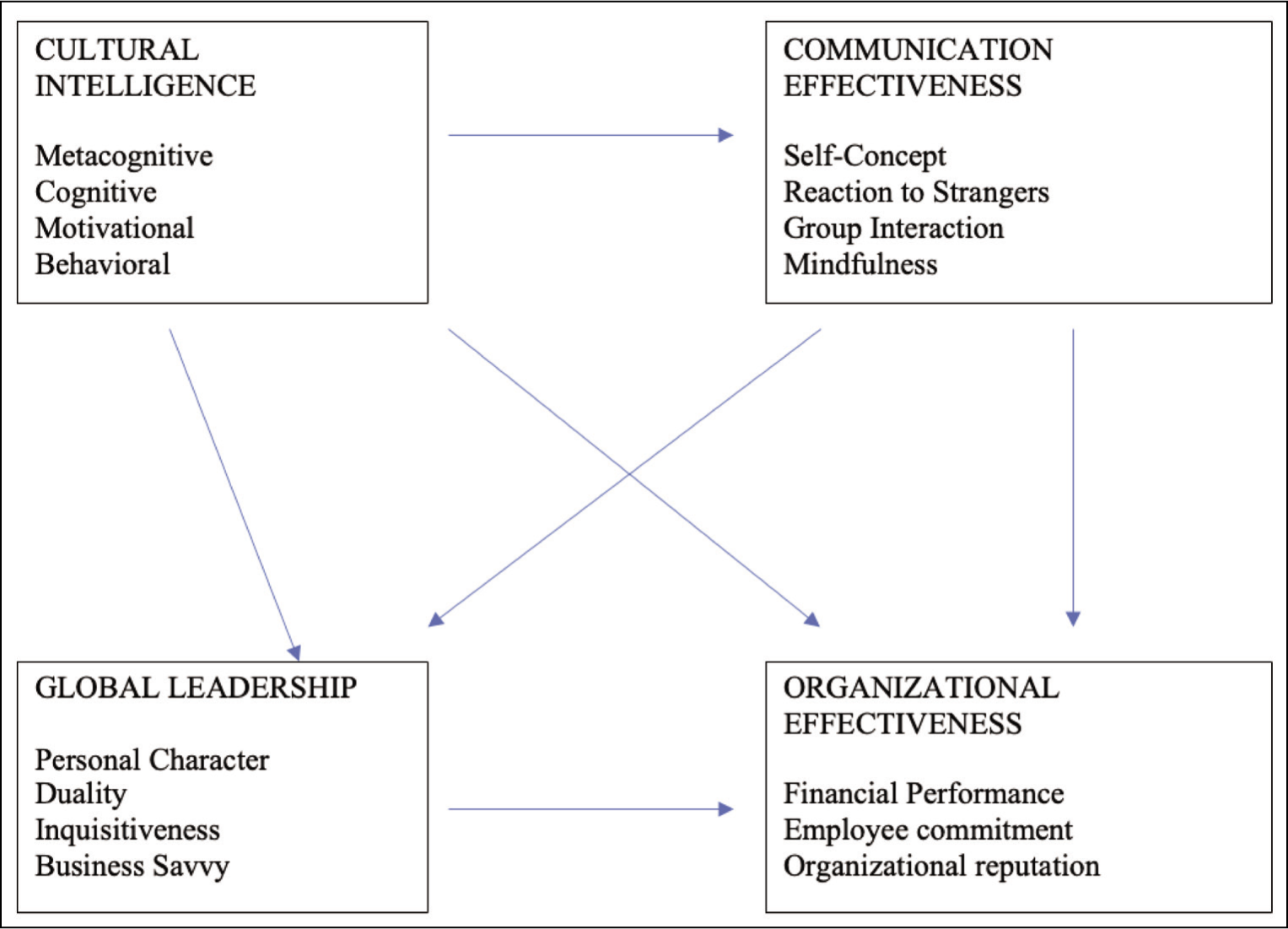
There are four collaborative essential apparatuses suggested for the cultural intelligence framework: metacognitive, cognitive, motivational and behavioural (Earley et al., 2006). Metacognition suggests the competence to plot, observe, modify and regulate violating intellectual models (Nelson, 1996, pp. 76–79). Cognition suggests the capacity to mark precise understandings of enlightening communications (Triandis, 1995, pp. 907–924).
Motivation denotes to one’s self-motivation and responsibility to adjust and regulate in a new cultural setting. People with great communicative cultural intelligence show situationally suitable conduct in complete verses, attitudes, motions and facial languages (Gudykunst et al., 1988; Hall, 1959).
Metacognitive CQ
This feature of cultural intelligence refers to a person’s level of mindful cultural awareness through cross cultural connections. Metacognitive cultural intelligence contains advanced level cognitive approaches that let people progress innovative heuristics and instructions for communal communication in original cultural settings by stimulating data administration at an innate level.
Cognitive CQ
While metacognitive cultural intelligence emphasises on advanced level cognitive developments, cognitive cultural intelligence imitates understanding of rules, exercises and agreements in diverse cultures developed from learning and individual understandings. Cognitive cultural intelligence comprises an understanding of cultural universals as well as the understanding of cultural alterations. It is a person’s level of cultural understanding, understanding of the cultural setting and understanding of self-embedded in the cultural setting of the situation.
Motivational CQ
It imitates the skill of straight consideration and drive to acquire around and work in culturally varied circumstances. Heggestad and Kanfer (2000) claimed that such motivational dimensions offer an agentic switch of imitation, thought and conduct that enable aim achievement.
Behavioural CQ
It imitates a person’s ability to display suitable spoken and non-verbal movements when intermingling with individuals from diverse cultures. Behavioural CQ is a critical constituent of cultural intelligence because movements are the most noticeable features of social communications.
Communication Effectiveness
Scholars categorise statement activities as vocal, non-verbal and communication actions, which are words and phrases used to express particular communications (Lustig & Koester, 2012). Statements happens even if a vocal or non-verbal presentation is insensible when detected and allocated significance. Concepts enlighten how statements differ through values and principles (Burgoon, 1995; Ting-Toomey, 2007) or take place between individuals from diverse cultures (Gudykunst & Kim, 1997, p. 72; Oetzel, 1995). A vigorous statement may either endorse understanding or shape suspicions. When connecting through cultures, those with reasoning elasticity can detect the condition, comprehend the insight of others and then mark essential alterations to make the statement positive. Communicative elasticity allows communication to build at the other person’s edge of position. Metacognitive skills allow one to fix the timing of relational actions, spaces for conversing subjects and corporeal aloofness extrication orators.
An exceptional feature of intercultural connections is indecision and vagueness regarding the minced instructions by which communication will happen and the opposing sense of signs (Gudykunst & Nishida, 2001; Gudykunst et al., 1985; Gudykunst et al., 1986). Intercultural interactants involve with each other in a spoken language that is frequently not an innate language for at least one and occasionally together, thus generating inherent doubt in the sense of the verses. This doubt makes struggle and mix-ups unavoidable. Throughout intercultural confronts, probabilities are great that when others’ actions do not imitate our potential, we understand them as wrongdoings alongside our appraisal scheme. Individuals may develop an annoyed attitude with or be prejudiced by the vagueness, leading to annoyance, obstruction or bitterness. Even after doubt is condensed, struggle is unavoidable because of the changes in the sense of spoken and non-verbal actions across cultures and the related feelings and standards characteristic in the cultural scheme.
Global Leadership Readiness
Researchers highlight the necessity for making leaders with global capabilities (Alldredge & Nilan, 2000; Bartlett & Ghoshal, 1998; Conner, 2000; Gregersen et al., 2000; Ireland & Hitt, 2005; Oddou et al., 2000; Suutari, 2002). The features protected are diverse, but consent about their position is missing. Kets de Vries and Mead (1992) comprise imagining, authorisation aptitude, system structure, reasoning intricacy, resoluteness and cultural flexibility. Moran and Riesenberger (1994) propose global attitude, alteration alignment, struggle administration, appreciative own morals, representing information and admiration for other nations. Srinivas (1995) comprises inquisitiveness and anxiety with setting, getting of intricacy and its inconsistencies and confidence in administrative procedures and schemes idea. Brake (1997) grades 15 capabilities under three groups: business acumen, relationship management and personal effectiveness. Conner defines professional shrewdness as a significant distinctive of a global leader. Rosen and Digh (2001) debate literateness: individual, communal and commercial. Levy et al. (2007) highlight the position of global attitudes. The maximum conclusions of these above called researchers are enclosed in the experiential study of Gregersen et al. (1998) who suggest that global leaders requisite a set of contexts specific capabilities for allocating with business cultures, business subtleties and organisation observes of the country of origin. However, there are four key features (curiosity, dichotomy, individual character and commercial shrewdness) shown by global leaders regardless of their precise aptitudes. Curiosity suggests being exposed to new knowledge and learning and the readiness to connect in varied circumstances. Dichotomy means supporting diverse lookouts and having apprehension for individuals from diverse cultures. Individual personality, whereby the leader is talented to handle business in unversed situations without giving up standards and morals is possibly one of the most significant features. Business shrewdness allows the leader to lure in desperate information zones, assemble possessions and influence prospects. Commercial administrators working in a globalised setting and distributing with multicultural teams when wishful to management roles need to grow these capabilities.
Organisational Effectiveness
According to Amitia Etzioni (1964), organisational effectiveness is a concept organisations use to gauge how effective they are at reaching intended outcomes. Considering De la Garza Carranza and Egri (2010), organisational effectiveness can be evaluated by inspecting the organisation’s financial performance, corporate reputation, and employee commitment. With the work of Kim et al. (2009), we got to know that global corporate capabilities, an insubstantial business reserve, completely affect business performance. De la Garza and Egri (2010) establish that cultural intelligence is certainly associated with business status and worker assurance but not financial performance. Waclawski (2002) established that businesses devouring a stretchy culture accomplished advancement than those with less stretchy schemes and also that there is a substantial connection amid professed cultural flexibility and financial performance. Kim et al. (2009) advise that global businesses should develop capabilities that are exclusive and unique in demand to increase their global performance.
Interface of the Four Constructs
The task for global professional leaders is to achieve varied crews and comprehend investor difficulties across cultures. (material, information and proficiency) must be retrieved globally, culturally bright commercial leaders are capable to alleviate menaces. Bartlett and Ghoshal (1998) consider that the three core parts are to aid as the tactician for the association, be the designer of its universal strength and reserve conformation and organise dealings crossways nationwide limitations. Black et al. (1999) signify this as professional shrewdness which is a mixture of (a) global commercial shrewdness and (b) organisational savvy. Scholars have indicated that firms often focus on technical capability as the main assortment standard for global projects, giving slight care to the interpersonal (Dowling & Schuler, 1990; Oddou et al., 1985; Tung, 1981). Ronen (1989) defined interpersonal features and enthusiasm as between the significant analysts of achievement while operational in multicultural surroundings. Earlier clienteles would keep manifold dealers to retain the spirited and argumentative attitude. In the globalised domain, clienteles, producers, suppliers and facility benefactors understand that extended period collaboration and faith are the instructions of the daytime.
Based on the literature review, the author proposed a research framework that correlates all the four constructs is as mentioned. The proposed model in the Figure 6 shows that cultural intelligence is influencing all the factors including communication effectiveness, global leadership and organisational effectiveness (Figure 5). This framework is based on the frameworks suggested by Mukharjee et al. (2016) and Creque and Gooden (2011). According to the proposed framework, there will be a positive relationship among all four constructs.
Conclusion
This systematic review was conducted to consider the research evidence for the interface and interrelationship of cultural intelligence, communication effectiveness, global leadership and organisational effectiveness. The evidence indicates how they are positively correlated and effective on each other. The occurrence, though, has not been widely learned in Indian organisations functioning in the worldwide setting. There is a shortage of analyses on cultural and communication challenges faced by Indian managers working in a multicultural setting. The PRISMA driven systematic review of literature shows that culture impacts communication and ultimately leadership.
Future Directions
India is a land of diversity and cultural differences are quite common to arise, especially when we talk about corporates. The reviews of the paper based on the Prisma method not only testify the need for research in this area but also open a gate of opportunity to maintain efficiency in this field. Communication and leadership go along with organisational effectiveness, so it is quite relevant to explore this area and indicate how they are all correlated. Future researchers can increase the possibility of the present reading by including research participants from other industry sections such as healthcare, banking and FMCG. This would allow better simplification of the analysis.
Limitations
There is still an absence of analyses inspecting the collaboration of cultural intelligence and communication effectiveness of managers and the relevance of these constructs in formulating latent leaders for functioning in the multiracial arena.
Also, leadership studies are more focused on how the values, predispositions, qualities, and abilities of top officers inspire strategic decision collections and following presentation of companies (Finkelstein & Hambrick, 1996). However, the gap here is that a major part of the study is required to describe the principles or abilities required to be real as universal leaders of various businesses.
Also, there is a shortage of readings on the cultural intelligence of Indian corporate managers. While some leadership potentials may be worldwide, others may be ethos detailed.
Footnotes
Declaration of Conflict of Interests
The authors declared no potential conflicts of interest with respect to the research, authorship and/or publication of this article.
Funding
The authors received no financial support for the research, authorship and/or publication of this article.