



Abstract
Introduction
Plastic surgery remains one of the most competitive medical specialties in Canada, ranking among the top 3 disciplines in the Canadian Residency Matching Service for supply–demand disparity (first-choice applicants exceeding available positions) in 8 of the past 10 years, and holding the top spot in 4 of those years. 1 While many students identify their specialty of interest early in their medical education, 2 little is known about the specific factors that lead them to pursue plastic surgery.3,4 Understanding these predictors of career interest is crucial for academic institutions aiming to cultivate a strong and diverse applicant pool for this field. By identifying the values, motivations, and misconceptions that influence student decisions, we can better align recruitment efforts, enhance the educational experience, and strengthen the future of the specialty.
Recent studies have suggested that students often enter clerkship with a clear vision of the specialty they will ultimately pursue. 2 However, the factors that shape this decision remain underexplored, particularly in the context of plastic surgery. Factors such as income potential, perceived prestige, and the allure of aesthetic procedures often influence these decisions, 3 but may not fully reflect the nuanced reality of the specialty.5,6 Additionally, misconceptions about a plastic surgeon's work–life balance and the demands of follow-up care may influence student interest in ways that do not align with the realistic demands and rewards of the field.3,7,8
This prospective study seeks to identify the key career factors that predict interest in plastic surgery among first- and second-year medical students. By analyzing responses from a multiyear, prospectively maintained database, we aim to clarify the motivations driving students toward the specialty and how these align with the realities of practice. The findings from this study have the potential to address misconceptions, improve recruitment strategies, and promote a more informed and diverse cohort of future plastic surgeons.
Methods
Survey Design and Dissemination
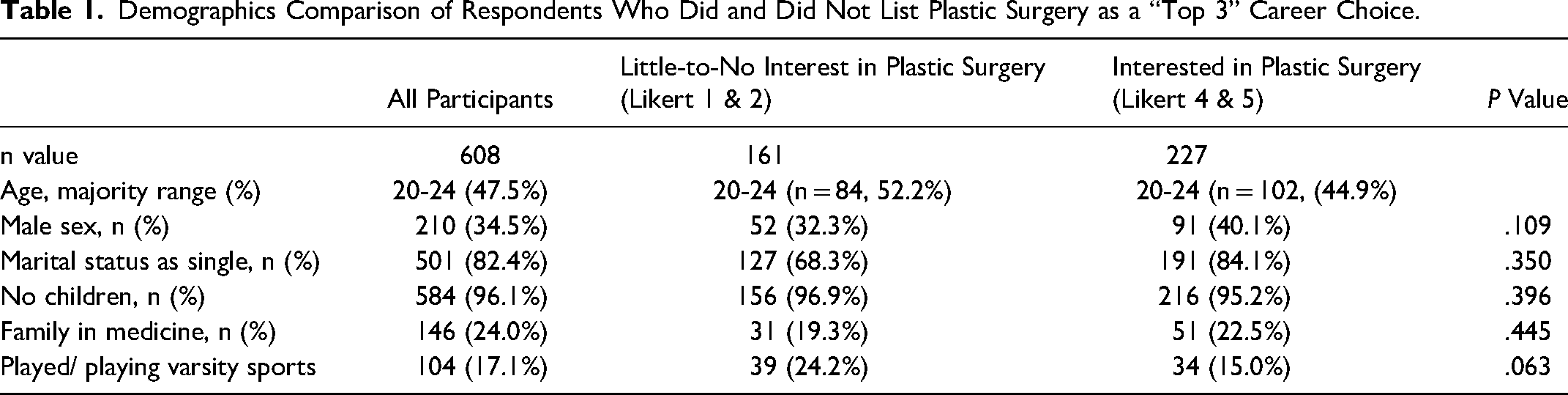
The comprehensive survey instrument was adapted from previously published and validated tools examining medical student career choice factors, most notably the framework described by Scott et al and the earlier conceptual model developed by Zeldow et al.2,9 These instruments have been used to characterize the timing and determinants of specialty selection among medical students. For the present study, survey items were reviewed and modified by faculty members and senior medical students to ensure contextual relevance to plastic surgery and to reflect the current Canadian medical education environment. The primary objective of the survey was to assess medical students’ early understanding of plastic surgery and to identify factors influencing their initial interest in the specialty during the preclerkship years. The survey was disseminated to all first and second year medical students at a single institution as part of a voluntary quality improvement initiative aimed at informing local educational efforts to optimize specialty exposure and career exploration opportunities. The survey gathered demographic details, career interests, and factors influencing students’ ideal careers. Demographic questions covered gender, age, previous education, marital status, family background in medicine, and participation in varsity sports. Career factor data focused on students’ views of key aspects of their future careers, including research interest, competitiveness of the specialty, acceptable work hours, emphasis on urgent and inpatient care, professional standing among colleagues, variety of medical issues, and income potential. Additionally, participants ranked their top 3 career choices and their interest in various specialties (including plastic surgery) on a Likert scale (1 = no interest, 2 = low interest, 3 = undecided, 4 = interested, 5 = highly interested; Table 1).
Demographics Comparison of Respondents Who Did and Did Not List Plastic Surgery as a “Top 3” Career Choice.
Participants and Recruitment
This study represents a retrospective analysis of prospectively collected survey data from 2018 to 2025. This study included first- and second-year (preclerkship) medical students at a single Canadian medical school. Following a class presentation, an anonymous online survey was distributed via email utilizing the Opinio survey platform (Object Planet). Data were collected over a 4-week period spanning January to February across 8 consecutive years. Participation in the study was voluntary, and informed consent was obtained before survey completion. Students were restricted to completing the survey once.
Dissemination
Using a cross-sectional design, the survey was disseminated to first- and second-year medical students before they started their in-hospital rotations. The survey responses were collected anonymously over a 4-week period each year via the Opinio platform.
Data Analysis
All statistical analyses were performed using IBM SPSS Statistics software (version 29.0.2.0). Descriptive statistics were used to summarize categorical variables (frequencies and percentages) and continuous variables (means and standard deviations). Categorical variables were analyzed using the χ2 test, and continuous variables were assessed using t-tests or Mann-Whitney U (for non-normality variables). Logistic regression models were constructed to evaluate the career factors associated with students who ranked plastic surgery in their top 3 career choices. A second logistic regression analysis was employed for students who expressed an interest in plastic surgery (Likert scale: 4 = interested, 5 = highly interested) compared to those who were not (1 = no interest, 2 = low interest). Age, sex, previous participation in varsity sports, family in medicine, marital status, and parental status were also included in the model. Backward stepwise regression was employed; all models passed the Omnibus and Hosmer-Lemeshow tests for goodness of fit. Statistical significance was defined as P < .05.
Ethics
This study adhered to the guidelines of the Strengthening the Reporting of Observational Studies in Epidemiology statement. Research ethics approval was granted by the Nova Scotia Health Authority Research Ethics Board (No. 1023087 and 1023325). No personal identifiers were collected, ensuring the anonymity of all participants.
Results
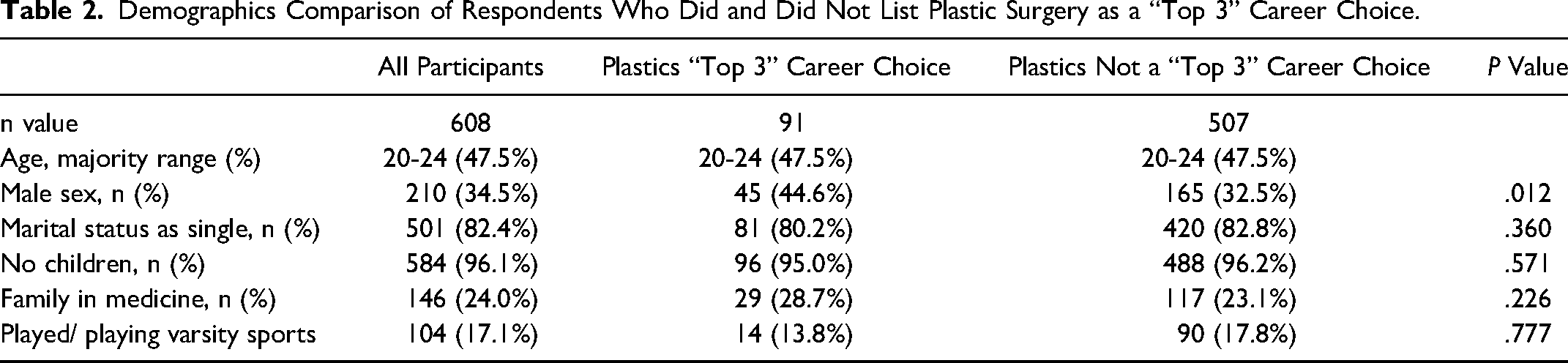
A total of 880 students were sent the survey between 2018 and 2025, with 608 individual medical students responding to the survey (∼69.1%). There were an additional 32 students over that time period that opened the survey, but did not complete it, giving us a completion rate of 95.0%. The majority of participants were aged 20 to 24 (47.5%), female (65.0%), unmarried (82.4%), and without children (96.1%). Among them, 101 respondents (16.6%) ranked plastic surgery as one of their top 3 career choices (Table 2). When comparing those who ranked plastic surgery as a top 3 career choice versus those who did not, there was a statistically significant difference in male respondents (44.6% vs 32.5%, P = .012) (Table 2).
Demographics Comparison of Respondents Who Did and Did Not List Plastic Surgery as a “Top 3” Career Choice.
Participants also rated their interest in plastic surgery, along with other specialties, on a 5-point Likert scale (1 = no interest, 2 = low interest, 3 = undecided, 4 = interested, 5 = highly interested; Table 1).When comparing respondents with low or no interest in plastic surgery (Likert 1 and 2) to those who expressed high interest (Likert 4 and 5) was no significant difference in demographics.
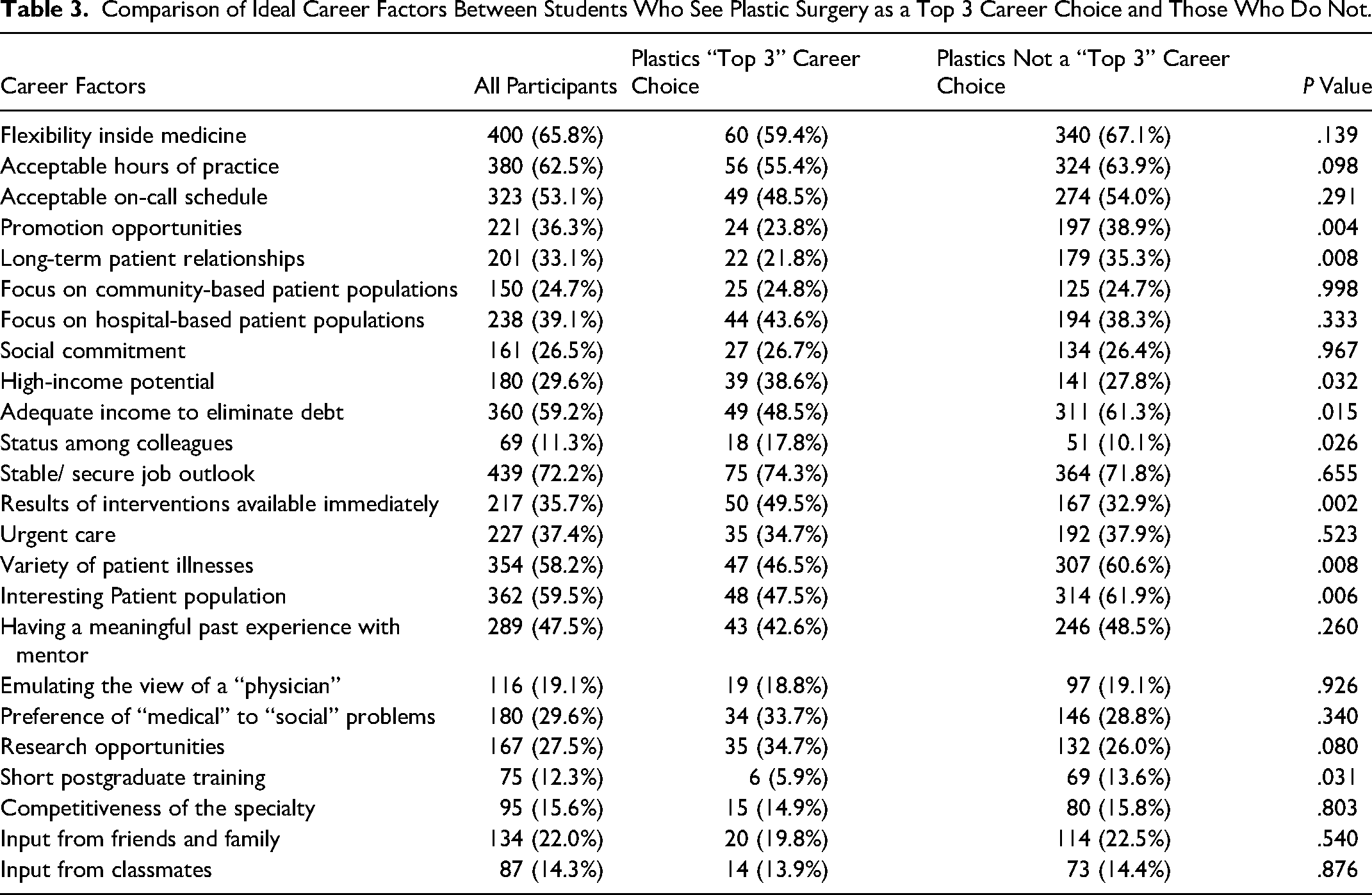
Participants were asked to select 5 factors (from a list of 24) that they valued most when considering their ideal career and making career decisions (Tables 3 and 4). Among all respondents, “Stable/ secure job outlook (72.2%)” was the most frequently ranked, followed by “Flexibility inside medicine (65.8%).” A comparison between respondents who ranked plastic surgery in their top 3 career choices and those who did not revealed several significant differences. “High income potential” (P = .032), “Status among colleagues” (P = .026), and “Results of interventions available immediately” (P = .002), were ranked significantly more frequently in those with plastic surgery as a top 3 career choice (Table 3). Whereas “Promotion opportunities (P = .004),” “Long-term patient follow-up (P = .008),” “Adequate income to eliminate debt (P = .015),” “Variety of patient illnesses (P = .008),” “Interesting patient population (P = .006),” and “Short Post-graduate Training (P = .031)” were ranked significantly less frequently than the other students.
Comparison of Ideal Career Factors Between Students Who See Plastic Surgery as a Top 3 Career Choice and Those Who Do Not.
Comparison of Ideal Career Factors Between Students Who are Interested in Plastic Surgery as a Career and Those Who Are Not.
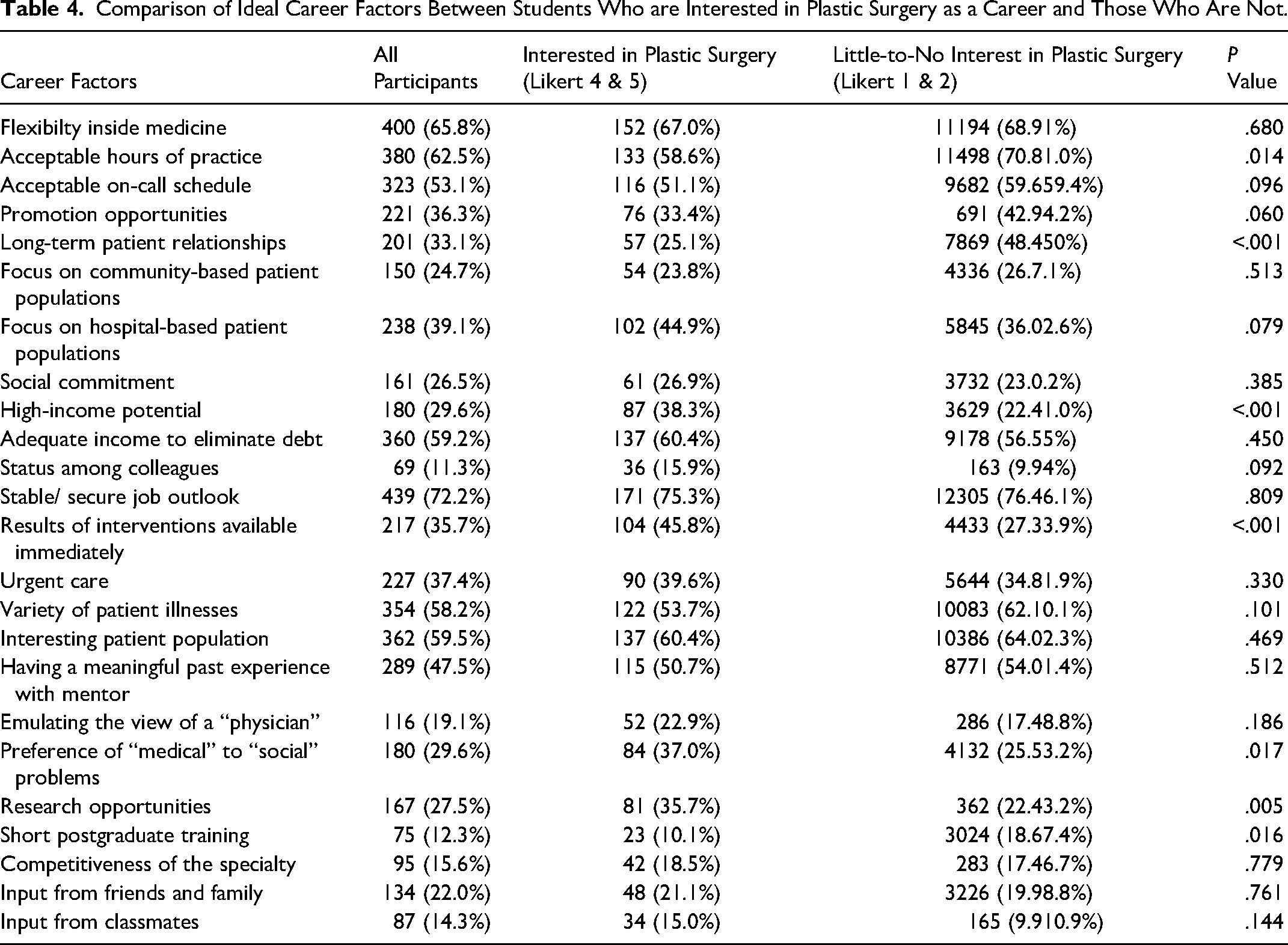
A comparison of respondents who rated their interest in plastic surgery as none or low (Likert 1 or 2) versus those with high interest (Likert 4 or 5) showed several significant differences in the factors they valued. Respondents with high interest in plastic surgery ranked “High income potential” (P < .001), “Results of interventions available immediately” (P < .001), “Preference of medical to social problems” (P = .017), and “Research opportunities” (P = .005) significantly more frequently than those with low or no interest in the specialty (Table 4). Conversely, participants interested in plastic surgery ranked “Acceptable hours of practice” (P = .014), “Long-term patient follow-up” (P < .001), and “Short postgraduate training” (P = .016) significantly less frequently.
A backward stepwise multivariate linear regression analysis was conducted for participants who ranked plastic surgery among their top 3 career choices (Table 5). This study identified that students who valued “Status among colleagues,” “Results of interventions available immediately,” “Research opportunities,” and “Income potential” were predictably more likely to rank plastic surgery as a top 3 career choice. Similarly, a backward stepwise multivariate linear regression analysis was conducted for participants who expressed interest in plastic surgery (Likert 4 and 5; Table 6). This model demonstrated “Income potential,” “Results of interventions available immediately,” and “Research opportunities” were statistically significant career factors valued by students interested in plastic surgery.
Logistic Regression Model for Career Factors Found to be Valuable for Medical Students With Plastic Surgery as a Top 3 Career Choice.
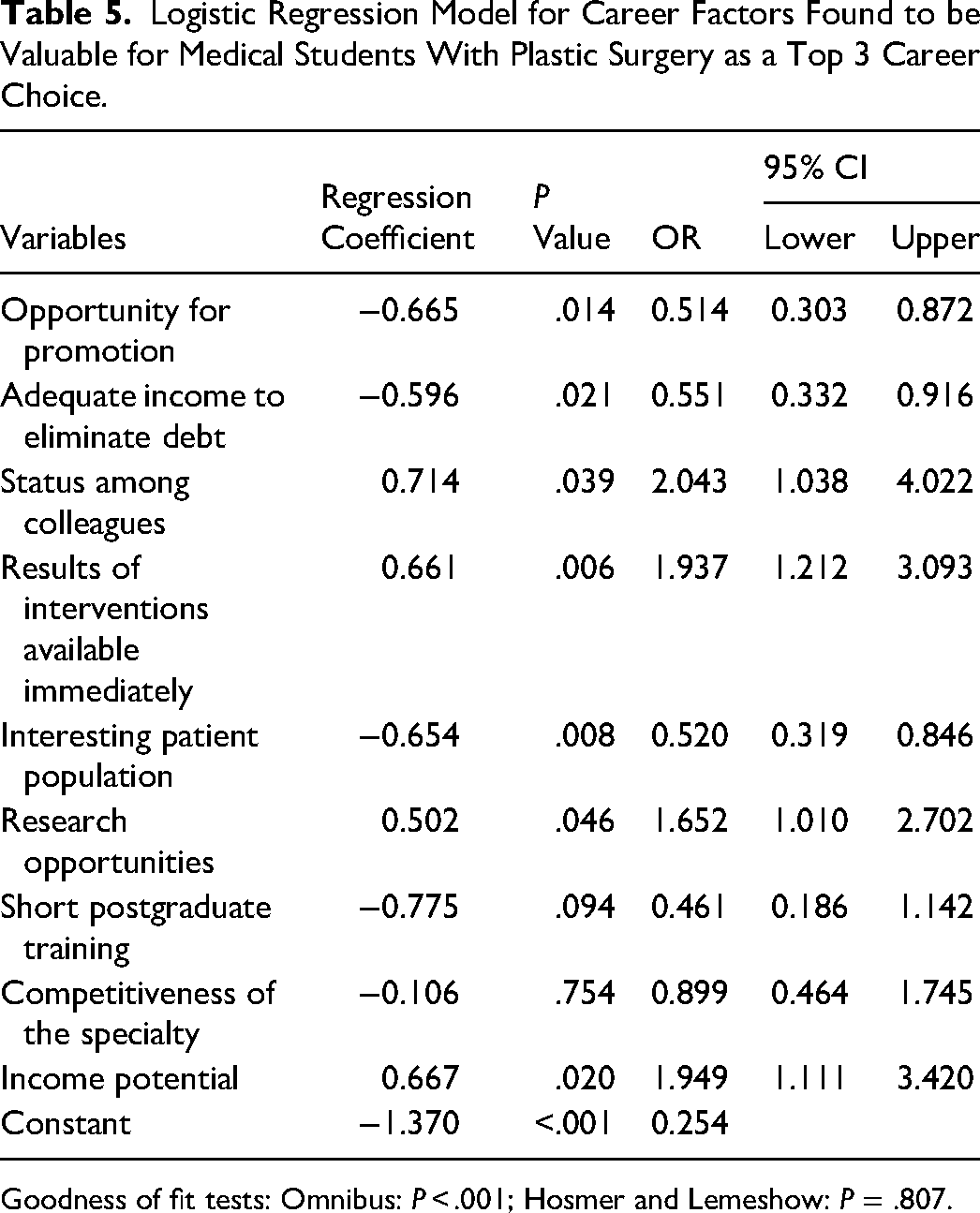
Goodness of fit tests: Omnibus: P < .001; Hosmer and Lemeshow: P = .807.
Logistic Regression Model for Career Factors Found to be Valuable for Medical Students with an Interest in Plastic Surgery.
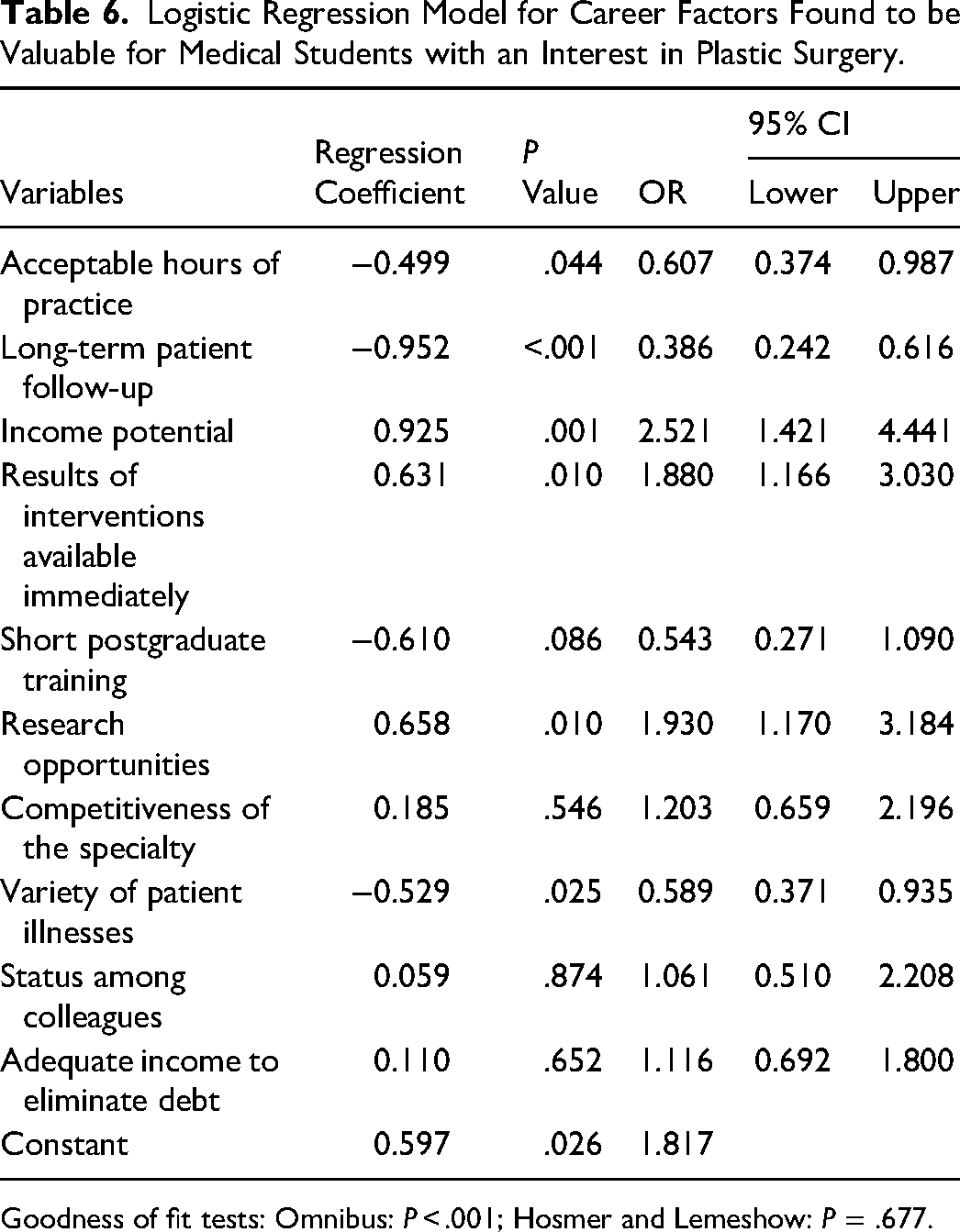
Goodness of fit tests: Omnibus: P < .001; Hosmer and Lemeshow: P = .677.
Discussion
This study offers valuable insight into the factors influencing medical students’ interest in pursuing plastic surgery. While students are drawn to aspects such as immediate results, research opportunities, and high-income potential, they may not fully appreciate the breadth of the specialty. Important elements such as the value of long-term patient follow-up and the diversity of patient populations can be overlooked. These results not only underscore the preferences that drive students toward the field but also raise important questions about the perceptions and motivations that shape career decisions. By examining these results, it becomes apparent that misconceptions about plastic surgery may inadvertently limit the diversity and quality of applicants entering the field. These findings are broadly consistent with prior survey-based studies that identify immediacy of operative results, research opportunities, and perceived prestige as common drivers of interest in procedural and surgical specialties, including plastic surgery.9–11
Immediate Results and the Appeal of Plastic Surgery
One of the most striking findings of this study is the appeal of “immediate results” in plastic surgery, a preference that aligns with broader trends in medical student career choice. 4 Many students are drawn to specialties that offer immediate outcomes and the instant gratification of visibly dramatic results. In plastic surgery, this includes reconstructive procedures, trauma repairs, and aesthetic surgeries that produce rapid and dramatic transformations. The appeal of immediate results speaks to a broader cultural shift in medicine and society, where patients, providers, and students alike are increasingly drawn to outcomes that are quickly recognizable. 12 Medical students in their early years of training are often at a stage in their education where they seek clarity, tangible results, and a sense of accomplishment. 12 Comparable to our findings, Scott et al noted that students drawn to surgical specialties valued hospital-based work, technical challenge, and immediate outcomes. 9 Students who are primarily attracted to plastic surgery for its instant gratification may be less prepared for the realities of the specialty, including delayed results, multistep reconstructive surgeries or long-term patient care, and follow-up. While the appeal of immediate outcomes is not unique to plastic surgery, it is especially pronounced in this specialty, where the changes in patients’ conditions are highly visible.
Research Opportunities and Intellectual Curiosity
The significant interest students showed in research opportunities within plastic surgery is another notable finding from this study. This intellectual curiosity is increasingly valued among medical students, who are often drawn to specialties that not only provide clinical satisfaction but also foster an environment in which they can contribute to the advancement of the field.13,14 As medical technology continues to evolve, so too does the potential for research within plastic surgery. Specific fields at the forefront of plastic surgery include tissue regeneration, 15 3D printing in reconstructive surgery, 16 and advances in wound healing. 17 The opportunity to engage in high-impact research can help shape students’ career trajectories, and satisfy intellectual and clinical ambitions. Similar findings have been reported by Erzurum et al, who observed that medical students expressing interest in surgery were significantly more likely to cite academic and research opportunities as motivating factors, and that earlier exposure to surgical research may increase the likelihood of pursuing a surgical career. 18
The Value of Long-Term Patient Follow-Up and Diversity of Patient Population
Despite the many appealing aspects of plastic surgery, our study revealed that students did not highly value factors such as “long-term patient follow-up” and “variety of patient population.” In many other specialties, long-term patient relationships are considered an essential and fulfilling component of the practice. The disinterest in long-term follow-up suggests students may view patient care in plastic surgery as more episodic and focused on immediate interventions and results. To the contrary, continuity of care in plastic surgery is integral, particularly in complex reconstructive cases and is essential to optimal outcomes and strong patient–provider relationships.
Furthermore, the finding that students did not highly value the diversity of patient populations is notable. Other studies have shown that medical students tend to place the greatest value on factors such as operative exposure and case variety. For example, the study by Crace et al of surgical trainees found “diversity of operative cases” to be a top 3 factor in medical students choosing a surgical. 19 Considering plastic surgery encompasses a wide variety of cases, from burn victims and congenital deformities to aesthetic surgeries. The fact that the field's diversity was less valued suggests that students may view the specialty as more narrowly focused than it truly is. These gaps in perception highlight the need to better educate students on the breadth of plastic surgery practice. Comparable findings have been reported in prior research examining medical student perceptions of surgical specialties. Studies have shown that limited early exposure to the breadth of reconstructive, trauma, congenital, and aesthetic cases within plastic surgery can contribute to misconceptions that the field is narrowly cosmetic in scope.3,5 Enhanced clinical exposure and mentorship have been shown to improve understanding of the specialty's diversity and increase appreciation for its complex, multidisciplinary nature.8,20
The Potential for High Income
The potential for high income was a notable motivator among students interested in plastic surgery. While plastic surgeons in Canada generally earn incomes comparable to other surgical subspecialists, there is considerable variation by practice type and province. Reconstructive-focused surgeons working primarily in the public system may bill less than peers in other surgical disciplines. Popular media portrayals emphasizing the success of high-profile cosmetic practices may reinforce a perception of uniformly elevated earnings across the specialty, contributing to inflated income expectations.3,5 This gap between perceived and actual income likely shapes student interest and highlights the need for accurate information on career realities within medical education.
Our finding that “high income potential” positively correlates with plastic surgery interest aligns with previous studies identifying anticipated financial reward as a common motivator for surgical specialty selection. 21 Prior research shows that students often perceive surgical subspecialties as offering greater financial and professional rewards, with prestige and income expectations influencing early career interest more strongly than pragmatic debt considerations.22–24 Interestingly, while “high income potential” was positively associated with plastic surgery interest, “adequate income to eliminate debt” showed a negative correlation. This contrast suggests that financial motivations may reflect aspirational or status-driven perceptions rather than realistic expectations. 25 Collectively, these findings underscore the importance of clarifying true income variability across reconstructive and aesthetic practices to provide students with a balanced, evidence-based understanding of financial realities in plastic surgery.
The Role of Status and Prestige in Career Decisions
One of the most intriguing findings of this study was the significant value placed on “status among colleagues.” This factor, while not the most prominent motivator, suggests that prestige plays a role in shaping students’ career decisions. The perceived prestige of a specialty can serve as both a motivating factor and a source of internal conflict for students. On one hand, it may encourage students to pursue a career in a field they view as prestigious, fostering a sense of accomplishment and social recognition. On the other hand, an overemphasis on status can perpetuate unhealthy competition and narrow the focus of medical education, shifting attention from intrinsic motivations for patient care to external validation.26,27 An excessive focus on prestige may inadvertently attract students who are primarily motivated by the external rewards of the profession, such as social status and financial gain, rather than a genuine desire to make a meaningful impact on patients’ lives.21,28–29 This observation aligns with previous studies, which have found that medical students who valued prestige, financial gain, and academic ambition were more likely to pursue surgical careers, supporting the notion that external recognition remains an enduring influence in specialty selection.10,30 This emphasis on status may narrow applicant and detract from a patient-centered approach to care.
The Importance of Clarifying Misconceptions About Plastic Surgery
The results of this study underscore the need for medical schools and plastic surgery programs to address the misconceptions surrounding the specialty. Students may enter the field with an incomplete or skewed understanding of what plastic surgery entails, focusing on aspects such as status and immediate results while underestimating the importance of long-term patient care, patient diversity, and the full range of responsibilities that come with the specialty. Ultimately, clarifying misconceptions about plastic surgery will not only help attract the most passionate and well-rounded applicants to the field but also ensure that the next generation of plastic surgeons is motivated by a genuine desire to contribute to the advancement of the specialty and the well-being of patients. Consistent with international data, mentorship, and early exposure emerge as pivotal influences on students’ interest in surgery.9,11
This study is limited by its single-institution design, which may affect generalizability, and by its cross-sectional nature, which captures student interest at a single point in time that may evolve with further clinical exposure. Self-selection bias may also be present, as participation in the survey was voluntary. Although regression models identified several factors associated with early interest in plastic surgery, causal relationships cannot be inferred. Importantly, this study was designed to examine early medical student perceptions and motivations rather than subsequent match outcomes. Match success is influenced by numerous downstream factors such as elective exposure, mentorship, research involvement, and the limited number of residency positions. These variables were beyond the scope of this investigation. Nonetheless, these early perceptions remain highly relevant, as they inform not only specialty consideration but also how future physicians across disciplines understand and collaborate with plastic surgeons. Although the survey instrument was adapted from previously validated tools assessing medical student career interests, it was not initially designed to examine predictors of plastic surgery interest specifically. This limits the precision with which some results can be interpreted. However, the use of a validated framework enhances the reliability of the observed associations and supports the relevance of these findings to early specialty decision-making.
Conclusion
In conclusion, this study sheds light on the factors that drive medical students’ interest in plastic surgery, including immediate results, research opportunities, and high-income potential. The study highlights key perceptions and value-based motivations influencing student interest in plastic surgery, including emphasis on immediate results and prestige, which may reflect incomplete understanding of the specialty's full scope. Clarifying the full scope of plastic surgery and its broader, patient-centered aspects are essential for attracting a diverse, compassionate, and highly skilled cohort of future plastic surgeons, ultimately benefiting the specialty and its patients.
Footnotes
Author Contributions
Todd Dow contributed to study design, data acquisition, data extraction, analysis of results, drafting of the manuscript, final approval of the manuscript, and agrees to be held accountable for all aspects of the work. Kenzie MacNeil contributed to study design, analysis of results, drafting of the manuscript, final approval of the manuscript, and agrees to be held accountable for all aspects of the work. Katie Ross contributed to study design, analysis of results, drafting of the manuscript, final approval of the manuscript, and agrees to be held accountable for all aspects of the work. Tammy Selman contributed to study design, data acquisition, drafting of the manuscript, final approval of the manuscript, and agrees to be held accountable for all aspects of the work. Michael Bezuhly drafting of the manuscript, final approval of the manuscript, and agrees to be held accountable for all aspects of the work.
Participant Consent
Respondents gave written consent for review and signature before starting interviews.
Declaration of Conflicting Interests
The author(s) declared no potential conflicts of interest with respect to the research, authorship, and/or publication of this article.
Ethics
The Nova Scotia Health Authority Ethics Review Committee approved our study (No. 1023087. This article conforms to the guidelines set forth by the Helsinki Declaration in 1975.
Funding
The author(s) received no financial support for the research, authorship, and/or publication of this article.
