




Abstract
Introduction:
TikTok is often the first source teens and young adult patients turn to for medical information, a short-form social media video application known to promote videos with inaccurate information. The primary goal of this study was to characterize popular endometriosis misinformation found on TikTok, with the secondary goal of describing attitudes surrounding endometriosis on TikTok so that physicians can be knowledgeable about the content available on the internet, and be prepared when patients talk about endometriosis misinformation.
Methods:
The top 100 videos under the three most popular endometriosis search terms were assessed for misinformation in four categories: incorrect causes, incorrect symptoms, incorrect treatment, and other incorrect information. Non-English, inaudible, duplicated, or irrelevant videos were excluded from analysis. Videos were analyzed until 100 valid videos were identified in each search term. Metadata was collected, including whether the video was created by a physician or non-physician and attitudes toward endometriosis. Chi squares, Fisher’s Exact Tests, and Mann–Whitney U tests were performed as appropriate.
Results:
Of total, 298 videos met the eligibility criteria for review. Fifty videos were created by individual physicians and 248 were created by non-physicians. Overall, out of 298 videos, 69 videos (23%) had incorrect or misleading information about causes, treatment, symptoms, or information about endometriosis. Only 1% of the analyzed videos discussed medication management other than COCPs. Nonphysician sources were associated with negative attitudes (p < 0.003). Nonphysician videos were more likely to contain misinformation in at least one category, compared to physician videos (p < 0.0008). Despite the greater volume of non-physician videos, those created by physicians were more likely to be shared. Misinformation from non-physician sources was associated with positive/neutral attitudes toward endometriosis and treatment (p < 0.00002).
Discussion:
This study reveals that TikTok hosts a high volume of endometriosis misinformation, especially about endometrosis treatments. Popular TikTok misinformation tends not to reflect traditional misconceptions, but rather modern misinformation trends of holistic health and “wellness.” Physicians should be prepared to have respectful discussions about endometriosis treatments found on TikTok without invalidating the emotions that led patients to seek information on the internet.
Keywords
Introduction
Endometriosis is an inflammatory condition characterized by chronic pelvic pain that affects approximately 200 million patients worldwide. 1 Despite its prevalence, healthcare related to endometriosis is underfunded and under-researched, and as a result, many patients turn to social media to better understand and manage their symptoms. 2
The internet is often the first source patients turn to for medical information. In the United States, one in three adults and one in four teens have used the internet to better understand a medical condition. 3 A survey found that 67% of patients with endometriosis used social media to gather information about endometriosis management, and 92% reported that they learned new information about their condition through social media. 3 Because of social media’s ubiquity, physicians can benefit by understanding what types of information and misconceptions are popular on these sites. Openly and respectfully discussing health information found on the internet has been shown to improve the patient-physician relationship and promote shared decision making. 4 These open dialogues are especially vital in stigmatized and gendered chronic illnesses, such as endometriosis, 5 and shared decision making has been shown to improve patient satisfaction and treatment adherence.6–8
Social media platforms like Facebook and Instagram are seen as the most popular platforms for discussing endometriosis and have attracted an audience of patients in their 30–50s. 2 However, Generation Zeta (Gen Z) patients have embraced TikTok, a relatively new social media application that allows users to create and share short-form (typically less than 1 minute) videos. TikTok has been the most downloaded social media platform worldwide every year since 2020. 9 Like other social media platforms, TikTok does not question the credibility of the video creator or the validity of the content posted, so videos often contain inaccurate information or misinformation. Furthermore, the TikTok proprietary algorithm is designed to prioritize user engagement; therefore, the app may promote engaging, sensationalist videos even if they contain inaccurate information. 10
In previous literature studying TikTok, misinformation was common in videos about a variety of medical topics, including acne, orthodontic devices, and cosmetic procedures.11–13 Poor-quality endometriosis has been documented on TikTok and YouTube.14,15 These two studies focus on identifying popular content sources and characteristics, such as video authorship and aim of the content, and the quality of the information using standard scoring systems. This study further analyzes and categorizes the common types of misinformation found on TikTok; what are the most common types of inaccuracies found on the platform and are they consistent with older misinformation about endometriosis that physicians may already be accustomed to.
Given the increasing reliance on medical information gathering through TikTok, the primary goal of this study was to characterize popular misinformation on endometriosis found on TikTok, with the secondary goal of describing attitudes surrounding endometriosis on TikTok so that physicians can be knowledgeable about the online content available to young patients.
Methods
This study examined the top 100 videos under three popular endometriosis search terms; “Endometriosis,” “Endometriosis in teens,” and “Endometriosis remedies,” which were determined by TikTok’s autocomplete predictions when the term “endometriosis” was typed into the video search bar. Videos were analyzed on June 16th, 2023. TikTok’s proprietary search algorithm presents the most popular videos based on user interactions with previous videos and the searcher’s device settings. 16
The top videos were searched using a new account through a VPN service with a United States server. Non-English, inaudible, duplicated, or irrelevant (i.e. not related to endometriosis) videos were excluded from analysis, with the next video in sequence taking its place. Videos were analyzed until 100 valid videos were identified in each search term, with a total of 300 videos reviewed. Previous studies have used sample sizes of 100 videos to analyze health-related videos on social media platforms such as TikTok and YouTube.10,17
Metadata such as upload source (physician vs non-physician), view count, comment count, share count, video length, and date uploaded were obtained using an open-source TikTok API data extraction tool. To assess the popularity of the videos, a view ratio was calculated (number of views/day; see Figure 1).
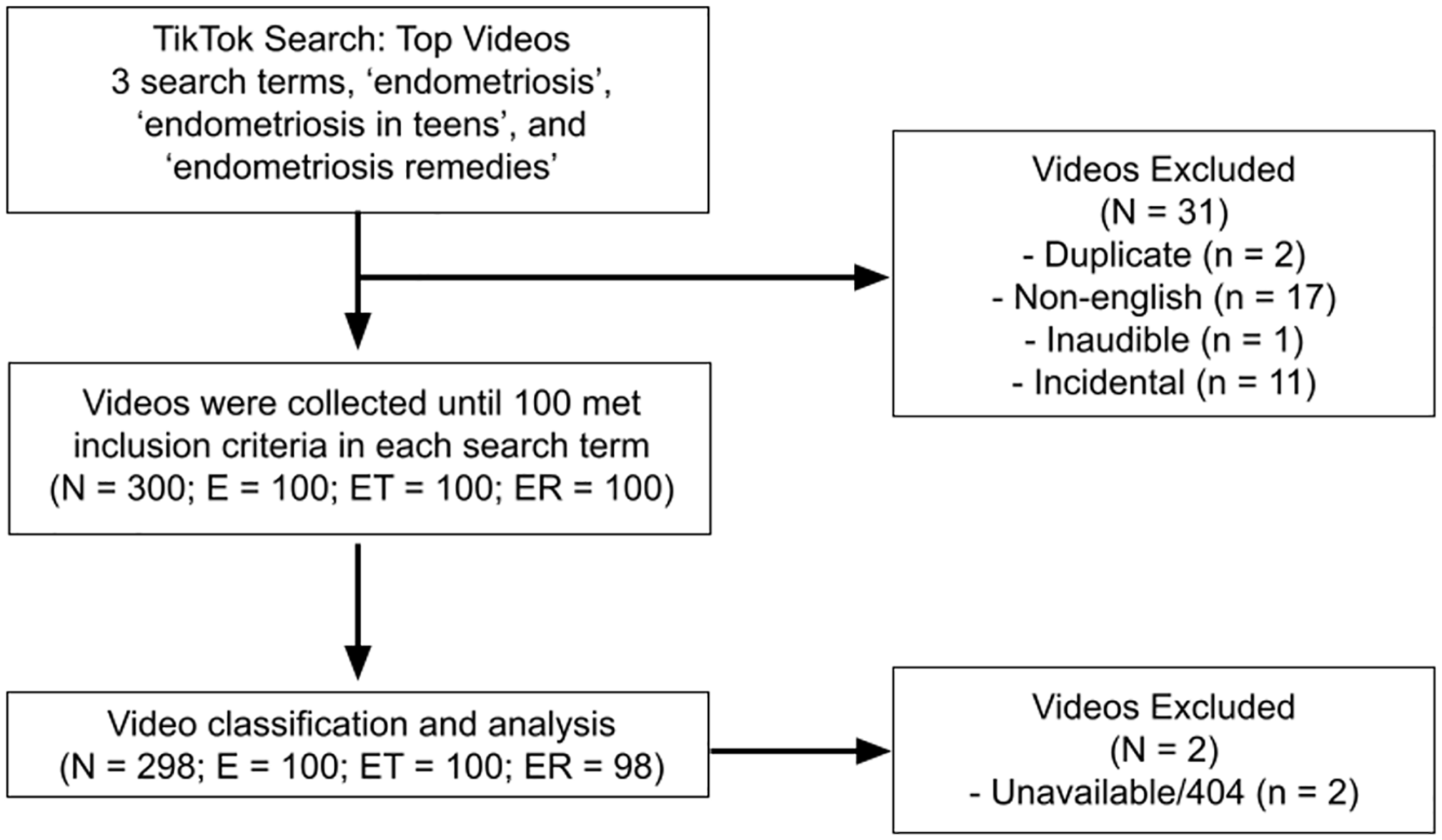
Flowchart of method for video inclusion.
The factual content of the selected videos was then assessed by a reviewer (SI) based on current clinical knowledge with the ACOG guidelines as the main resource. If there was any confusion on factualness or category, a second reviewer (EH) was used to come to a consensus. Erroneous information about endometriosis was sorted into four types adapted from Acero et al, 2023: incorrect information about causes of endometriosis, incorrect information about endometriosis symptoms, incorrect information about endometriosis treatment, and other incorrect information about endometriosis. 18 Our study accounted for the possibility that a single video could contain multiple types of misinformation.
Attitudes toward endometriosis were also measured in the videos using deductive coding, organized into three groups based on a previous project studying self-stigma: positive/neutral, negative, and mixed. 19 Positive/neutral attitudes reflected recovery, discovery, real-life goals, empowerment, objective, advocacy, community, and other positive attitudes. 20 Negative attitudes reflected pain, sadness, anger, fear, and other negative attitudes. Mixed attitude videos combined both of these elements. Further elaboration on attitudes and expectations can be referenced below in Table 1.
Attitudes: Description of positive/neutral and negative attitudes toward endometriosis.
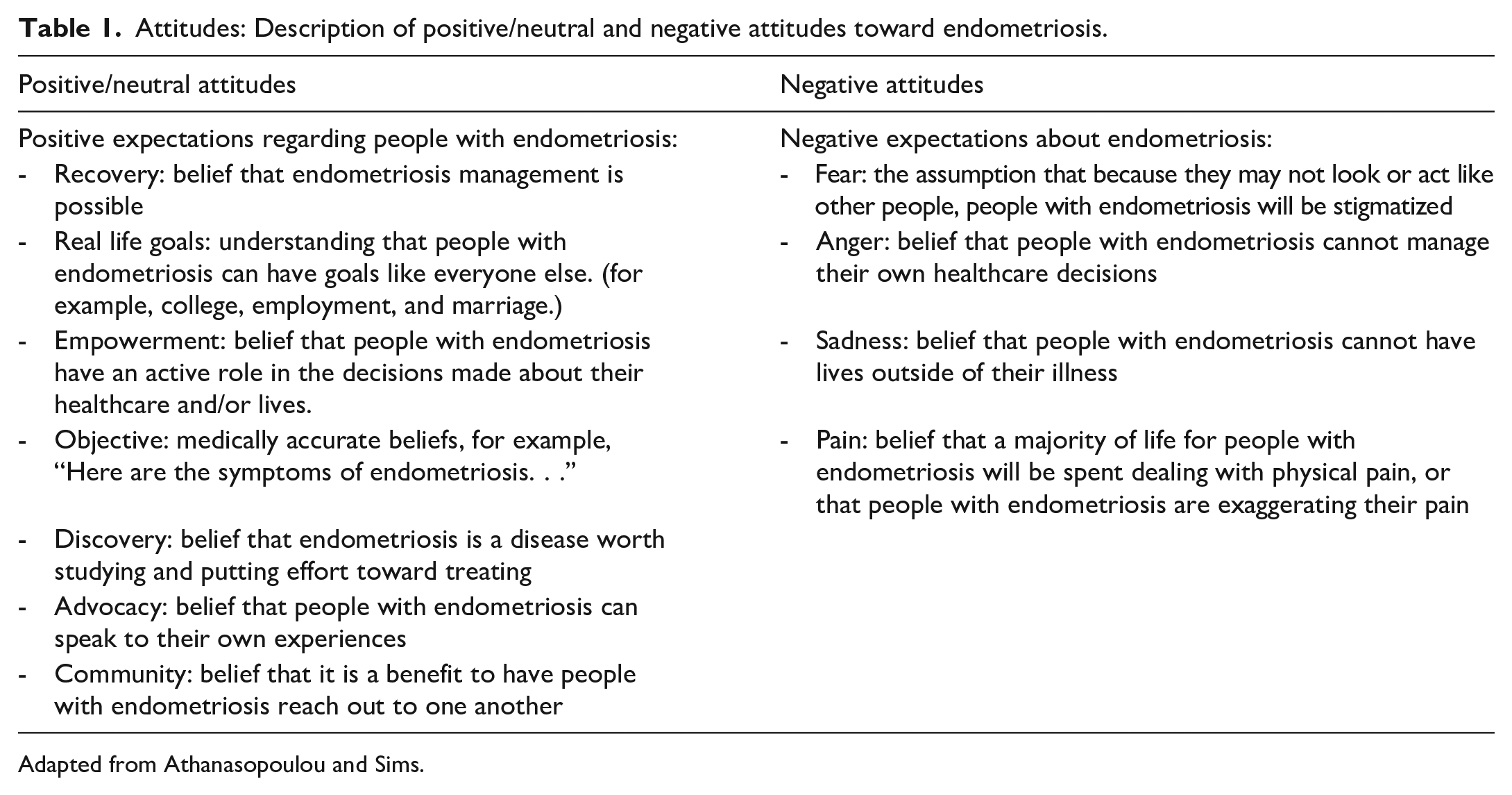
Adapted from Athanasopoulou and Sims.
Finally, the rater reliability/stability of the content analysis was examined by a reviewer (SI) based on Athanasopoulou et al, reanalyzing 50% of the videos (50 videos per search term), and calculating the number of re-coded items. 19
Categories were analyzed using Fisher’s exact, chi-squared, and Mann–Whitney U tests; p-values <0.05 were considered statistically significant, and all tests were two-sided. Ethics Board and IRB approvals were not required by our institutional review board as the study did not include human or animal subjects and all data was collected using a publicly available website.
Results
A total of 331 TikTok videos were screened, and ultimately, 300 videos were analyzed for endometriosis-related content. After screening, two videos were later excluded. The 298 videos analyzed in the three endometriosis tags had a total of 139,680,532 views (median: 24,900; range: 2–25,900,000). The majority of videos were uploaded by non-physicians, with physician-created videos compromising only 17% of the total. News organizations created six videos, a corporation created one video, and none of the videos were uploaded by health organizations. The descriptive features of the TikTok videos are shown in Table 2. Physician-produced videos were statistically significantly more likely to be shared by other users than videos created by non-physicians.
Source type (physician vs non-physician): Descriptive features of the endometriosis-related videos by source type.
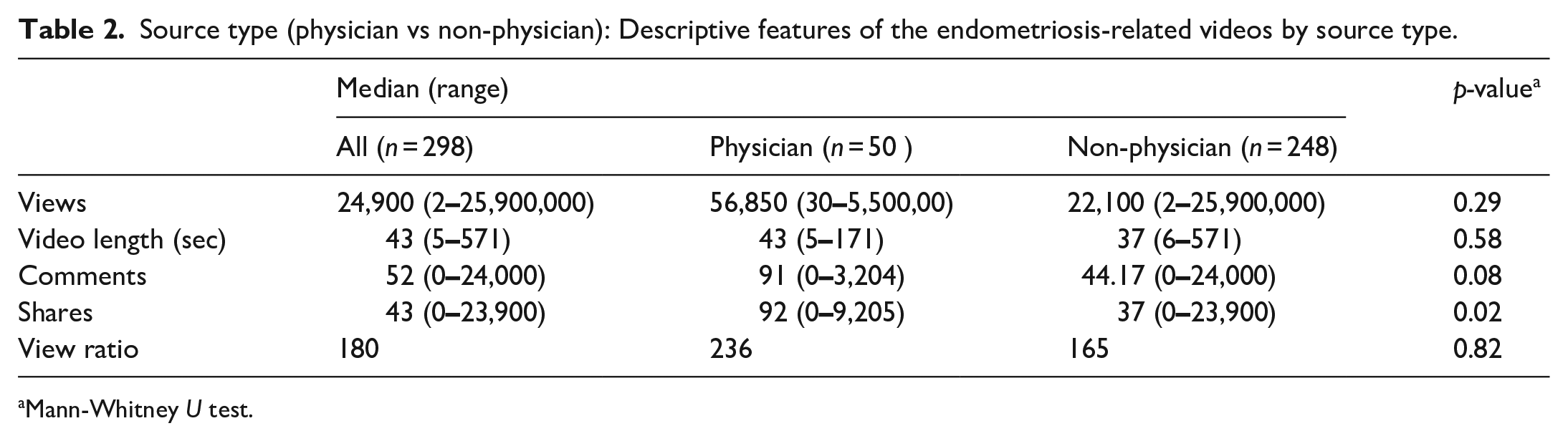
Mann-Whitney U test.
Overall, out of 298 videos, 69 videos (23.2%) had incorrect or misleading information about causes, treatment, symptoms, or information about endometriosis (Table 3). Videos with multiple types of misinformation were counted multiple times in the table below. Twenty-one videos (7.0%) stated causes for endometriosis that are either incorrect or not clinically validated, such as excess estrogen or ferritin. 21 Four videos (1.3%) attributed incorrect or nonspecific symptoms to endometriosis, such as androgenic hair growth and sensory issues. Forty-two videos (14.1%) presented information on treatments and cures for endometriosis that have not been clinically validated, including herbal remedies, acupuncture, juice cleanses, anti-inflammatory diets, or supplements. 22 Only three of the 298 reviewed videos discussed clinically validated, non-surgical treatments for endometriosis other than combined oral contraceptive pills (COCPs). Fifteen videos presented other incorrect information on endometriosis, such as a false correlation between staging and pain level or the incorrect assumption that endometriosis always results in infertility. Non-physicians shared significantly more incorrect information about endometriosis overall (p < 0.0008) and within the “endometriosis remedies” search term (p < 0.03). The most common type of misinformation pertained to endometriosis treatment.
Video source and misinformation types among search terms.
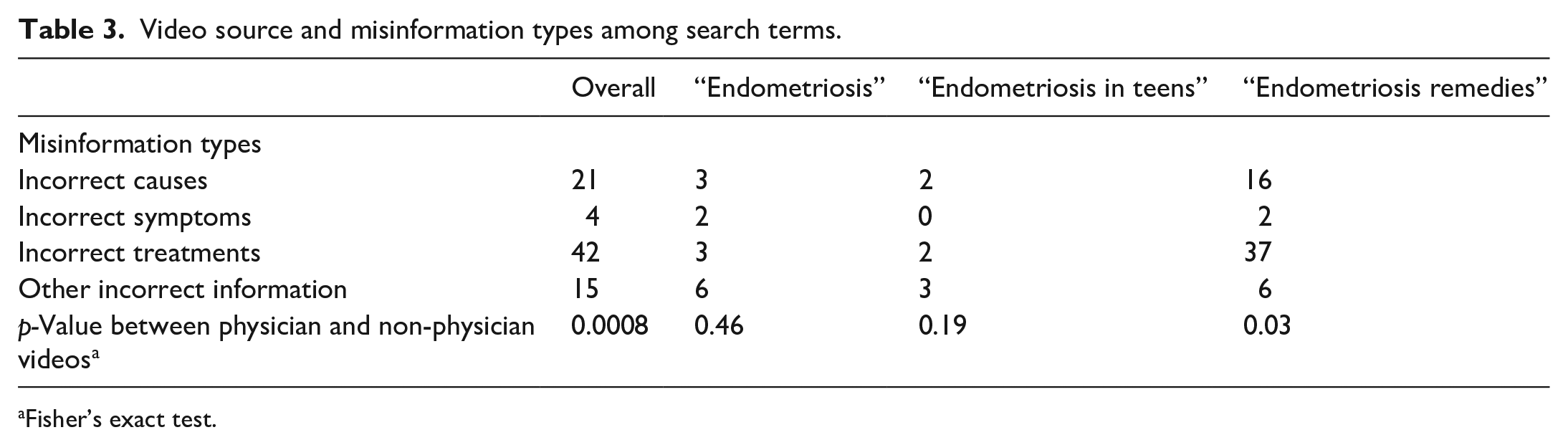
Fisher’s exact test.
About sixty percent of analyzed TikTok videos presented positive/neutral attitudes about endometriosis (Table 4). The most common positive/neutral attitude among both physicians and non-physicians was objective, by which creators described the illness with neutral, factual information to the audience (n = 88). Non-physician videos significantly focused on recovery (p < 0.003) and positive/neutral attitudes overall (p < 0.02), while videos from physician sources specifically focused on disseminating objective data (p < 0.01). Other attitudes found in the positive/neutral group were humor and surprise—for instance, a comical patient story during treatment for an acute pain episode or shock at new pharmaceutical treatment options. Non-physician sources were associated with negative attitudes (p < 0.003). The most frequent negative attitude surrounded pain, which was not associated with either source type (p < 0.27). The other attitude in the negative group was confusion, such as uncertainty surrounding medication side effects. The inter-rater reliability of content analysis was high, only five out of the 150 videos (3.0%) were re-coded.
Positive/neutral and negative attitudes toward endometriosis in videos.
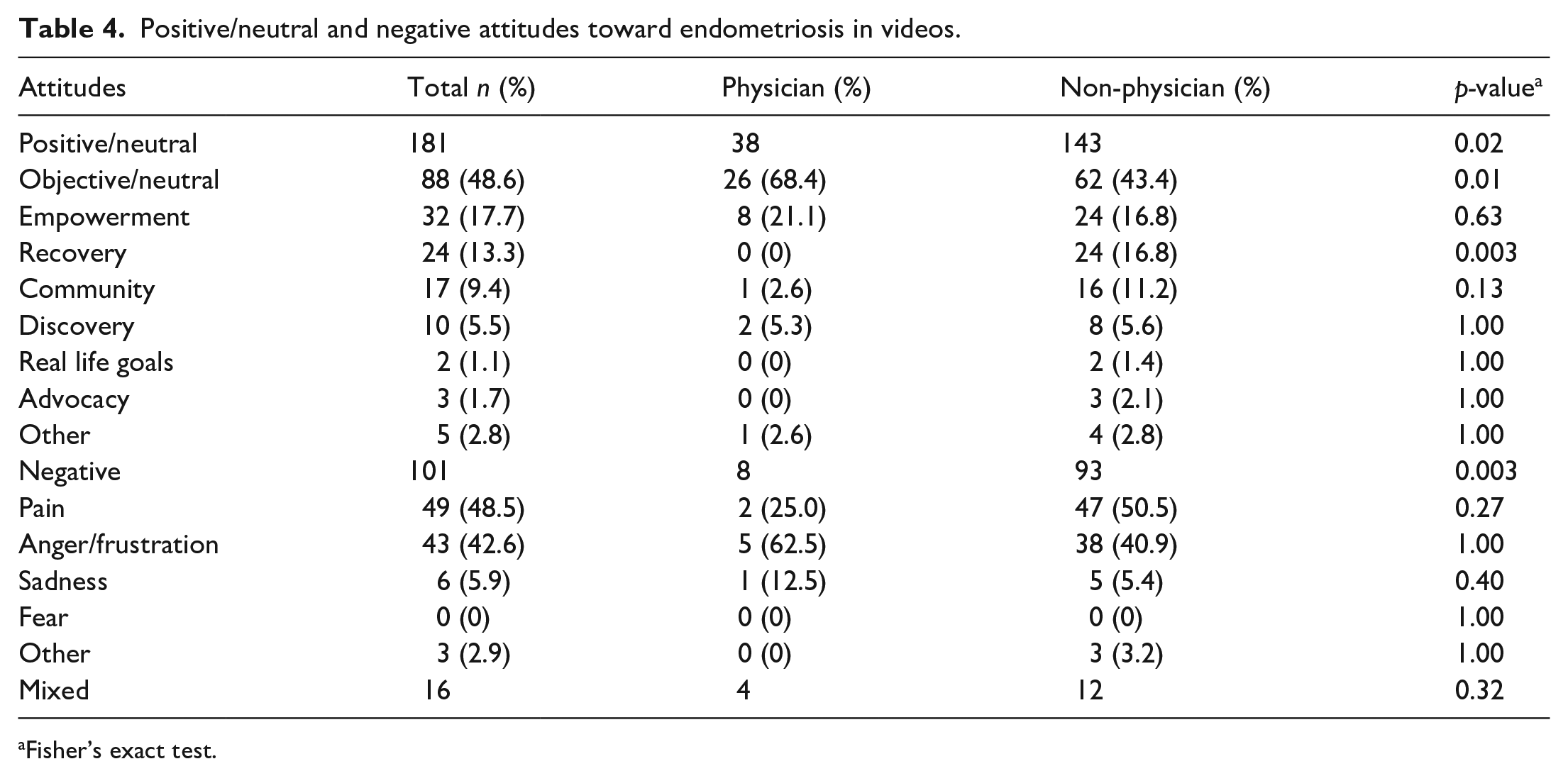
Fisher’s exact test.
Misinformation from non-physician sources was strongly associated with a positive/neutral attitude (p < .00002; Table 5).
Videos with misinformation compared to attitudes.
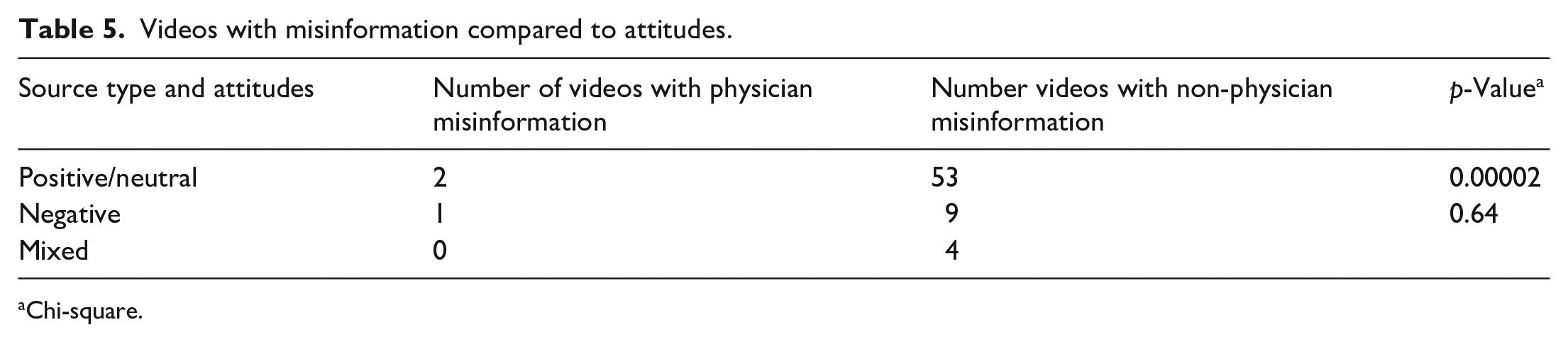
Chi-square.
Discussion/conclusion
Videos on TikTok about endometriosis contain relatively truthful content on symptoms (1.3%), but also significantly high amounts of misinformation about treatment (14.1%). Our results re-enforce previous literature studying endometriosis information on social media, as there is a lack of comprehensive discussion of management options on TikTok. 15 Our study further found that only 1% of the analyzed videos discussed medication management other than COCPs.
Notably, popular TikTok misinformation does not reflect traditional misconceptions about endometriosis, but rather the newer misinformation trends of holistic health and “wellness.” This is exacerbated by pseudo-healthcare providers (e.g. naturopaths and functional doctors) who offer pseudoscientific explanations and treatments through their content to gain both an audience and profit. Additionally, a positive/neutral attitude is associated with misinformation on non-physician videos. Videos within this category tend to discuss unfounded cures and remedies for endometriosis optimistically, often with the intent to persuade their viewers to buy their products.
Continuing the thematic trend of other social media platforms, a majority of non-physician videos were associated with a negative attitude (p < 0.003), and focused on patients’ negative personal experiences with either endometriosis symptoms or healthcare encounters, using the online community as a place to explain their experiences with this chronic illness.2,14,15 Not a single video in our search minimized the pain, symptoms, or diagnosis of endometriosis, reflecting the bedside manner patients hope to receive from the medical community. 23 Physicians need to be prepared to have respectful discussions about these un-validated endometriosis treatments with their patients while validating the feelings of fear, distrust, and confusion that led them to seek out those treatments in the first place.
Possible future interventions
Non-physician videos outnumber physician videos three to one. Even so, physician videos were shared significantly more and had a higher view ratio than nonphysician videos, so they are engaging on the platform overall, in contrast to YouTube, where non-physician videos had more engagement. 14 With this in mind, physicians and other Obstetric and Gynecologic (OBGYN) healthcare provider creators may be able to effectively combat misinformation on TikTok by simply producing more videos. Physician-produced videos on endometriosis symptoms could help motivate patients to go to a doctor’s office to get evaluated sooner, or content that candidly discusses methods to control endometriosis other than COCPs could help counteract the unfulfilled promises of ineffective treatments. Visual aids like these are shown to be effective in improving patients’ knowledge and decision making, which may further prevent the spread of online misinformation. 24 Physicians could also strive to collaborate with the endometriosis survivor community. Working in tandem with chronic health influencers would allow physicians to improve their content, learn from the community, broaden their audience reach, and establish a mutually beneficial relationship between healthcare workers and health influencers.25,26
Limitations
There were several limitations to our study. While we used a new account with a VPN in the United States to make an experimental “neutral” profile, this was limited by the TikTok application’s ability to use device settings and other demographic indicators to tailor recommendations to the account holder’s predicted preferences. Meanwhile, TikTok users outside of this experimental setting who search for these terms will have their results tailored based on previous engagement data and previously liked topics. Considering TikTok has been implicated in spreading more misinformation due to high engagement rates associated with such content, 10 the average TikTok user may be more likely to see misinformation about endometriosis than our experimental account. Additionally, TikTok is a rapidly shifting social media platform and this study only analyzed videos gathered over one day. Because of this, the truthfulness of content and attitudes toward endometriosis may change over time as new videos are created. Furthermore, changes to recommendation algorithms may, in turn, change which content is most visible on the platform. Finally, while the stability of re-coding was calculated, the data was not scored by a second rater, and the repeatability of the content analysis was not examined, which limited the study from identifying potential rater biases.
Conclusion
Future research could develop methods for interested physician-educators to create professional and engaging content for TikTok and other short-form video platforms. As new social media platforms become popular, healthcare educators will continuously need to bridge generational gaps to provide factual information to younger audiences.
Footnotes
Declaration of conflicting interests
The author(s) declared no potential conflicts of interest with respect to the research, authorship, and/or publication of this article.
Funding
The author(s) received no financial support for the research, authorship, and/or publication of this article.

Private link to figshare data set
Data Availability Statement
The data that support the findings of this study are openly available in figshare at 10.6084/m9.figshare.24081759.