




Abstract
Premenstrual syndrome (PMS) and dysmenorrhea, in addition to harming the physical and mental health of women, also disrupt their daily life and quality of life. We aimed to investigate the effects and underlying mechanisms of Curcuma longa (turmeric) and curcumin on PMS and dysmenorrhea. PRISMA guideline 2020 was followed for conducting this systematic review. Comprehensive literature searches were conducted across multiple databases, including PubMed, EMBASE, Web of Science, and Scopus. Finally, 17 articles were found after considering the study’s inclusion and exclusion criteria into account. Data were extracted and entered into an Excel file for further investigation and drew the results. Curcuma longa and curcumin affect PMS and dysmenorrhea through various mechanisms. They inhibit the activity of cyclooxygenase-2 (COX-2) and the production of prostaglandins, thus reducing inflammation and pain. Additionally, curcumin’s antioxidant properties protect against oxidative stress, and lipid peroxidation helps maintain hormonal balance, exert analgesic effects, and relieve the symptoms of PMS and dysmenorrhea. They also insert neurotransmitter modulatory properties, such as increased serotonin and dopamine levels, which may contribute to their antidepressant, and sedative effects. Curcuma longa and curcumin indicated promising therapeutic effects in reducing PMS and dysmenorrhea symptoms due to their anti-inflammatory and antioxidant effects. Although, further well-designed clinical trials are needed to establish their efficacy and optimal dosage.
Introduction
Premenstrual syndrome (PMS) and dysmenorrhea are common conditions experienced by many women during their reproductive years. 1 PMS refers to a wide range of physical and emotional symptoms before menstruation, while dysmenorrhea refers to painful menstrual cramps. 2 The most typical physical and psychological symptoms of PMS in women are dysmenorrhea, exhaustion, irritability, and anxiety. 2 These conditions can significantly negatively impact a woman’s quality of life, academic performance, and professional efficiency.2 –4 Various drugs are available for the treatment of PMS and dysmenorrhea, such as non-steroidal anti-inflammatory drugs (NSAIDs), anxiolytic agents, selective serotonin reuptake inhibitors (SSRIs), gonadotropin-releasing hormone (GnRH) agonists, oral contraceptive pills, and spironolactone. However, each has its complications. For example, NSAIDs have many side effects, including headaches, indigestion, and drowsiness.5,6 Therefore, it becomes necessary to find new treatment strategies and complementary medicines.
There has been growing interest in using natural remedies which are used in the treatment of various diseases due to their antioxidant and anti-inflammatory properties.7 –9 Curcuma longa (commonly known as turmeric) and its active compound curcumin, had promising effects in managing pain and inflammatory diseases.10 –12 Curcuma longa, a perennial herbaceous plant native to Southeast Asia, is widely known for its culinary and medicinal uses. It is the primary source of the bright yellow spice called turmeric, which contains various bioactive compounds. Curcumin is the main active component found in turmeric, responsible for its vibrant color and numerous health benefits. It possesses potent anti-inflammatory, antioxidant, and analgesic properties, making it a subject of interest for menstrual health research.13 –15 So, this study aimed to investigate the effects and underlying mechanisms of Curcuma longa and curcumin on PMS and dysmenorrhea.
Materials and methods
Data sources and search strategy
PRISMA guidelines 2020 were used to develop and conduct this systematic review. An extensive literature search was done in multiple databases, including Web of Science, EMBASE, PubMed, Embase, Cochrane Library, and Scopus, on 6/20/2023. For searching in database records, various keywords were applied. The terms were including: ((“Curcuma” OR “Tumeric” OR “Turmeric” OR “Curcumin” OR “Diferuloylmethane”) AND (“premenstrual syndrome” OR “premenstrual tension” OR “dysmenorrhea” OR “painful menstruation”)), which were taken from the Medical Subject Headings (MeSH).
Study selection
The articles searched in the mentioned databases were imported into the EndNote 20 (released on 30 November 2021) Software, and duplicate records were removed. Two researchers independently screened all the studies found in the databases regarding titles /abstracts. The clinical trial design studies that examined how Curcuma longa and curcumin can impact premenstrual syndrome and dysmenorrhea were included in this systematic review based on the inclusion criteria. Exclusion criteria include not having access to the full texts of the publications, conference articles, and non-English studies. Two researchers attached and investigated the full texts of all included studies after the systematic literature review was finished and studies were screened for inclusion and exclusion criteria. If there is a disagreement or conflict between two investigators, it is usually settled down through discussion.
Data extraction
The data about the first author’s name, the publication date, the setting, the type of study, the sample size, the investigated disorder, the clinical approach and dosage, the time of exposure, and the outcomes were extracted from the publications after they had been reviewed. The extracted data was not included in the study if it had irrelevance to the study’s goal.
Results
Search results, study characteristics of selected studies
The PRISMA flowchart illustrated the included and excluded studies searched in the main databases (Figure 1). In general, we retrieved about 238 articles in the initial search. Out of this number, we removed about 17 articles in EndNote due to duplication. Some other titles/abstracts were also excluded (n = 8); four because of not include desirable data,16 –19 three because of not having been published in English,20 –22 and a conference article. 23
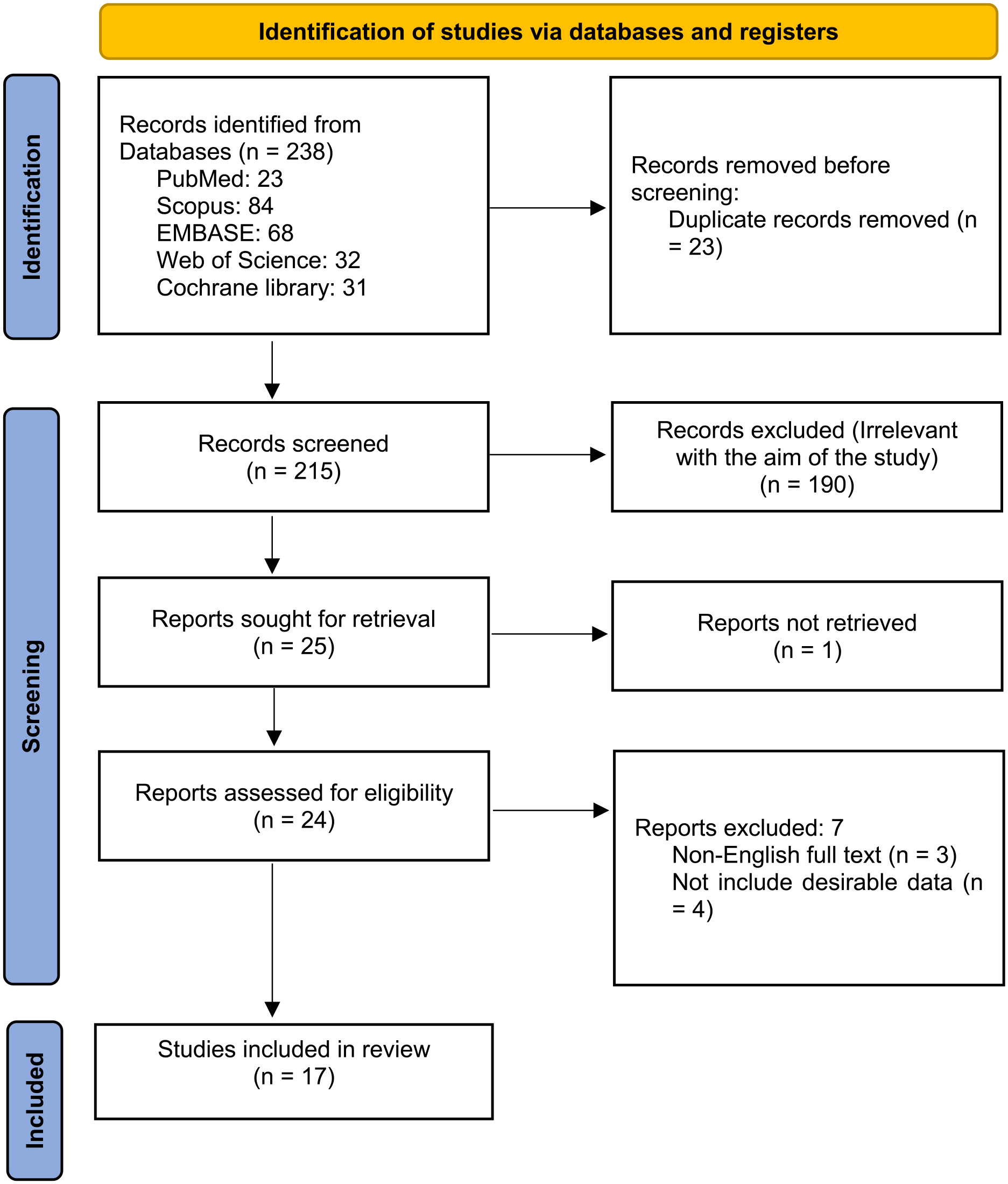
Flow diagram for including studies in the systematic review.
Finally, 17 articles were selected for the final assessment.6,24 –39 These articles mainly examined outcomes such as cramping pains or disease symptoms before and after the intervention using PMS measurement tools. The studies were conducted mainly in Iran and Indonesia, and some in Brazil, Turkey, and India. Most studies were designed and implemented as RCTs (Table 1).
Characteristics of selected studies of the effect of Curcuma longa and curcumin on PMS and dysmenorrhea.
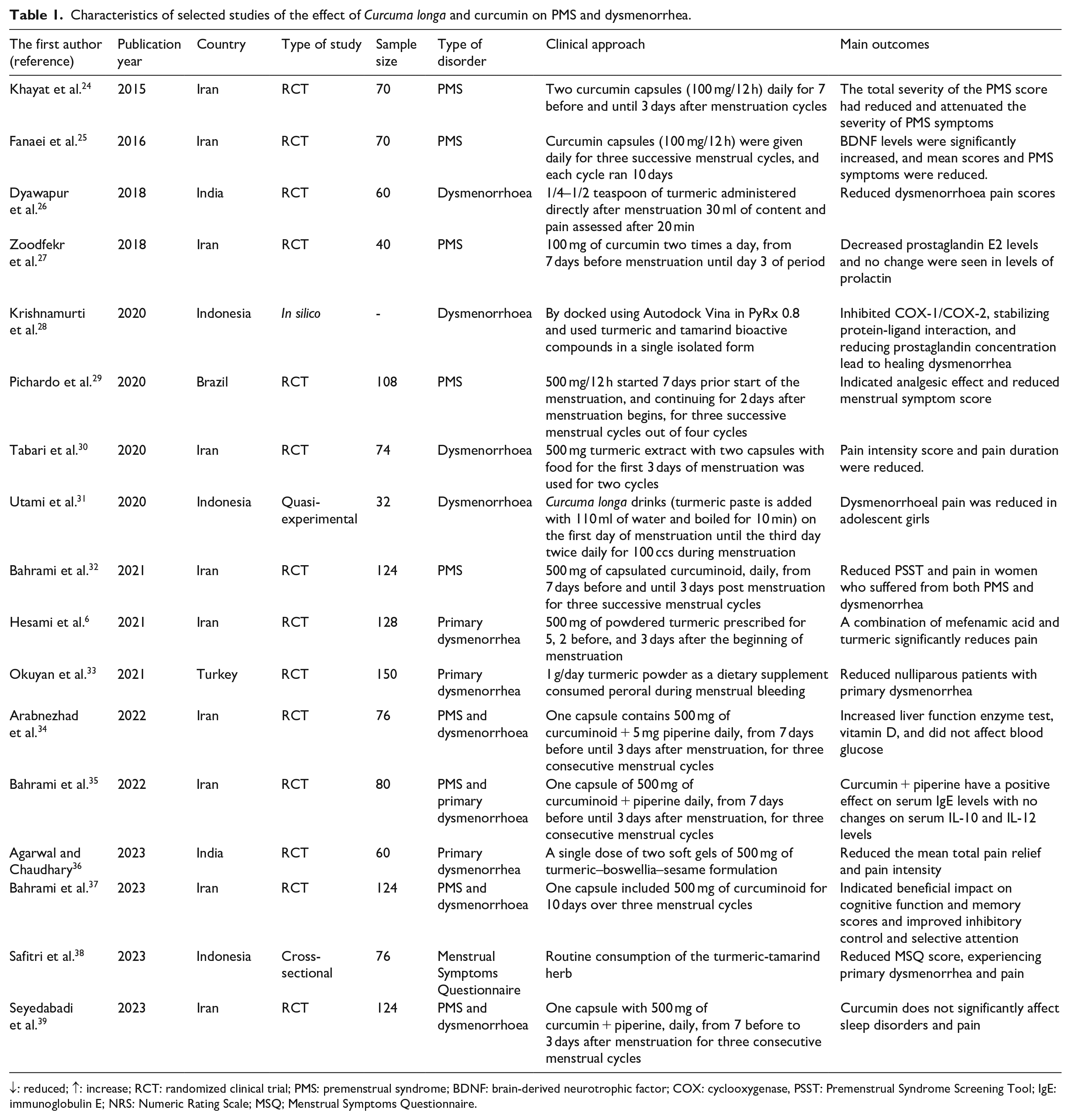
↓: reduced; ↑: increase; RCT: randomized clinical trial; PMS: premenstrual syndrome; BDNF: brain-derived neurotrophic factor; COX: cyclooxygenase, PSST: Premenstrual Syndrome Screening Tool; IgE: immunoglobulin E; NRS: Numeric Rating Scale; MSQ; Menstrual Symptoms Questionnaire.
Effects of Curcuma longa (turmeric) and curcumin on PMS and dysmenorrhea
Studies have suggested that curcumin may alleviate several symptoms associated with PMS. The anti-inflammatory properties of curcumin may help reduce breast tenderness, bloating, and abdominal discomfort commonly experienced during the premenstrual phase. 40 Additionally, curcumin’s ability to modulate neurotransmitters like serotonin may contribute to its potential mood-stabilizing effects, potentially reducing the emotional symptoms of PMS, including irritability, depression, and anxiety. 24
Dysmenorrhea is often characterized by severe menstrual pain caused by increased production of inflammatory prostaglandins. Curcumin’s anti-inflammatory and analgesic properties make it a promising natural remedy for managing dysmenorrhea.5,34 By inhibiting the production of pro-inflammatory mediators, curcumin may help alleviate menstrual cramps and reduce the intensity and duration of pain during menstruation. Some studies have indicated that curcumin’s pain-relieving effects may be comparable to NSAIDs commonly used to manage dysmenorrhea.14,41
Mechanisms of action of Curcuma longa (turmeric) and curcumin on premenstrual syndrome and dysmenorrhea
Curcuma longa and curcumin affect PMS and dysmenorrhea through various mechanisms, including anti-inflammatory properties, antioxidant properties, analgesic effects, and modulating neurotransmitters. We explain these mechanisms in the following:
Anti-inflammatory properties
Curcumin has been found to exhibit potent anti-inflammatory properties. In PMS and dysmenorrhea, inflammation can contribute to hormonal imbalances and pain. By reducing inflammation, curcumin may help alleviate symptoms associated with these conditions. 42
Curcuma longa, commonly known as turmeric, and its active compound, curcumin, have long been recognized for their potent anti-inflammatory properties. Numerous studies have demonstrated the ability of curcumin to reduce inflammation by targeting various molecular pathways involved in the inflammatory response. 14 For example, curcumin has been shown to inhibit the activity of inflammatory enzymes such as cyclooxygenase-2 and inducible nitric oxide synthase (iNOS), leading to a decrease in the production of inflammatory mediators such as prostaglandins and nitric oxide (NO). Additionally, curcumin has been found to suppress the expression of pro-inflammatory cytokines, such as tumor necrosis factor-α (TNF-α) and interleukin (IL)-6, which may play critical roles in the initiation and propagation of inflammation. 43 Curcumin potentially regulates Mitogen-activated protein kinases (MAPK), Activator Protein 1 (AP-1), the Janus kinase/Signal transducer and activator of transcription (JAK/STAT), and other signaling pathways. It prevents the production of inflammatory mediators. 14 Furthermore, curcumin has been shown to modulate the activation of cyclooxygenase-2 (COX-2) and prostaglandin E2 (PGE2). 44 In the included articles in this study, curcumin or Curcuma longa, prostaglandin E2, COX-1/COX-2, and serum IL-10 and IL-12 levels were reduced or inhibited due to patient treatment.27,28,35
Antioxidant properties
Although the exact causes of PMS symptoms are unknown, the hypothesis process complex psycho-somatic disorders processes, including they are probably impacted by oxidative stress. In healthy women, estrogen and progesterone have antioxidant effects; however, pro-oxidant activity is increased in PMS patients, resulting in oxidative damage. Progesterone and allopregnanolone levels are linked to depression in women during the premenstrual phase. Nevertheless, oxidative stress and chronic inflammation may influence the onset of PMS and other gynecological diseases.45,46 On the other hand, oxidative stress has a crucial role in dysmenorrhea pathophysiology. According to some theories, oxidative stress results from factors that upset the balance between reactive oxygen species (ROS) and antioxidants, such as elevated levels of activated macrophages, iron accumulation, or environmental contaminants. Increased ROS is a significant contributor to the onset of disease, and endometriosis and infertility may be linked to oxidative stress that has spread to the peritoneal environment. 47 Curcumin can alleviate endometriosis symptoms and prevent the angiogenesis of endometrial lesions due to its antioxidant and anti-inflammatory properties. 48 According to some studies, ROS or free radicals may encourage endometrial cell growth and adhesion in the peritoneal cavity, which could lead to endometriosis and infertility.
Curcumin, as a bioactive polyphenolic ingredient, possesses potent antioxidant properties, which can help neutralize harmful free radicals in the body. Oxidative stress has been implicated in hormonal imbalances and menstrual pain. By reducing oxidative stress, curcumin may support hormonal balance and reduce symptoms of PMS and dysmenorrhea.49,50 Curcumin’s antioxidant activity arises from its ability to scavenge free radicals and inhibit the generation of ROS, which are known to contribute to oxidative stress and inflammation. Curcumin increases the levels of glutathione peroxidase (GPx), glutathione (GSH), and catalase (CAT) activities and reduces the level of malondialdehyde (MDA) and total oxidant status (TOS) in the blood. 51
Moreover, the antioxidant activity of curcumin is associated with triggering several antioxidant enzyme activities, including CAT, glutathione transferase, and heme-oxygenase-1.52,53 Curcumin can reduce lipid peroxidation, a process in which free radicals damage fats and lipids within the body, further contributing to its antioxidant properties. 54 A study revealed that bioactive molecules such as curcumin exert antioxidant and anti-inflammatory activity and, by these mechanisms, can improve mood by increasing serotonin and exerting antidepressant, sedative, and analgesic effects in premenstrual syndrome. 55
Analgesic properties
Pain and cramping are the prevalent symptoms and uncomfortable side effects of PMS and dysmenorrhea.1,56 Curcumin has been found to exhibit analgesic properties and may help reduce pain by inhibiting inflammatory mediators and modulating pain perception pathways. 5 Curcumin exhibits its analgesic effects at a cellular level by modulating immune and neuronal cells. This multifaceted compound suppresses pro-inflammatory mediators and enhances endogenous anti-inflammatory mediators. Doing so restores the delicate balance between inflammatory processes that contribute to pain and those that promote healing. 57 Curcumin inhibits the activity of COX-2, leukotrienes, cytokines, and the secretion of prostaglandins, thus reducing inflammation and pain. 44 So, they play a crucial role in promoting inflammation and sensitizing pain receptors; thus, by inhibiting their activity, curcumin helps reduce pain sensations. 43
Additionally, curcumin has been found to modulate the transmission of pain signals by affecting neurotransmitters such as serotonin, dopamine, and glutamate. These neurotransmitters play a crucial role in transmitting pain-related signals and perceiving pain. Moreover, curcumin reduces neuroinflammation by modulating pro-inflammatory factors and TNF-α. 58
Furthermore, curcumin’s analgesic properties can also be attributed to its ability to modulate the immune response. Curcumin has been shown to suppress the release of pro-inflammatory cytokines, such as TNF-α and IL-1, which contribute to pain and inflammation. 59 Curcumin also has been shown to modulate the transmission of pain signals in both peripheral and central pathways of pain and exert anti-inflammatory effects by regulating effects on macrophage and microglia.60,61 When it comes to modulation at a mechanistic level, curcumin’s actions extend far beyond just modulating neurotransmitters related to pain or blocking transient receptor potential vanilloid type I receptors. It activates pathways involved in cell cycle regulation, apoptosis, mutagenesis, and oncogene expression - all key factors impacting cancer progression. 58
Modulate neurotransmitters, hormones, and mood regulation
Effects on neurotransmitters
There are several proposed mechanisms by which curcumin and turmeric may modulate neurotransmitters, such as anti-inflammatory, antioxidant activity, and monoamine oxidase (MAO) inhibition. 62
Curcumin has been found to possess anti-inflammatory effects. Chronic inflammation in the brain can negatively affect neurotransmitter balance, including adverse effects on norepinephrine, dopamine, and serotonin. So, through suppressing inflammation, curcumin may indirectly support optimal neurotransmitter function and can be used for treating major depression. 63 In addition, curcumin is a potent antioxidant, capable of scavenging free radicals and reducing oxidative stress in various parts of the tissues. Oxidative stress can impair neurotransmitter signaling and contribute to neurodegenerative conditions. This situation also leads to mitochondrial dysfunction, consequently disturbing cellular signaling, lipids, and protein functions and disrupting the chemical integrity of the brain. Ultimately, this condition precipitates neuroinflammation, neurotransmitter imbalance, and apoptotic cell death. 64 By reducing oxidative stress, curcumin may help maintain neurotransmitter balance. Another mechanism of curcumin is to inhibition of MAO activity. MAO is an enzyme that breaks down neurotransmitters such as serotonin, dopamine, and norepinephrine. Inhibiting MAO activity can increase the levels of these neurotransmitters in the brain. Some studies have suggested that curcumin may inhibit MAO activity, thereby increasing the availability of these neurotransmitters and potentially improving mood and cognitive function. 63
In this regard, curcumin has been shown to modulate serotonin receptors in the brain, particularly the 5-HT1A receptor. By interacting with these receptors, curcumin may affect serotonin signaling and contribute to its antidepressant and anxiolytic effects.65,66
Dopamine is another crucial neurotransmitter involved in mood regulation, motivation, and reward. Curcumin has been shown to modulate dopamine levels and dopamine receptor activity in various studies.67,68
According to research, curcumin also helps neurotrophic factors like brain-derived neurotrophic factor (BDNF) express and function more effectively. In addition to helping synapse plasticity, neurotrophic factors are essential for neurons’ growth, development, and survival. Curcumin might aid in maintaining and properly operating neurotransmitter systems by raising the levels of these components and potentially treating behavioral disorders. 69
Effects on hormones
Curcumin has been shown to affect hormone levels by influencing several pathways. For example, it may inhibit the enzymes involved in estrogen metabolism, potentially leading to increased estrogen levels. Additionally, curcumin has been found to modulate the production and activity of certain prostaglandins, which are hormone-like substances involved in the menstrual cycle and pain sensation. 5 Hormonal imbalances, particularly estrogen, and progesterone, are associated with PMS and dysmenorrhea. 70 Curcumin has been reported to influence hormone levels and their receptors. By modulating hormone signaling, curcumin may help regulate mood and mitigate hormonal-related symptoms. 14
Activation of the corticotropin-releasing hormone system by high-stress levels inhibits the secretion of follicle-stimulating hormone (FSH) and luteinizing hormone (LH), which inhibit follicle development. Stress-related hormones, including cortisol and adrenaline, can elevate prostaglandin synthesis and lead to dysmenorrhea.71,72
Curcumin also inhibited stress by reductions in brain-derived neurotrophic factor (BDNF) protein levels and phosphorylated cyclic adenosine monophosphate (cAMP) response element-binding protein (pCREB) to CREB levels (pCREB/CREB) in animal models’ hippocampus. 73 Curcumin is considered an effective inhibitor of adrenocorticotropic hormone and angiotensin II-stimulated cortisol secretion. 74
PMS is often associated with mood swings, psycho-emotional, irritability, and depression. 75 Curcumin has been investigated for its potential antidepressant and mood-stabilizing effects. It can regulate anxiety-like behavior and stress in patients. 76 It also may modulate neurotransmitters like serotonin and dopamine, which play crucial roles in mood regulation. By positively influencing mood, curcumin could help alleviate PMS symptoms. Curcumin has been shown to influence various neurotransmitters in the brain, including serotonin, dopamine, and gamma-aminobutyric acid (GABA). These neurotransmitters play essential roles in mood regulation and emotional well-being. By modulating their levels or activity, curcumin may help stabilize mood and alleviate emotional symptoms associated with PMS and dysmenorrhea.77 –79
Although there is still no strong evidence, melatonin as a pineal hormone is an effective and safe treatment in reducing PMS symptoms. 80 Melatonin aids in sleep, and the timing of your internal 24-h clock, or circadian rhythms, has a complex role in the immune system, which also has anti-inflammatory and antioxidant properties. 81 Melatonin might improve hippocampus cell survival by reducing oxidative stress, upregulating B-cell lymphoma 2 (Bcl-2), downregulating Sirtuin 2 (SIRT2) expression, and decreasing oxidative stress. 82 Curcumin, the Curcuma longa plant’s principal active ingredient, has a variety of medicinal uses, including neuroprotection. It prevents neuronal loss, structural changes, and deleterious effects of sleep deprivation. 83
Moreover, curcumin and melatonin directly affect activity and receptor expression in endometrial tissue, endometrial lesions’ invasion, apoptosis, adhesion, and angiogenesis. Regarding dietary disease management and prevention for women, curcumin use may be promising for women’s genital disorders.84,85 Clinical and experimental evidence indicated that bioactive compounds such as curcumin not only have anti-inflammatory and antioxidant properties but also revealed other activities such as serotonergic, GABA-A receptor agonist, antidepressant, analgesic, and sedative effects and insert complex physical and psychological impacts on relieving PMS and dysmenorrheal symptoms.55,86 Nevertheless, despite the promising evidence of melatonin in reducing the symptoms of PMS and dysmenorrhea, a study showed that curcumin has no effect on insomnia in young women with these disorders. 39 Therefore, more in-depth evidence is needed to determine curcumin’s beneficial effects on melatonin levels and, subsequently, its effect on insomnia in women with PMS and dysmenorrhea.
In general, the possible mechanisms of the effect of Curcuma longa and curcumin on the symptoms of PMS and dysmenorrhea in women are illustrated schematically and briefly in Figure 2.
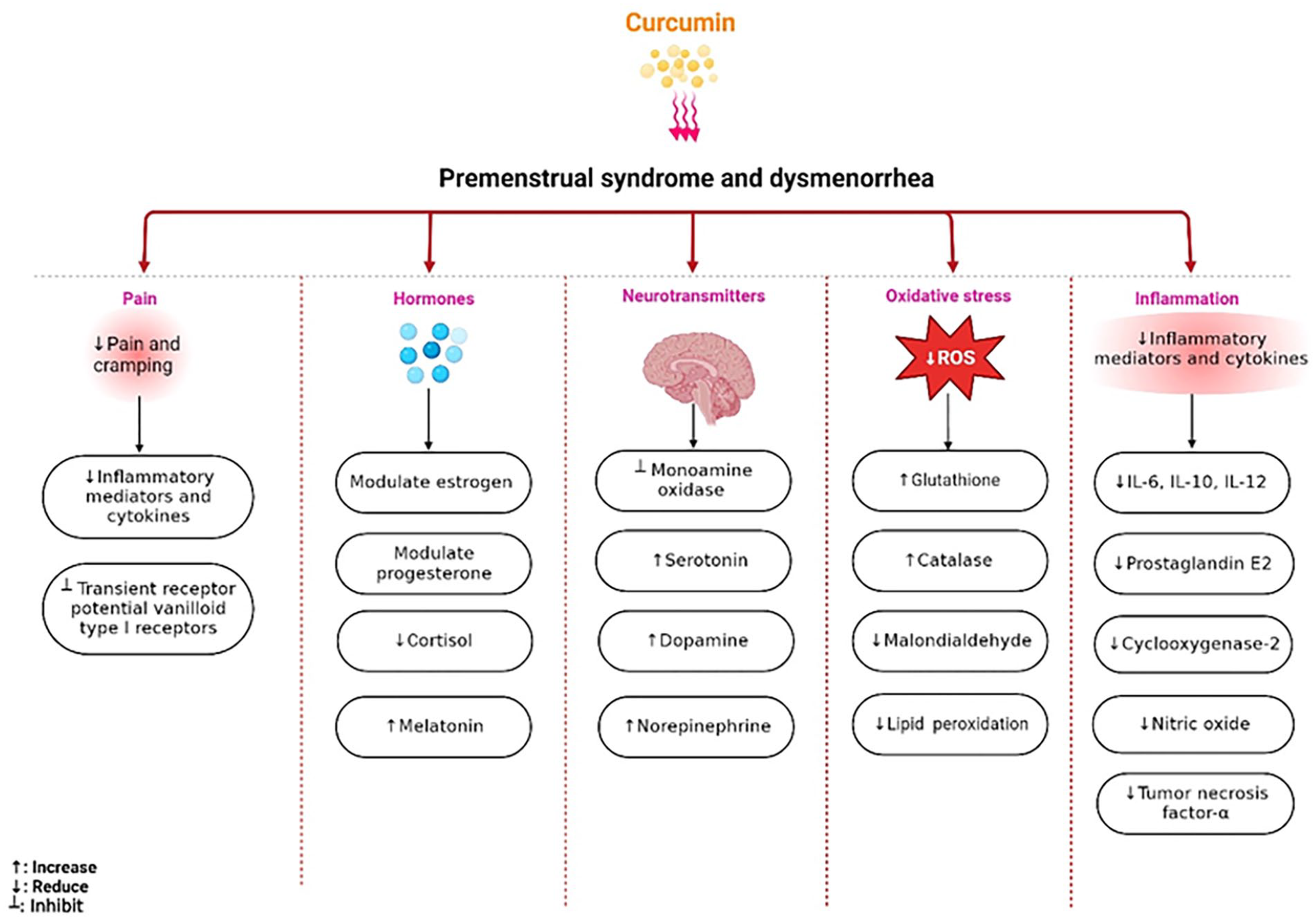
Main possible mechanisms of Curcuma longa and curcumin on PMS and dysmenorrhea (created in: https://www.biorender.com/).
Bioavailability and metabolism of curcumin
One of the main problems is thought to be curcumin’s bioavailability. The poor intestinal and transcellular permeability, instability at alkaline phosphatase pH, and rapid systemic clearance or metabolism and systemic elimination all associated with curcumin’s low oral bioavailability. 87 The interaction between the liver’s extensive reductive and conjugative metabolism and the small intestine’s poor absorption significantly lowers oral bioavailability. In general, curcumin has a low oral bioavailability because of the small intestine’s relatively low absorption rate, the liver’s extensive reductive and conjugative metabolism, and the gall bladder’s role in elimination. The curcumin’s binding to enterocyte proteins, which can change its structure, worsens the poor bioavailability. 88 Coadministration with other agents (nanoparticles, micro/nanoemulsions, liposomes, piperine, solid dispersions, and incorporation into micelles), modulation of route and medium, complexed/encapsulated curcumin, solid and liquid oral delivery systems and structural modifications of curcumin are some current strategies for improving its bioavailability.89,90 The outcomes of clinical trials using various curcumin delivery techniques demonstrated that increased therapeutic efficacy is associated with improved bioavailability. 90 A large number of curcumin formulations have been tested to increase bioavailability, and only some of them have been used commercially, mostly as dietary supplements. 90
Conclusion
Curcuma longa and its active compound curcumin may have beneficial effects on PMS and dysmenorrhea, due to its anti-inflammatory, antioxidant, and analgesic properties, and can be effective in the treatment of PMS and dysmenorrhea. Although, further well-designed clinical trials are needed to establish their efficacy and optimal dosage. It is important to consult with a healthcare professional before incorporating turmeric or curcumin supplements into a treatment regimen, especially for individuals with existing medical conditions or those taking other medications. Nonetheless, the potential of curcumin as a natural alternative for managing PMS and dysmenorrhea holds promise and warrants further investigation.
Supplemental Material
sj-docx-1-pev-10.1177_22840265231219331 – Supplemental material for Effects of Curcuma longa (turmeric) and curcumin on the premenstrual syndrome and dysmenorrhea: A systematic review
Supplemental material, sj-docx-1-pev-10.1177_22840265231219331 for Effects of Curcuma longa (turmeric) and curcumin on the premenstrual syndrome and dysmenorrhea: A systematic review by Zahra Shabanian Boroujeni, Saeid Heidari-Soureshjani and Catherine MT Sherwin in Journal of Endometriosis and Pelvic Pain Disorders
Footnotes
Data availability statement
Data sharing not applicable to this article as no datasets were generated or analyzed during the current study.
Declaration of conflicting interests
The author(s) declared no potential conflicts of interest with respect to the research, authorship, and/or publication of this article.
Funding
The author(s) received no financial support for the research, authorship, and/or publication of this article.

Supplemental material
Supplemental material for this article is available online.
References
Supplementary Material
Please find the following supplemental material available below.
For Open Access articles published under a Creative Commons License, all supplemental material carries the same license as the article it is associated with.
For non-Open Access articles published, all supplemental material carries a non-exclusive license, and permission requests for re-use of supplemental material or any part of supplemental material shall be sent directly to the copyright owner as specified in the copyright notice associated with the article.
