




Abstract
Introduction:
Nanocomposite films have attracted much attention in recent years. Depending on the composition of the film and fabrication method, a large range of applications has been employed for nanocomposite films.
Method:
In this study, nanocomposite films reinforced with multi-walled carbon nanotubes (MWCNTs) were deposited on the aluminum substrate through hot press processing. A shear lag model and Euler beam theory were employed to evaluate the stress distribution and load carrying capability of the nanocomposite film subjected to tensile load and bending moment.
Results:
The influence of MWCNT on the Young’s modulus and load carrying capability of the nanocomposite film was investigated through a parametric study. The theoretical predictions were verified by comparison with experimental tests. A close agreement with difference less than 6% was achieved between the theoretical prediction and experimental measurements.
Conclusions:
The Young’s modulus and load transfer of the nanocomposite film reinforced with MWCNTs increases with the increase of the MWCNT loading. Compared to the neat epoxy film, nanocomposite film with 1 wt % of MWCNT exhibits an increase of 20% in both the Young’s modulus and load carrying capability.
Introduction
Since the discovery of carbon nanotubes (CNTs) in 1991 by Iijima, 1 significant efforts have been devoted to carbon nanostructures and have caused intense research in nanotechnology-related topics. CNTs are considered to be ideal reinforcing materials in composites due to their excellent thermal, mechanical, and electrical properties.2–4 CNT-based composites, which may be one of the most promising applications, have been intensively studied using different matrix materials such as epoxies, ceramics, and metals. 5 Epoxies with excellent adhesion, chemical and heat resistance, and electrical insulating properties have been extensively used in a variety of applications, such as coatings, adhesives, electrical insulators, and composite materials reinforced with carbon fiber and fiberglass. Indeed, it was found that incorporation of a small amount of CNTs in epoxy matrices led to a significant enhancement of mechanical and thermal properties.6–8 Moreover, the extremely high electrical and thermal conductivities of CNTs have made them prominent materials in the field of the electronics industry. 9
Nanocomposite films have attracted much attention in recent years. Depending on the composition of the film and fabrication method, a large range of applications has been employed for carbon nanocomposite films. Yu et al. proposed a layer-by-layer nanoassembly technique for the fabrication of CNT-based optically transparent and electrically conductive thin films. 10 Huang et al. prepared nanocomposite films based on a CNT array for thermal management applications using in-situ injection molding. 11 Luo et al. reported that a Cu/CNT nanocomposite film with very high power conversion efficiency can be used as a counter electrode in a solar cell. 12 Tang et al. fabricated multi-walled carbon nanotube (MWCNT)/HDPE composite films using the melt processing method. 13 Their results showed that the stiffness, peak load, and work to failure for the nanocomposite films were increased with the increase of MWCNT content. Philip et al. developed composite thin films of polymethyl methacrylate (PMMA) with MWCNTs and surface-modified multi-walled carbon nanotubes (f-MWCNTs) for gas-sensing applications. 14 Li et al. employed MWCNT/polyacrylate composite films as an interior wall in the building for electromagnetic interference shielding applications. 15 Liu et al. prepared MWCNT/polyetherimide (PEI) nanocomposite films by casting and imidization. 16 Their results showed that for the addition of 1 wt % MWCNTs, the elastic moduli of the nanocomposites were significantly improved by about 250% due to the strong interfacial interaction between the MWCNTs and the PEI matrix which favors stress transfer from the polymer to the CNTs. Delozier et al. dispersed single-walled carbon nanotubes (SWCNTs) in space durable polyimide films using a spray coating technique. 17 The resultant nanocomposite films exhibited minor changes in optical properties and had sufficient electrical conductivity on one surface to dissipate static charge. Ghaleb et al. fabricated graphene nanopowder and MWCNT filled epoxy thin-film composites using ultrasonication and the spin coating technique. 18 The effect of sonication time and filler loading on the tensile and electrical properties of nanocomposite films were investigated. Lobotka et al. studied the gas sensing properties of polyaniline/carbon nanocomposite films. 19 Their sensitivity to NH3, H2, ethanol, methanol, and acetone was investigated. Her and Chien investigated the fracture toughness of a nanocomposite film grown on an Al substrate. 20
In this study, nanocomposite films reinforced with MWCNTs were deposited on an aluminum substrate through hot press processing. The forming technology is achieved by the simultaneous application of heat and pressure. This process is widely used for shaping and densifying fiber-reinforced composites. A shear lag model and Euler beam theory were employed to evaluate the stress distribution and load carrying capability of the nanocomposite film subjected to tensile load and bending moment. The influence of MWCNTs on the Young’s modulus and load carrying capability of the nanocomposite film was investigated.
Methods
The MWCNTs prepared by chemical vapor deposition were provided by Uchess Co., Taiwan with purity >95%. The diameter of the MWCNTs is in the range 40–60 nm and the length is in the range of 5–15 μm. The morphology of the MWCNTs is shown in Figure 1. The matrix used in this study consists of part A, epoxy Mungo 4200A, and part B, hardener 4200B. A certain amount of MWCNTs was poured into the liquid solution of epoxy, and the solution was sonicated in a water bath with ultrasonic oscillator for 3 h. After that the hardener was added into the well-dispersed MWCNT/epoxy solution, and stirred softly for 5 min. Then the solution was put in a vacuum chamber for 30 min to remove the air trapped in the solution due to the stirring process. The MWCNT/epoxy suspension was poured onto the aluminum substrate, as shown in Figure 2, and loaded on the hot press machine. The nanocomposite film was cured at a temperature of 40°C and subjected to a pressure of 400 N cm−2 for 24 h. A spacer was employed to control the thickness of the nanocomposite film. In this study, the thickness of the nanocomposite film is 200 μm. A variety of MWCNT contents ranging from 0.3 wt % to 1.0 wt % were fabricated to study the influence of the MWCNT on the mechanical properties and load carrying capability of the nanocomposite film.
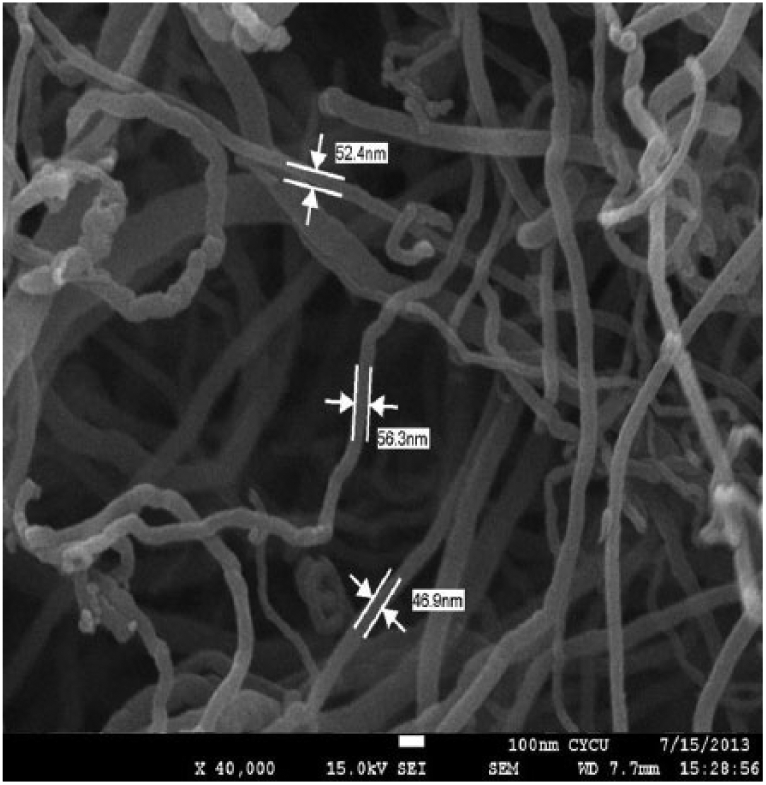
Morphology of the multi-walled carbon nanotubes.
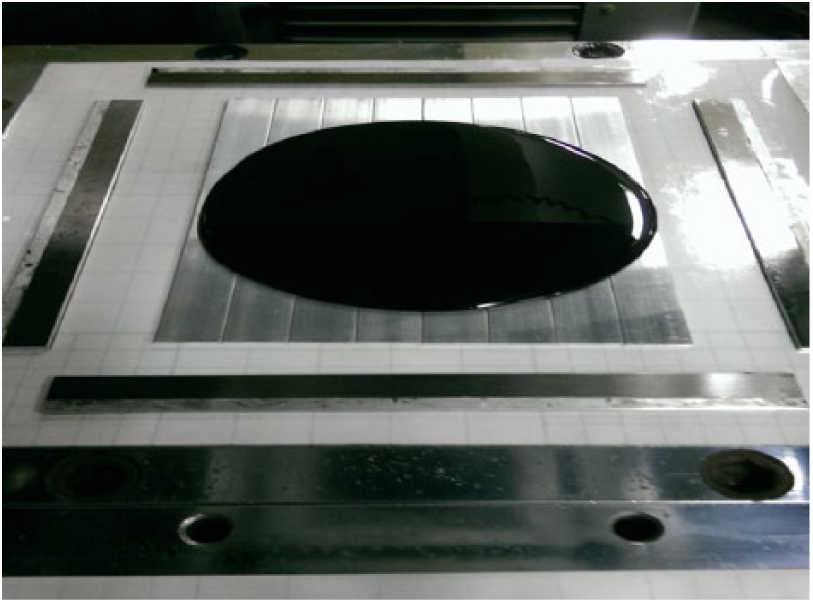
MWCNT/epoxy solution on the Al substrate.
The stress distribution and load transfer of film/substrate composite beam subjected to tensile load and bending moment were investigated as follows.
Tensile load
The composite beam consisting of nanocomposite film and substrate was subjected to a uniform tensile load

where
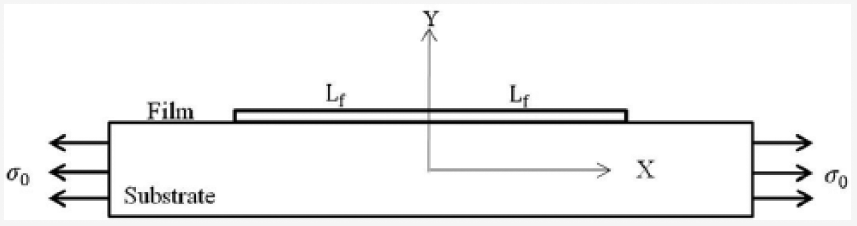
Tensile load on the composite beam.
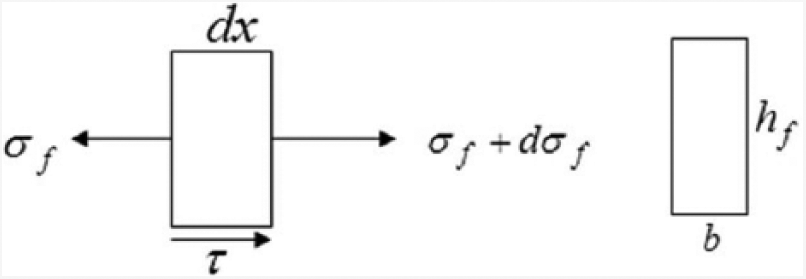
Stress analysis using the shear lag model.
The interfacial shear stress can be expressed as

where
Substituting equation (2) into equation (1) leads to

Differentiating equation (3) with respect to x yields
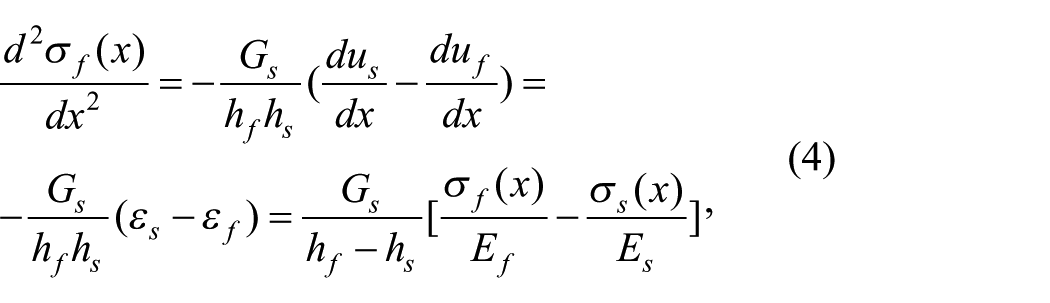
where

where
Substituting equation (5) into equation (4) leads to

Solutions for the differential equation (6) can be expressed as


Enforcing the following boundary conditions leads to the determination of constants A and B:

Thus, the stress distribution in the nanocomposite film is readily written as

Substituting equation (9) into equation (1) yields the interfacial shear stress as follows:

The stress distribution in the substrate can be obtained by substituting equation (9) into equation (5) as follows:

Bending moment
A pure bending moment of


where

Once the neutral axis has been located in the cross section, the moment and curvature relationship can be obtained as
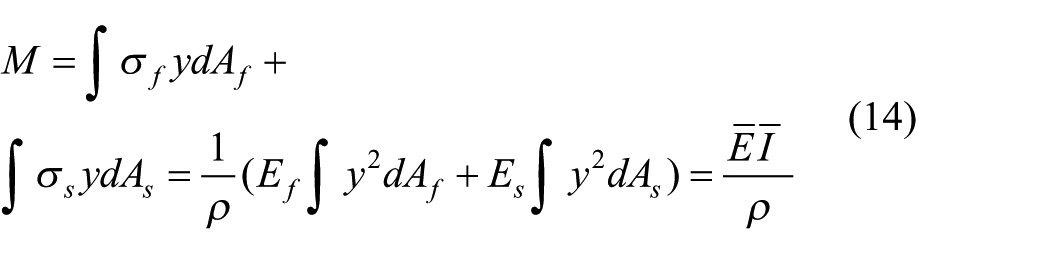
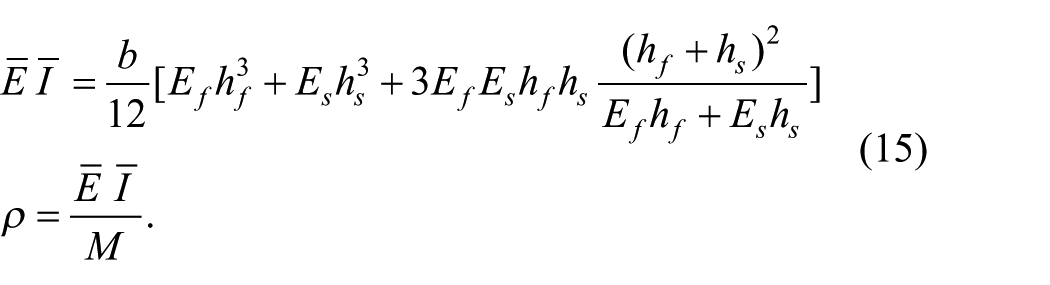
Substituting equation (15) into equations (12) and (13) results in the stress distribution in the film and substrate:


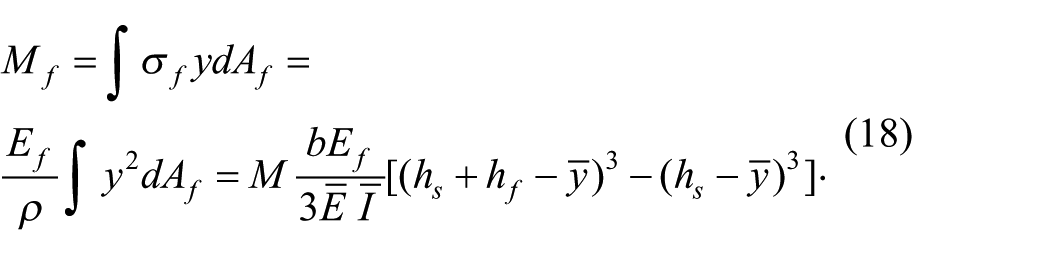
The bending moment transfers to the nanocomposite film:
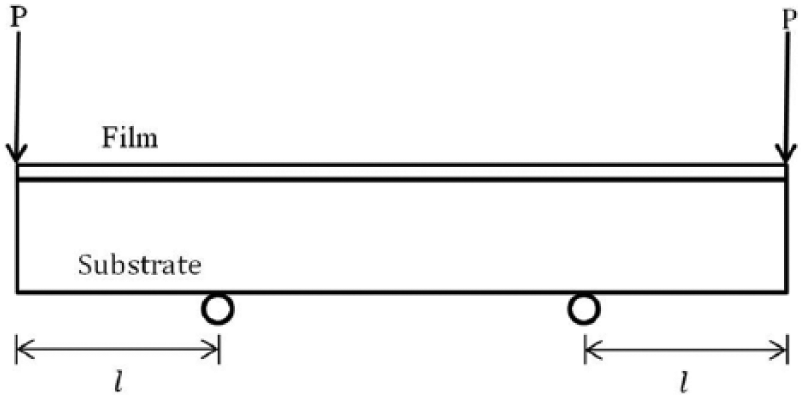
Four-point-bending test.
Results
In this section, the mechanical properties of the nanocomposite including the Young’s modulus, yielding strength, tensile strength, and break strain, determined using the tensile test, are reported. The force and moment transfer of the nanocomposite film in the film/substrate composite beam were investigated using the tensile and four-point-bending tests, respectively.
Mechanical properties of MWCNT/epoxy nanocomposite
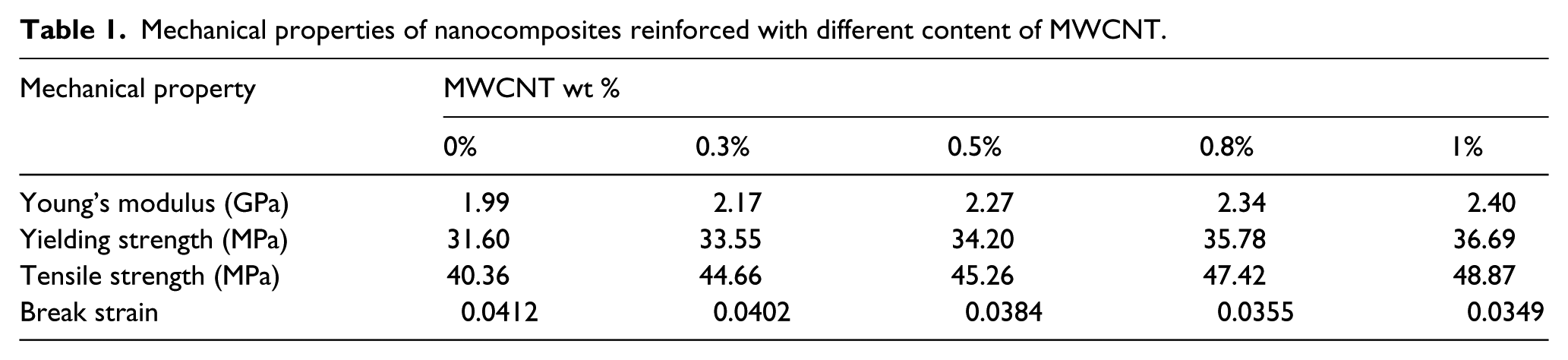
The mechanical properties of nanocomposites reinforced with MWCNTs were evaluated using the tensile test according to ASTM D638 standard. Figure 6 shows the tensile testing specimen. The stress vs. strain curves of the neat epoxy and nanocomposites reinforced with different loadings of MWCNTs are plotted in Figure 7. The mechanical properties of the nanocomposites including the Young’s modulus, yielding strength, tensile strength, and break strain can be extracted from the stress vs. strain curves. In this study, three tensile tests were carried out for each sample with the same MWCNT loading and the average values are reported. Table 1 lists the mechanical properties of the neat epoxy and nanocomposites with different contents of MWCNTs. It can be observed that the Young’s modulus, yielding strength, and tensile strength are increased with the increase of MWCNTs, while the break strain is decreased with the increase of MWCNTs. This indicates that epoxy reinforced with MWCNTs enhances the stiffness and strength while the ductility is reduced. The Young’s modulus of the nanocomposite reinforced with MWCNTs of 1.0 wt % is increased by 20.6% in comparison with the neat epoxy.
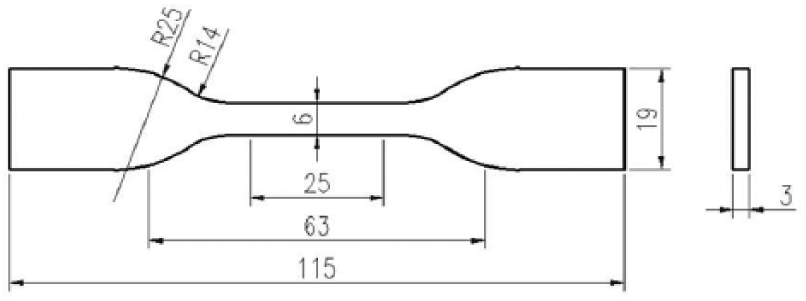
Tensile test specimen.
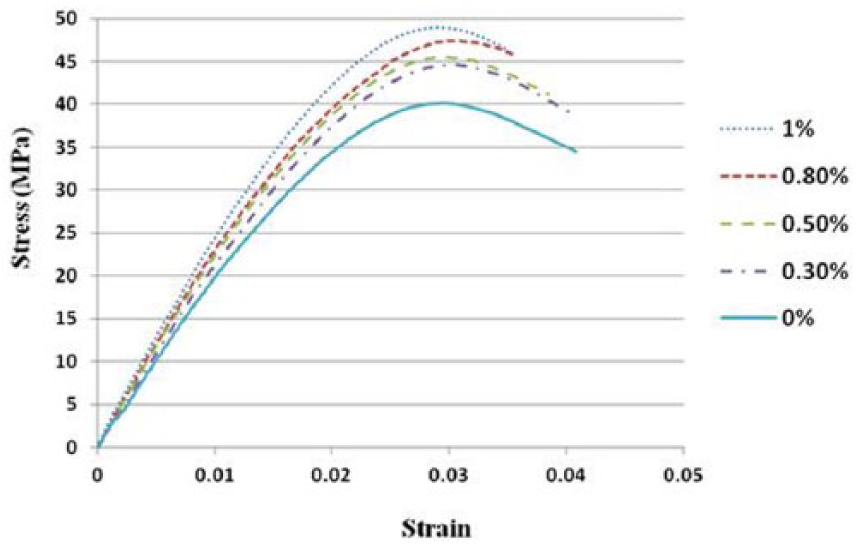
Stress vs. strain curves of neat epoxy and nanocomposites reinforced with different loadings of MWCNTs.
Mechanical properties of nanocomposites reinforced with different content of MWCNT.
Force transfer test
The stress distribution in the film/substrate composite beam subjected to tensile load was derived in the previous section. Tensile tests were conducted to verify the theoretical prediction. The composite beam for the tensile test consists of aluminum substrate with dimensions of length 200 mm, width 19 mm, and thickness 2 mm and MWCNT-reinforced epoxy film with dimensions of length 150 mm, width 19 mm, and thickness 0.2 mm. A strain gauge is attached on the back surface of the aluminum substrate located at the center to measure the strain of the substrate. The stress of the substrate is calculated by

The theoretical prediction of the stresses in the middle of the substrate and film can be obtained by substituting x = 0 into equations (11) and (9) as follows:


The ratio of the tensile load transferred to the nanocomposite film is given by

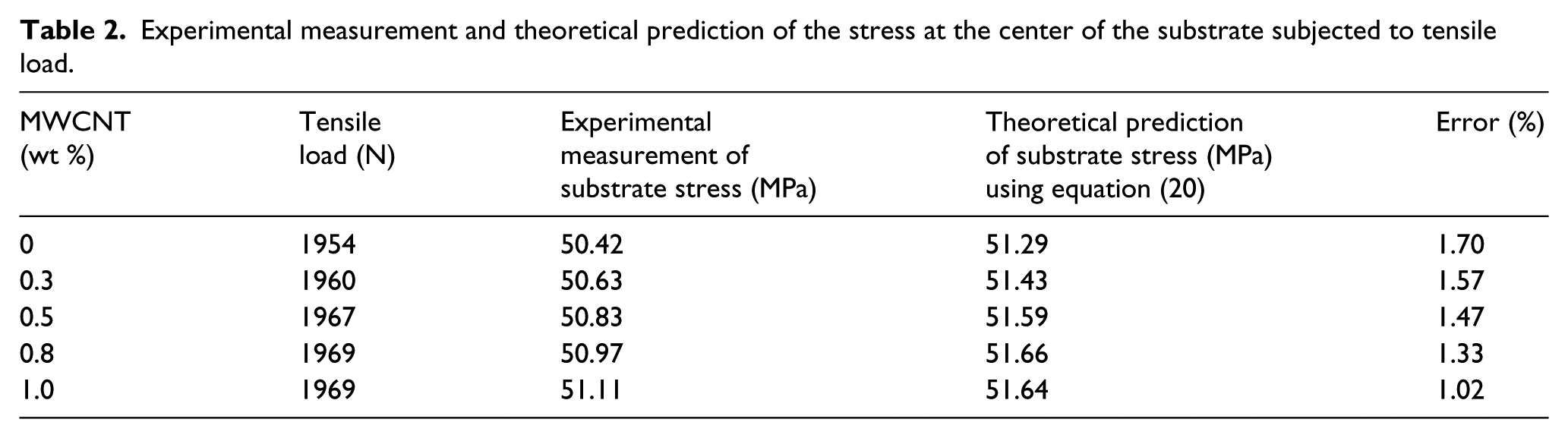
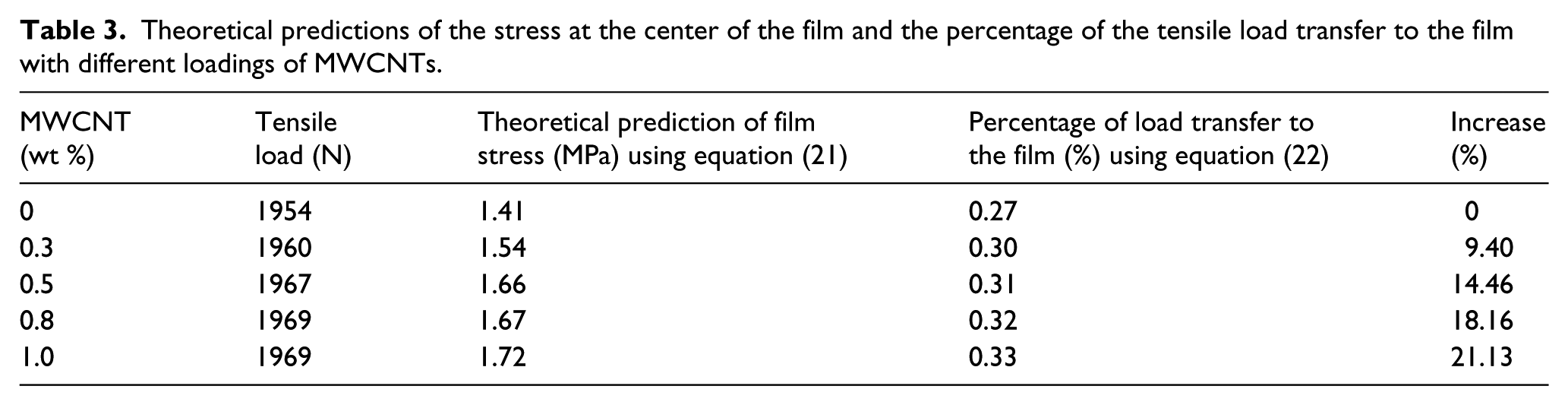
The experimental measurement of the stress at the center of the substrate was compared with the theoretical prediction using equation (20) for various MWCNT contents, as shown in Table 2. Good agreement is achieved between the experimental measurement and theoretical prediction with the error less than 2%. The theoretical predictions of the stress at the center of the film and the percentage of the load transfer to the nanocomposite film with different loadings of MWCNTs are presented in Table 3. This shows that the percentage of tensile load transfer to the nanocomposite film is increased from 9.4% to 21.1% as the MWCNT loading increases from 0.3 wt % to 1.0 wt % in comparison with the neat epoxy film.
Experimental measurement and theoretical prediction of the stress at the center of the substrate subjected to tensile load.
Theoretical predictions of the stress at the center of the film and the percentage of the tensile load transfer to the film with different loadings of MWCNTs.
Bending moment transfer test
The stress distribution in the film/substrate composite beam subjected to a pure bending moment was presented in the previous section. A four-point-bending test was performed to verify the theoretical prediction. The length and width of the composite beam are 200 mm and 19 mm, respectively, while the thicknesses of the substrate and film are 2 mm and 0.2 mm, respectively. A strain gauge was attached on the back surface of the aluminum substrate located at the center to measure the strain and stress of the substrate. A pure bending moment of

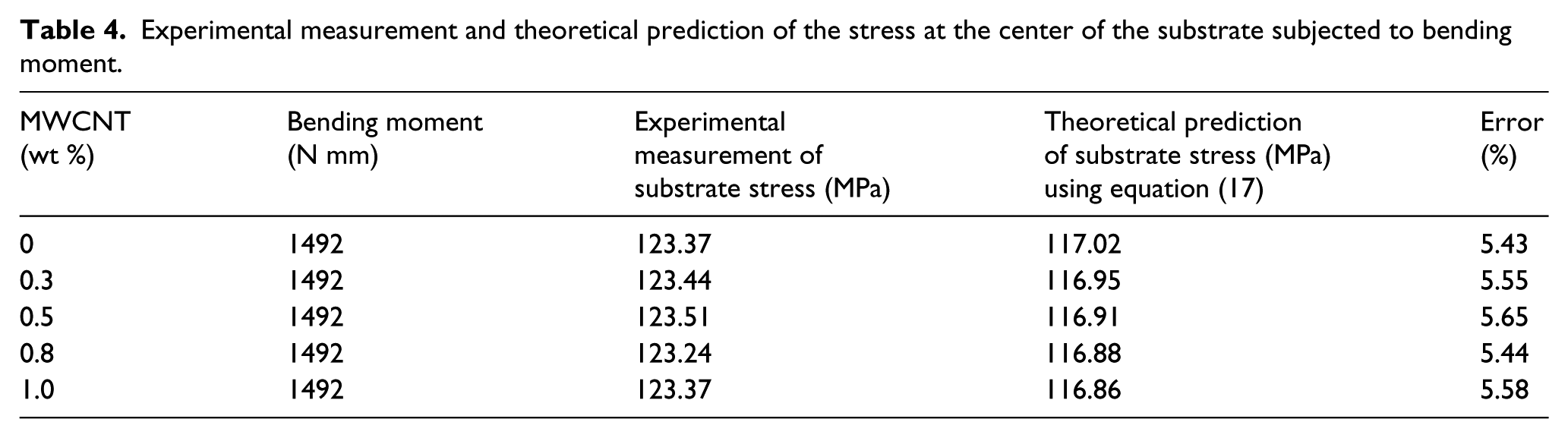
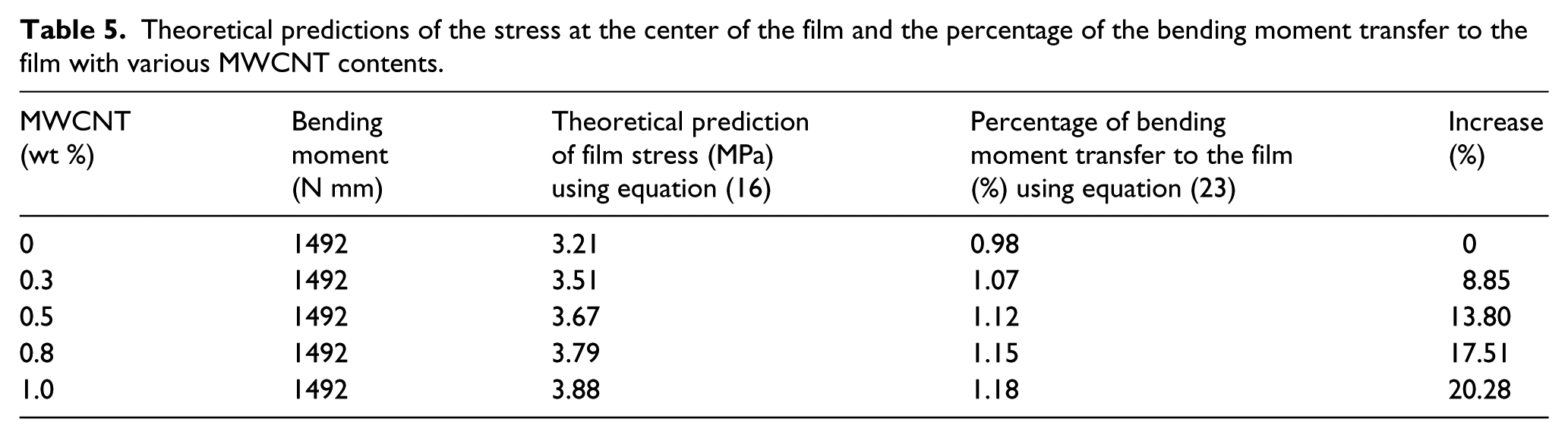
The experimental measurements of the stress at the center of the substrate are compared with the theoretical prediction using equation (17) for various MWCNT contents, as shown in Table 4. Good agreement is achieved between the experimental measurement and theoretical prediction with the error less than 6%. The theoretical predictions of the stress in the film and the percentage of the bending moment transferred to the nanocomposite film with different loadings of MWCNTs are presented in Table 5. This shows that the percentage of bending moment transfer to the nanocomposite film is increased from 8.85% to 20.28% as the MWCNT loading increases from 0.3 wt % to 1.0 wt % in comparison with the neat epoxy film.
Experimental measurement and theoretical prediction of the stress at the center of the substrate subjected to bending moment.
Theoretical predictions of the stress at the center of the film and the percentage of the bending moment transfer to the film with various MWCNT contents.
Conclusions
A series of nanocomposite films with a variety loadings of MWCNTs were fabricated and deposited on an aluminum substrate using the hot press machine. Experimental results show that the Young’s modulus of the nanocomposite is increased with the increase of the MWCNT loading. Theoretical predictions of the stress distribution in the film/substrate composite beam subjected to tensile load and bending moment were derived using the shear lag model and Euler’s beam theory. Good agreement was achieved between the theoretical prediction and experimental results with error less than 6%. A nanocomposite film with 1 wt % of MWCNT exhibits an increase of 20% in both the Young’s modulus and load transfer. The incorporation of MWCNTs into the epoxy matrix demonstrates a significant enhancement of the load carrying capability to the nanocomposite film.
Footnotes
Declaration of Conflicting Interest
The author(s) declared no potential conflicts of interest with respect to the research, authorship, and/or publication of this article.
Funding
The author(s) declared the following potential conflicts of interest with respect to the research, authorship, and/or publication of this article: This work was supported by the Ministry of Science and Technology of the ROC (grant number MOST 104-2221-E155-057-MY3).