



Abstract
Background:
Early detection of chronic kidney disease (CKD) is important because it enables clinicians to initiate effective treatment, preventing loss of kidney function, and delaying or avoiding progression to kidney failure. This study was aimed to assess knowledge, attitude, and practices towards prevention and early detection of CKD and associated factors.
Methods:
Institution based cross-sectional survey was done at Adama Hospital Medical College, Ethiopia, between November 24/2021 and December 24/2021 among 190 hypertensive patients. Data were entered into EpiData version 4.2.0.0 and analyzed by Statistical Package for Social Sciences (SPSS) version 23.
Result:
The level of good knowledge, positive attitude, and good practice was 40.5%, 53.7%, and 47.4%, respectively. Government employed (AOR = 3.30, 95%CI: 1.38, 7.90), having an average monthly income of ≥3000 ETB (61.43 US dollars) (AOR = 2.95, 95%CI: 1.31, 6.66), and having a duration of ≥4 years since diagnosis of hypertension (AOR = 2.37, 95%CI: 1.11, 5.06) were factors significantly associated with good knowledge. Government employed (AOR = 2.56, 95%CI: 1.12, 5.87), having duration of hypertension ≥4 years since diagnosis (AOR = 2.16, 95%CI: 1.07, 4.36) were factors significantly associated with positive attitude. Government employed (AOR = 4.16, 95%CI: 1.38, 12.58), having an average monthly income of ≥3000 ETB (61.43 US dollars) (AOR = 6.74, 95%CI: 2.93, 15.52), having good knowledge towards prevention and early detection of CKD (AOR = 2.57, 95%CI: 1.14, 5.80) were significantly associated with good practice.
Conclusions:
The level of good knowledge, positive attitude, and good practice towards was low. Educational programs on these issues are required to minimize the burdens.
Introduction
CKD is a chronic kidney failure, which involves a gradual loss of kidney function. 1 CKD can also be defined as kidney damage and/or reduced kidney function lasting 3 months or more. 2 CKD is common and is mostly detected too late to be reversible, but since most of its risk factors can be modifiable, it can be prevented. 3 CKD can be caused by multiple causes such as type 1 or type 2 diabetes, high blood pressure, glomerulonephritis, interstitial nephritis, polycystic kidney, and pyelonephritis. 1 CKD is increasing worldwide at an annual growth rate of 8%. 4 The magnitude of CKD worldwide is estimated to be 13.4%. 5 CKD is increasingly recognized as a global public health problem health problem6,7 and causes substantial global morbidity and increases all-cause mortality. CKD resulted in 1.2 million deaths in 2017, and 35.8 million disabilities globally 8 and 16,000 deaths in Australia. 9 Hypertension are increasing in developing countries with no improvement in awareness or control rates. 10 In developing nations, the growing prevalence of CKD has severe implications on the health of the peoples and economic output of the country. 11 The prevalence of CKD in Ethiopia was 38.6 in Addis Ababa, 12 21.3% in Dessie Referral Hospital, East Amhara Region, 13 2.7% in pastoralist health facilities of Southern Ethiopia, 14 8% in Southwest Ethiopia, 15 and 17.6% in Northwest Amhara Referral Hospitals. 16
The study revealed that there was an association between a decreased estimated GFR and the risk of death, cardiovascular events, and hospitalization among a large community-based population. 17 Early detection of CKD can be beneficial because it enables clinicians to initiate effective treatment of mild disease, delaying loss of kidney function, and delaying or avoiding progression to kidney failure. 18 In areas where dialysis and transplant facilities are limited like developing countries, early detection of CKD may have an especially profound effect on the progression of renal disease and population health as a whole, early detection of CKD can also be important for drug safety and appropriate monitoring of toxic effects. 19 Knowledge, attitudes, and practices regarding prevention and early detection of CKD assessment could be a primary step forward to evaluate the degree to which patients can adopt healthy behaviours. 20 CKD screening can be cost-effective in populations with CKD having higher incidence, rapid rates of progression, and more effective drug therapy. 11 Application of CKD testing in national and international screening and surveillance programs could improve public health related to CKD. 21 Population education programmes and screening programmes about CKD have improved patients’ level of understanding towards CKD and medical outcomes. 22 The theory of planned behavior has emerged as one of the most influential for the study of human action and this has proposed how the intention to act guides human behaviour. 23 However, the level of knowledge was ranged from 22% to 68.7%, 22% from the study done in Rwanda, 24 and 68.7% from the study done in Gonder. 25 Age, 26 gender, 24 education,25–28 family history of hypertension and family history of DM, 28 hypertension duration, 25 family history of kidney disease 27 were significantly associated with knowledge towards prevention and early detection of CKD.
Regarding attitude towards prevention and early detection of CKD among hypertensive patients; age, income, and knowledge level, 26 gender, and family history of hypertension were factors significantly associated with attitude. 28 Furthermore, the level of practice was ranged from 88.3% to 4.6%, whereas 88.3% reported from the study done in Malaysia, 29 and 4.6% reported from the study done in Rwanda. 24 Factors significantly associated with practice were knowledge, 26 attitude, 26 gender,24,26,28 occupation, 24 age, 28 income, 28 family history of DM, 28 education, 25 hypertension duration >15 years. 25 As explained above, the magnitude of CKD is increasing and causes substantial global morbidity and all-cause mortality. However, there is a limitation of the studies that have addressed knowledge, attitude, and practice and association factors towards prevention and early detection of CKD among hypertensive patients in the study setting, even globally. Therefore, the present study was aimed to assess knowledge, attitude, and practices towards prevention and early detection of CKD and associated factors among hypertensive patients in follow-up clinic at Adama Hospital Medical College.
Methods
Study area and period
The study was conducted at Adama Hospital Medical College. It is located in the Oromia regional state, 100 km to the southeast of Addis Ababa, the capital city of Ethiopia. Adama Hospital Medical College is the first Medical Hospital situated in Adama town. Adama Hospital Medical College was the first nongovernmental Hospital and was put under government in 1970 E.C. The Hospital is now serving about 1000 patients per day at different specialty clinics with 6 medical case teams. The study was conducted from November 24/2021 to December 24/2021. This duration includes the participant recruitment dates and date on which medical records were accessed.
Study design
Institution-based cross-sectional survey was conducted at Adama Hospital Medical College.
Source population
All hypertensive patients who were on follow-up clinic at Adama Hospital Medical College.
Study population
All hypertensive patients who were on follow-up clinic at Adama Hospital Medical College and fulfilled the inclusion criteria.
Eligibility criteria
Inclusion criteria
All hypertensive patients aged ≥18 years.
Exclusion criteria
Hypertensive patients who were already diagnosed with CKD were excluded from the study.
Sample size determination
A complete survey or census method was conducted to include all hypertensive patients who were in the follow-up clinic at Adama Hospital Medical College. By using the census method, we have included all hypertensive patients who were attending the follow-up clinic at Adama Hospital Medical College and who fulfilled the inclusion criteria during the data collection period. Therefore, the final sample size for the present study was 190.
Sampling techniques and procedures
During the present study, we have checked the eligibility of the hypertensive patients using their medical registration card. Then, all hypertensive patients present on the day of data collection period, who fulfilled the inclusion criteria and who were volunteers to take part in the present study were included in the survey. Finally, after providing full information about the study to the patients who were volunteers to participate in the survey, we interviewed them after they had been served by the healthcare provider on duty.
Variables of the study
Dependent variables
● Knowledge towards prevention and early detection of chronic kidney disease
● Attitude towards prevention and early detection of chronic kidney disease
● Practices towards prevention and early detection of chronic kidney disease
Independent variables
Sociodemographic variables: Age, educational status, gender, and average monthly income.
Clinical related variables: Family history of diabetes mellitus, family history of kidney disease, family history of hypertension, number of drugs currently taken, and duration of hypertension since diagnosis.
Operational definitions
Good knowledge: If hypertensive patients scored greater or equal to the mean score of knowledge questions towards prevention and early detection of CKD. 27
Poor knowledge: If hypertensive patients scored less than the mean score of knowledge questions towards prevention and early detection of CKD. 27
Positive attitude: If hypertensive patients scored greater or equal to the mean score of attitude questions towards prevention and early detection of CKD.
Negative attitude: If hypertensive patients scored less than the mean score of attitude questions towards prevention and early detection of CKD.
Good practice: If hypertensive patients scored greater or equal to the mean score of practice questions towards prevention and early detection of CKD. 25
Poor practice: If hypertensive patients scored less than the mean score of practice questions towards prevention and early detection of CKD. 25
Data collection tool, procedures, and data quality control
A semi structured face-to-face interviewer-based questionnaire and patients’ medical chart review was used to collect data. The data collection tool was prepared from the relevant literatures.25–28 The questionnaire was prepared in English language. During this, experts from different specialties have been involved in it to make this study instrument better. The first part of the questionnaire was sociodemographic characteristics of the study participants, the second part was clinical related factors, the third part contains a questionnaire about knowledge of prevention and early detection of CKD, the fourth part contains a questionnaire about attitude towards prevention and early detection of CKD and the last part five contains a questionnaire about practice towards prevention and early detection of CKD. The questionnaire was pretested on 20 hypertensive patients out of the study settings. The reliability analysis was used to check the reliability of the questionnaire and Cronbach’s alpha value was 0.87. Data was collected by two Bachelor of Science degree (BSc) nurses. A one-day training was provided for them regarding the data collection tools and procedures. Furthermore, close supervision was carried out during the data collection period.
Data processing and analysis
Data entry was done by using EpiData version 4.2.0.0. The data was exported and analyzed by using SPSS version 23. The outcome variable was dichotomized and coded as 0 and 1 representing; knowledge (good knowledge = 1 and poor knowledge = 0), practice (good practice = 1 and poor practice = 0), attitude (positive attitude = 1 and negative attitude = 0). Descriptive statists such as percentage, frequency and mean were conducted, and the results are presented by using tables and text. Both bivariable and multivariable logistic regression analysis were conducted to identify the association between dependent and independent variables. Crude odds ratio (COR) and adjusted odds ratio (AOR) with the corresponding 95% (CI) were calculated to display the strength of the association. Model fitness was checked by Hosmer-Lemeshow’s goodness-of-fit test for knowledge, attitude, and practice while the result was (p-value = 0.640), (p-value = 0.812), and (p-value = 0.798) respectively, which was p-value > 0.05. Finally, variables in the multivariable logistic regression with p-values <0.05 were considered as statistically significant.
Result
Sociodemographic characteristics of participants
A total of 190 hypertensive patients participated in the present study. The respondent rate was 100%. The mean age of the hypertensive patients participated in the study was 51.59 years (standard deviation = 9.2, minimum age = 30 years, maximum age = 86 years). Most 70 (36.8%) of them were aged between 45 and 55 years. The majority 109 (57.4%) of them were female. About two-thirds, 131 (68.9%) of them have attended formal education. Regarding the residency of the hypertensive patients, 157 (82.6%) of them were urban. 147 (77.4%) of them were government employed. 84 (44.7%) of them were orthodox. 120 (63.2%) of them were Oromo by ethnic background. 103 (54.2%) of them had an average monthly income of ≥3000 Ethiopian Birr (ETB) (61.43 US dollars) (Table 1).
Sociodemographic characteristics of hypertensive patients attending follow-up clinic at Adama Hospital Medical College, Oromia Regional State, Ethiopia, 2021 (n = 190).

In this study, formal education refers to participants who have attended primary school and above.
Clinical related factors
Out of 190 hypertensive patients, the majority 135 (71.1%) of them had a duration of hypertension less than 4 years after diagnosis. The majority 154 (81.1%) of them are currently taking less than two drugs. About two-thirds, 124 (65.3%) of them did not have comorbidities. The majority 155 (81.6) of them did not have a family history of kidney disease (Table 2).
Clinical related factors of hypertensive patients attending follow-up clinic at Adama Hospital Medical College, Oromia Regional State, Ethiopia, 2021 (n = 190).

Knowledge towards prevention and early detection of CKD
The level of good knowledge towards prevention and early detection of CKD among hypertensive patients was 40.5% (n = 77, 95%CI: 33.7, 47.4) (Figure 1).

Level of knowledge towards prevention and early detection of CKD among hypertensive patients attending follow-up clinic at Adama Hospital Medical College, Oromia Regional State, Ethiopia, 2021 (n = 190).
Attitude towards prevention and early detection of CKD
The level of positive attitude towards prevention and early detection of CKD among hypertensive patients was 53.7% (n = 102, 95%CI: 45.8, 60.5) (Figure 2).

Level of attitude towards prevention and early detection of CKD among hypertensive patients attending follow-up clinic at Adama Hospital Medical College, Oromia Regional State, Ethiopia, 2021 (n = 190).
Practice towards prevention and early detection of CKD
The level of good practice towards prevention and early detection of CKD among hypertensive patients was 47.4% (n = 90, 95CI%: 40.5, 54.2) (Figure 3).
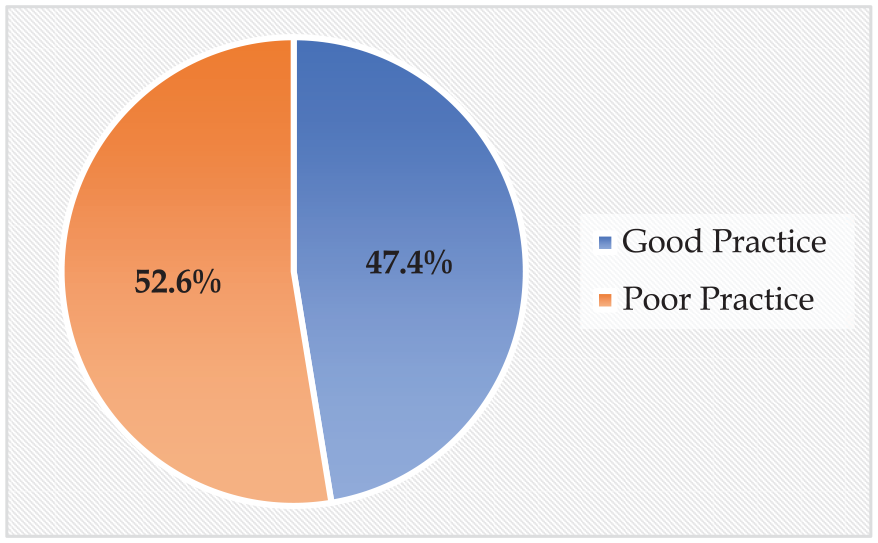
Level of practice towards prevention and early detection of CKD among hypertensive patients attending follow-up clinic at Adama Hospital Medical College, Oromia Regional State, Ethiopia, 2021 (n = 190).
Factors associated with knowledge of hypertensive patients
To check for the association between good knowledge towards prevention and early detection of CKD and independent variables, both bivariable and multivariable logistic regression was performed. In bivariable logistic regression, age, gender, educational status, marital status, residence, occupation, average monthly income, duration of hypertension since diagnosis, family history of kidney disease, family history of DM, family history of hypertension, number of drugs currently taken, and presence of comorbidities were checked for the association with knowledge towards prevention and early detection of CKD. From these variables entered into bivariable logistic regression, gender, marital status, family history of DM, number of drugs currently taken, and presence of comorbidities were factors that had a p-value >0.25 and they were omitted from the final model, multivariable logistic regression while the rest factors had a p-value <0.25. In multivariable logistic regression, occupation, average monthly income, and duration of hypertension since diagnosis were factors significantly associated with knowledge towards prevention and early detection of CKD.
The odds of having good knowledge towards prevention and early detection of CKD among hypertensive patients who were government employed was 3.30 times (AOR = 3.30, 95%CI: 1.38, 7.90) higher when compared with hypertensive patients who were unemployed. The likelihood of having good knowledge towards prevention and early detection of CKD among hypertensive patients who had an average monthly income of ≥3000 ETB (61.43 US dollars) was 2.95 times (AOR = 2.95, 95%CI: 1.31, 6.66) more likely than hypertensive patients who had an average monthly income of <3000 ETB (61.43 US dollars). The odds of having good knowledge towards prevention and early detection of CKD among hypertensive patients who had a duration of ≥4 years since diagnosis of hypertension was 2.37 times (AOR = 2.37, 95%CI: 1.11, 5.06) more likely than hypertensive patients who had a duration of <4 years since diagnosis of hypertension (Table 3).
Bivariable and multivariable analysis of factors associated with knowledge towards prevention and early detection of CKD among hypertensive patients attending follow-up clinic at Adama Hospital Medical College, Oromia Regional State, Ethiopia, 2021 (n = 190).

COR: crude odds ratio; AOR: adjusted odds ratio; CI: confidence interval; ETB: Ethiopian birr; NA: not applicable.
Figures in bold show statistically significant (p < 0.05), number 1 represents the reference category, NA refers to variables omitted from multivariable logistic regression analysis because of their p-value >0.25 in bivariable logistic regression analysis. The currency for the monthly income is Ethiopian birr.
Factors associated with attitude of hypertensive patients
Similarly, to check for the association between positive attitude and independent variables, both bivariable and multivariable logistic regression was performed. In bivariable logistic regression, age, gender, educational status, marital status, residence, occupation, average monthly income, duration of hypertension since diagnosis, family history of kidney disease, family history of DM, family history of hypertension, number of drugs currently taken, presence of comorbidities and knowledge towards prevention and early detection of CKD were checked for the association with attitude towards prevention and early detection of CKD.
From these variables entered into the bivariable logistic regression; gender, education status, occupation, average monthly income, duration of hypertension since diagnosis, and family history of hypertension were factors that had a p-value <0.25 and they were included into the final model, multivariable logistic regression while the rest factors, which had a p-value >0.25 were excluded from the final model. However, in multivariable logistic regression, only occupation and duration of hypertension since diagnosis were factors significantly associated with attitude towards prevention and early detection of CKD.
The odds of having a positive attitude towards prevention and early detection of CKD among hypertensive patients who were government employed was 2.56 times (AOR = 2.56, 95%CI: 1.12, 5.87) higher when compared with hypertensive patients who were unemployed. The likelihood of having a positive attitude towards prevention and early detection of CKD among hypertensive patients who had the duration of hypertension ≥4 years since diagnosis was 2.16 times (AOR = 2.16, 95%CI: 1.07, 4.36) more likely than hypertensive patients who had duration of hypertension <4 years since diagnosis (Table 4).
Bivariable and multivariable analysis of factors associated with attitude towards prevention and early detection of CKD among hypertensive patients attending follow-up clinic at Adama Hospital Medical College, Oromia Regional State, Ethiopia, 2021 (n = 190).

COR: crude odds ratio; AOR: adjusted odds ratio; CI: confidence interval; ETB: Ethiopian birr; NA: not applicable.
Figures in bold show statistically significant (p < 0.05), number 1 represents the reference category, NA refers to variables omitted from multivariable logistic regression analysis because of their p-value >0.25 in bivariable logistic regression analysis. The currency for the monthly income is Ethiopian birr.
Factors associated with practice of hypertensive patients
Regarding the factors associated with practice, like that of knowledge and attitude, both bivariable and multivariable logistic regression was performed to check for the association between good practice and independent variables. In bivariable logistic regression, age, gender, educational status, marital status, residence, occupation, average monthly income, duration of hypertension since diagnosis, family history of kidney disease, family history of DM, family history of hypertension, number of drugs currently taken, presence of comorbidities, knowledge towards prevention and early detection of CKD towards prevention and early detection of CKD, and attitude were checked for the association with good practice towards prevention and early detection of CKD.
From these variables entered bivariable logistic regression; gender, education status, residence, occupation, average monthly income, duration of hypertension since diagnosis, family history of kidney disease and knowledge towards prevention and early detection of CKD were factors that had a p-value <0.25, while the rest had a p-value >0.25 and omitted from the final model, multivariable logistic regression. However, in multivariable logistic regression, only occupation, average monthly income, and knowledge towards prevention and early detection of CKD were factors significantly associated with practice towards prevention and early detection of CKD.
The odds of having good practice towards prevention and early detection of CKD among hypertensive patients who were government employed was 4.16 times (AOR = 4.16, 95%CI: 1.38, 12.58) higher when compared with hypertensive patients who were unemployed. The likelihood of having good practice towards prevention and early detection of CKD among hypertensive patients who had an average monthly income of ≥3000 ETB (61.43 US dollars) was 6.74 times (AOR = 6.74, 95%CI: 2.93, 15.52) higher when compared with hypertensive patients who had an average monthly income of <3000 ETB (61.43 US dollars). The odds of having good practice towards prevention and early detection of CKD among hypertensive patients who had good knowledge towards prevention and early detection of CKD was 2.57 times (AOR = 2.57, 95%CI: 1.14, 5.80) higher when compared to their contraries (Table 5).
Bivariable and multivariable analysis of factors associated with practice towards prevention and early detection of CKD among hypertensive patients attending follow-up clinic at Adama Hospital Medical College, Oromia Regional State, Ethiopia, 2021 (n = 190).

COR: crude odds ratio; AOR: adjusted odds ratio; CI: confidence interval; ETB: Ethiopian birr; NA: not applicable.
Figures in bold show statistically significant (p < 0.05), number 1 represents the reference category, NA refers to variables omitted from multivariable logistic regression analysis because of their p-value >0.25 in bivariable logistic regression analysis. The currency for the monthly income is Ethiopian birr.
Discussion
The present study revealed that the level of good knowledge towards prevention and early detection of CKD among hypertensive patients was 40.5% (n = 77, 95%CI: 33.7, 47.4). The present study finding was higher than the study done in Malaysia (30.1%). 29 The difference might be due to the differences in sociodemographic and tools used for the study. The present study finding was also higher than the study conducted in Rwanda (22%). 24 The variation might be because of the difference in the study population. The study done in Rwanda was conducted among the students. However, the present study was done on hypertensive patients. The present study finding was lower than the study done in Gonder (68.7%). 25 The present study finding was also lower than the study conducted in the study done in Jimma (47.9%). 27
Regarding to the factors associated with good knowledge towards prevention and early detection of CKD among hypertensive patients in the present study; the odds of having good knowledge towards prevention and early detection of CKD among hypertensive patients who were government employed was 3.30 times (AOR = 3.30, 95%CI: 1.38, 7.90) higher when compared with hypertensive patients who were unemployed. This finding was supported by the study conducted in Gonder and Malaysia.25,29 This might be related to the permanent salary. This is because if the hypertensive patients had money for their medical expenses and the opportunity for having a regular follow-up will increase. By in turn, this would rise the contact of the patients with the healthcare providers on duty. During this, they would get enough time for the discussion regarding their disease with the healthcare providers on duty.
The likelihood of having good knowledge towards prevention and early detection of CKD among hypertensive patients who had an average monthly income of ≥3000 ETB (61.43 US dollars) was 2.95 times (AOR = 2.95, 95%CI: 1.31, 6.66) more likely than hypertensive patients who had an average monthly income of <3000 ETB (61.43 US dollars). This finding was supported by the study conducted in Gonder and Malaysia.25,29 This could be due to the fact that those patients who had the average monthly income of ≥3000 ETB (61.43 US dollars) could cover their medical expenses relatively. This means they would have regular follow-up. Moreover, they would have the chance to have their own sources of information such as television and radio. Through these, they might obtain information concerning their disease. The odds of having good knowledge towards prevention and early detection of CKD among hypertensive patients who had a duration of ≥4 years since diagnosis of hypertension was 2.37 times (AOR = 2.37, 95%CI: 1.11, 5.06) more likely than hypertensive patients who had a duration of <4 years since diagnosis of hypertension. This finding was supported by the study conducted in Gonder. 25 The possible justification could be that the more hypertensive patients lived with this disease, the more they would be aware of their disease condition. Furthermore, through this longer duration of years since diagnosis of the disease, the frequency of follow-up would also increase. This would create the best chance to have enough information about their disease from the healthcare providers in follow-up.
The present study revealed that
The present study revealed that the level of good practice towards prevention and early detection of CKD among hypertensive patients was 47.4% (n = 90, 95CI%: 40.5, 54.2). The present study finding was lower than the study done in Malaysia (88.3%). 29 The variation might be due to the differences in the sociodemographic characteristics of the study participants. The present study finding was higher than the study done in Rwanda (4.6%). 24 This difference might be because of the differences of the of study population. The study done in Rwanda was conducted among the students, while the present study was done among hypertensive patients in hypertensive follow-up clinic. The present study finding was consistent with the study done in Gonder (48.4%). 25
Regarding to the factors associated with good practice towards prevention and early detection of CKD among hypertensive patients in the present study; the odds of having good practice towards prevention and early detection of CKD among hypertensive patients who were government employed was 4.16 times (AOR = 4.16, 95%CI: 1.38, 12.58) higher when compared with hypertensive patients who were unemployed. This was supported by the study done in Rwanda. 24 The likelihood of having good practice towards prevention and early detection of CKD among hypertensive patients who had an average monthly income of ≥3000 ETB (61.43 US dollars) was 6.74 times (AOR = 6.74, 95%CI: 2.93, 15.52) higher when compared with hypertensive patients who had an average monthly income of <3000 ETB (61.43 US dollars). This was supported by the study done in Jordan. 28
The odds of having good practice towards prevention and early detection of CKD among hypertensive patients who had good knowledge towards prevention and early detection of CKD was 2.57 times (AOR = 2.57, 95%CI: 1.14, 5.80) higher when compared to their contraries. This finding was supported by the study done in Palestine. 26 The study done on “elusive definition of knowledge” introduced a new paradigm of metaphorical thinking based on knowledge energy. This metaphor opens new opportunities for understanding knowledge as a multifield paradigm composed of the rational, emotional, and spiritual knowledge fields. 30 Therefore, the possible justification for the association between knowledge and practice towards prevention and early detection of CKD would be supported by the evidence from the study done on “chronic kidney disease awareness, screening and prevention: the rationale for the design of a public education program,” which reported health education regarding kidney function, risk factors, and benefits for early screening should be encouraged. Moreover, improvements of medical outcomes among patients with CKD were demonstrated among CKD patients who received appropriate educational programs. 31 Improving the population level of understanding concerning CKD was found to be an essential strategy to advance their awareness and practices to make appropriate decisions towards health promotion and better quality of life. 28 Even a study conducted among physicians suggested continuing education and awareness for physicians about CKD management and the benefits of timely referral to a nephrologist to enhance their practicing level. 32 Therefore, interventions aimed at changing misconceptions and improving knowledge about prevention and early detection of CKD patients would enhance their level of practice towards dealing with prevention and early detection of CKD.
Strength and limitation of the study
The present study provides substantial evidence to encourage hypertensive patients for their disease conditions. Warranting these patients about the prevention and early detection of CKD to manage and control the occurrence of CKD as a consequence of hypertension is crucial. The present study findings would provide essential information for healthcare providers to consider the prevention and early detection of CKD during the care of hypertensive patients. The present study was not accomplished without limitations. For instance, the study design used was a cross-sectional survey. This study design does not help to determine the cause and effect. Moreover, there was insufficient literature on this crucial topic worldwide. Hopefully, this study will minimize the challenges for future researchers who will be interested in conducting a study on this topic. We suggest future research to emphasize on this topic by incorporating the institutional factors that could affect the level of knowledge, attitude, and practice of the participants considering multicenter study settings.
Conclusion
The present study revealed that the level of good knowledge, positive attitude, and good practice towards prevention and early detection of CKD among hypertensive patients was low. The multivariable logistic regression analysis displayed that; government employed, higher average monthly income, and hypertension duration of ≥4 years since diagnosis were factors significantly associated with good knowledge towards prevention and early detection of CKD. Government employed and hypertension duration of ≥4 years since diagnosis were factors significantly associated with positive attitude towards prevention and early detection of CKD. Government employed, higher average monthly income, and having good knowledge towards prevention and early detection of CKD were significantly associated with good practice towards prevention and early detection of CKD. Finally, we recommend that the initiation of educational programs focusing on the prevention and early detection of CKD is required to minimize these critical problems.
Footnotes
Acknowledgements
The authors would like to acknowledge Arsi University, Adama Hospital Medical College, supervisor, data collectors, and the study participants.
Author contributions
LTG and ADW conceptualized the study. ADW, LTG, and MUA contributed for study design execution, acquisition of data, analysis and interpretation. All the authors took part in drafting, and critically reviewing the article. All the authors gave final approval of the version to be published, have agreed on the journal to which the article has been submitted and agree to be accountable for all aspects of the work.
Availability of data and materials
The datasets used and/or analyzed during the current study available from the corresponding author on reasonable request.
Declaration of conflicting interests
The author(s) declared no potential conflicts of interest with respect to the research, authorship, and/or publication of this article.
Funding
The author(s) received no financial support for the research, authorship, and/or publication of this article.
Ethics approval and consent to participate
Ethical clearance was obtained from ethical review and research committee of Nursing Department, College of Health Sciences, Arsi University (Ref. No: AU/H/S/C/CN/262/14). Permission was obtained from Adama Hospital Medical College. Then, before data collection, the information about the study was explained to all participants recruited to the study. Furthermore, respondents were insured about the confidentiality of the information attained. After explaining the objectives and procedures of the study for each study participant, written informed consent was received from each study participants, and they have confirmed it with their respective signatures. No animals were used in this research. During this study, all human procedures were performed as per the 1975 Declaration of Helsinki, as revised in 2013.
