




Abstract
Globalization has led academics to realize the value of broadening classrooms beyond the typical school atmosphere to a place where students can engage in cross-cultural interaction. Despite being discussed in academic literature since the nineteenth century, international student mobility (ISM) did not become prominent until 2003. However, it has emerged as a global phenomenon throughout the last few decades. The present research aims to illustrate the broad patterns and developments in the relevant literature during the past six decades of ISM research. This review is a hybrid form of systematic literature review as it employs a dual approach to address its research questions, i.e., bibliometric and thematic analysis. The present study analysed 1,497 ISM article publications in 867 Scopus-indexed journals from 1964 to 2023. In doing this, the ‘Scientific Procedures and Rationales for Systematic Literature Reviews’ (SPAR-4-SLR) protocol is followed. The findings present a retrospective description of the ISM literature by spotting the key contributors in authorship, articles, journals and countries alongside the past, present and future research patterns. Although the field is not completely novel, surprisingly, the bibliometric analysis technique has not been efficiently used in past ISM studies. By addressing the gaps found in the few past reviews, this article thoroughly describes ISM’s knowledge foundation, production and future direction.
Keywords
Introduction
In the modern world, academics have realized the value of broadening classrooms beyond the typical school atmosphere to a place where students can engage in cross-cultural interaction. The scope, volume and complexity of higher education (HE) institutions’ foreign activities have dramatically increased over the past decades (Altbach & Knight, 2007). While the concept of studying abroad is still developing, the objectives of doing so began to expand as it became clear that it had the potential to be an important experience that would aid in the development of global citizenship. Student exchanges between nations foster goodwill and create networks that aid in future trade and intercultural interaction (Ghosh & Jing, 2020). Hence, the internationalization of education has become an essential policy and research concern.
The world of HE is an uneven and systematically structured field (Gerhards et al., 2018). Authorities have examined such an uneven and stratified state using a variety of economic stances. For instance, European policymakers have adopted international student mobility (ISM) as an integral element of HE strategy to respond to the recent calls for globalization for future cross-country economic sustainability and communal integration (Shields, 2016). As such, national governments and HE institutes have promoted ISM to improve students’ cultural awareness and competency in a more globalized and integrated society (Cleak et al., 2016). Despite being discussed in academic literature since the nineteenth century, the field of ISM did not become prominent until 2003. However, throughout the last few decades, it has emerged as a global phenomenon (Gümüş et al., 2020). There are various overlapping meanings for ISM (Wells, 2014). Some view it as integrating international students into host universities and other educational institutions as exchange or degree students (Mosneaga & Winther, 2013). Meanwhile, the UNESCO Institute of Statistics states that ‘Internationally mobile students are individuals who have physically crossed an international border between two countries to participate in educational activities in the country of destination, where the country of destination of a given student is different from their country of origin’. In 2015, the OECD, the European Union’s statistical office (EUROSTAT), and the UNESCO Institute of Statistics unanimously adopted this definition. It covers the most significant subset of international students, that is, those who moved abroad for educational reasons or to obtain higher degrees.
Statistics show that the number of international students spiked from 2 million in 2000 to around 6.3 million in 2020 (UNESCO, 2022), depicting more than a 300% rise in two decades. In conjunction with the significant rise in the scope of ISM, its study explores various aspects, including its drivers (Souto-Otero et al., 2013), impacts (Levent, 2016), challenges (López-Duarte et al., 2021; Wells, 2014) and policy implications (Riaño et al., 2018). Although related studies have grown significantly over the years in terms of their quantity, content, geographical and institutional affiliations, the bibliometric analysis technique, which seeks to provide a more comprehensive view of an academic field, has not been efficiently used in the ISM literature (Gümüş et al., 2020).
Considering the growth of ISM research, it was not surprising to see a reasonable number of review publications on the ISM domain, as discussed in the subsequent section (e.g., Gümüş et al., 2020; López-Duarte et al., 2021; Pham et al., 2021). However, generalizing the findings in these reviews may be difficult as they are confined to specific factors such as regions, data sources, etc. Moreover, many significant issues, such as how ISM research is developing, what the intellectual foundation of ISM research was in the past, what the state-of-the-art is currently, and where ISM research is going in the future, have not yet been addressed effectively. Following these stances, this article sets forth crucial ways to improve upon the strengths and weaknesses of the past reviews on ISM. First, this review reports an analysis of the global dataset, which addresses the country/regional-specific limitation reported by López-Duarte et al. (2021) (Europe), Pham et al. (2021) (Asia) and Browne et al. (2015) (Australia). Furthermore, this review thoroughly describes ISM’s knowledge foundation, production and future direction using a co-citation analysis (i.e., ISMpast = knowledge foundation), a keyword co-occurrence analysis (i.e., ISMpresent = knowledge production) and thematic analysis (i.e., ISMfuture = knowledge potential), following Donthu et al. (2021) and Lim et al. (2022) recommendations. Thus, adding unique contributions and broadening the insights of ISM presented in the past reviews.
Therefore, the current study aims to perform an exhaustive review of ISM articles published in reputed sources. A hybrid review design is used to review ISM papers in Scopus-indexed journals, an electronic database that indexes and monitors publication sources that fulfil strict quality standards for indexing (Fetscherin & Heinrich, 2015). This review employs the ‘Scientific Procedures and Rationales for Systematic Literature Reviews’ (SPAR-4-SLR) protocol. The goal is to highlight the existing state of knowledge development in the ISM domain from a broader angle rather than thoroughly synthesizing the results of a few studies. To illustrate the broad patterns and changes in the relevant literature during the past six decades, the study focuses on a relatively wide range of papers in addition to the previous reviews. Therefore, with this objective, a bibliometric analysis of ISM papers has been carried out to address the following crucial research questions (RQs).
The remainder of the article is structured as follows. The article summarizes reviews presently published in the ISM field and shows how this review advances previous research. Next, the paper reveals the techniques and procedures used to examine ISM literature. Further, the paper describes the bibliometric and intellectual foundation for ISM discovered throughout the review. Then, it concludes with the research agenda for ISM.
Review of Past Reviews on ISM
Many literature reviews on ISM have been published over the last few decades of research. The summary of 15 relevant review studies is presented in Table 1. However, most of the review studies concentrate primarily on thematic elements that elucidate the notion of ISM by reviewing the challenges and outcomes of ISM initiatives (e.g., Knight-Grofe & Deacon, 2016; Levitt et al., 2021; López-Duarte et al., 2021; Roy et al., 2019; Russell et al., 2021; Stadler & Rojas, 2019). For instance, López-Duarte et al. (2021) review the unfulfilled objectives and primary obstacles affecting ISM, including luring non-European students into degree programmes, the necessity of systemic and programme convergence to ensure genuine compatibility, the effect of HE ISM on the advancement of European consciousness and citizenship, the glaring disparity between degree and credit mobility, the necessity of fortifying the connection between employability and ISM, the social selectivity that currently exists in Europe, and the frequent issues with social segregation that international students encounter. Similarly, Roy et al. (2019) review studies on the various outcomes students who participate in short-term ISM programmes face and group these outcomes into broad categories related to cultural, personal and career/employment outcomes.
Representative Review Studies on ISM.
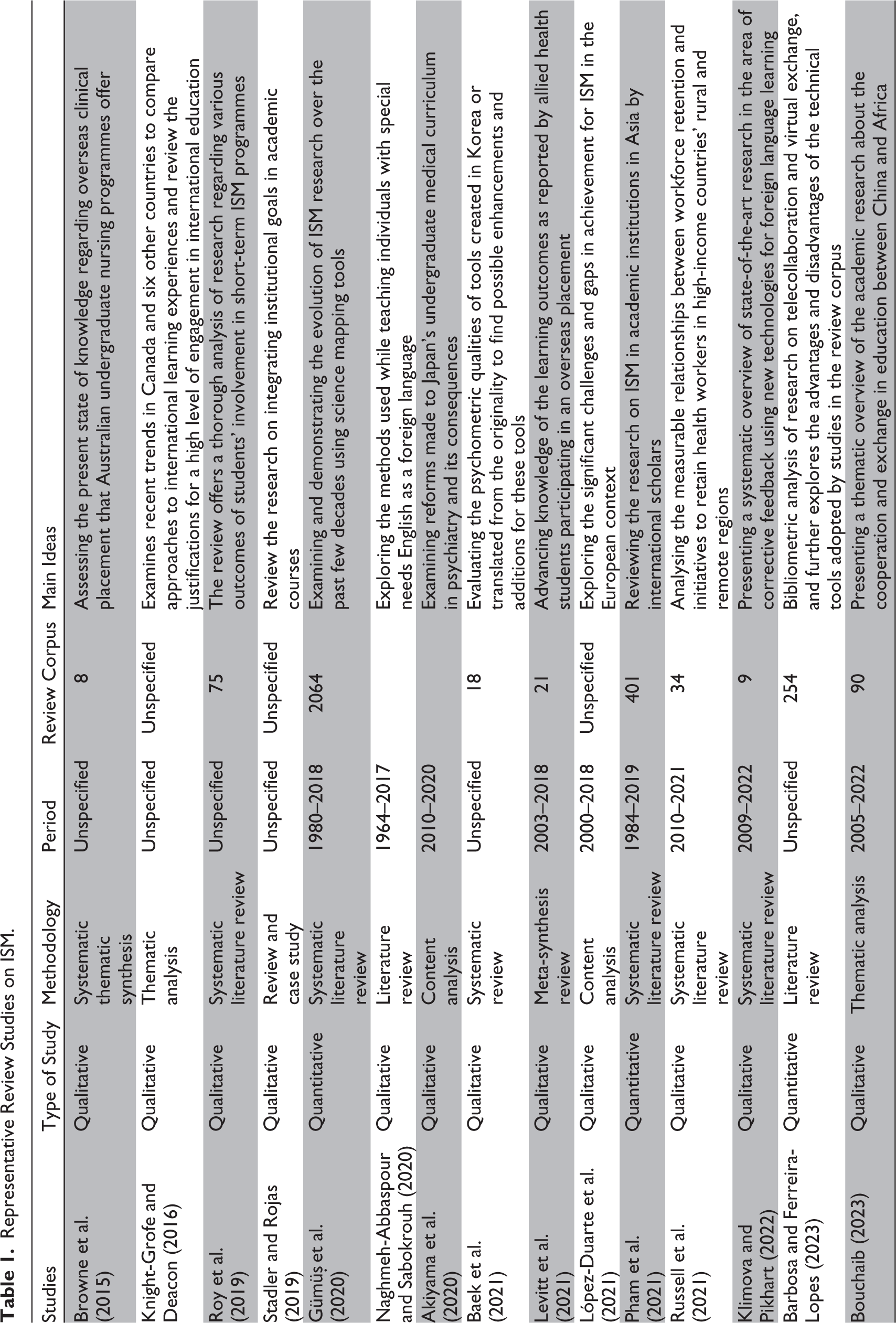
Furthermore, the other side of the review studies has focused on ISM approaches and experiences unique to specific regions or countries (e.g., Baek et al., 2021; Bouchaib, 2023; Browne et al., 2015; Knight-Grofe & Deacon, 2016; Russell et al., 2021). Interestingly, few bibliometric reviews on the domain were recently reported (e.g., Gümüş et al., 2020; López-Duarte et al., 2021; Pham et al., 2021). Gümüş et al. (2020) employ a scientific mapping tool to review the existing knowledge of ISM over the past three decades. While López-Duarte et al. (2021) explore the significant challenges and gaps in achievement for ISM in the European context, Pham et al. (2021) review the research on ISM to academic institutions in Asia. Therefore, generalizing the findings in these reviews may be difficult as they are confined to specific factors such as regions, data sources, etc. Following this stance, this article sets forth crucial ways to improve upon the strengths and weaknesses of the past reviews of ISM.
In this review, the analysis of a global dataset is conducted, which addresses the country/regional-specific limitation reported by López-Duarte et al. (2021) (Europe), Pham et al. (2021) (Asia) and Browne et al. (2015) (Australia). Furthermore, this review thoroughly describes the knowledge foundation, production and future direction of ISM using co-citation analysis, keyword co-occurrence analysis and thematic analysis, which is in line with Donthu et al. (2021) and Lim et al. (2022) recommendation. Hence, broadening the insights of ISM presented in prior reviews (e.g., Gümüş et al., 2020; López-Duarte et al., 2021; Pham et al., 2021; Roy et al., 2019).
Methodology
Systematic literature reviews (SLR) are a rigorous and scientific approach to secondary research used extensively in HE and, later, in ISM (e.g., Roy et al., 2019; Shields, 2019). There are various SLR approaches, such as theory-centred, domain-centred and meta-analysis reviews (Paul et al., 2021). However, this article is a domain-based SLR focusing on ISM, a domain on its own. Although there are numerous domain-centred SLRs (such as framework-based, bibliometric, conceptual, hybrid reviews, etc.), this review employs a mix-design approach to address its research questions (bibliometric and thematic). Thus, this review can be considered a hybrid form of SLR.
Deploying a review procedure has become a standard practice for SLRs, as it encourages objectivity and replicability of the review results (Lim et al., 2021). This review’s ‘systematic’ feature is directed by the SPAR-4-SLR protocol, a rigorous and fundamental review protocol for SLR papers (Paul et al., 2021).
Bibliometric Analysis
The bibliometric analysis technique is adopted to address the (RQ1) of the review. The primary role of a bibliometric analysis is the exploration of performance in terms of publication activities across subjects, areas, authors and so on. Pritchard (1969) initially introduced the word ‘bibliometrics’, which he described as ‘the application of mathematical and statistical methods to articles and other means of communication’ (p. 349). Bibliometric analysis uses statistical methods to assess the progress of a particular field. This reduces biases by providing a broad perspective on the study domain (Merigó et al., 2015). The transparency of this method and its ability to manage large volumes of data were recognized by scholars as the primary justifications for using the technique (Donthu et al., 2021), among its many other benefits. Performance analysis and science mapping are the two basic subdivisions of bibliometric analysis (Donthu et al., 2021).
Performance analysis is employed to evaluate the contributions of authors, articles, journals and countries based on publications and citations (Baier-Fuentes et al., 2019). The main performance analysis techniques frequently used are descriptive analysis, which explains the contributors according to their publications, and citation analysis (Donthu et al., 2021). Science mapping is employed to create networks of articles using their features (Donthu et al., 2021).
Past studies recommend that ‘co-citation analysis’ may be used to explain the ‘knowledge foundation’ (past), while the ‘keyword co-occurrence analysis’ may be employed to show ‘knowledge production’ (present) of the study area (ISM) (Donthu et al., 2021). Hence, both are carried out in this study.
Thematic Analysis
The thematic analysis calls for systematic qualitative data extraction from documents to find, examine and report themes (Agyekum et al., 2019). The thematic analysis allows researchers to deal with themes emerging from the study’s information (Ampratwum et al., 2021). While the analysis is sometimes considered a competent qualitative research method (Lim, 2019), it is also mixed with other alternate qualitative techniques (Holloway & Todres, 2003). To map out future research in the field, this study adhered to Lincoln and Guba (1985) standards for reliability whilst following the Braun and Clarke (2006) thematic analysis process.
The SPAR-4-SLR Protocol
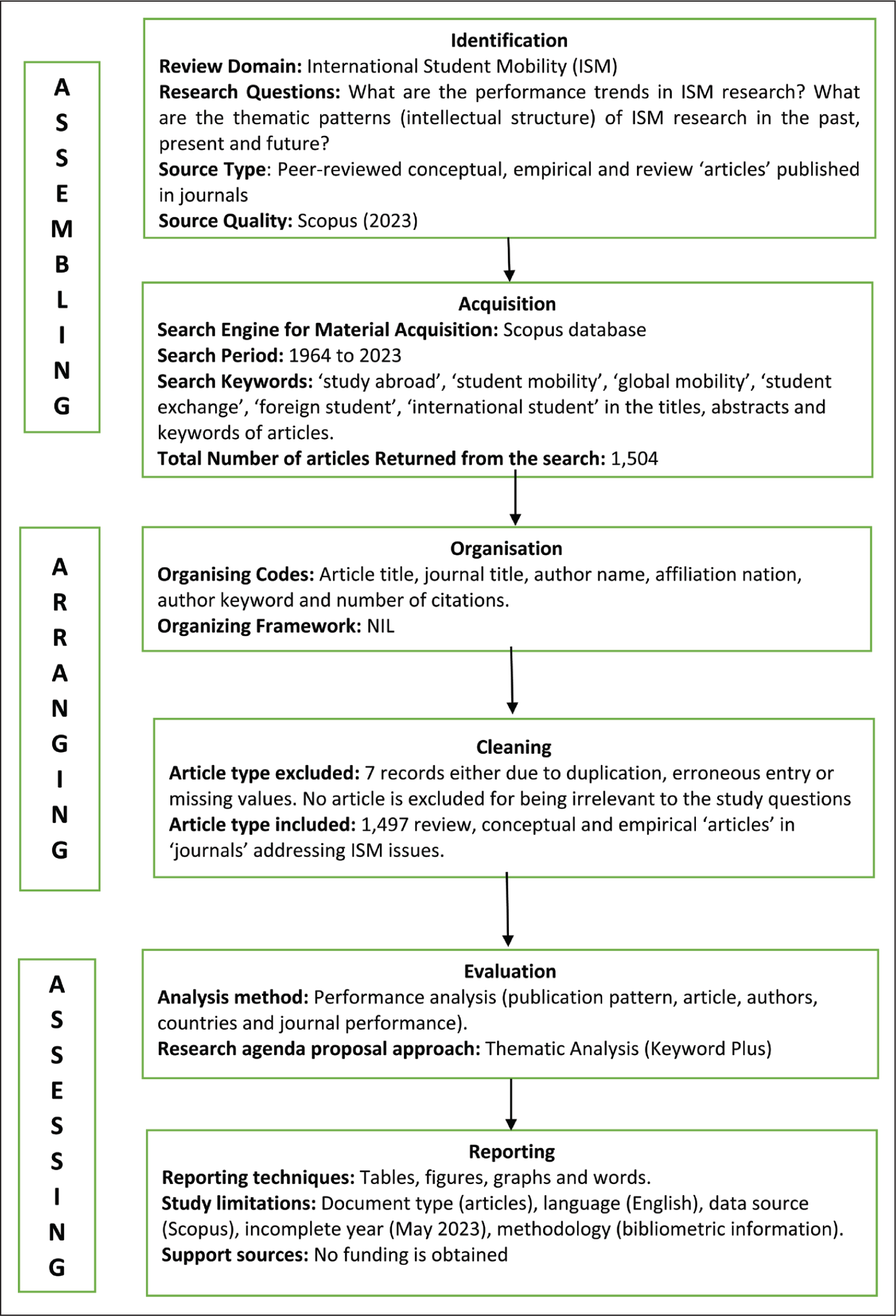
This SLR of ISM research is conducted in line with the SPAR-4-SLR procedure developed by Paul et al. (2021), as shown in Figure 1.
Review Procedure Following Paul et al. (2021) SPAR-4-SLR. Protocol.
Assembling
This is the initial step of the SPAR-4-SLR procedure. It first involves identifying the study area, research questions, source types and quality. Then, the ‘acquisition’ aspect of documents under review. The primary focus of this review identifies ISM as the review domain, and research questions (RQ1 and RQ2) are concerned with ‘what’ makes up the performance and intellectual pattern of ISM scholarship.
The ‘source type’ relates to ‘articles’ published in ‘journals’ only since they represent the primary sources of academic works that are extensively peer-reviewed and the most common platform of research communication (Sánchez et al., 2017). Hence, other documents such as books and book chapters are not considered for the analysis.
The Scopus database was employed as a proxy of ‘source quality’ since journals indexed there are considerately more extensive compared to its equivalents (Vanhala et al., 2020). Also, the database was utilized as the search engine and data ‘acquisition’ method because it offers necessary bibliometric data and accessible links to the document. The search range covered the years 1964 to 2023 since, according to Scopus, this is when publications on ISM began appearing in journals.
The search keywords are ‘study abroad, student mobility, global mobility, student exchange, foreign student, international student’ in the ‘titles, abstracts, and keywords’ of articles. A total of 867 journals returned a total of 1,504 English-language papers on ISM. The comma-separated values (.csv) and bib text (bib) formats were used to save the bibliometric data since they are compatible formats for bibliometric visualization tools such as Biblioshiny and VOSviewer. These bibliometric files were retrieved in May 2023.
Arranging
The ‘organizing’ and purifying (i.e., inclusion and exclusion) constitute the second stage of the SPAR-4-SLR protocol. The bibliometric information for articles was organized by ‘article title, journal title, author name, affiliation country, author keyword, and number of citations’. During the process, seven articles were eliminated due to duplication, wrong entry or missing values; hence, 1,497 articles were used in the analysis.
Assessing
Assessing, the third and last step of the SPAR-4-SLR process, entails evaluating and reporting the articles under consideration. The Excel tool was utilized to calculate the publication pattern, the article, authors, countries and journal performance. Biblioshiny was employed to dissect information relating to research clusters, ‘co-citations’, and ‘keyword co-occurrences’. Biblioshiny presents a descriptive analysis as graphs, tables and images, distinct from other software (Moral-Muñoz et al., 2020). Figure 1 illustrates the hierarchical pattern for the analysis.
The review findings are finally reported using standard reporting methods in subsequent sections, comprising words, tables and figures.
Results
The review’s findings are divided into two sections, each corresponding to one of the study’s questions: performance analysis (RQ1), which focuses on ISM data, author, article, country, and journal performance and intellectual pattern (RQ2), which covers ISM ‘knowledge foundation’ (past), ‘knowledge production’ (present) and ‘knowledge potential’ (future), as shown via scientific mapping using ‘co-citation, keyword co-occurrence and thematic’ assessments, respectively.
Performance Analysis
Publication Activity/Corpus Performance
A total of 1,497 ISM publications over the 60 years between 1964 and 2023 were analysed. The rising trend of ISM articles, which represents the field’s research interest, is shown in Figure 2. The evaluation period is divided equally into six 10-year periods (1964–1973, 1974–1983, 1984–1993, 1994–2003, 2004–2013 and 2014–2023). This is done to understand the publication trend per decade.
Number of ISM Articles Published During (1964–2023).
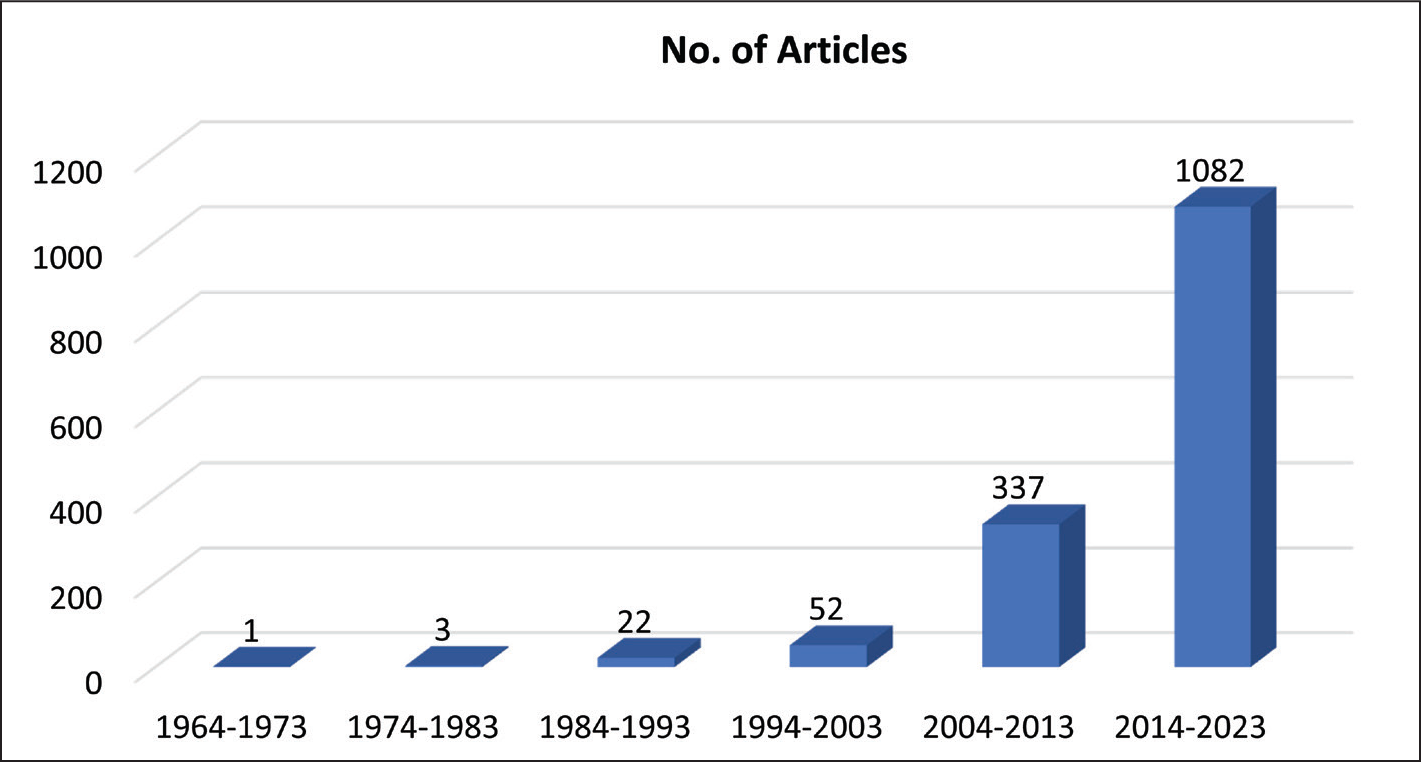
The analysis shows only one ISM article published in the first decade (1964 to 1973), which suggests that the topic was not explored in the early years when the concept was initially established. The next decade (1974 to 1983) still observed poor growth in the publication of ISM articles (n = 3). This is not the usual practice in a developing subject of study. Notably, the field’s first 40 years had relatively little development, with n = 52 in the fourth decade. Freeman (1964) laid the foundation of ISM research by explaining the need to create an international scholarship society. He argues that international scholarship needs to be worldwide in scope, exhibiting a cohesive intellectual effort and efficient two-way communication.
The last decade (2014–2023) was the highest productive decade for ISM literature, with a minimum of 64 papers published annually and 1,082 articles published throughout this span. This period saw increased connectivity made possible by the rising need for globalization, resulting in better sponsorship opportunities. Furthermore, the years after 2019 (the year COVID-19 unexpectedly stagnated the globe) were the most fruitful for ISM research, with 144, 162 and 171 publications for 2020, 2021 and 2023, respectively. This is higher than the previous five decades (1964–2013) of ISM research (n = 415), suggesting that research is facilitated during incidents like epidemics and lockdowns. This is consistent with the general trend in academic research in 2020, which saw an exponential rise in scholarly publishing due to the COVID-19 epidemic (Sloane & Zimmerman, 2021).
Authors Performance
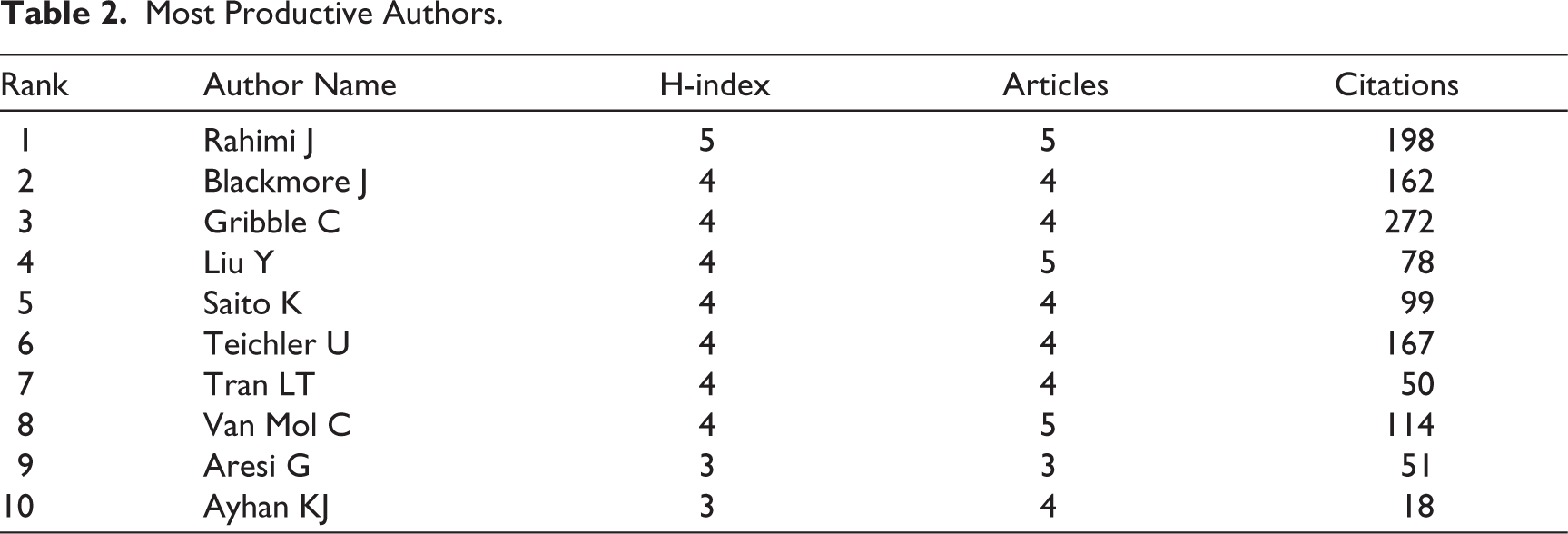
ISM papers from 3,877 authors were included in the review collection. Since authors offer various viewpoints regarding the output, influence and impact of their scholarship, the h-index and total citations were employed to assess the performance of ISM authors. The 10 most productive ISM authors are shown in Table 2. The leading three ISM authors, according to the h-index, which represents the output and impact of ISM authors, are Rahimi, Blackmore and Gribble.
Rahimi’s initial research examines Australian students studying international business and accounting and their transition to the labour market. Similarly, Blackmore’s work focuses on how Australian migration policy affects international students’ post-study work entitlements. Gribble studies the regulations and effects of the international student movement on sending countries. According to total citations, which measure the influence of ISM authors (Donthu et al., 2021), Gribble, Rahimi and Teichler are the top three ISM authors. An insight that should encourage aspiring authors to publish high-quality ISM articles is that authors can significantly impact the literature regardless of how frequently they publish ISM articles. This is shown by the total citation score of the top three authors in Table 2.
Most Productive Authors.
Article Performance
Local citation analysis was employed to determine the most cited ISM articles by other ISM articles. As such, the performance of ISM articles in terms of citations can be assessed more accurately. Table 3 presents the top 10 ISM papers in the review corpus and their corresponding findings.
Most Cited Articles.
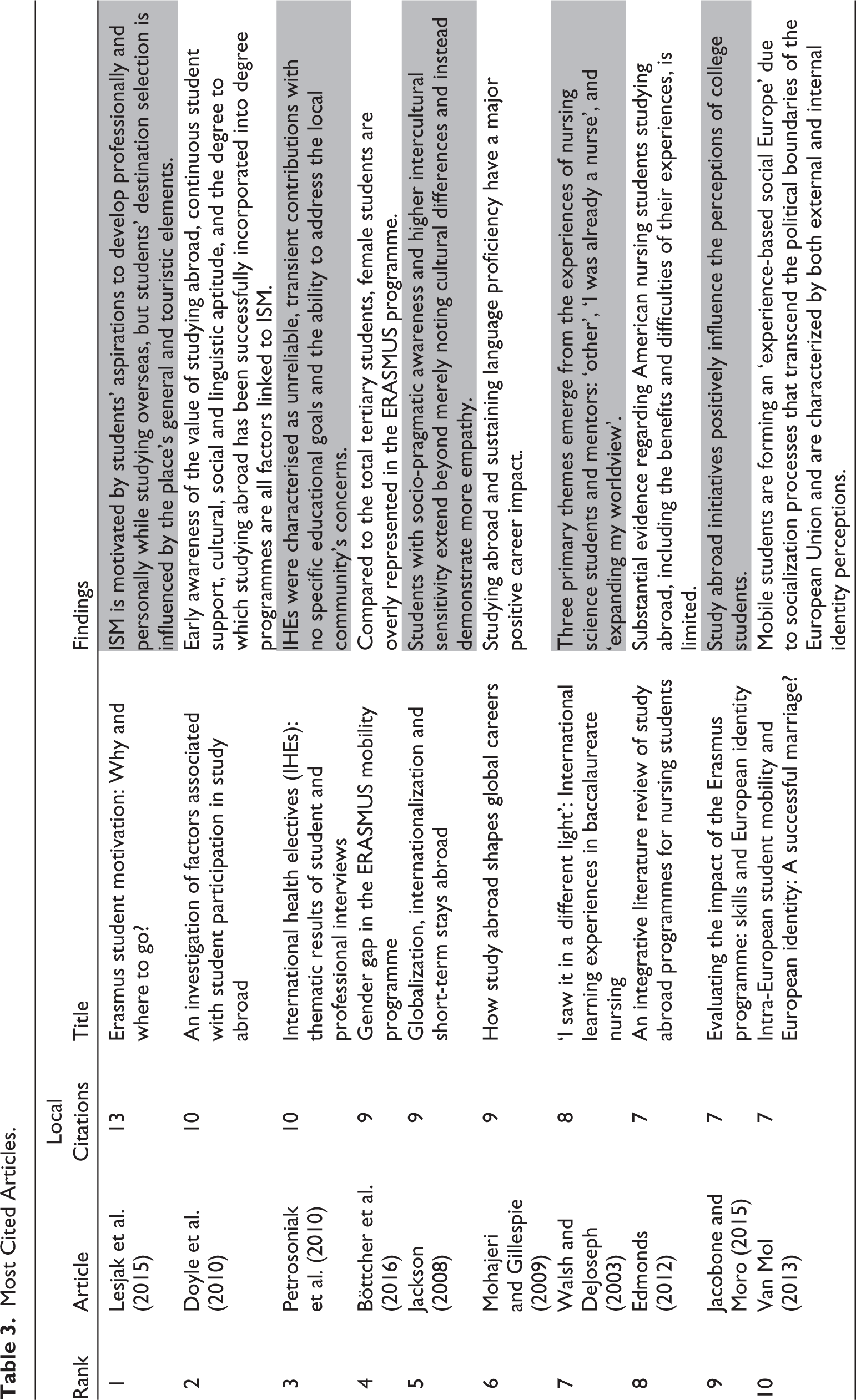
Lesjak et al. (2015) was the ISM article in the corpus that received the most local citations (13 citations). The article used the Erasmus Programme as a case study to examine the motives behind ISM. As an initiative of the European Union (EU), the Erasmus Programme offers EU students opportunities for academic mobility between partner universities throughout Europe. The programme is regarded as significantly contributing to HE within and outside the EU.
Doyle et al. (2010) examined the factors influencing individuals’ involvement in studying abroad among students in New Zealand. The study identified and explored factors relating to the prompt understanding of study abroad benefits such as consistent student support, cultural, social and language skills, and the degree to which the experience has been built into degree programmes.
Petrosoniak et al. (2010) investigate the issues (advantages and disadvantages) of medical trainees’ participation in international health electives (IHEs). This study adds to the continuing discussion regarding the objectives and impacts of IHEs for medical students.
The top 10 ISM papers in the corpus that were most locally cited received 89 citations. Compared to large worldwide citations, key works’ relatively low (local) citations provide a different perspective. The fact that the field is open to more than just one domain suggests its complexity. This is worrying, but the present review could help in addressing it. Future research is expected to gain from the foundational ISM studies discussed in this section.
Journal Performance
Overall, 1,497 ISM articles were published by 867 journals that Scopus indexed. Table 4 highlights the top 10 journals that account for 17.8% of the corpus’ articles and have published at least eight ISM articles each. Six journals have gotten at least 200 citations, while 7 have published at least 10 ISM articles.
Most Relevant Sources.
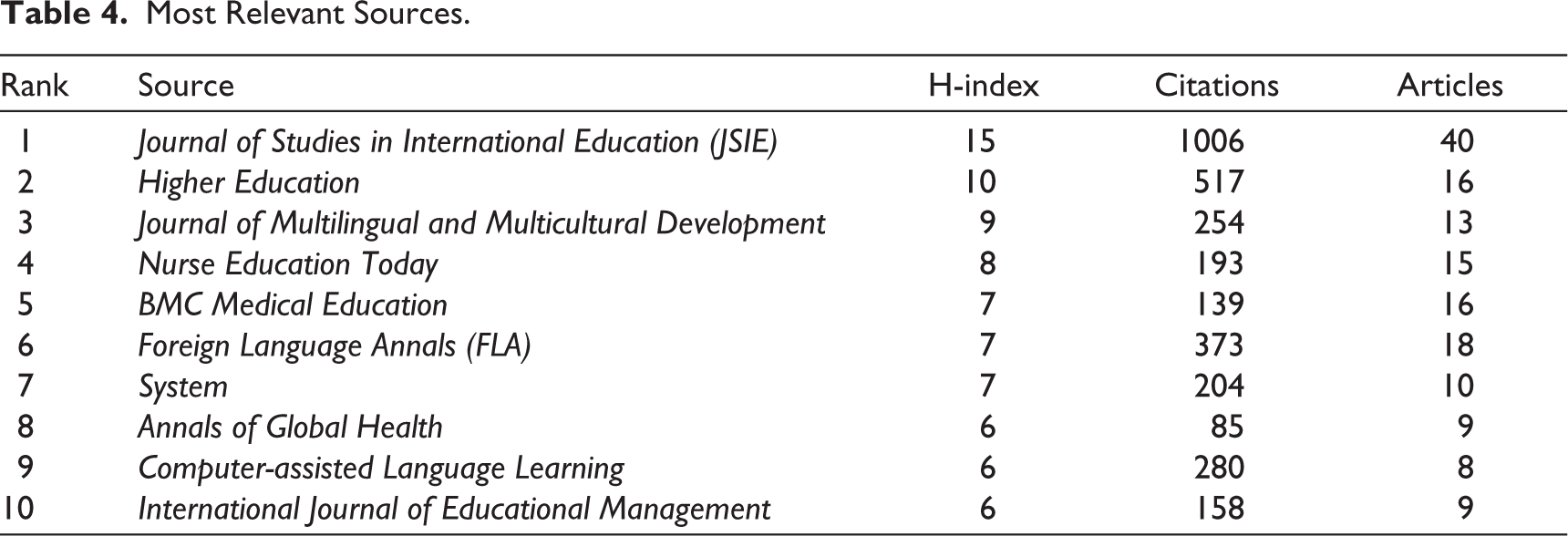
The top three most contributing journals based on the publication of ISM articles are the Journal of Studies in International Education (40 articles), Foreign Language Annals (18 articles) and Higher Education (16 articles). Recently, JSIE has published articles on topics such as the internationalization of HE and post-study work rights, ISM as a source of revenue, the factors affecting students’ cultural adaptability and more. The FLA’s recent focus is on foreign language learning across various contextual settings, utilizing online technologies such as machine translation and intercultural competence. Similarly, Higher Education has recently placed considerable focus on topics including HE staff experiences, feedback literacy, entrepreneurial competence of HE students, and pedagogy and learning approaches in HE.
In contrast, the leading three journals based on productivity and influence as defined by h-index are the Journal of Studies in International Education (h: 15), Higher Education (h: 10) and Journal of Multilingual and Multicultural Development (h: 9), while the first three most influential journals as determined by the total citations gained are Journal of Studies in International Education (1,006 citations), Higher Education (517 citations) and PLOS One (373 citations). Furthermore, it is observed that the highest productive journals were not mandatorily the most impactful ones, as less productive journals also proved competent in publishing highly cited papers, such as Computer Assisted Language Learning, which had less than 10 ISM articles but gained over 270 citations each.
Country Performance
The authors of the ISM papers in the study corpus came from 76 countries. According to the total articles and citations, Table 5 lists the top 10 productive countries. Based on overall articles, the top 10 nations account for 42% of the total articles in the corpus. The top three nations with over 12 ISM articles are the United States (US), China and the United Kingdom (UK). In contrast, in total citations, the top 15 nations account for 83.3% of the review corpus.
Most Prolific Countries.
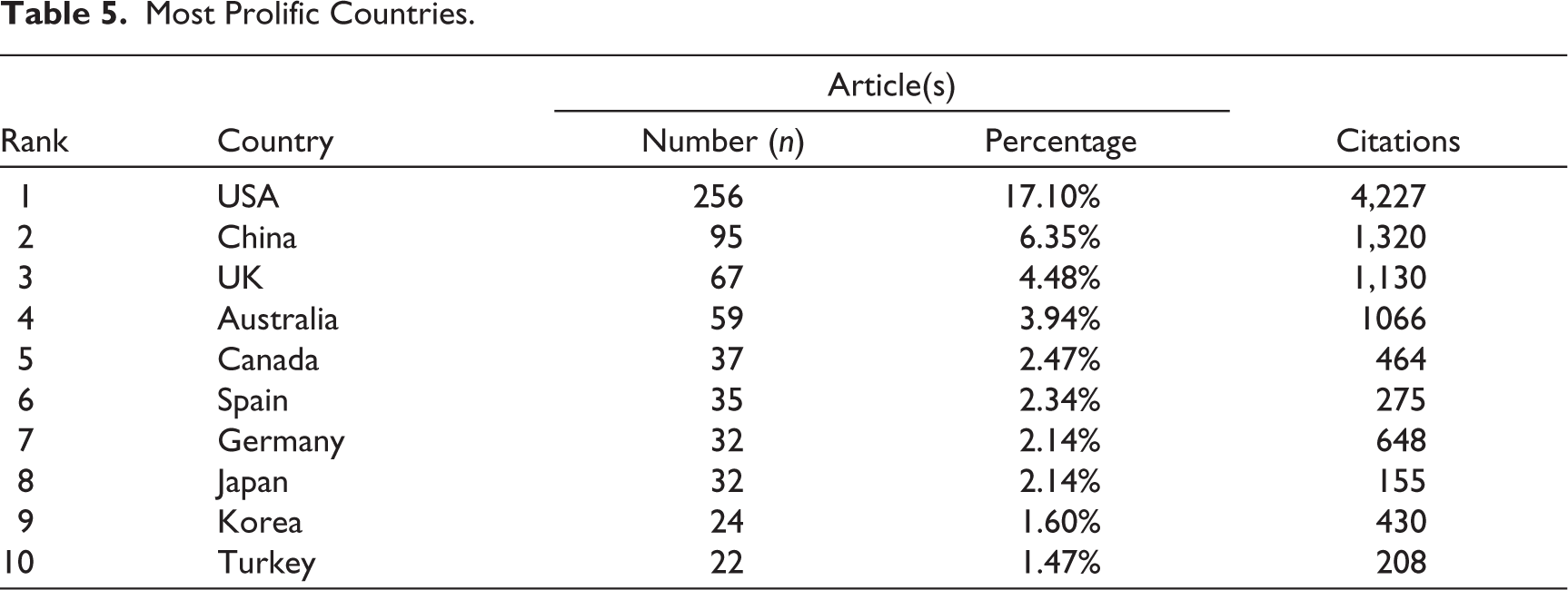
The top three countries with more than 1,000 citations each are the US, China and the UK, collectively accounting for 48.9% of citations in the ISM articles. Although it is incredible to see a combination of developed and developing nations make it into the top 10 list of the countries with the highest publication of articles, it is intriguing to see the mix at about equal proportions making an effect in the ISM sector. Emerging policies, which are frequently linked to contributions from both settings, are one of the likely causes. Although the policies are more prevalent in developed nations, their effective utilization often proves significant in emerging countries.
Intellectual Structure
Knowledge Foundation of ISM
This study conducted a ‘co-citation analysis’ to unveil the body of knowledge (past) underpinning ISM research. Based on their thematic similarity, highly referenced ISM articles referred to frequently by other ISM articles are recognized and grouped in this study (Martínez-López et al., 2018).
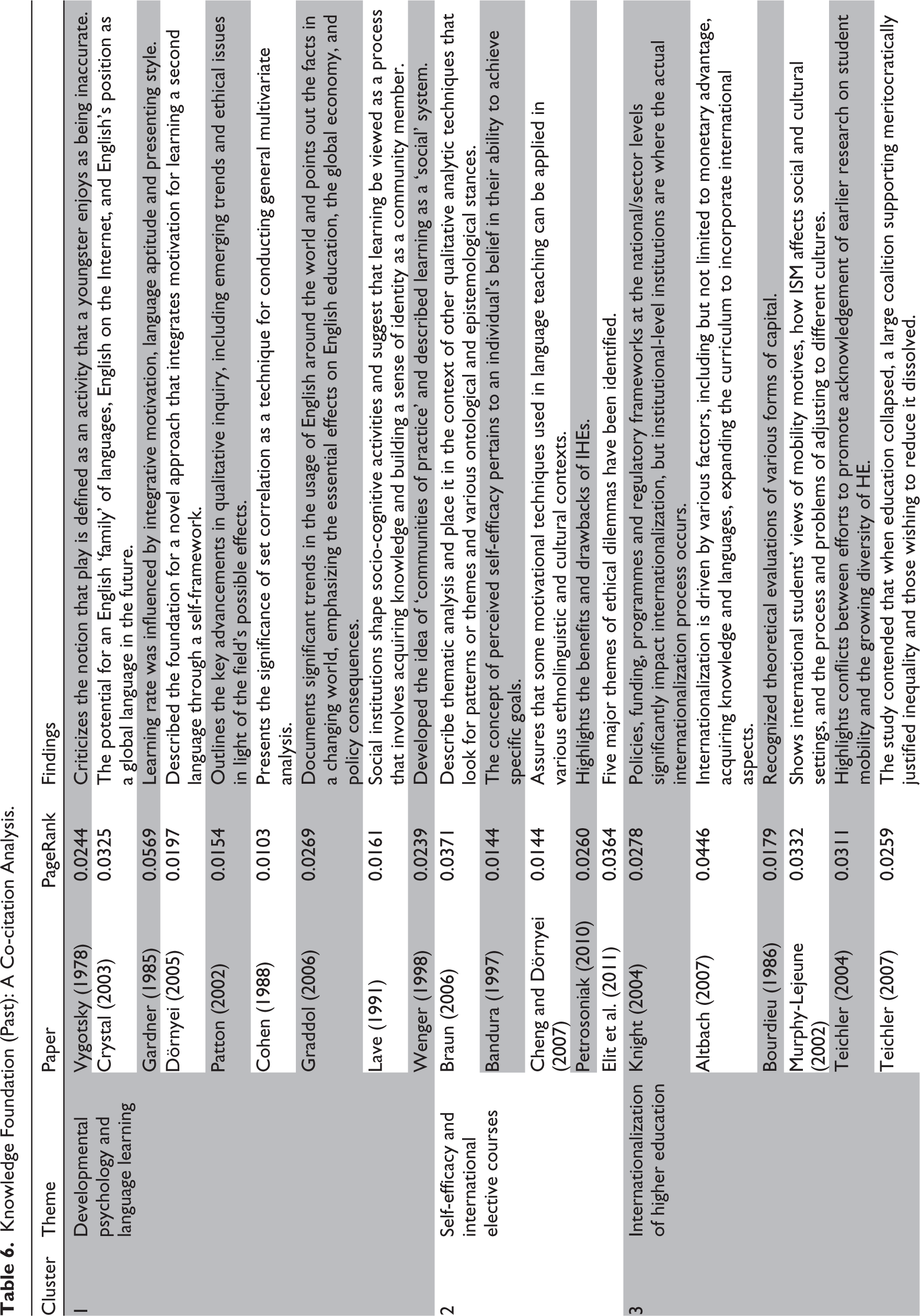
Six major clusters of articles that ISM articles rely on for theoretical underpinning were identified using the analysis of co-citations and discussed in the following section. The network between the six clusters, which includes 39 ISM articles that other ISM papers have frequently cited, the ‘PageRank’, which quantifies the degree of centrality between articles, as well as their corresponding findings, are presented in Table 6. The PageRank algorithm’s basic idea can be broadly approximated to the ‘influence’ indicator, which assesses the impact of articles by considering the number of citations from one article to another (Ma et al., 2008). Given that the PageRank criteria bear more details on the linking connections between citing and cited articles, it provides a more comprehensive view of the influence of the ISM articles in the review corpus.
Knowledge Foundation (Past): A Co-citation Analysis.
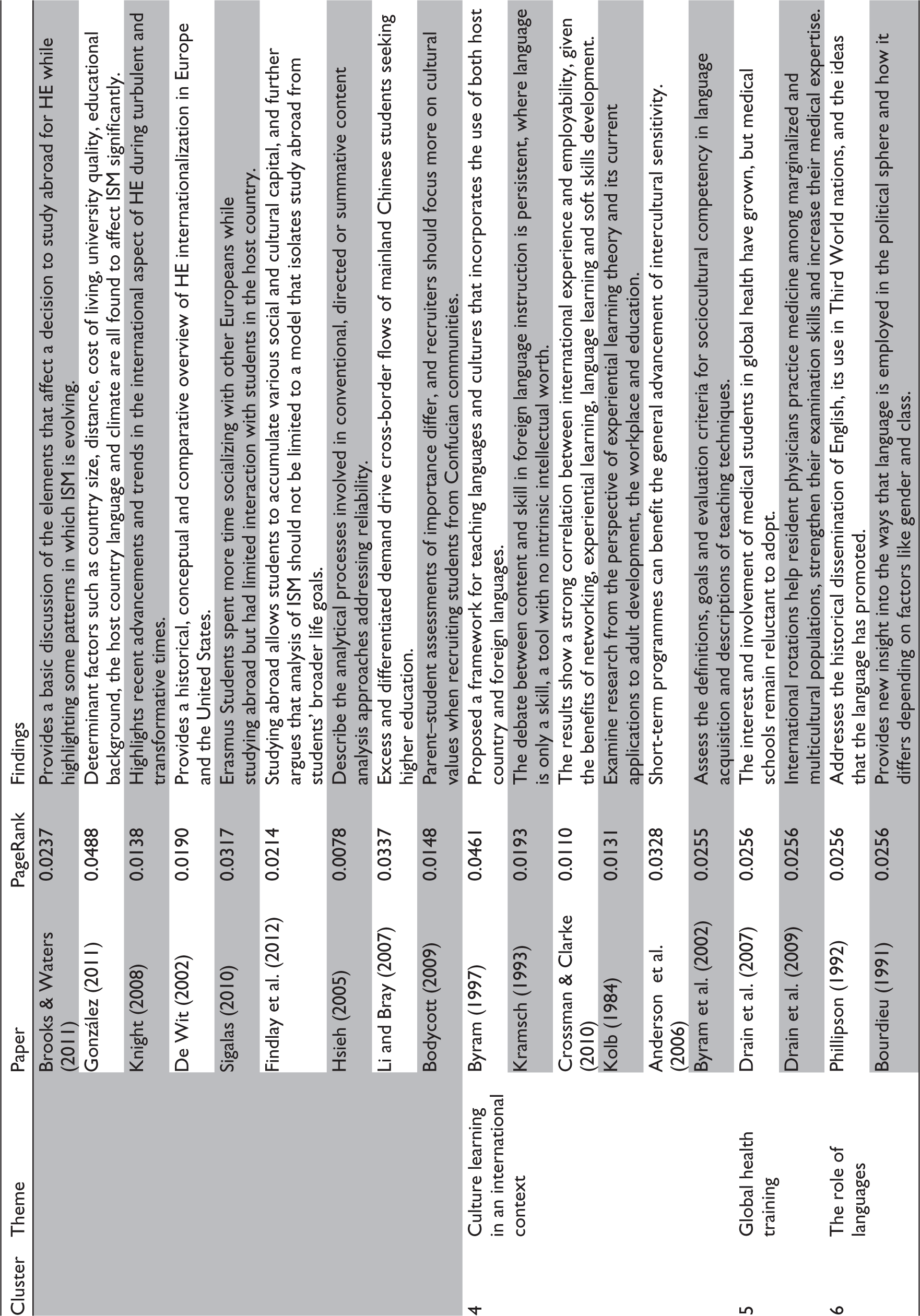
Developmental psychology and language learning
Cluster 1 consists of ISM articles on developmental psychology and language learning. ISM research under this cluster was mostly carried out by ISM scholars such as Vygotsky and Cole (1978), Crystal (2003), Gardner (1985), etc. Articles within this cluster focus on the theoretical stances and empirical evidence relevant to the drivers and outcomes of developmental psychology and language learning. Vygotsky and Cole (1978) have long been acknowledged as pioneers in developmental psychology, and the theoretical framework is frequently regarded as the basis of ISM research. Although English is regarded as a universal language, Crystal (2003) explores its origins, status and prospects as the international language of communication. Gardner et al. (1985) studied how motivation, attitudes and reported language use affect second language attrition.
Self-efficacy and international elective courses
Cluster 2 comprises ISM papers on theoretical developments, self-efficacy and international elective courses. Studies in this cluster were mainly published by authors such as Braun (2006), Bandura (1997), Cheng and Dörnyei (2007), etc. The ISM articles in this cluster mainly centred around the theoretical viewpoints and evidence relating to the conceptualization, operationalization and application of ISM and the language learning outcome of students’ experience interacting with international students. Bandura (1977) made the best attempt at categorizing, summarizing and extracting meaning from past literature. Braun and Clarke (2006) consider potential thematic analysis difficulties and develop a clear roadmap for those aiming to start or rigorously conduct the analysis. Cheng and Dörnyei (2007) explore the key motivating strategies and factors determining success in foreign language (L2) learning.
Internationalization of higher education
Cluster 3 comprises ISM articles on the internationalization of HE and student mobility. ISM articles within this network are published by authors such as Knight (2004), Altbach (2007) and Bourdieu (1986). Knight (2004) studies the implications of internationalization at both the national and institutional levels. Bourdieu (1986) established theoretical reflections on various forms of capital related to ISM research. Altbach and Knight (2007) proceeded to ‘unpack’ the antecedents of globalization and conceptualized internationalization in HE and further discuss its effect on universities.
Culture learning in an international context
Cluster 4 comprises ISM articles on culture learning in international education. Research under this cluster was mainly carried out by ISM scholars such as Byram (1997), Kramsch (1993) and Kolb (1984). Kolb (1984) set forth the theoretical foundation of ISM research through the lenses of experiential learning theory. While Kramsch (1993) emphasized that the essence of cross-cultural reflections should not be discarded due to communication practices, Byram (1997) explores the need for cultural awareness in Britain.
Global health training
ISM articles on global health training framed cluster 5. Drain et al. (2007) highlight the advantages of providing medical students with additional global health education and opportunities and recommend vital steps for addressing global health concerns. Subsequently, Drain et al. (2009) contend that even though most accreditation agencies and residency programmes do not provide enough support, more resident physicians still acquire international experience.
The role of languages
Cluster 6 comprises ISM articles on the role of languages. As Bourdieu (1991) documented the relationship between language, power and politics, Phillipson (1992) further examines the modern phenomenon of English being used across borders and discovers how and why it has grown so prevalent.
Knowledge Production of ISM
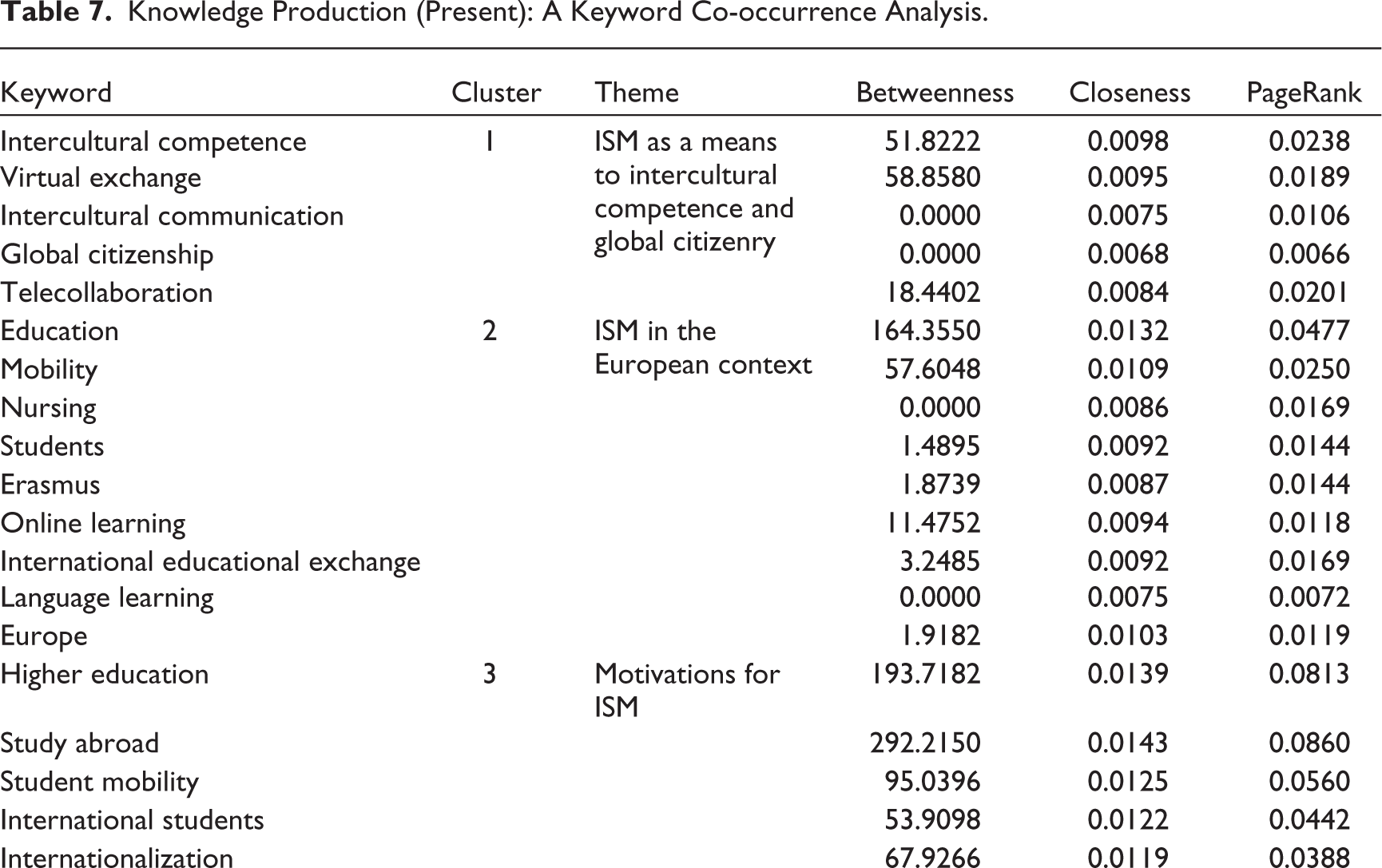
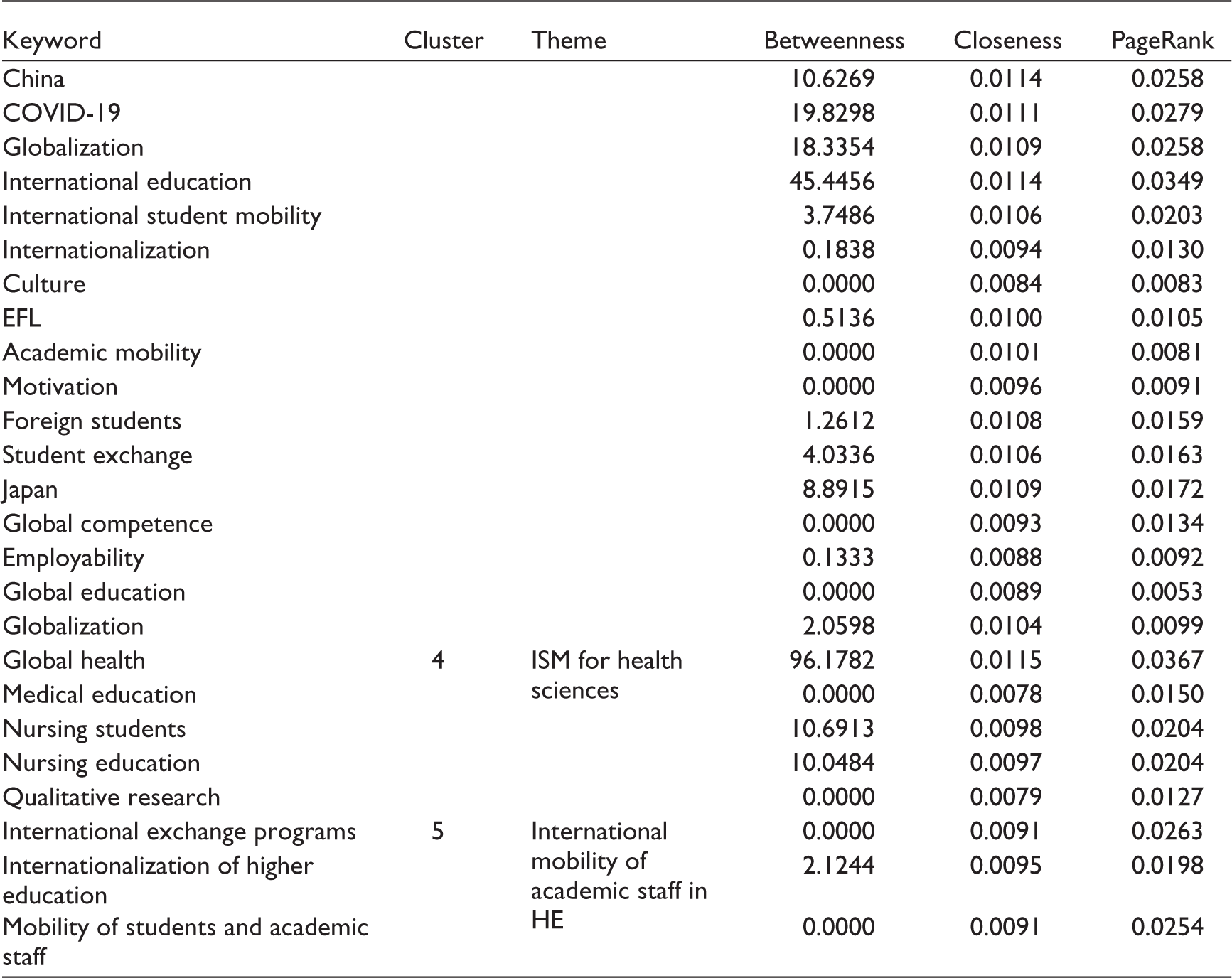
A ‘keyword co-occurrence’ evaluation was done to pinpoint how ISM research produces knowledge (present). The keywords listed by authors for their ISM articles are retrieved and clustered based on how closely related they are thematically (Martínez-López et al., 2018). In this way, ISM’s research is reflected in the clusters found by the co-occurrence analysis. The analysis discovered five clusters, as discussed in the subsequent section. The network between these five clusters, which includes 44 keywords that have been featured in the ISM articles, is presented in Table 7. ‘Betweenness’ quantifies the centrality of a keyword that links two other keywords, whereas ‘Closeness’ assesses how long data will be spread from a specific keyword to other keywords in the network. The crafting of each cluster’s interpretation draws on sensemaking, in which the cluster’s keywords are structured to communicate a logical argument that best describes the cluster’s purpose and scope (Donthu et al., 2021).
Knowledge Production (Present): A Keyword Co-occurrence Analysis.
ISM as a means to intercultural competence and global citizenry
Cluster 1 consists of ISM articles concentrating on ISM as a means to intercultural competence and global citizenry. The ‘co-occurrence’ of authors’ keywords in this network suggests that ISM research explore how ‘intercultural communication’ can influence the ‘intercultural competence’ of international students and their ability to gain ‘global citizenship’ through various means such as ‘virtual exchange’ and ‘telecollaboration’.
ISM in the European context
ISM articles focusing on ISM in the European context are found in cluster 2. The ‘co-occurrence’ of these keywords depicts that ISM research in this network examines how to acquire ‘education’ through various ‘students’ ‘mobility’ programmes like ‘international educational exchange’ and ‘online learning’, which facilitates ‘language learning’ taking the case study of ‘Erasmus’ in ‘Europe’.
Motivations for ISM
ISM articles that discuss motivations for studying abroad compose cluster 3. The ‘co-occurrence’ of these keywords indicates that research in this network explores ‘motivation’ for the ‘internationalization’ of HE together with the factors that affect ‘study abroad’, including ‘culture’, ‘globalization’, employability’, and ‘COVID-19’. Moreover, due to multiple imposed ‘student mobility’ restrictions, ISM research is currently focused on COVID-19 heavily impacted countries, like ‘China’ and ‘Japan’.
ISM for health sciences
Cluster 4 comprises ISM articles focusing on health sciences. The keywords co-occurrence in this network depicts that the ‘qualitative research’ technique is highly employed in studies on ISM for ‘global health’ related programmes, particularly ‘medical education’ and ‘nursing education’.
International mobility of academic staff in HE
Cluster 5 consists of ISM articles exploring academic staff mobility. The keywords co-occurrence in this network shows that ISM research within this network investigates the recent focus of ‘internationalization of higher education’ through various ‘international exchange programs’, which are manifesting in the form of ‘mobility of students and academic staff’.
Outcomes of ISM Programme
Thematic analysis was carried out on the papers on outcomes of ISM in the review corpus. Based on the articles reviewed on this theme, the outcomes of ISM programmes can be broadly classified into three key areas: personal, professional and cultural outcomes (see Figure 3).
ISM Knowledge Foundation and Outcomes.
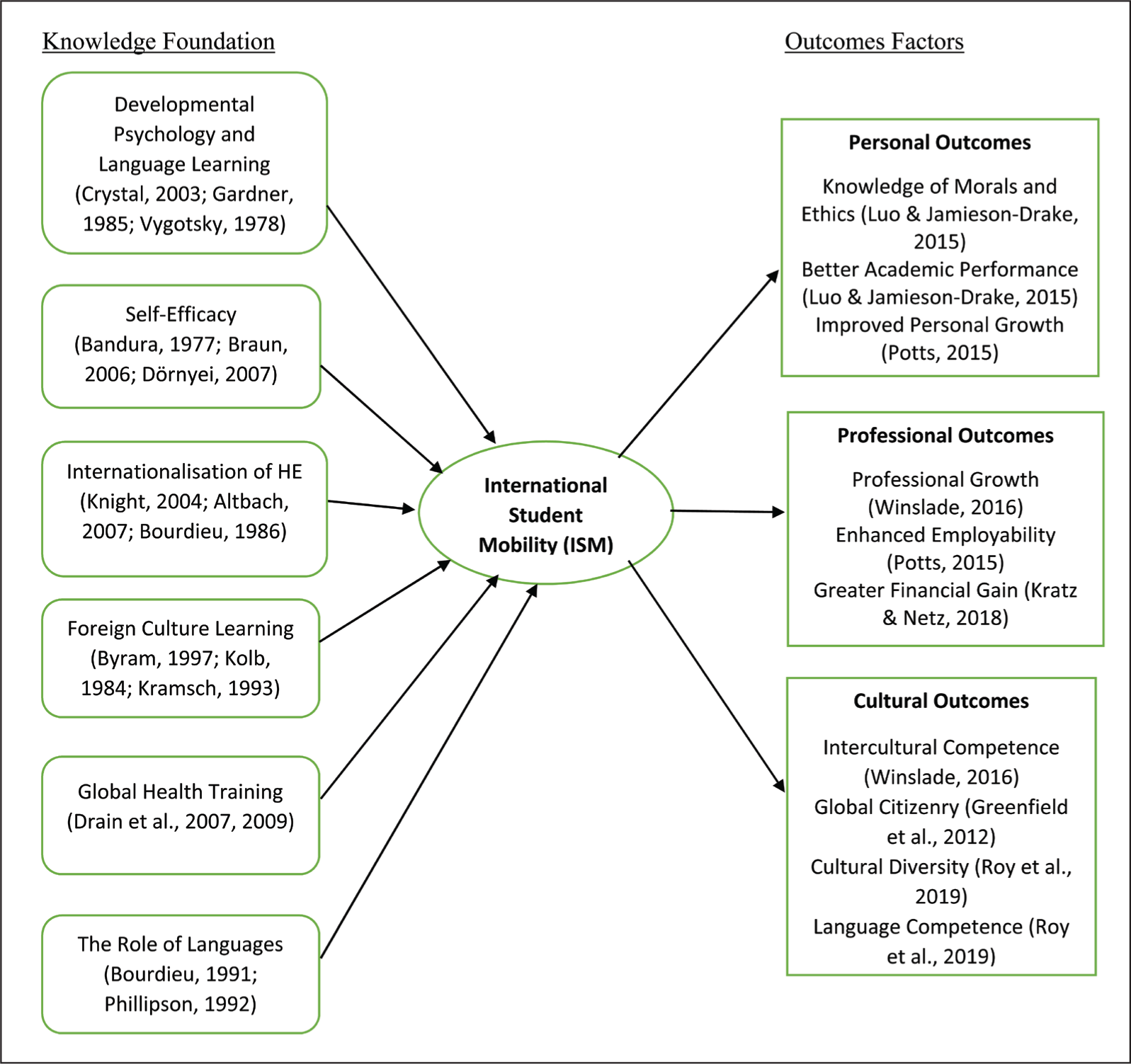
Personal outcomes resulting from ISM programmes, as evident in the literature, include knowledge of morals and ethics (Luo & Jamieson-Drake, 2015), better academic performance (Luo & Jamieson-Drake, 2015) and improved personal growth (Potts, 2015). Studies have also explored the impact of ISM programmes on professional-related outcomes, including professional growth (Winslade, 2016), enhanced employability (Potts, 2015) and greater financial gain (Kratz & Netz, 2018). Similarly, research has discussed various cultural outcomes resulting from participating in ISM programmes’ including intercultural competence (Winslade, 2016), global citizenry (Greenfield et al., 2012), cultural diversity and language competence (Roy et al., 2019).
Conclusion
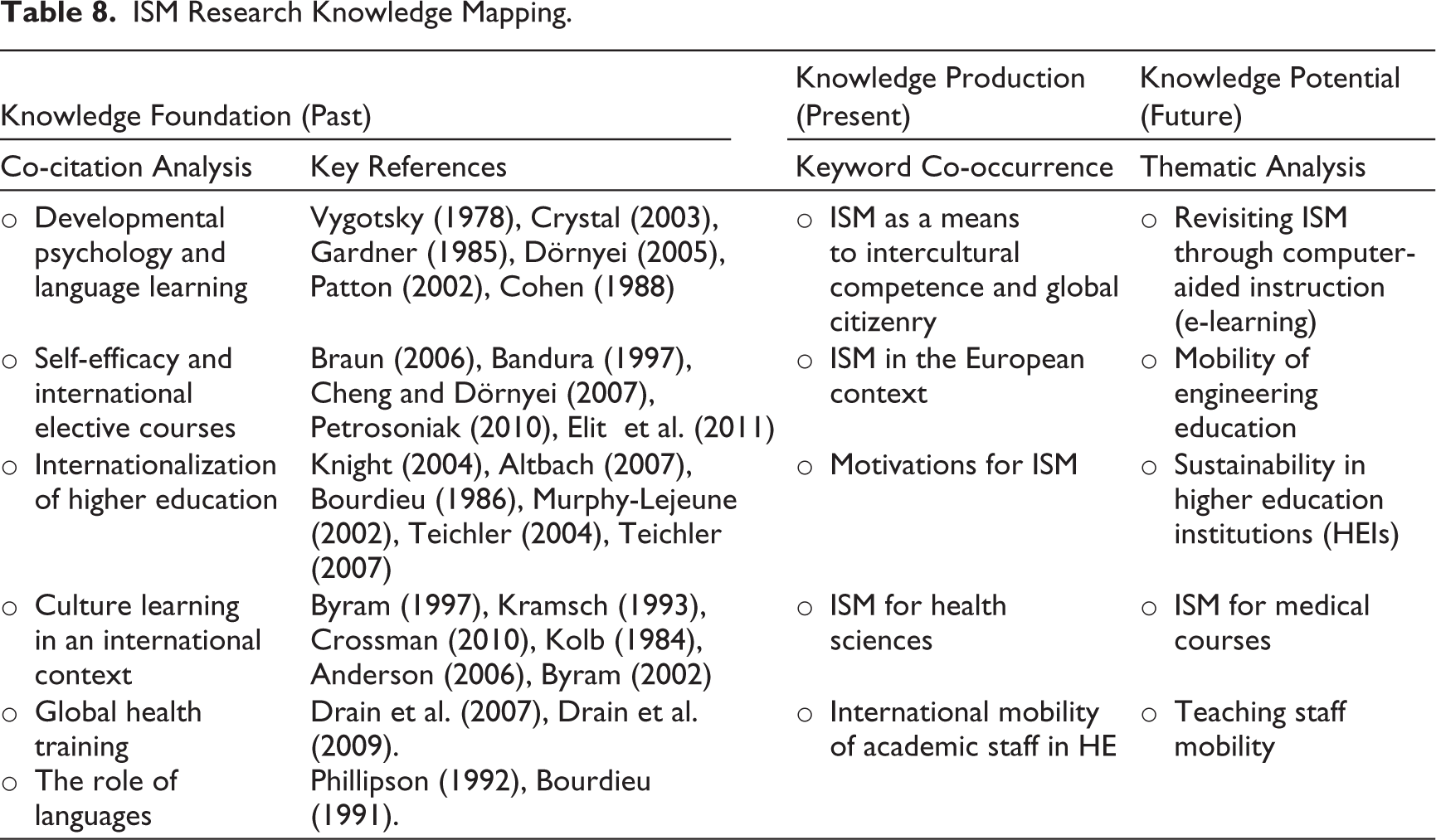
This study has provided an exhaustive and academic review of ISM scholarship revealed in 1,497 articles published across 867 Scopus-indexed journals for six decades (1964 and 2023). By doing so, this article provided seven important insights about the pattern of ISM research, which could be helpful to potential researchers who wish to revisit state-of-the-art regarding its most extensive form. This article did this by providing answers to two research questions. After presenting the main conclusions from the past and current review of ISM research, this article will propose the potential knowledge in the subject that new researchers can take into consideration as research directions. Table 8 depicts the ISM research knowledge mapping discussed in the review.
ISM Research Knowledge Mapping.
Future Research Directions (Knowledge Potential)
In order to propose directions for future research, this review draws on a thematic analysis related to Keyword Plus. The future topics were identified using the steps suggested by Braun and Clarke (2006). The thematic analysis considers the implications of studies in the review corpus. Therefore, the recent articles related to the identified research theme were considered for thematic review, and the propositions are summarized in the subsequent sections. Thus, the analysis proposes five main future research directions that potential authors may explore to expand the intellectual framework of ISM.
Revisiting ISM Through Computer-aided Instruction (E-learning)
With the rapid technological growth, particularly in e-learning, such as artificial intelligence (AI), which continues to transform the educational landscape, it is essential to reconsider the strategies employed in ISM programmes. Cheng-Ta (2023) argues that computer-aided instruction improves students’ learning habits through an interactive interface and an easy-to-learn environment. Future studies should examine the key benefits and drawbacks of integrating e-learning into the educational environment.
Proposition I: Key benefits and drawbacks in embedding and integrating AI, which can improve ISM policy development, implication, outcome and impact on the educational environment.
Propose RQ1a: What are the main benefits and costs of implementing AI in the formulation of ISM policies?
Propose RQ1b: How does integrating AI technologies affect the educational environment?
Mobility of Engineering Education
As international collaboration keeps transforming the world of engineering education, future research should discover globalization factors and practical assessment methods and their significance to ISM. Tell and Hoveskog (2022) propose that a creative learning approach, like student-led learning in an applied engineering curriculum, assists learners in developing their soft skills better than lecture-style learning.
Proposition II: Globalization factors such as diversity and inclusion, cross-cultural experiences and technology-enhanced learning significantly transform the engineering landscape.
Propose RQ2a: What are the impacts of globalization factors such as cross-cultural experiences, diversity and inclusion and technology-enhanced learning in transforming the engineering landscape?
Sustainability in Higher Education Institutions (HEIs)
Though ISM is becoming increasingly significant, attention is needed regarding the sustainability of HEIs (Shields, 2019). Integrating sustainability and digitization will be essential for optimizing ISM’s capabilities and improving cross-cultural cooperation in HE.
Proposition III: ISM impacts the environment through increasing carbon emissions.
Proposition IV: Virtual mobility is significant in addressing policy concerns, student support services and encouraging ethical and sustainable behaviour, particularly in HEIs.
Propose RQ3a: To what extent does ISM contribute to environmental impact by increasing carbon emissions?
Propose RQ3b: What are the roles of virtual mobility in addressing policy issues, encouraging ethical practices and sustainability in HEIs?
ISM for Medical Courses
ISM for medical education is essential for advancing and addressing global healthcare issues. To solve global health challenges, authorities struggle to train and retain medical practitioners and researchers (Campos & Rocha, 2021). Internationalizing medical education could be attained by utilizing digital resources, resolving ethical and equity concerns and embracing novel pedagogical approaches.
Proposition V: International clinical experiences and collaboration significantly improve the global healthcare environment.
Proposition VI: Medical student exchange programmes significantly enhance practitioners’ research capabilities and skills.
Propose RQ4a: How do international clinical experiences and collaboration enhance the global healthcare system?
Propose RQ4b: What are the roles of medical students’ mobility in enhancing their research capabilities and skills?
Teaching Staff Mobility
Teaching staff mobility is essential for fostering knowledge exchange and professional growth in HE. It is argued that most teachers have not participated in exchange programmes (Vázquez et al., 2020). Future research should explore the relevance of professional networks and institutional support in facilitating effective knowledge exchange, enhancing teaching practices and promoting internationalization in education.
Proposition VII: Teachers’ professional networking and institutional support contribute to promoting the internationalization of education.
Propose RQ5a: What role does professional networking among teachers play in the globalization of education?
Propose RQ5b: How does institutional support contribute to promoting academic staff mobility?
Limitations
Despite the extensive review of past and current ISM research and the framing of research-informed opportunities for potential authors in shaping the direction of ISM literature, the present study faces three major limitations.
First, conference proceedings and book chapters were not included in this analysis; future studies can still study ISM using these types of material. Second, the analysis is confined to the data obtained from the Scopus database. Even though previous studies (Donthu et al., 2021; Paul et al., 2021) have recommended the use of Scopus as a retrieval mechanism, it is important not to ignore the possibility of missing ISM studies published in journals other than the ones indexed in Scopus, such as Web of Science (WOS) or Emerald. Therefore, future reviews of ISM can consider the WOS database as a validation approach to either challenge or corroborate the results in this review. Third, even though this review gives an overview of ISM research up to May 2023, it will likely continue evolving, prompting more bibliometric analysis of the ISM literature. It will be crucial to replicate the analyses reported herein once ISM research has advanced and to compare the discovered findings with those discussed herein.
Footnotes
Declaration of Conflicting Interests
The authors declared no potential conflicts of interest with respect to the research, authorship and/or publication of this article.
Funding
The authors received no financial support for the research, authorship and/or publication of this article.