




Abstract
This article seeks to facilitate future development of theory and empirical research about Asian nonprofits by examining published knowledge accumulated over 60 years of scholarly research on nonprofits across Central, East, South, Southeast, and West Asia. Our systematic literature review and bibliometric analysis of 2,188 articles published in English peer-reviewed journals from 1958 to 2022 reveals that while there is evidence of knowledge integration with mainstream nonprofit and NGO studies, Asian nonprofit research has evolved as a distinct field with significant country- and region-level variations in research scale and trends, research topics shaped by region-specific phenomena, available data that affect scholars’ choices of research methods, and theoretical development and application. These findings suggest both the advances and challenges associated with future Asia-focused nonprofit research, particularly emphasizing the importance of conducting comparative studies. The article discusses directions to advance Asian nonprofit research and implications for general nonprofit research.
Introduction
International and comparative perspectives have been vital to the progress of research on nonprofit organizations (NPOs) since its early days, as is clear from the first-year (1972) issue of the Journal of Voluntary Action Research—the predecessor of Nonprofit and Voluntary Sector Quarterly (NVSQ)—that published studies in international contexts, including those of Japan, Colombia, and France. The 1990s witnessed the methodological and empirical progress of comparative nonprofit research, accelerated by the launch of the Johns Hopkins Comparative Nonprofit Sector Project (CNP) in 1991. Recently, Bushouse et al. (2023) illuminated the continued growth of international nonprofit research, including that in Asia. Building on these cumulative efforts, this article seeks to assess the state of nonprofit studies focusing on Asia, elucidating variations in the volume and nature of research across all Asian regions (Central, East, South, Southeast, and West).
Substantial diversity in economic, political, and sociocultural traditions in Asia, the world’s most populous continent, has shaped the unique nature of NPOs and giving, thereby attracting growing scholarly interest. For instance, in their first systematic effort to understand Asian nonprofit research, Lyons and Hasan (2002) argued that “Given the growing interest, the size and the diversity of the region, it is likely that studies of Asia’s nonprofit sector will appear with increasing frequency” (p. 112). As they further claimed, Asia could “prove a great laboratory for exploring a variety of third sector theories” (p. 109). Asia’s unique context indeed facilitated nonprofit theory development even earlier. Buddhist Commons inspired the theory of the commons by Lohmann (1992), and Japan was included in the initial model in the social origins theory of Salamon and Anheier (1998). In his second review of Asian nonprofit research, Hasan (2015) scrutinized Asian nonprofit studies published between 2001 and 2013 and noted that the majority of the authors were nonindigenous scholars. This might have resulted from scholars’ language choices, as nonindigenous scholars often publish in English-language journals. Nevertheless, this also indicated growing scholarly interest in Asian NPOs beyond local boundaries, with such research becoming integrated within the broader field of nonprofit scholarship (“general nonprofit research”).
However, there have been few systematic efforts to address the call by Lyons and Hasan (2002) that Asia’s “role in that endeavor awaits the development of better knowledge of the sector, especially comparative knowledge” (p. 109). Moreover, nonprofit scholars underscored the lack of geographic focus as a critical gap that could impede progress in the field (Ma & Konrath, 2018). Notable exceptions focusing on Asia exist but typically focus on a single country and review local-language publications (South Korea by An et al., 2022; China by Zhang & Guo, 2021). Since assessments of local-language literature are critically important to fully appreciate Asian NPOs, we elaborate on this point further in the Discussion. Nevertheless, analyzing English-language scholarly articles on Asian nonprofit research has merits, as it illuminates not only the state of Asian nonprofit research but also its knowledge integration with and implications for general nonprofit research and NGO research. 1
Our study fills this long-standing gap by examining 2,188 Asian nonprofit studies published in English-language scholarly journals over 60 years (1958–2022). Due to substantial conceptual heterogeneity across Asia, we combine systematic literature review (SLR) and bibliometric analysis to qualitatively and quantitatively examine these studies. Our objectives are threefold. First, as the first systematic review of nonprofit research covering all the regions of Asia, this study establishes a dataset of the literature and presents key dimensions to demonstrate the field’s progress. Second, addressing the inference of Lyons and Hasan (2002), we focus on diversity across Asia and map region and country variations into the key dimensions to identify distinct characteristics in Asian nonprofit research and knowledge integration with general nonprofit research (LePere-Schloop & Nesbit, 2023; Ma & Konrath, 2018) and NGO research (Brass et al., 2018). Finally, we discuss directions for continued advancement and future development of Asian nonprofit research and general nonprofit research.
Rationale and Context
Expanding Efforts to Produce Knowledge for the Nonprofit Sector Leave a Noticeable Gap in Focus on Asia
Although the academic field of nonprofit studies has emerged relatively recently, scholars argue that there is sufficient quantity and cohesion in this field to allow knowledge production (Kang et al., 2022; Ma & Konrath, 2018). The growing number of SLR and bibliometric analyses include studies focusing on specific themes (e.g., “nonprofit collaboration” studied by Gazley & Guo, 2020) and those “scanning” the broader field of nonprofit research. Among such comprehensive reviews is the bibliometric analysis by Ma and Konrath (2018) of 12,016 publications from 1925–2015. This review revealed two waves of development (the 1990s and 2000s–2010s) triggered by a series of events, including the launch of premier nonprofit journals, JVAR/NVSQ, Voluntas, and Nonprofit Management & Leadership (NML). Similarly, the bibliometric analysis by LePere-Schloop and Nesbit (2023) assessed the disciplinary contributions made during 1999–2019 in leading nonprofit-focused journals and other journals, confirming the multidisciplinary nature of nonprofit research.
Prior reviews also noted the salience of international topics (e.g., “global NGOs” in Kang et al., 2022; “international relations” in LePere-Schloop & Nesbit, 2023). Furthermore, Marberg et al. (2019) discovered that “international” and “comparative” were among the dominant topics of nonprofit research. However, geographic references to Asia were still lacking in these previous efforts, except for the review by Brass et al. (2018) of research on NGOs, many of which operated in Asia. Despite many shared topics (e.g., NGO-state relations) between NGO and NPO research, studies of NGOs, defined by Brass et al. (2018, p. 137) as “any nonprofit, non-governmental organization that works in the development, humanitarian, advocacy, or civil society sector in any country considered a developing country,” exclude other characteristics that general nonprofit research usually covers, such as other organization types (e.g., universities and hospitals), other country types (e.g., high-income countries), and these countries’ main interests (e.g., corporate philanthropy). Such excluded characteristics, nonetheless, are highly prominent in Asian nonprofit research. Defining Asian nonprofit research, we therefore consider nonprofit-related characteristics similar to those of general nonprofit research with a geographic focus on Asia.
Asia as a “Research Laboratory”: Political, Economic, and Sociocultural Heterogeneity
Past research has examined the trajectories of Asian countries, establishing a unique context for Asian nonprofit research. Including over 40 countries, Asia embodies an extraordinary range of ethnicities, over two thousand spoken languages, and varied religions and philosophies (e.g., Buddhism, Christianity, Hinduism, Islam, Judaism, and Zoroastrianism). The complexity of sociocultural traditions has created a distinct environment in which both formal NPOs and informal giving practices coexist in many Asian countries, making simple comparisons to their Western counterparts difficult or even problematic (Onishi, 2017; Smith et al., 2018). Asia, the most natural-disaster-prone continent, has endured catastrophes (e.g., the 1995 Kobe Earthquake) that catalyzed an unprecedented growth of voluntarism and donations and influenced relevant policy reforms, prompting the development of the nonprofit sector in many Asian countries in the 1990s (Shaw & Goda, 2004). The early 2000s were another period of exponential growth in Asia’s nonprofit sectors, as NPOs shifted focus to service provision and efficiency for their economic independence from the state in both democratic and authoritarian regimes (Yu et al., 2021).
Similarly, Asia’s striking heterogeneity of political and economic conditions affects the patterns of the nonprofit sector (Hasan, 2015). The Asian economy and its impacts on nonprofit research are subject to remarkable dynamism across regions and countries, ranging from the world’s economic powers concentrated in East Asia to “least developed countries” mostly in South and Southeast Asia (UN Trade and Development, 2024). On the one hand, the strong economy in East Asia and other countries, such as Singapore and Thailand, fueled philanthropy via mainly corporate and high-net-worth individual giving. This expanded the field of nonprofits, philanthropy, and foundations (Onishi & Yamauchi, 2020), with new opportunities for research and data on giving (e.g., Giving China, Giving Korea, Giving Japan). On the other hand, the rapid economic growth in South Asia, the region traditionally characterized by the world’s second-worst poverty figures (Islam et al., 2021), has aggravated economic inequality, which in turn has inspired social innovations that often support women.
Asia’s unique sociocultural roots often blur the boundaries between different sectors (Haddad, 2010), making its state-nonprofit relationships distinct from those in the US, where the nonprofit sector is regarded as “independent.” The government’s dominant role in providing social welfare to the public and efforts to restrict nonprofit activities have resulted in the nonprofit sector being small, as observed historically over Asia, including the 1949 founding of the People’s Republic of China, which halted philanthropy (Wang et al., 2015), and Cambodia’s 2015 Law restricting NGO activities (Curley, 2018). Still, the extent of democracy in a country, which correlates with the growth of its nonprofit sector (Kim & Kim, 2018), varies highly across Asia. South Korea and Taiwan joined Japan to become among Asia’s most democratic countries after regime changes (Chu et al., 2001). The 1986 People Power Revolution facilitated the growth of the nonprofit sector in the Philippines (Turner, 2011). However, we also observe backslides on democracy, intensified by political, religious, and ethnic conflicts in countries such as Uzbekistan, Kyrgyzstan, Nepal, Myanmar, India, Pakistan, Sri Lanka, Iran, and Palestine, where new restrictions were introduced toward nonprofit functioning and fundraising (Doan, 2022; Moldavanova et al., 2023).
Research infrastructure, such as university programs of nonprofit studies (e.g., Osaka University, Japan’s first university offering nonprofit-dedicated courses from 1994) and international conferences (e.g., ARNOVA Asia and ISTR Asia–Pacific conferences), has enabled increased nonprofit studies in Asia. Similarly, the CNP has significantly amplified the visibility of some Asian countries’ nonprofit sectors. However, research infrastructure has been underdeveloped in other Asian countries (e.g., Bangladesh, Pakistan, and countries in Central Asia) where governments restrict researchers from undertaking objective social science research and collaborating with Western scholars (Hasan, 2015; Smith et al., 2018). Accordingly, significant regional differences that have arisen throughout the history of Asia continue to influence the state of Asian nonprofit research.
Methods
Bibliometric analysis reveals the breadth of scholarship, as demonstrated by the efforts of LePere-Schloop and Nesbit (2023) and Ma and Konrath (2018) to examine general nonprofit research. However, it also requires less diverse literature to avoid the compromised validity of results (Donthu et al., 2021). The exclusive use of bibliometric analysis may overlook critical implications of Asian nonprofit research due to significant conceptual heterogeneity and informality across Asia. Therefore, we conducted a “performance analysis” (Donthu et al., 2021), combining a qualitative analysis by SLR and a quantitative bibliometric analysis to evaluate Asian nonprofit research, as Brass et al. (2018) did for NGO research. We followed the methodologies of prior SLRs and bibliometric studies (Gazley, 2022; Gazley & Guo, 2020; LePere-Schloop & Nesbit, 2023; Petticrew & Roberts, 2008; Tranfield et al., 2003).
Data Collection and Screening
While many SLRs consider multiple databases, we decided to use the Web of Science (WoS) database to identify the literature for the analysis because our objective was to assess scholarly research; thus, selecting impactful scholarly articles was critical. We also performed a bibliometric analysis, for which the WoS is regarded as an authoritative database, by selecting journals to capture impactful scholarly articles (Singh et al., 2021).
To ensure substantive relevance, we required that articles contain search keywords from two categories, one nonprofit-related and the other setting a geographic boundary (Table 1). Determining the search keywords to capture the appropriate literature of Asian nonprofit research was challenging because of the informality and diversity of how different countries in Asia define nonprofit-related phenomena, often using terms related to “nonprofit” that differ from Western terms. The criteria of the CNP’s comparative analysis were also guided by conceptualizing relevant organizations across countries (Salamon et al., 2023). This required us to not only review keywords used by prior studies assessing general nonprofit research (LePere-Schloop & Nesbit, 2023; Ma & Konrath, 2018; Shier & Handy, 2014) but also include other terms referring to NPOs in Asia by consulting specifically four Asian nonprofit research experts and nearly twenty participants of the 2021 ARNOVA conference panel. Expanding the keywords allowed us to capture various organizational forms emerging over time (e.g., social enterprises that are legally defined in South Korea). In defining Asian regions and countries, we used classifications from multiple sources (the United Nations and the World Bank). The keywords listed in Table 1 were applied, as search criteria, to each article’s title, abstract, and author-provided keywords.
Keywords Utilized for Data Identification.
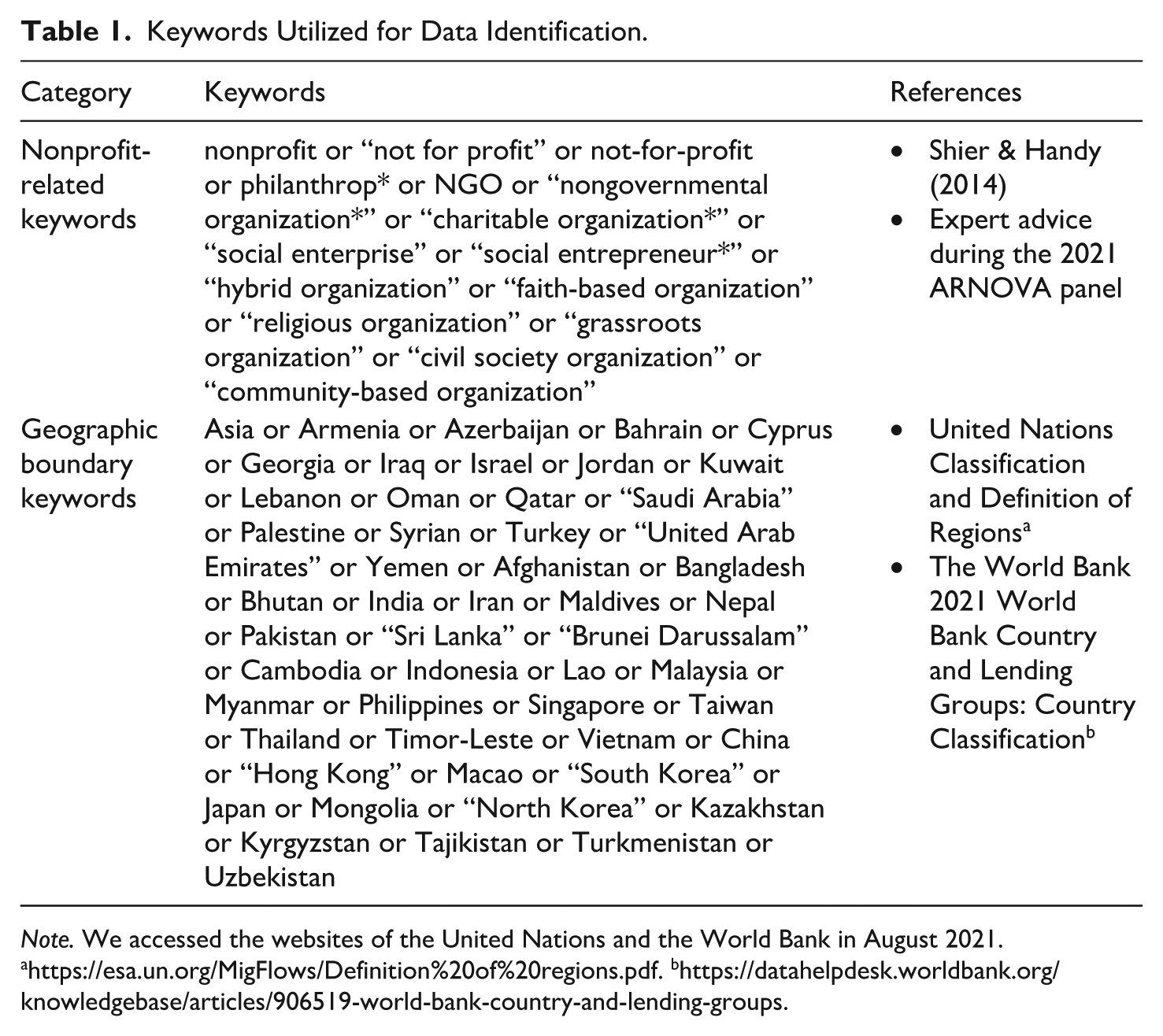
Note. We accessed the websites of the United Nations and the World Bank in August 2021.
Figure 1 illustrates four phases with the number of articles identified at each phase during our data collection process. The initial “identification” phase used the keywords listed in Table 1 and led to the identification of 3,670 articles, from which 232 non-English or non-research articles and an additional 168 articles were excluded during the “screening” phase. Our “eligibility” phase entailed reviewing all remaining abstracts and articles to seek substantive relevant content and excluding articles in which Asian nonprofits were not focal themes (e.g., studies of health-related interventions and articles using the term “nonprofit hospitals” to refer to the treatment location).
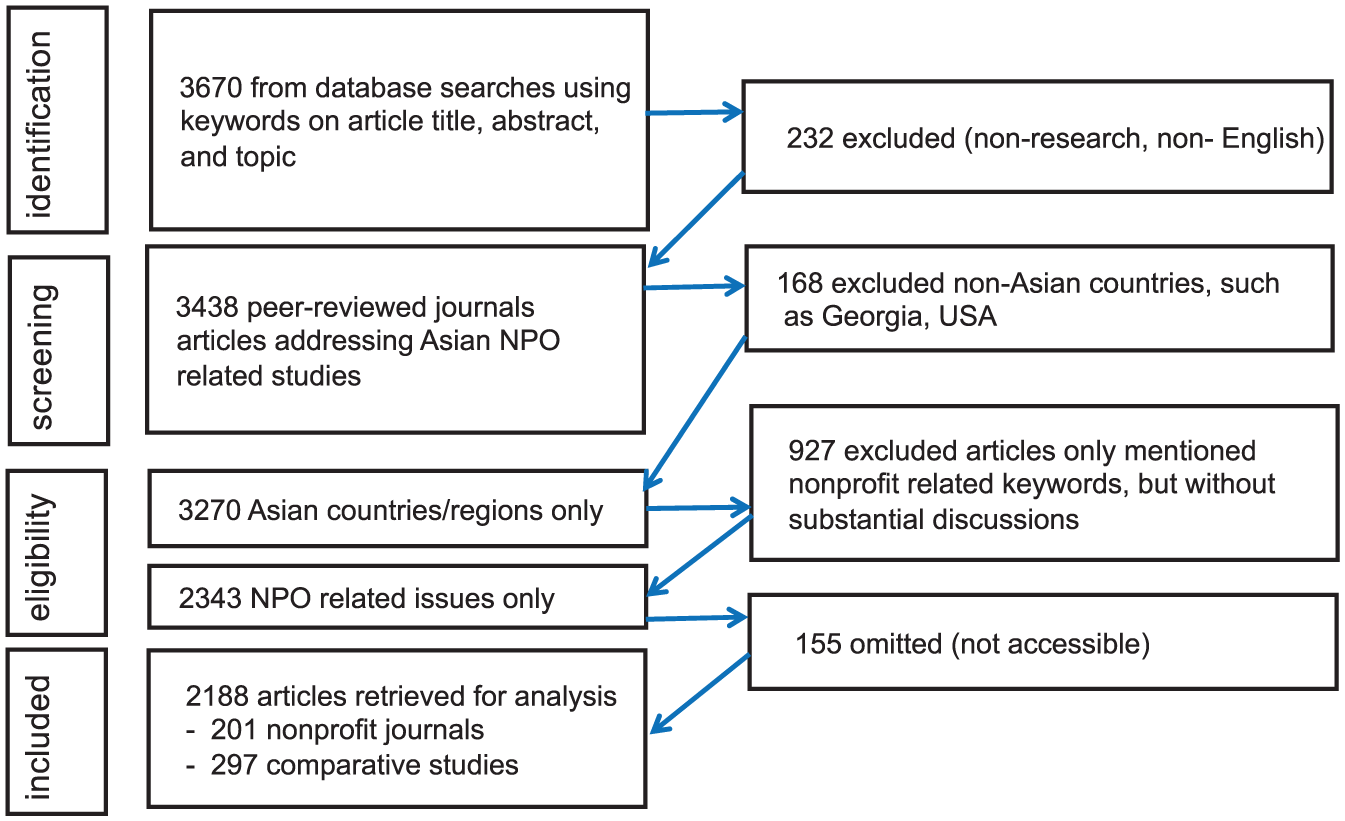
Data Collection Process.
Data Coding and Analysis
The coding analysis involved multiple coders, enhancing the robustness of our analysis (Duriau et al., 2007) of all the articles. One author of this article developed the codebook and trained her students to follow a rigorous coding process. Two trained coders independently reviewed each article and manually coded it to locate items capturing critical concepts for our analysis and create a numerically based coding system. The coding results were repeatedly reviewed, and differences were resolved to produce a complete agreement on coding choices through discussions among the two coders and the author who trained them. This strategy eliminated the need to calculate inter-rater reliability (Gazley & Guo, 2020). During the final coding phase, all the authors reviewed and agreed upon the coding results. As detailed below, for our thematic analysis, we randomly selected 219 articles for a deeper qualitative analysis of each article.
Findings
Scale and Trends of Publications
Our final sample included 2,188 articles (see Online Appendix). As Lyons and Hasan (2002) predicted, the number of Asian nonprofit studies grew steadily from 1982 to 2021 (Figure 2), with a sharp increase in the 2000s (227% in the 2000s, 300.24% in the 2010s), which fell slightly behind the 1990s’ sizable growth of general nonprofit research (Ma & Konrath, 2018) but followed a growth trend similar to that of NGO research (Brass et al., 2018).
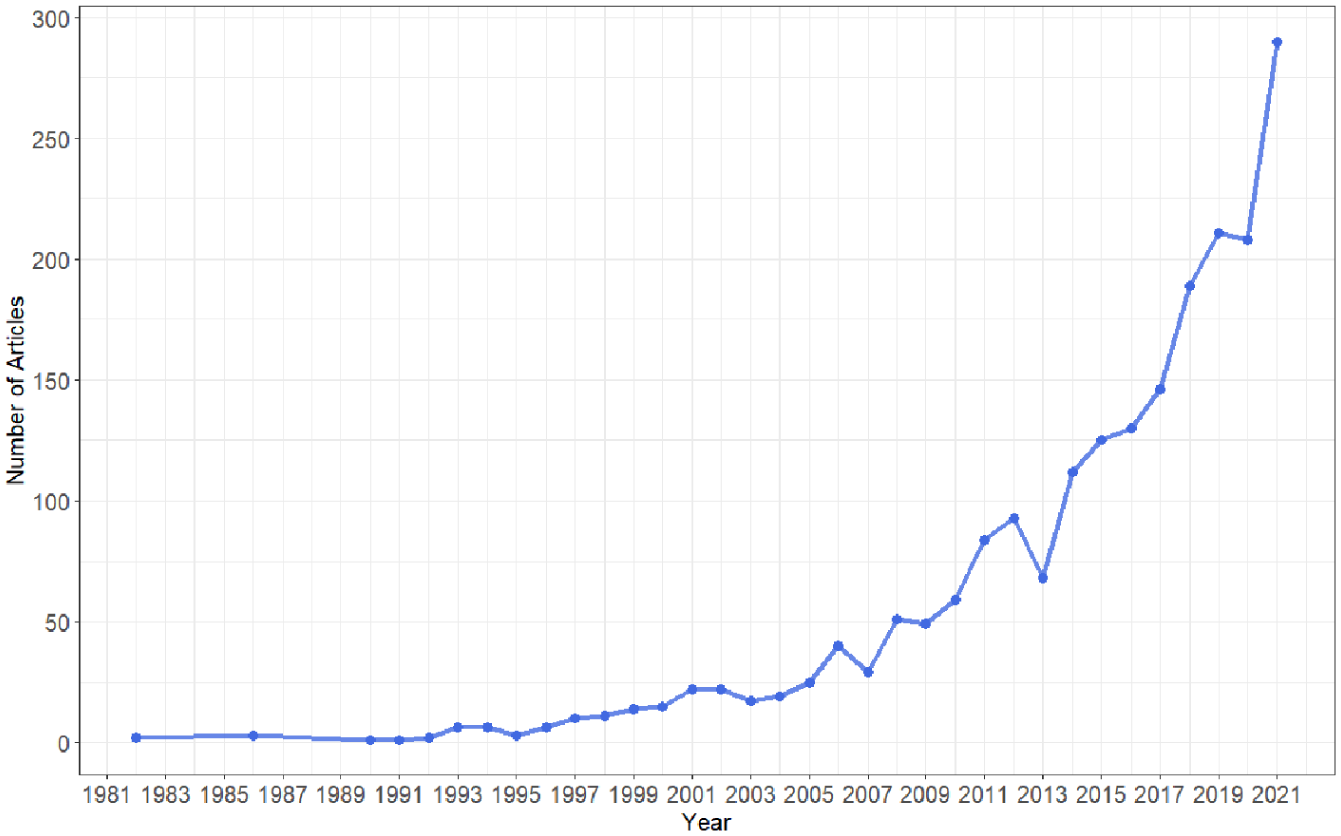
Number of Publications in Asian Nonprofit Research by Year (1982-2021).
To identify the factors underlying the growth of Asian nonprofit research, we conducted region/country-level analyses of yearly publication trends. As Figure 3 shows, South Asia led the earliest growth of Asian nonprofit research. This may have resulted from the growth of NGOs due to the World Bank’s development agenda in the early 2000s that involved NGOs, many of which operated in South Asia (Brass et al., 2018). After 2013, however, East Asia, especially China (30% of the dataset), began leading a striking growth in the number of studies. The unprecedented growth of Chinese NPO and foundation research from 2013 followed the rapid growth of the Chinese nonprofit sector early in the 2010s due to policy and economic milestones, 2 whereby the Communist Party of China began recognizing the social role of NPOs in its 18th National Congress’s report in 2012 (Yu et al., 2021) and China achieved the world’s second-largest GDP in 2017.
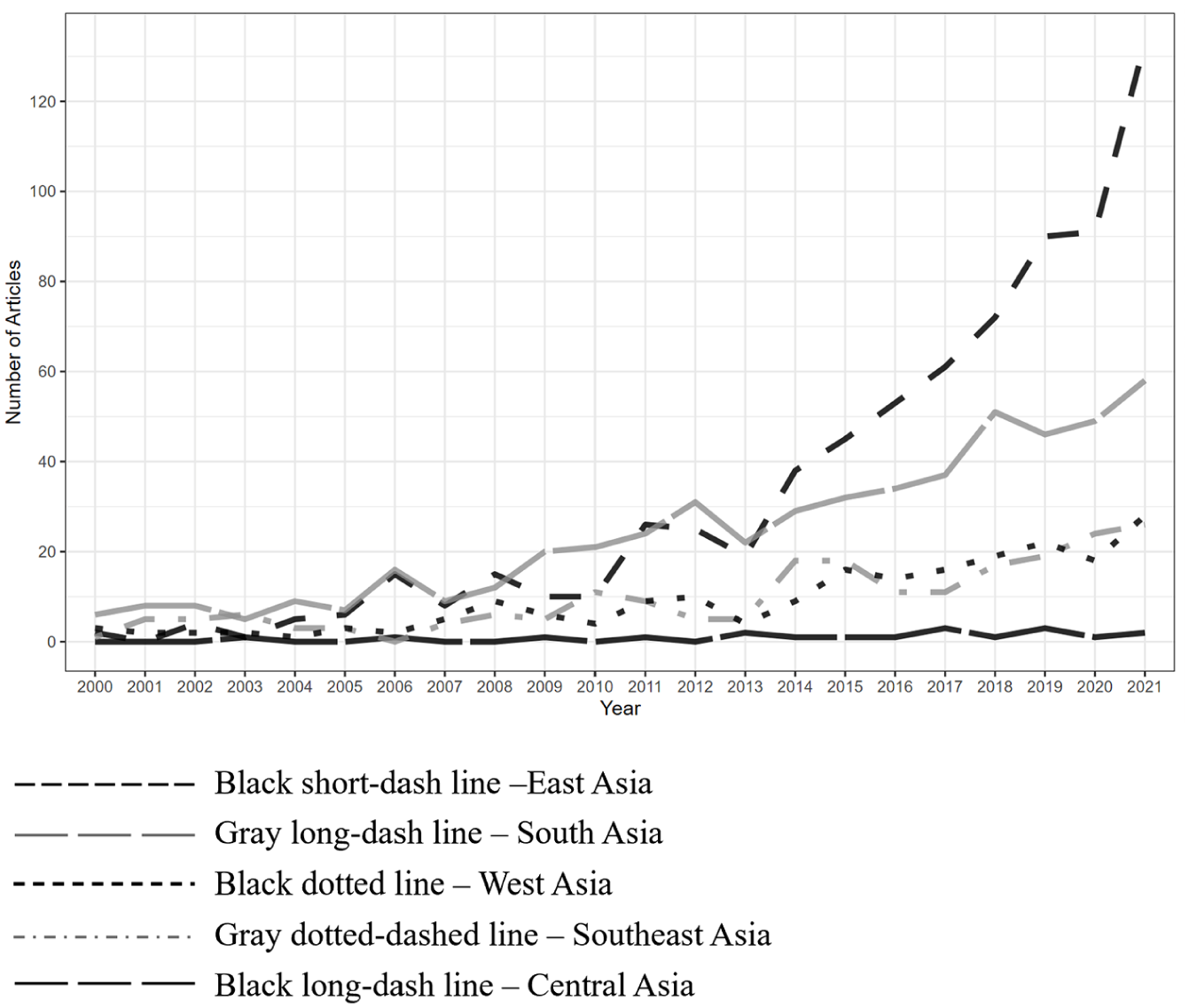
Publication Trends by Region.
Table 2 shows that single-country studies are dominant in Asian nonprofit research. However, our region-level analyses revealed uneven publication numbers, dominated by two regions, East Asia (n = 795) and South Asia (n = 595), followed by West Asia (n = 221) and Southeast Asia (n = 231). The number of Central Asian studies was much lower (n = 19). Similarly, country-level distributions were heavily skewed toward certain countries, underscoring that the growth of Asian NPO research was driven by China, South Korea, and Taiwan in East Asia, and India, Bangladesh, and Pakistan in South Asia. Our dataset contains 297 3 comparative studies (13.5%). Although this number is greater than 6% (n = 14) of 214 Asian nonprofit studies retrieved by Hasan in 2015, comparative research remains limited, underscoring the need for greater efforts to advance comparative nonprofit research.
Number and Percentage of Articles About Each Region and Country: Single-Country and Comparative Studies.
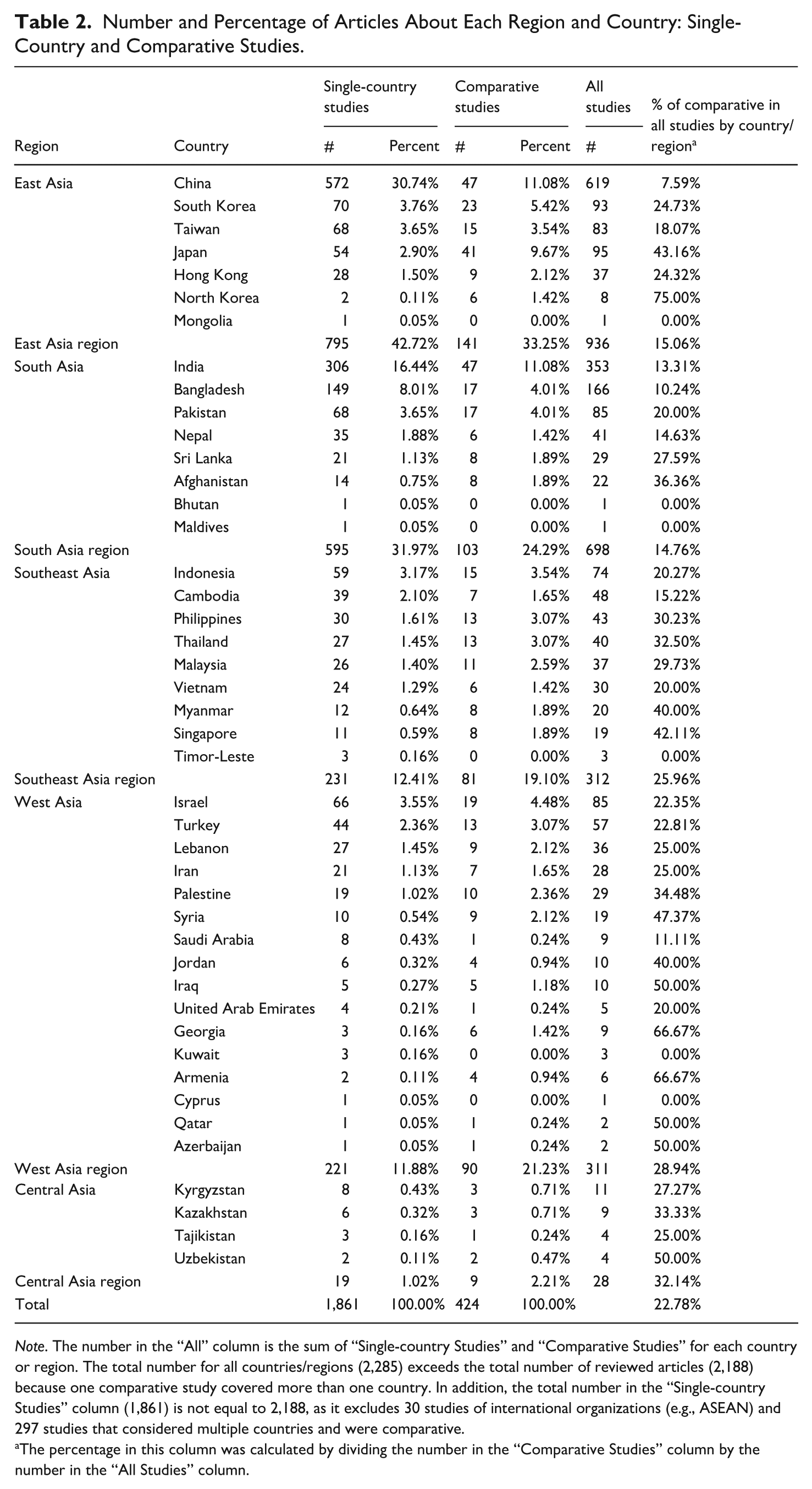
Note. The number in the “All” column is the sum of “Single-country Studies” and “Comparative Studies” for each country or region. The total number for all countries/regions (2,285) exceeds the total number of reviewed articles (2,188) because one comparative study covered more than one country. In addition, the total number in the “Single-country Studies” column (1,861) is not equal to 2,188, as it excludes 30 studies of international organizations (e.g., ASEAN) and 297 studies that considered multiple countries and were comparative.
The percentage in this column was calculated by dividing the number in the “Comparative Studies” column by the number in the “All Studies” column.
Findings from the analysis of comparative studies versus single-country studies (Table 2) illuminate how research on different countries has evolved. As the findings displayed in the column titled “% of Comparative in All Studies by Country/Region” indicate, East Asia and South Asia, the top regions for single-country studies, are featured in a lower percentage of comparative studies than are other regions. Similarly, top countries for single-country studies (China, India and Bangladesh) are associated with lower shares of comparative research. This may suggest that these East Asian and South Asian countries have developed research bases and momentum, allowing scholars to produce studies independently. Japan’s trend is markedly different, however. The country’s higher percentage of comparative studies (43.16%) highlights that research on Japan—the first Asian country included in the CNP—advanced in comparative settings.
Journals and Disciplines
To investigate the domain of Asian nonprofit research and its integration, if any, with general nonprofit research and NGO research, we scrutinized journals (Table 3) and disciplines (Table 4). Asian nonprofit research appeared in a total of 761 different journals, including both discipline-specific and interdisciplinary journals, indicating the multidisciplinary nature of Asian nonprofit research. However, top journals of general nonprofit research and NGO research differ remarkably. While some journals (e.g., Voluntas and NVSQ) are among the top in both fields, business and management are among the primary disciplines in general nonprofit research (LePere-Schloop & Nesbit, 2023), as are development studies in NGO research (Brass et al., 2018). As a result, NML, a premier nonprofit research journal focusing on management, is not among the top journals for NGO research.
Journals That Published More Than 10 Articles About Asian Nonprofit Studies.
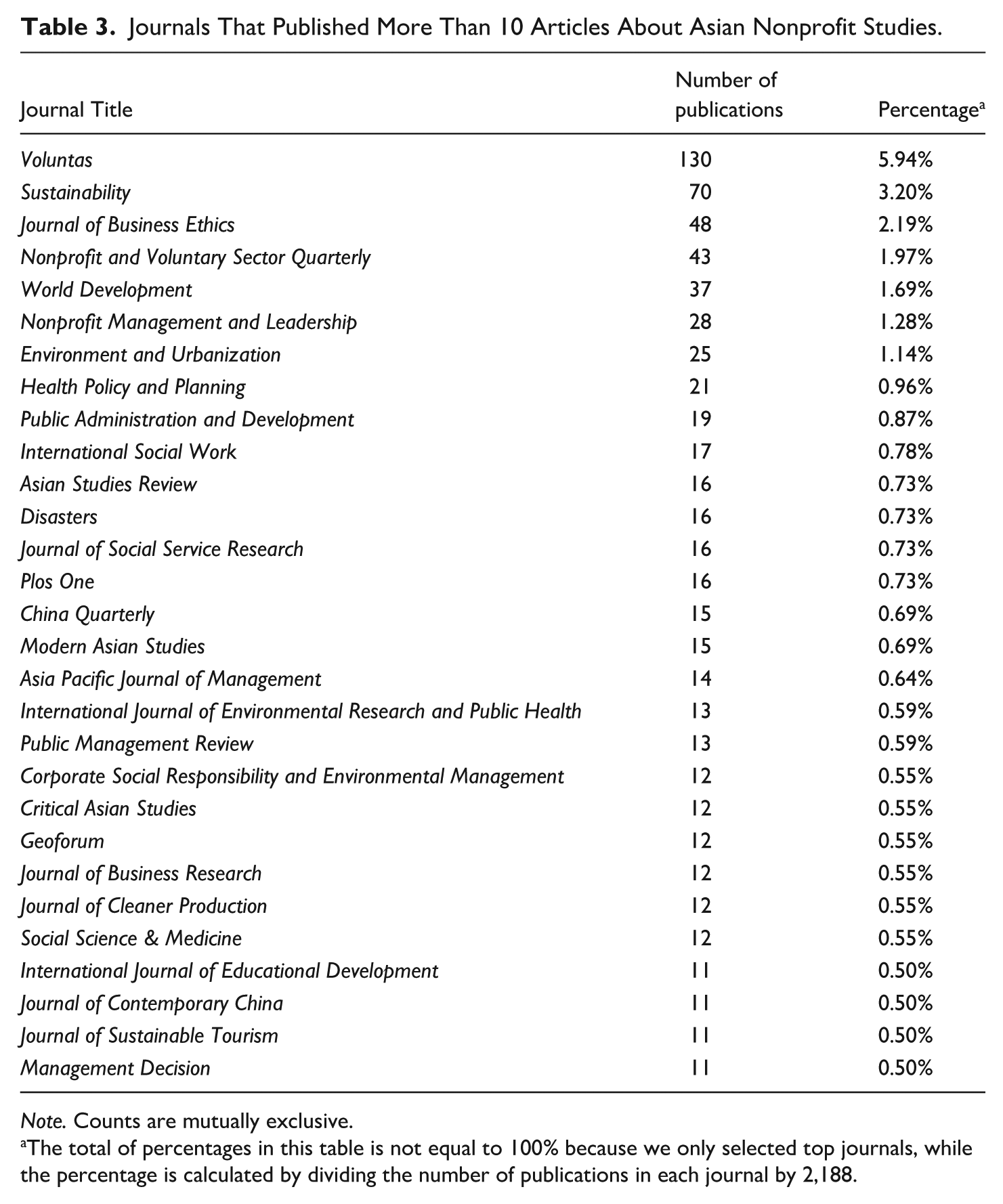
Note. Counts are mutually exclusive.
The total of percentages in this table is not equal to 100% because we only selected top journals, while the percentage is calculated by dividing the number of publications in each journal by 2,188.
Top Topic Categories in Asian Nonprofit Studies.
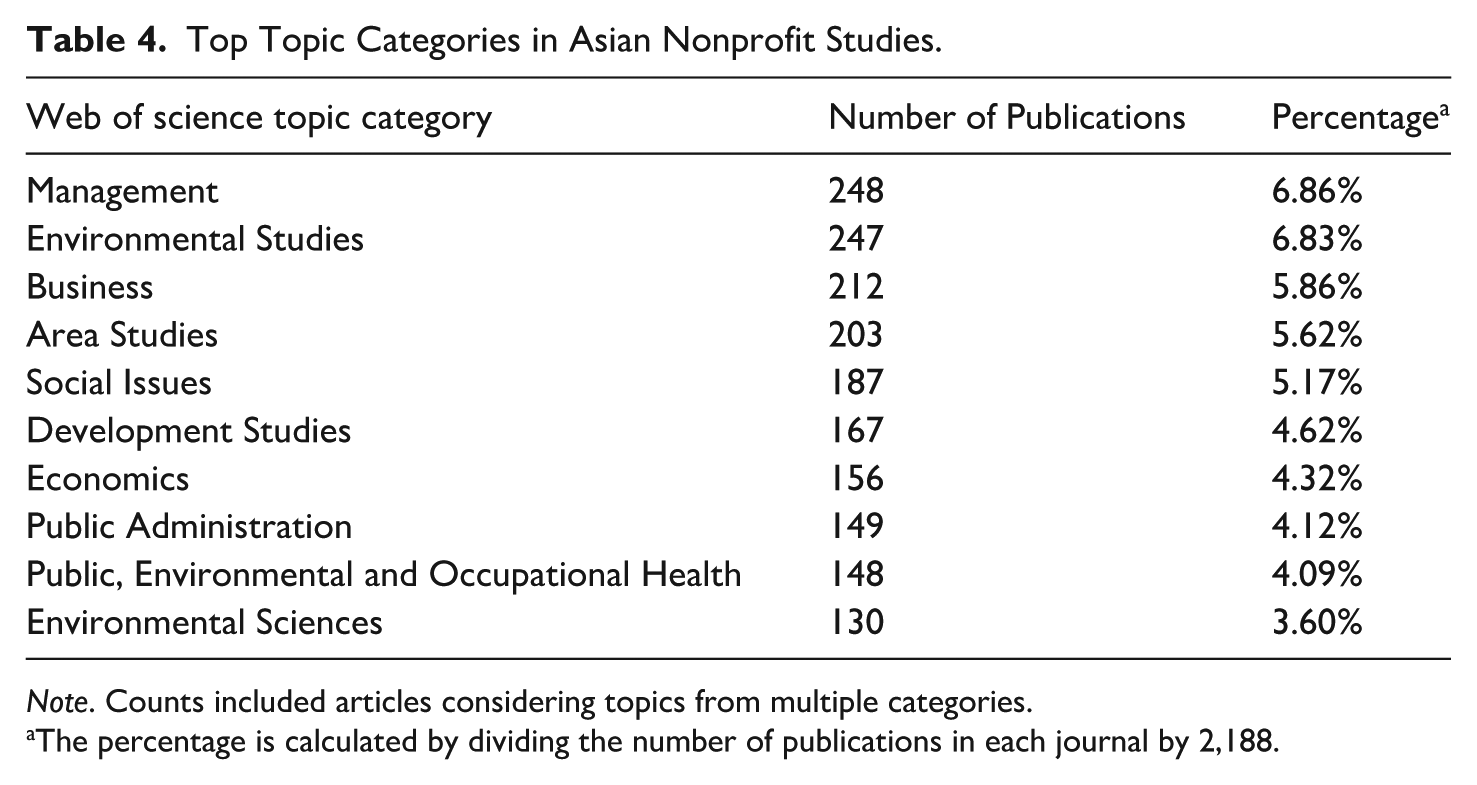
Note. Counts included articles considering topics from multiple categories.
The percentage is calculated by dividing the number of publications in each journal by 2,188.
Interestingly, Asian nonprofit research has frequently appeared in many of the leading journals of both general nonprofit research and NGO research. All of the three premier nonprofit journals, including NML, were leading journals for Asian nonprofit research (Table 3), with Voluntas being the first (n = 130), NVSQ being the fourth (n = 43), and NML being the sixth (n = 28), together accounting for the total of 9.19%. The result of NML stems from the dominance of management and business disciplines in Asian nonprofit research. Moreover, development studies, the primary discipline of NGO research, are the sixth discipline of Asian nonprofit research, whereby World Development, Public Administration and Development (PAD), and Disasters, the leading journal of NGO research, frequently published Asian nonprofit studies. However, traditionally prominent fields in nonprofit literature (Ma & Konrath, 2018), such as political science and sociology, are not as prevalent in Asian nonprofit research.
Some disciplines distinguish Asian nonprofit research from general nonprofit and NGO research. Specifically, environmental studies and area studies are the second and fourth in Table 4. Sustainability and the Journal of Business Ethics (JBE), the second and third journals for Asian nonprofit research, published many studies on CSR’s sustainability policies, disaster management, and other environmental issues, which are the major issues of much interest in Asia. While area studies is an important discipline in general nonprofit research (Allison et al., 2007; LePere-Schloop & Nesbit, 2023), it is even more important in Asian nonprofit research, with five area-specific journals included in Table 3. Three of them are China-centered, underscoring the country’s commanding position in advancing Asian nonprofit research.
We also examined the publications on Asian nonprofit research in public administration (PA) journals, as PA journals increasingly publish nonprofit research (LePere-Schloop & Nesbit, 2023). Table 3 lists two PA journals, PAD and the Public Management Review (PMR), but not other PA journals. 4 This appears to be because a greater number of PA journals published Asian nonprofit studies, and there was a smaller representation of publications per journal, not because PA was not an important discipline for Asian nonprofit research. Indeed, PA was the eighth discipline for Asian nonprofit research (Table 4), and PA journals collectively published 149 articles (6.80%) on Asian nonprofit studies.
Research Topics and Implications
Our thematic analysis method followed that of Brass et al. (2018), randomly selecting 10% of the relevant data and conducting a deeper qualitative analysis of each article. To examine the breadth and variations of research topics across regions, our method involved weights by region, though we selected 12 instead of 3 for Central Asia for greater representativeness, which yielded a total of 219 articles for our thematic analysis (Central Asia 12; Southeast Asia 25; West Asia 25; South Asia 67; East Asia 90) (see Online Appendix for the “random_weightregion” column). Each author of this study first coded the articles for different regions independently, and then all coauthors discussed the coding results to reach an agreement on the results. In addition to this primary analysis of 219 randomly selected articles, we also reviewed the top-cited articles in our supplemental analysis to understand the depth of research on Asian nonprofits and long-standing key topics for each region in Asia.
During the coding process, we inductively translated specific research themes and questions (e.g., “Do the charitable giving amount and likelihood of a firm’s response to catastrophic events relate to the firm’s ownership type?” of Zhang et al., 2010) into overarching, general ones (e.g., “What factors affect disaster giving?”). We, however, kept certain specific characteristics and nuances of findings from reviewed articles, as shown in Table 5, to illuminate implications derived in Asian contexts. Furthermore, various themes were categorized into the most relevant topics of general nonprofit research (Ma & Konrath, 2018; Shier & Handy, 2014). For example, we considered two South Asian studies, that by Khan et al. (2010) on how Western-based CSR was reconfigured through an inclusive bottom-up approach reflecting postcolonial development in Pakistan, and that by Widger (2016) on the postwar CSR model grounded in Sri Lanka’s Sinhala Buddhism. Through coding, we identified a “Corporate philanthropy/CSR” theme linked to a nonprofit topic of “Philanthropy.”
Research Themes, Questions, and Implications by Region.
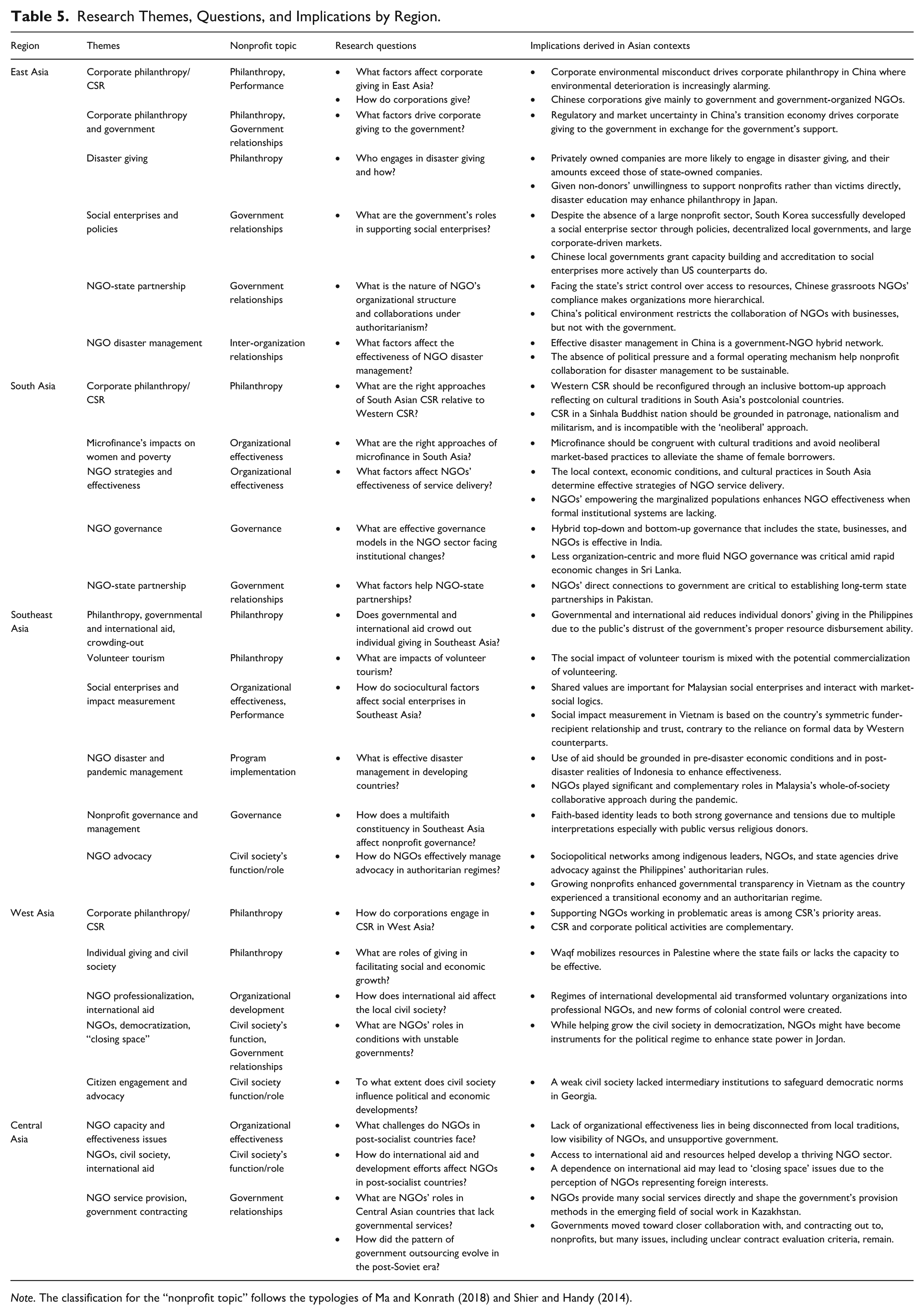
Note. The classification for the “nonprofit topic” follows the typologies of Ma and Konrath (2018) and Shier and Handy (2014).
Table 5 presents important thematic variations from studies considering unique historical and institutional contexts of each region. For instance, while CSR/corporate philanthropy is among the main research topics for East Asia, South Asia, and West Asia, it appears to be more prevalent among East Asian nonprofit studies, representing 28% of 90 randomly selected articles, whereas it accounts for 12% for South Asia and 16% for West Asia. Research on South Asia and West Asia instead follows diverse themes, including NGOs’ effectiveness and civil society functions. The development of NGOs, civil society, and democracy is prevalent themes, especially in Southeast, Central, and West Asia, where many countries suffer from economic and political instability across the region. These regional variations in research questions and implications appeared to be induced by the unique characteristics of each region, including its traditions, economy, political regimes, and environmental problems. We synthesized implications derived in unique contexts in Asia into several categories to highlight how research on the region may inform general nonprofit studies.
First, studies of Asian nonprofits provide ideas about new research topics that might not have been well known to nonprofit scholars examining other geographic areas. Studies of nonprofits in Bangladesh, for instance, have advanced because scholars in various disciplines, especially management (e.g., McKague et al., 2015), increasingly studied BRAC, the world’s largest NGO in Bangladesh, and the Nobel Peace Prize–awarded Grameen Bank and its founder, Muhammad Yunus, became a case of burgeoning microfinance research (Fruttero & Gauri, 2005; Haque et al., 2011).
The second implication that Asia-focused studies offer is their unique conceptual perspectives for an in-depth examination of local cases, thereby adding new insights into topics of general nonprofit research. For instance, Sharma (2020) and Kuruppu and Lodhia (2019) studied NGO governance, which was among the core nonprofit topics (Shier & Handy, 2014), by considering cases in India and Sri Lanka, respectively. As these South Asian countries were undergoing rapid economic changes, effective governance models needed to be more fluid and less organization-centric governance (in Sri Lanka, as studied by Kuruppu & Lodhia, 2019) or hybrid top-down and bottom-up (in India, as noted by Sharma, 2020) to cope with drastic institutional shifts. Meanwhile, Pokleba (2016) concluded that facing a weak civil society in Georgia, NGOs lacked the overall capacity to produce effective change despite their ability to mobilize citizen engagement. Similarly, Nezhina and Ibrayeva (2013) noted that Kazakhstan NGOs’ strong dependency on foreign donor funds undermined their effectiveness.
The third notable contribution concerns new theory and model development by using implications of the unique social order and informality in Asia. Through in-depth interviews with local activists and scholars, Chowdhury and Willmott (2019) revealed the negative effects of neoliberal microcredit practices contributing to corruption, differing greatly from the picture presented in impactful studies by Western-based scholars (Mair et al., 2012), and proposed the concept of “poor-people-led cooperatives” as an alternative model congruent with protecting social cohesion. Smith and Besharov (2019) developed a model entailing “sustaining” hybridity through “structured flexibility,” which was critical in Cambodia’s sociocultural context, contrary to the static view prevalent in the West-centered research of mission–commercialism hybridity. Other studies question conventional approaches by exploring the role of traditional institutions and historical forms of civil society, which tend to be very resilient over time. Assi’s (2008) research on Palestine showed the prominent role of indigenous institutions, Islamic waqf, and other forms of “home-grown” civil society in supporting the social and economic growth when the state fails to be effective.
Methodological Approaches
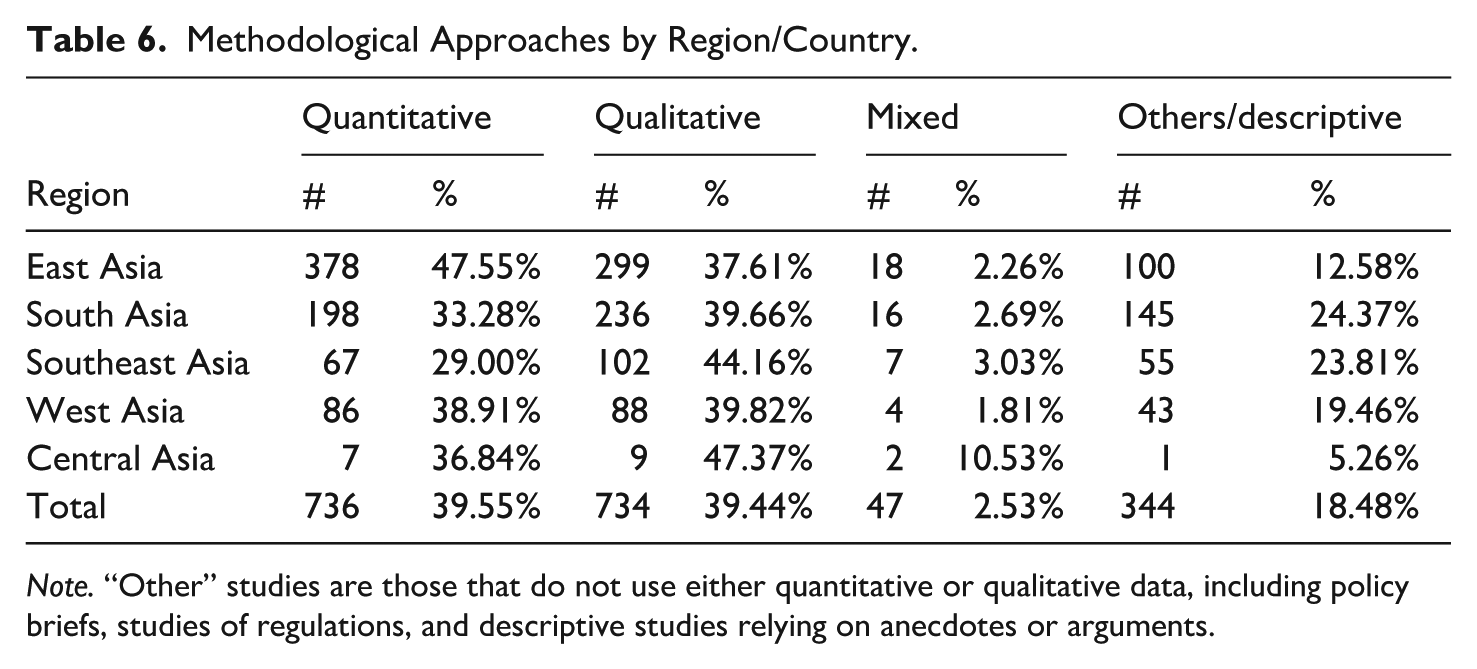
Table 6 demonstrates an overall balance between quantitative studies (n = 736) and qualitative studies (n = 734) and includes 47 mixed-method studies, all of which used certain methodological approaches and empirical data. The greater than 80% representation of empirical studies suggests the growing maturity of methodological approaches in Asian nonprofit research.
Methodological Approaches by Region/Country.
Note. “Other” studies are those that do not use either quantitative or qualitative data, including policy briefs, studies of regulations, and descriptive studies relying on anecdotes or arguments.
To further investigate this topic, we conducted a region-/country-level analysis and discovered striking methodological variations among regions. While East Asian nonprofit research includes more quantitative studies (47.55%) than qualitative studies (37.61%), all other regions have more qualitative studies than quantitative studies, especially South Asia (39.66% vs. 33.28%) and Southeast Asia (44.16% vs. 29.00%). Nevertheless, the far greater total number of publications about East Asia skews Asian nonprofit research toward quantitative studies. Our country-level analysis reveals that China leads in all methodological categories. While many countries show a qualitative-quantitative balance, research for some countries is clearly dominated by either method. Countries where quantitative research dominates include Taiwan, South Korea, Japan, Lebanon, and Iran, whereas those where qualitative studies dominate include Bangladesh, the Philippines, and Cambodia.
Figure 4 presents the methodological development of Asian nonprofit research. Asian nonprofit studies in the earliest days, when South Asia was the leading region, were more descriptive. However, as East Asia began leading a spike in the number of studies in the 2010s, the pace of growth of both qualitative and quantitative studies of all regions surpassed that of descriptive studies (“others”), suggesting that the major methodological development of Asian nonprofit research began in the 2010s. The availability of comprehensive data during the 2010s may have helped scholars, especially in East Asia, conduct quantitative analyses (e.g., the survey of registered NGOs from the Center for Civil Society Studies of Peking University used by Zhang, 2018).
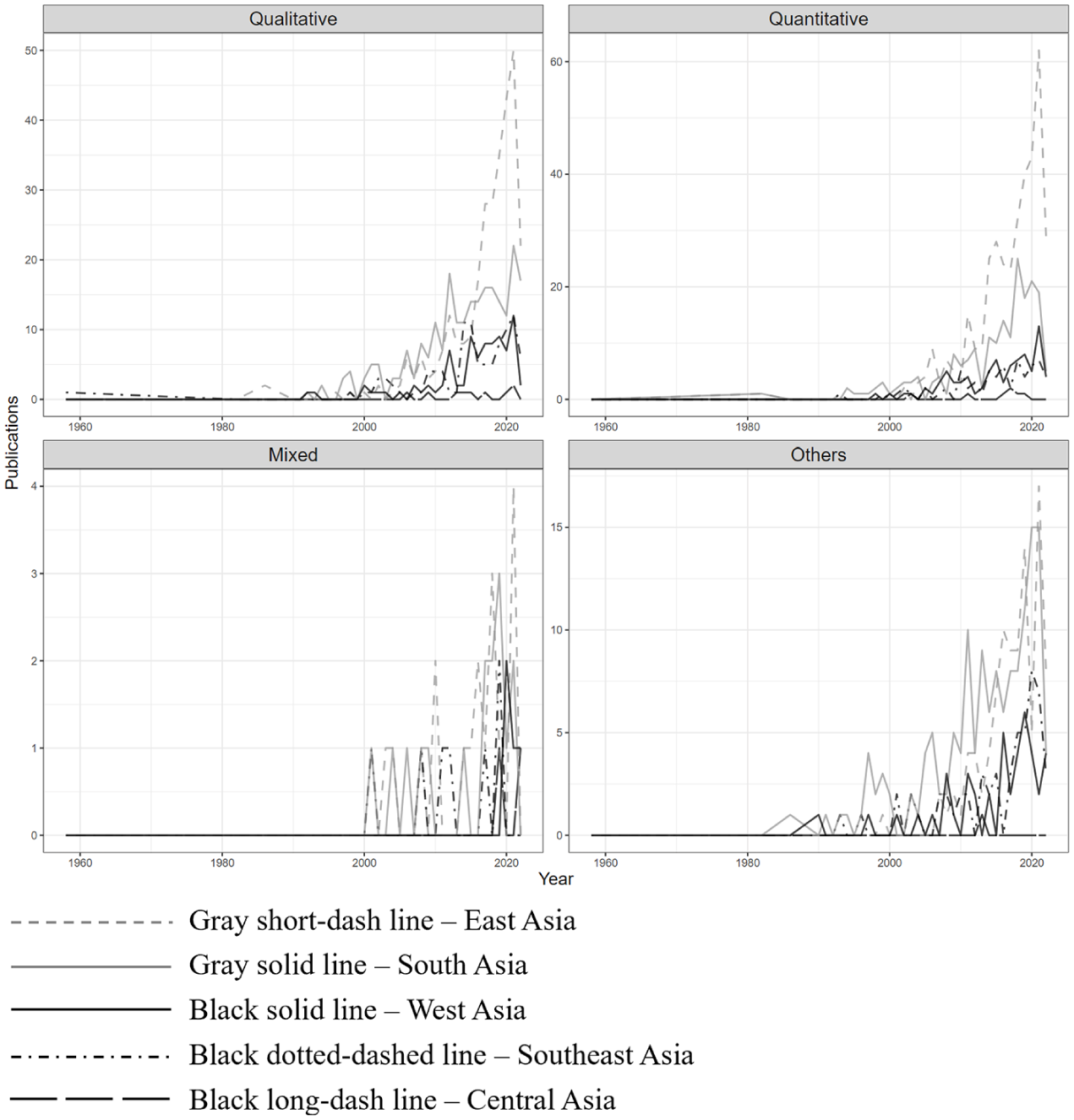
Methodological Approaches by Region.
Theory Application
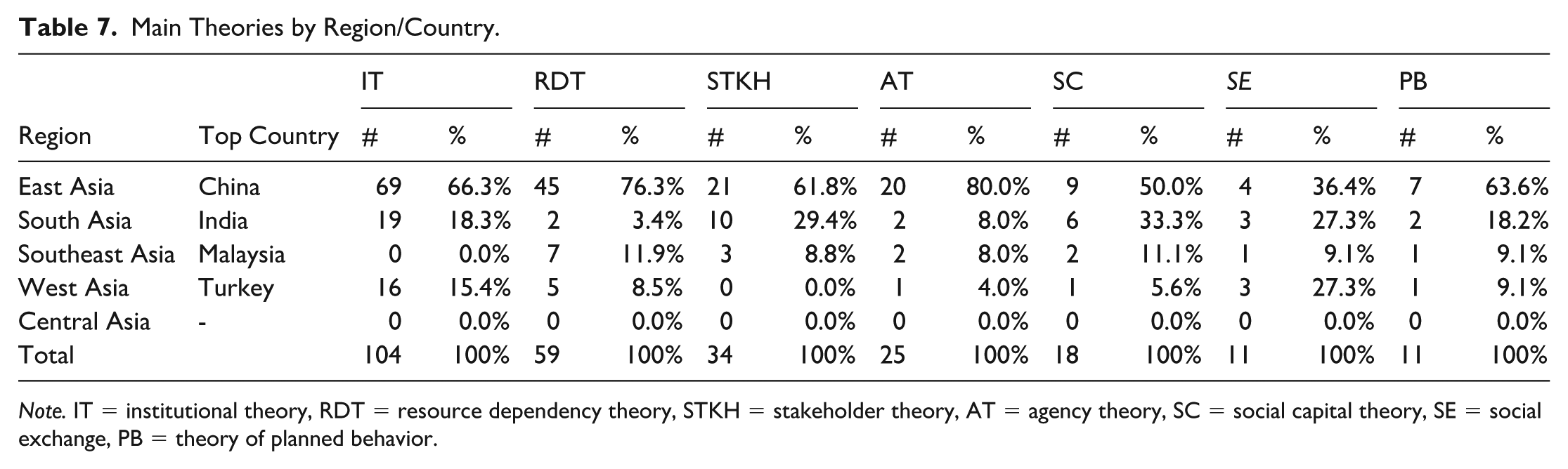
Our analysis revealed that 756 articles (34.5% of those in the dataset) referred to a theory. Table 7 presents seven most frequently used theories in our dataset. Institutional theory, including isomorphism, neo-institutionalism, institutional logic, and legitimacy, was most frequently applied in Asian nonprofit research, followed by resource-dependence theory, stakeholder theory, agency theory, social capital theory, social exchange theory, and planned behavior theory. Regional variations in theory application were evident and seemingly linked to certain research themes and methods explored in studies of different regions and countries. East Asia (n = 175) had the largest number of theory-grounded studies, followed by South Asia (n = 44), West Asia (n = 27), and Southeast Asia (n = 16). This variation might stem from the availability of data, especially quantitative data, to test theories, explaining why no studies of Central Asia in the sample utilized a specific theory.
Main Theories by Region/Country.
Note. IT = institutional theory, RDT = resource dependency theory, STKH = stakeholder theory, AT = agency theory, SC = social capital theory, SE = social exchange, PB = theory of planned behavior.
Table 8 shows that studies of nonprofits in China entailed applications of all the theories, except for that of planned behavior. Nevertheless, important region/country variations exist in how particular theories were used. Institutional theory is dominant in nonprofit studies of almost all regions because its frameworks act as a useful lens for understanding how different sociocultural and political systems affect NPOs in non-Western countries. In contrast, 80% of studies using agency theory are about East Asia, especially China, because Chinese NPO studies are highly quantitative and agency theory has often been applied in such studies. Meanwhile, Asian nonprofit research produced important qualitative studies grounded in other theories, especially resource dependence theory (e.g., Khieng & Dahles, 2015).
Country Distributions for Theory Application.
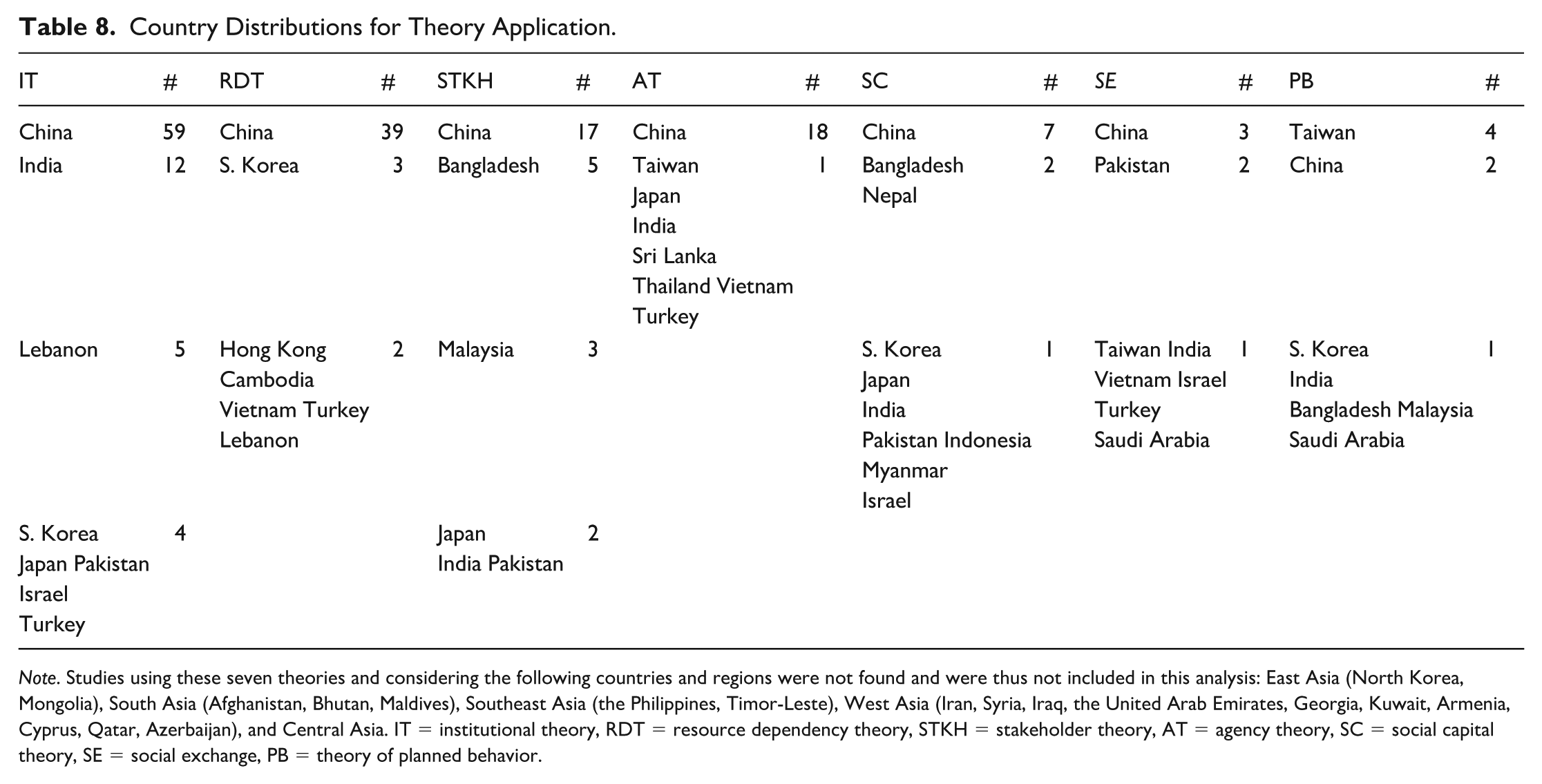
Note. Studies using these seven theories and considering the following countries and regions were not found and were thus not included in this analysis: East Asia (North Korea, Mongolia), South Asia (Afghanistan, Bhutan, Maldives), Southeast Asia (the Philippines, Timor-Leste), West Asia (Iran, Syria, Iraq, the United Arab Emirates, Georgia, Kuwait, Armenia, Cyprus, Qatar, Azerbaijan), and Central Asia. IT = institutional theory, RDT = resource dependency theory, STKH = stakeholder theory, AT = agency theory, SC = social capital theory, SE = social exchange, PB = theory of planned behavior.
Interestingly, failure theories and the social origins theory, being widely applied theories in nonprofit and comparative studies, were not actively used in Asian nonprofit research. Eleven articles utilized failure theories, including those of government failure (e.g., Chen et al., 2022) and voluntary failure (e.g., Pan & Xu, 2022). Only seven articles referred to the social origins theory, including the study of Kim and Kim (2015), who applied longitudinal data to South Korea’s nonprofit sector. As some scholars expressed the difficulty of applying these influential nonprofit theories to informality of philanthropy and civil society in countries like Turkey (Campbell & Çarkoğlu, 2019), Anheier (2023), who developed the social origins theory for nonprofit comparative research with Salamon and Anheier (1998), proposed a systematic assessment of it.
Comparative Studies
Since Lyons and Hasan (2002) attributed comparative perspectives to nonprofit theory development, we examined how comparative analyses were used in Asian nonprofit research. Our coding analysis revealed that all regions, led by East Asia and West Asia, have been explored in comparative studies and many comparative studies compared Asian NPOs with those in the UK and the US.
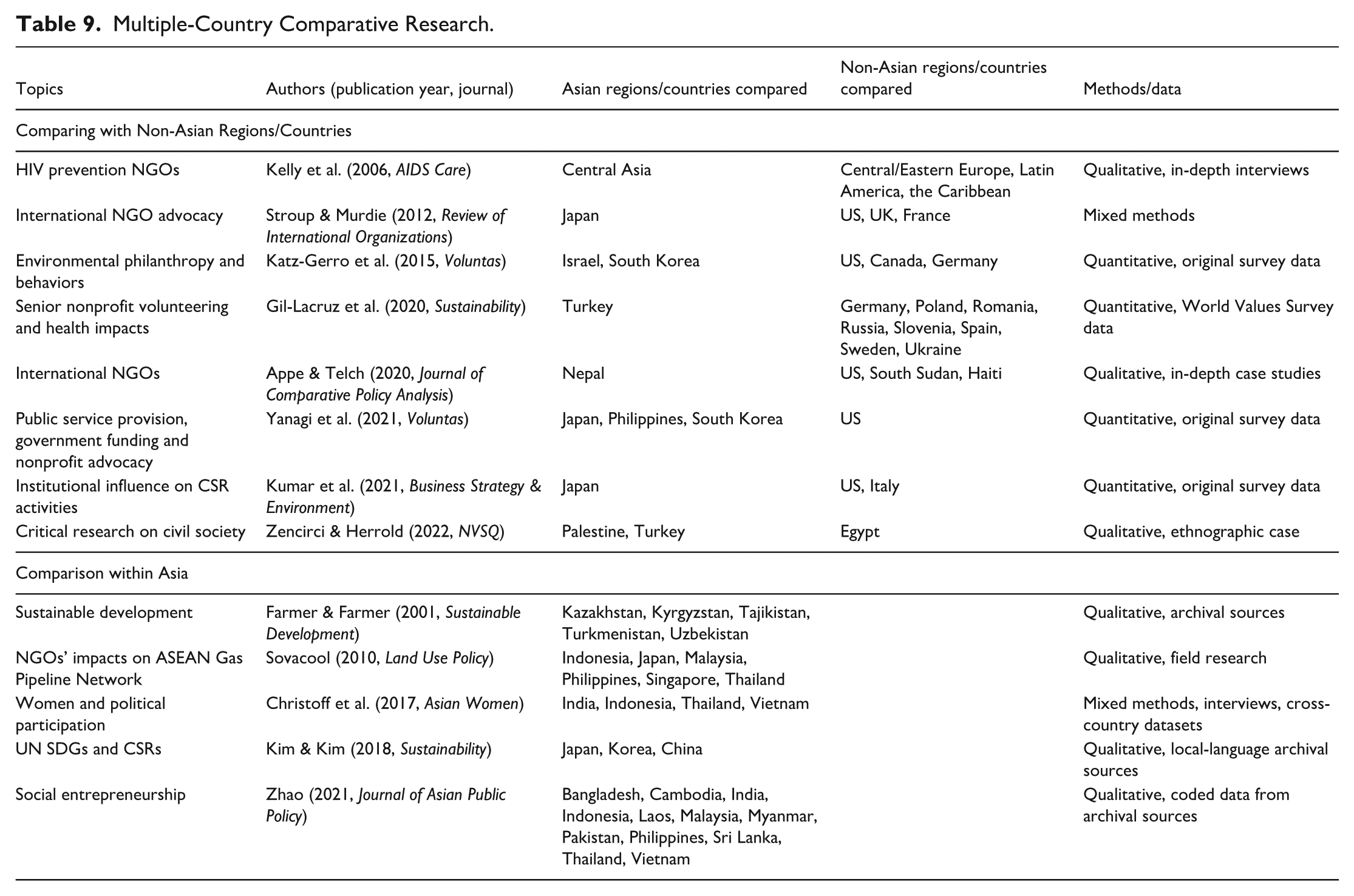
While many of these studies compared two countries, there are multiple-country comparative studies of Asian NPOs (Table 9). The majority of cross-continent studies and all in-continent studies of Asian NPOs were qualitative. These studies used a wide variety of data and methods, including local-language archival data, case studies, ethnographic approaches, and other forms of field research. Our comparative analyses also reveal both the significant challenges scholars face in accessing comparative data and their tenacity and creative approaches to conducting multi-country comparisons in such challenging contexts. In addition, we note many quantitative studies involving multiple-country comparisons after the mid-2010s, following the overall methodological development of Asian nonprofit research. Table 9 also shows that Japan, the first and only Asian country included in the first phase of the Johns Hopkins CNP research, appears in more comparative studies with the US than any other Asian country does. Thus, inclusion of Japan in large comparative studies drove the advancement of research on Japanese NPOs.
Multiple-Country Comparative Research.
Discussion
How Has Asian Nonprofit Research Advanced?
This study demonstrated considerable progress in Asian nonprofit research over 60 years, also showing signs of knowledge integration with general nonprofit research and NGO research. Nevertheless, Asian nonprofit scholarship has evolved as a distinct field, revealing significant regional variations in growth rate, research methods and topics, theoretical development, and the prevalence of comparative studies. These variations prompt us to ask: what factors may affect the progress of Asian nonprofit research?
The economy promoting the growth and professionalization of the nonprofit sector propelled the exponential growth of nonprofit research on Asia, especially East Asia, in the early 2000s. The greater availability of data on East Asian nonprofits helped increase the diversity and rigor of methodologies (Table 6), especially the greater use of statistical analysis for more theory testing in this region than in any other region. Furthermore, each nation’s economy and globalization affected research topics. Topics of corporate philanthropy and collaboration with businesses stand out in studies of nonprofits in East Asia, a region with robust and high-income economies, and to a lesser degree, in West Asia and South Asia (Table 5). As a positive relationship between each country’s GDP and the number of publications is shown in Cluster 1 (China, India and Japan) (Figure 5), our cluster analysis shows that a nation’s economic development is correlated with a greater number of publications, whereas many Central Asian countries in Cluster 4 are characterized by both low GDP and number of publications.
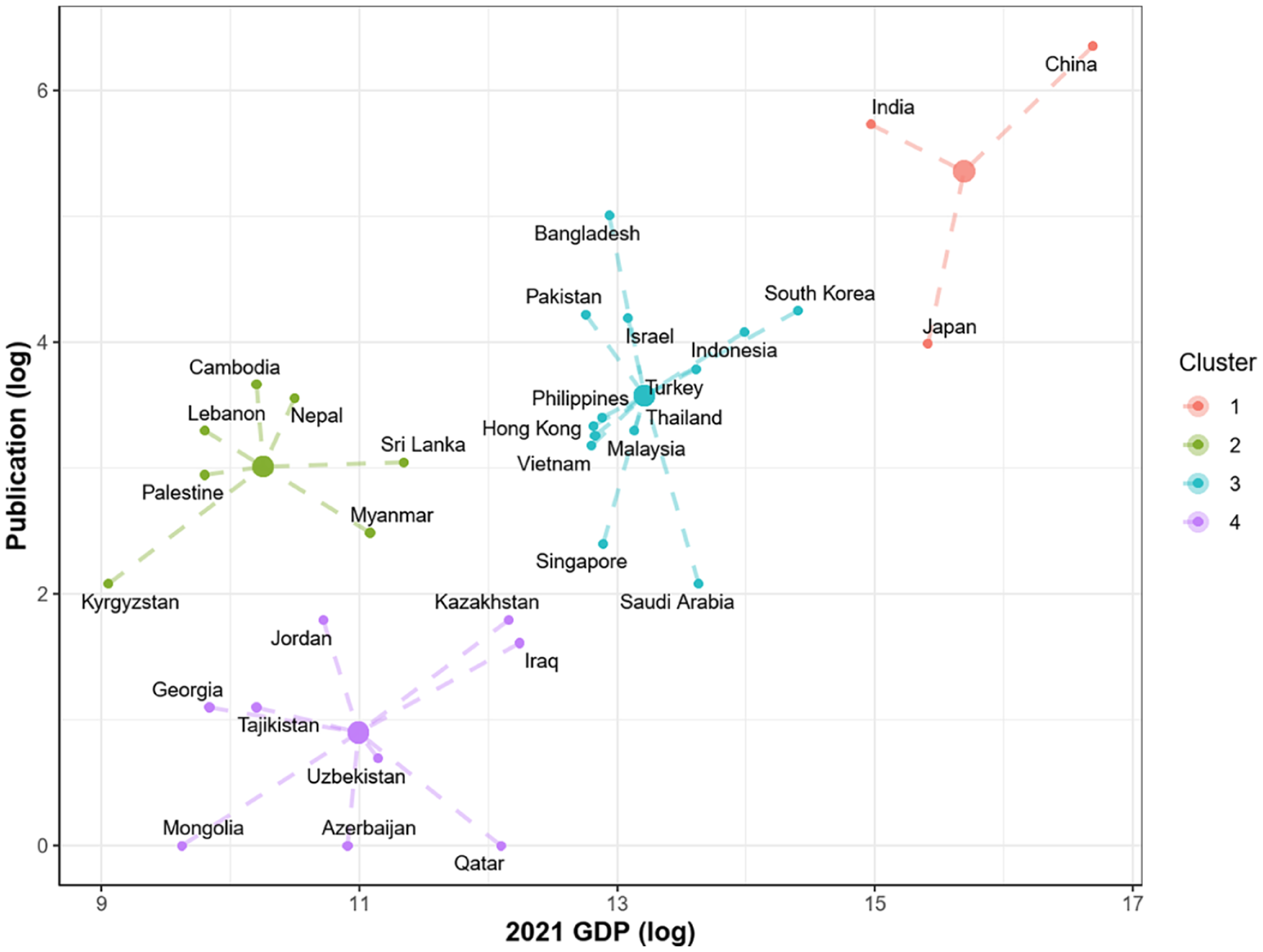
Country Clusters by the Logarithm of the Number of Publications and the Logarithm of GDP
How have nonprofit studies of other Asian regions advanced? Our thematic analysis reveals that NGOs and democracy were significant themes for Central, Southeast, and West Asia. However, the relationship between a country’s democracy and the number of publications in the cluster analysis is not apparent. Figure 6 shows conflicting results for Cluster 4 and Cluster 2. Cluster 4 has the highest number of publications coupled with low Civil Society Index scores, whereas Cluster 2 has a high number of publications coupled with higher Civil Society Index scores. The results encourage us to further investigate the correlation between a nation’s level of democracy and the growth of its nonprofit research.
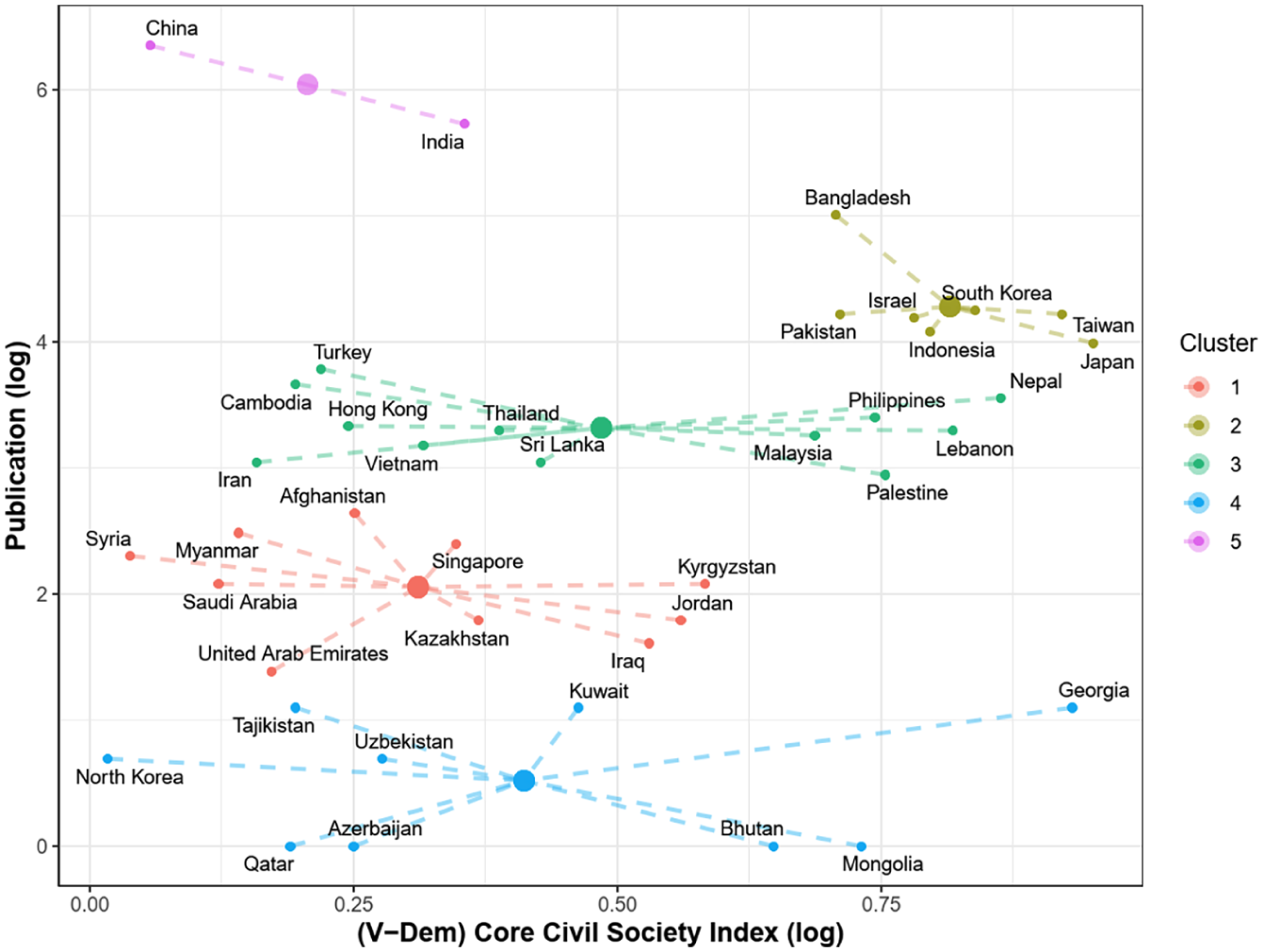
Country Clusters by the Logarithm of the Number of Publications and the Logarithm of the Civil Society Index.
We also observed influences of a wide range of catastrophic events and world-renowned initiatives on research topics (Table 5) for almost all regions. Nevertheless, facing limited publicly available data, scholars often used qualitative methods to examine unique local cases in regions other than East Asia, including archival research used in studies of Central Asia (Farmer & Farmer, 2001) and South Asia and Southeast Asia (Zhao, 2021) and ethnography used in a study of West Asia (Zencirci & Herrold, 2022). Furthermore, networks with the nonprofit scholarly community in the West contributed to advancing nonprofit studies in many Asian countries. For instance, the CNP had included Japan as the first Asian country before seven other Asian countries (South Korea, Thailand, the Philippines, India, Pakistan, Israel, and Turkey) were added in the following phases. Japan’s network with US nonprofit scholars continued to be strengthened by the CNP’s local associate in Japan, who founded the Japan NPO Research Association (JANPORA), Japan’s first association dedicated to nonprofit research, in 1999. Mirroring ARNOVA as a model, JANPORA began inviting Lester Salamon and other US nonprofit scholars to its conferences and programs to familiarize local scholars with nonprofit research in a comparative setting. This resulted in a higher occurrence of comparative analyses in studies of Japanese nonprofits (Table 2).
Advancing Asian Nonprofit Research
Our study shows region/country-level heterogeneity in Asian nonprofit research. While this makes Asia “a laboratory” (Lyons & Hasan, 2002) for understanding the complexities of the nonprofit sector, it also leads to persistent challenges in conducting nonprofit research, especially cross-country comparisons. Some regions and countries lack research infrastructure and valid comparable data, often due to government restrictions and the underdeveloped economies’ tendency to suppress objective scientific research endeavors.
To mitigate uneven research infrastructure across different regions and countries and advance Asian nonprofit research, we propose initiating collaborative efforts toward systematic data-oriented comparative research. Scholars across regions and countries could share knowledge on data and methodological approaches to facilitate comparative and regional collaborative research. Collaborative efforts may empower scholars in understudied countries to explore how datasets were compiled and analyzed by East Asian nonprofit studies; examples are the World Values Survey (Jeong, 2013) and the World Bank’s World Governance Indicators (Kim & Jung, 2021). Other potential cross-country datasets include the V-Dem Civil Society Index, which we used for the cluster analysis in this paper, and the Freedom House Index (Anheier, 2023). These datasets include many countries in Asia, including Central Asia, and can be used in cross-country studies. Scholars could also access new data through cross-country collaboration. For instance, the Asian Barometer Survey, which Liu (2023) used to analyze relationships between nonprofits and political participation in twelve Asian countries, is administered by the National Taiwan University, a partner of Global Barometer Surveys covering 70% of the world’s population. Meanwhile, the Central Asia Barometer, 5 a Kyrgyzstan-based independent organization, provides eight waves of population surveys in Kazakhstan, Kyrgyzstan, Tajikistan, and Uzbekistan.
We also propose forming networks with local scholars to engage insights from local-language studies for advancing Asian nonprofit research; the importance of this has been noted by An et al. (2022) and Kang et al. (2022). Moreover, we acknowledge that our findings from English-language studies do not present a complete picture of Asian NPOs due to significant contributions from non-English literature being excluded from this study. Using local-language studies will allow us to assess how Asian nonprofit research has advanced locally from different perspectives, including a country’s population and the numbers of university programs and scholars dedicated to nonprofit studies. 6
With over 2,000 spoken languages and hundreds of written languages, Asia presents an extraordinary barrier to conducting cross-country research. Although some research (Reber, 2019) indicates the potential utility of AI translation of non-English articles, DeepL does not cover most languages used in Asia and Google’s translator tool does not accurately capture nuances in the meanings of Asian civil society concepts. Nonetheless, as highlighted in the study by Tesseur (2019) of NGOs in Kyrgyzstan, some feasible starting points include utilizing the existing channels and resources, including region-specific common interest groups and conferences of ARNOVA and ISTR as communication hubs. Another effective strategy is demonstrated in the edited volume of Smith et al. (2018), which published English translations of scholarly articles by local scholars in Central Asia and other countries.
Further Research Agendas and Implications for Nonprofit Research
What are the implications of the findings of Asian nonprofit research for general nonprofit studies? We believe that the unique characteristics of Asian nonprofit research, embedded in region/country-level heterogeneities across Asia, offer general nonprofit scholars both meaningful guidance for future research agendas and valuable insights about theoretical and methodological perspectives.
Aside from what we discussed in the thematic analysis section, we wish to highlight several key research directions. First, future studies should be “contextualized” (Tsui, 2006) in local insights for the conceptual, theoretical, and methodological development of nonprofit studies. We argue that the lack of authentic views deeply grounded in local experiences hinders us from exploring Asia as a promising context to develop nonprofit research agendas. Data and findings produced without contextualization may not provide a complete picture of NPOs and philanthropy due to significant diversity and informality in practices across Asia. Critical research has illuminated how authentic, local meanings of key concepts diverge from the dominant Western views; examples are studies of civic organizations and democracy in Egypt, Palestine, and Turkey (Zencirci & Herrold, 2022), philanthropy in Japan (Onishi, 2025), and social entrepreneurship in China (Hu et al., 2020).
Accordingly, future studies should prioritize the development of a comparative framework for Asian NPOs, incorporating diverse sociocultural factors and expanding the application of theories (Yamauchi, 2025), as aligned with Anheier (2023) who stressed that values and ideologies should be comprehensively incorporated in comparative nonprofit studies. For instance, expanding CNP’s characteristics beyond the System of National Accounts’ measurement could be more suitable for diverse contexts and activities across Asia and could thus strengthen the social-origins theory (Yamauchi, 2025). Similarly, scholars could apply institutional theory, accounting for various sociocultural factors, in Asian nonprofit comparative research. Scholars could also use agency theory, often used in studies of East Asia NPOs and CSR, in other regions where it is underutilized, such as West Asia and South Asia, where CSR is among the main research topics, to explore new insights unique to the region.
Finally, future studies could consider rich and diverse contexts in Asian nonprofits to develop new theories, as seen in studies exploring Islamic corporate philanthropy in West Asia (Koleva, 2021) and microfinance lender-borrower relationships in India (Goodman, 2017). Due to the richness of historical and “locally grown” forms of Asian civil society, we also argue that qualitative methods, especially grounded theory approaches, should be regarded as vital for theory development in Asian nonprofit research. Asia presents an opportunity to develop state-civil society relations, volunteering, and civic engagement with culture- and context-specific theoretical frameworks.
Conclusion
This study is the first attempt to systematically review Asian nonprofit research qualitatively and quantitatively. Nevertheless, it is just a beginning. We hope that our findings will encourage scholars to further explore the field of Asian nonprofit research through SLR and bibliometric analyses, perhaps by focusing on a narrower scope of research, such as certain research topics, theories, and methods.
While our approach combining SLR and a bibliometric analysis required us to use the WoS, we suggest that future SLRs of Asian nonprofit research consider multiple databases (e.g., EBSCO and ProQuest) to enhance the comprehensiveness of the covered publication data. We also acknowledge that relying on the WoS may have led us to miss other important contributions, such as those of books and edited volumes, excluded from the WoS. In addition, future research would benefit from performing bibliometric analyses to investigate cross-references between Asian nonprofit research and other relevant fields to fully understand knowledge integration, as LePere-Schloop and Nesbit (2023) did.
Supplemental Material
sj-docx-1-nvs-10.1177_08997640251375973 – Supplemental material for What Do We Know About Asian Nonprofit Research? A Systematic Review and Bibliometric Analysis of 60 Years of Progress and Regional Variations
Supplemental material, sj-docx-1-nvs-10.1177_08997640251375973 for What Do We Know About Asian Nonprofit Research? A Systematic Review and Bibliometric Analysis of 60 Years of Progress and Regional Variations by Tamaki Onishi, Helen K. Liu, Alisa V. Moldavanova and Naoto Yamauchi in Nonprofit and Voluntary Sector Quarterly
Footnotes
Acknowledgements
Naoto Yamauchi passed away in July 2024 during his visit to South Korea for the 2024 ARNOVA Asia conference, while this article was being revised. The revision of this article was later completed by his original co-authors, Tamaki Onishi and Helen Liu, and Alisa Moldavanova, a member of ARNOVA common interest group, “Advancing Research on Civil Society and Philanthropy in Asia (ARCSPA)” which Dr. Yamauchi co-founded, who joined the authorship team after Dr. Yamauchi’s passing. We would like to thank Chao Guo, Wolfgang Bielefeld, Yongdong Shen, Dana R. H. Doan, Mark Sidel, Khaldoun AbouAssi, and Catherine E. Herrold for their insights to improve our study. We also greatly appreciate helpful comments about nonprofits and civil society in Asia from participants of a meeting for ARCSPA on November 19, 2021, and at the ARCSPA Colloquium, “Past, Current, and Future Research on Nonprofit and Civil Society in Asia,” at the ARNOVA 51st Annual Conference on November 18, 2022. Our deepest appreciation goes to Sinead O’Connor, Kristine Ku, Serena Chan, Audrey Liang for data coding, literature review, and Vic Shih for data analysis.

Funding
The authors disclosed receipt of the following financial support for the research, authorship, and/or publication of this article: This project has received funding from the Ministry of Science and Technology (No.: NTSC 112-2410-H-002-117-MY2) and the Ministry of Education (No.: MOE-112-YSFSL-0003-002-P2) in Taiwan.
Declaration of Conflicting Interests
The authors declared no potential conflicts of interest with respect to the research, authorship, and/or publication of this article.
Data Availability Statement
Supplemental Material
Supplemental material for this article is available online.
Notes
Author Biographies
References
Supplementary Material
Please find the following supplemental material available below.
For Open Access articles published under a Creative Commons License, all supplemental material carries the same license as the article it is associated with.
For non-Open Access articles published, all supplemental material carries a non-exclusive license, and permission requests for re-use of supplemental material or any part of supplemental material shall be sent directly to the copyright owner as specified in the copyright notice associated with the article.
