




Abstract
Floriculture as a branch of the horticulture industry is still at a developing stage that needs to be assessed for further orientation in the areas of management, business and economics. The commercialization of ornamental plants and cut flowers is of recent origin in developing economies which have high growth potential, both in domestic and international markets. The study highlights the evolution of the floriculture industry having a management perspective and paving the way for future research directions. The paper conducts a bibliometric analysis and rigorous systematic review of 126 papers published in peer-reviewed journals related to the floriculture industry using the Scientific Procedures and Rationales for Systematic Literature Reviews (SPAR-4-SLR) protocol. The Biblioshiny function of R software and VOS viewer is used for the analysis. The intellectual structure of the floriculture literature is presented through bibliographic coupling and thematic cluster analysis. The findings indicate considerable opportunities for further investigations in the field of floriculture focusing on the inclusion of sustainability practices, the evolution and role of women farmers and entrepreneurs, and supply chain management of floriculture products.
Introduction
Floriculture is defined as a branch of horticulture that deals with the breeding, growing and marketing of flowers and ornamental plants (Sharma, 2020). It encompasses flower production, processing, marketing and distribution. It is an intensive type of agriculture. The products of the floriculture industry consist of cut flowers, potted plants, foliage, seeds, bulbs, tubers, rooted cuttings and dried flowers or leaves (Sinha & Sharma, 2022). The floriculture industry is considered one of the high-income-generating agribusinesses having the potential for employment generation and earning foreign exchange around the year (Padmini & Kodagoda, 2017). The income per unit area from flower cultivation is much higher than any other branch of agriculture (Manikas et al., 2020). A considerable number of studies have focused on the export potential and earnings of the floriculture sector (Narasimham & Kishor, 1997; Singh & Goyal, 2005). It has emerged as a fast-growing global industry, with main markets in Europe, the United States and Japan. The Dutch floriculture industry of the Netherlands has emerged as the leading producer and exporter of cut flowers in the world accounting for over 40% of all global export volume and 52% of global production. Floriculture has become one of the lucrative industries in many developing and underdeveloped countries as well. As per the published market report of Floriculture magazine, the worldwide market for flower and ornamental plants is expected to grow by 6.3% over the next five years, reaching USD 57.4 Billion in 2024, up from USD 42.4 billion in 2019 (Bijl, 2022). According to the Agricultural and Processed Food Products Export Development Authority, India has exported 21,024.41 MT of floriculture products to the world for the worth of ₹707.81 crores/88.38 USD million in 2022–2023. Other than economic value, flowers have aesthetic value and act as a therapeutic agent to recover from psychological stress (Mochizuki-Kawai et al., 2020).
The study aims to identify important areas and current dynamics of research on floriculture. In this study, a mixed approach of the quantitative method of bibliometric analysis and qualitative method of Scientific Procedures and Rationales for Systematic Literature Reviews (SPAR-4-SLR) protocol is applied to scrutinize the prevailing thematic structure and suggest future research agendas (Paul et al., 2021; Truong et al., 2022). Using a bibliometric analysis, the concerned area’s publication patterns and intellectual structure are identified (Bhaskar et al., 2022; Kent Baker et al., 2020; Lim et al., 2022; Nandan & Soni, 2023). This study has made an effort to use a bibliometric analysis and thematic cluster analysis method to illustrate the scholarly evolution of floriculture considering the following objectives in view (Pandey et al., 2023).
Objectives of the Study
The fundamental purpose of this study is to present the past, present and future scope of research and indicate the current theme of research on floriculture, with the following questions deciphering the scope of the study:
RQ1: What are the trends of bibliometric performance related to floriculture literature? RQ2: What is the prevailing intellectual structure of floriculture research? RQ3: What are the future research directions of floriculture?
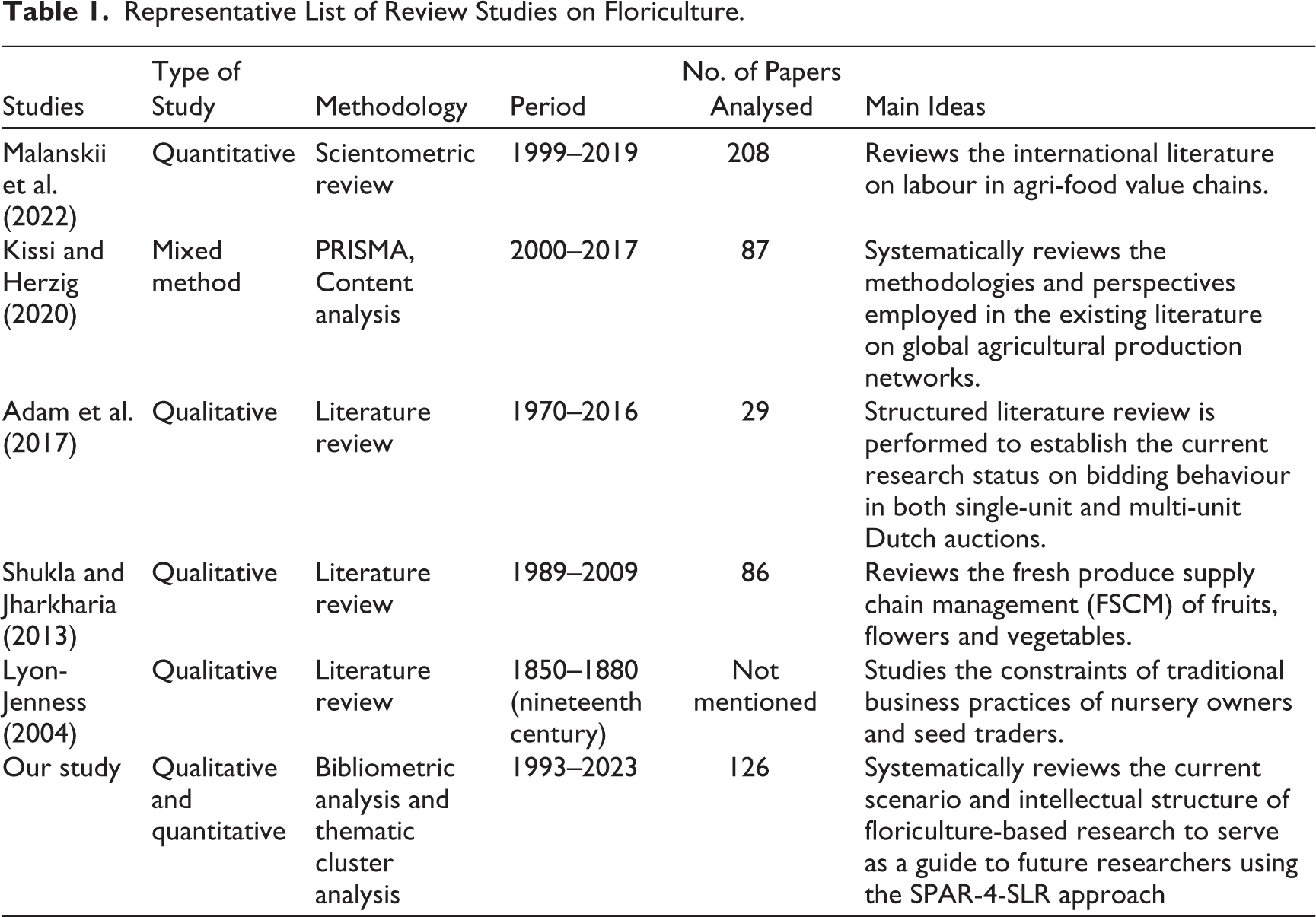
A quantitative and qualitative analysis focusing on the past, and prevailing state of research on floriculture is needed to gauge the prospects. The literature review done in the present study proposes a different view from those of previous studies. Table 1 demonstrates a representative list of significant previous review papers along with the landscape of the current study. Past studies have concentrated more on the overall aspect of the agriculture sector than focusing fully on floriculture (Kissi & Herzig, 2020; Malanskii et al., 2022). Moreover, the methodology applied in the review papers is qualitative (Adam et al., 2017; Lyon-Jenness, 2004; Shukla & Jharkharia, 2013). There is a lack of studies on floriculture that have used a quantitative technique to gauge the progress in the field. Evidence from previous literature has shown a paucity of literature review publications presenting the overall scenario of the floriculture industry from the management perspective. To fill the gap, our study has used bibliometric analysis along with thematic cluster analysis to illustrate the current scenario and intellectual structure of floriculture-based research to serve as a guide to future researchers (Hota et al., 2020).
Representative List of Review Studies on Floriculture.
Further, Section 2 describes the detailed data collection and methodology followed in the paper. Section 3 presents the results and discusses the relevance of the findings. Section 4 presents the conclusion and future research agendas. Finally, Section 5 highlights the limitations of the study.
Data and Methodology
The guiding protocol of SPAR-4-SLR (Paul et al., 2021) is followed for data collection and analysis to perform the steps of assembling, arranging and assessing tasks on floriculture literature (Figure 1).
Assembling
The assembling process comprises the identification and acquisition of articles for review. In the process of identification, the review domain is floriculture, and the research question, as indicated by RQ1, RQ2 and RQ3, constitutes the bibliometric performance, intellectual structure and future research directions, respectively (Figure 1). The source type includes empirical and review articles, as they are considered rigorously peer-reviewed. Web of Science was used as the measure of source quality (Kent Baker et al., 2020).
Review Procedure Following the SPAR-4-SLR Protocol (Paul et al., 2021).
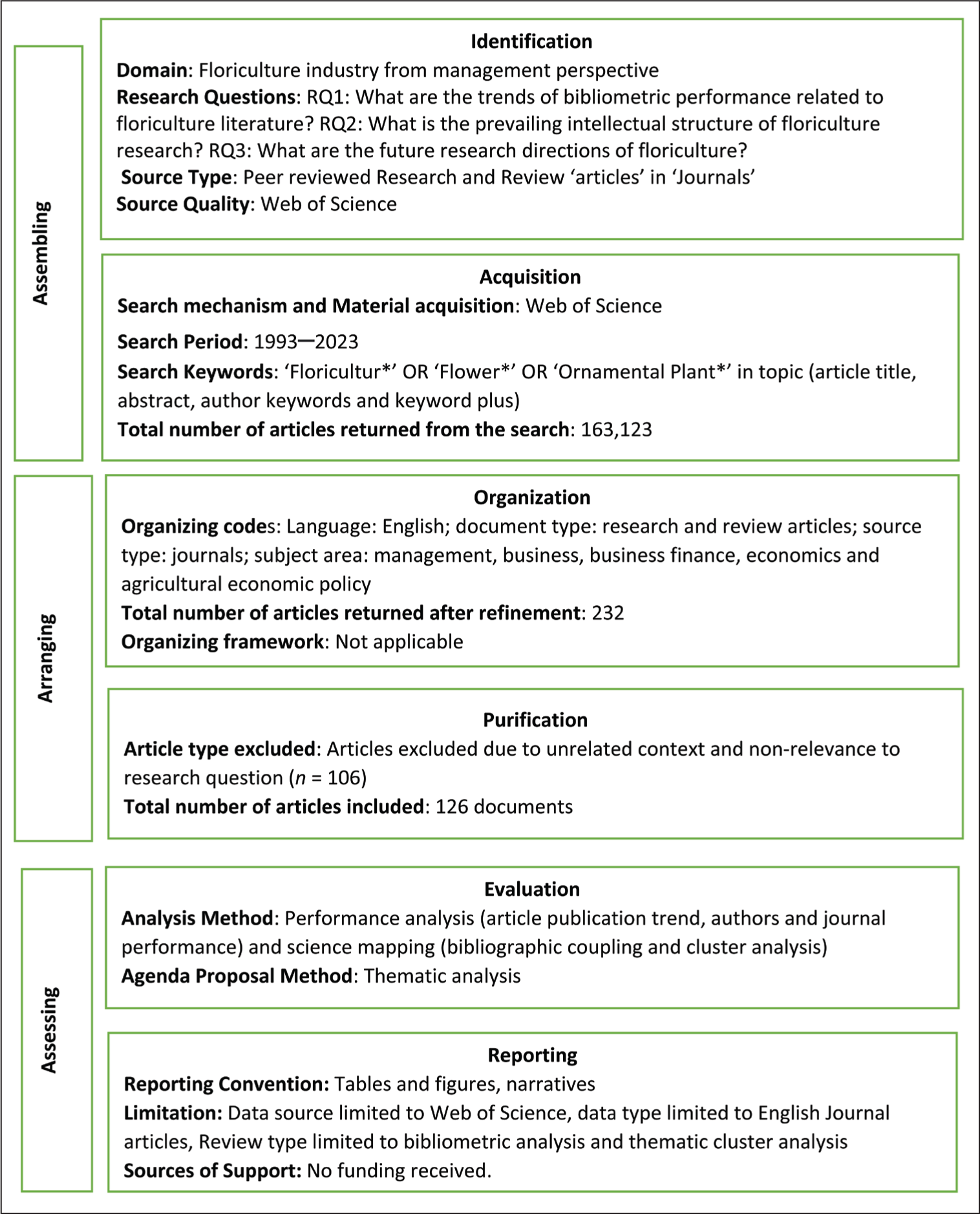
In the process of acquisition including the search mechanism and material acquisition, required bibliometric information is extracted from the Web of Science database itself. Nearly three decades of study period is taken from 1993 till March 2023. As per the definition of floriculture, which is the cultivation and marketing of flowers and ornamental plants, prominent words such as floriculture, flower and ornamental plants are taken and used as search keywords. The search key terms used to retrieve the data are ‘Floricultur*’, ‘Flower*’ and ‘Ornamental plant*’. An asterisk is used after a word to include all the possible endings of the word. The total number of articles returned from the search was 1 63,123.
Arranging
The process of arranging involves organization and purification. In the organization step, articles from the English language were filtered, the document type selected was all research and review articles, and the source type was selected as journals only. Five subject areas selected in the domain of social sciences were management, business, business finance, economics and agricultural economic policy. The total number of articles returned after refinement was 232, which was downloaded in bib text format.
In terms of purification, 106 articles that were not directly related to the context of floriculture, and papers related to the artificial flower-making industry were excluded. So after purification and data cleaning, a total of 126 documents were included for review purposes.
Assessing
The third and final stage of the SPAR-4-SLR protocol is assessing, which comprises the evaluation and reporting of articles under review. In the process of evaluation, the analysis method incorporated was bibliometric analysis which includes showcasing articles’ publication trend, listing prominent authors, highly cited papers and most contributing sources of literature in terms of journal performance and network analysis using bibliographic coupling and cluster analysis using the R software and VOS viewer to delineate the past and present trends in floriculture research (Aria & Cuccurullo, 2017). To gauge the future trends of floriculture research, thematic analysis is used for the agenda proposal method (Bhaskar et al., 2022; Lim et al., 2022). Reporting of the findings is done through figures, tables and words, whereas the limitation includes the use of a single database, that is, Web of Science, and review limited to bibliometric analysis and thematic cluster analysis using keyword co-occurrence network. No fund support is required as the review is based on secondary data.
Results and Discussion
To answer the research questions, the results of the review are discussed in two parts. The first part deals with bibliometric performance (RQ1), and the second part deals with the intellectual structure of the literature (RQ2) which encapsulates floriculture’s knowledge production unpacked through science mapping via bibliographic coupling.
Bibliometric Performance
Corpus Performance
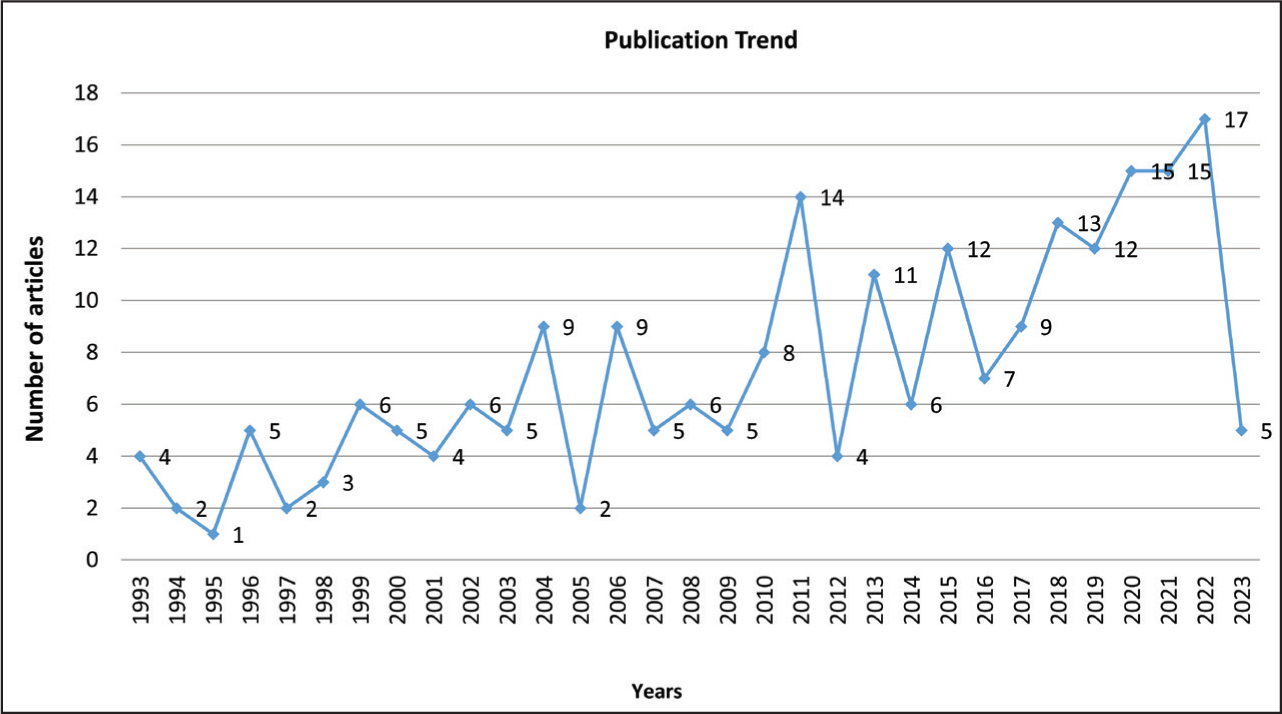
The review analysed 126 articles published from 1993 to 2023 (30 years). Figure 2 illustrates the growing trend of publications in the field. The trend of publication reveals an inconsistency and very slow progress in the growth of research in the field of floriculture.
Trend of Floriculture Articles Published Between 1993 and 2023.
Article Performance
Citation analysis is conducted to identify the top articles that are globally cited in the database. Table 2 presents the 10 most-cited floriculture articles with the name of the journal, h-index, citation, ranking and major ideas presented by the articles that have received citations from all other documents indexed in the Web of Science database.
Top 10 Most-cited Articles on Floriculture.
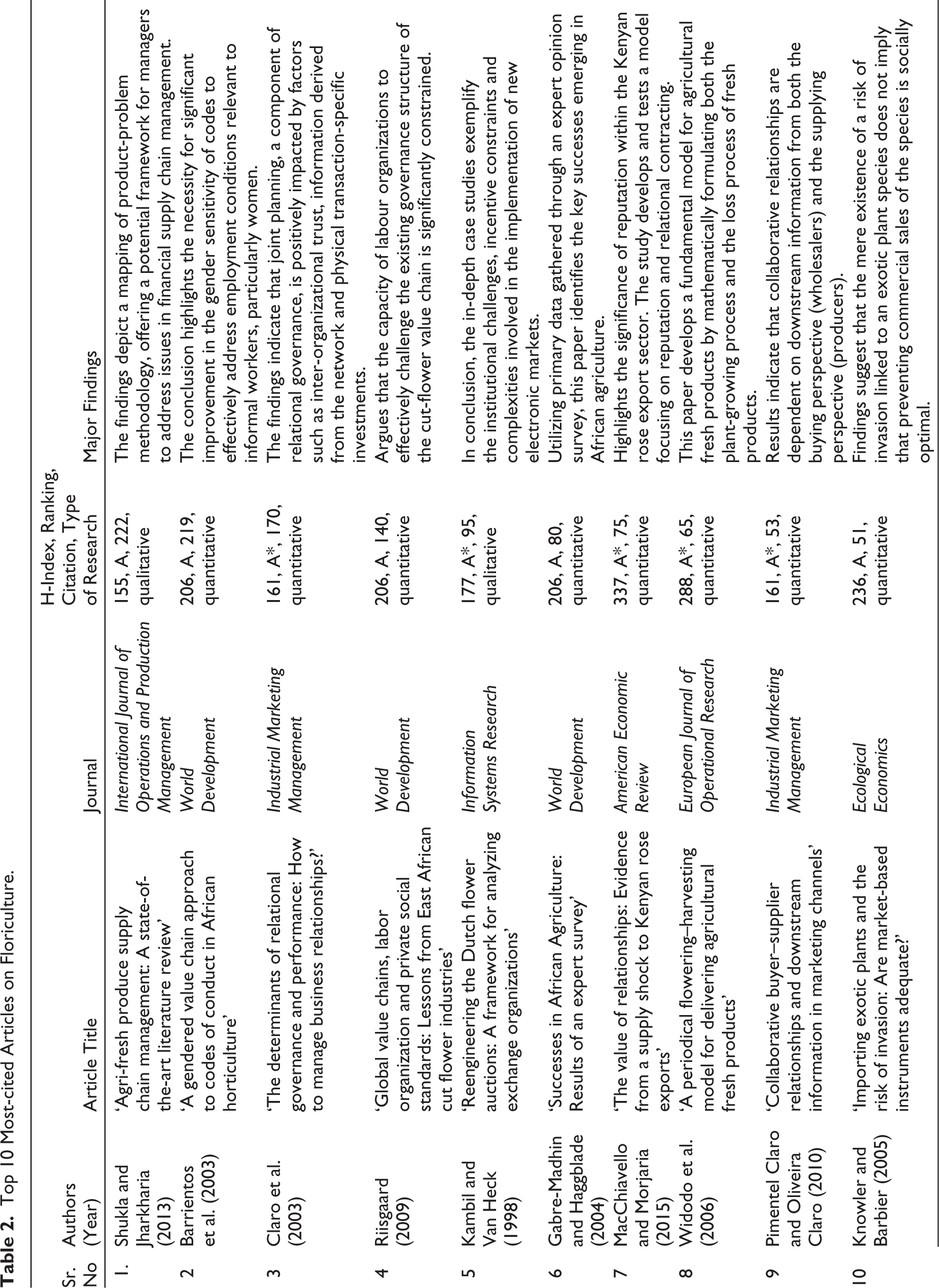
Shukla and Jharkharia (2013) is the most-cited floriculture-related article in the database (222 citations). It is a review paper that presents the fresh produce supply chain management (FSCM) from production to consumption which is a very crucial aspect in the case of perishable products like flowers. The findings suggest that the primary focus is on consumer satisfaction and revenue maximization with post-harvest waste reduction being the secondary objective.
Barrientos et al. (2003) is the second most-cited article related to floriculture in the database (219 citations). The article explores the employment conditions of African producers exporting to European markets involving Kenyan flowers and Zambian flowers covering the code of conduct. A ‘gender pyramid’ is developed and applied to codes that cover employment conditions, concluding a gender sensitivity of codes that need to be enhanced.
Claro et al. (2003) is the third most-cited article in the database. The authors have conducted an empirical study to assess the influence of the determinants of the transaction, dyadic and business environment level on relational governance and performance taking the sample of Dutch suppliers of the potted plant and flower products.
Riisgaard (2009) is the fourth most-cited article related to floriculture (140 citations). This article investigates different labour responses to private social standards in East African cut-flower industries. The findings suggest that there is a limited scope of challenging the governance structure of the cut-flower value chain by the labour organizations.
Kambil and Van Heck (1998) makes its position in the top five most-cited floriculture-related articles (95 citations). Their article illustrates the institutional and incentive constraints, encountered in the introduction of new market design in the Dutch flower markets. A cross-case analysis is applied to test the successes and failures in the introduction of new IT-based trading mechanisms in these markets.
Overall the top 10 most-cited floriculture articles, collectively garnered 1,170 citations from other articles in the database. Out of 126 articles, 16 articles have not received any citations yet. Most of the papers that have received high citations are focused on the supply chain management of perishable products like flowers and the governance of information in the auction market. Therefore, it could be concluded that the major concern in the research areas of floriculture is still related to the management of the fresh produce supply chain and smooth administration of auction markets.
Author Performance
Based on the database, 290 authors have contributed to the area of floriculture. Table 3 presents the 10 most productive authors, ranked from first to sixth based on total citations from Web of Science for floriculture-related articles. The authors with the same number of citations are given a similar rank. The top five authors based on total citations are DP Claro, S Jharkharia, M Shukla, S Barrientos and C Dolan. The papers written by these authors are also the globally highest cited papers which are presented in Table 2. The total citations received for these authors are 1,155, which indicates that the authors can craft a significant impact in the academic literature regardless of their productivity in publishing floriculture-related articles.
Ranking of Most Influential Authors by Citations.
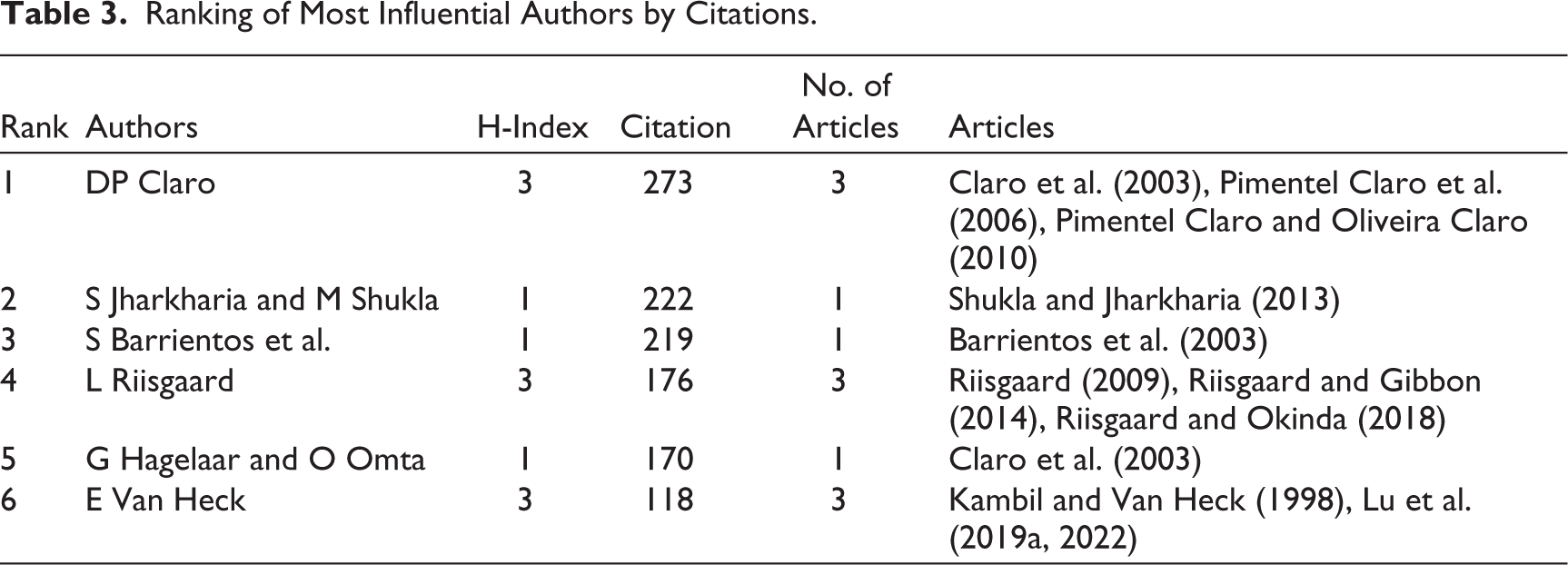
The initial work of DP Claro is focused on the determinants of relational governance and performance of Dutch suppliers of potted plants and flower products (Claro et al., 2003), then he shifts towards exploring the significance of trust and the impacts of transaction-specific investments on the extent of collaborative joint efforts of suppliers (Pimentel Claro et al., 2006) and the role of downstream information in collaborative buyer–suppler relationship (Pimentel Claro & Oliveira Claro, 2010).
Khachatryan, Rihn, Behe and Campbell are focused on the consumer preferences for organic production and buying impulsiveness through visual attention whereas later work has focused on the consumer preferences for labels and local production benefits of perceived locally grown plants. Behe has also investigated the influence of pricing and representation of pricing on consumer evaluation of nursery products.
Journal Performance
A total of 74 journals indexed in the Web of Science database have published 126 articles that have been included in the study for review. Table 4 lists the top 10 journals having the highest h-index factors, which account for 29.6% of articles in the corpus. The top three most productive journals in terms of publication of articles are Agricultural Economics (8 articles), World Development (6 articles) and Agribusiness (4 articles). The top three journals in terms of most productive and prolific articles as measured by h-index are World Development (h: 6), Agricultural Economics (h: 5) and Agribusiness (h: 4), whereas the top three most impactful and influential journals as depicted by the number of citations received are World Development (492 citations), Industrial Marketing Management (223 citations) and International Journal of Operations and Production Management (222 citations).
Most Productive Journal Based on H-Index.
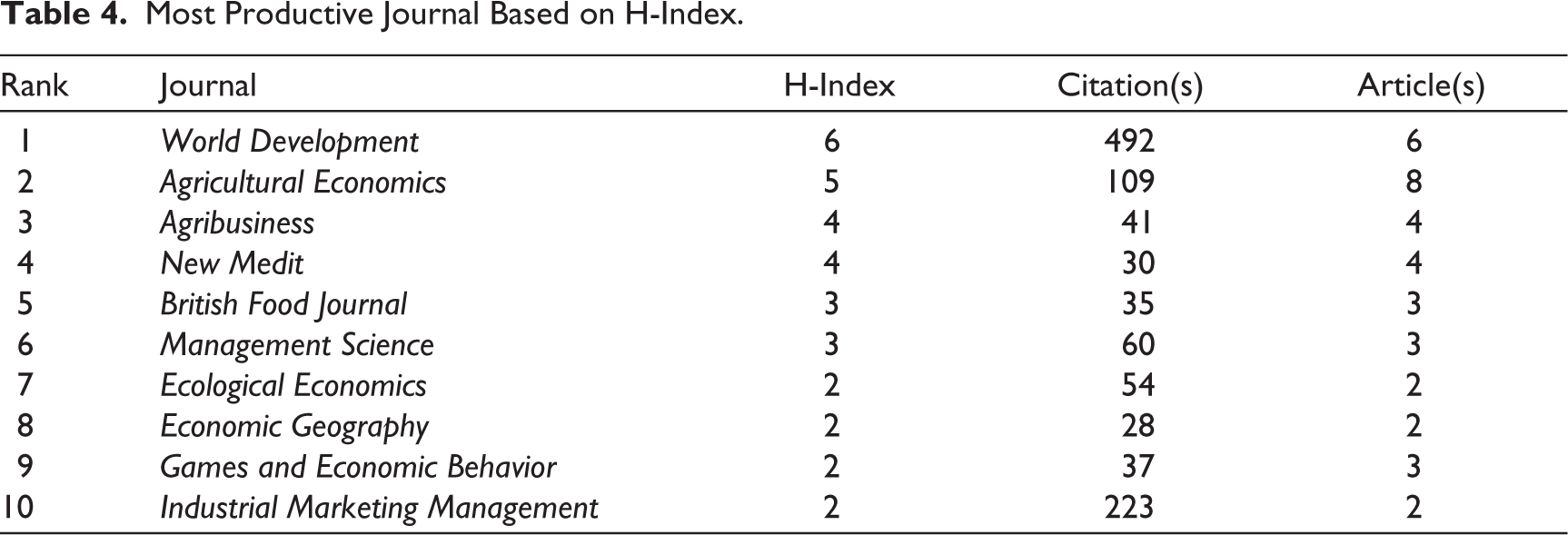
To gauge the periphery of the research topics covered in the top three journals related to floriculture, a brief discussion stating the scope of the articles published is provided to serve as a guide to future authors. The scope of the articles in the journal World Development covers topics related to trade, earnings, savings and job satisfaction of workers, code of conduct, the role of gender, global value chain, labour organization, employment and development of labour markets in cut-flower industry (Barrientos et al., 2003; Gabre-Madhin & Haggblade, 2004; Mano et al., 2011; Muhammad et al., 2013; Newman, 2002; Riisgaard, 2009; Suzuki et al., 2018). Similarly, the topics covered under the journal Agricultural Economics revolve around consumer preference for organic production of ornamental plants, environmental effects and recreational benefits of cultivated flower land, pest control in greenhouse production of ornamental crops, the role of consumer labels and firms’ adoption of international standards (Gebreeyesus, 2015; Huang, 2017; Rihn et al., 2016; Schumacher et al., 2006; Yue et al., 2011). The articles in the journal Agribusiness focus on demand analysis of ornamental plants, analysis of social media marketing, trade pattern of perishable products, consumer perceptions of local production, price transmission and international trade (Asche et al., 2021; Hovhannisyan & Khachatryan, 2017; Khachatryan et al., 2018b; Verreth et al., 2015; Yao et al., 2019).
Intellectual Structure
Bibliographic Coupling
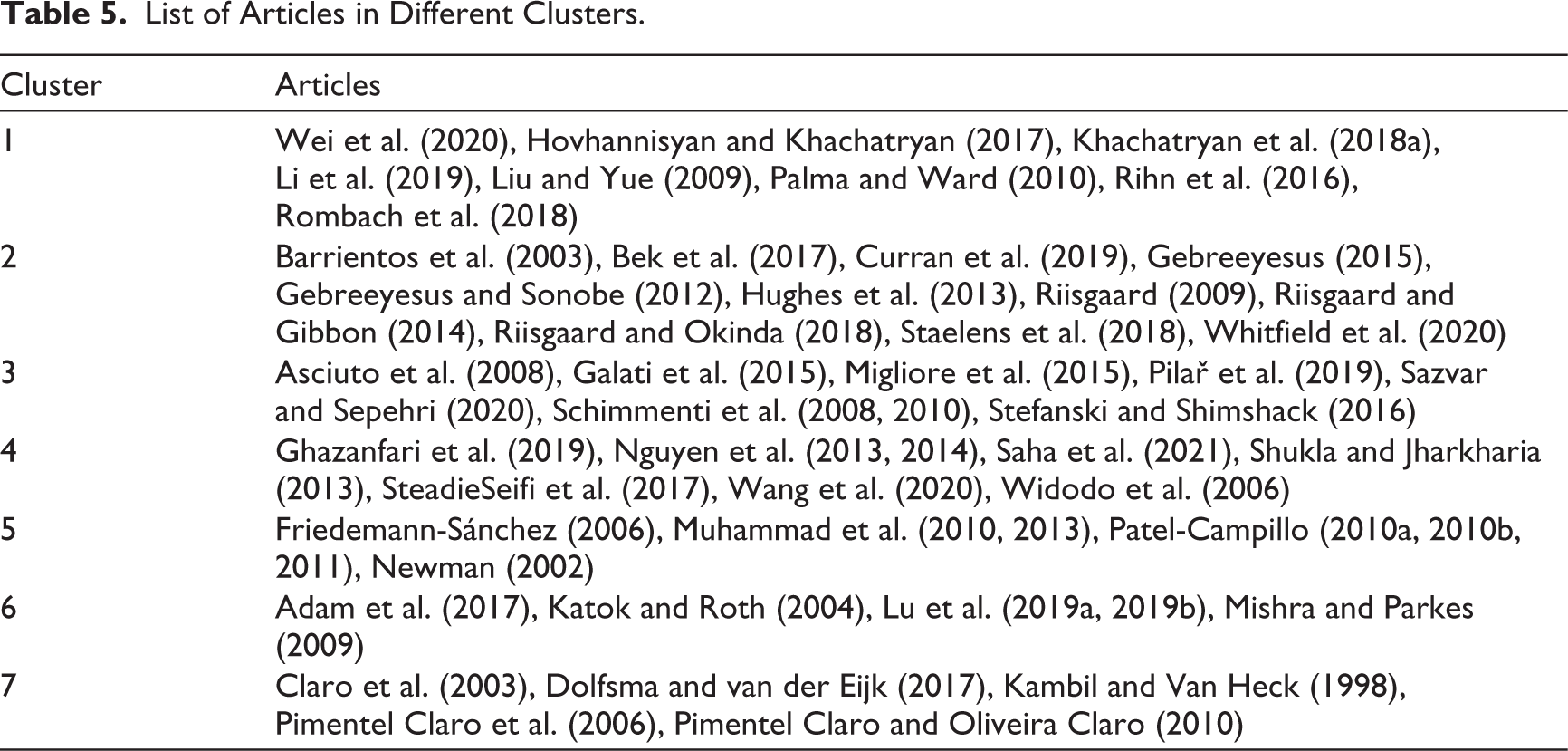
The analysis of the prevailing intellectual structure of floriculture research (RQ2) is done using bibliographic coupling followed by thematic cluster analysis (Donthu et al., 2021). Two documents occur to be bibliographically coupled if they cite one or more common documents in their bibliographies. If two papers refer to a common third work, there is a probability that the subject matter of the papers is correlated. With a threshold of a minimum of 5 citations in common, and 5 as the minimum cluster size, 67 documents were grouped in 7 clusters using VOS viewer. Table 5 shows the cluster-wise separation of documents. The content analysis of the findings and theme of the paper grouped in each cluster is presented in the next section.
List of Articles in Different Clusters.
Thematic Mapping and Cluster Analysis
Cluster 1: Consumer demand, preference and marketing strategies for ornamental plants
The first cluster comprises papers focusing on consumer preference and perception affecting demand with changing marketing strategies. In the era of new media marketing small firms gain higher returns in terms of increased sales through social media marketing as compared to larger firms (Yao et al., 2019). The buying behaviour of consumers of ornamental plants having a high buying impulsiveness score is also positively affected by visual attention to informational signs (Khachatryan et al., 2018a). Consumers also prefer products that are produced organically using sustainable practices and are harmful pesticide-free (Rihn et al., 2016; Wei et al. 2020). The household demand of the ornamental plants is price elastic as a result the stakeholders benefit by determining the best pricing strategies suitable to specific markets (Hovhannisyan & Khachatryan, 2017).
Cluster 2: Global value chain and labour management in cut-flower industry
The cluster focuses on labour management in the cut-flower global value chain in the Kenyan, Ethiopian and African floriculture industries. Labour organizations influence the implementation of social standards in the governance structure and exercise more freely in retailer-driven cut-flower value chains (Riisgaard, 2009). In the Ethiopian cut-flower industry, the workers’ perception of their working conditions is evaluated and is found satisfactory with about 36% of operational firms having acquired the certification for international standards (No & Version, 2023; Staelens et al., 2018).
Cluster 3: Trade competitiveness and organizational models in the floriculture industry
The globalization of markets has prompted a reshaping of business models to compete effectively in both domestic and international markets. There is a necessity to re-evaluate these models, both within cooperatives and among small enterprises run by young entrepreneurs (Galati et al., 2015). In terms of competitiveness, Italy has grappled with an increasing global supply of flowers and persistent market crises in recent years (Asciuto et al., 2008). Schimmenti et al. (2008) emphasize the inclination of Sicilian floriculture sector operators towards road transport, which provides superior assurances in terms of delivery speed compared to alternative means of transportation.
Cluster 4: Transportation, logistics and supply chain management of floriculture products
Wang et al. (2020) explore a novel variant of last-mile delivery that incorporates the scheduling of both static e-commerce parcels and online-to-offline parcels. Shukla and Jharkharia (2013) reviewed the supply chain management of fresh produce including flowers and highlighted the need for post-harvest west reduction. Following the recommendation of Nguyen et al. (2013), the California Cut Flower Commission constructed a new flower transportation and logistics centre. SteadieSeifi et al. (2017) investigate a transportation planning challenge involving multiple modes of transportation, perishable products and the administration of reusable transport items. Nguyen et al. (2014) suggested that suppliers of perishable products with low demand save on long-haul transportation costs by consolidating their products.
Cluster 5: Global commodity chain and women employment in cut-flower industry
Building on the literature of global commodity chains, the Dutch cut-flower case demonstrates how grower strategies and government policies played a crucial role in the establishment of grower cooperatives (Patel-Campillo, 2011). Friedemann-Sánchez (2006) contends that comprehending property acquisition by women workers in the cut-flower industry and intra-household bargaining processes requires recognizing the significance of individuals’ social capital, encompassing their labour, kinship ties and networks of solidarity. The market labour opportunities for women do not impact the total time women spend in labour, but they do lead to an increase in men’s time devoted to unpaid labour (Newman, 2002).
Cluster 6: Bidding behaviour in Dutch flower auction
The descending-price auction, notably recognized for its application in Dutch flower auctions, demonstrates resilience and effective performance across various environments (Katok & Roth, 2004). Through a large-scale field experiment conducted in the Dutch flower auction market, it was discovered that concealing the identities of winners can substantially enhance the average winning price, consequently boosting the seller’s revenue (Lu et al., 2019b). Lu et al. (2019a) suggest an optimization framework designed to assist auctioneers in navigating the trade-off between maximizing revenue and ensuring operational efficiency.
Cluster 7: Buyer–supplier relationship and network positioning
Studies on buyer–supplier relationships have highlighted the crucial role of collaboration and business networks. The findings of Pimentel Claro and Oliveira Claro (2010) illustrate that collaborative relationships are dependent on downstream information from both the buying perspective (wholesalers) and the supplying perspective (producers). Strategic positioning within a network is largely mediated by its ability to enhance innovativeness and contributes significantly to firm performance, impacting it both directly and indirectly (Dolfsma & van der Eijk, 2017). The findings of Pimentel Claro et al. (2006) underscore the significance of trust in coordinating joint efforts and the collaborative response, particularly in terms of safeguarding and more effectively integrating transaction-specific investments in the Dutch flower industry.
Conclusion and Future Research Agenda
The study springs valuable insights into floriculture research by thoroughly reviewing the existing literature. The article has delivered a comprehensive and scientific review of 126 articles published in Web of Science-indexed journals from 1993 to 2023. In the process, the article has answered two research questions, that is, current trend of floriculture literature through bibliometric performance, and states the prevailing intellectual structure of literature through thematic cluster analysis. The review of the literature reveals there has been slow but significant growth in the corpus of floriculture research over the last three decades. The commercialization of the flower industry due to rapidly dissolving trade and economic boundaries has been the major factor for the growth of the industry and literature in the domain. But still, there is a huge scope for further research developments in the field. Four future research directions related to the field of floriculture are recommended by the current study.
Avenues for Future Research
Floriculture has gained its importance as a branch of horticulture, but still, there is a long way to go. To answer RQ3, that is, to gauge the future direction of floriculture research, a content analysis of the articles published in the A and above category of journals for the past three years, that is, 2020–2023 is conducted. Table 6 depicts four significant focus areas and related future research prospects in the direction. Prospective authors could also undertake to advance and enrich the analysis of the intellectual structure of the literature, through citation analysis, co-citation analysis, keyword analysis or a combination of the analysis suitable for the study. The analysis reveals contemporary research directions that future researchers could delve into.
Suggested Future Research Prospects for Floriculture.
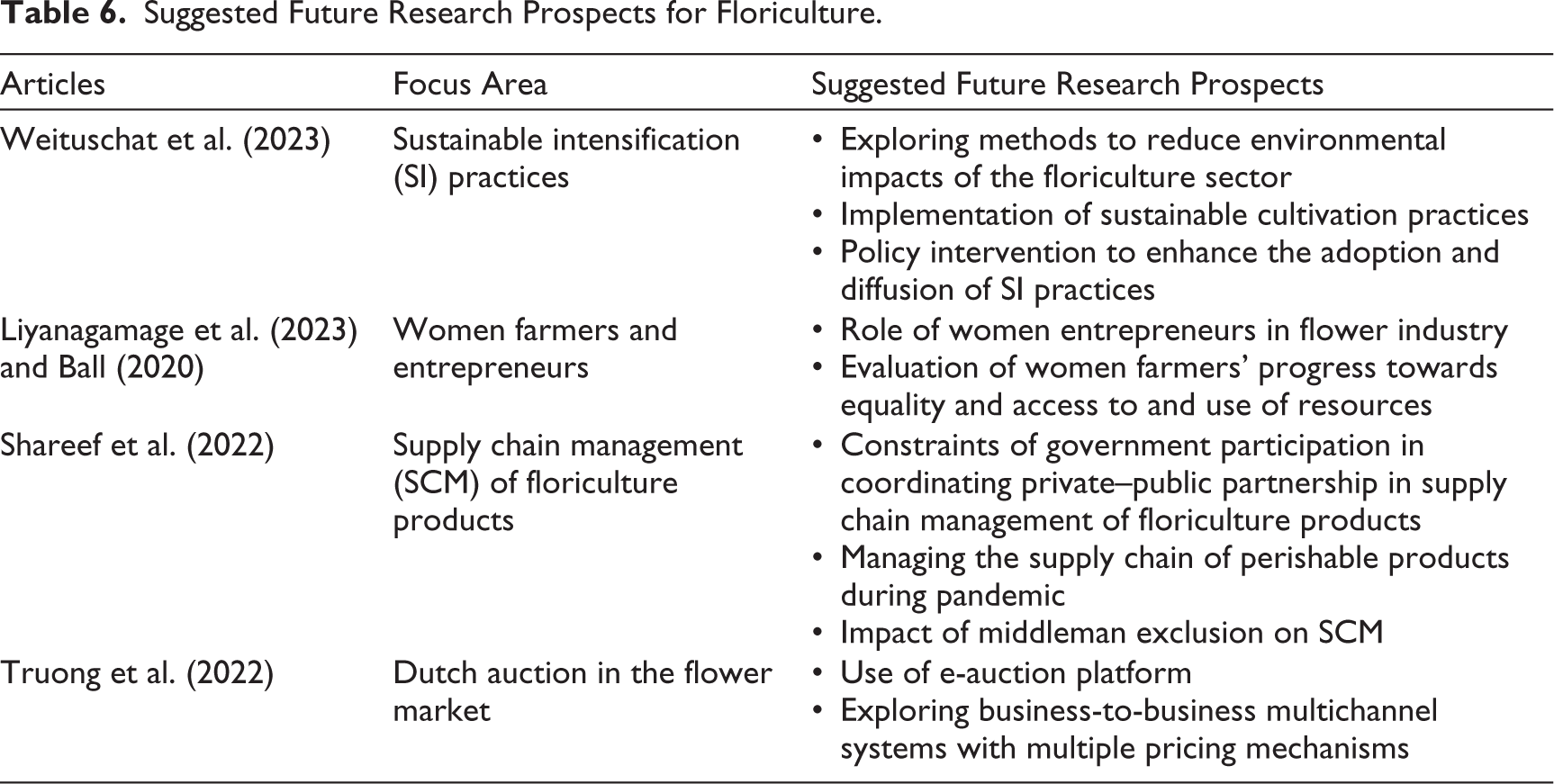
First, the talks about sustainable standards and awareness of sustainability understanding among the stakeholders are at a very nascent stage in the floriculture sector. The analysis of sustainability inclusion and intensification practices in the agri-food value chain by Weituschat et al. (2023) suggests contract farming as one of the potential tools to increase the uptake of sustainable intensification practices. However, further research needs to be done in exploring various methods to reduce environmental impacts by the floriculture industry, implementing sustainable cultivation practices and the role of government to enhance the adoption and diffusion of sustainable intensification practices through policy intervention.
Second, the introduction of an e-auction platform and online bidding system is a recent addition to the flower market that could grab the attention of researchers. Truong et al. (2022) examine the strategic actions of business-to-business purchasers within a distinctive system, wherein an online posted price channel is integrated into a Dutch auction market sequentially. Similar studies could be undertaken in different auction markets considering the response of buyers and bidders of multichannel auction markets towards the online price mechanism.
The third avenue of future research pertains to the lack of research on the role of women entrepreneurs in the flower industry and the employment and working conditions of women farmers in the floriculture sector. Liyanagamage et al. (2023) have revealed the importance of psychological capital and emotions that help in not only surviving but thriving of women entrepreneurs during uncertainty and unique challenges. Ball (2020) has strongly highlighted the requirement for more studies across various domains to assess the advancement of women farmers towards parity with their male counterparts and to investigate strategies for promoting such equality.
The fourth area of future research relates to supply chain management of floriculture products including procurement, logistics management, inventory control and distribution. Shareef et al. (2022) have explored the conflicting relations among channel members of perishable food items. Further studies could consider evaluating the constraints of government participation in coordinating private-public partnerships in managing the supply chain of floriculture products and quantitatively assess the impact of the exclusion of middlemen on the direct relationship of stakeholders involved in supply chain management. This serves as a wake-up call to address the sustainability criteria, harmonize with the international standards and prioritize collaborative infrastructure development and innovative marketing strategies to successfully commercialize the floriculture industry at domestic and international levels.
Limitations
First, the review is limited to the data extracted from the Web of Science database. Further reviews on floriculture could consider other databases like Scopus, to further explain the existing intellectual structure of knowledge in the domain. Second, only analysis through bibliographic coupling is undertaken as a method of science mapping to study the thematic clusters. Other tools of science mapping like citation and co-citation analysis could be used for creating and analysing thematic clusters. Third, this review does not probe into the theories, constructs and methods incorporated in the research on a large scale. Thus, future reviewers are encouraged to conduct a more extensive and comprehensive review by unpacking the theories, context, constructs and methods in the literature.
Footnotes
Declaration of Conflicting Interests
The authors declared no potential conflicts of interest with respect to the research, authorship and/or publication of this article.
Funding
The authors received no financial support for the research, authorship and/or publication of this article.