




Abstract
Purpose:
The growing global awareness of environmental sustainability and the threat of climate change has prompted organisations to embrace green supply chain practices (GSCP) to minimise their ecological footprint and improve their competitive edge. The primary objective of this study is to offer a comprehensive, insightful analysis of the GSCP utilising the TCCM (theory, context, characteristics, and methods) framework.
Design/Methodology/Approach:
This study conducts an extensive bibliometric analysis, incorporating the TCCM framework and SPAR-4-SLR (Scientific Procedures and Rationales for Systematic Literature Reviews) protocol, to delve into the dynamic field of GSCP spanning 2004 to 2023.
Findings:
This article offers a nuanced exploration of the intricacies of GSCP research dynamics, shedding light on influential articles, distinguished authors, prominent academic institutions, publication sources and nine key thematic research clusters that have had a substantial impact and propelled this pivotal domain forward. TCCM framework is used to construct an all-encompassing citation network, elucidating five significant domains guided by the theoretical framework. These domains include social and economic theories, resource and strategy theories, innovation and change theories, systems and interdisciplinary theories, and management and organisation theories. Every subcategory within the GSCP realm represents a distinct and unique facet and is supported by an individual theoretical framework and scholarly contribution.
Practical Implications:
The findings from the bibliometric review yield significant insights for researchers and green supply-chain practitioners. This article aims to guide future research endeavours and policy formulation by evaluating the existing knowledge base and pinpointing diverse research avenues. It underscores the importance of interdisciplinary collaboration among academics from different domains to address the complex aspects of sustainability in supply-chain operations, thus highlighting the multidisciplinary character of green supply-chain research.
Originality/Value:
To the best of our knowledge, this review study is the first to present a bibliometric analysis of GSCP using the TCCM framework and the SPAR-4-SLR protocol.
Introduction
Greenhouse gas emissions that contribute to global warming are primarily the result of industrialisation, deforestation, fossil fuel combustion and other human activities (Nirmal et al., 2024; Shahzad et al., 2024; Zhang et al., 2023). Despite the apparent impossibility of eliminating these emissions in the rapidly evolving global economy, it is imperative to mitigate them (Nirmal et al., 2024). Incorporating environmentally friendly practices into an organisation’s supply-chain activities can effectively mitigate the increasing environmental harm caused by the industry (Lotfi et al., 2024). Within this context, green supply chain management (GSCM) and green supply chain practice (GSCP) could be beneficial (Ali & Shoaib, 2023). Several studies have acknowledged that implementation of GSCP is highly beneficial in decreasing adverse environmental impact and improving a company’s competitiveness by enhancing both ecological and economic performance (Srivastava, 2007; Wu et al., 2015; Zhu & Sarkis, 2006; Zhu et al., 2007). Stringent regulations and policies, competitive market pressures, social pressures, and increased environmental awareness are among the factors that motivate organisations to enhance their environmental performance (Gupta et al., 2019; Nirmal et al., 2024; Wu et al., 2021). Consequently, organisations have proactively pursued environmentally sustainable practices in recent years to improve their economic and environmental performance, obtaining a competitive edge in the market and meeting customer expectations (Yan et al., 2021).
GSCM and GSCP
The definition of GSCM highlights the environmental aspect of supply chains. Literature defines GSCM as ‘the integration of environmental considerations into supply-chain management, which encompasses product design, material sourcing and selection, manufacturing processes, delivery of the final product to consumers, and the end-of-life management of the product after its useful life’ (Hervani et al., 2005; Srivastava, 2007; Zhu & Sarkis, 2006). Within the broad notion of GSCM definition (Srivastava, 2007) derives the term ‘GSCP’, which refers to a diverse array of activities and initiatives that an organisation implements to mitigate its adverse impact on the natural environment (Perotti et al., 2012; Sarkis et al., 2011; Vachon & Klassen, 2006). The concept of GSCP often encompasses environmental actions that might be voluntary or coercive (Montabon et al., 2007; Perotti et al., 2012; Sarkis et al., 2011). Initially, the concept of GSCM was associated with integrating environmental considerations into industrial purchasing decisions and innovation in supply chain management (SCM) (Carter et al., 1998). Over time, the term has developed to refer to an ‘extended traditional supply chain’, which emphasises reducing the environmental impact of products throughout their entire life cycle (Beamon, 1999; Nirmal et al., 2024; Zhu & Geng, 2013). Researchers have provided numerous definitions of a GSCM using diverse terminology such as closed-loop supply chain (Abbasi et al., 2023; Beamon, 1999; Belhadi et al., 2022; Hussain et al., 2023; Lotfi et al., 2024; Zhu & Sarkis, 2006; Zhu et al., 2008b), sustainable supply chain (Chen et al., 2017; Cui et al., 2023; Hsu et al., 2016; Karmaker et al., 2023; Kim & Chai, 2017; Kusi-Sarpong et al., 2023; Nirmal et al., 2024; Schrettle et al., 2014; Zailani et al., 2012), environmental supply chain (Beamon, 2005), socially responsible supply chain (Park-Poaps & Rees, 2010), sustainable supply chain finance (Guo et al., 2022), ethical supply chain (Beamon, 2005) and integrated supply chain (Karmaker et al., 2021; Vachon & Klassen, 2006; Zhu & Sarkis, 2006). Regardless of the terminology used, the fundamental concept, the ‘environment’, stays unchanged. The application of GSCM across complete business supply chains predominantly began around 2010, even though the concept of GSCM emerged in the 1990s (Nirmal et al., 2024).
Literature initially defined GSCP as characterised by its focus on environmental collaboration (allocating dedicated resources towards endeavours that tackle environmental concerns within the supply chain) and environmental monitoring (assessing the suppliers’ environmental initiatives and complying with environmental regulations) in the context of environmental investment or technology (Vachon, 2007; Vachon & Klassen, 2006). The analysis of GSCP encompasses a diverse array of practices, both within an organisation (internal GSCP) and outside it (external GSCP). These practices have been the focus of research by numerous authors in sectorial or cross-sectorial studies (Perotti et al., 2012; Zhu & Sarkis, 2004, 2007; Zhu et al., 2007; Zhu et al., 2008b). Internal practices encompass investment recovery and environmental management systems, whereas external practices involve green purchasing and collaboration with customers to develop eco-friendly packaging (Sarkis et al., 2011; Sharma, 2014; Zhu et al., 2008). Green design, green purchasing, reverse logistics, collaboration with suppliers, green packaging and internal environmental management are among the essential GSCP, which also comprise one of the most comprehensive frameworks for classifying GSCP (de Oliveira et al., 2018; Islam et al., 2017; Micheli et al., 2020; Sharma, 2014; Srivastava, 2007; Zhu & Sarkis, 2004; Zhu et al., 2008b). Extensive research has delved into multiple facets of GSCP. Several researchers have emphasised the significance of green design in the supply chain (Abdullah et al., 2019), whereas others have addressed incorporated logistics practices (Carter et al., 2008), along with reverse logistics (Abdullah et al., 2019; Carter et al., 1998; Nureen et al., 2022), warehousing and green building concerns (Hervani et al., 2005), and distribution and transportation execution (González-Benito & González-Benito, 2006). Recently, the primary focus of the literature has shifted to the relationship between carbon neutrality and GSCP and the application of various artificial intelligence (AI) technologies to improve GSCP (Shahzad et al., 2024). These studies collectively emphasise the evolving priorities and innovative approaches within GSCP, demonstrating the continuous efforts to incorporate sustainability and contemporary technologies in SCM.
The Need for Current Research, its Objectives and Contribution
The current literature offers a comprehensive perspective on the GSCM field (Srivastava, 2007). Several authors have earlier authored GSCM bibliometric review-based research articles using Web of Science (WOS) data (Amirbagheri et al., 2019; Bhatt et al., 2020; Gong et al., 2019; Maditati et al., 2018; Mishra et al., 2017) and by utilising Scopus dataset (Mishra et al., 2017) across various dimensions such as management of supply networks that are both sustainable and green (Chen et al., 2017; Cui et al., 2023; Hsu et al., 2016; Kusi-Sarpong et al., 2023; Nirmal et al., 2024; Schrettle et al., 2014; Zailani et al., 2012), sustainable service supply chains (Tseng et al., 2018), assessments of GSCM utilising metadata and content analysis (Ali & Shoaib, 2023), as well as comprehensive reviews of flexibility and GSCM literature using literature review, text mining and network analysis (Dhillon et al., 2023). The existing literature predominantly focuses on GSCM and its different dimensions, leaving a notable gap in the contemporary bibliometric studies adhering to a predetermined framework concentrating explicitly on reviewing GSCP; Perotti et al., 2012). Thus, the need emerges to address the following research questions: RQ1: What are the key characteristics, dimensions and themes of GSCP explored in the literature? RQ2: How can integrating the TCCM (theory, context, characteristics, and methods) framework in GSCP studies contribute to the practitioner’s understanding? To address these RQs, the proposed review study has presented a novel TCCM framework (Paul & Rosado-Serrano, 2019) and bibliometric analysis of GSCP based on the SPAR-4-SLR (Scientific Procedures and Rationales for Systematic Literature Reviews) protocol (Paul et al., 2021) with the following research objectives:
RO1: To identify significant trends, gaps and emerging themes by undertaking a bibliometric review of the existing literature on GSCP using the SPAR-4-SLR protocol. RO2: To examine the global distribution and temporal evolution of research articles relevant to GSCP using bibliometric tools, providing insights into growth and development. RO3: To acknowledge the most prominent authors, institutions and journals on GSCP through citation analysis and co-authorship networks, thereby highlighting the most significant contributions to the literature. RO4: To consolidate the findings of the extensive bibliometric evaluation and present a conceptual framework that integrates insights from the SPAR-4-SLR protocol and TCCM approach, providing a structured approach for future studies and practical application of GSCP.
This article has made a substantial novel contribution to the existing literature by undertaking a bibliometric study of 279 high-quality Scopus index articles published between 2004 and 2023, addressing an entire spectrum of GSCP. Furthermore, a thematic contribution is made by nine distinctive themes evolved through keyword co-occurrence and document citation analysis. These themes provide a structured comprehension of the research landscape and emphasise key focus areas within the discipline. Additionally, a domain-related contribution summarises 76 of the highest-quality empirical articles published in journals with an A or A* rank following the ABDC ranking in the TCCM framework. Supply chain managers, business professionals and senior management can benefit from the study’s findings when making decisions, as well as researchers. To the best of our knowledge, this review article is the first to present bibliometric analysis using the TCCM framework on GSCP following the SPAR-4-SLR protocol. The article is organised as follows. The succeeding section discusses the research methodology, followed by initial data statistics and bibliometric analysis. The subsequent section highlights the TCCM framework. The article concludes with a brief discussion and future research recommendations.
Research Methodology
SLRs are often categorised into three broad categories: domain-based, theory-based and method-based (Palmatier et al., 2018; Sharma & Sharma, 2024). This domain-based review article used a hybrid methodology drawn from the literature involving conducting a bibliometric evaluation on GSCP theme-based journal articles indexed in the Scopus database first, followed by a content analysis of 76 selected publications (published in either A or A* ranked journals following ABDC ranking) presented in the TCCM framework (Flores-Sigüenza et al., 2021; Mardani et al., 2020; Nirmal et al., 2024). The Scopus database was included due to its extensive usage and greater prominence than other academic databases (Kabra et al., 2023; Nirmal et al., 2024; Sony & Naik, 2019). The literature was assembled following a well-established approach widely accepted in academic research for thematic cluster analysis (de Oliveira et al., 2018; Nirmal et al., 2024).
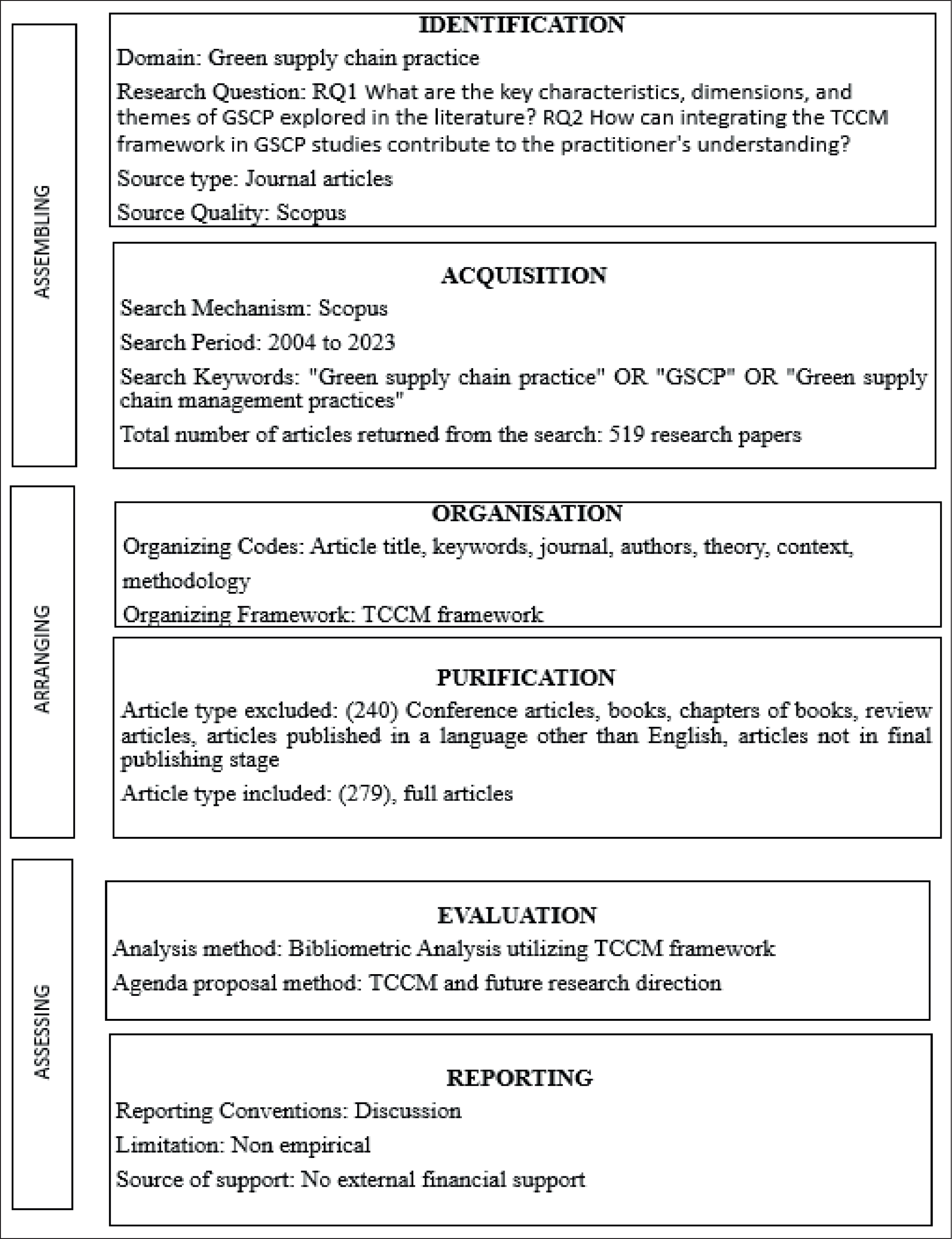
A thorough review of the existing literature was conducted for the keyword selection. Ali and Shoaib (2023) utilised ‘Green supply chain management’ OR ‘GSCM’ as keywords for the literature review on GSCM. Dhillon et al. (2023) undertook an SLR on flexible GSCM, using the search terms ‘Green AND/OR Supply Chain’ and ‘Flexible AND/OR Supply Chain’. Meanwhile, Bhatia and Gangwani (2021) reviewed the concept of GSCM by analysing terms such as ‘Green supply chain management’, ‘Sustainability’, and ‘Sustainable supply chain’. Drawing on these studies, this article adopted the following keywords to search for research articles in Scopus keywords ‘Green supply chain practices’, ‘GSCP’, or ‘Green supply chain management practices’. Since PRISMA (Preferred Reporting Items for Systematic Reviews and Meta-Analyses) and PRISMA-P (Preferred Reporting Items for Systematic Review and Meta-Analysis Protocols) were designed for systematic reviews in general and provided minimal rationales, this article followed a three-stage SPAR-4-SLR (Figure 1) procedure to assemble, organise and evaluate the existing literature for this article (Paul et al., 2021).
Inclusion and Exclusion Criteria
For inclusion and exclusion of data, a well-acknowledged approach, as utilised in numerous literature review articles, was adopted, involving the advanced search option within the ‘Title/Abstract/Keywords’ sections of articles along with SPAR-4-SLR (Figure 1; de Oliveira et al., 2018; Nirmal et al., 2024; Paul et al., 2021; Sharma & Sharma, 2024). A search was conducted in the Scopus database with the selected keywords ‘Green supply chain practices’, ‘GSCP’ or ‘Green supply chain management practices’ which were carefully chosen from the literature (Ali & Shoaib, 2023; Nur Siswanto et al., 2023). The search yielded a total of ‘519’ documents published between the years 2004 and 2023, which was refined by specifying the document type as ‘articles’ and considering the source type as ‘Journals’ to extract the relevant research articles. The language criterion remained ‘English’, and the publication stage was determined to be ‘final’. Only ‘business management and accounting; environmental science; social science; and economics, econometrics and finance’ publications were chosen to focus exclusively on the significant area of research. The exclusion and inclusion criteria drawn from the literature are tabulated in Table 1 (de Oliveira et al., 2018; Nirmal et al., 2024; Paul et al., 2021; Sharma & Sharma, 2024). Restricting the initial search result yielded 279 research documents published between 2004 and 2023.
Inclusion and Exclusion Criterion.
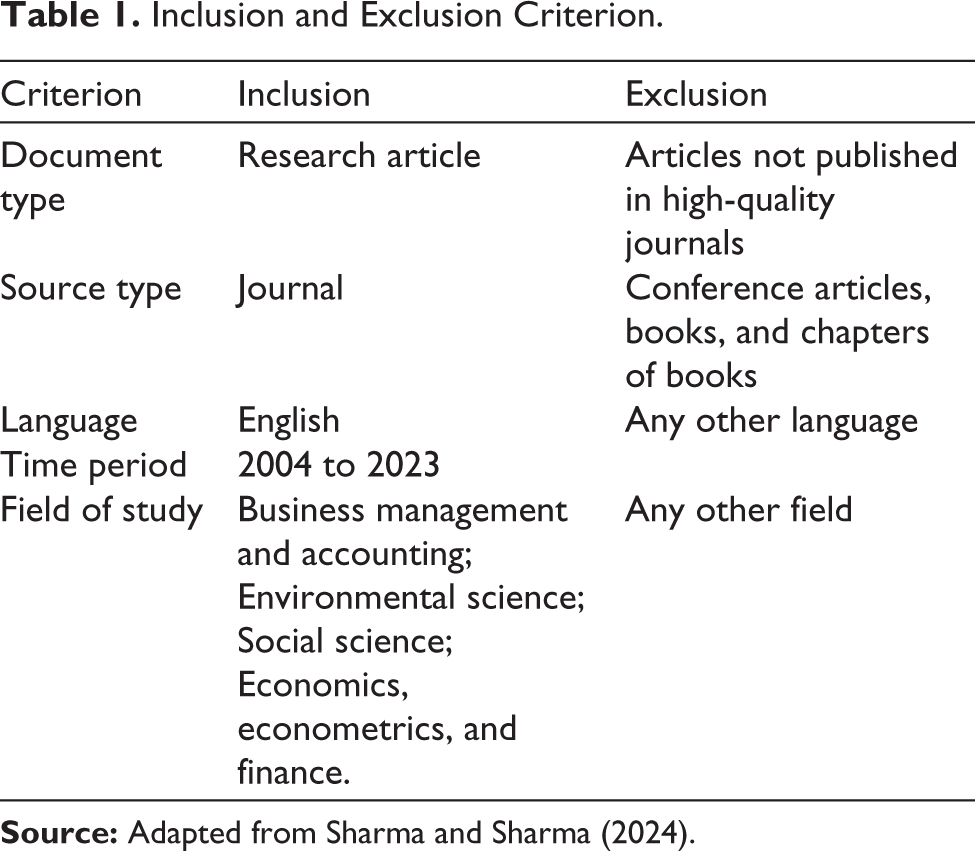
The search results, which include all the essential information for research publications, were gathered and organised in a CSV (comma-separated values) Excel format for bibliometric analysis with VOSviewer software (van Eck & Waltman, 2010). Among 279 publications, a manual evaluation was carried out to select 79 high-quality research articles published in journals classified as either A or A*. These specific documents were then analysed for their content using the TCCM framework (Paul et al., 2023). In addition, a comprehensive evaluation was conducted to determine the contributions made by different industries, authors and countries as well as to investigate the patterns in research publications. The following section delves into the preliminary data statistics and insights of 279 research articles.
Data Insights and Statistics
Bibliometric analysis, also known as ‘science mapping‘, is a prominent approach in SLRs that studies the productivity and impact of research constituents by utilising statistical methods to examine the chronological patterns and trends of publications and identify notable authors, countries, sources, institutions, publication characteristics, noteworthy trends, research gaps and keywords in relevant fields (Lim & Kumar, 2023; Nirmal et al., 2024; Sahoo, 2022; Zhang & Zhao, 2022). This study has used bibliometric analysis utilising the VOSviewer tool, which included keyword analysis and document citation analysis. Descriptive analysis was supplemented with Excel as needed. The study examined 279 research publications from 2004 to 2023 authored by 728 authors utilising 744 author-related keywords that were selected based on advanced keyword searches adhering to the leading journal criteria (Nirmal et al., 2024; Sahoo, 2022). Because of its ability to import data from sources including WOS, Scopus, Dimensions and PubMed, VOSviewer was used extensively in this review article. Screenshots, overlay visualisation, network clustering and data cleansing are some of the capabilities made possible by its intuitive design (Nirmal et al., 2024).
Keyword Co-occurrence
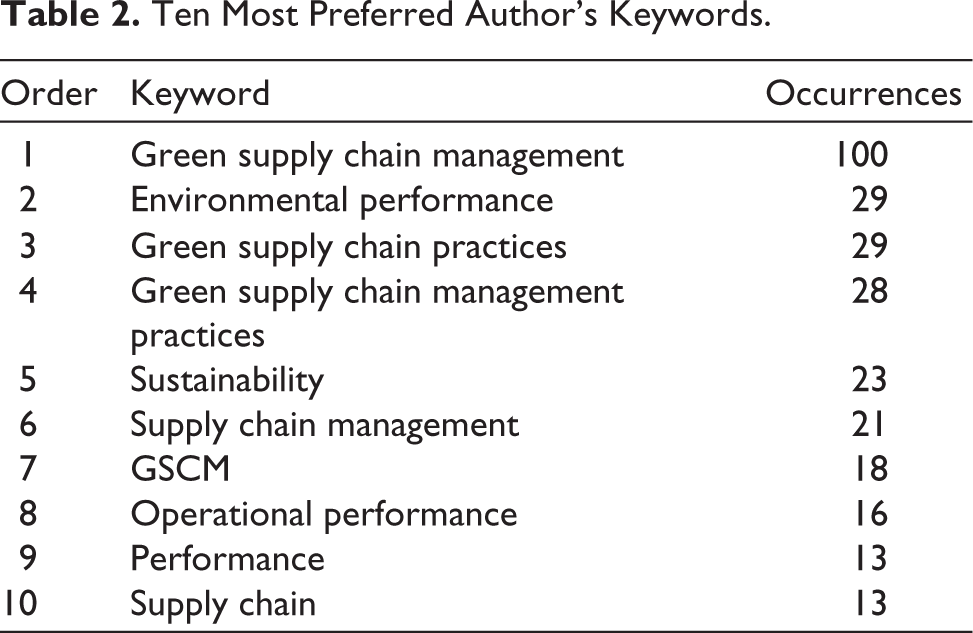
Analysing the author-specified keywords can be beneficial in gaining insight into potential future trends in the research area, as they highlight the key topics of the article (Nirmal et al., 2024; Zhang & Zhao, 2022; Zhu et al., 2019). Co-occurrence analysis is the knowledge cluster based on keywords co-occurrence (Lim & Kumar, 2023). The minimum occurrence count was set at 5. Only 41 keywords out of 741 total keywords fulfilled this criterion. In addition to GSCM being one of the most commonly used keywords, environmental performance, sustainability, operational performance, supply-chain management and economic performance are also frequently used keywords that indicate the research direction in the topic. Table 2 highlights the list of the 10 most preferred and frequent keywords quoted by authors. Figure 2 shows the mapping of the co-occurrence network for the author’s keywords. Seven clusters are formed, each with at least four items. The justification for these clusters is built around the logical coherence of the organised terms within each cluster, ensuring that they are meaningful and understandable.
Ten Most Preferred Author’s Keywords.
Author’s Keyword Co-occurrence Network Map.
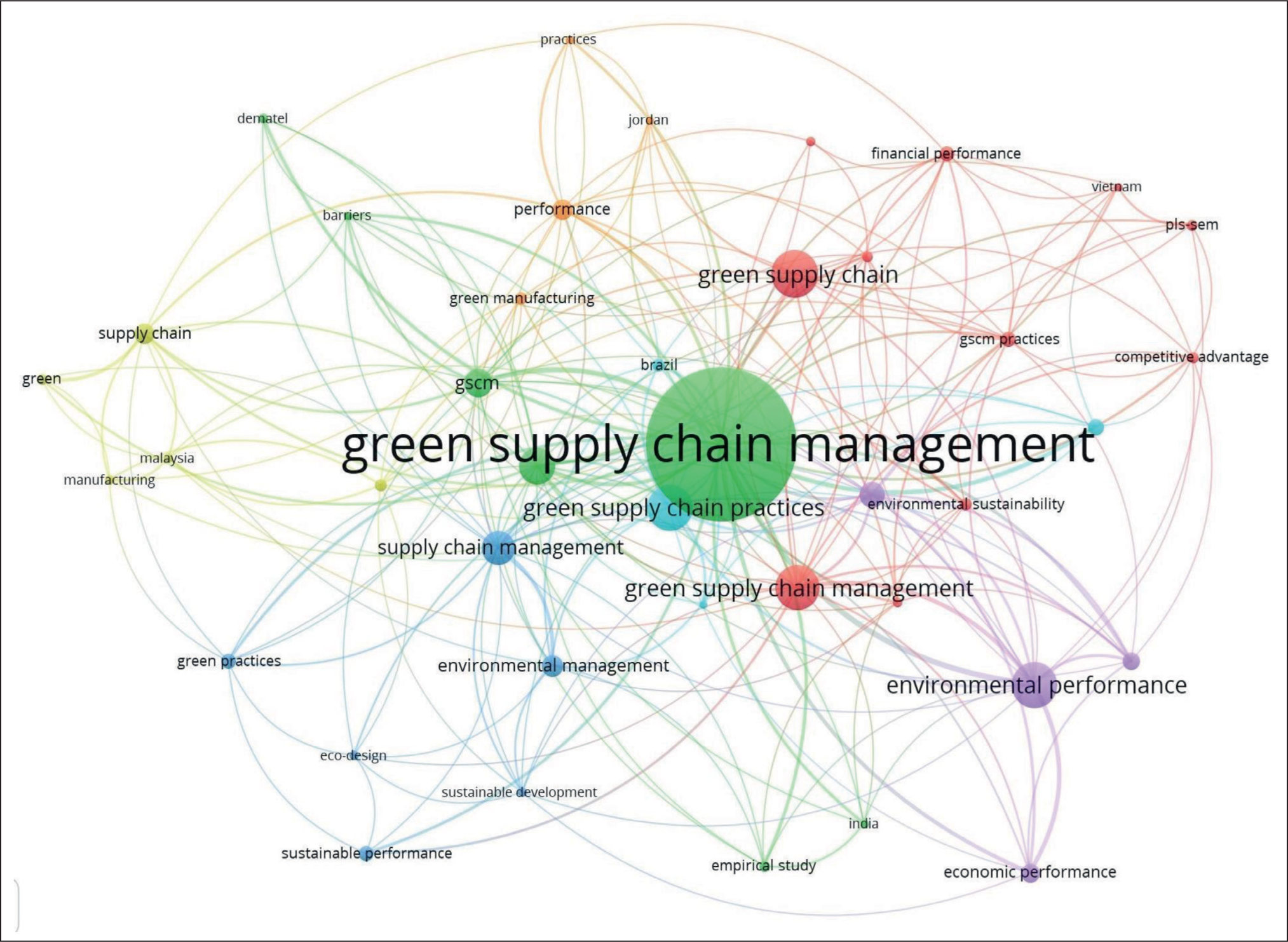
Cluster one (coloured in Red): ‘Institutional pressure’, ‘competitive advantage’ and ‘financial performance’. The keyword co-occurrences in cluster one indicate that the research articles in this cluster investigate the efforts to incorporate GSCM approaches in order to enhance competitive advantage and financial performance utilising partial least-squares structural equation modelling (PLS-SEM). These efforts are explored explicitly within the context of Vietnamese industries. This phenomenon is influenced by institutional pressure and growing recognition of environmental sustainability.
Cluster two (coloured in green): ‘Barriers’ and ‘GSCM’. The research articles pertaining to the second cluster focused on identifying and resolving barriers hindering the adoption of GSCM to accomplish sustainability objectives, specifically in emerging economies such as India. This tendency emphasises the necessity for empirical research that employs rigorous approaches such as decision-making trial and evaluation laboratory (DEMATEL) analysis to comprehend the intricate dynamics and interconnections among these barriers.
Cluster three (coloured in blue): ‘Eco-design’ and ‘sustainable performance’. The third cluster focuses on research that emphasises integrating eco-design and environmental management approaches into SCM to achieve sustainable performance. This trend reflects the growing realisation of the importance of holistic green practices that promote sustainable development. The emphasis is on understanding how green practices can be efficiently adopted across supply chains to maximise environmental, social, and economic benefits.
Cluster four (coloured in yellow): ‘Green purchasing’ and ‘sustainability’. Research highlighting the implementation of green purchasing practices in Malaysia’s industrial and supply-chain sectors is the primary emphasis of the fourth cluster. This highlights the increasing significance of sustainable procurement in promoting environmental and economic advantages within these sectors.
Cluster five (coloured in purple): ‘Multidimensional organisational performance’. The fifth cluster centres on researching the effects of GSCP on various aspects of organisational performance, such as economic, environmental, and operational performance. This trend highlights the comprehensive advantages of green practices in improving overall organisational success.
Cluster six (coloured in light blue): ‘Firm performance in Brazil’. The sixth cluster is dedicated to researching the effects of GSCP on firm performance, specifically in Brazil. This demonstrates the increasing acceptance of the significance of green practice in improving both firms’ performance in Brazil.
Cluster seven (coloured in orange): ‘Green manufacturing’ and ‘performance’. The research articles in this cluster examine the implementation of green manufacturing and supply chain techniques to improve the overall performance of organisations, specifically within the Jordanian context, highlighting the significance of using green practices to enhance environmental and economic results in Jordanian industries.
The clusters formed by keyword co-occurrence analysis reveal several prominent themes, including institutional pressure, competitive advantage, eco-design, sustainable performance, green purchasing, barriers, multidimensional organisational performance, firm performance and green manufacturing. These themes now constitute the primary areas of emphasis in research studies related to GSCP.
Document Co-citation Analysis
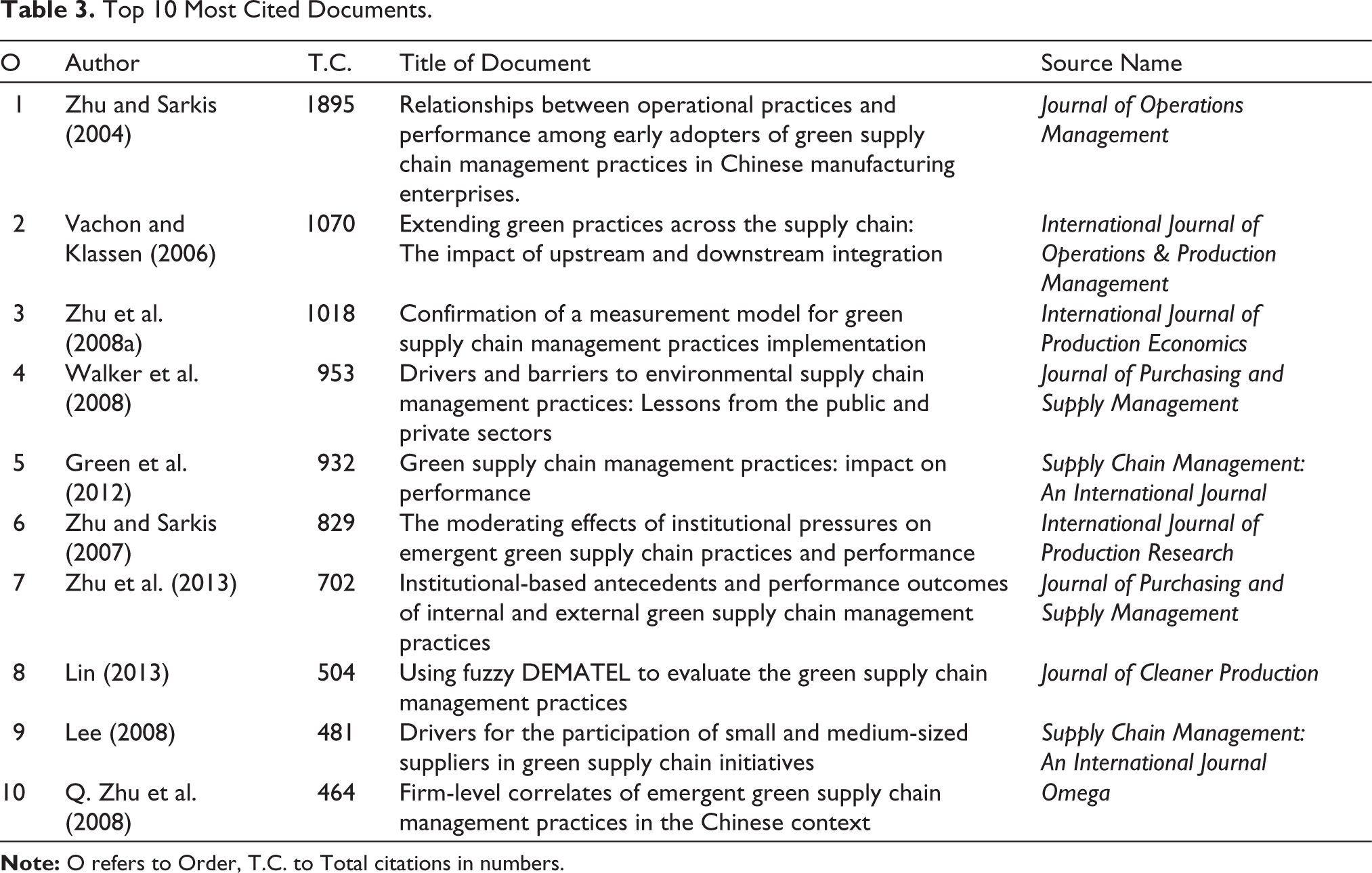
The document co-citation network presents the most pertinent, often co-cited articles. The documents in the co-citation network constitute the cornerstone of field research and represent either early seminal work, significant theories, or field-specific methodologies (Joshipura et al., 2023). The top 10 most-cited documents, the total number of citations to those documents, and the citing sources are listed in Table 3. Two of the most often mentioned research articles are Vachon and Klassen (2006) and Zhu and Sarkis (2004), followed by Green et al. (2012), Walker et al. (2008), and Zhu et al. (2008a). Internal and external GSCP, green information systems, quality management, and the hurdles and drivers of GSCMP are the primary research foci of these studies. Following a meticulous evaluation of initial statistics, a bibliometric analysis of published work was performed using the VOSviewer software. Figure 3 shows the co-citation network map of research articles published on GSCP. The minimum number of citations of cited references was set restricted to 20. Out of 15150 cited documents, only 11 articles met this threshold, forming two clusters.
Top 10 Most Cited Documents.
Co-citation Network Map of Documents.
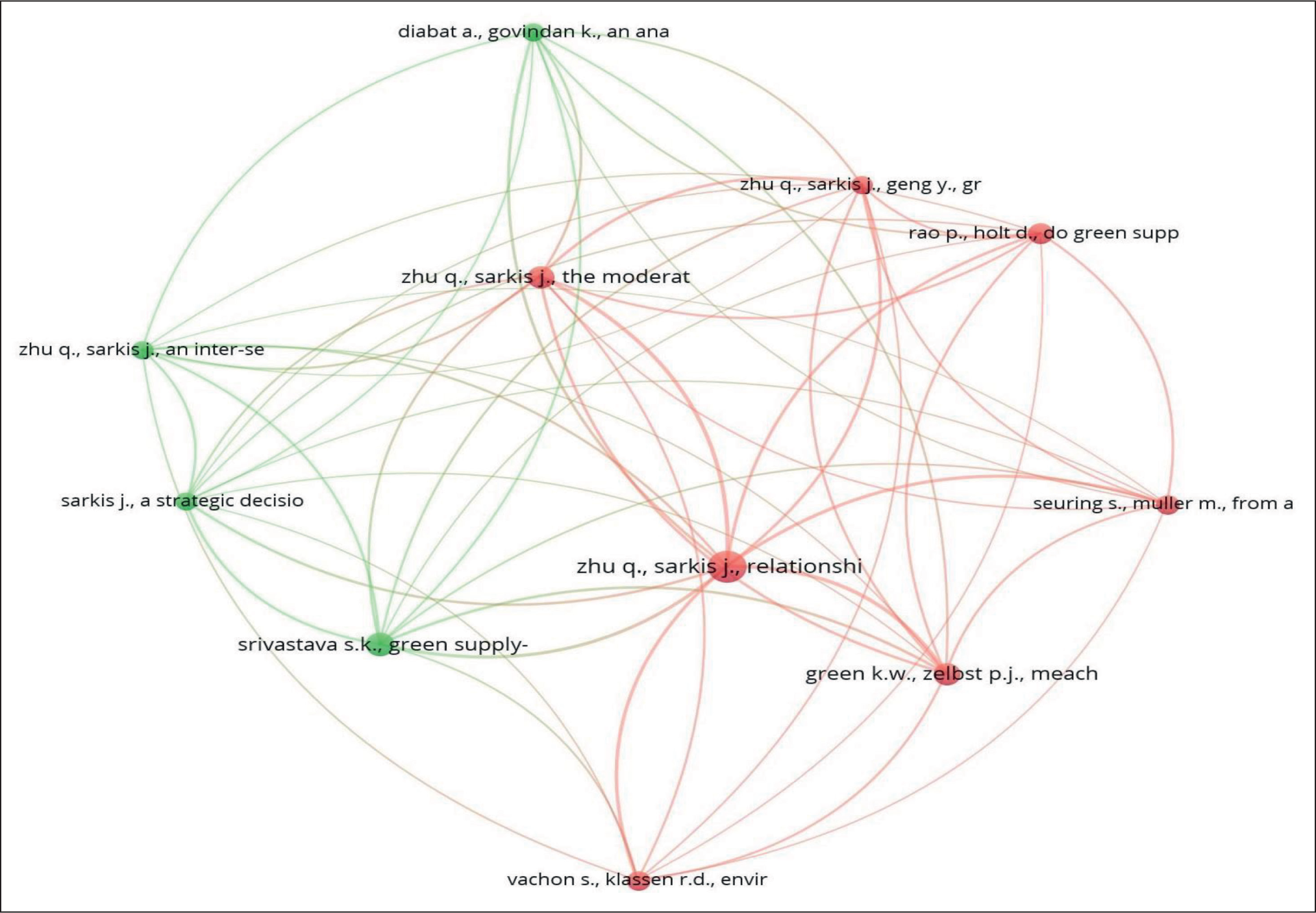
The first cluster (coloured in red): ‘Performance’. The research articles linked with cluster one mainly discuss the impacts of GSCP implementation on performance. The studies investigated pressure, practices and performance outcomes of GSCM implementation in China’s manufacturing sector, focussing on moderating the impact of institutional pressures on the relationship between GSCP implementation and environmental, economic and operational performance (Zhu & Sarkis, 2004, 2007; Zhu et al., 2005). Another study contributed a conceptual framework for supplier risk and performance synthesising insights from literature and establishing a foundation for comprehending the holistic implications of GSCM (Seuring et al., 2008). A different study further supports the notion that GSCP implementations have a favourable relationship with various performance metrics (Vachon & Klassen, 2008). This study used competitiveness as a mediator to explore the relationship between GSCP and economic performance (Rao & Holt, 2005). Similarly, a study empirically demonstrated the mediation impact of external GSCP and green information systems on the relationship between internal environment management and organisational performance, highlighting significant improvements in environmental performance on GSCP implementations (Green et al., 2012). These studies collectively provide robust evidence to support the implementation of GSCP. The varied benefits of GSCM are emphasised, encompassing enhanced competitiveness, improved economic performance, and better environmental outcomes. The research highlights the significance of incorporating environmental thinking into SCM in order to attain holistic organisational performance and enduring sustainability.
The second cluster (coloured in green): ‘Drivers, components and barriers’. Studies in cluster two have given their valuable academic contribution towards exploring and providing in-depth significant insights into drivers and barriers associated with GSCM implementations. Researchers provide a structural model highlighting the significance of several drivers for GSCP adoption (Diabat & Govindan, 2011). A decision framework for GSCP implementation was explored, outlining various components and elements in another study, serving as a groundwork for subsequent studies (Sarkis, 2003). Another study provided a comprehensive overview of GSCM literature, hence developing a chronology (Srivastava, 2007). A study contrasted drivers and green practices, emphasising the significance of institutional pressures and market conditions in GSCM adoption (Zhu & Sarkis, 2006). These studies present a thorough framework for comprehending the barriers and drivers in GSC implementation.
Descriptive Findings: Influential Authors, Sources, Institutions and Annual Trend
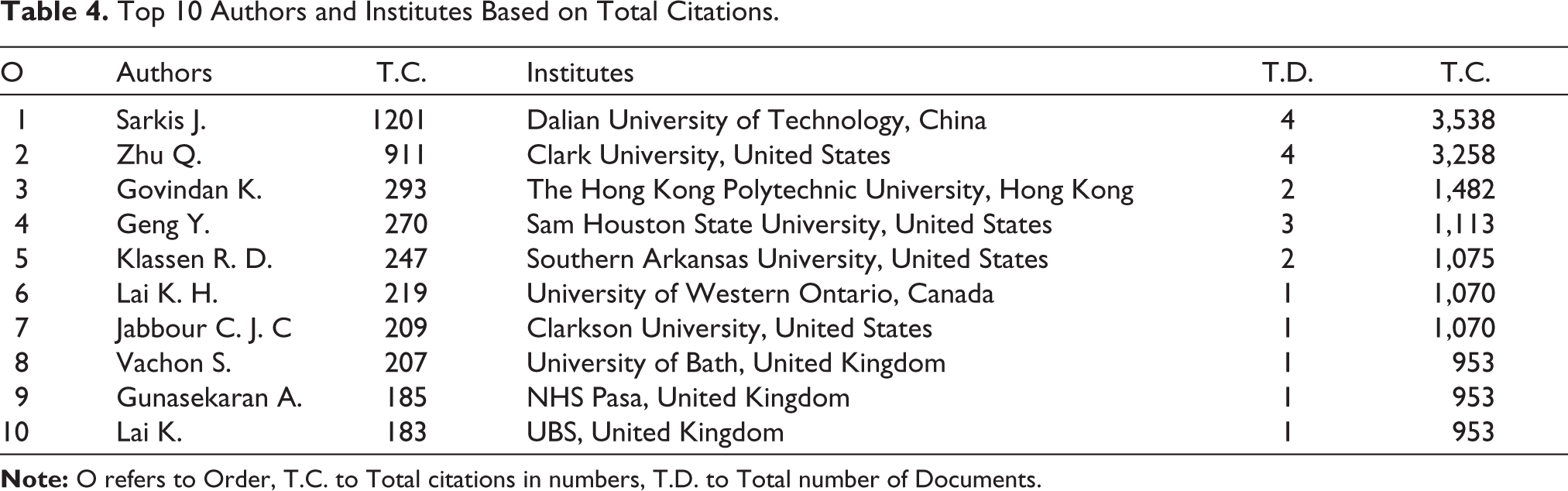
Of the 728 authors, only 19 were identified as sole authors in publications, while the rest appeared as co-authors. The high author per document index of 2.54 reflects the significant author collaboration in this field. The leading 10 authors in terms of total citations are presented in Table 4. Based on the overall number of citations, Sarkis J. is among the most prominent authors on this subject, followed by Zhu Q. and Govindan K. Dalian University of Technology, China, and Clark University, United States, are two of the most prominent institutes having publications with the highest number of citations.
Top 10 Authors and Institutes Based on Total Citations.
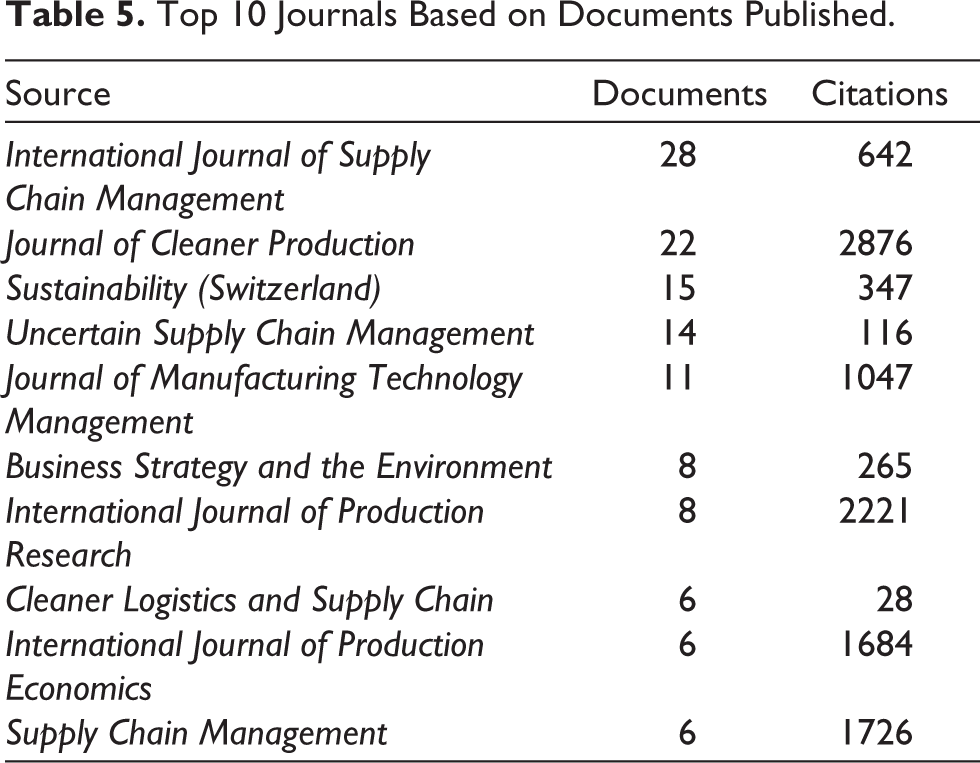
Initially, these 279 research documents appeared in 113 journals. However, the list was confined to the top 10 sources based on the number of documents published. The International Journal of Supply Chain Management has the most publications (28), with a total citation count of 642, followed by the Journal of Cleaner Production, which has published 22 documents with a total of 2,876 citations. Notably, the International Journal of Production Research has only published eight articles on GSCP but has received 2,221 citations, the second-highest total. Supply Chain Management and International Journal of Production Economics have published six documents, with 1,726 and 1,684 citations, respectively. This distribution emphasises the value of qualitative research above quantity. Table 5 shows the distribution of selected research articles among various journals.
Top 10 Journals Based on Documents Published.
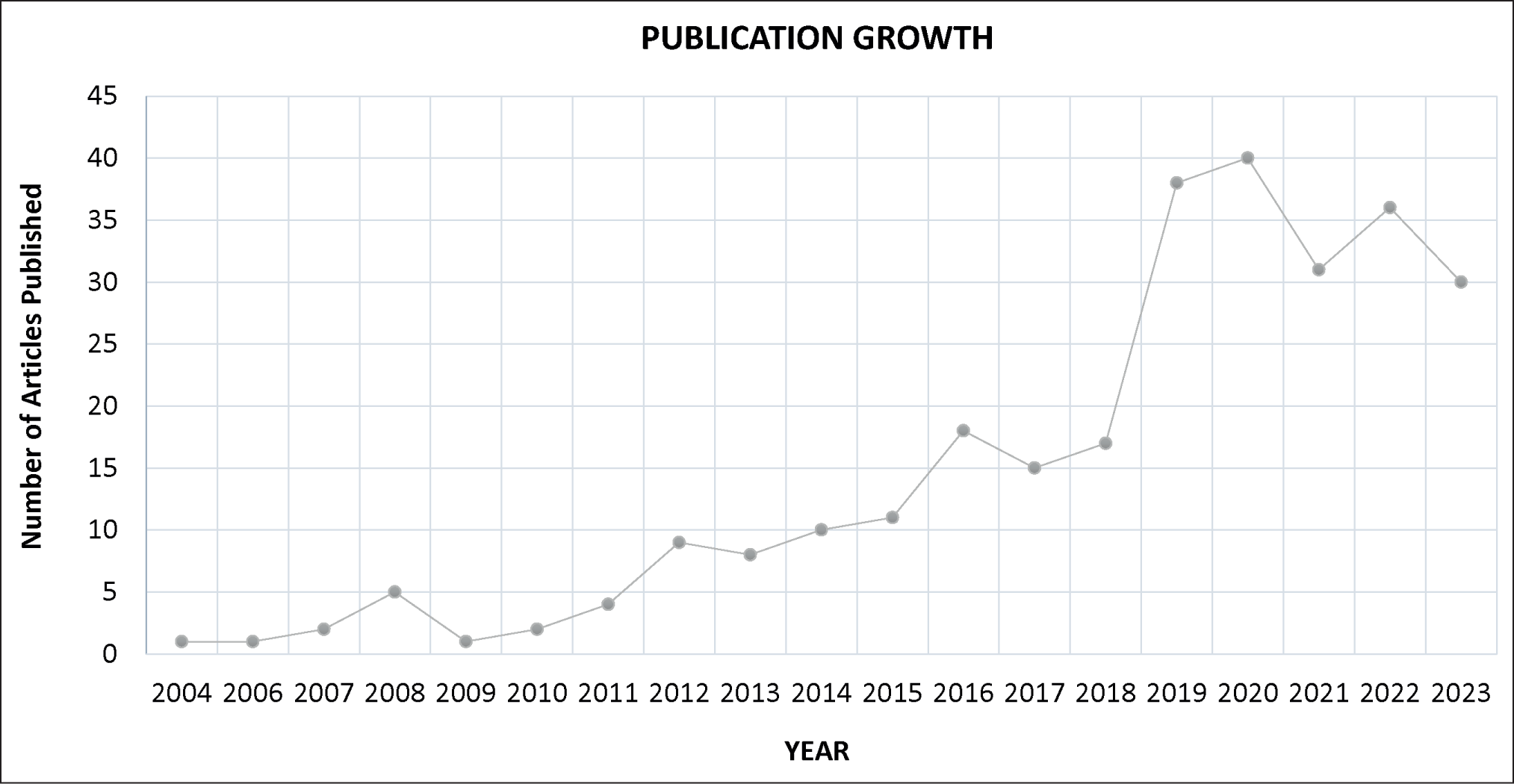
Publications on GSCP have been increasing annually, as seen in Figure 4. These findings highlight the remarkable surge in publications that have occurred recently, especially in the past several years, even though this field is still in its initial development and expansion. This unexpected uptick in interest may result from industry leaders, top management and decision-makers shifting from a reactive to a proactive approach towards the green supply chain, reflecting the inclination of government policies toward the green environment.
GSCP Publication Research Annual Trend.
The quality of a systematic review is not only determined by the content of the review and the findings but also by how the report is reported. Reviews conducted using a framework offer the utmost clarity, comprehensiveness and transparency (Paul et al., 2023). Based on the cluster classification and manual analysis, a TCCM framework is framed and discussed in the next section.
TCCM Framework
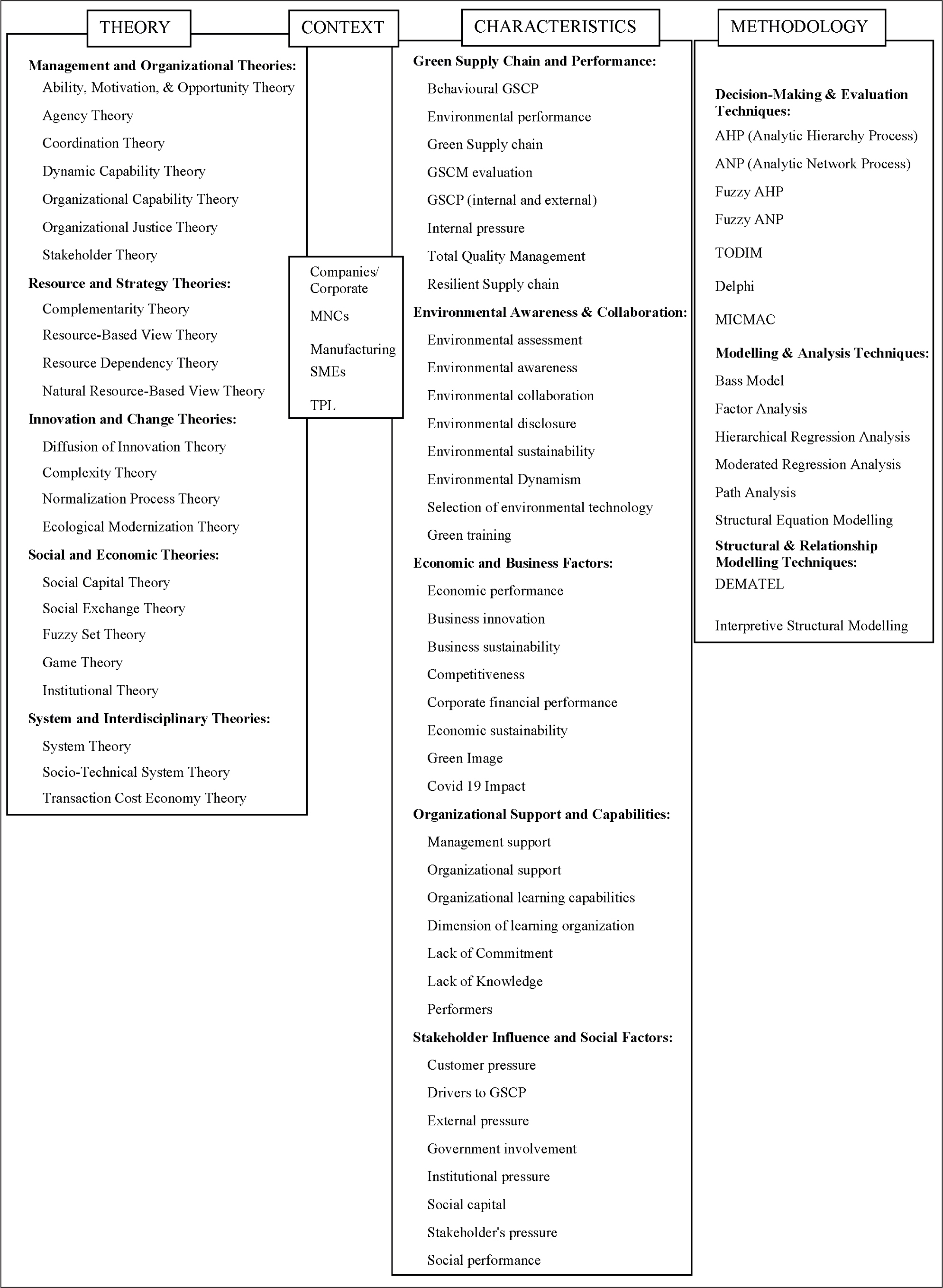
TCCM framework provides a theoretical road map and facilitates a critical analysis of underlying methodologies, constructs, characteristics and contexts (Paul et al., 2023). To develop the TCCM framework on GSCP, 76 renowned articles published in journals with an A or A* (ABDC) ranking were manually examined (Figure 5). Five theoretical framework-based groups are constructed based on 24 grounded theories deployed by researchers in the literature.
Management and Organisational Theories
Numerous researchers have related GSCP with different management and organisational theories. The effect of internal GSCP on a company’s financial performance was studied using ability, motivation, and opportunity theory through a survey of Ghana’s manufacturing sector (Agyabeng-Mensah et al., 2020). Another researcher examined the role of GSCP and environmental disclosure on financial penalties concerning agency theory (Habib & Bhuiyan, 2017). Additionally, few studies explored the influence of internal and external GSCP on a firm’s performance via the perspective of coordination theory (Stekelorum et al., 2021; Zhu et al., 2012). A global survey study used dynamic capability theory to analyse corporate commitment, organisational performance, GSCP and big data (Singh & El-Kassar, 2019). In a study focussing on the Chinese manufacturing industry, researchers examined the impact of corporate social responsibility (CSR) on operational performance from the viewpoint of organisational capability theory, employing GSCM as a mediator and relational capital as a moderator (Xu et al., 2022). The influence of environmental assessment and collaboration on suppliers’ environmental commitment was recently investigated in the light of organisational justice theory, with suppliers’ perceptions of justice as a moderator (Qiao et al., 2022). Coronavirus disease-2019 (COVID-19), GSCP, institutional pressures and the green bullwhip effect were all topics explored with stakeholder theory (Kitsis & Chen, 2021; Seles et al., 2016). In conclusion, several authors draw on ideas from eight distinct management and organisational theories in their analyses of GSCP. Variables include the firm’s (financial, environmental, organisational, economic) performance, penalties, environmental disclosure, corporate commitment, big data, CSR, relational capital, environmental assessment and collaboration, supplier environmental commitment, supplier perceived justice, COVID-19 and green bullwhip impact. Regression and factor analysis were two of the most often used techniques. Most studies’ reliance on corporate data suggests a tendency among researchers toward applied research.
Resource and Strategy Theories
Four theoretical frameworks are widely applied to this construct in the context of GSCP. From the vantage point of complementarity theory, researchers surveyed the manufacturing sector in the United States to investigate the impact of green and lean supply-chain strategies on firms’ operational performance, with an eye on how environmental performance functions as a mediator (Inman & Green, 2018). Additionally, researching the impact of GSCP on firm performance (across operational, marketing, financial, manufacturing, environmental, economic and social dimensions) considering GSCP, Environmental Management System and environmental performance as mediators, authors utilised the resource-based view theory targeting various manufacturing and construction industries (Choi et al., 2018; Jell-Ojobor & Raha, 2022; Mojumder & Singh, 2021; Zaid et al., 2018). Several studies have conducted surveys (w.r.t companies, construction and manufacturing industries) to explore the influence of GSCP, customer pressure, environment and economic performance on GSCP adoption, learning organisations, environmental performance, barriers considering supplier capabilities and external GSCP as mediators (Kim et al., 2022; Lopes de Sousa Jabbour et al., 2017; Mojumder & Singh, 2021; Thennal VenkatesaNarayanan et al., 2021). The fourth is the natural resource-based view theory, utilised recently in the literature to study green innovation and internal and external GSCP influence on performance (Stekelorum et al., 2021; Suki et al., 2023). In conclusion, the theoretical framework construct of resources and strategies has gained widespread renown among researchers worldwide. These theories were used to investigate the effects of various independent variables on firm performance and organisational learning, including GSCMP, lean supply chain, environment, green innovation and customer pressure. In this research document, GSCP frequently played the role of a mediator.
Innovation and Change Theories
The innovation and change construct constitutes major theories and related research articles. Four publications utilising ecological modernisation theory explored the effect of GSCP, environmental consciousness and green training on environmental performance, barriers, and drivers (Lopes de Sousa Jabbour et al., 2017; Mojumder & Singh, 2021; Teixeira et al., 2016; Zhu et al., 2017). The impact of GSCP on sustainable performance was also examined from the perspective of the normalisation process theory, with product and process innovation serving as mediators (Silva et al., 2019). Using complexity theory, the drivers, enablers and impediments of GSCP in India were studied (Mojumder & Singh, 2021). A framework outline for the environmental performance of GSCMP was created using the principles of the diffusion of innovations theory (Asif et al., 2020). To summarise, innovation and change theories are still in the exploration phase, as most research has been undertaken during the past few years, creating a vacuum in the literature.
Social and Economic Theories
Twenty research articles utilised theories related to social and economic clusters. Recent research used social exchange theory to examine the impact of GSCP on a company’s financial performance (Zhang et al., 2019). The moderating influence of institutional pressure was explored in a study of the Taiwanese textile manufacturing industry using social capital and institutional theory (Wu et al., 2012). Several other studies have also used concepts from institutional theory, primarily in developing countries surveying the manufacturing and automobile industries with independent variables such as GSCP, CSR, organisation capabilities and institutional pressures to study the influence on various dependent variables, primarily firm performance, involving several moderators and mediators such as GSCP and institutional pressures (Asif et al., 2020; Hoejmose et al., 2014; Laosirihongthong et al., 2013; Mojumder & Singh, 2021; Seles et al., 2016; Vanalle et al., 2017; Xu et al., 2022; Zhu & Sarkis, 2007; Zhu et al., 2008, 2013). Another study used game theory to investigate GSCP in light of prevailing pricing and environmentally conscious consumer behaviour (Nielsen et al., 2019). Many recent academics studying the relationship between GSCP and business success have used fuzzy set theory in their analyses (Agyabeng-Mensah et al., 2020; Büyüközkan & Çifçi, 2012; Kusi-Sarpong et al., 2016; Lin, 2013; Tseng et al., 2014; Wu et al., 2015). Although this concept appears to flourish in institutional theory, many authors also investigate GSCP by employing the fuzzy set approach and ANP methods.
System and Interdisciplinary Theories
From the perspective of socio-technical system theory, recent literature has explored how behavioural FGSCP affects performance through the mediation of technical GSCP (Liu et al., 2020). Six studies spanning the manufacturing and automotive sectors cited system theory and applied its concepts to investigate the effect of CSR, eco-efficiency Radio Frequency Identification (RFID) technology and GSCP on performance using GSCP dimensions as mediators and relational capital as moderators (Asif et al., 2020; Bag et al., 2021; Green et al., 2017, 2019; Khan et al., 2021; Xu et al., 2022). Research conducted in India’s manufacturing sector used the transaction cost economy theory to examine the impact of supplier collaboration on performance (Mitra & Datta, 2014). It can be concluded that most system and multidisciplinary construct research publications have focused on performance impacts (across operational, economic, environmental, organisational, social and financial dimensions).
Discussion
Building upon the works of Lim et al. (2022), Mukherjee et al. (2022) and Nirmal et al. (2024), this study has meticulously organised this section and assessed its value regarding ‘Necessity’, ‘Importance’, ‘Relevance’, ‘Urgency’ and ‘Contribution’.
Necessity
Existing research lacks sufficient exploration of the comprehensive and explicit GSCP domain. This study seeks to conduct a rigorous assessment that examines the evolution of GSCP. In order to accomplish this, the review utilises bibliometric analysis, the TCCM framework and a GSCP literature classification. The bibliometric analysis provides a clear understanding of the present status of research and the themes that have evolved, while the TCCM framework uncovers the underlying theories, context, concepts and methodologies.
Importance
Implementing GSCP substantially improves the firm’s economic, operations and environmental performance (Srivastava, 2007; Wu et al., 2015; Zhu & Sarkis, 2006; Zhu et al., 2007). This study presents academicians valuable insights by providing a comprehensive review of GSCP based on content analysis, keyword co-occurrence analysis, systematic review and TCCM framework analysis. Nine major research themes by bibliometric analysis and five major theoretical themes by the TCCM framework have evolved and been discussed. The research also emphasises recent advancements in GSCP through various methodologies such as analytic hierarchical process (AHP) analytic network process (ANP), interative multi-criteria decision making (TODIM), DELPHI, cross-impact matrix multiplication applied to classification (MICMAC), Path analysis and DEMATEL. This research offers practical insights and valuable research directions for academicians and practitioners.
Relevance
This study comprehensively examines the unpredictable and ever-changing aspects that impact the firm environment by developing a comprehensive and future-oriented research framework (TCCM). The significance of the chosen topic has notably increased, particularly since the global community recognises the cruciality of green practices in reducing risks following the COVID-19 crisis (Chowdhury et al., 2021; Grida et al., 2020; Kazancoglu et al., 2022; Kholaif et al., 2023).
Urgency
While there is significant research on GSCM, a dearth of studies focussing explicitly on the review of GSCP was observed. The implementation of GSCP has consistently demonstrated a favourable impact on firms’ environmental performance across all dimensions (Srivastava, 2007; Wu et al., 2015; Zhu & Sarkis, 2006; Zhu et al., 2007). With the growing recognition in the corporate world of the need to create strategies for sustainable performance and competitive advantage, it is essential to comprehend the growth of GSCP. Hence, this review seeks to aid professionals and researchers in devising effective strategies for implementing GSCP in the ever-changing business environment.
Contribution
This study provides a comprehensive overview of GSCP, discussing the research themes that have evolved through a logical synthesis of bibliometric analysis, content analysis and the TCCM framework. The chosen domain of this assessment has been the subject of minimal investigation in the past. This review is the first to comprehensively report and analyse the evolution of GSCP alongside the TCCM framework over the past 19 years.
Conclusion, Limitations and Future Research Direction
This study will serve as a benchmark for future scholars in GSCP by conducting a comprehensive bibliometric analysis of 279 Scopus 20-year research documents from 2004 to 2023 using VOSviewer software. The study has initiated novel research avenues in GSCP (RO1). The bibliometric outcomes offer valuable insights into the academic literature’s growth on this subject matter. RO2 and RO3 emphasise crucial elements, including eminent scholars, leading scholarly publications, renowned establishments, influential nations and seminal articles in this particular academic domain. There has been an upward tendency in annual research publishing in recent years, reflecting a growing interest. Considering the statistics, it can be asserted with the justification that research in this field has accelerated since 2009. India has published a relatively limited number of articles on the global scale of GSCP research. However, India’s research output in this domain exhibits a discernible upward trajectory as time passes.
The Journal of Cleaner Production is one of the most-cited research journals related to the GSCP discipline. Sarkis J. and Zhu Q. are the authors that are the most cited, and Dalian University of Technology, China appeared to be the source of the majority of cited research articles. Initially, a limited number of researchers conducted the majority of influential studies. However, as a result of the field’s substantial growth, numerous scholars have contributed to expanding this corpus of research in various domains. The manufacturing industry attracts the most researchers, followed by the automobile industry. ‘Relationships between operational practices and performance among early adopters of GSCM practices in Chinese manufacturing enterprises’, published in the Journal of Operation Management, is one of the most-cited research documents in the field. Descriptive analysis revealed that most research has viewed the dimension of performance as the dependent variable. Regarding mediators and moderators, ‘Green supply chain management techniques’ is the preferred mediator, whereas institutional pressures are the preferred moderators in GSCP. The predisposition of researchers towards performance is reflected in the fact that ‘environmental performance’ was one of the most preferred terms in the bibliometric study of keywords, right behind ‘green supply chain management methods’.
Research Themes and Future Research Directions
For the literature review, the SPAR-4-SLR protocol is deployed. Focussing on RO4, a TCCM framework containing 76 research publications is also being created, and five different literature clusters are identified based on the theoretical framework (RO4). The first cluster comprises research studies that concentrate on management and organisation theories. The second cluster includes research articles focused on resource and strategy theories. The third cluster focuses on innovation and change theories. Followed by a fourth cluster of social and economic theories and a fifth cluster of the system and interdisciplinary theories. Among the social and economic theories, institutional theory has been used by most researchers. Companies, multinational corporations, the manufacturing sector, and small and medium-sized enterprises all contribute to this body of research. Apart from this, two categories of 11 highly cited research articles have also been discerned by analysing document co-citation analysis. The initial group emphasises performance-based research, whereas the subsequent group investigates barriers, influencers, and components.
Apart from the two clusters that formed through citation analysis, seven distinct clusters have also been identified through keyword co-occurrence analysis, thereby developing various research themes. Cluster One is influenced by institutional pressure and growing recognition of environmental sustainability. Cluster two is focused on identifying and resolving barriers hindering the adoption of GSCM to accomplish sustainability objectives, specifically in emerging economies such as India. Cluster three focuses on integrating eco-design and environmental management approaches into SCM to achieve sustainable performance, whereas cluster four highlights the increasing significance of sustainable procurement in promoting environmental and economic advantages within these sectors. Cluster five centres on the comprehensive advantages of green practices in improving overall organisational success. Cluster six demonstrates the increasing acceptance of the significance of green practice in improving both firms’ performance in Brazil. Cluster seven is dedicated to the significance of using green practices to enhance environmental and economic performance in Jordanian industries. The clusters formed by keyword co-occurrence analysis reveal several prominent themes, including institutional pressure, competitive advantage, eco-design, sustainable performance, green purchasing, barriers, multidimensional organisational performance, firm performance and green manufacturing. These themes now constitute the primary areas of emphasis in research studies related to GSCP.
Concerning research constraints and the future directions, the articles utilised in this study were exclusively obtained from the Scopus database, thus signifying that all the articles are from prestigious journals. However, it is essential to note that non-Scopus journal articles might contain information not considered in the analysis, and this methodology may introduce a potential bias towards high-quality publications. WOS or other database data can be used for future studies. Subsequently, this review article concentrates on the citation analysis. However, researchers interested in using this article as a foundation can extend the study by conducting a bibliographic coupling analysis in the same field and performing a meta-analysis review. This study has identified that cross-sectional data constitutes the predominant form of empirical research. On the other hand, longitudinal studies are understudied to a significant degree, and the literature on this subject is conspicuously deficient. Grounded theories are another area of research that has seen minimal exploration because of the paucity of literature on coordination, capability, behavioural, and resource dependency theories. These are the traditional lines of inquiry that can be pursued in the future. For simplification, the initial search was restricted to ‘GSCP’, ‘reverse logistics’ and ‘sustainable supply chain’ keywords can be utilised for deeper insights. Niches in the dry research sector, such as dairy, fertilisers, fish, bottled water, ceramic, chestnut, diaper, eco-friendly appliances, wooden furniture, shipbuilding, the maquiladora export industry, tourism and telephone service provider, receive very little attention in published research documents. These sectors have a significant research void that can be explored for future study.
Footnotes
Declaration of Conflicting Interests
The authors declared no potential conflicts of interest with respect to the research, authorship and/or publication of this article.
Funding
The authors received no financial support for the research, authorship and/or publication of this article.