




Abstract
Sustainability challenges are often complex and cannot be tackled by an organization alone. In the mining industry, the potential to threaten environmental, social and economic dimensions of sustainability is considerable. The data in this qualitative case study about a mining region in Germany consist of 88 newspaper articles, three company reports and one interview. This study argues that constructive stakeholder engagement in the forms of dialogue and collaboration may enhance the sustainability of mining operations. Opportunities to enhance sustainability can be found with both primary and secondary stakeholders. However, stakeholder engagement with stakeholders who oppose the mining operations can be challenging.
Keywords
Introduction
Addressing the environmental, social and economic dimensions of sustainability (Lozano & Huisingh, 2011) can secure intergenerational equity (Bansal & DesJardine, 2014). In the organizational context, Landrum (2018) describes sustainability as the contributions of a business towards sustainable development, consisting of government approaches and economic development policies interacting with the natural environment. However, legislation and regulation may not lead to sustainable outcomes (Winsemius & Guntram, 2002). Instead, the key to long-term sustainable outcomes is collaboration with governments and other stakeholder groups as well as innovation (Winsemius & Guntram, 2002). Stakeholder engagement is needed to establish collaboration.
Indeed, many sustainability-related issues are complex and thus require collaboration between different stakeholders (Bocken et al., 2014; Stubbs & Cocklin, 2008). Schaltegger and Burrit (2018) suggest that including a wide range of stakeholders in management dialogues can contribute to sustainability. Therefore, research on stakeholder engagement can help to provide a deeper understanding of how organizations can contribute to sustainability together with stakeholders, making it possible to address more complex sustainability issues.
Recently, many governments have set a goal of becoming carbon neutral. Thus, the energy sector is on the verge of major change, as many countries aim to replace the use of coal in energy production, at least in part, with renewable sources. However, this shift will take time. Therefore, sustainability issues related to the use of coal cannot be left unaddressed. Moreover, addressing sustainability questions related to mining operations is important because the mining industry has the potential to heavily impact the environmental, social and economic dimensions of sustainability (Ranängen & Lindman, 2017; Rodrigues & Mendes, 2018).
Mining operations can have both favourable and unfavourable sustainability impacts. For example, mining companies bring economic benefits regionally, as they are often important employers. Meanwhile, the exhaustion of mineral resources can be a threat to the natural environment and to society (Rodrigues & Mendes, 2018). As mining operations affect all dimensions of sustainability, there are several opportunities to enhance their performance (Hilson & Murck, 2000; Ranängen & Lindman, 2017).
This research aims to answer the following research question: How can sustainability be enhanced through stakeholder engagement in the mining industry? To address this question, the analysis focusses on the stakeholder engagement of stakeholders in the case of the mining region. First, stakeholders are identified, and their sustainability interests and orientations towards the mining operations are analysed. Then, the focus shifts to analysing the stakeholder engagement.
The article is organized as follows: First, stakeholder engagement is discussed to provide a theoretical framework for the analysis. Then, the methodological choices, the case and the data selection are described. Subsequently, the findings are outlined, and the contributions to theory and practice are discussed. Finally, the conclusion of this study is presented.
Theoretical Framework
Stakeholder engagement in this study is based on stakeholder theory (Freeman, 1984; Freeman et al., 2010). According to Freeman (1984), stakeholders include all groups and individuals who can affect or be affected by the organization’s actions. Thus, ‘stakeholders are persons or groups that have, or claim, ownership, rights, or interests in a corporation and its activities, past, present, or future’ (Clarkson, 1995, p. 106). Due to this inclusive definition of stakeholders, it is important to consider quiet and marginal stakeholders and not just the more dominant stakeholders (Kujala & Sachs, 2019).
Stakeholder engagement is a term that applies to companies practicing stakeholder theory (Kujala & Sachs, 2019). In this article, stakeholder engagement is understood as constructive and positive engagement between a company and its stakeholders (Greenwood, 2007). Further, stakeholder engagement can be ‘defined as practices that the organization undertakes to involve stakeholders in a positive manner in organizational activities’ (Greenwood, 2007, pp. 317–318). Through these various practices, stakeholder engagement allows stakeholder participation, for example, through direct and indirect communication in oral and written forms via various channels (Lehtimäki & Kujala, 2017). An example of indirect communication is media coverage that is followed by both stakeholders (Lehtimäki & Kujala, 2017).
It should be noted that stakeholder engagement is not simply communication (Lehtimäki & Kujala, 2017). Indeed, stakeholder engagement is ‘a process or processes of consultation communication, dialogue and exchange’ (Greenwood, 2007, pp. 321–322). For example, stakeholder engagement may include discussing expectations and interests, and expressing opinions (Kaptein & Van Tulder, 2003). According to Burchell and Cook (2008), constructive listening, discussion and finding compromises are essential for successful stakeholder engagement. Stakeholder engagement may also include collaboration based on joint interests, such as shared goals (Kujala et al., 2019).
To address stakeholder engagement, there are several ways to identify and understand an organization’s stakeholders. Specific stakeholder groups can be identified, and stakeholders can be further listed by their names (Freeman, 1984). According to Clarkson (1995), stakeholders have similar interests or claims in each group. Further, stakeholders can be divided into primary and secondary stakeholders. Clarkson (1995) considers primary stakeholders to be necessary for the continuation of an organization’s operation, while secondary stakeholders as not essential for an organization’s survival. Moreover, primary stakeholders would engage in direct transactions and secondary in indirect transactions with the organization (Clarkson, 1995). Indirect approaches means that stakeholders engage directly with other stakeholders to exert an indirect influence on the organization (Gonzalez-Porras et al., 2021). Simultaneous application of direct and indirect influence is possible as they are interdependent and non-exclusive (Gonzalez-Porras et al., 2021).
In addition to identifying stakeholder groups and the division of primary and secondary stakeholders, it is possible to group stakeholders by their orientation towards the project in question (Winch, 2004). Savage et al. (1991) argue that supportive stakeholders pose no or low threat to the project in question, while non-supportive stakeholders may threaten the project and are less likely to engage in collaboration.
Identifying and understanding what kind of stakeholders an organization has is crucial for successful stakeholder engagement. However, it is not sufficient for an organization to map its stakeholder engagement once, as engagement changes over time. Kujala and Sachs (2019) recognize that stakeholder engagement is a dynamic process that is constantly evolving. Thus, organizations may engage with stakeholders in a variety of ways in different divisions or over time (Greenwood, 2007, p. 324).
Finally, the expected outcomes of stakeholder engagement should be discussed with the stakeholders to come to mutual understandings about realistic achievements (Burchell & Cook, 2008). Constructive outcomes, such as learning opportunities for the company and its stakeholders (Calton & Payne, 2003; Kujala & Sachs, 2019), innovative outcomes (McDonald & Young, 2012), mutual understandings (Kaptein & Van Tulder, 2003) and increased trust (Burchell & Cook, 2008) may be achieved through stakeholder engagement. Regarding sustainable development, Sharma and Kearins (2011) argue that in order to collaborate efficiently and effectively, it is important to start by creating a shared understanding of sustainable development.
To conclude, stakeholder engagement is important for sustainability, and it is important to focus on the range of stakeholders engaged with and the aims of the stakeholder engagement. Creating a shared understanding of sustainable development, and of the required time and other resources, should be an integral part of stakeholder engagement (Sharma & Kearins, 2011). Bansal and DesJardine (2014) argue that rapidly generating shared economic value through current stakeholder interests can lead to imbalanced distribution of current and future resources and thus be unsustainable. Therefore, a wide range of stakeholders should be included in stakeholder engagement, including those with less power, resources or organization (Schaltegger & Burrit, 2018), and management actions need to be guided by both environmental and stakeholder needs (Winsemius & Guntram, 2002).
Method
The Case
This is a qualitative single case study examining stakeholder engagement in a unique context (Eriksson & Kovalainen, 2008). The case studied here is a mining region in the Rhenish coal fields, Germany, more specifically the Hambach, Garzweiler and Inden opencast lignite mines. The mines are operated by RWE Power AG (RWE), and it is the company’s main lignite mining area (RWE AG, 2018). The case is investigated in depth in this real-world context (Yin, 2018). The mining region is going through early structural change. RWE aimed to cease the use of lignite in electricity generation by the middle of the century (RWE AG, 2018) until the German government decided to end the use of coal in energy supply latest by 2038 (Kommission Wachstum, Strukturwandel und Beschäftigung, 2019).
According to RWE, the understanding of sustainability in the mining industry has changed over time. Previously, exploiting mines completely so as not to waste lignite was considered sustainable. Nowadays, the understanding of sustainability includes reducing the consequences of the mining operations to the local people and the environment as much as possible. RWE identifies reducing its carbon footprint as its main sustainability challenge, which it addresses by collecting carbon dioxide and ensuring the efficiency of power plants (RWE AG, 2018).
The main motivator for RWE’s sustainability actions is the need for stakeholder support for its mining operations. RWE acknowledges that acceptance by society is necessary for its long-term survival. RWE considers ‘all persons and organizations we have relationships with and engage in dialogue with’ (RWE AG, 2019b, p. 22) to be its stakeholders. In addition, all individuals or organizations aiming to communicate with RWE or who are interested in the company are considered stakeholders (RWE AG, 2019b).
Within its corporate responsibility strategy, RWE claims to maintain a dialogue with all of its stakeholders (RWE AG, 2019a) and to openly listen to their concerns (RWE AG, 2019b). RWE states that stakeholder engagement is crucial when identifying and overcoming sustainability challenges (RWE AG, 2019a) and when seeking ideas and reflections on the company’s performance (RWE AG, 2019b). The company states that it shares information transparently and seeks constructive proposals from its stakeholders (RWE AG, 2019b).
Data Selection
When conducting a case study, various data sources can be used, including written documents (Eriksson & Kovalainen, 2008), which are common for stakeholder engagement research (Sachs & Kujala, forthcoming). The data in this study consist of newspaper articles, company reports and one interview. As the case was expected to include many stakeholders, it was expected to be challenging to identify them. Therefore, a local newspaper, Kölner Stadt-Anzeiger, was chosen as a data source to analyse stakeholder engagement. The newspaper actively reports on mining activities and related actions, publishing stories about local actors, nation-wide environmental organizations and government-level actors. The selected 88 newspaper articles were published between September 2017 and August 2019.
While the analysis of stakeholder engagement focusses on the newspaper articles, annual reports of the mining company from 2017 and 2018 as well as a responsibility report from 2018 were used to obtain contextual and background information about the case. In addition, one interview was held with a spokesperson of the mining company to gain a deeper understanding of the sustainability of the mining operations. The interview was conducted by telephone and transcribed. Table 1 presents the data in more detail.
Data Collection
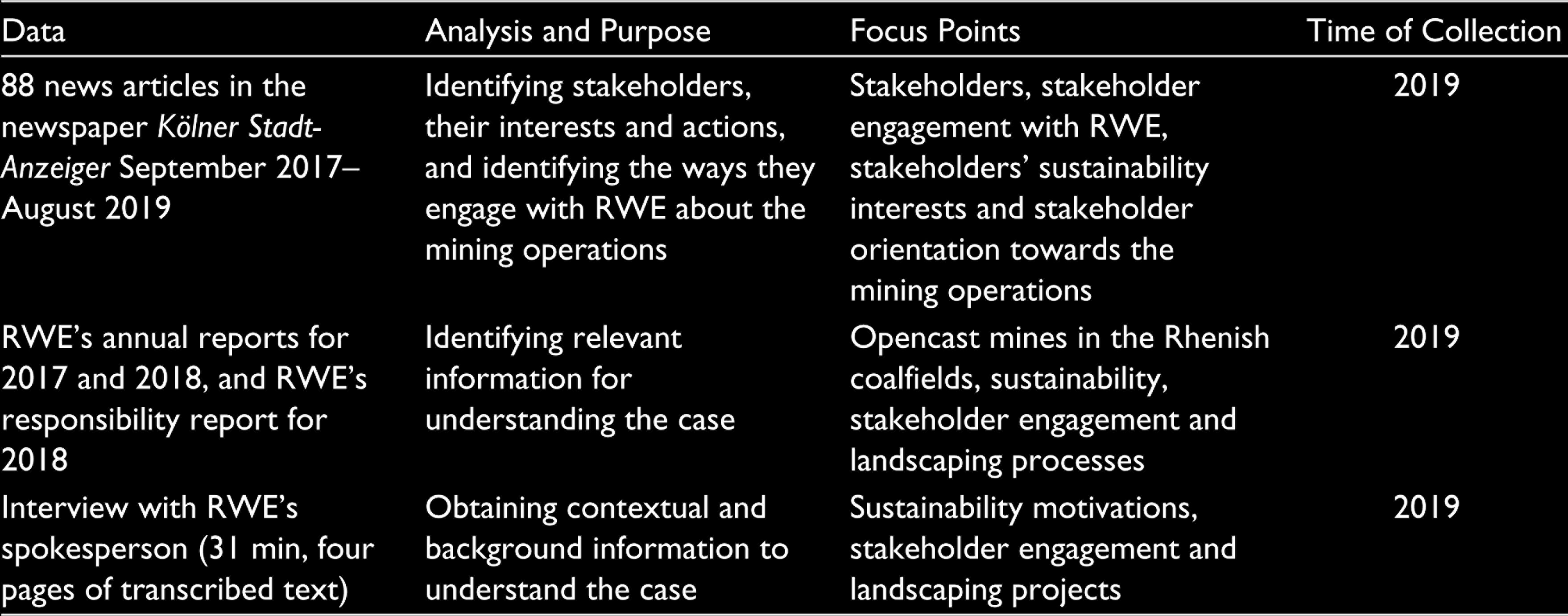
The systematic search for the news articles was conducted in the newspaper’s public online archive to identify all relevant material for this research. The search was done in German because the newspaper is printed in the German language. The keywords used for the search were Hambach Tagebau (Hambach opencast mine), Sophienhöhe (a re-cultivated area of Hambach mine), Rekultivierung Tagebau (re-cultivation opencast mine) and Rekultivierung RWE (re-cultivation RWE). Re-cultivation was chosen as a search word because the newspaper uses it when reporting about post-mining land use.
Based on the search, 169 news articles were selected and downloaded for deeper investigation. The articles were then read through to identify their relevance to the research question. Articles not addressing the case mining region and the mining operations or related themes, for example, those articles focusing on the use of coal in general or discussing Germany’s exit from coal, were excluded. Further, opinion pieces, columns and purely historical reviews were not included. Editorial articles providing relevant information were included. The final selection consisted of 88 news articles.
Qualitative content analysis, suitable for analysing documents (Elo & Kyngäs, 2008), was used to analyse the data. All data were systematically read through and revisted during the data analysis to check the reliability of the analysis process (Elo & Kyngäs, 2008). During the analysis, the focus was on identifying stakeholders and their sustainability interests, their orientation towards the mining operations and stakeholder engagement.
First, stakeholders were identified and grouped into nine categories. Then, the stakeholders were divided into primary and secondary stakeholders based on their relevance to the continuation of mining operations. Their sustainability interests as well as their orientation towards the mining operations were identified. Finally, the coverage of stakeholder engagement in the stories was analysed. Excel worksheets and tables were created with detailed information about each news article, and tables were constructed to organize the data identified during the analysis process. The original German quotations were translated into English by the author. The dates refer to the publication dates of the news articles.
Findings
Based on the analysis of the newspaper data, nine distinct stakeholder categories consisting of 40 stakeholder groups were identified (see Table 2): governmental organizations and political groups, local cities and municipalities, local community organizations, local people, employees, unions and the chamber of commerce, activist groups and environmental organizations, universities and research institutes and suppliers.
Examining all of the 40 stakeholder groups further would require complementary data sources, as some of them are only briefly mentioned in the data. Therefore, 17 of these stakeholder groups that appeared sufficiently in the data were further analysed in this study. Additional data were not collected since these 17 stakeholder groups were expected to provide a comprehensive view of the case, as they represent a variety of different types of stakeholders, ranging from local people to larger organizations.
Stakeholder Categories
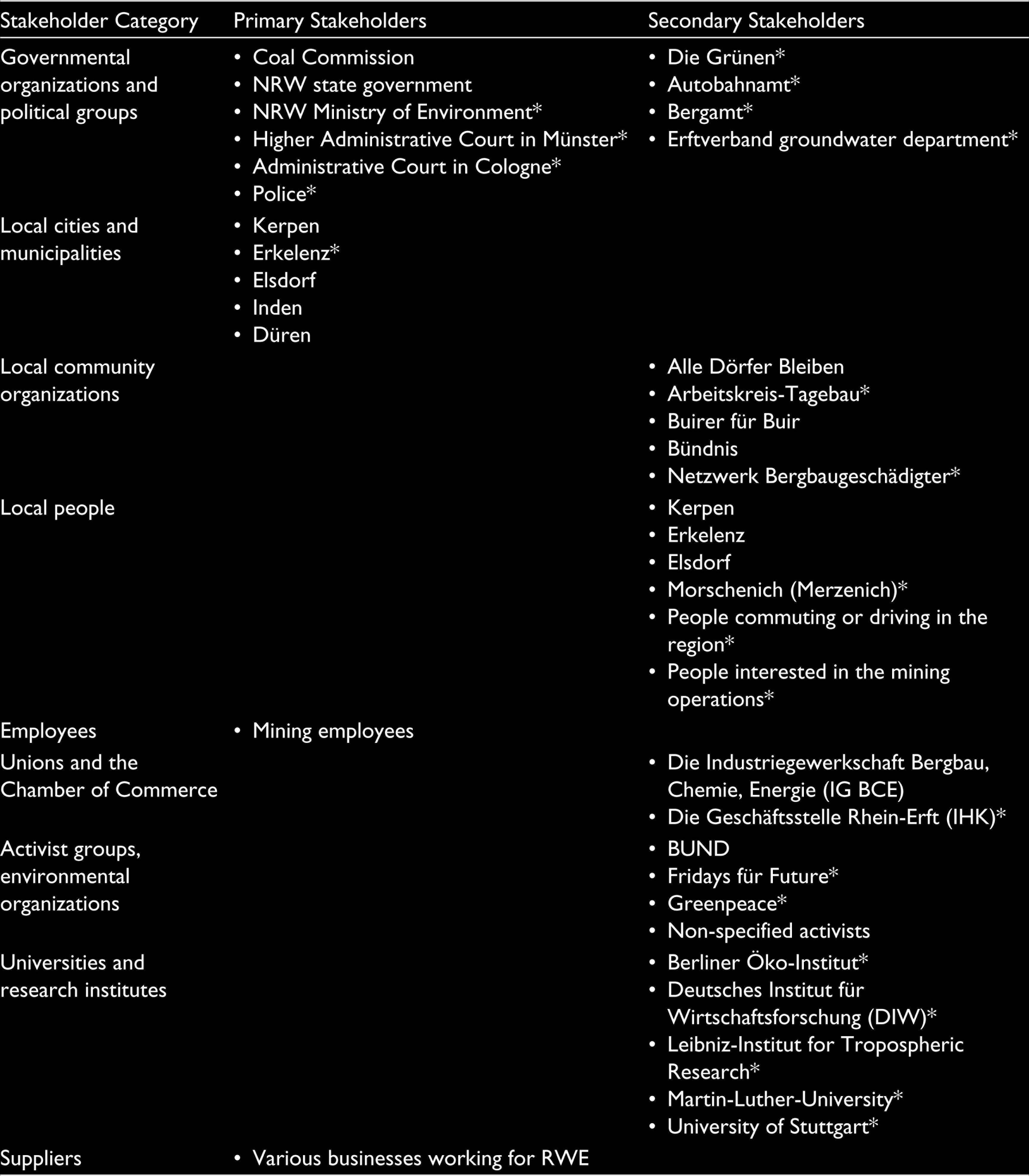
The stakeholder groups were further divided into primary and secondary stakeholders. It should be noted that there are several ways to categorize stakeholders to better analyse stakeholder engagement. Here, stakeholders on whom the mining operations are dependent are considered primary stakeholders. The mining operations are not dependent on secondary stakeholders. Hence, a stakeholder may be secondary for the mining company from an operational perspective but may possess valuable knowledge about local sustainability matters and thus be an important stakeholder to engage with directly.
For example, local cities are identified as primary stakeholders. Collaboration has been required with the cities since land sales and expropriation of city properties have been necessary for expanding the mines. On the contrary, local community organizations are considered secondary stakeholders because the mining operations are not dependent on them. However, local community organizations may contribute, for example, in local social sustainability challenges due to their local expertise.
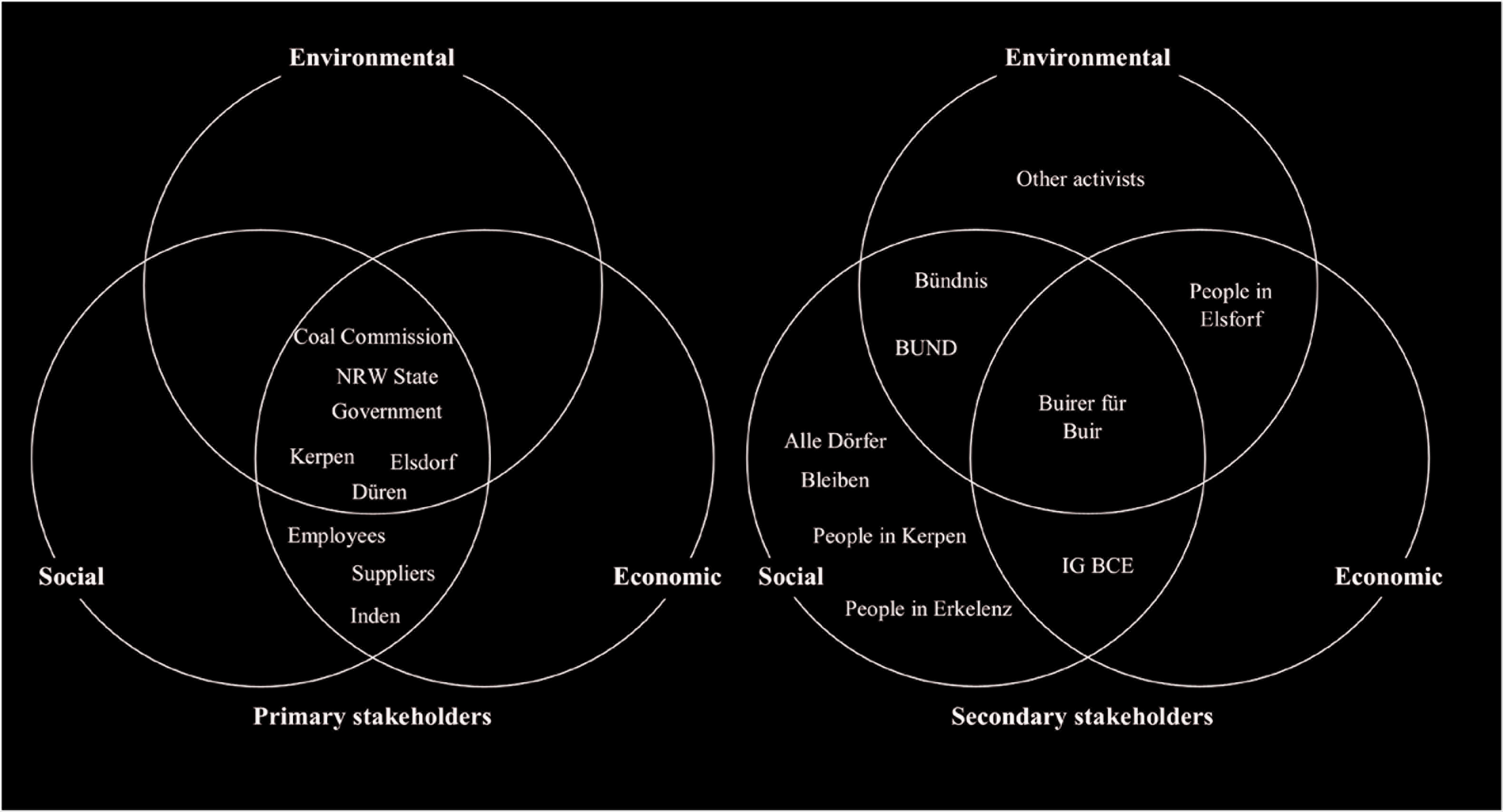
The analysis reveals a difference in the scale of sustainability interests between primary and secondary stakeholders (see Figure 1). Primary stakeholders are interested either in the social and economic dimensions of sustainability or in all three dimensions, including the environment. Meanwhile, secondary stakeholders have more limited interests, with most focusing on only one or two dimensions of sustainability.
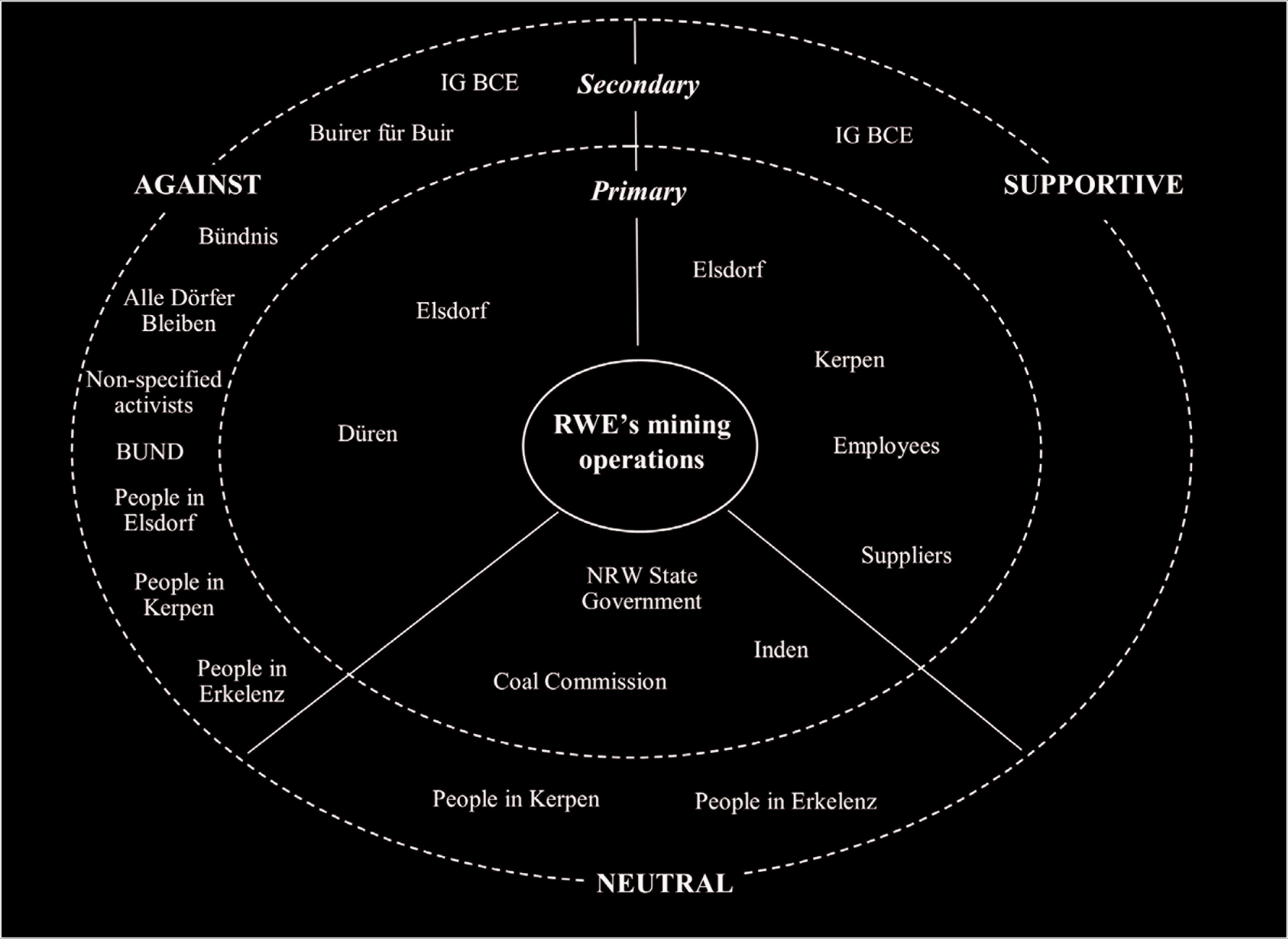
Attitudes towards the mining operations differ between primary and secondary stakeholders. As shown in Figure 2, most of the primary stakeholders are either supportive or neutral towards the mining operations. Meanwhile, most of the secondary stakeholders are against the mining operations, with the exception of two secondary stakeholders being partially neutral and one being partially supportive.
25.7.2018: [T]he initiative [Buirer für Buir] wants to stop the clearings in the Hambach forest and further relocations to be avoided.
18.10.2018: Hundreds of employees participate in a demonstration to keep their jobs…. The clearing stop of the forest have made them angry.
Six types of stakeholder engagement were identified in the data. Figure 3 displays the types of stakeholder engagement from lowest to highest level of engagement. Some stakeholders employed different types of stakeholder engagement depending on the sustainability topic in question. Thus, the stakeholder engagement between a stakeholder and the mining company may not be limited to one type of stakeholder engagement but could change over time and depend on the topic of interest.
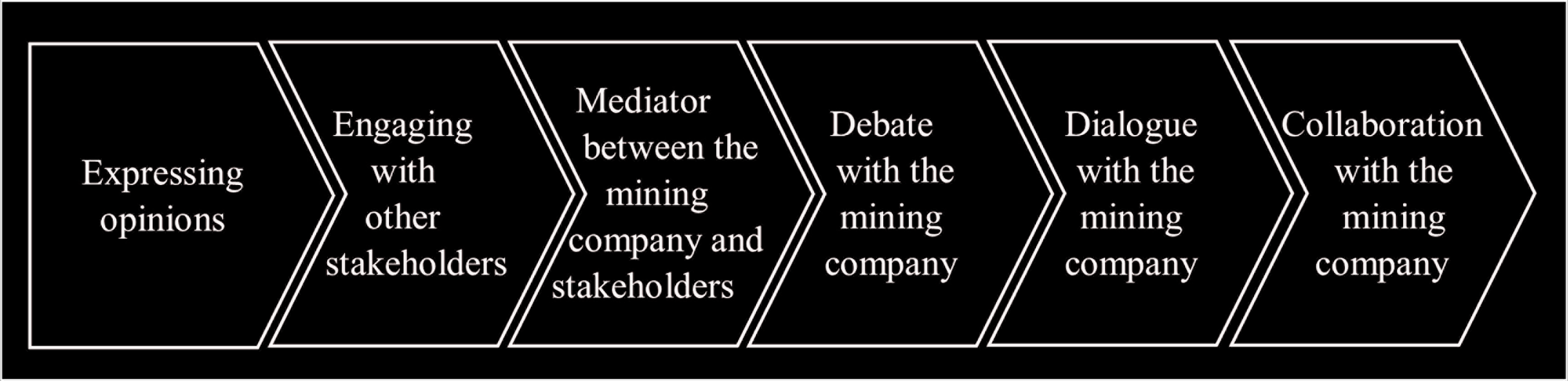
When expressing opinions, stakeholders simply express their thoughts about the mining operations. Other stakeholders may not respond with active dialogue even though the opinion is available, for example, in the media. Examples include the government providing information about its recommendations without actively engaging with RWE or local community organizations participating in a demonstration.
28.1.2019: The coal commission recommends: It is necessary to secure safety for planning the lives and businesses of the affected people as soon as possible. ‘This particularly affects those who are currently in the process of being relocated.’ The state of North Rhine-Westphalia has announced that it will continue discussions with those affected.
Engaging with other stakeholders refers to stakeholder engagement with other stakeholders instead of engaging directly with the mining company. A stakeholder may engage with other stakeholders if they have similar interests or if they wish to get help with advancing their own goals. As an example, environmental organizations and local community organizations have engaged with one another to achieve common goals (e.g., holding discussions and planning demonstrations together).
29.1.2019: BUND, Buirer für Buir and Alle Dörfer bleiben are demanding together that the Garzweiler II and Hambach opencast mines will be reduced in size to protect the villages on the edges of the mines.
Stakeholders, such as the court, act as mediators between the mining company and other stakeholders. The court has responded to the lawsuits filed by BUND against RWE. RWE has, for example, waited for a court decision before proceeding with the clearing of the Hambach forest.
2.10.2018: RWE could have actually started clearing the forest already on 1 October. Because of a pending decision on the legality of the clearing by the higher administrative court of Münster, they have promised to wait until 14 October. There is massive resistance to the clearing of the forest.
Engaging in debate with the mining company means that the stakeholders have not yet achieved a constructive dialogue but rather are still pushing their own views. An example of this is the city of Elsdorf, which is against RWE’s landscaping plans near the city.
5.12.2017: The planned plateau, to be located around 1000 m from Elsdorf, is a ‘foreign body and atypical for the Jülicher Börde region’ according to the statement made by the competent licensing authority of the Arnsberg district government as part of the final operating plan for after 2020.
RWE had already presented the change to the final operating plan last year. Now the landscaping plan has been changed after the first criticism from Elsdorf…. ‘It won’t look like a wall’, said Harald Marx, an opencast mining planner of RWE, rejecting fears. The plan was already approved in 1977.
Mayor Andreas Heller spoke of multiple negotiations with RWE and the district government, remaining unsatisfied with the results…. ‘Otherwise, we will discuss the future energy plans with RWE the same way as in Garzweiler. It would be nice, if we didn’t have to’, he threatened blatantly, and probably with the eye on the court decision, that stopped the clearings in the Hambach forest.
When engaging in a dialogue, the communication becomes constructive and mutual understanding is sought. For example, dialogue is identified between the union Die Industriegewerkschaft Bergbau, Chemie, Energie (IG BCE) and RWE. The union is responding to RWE about possible layoffs that RWE has announced.
13.10.2018: As soon as there is an overview, RWE will speak to unions and works councils. Nothing is currently ruled out in terms of the layoffs. So far RWE has always been able to avoid operational layoffs and found socially acceptable solutions (CEO of RWE, Rolf Martin Schmitz).
23.10.2018: The IG BCE warns RWE against operational layoffs due to the clearing stop in the Hambach forest. ‘We will not accept that. We want to do this through familiar tools such as early retirement and natural turnover’, says union chairman…. He admits that he could understand that the CEO of RWE Rolf Martin Schmitz has to keep all options open in the view of the upcoming court decision.
The deepest level identified is collaboration. For example, the city of Kerpen engages in collaboration with RWE, such as in the form of property rentals in expropriated land areas.
2.1.2018: [L]ike many other refugees, they were accommodated in Manheim-alt, a dying village that is being relocated because of the Hambach mine…. The family has now been living for five weeks in two tree-room-apartments in an apartment building that the city of Kerpen has rented from RWE to accommodate the refugees.
These different types of stakeholder engagement are associated with both primary and secondary stakeholders. Yet, differences in stakeholder engagement are identified in the orientation towards the mining operations on the topic that they are engaging in. For example, debate is only identified with opposing stakeholders, whereas dialogue and collaboration are only identified with supportive or neutral stakeholders.
Based on the analysis, dialogue and collaboration have the potential to enhance sustainability. For example, social issues are addressed with concrete outcomes when the mining company rents expropriated properties for the city of Kerpen or when organizing community events with the city of Elsdorf. The events build a sense of community with the mining company and with other local stakeholders. The union engaging in a dialogue addresses social and economic dimensions.
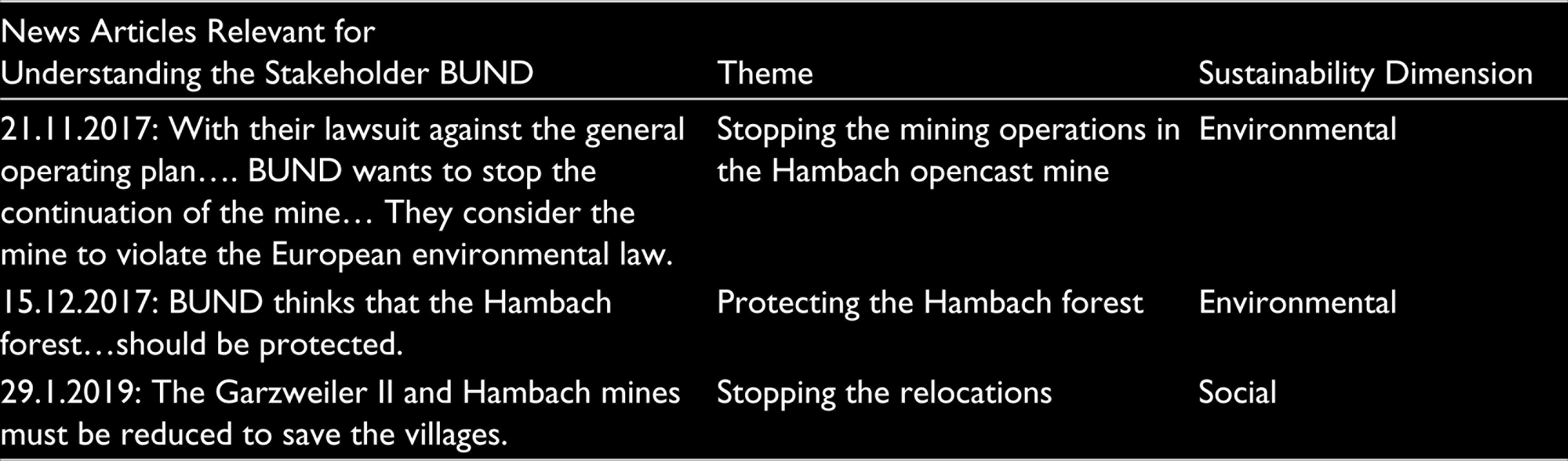
Further, the sustainability dimensions that are addressed through stakeholder engagement are in the interests of the stakeholders. For example, BUND, an environmental organization, is interested in the environmental and social dimensions of sustainability (see Table 3). Specifically, they are interested in protecting the Hambach forest and stopping relocations in the villages surrounding the mines. Meanwhile, employees are concerned about the socio-economic aspects of sustainability. Their interests lie in their future employment and in sustainable structural change in the region. Thus, stakeholders seek to engage with a sustainability topic relevant to their own interests.
Example of Deriving Themes from the Data
Discussion
This study concludes by offering four proposals. First, constructive stakeholder engagement is required when aiming to increase sustainability in the mining industry (Hamann, 2003; Hilson & Murck, 2000). In the data, the potential to enhance sustainability was identified through dialogue and collaboration. These constructive types of stakeholder engagement are required to identify mutual understandings and common goals to enhance sustainability (Hamann, 2003). Identifying shared interests makes it possible to address complex sustainability issues (Calton & Payne, 2003). In a dialogue, shared goals are identified (Kaptein & Van Tulder, 2003) and both stakeholders work towards these goals individually. At a deeper level of stakeholder engagement and collaboration, both stakeholders work together towards these shared goals.
Stakeholder engagement may happen directly and indirectly simultaneously (Gonzalez-Porras et al., 2021). Thus, it should be noted that other types of stakeholder engagement may lead to or support dialogue or collaboration and should therefore not be ignored. Freeman (1984) argues that some stakeholders may exert influence through other stakeholders rather than engage directly by themselves. For example, the state government has received letters and requests from other stakeholders. Many environmental and local community organizations engage with other stakeholders to work towards common goals, for example, through discussions and by organizing demonstrations. Thus, secondary or marginal stakeholders not engaged directly with the organization should not be dismissed (Freeman, 1984; Kujala & Sachs, 2019). In conclusion, dialogue and collaboration are required to enhance sustainability. Even so, other types of engagement should not be dismissed, as they may lead to deeper engagement or serve as a channel for stakeholders who partner with other stakeholders.
Second, it was found that stakeholders’ orientations towards the mining operations affect the opportunities to establish constructive stakeholder engagement with them (Savage et al., 1991). The mining company does not engage in dialogue or collaboration with stakeholders that are against the mining operations, only with supportive and neutral stakeholders. Hence, opposing attitudes may hinder the opportunities to engage constructively and thus the potential to enhance sustainability. However, this does not mean that differing opinions about the mining operations would not exist in the constructive stakeholder engagement with supportive and neutral stakeholders. Constructive dialogue and collaboration make it possible to address differing opinions without resorting to arguing, increasing the possibility of finding solutions (Kaptein & Van Tulder, 2003).
Third, primary and secondary stakeholders are associated with similar opportunities to enhance sustainability. However, stakeholder engagement was found to be less constructive with secondary stakeholders when compared to primary stakeholders. This may be because opposing attitudes are more common among secondary stakeholders than among primary stakeholders. Secondary stakeholders may possess significant indirect influence, and thus understanding the engagement between various stakeholders can help to understand their importance (Gonzalez-Porras et al., 2021).
Moreover, it is assumed that sustainability questions may be addressed similarly with primary and secondary stakeholders if constructive stakeholder engagement is established. For instance, shifting to constructive stakeholder engagement with local community organizations could help to identify common goals and thus support the planning of sustainable structural change in the region. Constructive stakeholder engagement with environmental organizations could lead to enhancing environmental sustainability. Thus, a wide range of stakeholders should be engaged with when aiming to enhance sustainability (Schaltegger & Burrit, 2018).
Finally, the research proposes that the dimensions of sustainability that may be enhanced by stakeholder engagement depend on the sustainability interests of the stakeholder. As mining operations affect all dimensions of sustainability (Ranängen & Lindman, 2014), engaging with a wide variety of stakeholders with varying interests allows addressing all the dimensions. The data do not reveal if further dimensions outside of stakeholders’ interests could be addressed constructively. Further research is needed to address this issue.
Regarding managerial implications, this study argues that it is not sufficient for the mining company to share information with its stakeholders to potentially enhance the sustainability of its mining operations. Constructive stakeholder engagement, such as dialogue or collaboration, should be established. As Freeman (1984) argues, managers should be allowed to engage with secondary stakeholders as well. Maintaining a dialogue takes resources (Burchell & Cook, 2008) and can be time-consuming (Hilson & Murck, 2000). In addition, identifying which stakeholders to engage with may be challenging (Jenkins, 2004). However, resources should be allocated to establish constructive stakeholder engagement with a wide range of stakeholders as it will allow the mining company to address a wide range of sustainability issues.
Limitations
The use of news articles as the data set for this research is a limitation of the research as the data was not collected from the stakeholders directly. In addition, the sampling period of two years is relatively short when considering stakeholder engagement related to the sustainability of the mining operations. Therefore, this study can serve as a starting point for a longitudinal study including interviews with stakeholders. That could be used to analyse how stakeholder engagement evolves over time and how different dimensions of sustainability are addressed through it.
The aim of this study was to identify different types of stakeholder engagement and how this engagement applies to the topic of sustainability. Further research is needed to evaluate what kinds of sustainability outcomes can be achieved with various types of stakeholder engagement.
Conclusion
This study suggests that similar opportunities to enhance sustainability exist with both primary and secondary stakeholders if constructive stakeholder engagement is established. Constructive dialogue and collaboration are required, which may be easier to establish between the mining company and stakeholders who are not against the mining operations. Simply engaging with stakeholders in the mining industry is not sufficient for enhancing sustainability. Constructive stakeholder engagement is crucial for developing mutual understandings and striving towards sustainability.
Footnotes
Declaration of Conflicting Interests
The author declared no potential conflicts of interest with respect to the research, authorship, and/or publication of this article.
Funding
The author received no financial support for the research, authorship and/or publication of this article.