




Abstract
This article delves into the socio-ecological dimensions of OSPAAAL, the Cuban Third World solidarity institution, focusing particularly on the early years of its official organ: the magazine Tricontinental (1967–1971). Tricontinental’s articles and graphic works, even if not always in an explicit manner, addressed environmental concerns in a revolutionary way, anticipating debates that would later unfold on international institutional platforms. These concerns were primarily discussed in the context of the Third World’s quest for autonomous production, closely intertwined with the agrarian question and sovereign industrialization. Key aspects such as land access, distribution, and resource management were pivotal. The publication’s central emphasis on struggles for national liberation, especially within the guerrilla arena, played a crucial role in disseminating the anti-imperialist pursuit of a sovereign social metabolism across the Third World. Combining Cuban, Latin Americanist, and internationalist accents, Tricontinental also condemned the ecological impact of transnational corporations’ predatory resource extraction in the Third World, while exploring alternative and cooperative models. This article unveils the latent socio-environmental dimensions of its critique, illustrating how ecological concerns subtly underpinned its anti-imperialist and internationalist discourse.
Introduction
Recent scholarship rooted in world-systems analysis and dependency theory has examined the ecological dimensions of imperialism, exploring the intersections, whether implicit or explicit, between movements for national liberation and anti-imperialist struggles in the Third World and their radical approaches to socio-ecological issues. The work of Max Ajl has been particularly insightful in developing this perspective, highlighting the crucial role of national liberation in advancing internationalist ecological and social agendas (2021a, pp. 146–162). Ajl has delved into seminal theoretical and political concepts associated with the dependency and world-systems schools of thought, such as Samir Amin’s notion of “delinking” to foster South–South cooperation (Ajl, 2018, 2021b), while also underscoring the importance of the agrarian question in the search for alternative modes of development (Ajl, 2023). Meanwhile, Mariko L. Frame has contributed to the systematization of ecological imperialism’s historical development by proposing a three-stage periodization: colonialism (1492–1960s), the emergence of economic nationalism in the periphery against ecological imperialism (1940s–1970s), and a “counterrevolutionary backlash following the developing world debt crises of the early 1980s” (2022a, p. 518). This periodization enables us to analyze how Third World efforts for emancipation during the rise of economic nationalism, “while not explicitly couched in environmental terms, challenged ecological imperialism because third-world resistance to neocolonialism had, at its root, the goal of resource sovereignty” (Frame, 2022a, p. 520).
Indeed, as Moyo et al. (2013) noted, it was within this context that “anti-imperialist nationalism” matured in the Third World, where “the political, social and economic dimensions of the agrarian question” underwent a profound reshaping, aligning with the goals of national liberation. Along with the groundwork laid by movements such as Maoism in China and earlier thinkers like José Carlos Mariátegui, figures like Frantz Fanon, Amílcar Cabral, Ernesto “Che” Guevara, and Walter Rodney played a pivotal role in this turn, which gave much relevance to a “sovereign industrialization”—one that would not subsume the agrarian production to it or dictate the conditions under which “external relations and internal balances” would be set. Furthermore, the significance of the agrarian question for the national liberation movements extended to fostering new and revolutionary approaches to issues related to regional integration, gender equity, and ecological sustainability (Moyo et al., 2013, pp. 103–105).
We could thus consider, as pioneering socio-ecological reflections, the views of Mariátegui on the indigenous and the peasant as revolutionary subjects (Alimonda, 2007, 2008; Friggeri, 2021), of Fanon on environmental racism (Opperman, 2019), of Cabral on soil degradation (Saraiva, 2022), of Che Guevara on situated modes of sovereign development and the key role of agriculture in their processes of industrialization (Granado Duque, 2021a, 2021b, 2023; Sáenz, 2021), and of Rodney on the links between labor and land spoliation under colonialism, as well as on Western conservationism as an expression of imperialist domination (Sène, 2022; Zeilig, 2022). But besides experiences like the feminist anti-nuclear campaigns in the Pacific since the Cold War’s outset (Hogue & Maurer, 2022; Mangioni, 2021; Odawara, 2020), the Chipko movement in India during the 1960s and 1970s (Bandopadhyay & Shiva, 1987; Shiva, 1988, pp. 67–77; Weber, 1988), and other initiatives that prioritized ecological concerns, such as Mexican forestry associations like El Salto in the 1960s (García-López & Antinori, 2018), the ecological aspects of the national liberation and anti-imperialist struggles dominating this era in the Third World were not always explicitly articulated.
All these approaches addressed the material conditions anticip- ating key socio-environmental critiques, including underdevelopment, dependency, overexploitation, and malnutrition—largely attributable to unequal exchange. These critiques underlined the uneven access and distribution of land, epitomized by the latifundium model inherited from colonial rule aimed at monoculture, as well as the inappropriate imported technology from the core. The centrality of the anti-imperialist stance reflected resistance to the reduction of peripheral regions to mere sources of cheap labor, land, and energy for capital accumulation, alongside their designation as dumping grounds for waste. Associated with the North–South value drain, this significantly disrupted the social metabolism of the Third World: The mediations between its socioeconomic activities and ecosystems, severely undermining both and constraining the Third World’s potential for autonomous development. 1 As a result, the imperialist denial of sovereignty posed a tangible threat to the most basic material dimensions of life, both socially productive and reproductive, including care, security, health, food, and rest. For the radical perspectives of the periphery, capital and its expansionist logic presented a comprehensive challenge to life itself, impacting the sustainability of socio-environmental balance (Clark & Foster, 2009; Katz-Rosene & Paterson, 2019; Pedregal & Lukić, 2024). Imperialism appeared as an antagonistic force extending beyond the capital–labor contradiction to become a totalizing contradiction between capital and life. To establish sovereign support for life independent of capital’s dominance, national liberation and revolutionary movements in the Third World aimed to plan and implement an autonomous and sustainable mode of social production and reproduction, countering the interests and dominance of the core countries. This endeavor was also deemed crucial for restoring the social metabolism disrupted by chronic economic dependency.
The Cuban magazine Tricontinental, during its initial period from 1967 to 1971, is a meaningful case that illustrates these perspectives. The importance of this period lies in the fact that it preceded a series of key changes in the international distribution of the magazine. Coinciding closely with this timeframe was a deepening alignment of Cuba with the Soviet bloc, a shift that would impact the development of Tricontinental itself. Additionally, in relation to the role of environmental issues on the international stage, this period also prefaced the Founex Report of 1971, which was seminal in defining the Third World’s approaches to economic development and environmental concerns for the United Nations Conference on the Human Environment (UNCHE) held in Stockholm in 1972, the same year The Limits to Growth report to the Club of Rome was released. 2
In contrast to some institutional positions taken in these contexts, the early years of Tricontinental served to establish the insurgent engagement of the magazine’s discursive tools and politics with the ecological dimensions often implicitly associated with the objectives of Third World national liberation movements. In fact, the foremost issues of this period were connected to sociopolitical debates that did not explicitly address the diverse socio-environmental conflicts that currently gain traction within public debates. Anti-colonial, anti-imperialist, and internationalist revolutionary activity with a particular emphasis on tactical and strategic matters within the guerrilla field occupied the centrality of the publication: a focal point that resonated across the Third World during that era. Alongside the burgeoning sociopolitical discourse surrounding the climate crisis, environmental degradation, and biodiversity loss on the international stage, Tricontinental highlighted specific issues that were key to Third World struggles. These included concerns over land ownership, the exploitation of land and its resources, the necessity of achieving productive autonomy and diversification to combat dependency and super-exploitation, and ensuring the nutritional well-being of populations under the sway of multinational agribusiness corporations. The latent presence of the ecological question in Tricontinental’s early period reflected how revolutionary praxis and productive sovereignty in the Third World engaged with socio-environmental issues as intrinsic components of the anti-imperialist and internationalist struggle, seeking the restoration of social metabolism without necessitating a standardized or formalized approach.
Although not without controversy, some of these struggles and critiques contributed highly to the development of modern political ecology, exploring the centrality and dialectics of these issues within such politics. It is noteworthy that in 1971, the Economic Commission for Latin America and the Caribbean (ECLAC; CEPAL for its acronym in Spanish)—with which Cuba maintained a troubled relationship at the time (as we will expound shortly)—organized the meeting on Human Environment and Economic Development in Latin America in preparation for the aforementioned UNCHE. Within a context dominated by Keynesian approaches yet increasingly aware of the contradictions of desarrollismo [developmentalism] for the region, the event addressed the tension between economic growth and environmental quality. It also emphasized the dilemma of resource allocation in pursuit of development while simultaneously improving environmental conditions, particularly in light of technological inefficiency and the competitive demands of the international market. Additionally, the document prepared at the meeting identified key rural and urban problems, such as pollution and access to services, food, water, and energy for a population comprising broad sectors increasingly at risk of marginalization. It also acknowledged the adverse effects of mining on the environment and workers, as well as the obstacles to developing appropriate technology for the region.
Following that meeting, and throughout the 1970s, CEPAL focused on examining issues related to “development styles,” ultimately leading a project on the “Development Styles and Environment” in close collaboration with the United Nations Environment Programme (UNEP), which had been established after the UNCHE. 3 This collaboration would shape CEPAL’s work on environmental issues for the next 20 years (Tavares, 2011, pp. 62–63). But above all, these efforts revealed that “for Latin America, environmental issues should not be viewed as constraints on growth and development, but rather as incentives to seek new types of development” (Estenssoro Saavedra, 2014, p. 125). 4 This highlighted the emergence of a distinct environmental thought in the region, enabling pioneers like Enrique Leff to later underline, as noted by Estenssoro Saavedra (2014, 125), that “Third World countries in general, and Latin American ones in particular, questioned the environmentalist and ecological perspectives of core countries as they lacked the capacity to comprehend this issue from the periphery’s perspective.”
While Cuba acknowledged the importance of UNCHE, it decided not to participate in protest of the Western powers’ veto against the presence of the German Democratic Republic in the conference (MINREX, 1972). Cuban relations with the United Nations were rather complex and tense at the time, and this included CEPAL as part of the supranational organism. This situation was often reflected in Tricontinental, which in 1968 labelled UN organizations as “tools of imperialism” (OSPAAAL, 1968). However, the struggles embraced by Tricontinental preformed many of the formulations that entered international institutional arenas and environmental debates. In many ways, for Latin America and other regions of the Third World, Tricontinental emerged as a seminal insurgent force that, sometimes with and at other times without explicit dialogue with world institutional counterparts, anticipated socio-ecological awareness and made meaningful contributions to the development of Latin American and broader Third World environmental thought. Tricontinental thus became an integral component of the ecological concerns that germinated under the anti-imperialist struggles for national liberation. And it is not surprising that it was precisely in the most revolutionary projects of the Third World where policies, practices, and rhetorical devices with more radical environmental outlooks were subsequently developed in concrete terms. Examples include the ambitious ecological programs implemented in Nicaragua following the Sandinista revolution (Faber, 1999), Thomas Sankara’s reforestation projects in Burkina Faso (Murray, 2018), Fidel Castro’s participation in the UN Earth Summit in Rio de Janeiro (1992), Cuba’s shift towards organic farming and promotion of agroecology (Clausen et al., 2015; Levins, 2008; Rosset et al., 2011), and other recent experiences such as Zimbabwe’s land reform (Moyo & Yeros, 2005), and the Bolivarian communal practices in Venezuela (Marquina & Gilbert, 2020).
The Appearance of Tricontinental: “The Printed Voice of the Peoples of the Third World”
In 1966, the Tricontinental Conference took place in Havana. It was immediately considered by the US government at the time to be “the most powerful gathering of pro-Communist, anti-American forces in the history of the Western Hemisphere” (Subcommittee to Investigate the Administration of the Internal Security Act and Other Internal Security Laws, 1966, pp. 1–2). As such, it laid the foundations of the so-called Tricontinental project or Tricontinentalism: a movement of international anti-imperialist solidarity built around a political–cultural revolutionary project with a global dimension, albeit focused on the continents of Africa, Asia, and Latin America. Moreover, the Tricontinental Conference and the different initiatives it birthed significantly contributed to the theoretical conceptualization and development of Third Worldism as a political–cultural movement rooted in history dating back half a century. 5 The conference was hence linked to early precedents held under the umbrella of the Communist International, such as the Baku Congress (1920), the Anti-Imperialist League of the Americas (1925), and the League Against Imperialism and Colonial Oppression in Brussels (1927). 6 As such, the Tricontinental was the culmination of a long trajectory of international meetings with anti-imperialist features, adopting the most comprehensive, ambitious, and radical form of all in the second half of the twentieth century. Foundational events of the contemporary post-colonial order, such as the Bandung Conference (1955) and the Non-Aligned Movement meeting in Belgrade (1961), were framed in a historical context close to that of the Tricontinental. Similarly, pioneering gatherings among women’s organizations such as the Conference of the Women of Asia held by the Women’s International Democratic Federation (WIDF) in 1949 (Armstrong, 2016)—as part of the WIDF’s frenetic activity since its founding after the Second World War—or the meetings organized by the Afro-Asian People’s Solidarity Organisation (AAPSO) since the early 1960s also contributed to consolidating the Tricontinental moment (García Molinero & Ortega López, 2023).
The Bandung Conference, however, among its many debates, served to establish some of the key themes and views that would later be developed throughout the Tricontinental era in regard to sovereignty and development. Therefore, Bandung placed great importance on debates concerning the agrarian question in relation to industrialization, as well as to the role of the peasant as a revolutionary subject and the features of the agrarian bourgeoisie of the periphery in relation to the accumulation of imperial core countries (Amin, 1990). The radicalism of the Bandung experiment perceived by the imperialists contrasted with a lack of institutional radicality when actually dealing with its implications for state sovereignty within the framework of national liberation struggles (Ajl, 2021b). In this sense, despite initially being labelled as “Bandung II” by organizers, the Tricontinental Conference swept away many of the purported discourses of neutrality in favor of armed struggle, thus transcending the celebrated “spirit of Bandung” (Mor, 2022, p. 86).
The wide and heterogeneous state delegations, revolutionary organizations, and national liberation movements that converged in Havana formed a complex stage marked by the tensions between the great superpowers of the Cold War. However, it was the conflicts and rivalries within the socialist camp itself that highlighted the need to organize a new model of international cooperation and solidarity within the Third World, separate from the Sino-Soviet disputes of the time (Bouamama, 2019, pp. 96–100). In this sense, some of the main strengths of Tricontinentalism, such as the will to develop a Third World agenda of its own, would also become its most notable limitations, as evidenced by the inability to materialize major global projects of international cooperation without the support of the socialist superpowers (Friedman, 2022, p. 215). Despite these strengths and limitations, the socio-ecological issue was present throughout the debates held during the Tricontinental Conference. Some of its general resolutions, such as the one on Public Health, referred to the need to “achieve for the masses a healthy substance in the physical environment,” emphasizing the relevance of a sustainable relationship between human beings and the environment (OSPAAAL, 1967, pp. 135–136). These elements, along with others like the condemnation of the use of “toxic chemicals against vegetation” contained in the General Policy Resolution (OSPAAAL, 1967, p. 60), constituted a significant precedent to the aforementioned international debates.
At the end of the Tricontinental Conference, the Organization of Solidarity of the Peoples of Asia, Africa and Latin America (OSPAAAL) was founded as an international non-governmental organization to advance the commitments made in Havana. OSPAAAL (1967–2019) became the largest platform for counter-propaganda, exchange, and cultural production ever to exist in the Third World (Frick, 2003, pp. 43–44). In order to disseminate its message, the organization used a variety of channels for over half a century, including the Tricontinental magazine (1967–1990, 1995–2019), the Tricontinental Bulletin (1966–1988, 1995–2019), art-graphic exhibitions, radio programs, books, press releases, and materials from the Latin American Newsreel of the Cuban Institute of Cinematographic Art and Industry (Mahler, 2018, pp. 81–82).
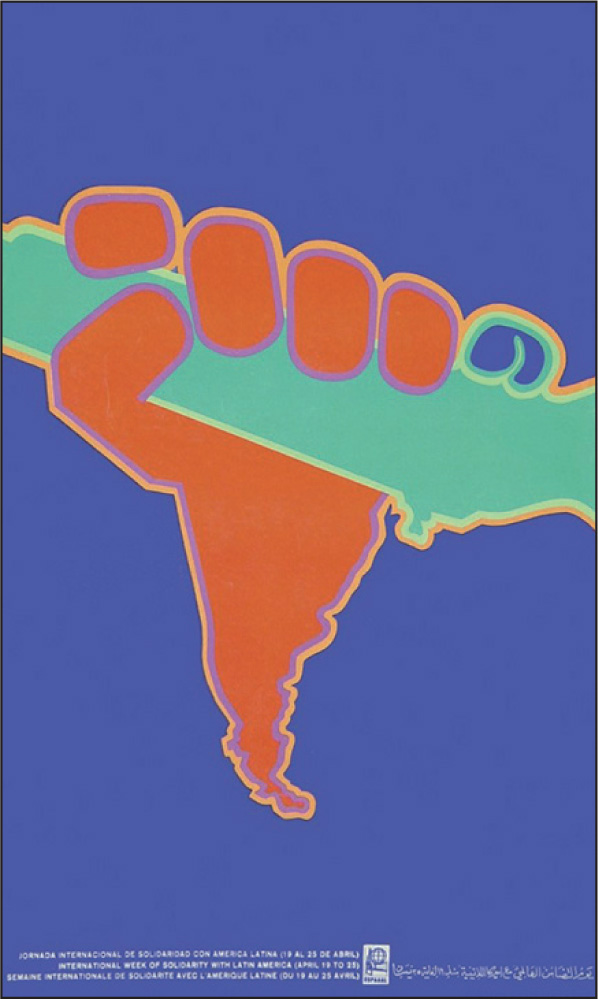
As the official organ of the OSPAAAL for the world, 7 later labelled “the printed voice of the peoples of the Third World” (Tricontinental, 1996, pp. 60–61), the magazine Tricontinental was published bimonthly in Spanish, English, French, Italian, and occasionally Arabic. It was distributed from numerous distribution centers in Stockholm, Tokyo, Cairo, Prague, Milan, and Paris, among other cities. 8 The first issue had 50,000 copies printed. 9 Tricontinental included inside the iconic OSPAAAL posters, which travelled around the world as the most emblematic element of the Tricontinental spirit (Villaverde, 2010, p. 218) (Figures 1–3). The influence of the magazine was particularly high between 1967 and 1971. In France, the magazine was prohibited by the Minister of Internal Affairs, Raymond Marcellin, on 27 November 1968 for representing a “centre of impulse, unification and coordination of different anti-imperialist movements” in the context of the revolts of May 1968 (Marcellin, 1969, p. 45). From 1971 onwards, the magazine ceased to be published in Italian (Moro, 2011, p. 81) and François Maspero stepped down as its official publisher in France. 10 This obstructed the two main channels of the magazine’s distribution in Europe, where the majority of direct shipments were made by the organization (Calvo González, 2022, pp. 340–341). Tricontinental materials circulated underground in most countries in Asia, Africa, and the Americas, where the magazine was banned as a subversive tool (Camacho Padilla & Palieraki, 2019, p. 417). Additionally, it is worth noting that the CIA produced fake materials with the OSPAAAL stamp to defame the organization, which proves the impact and scope the publication achieved (García Molinero, 2022, p. 72).
Poster designed by Asela Pérez for the International Day of Solidarity with Latin America, 19–25 April 1970, OSPAAAL.
Poster designed by Jesús Forjans for the International Week of Solidarity with Vietnam, 13–19 March 1969, OSPAAAL.

Poster designed by Faustino Pérez for the Day of Solidarity with Zimbabwe, 17 March 1970, OSPAAAL.

Some of the most prominent personalities of the Third World revolutionary movement contributed directly to Tricontinental. Key figures like Che Guevara, Kim Il Sung, Hồ Chí Minh, Graça Machel, Amílcar Cabral, Yasser Arafat, Fatiha Bettahar, Agostinho Neto, Eduardo Mondlane, Carlos Marighella, and Nguyễn Thị Định collaborated personally with the publication, especially during the first years. Additionally, leading intellectuals such as Gabriel García Márquez, André Gunder Frank, Ruy Mauro Marini, Paul Sweezy, Martha Harnecker, Ernest Mandel, and Jean-Paul Sartre also contributed to it. 11 Among the great variety of topics covered in its pages during those years, the centrality of land and the agrarian question, sovereignty over natural resources, and production autonomy appeared seminal to the different national liberation projects. The colonial, neocolonial, and imperialist plunder through which the unequal exchange of the capitalist world system condemned the peoples of the Third World to chronic dependency was a key topic of the publication.
The Pursuit of a Sovereign Social Metabolism in the Early Years of Tricontinental (1967–1971)
Throughout the first 26 issues of its publication, between 1967 and 1971, Tricontinental exposed a defense of national sovereignty, as advocated by liberation movements and revolutionary groups of the late 1960s in Asia, Africa, and Latin America. National sovereignty was presented not only as a benchmark of formal independence for the countries of the Third World but also as inseparable from the metabolic relationship between their different social formations and natural environments. This was built on the basis of autonomous control of natural resources, productive sovereignty, and a sustainable, planned, and scientific relationship with the land—aspects that to some extent appeared in Bandung too. Tricontinental repeatedly showed the dynamics of predation and dependency historically associated with the different expressions of colonialism and neocolonialism as part of imperialism.
In this context, the search for autonomous development outside the domination of exogenous powers appeared linked to an explicit longing for a sovereign social metabolism based on national-popular control of productive forces and natural resources, appropriate industrialization and technology, and resistance to the interests of foreign transnational companies. Tricontinental’s point of departure in Issue 1, July–August 1967, examined the centrality of the agrarian question to the people’s control of resources in relation to the principles of the Arusha Declaration, which reflected on the problems associated with the relationship between “the people and agriculture,” situating the latter as “the basis of [a] development” meant to be “self-reliant” (Arusha Congress, 1967, pp. 76–85). The declaration, originally written in Swahili by Julius Nyerere for the Tanganyika African National Union of Tanzania, was disseminated worldwide by Tricontinental. And its principles were connected to those included in the General Declaration of the First Tricontinental Conference, which appeared in Issue 3, November–December 1967, and stated the “right to national control of basic resources” of the peoples of the Third World (Departamento Editorial, 1967d, pp. 101–112).
These topics received regular attention in the early years of the publication. Thus, the nationalization of natural resources in Africa, Asia, and Latin America was considered an important step toward a sovereign social metabolism. In Issue 2, September–October 1967, the article “Algeria: Oil against Aggression” [Argelia: petróleo contra la agresión] delved into the social dimension of these policies regarding the “official text of the decrees for the nationalization of oil in Algeria” (Departamento Editorial, 1967b, pp. 125–127). This aspect was particularly relevant considering the proximity of the Six-Day War, as the text alluded to the capacity of Third World countries to exert influence in the international sphere through the sovereign control of natural resources, as part of the struggle against imperialist aggression. Since the first Issue of Tricontinental, the magazine addressed the Arab countries’ capacity to respond to Israel’s regional threat, as in the case of the article “The Middle East, Five Days with a Future” [Oriente Medio, cinco días con futuro], which affirmed “for every military defeat, a resurgence of the revolutionary spirit” (Departamento Editorial 1967a, pp. 47–53). Also, in regard to the Arab world, in the same Issue 1, an article written by the magazine’s editorial department entitled “The Middle East, the Strategy of Oil” [Medio Oriente, la estrategia del petróleo] denounced the impact of the Seven Sisters in the region, that is, the seven oil companies that dominated world production during the 1960s as an international cartel, including Standard Oil, Shell, Socony, Standard of California, and British Petroleum. The piece stated that “seventy million Arabs have more at stake than their wealth: the survival of imperialism against the right to life” (Departamento Editorial, 1967a, pp. 55–61).
Throughout the publication of Tricontinental, the connection between sovereignty and the control of natural resources was consistently highlighted across various Third World contexts. Issue 2, for example, covered the words of President Alphonse Massamba-Débat (1967, pp. 16–19) of the Republic of Congo, emphasizing the need to “strengthen a cooperative sector that allows the Congolese to control their economy more and more each day.” Massamba-Débat advocated for the establishment of a “national balance” not only through changes in ownership structures and exploitation models but also through the transformation of metabolic relations between humans and the environment. The Congolese leader insisted on the imperative to “extirpate the foreign economy” as part of a “long-term” process during which, although no stages could be pre-defined, “an independent economy” would be built. This decisive endeavor was part of the broader struggle within the framework of the “irreversible history of the three continents,” alluding to the ongoing fight for economic sovereignty in countries such as Vietnam, Tanzania, Guinea, and the United Arab Republic.
Tricontinental also amplified critical voices from protagonists in the struggle against the exploitative conditions faced by the peoples of the Third World. Issues 4–5, January–April 1968, for instance, uncovered the mechanisms of neocolonial domination through the denunciation of Woungly Massaga, the Cameroonian leader of the Union of the Peoples of Cameroon (UPC). In “Cameroon, a Word of Order” [Camerún, una palabra de orden], Massaga (1968, p. 9) exposed, in a manner that recalls Cabral’s work, the consequences of the exploitation of Cameroonian natural resources, depicting the country’s submersion in dependency, to explain that
[n]eocolonialist domination presents a genuine economic sophistry, whereby, once the submission of the people to puppet regimes has been assured, the exorbitant exploitation of our countries’ natural resources would yield so many crumbs that they would end up becoming industrialized nations.
This kind of critique of neocolonial domination found ample coverage in the pages of Tricontinental, as exemplified by the work published in Issue 3 by French researcher and journalist Jacques Vignes, who addressed the situation of “dependency and exploitation in Africa” in a study of the African reality at the time (1967, pp. 168–176). Similarly, in Issues 4–5, the French economist Pierre Jalée challenged the Belgian Marxist Ernest Mandel to explore inquiries related to dependency and underdevelopment in the Third World. Jalée, the pseudonym of Maurice Rué, though in the magazine he was only described as a 58-year-old French economist collaborating with the Taleb-Moumié circle of Africanist studies, complained that “a Marxist economist like Ernest Mandel would peremptorily assert ‘that the underdeveloped countries can play less and less of a role as a safety valve for the capitalist system as a whole’” (Jalée, 1968, p. 104). Mandel responded to this criticism in a letter to the editorial board of Tricontinental, concluding that his analysis was not opposed to Jalée’s but rather “complementary” (1968, pp. 157–158). This sparked a significant debate on perceptions of imperialism and dependency in the Third World, and the sometimes contradictory role of Western Marxists in it.
Tricontinental also used graphic resources, like the well-known device of “anti-advertisement,” to denounce the implications of neocolonial exploitation imposed by monopoly capital in the Third World. This involved subverting advertising elements by incorporating blunt messages about the reality of the Third World (García Molinero, 2022, p. 73). For instance, this method was employed to address phenomena such as the impact of mass tourism in the Third World and the transformation of space by this predatory economy linked to imperialist expansion. In Issues 4–5, an anti-advertisement titled “Ethiopian Airlines, Faraway Places with Enchanting Names” promoted tourism to Ethiopia using images of revolutionary leaders of the country who had been killed to replace the typical picturesque scenes found in advertisements (Figure 4). In addition, it listed “some of the distant landscapes with enchanting names that the tourist must visit,” such as “Alem Bekagne, the largest prison in East Africa,” “Kagnew, a strategic US military base for technical espionage throughout the world,” “Adola mines, where the lives of 20,000 men are consumed in forced labour,” and “Massawa, an important Ethiopian-American-Israeli naval base for the control of the Red Sea” (Departamento Editorial, 1968a, p. 60). In Issue 7, a similar approach was used in an anti-advertisement for “South African Airways, visitez l’Afrique du Sud,” which, alongside typical tourist images, included a “coupon” for “an unforgettable holiday to the country of APARTHEID, of prisons full of patriots fighting against white racists, of the collective slaughter of Africans, of thousands of blacks subjected to slave labour in the gold mines, of miles and miles destined for concentration camps” (Departamento Editorial, 1968b, p. 169) (Figure 5). But the use of the anti-advertisement resource to expound the impact of neocolonial exploitation was particularly illuminating in Issue 3, where the image of a Ford car was accompanied by text revealing the origin of the raw materials that made up each of its components, reading: “The U.S. plunders the Third World and Ford has the best idea” (Departamento Editorial, 1967c, p. 2) (Figure 6).
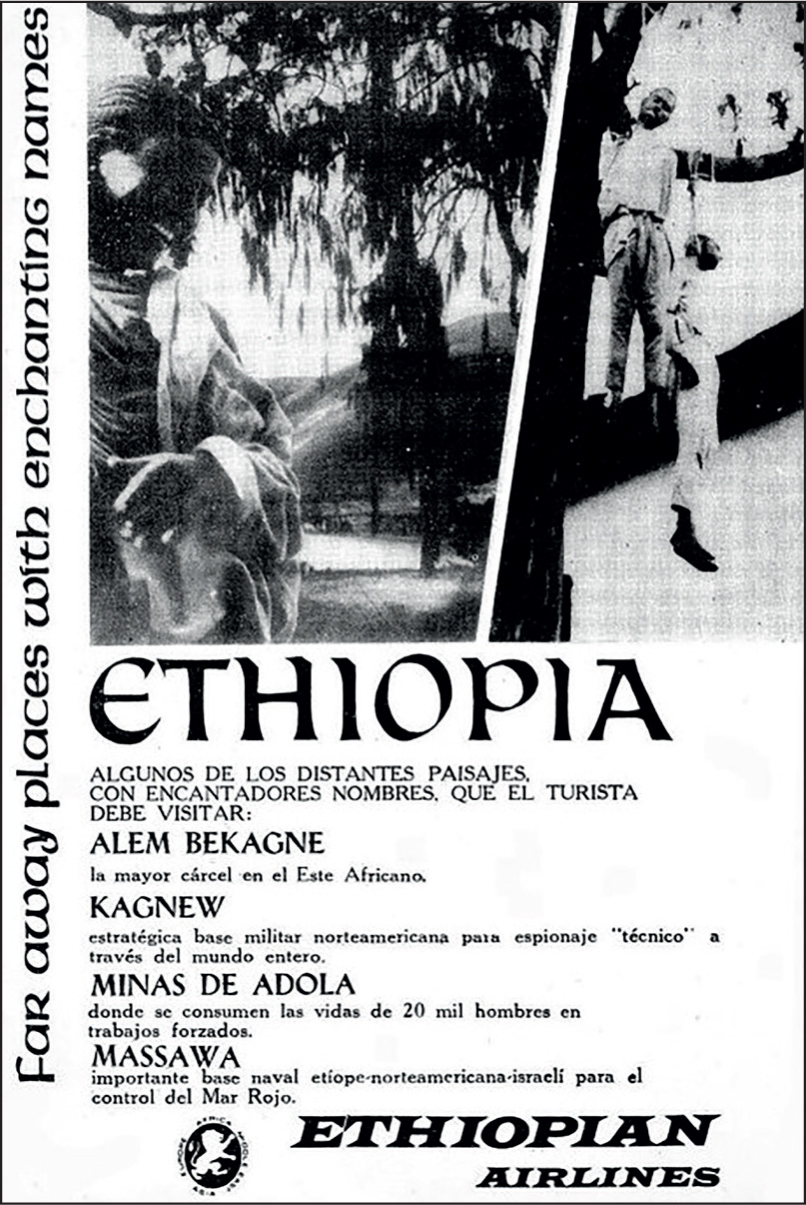
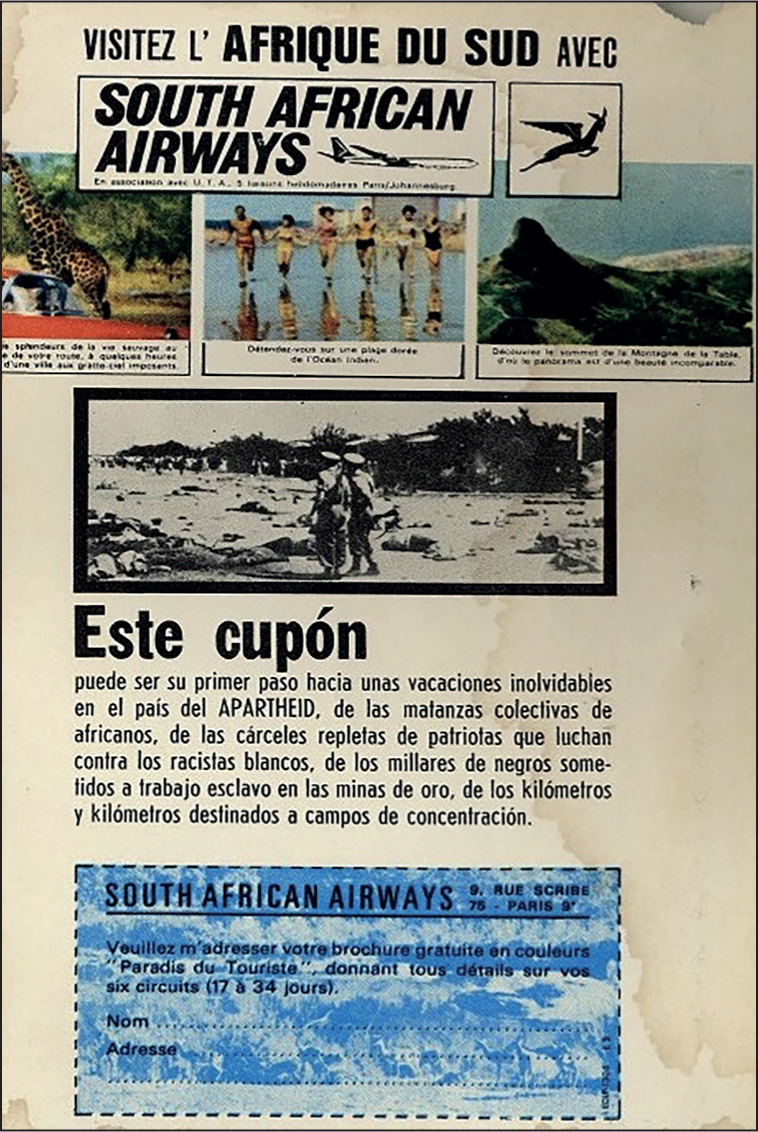
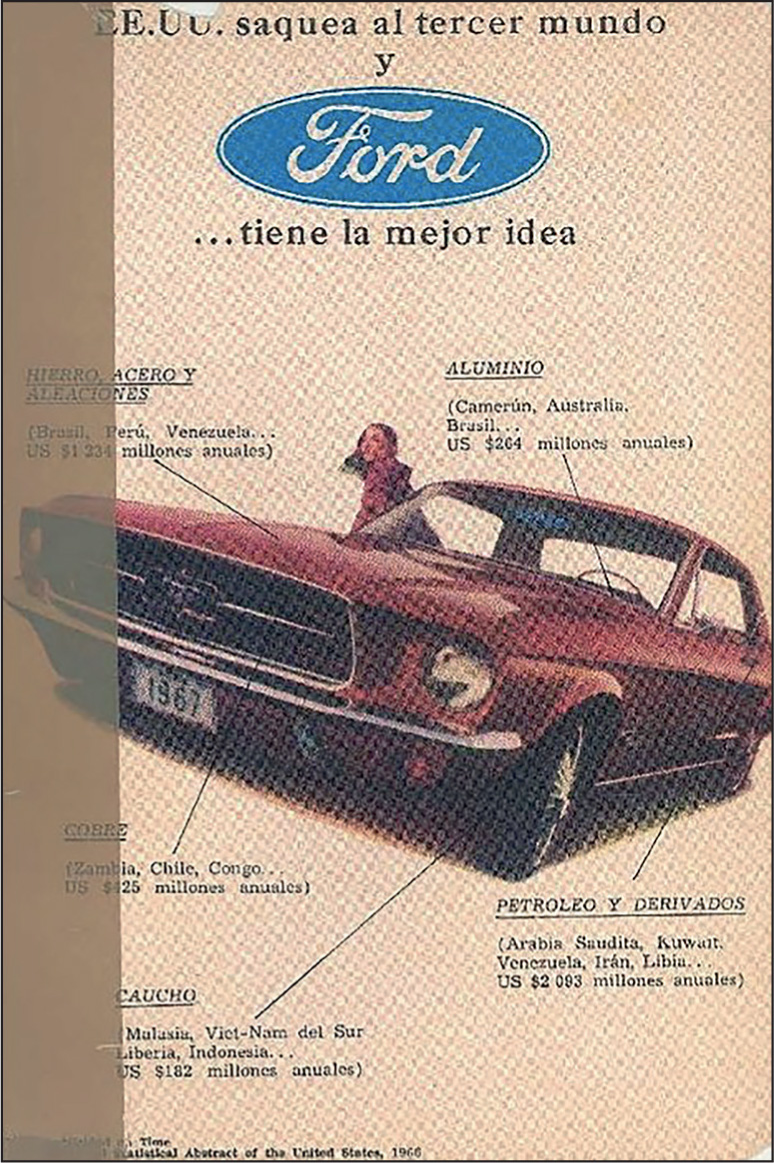
These anti-advertisements often unveiled the historical projection of colonial travels, exploring the links between tourism and imperial domination, territorial control, super-exploitation, and natural resource extraction. Furthermore, Tricontinental often juxtaposed dialectical images showing racialized subjects being antagonized by agents of their oppressors, typically represented by a white male as a symbol of Western dominance. Whether intentionally or not, these graphic resources engaged critically with links of racial ecologies to the formation of imperialism in relation to the environmental spoliation of the Third World.
In addition to employing innovative visual resources, Tricontinental also addressed criticisms of the nascent mass tourism on a more articulated level, as in the article “A Necklace of Colonies” [Un collar de colonias] in Issue 24, May–June 1971. In this piece, American researcher Frank McDonald exposed the impact of “tourist facilities in the Commonwealth Caribbean” (1971, p. 24), particularly highlighting their domination by US companies in the Caribbean territories—a concern also echoed by Walter Rodney (2022 [1972]) at that time in his “Problems of Third World Development.” McDonald reflected on the role of large hotel corporations and linked their extractive nature to the operations deployed in the region by other industries engaged in the exploitation of materials such as bauxite, oil, and natural gas.
Otherwise, the magazine emphasized the importance of constructing a planned model of organic relation in various stances. For instance, in Issue 3, Condetto Nénékhaly-Camara, Secretary General of the Government of Guinea, underlined the socio-cultural implications of this approach by stating that “[c]ulture is the dialogue of man with nature … science and technology” (1967, p. 128). This analytical framework was also applied to address pressing issues such as housing in the countries of the Global South. Already in Issue 1, Cuban architect Fernando Salinas González, recalling the late Friedrich Engels, proposed the need for “a dialectical vision of nature, the environment and society” to envision a revolutionary architecture in the Third World (1967, p. 102).
Tricontinental also accompanied its analyses of neocolonial dependency with a systemic critique of the monoculture latifundia-based productive model linked to the colonial inheritance present in Latin America, Africa, and Asia. In Issue 3, Brazilian nutritionist and geographer Josué de Castro indicated that “the proliferation of latifundia and the expansion of monoculture have greatly slowed down the social and economic development of the country [Brazil]” (1967, p. 46). De Castro, who served as President of Food and Agriculture Organization (FAO) from 1952 to 1956 and represented Brazil at the UN in 1963, went into exile in Europe after the military coup against João Goulart in 1964. He was a key figure in the development of Latin American socio-environmental thought, notably through his books Geography of Hunger [Geografía da fome ] and Geopolitics of Hunger [Geopolítica da fome], published in 1946 and 1951, respectively. His article in Tricontinental was quite significant, as it anticipated his later critical stance against what he perceived as a dominating First Worldist approach in The Limits to Growth report. 12 In a similar vein, in Issue 10, January–February 1969, the French researcher Albert-Paul Lentin addressed concerns on nutrition to argue for the need to diversify agriculture, essential for consolidating sovereign models of food production amidst subsistence crises in the Third World (1969, pp. 67–80).
The search for alternative modes of development capable of breaking with the colonial heritage and restoring social metabolism was associated with changes in the very relations of production. This prioritized the forms of communal and collective frameworks opposed to the individualist wage labor characteristic of the capitalist sphere. In Issue 15, November–December 1969, notable personalities in the revolutionary movement in the Arab world pointed in this direction. Mohamad Salem Akkuch and Abdullah Ushaish, Minister of Agriculture and Agrarian Reform and Minister of Finance of the People’s Democratic Republic of Yemen, respectively, exposed a productive proposal emphasizing the advantages of collective work over forms inherited from latifundia-based exploitation (1969, pp. 132–140). The Southern Yemeni revolutionary leaders promoted these new forms of labor as part of a comprehensive agrarian reform aimed at redistributing parcels of land, or fiddan, which came to be organized in a communal way rather than in the style of latifundia.
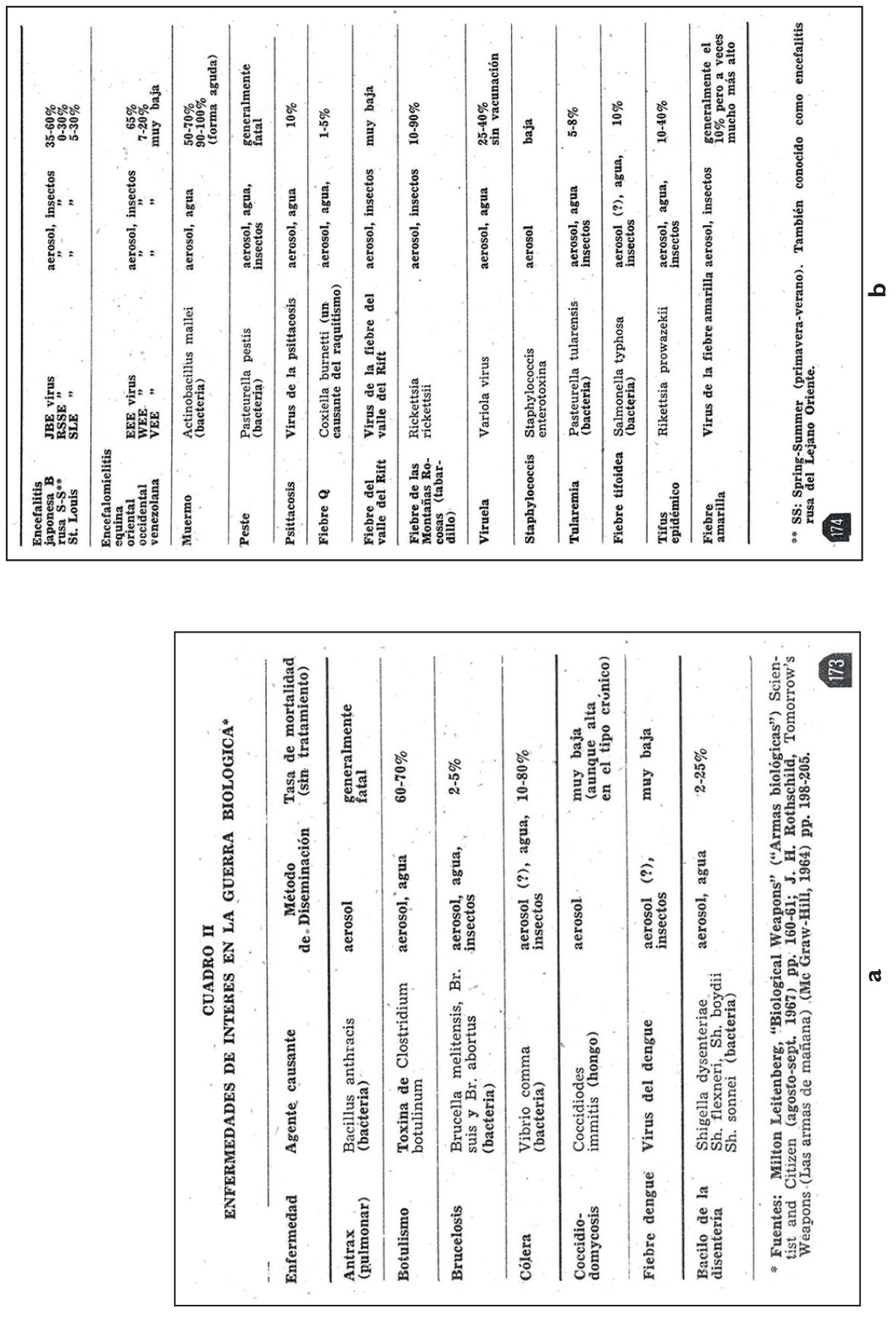
Along the pursuit of a sovereign metabolism and concerns about productivity and labor relations with the land, Tricontinental constantly condemned the environmental impact of military complexes. In Issue 7, July–August 1968, Kamejiro Senaga, mayor of the Japanese city of Naja, addressed this topic denouncing that the US complex in Okinawa “is forcing Japan to become a nuclear base and a station of nuclearization.” Senaga highlighted that the structure of the military base resembled a “state within a state,” sprawling across the 140 islands of the archipelago and containing a total of 117 military complexes. These “directly threaten more than 80 percent of the natural resources crucial to the people’s lives: rice fields, farms, forests, plains…” (Senaga, 1968, pp. 45–63). 13 These concerns were integral to the revolutionary scope of the magazine, which also focused on the enduring effects of chemical weapons on the natural environment, particularly during the Vietnam War. In Issue 15, the American researcher Roger Council examined the impact of these weapons on soils, lakes, and crops, while also denouncing the role played by large chemical-biological companies like Monsanto in the conflict (1969, pp. 153–180). Along with tables of US installations of weapon production, projects, corporations, and laboratories, he published a complete list of biological weapons and their effects on human health (Figure 7). This was a denunciation by Tricontinental related to human ecology which frequently appeared in relation to other armed conflicts, such as those in Laos, Portuguese colonies in Africa, and neocolonial contexts like Puerto Rico.
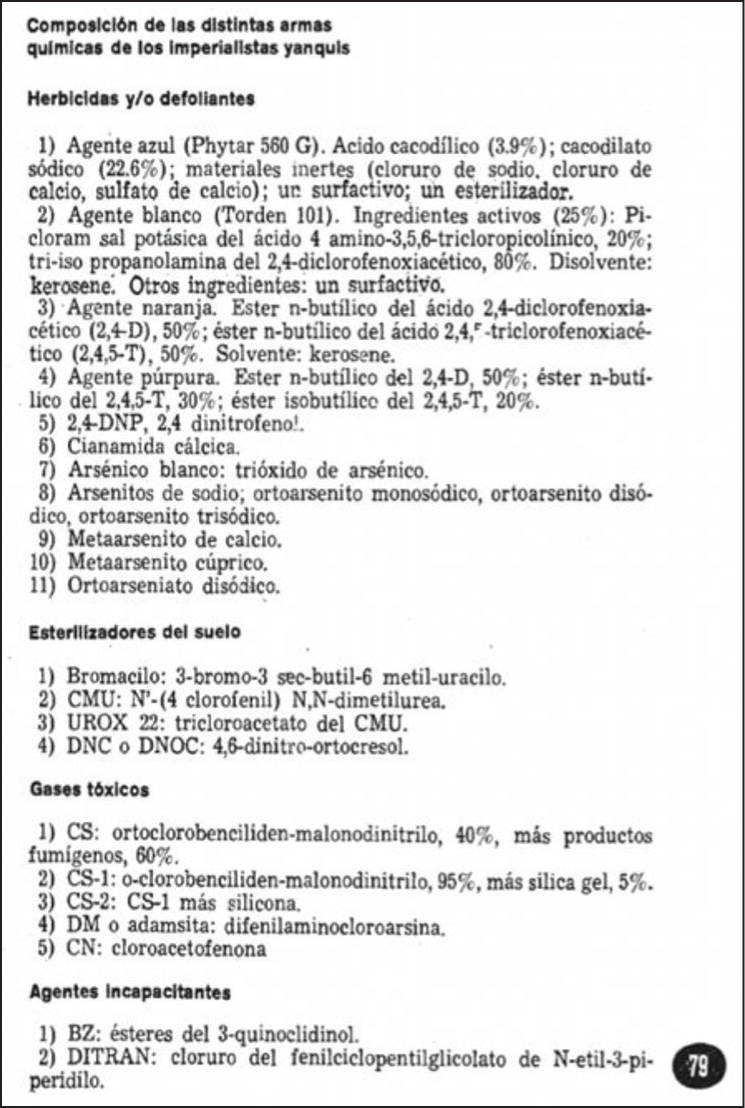
The ecological concern for what we could describe as a sovereign Tricontinental metabolism would persist in the publication over time, well beyond the magazine’s early prolific years. Continuing with the matter of human ecology, in Issue 32, September–October 1972, Cuban researcher Juan Prohías described “the most horrific and devastating consequences of the barbaric chemical campaign in Vietnam.” He associated this campaign with acts such as “murdering the civilian population,” “depriving the population of food through systematic, premeditated and progressively intensified crop destruction,” “disturbing the ecological balance,” “destroying forests and vegetation, and increasing the damage caused by flooding.” Prohías referred to “the total subversion of the ecological balance” caused by chemical weapons in agricultural production and biodiversity, providing a list of the composition of these weapons “of the US imperialists” (Figure 8). In response to the systemic threat of capitalism, he called for greater “environmental protection” in the Third World (Prohías, 1972, pp. 65–79).
The ecological question became a recurrent topic in Tricontinental from the 1980s onwards. Socio-ecological concerns that emerged in the previous decades within struggles for national liberation gave room to other issues associated with modern political ecology. These included the increasing relocation of polluting industries in the Third World, the degrading conditions associated to the expansion of slums, soil depletion, and biodiversity destruction—all aspects linked to the neoliberal deployment of imperialism, which simultaneously provided a context for an anti-systemic turn towards indigenous agriculture practices and agroecology. Therefore, for instance, in Issue 84, November–December 1982, researchers from the Puerto Rican Industrial Mission, Fernando Olivero and Víctor Agrait, discussed the complexity of “Ecological Colonialism in Puerto Rico” [Colonialismo ecológico en Puerto Rico] (1982, pp. 81–90). They presented a detailed analysis of the impact of the petrochemical and pharmaceutical industries on the agricultural environment, as well as the effect of marine residues on the region’s ecosystems. Furthermore, on the preservation of biodiversity, in Issue 93, May–June 1984, Vietnamese physician Nguyễn Khắc Viện discussed the “Enduring Consequences of Chemical Warfare” [Consecuencias perdurables de la guerra química], focusing on the specific ecological impact of chemical weapons in the Camau mangrove swamp in the Mekong Delta (1984, pp. 43–56).
The growing interest in the specific issues of political ecology throughout the 1980s became a central axis of the last stage of Tricontinental. Faced with the increasing environmental emergency and its social consequences, OSPAAAL began to participate more actively in international climate summits, acquiring a more diplomatic profile. During this last period, the Tricontinental sphere developed its practices and discourses in spaces such as the World Social Forums. Additionally, it engaged with new realms for debate, particularly those opening up for the left in Latin America, most notably with Venezuela and initiatives for cooperation like the Bolivarian Alliance for the Peoples of Our America (ALBA for its acronym in Spanish). The shift in Cuba’s international relations, which gradually transitioned from working with revolutionary and national liberation movements to encourage diplomatic collaboration with states, had a radical impact on Tricontinental’s internal dynamics. This led to the adoption of a more official tone. The complexities associated with these shifts accompanied the closing of OSPAAAL in 2019.
As noted, despite the changes that occurred after the 1970s, in those early years of Tricontinental’s peak, ecological concern often appeared as a subtext underlying the anti-imperialist and internationalist discourses central to the organization’s views and priorities. Thus, to a certain extent, Tricontinental rhetoric hinted what we could call a sort of “ecopolitical unconscious” 14 lying beneath the national liberation movements of the Third World. Little by little, economic sovereignty, national liberation, and the commitment against racial discrimination, among other issues, began to walk hand in hand with struggles connected to concrete ecological matters. This created an alternative and radical space in the late 1960s and early 1970s that allowed for a broader visibility of socio-environmental topics in the decades to come.
Conclusion
Exploring the early years of Tricontinental prompts a reevaluation of the fundamental socio-ecological concerns that shaped the pioneering practices and rhetoric of radical politics in the Third World during that era. These initiatives were centered around anti-imperialist nationalism and the pursuit of alternative pathways toward “self-reliant” development, emphasizing autonomous agrarian production and sovereign industrialization. The perspectives articulated in the magazine often anticipated and engaged with major environmental debates in the international institutional sphere, offering a sort of insurgent reverse side to those. While not always deliberate, these early views foreshadowed some key notions which later gained prominence with the rise of the modern environmental movement. Furthermore, the development of political ecology from the 1980s onwards coincided with a heightened focus on explicit ecological issues within Tricontinental. Additionally, it also accounted for a growing interest within the socio-ecological critiques at the time on topics that had appeared in the magazine’s pages from its very first Issues. Noteworthy contributions, such as those by Stephen G. Bunker (1985), Enrique Leff (1986), and James O’Connor (1988, 1998), played a crucial role in elucidating the links between unequal exchange and the ecological question within the capitalist world-system, as well as underscoring the obstacles to genuine sustainable development posed by dependency and underdevelopment. Ecological colonialism and imperialism, as well as the imperative of “delinked” metabolic restoration for the Third World, have continued to occupy a prominent place in radical critiques across diverse methodological perspectives and disciplinary frameworks. 15 By addressing the antagonism between capital and the living conditions of the peoples of the Third World, stemming from First World imperialist domination, Tricontinental laid the groundwork for discussions on these topics in a pioneering way.
Arguably one of the most notable expressions of the impact of these precedents on the historical trajectory of the Third World unfolded precisely in Cuba from the 1990s onwards. With the collapse of the Soviet bloc leading to Cuba’s entry into the Special Period, the country faced a profound economic crisis that severely affected the material well-being of its citizens. But rather than succumbing to the pressures of global market dynamics, Cuba embarked on a transformative journey towards urban and organic farming, prioritizing this shift as a cornerstone of its policies (Engel-Di Mauro, 2021, pp. 172–173, 190–194; Yaffe, 2020, pp. 61–64). While most post-Soviet countries embraced the tide of globalized neoliberalism, cheapening resources and labor forces to attract monopolistic capital, Cuba’s reformulation of the agrarian question, adopting organic farming and investing in agroecological research, enabled the restoration of a social metabolism that had been chronically disrupted by monoculture and industrialized agriculture. Despite the harshness of the Special Period, Cuba’s commitment to organic agriculture not only sustained the nation but also led the island to be repeatedly recognized as the most environmentally sustainable country in the world (Cabello et al., 2012). Even in the face of the blockade imposed for more than six decades by the most powerful imperialist power in history, the Cuban socio-ecological turn, which for so many years underlay the Tricontinental anti-imperialist struggle, crystallized into a collective and planned long-term social metabolic praxis. In this vein, just as Tricontinental once illuminated the path for the anti-colonial and anti-imperialist movement in the Third World, Cuba’s ecological policies emerged as a beacon for an internationalist ecosocialist movement, offering a vision for a just and genuinely sustainable future (Arias Guevara, 2014; Betancourt, 2020; Casimiro Rodríguez, 2016; Clausen et al., 2015; Engel-Di Mauro, 2021, pp. 85, 170–194; Fernández et al., 2018; Funes Aguilar et al., 2001; Funes Aguilar, 2017; Rosset et al., 2011; Wright, 2012).
Immersed as we are in the existential crossroads of global capitalism’s combined socio-ecological crises, revisiting these Issues of Tricontinental appears particularly relevant. This reexamination contributes to understanding not only the North–South asymmetric relations of domination and dependency but also, from a radical perspective, their impact on planetary degradation and the alternative modes that could be explored to counteract it.
Footnotes
Acknowledgements
Thanks to Vishnu Bachani for his valuable comments, which helped to improve the text. This work is dedicated to the memory of Laura Ramírez Palacio, whose archival dedication made this collaboration possible.
Declaration of Conflicting Interests
The authors declared no potential conflicts of interest with respect to the research, authorship, and/or publication of this article.
Funding
The authors disclosed receipt of the following financial support for the research, authorship, and/or publication of this article: This article was completed as part of project number 357011, funded by the Research Council of Finland.