




Abstract
This paper investigates the effect of a shared social identity on social behaviors of a marginalized population by focusing on North Korean refugees in South Korea. The findings of a behavioral experiment with North Korean refugees show that the common Korean identity can promote their integration in South Korea, despite considerable differences caused by seven-decade long separation between the two countries. Perceiving ethnic unity shared with South Koreans stimulates North Koreans’ socially desirable behaviors and attitudes such as trust, cooperation, confidence, and life satisfaction in South Korea, as well as their self-confidence about North Korean origin. In addition, the effect of the shared identity is greater for women and better educated persons – the finding that stresses the importance of education and gender-specific policy to accelerate social integration of North Korean refugees.
Keywords
Introduction
Integrating North Korean refugees 1 is an emerging important issue in South Korea. Since the Arduous March in the 1990s (the period when North Korea experienced a large-scale famine), the number of people who fled the country has been increasing, and South Korea currently hosts almost 30,000 North Korean refugees. Today, their integration in South Korea stands as a critical barometer of reconciliation between people who have lived under conflicts over decades despite their shared historical roots and culture.
Nonetheless, North Korean refugees often struggle to establish their new life in South Korea due to substantial differences and discrimination that they reportedly experience in the South. In fact, North Koreans are distinguishable from South Koreans in many ways: not only in their socioeconomic status but also in accents, looks, behaviors, values, and attitudes (Haggard and Noland, 2010, Kim et al., 2017). According to the social survey conducted by the Korea Hana Foundation (2016), North Korean refugees attribute their hardship and experience of discrimination in South Korea to cultural and language differences that the seven-decade long confrontational separation has resulted in. Hence, addressing such differences is the first step of endeavors for integrating North Korean refugees.
To this end, this study strives to identify social conditions under which North Korean refugees can be better integrated. The analysis of this paper focuses on social identity that can reinforce North Koreans’ social behaviors and attitudes to be more adaptable in South Korea, following identity theory that emphasizes the role of social identity in individual behaviors (Humlum et al., 2012). Accordingly, this paper examines whether emphasizing the common ethnic identity shared between North and South Koreans – that is, being Korean instead of North Korean – can provide a supportive condition for North Koreans’ integration. The shared Korean identity is placed at the center of the analysis here because it is arguably the most important identity that has led North Koreans to choose South Korea to build their new life and thus can be instrumental to facilitating social cohesion between North and South Koreans.
With this argument, a behavioral experiment with North Korean refugees was implemented to empirically investigate the effect of the shared Korean identity. This experiment utilized an identity priming method through which participants were assigned to two different identity groups. One group received the treatment of priming the common Korean identity and the other the North Korean identity. The common Korean identity underscored ethnic unity and solidarity, while the North Korean identity evoked their memories specific to North Korea and underlined differences between North and South Koreans.
To the present, experimental studies of North Korean refugees are rare in the literature. Kim et al. (2017) is the only one using a similar approach, through which effects of priming inter-Korean historical events on North Korean refugees’ social preferences for economic and political institutions were examined (and they found no priming effect). Different from Kim et al., this study focuses on perceived social identity and its effect on behaviors and attitudes in daily life.
The findings of this experiment highlight the role of the shared Korean identity in North Koreans’ social integration. Perceiving the common Korean identity positively influences their preferences for trust and cooperation, confidence, and life satisfaction in South Korea. Interestingly, exposure to the shared identity with South Koreans also enhances their confidence about North Korean origin. This result offers an implication that social unity can promote tolerance and acceptance of diversity by forming solidarity among people of different backgrounds.
The experiment further suggests education and gender (female) as multiplying factors that can strengthen the effect of the shared identity. This finding entails the importance of incorporating education and gender-specific integration policy to accelerate social integration of North Koreans in South Korea.
Research method
Behavioral experiment
The central focus of this study is to identify whether the perceived Korean identity can enhance North Korean refugees’ integration in South Korea. To do so, a priming method proposed by Shih et al. (1999) was used, through which participants were exposed to a certain identity in an experimental setting and their behavioral choices were observed thereafter. In Shih et al.'s study, Asian American girls were primed either their female or Asian identity, and the effect of each identity was evaluated with respect to their math performance. This approach used the widely accepted belief that Asians are good at math, while women are not. This method has an advantage of randomizing the treatment (identity priming) and estimating direct relationship between identities and behavioral outcomes under controlled environments.
In this experiment with North Korean refugees, participants were divided into two groups and each group was primed a different identity: either the common Korean or the North Korean identity. These two identities represent conflicting social environments that North Koreans face in South Korea. On the one hand, North Koreans are legally recognized as Koreans who share their ethnic identity with South Koreans. On the other hand, they exhibit considerable differences from South Koreans in many aspects (culturally, behaviorally, linguistically, etc.) as a consequence of the long confrontational separation between the North and the South. Moreover, their status in South Korea is regarded as a social minority who are practically refugees. Thus, their identity that reflects North Korean characteristics is often perceived as inferior to and different from South Koreans’. Making use of these different social references, each participant was primed one of the two identities by answering questions that appealed to her/his assigned identity – with the assumption that the participant would be under the influences of the designated identity during the experiment.
Specifically, the group who was assigned to the shared Korean identity-priming received the following three questions related to experience and traits common to both North and South Koreans so that the ethnic and cultural unity of being Korean is stressed.
Questions that were used to prime the shared Korean identity are:
When did you feel proud of being Korean? In your opinion, what are the three most representative dishes of Korean cuisine? If you have a chance to introduce Korean culture to a foreigner, what would you show first?
For the other group primed the North Korean identity, another three questions were asked to make their North Korean identity salient by appealing to their memories specific to North Korea.
Questions that were used to prime the North Korean identity are:
What is the most prominent memory from your life back in North Korea? In your opinion, which common strengths do North Koreans have, different from South Koreans? Between the Kumgangsan and Paektusan – the two most well-known mountains in North Korea – which one do you like more?
Note that the assignment of the identities was randomized by a blind test method (i.e. without seeing the contents, participants picked up questionnaires that were randomly mixed between the two types of identity-priming). Such randomization ensures no systematic difference in the characteristics of the two groups that may otherwise influence individual behavioral choices.
After being primed one of the two identities, participants were given scenarios that described situations related to trusting and cooperating with others, self-confidence, and life satisfaction, and then asked to decide how they responded to given circumstances. The questions consisted of two parts. The first includes 14 questions on behavioral choices of trust and cooperation with North and South Koreans, respectively, as well as self-confidence. In the second part, 28 questions were asked regarding experience involving fleeing the North, life satisfaction in the South, and demographic information. Details of the questions are presented in the section ‘Descriptive analysis’.
Recruitment of participants
Recruiting North Korean refugees for the experiment was not an easy task because of their marginalized status in society and their fear of disclosing personal information. To overcome this challenge, I contacted social organizations that aided North Korean refugees for many years and therefore gained their trust The extensive networks of these organizations were used to secure participants through a chain-referral method. The organizations include protestant churches, local social welfare centers, university student groups, and civil rights organizations that provide support and advocacy for North Korean refugees in the Seoul Capital Area (SCA, i.e. Seoul, the Gyeonggi Province, and Incheon).
Using these North Korean networks, 130 adults (over age 19) were recruited, and the experiment was conducted in spring 2019. Through this process, it was aimed to recruit diverse groups of individuals who represented the main characteristics of the theoretical population of North Korean refugees in South Korea especially in terms of age, gender, and the length of living in South Korea. These factors are commonly used as key variables to stratify the North Korean refugee population (Korea Hana Foundation 2019). The sample and population characteristics are compared and discussed in more detail in the section ‘Representativeness of the sample’.
In addition, it is necessary to present the ethical standards of recruitment and experiment processes that were observed in this research. In experimental research on vulnerable populations such as refugees, ensuring ethical treatment for participants is a crucial issue. Thereby, the following efforts have been made to comply with ethical standards in this study. First, only adults were recruited on a fully voluntary basis through cooperation with civil organizations, university student groups, and churches that have been established in North Korean communities. Second, the objective of the research – social integration of North Korean refugees in South Korea – was fully communicated with participants, and only those who agreed on this orientation took part in the experiment. Third, to avoid invoking posttraumatic stress related to their experience of defection, no question directly related to such events was asked and the questionnaire was carefully designed without using provocative words and descriptions of disturbing situations. Forth, the researcher was always available for participants to answer questions and resolve concerns during the experiment. Lastly, the data gathered through the experiment is treated strictly confidential by maintaining anonymity and coding information under randomly assigned ID numbers so that no personalized identity can be disclosed.
Representativeness of the sample
Currently, almost 30,000 North Korean refugees reside in South Korea. A crucial question on the empirical validity of this study involves whether the participants of the experiment can represent the entire population of North Korean refugees in South Korea. Refugees are regarded as a ‘hidden population’ (Spreen, 1992) who are marginalized in society and therefore hard to reach for research purposes. Hence, recruiting participants for the experiment had to rely on chain-referrals by using social networks established through the above-mentioned supporting organizations. Given that, how well the sampled group resembles the population characteristics remains to be verified. Accordingly, the sample characteristics are compared with the population characteristics of North Korean refugees in South Korea based on demographic information provided by the population survey (Korea Hana Foundation 2019).
To do so, the four essential categories of North Korean refugees’ characteristics are used, following the stratification strategy of the most generalized survey of North Korean refugees conducted by the Korea Hana Foundation (2019). They are namely age, gender, and residence and the length of living in South Korea. Table 1.1 summarizes the results of the comparison, showing that the sample resembles the entire population of North Korean refugees to a large extent in terms of their gender composition, age structures, and years of living in South Korea. 2 The sample represents slightly more women and people in their 20 s and 50 s than the other age groups compared to the population. However, the overall sample distributions of the demographic traits correspond to the population characteristics relatively well. In contrast, the distribution of current residential areas differs considerably between the sample and the population. Most sampled individuals are residents of the Seoul Capital Area where the experiment was implemented, while SCA residents form less than 60% of the North Korean refugee population in South Korea. This difference requires caution in applying the findings of this study nationwide.
Comparisons between the sample and the population of North Korean refugees.
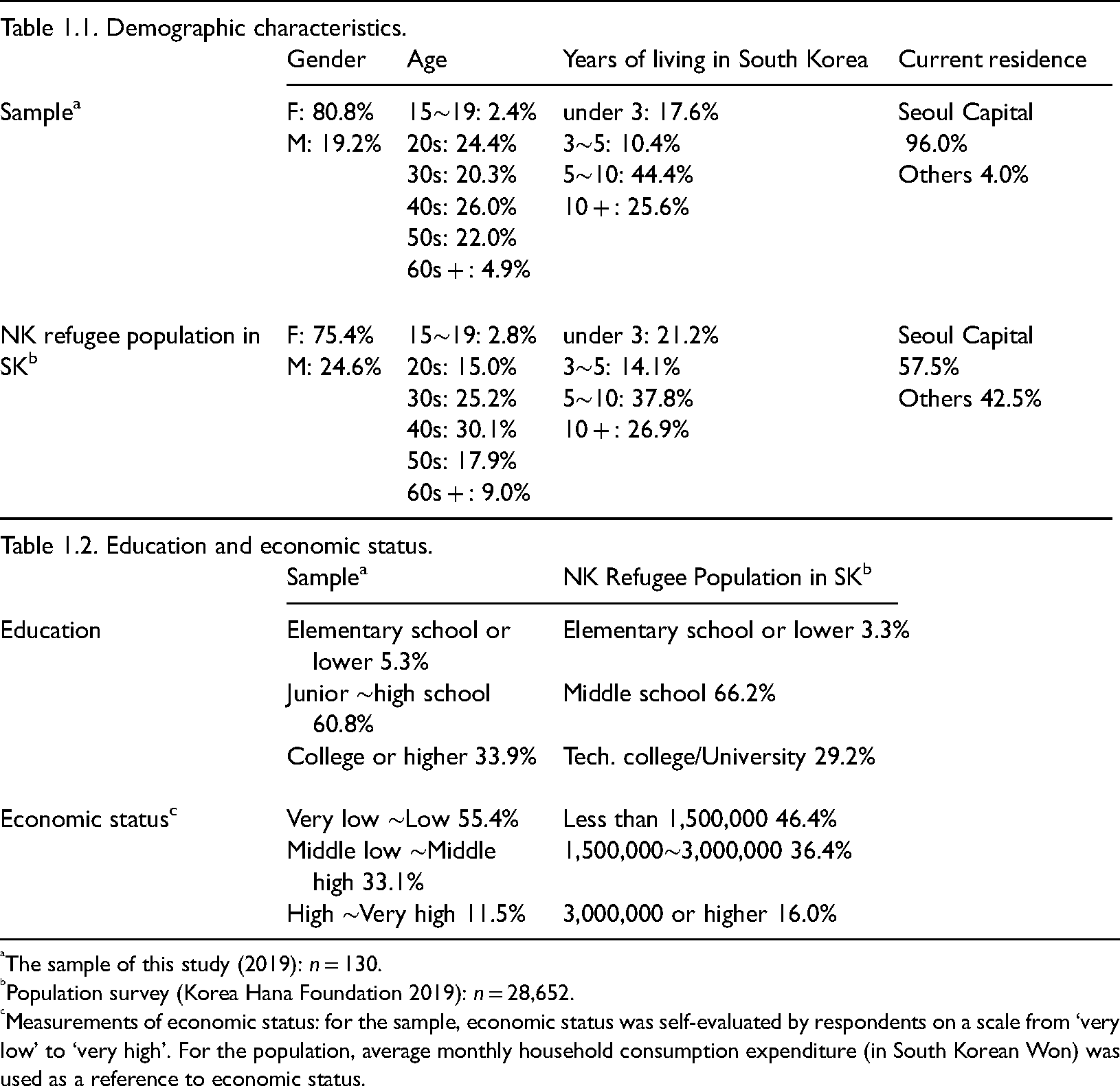
The sample of this study (2019): n = 130.
Population survey (Korea Hana Foundation 2019): n = 28,652.
Measurements of economic status: for the sample, economic status was self-evaluated by respondents on a scale from ‘very low’ to ‘very high’. For the population, average monthly household consumption expenditure (in South Korean Won) was used as a reference to economic status.
Descriptive analysis
In this section, differences in North Korean refugees’ behaviors and attitudes between the two identity groups are discussed in a descriptive manner, followed by a regression analysis in the following section.
Social trust
One of important aspects of social integration is trust-building with others. This experiment measures how much North Korean refugees trust North and South Koreans, respectively by observing their decisions of lending money to North and South Koreans who are not personally close to them. Lending decisions are considered as behavioral choices that reflect the level of one's trust in borrowers (Johansson-Stenman et al., 2013, Kim et al., 2017). With this consideration, this experiment was designed to evaluate to what extent North Korean refugees were willing to lend money to other North Koreans and South Koreans, respectively. It is assumed here that a higher level of trust in South Koreans indicates better social integration in South Korea. In this question, hypothetical borrowers were described as individuals without personal ties to include broad ranges of people beyond family members and friends.
The findings presented in Tables 2.1 and 2.2 show that a significantly higher share of participants was willing to lend money without conditions to other North Koreans (NK) than to South Koreans (SK): 27.13 versus 8.46%. In contrast, North Koreans imposed conditionality of signing a document of obligation to SK more than to NK: 24.62 versus 12.40%. The refusal rate was also higher for SK borrowers than for NK: 66.92 versus 60.47%.
North Korean refugees, social trust and cooperation.
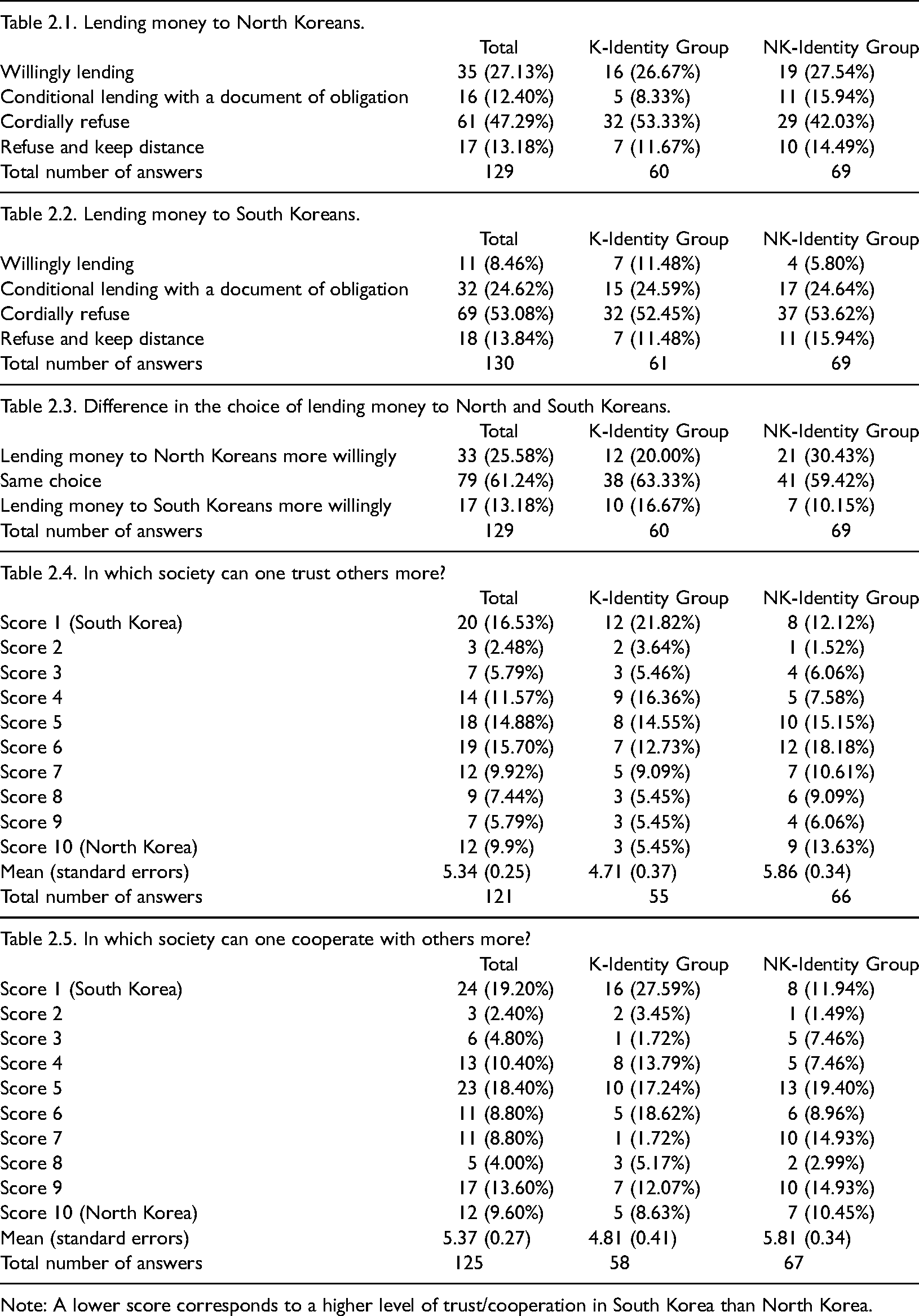
Note: A lower score corresponds to a higher level of trust/cooperation in South Korea than North Korea.
When the outcomes of lending decisions are compared between the two identity groups, the results reveal significant differences between them. Participants in the shared Korean identity group (K-identity) chose to lend money (with or without conditionality) to SK (36.07%) as often as to NK (35%). By contrast, participants under the North Korean identity-priming (NK-identity) demonstrated a significantly higher level of willingness to lend money to other North Koreans than to South Koreans: 43.48 versus 30.44%.
The differences in the behavioral patterns between the K- and NK-identity groups are further evident when one's decisions of lending money to North and South Koreans are compared. The comparison reveals whether one is more willing to lend money to South Koreans or to North Koreans. This approach enables the computation of net differences in lending money to NK and SK and thus eliminates individual heterogeneity in general lending behaviors from the equation. 3 Table 2.3 presents the results of the two identity groups. The majority in both groups selected identical lending options for North and South Koreans, but the share of the identical decisions is slightly higher in the K-identity group than the NK-identity one: 63.33 vs. 59.42%. In addition, in the K-identity group, the share of those who expressed preferences for lending money to NK (20%) is not significantly different from the share of others who preferred SK (16.67%). On the contrary, considerably more participants in the NK-identity group preferred lending money to NK (30.43%) than to SK (10.15%). This comparative result indicates that North Korean refugees primed the shared Korean identity tend to maintain the equal level of trust in North and South Koreans, while others under the North Korean identity trust North Koreans more than South Koreans.
In addition to the lending decisions, participants were asked a question on social trust in a different mode, in which they rated the level of their relative trust between North and South Koreans on a 10-point scale, with a lower score corresponding to a higher level of trust in SK over NK. 4 This question was formed to evaluate their preferences and trust in a more abstract way (than the specific circumstances used to reveal one's lending choices). As seen in Table 2.4, participants show a slightly higher level of trust in NK with a mean score of 5.34. However, examining it by identity group unveils a significant difference. The K-identity group expressed a higher level of trust in SK (mean = 4.71), while the NK-identity group evaluated NK more positively (mean = 5.86).
Cooperation
This experiment incorporates another key indicator of social integration, one's willingness to cooperate with others. To assess individual preferences for cooperation, participants were asked to determine in which society – either North or South Korea – they could cooperate with others better. They rated the comparative level of cooperation on a 10-point scale, with a lower score indicating a higher level of cooperation in the South (the same procedure as the evaluation of the comparative trust level above). This question was designed to identify the relative degree of North Koreans’ willingness to form collaboration in South Korea that can help their integration in South Korean society.
On average, North Korean refugees perceived North Korea having a more cooperative society than South Korea – with a mean score of 5.37 (Table 2.5). This finding is similar to the comparative trust level analyzed in the section ‘Social trust’. One may be surprised with such preferences given the political unrest and institutional weakness of North Korea. However, these responses are personal perceptions based on individual experience, noting that North Korean refugees often face discrimination and exclusion in South Korea and thus are discouraged from trusting and cooperating with others in their adopted country. 5
The effect of the K-identity on North Korean refugees’ confidence and life satisfaction.
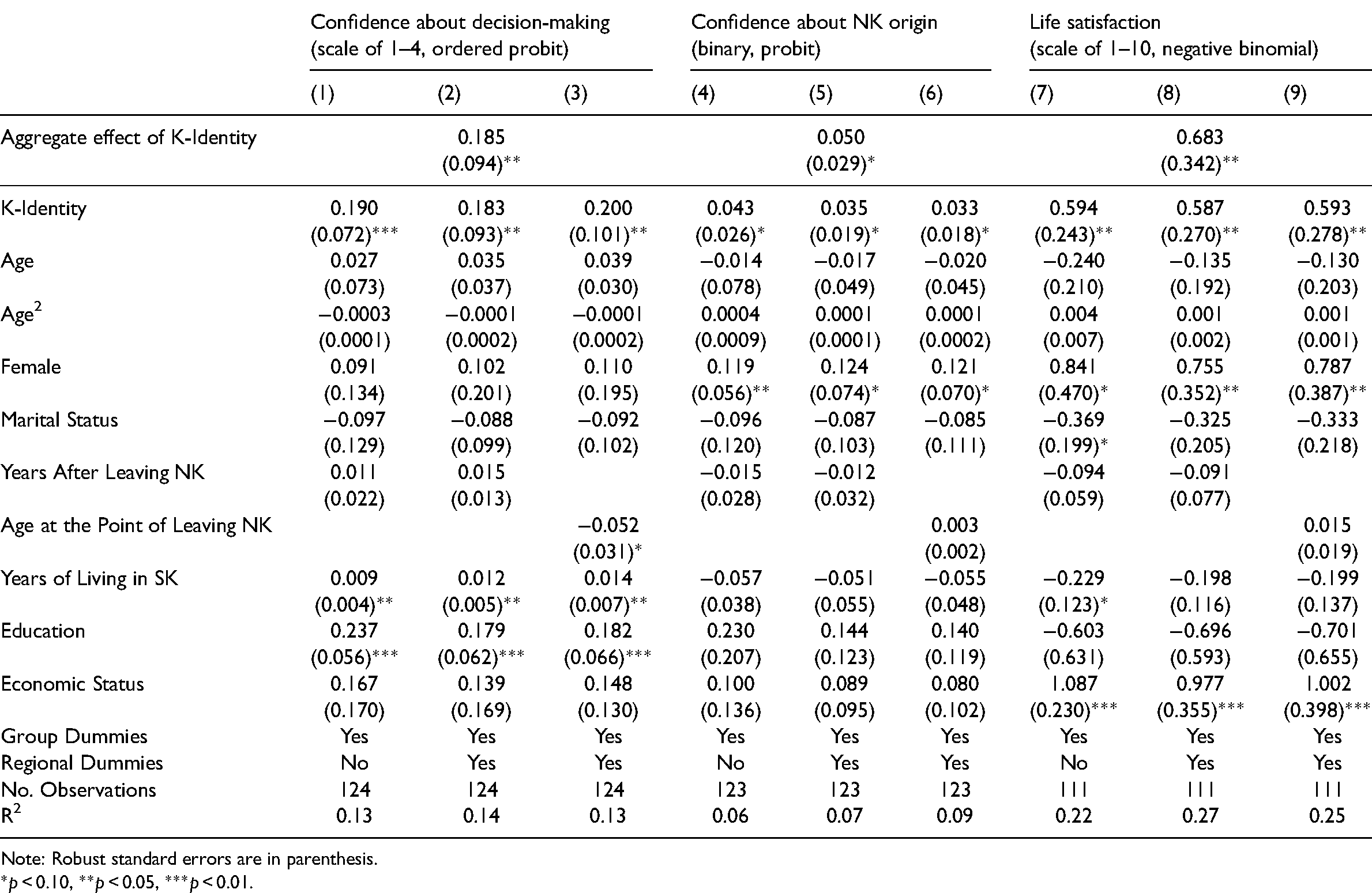
Note: Robust standard errors are in parenthesis.
*p < 0.10, **p < 0.05, ***p < 0.01.
Nonetheless, comparing the outcomes between the K- and NK-identity groups shows that North Koreans’ reluctance to cooperate with others in South Korea can be mitigated by evoking the shared Korean identity. Participants in the K-identity group placed South Korea more favorably than the North for cooperation-building (mean = 4.81). In contrast, the NK-identity group evaluated North Korea more positively with a mean score of 5.81. Also, 46.55% of participants in the K-identity group responded that it was easier to cooperate with others in South Korea, but only 28.35% of the NK-identity group members answered this way.
Confidence and life satisfaction
The experiment also includes questions that can reflect participants’ self-confidence. Confidence is an essential individual trait that enables one to take initiatives especially outside his/her comfort zone and therefore, can facilitate North Korean refugees’ integration in South Korean society. In this experiment, their self-confidence was assessed in the following way. Participants were asked to recall three important decisions, which they made after arriving in South Korea. Then, they evaluated how much they were satisfied with their decisions with the following four choices: (i) I am generally satisfied with my decisions, (ii) I think my decisions are often second-best because there is no better alternative, (iii) I often regret my decisions because there is usually an alternative, and (iv) I often regret my decisions but there is no alternative. Overall, a considerably high share of people expressed satisfaction with their decision-making by choosing (i) (76.74%, Table 3.1). Additionally, the share of the positive response is greater in the K-identity group (81.67%) than the NK-identity one (72.46%), corroborating the positive outcome of priming the shared Korean identity.
North Korean refugees, confidence, and life satisfaction.
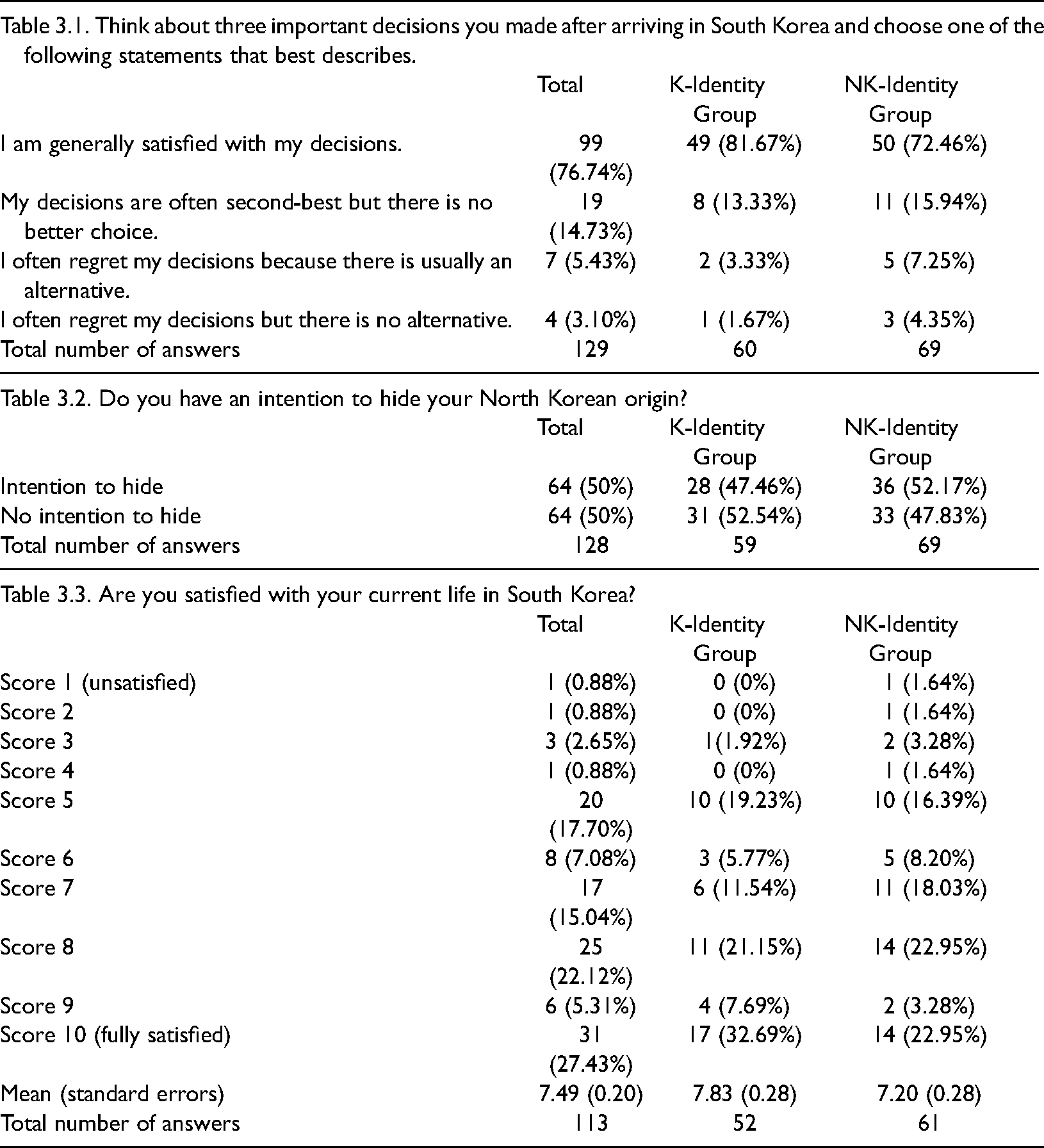
In a follow-up question, participants’ confidence was further examined by asking about intention to hide their North Korean origin. On average, the share of those who intended to conceal their origin is substantial: intention to hide = 50% versus no intention to hide = 50% (Table 3.2). However, when the shared K-identity was primed, the majority (52.54%) answered ‘no intention to hide’. On the contrary, 52.17% in the NK-identity group admitted their intention not to disclose their origin. This result is interesting because exposure to the common identity shared with South Koreans can increase one's confidence about his/her North Korean origin. This finding can be inferred that social unity can be instrumental to stimulate tolerance and acceptance of diversity by forming solidarity among people of different backgrounds.
Lastly, participants evaluated their life satisfaction in South Korea 6 as part of integration in their adapted country. The level of life satisfaction was rated on a scale from 1 (totally unsatisfied) to 10 (totally satisfied). While the level of satisfaction is relatively high in general (mean = 7.49), it is even higher for the K-identity group than the NK-identity one: mean = 7.83 versus 7.20 (Table 3.3).
Regression analysis
The descriptive findings above show that North Koreans refugees who were primed the shared Korean identity expressed higher levels of social trust, cooperation, confidence, and life satisfaction in South Korea than others under the North Korean identity. These findings are further examined here through a regression analysis to identify whether the positive effect of the common Korean identity maintains after controlling for other covariates of social behaviors and attitudes.
Empirical model
The focus of the regression analysis is to estimate the effect of the shared Korean identity. Accordingly, a multivariate regression model is formulated as below.

The cooperation variable is formed in the same manner as the second trust variable above. Participants rated the level of their willingness to cooperate in South Korea relative to their willingness in North Korea on a 10-point scale (again, the scale is inverted here). Life satisfaction is also measured on a 10-point scale with a score of 10 representing full life satisfaction in South Korea and 0 full dissatisfaction.
For confidence, two measurements are used: (i) confidence about one's decision-making in South Korea (constructed based on Table 3.1) and (ii) confidence about one's NK origin (Table 3.2). Confidence about decision-making is expressed by selecting one of the four answers described in the section ‘Confidence and life satisfaction’ and each answer is quantified on a four-point scale, in that a higher score corresponds to a higher level of confidence. The second measurement of confidence is coded as a binary variable. If one answered ‘I don't have intention to hide my NK origin, he/she receives a score of 1, and otherwise, 0 (i.e. with intention of hiding it).
The explanatory variable of main interest is identity that designates the identity primed in the experiment. It has a binary structure with a value of 1 indicating the shared Korean identity and 0 the North Korean identity. Note that the identities were randomly assigned among participants by a blind test method (see section ‘Behavioral experiment’) and thus the identity primed to each participant was independent of any individual or group characteristics. The randomization of identity-priming enables the estimation of the causal effect of the identity in the regression analysis.
X is a vector of other explanatory variables. This set comprises individual characteristics that determine behaviors and attitudes: age and age2, gender (female), marital status, years after leaving North Korea (alternatively, age at the point of leaving North Korea 7 ), years of living in South Korea 8 , education, and economic status. Age variable includes its squared term to account for its potentially non-linear effect. Education is measured on a five-point scale: 5 (college or above), 4 (high school), 3 (junior high school), 2 (elementary school), and 1 (no education). Economic status shows the self-evaluated level of one's economic conditions measured on a six-point scale: 6 (very high level), 5 (high), 4 (middle-high), 3 (middle-low), 2 (low), and 1 (very low). Marital status is a binary variable, indicating married (1) or not (0).
G comprises dummy variables of grouping people who participated in the experiment together. The experiment was conducted with eight different groups such as churches, universities, and social and community organizations, and each group had its own dynamics and characteristics. By incorporating the group fixed effects in the model, group heterogeneity, which likely affected individual preferences, was controlled for. R is a set of regional dummy variables capturing hometown characteristics in North Korea. The error term (ui) represents unobserved characteristics clustered at the individual level.
The regression model is estimated by applying methods appropriate to the structures of the dependent variables. For the net difference in lending money to SK and NK and confidence about decision-making, an ordered probit method is employed given their ordinal structures. When the dependent variable has a 10-point scale (i.e. relative trust level, cooperation, and life satisfaction), a negative binomial regression technique is used. The model of confidence about the NK origin is estimated by a probit method, accounting for its binary structure. In Tables 4–7, average marginal effects (the average of predicted change in fitted values for a one-unit change in an explanatory variable for each observation) are reported.
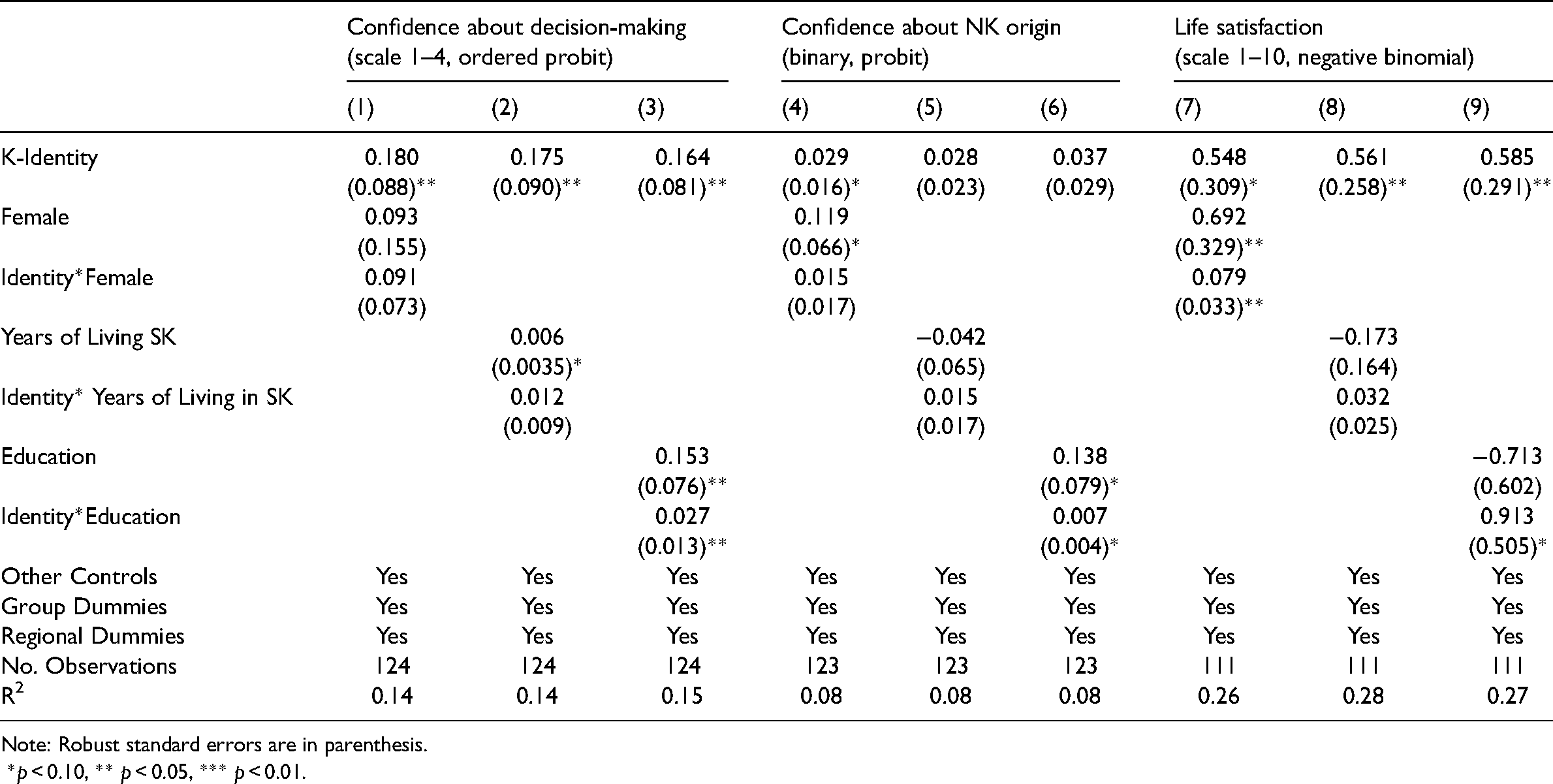
Interaction effects on North Korean refugees’ confidence and life satisfaction – K-identity & gender, education, and length of living in South Korea.
Note: Robust standard errors are in parenthesis.
*p < 0.10, ** p < 0.05, *** p < 0.01.
Findings
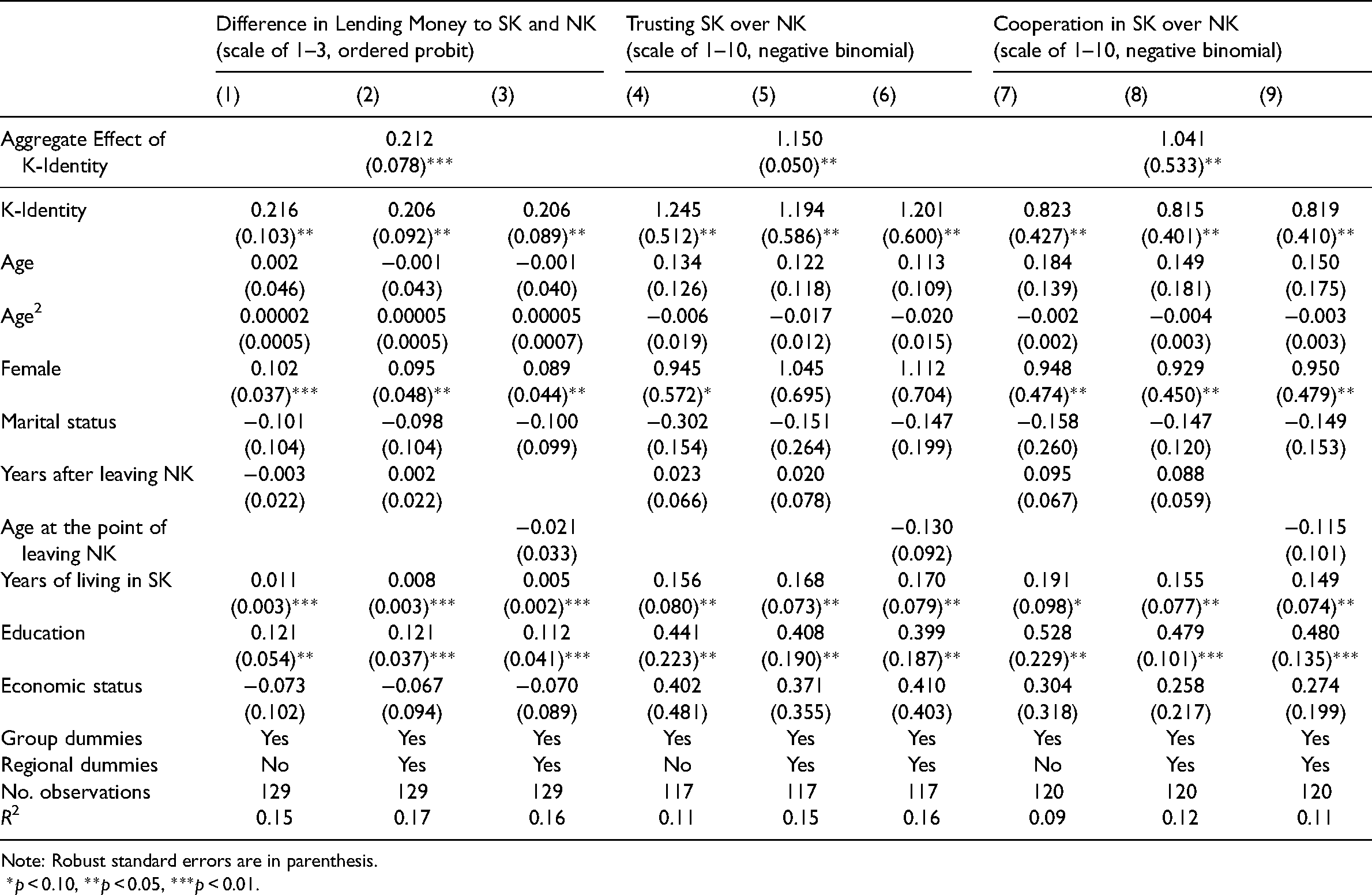
The model of the identity outlined above is estimated by controlling for three different combinations of individual and group heterogeneity. First, the aggregate effect of priming the common Korean identity (K-identity) is estimated without any control variables. Afterwards, individual and group characteristics (Vectors X and G) are added in the model and then, regional variables (Vector R). Additionally, ‘years after living NK’ is replaced by ‘age at the point of leaving North Korea’ to identify the effect of childhood exposure on integration. As seen in Tables 4 and 5, the effect of the K-identity is similar in its magnitude and significance across the different models. This supports the random distribution of identity-priming, independent of participants’ characteristics.
Overall, priming the shared Korean identity has a positive effect on the trust and cooperation of North Korean refugees in South Korea (Table 4). The probability of one more willing to lend money to South Koreans is about 5 percentage point (p.p.) higher in the K-identity group than the NK-identity one (Columns 1–3). Also, by priming the K-identity, participants evaluated the relative levels of their trust and cooperation in South Korea more favorably – 12 p.p. and 8 p.p. higher than the NK-identity group (Columns 4–6 and 7–9, respectively).
The effect of the K-identity on North Korean refugees’ social trust and cooperation in South Korea.
Note: Robust standard errors are in parenthesis.
*p < 0.10, **p < 0.05, ***p < 0.01.
The positive effect of the common Korean identity is further evident in confidence and life satisfaction in South Korea (Table 5). The level of confidence about decision-making is 4.5–5 p.p. higher in the K-identity group than the NK-identity one (Columns 1–3). Also, the K-identity has a sizable effect on life satisfaction, increasing it by almost 6 p.p. (Columns 7–9).
However, when it concerns self-confidence about North Korean origin, the results appear more complex (Columns 4–6, Table 5). The probability of answering, no indention to hide, is 3.3–5 p.p. higher in the K-identity group. However, the effect is significant at a 10% level only and its magnitude is smaller than the effects on the other social behaviors discussed above. This is probably because self-confidence is a more personally rooted attitude, and thus, social environments – such as exposure to Korean unity – may have a limited role in stimulating it.
Among individual heterogeneity, a significant gender effect is found that women refugees have higher levels of trust, cooperation, and life satisfaction in South Korea, as well as self-confidence about their North Korean origin. This finding suggests that North Korean women be more readily integrated in South Korea than their male counterparts, while maintaining confidence about their origin. Also, higher levels of education and longer years of living in South Korea strengthen North Koreans’ trust, cooperation, and confidence in the South. However, the effects of economic statue, age, marital status, and years after leaving North Korea are generally trivial. When the variable of years after leaving NK is replaced by age at the point of leaving NK, this alternative variable generates a marginally significant effect on one's confidence (Column 3, Table 5), hinting that early integration may help confidence building. Nonetheless, age at the point of leaving NK has no effect on the other types of social behaviors.
Further analysis and discussion
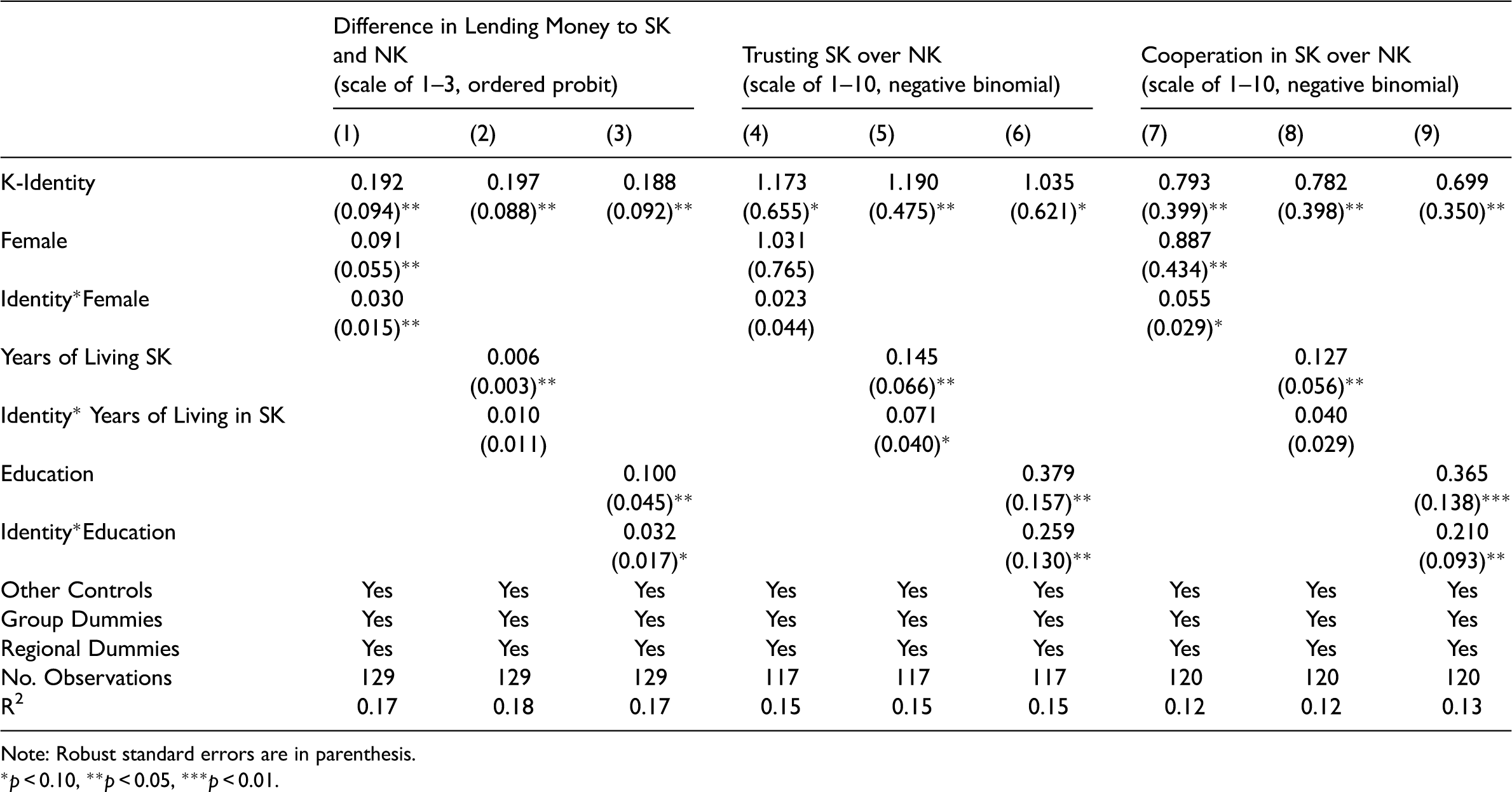
The results above suggest the shared Korean identity as a facilitator of North Korean refugees’ social integration in South Korea. In this section, the role of the shared identity is further investigated by unraveling conditions under which its positive effect can be reinforced. To do so, education, gender, and the length of living in South Korea are examined as potential conditions that could create compounding effects with the shared identity on social behaviors. These variables are selected for this analysis because they have significant effects on North Koreans’ social behaviours as presented in the section ‘Findings’. Accordingly, the model in the section ‘Empirical model’ is modified here by incorporating the interaction terms between the K-identity and each of the three selected variables. If these variables generated compounding effects with the K-identity, the respective coefficient of the interaction term should be positive: that is, ß5 > 0, ß6 > 0, ß7 > 0 in the model below.
Interaction effects on North Korean refugees’ social trust and cooperation – K-identity & gender, education, and length of living in South Korea.
Note: Robust standard errors are in parenthesis.
*p < 0.10, **p < 0.05, ***p < 0.01.
Second, the effects of the shared Korean identity are larger for better educated individuals, given the positive interaction effect between the K-identity and education. For instance, college students/graduates in the K-identity group expressed higher levels of trust, cooperation, and confidence than others with the same level of education under the NK-identity by 20.7, 15.4, and 6.8 p.p., respectively (Columns 6 and 9 in Table 6 and Column 3 in Table 7). The positive effects reduce to 12.9, 9.1, and 4.8 p.p. for elementary school graduates and to 10.4, 7.0, and 4.1 p.p. for those without education. The twofold effects of the K-identity multiplied by higher education propose education as a viable instrument to facilitate the integration of North Korean refugees in South Korean society. In contrast, the length of living in South Korea has no such effect, indicating that simply living longer in the country does not boost the effect of the shared identity.
From the findings of this analysis, it is inferred that promoting commonality in identity can be an effective way of integrating North Korean refugees especially when efforts to improve their education and accommodate gender-specific assistance are combined. These findings highlight the areas of integration policy that should be prioritized.
Meanwhile, one should note that the positive role of the common K-identity exhibited in this study was designed as a priming effect and therefore short-lived in the controlled setting of an experiment. Whether reinforcing the shared identity can have long-lasting effects on observable improvement in North Korean refugees’ social integration thereby remains as an issue of future studies that exploit real-life situations possibly through a field experiment with a larger number of participants.
Footnotes
Acknowledgements
The author cordially acknowledges the generous funding provided by the Academy of Korean Studies that enabled the experimental research.
Declaration of conflicting interests
The authors declared no potential conflicts of interest with respect to the research, authorship and/or publication of this article.
Funding
The authors disclosed receipt of the following financial support for the research, authorship, and/or publication of this article: This work was supported by the Academy of Korean Studies (Overseas Fellowship Grant 2019).
