




Abstract
Objective:
To evaluate the color stability of Tetric® N-Ceram Bulk Fill composite restorative material after immersion in three different (energy drink, protein supplement solution, and combination of energy drink and protein supplement solution) drinks.
Materials and Methods:
Composite resin disks, 2 mm in depth and 5 mm in diameter, were prepared from the Tetric® N-Ceram Bulk Fill composite restorative material. Specimens were tested after immersion and aging in energy drink (Red Bull) alone, protein supplement solution alone, and in combination with energy drink and protein supplement. Deionized water was used as a control group. Specimens were stored at room temperature of ±23°C for a period of one week in each drink. Color was assessed in the CIELAB using Color Eye 7000A Spectrophotometer. Color differences in different group specimens were measured. Mean values were statistically analyzed using one-way analysis of variance (ANOVA). Further Tukey’s multiple comparison tests were applied to know the differences between the group of specimens. A p value of p < 0.05 was set as significance level.
Results:
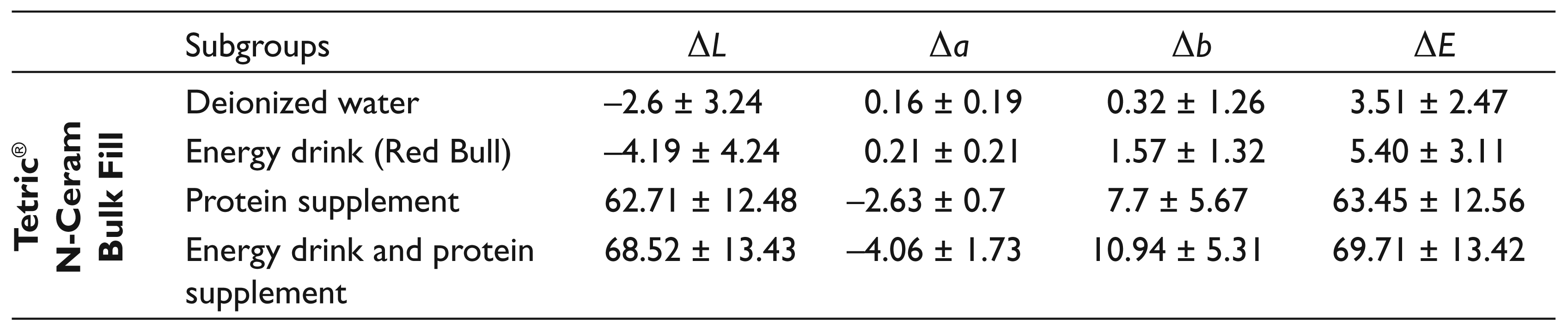
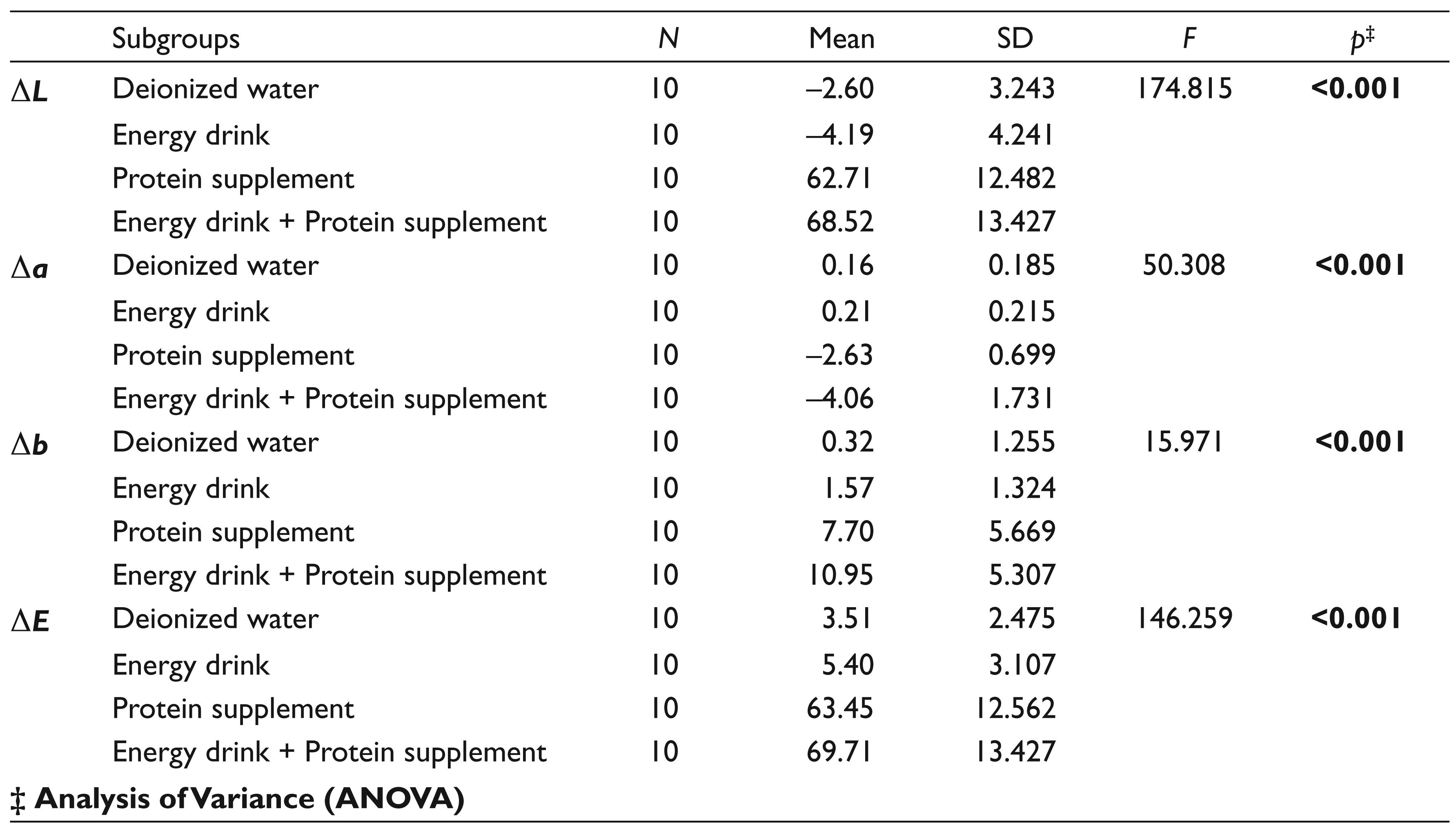
N-Ceram Bulk Fill composite showed ΔL, Δa, Δb, and ΔE mean and standard deviation values when immersed in deionized water (–2.6 ± 3.24, 0.16 ± 0.19, 0.32 ± 1.26, and 3.51 ± 2.47), energy drink (–4.19 ± 4.24, 0.21 ± 0.21, 1.57 ± 1.32, and 5.40 ± 3.11), protein supplement (62.71 ± 12.48, –2.63 ± 0.7, 7.7 ± 5.67, and 63.45 ± 12.56), combined energy drink and protein supplement (68.52 ± 13.43, –4.06 ± 1.73, 10.94 ± 5.31, and 69.71 ± 13.42), respectively. All the color coordinates (ΔL, Δa, and Δb) showed statistically significant difference, p < 0.001. The color change of N-Ceram Bulk Fill composite specimens ΔE occurred by immersion in energy drink, protein supplement solution, and combined solution of energy drink and protein supplement after seven days was found to be statistically significant p < 0.001.
Conclusion:
The study’s finding suggests that the energy drink (Red Bull), protein supplement (ISOPURE), and combined immersion in energy drink and protein supplements caused perceptible and clinically unacceptable color change in the Tetric® N-Ceram Bulk Fill composite material. This color change was remarkably high with a combined immersion in energy drink and protein supplement solution.
Keywords
Introduction
Sports beverages or drinks are nonalcoholic items that claim to improve physical performance at sporting activity and/or hasten recovery afterward, and the effectiveness of which has been proved scientifically. In this setting, sports beverages are outlined particularly to convey both carbohydrates and liquid quickly to the body. 1
During the last 10 years, consumption of energy caffeinated drinks has been significantly inflated. Additionally, energy drink manufacturing has been expanded exponentially with approximately 500 brands launched globally in 2006, without age restrictions mostly. Although energy drinks usually attract young people, latest studies amongst college students reported the prevalence of energy drink consumption as 39 per cent to 57 per cent. About 66 per cent of consumers were 13–35 years old. This attraction to energy beverages might be due to efficient product marketing and lack of awareness about their possible risks. 2
The past few decades have witnessed tremendous increase in the consumption of energy drinks especially in the Western and Asian countries. Even though manufacturers of energy drinks claim that these drinks are beneficial in that they can provide energy and physical performance, there is inadequate scientific evidence to support their claims. 3
Since the introduction of energy drinks in 2000, the consumption has increased rapidly in Saudi Arabia. With a society having more than 50 percent children and young adults, it is possible that this consumption will keep on increasing further. Market trends show that energy drinks will double its income in Saudi Arabia between 2012 and 2016. The energy drink consuming frequency among Saudi adolescents is comparatively high particularly among males. Approximately 22 per cent of Saudi male adolescents consume five or more cans of energy drinks weekly. This percentage is higher than that found among young adults in Western countries. 4
Since the introduction of the composites to the field of dentistry, it has been extensively utilized for the restoration of anterior and posterior teeth. Advancements in physical, mechanical, and esthetic properties have made composite resins most popular dental esthetic materials. Presently, composites are available in various shades, satisfying all the requirements of light sensitivity, depth of cure, color match, and stability.5,6 Even though resin composite restorations are overwhelmed with major drawbacks of polymerization shrinkage, secondary caries, plaque deposition, and color stability. 7
Discoloration of composite resins can be caused by internal or external factors. In visible light-cured composite system, Camphorquinone is used as the photoinitiator. If curing is not adequate, it leads to conversion of unconverted Camphorquinone into yellowish discoloration. Additionally, amines which act as accelerators tend to cause yellow or brown staining of the composite resin under the effect of light or heat. 8 Such internal discolorations are enduring and directly related to the composite quality, filler type and amount, and photo-initiator system being used. Internal discoloration is mainly associated with manufacturing process except inadequate light curing.9,10 Hence, operator cannot interfere with internal discoloration of the composite. 11 However, degradation and penetration or adsorption of the coloring agents causes discoloration of the composite resin within the oral environment. Other factors of importance related to the discoloration of the composite resins include surface roughness, surface integrity, and polishing technique.12–14
Composite discoloration is a result of the interaction between external colorants and the composite resin materials. The adsorption of external colorants onto the surface and the absorption into resin matrices can both cause color changes and compromise the esthetic outcomes. The roughening of the surface caused by wear and chemical degradation may also affect gloss and consequently increase the extrinsic staining. Previous studies on color stability have shown that beverages have varied degrees on staining effect according to their composition and properties. The main active constituents of energy drinks include varying amount of caffeine, guarana extract, taurine and ginseng, amino acids, vitamins, and carbohydrate. In addition, several studies have reported concerning the color stability of the drinks such as coffee, tea, red-wine, cola, and mouth rinses.11,15–17
Tetric® N-Ceram Bulk Fill (Ivoclar Vivadent) was recently introduced with the claim that it would substitute both conventional nonflowable composite and bulk-fill flowable composite that needed an increment of 2 mm when using the incremental layering technique. As per the manufacturer’s commercials, this new composite will achieve full-depth bulk fill up to 4 mm without a superficial capping layer. The manufacturer states that Tetric® N-Ceram Bulk Fill contains a shrinkage stress reliever to minimize polymerization shrinkage. However, there is scant information on color stability of the Tetric® N-Ceram Bulk Fill composites, especially when immersed in various drinks. Therefore, the aim of this study was to investigate the discoloration resistance of nanocomposite resin restorative materials (Tetric® N-Ceram) upon exposure to energy drinks (Red Bull) and protein supplements (Zero carb ISOPURE).
Material and Methods
Ethical Clearance
Study proposal was submitted to the research center of Riyadh Colleges of Dentistry and Pharmacy, and ethical approval was obtained. It was registered with composite selection, discs preparation, and grouping.
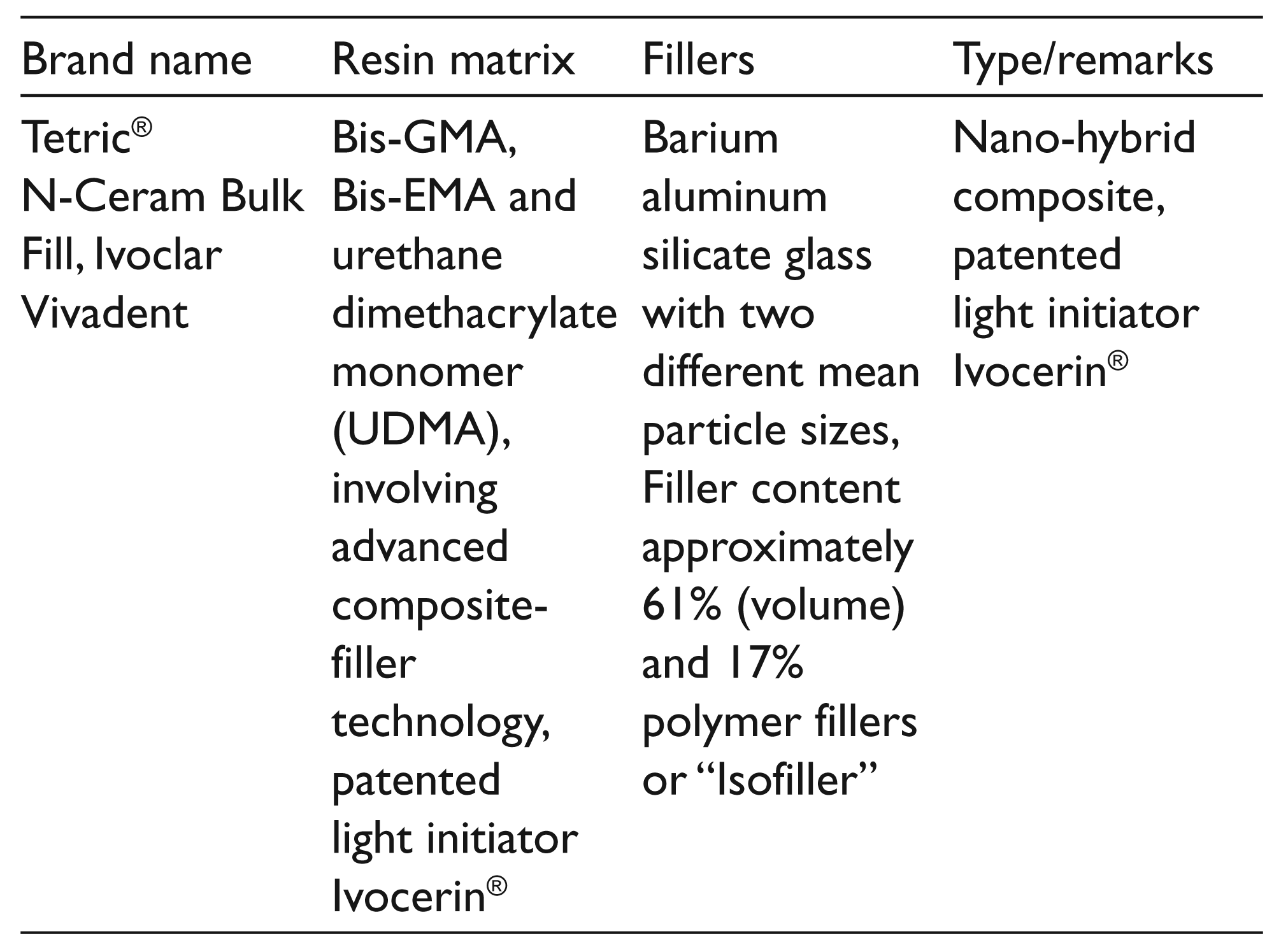
Nanocomposite resin material Tetric® N-Ceram Bulk Fill (Ivoclar Vivadent, AG) was selected as experimental material with shades (equals A2) A2E; specification details of the composite material utilized in the study has been shown in Table 1.
Specification of Test Material Utilized in the Study
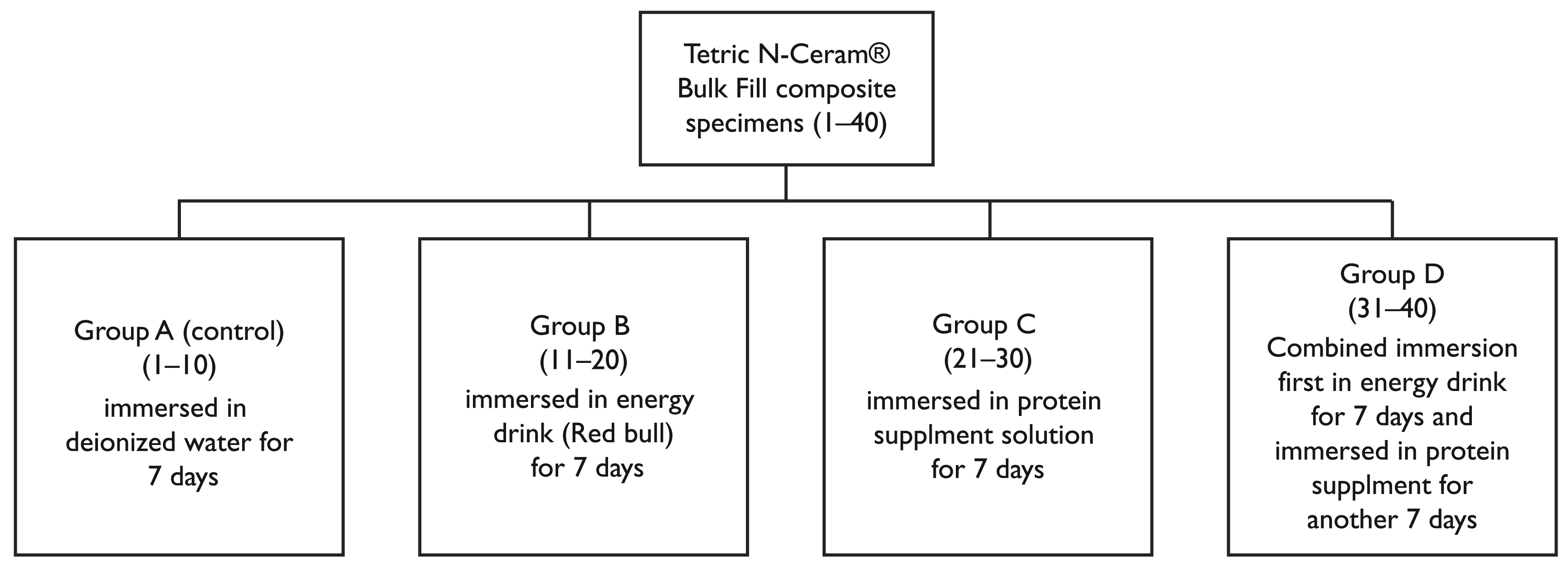
Forty (n = 40) specimens (composite discs) were randomly divided into four different subgroups (10 specimens each). Composite resins were injected into customized molds (5 mm in diameter and 2 mm in depth) and slightly overfilled with composite and placed between two glass plates with Mylar strip onto both sides to create smooth surfaces. Finger pressure was applied on the glass plate to remove excess material and create a smooth surface; care was taken to prevent entrapment of air voids within the specimens. Then specimens were polymerized using a composite LED curing light unit (Blue phase G2, Ivoclar Vivadent, NY, USA) in standard mode with an intensity of 1,200 mW/cm 2 for 40 seconds of exposure time on both sides. The light cure tip was kept at a fixed distance of (2 mm, glass plate thickness) from each specimen surface by contacting the glass plate surface. Composite discs were removed from the molds and numbered consecutively by scratching with a sharp blade on a nontested side.
To standardize the sample’s thickness, a digital caliper (Ultra-cal mark III, follow Corp., Sylvac, swiss) was used to ensure that each sample was of 2 mm in depth and 5 mm in diameter. Later, specimens were stored in deionized water for 24 hours at 37°C (room temperature) to ensure complete polymerization done.
Immersion Preparation Solutions
In this study, common beverages with natural and artificial colors that may cause staining of composite resins were used as media.
Two different beverages were used in this experiment: Red Bull (energy drink) and Zero carb ISOPURE (whey protein supplement, chocolate flavored). This protein was used as per the manufacturer’s instruction, two scoop full (65 g) mixed with 12 fluid ounces (355 ml) of normal drinking water. The media of all groups were daily checked and renewed. Tetric® N-Ceram Bulk Fill composite specimens (1–40) were divided into the following groups:
Color Assessment
Color of the composite discs was assessed in the Commission Internationale de l’Eclairege L*a*b* (CIELAB) color space using Color Eye 7000A Spectrophotometer. The CIELAB system is a chromatic value of color space that measures the value and chroma on three coordinates: L*—the lightness of the color measured from black (L* = 0) to white (L* = 100); a*—color in the red (a* > 0) and green (a* < 0) dimension; and b*—color in the yellow (b* > 0) and blue (b* < 0) dimension.
The central portion of the disc, defined as the middle third of the disc away from the peripheral was measured to derive the baseline L*a*b* values for the all specimens. Color change (ΔE) will be calculated according to Hunter’s equation:
where L2* _ L1* = variations in lightness (black–white), in distinct periods; a2* _ a1* = variation in a* axis (red–green), in distinct periods; and b2* _ b1* = variation in b* axis (yellow–blue), in distinct periods. The spectrophotometer was calibrated against a reference plate mounted on its cradle before each measurement. Three measurements were obtained from each disc and the mean L*, a*, and b* values were used for the final analyses. All measurements were recorded on a white background under a custom-made 18 inches × 12 inches cardboard hood with black interior lining that shielded the contact cap of the spectrophotometer from external light sources. The baseline readings of all specimens were recorded after 24 hours of storage in deionized water. Second (final) color measurement of specimens were after complete immersion period of time as mentioned.
Statistical Analysis
Normality distribution was assessed by using Kolmogorov–Smirnov test and Shapiro–Wilks test. Data was found to be approximately normally distributed. The differences in color parameters of ΔL*, Δa*, Δb*, and ΔE* values, before and after immersion in various beverages each time were calculated. The mean data obtained from the Tetric® N-Ceram Bulk Fill placed in staining solutions at different time intervals were statistically analyzed. One-way ANOVA was conducted to determine statistically significant differences among the composite material within the group (Tetric® N-Ceram Bulk Fill) immersed in each beverage. If a significant difference was observed in any material, Tukey’s post hoc multiple comparison test was performed. All the statistical tests were performed at a significance level of α ≤ 0.05. For all statistical analysis, commercially available software package IBM SPSS 20.0 (SPSS Inc., Chicago, IL, USA).
Results
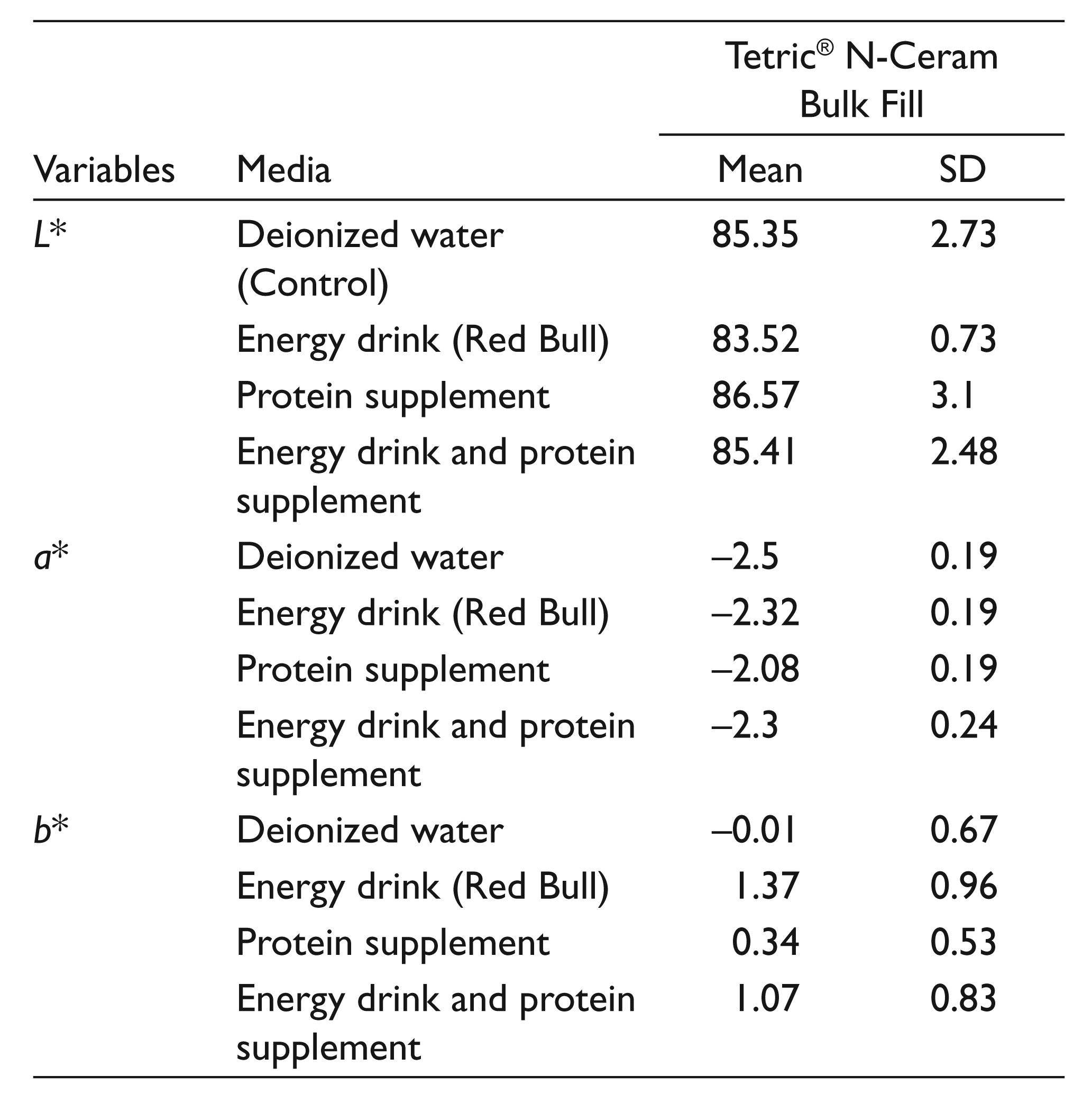
Table 2 shows the distribution of mean and standard deviation values L*, a*, and b* for the Tetric® N-Ceram Bulk Fill after placement in different coloring media (deionized water, energy drink, protein supplement, and energy drink and protein supplement). Deionized water is considered as a control group. Group 1 (N-Ceram Bulk Fill) composites showed L*a*b* mean and standard deviation values of deionized water (85.35 ± 2.73, –2.5 ± 0.19, and –0.01 ± 0.67), energy drink (83.52 ± 0.73, –2.32 ± 0.19, and 1.37 ± 0.96), protein supplement (86.57 ± 3.1, –2.08 ± 0.19, and 0.34 ± 0.53), and combined energy drink and protein supplement (85.41 ± 2.48, –2.3 ± 0.24, and 1.07 ± 0.83), respectively.
L*, a*, and b* Values of Composite Materials Placed in Different Media
Mean and standard deviation values of ΔL, Δa, Δb, and ΔE for Tetric® N-Ceram Bulk Fill composite material after immersion in different media is shown in Table 3. N-Ceram Bulk Fill composite showed ΔL, Δa, Δb, and ΔE mean and standard deviation values of deionized water (–2.6 ± 3.24, 0.16 ± 0.19, 0.32 ± 1.26, and 3.51 ± 2.47), energy drink (–4.19 ± 4.24, 0.21 ± 0.21, 1.57 ± 1.32, and 5.40 ± 3.11), protein supplement (62.71 ± 12.48, –2.63 ± 0.7, 7.7 ± 5.67, and 63.45 ± 12.56), combined energy drink and protein supplement (68.52 ± 13.43, –4.06 ± 1.73, 10.94 ± 5.31, and 69.71 ± 13.42), respectively.
Color Changes (ΔL, Δa, Δb, and ΔE) of the Tested Material after Immersion in Different Staining Solutions
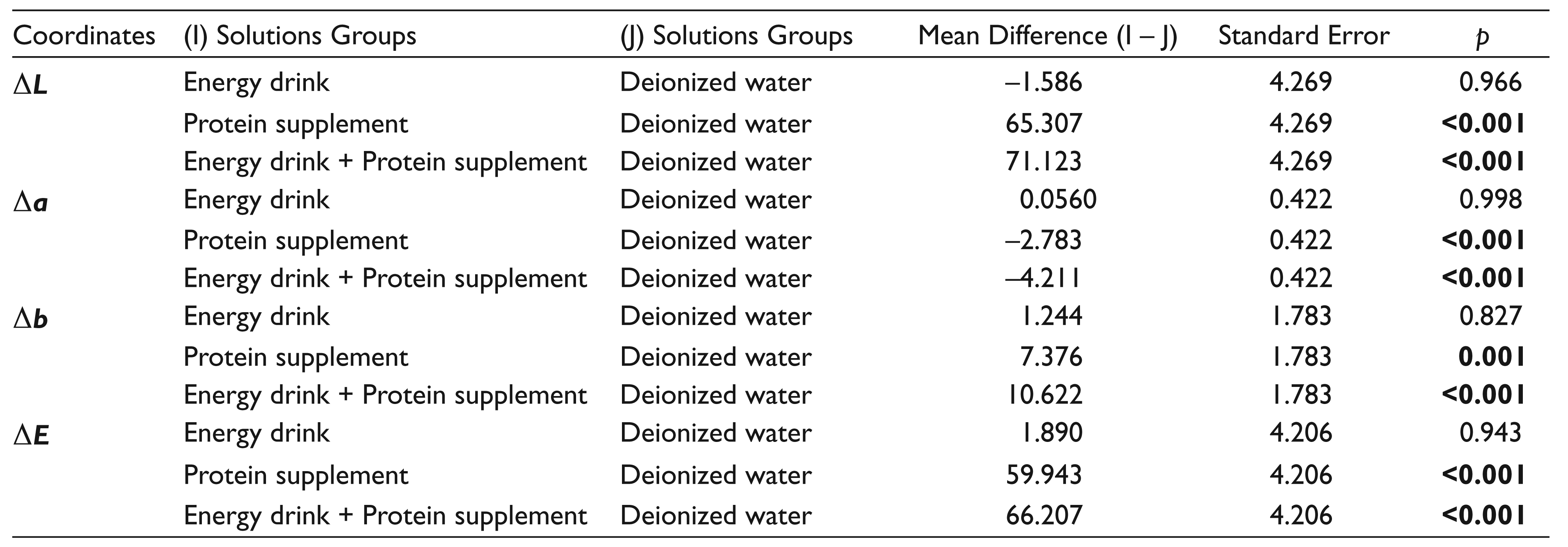
Further analysis by multiple comparison tests showed statistically significant differences (p < 0.001) between protein supplement and deionized water. Similarly, comparison made between combination of energy drinks and protein supplement and deionized water showed statistically significant differences (p < 0.001). These differences were observed for all color parameters of ΔL, Δa, Δb, and ΔE for tested composite as shown in Table 5.
Comparison (ΔL, Δa, Δb, and ΔE) for Tetric® N-Ceram Bulk Fill Composite Placed in Different Staining Solutions
Discussion
Change in the color of the composite restoration may be one of the reasons for replacement of the filling in esthetic regions particularly in anterior teeth. The complete procedure is of concern for both patient and the treating clinician, as it involves time and money factors. Hence, a quest for the newer and better esthetic composite material that is more resistant to discoloration began.
Multiple Comparison Tests for (ΔL, Δa, Δb, and ΔE) of Subgroups of Tetric® N-Ceram Bulk Fill Composite
Composite materials placed as tooth-colored restorations are constantly exposed to saliva, food colorants, and different beverages in the environment, leading to the risk of discoloration of the composites. Therefore, it is important to make sure prolonged color stability and staining resistance of the restorations within the oral environment. 16 Due to the constraint of clinical studies involving composite staining that required long-time assessment periods to obtain results, several in vitro laboratory methods have been developed to speed up the discoloration process, simulating oral situations. 8
Composites discoloration studies usually immersed composites samples in staining media (incubated at 37°C) for 1 day, 3 days, 1 week, or more, depending on immersion media types and materials used. 18 It is well documented that 1-day immersion of composite in media is equal to 1 year of 4 minutes daily use. 19 Hence, color of the composite specimen evaluated after one week of immersion in four different staining media each time.
Color changes in the resin composites after immersion in distilled water were imperceptible and clinically acceptable. This observation confirms that water sorption itself did not alter the color of composites to a significant extent because distilled water has no colorant components, 18 although some researchers supported that distilled water might have an effect on composites matrix incorporated TEGDMA in certain types of composites such as in Filtek® Z250 and Filtek® Z350 composites due to hydrophilicity and affinity of water. 20
Color evaluation is a complex process as it is influenced by variety of factors such as: translucency, opacity, lighting condition, light scattering, and perception by human eye.
21
The present study utilized a spectrophotometer for color assessments. Thus, allowing comparison of color changes after immersion in various drinks,
The present study results highlighted the information about the color stability of the Tetric® N-Ceram Bulk Fill composite material and a staining ability of commonly used sports drinks routinely. This study demonstrated that Tetric® N-Ceram Bulk Fill did not exhibit any stain resistance against the three tested drinks.
Conclusion
The color stability of Tetric® N-Ceram Bulk Fill composite restorative material was evaluated after immersion in various staining solutions. Study findings are suggestive of following:
Tetric® N-Ceram Bulk Fill composite restorative material was found to be more color stable in deionized water than the energy drink (Red Bull), protein supplement (ISOPURE), and combined immersion in energy drink and protein supplements.
For all immersion media tested on Tetric® N-Ceram Bulk Fill composite restorative material, the color change values of energy drink, protein supplement, and combination of energy drink and protein supplement were greater than 3.7. It means discoloration of the composite material was visually perceptible as well as clinically unacceptable. Color change was remarkably high with immersion in protein supplement alone and a combined immersion in energy drink and protein supplement.
Implication of this study’s findings is that patient should be made aware of the staining effects of drinks tested and clinician should pay attention to the potential risk of staining.
Footnotes
Acknowledgements
None.
Declaration of Conflicting Interest
None.
Funding
None.