




Abstract
This scientometric study maps the research hotspots and emerging trends in sports economics research through a comprehensive analysis of 6553 Web of Science articles (2005–2025) using advanced bibliometric tools of CiteSpace and VOSviewer. In contrast to narrative reviews, this study combines co-citation clustering, keyword burst detection, and multi-level collaboration network analyses to reveal the field's evolution. Results indicate sustained growth in annual publications, dominated by the U.S. and China, with pivotal contributions from institutions such as the German Sport University Cologne and leading authors including Wicker and Humphreys, who have been instrumental in shaping global collaborative networks. Co-citation analysis identifies seven key research hotspots: regional economic effects of sports tourism, public policy efficacy, brand commercialization, socioeconomic contributions, digital innovation, sustainable development, and globalization. Four emerging trends are highlighted via keyword burst detection: gender pay gaps, media's economic role in brand value, public health linkages, and satisfaction dynamics. This study provides a data-driven framework for optimizing event-driven growth, addressing inequities, and leveraging innovations for socioeconomic resilience.
Keywords
Introduction
The sports economy plays a pivotal role in national economic systems through its multifaceted contributions. As a cross-sectoral industry, it propels economic growth by interconnecting professional sports, events, merchandise, and services with supportive sectors such as hospitality, retail, and infrastructure development. This synergy generates substantial economic value, serving as an engine for GDP expansion and income generation. Currently, the global market value of the sports industry exceeds $500 billion (Górecka, 2021). It intersects with the fields of tourism, media, technology, and policy, creating job opportunities, fostering social cohesion, and enhancing the quality of life on a global scale. Therefore, conducting a quantitative study of sports and the economy to thoroughly explore potential research hotspots and anticipate future trends is of significant value to researchers in this field. Such a systematic understanding is pivotal for informing evidence-based policy formulation and maximizing the socioeconomic potential of the sports industry.
Bibliometric analysis offers significant advantages in literature reviews by efficiently and intuitively revealing research hotspots and emerging trends within a research field (Chen et al., 2023). It employs quantitative methods and visualization tools, such as VOSviewer and CiteSpace, to transform extensive literature into graphical representations, making complex information more accessible. This approach enables the identification of research hotspots and emerging trends through techniques like science mapping, keyword co-occurrence analysis, and citation patterns (Marvi and Foroudi, 2023). Additionally, it highlights influential authors, key publications, and collaborative networks, providing insights into the intellectual structure and interdisciplinary connections within a field. By identifying top scholars, institutions, and journals, bibliometric visualization guides researchers in structuring their work and suggests future research directions. Its ability to handle large-scale data and provide objective, visual insights enhance decision-making and fosters cross-disciplinary collaboration, making it particularly valuable for emerging or interdisciplinary research areas.
While previous bibliometric researches have established a foundational understanding of sports economics (Aygün and Savaş, 2025; Kudinska et al., 2025; Sanchez Santos and Castellanos Garcia, 2011), many remain constrained by limited datasets or narrow analytical scopes, potentially failing to capture the field's dynamic evolution. To address these limitations, this study conducts a comprehensive bibliometric visualization analysis of an extensive corpus comprising 6553 Web of Science publications (2005–2025). Utilizing advanced scientometric tools of CiteSpace and VOSviewer, this study systematically maps collaboration networks among core authors, institutions, and countries. Furthermore, this study identifies research hotspots through co-citation clustering and detects emerging trends via keyword burst analysis. This large-scale, multi-methodological approach provides an updated and in-depth perspective on the intellectual structure and developmental trajectories of sports economics, thereby offering valuable insights for future research.
Materials and methods
Data source and search strategy
The Web of Science database was chosen as the primary data repository, encompassing publications from January 1, 2005, to August 31, 2025. The retrieval protocol adopted was as follows: TS = (“sports” OR “athletics” OR “sporting events”) AND TS = (“economy” OR “economic*” OR “economic impact” OR “economic analysis”). This search strategy yielded an initial set of 8473 documents.
To guarantee the quality and credibility of the literature review, we leveraged built-in filtering functions within the Web of Science platform during the search process to exclude non-core document types, ensuring only articles were retained. A subsequent manual screening procedure was implemented—based on thorough examination of keywords, titles, and abstracts—to eliminate duplicates, irrelevant publications, or studies failing to meet predefined inclusion thresholds. Ultimately, a refined dataset of 6553 articles was included in this investigation. For subsequent analysis, the selected literature was exported in “full record and cited references” format as CSV files, enabling bibliometric analysis via CiteSpace and VOSviewer. The article screening workflow is visually presented in Figure 1 Exclusion criteria comprised: (1) Exclude by Publication Date Documents published outside the specified timeframe (January 1, 2005 – August 31, 2025) (2) non-article document types.
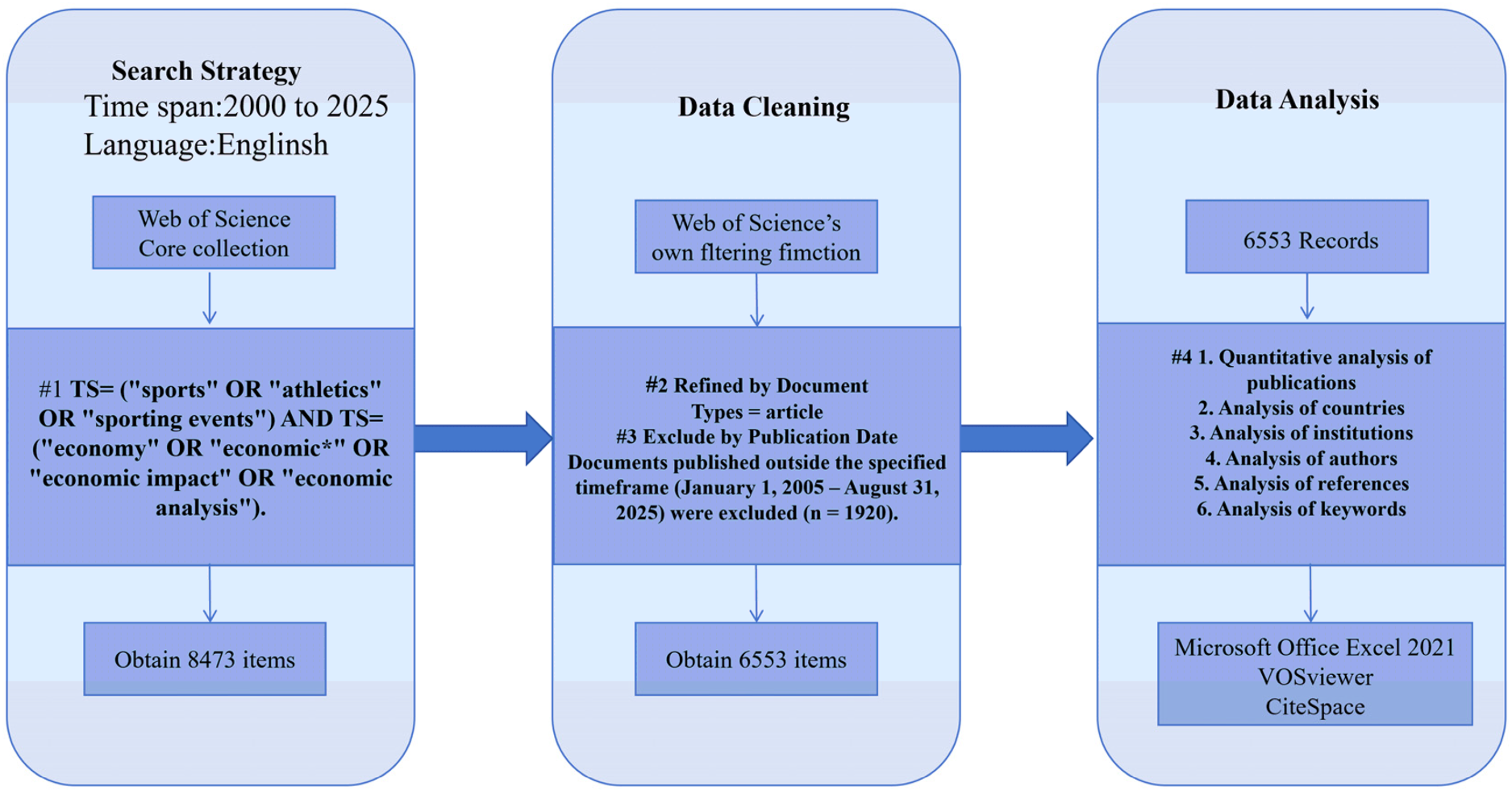
Flowchart of literature screening and data extraction.
Data extraction
Two researchers implemented a standardized retrieval strategy to extract literature and harmonize synonymous keywords. For example, lexical variants such as “economics” and “economical” were consolidated into the wildcard notation “economic*” to ensure terminological consistency. Discrepancies in keyword selection were resolved through collaborative discussions, with third-party consultation engaged when necessary to maintain objectivity. Literature screening was conducted in batches according to predefined inclusion criteria to identify eligible studies. Authors were included regardless of their hierarchical positions, and their contributions were quantified based on publication counts within the dataset.
Visualization analysis methodology and bibliometric analysis
To delineate research hotspots and emerging trends in sports economics, this study employed two complementary bibliometric tools: CiteSpace (v.6.2.R4) and VOSviewer (v.1.6.20). Using CiteSpace, this study constructed and analyzed three scientometric networks: (i) country-level collaboration, (ii) co-citation clusters, and (iii) keyword-burst diagrams, thereby identifying both hotspots and emerging trends. All CiteSpace analyses were performed with preset parameters to ensure rigor and reproducibility. All data were segmented into consecutive 2-year slices (Time Slicing = 2), balancing short-term dynamics and long-term trends. Within each slice, the g-index (k = 25) served as the selection criterion for highly cited references. LBY and LRF were set to 10 years and 10, respectively, to retain significant links while suppressing noise; all remaining parameters were kept at default for consistency and reproducibility. VOSviewer was concurrently used to visualize institutional and authorship collaboration networks. Organizations were included only if they had published above 12 papers, thus focusing on substantive contributors. The integration of both tools yields a multidimensional, data-driven framework for elucidating the evolution, leading actors, and frontiers of sports economics research.
Results
Overall characteristics of publications
The annual publication volume is a key scientometric indicator that reflects both the vitality and maturity of a research field. A consistent increase in yearly output reflects growing scholarly engagement and recognition of the field's academic and practical relevance. As illustrated in Figure 2, the number of articles on sports and economics retrieved from the Web of Science database shows a clear upward trend from January 1, 2005, to August 31, 2025. During this period, a total of 6553 articles were published. Beginning with only 32 publications in 2005, the field experienced gradual growth, followed by a more pronounced increase from 2019 onward—signaling rising academic interest in sports economics. By 2024, the annual output had reached 735 articles, marking substantial growth compared to earlier years. Although the data for 2025 are incomplete, covering only the first eight months, the prevailing trend indicates that the total number of publications is likely to continue increasing by the end of the year. This sustained growth underscores the expanding significance of and scholarly attention to sports economics as an academic discipline.
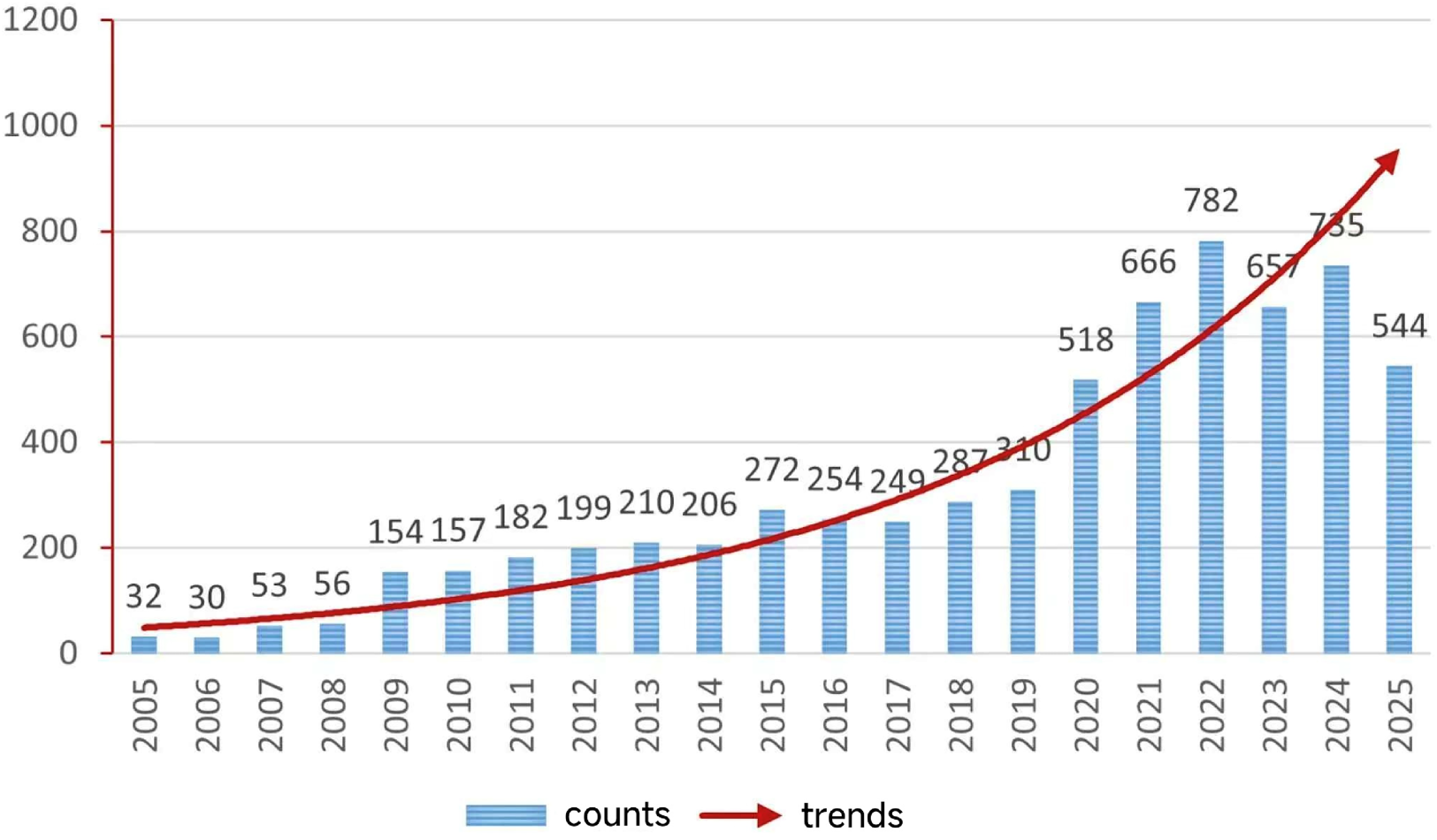
Annual publication trend in sports economics research (2005–2025).
Analysis of countries
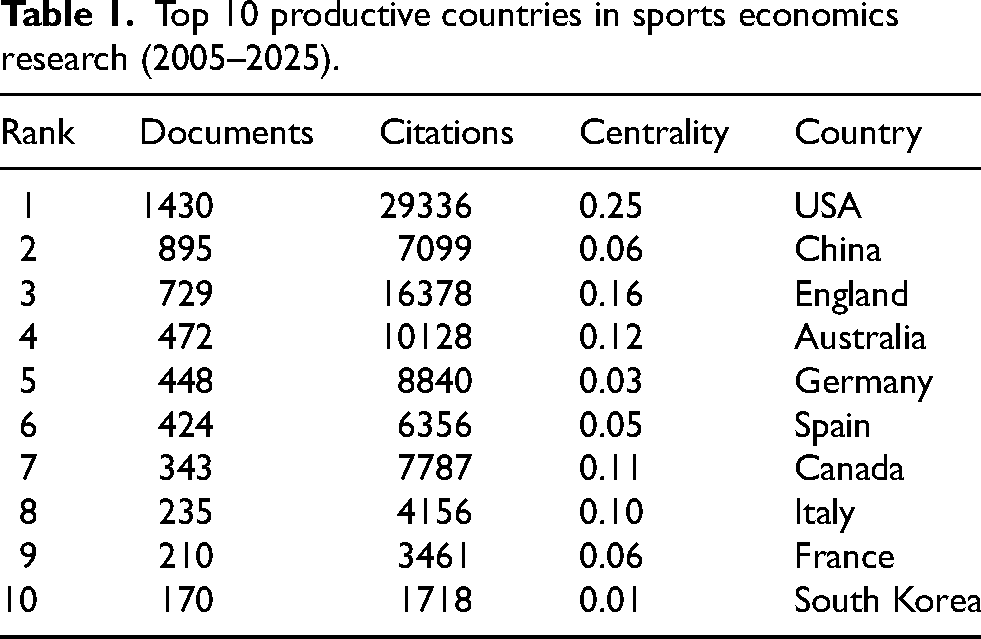
The country cooperation network intuitively visualizes the degree of connection and social relations between countries in a certain field. Table 1 presents the top 10 most productive countries in sports economics research (2005–2025). The metrics include Documents, Citations, and Betweenness Centrality. Centrality measures a node's role as a bridge in the collaboration network; a higher value indicates greater importance in connecting otherwise disparate research groups and facilitating global knowledge exchange. The United States leads by a substantial margin in both output (1430 documents) and citations (29,336), and also holds the highest centrality (0.25), underscoring its dual role as a top producer and a central hub. China ranks second in output (895) but has significantly lower citations and centrality, suggesting its influence is still growing. England, Australia, and Germany complete the top five. Notably, Canada and Italy exhibit relatively high centrality scores given their moderate output, highlighting their strategic roles as connective nodes in the international network. This structural analysis is further elucidated by the network visualizations presented in Figure 3, which maps country-level research output. Node size corresponds to publication volume, while prominent outer rings highlight nations with high betweenness centrality, such as the USA, England, Australia, and Canada. The thickness of the connecting lines signifies the strength of co-authorship ties. The visualization reveals a highly interconnected core comprising the USA, China, England, Australia, and several major European nations, which collectively constitute the backbone of the global research network in sports economics. These findings corroborate that the leading countries are not only prolific in their research output but also serve as critical hubs in fostering and sustaining international collaborative efforts.
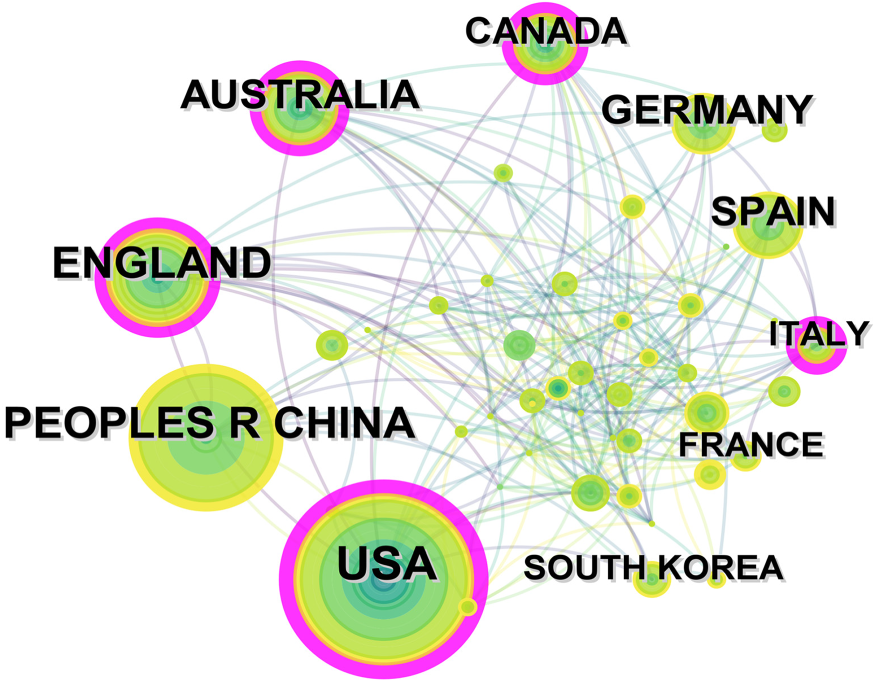
Collaborative network among countries in sports economics research.
Top 10 productive countries in sports economics research (2005–2025).
Analysis of institutions
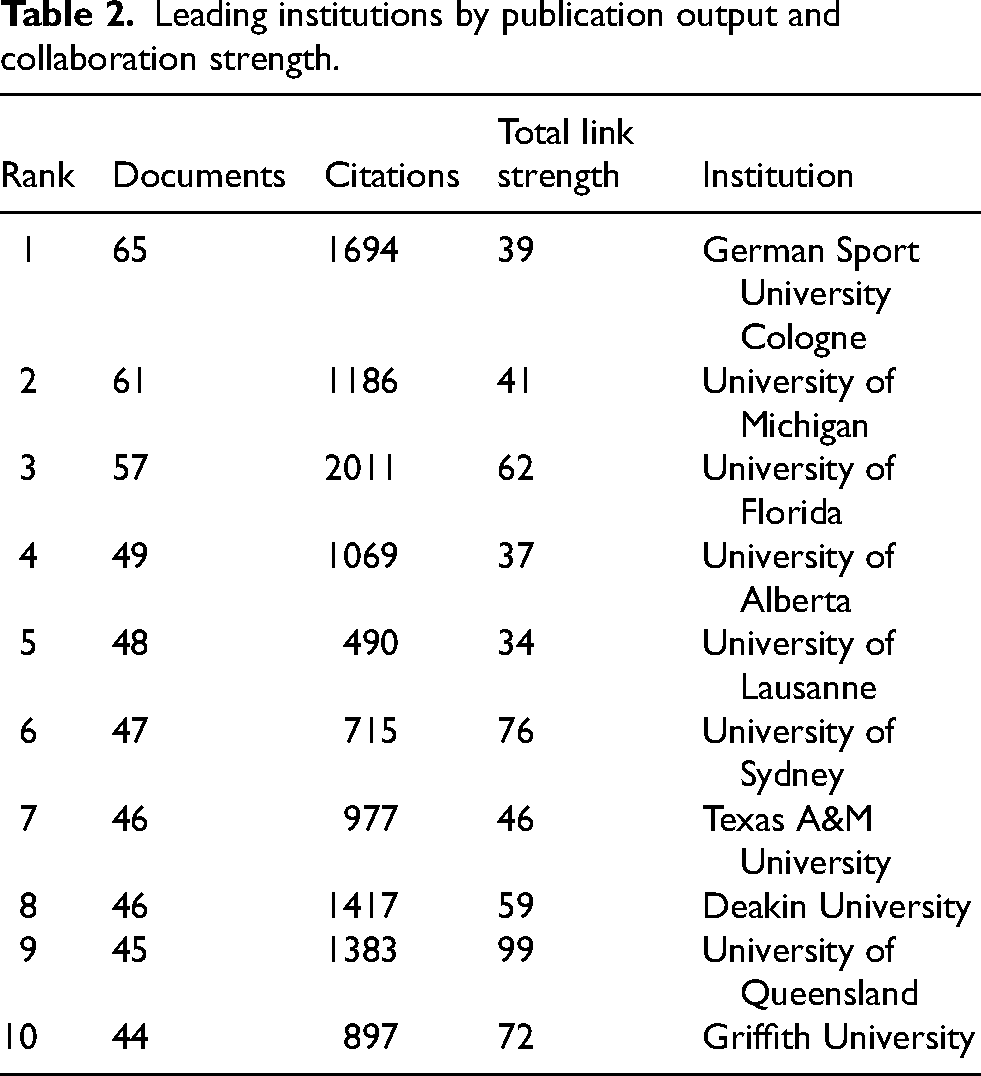
Institutional analysis identifies core knowledge producers and maps collaborative networks that drive scientific progress in a field. It reveals patterns of research output and strategic partnerships shaping disciplinary development. Table 2 presents leading institutions by publication output and collaboration strength. “Documents” indicates publication volume, “Citations” reflects academic impact, and “Total Link Strength” (TLS) quantifies co-authorship intensity. The German Sport University Cologne leads in output (65 documents), while Australian institutions demonstrate remarkable collaboration, with the University of Queensland achieving the highest TLS (99) despite ranking ninth in output. The University of Sydney (TLS = 76) and Griffith University (TLS = 72) form a particularly strong national cluster, indicating Australia's significant role in the global research network. Figure 4 visualizes these collaborative patterns, where node size represents publication volume and line thickness indicates collaboration strength. The network reveals distinct geographical clustering with well-defined North American, European, and Australian groups. The Australian cluster shows exceptional density and connectivity, with the University of Queensland at its center. Importantly, substantial transcontinental links-particularly between European and Australian institutions-demonstrate how the field combines regional specialization with global integration. These patterns confirm that influential institutions serve not only as knowledge producers but also as crucial bridges for international cooperation in sports economics research.
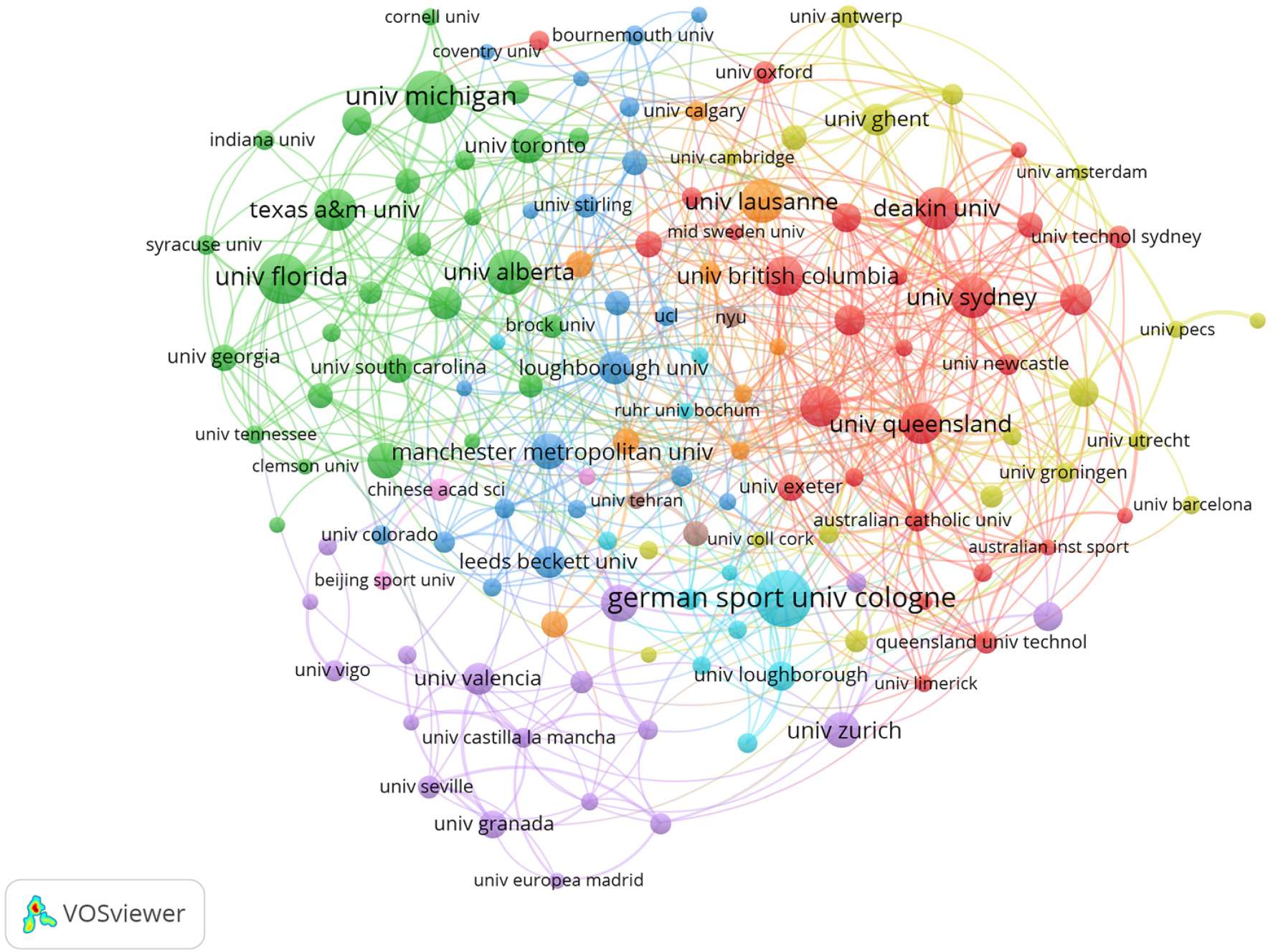
Collaborative network among leading institutions in sports economics research.
Leading institutions by publication output and collaboration strength.
Analysis of authors
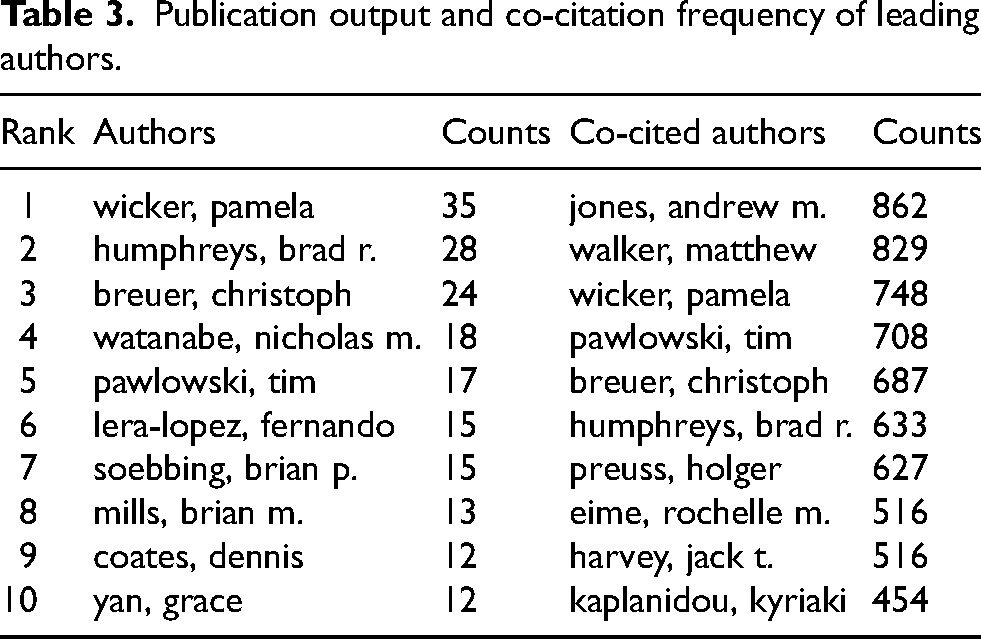
Author analysis helps identify the most influential scholars and intellectual pillars within a research field, reflecting both productivity and academic impact through publication output and co-citation networks. As presented in Table 3, the leading authors are ranked by both publication counts and co-citation frequency. Wicker, Pamela leads in publication output (35 documents), followed by Humphreys, Brad R. (28) and Breuer, Christoph (24). In terms of co-citations—which indicate scholarly influence—Jones, Andrew M. ranks highest (862), followed by Walker, Matthew (829) and Wicker, Pamela (748). Notably, several authors such as Humphreys, Brad R., Wicker, Pamela, and Pawlowski, Tim appear prominently in both lists, underscoring their dual role as prolific contributors and key intellectual references in the domain of sports economics.
Publication output and co-citation frequency of leading authors.
To examine collaborative relationships among authors, we employed VOSviewer to analyze the institutional collaboration network. In the resulting visualization, node size corresponds to an author's publication volume, connecting lines indicate co-authorship, and line width reflects the frequency of collaboration. Figure 5 presents a visualization of the top 60 authors within this network. The network reveals several distinct research clusters, each represented by a specific color. For example, the yellow cluster led by Wicker, Pamela and Breuer, Christoph focuses on sports participation, health economics, and non-market valuation (Breuer et al., 2010; Pawlowski et al., 2009; Wicker and Downward, 2017); the purple cluster around Humphreys, Brad R. and Coates, Dennis specializes in economic impact analysis and public policy related to professional sports (Bradbury et al., 2023; Chikish et al., 2019; Coates and Humphreys, 2005; Humphreys and Sauer, 2007); while the green cluster centered on Pawlowski, Tim emphasizes consumer behavior and sport management (Pawlowski and Anders, 2012). The network analysis identified Wicker, Pamela; Humphreys, Brad R.; and Pawlowski, Tim as the most frequent collaborators. A strong collaborative link, visualized by a thick connecting line, is evident between Wicker and Humphreys, indicating a high frequency of co-authorship. This transatlantic partnership bridges European and American research traditions, combining expertise in sport management and public economics, thereby demonstrating their prominent standing and extensive influence within the field.
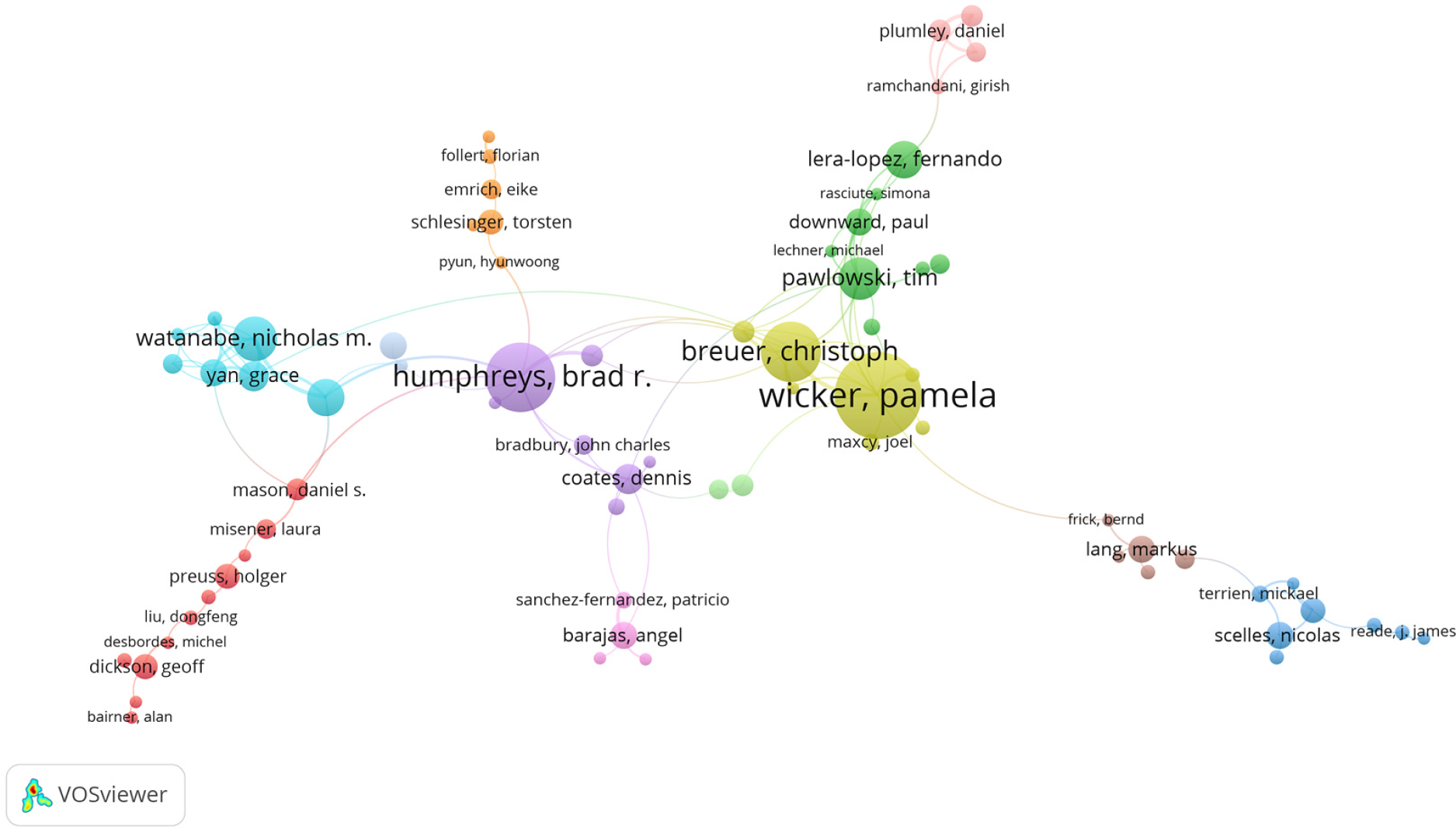
Co-authorship network of prolific authors in sports economics.
Analysis of references
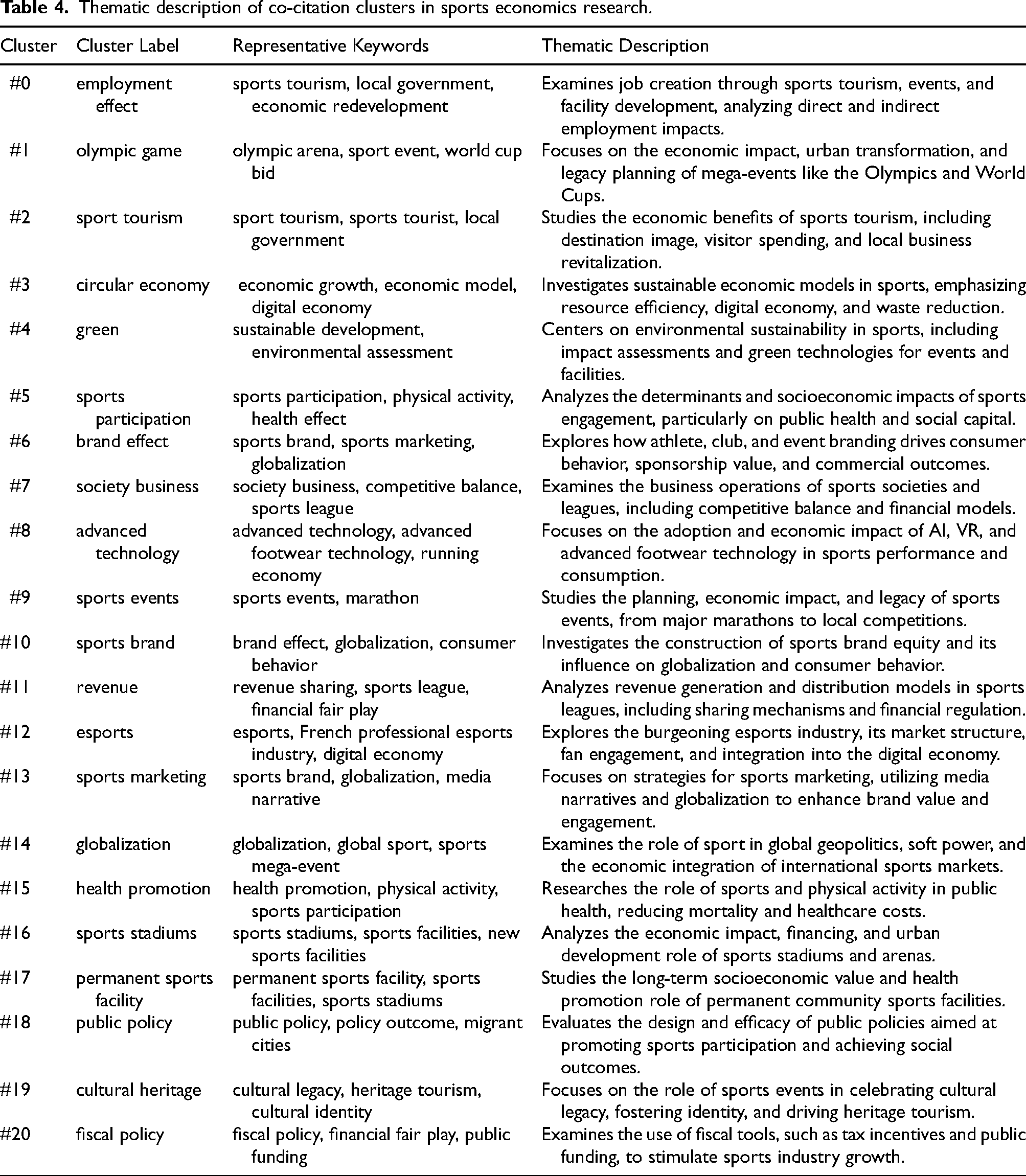
References co-citation denotes the phenomenon in which two or more articles are simultaneously cited by a later article; the frequency of such joint citations quantifies the perceived intellectual relatedness of the cited works. Co-citation clustering algorithms aggregate these frequencies to partition frequently co-cited articles into distinct clusters, each representing a tightly coupled corpus of literature that scholars regard as a single thematic unit. Consequently, mapping these clusters yields an objective, data-driven snapshot of the research hotspots within a given field (Chen, 2004).Clustering was initiated by performing a cluster analysis on title words (T) and culminated in the integrated co-citation network depicted in Figure 6. CiteSpace evaluates clustering validity and map clarity through modularity Q and average silhouette S: Q > 0.3 indicates a significant community structure, whereas S > 0.7 denotes a persuasive classification. In this clustering, Q = 0.8398 and S = 0.9345; the high silhouette coefficient reflects strong intra-cluster homogeneity among the constituent articles. A systematic review of the cluster-specific literature revealed 21 dominant research hotspots that have shaped sports economics since 2005; their representative keywords and thematic description are provided in Table 4.
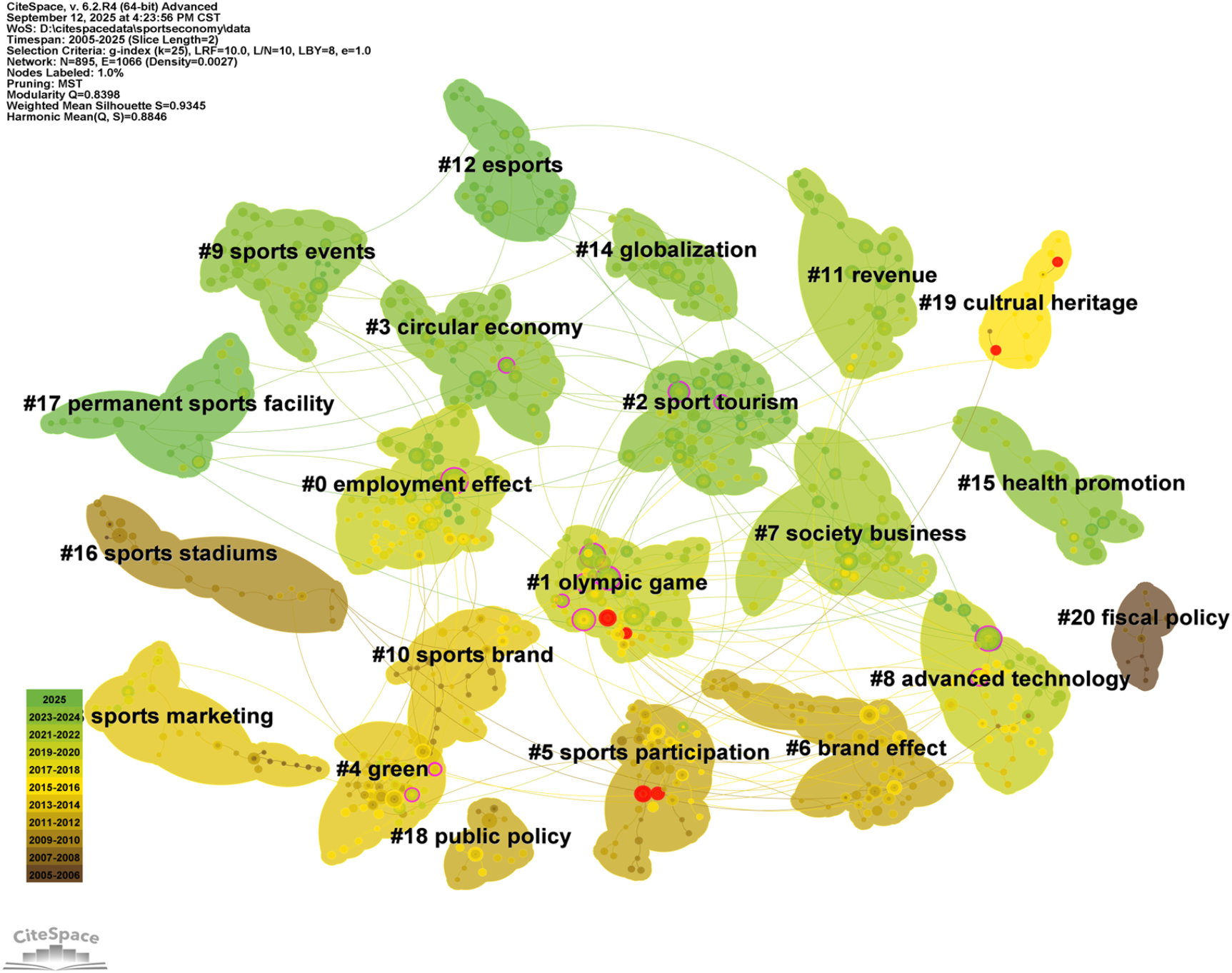
Clustering map of reference co-citations.
Thematic description of co-citation clusters in sports economics research.
Analysis of keywords
Keyword burst detection is a bibliometric technique that identifies keywords whose frequency increases abruptly within a defined time window; the most recent bursts often herald incipient trends likely to steer future research directions (Kleinberg, 2003). Figure 7 presents the outcomes of this analysis, detailing the keywords that have demonstrated the most significant bursts of scholarly interest within the sports economics literature from 2021 to 2025. The table is structured to convey precise bibliometric information: the “Year” column indicates the first occurrence of the keyword within the dataset, establishing its historical presence. The “Strength” value quantifies the intensity of the citation burst, with higher values representing more pronounced surges in academic attention. The “Begin” and “End” columns define the active burst period for each keyword. Graphically, this burst period is visually emphasized in red within the timeline, starkly contrasting with the blue segments that represent the years when the keyword was present in the literature but not experiencing a surge. This visualization allows for immediate identification of emerging trends. The “Thematic Area” column further contextualizes these keywords by linking them to broader research themes, illustrating the interdisciplinary connections that characterize contemporary sports economics research. An examination of the most prominent and recent keywords allows for the identification of several converging research streams. These emergent keywords collectively point to four highly representative new trends in sports economics: (1) gender disparities in economic participation, (2) satisfaction dynamics in stakeholder engagement, (3) media's role in shaping economic outcomes, and (4) linkages between sports and public health systems. The burst of keywords associated with these themes in recent years strongly indicates that they represent the future trajectory of research in the field.
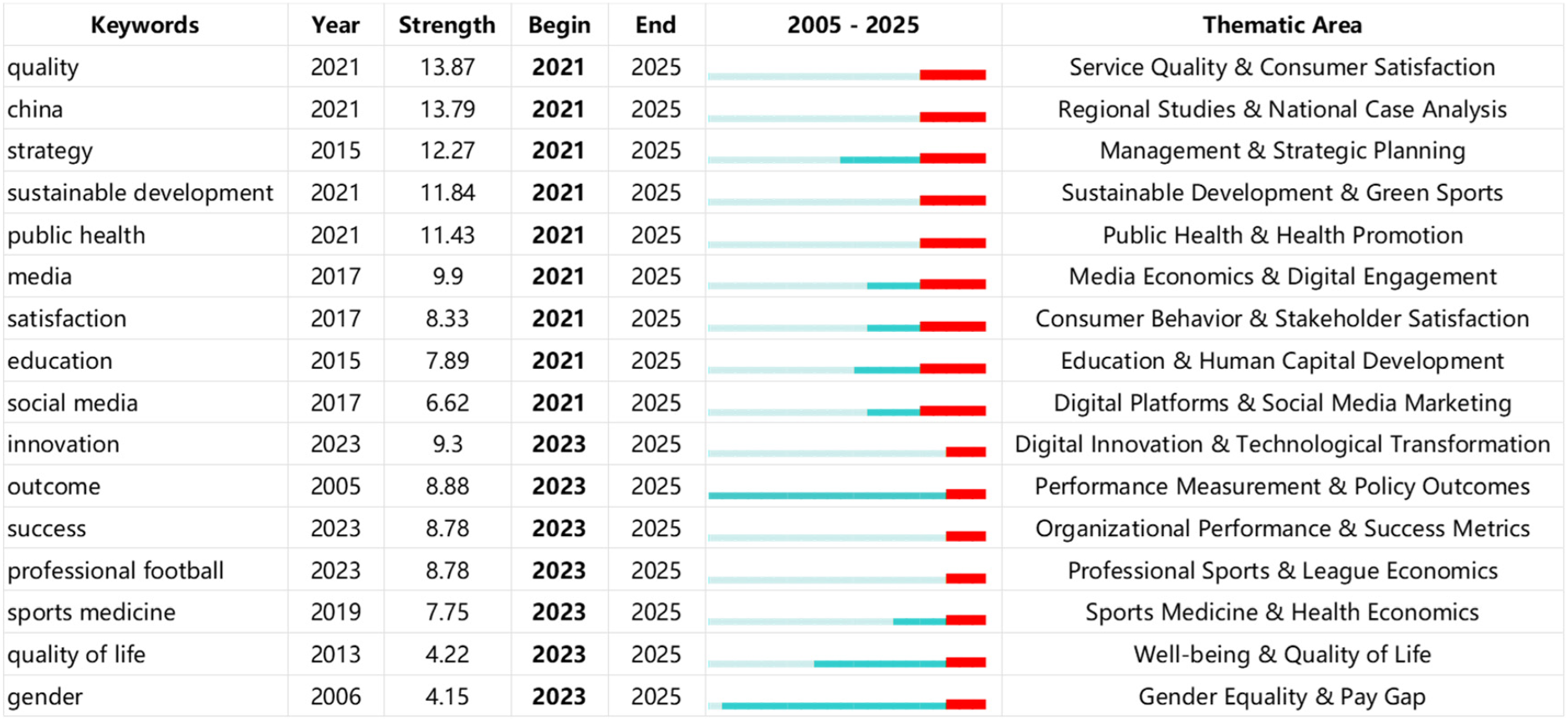
Emerging trends identified by keyword burst detection.
Discussion
General information
Based on Web of Science data from 2005 to 2025, this study analyzes publication trends and collaboration patterns in sports economics research. A total of 6553 articles were published during this period, showing sustained growth from 32 publications in 2005 to 544 in 2025, indicating the field's growing prominence. The United States (1430 publications), China (895), and the United Kingdom (729) were the most productive countries, with strong collaborative networks between European and North American institutions. Leading research institutions included the German Sport University Cologne, University of Michigan, and University of Florida, while Australian universities demonstrated particularly high collaboration intensity. Prominent authors include Pamela Wicker (35 publications) and Brad R. Humphreys (28 publications), who also show high co-citation frequency. Collaboration analysis reveals strong transatlantic research partnerships, particularly between sport management and public economics.
Research hotspots
Regional economic effects of sports
The relationship between sports and regional economic development constitutes a significant research hotspot. As illustrated in Figure 6, this theme is represented by clusters including #1 (Olympic Games), #2 (sport tourism), #3 (permanent sports facility), #9 (sports events), #13 (sports marketing), and #16 (sports stadiums).In the realm of sports tourism, studies demonstrate that events significantly enhance revisit intentions by improving destination image and perceived value (Rahayu et al., 2024), with destination brand equity acting as a critical mediator that amplifies economic multiplier effects (Lohana et al., 2023). Small-scale heritage events further contribute by strengthening regional identity and tourist engagement, underscoring the role of intangible cultural assets alongside direct expenditure (Malchrowicz-Mosko and Poczta, 2018). Regarding investment in sports facilities, research reveals a dualistic nature. While theoretical models posit that new facilities stimulate local employment and economic activity(Bradbury et al., 2023), empirical evidence frequently points to market substitution effects and fiscal underperformance (Propheter, 2020), suggesting a redistribution of economic activity rather than net growth. The economic impact of major sports events exhibits both immediate benefits, through visitor spending and media exposure, and long-term advantages, through enhanced brand equity and regional competitiveness (He, 2024). Furthermore, specialized sports with global appeal, such as annual Formula 1 or golf tournaments, can effectively attract niche tourist segments, offering distinct advantages to emerging destinations (Ramasamy et al., 2022). In terms of sports consumption, research confirms its catalytic role through direct expenditure and multiplier effects (Perez et al., 2024). Empirical studies establish a strong positive relationship between household sports expenditure and regional gross value added. Notably, participatory activities consistently yield higher employment multipliers than spectating (Kokolakakis and Cingiene, 2022), a finding consistent with economic multiplier theory, wherein sectors with deeper local supply chain integration generate more substantial localized benefits.
Global economic effects of sports
Sports exert significant and multifaceted economic effects on a global scale, constituting a prominent area of contemporary research. As illustrated in Figure 6, Cluster #14 (globalization) is central to this field of study. A primary economic channel is the strategic use of sport for geopolitical and soft power objectives, which in turn influences international economic relationships. Non-Western nations increasingly leverage sport to amplify their global influence, particularly through hosting mega-events and integrating sport into foreign policy frameworks (Lee and Krieger, 2024). A case in point is China's strategic alignment of its sports industry with the Belt and Road Initiative, employing football club acquisitions and international event hosting to bolster its economic and political outreach (Hernández-Correa and Gúdel, 2024). Concurrently, the globalization of sports ownership and finance, such as sovereign wealth funds investing in international leagues, is reshaping the commercial landscape of professional sports and creating new, complex transnational economic linkages (Levine, 2023). The business models of global governing bodies like FIFA and UEFA, driven by media rights and sponsorship, themselves represent massive economic entities that influence development funding and priorities worldwide (Akhmetkarimov and Aminova, 2021). Moreover, athlete mobility and transnational production networks facilitate economic integration but also introduce significant ethical concerns, including labor exploitation and environmental degradation (Thibault, 2018). Collectively, these findings position sport as a nexus of economic ambition, cultural influence, and political strategy, both reflecting and reinforcing the complex dynamics of globalization in the twenty-first century.
Economic effects of sports public policies
Public sports policies represent a growing research focus due to their significant socioeconomic impacts. As shown in Figure 6, Cluster #18 (public policy) and #20 (fiscal policy) are central to this domain. Studies have elucidated the complex relationship between governmental interventions and macroeconomic outcomes in sports policy, often operating under New Public Management principles that leverage market efficiencies while retaining public accountability. The efficacy of these policies is evident across multiple domains. Strategic integration of sports initiatives, including mega-events, can be designed to generate broad societal benefits. For instance, analyses of London's approach suggest that combining event hosting with community sports programs can enhance social capital and contribute to public health objectives (Czupich, 2020). This aligns with the theory of public goods, where coordinated public investment generates positive spillovers beyond direct participants. Direct health policy interventions further illustrate this point. In China, health policy reforms that included insurance schemes and facility investments were instrumental in raising population sports participation by 7.3% over five years, concurrently reducing projected healthcare costs and improving chronic disease management (Gu, 2024). Such outcomes demonstrate a positive externality, where public spending on sports generates significant fiscal savings in adjacent public sectors. The effectiveness of public expenditure is highly contingent on demographic targeting. Research from the Netherlands demonstrated that municipal sports spending significantly boosted youth engagement and reduced socioeconomic disparities, while the effect on adult participation was less pronounced (Hoekman et al., 2017). This underscores the importance of tailoring interventions to specific population segments to maximize efficiency. Beyond direct spending, tax incentives have emerged as an efficient market-correcting instrument. Evidence from Taiwan indicates that tax relief measures for the sports industry stimulated private investment and consumption more effectively than direct state-led programs, thereby strengthening industrial growth and generating economic spillovers (Lin and Lu, 2020). This reflects the theory of fiscal substitution, where targeted tax expenditures crowd in private capital and enhance allocative efficiency. Collectively, these findings affirm that well-designed sports policies can simultaneously advance economic, health, and social objectives. Their success, however, is critically dependent on careful tailoring to local institutional and demographic contexts.
Brand value and commercialization in sports economics
Brand value and commercialization represent a critical research focus in sports economics, with Clusters #6 (brand effect), #10 (sports brand), and #13 (sports marketing) underscoring its role as a fundamental economic driver. This multi-level ecosystem—spanning athletes, clubs, urban events, and commercial partnerships—demonstrates how intangible assets generate tangible economic returns through integrated brand strategies. At the athlete level, personal branding is a key asset. Social media endorsements enhance product involvement by leveraging athletes’ performance and social value (Jiang et al., 2024). Furthermore, emotional attachment mediates the relationship between athlete brand image and purchase intentions, with price perception moderating this effect, a dynamic explained through behavioral economics lenses (Zheng and Xu, 2024). The emergence of name, image, and likeness (NIL) rights for collegiate athletes further highlights the complex interplay between institutional signals and individual branding in digital marketplaces (Cocco et al., 2023). Sports clubs generate economic value by enhancing regional image and engaging in corporate social responsibility. Research indicates that professional clubs can improve host city attractiveness for tourism and investment, while strong club reputation serves as a critical mediator for sponsor benefits (Fischer and Hamm, 2019). A club's historical performance and attendance metrics are established determinants of its brand equity and subsequent revenue generation (Cocco et al., 2023). Urban branding through sports events exhibits scale-dependent characteristics. While mega-events like the Olympics can boost tourism and GDP, they often exacerbate regional disparities by concentrating resources (Nie et al., 2022). In contrast, small-to-medium-sized events primarily stimulate local economies through visitor spending, with strategic legacy planning being crucial for sustaining these benefits (Pinto and Dos Santos, 2022; Rossini et al., 2025). The alignment between event and city identities through co-branding strategies is essential for maximizing the synergistic returns on public and private investment (Dong and Duysters, 2015). Commercial sponsorship is evolving through technological innovation and market globalization. Emerging technologies like the IoT and blockchain enhance marketing efficiency by reducing transaction costs and information asymmetry (Tang, 2023). Sponsorship itself acts as a credible signal of brand quality, creating mutual value for both sponsors and event organizers (Nuseir, 2020). This occurs within a globalized landscape where sports clubs increasingly operate as international business entities, functioning as two-sided markets that connect global audiences with commercial partners (Kulikov et al., 2024).
Socioeconomic contributions of sports
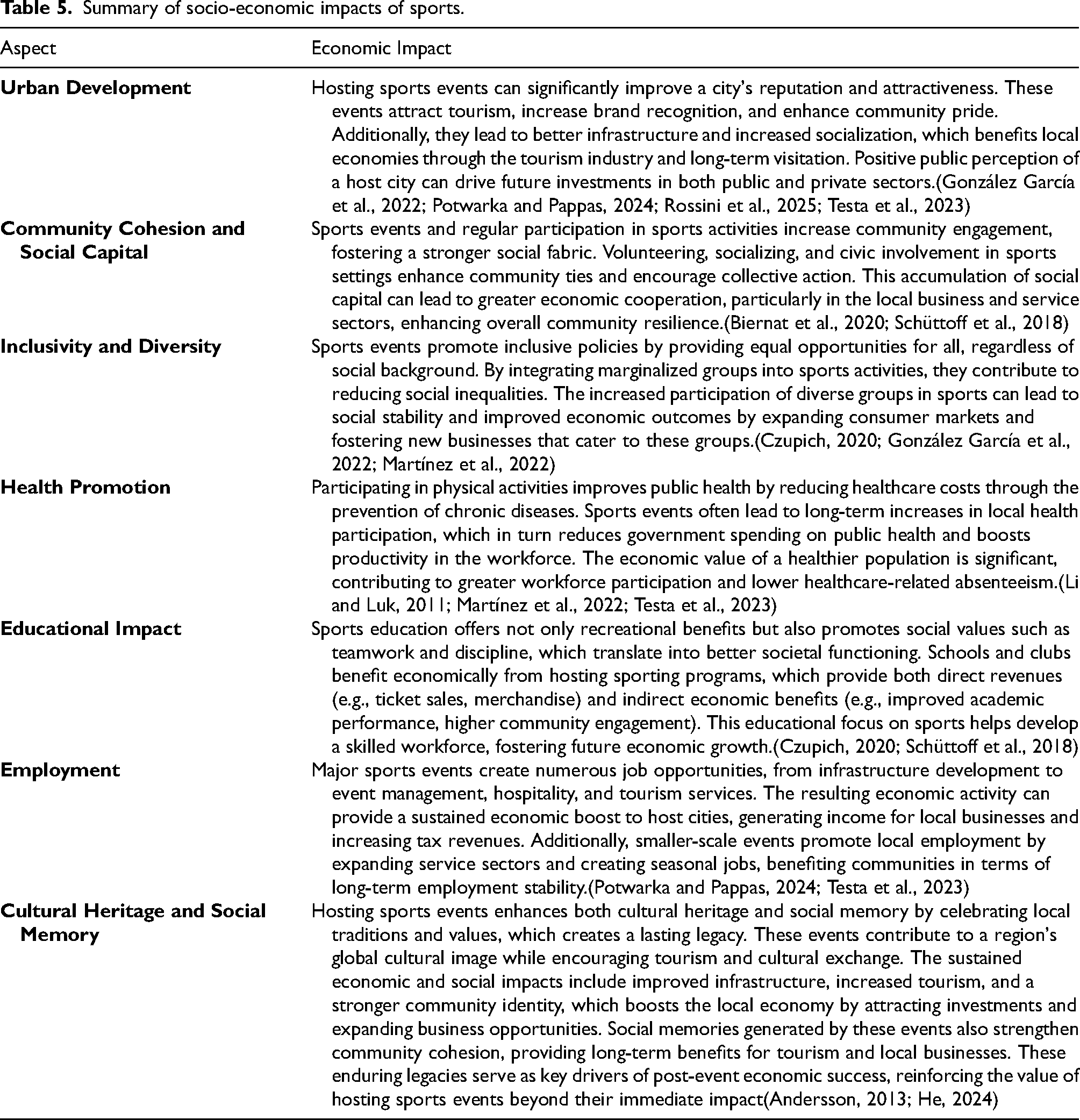
The socio-economic effect of sports is a current research hotspot. In Figure 6, Cluster #0 (employment effect), Cluster #5 (sports participation), Cluster #7 (society business), Cluster #11 (revenue), Cluster #15 (health promotion) and Cluster #15 (cultural heritage) are related to this research. As summarized in Table 5, these effects are multifaceted, encompassing economic, social, and cultural dimensions
Summary of socio-economic impacts of sports.
Digital innovation and technology-driven sports economy
Digital innovation represents a transformative frontier in sports economics, as evidenced by the thematic convergence of Clusters #12 (esports), #8 (advanced technology), and #0 (employment effect). These developments can be systematically analyzed through established theoretical frameworks, such as platform economics (Nuccio and Guerzoni, 2019) and digital transformation theory (Vial, 2019). The ecosystem is being reshaped by multidimensional innovations. In esports, cloud computing platforms are critical for reducing latency and enhancing the viewer experience, which underpins a rapidly growing global market (Freitas et al., 2022). The engagement patterns of esports audiences, particularly across different platforms like PC and console, necessitate nuanced sponsorship and marketing strategies (Huettermann and Pizzo, 2022). The integration of AI and blockchain technologies is fostering new, decentralized models of value co-creation. AI is being applied to optimize athlete performance and strategic decision-making. Concurrently, blockchain technology introduces novel mechanisms for fan engagement through digital collectibles and tokenized assets, creating new revenue streams and enhancing platform loyalty (Mehra et al., 2024). Empirical research further suggests that the synergistic application of advanced digital technologies, including AI and blockchain, can significantly enhance organizational performance metrics within sports clubs (Sarlab et al., 2024).
The adoption of immersive technologies aligns closely with the Technology Acceptance Model (TAM), where perceived usefulness and experience quality are key drivers. Virtual Reality (VR) is creating immersive experiences that can boost tourism in sectors like winter sports, while Augmented Reality (AR) is enhancing broadcast offerings and driving the growth of premium subscriptions (Baker, 2024; Wang et al., 2024). From a financial economics perspective, fintech adoption helps mitigate information asymmetry, particularly for small and medium-sized enterprises (SMEs) in the sports industry. Evidence from China indicates a significant positive relationship between technology adoption and innovation output, and spatial analyses confirm the digital economy's substantial direct and indirect contributions to growth within the sports sector (Li, 2024; Wei et al., 2023). These patterns resonate with information economics, demonstrating how digital tools alleviate market frictions. In summary, technological integration enhances operational efficiency and enables new value-creation mechanisms. However, issues such as data privacy and human-technology interaction warrant further theoretical and strategic attention to ensure a sustainable digital transformation in the sector.
Sustainable development and green sports economics
The economic impacts of sustainable sports development have emerged as a pivotal research domain, with Clusters #3 (circular economy), #4 (green), and #0 (employment effect) underscoring its multifaceted benefits. These clusters collectively reflect the integration of the triple bottom line framework—balancing economic, environmental, and social outcomes—within sports management theory. Figure 8 synthesizes these pathways, enabling visual correlation with the empirical evidence below. Green intelligent stadiums exemplify the operationalization of circular economy principles, transforming facilities from resource consumers into value-retaining assets. Renewable energy integration can achieve significant energy savings and asset valuation premiums, while advanced environmental control systems enhance spectator comfort and attendance, directly improving commercial viability (Abidin et al., 2024). These outcomes align with the resource-based view theory, positioning sustainability as a source of competitive advantage. Low-carbon event strategies further demonstrate the economic logic of circular systems. For instance, waste-to-energy technologies can dramatically reduce landfill costs and generate revenue from recyclable materials, while carbon-neutral certifications increase sponsorship value by enhancing brand sustainability appeal (Bianchini and Rossi, 2021; Zhang and Wu, 2022). This illustrates how environmental standards function as market signals, strengthening stakeholder alignment. Certified sustainable infrastructure delivers measurable fiscal returns. LEED-certified sports facilities are associated with higher rental returns and lower operational costs (Pelcher, 2024; Yüce, 2024). These benefits are further amplified by smart resource management systems, such as those reducing annual water consumption by up to 40%, underscoring the long-term fiscal advantages of eco-design. Government policy interventions amplify these effects. A 10% increase in sports-related green expenditure has been shown to correlate with a significant reduction in regional carbon intensity, while industrial restructuring driven by sustainable sports practices contributes billions annually to national green GDP growth (Wang et al., 2022; Xi et al., 2023). These findings resonate with institutional theory, highlighting how policy signals create isomorphic pressures that accelerate sector-wide adoption of sustainable practices. Collectively, these findings affirm the compatibility of environmental stewardship and economic resilience in the sports sector. Sustainable practices not only mitigate ecological costs but also drive financial performance through efficiency gains, brand differentiation, and strategic policy alignment, establishing a compelling case for green competitiveness in sports economics.
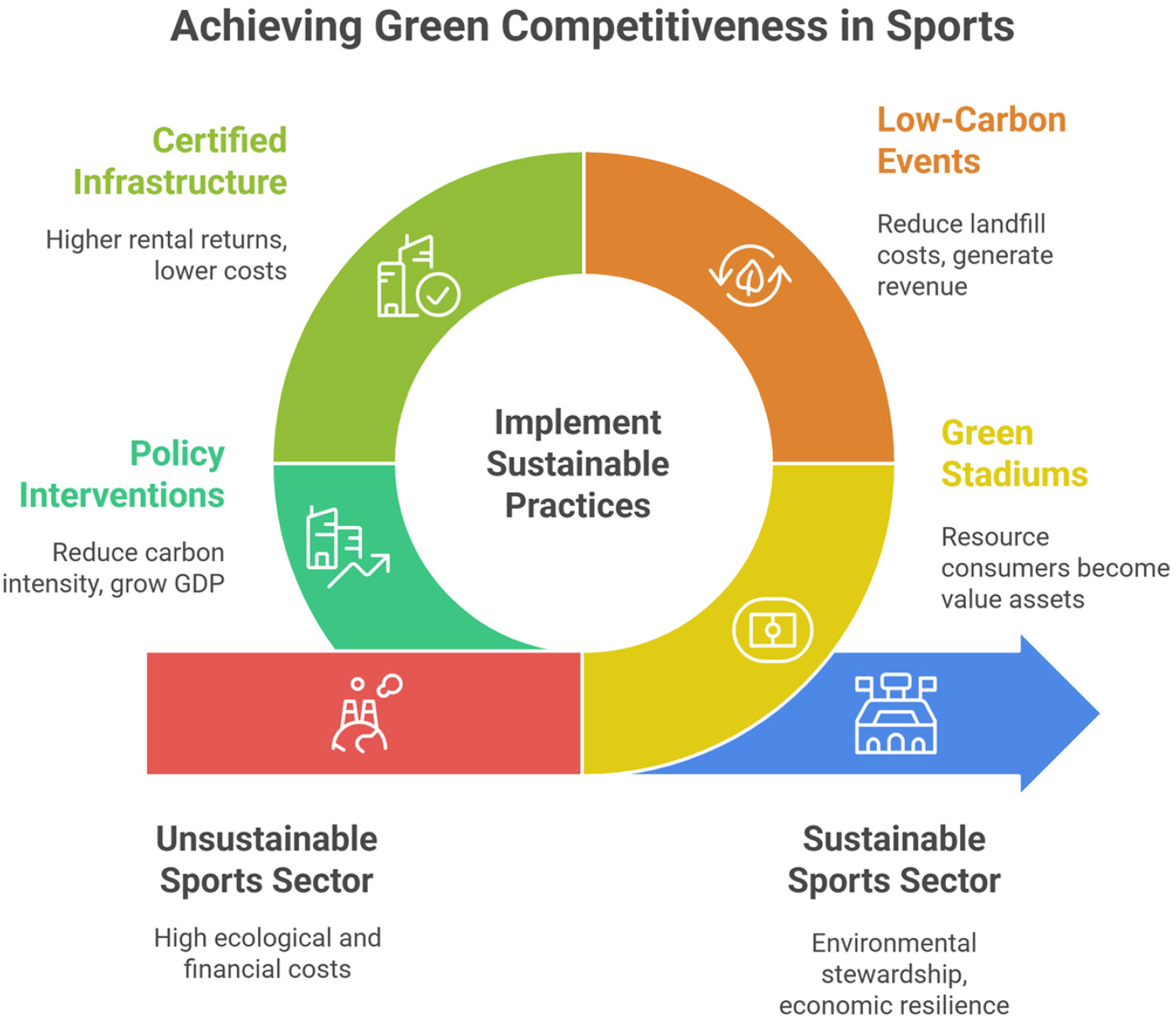
Conceptual framework of sustainability pathways in sports economics.
Emerging trends
Gender issues in sports and economy
This trend extends the research hotspot of brand value and commercialization by examining how gender-based valuation disparities affect economic outcomes in sports markets. From 2021 to 2024, the issue of gender has garnered significant attention in the context of sports economics. the keyword “gender” has shown an explosive emergence in sports economics research, indicating that gender issues have become a key research frontier and will likely remain a significant trend in future studies. The persistent gender economic disparities in sports, evidenced by discriminatory compensation structures and a 25% earnings gap driven by commercial sponsorships (Skinner and Salaga, 2024; Wicker et al., 2023), reflect deep-seated market failures explicable through human capital theory and Becker's model of discrimination. These inequities are perpetuated by cognitive biases in consumer valuation—where gender labeling skews performance assessments (Gomez-Gonzalez et al., 2024)—and institutional frameworks that systematically undervalue female athletes’ societal impact (Culvin et al., 2022). To rectify these inefficiencies, sports organizations and sponsors must implement equity-focused procurement policies, reallocating commercial resources toward women's leagues and adopting standardized metrics for evaluating broader social contributions alongside traditional performance indicators. Policymakers should leverage fiscal instruments, such as tax incentives for sponsors who meet gender-equitable investment thresholds and transparency mandates for salary and sponsorship disclosures. International federations like FIFA play a critical role in redistributing resources to enhance competitive balance in women's sports (Scelles, 2021), thereby aligning economic incentives with equity objectives. By embedding equity-adjusted valuation models into contractual and policy design, stakeholders can transform gender equality from an ethical imperative into an economically optimized outcome, fostering a more efficient and inclusive sports economy.
Satisfaction in sports and economy
Satisfaction has emerged as a distinct research frontier in sports economics, closely linked to globalization and digital innovation. Between 2021 and 2025, keywords such as “satisfaction” and “success” have shown a notable citation burst, underscoring their growing influence in shaping future research trajectories. Within the framework of consumer choice theory, satisfaction functions as a utility-maximizing mechanism, wherein perceived value directly shapes behavioral intentions and economic outcomes. Empirical studies confirm that participant satisfaction—driven by organizational professionalism, environmental quality, and service delivery—significantly enhances recommendation intent and repeat attendance, thereby fostering tourism growth and local business revitalization (Fernandez-Martinez et al., 2022; Taberner et al., 2022). In digital settings, trust-based utility models further illustrate how platform credibility and user experience sustain engagement and spending in virtual sports events (Martinez-Cevallos et al., 2024).
To operationalize these insights, event organizers are advised to implement real-time feedback systems to dynamically enhance service touchpoints. Policymakers may integrate satisfaction metrics into public tourism and event funding assessments, tying financial support to demonstrable service quality standards. Sponsors and investors, in turn, benefit from associating with high-satisfaction events, which exhibit stronger consumer loyalty and long-term revenue stability (Pang et al., 2022; Vassiliadis et al., 2021)Through behavioral nudges and satisfaction-linked incentive structures, stakeholders can systematically elevate experiential value, transforming participant satisfaction into a strategic asset for sustainable economic development in the sports industry.
Media issues in sports and economy
Media economics has arisen as a prominent frontier in sports research, fundamentally redefining brand engagement and consumer interaction in an era of globalization and digital transformation. The keyword “media” experienced a sharp increase in citation bursts from 2021 to 2025, signaling its critical role as a future-oriented research trend. In today's attention economy, narrative control and digital engagement directly shape market value and consumer behavior. Studies show that media narratives during mega-events such as the Olympics reconstruct brand perception and drive commercial outcomes (van Sterkenburg et al., 2021), while interactive social platforms strengthen brand loyalty and stimulate product demand through relationship-based consumption models (Ferreira et al., 2022). However, the platform economics underpinning digital media also introduce systemic risks: toxic online environments can suppress female fans’ economic participation (Fenton et al., 2023), illustrating how negative externalities may impede market growth.
In response, sports organizations and sponsors should invest in narrative governance—curating content that highlights athlete stories and social values to strengthen brand equity. Platform operators are encouraged to deploy AI-driven moderation and community reward systems to convert user engagement into sustainably co-created value, as evidenced by the economic returns of structured online brand communities (Wagner, 2023). Policymakers, meanwhile, can enforce anti-harassment regulations and promote digital inclusion initiatives to safeguard participatory integrity. By adopting a dual-strategy framework—maximizing reach while minimizing relational risks—stakeholders can harness the economic potential of sports media without compromising social sustainability, positioning these ecosystems as drivers of both profit and progress.
Public health in sports and economy
Research on public health represents a growing frontier in sports economics, integrating health capital theory into the evaluation of sports infrastructure and services. Between 2021 and 2025, keywords such as “public health,” “quality of life,” “sports medicine,” and “China” exhibited strong citation bursts, highlighting the rising scholarly focus on health-related issues in sports economics. Chinese research has been particularly influential, demonstrating that public sports services act as human capital multipliers. Empirical findings indicate that each unit increase in public sports service provision correlates with a 2.3% reduction in mortality rates—a delayed effect underscoring the long-term fiscal benefits of health-oriented sports policies (Cao et al., 2024). These results align with cost–benefit models in public finance, in which upfront investments in sports infrastructure yield compounded returns through lower healthcare expenditures and higher labor productivity. Targeted interventions, such as aquatic exercise for chronic conditions, further validate the role of sports medicine as a productive health input, alleviating pain while improving functional capacity and workforce engagement (Sola et al., 2024).
To translate evidence into practice, policymakers should integrate sports infrastructure into public health budgeting and classify sports services as preventive health expenditures. Urban planners are encouraged to adopt green–active design principles, co-locating sports facilities with healthcare hubs to create integrated health ecosystems. Corporate sponsors and insurers can also benefit from subsidizing employee sports programs, which reduce absenteeism and medical claims. By embedding health impact assessments into sports funding evaluations and incentivizing public–private partnerships for community health initiatives, stakeholders can leverage sports as a cost-effective and scalable driver of population health and sustainable economic development—particularly in regions characterized by aging demographics or high chronic disease burdens.
Conclusion
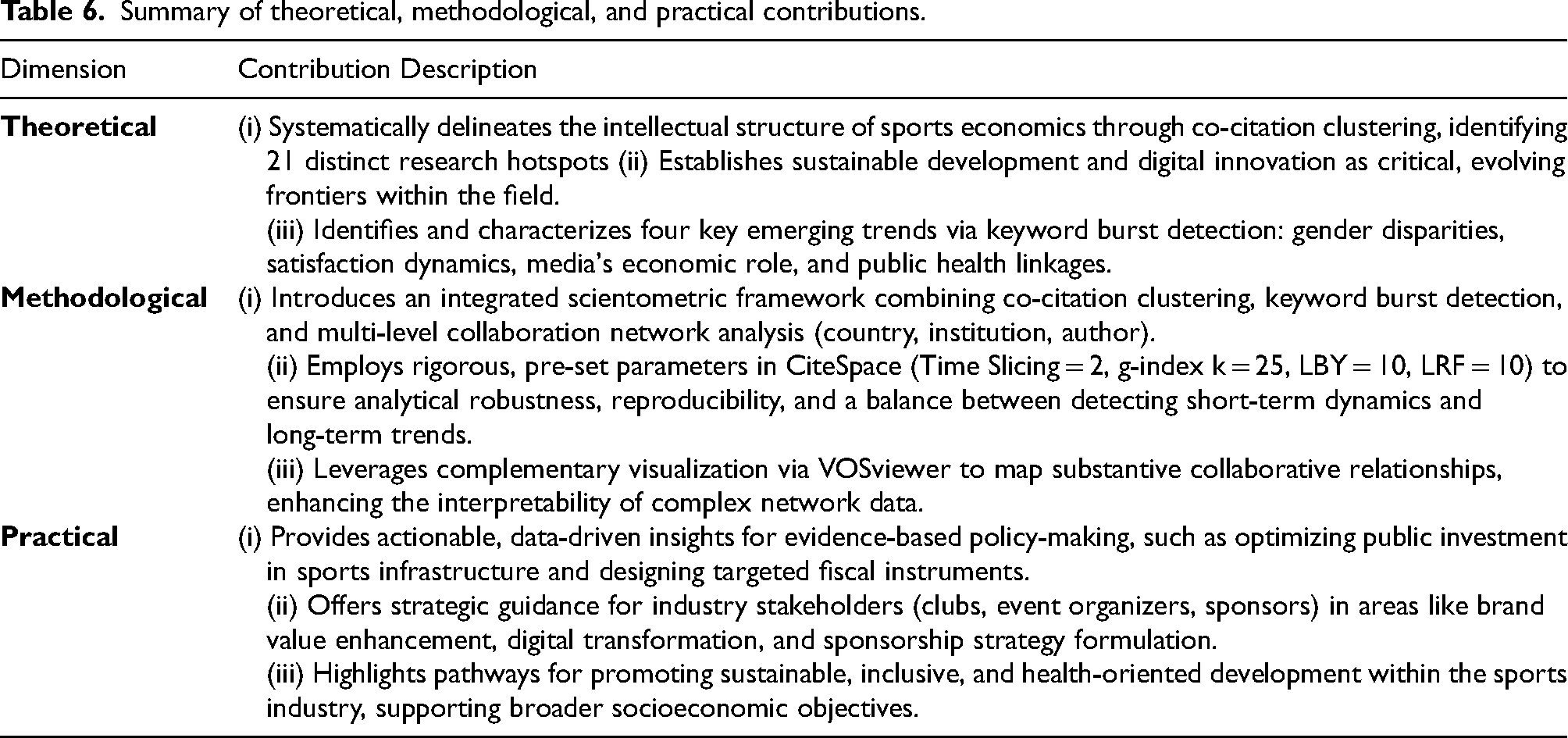
This study provides a comprehensive scientometric review of the sports economics literature from 2005 to 2025 mapping its intellectual structure, research hotspots, and emerging trends. By integrating bibliometric tools and multi-faceted analyses, it offers a data-driven framework for understanding the field. The theoretical, methodological, and practical contributions of this research are systematically summarized in Table 6.
Summary of theoretical, methodological, and practical contributions.
Footnotes
Acknowledgements
We are grateful to the anonymous reviewers for their constructive comments and insightful suggestions. Thank the developers of the two software tools of VOSviewer and CiteSpace.

Ethics statement
Not applicable
Author contributions
Data curation: Baoyuan Zhang. Formal analysis: Baoyuan Zhang. Supervision: Wenbing Yu. Writing-original draft: Baoyuan Zhang. Writing- review & editing: Wenbing Yu.
Funding
The authors received no financial support for the research, authorship, and/or publication of this article.
Declaration of conflicting interests
The authors declared no potential conflicts of interest with respect to the research, authorship, and/or publication of this article.
Data availability statement
The data underlying this study are available from the corresponding author upon reasonable request.