




Abstract
The athletic commissions from two states have approved the use and studied the impact of open scoring in mixed martial arts (MMA) with two key limitations: (1) they only observe fight outcomes and (2) promoters voluntarily opt in to open scoring treatment status. This paper proposes an analysis of open scoring in the observational setting of Ultimate Fighting Championship events where more granular measures of fighter performance are available. Utilizing known judge scorecards, a model to proxy the level of certainty in the bout outcome heading into the third round of each fight, and detailed fighter performance statistics, this paper examines the effect of knowledge of the likely outcome on fighter behavior in the last round of an MMA fight. Concerns that fighters with the lead will stop engaging or try to “coast” to victory appear unwarranted. Results instead suggest that trailing fighters slightly adjust their behavior, moving away from takedowns and late-stage submission attempts.
Keywords
Introduction
Mixed martial arts (MMA) is one of a limited number of sports where athletes compete without real-time knowledge of the score. 1 While golfers may not always have immediate access to the leaderboard, the information is public. Gymnasts, figure skaters, and divers do not know their scores as they perform, but information on athlete standings is generally publicly available prior to their performance and their score is revealed soon after their performance is complete for subsequent athletes to observe.
Scoring in MMA typically involves imperfect information. Most fights are scheduled for three rounds and when a fight enters the final round, the scorecards for the prior two rounds of action are private information possessed only by each respective judge and the athletic commission's scorekeeper who compiles the scores. This was the regulatory structure of MMA until February 2020 when the Kansas Athletic Commission approved the use of real-time scoring, also known as open scoring (Raimondi, 2020). Under open scoring, all three judges’ scores for a particular round are revealed during the rest period leading into the subsequent round. Invicta FC became the first modern-era MMA promotion to utilize open scoring in early March 2020 at Invicta FC: Phoenix Series 3 (Rothstein, 2020). The Colorado State Boxing Commission subsequently followed Kansas’ lead and approved the use of open scoring in October 2021 (Raimondi, 2021). To the author's knowledge, Kansas and Colorado are presently the only two regulatory jurisdictions in the United States allowing for the possible use of open scoring at professional MMA events, and a promoter's use of open scoring at each event is optional. One of Europe's largest MMA promotions, Oktagon MMA, began using open scoring at Oktagon 51 in December 2023 and could potentially serve as a future data source for the study of open scoring (Martin, 2023).
The principal concern with an open scoring structure is that a fighter who knows they are ahead on the judges’ scorecards going into the third round “may stop engaging and try to coast to the end” (Al-Shatti, 2020), knowing they are guaranteed to win so long as the opponent does not get a finish in the final round (knockout or submission) or dominate the action and receive a relatively rare 10-8 score or exceedingly rare 10-7. A fighter who knows they are trailing and one round away from losing could also change their behavior – exerting more effort towards achieving a knockout or submission finish, or possibly becoming discouraged and demotivated. The observational situations examined in the present study are guided by the spirit of concern regarding the third and final round, with a primary research question: Conditional on a fighter's performance in the first two rounds, how does their behavior change in the third round when information on their ahead/behind status from the judges’ scorecards is public versus private?
While open scoring is relatively new and limited in MMA, alternative versions of real-time scoring are a legacy artifact of amateur boxing's history. Following Roy Jones Jr's gold medal loss to Park Si-hun in the 1988 Olympics, the International Boxing Association (AIBA) introduced computerized scoring for amateur bouts in 1992 (Bianco et al., 2013). A punch-count system, it faced several criticisms, notably that it was fully “live open scoring, which created the whole situation with boxers getting a lead and then trying to avoid engaging in order to protect their lead” (Greisman, 2012). The system was modified in 2011 to eliminate the one-second timer for judges to agree on a clean blow and to reveal scores between rounds instead of real-time, but it continued utilizing a basic punch-count methodology. In 2013, the AIBA completely eliminated computerized scoring and transitioned to the 10-Point Must system prevalent in professional boxing and MMA (ESPN, 2013).
While anecdotes suggest amateur boxers with knowledge of their lead on the scorecard regularly “stop engaging,” there does not appear to be academic research on the topic, perhaps due to the availability of sufficient data. Instead, research on amateur boxing during its computerized scoring phase tends to focus on fighter health and safety (Alevras et al., 2018; Bartsch et al., 2012; Matser et al., 2000; Neselius et al., 2014), the effect of rule changes on bout outcomes (Bianco et al., 2013), and the potential of an automated impact sensing system (Bruch et al., 2011; Hahn et al., 2010; Perkins et al., 2017).
In MMA, extant literature on fighter behavior has examined the impact of the size of their work environment (cage size) on performance (Gift, 2019a), the effect of monetary bonuses on fighter effort (Gift, 2019b), technical and tactical analyses (Bueno et al., 2022), and the impact of rapid weight regain on bout outcomes (Peacock et al., 2025; Schwarz et al., 2025). A growing body of literature has also explored psychological elements of MMA, highlighting differences in mental toughness across fighters in amateur, semi-pro, and professional ranks (Chen and Cheesman, 2013), their most common fears – injury and losing – and how fighters manage them (Andrade et al., 2020; Vaccaro et al., 2011), as well as the importance of arousal regulation skills for in-cage success (Jensen et al., 2013). Recently, Kotrba (2024) found that the presence of a crowd may psychologically influence fighters, reducing the likelihood of fight-ending finishes via knockout or submission.
Despite this growing literature, scholarly research is yet to examine the mid-fight adjustments fighters may make based on knowledge of their ahead/behind status on the scorecards. With open scoring now available to promoters in two states and a frequent topic of interest in the MMA community where public debate arises “seemingly every time we have a controversial decision in a UFC championship fight” (Al-Shatti, 2020), a rigorous analysis of open scoring can add value to promoter decision making and complement the debates of fighters, managers, pundits, and fans. Notably, a 2020 survey conducted by The Athletic revealed that a 79.4 percent majority of MMA fighters supported open scoring in the sport (Fowlkes, 2020).
Data
The dataset for the present study was provided by the Ultimate Fighting Championship (UFC) with no disclosure of the topic being examined. Thus, the analyses will study UFC fighters only, not a broader collection of MMA fighters. For each round and each fighter, the UFC tracks over 100 performance statistics regarding striking, damage, knockdowns, takedowns, grappling, submission attempts, and time spent in various clinch and ground positions. Strikes are classified by whether they “land” or “miss” as well as if they are thrown with “power” or not. A non-power strike is classified as a “jab” and the UFC uses various physical cues to classify the power level of each strike. With respect to physical positioning, a fight can take place at distance, in the clinch, or on the ground. At distance, both fighters are standing but not touching. The clinch is when both fighters are standing and physically touching one another. In this situation, if one fighter presses the other into the cage, that fighter is classified as having “control.” Finally, when the fighters are on the ground, the top position fighter is classified as having control. 2
The focus of the present study is the third and final round of scheduled three-round bouts. Even though the UFC has never utilized open scoring and judge scores for the first two rounds have always been private, there are certain bouts where the action reveals a clear winner to all rational observers. 3 These situations, in which all three judges unanimously score the first two rounds 20-18 for one fighter and had a sufficiently high probability of doing so, proxy for an open scoring treatment status and are referred to as the fighter of interest being Ahead with Certainty (AWC) going into the third round. 4 The comparable control status is when a fighter of interest is also ahead going into the third round, but their position as the scorecard leader is more ambiguous. In these situations, one fighter is ahead on two scorecards and either split or lost the first two rounds on the third judge's card. This situation is referred to as Ahead with Uncertainty (AWU). Similar situations for the fighter behind on the scorecards are referred to as Behind with Certainty (BWC) and Behind with Uncertainty (BWU).
The sample period for the present study includes all UFC events held from January 30, 2016 through June 30, 2023. 5 The promotion held 3646 bouts during this time with 3288 (90.2 percent) scheduled for three rounds and the other 358 (9.8 percent) scheduled for five rounds. 6 In 1940 of the scheduled three-round bouts, the fighters completed the first two rounds of action and started the third round. 7 In order to focus analyses on potential behavior changes in the third round when a fighter is ahead or behind with certainty or uncertainty, bouts were excluded if an event occurred in the first two rounds that could create additional ambiguity beyond the traditional question of who won by a 10-9 score. Such events are a point deduction or a 10-10, 10-8, or 10-7 score by any judge. The resulting 1606 bouts all had complete judging data with only 10-9 scores and no point deductions heading into the third and final round.
In 608 bouts, all three judges issued unanimous 20-18 scores for one of the fighters through the first two rounds. That fighter may have dominated the action with clear 10-9 scores in each round or some of the rounds may have been close with the judges edging their scores to said fighter. Since an open scoring treatment reveals perfect information to MMA event participants, the 608 observations with judge unanimity were further refined to include only bouts with a clear winner of the first two rounds based upon a judging model similar to Gift (2018). The model estimates the probability of a judge scoring a particular fighter as the round winner conditional upon fighter performance metrics in said round. A fighter is then classified as AWC heading into the third round if they received unanimous 20-18 scores and the judging model assigned a 90 percent or higher probability of winning each prior round based upon the statistical action. If a particular fighter is classified as AWC, their opponent is classified as BWC. 164 bouts resulted in AWC/BWC classifications.
The remaining 998 bouts were not scored unanimously by the judges in some way. For example, all three judges might have even scores (19-19, 19-19, 19-19) or two scores could be even while the other has one fighter ahead (19-19, 19-19, 20-18). The situation of interest in the present study is when one fighter is ahead on two judges’ cards and will ultimately win the fight even if they lose the third round 9-10, but the judges have not unanimously agreed so there is reasonable uncertainty with respect to their scores. There are two such scorecard situations: first, when a fighter is ahead on two scorecards but the third card is even (20-18, 20-18, 19-19) and, second, when the third judge scored for the opponent (20-18, 20-18, 18-20). Thus, when the judges’ scorecards show (20-18, 20-18, 19-19) or (20-18, 20-18, 18-20) heading into the third round, the fighter who is ahead is classified as AWU and the opponent is classified as BWU. Of the 998 bouts without judge unanimity heading into the third round, 340 had fighters classified as AWU/BWU.
Model
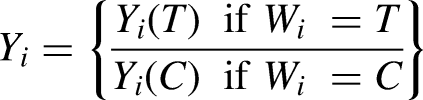
This paper draws from the treatment effects literature in observational settings to examine the impact of knowledge of the score on fighter behavior in the last round of an MMA fight. The framework is that of Rosenbaum and Rubin (1983) where there is a random sample of size N and for each observational unit i – the third and final round of a UFC bout – we observe Yi as the outcome of interest, Xi denoting a vector of pre-treatment covariates, and Wi an indicator variable denoting treatment (T) or control (C) status. The problem of causal inference is fundamentally one of missing data. Each observational unit has two potential outcomes, Yi(T) and Yi(C), yet we only observe a single outcome for each observation. More specifically, we observe:
In an experimental setting, assignment to treatment status is, by definition, independent of the distribution of potential outcomes. Random assignment guarantees so. In an observational setting, data is collected on pre-treatment covariates believed to be related to both the treatment and the outcome of interest (i.e., potentially confounding variables) such that after controlling for these covariates, assignment to treatment is as good as random. The key assumptions for causal inference in an observational setting are:
Unconfoundedness: Assignment to treatment is independent of the distribution of potential outcomes, conditional on pre-treatment covariates. Overlap: The treatment assignment probability, also known as the propensity score, is bounded away from zero and one.
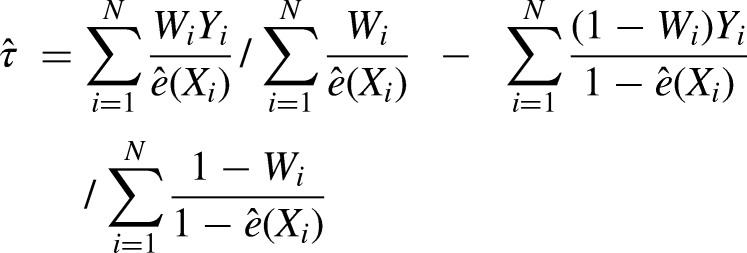
An acclaimed result of Rosenbaum and Rubin (1983) is that unconfoundedness from a vector of pre-treatment covariates also implies treatment assignment is independent of the distribution of potential outcomes conditional on the scalar propensity score. Hirano et al. (2003) show that an inverse probability weighted (IPW) estimator of the average treatment effect (ATE) utilizing the estimated propensity score reaches the semiparametric efficiency bound. This IPW estimator (
Four models are utilized in the present study. The first two – Models 1A and 1B – are more closely aligned with athletic commission analyses and examine which fighter wins the third round through the outcome variables R3_win, R3_win_judges, and R3_win_finish. R3_win is an indicator variable denoting whether the observed fighter won the third round by either finishing their opponent or winning on at least two of the judges’ scorecards. R3_win_judges examines only third rounds that went to a decision and R3_win_finish examines only third rounds where one of the two fighters earned a finish with a knockout or technical knockout (KO/TKO) or a submission. Model 1A uses simple statistics to estimate the ATE via the difference in sample averages. Model 1B investigates the same outcome variables with IPW estimators utilizing the set of pre-treatment covariates listed in Table 1 and representing the difference in various performance metrics between a fighter and their opponent through the first two rounds.
Sample means of pre-treatment covariates.
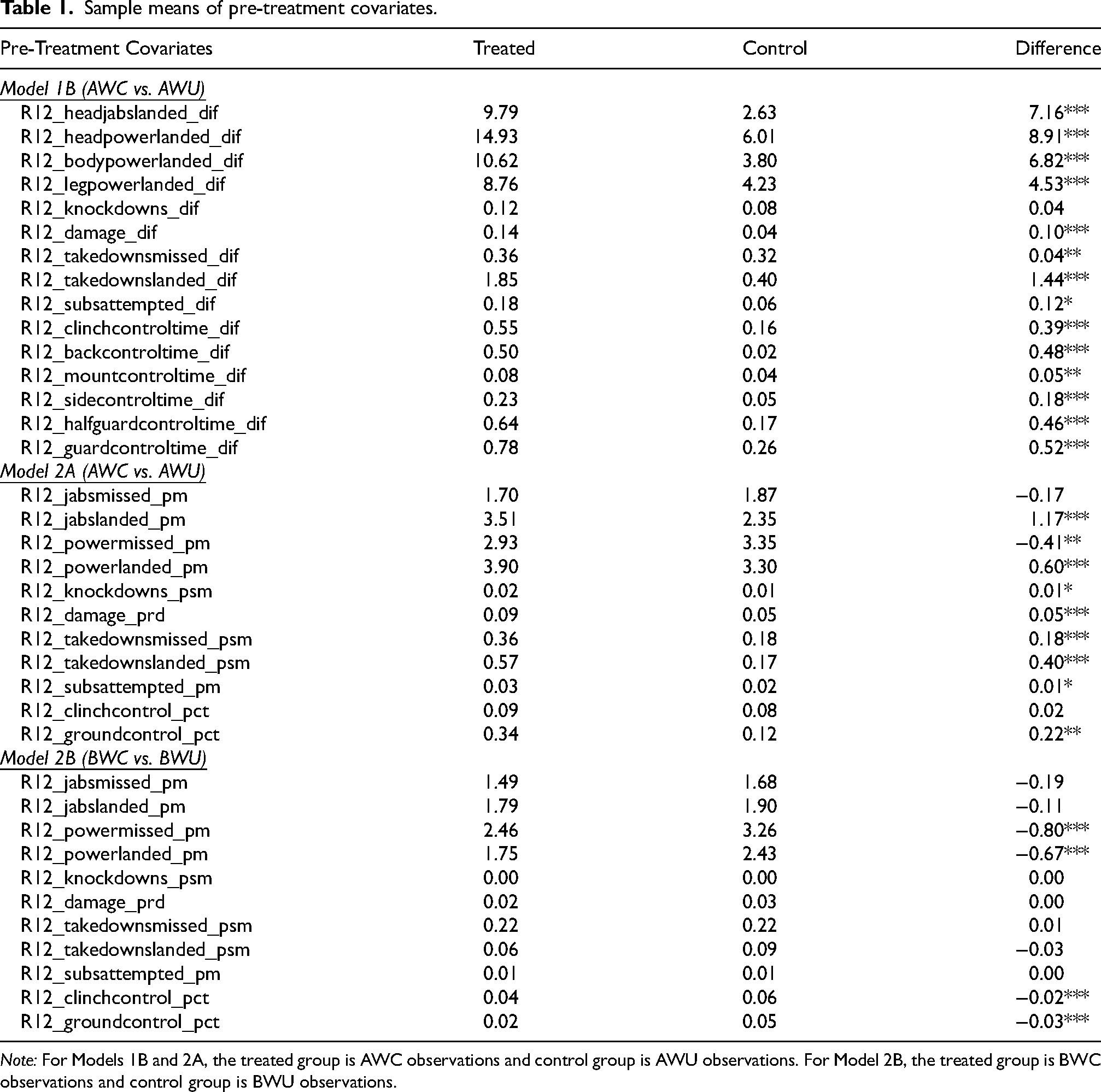
Note: For Models 1B and 2A, the treated group is AWC observations and control group is AWU observations. For Model 2B, the treated group is BWC observations and control group is BWU observations.
Models 2A and 2B also utilize IPW estimators but focus specifically on fighter behavioral changes when information on their ahead/behind status becomes public. Model 2A examines AWC treated observational units relative to AWU controls while Model 2B investigates BWC treated observational units versus BWU controls. In other words, Models 2A and 2B examine behavioral changes of ahead and behind fighters, respectively. The pre-treatment variables in each case are fighter-specific performance measures through the first two rounds of the fight. Jabs Missed, Jabs Landed, Power Missed, Power Landed, and Subs Attempted are measured per minute (denoted _pm); Knockdowns, Takedowns Missed, and Takedowns Landed are measured per standing minute (denoted _psm); Damage is measured per round (denoted _prd), 8 and Clinch Control and Ground Control are measured as the percentage of fight time in which the fighter has control (denoted _pct). The outcome variables of interest in the third round are also measured either per minute, per standing minute, per round, or as a percentage of fight time since the third round is not guaranteed to last a full five minutes – ranging anywhere from a few seconds to a few minutes to the entire five-minute round. Model 2A and 2B outcome variables were selected to reflect the activity or action in a round, an important consideration for MMA promoters who must decide whether to use traditional or open scoring. All IPW estimators employ cluster-corrected standard errors at the event level, and weight by total elapsed time of the third round in Models 2A and 2B.
The significant differences in sample means of pre-treatment covariates observed in Table 1 suggest the necessary overlap assumption may be of concern in this setting. Limited overlap can lead to potential bias and enhanced variance. While Crump et al. (2009) suggest researchers often discard problematic observations, they note that implementation is typically “ad hoc” (p. 188). They instead propose a systematic approach to dealing with limited overlap, resulting in a rule of thumb to discard observations with an estimated propensity score less than 0.1 or more than 0.9. Models 1B, 2A, and 2B each utilize the rule of thumb adjustment of Crump et al. (2009) and all models subsequently pass overlap tests.
Empirical results
Sample means for the outcome variables of interest are presented in Table 2. The top line (R3_win) is the closest parallel to the data collected by the Kansas and Colorado athletic commissions. When a fighter is AWU, they win the final round 63.5 percent of the time and when a fighter is AWC, that win percentage increases to 80.5%. This ATE of 17 percent can also be seen in the Model 1A section of Table 3 where simple averages are used to estimate a treatment effect. In this observational setting, it is possible that fighters who enter the third round with AWC status have performed better against their opponent through the first two rounds and are more likely to continue to do so in the third. Hence, the importance of controlling for pre-treatment covariates from the earlier rounds.
Sample means of outcome variables of interest.
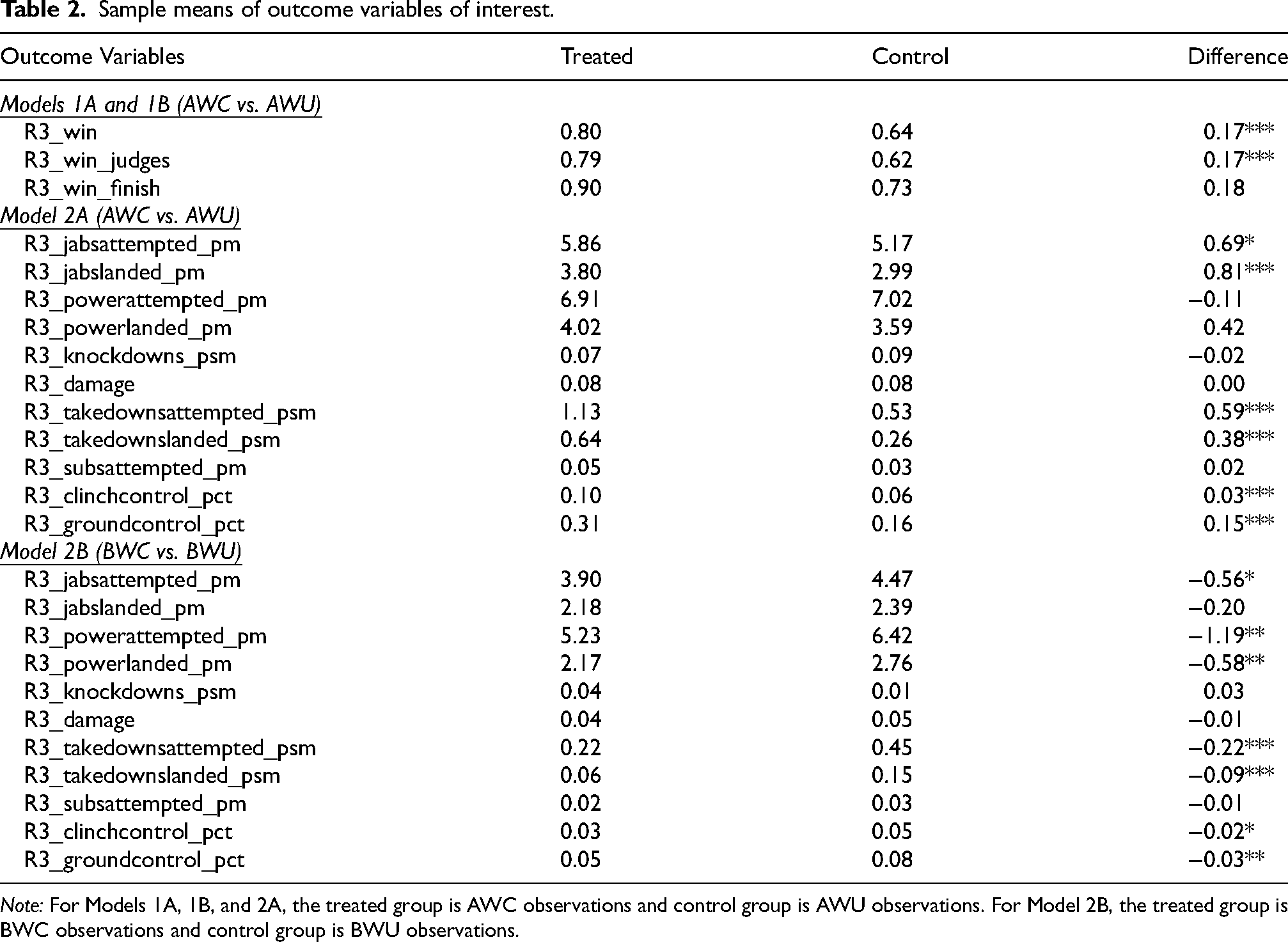
Note: For Models 1A, 1B, and 2A, the treated group is AWC observations and control group is AWU observations. For Model 2B, the treated group is BWC observations and control group is BWU observations.
Average treatment effect for winning the third round.
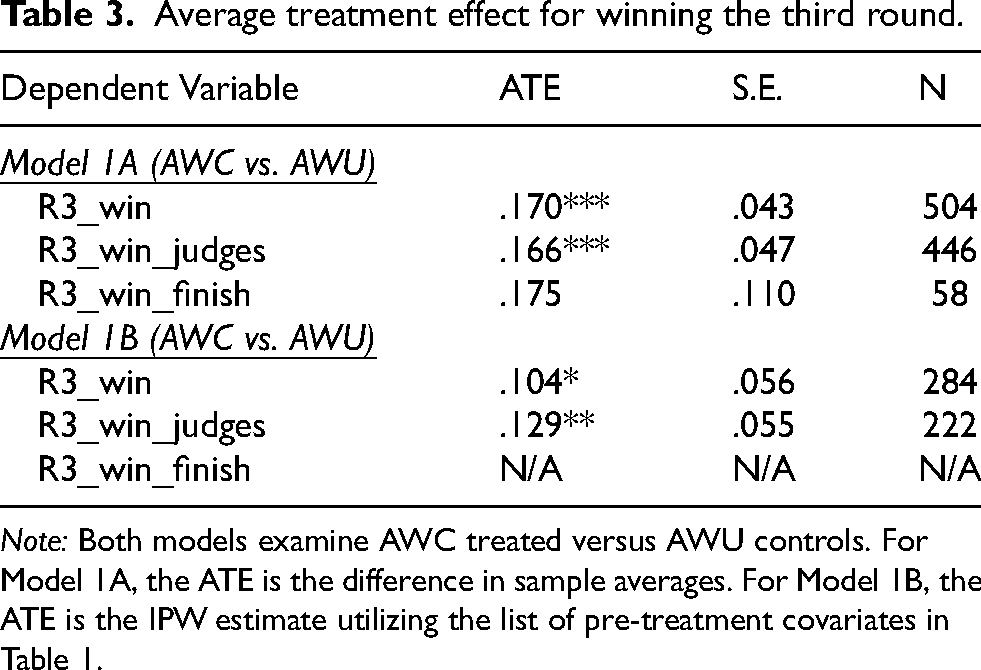
Note: Both models examine AWC treated versus AWU controls. For Model 1A, the ATE is the difference in sample averages. For Model 1B, the ATE is the IPW estimate utilizing the list of pre-treatment covariates in Table 1.
While assignment to treatment status has not been perfectly random in Kansas and Colorado since promoter use of open scoring is optional and not randomly assigned, their statistics do not share the same complication that a better performing fighter is more likely to be in the treated group. Colorado's response to an open records request was difficult to reliably interpret. But in data released by Kansas, they found the ahead fighter wins the third round 72.4 percent of the time with open scoring versus a 61.5 percent win rate with traditional private scoring (Magraken, 2021a). 9 A separate data release focused on a single promotion, Legacy Fighting Alliance (LFA), and examined 10 events outside of Kansas without open scoring and nine events within the state utilizing open scoring (Magraken, 2021b). In that analysis, Kansas found a similar effect with the ahead fighter winning the final round 70.0 percent of the time with open scoring versus 57.9 percent without. The two analyses suggest that the ahead fighter, rather than playing it safe and winning the final round less often, instead wins the last round 11-12 percent more often when scores are made public in real time.
In the present study, a more reliable estimate of the ATE for R3_win is presented in the Model 1B section of Table 3. It shows that once pre-treatment covariates are accounted for in an IPW estimator, the ahead fighter's win percentage increases 10.4 percent in the AWC treatment group, similar to results found by the Kansas Athletic Commission. Potential explanations for this finding are discussed in the next section.
An important consideration for any MMA promoter considering the use of open scoring – and one the Kansas and Colorado athletic commissions are unable to analyze due to data availability – is the potential for fighter behavioral changes in the final round when their ahead/behind status becomes public information. What happens to their striking volume? The amount of strikes landed? Their effectiveness getting knockdowns or damaging the opponent? Their takedown attempts and success rate? Submission attempts and control time? The answers to these questions are important considerations for a promoter whose business is built around arranging entertaining bouts for the enjoyment of fight fans. From this perspective, the present study can add value and insight to the open scoring debate.
Table 4 presents results from IPW estimates for ahead and behind fighters in Models 2A and 2B, respectively. Model 2A's results allow for inference into whether fighters with knowledge they are ahead on the scorecards tend to engage less or try to “coast” to a victory while Model 2B's results reveal if a fighter who is five minutes away from losing tends to open up their game and become more aggressive, change their strategy, or take more chances.
Average treatment effect on fighter performance measures for ahead and behind fighters.
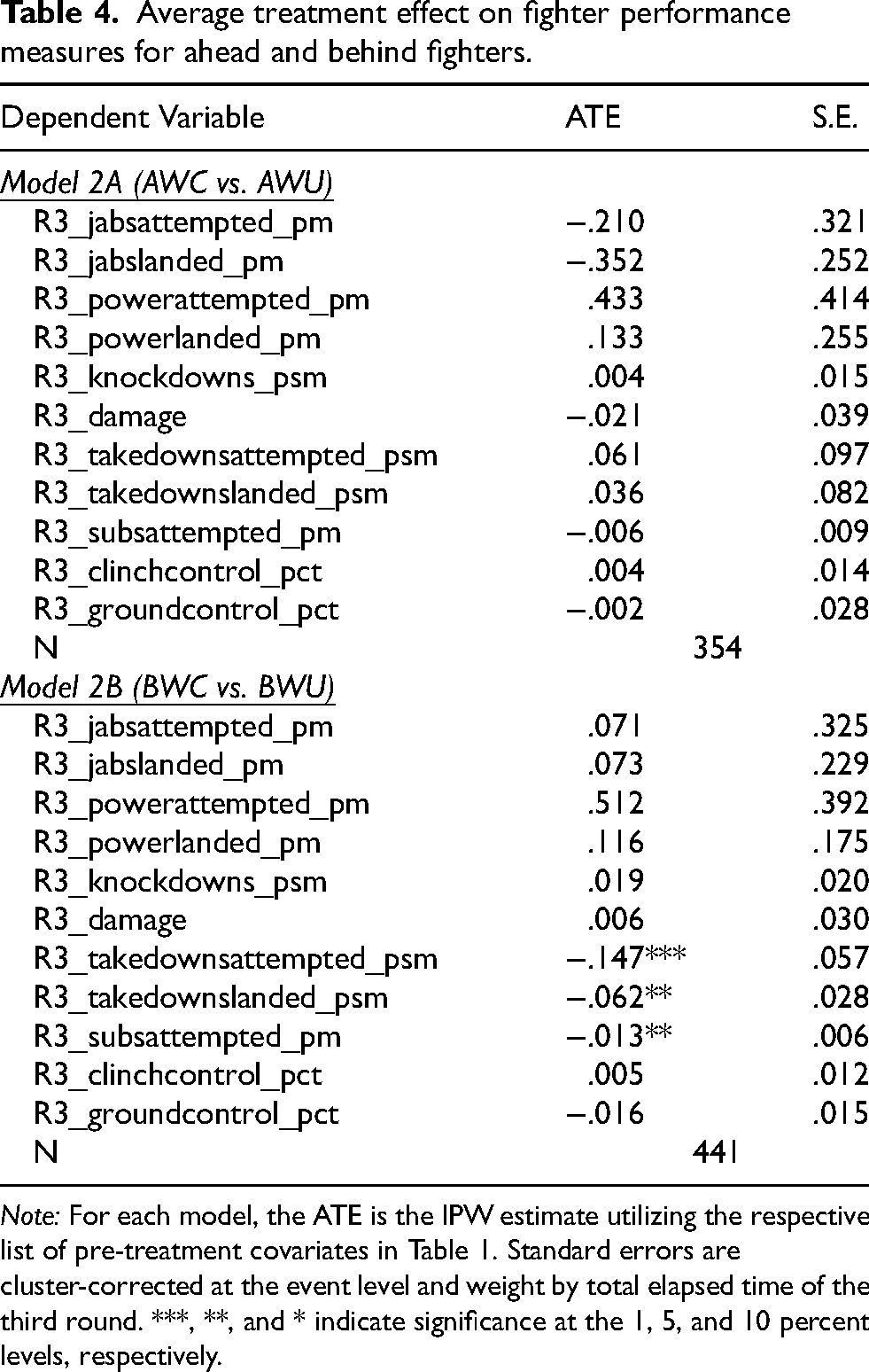
Note: For each model, the ATE is the IPW estimate utilizing the respective list of pre-treatment covariates in Table 1. Standard errors are cluster-corrected at the event level and weight by total elapsed time of the third round. ***, **, and * indicate significance at the 1, 5, and 10 percent levels, respectively.
Model 2A's results are in stark contrast to anecdotes from amateur boxing's computerized scoring past as they are benign with respect to all 11 outcome measures. This suggests that UFC fighters who know they are ahead – and possibly MMA fighters more broadly – do not systematically fight differently based on common measures of fighter performance such as striking volume, knockdowns, damage, takedowns, submission attempts, and grappling control. Model 2B yields similarly benign results for most outcomes, with three exceptions. Findings suggest fighters who know they are down on the scorecards attempt and land significantly fewer takedowns and – perhaps counterintuitively since they will lose the fight without a finish – also attempt fewer submissions.
As a robustness check, each regression was also performed using an augmented inverse probability weighted (AIPW) estimator, which possesses the doubly-robust property of yielding consistent estimates if either the treatment or outcome model is correctly specified. All results remained qualitatively unchanged with AIPW specifications, with one exception. The finding that trailing fighters tend to attempt fewer submissions exhibited slightly reduced statistical significance, shifting from the five-percent level to the 10-percent level.
Discussion and conclusions
While open scoring has been examined by two athletic commissions in somewhat broad strokes, a more nuanced analysis of fighter behavior remained elusive – not due to a lack of interest but rather a lack of sufficient data since promotions such as Invicta and LFA do not collect the level of detailed fighter performance statistics as are tracked by the UFC. Based on a novel analysis of UFC data, it appears that fighters who are ahead on the scorecards do not tend to change their behavior along 11 key performance metrics when scoring information is made public. For MMA promoters whose business is selling tickets and attracting viewers and sponsors, these findings may help address the principal concern with an open scoring system – fighters in the lead do not appear to coast to victory. But trailing fighters do appear to change their behavior with respect to takedowns and submission attempts. While the volume in which they throw and connect with strikes does not change, they attempt and land fewer takedowns, perhaps recognizing the need to finish the fight in the final round and therefore subtly shifting attention towards a possible knockout since KO/TKOs are three times more likely to be initiated from standing positions relative to the ground. 10 This is supported by a simultaneous reduction in submission attempts. By the third round of a professional MMA fight, fighters have full sweats and may be fatigued, which can make completing a submission attempt more difficult as evidenced by an approximate 25 percent reduction in submission attempt success rates relative to the first two rounds. The knowledge that a fighter will lose unless they get a finish may induce them to marginally exert more effort towards strikes rather than late-stage submission attempts. While the rates at which they strike do not appear to change, the strategic nature and therefore the quality of their striking could change if achieving a knockout becomes more of a priority, and judges may notice those nuances in their scoring assessments.
This study finds results consistent with reports from the Kansas Athletic Commission – that third-round win rates for the ahead fighter increase by 10.4% with public knowledge of the score. According to Table 3, this effect appears to be driven entirely by the judges. With only 58 observations prior to the limited overlap adjustment of Crump et al. (2009), an IPW estimate specifically targeting third-round finish rates was not able to be performed, but a simpler regression adjustment model yielded an insignificant ATE estimate. Yet the ATE estimate of judge decisions in the third round is significant at the 5% level. Once a fight has progressed through two rounds, late-stage finishes in the third round are relatively rare. So while adjustments to striking by the trailing fighter with respect to the types of combinations thrown, timing, intensity, etc. may not result in an increased frequency of being knocked out or submitted more in the last round and instantly losing the fight, those subtler elements of performance would likely to be noticed by skilled and perceptive judges.
Prior research suggests a mechanism by which the trailing fighter's performance may degrade. While Klein Teeselink et al. (2023) found largely null results when examining whether slightly trailing at halftime increased the likelihood of ultimately winning in a variety of athletic endeavors, the idea of “choking under pressure” is well established in the sports economics literature with documented findings in basketball (Cao et al., 2011; Toma, 2017), soccer (Dohmen, 2008), golf (Hickman and Metz, 2015), tennis (Cohen-Zada et al., 2017), and archery (Bucciol and Castagnetti, 2020), among other sports. The seminal study on the topic by Baumeister (1984) found that increased attention to one's own internal processes of performance in skill tasks disrupted automatic or well-learned execution, and an MMA fight is certainly a skill task. Public knowledge of the trailing fighter's scorecard status may increase their conscious attention on performance processes in the final round and could explain findings regarding their changes in behavior and reduced win percentage. The combat sports adage, “When you go looking for the knockout, it never comes” may be applicable in this context in addition to the degradation of subtler elements of fighter performance.
Two potential caveats should be noted. First, the present study uses a proxy for open scoring treatment status rather than true knowledge of real-time scores. The proxy allowed for an examination of richer, more granular data regarding fighter performance in a manner not previously explored, however it is possible fighters may have an implicit awareness of their scorecard status even when classified as AWU. Detailed data from sanctioned events utilizing open scoring would be preferable for more conclusive insights and should sufficient data from Oktagon MMA become available, it could present a valuable opportunity for further research on this important topic.
A second caveat is the present study only analyzes UFC fighters as opposed to a broader sampling of MMA athletes. 11 This was due to data granularity requirements. Thus, caution should perhaps be exercised before drawing inferences for other major MMA promotions such as the PFL, ONE Championship, Invicta, and now-defunct Bellator. On the other hand, all MMA promotions sell entertainment to their customers and, based upon publicly available information, appear to have similar incentives that may motivate a fighter in the last round. Fighter pay typically increases exponentially as one approaches champion status and it is the promoter who selects which fighter will receive the next title shot. Promoters can also cut a fighter at any time after losing, and a fighter with uninspired performances would seem to be at higher risk of losing their job. At the local or regional level of MMA, fighters typically hope to receive a contract offer from a major promotion. Thus, in addition to a fighter's skill and charisma, observing a high level of engagement and action through the entirety of a bout would seem to be an important consideration for promotional executives making contract offer decisions.
Open scoring can be a contentious issue in the MMA industry. Fighters often have strong opinions on the subject, especially after a controversial judging decision in a title fight involving a pivotal final round. The Kansas Athletic Commission fervently advocates for expanded availability of open scoring both in public and among the Association of Boxing Commissions and Combative Sports regulators. And the UFC has thus far been steadfast in its refusal to consider using open scoring when holding events in Kansas and Colorado.
Yet UFC data can still help improve our understanding of open scoring. Using the promotion's detailed fighter performance statistics and a judging model to impute the degree of certainty regarding real-time scores, this study is able to use observational data of traditionally-scored MMA events to inform industry stakeholders on the impact of an open scoring system on fighter behavior in the final round. Promoters, whose livelihoods depend on entertaining fights, must decide whether to use open scoring when holding events in Kansas and Colorado in addition to decisions regarding whether and how to lobby regulators for future rule changes (such as expanded access to open scoring). The sport's numerous other state and tribal regulating bodies must also decide whether to even consider the potential use of open scoring within their jurisdictions. The present study may provide incremental value for these real-world decisions in the MMA industry.
Footnotes
Acknowledgments
I am grateful for helpful comments and suggestions provided by conference participants at Western Economic Association International and the American Society of Business and Behavioral Sciences, as well as two anonymous peer reviewers. I would also like to thank Rami Genauer of the UFC for data access and the officials and operators of the California Amateur Mixed Martial Arts Organization, whose regulatory oversight helped inspire the idea for this paper.

Funding
The author received no financial support for the research, authorship, and/or publication of this article.
Declaration of conflicting interests
The author declared no potential conflicts of interest with respect to the research, authorship, and/or publication of this article.