



Abstract
Based on China Education Panel Survey (CEPS) data, this paper explores the influence of adolescents’ romantic relationship on individual development in terms of academic, emotional, and interpersonal development. The research finds that the academic performance of adolescents who involved in romantic relationship is relatively lower and their risk of having negative emotions is also lower than their counterparts outside relationship. The romantic relationship provides an opportunity learning how to maintain intimacy relationship and build positive self-concept, and thus, it has a positive effect on growth of interpersonal ability. Due to differences in gender roles, the romantic relationship has a stronger impact on female adolescents. In addition, in a high-pressure environment, individuals with romantic relationship bear greater psychological pressures. A more open, tolerant, and supportive environment toward adolescents’ romantic relationship will promote their holistic development.
Introduction
The romantic relationships have become an integral part of adolescents’ daily lives, and dating is the primary topic of adolescent conversations (Eder, 1993). Having romantic feelings and attempting to engage in romantic relationships are significant indicators of adolescence experiences (Giordano et al., 2006). These relationships are often superficial, and the majority continue only for a few weeks or months without requiring long-term commitment (Connolly & McIsaac, 2009). In western culture, successfully navigating adolescents’ romantic relationships leads to the development of mature relationship skills of intimacy (Collins & Van Dulman, 2006; Li, et al., 2010).
The romantic interactions also create a variety of challenges for adolescents. According to Zimmer-Gembeck et al. (2001), the genuine or fantasy romantic relationships have contributed to teenagers’ emotional instability, affecting their development such as academic performance and interpersonal ability. Additionally, early experiences with romantic relationships can have an enduring influence on marital relationships (Furman & Shaffer, 2003), family relationships (Laghi et al., 2017), depression, and anxiety into adulthood (Kansky & Allen, 2018).
Adolescent romance, in the traditional Chinese culture, has long been stigmatized as a deviant behavior. It is referred to as “puppy love” to imply that adolescents are too young to fall in love (Shi, 2016). The adolescents’ dating behaviors can have a detrimental effect on academic achievement, emotional stability, and health due to early sexual behaviors and violent injuries (Hallfors et al., 2005). However, it is impossible to control the natural development of adolescents. Facing negative social stigma, adolescents are often unwilling to communicate with their parents and teachers when they are experiencing difficulties in a romantic relationship, which in turn can increase the odds of unfavorable consequences (Liu & Li, 2015). Given the unique Chinese culture, it is critical to investigate the impact of adolescent romance on individual development, in order to prevent undesirable consequences.
Our study focuses on China, where the adolescent romance is not openly supported by general public. Using data from the China Education Panel Survey (CEPS), our study examines the relationship between adolescent romantic behaviors and individual development. It fills a research gap on adolescent romantic behavior in China. Second, the study is based on a national representative sample, overcoming the issue of external validity of small-scale survey research. Moreover, our analytical framework incorporates parental and teacher attitudes toward teenager romantic behavior as an external pressure, allowing us to examine the distinctive characteristics of adolescent romantic behavior in a high-stress context. Finally, this study evaluates the impact of teenage romantic behavior on critical teenager developmental areas and thus broadens the scope related literature.
Literature review and hypothesis
Adolescent romance and individual development
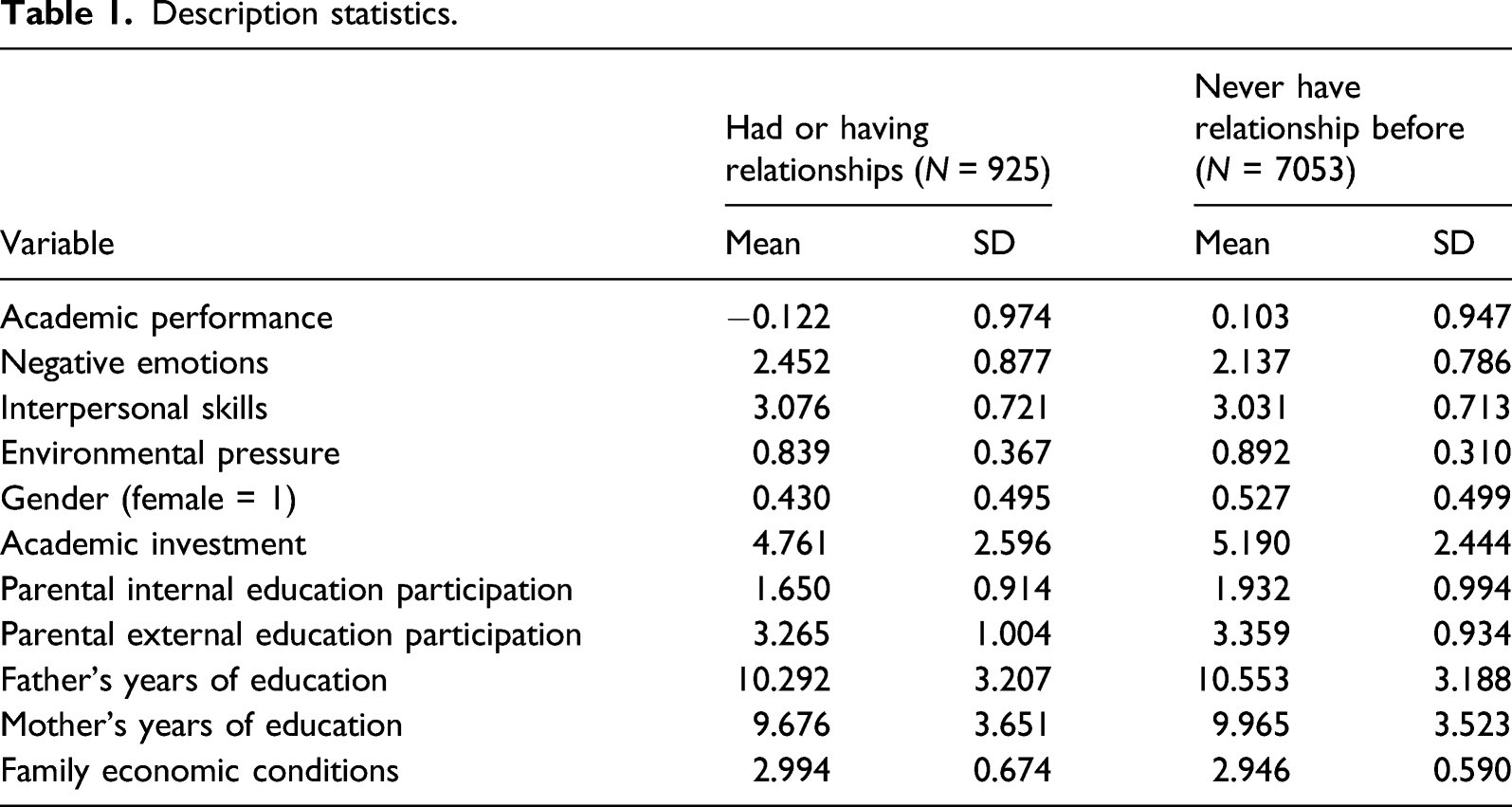
Adolescents start to have crushes and hope to approach and understand the “ideal person” when they enter adolescence. According to the CEPS data, 42.7% of middle school students have admitted that had or having crushes on their friends (Jin & Yang, 2021). We demonstrate in this study that more than 13.1% of eighth graders have ever been in a romantic relationship. Furman & Shaffer (2003) indicate that adolescent romance behavior cannot be simply understood as a problem. These interactions are inextricably linked to adolescents’ self-concept and self-worth and have a further impact on adolescents’ individual development when peer and family relationships are involved (Christopher et al., 2016; Tuggle et al., 2014).
Academic performance
After entering the secondary education, adolescents are facing significant academic changes such as academic difficulty. They must adopt a high-level learning strategy and invest sufficient time and efforts in learning in order to achieve academic success (Duchesne et al., 2009).
Although certain studies indicate that romantic relationships can occasionally boost academic performance at Secondary School Certificate level (Ahamed et al., 2017), the majority of prior research indicates a negative correlation between adolescent romance and academic performance (Hallfors et al., 2005; Li et al., 2019; Neemann et al., 1995). Giordano et al. (2006) examine the consequences of romantic relationships using data from the National Longitudinal Study of Adolescent Health and discover that adolescents who engaged in romantic behavior too early are more likely to engage in risky behaviors and have significantly lower academic performance. Time spent with partners might decrease academic investment and divert focus away from learning. Additionally, within the 16-year-old group, romantic relationships are frequently accompanied by significant emotional changes, which can impair teenagers’ academic engagement (Zimmer-Gembeck et al., 2001). Orpinas et al. (2013) also find a similar result that teenagers who dated throughout secondary school had worse academic achievements and higher drop-out rates. Moreover, romantic breakups might alter individual’s self-perception and have a detrimental effect on their academic performance (Field et al., 2012). Hallfors et al. (2005) conduct a quantitative study on adolescent in grades 7 to 11 and found adolescent romance increased the likelihood of early sexual behaviors and violent injuries. The effect on adolescents’ academic development may vary depending on partner’s characteristics.
Teenagers may experience academic impairment, while they can improve academic achievement with encouragement and support. In general, because the majority of teenagers are in the early stages of interpersonal relationships, they are incapable of making commitments to care for one another (Connolly & McIsaac, 2009). The negative impact may well exceed any potential benefit. It is thus hypothesized: Hypothesis 1: Adolescents’ romance behaviors have a negative impact on academic performance.
Negative emotion
Relationships with romantic partners raise the likelihood of developing emotional disorders and negative emotions (Costello et al., 2006). Apart from the comfort and security of friendships, love consists of a considerably higher emotional component. Adolescents may develop emotional and psychological issues accordingly (Giordano et al., 2008).
According to previous research, adolescents in romantic relationships experience more negative emotions (Laursen, 1995), exhibit more severe depression symptoms (Joyner & Udry, 2000), and have more frequent and extreme mood swings (Larson et al., 1999). Vujeva & Furman (2011) find that over a five-year period, teenagers with greater levels of depressive symptoms were likely to experience an increase in conflict and a decrease in positive problem solving in romantic relationships. One possible explanation is the conflicts in family relationships. In addition, due to the fragility of adolescents’ romantic relationships, repeated rejections and breakups typically deplete adolescents emotionally (Joyner & Udry, 2000). Moreover, Monroe et al. (1999) discover that breaking up the romantic relationships was the most common reasons for depression in adolescents, and further increase the risk of violent injury and early sexual activities (Hallfors et al., 2005).
Since adolescents are in an emotionally sensitive period, they may suppress their thoughts and opinions because they are afraid of losing their partners, and lead to poor communication (Collins et al., 2009). Adolescents in love have lower life satisfactions and higher stresses, and are also more likely to be in a sub-health mental state (Zimmer-Gembeck et al., 2001). Therefore, it is thus assumed that: Hypothesis 2: Romantic behaviors increase the incidents of negative emotions.
Interpersonal ability
Interpersonal skill is a critical component of adolescence development. The partnerships are essentially more intimate, and adolescents are willing to spend more time with their peers (Csikszentmihalyi & Larson, 1984). In order to develop social ability in peer interaction, adolescents need to be accepted by peer groups and find the sense of belonging.
A romantic relationship is critical for development of interpersonal abilities. First, both friendship and romantic relationships share common characteristics such as intimacy, support, giving, and caring. In romantic relationships, adolescents can develop a variety of interpersonal skills, including communication, tolerance, and support for others (Furman & Shaffer, 2003). Second, the ability to form romantic relationships demonstrates teenagers’ self-worth. Adolescents have distinct self-concept in romantic relationships, which are related to their exposures to and quality of interactions (Connolly & Konarski, 1994). According to Harter (2012), adolescents who had favorable romantic encounters are confident in their attractiveness. Such self-concept has a positive effect on teenagers’ general self-esteem and contributes to their sense of self-worth, particularly in terms of appearance and peer acceptance. On the other side, individuals may experience changes in their self-concept content and decrease in self-concept after a breakup, which leads to emotional distress (Slotter et al., 2010). Finally, being in a romantic relationship influences adolescents’ social interaction in terms of status grading and achievement (Roscoe et al., 1987). According to Franzoi et al. (1994), dating attractive or popular persons can help adolescents improve their social standing within peer groups. Every female wishes to attract “beautiful, popular, mature, and gift-giving partners” in order to demonstrate their popularity among peers (O'Sullivan & Meyer-Bahlburg, 2003).
The establishment of a romantic relationship may promote adolescents’ self-concept and thus acquire interpersonal ability. Therefore, this article proposes the third research hypothesis: Hypothesis 3: Romantic behaviors have a positive effect on the growth of interpersonal ability of adolescents.
Gender differences in adolescent romance
Early adolescence is a period of increasing gender-related expectations (Brooks-Gunn & Peterson, 2013). Male and female adolescents have significant differences in the way they perceive and experience romantic relationships and dating behaviors (Shen, 2014). Even adolescents are in the same identity, they may still have different meanings and importance between different genders (Thoits, 1991).
For male adolescents, the self-concept of adolescents focuses more on the dominant position and competitive relationship within peer groups. Peer interactions among male adolescents are usually manifested by low level of intimate self-disclosure and an emphasis on competitive discourse and activity (Crosnoe, 2000). The impact from peers is the major social motivation for male adolescents, leading to interpret romantic relationships as another way of gaining social status (Murphy, 2004). Furthermore, Giordano et al. (2006) finds that the male adolescents show a stronger interest in sexual aspects rather than emotional in romantic aspects.
Using a feminist developmental framework on 12th grade female adolescents, Impett et al. (2006) argues that gender socializations make females more inclined to consider interpersonal relationships and pursue harmony with others. Therefore, romantic relationships have become a particularly prominent source of self-concept for female adolescents (Simon & Barrett, 2010). Female teenagers pay more attention to dating and when they involve in conflicts, females are more likely to spend time and energy in fixing the relationship (Giordano et al., 2006). Considering the sexual behaviors, Shen (2014) discovers that the relationship between self-esteem and sexual activity is negative for both males and females, possibly because the Chinese society’s overall conservative attitudes toward youth sex.
Applying sequence analysis to National Longitudinal Study of Adolescent Health data, Soller (2014) demonstrate that when romantic relationship goes wrong, female adolescents have a higher risk of depression, suicidal tendencies, and suicide attempts and are more likely to be affected by the poor relationship than male adolescents. Based on the above analysis, it is assumed that: Hypothesis 4: Compared with male adolescents, romantic behavior has a stronger impact on the individual development of female adolescents.
Environmental pressure in Chinese education context
Different cultural environments have distinct social standards, and their unique expectations are formed by specific social relationships. Individuals establish self-concepts under the social and cultural environment, for instance, complying with the expectations of specific roles (such as parents, teachers, and partners) and establish behavioral tendencies and interpersonal relationship patterns based on such expectations (Thoits, 1991). Adolescent romance is also confined by social and cultural norms in different cultures (Collins et al., 2009). Asian adolescents are less likely to be involved in romantic relationships in the past 18 months than African, Hispanic, and white adolescents (Carver et al., 2003). Both Hispanics and African American teenagers tend to keep their first love boyfriends secret, particularly from their families, out of worry that the family will intervene (O’Sullivan & Meyer-Bahlburg, 2003). In the United States, adolescents' contentment with romantic relationships is strongly related to parental surveillance (Tuggle et al., 2014). If an individual’s behavior is inconsistent with social norms, this creates significant psychological pressure and can lead to emotional pain and disorder.
In China, adolescent romance has been regarded as a deviant behavior, contrary to social norms, and opposed by families and schools (Huang, 2003; Li et al., 2010). Therefore, adolescents in love face a strong conflict between self-concept and social identity expectations. Such romance turns into a psychological burden. Adolescents have a sense of self-doubt and tension in the relationship and tend to negatively understand the conflicts in relationship (Liu et al., 2020). In addition, Liu & Li (2015) find that the environmental pressure strengthened the invisibility of romance behavior for adolescent, but compared with Western culture, Chinese adolescent are more affected by environment pressure. When adolescents face emotional and psychological problems in their relationships, they are unwilling to seek help from family and school but solve themselves. With the absence of active guidance and support, the risk of a negative impact on the development of adolescents will be increased. It is assumed that: Hypothesis 5: In a high-stress environment against teenager romance, adolescent romance has a stronger negative impact on individual development.
Data, variables and strategies
Data and sample
This study draws data from the China Education Panel Survey (CEPS), conducted by Renmin Universit. CEPS surveyed students in the first and third grades of junior high school during the 2013–2014 academic year. CEPS randomly selects 112 junior high schools and 438 classes from 28 counties across the country. Survey instruments are assigned to four groups: students, parents, head teachers and school leaders. In total, the student survey collected 19,487 valid student samples. In the following year (2014–2015 academic year), CEPS conducted a follow-up survey on first-year junior high school students (the sample size was 10,279) and successfully collected 9449 students results (the follow-up rate was 91.9%).
We matched student data with parent data and school leadership data and eliminated samples with missing values. Through statistical test, the data cleaning did not cause the change of sample structure. After screened, we obtained a total of 7978 student samples.
Variables
The dependent variable is adolescent development defined as academic performance (measured by standardized score in class for the grade of Chinese, mathematics, and English), negative emotions (measured by 10 items: depression, not focus, unhappiness, life is meaningless, less motivation, sadness, nervousness, excessive worry, pessimistic, and too much energy to concentrate in class. The items are based on a 5-point system: 1 = never and 5 = always), and interpersonal skills (measured by three items: I am shy, I often sit by myself, and when I am with my classmates or companions, I prefer listening than talking. The items are based on a 4-point system: 1 = completely disagree and 4 = completely agree).
The main explanatory variable is adolescents’ romance behavior. The questionnaire has an item, “Have you ever been in a relationship?” We create a dummy variable for romantic relationship, which equals to 1 if having relationships and 0 otherwise.
We also use gender, academic investment, parental education participation, and socioeconomic status as control variables. Gender is a dummy variable (female = 1 and male = 0). Academic investment refers to the hours invested in weekly homework. Parental education participation includes two variables, internal education participation (the frequency of parents helping students with academic work, 1 = none and 6 = almost every day) and external education participation (the frequency of parent–child activities, 1 = never and 6 = more than once a week). Family socioeconomic status includes parents’ years of education and family economic conditions (1 = extreme low income and 5 = very wealthy).
Description statistics.
Empirical strategy
The analysis may involve the endogenous problem due to the presence of the unobservable variables that correlate both with romance relationship and individual development. We apply the instrumental variable technique to solve the endogenous problem. The instrumental variable chosen for this study is adolescent peers’ dating activity, which is quantified as the rate of romance behavior in the class. Peers themselves are also important supporters of young people’s involvement in romantic relationships. Peer dating behavior provides teenagers with additional opportunities to connect and interact with the opposite sex, which may increase adolescents' involvement in their own romantic relationship (Brown, 1999). On the other hand, peer romantic behaviors have no direct effect on adolescents’ individual development. As a result, we employ peer romantic relationship as an instrumental variable using the two-stage least squares approach (2SLS). The following section will present the results of weak instrumental variable test.
In the heterogeneous analysis section, we further discuss the heterogeneity in influence of romance behavior on the individual development of adolescents under different genders and environmental pressures.
Empirical analysis
The impact of adolescent romance behavior on individual development
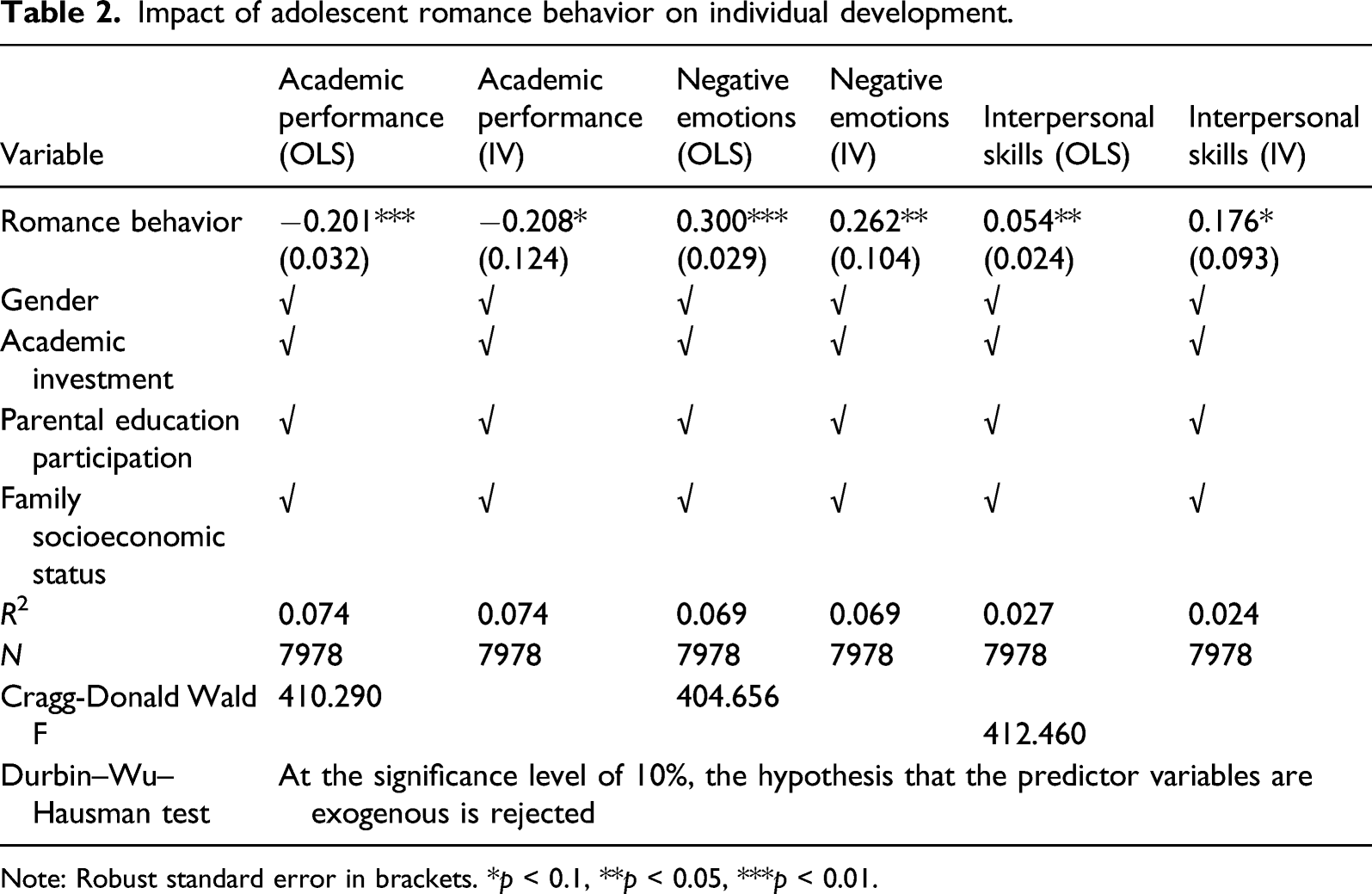
Impact of adolescent romance behavior on individual development.
Note: Robust standard error in brackets. *p < 0.1, **p < 0.05, ***p < 0.01.
Table 2 shows a negative correlation between romance behavior and academic development. For adolescents in romantic relationships, their standardized test scores are 0.201 lower than their counterparts not in love. The instrumental variable model comes up with a similar result that the test scores of adolescents involved in romantic behavior are 0.208 standard deviations lower than those not involved.
The estimates also indicate that the romantic relationships in adolescence can increase the risk of negative emotions. Compared with those who are not involved in a romantic relationship, the risk of negative emotions for adolescents engaged in romantic behavior is 0.262 points higher, which is about one-third of the standard deviation of the negative emotion variable.
Table 2 also shows that romantic behaviors can improve adolescents’ interpersonal ability. The estimated coefficient of OLS is 0.054, and the coefficient based on the instrumental variable method is 0.176, which is a quarter of the standard deviation of the interpersonal ability variable.
Analysis of heterogeneity of genders
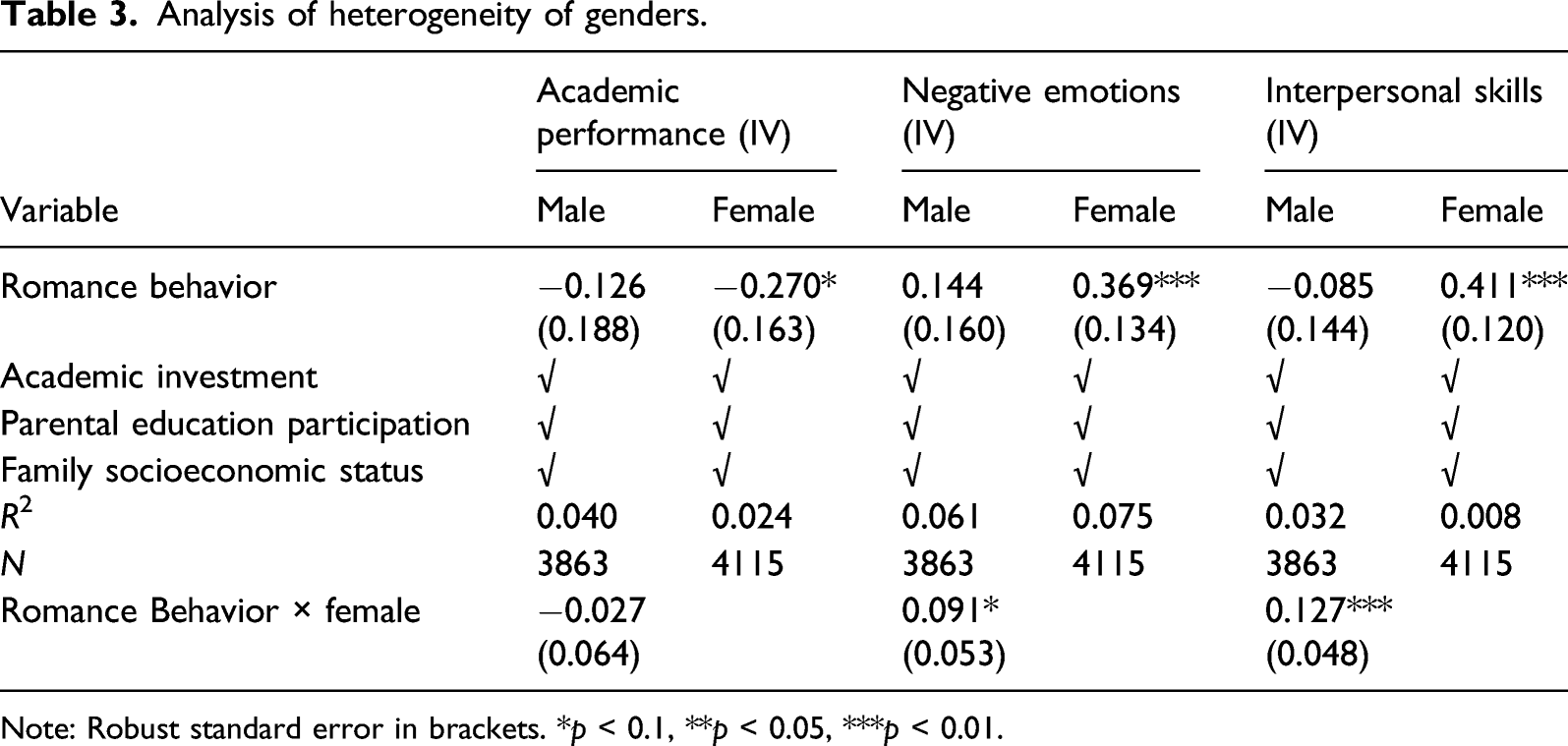
Analysis of heterogeneity of genders.
Note: Robust standard error in brackets. *p < 0.1, **p < 0.05, ***p < 0.01.
Female adolescents’ academic performance declines more significantly (the impact is about 0.270 standard deviation), and the risk of negative emotions is also higher (the impact coefficient of 0.369). In contrast, the academic performance and emotion of male adolescents are not significantly affected. In addition, the effect of romantic behavior on the interpersonal ability of female adolescents is also more prominent. Thus, the individual development of female will be more strongly influenced by their romantic experiences.
The effect of environmental pressure
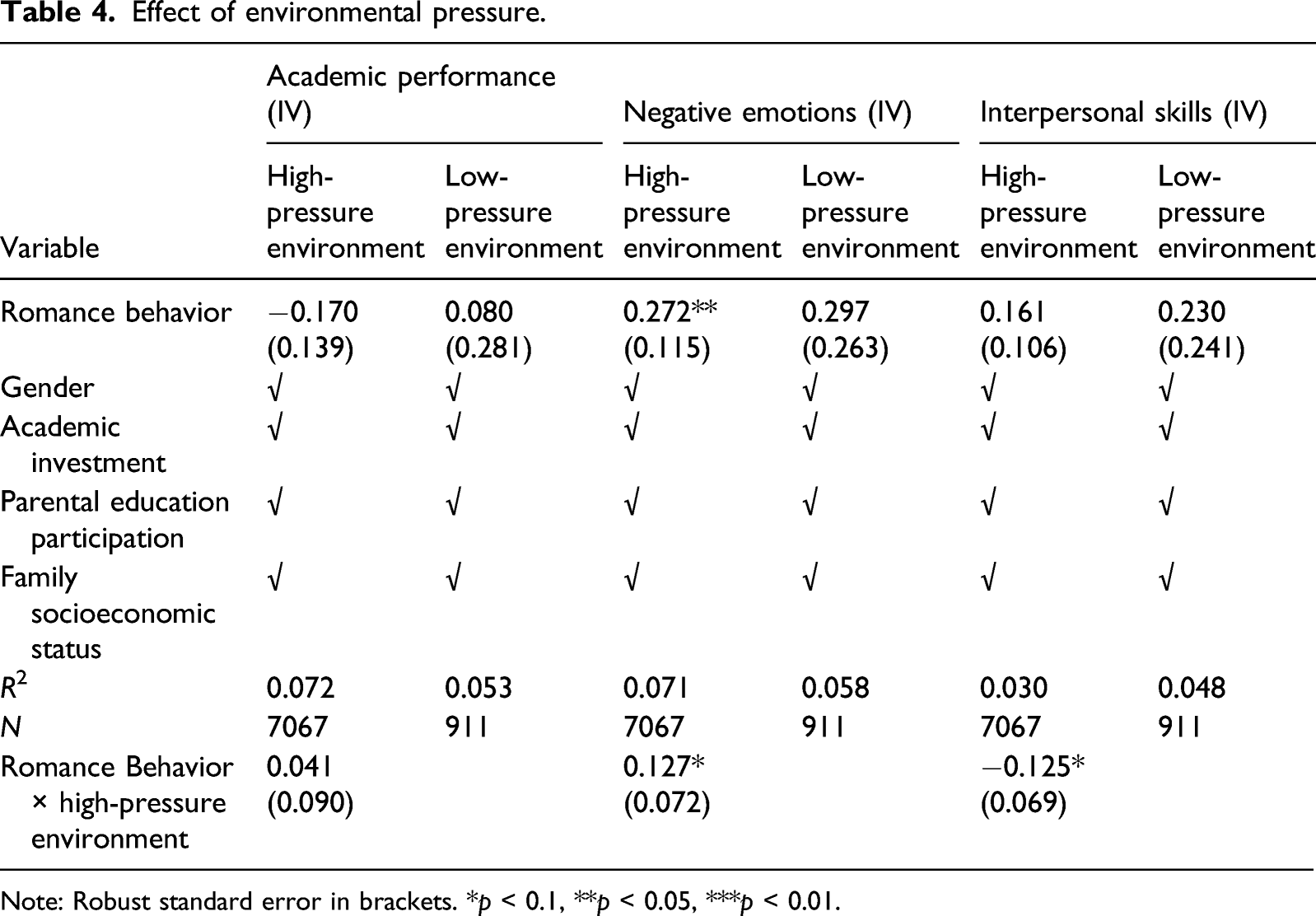
Effect of environmental pressure.
Note: Robust standard error in brackets. *p < 0.1, **p < 0.05, ***p < 0.01.
Discussion
The quantitative analysis above demonstrates a relationship between romantic behavior and adolescent development, as well as the effects of external environmental pressures from parents and teachers in the Chinese cultural setting. To conduct a more precise analysis, we use material obtained from the “Zhihu” network platform as basis for text analysis. “Zhihu” is currently the largest and most highly rated online Q&A community in China. 1 The text analysis adopts the principle of purposeful sampling, looking for typical cases from the text data, and provides an explanation of the quantitative analysis results in a real context.
The qualitative analysis reveals that the majority of respondents, even those who had a neutral or positive view toward adolescent romance, acknowledged the possible risks of adolescents’ relationships in terms of academic development. The partner’s misconduct, the diversion of academic attention, and the relationship’s emotional friction are the primary causes of academic decline. A high school student mentioned the following scenario: “The girl was a well-behaved girl before she fell in a relationship, but after she fell in love, she started to smoke, drink, and escape from school. she ended up to a vocational high school (for low academic performance students). Now I see her still smoking, drinking, clubbing on WeChat, and her new boyfriend is very kind to her. I guess maybe she has found what she wants too.”
When both adolescents have the correct self-concept and devote their emotional energy to academic development, the romantic relationship may also bring academic progress. Furman & Shaffer (2003) argue that influence of romance behavior on adolescents depends on the characteristics of the partner and the relationship itself. One respondent shares his experience of getting on the right track due to a relationship in junior high school: “In the third year of junior high, I received a letter from a girl I have a crush on. She said “I am going to apply for X high school. Would you like to join me?” At that time, for the 16-year-old boy, me, the only motivation for learning was to be with the people I liked.”
Although there are a few positive cases, our results show that most adolescents cannot properly balance the relationship between romantic behavior and academic investment when their minds are immature, and the negative impact on the academic development of adolescents cannot be ignored.
From the perspective of emotional development, our findings indicate that minor conflicts in adolescents’ romantic behaviors may cause strong mood swings. In addition, such relationship costs lots of attention and psychological energy. It can become one of the main sources of negative emotions. One respondent describes how she met a male after a school dispute and had a love relationship with him during an online conversation phase. After discovering her lover was having an affair with another woman, she says: “At that moment, I feel like that my heart is dead. My God, it is really hard to describe the pain.”
On the other hand, due to the short duration of adolescents’ romantic relationships, frequent breakups are also reasons for adolescents to fall into negative emotions. A sophomore girl in junior high school described her relationship experience like this: “At first, I was to just want to enjoy the moment and start the relationship, but soon we broke up with each other. After a month, he came to me to get back together, and I agreed. After I broke up and reunited a few times, I was stuck into the relationship, and became very humble in the relationship for almost a year.”
In terms of interpersonal skills, maintaining a romantic relationship between adolescents requires a series of attempts. They must resolve ongoing frictions and disagreements, tolerate one another’s inadequacies, control their emotions, and communicate effectively during times of conflict. Adolescent romance, according to Furman & Shaffer (2003), serves as a “testing ground.” A junior high school student offered the following advice on resolving emotional disagreements with a partner: “When a conflict occurs, be calm. Take a step back and think carefully about the problem, and apologize if you made a mistake. Another situation could be the “cold war,” which is also serious problem that may cause misunderstandings. No matter what happened, communication is the key to resolve misunderstandings, and try to make an agreement on what to do in the future conflicts could also help.”
Romantic relationships also benefit adolescents’ self-esteem. Having the opposite sex’s attention helps adolescents develop their self-worth, self-esteem, and personal character. Our qualitative findings indicate that the majority of respondents believe that being liked or receiving gifts from the opposite sex is rewarding, and that the degree of enjoyment varies according to the partner’s popularity: “I remember it was at the sixth grade, and he asked me out! He is an outstanding person. After he asked, I was really excited at that time!”
Similar to the quantitative analysis, the qualitative material also revealed gender heterogeneity in adolescent relationship behavior. Female adolescents pay more attention to emotional communication, maintaining intimacy, and resolving conflicts: “We do not quarrel very much, and for the most of the quarrels he got mad first. In his mind, everything I have done is wrong and do not do what he says. I have to apologies to get through this.”
The sense of ritual in the relationship is the main source of happiness for female adolescents. A high school girl showed her agreement to get along with her boyfriend: “Do not ask for trouble in class; do not get angry to affect study; keep the partner in your heart, always think about the partner etc.”
Different from female adolescents, male adolescents think that their partners’ sense of ritual is a burden: “I have to do homework with her, play games with her, and say goodnight to each other. Talk to her when she is happy, and butter her up when she is unhappy. On weekends, I also need to eat, go shopping, and watch movies with her.”
In addition, male adolescents also actively seek physical touch such as holding hands, hugging, and kissing. They have a stronger interest in the sexual activity rather than romantic relationship and are more likely to recover from the broking up (Furman & Shaffer, 2003).
Finally, given the Chinese cultural context, adolescents' romantic behavior may be restricted by school and family, exposing adolescents under cultural pressure in relationships. When conservative parenting methods and strict school administration systems are in place, “adolescent romance” can exert significant psychological pressure and anxiety on young people: “I had a crush on my classmate when I was in junior high school, but my mother happened to find out. Even though we did not take any further step to the relationship, my mother was still mad me and smashed my mobile phone. Since then, she became extremely sensitive to anything related to adolescent romance.”
Such pressure from parents and school makes adolescents hide the fact of romantic relationship: “I have to hide everything from my parents, and clear out any clue that may connect to the romance. I am afraid of being discovered all the time, and the pressure is huge. In addition, considering adolescent romance may bring a bad reputation to the school, we have to keep it secret.”
Additionally, our qualitative materials reveal that some teachers express ambivalence when confronted with adolescent relationship issues: “If I teach about love story in class while prohibit adolescent romance, and tell them that the relationship that occurs at this age is wrong, I think there must be a problem with this approach.”
On one hand, the romantic feelings of the opposite sex in adolescence are the natural result of physiological development. Parents and teachers should understand their children’s love behavior. On the other hand, adolescent romance is like a “dangerous game,” which may not only bring benefits to their growth but also lead to poor academic performance, early sexual behavior and even serious psychological problems. Therefore, simple “encourage” or “prohibit” cannot be an effective education strategy: “How do I have a decent relationship with the opposite sex? What kind of sexual behavior is healthy? How can I smoothly relieve sexual desire? All these questions could not be answered by parents and teachers, so they simply ban it. However, such prohibition could make us feel nothing but ashamed and lonely.”
Conclusion
Using China Education Panel Survey (CEPS) data, the present study analyzes the effects of adolescents’ romantic behavior on individual development. Our analysis reaches the following preliminary conclusions. First, in terms of the relationship between romantic behavior and the individual development of adolescents, our results show that adolescent romance distracts adolescents’ academic attention and leads to lower academic performance. In addition, the repeated emotional friction may also cause emotional and psychological exhausted and increase the risk of negative emotion. In contrast, the romantic relationship can help adolescents build their sense of self-worth. They will learn how to take care of each other and maintain an intimate relationship, which has a positive effect on the development of interpersonal ability.
Second, compared with male adolescents, romantic relationships have a stronger impact on female teenagers. Female adolescents have higher risk to occuring negative emotions, and the effect on their interpersonal ability is also larger. One possible reason is hat male and female adolescents form different behaviors in romantic relationships. Females have a stronger concept of relationship in their self-concept and pay more energy and emotion to maintain romantic relationships.
Finally, with the environmental pressure from schools and families, the negative impact of romantic behavior on development of adolescents will be enlarged. Such pressure can increase the risk of negative emotions, but also weaken the positive effect of romance on interpersonal ability.
The adolescent romance should be regarded as a natural physiological development. It is an important opportunity for adolescents to learn how to maintain intimacy and build a positive self-concept. Simply prohibiting and opposing adolescent romance is not an effective educational strategy. Instead, it will increase the psychological pressure of young people in a relationship and increase the risk caused by romance.
This study can be improved in multiple ways. Although we use the instrumental variable method to deal with the endogenous issue, there is still the risk of overestimating the negative effects of romantic behaviors. Moreover, the qualitative materials collected from the “Zhihu” network platform may also have deviations in representativeness. Therefore, future research could apply long-term observations of adolescents’ romantic behavior, and supplement by in-depth interviews, so as to obtain more sufficient research materials. In addition, future research should conduct more detailed analysis on the state of love and the characteristics of the romantic partner.
Footnotes
Declaration of conflicting interests
The author(s) declared no potential conflicts of interest with respect to the research, authorship, and/or publication of this article.
Funding
The author(s) received no financial support for the research, authorship, and/or publication of this article.